
Quick Answer
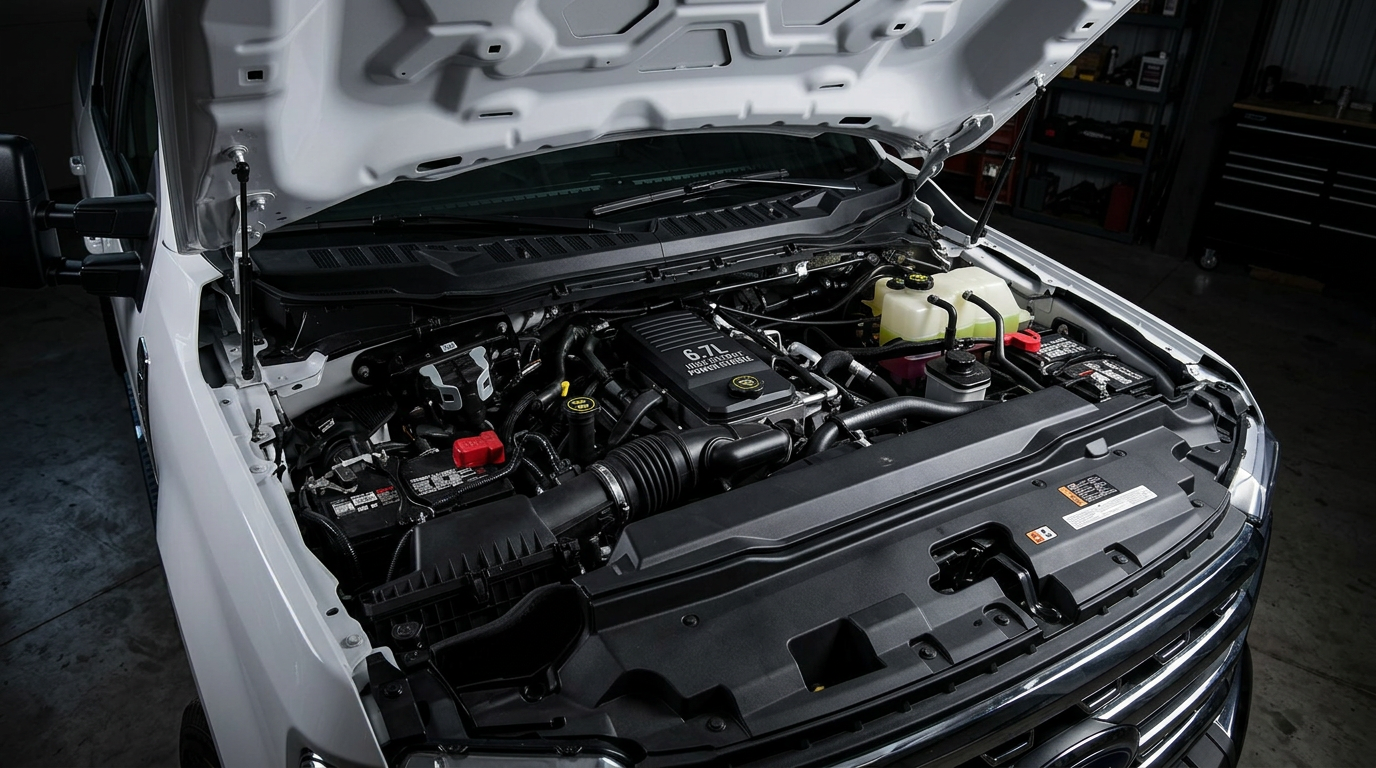
For 2027 the F-350 offers just two engines: the 7.3L gas V8 (now standard on every trim) and the available 6.7L High-Output Power Stroke diesel. The gas carries the highest payload (up to ~7,900 lbs) and covers most towing; the High-Output diesel is the choice for heavy, frequent towing and the 40,000-lb gooseneck maximum.
The 2027 F-350 makes the engine decision simpler than it’s ever been. Gone are the 6.8L gas and the standard-output diesel — leaving a clean choice between the now-standard 7.3L gas V8 and the available 6.7L High-Output Power Stroke diesel.
This guide covers what each engine is built for, how they compare on the numbers that are confirmed for 2027, and how to match one to the way you actually tow and haul around Bowdle and Aberdeen.
What engines does the 2027 F-350 offer?
Two, both paired with the 10-speed TorqShift automatic: the 7.3L gas V8, now standard on every trim, and the available 6.7L High-Output Power Stroke diesel — the only diesel for 2027. Ford hasn’t published final 2027 horsepower and torque figures, so the comparison below is built on the capability numbers that are confirmed.
| Engine | Best For | Confirmed Capability |
| 7.3L gas V8 (standard) | Daily work, occasional-to-moderate towing, max payload, lower cost of ownership | Highest payload — up to ~7,900 lbs |
| 6.7L High-Output Power Stroke (available) | Heavy, frequent towing; large goosenecks and fifth-wheels; max capability | Up to 40,000 lbs gooseneck (DRW, 40K package) |
Maximums require proper equipment and vary by cab, bed, axle, and single- or dual-rear-wheel configuration. 2027 hp/torque not yet published by Ford.
Is the 7.3L gas enough without the standard diesel?
For most F-350 buyers, yes. The 7.3L gas V8 is now standard on every trim, and it carries the F-350’s highest payload — up to about 7,900 lbs — because it’s lighter than the diesel. It handles daily ranch and jobsite work and a wide range of gooseneck and trailer loads without the diesel’s upfront cost or maintenance.
If your towing stays in the range a gas Super Duty comfortably covers, the standard 7.3L may be all the truck you need — and the money saved goes a long way toward the rest of the build.
When is the High-Output diesel worth it?
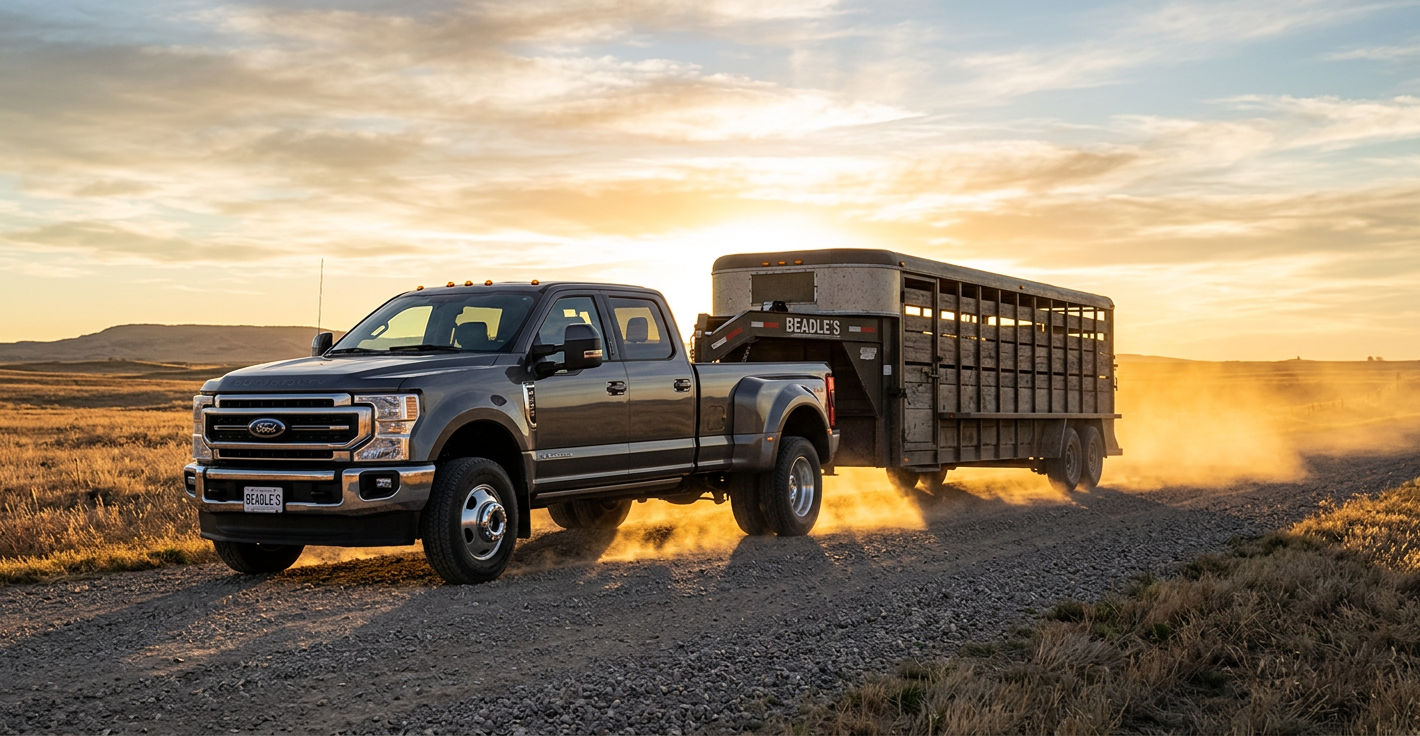
The 6.7L High-Output Power Stroke is the heavy-towing engine — it’s what unlocks the 40,000-lb gooseneck maximum and feels most composed on grades, in wind, and on long highway pulls. If you tow heavy and often, run a large gooseneck or fifth-wheel, or want maximum capability headroom, it earns its premium.
Our Recommendation
For most ranch and farm buyers around Bowdle and Aberdeen, start with the now-standard 7.3L gas — it covers daily work, the highest payload, and most of the towing people actually do. Choose the High-Output diesel when you regularly run heavy goosenecks or want the 40,000-lb ceiling. Size it to your real loaded trailer with our 2027 F-350 towing guide.
Gas vs. diesel: ownership beyond the spec sheet
The engine is an ownership decision, not just a capability one. Weigh these against how hard you’ll actually work the truck:
- Upfront cost: the diesel carries a higher purchase price than the gas.
- Payload need: if you haul heavy in the bed more than you tow, the 7.3L gas and its ~7,900-lb payload may matter more than diesel torque.
- Use pattern: frequent heavy towing justifies diesel; mixed driving favors gas.
- Long-term plans: how long you keep the truck and your annual miles change the math.
From the Beadle Ford Lot
With the standard-output diesel gone, the conversation has flipped. Buyers used to default to “get the diesel”; now, once we walk through their real trailer weight, more are landing on the standard 7.3L gas and putting the savings toward trim or the build they actually want.
How do you choose for your workload?
Work from how you use the truck, in four steps:
- Identify your heaviest trailer and how often you tow it.
- Decide whether maximum capability headroom matters, or whether comfortable margin is enough.
- Factor in payload needs, annual miles, and how long you keep trucks.
- Confirm the build — engine choice can affect available packages and SRW vs. DRW.
Key Takeaways
- 2027 simplifies to two engines: 7.3L gas standard, 6.7L High-Output diesel optional.
- The 7.3L gas carries the highest payload — up to ~7,900 lbs — and covers most towing.
- The High-Output diesel is the heavy-towing choice and unlocks the 40,000-lb gooseneck maximum.
- Pick by use pattern and payload need, not by habit — many buyers now fit the gas.
- Ford hasn’t published 2027 hp/torque yet; the lineup and capability figures are confirmed.
Frequently Asked Questions
Quick Answers: 2027 F-350 Engines
One-line answers to the follow-up questions buyers ask next.
How many engines for 2027? Two — 7.3L gas standard, 6.7L HO diesel optional.
What’s the standard engine? The 7.3L gas V8, on every trim.
Most towing? The HO diesel — up to 40,000 lbs gooseneck.
Most payload? The 7.3L gas — up to ~7,900 lbs.
Is the standard-output diesel gone? Yes — only the High-Output diesel remains.
Is the 6.8L gas gone? Yes — discontinued for 2027.
What transmission? 10-speed TorqShift on both engines.
Are hp/torque published? Not yet — Ford lists 2027 outputs as TBD.
Gas or diesel for occasional towing? Gas — lower cost, plenty of capability.
How do I confirm the right engine? We size it to your real loaded trailer before you order.
Keep Researching
The complete 2027 Ford F-350 Super Duty overview — specs, towing, trims, and how to order.
2027 F-350 towing guide — the ratings behind each engine, by configuration.
What’s new for 2027 — why the lineup dropped to two engines.
Buy a 2026 now or order a 2027? — if you want a dropped engine, time matters.
My Take on the 2027 Engine Choice
In my experience, the two-engine lineup makes this easier, not harder. Most buyers around here are better served starting with the now-standard 7.3L gas and only stepping to the High-Output diesel when their trailer math truly calls for it — and now that the gas is standard, that’s a real money decision, not just a power one.
Tell me your heaviest trailer and your typical week, and I’ll point you to the right engine and build. Stop in at Beadle Ford in Bowdle or reach out anytime.
About the Author
Lexy Tabbert — Beadle Ford, Bowdle, SD
Lexy Tabbert is the Director of Sales and Marketing at Beadle Ford in Bowdle, South Dakota. She covers Ford vehicles, trim comparisons, and buyer guidance — helping families, ranchers, and ag operators across the region find the right truck and configuration for their needs. Learn more about Lexy.
Connect with us

