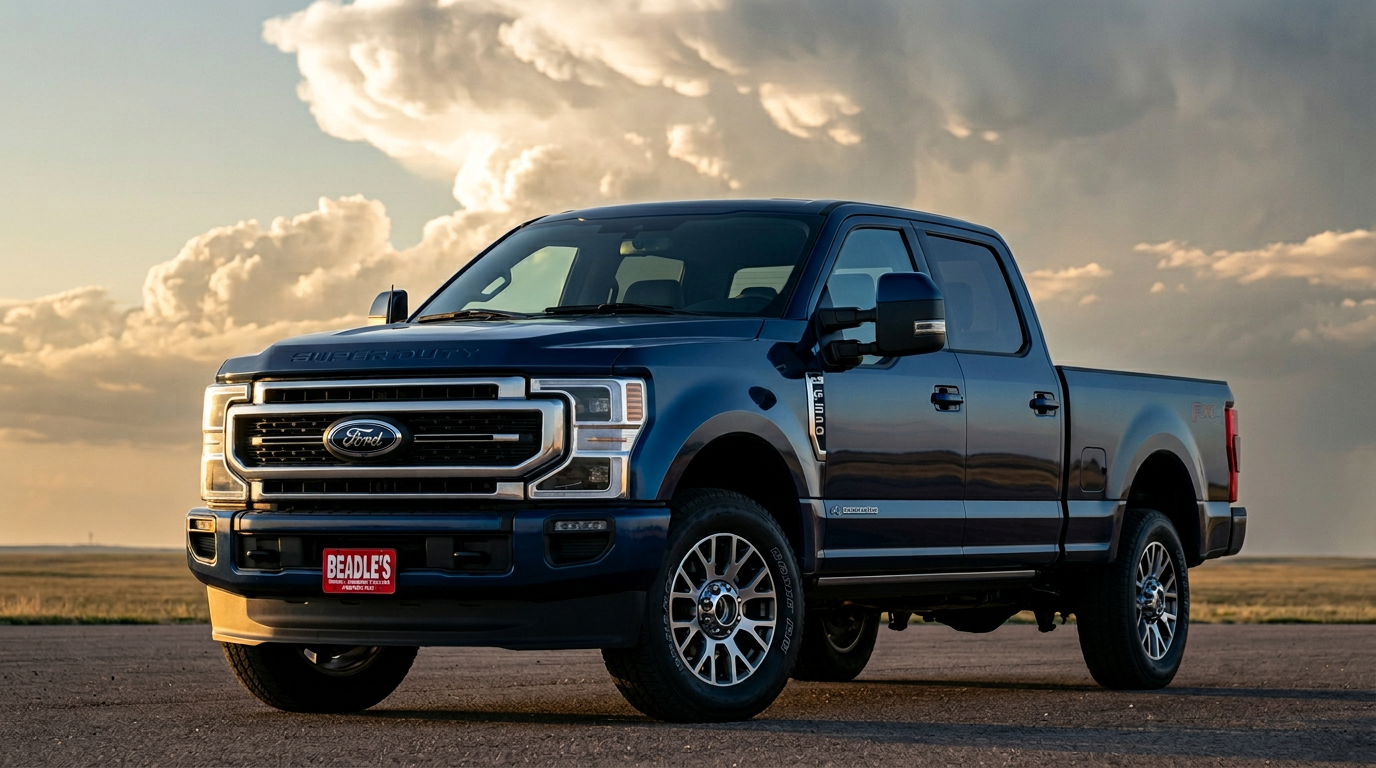
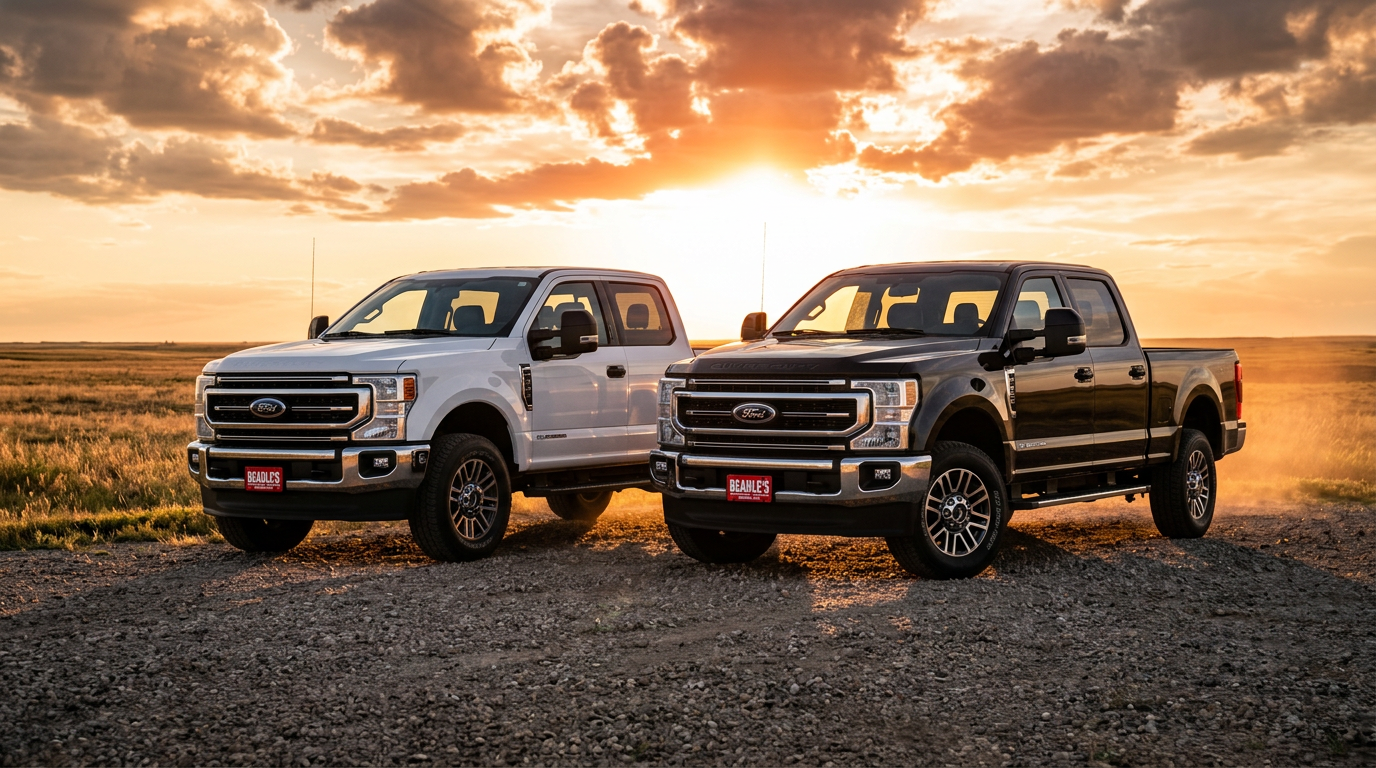
Quick Answer Buy a 2026 F-250 now if you want an engine the 2027 drops — the 6.8L gas V8 or the standard-output 6.7L diesel — or you need a truck on the lot today. Order a 2027 if you want the simplified lineup with the standard 7.3L gas, Tremor on the XL, and the new Carhartt Package. With the 2027 F-250 now in production and 2026s still on the lot, a lot of shoppers are asking the same thing: buy now or wait and order? Because 2027 is a real change year for the Super Duty — not just a calendar flip — the answer actually depends on what you want under the hood and how soon you need the truck. Here's what changed between the two model years, why a 2026 is your last shot at certain engines, what to expect on price, and how to decide between buying off the lot and ordering to spec. Shop F-250s in Stock Reserve a 2027 F-250 Get Pre-Approved On This Page What's different between the 2026 and 2027 F-250? Is the standard-output diesel really gone? Will the 2027 cost more? Buy off the lot or order to spec? What's different between the 2026 and 2027 F-250? The big change is engines. The 2026 F-250 offers four engines; the 2027 simplifies to two. For 2027 the 7.3L gas V8 is standard on every trim and the 6.7L High-Output Power Stroke diesel is the only diesel — the 6.8L gas V8 and the standard-output 6.7L diesel are discontinued. The 2027 also adds Tremor Off-Road availability on the XL, a new XL Off-Road 35-inch Tire Package, the Super Duty Carhartt Package, and two new colors (Neptune Blue and Iconic Silver Metallic) while dropping Argon Blue Metallic and Avalanche. Towing and payload capability carries over — the simplified lineup didn't cost the F-250 any capability. Feature 2026 F-250 2027 F-250 Engines Four (incl. 6.8L gas, std-output diesel) Two (7.3L gas standard, HO diesel) Tremor on XL No Yes (with STX) Carhartt Package No New for 2027 Availability On the lot now Build to order, arriving late 2026 Is the standard-output diesel really gone? Yes. For 2027, the 6.7L High-Output Power Stroke is the only diesel — the standard-output 6.7L diesel is discontinued. So a 2026 still on the lot is the last chance to buy the standard-output diesel, and likewise the only way to still get the 6.8L gas V8. For most buyers this doesn't change much, because the now-standard 7.3L gas covers the towing the standard-output diesel was often chosen for. But if you specifically wanted that engine — for a particular price point or duty cycle — the 2026 is your window, and once our 2026 inventory sells down, it's gone. Will the 2027 cost more? Probably a modest amount. The 7.3L gas V8 was roughly a $1,500 option in 2026 and is standard equipment for 2027, so the entry price likely reflects that. Ford has not yet published final 2027 F-250 pricing, so the exact difference is still to be confirmed. If avoiding a price increase matters and you don't need a specific 2027 feature, buying a 2026 now can be the value play — especially on remaining inventory. If you want the new packages or simply prefer ordering exactly the truck you want, the 2027 is worth the wait and likely the small premium. Buy off the lot or order to spec? Buy off the lot if you need a truck now, want to avoid a likely price bump, or you've found a 2026 configured close to what you want. Order to spec if you want the exact cab, bed, axle, trim, color, and packages — including the 2027-only options — and you can wait for the build. Our Recommendation If you want the 6.8L gas or the standard-output diesel, need a truck today, or want to avoid a likely price increase, buy a 2026 now — while they're on the lot. If you want the simplified 2027 lineup, Tremor on the XL, the Carhartt Package, or a build done exactly to your spec, order a 2027. For the largest group of buyers, the now-standard 7.3L gas makes the 2027 an easy, future-proof choice. Buy a 2026 now if you want the 6.8L gas or standard-output diesel, need a truck today, or want to dodge a price increase. Order a 2027 if you want the standard 7.3L gas, Tremor on the XL, the Carhartt Package, the new colors, or a precise build. From the Beadle Ford Lot The honest version of this conversation usually takes two minutes: if you wanted a dropped engine or you need a truck this month, we look at the 2026s on the lot. If you're flexible on timing and want it built your way, we order a 2027. The only buyers who feel rushed are the ones who had their heart set on the standard-output diesel — for them, the clock really is running on our remaining 2026s. Key Takeaways The 2026 F-250 offers four engines; the 2027 simplifies to the standard 7.3L gas and the HO diesel. A 2026 on the lot is the last chance to get the 6.8L gas V8 or the standard-output 6.7L diesel. Expect a modest 2027 price increase since the 7.3L gas (a ~$1,500 option in 2026) is now standard; final pricing is not yet announced. Buy a 2026 now to get a dropped engine, buy today, or dodge a price bump; order a 2027 for the new lineup and a precise build. Towing and payload carry over — the 2027's simpler lineup didn't reduce capability. Frequently Asked Questions Should I buy a 2026 F-250 now or order a 2027? Buy a 2026 now if you want the 6.8L gas or standard-output diesel (both dropped for 2027), need a truck today, or want to avoid a likely price increase. Order a 2027 if you want the simplified lineup with the standard 7.3L gas, Tremor on the XL, the new Carhartt Package, or a precise build. What engines did the 2027 F-250 drop? The 6.8L gas V8 and the standard-output 6.7L Power Stroke diesel. For 2027 the 7.3L gas V8 is standard and the 6.7L High-Output diesel is the only diesel. A 2026 on the lot is the last way to get either dropped engine. When will 2027 F-250s arrive at Beadle Ford? 2027 Super Duty order banks opened in May 2026, with deliveries ramping in late 2026. You can reserve and build a 2027 to your spec now, and we'll track it through delivery. Meanwhile, 2026 F-250s are available on our lot today. Will a 2027 F-250 cost more than a 2026? Likely a modest increase, since the 7.3L gas V8 (about a $1,500 option in 2026) is now standard. Ford has not yet published final 2027 pricing, so buying a remaining 2026 can be the value play if you don't need a 2027-specific feature. Quick Answers: 2026 vs. 2027 F-250 One-line answers to the follow-up questions buyers ask next. Engines on the 2026? Four, including the 6.8L gas and standard-output diesel. Engines on the 2027? Two — 7.3L gas standard, 6.7L HO diesel. What's the last-call engine? The standard-output 6.7L diesel (and the 6.8L gas). Will the 2027 cost more? Likely a modest increase; final pricing not announced. When do 2027s arrive? Deliveries ramp late 2026. Can I order a 2027 now? Yes — order banks are open. Did capability change? No — towing and payload carry over. What's new on the 2027? Tremor on XL, Carhartt Package, new colors. Best reason to buy a 2026? A dropped engine, a truck today, or dodging a price bump. Best reason to order a 2027? The new lineup and a build done your way. Keep Researching The complete 2027 Ford F-250 Super Duty overview — the new lineup, trims, and ordering The 2026 Ford F-250 Super Duty overview — what's on the lot now, including the dropped engines What's new for the 2027 F-250 — every change explained 7.3L gas vs. HO diesel — which engine fits how you tow My Take on Buying Now vs. Ordering a 2027 I don't think there's a wrong answer here, and I won't push someone to wait if a 2026 on our lot is the right truck at the right price today. The only time I get a little urgent is with the standard-output diesel — once our 2026 inventory is gone, that engine is genuinely off the table, so if that's what you want, I'd rather you know the window is closing. For everyone else, the now-standard 7.3L gas makes the 2027 a confident, future-proof order. Tell me which engine you're after and your timeline, and I'll show you whether the smart move is a 2026 on the lot or a 2027 built to your spec. Either way, we'll sort it out at Beadle Ford in Bowdle. Shop F-250s in Stock Reserve a 2027 F-250 Get Pre-Approved About the Author Lexy Tabbert — Beadle Ford, Bowdle, SD Lexy Tabbert is the Director of Sales and Marketing at Beadle Ford in Bowdle, South Dakota. She covers Ford vehicles, trim comparisons, and buyer guidance — helping families, ranchers, and ag operators across the region find the right truck and configuration for their needs. Learn more about Lexy. {
"@context": "https://schema.org",
"@type": "BlogPosting",
"headline": "Buy a 2026 Ford F-250 Now or Order a 2027?",
"description": "2026 vs. 2027 Ford F-250: what changed, why a 2026 is the last call for two engines, what to expect on price, and whether to buy off the lot or order to spec.",
"image": "https://cdn.dlron.us/static/dealer-21665/7a66226a_2027-f250-ext-buyvsorder.png",
"datePublished": "2026-06-23T00:00:00-06:00",
"dateModified": "2026-06-23T00:00:00-06:00",
"url": "https://www.beadleford.net/blog/2027-ford-f-250-buy-2026-or-2027",
"author": {
"@type": "Person",
"name": "Lexy Tabbert",
"jobTitle": "Director of Sales and Marketing",
"url": "https://www.beadleford.net/about-Lexy-Tabbert.html",
"sameAs": [
"https://www.beadleford.net/about-Lexy-Tabbert.html",
"https://www.facebook.com/BeadleAutoGroup"
]
},
"publisher": {
"@type": "AutoDealer",
"name": "Beadle Ford",
"url": "https://www.beadleford.net",
"telephone": "+1-866-561-2636",
"address": {
"@type": "PostalAddress",
"streetAddress": "5023 Fourth Avenue",
"addressLocality": "Bowdle",
"addressRegion": "SD",
"postalCode": "57428",
"addressCountry": "US"
},
"logo": {
"@type": "ImageObject",
"url": "https://cdn.dlron.us/static/dealer-21665/logo.png"
}
},
"isPartOf": {
"@type": "WebPage",
"@id": "https://www.beadleford.net/2027-ford-f-250-super-duty.html",
"name": "2027 Ford F-250 Super Duty"
},
"about": {
"@type": "Car",
"name": "2027 Ford F-250 Super Duty",
"vehicleModelDate": "2027",
"brand": { "@type": "Brand", "name": "Ford" }
},
"mentions": [
{ "@type": "Vehicle", "name": "2026 Ford F-250 Super Duty" },
{ "@type": "Vehicle", "name": "2027 Ford F-250 Super Duty" },
{ "@type": "Thing", "name": "6.7L Power Stroke Diesel" },
{ "@type": "Thing", "name": "7.3L gas V8" },
{ "@type": "Place", "name": "Bowdle, SD" }
]
} {
"@context": "https://schema.org",
"@type": "FAQPage",
"mainEntity": [
{ "@type": "Question", "name": "Should I buy a 2026 F-250 now or order a 2027?", "acceptedAnswer": { "@type": "Answer", "text": "Buy a 2026 now if you want the 6.8L gas or standard-output diesel (both dropped for 2027), need a truck today, or want to avoid a likely price increase. Order a 2027 if you want the simplified lineup with the standard 7.3L gas, Tremor on the XL, the new Carhartt Package, or a precise build." } },
{ "@type": "Question", "name": "What engines did the 2027 F-250 drop?", "acceptedAnswer": { "@type": "Answer", "text": "The 6.8L gas V8 and the standard-output 6.7L Power Stroke diesel. For 2027 the 7.3L gas V8 is standard and the 6.7L High-Output diesel is the only diesel. A 2026 on the lot is the last way to get either dropped engine." } },
{ "@type": "Question", "name": "When will 2027 F-250s arrive at Beadle Ford?", "acceptedAnswer": { "@type": "Answer", "text": "2027 Super Duty order banks opened in May 2026, with deliveries ramping in late 2026. You can reserve and build a 2027 to your spec now, and we'll track it through delivery. Meanwhile, 2026 F-250s are available on our lot today." } },
{ "@type": "Question", "name": "Will a 2027 F-250 cost more than a 2026?", "acceptedAnswer": { "@type": "Answer", "text": "Likely a modest increase, since the 7.3L gas V8 (about a $1,500 option in 2026) is now standard. Ford has not yet published final 2027 pricing, so buying a remaining 2026 can be the value play if you don't need a 2027-specific feature." } }
]
} {
"@context": "https://schema.org",
"@type": "BreadcrumbList",
"itemListElement": [
{ "@type": "ListItem", "position": 1, "name": "Home", "item": "https://www.beadleford.net/" },
{ "@type": "ListItem", "position": 2, "name": "Ford F-250 Super Duty", "item": "https://www.beadleford.net/ford-f-250-super-duty.html" },
{ "@type": "ListItem", "position": 3, "name": "2027 Ford F-250 Super Duty", "item": "https://www.beadleford.net/2027-ford-f-250-super-duty.html" },
{ "@type": "ListItem", "position": 4, "name": "Buy a 2026 Ford F-250 Now or Order a 2027?", "item": "https://www.beadleford.net/blog/2027-ford-f-250-buy-2026-or-2027" }
]
}