
Blog

All New Vehicles Bowdle Ford Dealer Bowdle Ford Service
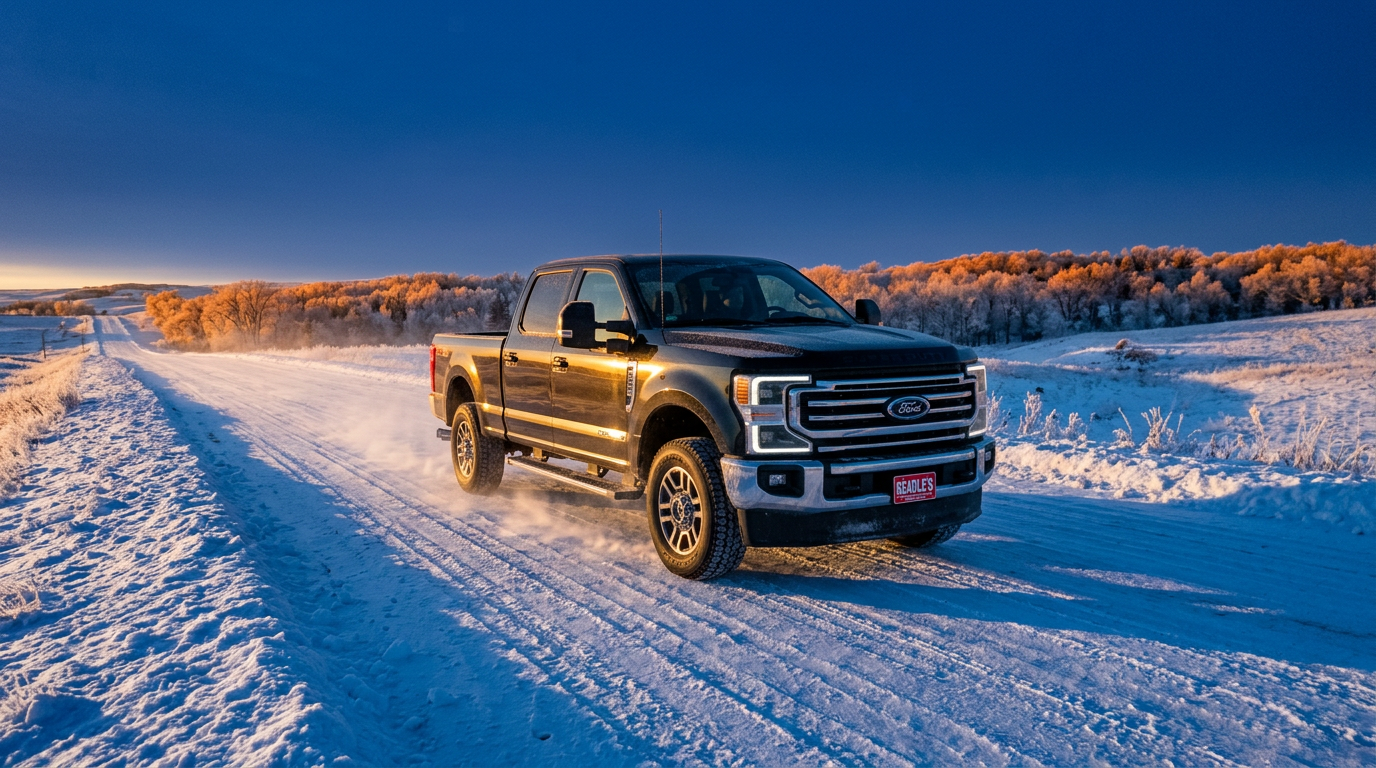
2027 Ford F-250 4x4 on a snowy South Dakota county road

2027 Ford F-250 Winter & Gravel Capability in South Dakota

Quick Answer The 2027 Ford F-250 is excellent in South Dakota winters and on gravel with 4x4, selectable drive modes including Slippery Roads, real ground clearance, and the right tires. Add the Snow Plow Prep Package for plowing, or the XL Off-Road 35-inch Tire Package for serious traction. Around here, a truck has to earn its keep in February and on washboard gravel just as much as it does towing in July. The good news is that the same heavy-duty build that makes the F-250 a strong tow truck also makes it one of the most confident winter and gravel daily drivers you can buy — as long as you spec it right. Here's how the 2027 F-250 handles a Dakota winter, what 4x4, drive modes, and snow-plow prep actually do for you, the tires that matter most, and the off-road traction tech worth ordering. Shop F-250s in Stock Reserve a 2027 F-250 Get Pre-Approved On This Page How does the 2027 F-250 handle SD winters? 4x4, drive modes, and snow-plow prep Best tires for snow and gravel Off-road and traction tech worth having How does the 2027 F-250 handle SD winters? Very well, and for the same reasons it's a good tow truck: 4x4 traction, real ground clearance to clear drifts, weight to stay planted, and traction tech tuned for slick roads. On a snow-packed county road or a drifted-in driveway, the F-250 with 4x4 and good tires is hard to stop. The ground clearance is the underrated part. Where a low car high-centers on a plow ridge, the Super Duty drives over it. Combine that with the Electronic Shift-on-the-Fly 4x4 and the Slippery Roads drive mode, and getting to work in a Dakota February stops being a question. 4x4, drive modes, and snow-plow prep The F-250's Electronic Shift-on-the-Fly 4x4 lets you move between two-wheel and four-wheel drive on the move, and the selectable drive modes — including Slippery Roads — retune throttle response and traction control for snow and ice. 4x4 is standard beginning on the King Ranch and available on the XL, XLT, and Lariat; for South Dakota, most buyers add it on any trim. If you plow, order the Snow Plow Prep Package. It readies the truck to mount a plow within Ford's front-axle weight limits, with the upgraded components a plow setup needs. Spec it from the factory rather than adding it later — it's a cleaner, better-integrated setup. Best tires for snow and gravel Tires matter more than almost anything else for winter and gravel traction. A good set of all-terrain tires is the practical all-rounder for South Dakota — they handle gravel, mud, and packed snow well and last. If you drive a lot of ice and deep snow, a dedicated winter tire is the safest choice for those months. The point is to match the tire to your roads. A truck that's perfect on the highway can feel sketchy on glare ice with the wrong rubber, and the right tire transforms how a heavy 4x4 puts power down. We'll help you pick a tire that fits how and where you actually drive. Off-road and traction tech worth having For buyers who run rough gravel, mud, and trails, the new XL Off-Road 35-inch Tire Package is the standout for 2027. It adds 35-inch tires, a taller ride height, an electronic locking rear differential, a limited-slip front differential, Rock Crawl mode, Trail Control, Trail Turn Assist, and heavy-duty skid plates — serious capability on an affordable trim. Stepping up, the Tremor Off-Road Package — now available on the XL for 2027 — brings a lifted suspension and the full off-road treatment. For most winter-and-gravel daily drivers, though, plain 4x4 with the right tires does the job; the off-road packages are for buyers who genuinely leave the maintained roads. Our Recommendation For a South Dakota winter-and-gravel daily driver, we recommend a 4x4 F-250 with a good set of all-terrain tires and the Snow Plow Prep Package if you push snow. That combination handles our roads in any season. Add the XL Off-Road 35-inch Tire Package only if you regularly run rough trails and mud beyond the gravel. From the Beadle Ford Lot The single biggest winter upgrade I steer people toward isn't a package — it's tires. A 4x4 F-250 on worn highway tires will still struggle on glare ice, and the same truck on a good all-terrain set is a different machine. We sort out the tire before we talk about anything else for a winter driver. Key Takeaways With 4x4, drive modes, ground clearance, and the right tires, the 2027 F-250 is excellent in winter and on gravel. Electronic Shift-on-the-Fly 4x4 and the Slippery Roads drive mode tune the truck for snow and ice. 4x4 is standard from the King Ranch and available on XL, XLT, and Lariat — most SD buyers add it. Order the Snow Plow Prep Package from the factory if you plow. Tires are the biggest winter upgrade; the XL Off-Road 35-inch Tire Package adds serious off-road traction. Frequently Asked Questions Is the 2027 F-250 good in the snow? Yes. With 4x4, the Slippery Roads drive mode, real ground clearance, and good tires, the F-250 handles snow-packed roads and drifts confidently. The weight and traction tech help it stay planted, and the clearance lets it drive over plow ridges that stop lower vehicles. Does the 2027 F-250 have a snow plow prep package? Yes. The Snow Plow Prep Package readies the F-250 to mount a plow within Ford's front-axle weight limits, with the upgraded components a plow setup needs. It's best ordered from the factory for a cleaner, better-integrated installation. What tires are best for an F-250 in South Dakota? A good set of all-terrain tires is the practical all-rounder for gravel, mud, and packed snow. If you drive a lot of ice and deep snow, dedicated winter tires are the safest choice for those months. Tires make the biggest difference in winter and gravel traction. Do I need an off-road package for gravel roads? No. For maintained gravel and winter roads, plain 4x4 with good all-terrain tires is plenty. The XL Off-Road 35-inch Tire Package or Tremor are for buyers who regularly run rough trails and mud beyond the gravel. Quick Answers: F-250 Winter & Gravel One-line answers to the follow-up questions buyers ask next. Good in snow? Yes — excellent with 4x4 and good tires. Does it have a winter drive mode? Yes — the Slippery Roads mode. What kind of 4x4? Electronic Shift-on-the-Fly. Is 4x4 standard? Standard from the King Ranch; available on XL, XLT, Lariat. Can it plow? Yes — order the Snow Plow Prep Package. Best tires? All-terrain for the all-around, winter tires for heavy ice and snow. Biggest winter upgrade? Tires, before any package. Off-road package for trails? The XL Off-Road 35-inch Tire Package or Tremor. Does ground clearance help in snow? Yes — it clears drifts and plow ridges. Where can I spec one for winter? Beadle Ford in Bowdle, SD. Keep Researching The complete 2027 Ford F-250 Super Duty overview — trims, towing, specs, and inventory 2027 F-250 as a daily driver in South Dakota — winter, fuel, and livability 2027 F-250 for recreational towing — getting to the lake in any season 2027 F-150 vs. F-250 — how much truck you need My Take on Winter and Gravel With the F-250 Living and working out here, I'm a believer that the F-250 is one of the most weather-proof daily drivers a person can own — but only if it's set up right. I'd take a properly spec'd 4x4 with good all-terrain tires over almost anything when the roads turn to glass. What I steer people away from is buying the truck and skimping on the tire, because that's where a capable machine gets let down. Tell me how rough your roads get and whether you push snow, and we'll build an F-250 that gets you through a Dakota winter without drama. We're at Beadle Ford in Bowdle whenever you're ready to spec one. Shop F-250s in Stock Reserve a 2027 F-250 Get Pre-Approved About the Author Lexy Tabbert — Beadle Ford, Bowdle, SD Lexy Tabbert is the Director of Sales and Marketing at Beadle Ford in Bowdle, South Dakota. She covers Ford vehicles, trim comparisons, and buyer guidance — helping families, ranchers, and ag operators across the region find the right truck and configuration for their needs. Learn more about Lexy.
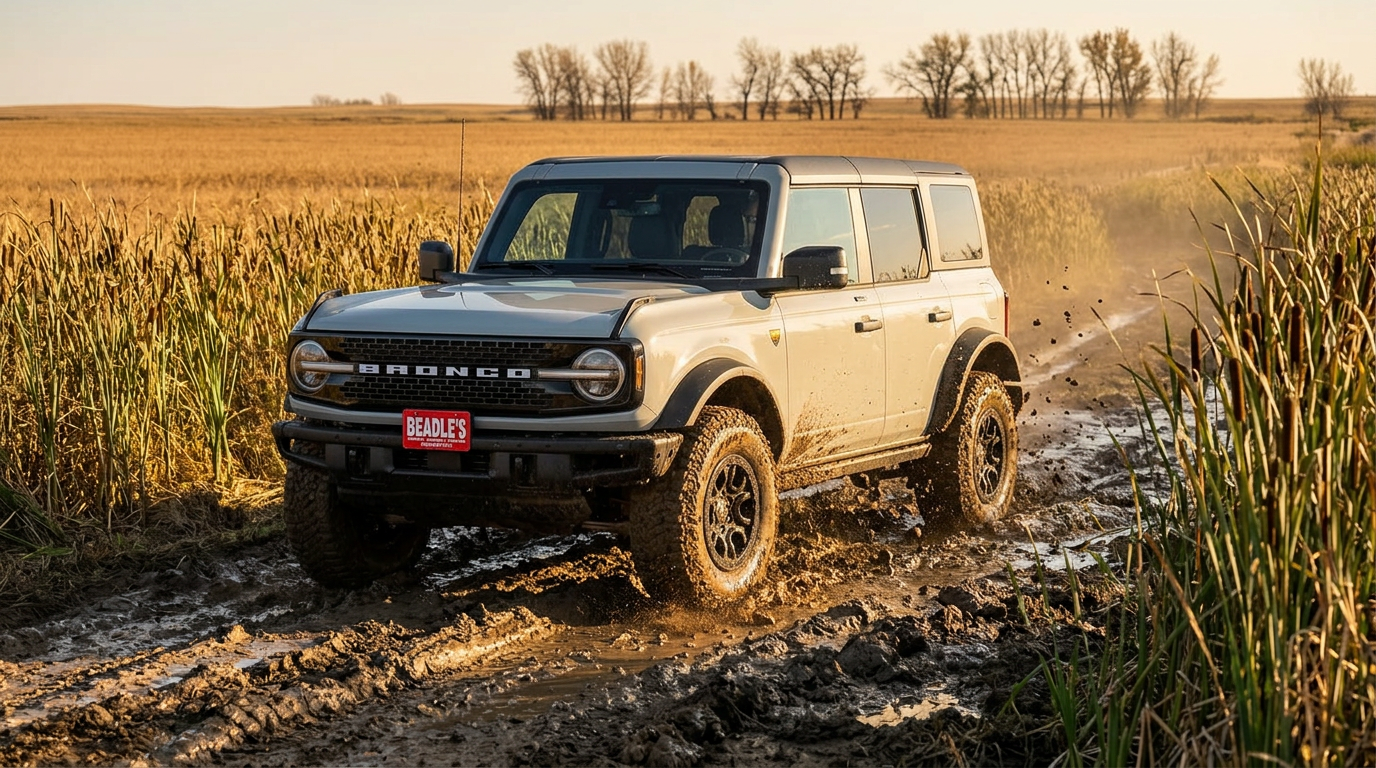
2026 Ford Bronco demonstrating G.O.A.T. Modes terrain management on a muddy CRP access road — Beadle Ford in Bowdle, SD

2026 Ford Bronco G.O.A.T. Modes Explained: When to Use Each One

G.O.A.T. stands for Goes Over Any Type of Terrain — it's Ford's terrain management system that adjusts throttle response, transmission shift points, traction control behavior, and torque distribution depending on what's under the tires. The marketing version makes every mode sound essential. The honest version, after years of selling Broncos to ranchers, hunters, and lake-bound buyers in central South Dakota, is that you'll use two or three of the modes regularly and the others maybe once a season. This guide walks through every G.O.A.T. mode on the 2026 Ford Bronco, names which trims get which modes, and pairs each one with a real central SD use case. We'll also cover Trail Control, Trail Turn Assist, and One-Pedal Trail Driving — three off-road tech features that don't get marketed as G.O.A.T. modes but matter as much as some that do. Shop Broncos in Stock Get Pre-Approved On This Page What's the Full G.O.A.T. Mode List for the 2026 Bronco? What Are the Five Modes Every Bronco Has — Normal, ECO, Sport, Slippery, and Sand? Which Modes Do Badlands and Raptor Add — Off-Road, Rock-Crawl, and Baja? When Would I Actually Use Each Mode in Central South Dakota? How Do G.O.A.T. Modes Compare to Jeep's Selec-Terrain System? What Do Trail Control, Trail Turn Assist, and One-Pedal Trail Driving Do? What's the Full G.O.A.T. Mode List for the 2026 Bronco? Every 2026 Bronco gets five G.O.A.T. modes as standard equipment: Normal, ECO, Sport, Slippery, and Sand. Badlands and Raptor get a different seven-mode set: Normal, ECO, Slippery, Off-Road, Sport, Rock-Crawl, and Baja. The Badlands setup drops Sand from the standard list and adds three off-road-specific modes — it's not just five-plus-two, it's a different mix tuned for harder use. The mode dial sits on the center console where the standard transmission shifter would be on a non-G.O.A.T. vehicle, and you select modes by rotating the dial. The current mode is shown both on the dial itself and in the digital instrument cluster. The Heritage Edition and Stroppe Edition use the standard five-mode set; the Big Bend and Outer Banks also get five. If the seven-mode set matters to your use case, Badlands or Raptor is the trim. For full trim breakdowns see our 2026 Bronco trim levels guide. What Are the Five Modes Every Bronco Has — Normal, ECO, Sport, Slippery, and Sand? Normal is the default mode for everyday driving — paved roads, dry gravel, light loads. The system runs balanced throttle response, normal shift mapping, and standard traction control. It's where the Bronco sits 80 percent of the time for most owners. ECO mode dials throttle response back, holds gears longer, and biases shift points for fuel economy. It's the mode for the Bowdle-to-Black-Hills highway run when you'd rather have an extra mile or two per gallon than instant pedal response. Highway only — there's no off-road benefit to ECO. Sport sharpens throttle response, holds gears longer for higher-RPM operation, and tightens steering feel slightly. It's the mode for the rare moments you actually want to drive a Bronco hard on pavement — a fun back-road run, a quick highway pass. Most Bronco owners try Sport once and never return to it. Slippery is the workhorse of the standard five-mode set in central South Dakota. It dials throttle response back so you don't break traction at takeoff, smooths shift points, and recalibrates traction control for soft or slick surfaces. Slippery covers wet gravel, packed snow, glare ice on a section line, a soft CRP access road, and frozen ruts in early winter. If you live outside Bowdle on a gravel road, this mode earns its money every week of the cold months. Sand is the mode for a Lake Oahe shoreline access lane, a soft beach approach to a boat ramp, and any deep dry-loose surface where you need wheel speed to maintain forward momentum. It defeats traction control more aggressively than Slippery does, on the principle that wheel slip is part of how you make progress through deep sand. Sand is missing from the Badlands and Raptor mode set, since those trims expect their drivers to use Off-Road or 4-Low for that work instead. Which Modes Do Badlands and Raptor Add — Off-Road, Rock-Crawl, and Baja? Off-Road is the everyday off-pavement mode for Badlands and Raptor. It engages the front axle, biases torque toward the wheels with grip, calibrates throttle for low-speed control, and prepares the system for use of the front and rear lockers if needed. This is the mode for a cattail-slough access road in late October, a river-bottom timber two-track in November, or a section line that hasn't been graded since spring thaw. The G.O.A.T. mode dial sits on the center console; the current mode reads on both the dial and the digital instrument cluster. Rock-Crawl is the slowest, most deliberate mode — designed for picking through rocky terrain with maximum control. It holds low gears, sharpens brake response, and integrates with Trail Control for hands-off-the-throttle crawling speed. In central SD, Rock-Crawl is overkill for almost everything. You'd reach for it on a Black Hills weekend or a serious hunting access trail with embedded rocks. It's a Wyoming or Colorado feature more than a Bowdle one. Baja is the high-speed off-road mode — sharp throttle, aggressive shift mapping, traction control retuned for desert-style driving. Like Rock-Crawl, it's geographically misaligned with central SD. There aren't many places within an hour of Bowdle where Baja mode is the right tool. Most Badlands owners around here never use it. It's part of the package because the Badlands trim is sold nationwide, and there are buyers in the Southwest and West Coast who do use it. Both lockers — front and rear, electronic — are standard on Badlands, Heritage Edition, Raptor, and any Bronco with the Sasquatch Package. The lockers are what get you out of a stuck situation when an open differential is just spinning one wheel; they're a separate system from the mode dial, but Off-Road and Rock-Crawl prepare the vehicle to use them. Sasquatch deep-dive in our 2026 Bronco Sasquatch Package guide. Get Pre-Approved Contact Beadle Ford When Would I Actually Use Each Mode in Central South Dakota? Here's the honest central SD use map for each mode: For 80 percent of the miles a Bronco logs on central SD section roads, Normal mode handles it. Slippery is the wet-gravel and snow-cover answer. Normal: Paved roads anywhere — Bowdle in town, US-12, US-83, the trip to Aberdeen or Pierre. Dry gravel section roads in summer. Light errand-running on packed snow with no ice. This is where the Bronco lives most of the time. ECO: Long highway runs, particularly to the Black Hills (~four hours) when you'd rather take the small fuel-economy improvement. Skip ECO in town or on gravel — there's no benefit. Sport: Almost never. The Bronco isn't a sport-tuned vehicle, and the mode is more relevant for highway passing maneuvers than for daily driving. Slippery: Wet gravel section roads, snow-covered county roads, glare ice, frozen ruts in early winter, soft CRP access roads after rain, the muddy approach to a Lake Oahe boat ramp in spring. This is the everyday cold-weather setting for a Bronco that lives outside Bowdle. Sand: Lake Oahe shoreline access at unimproved boat ramps in summer. Some sandy two-tracks across CRP. Used a few times a season at most. Off-Road (Badlands/Raptor): Cattail-slough access roads, river-bottom timber two-tracks, ranch-property loops with deep ruts, harvested-cornfield approaches in wet conditions. This is the SD-relevant mode that actually gets used in the field. Rock-Crawl and Baja (Badlands/Raptor): Black Hills weekend trips for Rock-Crawl. Baja is mostly geographically misaligned with central SD — an interesting feature on the spec sheet that most local owners never use. How Do G.O.A.T. Modes Compare to Jeep's Selec-Terrain System? Both systems do the same job — adjust traction control, throttle response, transmission behavior, and torque distribution for different surfaces. The differences are in mode count, mode names, and how the systems integrate with other off-road tech. Jeep's Selec-Terrain typically runs four to five primary modes (Auto, Snow, Sand/Mud, Rock) depending on the trim, paired with the brand's Command-Trac, Selec-Trac, or Rock-Trac 4WD systems. G.O.A.T. tends to be more discrete in mode count — five on most Broncos, seven on Badlands and Raptor — and more electronic in feel. Selec-Terrain leans more analog, with a tighter integration with Rock-Trac's mechanical 4:1 low-range gearing on Wrangler Rubicons. Neither system has a clear edge over the other; they're tuned for the different brand philosophies. For the full Bronco vs Wrangler picture see our 2026 Bronco vs Jeep Wrangler honest comparison. For a central SD buyer, the comparison usually doesn't come down to mode count — it comes down to other factors (engine choice, towing, doors-off design, dealer relationship). The G.O.A.T. system covers everything a Bronco buyer needs in this region. The Selec-Terrain system covers everything a Wrangler buyer needs. Both work. What Do Trail Control, Trail Turn Assist, and One-Pedal Trail Driving Do? These three features get less attention than G.O.A.T. modes but matter as much in real off-road work. Trail Control is low-speed off-road cruise control — set a speed between roughly 1 and 20 mph, and the vehicle maintains it while you focus on steering. It's available on Bronco trims with the 10-Speed Automatic and is the right tool for crawling through deep ruts, soft mud, or a cattail-slough access road where you'd rather not modulate the throttle by foot. Trail Turn Assist uses individual brake application to tighten the turning radius dramatically when you're navigating a tight off-road switchback or a narrow section-line corner. It's a niche feature in central SD because most of our terrain doesn't require it, but for a Black Hills trail or a wooded ranch-property loop with tight turns it does what no amount of steering-wheel input can match. One-Pedal Trail Driving is available on Outer Banks and Badlands with the 10-Speed Automatic. It lets you control acceleration and braking with just the throttle pedal — lift off the throttle and the vehicle slows aggressively without you needing to swap to the brake pedal. For tricky off-road work where your right foot is doing more thinking than driving, it's a useful feature. All three of these tools become clearer within the full 2026 Ford Bronco overview, where capability and tech features lay out by trim. Key Takeaways Every 2026 Bronco has five G.O.A.T. modes: Normal, ECO, Sport, Slippery, and Sand. Badlands and Raptor get a different seven-mode set: Normal, ECO, Slippery, Off-Road, Sport, Rock-Crawl, and Baja (drops Sand, adds three off-road modes). For central SD buyers, Slippery is the everyday cold-weather mode — earns its money every week of the cold months on a gravel-road commute. Off-Road is the SD-relevant Badlands mode that gets real use; Rock-Crawl and Baja are tuned for terrain we don't have around Bowdle. Trail Control (low-speed off-road cruise) is the sleeper feature — pair it with Off-Road mode and a Bronco walks through ruts you'd struggle through manually. Frequently Asked Questions How many G.O.A.T. modes does a 2026 Ford Bronco have? Most 2026 Bronco trims (Base, Big Bend, Outer Banks, Heritage Edition, Stroppe) have five G.O.A.T. modes: Normal, ECO, Sport, Slippery, and Sand. The Badlands and Raptor get a different seven-mode set: Normal, ECO, Slippery, Off-Road, Sport, Rock-Crawl, and Baja. Sand is dropped from the Badlands set and replaced by the three off-road-specific modes. What does Slippery mode do on a 2026 Bronco? Slippery dials throttle response back so you don't break traction at takeoff, smooths shift points, and recalibrates traction control for soft or slick surfaces. It's the right setting for wet gravel, packed snow, glare ice, soft CRP access roads, and frozen ruts in early winter — the everyday cold-weather mode for a central SD Bronco. Does the 2026 Bronco have a Mud/Ruts mode? No. Earlier Bronco model years included a "Mud/Ruts" mode in marketing materials, but the 2026 Badlands order guide lists Off-Road in its place. The Badlands seven-mode set for 2026 is Normal, ECO, Slippery, Off-Road, Sport, Rock-Crawl, and Baja. Off-Road covers the muddy and rutted use cases that Mud/Ruts used to handle. Which G.O.A.T. mode should I use on a snow-packed South Dakota section road? Slippery mode is the right setting on every Bronco trim for snow-packed county roads. If you're in a Badlands or Raptor and the road is deep or rutted, switch to Off-Road and engage 4-High or 4-Low as conditions warrant. Trail Control is helpful when ruts get deep enough that throttle modulation by foot becomes tedious. Is Trail Control available on Bronco trims with the manual transmission? No. Trail Control and Trail Turn Assist are tied to the 10-Speed Automatic transmission. The 7-Speed Manual (paired with the 2.3L EcoBoost) does not offer them. If those features matter to your off-road use case, spec a 10-Speed Automatic configuration. Do I need Badlands or Raptor to get capable G.O.A.T. modes for South Dakota? For most central SD use cases — wet gravel, packed snow, soft CRP access roads, light off-pavement — the standard five-mode set with Slippery and Sand handles it. Badlands and Raptor add Off-Road, Rock-Crawl, and Baja, which earn their value if you regularly cross deep ruts, cattail-slough access roads, or river-bottom timber two-tracks. For a Big Bend or Outer Banks buyer in this region, the standard mode set is plenty. My Take on G.O.A.T. Modes for Central SD Buyers The marketing version of G.O.A.T. modes makes every setting sound essential. The reality, after years of selling Broncos to ranchers, hunters, and ag operators in this region, is that most owners use Normal and Slippery for ninety-five percent of their miles, reach for Sand a couple times a summer, and never touch Sport. On a Badlands, Off-Road gets actual use; Rock-Crawl and Baja stay on the dial as features the spec sheet wanted but the geography doesn't ask for. What I'd tell a customer is this: the seven-mode set on Badlands isn't worth paying for if you're not going to use Off-Road regularly. The five-mode set with a Big Bend's Black Diamond Package or an Outer Banks gets you 95 percent of the central SD Bronco experience for less money. If you actually do hunt sloughs and river bottoms, the Badlands Off-Road mode plus the standard front and rear lockers earn the upcharge. Come in and we'll figure out which math fits your week. Shop Broncos in Stock Get Pre-Approved About the Author Lexy Tabbert — Beadle Ford, Bowdle, SD Lexy Tabbert is the Director of Sales and Marketing at Beadle Ford in Bowdle, South Dakota. She covers Ford vehicles, trim comparisons, and buyer guidance — helping families, ranchers, and ag operators across the region find the right truck and configuration for their needs. Learn more about Lexy.
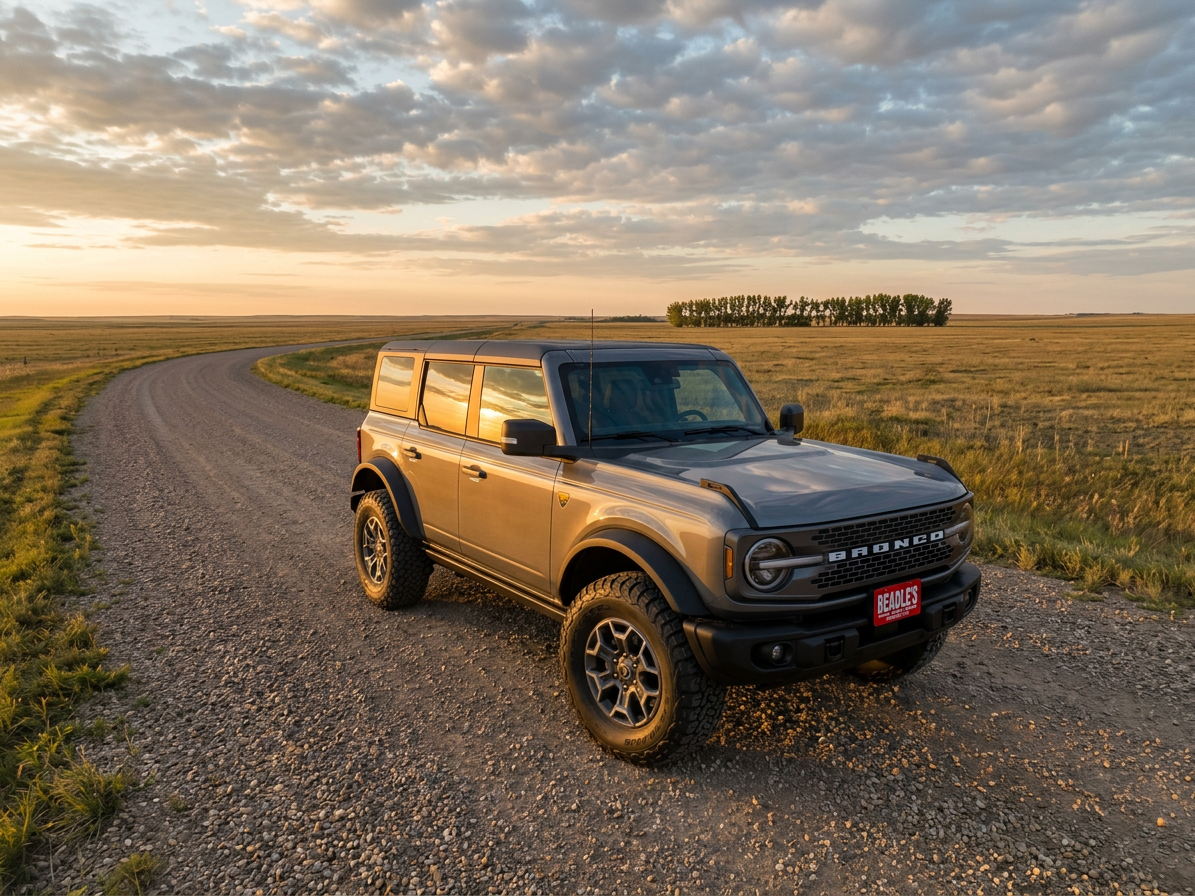
2026 Ford Bronco 4-Door Badlands in Marsh Gray on a gravel county road in central South Dakota at golden hour

Big Bend, Badlands, or Raptor? The 2026 Ford Bronco Trim Levels, Decoded

The 2026 Ford Bronco lineup runs from a $40,495 stripped-down Base 2-Door all the way up to a $79,995 Raptor — and there are six retail trims, two body styles, and a small pile of packages to sort through before you land on the right one. For most Beadle-area buyers, the answer is somewhere in the middle, and the difference between Big Bend, Outer Banks, and Badlands matters more than the brochure makes it look. This guide walks through every 2026 Bronco trim — what's standard, what's optional, what each one is actually for, and which one tends to fit a Plains Outdoorsman, a Ranch-Country Daily, or a Wrangler cross-shopper. Pricing is MSRP before the $1,995 destination charge. Shop Broncos in Stock Get Pre-Approved On This Page The 2026 Bronco Lineup at a Glance: Base Through Raptor Big Bend, Outer Banks, and Badlands: The Mainstream Choices Heritage Edition: Plaid Cloth, Sasquatch Standard, and a Different Buyer Black Diamond and Wildtrak: Packages, Not Trims (and Why That Matters) The Raptor: When the Top of the Lineup Makes Sense Which 2026 Bronco Trim Is Right for You? What Are All the 2026 Ford Bronco Trim Levels? The 2026 Bronco is sold in six retail trims — Base, Big Bend, Outer Banks, Badlands, Heritage Edition, and Raptor — plus a Stroppe Edition that is fleet and military only and not part of regular retail ordering. Black Diamond and Wildtrak are no longer standalone trims; they are now packages that bolt onto Big Bend and Badlands respectively. All 2026 Broncos are 4x4. Base and Badlands can be ordered as either a 2-Door or 4-Door; Big Bend, Outer Banks, Heritage, and Raptor are 4-Door only. Pricing starts at $40,495 for either Base body style and tops out at $79,995 for the Raptor, with the bulk of real-world Beadle-area orders landing between $45,000 and $60,000. Engine choice is also tied to trim. The 2.3L EcoBoost (300 hp / 325 lb-ft on premium fuel) is the default across most trims and is the only engine that pairs with the 7-speed manual transmission. The 2.7L EcoBoost V6 (330 hp / 415 lb-ft) is optional or standard on Outer Banks, Badlands 4-Door, and Heritage, and is the only engine offered on the Stroppe. The Raptor gets its own 3.0L EcoBoost V6 with the 10-speed automatic. Towing is uniform across the non-Raptor lineup at 3,500 lbs, regardless of engine or trim. The Raptor moves up to 4,500 lbs. If you've heard a higher number from a friend's Bronco or an older brochure, that's not 2026 — Ford caps the standard hitch receiver at 3,500 lbs, period. Which Bronco Trim Is Best for Most Buyers — Big Bend, Outer Banks, or Badlands? For most Beadle-area buyers, the answer is one of three trims: Big Bend if you want capable and simple, Outer Banks if you want creature comforts, or Badlands if you actually plan to use the off-road hardware. These three together account for the bulk of retail Bronco demand. Big Bend — $40,995 (4-Door 4x4) Big Bend is what most people think of as the "real" entry point — Base is more of an order-code starting point than a trim most retail buyers actually take home. For $500 more than Base, you get cloth seats with better material, painted wheels instead of bare steel, body-color flares, the upgraded grille, and a more livable interior package. The 12-inch SYNC 4 screen with wireless Apple CarPlay and Android Auto is standard, as it is on every 2026 Bronco. Co-Pilot360 driver-assist features (BLIS, lane-keeping, automatic emergency braking) come standard from Big Bend up. The 2.3L EcoBoost with the 7-speed manual is standard. Big Bend fits the Ranch-Country Daily — a buyer who wants real 4x4 capability and a comfortable enough cabin without paying for hardware they won't use. 2026 Ford Bronco 4-Door Outer Banks in Velocity Blue Metallic with body-color painted hardtop, on a Lake Oahe shoreline access lane. Outer Banks — $48,090 (4-Door 4x4) Outer Banks is where the Bronco gets comfortable. Standard equipment includes leather-trimmed seats, an automatic transmission (the 7-speed manual isn't offered here), 18-inch machined-aluminum wheels with 32-inch all-terrains, painted wheel arches, and Pro Power Onboard with the 400W outlet at the back of the console. The black soft top with hard-top prep kit is standard, and a body-color painted modular hardtop is available as an option ($2,695). The 2.7L EcoBoost V6 is optional ($2,995 upcharge). It is also the trim that gets the new 60th Anniversary Package for 2026 — a $4,995 add-on that requires Sasquatch and either Ruby Red or Wimbledon White paint. Outer Banks fits the Plains Outdoorsman who wants creature comforts on the long Bowdle-to-Black-Hills run, or a Ranch-Country Daily upgrading from a base truck and wanting the leather and the V6. Badlands — $48,890 (2-Door or 4-Door 4x4) Badlands is the trim built around off-road hardware that actually works. It comes standard with HOSS 2.0 suspension (rear Bilstein position-sensitive dampers), 33-inch R/T tires, electronic-locking front and rear differentials, the Advanced 4x4 system with 4-Auto mode, and the full 7-mode G.O.A.T. terrain system (Normal, ECO, Slippery, Off-Road, Sport, Rock-Crawl, and Baja — note that the historical "Mud/Ruts" mode is now Off-Road on the 2026 Badlands). For 2026, Ford also made the Front Stabilizer Bar Disconnect available as a standalone $1,305 option on Badlands — previously it only came packaged inside Sasquatch. The Sasquatch Package itself is $4,350 with the auto, $6,345 with the manual, and adds the 35-inch tires, 4.70 axle, and Bilstein high-clearance suspension. Badlands fits the Plains Outdoorsman who runs cattail sloughs, two-track section roads, and pasture access lanes — the buyer who is actually going to use the lockers. For the engine side of this decision — manual versus automatic, 2.3L versus 2.7L — see our 2.3L vs 2.7L EcoBoost engine comparison. For the Sasquatch Package math, see our honest take on whether Sasquatch is worth it in central South Dakota. Get Pre-Approved Contact Beadle Ford Who Is the 2026 Bronco Heritage Edition Actually For? Heritage Edition is for the buyer who wants a Bronco that looks like a Bronco — and is willing to pay $51,625 to get it without optioning piece by piece. It comes with the Sasquatch Package included as standard equipment, an Oxford White-painted hardtop, 17-inch Unique White wheels, navy plaid cloth seats, a white grille with red "FORD" lettering, and Heritage bodyside graphics that nod to the original first-generation Bronco. 2026 Ford Bronco 4-Door Heritage Edition in Marsh Gray with the standard Oxford White-painted hardtop and 17-inch Unique White wheels. Mechanically, Heritage is most similar to a Sasquatch-equipped Outer Banks or Badlands — the 35-inch R/T tires, 4.70 axle, electronic-locking front and rear differentials, and high-clearance suspension all come with it. New for 2026, the 10-speed automatic is now offered with the 2.3L EcoBoost on Heritage; previously the auto was only available with the 2.7L V6. The 2.7L V6 is still available as an upgrade. One late-build note worth knowing: Oxford White is no longer orderable as a body color on Heritage for 2026, even though the hardtop is still Oxford White. Heritage Edition fits the Wrangler cross-shopper who wants a vehicle with a personality — and the Plains Outdoorsman who values that the Sasquatch hardware is bundled in rather than line-itemed. It's not the cheapest way to get to Sasquatch capability, but it's the most distinctive. Are Black Diamond and Wildtrak Still Trim Levels for 2026? No — for 2026 both Black Diamond and Wildtrak are packages, not standalone trims. This trips up returning Bronco shoppers who remember the 2021–2024 lineup, where each had its own trim line and pricing. The Black Diamond Package ($4,495) bolts onto Big Bend and brings rock-rail-style steel bumpers, a heavy-duty bash plate, marine-grade vinyl seats, and an electronic-locking rear differential. It's also a prerequisite if you want to add Sasquatch to a Big Bend. Practically, this is what makes a Big Bend buildable into something close to a Badlands without paying full Badlands money — though without the front locker or HOSS 2.0 suspension. The Wildtrak Package ($11,945) is new for 2026's late build cycle and is exclusive to the Badlands 4-Door. It bundles the 2.7L EcoBoost V6, the 10-speed auto, the full Sasquatch package, the upgraded HOSS 3.0 suspension with FOX Internal Bypass dampers, and the Black Appearance Package. There is no way to option a Badlands to match what the Wildtrak Package gives you for less money — the FOX dampers are the part that drives the price. Two practical notes: Wildtrak is not available with painted hardtops, and the Black Diamond and Wildtrak packages are not interchangeable across trims — Black Diamond is Big Bend only, Wildtrak is Badlands 4-Door only. If you came in wanting a "2026 Wildtrak" or "2026 Black Diamond," the answer is to pick the underlying trim first, then add the package. When Does the 2026 Bronco Raptor Make Sense? The Raptor makes sense when you actually run high-speed off-road terrain — the kind of desert running it was engineered for — or when you want the most capable Bronco built without compromise on price. At $79,995 before destination, it's nearly twice the cost of a Big Bend, and for the average central-South Dakota buyer, that's harder to justify than it is in Phoenix or Las Vegas. Hardware-wise, the Raptor sits in its own tier: a twin-turbo 3.0L EcoBoost V6 producing 418 horsepower and 440 lb-ft of torque, 37-inch tires on 17-inch wheels, a Raptor-specific HOSS 4.0 suspension with FOX Live Valve dampers, body-color high-coverage fender flares, and the only Bronco hitch receiver rated to 4,500 lbs. Front Stabilizer Bar Disconnect and Lux Package content (360-degree camera, adaptive cruise, Bang & Olufsen audio) are standard. 2026 Ford Bronco 4-Door Raptor in Shelter Green Metallic with 37-inch tires, body-color high-coverage flares, and the Raptor-specific grille. Raptor interior with the Code Orange Appearance Package — Code Orange stitching, orange G.O.A.T. dial ring, carbon-fiber accents, and the standard 12-inch SYNC 4 display. Raptors do show up in Beadle-area orders, but they're a minority of retail demand. For a buyer who wants Raptor-level looks without the Raptor-level invoice, the Wildtrak Package on Badlands gets you the FOX suspension and the Sasquatch hardware for substantially less — though without the 37s, the wider track, and the Raptor-specific 3.0L V6. The Raptor fits the buyer who genuinely wants the most extreme version of the Bronco — and is willing to live with the fuel economy and tire-replacement bills that come with it. If you also cross-shop Wrangler at this level, our 2026 Bronco vs Jeep Wrangler comparison covers the Raptor-versus-Wrangler 392 question directly. Which 2026 Bronco Trim Is Right for You? For most Beadle-area buyers, the practical answer is one of three: Big Bend if you want a capable, comfortable Bronco at the lowest sensible entry point and don't need the lockers, Outer Banks if leather, the V6, and a painted hardtop matter more than Sasquatch hardware, or Badlands if you actually plan to use the front locker, HOSS 2.0, and 33-inch R/Ts on pasture roads, river-bottom access lanes, and lake shorelines. Heritage Edition is for the buyer who wants Sasquatch hardware bundled in and a vehicle that doesn't blend in at the elevator. Wildtrak Package on Badlands 4-Door is for the buyer who wants the FOX suspension and Sasquatch in one box without stepping up to a Raptor. Raptor itself is for the buyer who wants the Bronco at its absolute top spec — and accepts the price and operating costs that come with it. Either body style — 2-Door or 4-Door — works in Bowdle. The 4-Door dominates retail demand for kids, dogs, gear, and long highway runs. The 2-Door is a niche but real choice; for the trade-off discussion, see our 2-Door vs 4-Door Bronco breakdown. And to put any single trim in the context of the whole 2026 model year, the full 2026 Ford Bronco overview lays the engines, capability, and what's-new content side by side. Key Takeaways The 2026 Bronco lineup is six retail trims: Base, Big Bend, Outer Banks, Badlands, Heritage Edition, and Raptor — plus Stroppe (fleet/military only). Black Diamond and Wildtrak are no longer trims — they are packages on Big Bend and Badlands 4-Door, respectively. All non-Raptor 2026 Broncos tow 3,500 lbs. The Raptor tows 4,500 lbs. There is no in-between. SYNC 4 with the 12-inch screen is standard on every trim, including Base. BlueCruise is not offered on the 2026 Bronco. For most Beadle-area buyers, Big Bend, Outer Banks, or Badlands is the right answer — Heritage and Raptor serve specific buyers, not the average shopper. Frequently Asked Questions How many trim levels does the 2026 Ford Bronco have? There are six retail trims for 2026: Base, Big Bend, Outer Banks, Badlands, Heritage Edition, and Raptor. A Stroppe Edition exists but is fleet and military only and is not part of normal retail ordering. Black Diamond and Wildtrak are packages, not separate trims, on Big Bend and Badlands 4-Door respectively. Which 2026 Bronco trims come with electronic-locking differentials? Badlands, Heritage Edition, and Raptor come with electronic-locking front and rear differentials standard. Any trim equipped with the Sasquatch Package also gets front and rear lockers. Big Bend with the Black Diamond Package gets a rear locker only. Base, standard Big Bend, and standard Outer Banks come with open differentials. Can you still get a manual transmission on the 2026 Bronco? Yes. The 7-speed manual transmission is offered on Base, Big Bend, Badlands, and Heritage Edition — all paired with the 2.3L EcoBoost engine. It is not offered on Outer Banks, Stroppe, or Raptor. The 2.7L EcoBoost V6 and the Raptor's 3.0L EcoBoost V6 are automatic-only. How much does a fully loaded 2026 Ford Bronco cost? A fully loaded 2026 Bronco Raptor with appearance and convenience options can exceed $90,000 before destination. The retail starting prices range from $40,495 (Base) to $79,995 (Raptor), and the destination charge is $1,995 on every trim. Most Beadle-area orders land between $45,000 and $60,000 once trim, package, and color choices are added. What is the difference between Black Diamond and Sasquatch? Black Diamond is a value-focused capability package on Big Bend that adds a rear locker, steel bumpers, bash plates, and marine-grade vinyl seats for $4,495. Sasquatch is the high-clearance off-road package that adds 35-inch tires, the 4.70 axle, front and rear lockers, and Bilstein high-clearance suspension. They are not the same — and on Big Bend, Black Diamond is a prerequisite to add Sasquatch. My Take on the 2026 Ford Bronco Lineup In my time at Beadle Ford, I've seen the same trim conversation play out a hundred different ways — and the buyers who land happiest tend to be the ones who picked based on what they actually do, not on what the brochure cover looks like. The Big Bend with the Black Diamond Package quietly outperforms its price, the Outer Banks is the trim I steer comfort-first families toward, and the Badlands is the one our pheasant and ranch-country buyers usually keep coming back to. If you're trying to decide between two trims and the math feels close, come walk both of them. We can talk through the order guide, the package logic, and what each trim actually does on a section road outside Bowdle — and you'll know in twenty minutes which one is yours. Shop Broncos in Stock Get Pre-Approved About the Author Lexy Tabbert — Beadle Ford, Bowdle, SD Lexy Tabbert is the Director of Sales and Marketing at Beadle Ford in Bowdle, South Dakota. She covers Ford vehicles, trim comparisons, and buyer guidance — helping families, ranchers, and ag operators across the region find the right truck and configuration for their needs. Learn more about Lexy.
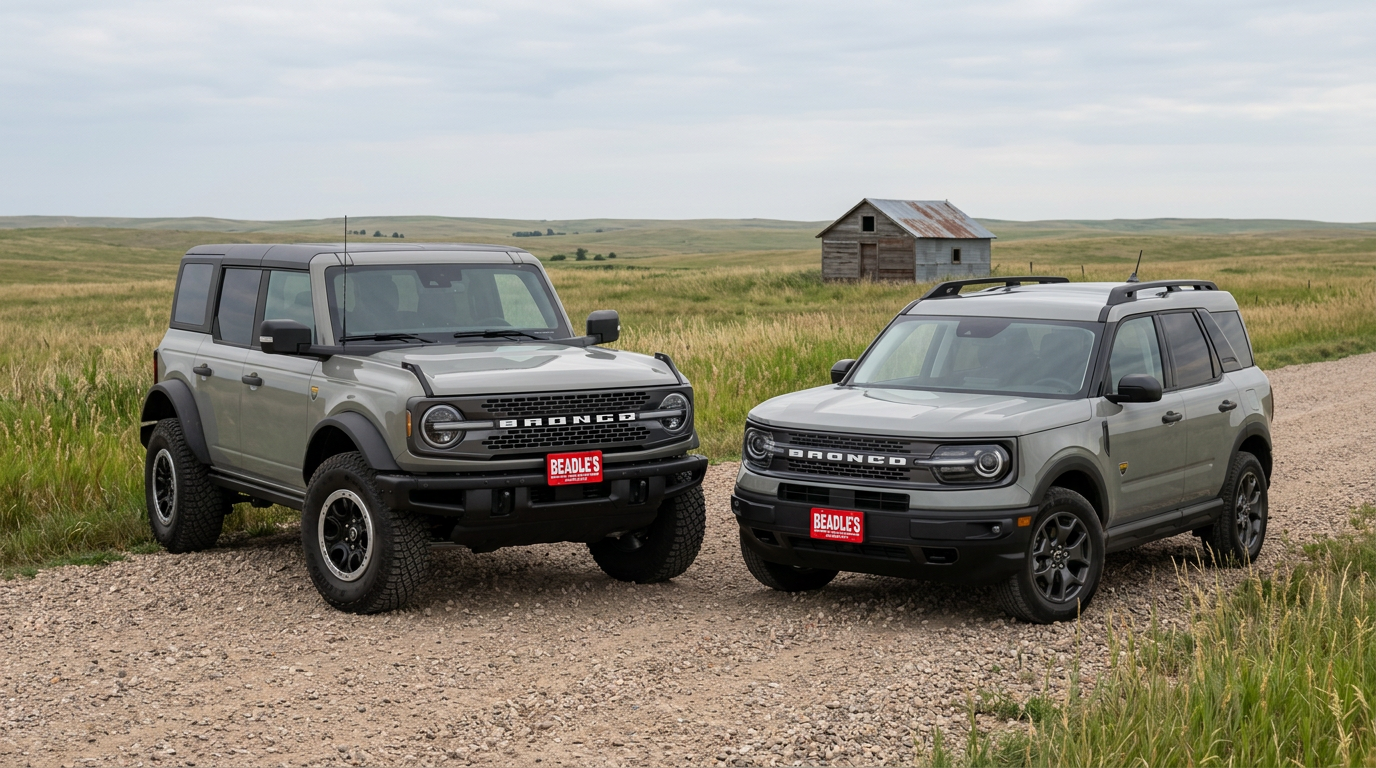
2026 Ford Bronco Badlands and 2026 Ford Bronco Sport parked side-by-side at Beadle Ford in Bowdle, SD, comparing the body-on-frame and unibody body styles

2026 Ford Bronco vs Bronco Sport: Which One Is Right for You?

Half the customers who walk into Beadle Ford asking about a Bronco actually want a Bronco Sport. The other half think the Sport is the right call until they see what the full-size Bronco can do. Two vehicles, similar names, same off-road family — and very different jobs. Knowing which one fits your week before you walk onto the lot saves time, money, and a regret call six months later. This guide is an honest comparison of the 2026 Ford Bronco and the 2026 Ford Bronco Sport for buyers in Bowdle and the central South Dakota region. We'll cover what body-on-frame versus unibody really means for daily driving, interior and cargo room, off-road hardware, towing and capability, the pricing gap and what it buys, and which one we recommend for which kind of buyer. Both are good vehicles. Only one is right for any given customer. Shop Broncos in Stock Get Pre-Approved On This Page What Does Body-on-Frame vs Unibody Actually Mean for Drivers? How Do Interior Space, Cargo Room, and Daily Practicality Compare? How Does the Off-Road Hardware Compare — Sasquatch vs Sport Badlands? Which One Tows More, and What Real-World Capability Does Each Offer? What's the Pricing Gap, and What Does the Money Actually Buy You? Which One Should Beadle Ford Recommend for You? What Does Body-on-Frame vs Unibody Actually Mean for Drivers? The Bronco is body-on-frame: a separate ladder frame underneath the body, the same architecture as a full-size truck. The Bronco Sport is unibody: the body and structural frame are a single welded unit, the same architecture as a crossover SUV. That single design choice drives almost every meaningful difference between the two. Body-on-frame gives you better hard off-road durability, easier flex when one wheel is up on a rock and another is in a hole, simpler frame repair after damage, and the ability to mount removable doors and a removable roof without compromising structure. It also makes the vehicle heavier, slightly louder at highway speed, and a little less refined on smooth pavement. Unibody gives you a quieter cabin, better fuel economy, smoother ride quality on pavement, lower curb weight, and a tighter turning radius. The trade-off is reduced articulation in genuine off-road conditions and a lower towing ceiling. For a buyer who lives mostly on Bowdle's blacktop and gravel and occasionally wants to access a CRP edge or a Lake Oahe boat ramp, unibody is plenty. For a buyer who needs to thread a section-line two-track in winter or pull a 3,500-lb boat trailer, body-on-frame is the right tool. How Do Interior Space, Cargo Room, and Daily Practicality Compare? Both vehicles seat five. The full-size Bronco's 4-Door is wider and taller, with more shoulder room front and rear, more rear-seat legroom, and a noticeably bigger cargo bay behind the rear seats. The Bronco Sport is narrower and lower, easier to park in a small-town downtown space, and lighter on the eyes for shorter drivers who don't want to climb up into the cabin. The full-size Bronco's wider track and taller body translate into more interior room — and a more deliberate driving feel — than the Bronco Sport's lower, lighter unibody. Cargo: a 4-Door Bronco swallows a Lab-sized kennel, a full decoy spread, and two coolers behind the rear seats with the seats up. The Bronco Sport's cargo bay handles a kennel and a cooler with the seats up, but a full decoy spread or layout blind needs the rear seat folded. For grocery-and-school-pickup duty, both are plenty. For a hunting rig that hauls dogs and gear, the full-size Bronco is the right answer. For full hunting use cases see our South Dakota hunting guide. Daily-driver feel is where the Bronco Sport pulls ahead. It rides quieter on US-12 at 70 mph, returns better fuel economy on the Bowdle-to-Hills run, and parks more easily in a narrow lot. The full-size Bronco's removable doors and roof are unique to the platform — the Bronco Sport doesn't offer them. If the doors-off summer lifestyle is part of why you're shopping, that's a Bronco-only feature. How Does the Off-Road Hardware Compare — Sasquatch vs Sport Badlands? Both vehicles can tackle a wet ranch two-track, a CRP access road, or a snow-packed section line in central SD. The line between them shows up in deep mud, real ruts, and rock crawling — situations where the full-size Bronco's hardware advantage is the difference between getting through and getting stuck. A Sasquatch-equipped Bronco runs 35-inch tires, electronic-locking front and rear differentials, and high-clearance suspension — hardware that the unibody Bronco Sport doesn't offer. The full-size Bronco's Badlands trim ships with electronic-locking front and rear differentials, 33-inch Rugged-Terrain tires, the seven-mode G.O.A.T. terrain system (Off-Road, Rock-Crawl, Baja added on top of the standard five), and the Advanced 4x4 system with 4-Auto. Add the Sasquatch Package and you get 35-inch tires and HOSS suspension upgrades. For the full breakdown see our 2026 Bronco trim levels guide. The Bronco Sport's Badlands trim is the most off-road-focused of the Sport lineup, with steel underbody skid plates, terrain modes, and twin-clutch rear axle technology. It's a capable rig for what it is — a unibody crossover with off-road tuning — but it doesn't offer beadlock-capable wheels, 35-inch tires, or the dual electronic locker setup. For everyday SD ranch and lake access, Sport Badlands handles it. For genuine off-road work, the full-size Bronco's hardware ceiling is much higher. Get Pre-Approved Contact Beadle Ford Which One Tows More, and What Real-World Capability Does Each Offer? The full-size Bronco wins on towing. Every non-Raptor 2026 Bronco is rated for a 3,500-lb maximum loaded trailer weight, and the Raptor is rated for 4,500 lbs. The Bronco Sport's tow rating is significantly lower and is configuration-dependent — for a small utility trailer, a single-axle aluminum boat, or a lightweight pop-up camper it works; for the 3,500-lb fishing-rig-on-a-trailer use case, the full-size Bronco is the right vehicle. Real-world capability beyond towing is where each vehicle's intended use shows up. The full-size Bronco is built to handle deep snow on a section line, mud on a slough access road, and frozen ruts on a river-bottom whitetail trail. It walks through what the Bronco Sport would have to turn around at. The Bronco Sport, in turn, is built to handle the entire range of central SD daily driving with capability in reserve — gravel roads, light off-pavement, snowy commutes, dirt fairgrounds — in a more efficient and refined package. A practical note for towing: a dealer-installed OEM trailer hitch receiver is required for any towing over 2,000 lbs on the full-size Bronco, regardless of trim. Same kind of dealer-install conversation applies to the Bronco Sport for any towing setup. Bring the trailer specs to the conversation and we'll size the right tow package for either vehicle. What's the Pricing Gap, and What Does the Money Actually Buy You? The 2026 Bronco starts at $40,495 (Base 2-Door or 4-Door), runs through Big Bend at $40,995, Outer Banks at $48,090, Badlands at $48,890, Heritage Edition at $51,625, and tops out at the Raptor at $79,995 — all before the $1,995 destination charge. The 2026 Bronco Sport's lineup starts well below the full-size Bronco's entry point and tops out below the Bronco Badlands' starting price. There's typically a five-to-fifteen-thousand-dollar gap between comparably equipped Sport and Bronco trims. The money buys you four things on the full-size Bronco that the Sport can't match: removable doors and roof, body-on-frame off-road durability, a tow rating up to 3,500 or 4,500 lbs, and the highest off-road hardware ceiling in the segment (lockers, 35-inch tires, HOSS suspension on Badlands and up). If those features matter to you, the upcharge is worth it. If they don't, you're paying for capability you won't use. Cost of ownership beyond purchase price tends to favor the Bronco Sport over time. Better fuel economy, lower insurance in most cases, and lower tire-replacement costs (32-inch tires versus 33-inch or 35-inch on the full-size Bronco) all add up over a five-year ownership window. We'd rather have the straight conversation than oversell either vehicle. Which One Should Beadle Ford Recommend for You? Pick the Bronco Sport if your daily driving is mostly pavement and gravel, you want better fuel economy, parking matters in your week, and you don't tow more than light loads. Sport Badlands is plenty for ranch-property access, CRP edges, and Lake Oahe boat ramp duty in fair weather. The 2026 Bronco Sport lineup is detailed on our 2026 Ford Bronco Sport overview, and the model page with current inventory lives at the Ford Bronco Sport model page. Pick the full-size Bronco if you tow a 3,500-lb boat or trailer, you hunt cattail sloughs and river-bottom timber, you want the doors-off summer lifestyle, you regularly drive unplowed section lines in winter, or the body-on-frame durability matters because you actually use the vehicle hard. Badlands 4-Door is the sweet spot for most central SD buyers; the Sasquatch Package is the upgrade if you cross deep mud or snow regularly. Pick neither if you don't actually want or need 4WD, off-road styling, or the Bronco identity. Ford has several strong crossover options that will be cheaper, more efficient, and better suited to a pure pavement life. Both Broncos are real off-road vehicles — the value is in using what they offer. The complete 2026 Ford Bronco overview lays out trims, packages, and capability side by side if you're leaning full-size. Key Takeaways Bronco is body-on-frame; Bronco Sport is unibody. That single design choice drives almost every meaningful difference between them. Full-size Bronco tows up to 3,500 lbs (non-Raptor) or 4,500 lbs (Raptor). Bronco Sport tow rating is significantly lower and configuration-dependent. Removable doors and roof are unique to the full-size Bronco — the Bronco Sport doesn't offer them. Sport Badlands handles light off-road and gravel-road duty in central SD; full-size Bronco Badlands or Sasquatch handles cattail sloughs, river-bottom timber, and unplowed section lines. Bronco Sport wins on fuel economy, daily refinement, parking, and total cost of ownership. Full-size Bronco wins on capability ceiling, towing, and lifestyle features. Frequently Asked Questions Is the 2026 Bronco Sport built on the same platform as the full-size Bronco? No. The full-size Bronco is body-on-frame, sharing architecture with full-size trucks. The Bronco Sport is unibody, sharing architecture with crossover SUVs. They are completely different vehicles that share branding and styling cues but not platform, drivetrain, or capability ceiling. Can the Bronco Sport take its doors and roof off like the full-size Bronco? No. The Bronco Sport's unibody construction doesn't accommodate removable doors or a removable roof. If the doors-off summer lifestyle is part of why you're shopping, the full-size Bronco is the only option in the lineup. Which one is better for towing a small fishing boat to Lake Oahe? For a small aluminum boat on a single-axle trailer, either vehicle can handle the load. For a heavier fiberglass fishing rig that approaches 3,000 lbs, the full-size Bronco is the right call — every non-Raptor 2026 Bronco is rated for a 3,500-lb maximum, well above what the Bronco Sport's lower tow rating supports. A dealer-installed OEM trailer hitch is required for any towing over 2,000 lbs on the full-size Bronco. Is the Bronco Sport Badlands as capable off-road as the full-size Bronco Badlands? No. The Sport Badlands is the most off-road-focused trim of the Sport lineup, but it doesn't match the full-size Badlands' electronic-locking front and rear differentials, 33-inch Rugged-Terrain tires (or 35-inch with Sasquatch), the seven-mode G.O.A.T. terrain system, or the body-on-frame articulation in real ruts. Sport Badlands handles light off-road and gravel; full-size Badlands handles deep mud, river-bottom two-tracks, and unplowed section lines. How much more does a full-size Bronco cost than a Bronco Sport? The 2026 Bronco starts at $40,495 (Base) before destination, with Big Bend at $40,995, Badlands at $48,890, Heritage Edition at $51,625, and Raptor at $79,995. The Bronco Sport lineup starts well below the full-size Bronco's entry point and tops out below the Bronco Badlands. There's typically a five-to-fifteen-thousand-dollar gap between comparably equipped Sport and full-size trims. Which gets better fuel economy on a Bowdle-to-Black-Hills highway run? The Bronco Sport returns better EPA-estimated fuel economy than the full-size Bronco across comparable engine and trim configurations. The Sport's lower curb weight and more aerodynamic unibody profile both contribute. Always frame fuel economy claims as EPA-estimated and varying by configuration, and confirm specific numbers on fueleconomy.gov for the exact build you're shopping. My Take on the Bronco vs Bronco Sport Decision The mistake I see most often is a customer ordering the full-size Bronco because it looks more capable, then driving it for two years on pavement and gravel and never once putting it in 4-Low. That's a $15,000 capability premium for a vehicle that's not being used to its purpose — and it's a Bronco Sport in disguise. The reverse mistake also happens: a customer orders the Sport because it's more affordable, then realizes a year in that they actually do tow a fishing boat and want the doors off in summer. Honest advice: the right vehicle is the one that matches what you actually do, not what you imagine doing. We sell both at Beadle Ford, and we'd rather sell you the right one and have you back in five years than sell you the wrong one and lose you to a different brand. Bring your real use case — towing, terrain, weekly miles, summer plans — and we'll walk through both. The conversation usually settles itself in fifteen minutes. Shop Broncos in Stock Get Pre-Approved About the Author Lexy Tabbert — Beadle Ford, Bowdle, SD Lexy Tabbert is the Director of Sales and Marketing at Beadle Ford in Bowdle, South Dakota. She covers Ford vehicles, trim comparisons, and buyer guidance — helping families, ranchers, and ag operators across the region find the right truck and configuration for their needs. Learn more about Lexy.
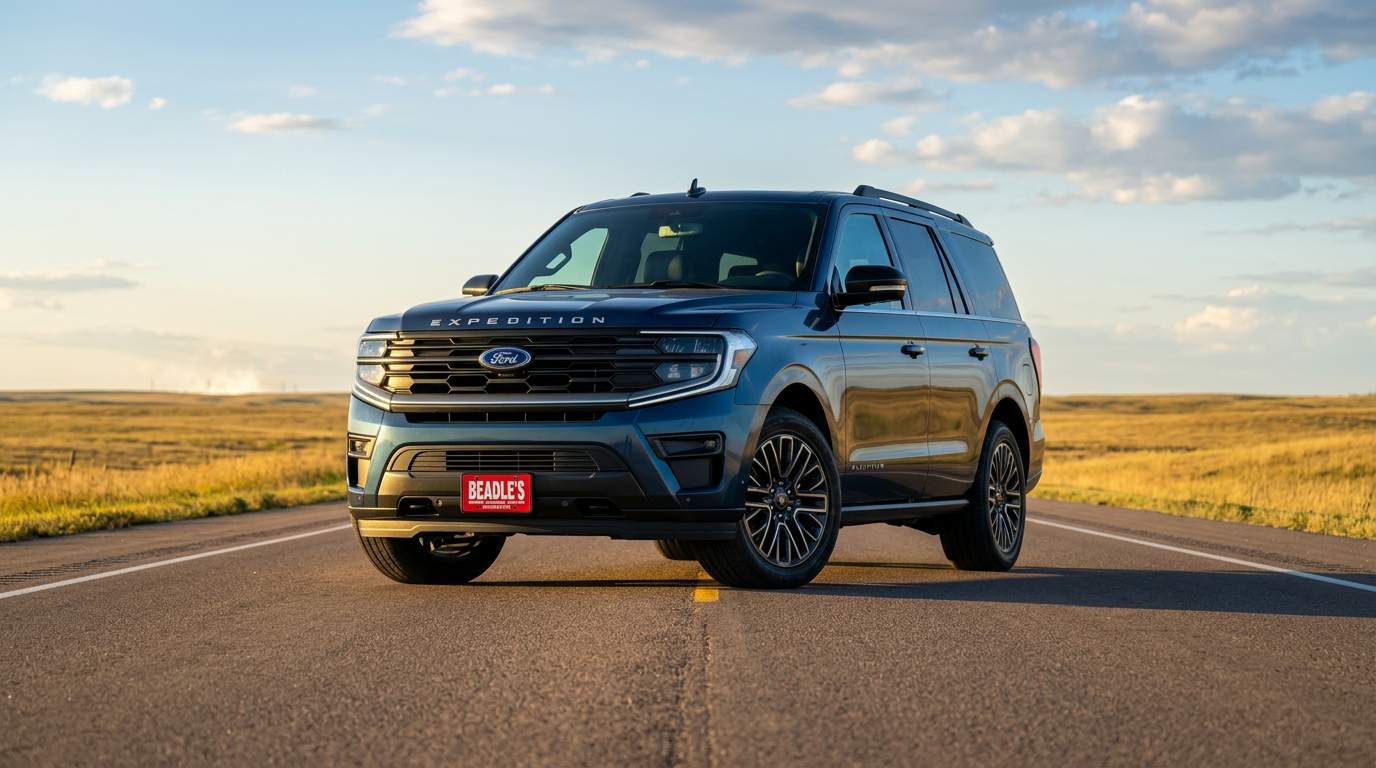
2027 Ford Expedition Platinum in Nocturnal Blue Metallic on a South Dakota highway at golden hour, Beadle Ford Bowdle SD

2027 Ford Expedition vs. 2026 Chevy Tahoe and Suburban: An Honest Cross-Shop for Ag Country Buyers

Home› Ford Expedition› 2027 Ford Expedition› Expedition vs. Tahoe & Suburban If you’re cross-shopping a 2027 Ford Expedition against a 2026 Chevy Tahoe or Suburban, you’re asking one of the most practical full-size-SUV questions in this part of the country. Both trucks do the same jobs — haul a family, pull a livestock trailer, cover long highway stretches to Sioux Falls or Fargo — but they get there with different powertrains, different tech, and different body-style philosophies. This guide is an honest cross-shop written for the buyers we actually see at Beadle Ford: ranchers and ag operators who’ve run GM full-size SUVs for decades, families who want the MAX-length option, and highway commuters deciding between EcoBoost V6 and V8 power. We’ll compare powertrains, towing, interior and tech (including BlueCruise vs. Super Cruise), and the MAX-vs.-Suburban body-style decision — then close with who should pick which truck and why. Browse Expedition Inventory Ask About a Custom Order On This Page Ford EcoBoost V6 vs. GM V8 — which powertrain wins? How does the 2027 Expedition’s towing compare to Tahoe and Suburban? Ford Digital Experience vs. GM tech — what’s different? Expedition MAX vs. Suburban — which is the right long-haul SUV? Which buyers should pick Ford and who should stay with GM? Ford EcoBoost V6 vs. GM V8 — which powertrain wins? It depends on what you’re measuring. The 2027 Ford Expedition runs the 3.5L EcoBoost V6 — a twin-turbocharged V6 — with a 440 hp / 510 lb-ft High Output variant available on the Tremor, Platinum Stealth Performance, and Platinum Ultimate configurations. The 2026 Chevy Tahoe and Suburban use naturally aspirated V8s: a 5.3L as the standard engine, a 6.2L V8 as the upgrade. Both brands mate their engines to 10-speed automatic transmissions. Where the V6 turbo wins: cruise fuel economy on flat interstate (the EcoBoost is off-boost at 70 mph and behaves like a smaller engine), altitude tolerance (a turbocharged V6 doesn’t lose power at elevation the way a naturally aspirated V8 does — relevant if you tow into Wyoming or the Black Hills), and peak torque delivered lower in the rev range. The Ford’s 510 lb-ft High Output figure outpaces the Tahoe’s 6.2L V8 on peak torque, and both High Output and the Tahoe’s 6.2L use the same 10-speed auto. Where the GM V8 wins: throttle feel at cold starts, a mechanical simplicity that some long-time owners value, and the sound. Buyers who have run GM V8s for a decade or more often describe the EcoBoost as “different” — not worse, but different. Under load with a trailer, the EcoBoost spools up and delivers; a 6.2L V8 just digs in. Both work. For the full 2027 Expedition lineup and engine-by-trim availability, see the complete 2027 Ford Expedition overview. How does the 2027 Expedition’s towing compare to Tahoe and Suburban? The Expedition has a few hundred pounds of headroom over comparable Tahoe and Suburban configurations. The 2027 Expedition Tremor is rated to tow up to 9,300 lbs when properly equipped. Chevrolet’s published figures for the 2026 Tahoe cite a maximum tow rating in the 8,400 lb range when properly equipped, with the Suburban rated slightly lower due to its longer wheelbase and additional mass. For most buyers in our service area, the real-world question isn’t peak rating — it’s whether the truck handles your specific trailer comfortably. A bumper-pull trailer loaded with a pair of quarter horses, a 20-foot enclosed trailer with a side-by-side and gear, or a tandem-axle boat trailer for Lake Oahe all sit well inside both trucks’ capabilities when properly equipped. Configuration, payload, and weight distribution matter more than peak figures. Where the Expedition adds practical value: Pro Trailer Hitch Assist and Pro Trailer Backup Assist are standard across every retail Expedition trim via Ford Co-Pilot360 Assist 2.0 — they’re not package-dependent. BLIS with Trailer Coverage extends blind-spot monitoring around whatever you’re pulling. The Tremor’s 3.73 Electronic Locking Rear Differential and seven drive modes give you a recovery option that a Tahoe or Suburban simply doesn’t offer from the factory. If you’re sizing an Expedition to a specific trailer, contact Beadle Ford and we’ll run the configuration against your actual load before you buy. Ready to explore the Ford side? Get Pre-Approved Browse Current Expedition Inventory Ford Digital Experience vs. GM tech — what’s different? Both brands now run Google-integrated infotainment. The 2027 Expedition’s Ford Digital Experience pairs a 24" panoramic driver display with a 13.2" center display, with Google Maps, Google Assistant, and Google Play Store embedded natively. Wireless Apple CarPlay and Android Auto are standard from Active and up. The 2026 Tahoe and Suburban use GM’s Google Built-In system across a 17.7" center touchscreen on upper trims, with a similar Google Maps and Assistant integration. The driver-monitoring hands-free systems are the bigger differentiator. Ford’s BlueCruise works on approximately 97% of controlled-access U.S. and Canada highways, includes Lane Change Assist and In-Lane Repositioning, and uses a driver-facing camera for attention monitoring. A 90-Day Trial is included on Active Touring retail orders, and the 1-Year + 90-Day plan is standard on Platinum Ultimate and King Ranch. GM’s Super Cruise is the mature competing system — it’s hands-free on a different set of mapped roads and uses its own driver-monitoring approach. For South Dakota buyers, the coverage question matters most on two routes: I-90 east-west across the state and the US-12 / US-281 highway system north-south. Both systems cover I-90 well; coverage on the two-lane and semi-divided highway stretches that most of us actually drive is narrower for both. The BlueCruise vs. Super Cruise vs. ProPilot comparison walks through which system covers which roads — it’s the right resource if hands-free driving is a real decision factor for you. Ford Co-Pilot360 Assist 2.0 is standard on every retail Expedition. Features include a 360-degree camera with off-road overlays and a Rock Crawl view (the camera hardware that enables the Tremor’s trail-running), adaptive cruise with lane centering and Predictive Speed Assist, Pre-Collision Assist with automatic emergency braking, and BLIS with cross-traffic and trailer coverage. GM offers comparable tiers on the Tahoe and Suburban depending on trim. Expedition MAX vs. Suburban — which is the right long-haul SUV? Both are the extended-length full-size SUV answer from their respective brands. The Expedition MAX is the stretched version of the standard Expedition — available for 2027 on XL, Active Select, Active Touring, Platinum (including the 30th Anniversary Appearance Package), and King Ranch. Tremor is standard-length only. New for 2027: MAX Platinum is offered in 4x2 configuration as well as 4x4. The Suburban is GM’s always-extended full-size — there is no “standard Suburban” body style; the name itself denotes the extended platform. The body-style decision usually comes down to powertrain and tech preference rather than size. Both offer meaningful third-row legroom and cargo volume behind the third row — enough for a family of five or six with luggage for a week. If you want extended length plus V8 power, Suburban is the answer. If you want extended length plus EcoBoost V6 plus Ford Digital Experience plus the option of the 30th Anniversary Appearance Package on a MAX Platinum, the MAX is the answer. For a full Expedition vs. MAX decision framework — standard-length vs. extended, trim availability by body style, and when the extra length is genuinely worth it — see the 2027 Ford Expedition vs. Expedition MAX guide. Which buyers should pick Ford and who should stay with GM? Both trucks are legitimate. The right call depends on what you actually value in a full-size SUV, how you drive, and what your history with both brands has taught you. Pick the 2027 Ford Expedition if: You want EcoBoost V6 turbocharged power and the cruise-fuel and altitude benefits that come with it You’re considering a factory off-road trim — the Tremor has no direct GM equivalent (GM’s Z71 is a package, not a standalone trim) You want the 30th Anniversary Appearance Package on a Platinum — the only Expedition configuration offering Blue Ember Metallic You want Pro Trailer Hitch Assist and Pro Trailer Backup Assist standard on every retail trim, not as an upsell You want BlueCruise coverage and the 97% controlled-access highway figure matches how you drive You want the 24" panoramic driver display and the Ford Digital Experience’s pano mode Stay with the 2026 Chevy Tahoe or Suburban if: You’ve run GM V8s for decades and the sound, feel, and mechanical character of a naturally aspirated V8 matter to you You want a 6.2L V8 specifically and don’t want a turbocharged V6 alternative You want the 3.0L Duramax diesel inline-six option (Ford doesn’t offer a diesel in the Expedition) Super Cruise’s mapped-road footprint covers your specific highway routes better than BlueCruise does You’re deeply loyal to the Chevrolet brand and have a service relationship you want to keep For the ag buyer who has run GM full-size forever and is considering the switch because of a specific feature — whether that’s BlueCruise, the EcoBoost V6’s altitude behavior, Pro Trailer Hitch Assist, or the Tremor — come drive both and see which one you get out of at the end of a 200-mile day. That usually decides it. Key Takeaways Ford: 3.5L EcoBoost V6 (standard) and 3.5L EcoBoost V6 High Output at 440 hp / 510 lb-ft (confirmed). GM: 5.3L V8 standard, 6.2L V8 optional, 3.0L Duramax diesel I6 optional. Both brands use 10-speed automatic transmissions. Expedition Tremor tows up to 9,300 lbs when properly equipped; Tahoe tops out near 8,400 lbs per Chevrolet’s published figures. Pro Trailer Hitch Assist and Pro Trailer Backup Assist are standard on every retail 2027 Expedition trim via Ford Co-Pilot360 Assist 2.0. BlueCruise covers approximately 97% of controlled-access U.S. and Canada highways; Super Cruise covers a different mapped footprint. Compare by the routes you actually drive. No direct GM equivalent to the Expedition Tremor as a factory off-road trim. No Ford Expedition diesel option. Frequently Asked Questions How does the 2027 Ford Expedition compare to the Chevy Tahoe and Suburban? The 2027 Expedition uses a 3.5L EcoBoost V6 (twin-turbo, with a 440 hp / 510 lb-ft High Output variant) while the 2026 Tahoe and Suburban run naturally aspirated V8s (5.3L standard, 6.2L optional) plus an available 3.0L Duramax diesel I6 on the GM side. Both brands use 10-speed autos. Expedition tops in max tow capability and offers BlueCruise; GM counters with V8 heritage, Super Cruise, and the diesel option. Can the 2027 Expedition tow more than a Chevy Tahoe? In maximum trailer rating, yes — the 2027 Expedition Tremor is rated to tow up to 9,300 lbs when properly equipped, versus Chevrolet’s published figures for the 2026 Tahoe in the 8,400 lb range. Configuration and weight distribution matter more than peak figures for most real trailers. Does the Ford Expedition have a V8? No. The 2027 Ford Expedition is offered only with the 3.5L EcoBoost V6 family — standard, or the 440 hp / 510 lb-ft High Output variant on Tremor, Platinum Stealth Performance, and Platinum Ultimate. There is no V8 Expedition and no diesel Expedition. Is the Expedition MAX the same size as the Suburban? Both are extended-length full-size SUVs and offer similar third-row legroom and cargo volume. The Expedition MAX is the stretched version of the standard Expedition; the Suburban is always the extended platform (there is no standard-length Suburban). Exact overall length differs slightly between the two; the real comparison for most buyers is powertrain and tech preference rather than inches. Does the Tahoe have a factory off-road trim like the Tremor? Not as a standalone trim. Chevrolet offers the Z71 off-road package on the Tahoe, which adds off-road-oriented equipment to a trim, but the Expedition Tremor is a full trim with its own engine spec (the 440 hp High Output V6), its own suspension tuning, its own 3.73 Electronic Locking Rear Differential, and its own off-road-specific equipment standard — not a package layered onto an existing trim. Which is better on fuel — the Expedition or the Tahoe? EPA ratings for the 2027 Ford Expedition are listed on each in-stock unit’s window sticker. Turbocharged V6 engines typically return better fuel economy than naturally aspirated V8s at cruise, especially at altitude, but full-throttle towing and payload scenarios narrow that gap. If fuel economy is a primary decision factor, compare the window-sticker numbers against your specific driving pattern. Where can I drive both before I decide? Beadle Ford in Bowdle sells the Expedition — we’d be happy to set up a test drive and compare configurations against what you’re seeing on the Chevy side. Call (866) 561-2636 or reach out through our contact page to schedule. My Take on the Expedition vs. Tahoe & Suburban Cross-Shop Both trucks are legitimate. I won’t pretend otherwise. What I tell buyers who walk into Beadle Ford cross-shopping from a GM full-size is this: drive the EcoBoost V6 before you decide. It’s different from a 5.3L or 6.2L V8, and whether that difference registers as “better” or just “different” depends on what you’re used to. The Expedition’s advantages — peak tow headroom, standard Pro Trailer assists, Tremor capability, BlueCruise coverage, the 24" panoramic display — are real, but they matter more to some buyers than others. If you’ve been running GM for decades and everything works for you, there’s no shame in sticking with GM. If you’re curious about what the sixth-generation Expedition does better, come drive one. I’ll walk you through the configuration and we’ll figure out honestly whether switching makes sense for your week. No pressure, no scripts. Shop 2027 Expeditions in Stock Contact Beadle Ford About the Author Lexy Tabbert — Beadle Ford, Bowdle, SD Lexy Tabbert is the Director of Sales and Marketing at Beadle Ford in Bowdle, South Dakota. She covers Ford vehicles, trim comparisons, and buyer guidance — helping families, ranchers, and ag operators across the region find the right truck and configuration for their needs. Learn more about Lexy.
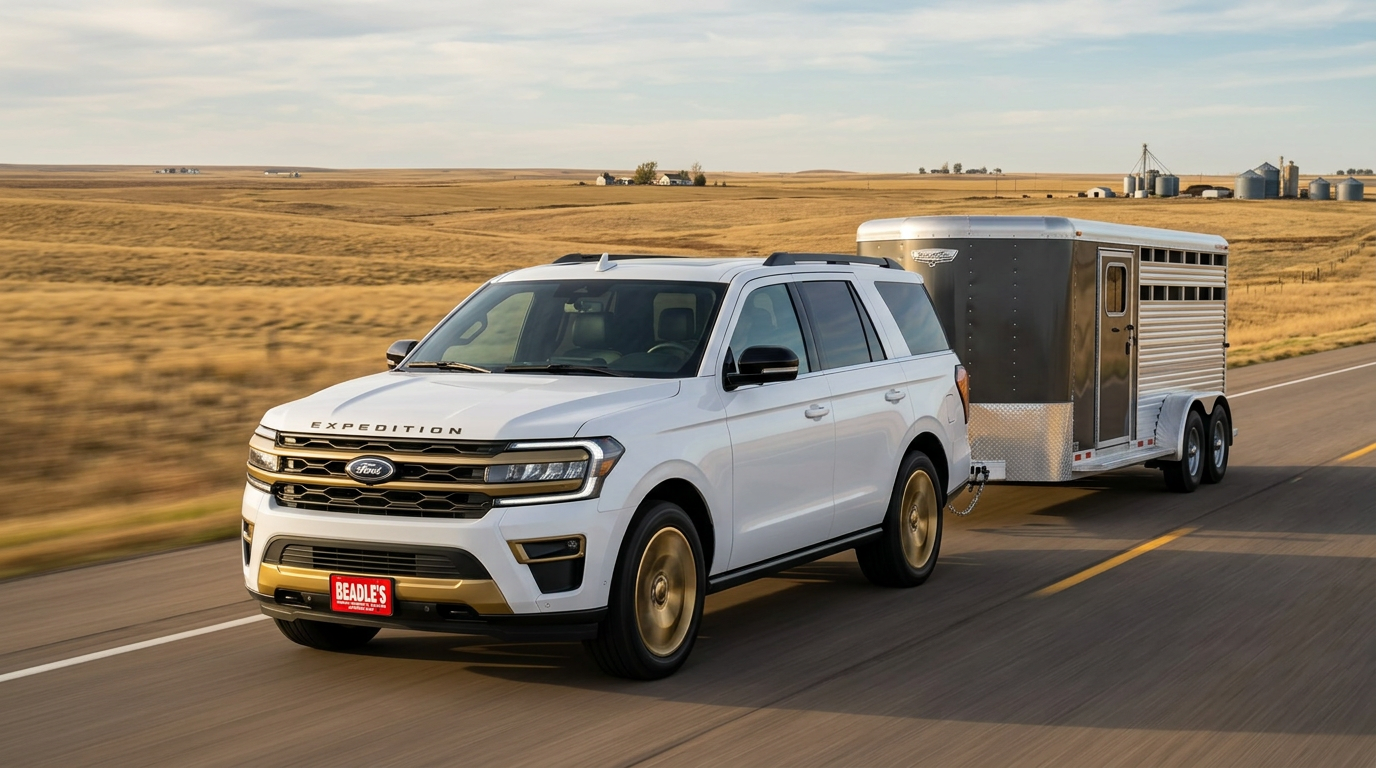
2026 Ford Expedition towing a trailer near Bowdle South Dakota

2026 Ford Expedition Towing Guide: Capacity, Configurations & What You Need to Know

The 2026 Ford Expedition can tow up to 9,600 lbs — but that number only applies to one specific configuration. The actual rating for your build depends on drivetrain, axle ratio, wheelbase, and whether the Heavy-Duty Trailer Tow package is installed. Get one of those wrong and you may be operating beyond your rated limit without knowing it. This guide breaks down every towing figure from Ford's official 2026 Expedition Towing Guide, explains the equipment required to reach the higher ratings, and connects those numbers to the trailers South Dakota buyers actually pull — horse trailers, bumper-pull campers, hay equipment, and boats on the Missouri River system. Shop Expeditions in Stock Get Pre-Approved On This Page What are the actual 2026 Expedition tow ratings by configuration? What does the Heavy-Duty Trailer Tow package include? Why does the axle ratio matter so much? When is a weight-distributing hitch required? Real-world towing scenarios: what can the Expedition actually pull? Does elevation affect towing capacity in South Dakota? Does the Expedition MAX tow less than the standard Expedition? What towing technology comes with the Expedition? Key Takeaways FAQ What are the actual 2026 Expedition tow ratings — by configuration? The 9,600 lb headline figure applies to the Expedition SWB 4x4 with the 3.73 axle ratio and the Heavy-Duty Trailer Tow package installed. Every other configuration is rated lower. The table below reflects Ford's official 2026 Expedition Towing Guide, calculated using the SAE J2807® method. Configuration Axle GCWR (lbs.) Max Tow (lbs.) Expedition SWB 4x4 3.73 15,900 9,600 Expedition SWB 4x2 — Tremor® High Output 3.73 15,600 9,300 Expedition SWB 4x2 — standard (24" wheels) 3.73 15,600 9,200 Expedition MAX 4x4 3.73 15,900 9,000 Expedition SWB 4x2 — standard 3.31 12,000 6,000 Expedition MAX 4x2 — standard 3.31 12,500 6,300 Source All figures from Ford's official 2026 Expedition Towing Guide, calculated using the SAE J2807® method. Maximum towing varies based on cargo, vehicle configuration, accessories, and number of passengers. Ratings assume a 150-lb. driver and passenger. The difference between the 6,000 lb and 9,600 lb rating comes down to two things: the 3.73 rear axle ratio and the Heavy-Duty Trailer Tow package. Without both, you're operating at the lower end of the range. On the Active 4x2, neither is included as standard — both are required additions. What does the Heavy-Duty Trailer Tow package include — and which trims get it standard? The HDTT package is the single most important option for any Expedition buyer who plans to tow above 6,000 lbs. It bundles the upgraded axle, integrated brake controller, trailer camera, and Pro Trailer Backup Assist™ 2.0 in one package — and it's standard on every trim except the Active. Trim HDTT Status Note Active Optional Requires 4x4. Not available on 4x2. Tremor® Standard 28MM radiator (vs. 26MM on other trims) King Ranch® Standard 26MM radiator Platinum Standard 26MM radiator What the Heavy-Duty Trailer Tow package includes on all 2026 Expedition configurations: ✓ 4-pin and 7-pin trailer connector ✓ Class IV hitch receiver ✓ Upgraded 3.73 rear axle ratio ✓ Upgraded radiator (26MM / 28MM Tremor®) ✓ Tow/Haul mode ✓ 2-speed automatic 4WD with neutral towing ✓ Integrated trailer brake controller ✓ Trailer sway control ✓ Pro Trailer Hitch Assist™ ✓ Pro Trailer Backup Assist™ 2.0 ✓ 360-degree camera ✓ Lane Keeping Alert Warranty Note Per Ford's 2026 Expedition Towing Guide: your New Vehicle Limited Warranty may be voided if you tow above the rating for your configuration without the required equipment. Confirm your specific build's tow rating on the window sticker before purchase. Why does the axle ratio matter so much for towing? The axle ratio is one of the two biggest factors separating the 6,000 lb rating from the 9,600 lb rating. The 3.31 axle ratio is standard on Active 4x2 configurations — and with it, towing is capped at 6,000 lbs (SWB) or 6,300 lbs (MAX). Moving to the 3.73 ratio — which comes with the HDTT package — unlocks the full rating for your drivetrain. What the axle ratio codes mean on your window sticker Check the Safety Compliance Certification Label on the left front door lock facing. Below the bar code, you'll see "AXLE" followed by a two-digit code: Code 15 = 3.31 ratio (Non-Limited Slip) — base towing rating Code 2L = 3.73 ratio (Non-Limited Slip) — required for maximum tow ratings A numerically higher axle ratio multiplies torque at the wheels more aggressively, which is what allows the Expedition to pull heavier loads from a stop and maintain controlled speed on grades. For buyers towing loaded livestock trailers or heavy campers on the grades around the Missouri River breaks, the 3.73 isn't just a preference — it's required for the job. When is a weight-distributing hitch required — and what does that mean in practice? Per Ford's official towing guide: any trailer over 7,000 lbs requires a weight-distributing hitch on both the Expedition SWB and the Expedition MAX. This is not optional — it's a requirement to tow safely within the rated limit, and Ford's warranty language references it directly. Hitch Receiver Weight Capacity — Per Ford's Official Towing Guide Vehicle Weight-Carrying Max Max Tongue (WC) Weight-Distributing Max Max Tongue (WD) Expedition SWB 4x4 7,000 lbs 700 lbs 9,600 lbs 960 lbs Expedition MAX 4x4 7,000 lbs 700 lbs 9,000 lbs 900 lbs What this means practically: if you're pulling a bumper-pull horse trailer or loaded camper above 7,000 lbs, you need a weight-distributing hitch setup — not just the ball mount that comes with the receiver. The hitch receiver is standard on the vehicle; the ball mount, hitch ball, and weight-distributing head are the buyer's responsibility. Tongue weight should be approximately 10% of the total loaded trailer weight. A 9,000 lb trailer requires roughly 900 lbs of tongue weight — which must be within your vehicle's available payload after accounting for passengers and cargo. What can the 2026 Expedition actually tow — real-world scenarios for South Dakota buyers? The numbers on the tow chart only matter when matched to the trailers buyers here actually pull. Here's how the Expedition's ratings map to common loads in this part of South Dakota and the upper plains. Two-horse bumper-pull trailer (loaded) A two-horse straight-load bumper-pull trailer with horses typically weighs 5,000–7,000 lbs loaded depending on trailer weight and horse size. This falls within the Expedition's rating on any 4x4 configuration with HDTT — including the Active 4x4. A weight-distributing hitch is required at the upper end of this range (above 7,000 lbs). ✓ Within rating on: Active 4x4 w/HDTT, Tremor®, King Ranch®, Platinum (SWB or MAX) Four-horse slant-load with living quarters A four-horse LQ trailer can weigh 8,000–9,500 lbs loaded. An Expedition SWB 4x4 properly equipped is rated at 9,600 lbs — which covers most configurations at the lower end. At 9,000+ lbs, you're near or above maximum. A weight-distributing hitch is mandatory, and tongue weight must be carefully managed. At this weight, many buyers consider a truck instead — but the Expedition SWB 4x4 is in the conversation up to 9,600 lbs when properly equipped. ⚠ Approaching limit: SWB 4x4 only, weight-distributing hitch required, verify loaded weight before towing Bumper-pull travel trailer or fifth-wheel camper Most bumper-pull travel trailers in the 24–30 ft range weigh 5,000–8,500 lbs loaded. The Expedition handles this range comfortably on any 4x4 configuration with HDTT. Fifth-wheel trailers require a different hitch setup and are generally better suited for a pickup — the Expedition is not recommended for fifth-wheel use given hitch type and bed requirements. ✓ Within rating on: Active 4x4 w/HDTT, Tremor®, King Ranch®, Platinum — bumper-pull only Boat and trailer (Lake Oahe, Sharpe, or Francis Case) A 20–24 ft fiberglass fishing or pontoon boat with a loaded trailer typically runs 4,500–7,500 lbs. The Expedition handles this range on 4x4 with HDTT without issue. Tongue weight management matters on boat trailers — ensure the trailer is loaded with roughly 60% of weight in the front half. ✓ Comfortably within rating on all 4x4 configurations with HDTT Utility / hay / livestock trailer Gooseneck livestock trailers with hay or cattle typically exceed 10,000–15,000 lbs loaded — well beyond the Expedition's 9,600 lb maximum. For regular heavy livestock or gooseneck use, a pickup truck is the correct tool. The Expedition is not rated for gooseneck or fifth-wheel hitch configurations. ✗ Exceeds Expedition's max rating — a truck is the right tool for gooseneck/heavy livestock loads Does elevation affect towing capacity in South Dakota and the western plains? Yes — and this matters for buyers in western South Dakota more than most people realize. Ford's official towing guide states: reduce Gross Vehicle Weight (GVW) and Gross Combination Weight (GCW) by 2% per 1,000 ft. of elevation when towing at altitude. Elevation context — western South Dakota Bowdle, SD: approximately 1,800 ft — about a 3.6% reduction (~346 lbs off 9,600 lb max) Rapid City, SD: approximately 3,200 ft — about a 6.4% reduction (~614 lbs off 9,600 lb max) Black Hills region: 4,000–7,200 ft — 8–14% reduction in effective GCW Western routes into Wyoming/Montana: 4,500–7,000 ft — significant reduction applies If you're hauling a loaded trailer from Bowdle to Rapid City and up into the Hills, the effective towing capacity at elevation is meaningfully lower than what the sticker says at sea level. Build in a margin — don't tow at the absolute maximum if your route includes significant elevation gain. Does the Expedition MAX tow less than the standard Expedition? Yes — by 600 lbs on the 4x4 configuration. The Expedition MAX 4x4 is rated at 9,000 lbs vs. 9,600 lbs for the SWB 4x4, both properly equipped. The difference comes from the additional body weight of the extended wheelbase. The engine, axle, and HDTT package are identical — the body is heavier. Expedition SWB Expedition MAX Max tow — 4x4 w/HDTT 9,600 lbs 9,000 lbs Max tow — 4x2, no HDTT 6,000 lbs 6,300 lbs GCWR — 4x4 w/HDTT 15,900 lbs 15,900 lbs Tremor® available Yes No For most buyers pulling trailers in the 5,000–8,500 lb range, the 600 lb difference between SWB and MAX is irrelevant — both configurations are within rating. The decision between them is really about cargo space and third-row legroom, not towing. The full comparison is covered in the 2026 Expedition vs. Expedition MAX guide. What towing technology comes with the 2026 Expedition? The HDTT package bundles a set of active and passive towing technologies that make a real difference for buyers who tow regularly. These aren't marketing features — they're the systems that prevent trailer sway incidents and take the stress out of backing a trailer in a crowded boat launch. Pro Trailer Backup Assist™ 2.0 Steer the trailer using a knob on the dash — the system translates your input into counter-intuitive steering corrections automatically. Particularly useful on narrow boat ramps, tight ranch lanes, and unfamiliar campsites. Pro Trailer Hitch Assist™ Uses the 360-degree camera system to guide the hitch ball directly under the trailer coupler. Eliminates the guesswork of lining up solo — a practical tool when you're hooking up alone in the dark or in tight quarters. Integrated Trailer Brake Controller Provides proportional braking output to the trailer's electric brakes based on the Expedition's brake pressure. Built into the vehicle — no external controller to purchase or calibrate. Required for trailers with electric brakes. Trailer Sway Control Detects trailer sway and automatically applies selective braking or reduces engine torque to bring the combination back under control. Standard on all 2026 Expedition configurations — not just HDTT-equipped vehicles. Tow/Haul Mode Adjusts the 10-speed automatic's shift points for towing — holds gears longer on grades, uses engine braking on descents, and reduces hunting between gears on hilly terrain. Engage it anytime you're pulling a loaded trailer. 360-Degree Camera with BLIS® Trailer Coverage The camera system gives a top-down view during hitching and maneuvering. BLIS® with Trailer Coverage extends blind spot monitoring to account for the trailer's length — useful on highway passes when the trailer obscures your rear sightlines. Key Takeaways 9,600 lbs = SWB 4x4 only, with 3.73 axle and HDTT — not every Expedition configuration Without HDTT, the Active 4x2 is limited to 6,000 lbs (SWB) or 6,300 lbs (MAX) HDTT is optional on Active (requires 4x4), standard on Tremor®, King Ranch®, and Platinum Any trailer over 7,000 lbs requires a weight-distributing hitch — per Ford's official towing guide The Expedition MAX tows up to 9,000 lbs (4x4 w/HDTT) — 600 lbs less than SWB Tongue weight should be approximately 10% of total loaded trailer weight Reduce GVW and GCW by 2% per 1,000 ft. of elevation — relevant for western SD routes The Expedition is not rated for gooseneck or fifth-wheel hitch configurations Tow ratings are calculated with a 150-lb driver and passenger — real-world payload reduces effective capacity Confirm your build's specific tow rating on the window sticker before purchase Frequently Asked Questions What is the maximum towing capacity of the 2026 Ford Expedition? 9,600 lbs — but only on the Expedition SWB 4x4, properly equipped with the 3.73 rear axle and Heavy-Duty Trailer Tow package. Trailers above 7,000 lbs also require a weight-distributing hitch. The Active 4x2 without HDTT is limited to 6,000 lbs (SWB) or 6,300 lbs (MAX). All figures are from Ford's official 2026 Expedition Towing Guide, calculated using the SAE J2807® method. Can the 2026 Expedition tow a horse trailer? Yes — a two-horse bumper-pull loaded at 5,000–7,000 lbs is well within rating on any Expedition 4x4 with HDTT. A four-horse LQ trailer at 8,000–9,500 lbs loaded approaches or exceeds the SWB 4x4 maximum of 9,600 lbs and requires careful weight management, a weight-distributing hitch, and verified loaded weights before towing. Heavy gooseneck livestock trailers exceeding 10,000 lbs require a pickup truck — the Expedition is not rated for gooseneck hitch use. Does the Expedition MAX tow less than the standard Expedition? Yes — by 600 lbs. The MAX 4x4 with HDTT is rated at 9,000 lbs vs. 9,600 lbs for the SWB 4x4. The longer wheelbase adds body weight, which reduces available tow capacity. For most trailer loads in the 5,000–8,500 lb range, both configurations are comfortably within rating — the difference only matters if you're regularly near the upper limit. Do I need the Heavy-Duty Trailer Tow package to tow with the Expedition? Not for loads under 6,000 lbs on the Active 4x2 — but you cannot add it to a 4x2 configuration. For any load above 6,000 lbs, the HDTT package is required to reach the higher ratings, and it requires 4x4 on the Active trim. On Tremor®, King Ranch®, and Platinum, HDTT is standard. The package also includes the integrated trailer brake controller, Pro Trailer Backup Assist™ 2.0, and 360-degree camera — features most towing buyers want regardless of trailer weight. Is a weight-distributing hitch included with the Expedition? No. The hitch receiver is factory-installed and standard on the Expedition. The ball mount, hitch ball, and weight-distributing head are the buyer's responsibility. Per Ford's towing guide, a weight-distributing hitch is required for any trailer over 7,000 lbs on both SWB and MAX configurations. Does elevation affect how much the Expedition can tow? Yes. Ford's official guidance calls for reducing Gross Vehicle Weight and Gross Combination Weight by 2% per 1,000 ft. of elevation. Buyers in western South Dakota or those routing through the Black Hills should account for this when loading near maximum — especially on routes that climb from 1,800 ft near Bowdle to 4,000+ ft in the Hills region. My Take on Towing with the 2026 Expedition The towing conversation I have most often at Beadle Ford goes like this: a buyer comes in saying they need to tow a horse trailer or a camper, they've seen the 9,600 lb headline, and they assume any Expedition will get them there. The first thing I do is ask what configuration they're looking at — because that number only belongs to one specific build. For most buyers around here pulling a two- or three-horse trailer or a mid-size camper in the 6,000–8,500 lb range, the Active 4x4 with HDTT gets the job done and is the most affordable path to the full tow package. If you're pushing above 8,500 lbs regularly, you're looking at the Tremor® or Platinum — where HDTT is already standard — or you're having a different conversation about whether a truck is a better fit for your use case. The elevation piece matters more than most buyers realize. If your route takes you through Rapid City or up into the Hills, you're losing real effective capacity at altitude. Build in a margin — don't configure at the absolute maximum if your route climbs. For the full picture on how trim and configuration choices interact with towing, the 2026 Ford Expedition overview covers it all in one place. If you want to talk through a specific trailer and build, come see us at Beadle Ford in Bowdle or reach out anytime. Shop Expeditions in Stock Get Pre-Approved Contact Beadle Ford About the Author Lexy Tabbert — Beadle Ford, Bowdle, SD Lexy Tabbert covers Ford vehicles, trim comparisons, and buyer guidance for Beadle Ford in Bowdle, South Dakota. Her content is grounded in real buyer conversations with families, ranchers, and ag operators across the region. Learn more about Lexy.

2026 Ford Maverick front three-quarter exterior

2026 Ford Maverick Towing Guide (What to Buy, What to Avoid)

Maverick towing success isn’t about hype—it’s about buying the right towing hardware for the trailer you actually pull. This guide breaks down the two towing equipment levels (basic hitch vs 4K Tow Package), what each includes, and the questions you should answer before you commit. If you’re still deciding AWD vs FWD and overall configuration, start here first: 2026 Maverick Specs & Configurations. For inventory and shopping support in one place, visit the Ford Maverick model page. Shop Mavericks in Stock Ask a Towing Question Table of Contents Step 1: Identify which towing “level” you need 2K Trailer Hitch (4-pin): what it’s for 4K Tow Package: what it includes (and why it matters) What to confirm on the exact truck before you buy How to choose the right Maverick for your trailer FAQ Step 1: Identify which towing “level” you need For 2026, the order guide makes it clear that Maverick towing equipment generally lands in one of two setups: a basic hitch for light trailers, or the full 4K Tow Package hardware for higher towing needs. The right choice depends on your trailer’s loaded weight, not the empty brochure number. Quick decision rule (real-world) Light utility trailer, occasional use: basic 2K hitch can be appropriate (depending on your actual load). Brake-equipped trailers or frequent towing: look for the 4K Tow Package because it adds a brake controller and higher-grade hitch/wiring. If you’re uncertain: it’s usually better to buy the right hardware now than “try to upgrade later.” 2K Trailer Hitch (4-pin): what it’s for The 2K hitch setup is a light-duty tow solution. In the order guide, it’s shown as a 2K Trailer Hitch Receiver with a 4-pin connector on various configurations. This setup is best for simpler trailers where you don’t need a brake controller integrated into the truck. Wiring: 4-pin connector (typical for trailer lights on lighter trailers). Best for: small utility trailers and light loads. Important restriction: the order guide notes the 2K hitch is not available with the 4K Tow Package —they’re different equipment paths. 4K Tow Package: what it includes (and why it matters) The 4K Tow Package is the towing setup most serious Maverick towers should focus on because it includes the critical hardware buyers try to add later. In the 2026 order guide, the 4K Tow Package includes: Trailer Brake Controller Trailer Hitch (Class III) 2” receiver with 4-pin and 7-pin connector Upgraded cooling components (engine-dependent): higher capacity radiator for 2.0L gas; transmission oil cooler for 2.5L Hybrid; upgraded cooling fan Conventional 17” spare tire (215/70R17) There’s also a practical ordering detail: on XL and XLT, the 4K Tow Package requires Ford Co-Pilot360. That matters if you’re trying to build a value trim with towing hardware. What to confirm on the exact truck before you buy If you want a specific answer (not “it depends”), this is the checklist that prevents towing regret. Confirm these on the actual truck you’re buying—window sticker + physical walkaround: Do you have the trailer brake controller? If your trailer has brakes, you generally want this integrated. Do you have a 7-pin connector? The 4K package includes 4-pin + 7-pin; the basic hitch is typically 4-pin only. Hitch class and receiver size: confirm Class III 2” receiver if you’re planning heavier towing. Payload sticker: towing isn’t only tow rating—payload limits tongue weight + people + gear. Trailer type reality: loaded trailer weight (not empty) and how often you tow in wind/winter. Quick Overview Best for 2K hitch Light towing, simpler trailers, occasional use Best for 4K Tow Package Frequent towing, brake-equipped trailers, higher confidence setup Most important check Brake controller + 7-pin connector + payload sticker on the exact truck How to choose the right Maverick for your trailer Write down your trailer type (utility, small camper, equipment, etc.). Estimate loaded trailer weight (cargo + fuel + water + tools + everything you actually carry). Decide if you need brakes (many trailers do—if yes, prioritize a truck with the brake controller). Choose towing hardware level: 2K hitch vs 4K Tow Package. Confirm payload sticker so tongue weight + passengers + bed cargo stays realistic. Shop Mavericks in Stock Get Help Matching a Trailer to a Maverick FAQ What’s the fastest way to tell if a Maverick has the 4K Tow Package? Check the window sticker/build sheet for “4K Tow Package,” then confirm you have a trailer brake controller and a 7-pin connector. The 4K package also uses a Class III 2” receiver. Can I order the 2K hitch and the 4K Tow Package together? No—these are different towing equipment paths. The order guide notes the 2K hitch is not available when the 4K Tow Package is selected. Does towing depend on trim (XL vs XLT vs Lariat)? Trim affects feature access, but towing readiness depends on the towing hardware on that specific build. For example, the 4K Tow Package on XL/XLT requires Ford Co-Pilot360—so equipment availability can vary by how the truck is configured. Why do payload and towing feel connected? Payload is what you can carry in the truck (people + cargo + accessories). Towing adds tongue weight and gear, which can eat into payload quickly. That’s why the payload sticker matters for towing confidence—especially with passengers in the cab. Conclusion In my experience, Maverick towing goes well when buyers shop the hardware first: brake controller, 7-pin, hitch class, and the right cooling support. If you buy the correct towing equipment up front, the truck feels calmer and more predictable—especially in South Dakota wind and winter conditions. About the Author: Lexy Tabbert works with South Dakota and North Dakota buyers who need practical answers on towing setups, winter capability, and long-term ownership. Her process is simple: match the towing hardware and payload reality to the trailer you actually use, then choose trim and features with confidence.

Close-up of the dual rear wheels on a 2027 Ford F-350 dually at blue hour

2027 Ford F-350 SRW vs. DRW: Which Rear-Wheel Setup Fits Your Trailer

Quick Answer On the 2027 Ford F-350, single-rear-wheel (SRW) tows up to 25,000 lbs conventional and is easier to drive and park daily; dual-rear-wheel (DRW, or dually) raises conventional towing to 28,000 lbs, adds stability under heavy loads, and is required to reach the 40,000-lb gooseneck maximum. Most buyers who don't run near the top of the range are well served by SRW. Single- versus dual-rear-wheel is the most important decision most 2027 F-350 buyers make — it shapes both how much the truck can safely handle and how it drives every day. And it's a decision plenty of buyers get backward, assuming they need a dually when they don't. Here's how SRW and DRW differ on the 2027 F-350, what each one fits, and how to decide based on the trailers you actually pull around Bowdle and Aberdeen. Shop F-350s in Stock Get Pre-Approved On This Page What's the difference between SRW and DRW? Which one fits your trailer? Does DRW change the towing and payload numbers? How does each drive day to day? How do you decide? What's the difference between SRW and DRW? Single-rear-wheel (SRW) has one tire on each side of the rear axle; dual-rear-wheel (DRW, or "dually") has two, for a wider rear footprint. That extra rubber spreads heavy loads over more contact area, which is why the dually carries higher ratings and feels more planted under a big gooseneck or fifth-wheel. The trade is everyday livability: a dually is wider, harder to park, and a bit more truck to run on gravel and in the yard. Neither is "better" — they fit different loads and different daily routines. Which one fits your trailer? Match the rear-wheel choice to the loads you pull most, not the heaviest you'll ever pull: Single-rear-wheel (SRW) is right for you if you tow goosenecks and fifth-wheels comfortably under the top of the range, run gravel and tight yards often, and want a truck that's easier to park and daily-drive — it still tows up to 25,000 lbs conventional. Dual-rear-wheel (DRW) is right for you if you regularly run a large gooseneck or fifth-wheel near the F-350's ceiling, want the calmest feel in crosswinds and on long hauls, or need the 40,000-lb gooseneck maximum. Does DRW change the towing and payload numbers? Yes. On the 2027 F-350, SRW tows up to 25,000 lbs conventional; DRW raises that to 28,000 lbs and, with the High-Output diesel and the 40K Gooseneck Tow Package, reaches the 40,000-lb gooseneck maximum (about 35,000 lbs fifth-wheel). The dually also typically carries higher payload for the heaviest hauling. Exact figures depend on cab, bed, axle, and engine. Our Recommendation For most ranch and farm buyers around Bowdle and Aberdeen, a single-rear-wheel 2027 F-350 covers the goosenecks they actually pull with margin to spare — and it's far easier to live with. Go dually when you routinely run heavy near the top of the range or need the 40,000-lb ceiling. Build the right one with our 2027 F-350 towing guide. How does each drive day to day? An SRW F-350 parks easier, fits a standard lane and most spots without a second thought, and is more forgiving on gravel and in the yard. A dually is wider at the rear, takes more room to maneuver, and rides a touch firmer unloaded — trades many heavy-haulers gladly make for the stability it adds under load. If the truck is also your daily driver, that everyday difference is worth weighing honestly. From the Beadle Ford Lot The most common F-350 question on our lot is still SRW vs. DRW — and plenty of buyers who walk in set on a dually leave in a single-rear-wheel truck once we look at their real trailer weight. A dually is the right call for the heaviest goosenecks, but it's more truck than most loads around here actually need. How do you decide? Four questions settle it: What's your heaviest trailer, loaded — and how often do you actually pull it? Is the truck a daily driver, or mostly a work and tow rig? Do you need the 40,000-lb gooseneck ceiling, or is comfortable margin enough? How important is easy parking and gravel/yard maneuvering to you? If the heaviest loads are occasional and daily ease matters, SRW usually wins. If you live near the top of the range, the dually earns it. Key Takeaways SRW tows up to 25,000 lbs conventional; DRW up to 28,000 lbs and the 40,000-lb gooseneck maximum. DRW adds stability and the highest ratings; SRW is easier to park, drive, and run on gravel. Match the choice to the trailer you pull most, with honest margin — not your once-a-year heaviest. Many F-350 buyers around here are well served by SRW. Go dually when you routinely run heavy or need the 40,000-lb ceiling. Frequently Asked Questions What does SRW vs. DRW mean on the 2027 F-350? SRW (single-rear-wheel) has one tire per side at the rear; DRW (dual-rear-wheel, or "dually") has two per side for a wider footprint. The dually spreads heavy loads over more contact area, carrying higher ratings and feeling more planted under big trailers. Do I need a dually F-350? Not for most trailers. A single-rear-wheel F-350 tows up to 25,000 lbs conventional and covers many goosenecks with margin. Choose a dually if you regularly run a large gooseneck or fifth-wheel near the top of the range, want the calmest feel under load, or need the 40,000-lb gooseneck maximum. How much more can a DRW F-350 tow than SRW? Conventional towing goes from up to 25,000 lbs (SRW) to up to 28,000 lbs (DRW). And only the dually, with the High-Output diesel and the 40K Gooseneck Tow Package, reaches the 40,000-lb gooseneck maximum. Is a dually harder to drive every day? A bit. A dually is wider at the rear, takes more room to park and maneuver, and rides slightly firmer unloaded. Many heavy-haulers accept that for the added stability; if the truck is also your daily driver, an SRW is easier to live with. Can I get the Carhartt Package on a dually? No — the new 2027 Super Duty Carhartt Package is available on single-rear-wheel trucks only. If you want the Carhartt look, that points you toward an SRW build. See our Carhartt Edition guide. Quick Answers: F-350 SRW vs. DRW One-line answers to the follow-up questions buyers ask next. What's a dually? A dual-rear-wheel truck — two tires per side at the rear. SRW conventional tow? Up to 25,000 lbs. DRW conventional tow? Up to 28,000 lbs. Which reaches 40,000 lbs gooseneck? DRW with the HO diesel and 40K package. Which is easier to park? SRW. Which is more stable under heavy loads? DRW. Do most buyers need DRW? No — SRW covers most trailers here. Is the ride different? A dually is slightly firmer unloaded. Carhartt Package on a dually? No — SRW only. How do I decide? Match it to the trailer you pull most, with honest margin. Keep Researching The complete 2027 Ford F-350 Super Duty overview — specs, towing, trims, and how to order. 2027 F-350 towing guide — full ratings by hitch type, engine, and rear-wheel setup. 2027 F-350 payload & upfit — where the dually's extra capacity matters most. 2027 F-350 engine comparison — pairing the right engine with your rear-wheel choice. My Take on SRW vs. DRW In my experience, the dually is the right truck far less often than people expect walking in. It's the call for the heaviest goosenecks and the most stability under load — but for the trailers most folks around here actually pull, a single-rear-wheel F-350 does the job with margin and is a lot easier to live with the other 360 days a year. Tell me your heaviest trailer and how often you pull it, and I'll help you land on SRW or DRW with confidence. Stop in at Beadle Ford in Bowdle or reach out anytime. Shop F-350s in Stock Get Pre-Approved About the Author Lexy Tabbert — Beadle Ford, Bowdle, SD Lexy Tabbert is the Director of Sales and Marketing at Beadle Ford in Bowdle, South Dakota. She covers Ford vehicles, trim comparisons, and buyer guidance — helping families, ranchers, and ag operators across the region find the right truck and configuration for their needs. Learn more about Lexy.
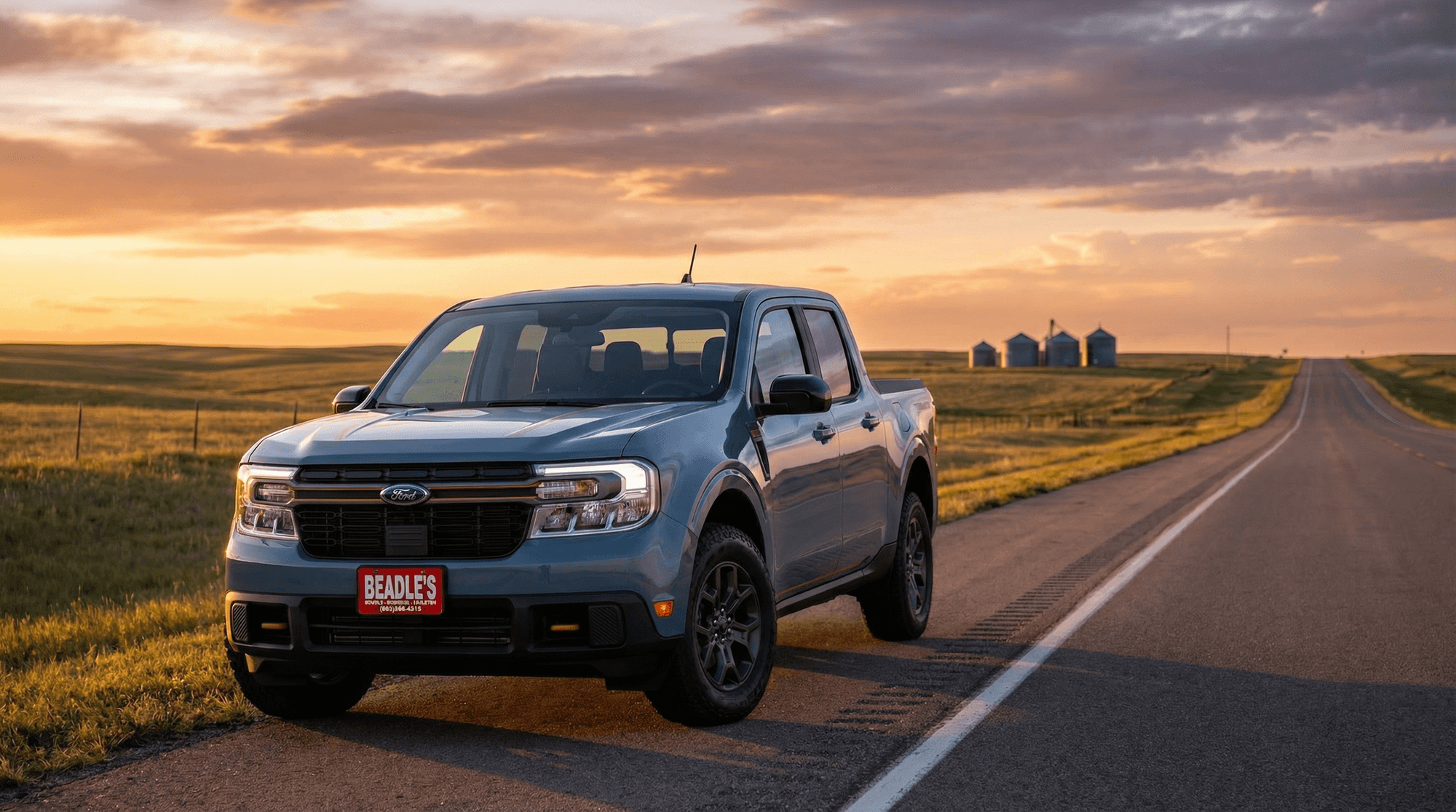
2027 Ford Expedition and Expedition MAX side by side at dusk showing the length difference, Beadle Ford Bowdle SD

2027 Ford Expedition vs. 2027 Expedition MAX: Which Body Style Fits Your Week (and Your Garage)?

Home› Ford Expedition› 2027 Ford Expedition› Expedition vs. Expedition MAX The 2027 Ford Expedition comes in two body styles: standard Expedition and Expedition MAX. Same sixth-generation platform, same engines, same technology, same Ford Co-Pilot360 Assist 2.0, same Ford Digital Experience. The MAX adds roughly a foot of wheelbase and overall length, and the difference ends up concentrated in one place — the cargo area behind the third row. For some buyers, that’s the whole decision. For others, it’s a meaningful trade-off against everyday parking and garage fit. This guide walks through what actually differs between the two body styles, which trims are available in MAX (and which are standard-length only), what’s new for Expedition MAX in 2027, how MAX changes everyday driving and parking, and which body style fits which buyer. The SD framing is direct: if your longest haul is Bowdle to Fargo with three kids and a week of gear, you might want MAX. If it’s Bowdle to Selby every Tuesday and one car seat, you probably don’t. Get Pre-Approved Browse Expedition Inventory On This Page What are the length, cargo, and seating differences? Which Expedition trims come in MAX — and why is Tremor standard-length only? What’s new for Expedition MAX in 2027? Will MAX fit your garage and everyday driving? Who should order MAX and who should stick with standard-length? What are the length, cargo, and seating differences? The MAX body style extends the Expedition by approximately 12 inches of wheelbase, with most of the added length going to the cargo area behind the third row. Both body styles share the same engine lineup (3.5L EcoBoost V6 standard, 3.5L EcoBoost V6 High Output at 440 hp / 510 lb-ft on select configurations), the same 10-speed automatic transmission, the same Ford Digital Experience with 24" panoramic and 13.2" center displays, and the same Ford Co-Pilot360 Assist 2.0 driver-assist stack. Cargo space. This is where MAX pays off. The cargo area behind the third row is meaningfully larger on MAX — the difference you notice when you’re packing a family of six for a week in the Black Hills or loading a full hockey-gear set of bags behind three rows of passengers. On the standard Expedition, behind-the-third-row cargo is more limited; on MAX, you can run the truck with the third row in place and still have real cargo room. With the third row folded, both body styles give you substantial cargo volume — MAX just gives you more of it. Seating. Both body styles preserve 7-passenger or 8-passenger configurations depending on trim and options. MAX doesn’t add a fourth row or different seating count — the extra length benefits cargo, not passenger count. Third-row legroom is similar between the two body styles; Ford designed both to support adult passengers in the third row. Dimensions. Overall length on the standard 2027 Expedition is close to an F-150 SuperCrew with a 6.5-foot bed; Expedition MAX is closer to an F-150 SuperCrew with an 8-foot bed. If your current vehicle is an F-150 SuperCrew, you have a useful reference point for what each Expedition body style will feel like in your driveway and on the road. For the complete 2027 Expedition lineup including engines, technology, and feature content, see the complete 2027 Ford Expedition overview. Which Expedition trims come in MAX — and why is Tremor standard-length only? MAX is available on XL (fleet-only), Active Select, Active Touring, Platinum (including the 30th Anniversary Appearance Package), and King Ranch. The Expedition Tremor is the only retail trim not offered in MAX — it’s standard-length only, 4x4 only. Ford’s engineering decision on Tremor makes sense once you look at the off-road geometry. The Tremor is the Expedition’s factory off-road trim — 3.73 Electronic Locking Rear Differential, seven drive modes including Rock Crawl, Trail Control with Trail One Pedal Drive and Trail Turn Assist, modified Raptor-style skid plates, and off-road-specific suspension. An extended wheelbase would compromise the departure angle, increase the risk of high-centering over ruts and crests, and make Trail Turn Assist’s tight-radius off-road maneuvering noticeably harder. Ford chose not to offer a length-compromised off-road Expedition — the Tremor stays standard-length to protect the capability. Practically, this creates a clear decision fork. If you need extended length, the Tremor is off the table — you’re picking from XL (fleet only), Active, Platinum, or King Ranch in MAX. If you need Tremor-level off-road capability, you’re in standard length. There’s no way to get both in a single truck, and no Expedition package or option fills that gap. For the full buyer’s guide on the Tremor — what it offers, who it’s built for, and how it compares to a Platinum Stealth Performance — see the 2027 Ford Expedition Tremor guide. For a trim-by-trim framework across the entire lineup, see the 2027 Ford Expedition Trim Levels guide. Ready to decide on MAX vs. standard length? See which body style is on the lot, or ask us to order the other one. Get Pre-Approved What’s new for Expedition MAX in 2027? The biggest MAX-specific change for 2027 is 4x2 configuration availability on MAX Platinum. Previously, MAX Platinum was 4x4 only. For 2027, Ford added 4x2 as an option — meaningful for buyers who want the MAX body style but don’t need four-wheel drive (a family hauler driven primarily on pavement for Fargo, Sioux Falls, or interstate commutes). The standard-length Platinum also became available in 4x2 for 2027 after previously being 4x4 only, but the MAX 4x2 configuration is the newer availability. The 30th Anniversary Appearance Package — new for 2027, Platinum-only — is available on both standard-length Expedition Platinum and Expedition MAX Platinum. When ordered on MAX, the “MAX” liftgate badge is finished in black to match the rest of the package styling. The three paint colors offered with the Anniversary Package (Agate Black Metallic, Star White Metallic Tri-Coat, Blue Ember Metallic) are available regardless of standard vs. MAX. Blue Ember Metallic is the finish exclusive to this package. Other 2027 changes apply across both body styles: the Ford Security Package newly optional on every trim, a laminated windshield standard across the lineup, three new paint colors (Bronze Fire Metallic, Nocturnal Blue Metallic, and Blue Ember Metallic for the Anniversary Package), and the Family Travel Package newly optional on Active Touring. For the complete list of 2027 model-year changes, see What’s New for the 2027 Ford Expedition. For the 30th Anniversary Appearance Package specifically, see 2027 Ford Expedition 30th Anniversary Appearance Package Explained. Will MAX fit your garage and everyday driving? Garage. Standard-length Expedition fits in most residential garages that accommodate a full-size pickup. Expedition MAX is roughly the length of an F-150 SuperCrew with an 8-foot bed — close to the edge of what a standard 22-foot residential garage can hold comfortably. If your garage is 24 feet deep, MAX fits without issue. If it’s shorter, bring your measurements when you come to Beadle Ford and we’ll confirm against the exact 2027 dimensions. Parking in town. A MAX takes up more of a parking stall than the standard Expedition does. For angled parking on a Main Street or in a tight lot, the extra length is real. In typical suburban or small-town parking, both body styles work without difficulty. If your daily driving involves frequent tight parking (a hospital lot, a school pickup line), the standard Expedition is easier to live with. Turning radius. MAX has a slightly wider turning radius than standard-length, reflecting the longer wheelbase. For most driving — rural roads, interstate, suburban streets — the difference is minor. For tight three-point turns in narrow farmyards or tight cul-de-sacs, the standard Expedition is more nimble. Highway drive quality. This is where MAX has a subtle advantage. The longer wheelbase generally delivers a slightly smoother ride on long interstate stretches because the body spans more of the pavement’s wavelength. For a family spending 6-8 hours on a road trip, that subtle smoothness adds up. Fuel economy. EPA ratings for both body styles are listed on each in-stock unit’s window sticker. In general, MAX’s additional mass and length result in slightly lower fuel economy than standard-length Expedition. The difference is small compared to the engine-choice variance within the lineup. Who should order MAX and who should stick with standard-length? The honest framing comes back to what you’re doing with the cargo area behind the third row. If you regularly run with the third row in use AND need substantial cargo behind it, MAX is the body style for you. If you either fold the third row most of the time (opening up both body styles’ full cargo volume) or travel lighter, standard-length works. Order Expedition MAX if: You regularly carry 6 or more passengers with their gear — family road trips, sports team runs, extended-family travel Your longest routine haul is Bowdle to Fargo (or equivalent) with kids and a full set of gear for a week You tow recreational gear (camper, boat) that fills a substantial trunk area and you want third-row passenger capacity at the same time Your garage is 24 feet deep or larger and tight parking is rare in your daily driving You want a MAX Platinum with the 30th Anniversary Appearance Package or the newly available 4x2 configuration Stick with standard-length Expedition if: Your third row gets used occasionally rather than weekly, and you typically fold it for cargo Your longest regular haul is Bowdle to Selby, Ipswich, or Aberdeen — shorter runs where standard-length cargo is enough You want the Tremor trim — MAX is not offered Your garage is tighter than 24 feet or you frequently park in narrow spaces You want the slightly more nimble turning radius for farmyard maneuvering or tight small-town driving Most Dakota buyers we see at Beadle Ford fall into the standard-length camp. That said, the growing-family and extended-travel case for MAX is real — if that’s your life, MAX is the right answer. Come see both body styles in person if you’re on the fence; the difference in cargo space is easier to feel in person than to describe. We’ll walk through your configuration against your actual week. Key Takeaways Expedition MAX adds about a foot of wheelbase and length, with most of the additional space going to cargo behind the third row. MAX is available on XL (fleet-only), Active Select, Active Touring, Platinum (including the 30th Anniversary Appearance Package), and King Ranch. The Tremor is standard-length only. Both body styles share the same platform, engines, transmission, technology, and driver-assist stack. Differences are physical dimensions and behind-third-row cargo. New for 2027 MAX: 4x2 Platinum availability (previously 4x4 only); the 30th Anniversary Appearance Package is available on MAX Platinum. MAX fits most residential garages 24 feet deep or larger; tight in 22-foot garages. Standard-length is more nimble in tight parking and small-town driving. Order MAX if you regularly run third row + gear; stick with standard-length if the third row is occasional and you value easier parking and garage fit. Frequently Asked Questions What’s the difference between the 2027 Ford Expedition and Expedition MAX? Expedition MAX adds approximately 12 inches of wheelbase and overall length to the standard Expedition, with the extra length going primarily to cargo volume behind the third row. Both body styles share the same platform, engines (3.5L EcoBoost V6 with a 440 hp / 510 lb-ft High Output option), 10-speed automatic, Ford Digital Experience, and Ford Co-Pilot360 Assist 2.0. Passenger count and third-row legroom are similar between the two. Which trims are available in Expedition MAX? For retail buyers: Active Select, Active Touring, Platinum (including the 30th Anniversary Appearance Package), and King Ranch. XL is fleet-only. The Tremor is the only retail trim not offered in MAX — it’s standard-length only. Why isn’t the Expedition Tremor available in MAX? Off-road geometry. The Tremor’s factory off-road capability relies on a tight departure angle, good break-over behavior, and Trail Turn Assist for tight-radius maneuvering — all of which would be compromised by an extended wheelbase. Ford chose to keep the Tremor standard-length so the off-road capability isn’t diluted. No Expedition Tremor MAX exists or is planned in the 2027 lineup. Can I order an Expedition MAX in 4x2 for 2027? Yes, newly for 2027. The 4x2 Platinum configuration on Expedition MAX is new for the 2027 model year (previously MAX Platinum was 4x4 only). This opens the MAX body style to buyers who want the extended cargo area without requiring four-wheel drive, which can lower purchase price and improve fuel economy. Does MAX have more seating than standard Expedition? No — both body styles offer the same 7-passenger or 8-passenger configurations depending on trim and options. MAX’s additional length benefits cargo volume behind the third row, not passenger count. Third-row legroom is similar between the two. Will Expedition MAX fit in my garage? Expedition MAX is roughly the length of an F-150 SuperCrew with an 8-foot bed — close to the edge of what a standard 22-foot residential garage can hold. In a 24-foot or deeper garage, MAX fits without issue. Bring your garage measurements to Beadle Ford and we’ll confirm against the exact 2027 Expedition and Expedition MAX dimensions. Is the 30th Anniversary Appearance Package available on MAX? Yes. The 30th Anniversary Appearance Package is available on both standard-length Expedition Platinum and Expedition MAX Platinum. When ordered on MAX, the liftgate “MAX” badge is finished in black to match the rest of the package styling. Available paint colors: Agate Black Metallic, Star White Metallic Tri-Coat, or Blue Ember Metallic (exclusive to this package). My Take on the MAX Decision Most of the Expedition buyers I see at Beadle Ford go with standard length. It fits the Dakota driving pattern well — county gravel, interstate stretches, farmyard maneuvering, tight Main Street parking. The standard body style covers those use cases with no compromise. But for the families who are really running at the edge of what a three-row SUV can hold — six passengers with gear, teenage sports seasons, long weekends at the lake with everything loaded — MAX earns its keep. Those buyers know who they are. If you’re genuinely on the fence, stop in and we’ll put the two side-by-side on the lot. The cargo-area difference is easier to understand when you’re standing in it than when you’re reading about it. I’ll help you figure out which one actually fits your week. Shop 2027 Expeditions in Stock Contact Beadle Ford About the Author Lexy Tabbert — Beadle Ford, Bowdle, SD Lexy Tabbert is the Director of Sales and Marketing at Beadle Ford in Bowdle, South Dakota. She covers Ford vehicles, trim comparisons, and buyer guidance — helping families, ranchers, and ag operators across the region find the right truck and configuration for their needs. Learn more about Lexy.
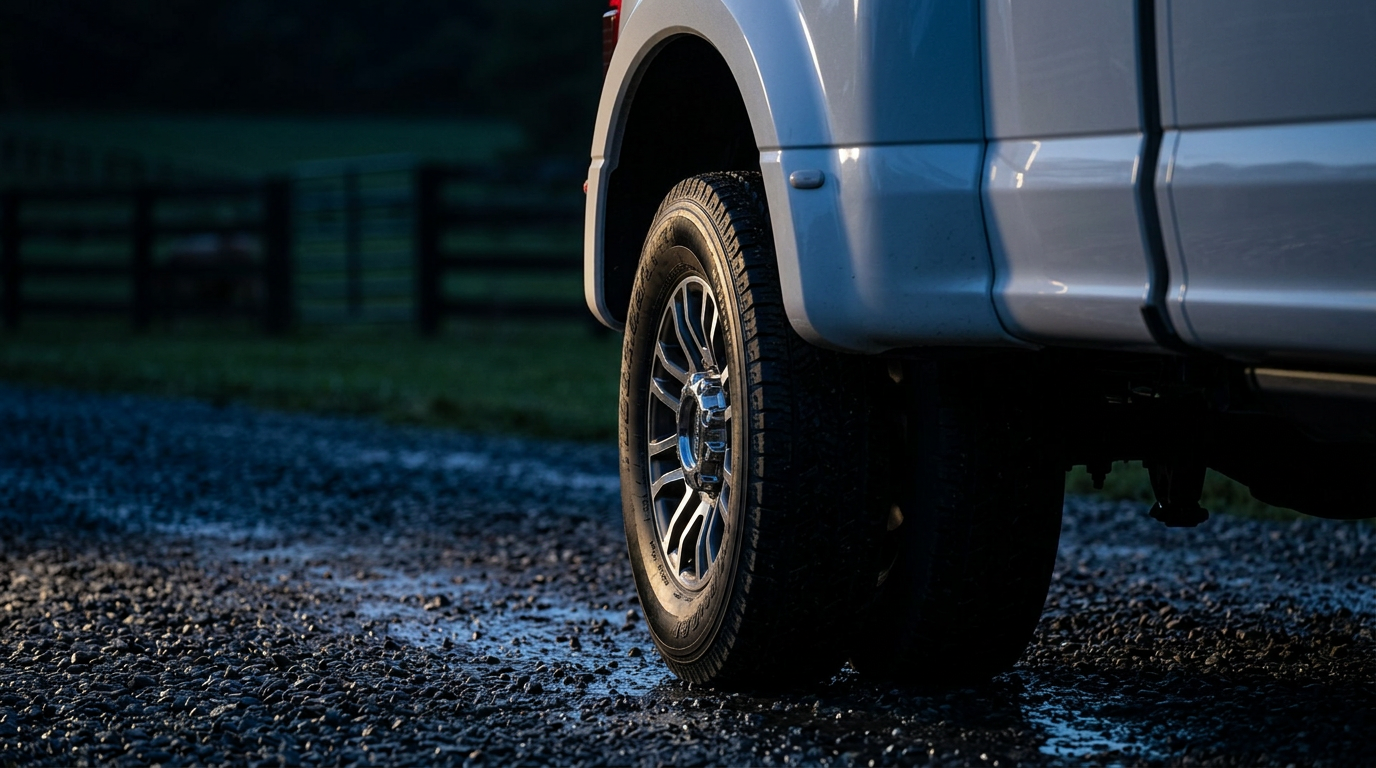
2026 Ford Bronco Badlands on a snow-packed central South Dakota section road in deep winter, drifted snow banks rising to the running boards

The 2026 Ford Bronco in South Dakota Winter: An Honest Look

Most reviews of the 2026 Ford Bronco are written by people who tested it in California or on a closed Michigan track. That's not the test that matters in central South Dakota. The real test is whether it starts at minus-twenty without a block heater, whether it tracks straight on a section line that drifts shut twice a week, and whether the soft top is anything other than a liability when the wind chill hits forty below. We sell Broncos to ranchers, hunters, and ag operators who hear the same questions every winter — so this is an honest take on how the 2026 Bronco actually performs through a real central SD winter. This guide covers the 4WD systems and what each setting is for, the soft-top trade-off in deep cold, heated seats and steering by trim, ground clearance against drifted snow and plowed banks, cold-weather practicality (block heater, battery, storage), and what the Bronco actually handles versus what it doesn't. There's no glossing over the rough edges — and there are a few. Shop Broncos in Stock Get Pre-Approved On This Page How Do 4-Auto, 4H, and 4L Work on Icy SD Section Roads? Can the Soft Top and Removable Doors Handle 30-Below Weather? Which Bronco Trims Get Heated Seats, Heated Steering, and Strong Defrost? Is the Bronco's Ground Clearance Enough for Drifted Snow and Plowed Banks? What Cold-Weather Practicality Should I Plan For — Block Heater, Battery, Storage? What Does the Bronco Handle on Plowed County Roads vs Unplowed Section Lines? How Do 4-Auto, 4H, and 4L Work on Icy SD Section Roads? On Broncos with the Advanced 4x4 system — Badlands, Heritage Edition, Raptor, and any trim equipped with the Sasquatch Package — 4-Auto is the setting you want for almost every central SD winter drive. It engages the front axle automatically when the rears slip, then disengages when grip returns, so you can leave it on for a 90-mile run that mixes plowed pavement, drifted gravel, and ice patches without thinking about transfer-case position. 4H is the manual-engagement setting for sustained low-traction surfaces — a packed snow section line, a long stretch of glare ice, the drive into a CRP gate that hasn't been plowed since November. It locks 50/50 torque split front to rear, which is exactly what you want when both axles need power but not what you want on dry pavement (parking-lot binding will let you know). The Base Bronco's standard 4x4 is part-time selectable engagement only — no 4-Auto, manual transfer-case shifts only — so 4H is the everyday winter setting on that trim. 4L is the deep-stuck setting. Wheel speed slows dramatically while torque goes up — the right combination for crawling out of a drift, climbing a snow-packed approach to a tree stand, or breaking through a wind-piled section-line drift you couldn't see coming. You won't use it on the highway. You'll use it three or four times a winter at most, but when you need it, nothing else does the job. For the full transmission and engine context see our 2.3L vs 2.7L EcoBoost engine comparison. Can the Soft Top and Removable Doors Handle 30-Below Weather? The honest answer most reviewers won't give: the soft top is functional in central SD winter, but for most of our customers it isn't the right call. A soft top loses cabin heat faster, lets road noise in at highway speed, and shows wear faster on a vehicle that lives outdoors through a Bowdle winter. If you're buying a Bronco that will be a year-round daily driver in SD, spec a hardtop and don't look back. Heritage Edition with the standard Oxford White-painted hardtop. For SD year-round use, a hardtop is the right answer. On the door side, the frameless removable doors do seal — there's no daylight visible at the seam — and the door-frame heater channels behave well at sub-zero temperatures. Where the design shows up is in noise: at 70 mph in a cross-wind on US-12 west of Bowdle, you hear more wind than you would in a comparable hardtop SUV from a unibody platform. Most owners get used to it within a month. A few never do. Door-removal in winter isn't really an option to plan around — by the time you'd want the doors off again, it's spring. The four to six months from May through early October is the realistic window for that, and we cover the full picture in our removable doors and roof guide. For winter, leave them on. Lock them on. Maybe forget you can take them off. Which Bronco Trims Get Heated Seats, Heated Steering, and Strong Defrost? Heated front seats and a heated steering wheel are available via the Mid Package on Big Bend (222A), Outer Banks (312A), and Badlands (332A), and they're typically included on Heritage Edition, Stroppe, and Raptor. If you're buying for SD winter use, the Mid Package is non-negotiable on Big Bend, Outer Banks, or Badlands — confirm it's on the build sheet before you sign. A heated steering wheel and heated front seats kill the cold while the cabin catches up. Confirm the trim and package before you sign — they're standard on some, optional on others. Defrost performance is where the Bronco surprises people. The HVAC system warms up faster than you'd expect from a body-on-frame SUV with a soft-top option in the lineup, and the windshield clears in a couple of minutes from a cold start. The rear defrost grid on the hardtop's swing-gate window works well; it's worth confirming you have it on whichever top you spec, since soft-top configurations have a different rear-glass setup. The 12-inch SYNC 4 display is standard on every trim including Base, which means remote start and climate pre-conditioning through the FordPass app are available across the lineup. On a January morning when it's minus-fifteen and the wind is picking up, walking out to a cabin that's already warming is the kind of small advantage that earns its money back fast. Trim-by-trim breakdowns are in our 2026 Bronco trim levels guide. Get Pre-Approved Contact Beadle Ford Is the Bronco's Ground Clearance Enough for Drifted Snow and Plowed Banks? A Badlands with the standard 33-inch Rugged-Terrain tires has approximately 8.8 to 9.0 inches of ground clearance — enough for the every-week winter scenarios in central SD: county-road drifts, plow-bank crossings into a driveway, an inch or two of fresh on top of packed gravel. A Bronco with the Sasquatch Package and 35-inch tires moves up to about 11.6 inches. The Raptor sits at roughly 13.1 inches on its 37-inch all-terrains. Where ground clearance starts to matter is the section-line scenario most central SD owners face: a road that hasn't been plowed in three days, with cross-drifts that rise to running-board height. A standard Badlands handles those drifts; a Sasquatch handles them more easily; an Outer Banks on 18-inch street-biased tires struggles. If you live ten miles outside Bowdle on a road that gets plowed once a week, the math points toward Badlands as the floor and Sasquatch as the upgrade if you can swing it. A practical note: plow banks at the end of a driveway are different from drifted snow on a section road. A plow bank is dense, often icy, and it'll grab a bumper if you hit it at speed. A drifted section road is loose powder until it isn't. Slippery mode handles both, but the actual ground clearance — not the tire size alone — is what carries you over. What Cold-Weather Practicality Should I Plan For — Block Heater, Battery, Storage? The 2.3L EcoBoost and 2.7L EcoBoost both start cold reliably without a block heater above zero, and most owners around Bowdle don't bother with one. Below zero — and especially below minus-twenty, which we hit several times most winters — a block heater shortens the warm-up cycle and puts less stress on the battery. It's a worthwhile add for a vehicle that lives outdoors all winter, and any service department can install one. The OEM battery has been reliable in our experience, but a Bronco that sits unstarted for a week in deep cold — common for a hunting rig that's parked between pheasant trips — benefits from a battery tender or a dual-battery setup if you run aftermarket lighting. The Bronco's available auxiliary upfitter switches (where equipped) make wiring a tender or a winter-only accessory cleaner than splicing into the main harness. Storage of the doors and panels is the other practical question if you've kept the soft-top option open for summer. Doors take up roughly the floor area of a closet; panels stack flat in a garage corner with the Ford-supplied storage bag. If you don't have garage space, plan to leave the hardtop on year-round and skip the soft-top configuration entirely. We've watched plenty of customers regret a soft-top order they made in July when February rolls around. What Does the Bronco Handle on Plowed County Roads vs Unplowed Section Lines? On a plowed county road in 4-Auto with 33-inch tires, the Bronco tracks straight at 60 mph with no drama. The body-on-frame chassis is heavier than a unibody crossover, which works in its favor on packed snow — the weight helps the tires bite. Cross-wind handling on US-83 or US-12 is on par with an F-150 SuperCrew of similar height, which is to say it's manageable but not invisible. On an unplowed section line with 6 to 12 inches of fresh, the Badlands or any Sasquatch-equipped Bronco walks through it without complaint in 4H or 4-Auto. Slippery mode dials throttle response back so you don't break traction on the gas pedal, and Trail Control (on automatic-transmission trims) is genuinely useful for a long deliberate crawl through deep stuff — set the speed, focus on steering. A standard Big Bend without the Black Diamond Package is more limited; it'll do most of what you ask, but it's not the right trim for an everyday section-line winter commute. Where the Bronco honestly doesn't shine: deep, heavy, wet snow at the end of a long driveway in a March melt. The vehicle is heavy enough that it can sink in slush rather than float over it the way a lifted side-by-side might. Approach speed and Slippery mode help; momentum is your friend. If you regularly cross 18-plus inches of heavy March slush, that's the use case where Sasquatch's 35-inch tires earn their upcharge — narrower contact patch, more bite, less flotation needed. All of this is clearer within the full 2026 Ford Bronco overview, where every trim's drivetrain, tire size, and package availability lays out side by side. Winter is the season that separates the right Bronco spec from the wrong one — looking at the lineup as a whole helps make the call. Key Takeaways 4-Auto is the everyday winter setting on Badlands, Heritage, Raptor, and any Sasquatch-equipped trim — set it and leave it. For year-round SD use, spec a hardtop. The soft top is functional but loses heat and shows wear faster outdoors. Heated front seats and a heated steering wheel come via the Mid Package on Big Bend, Outer Banks, and Badlands — don't skip it on a winter rig. 33-inch R/T tires (Badlands) clear the every-week winter scenarios in central SD; 35-inch tires (Sasquatch) earn their money on weekly unplowed section-line drifts. A block heater is worth installing on any Bronco that lives outdoors below zero. Battery tenders are smart for a vehicle that sits between hunting trips. Frequently Asked Questions Should I buy a soft-top Bronco for South Dakota winter use? For year-round SD use, no — spec a hardtop. The soft top is functional, but it loses cabin heat faster, lets in more highway noise at speed, and shows wear faster on a vehicle that lives outdoors through a Bowdle winter. If you're after a doors-off summer rig, the dual-tops option (soft top plus hardtop) lets you switch by season, but most owners just run the hardtop year-round. Does the 2026 Ford Bronco come with a block heater for cold starts? A block heater is not standard equipment, and it's an add we recommend for any Bronco that lives outdoors through a central SD winter. The 2.3L EcoBoost and 2.7L EcoBoost both start reliably above zero without one, but a block heater shortens the warm-up cycle and reduces battery stress in true cold. Any service department can install one as a dealer accessory. Is 4-Auto safe to leave on for the entire winter? Yes — 4-Auto on the Advanced 4x4 system is designed for exactly this use case. It engages the front axle automatically when traction is needed and disengages when it isn't, so it's safe on dry pavement, plowed roads, and mixed surfaces. 4-Auto is available on Badlands, Heritage Edition, Raptor, and any Bronco equipped with the Sasquatch Package; the Base Bronco's part-time 4x4 system doesn't include 4-Auto. Are heated seats standard on the 2026 Bronco? Heated front seats and a heated steering wheel are available via the Mid Package on Big Bend (222A), Outer Banks (312A), and Badlands (332A), and they're typically included on Heritage Edition, Stroppe Edition, and Raptor. Availability on the Base Bronco is more limited. For a winter daily driver, confirm the package is on the build sheet before you sign. Will a 2026 Bronco Badlands clear a typical SD plow bank at the end of a driveway? In most cases, yes — a Badlands on 33-inch Rugged-Terrain tires has approximately 8.8 to 9.0 inches of ground clearance, which handles typical end-of-driveway plow banks at a reasonable approach speed. A Sasquatch-equipped Bronco on 35-inch tires has about 11.6 inches and clears denser, taller banks more easily. The Raptor on 37-inch tires has roughly 13.1 inches. For all configurations, dense icy banks should be approached with momentum and Slippery mode engaged. Does the Bronco handle better than a lifted F-150 in heavy SD snow? Different strengths. A 4WD F-150 SuperCrew has a longer wheelbase that tracks well at highway speeds and a heavier curb weight that bites packed snow well. A Badlands or Sasquatch-equipped Bronco has a shorter wheelbase that maneuvers better in tight spots — section-line corners, narrow ranch gates — and tire options up to 35 or 37 inches. For long highway runs in heavy weather, the F-150 has the edge. For shorter drives that mix pavement and unplowed terrain, the Bronco usually wins. My Take on the 2026 Bronco as a South Dakota Winter Vehicle I'll say what most reviews won't: the Bronco is a real winter vehicle in central SD, but only if you spec it right. A Big Bend with the Mid Package and a hardtop will handle 95 percent of what a Bowdle-area owner faces in a winter. A Badlands with the Mid Package adds the front locker, the seven-mode terrain system, and 33-inch R/T tires that quietly do their job through a January cold snap. A Sasquatch-equipped build is for the buyer whose driveway is on the wrong side of a section line that doesn't get plowed for days at a time. None of those are the wrong call — they're three different answers to three different winter realities. What I'd steer customers away from is an Outer Banks on 18-inch street-biased tires as a year-round SD vehicle. It's a capable rig in three seasons; in February it asks for more than it should. If you're shopping a Bronco for winter use, come in and let's walk through trims, tops, and tire packages with the actual roads and driveway you drive in mind. That conversation usually saves a customer money and gets them the right rig the first time. Shop Broncos in Stock Get Pre-Approved About the Author Lexy Tabbert — Beadle Ford, Bowdle, SD Lexy Tabbert is the Director of Sales and Marketing at Beadle Ford in Bowdle, South Dakota. She covers Ford vehicles, trim comparisons, and buyer guidance — helping families, ranchers, and ag operators across the region find the right truck and configuration for their needs. Learn more about Lexy.
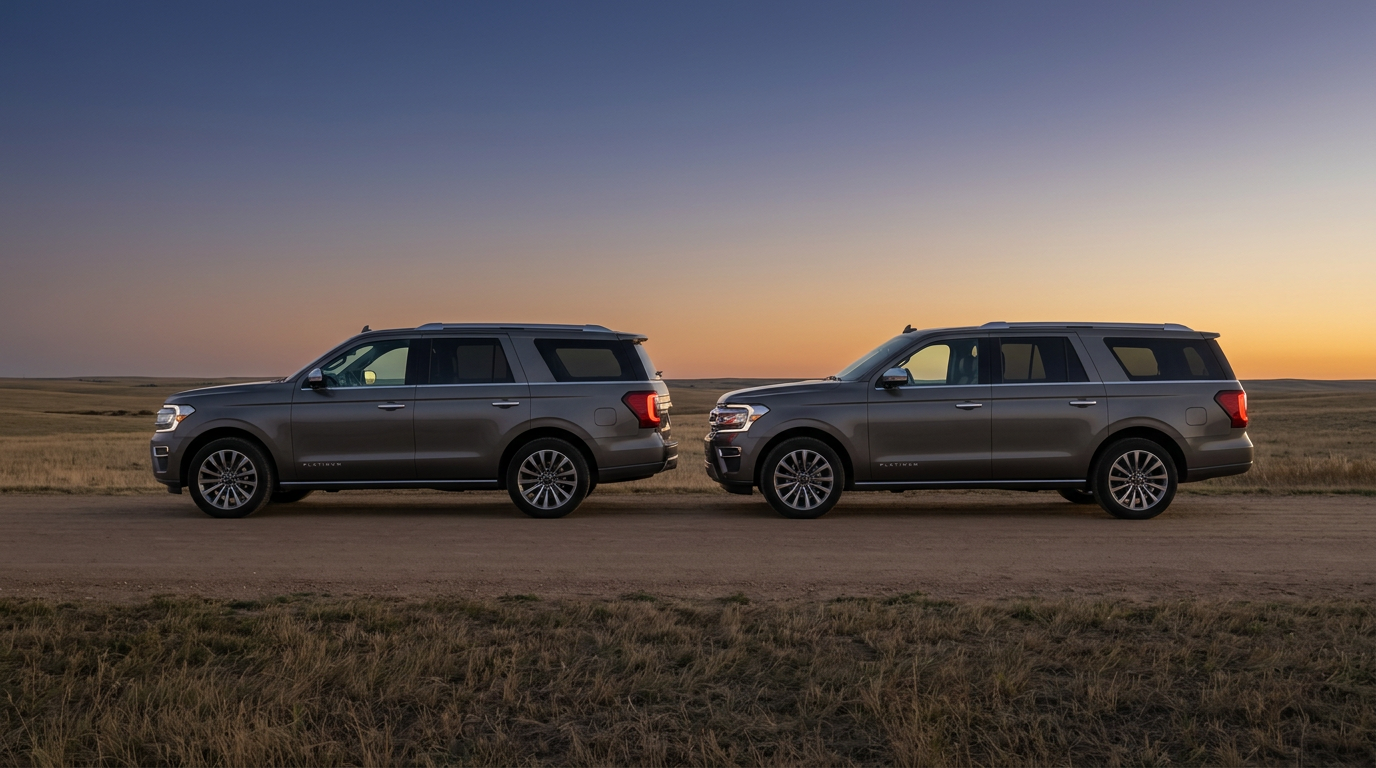
2027 Ford F-350 Lariat in Agate Black Metallic on a Missouri River bluff at golden hour

Buy a 2026 Ford F-350 Now or Order a 2027?

Quick Answer Buy a 2026 F-350 on the lot if you specifically want the 6.8L gas V8 or the standard-output 6.7L diesel — both are discontinued for 2027. Order a 2027 if you want the simplified two-engine lineup, the new Super Duty Carhartt Package, or Tremor on XL. Towing and payload are identical between the two years. With the 2027 F-350 changing more than any Super Duty in years, a lot of buyers are asking the same thing: grab a 2026 or 2027 that’s already built, or order a 2027 to spec? The good news is the capability is the same either way — so the decision comes down to engine, timing, features, and price. Here's how to think it through for the way trucks get used around Bowdle and Aberdeen. Shop F-350s in Stock Get Pre-Approved On This Page The short answer What a 2026 still offers that 2027 doesn't What's better about ordering a 2027 Does the price change between years? How do you decide? The short answer It comes down to the engine you want and how soon you need the truck. The F-350's towing and payload are identical across 2026 and 2027, so neither year wins on capability — both tow up to 40,000 lbs gooseneck, properly equipped. What differs is which engines you can get, whether you buy off the lot or order, and the new-for-2027 features. Buy a 2026 now if you want the 6.8L gas or the standard-output 6.7L diesel, or you need a truck on the lot today. Order a 2027 if you want the simplified lineup, the Carhartt Package, Tremor on XL, the new 8-ft/176" HO bed, or a build configured exactly your way. What a 2026 still offers that 2027 doesn't The 2026 F-350 is the last model year for two engines: the 6.8L gas V8 and the standard-output 6.7L Power Stroke diesel. If you want either one — maybe the lower-cost gas base, or the standard-output diesel's balance of torque and price — a 2026 still on the lot is your last chance. A 2026 is also available now: no ordering and waiting. Browse what's in stock on the 2026 F-350 overview. What's better about ordering a 2027 The 2027 simplifies the lineup to the 7.3L gas (now standard on every trim) and the 6.7L High-Output diesel, and adds the new Super Duty Carhartt Package, Tremor availability on XL, and a new 8-foot bed / 176-inch wheelbase with the High-Output diesel. Ordering also means building the truck exactly to your spec — cab, bed, axle, SRW or DRW, trim, and packages. Our Recommendation If your heart's set on a specific 2026 engine, don't wait — those builds won't come back. Otherwise, ordering a 2027 to your exact spec is usually the better long-term buy, especially if you want the Carhartt look or Tremor on a work trim. Not sure which engine you'd even pick? Start with our 2027 engine comparison. Does the price change between years? It can — and the engine change is why. The 7.3L gas was an extra-cost upgrade over the base engine in 2026; for 2027 it's standard. That means a 2027's base price reflects the bigger gas engine that some 2026 buyers paid extra for. Pricing for an in-stock 2027 is on its window sticker — and it’s a real factor in the buy-now-vs-order math, alongside any incentives on remaining 2026 stock. From the Beadle Ford Lot The buyers happiest with their decision are the ones who got specific about the engine first. If someone wants the standard-output diesel, we point them at a 2026 today; if they're open to the new lineup, ordering a 2027 to spec almost always beats settling for whatever's on a lot. We'll run both numbers with you side by side. How do you decide? Four questions get you there: Do you specifically want an engine that's dropped for 2027 (6.8L gas or standard-output diesel)? If yes, buy a 2026. Do you need a truck now, or can you order and wait a few weeks for an exact build? Do you want any 2027-only features — Carhartt Package, Tremor on XL, the new HO bed config? How do the numbers compare — a configured 2027 vs. an in-stock 2026 with current incentives? Key Takeaways Capability is identical: 2026 and 2027 both tow up to 40,000 lbs gooseneck, properly equipped. A 2026 is the last chance for the 6.8L gas and the standard-output 6.7L diesel. A 2027 brings the simplified lineup, the Carhartt Package, Tremor on XL, and a build-to-order truck. Pricing can shift because the 7.3L gas went from an option to standard; exact 2027 prices TBD. Decide on the engine first — that usually settles which year to buy. Frequently Asked Questions Should I buy a 2026 F-350 now or order a 2027? Buy a 2026 if you want the 6.8L gas or the standard-output 6.7L diesel — both are gone for 2027 — or you need a truck now. Order a 2027 if you want the simplified lineup, the Carhartt Package, Tremor on XL, or a build configured exactly your way. Towing and payload are the same either year. Which engines are gone for 2027? The 6.8L gas V8 and the standard-output 6.7L Power Stroke diesel. For 2027, the 7.3L gas is standard on every trim and the 6.7L High-Output diesel is the only diesel. A 2026 on the lot is the last chance for the dropped engines. Does a 2026 F-350 tow less than a 2027? No — towing and payload are identical between the two years. Both tow up to 40,000 lbs gooseneck and carry up to about 7,900 lbs of payload, properly equipped. Capability isn't the deciding factor; engine, timing, features, and price are. Will a 2027 F-350 cost more than a 2026? Possibly. The 7.3L gas was an extra-cost option in 2026 and is standard for 2027, so a 2027's base price reflects the larger engine. Ford hasn't published final 2027 pricing yet — we'll compare a configured 2027 against an in-stock 2026 with current incentives when you're ready. How long does it take to order a 2027 F-350? Build-and-order timing varies with allocation and the configuration. Ordering gets you the exact spec if what you want is not on the lot; if you need a truck immediately, an in-stock 2026 or 2027 is the faster route. We'll give you a realistic timeline for your build. Quick Answers: 2026 vs. 2027 F-350 One-line answers to the follow-up questions buyers ask next. Same towing both years? Yes — up to 40,000 lbs gooseneck either way. What's only on a 2026? The 6.8L gas and the standard-output 6.7L diesel. What's new for 2027? Two-engine lineup, Carhartt Package, Tremor on XL, new HO bed. Is the 7.3L gas standard for 2027? Yes, on every trim. Want the standard-output diesel? Buy a 2026 — it's discontinued. Need a truck today? An in-stock 2026 is the fast route. Want an exact build? Order a 2027 to spec. Will 2027 cost more? Possibly — pricing TBD; the gas is now standard. Are there 2026 incentives? Often — we'll check current offers on remaining stock. How do I compare them? We'll run a configured 2027 vs. an in-stock 2026 side by side. Keep Researching The 2027 Ford F-350 Super Duty overview — what's new and how to order. The 2026 Ford F-350 overview — specs, trims and the dropped engines. What's new for 2027 — every change, in detail. 2027 engine comparison — pick the engine that settles the decision. My Take on 2026 vs. 2027 In my experience, this decision gets easy the moment you name the engine. If it's one of the two the 2027 drops, a 2026 on the lot is the move and there's no reason to wait. If you're open to the new lineup, ordering a 2027 to your exact spec almost always beats settling — and you get the new features on top. Tell me how you use the truck and what you want under the hood, and I'll lay a 2026 and a 2027 side by side. Stop in at Beadle Ford in Bowdle or reach out anytime. Shop F-350s in Stock Get Pre-Approved About the Author Lexy Tabbert — Beadle Ford, Bowdle, SD Lexy Tabbert is the Director of Sales and Marketing at Beadle Ford in Bowdle, South Dakota. She covers Ford vehicles, trim comparisons, and buyer guidance — helping families, ranchers, and ag operators across the region find the right truck and configuration for their needs. Learn more about Lexy.
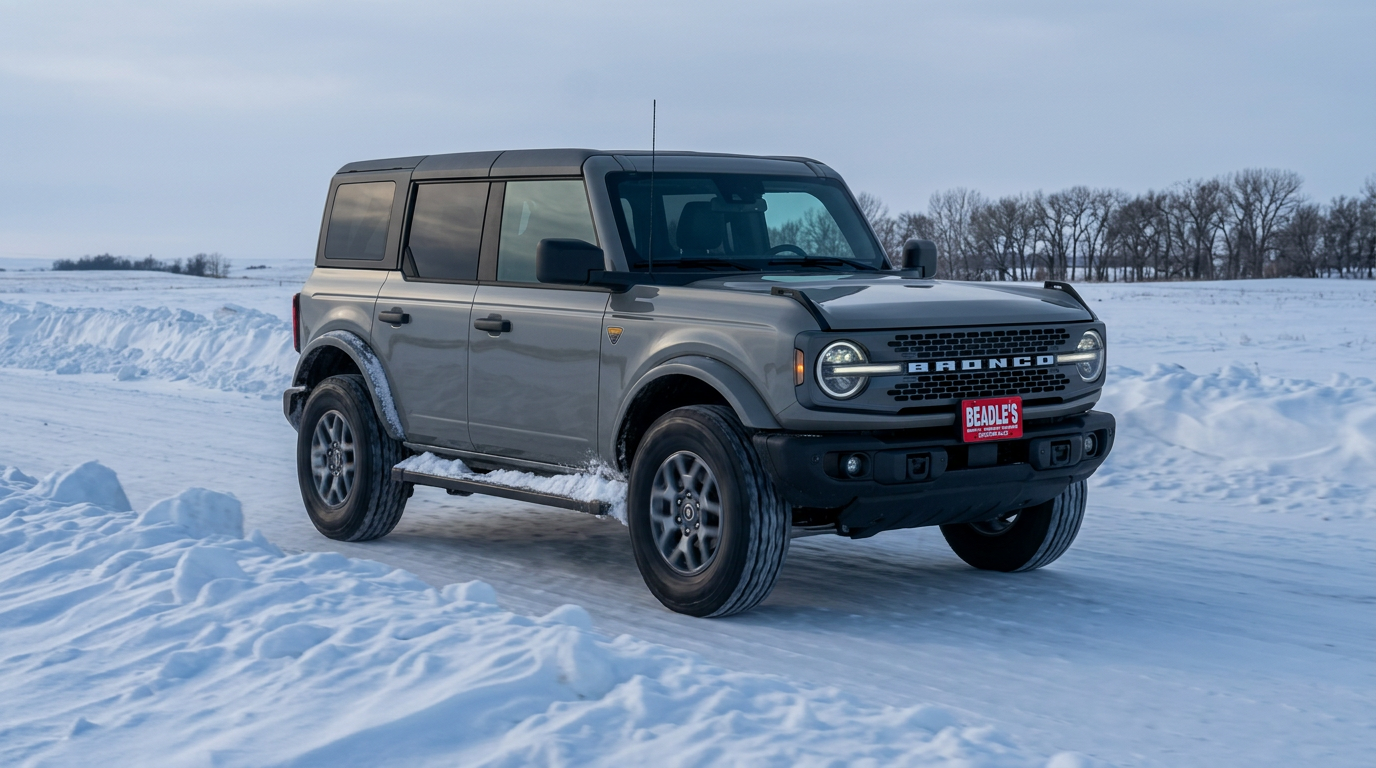
2026 Ford Escape and Ford Bronco Sport side by side in South Dakota

2026 Ford Escape vs. Ford Bronco Sport: Which One Should a South Dakota Buyer Choose?

Two Ford crossovers, similar footprint, very different orientation. The 2026 Ford Escape is a highway-capable crossover with hybrid powertrain options and a refined ride — built for efficiency and daily comfort. The 2026 Ford Bronco Sport is built around standard AWD and GOAT modes (Goes Over Any Type of Terrain), with more ground clearance and trail-specific capability across its lineup. For South Dakota buyers, the comparison usually comes down to three things: fuel economy, AWD standard vs. optional, and what your roads actually look like. This guide compares both vehicles directly across the factors that matter most for central South Dakota use: winter traction, daily practicality, long-distance efficiency, and real-world capability on gravel and county roads. Shop Escapes in Stock On This Page How Do the Escape and Bronco Sport Compare at a Glance? Which Has Better AWD and Winter Traction for South Dakota Roads? Is the Escape's Hybrid Option Worth Choosing Over the Bronco Sport's Gas Engine? How Do the Escape and Bronco Sport Compare for Day-to-Day South Dakota Use? Does It Matter That the 2026 Escape Is the Last Model Year? Which Vehicle Is the Right Choice for a South Dakota Buyer? How Do the Escape and Bronco Sport Compare at a Glance? Both are compact Ford crossovers, but they're built for different use cases. The Escape prioritizes efficiency and road comfort; the Bronco Sport prioritizes go-anywhere capability and standard AWD across the lineup. Category 2026 Ford Escape 2026 Ford Bronco Sport AWD Optional (lower trims) / Standard (Select, Elite, Platinum) Standard across lineup Powertrains Gas, Hybrid, PHEV Gas only Off-road modes None GOAT modes (5 modes) Ground clearance Lower (road-oriented profile) Higher (trail-capable profile) Fuel economy Up to ~39 mpg (Hybrid AWD) ~26–28 mpg combined (gas) (verify at fueleconomy.gov) Lineup future Discontinued after 2026 Continuing in Ford lineup The Escape is the more highway-oriented, efficiency-focused option. The Bronco Sport is the more capable choice for buyers who want AWD guaranteed regardless of trim and some off-road margin for gravel roads and field access. Beadle Ford in Bowdle sells both; check the live inventory for what is in stock. The complete 2026 Ford Escape overview covers all six Escape trims and configurations in detail. Which Has Better AWD and Winter Traction for South Dakota Roads? The Bronco Sport has the structural advantage here: AWD is standard across the entire lineup, and the Bronco Sport is built around GOAT modes — including a dedicated Slippery mode for low-traction surfaces — across its configuration. You can't accidentally take delivery of a Bronco Sport without AWD. The Escape's situation is more nuanced. On Active and ST-Line, AWD is optional — it has to be specified at the order stage or you'll receive an FWD unit. On ST-Line Select, Elite, and Platinum, AWD is standard and mandatory. The 2026 Escape's AWD system distributes torque to the rear axle when slip is detected, similar to how most modern crossover AWD systems work. What it doesn't have is the GOAT mode framework — there's no dedicated Slippery or Off-Road setting. For packed snow and gravel county roads, Escape AWD is competent. For soft shoulder work or field access, the Bronco Sport has more hardware working in its favor. The Bronco Sport also carries more ground clearance than the Escape, which is relevant on unimproved rural approaches and during spring breakup when road surfaces are unpredictable. For winter highway and gravel driving — which is the majority of central South Dakota use — both vehicles handle it. The Bronco Sport has the edge if you routinely drive on marginal surfaces or need that off-road margin. The full Escape AWD winter guide covers how the Escape system performs in South Dakota conditions specifically. Is the Escape's Hybrid Option Worth Choosing Over the Bronco Sport's Gas Engine? For buyers who log significant highway miles between Bowdle and larger cities, the Escape's 2.5L Hybrid AWD is a meaningful advantage. The Hybrid delivers approximately 39 mpg combined (verify at fueleconomy.gov), compared to approximately 26–28 mpg combined for the Bronco Sport's gas engine depending on trim. Over 15,000 miles per year, that gap adds up in a tangible way at the pump. The Bronco Sport doesn't offer a hybrid option — it's gas-only across the entire lineup in 2026. For buyers who want the Bronco Sport's AWD standard and off-road capability but also want improved efficiency, there's no hybrid path. The Escape offers that combination — 2.5L Hybrid AWD on Select, Elite, or Platinum gives you AWD standard, approximately 39 mpg combined, and the cold-weather feature set (heated seats, heated steering wheel, remote start) in one package. The trade-off: the Escape's eCVT transmission has a different feel from the Bronco Sport's 8-speed automatic. Neither is objectively better — it's a preference. The Bronco Sport's powertrain is tuned for confident low-end torque delivery on challenging terrain. The Escape Hybrid's eCVT is tuned for smooth, efficient highway operation. The right answer depends on which use case dominates your actual driving. Other Ford Models to Consider Not sure if Escape or Bronco Sport is right? These models are also available at Beadle Ford. Ford Explorer More interior room, 3-row option, AWD available. Shop Escapes in Stock Ford Maverick Compact truck with hybrid option and bed utility. Shop Escapes in Stock Ford Bronco Sport Standard AWD, GOAT modes, staying in Ford's lineup. Shop Escapes in Stock How Do the Escape and Bronco Sport Compare for Day-to-Day South Dakota Use? For typical daily use — highway driving, trips to Pierre or Aberdeen, grocery runs, school pickups — the Escape is the smoother, quieter daily driver. Its lower hood line gives better forward sightlines on highways, and the refined suspension tuning makes long South Dakota interstate stretches more comfortable. On-road ride quality is noticeably better than the Bronco Sport's more rugged setup. The Bronco Sport's more upright stance and rugged suspension tuning are an asset off pavement, but the stiffer ride is a real trade-off on long highway stretches. Cabin road noise is generally higher in the Bronco Sport compared to the Escape. The Bronco Sport's taller body also catches more wind on open prairie highway driving, which can affect both feel and fuel consumption in windy SD conditions. Both offer comparable interior space and cargo room for most family use cases. Technology features at comparable price points are similar — both offer SYNC 4, Co-Pilot360, and available heated seats at mid-trim levels. The Bronco Sport's standard roof rails and available auxiliary switches cater to buyers who outfit their vehicle with outdoor gear. The Escape's available 12.3" SYNC 4 screen at Elite and Platinum trims and the B&O audio option offer a more premium interior experience at the top of its lineup. Interior cargo room is close enough between the two that neither vehicle will feel like a compromise for grocery runs, school pickups, or weekend trips — both are two-row crossovers with similar footprints and neither is cramped for daily South Dakota use. Does It Matter That the 2026 Escape Is the Last Model Year? It matters for some things and not others. The 2026 Ford Escape is the final model year — Ford is not producing an Escape in 2027 or beyond. The Bronco Sport is continuing in Ford's lineup. If future parts availability or continued dealer familiarity with the model is important to your decision, that's a legitimate reason to weight the Bronco Sport. What doesn't change: warranty coverage and service support. A new 2026 Escape purchased from Beadle Ford comes with Ford's standard 3-year/36,000-mile bumper-to-bumper and 5-year/60,000-mile powertrain warranty exactly like any other new Ford vehicle. Parts supply for a recently discontinued model is typically strong for many years post-production — Ford produces large volumes of Escapes, and the parts ecosystem doesn't disappear the day production ends. Where it could matter practically: if you plan to keep the vehicle 10–15 years, the Bronco Sport's continuing production means ongoing OEM parts availability that a discontinued model eventually loses. If you're planning a 5–7 year ownership cycle and staying within the warranty and common parts window, the Escape's discontinuation is a lower concern. For buyers who want to buy a Ford crossover at this price point and keep their options open for future service familiarity, the Bronco Sport has the cleaner long-term story. Which Vehicle Is the Right Choice for a South Dakota Buyer? Choose the Escape if: you want hybrid fuel efficiency, you're doing primarily highway and gravel road driving, you're comfortable specifying AWD at order (or starting at ST-Line Select where it's standard), and you want the most comfortable long-distance ride. The 2.5L Hybrid AWD on ST-Line Select is one of the better combinations of AWD, efficiency, and cold-weather readiness available at this price point — and the 2026 is the last year you can buy it new. Choose the Bronco Sport if: AWD guaranteed without having to think about it matters more than fuel economy, you occasionally need more ground clearance or off-road margin for field access and unimproved roads, you want a vehicle that stays in Ford's active lineup, or the rugged exterior aesthetic fits your preference. The Bronco Sport's standard AWD removes the order-time AWD question entirely — every unit off the lot is equipped for South Dakota conditions. The decision usually comes down to how much you value fuel economy versus guaranteed off-road margin, and whether the Escape's final model year status changes your calculus. The Escape trim levels guide covers which Escape configurations deliver AWD standard if that's the direction you're leaning. Key Takeaways The Bronco Sport has AWD standard across its entire lineup; the Escape has AWD optional on lower trims and standard only on ST-Line Select, Elite, and Platinum. The Escape's 2.5L Hybrid AWD delivers approximately 39 mpg combined — significantly better than the Bronco Sport's gas-only powertrain at approximately 26–28 mpg combined. The Bronco Sport offers GOAT modes and more ground clearance, making it more capable on marginal surfaces, unimproved roads, and field approaches common in rural SD. The Escape is the smoother, quieter highway vehicle — the Bronco Sport's rugged suspension is an asset off-road and a trade-off on long interstate stretches. The 2026 Escape is the final model year; the Bronco Sport is continuing in Ford's lineup — relevant for buyers with long ownership horizons or concerns about long-term parts availability. Frequently Asked Questions Is the Ford Bronco Sport AWD standard on every trim? Yes — AWD is standard across the Ford Bronco Sport lineup in 2026. The Bronco Sport is built around GOAT modes (Goes Over Any Type of Terrain) including a Slippery mode for low-traction surfaces across its configuration (verify current trim-level availability at ford.com). This is in contrast to the Escape, where AWD is optional on Active and ST-Line trims and must be specified at order, and standard only on ST-Line Select, Elite, and Platinum. Does the Ford Bronco Sport have a hybrid option? No — the 2026 Ford Bronco Sport is gas-only. It is available with a 1.5L EcoBoost three-cylinder on most trims and a 2.0L EcoBoost four-cylinder on the Badlands. There is no hybrid or plug-in hybrid option. The 2026 Ford Escape offers a 2.5L non-plug-in Hybrid AWD and a 2.5L PHEV, making the Escape the efficiency-focused option for buyers comparing the two. Is the 2026 Ford Escape being discontinued? Yes — the 2026 Ford Escape is the final model year. Ford has discontinued the Escape nameplate; there will be no 2027 Escape. A new 2026 Escape purchased from Beadle Ford carries Ford's standard 3-year/36,000-mile bumper-to-bumper and 5-year/60,000-mile powertrain warranty, the same as any other new Ford vehicle. The Bronco Sport is continuing in Ford's lineup beyond 2026. Which is better for South Dakota winters — the Escape or the Bronco Sport? Both handle South Dakota winters well when properly equipped. The Bronco Sport has the structural advantage — AWD is standard on every unit and GOAT modes include a Slippery setting for low-traction surfaces. The Escape's AWD system is capable on packed snow and gravel, but requires specifically ordering AWD on Active and ST-Line trims to avoid taking delivery of an FWD unit. Starting at ST-Line Select, the Escape's AWD is standard. The Bronco Sport also carries more ground clearance, which is useful on unimproved roads during spring breakup. What is the towing capacity of the Ford Bronco Sport? The Ford Bronco Sport is rated at approximately 2,000 lbs towing capacity on most trims with a trailer tow package. The Badlands trim with its 2.0L EcoBoost engine and available tow package steps up to approximately 2,200 lbs. For comparison, the 2026 Ford Escape with the 2.0L EcoBoost AWD and Class II factory tow package is rated at 3,500 lbs. Verify current figures for both vehicles at ford.com or with a Beadle Ford sales associate, as tow ratings can vary by configuration. My Take on the Escape vs. Bronco Sport Decision for South Dakota Buyers I've had this conversation quite a bit lately, and it tends to split pretty clearly. Buyers who do most of their driving on paved highways and gravel roads and want the best fuel economy usually end up with the Escape Hybrid AWD — the efficiency advantage on long SD drives is real, and ST-Line Select packages the winter-ready features together cleanly. Buyers who want AWD without having to think about it, or who occasionally need that extra ground clearance for field access and rough approaches, usually land on the Bronco Sport. The Escape being the final model year is worth taking seriously if you're a long-term keeper. For a five-year ownership window, it matters less — the warranty coverage is identical and parts are widely available for recently discontinued models. But if you plan to drive it for 12 years, the Bronco Sport's continuing lineup is a reasonable tie-breaker. If you want to drive both back to back and see which one fits your actual use — that's honestly the best way to make this call. Stop by Beadle Ford in Bowdle and we'll pull both out for you. Shop Escapes in Stock About the Author Lexy Tabbert — Beadle Ford, Bowdle, SD Lexy Tabbert is the Director of Sales and Marketing at Beadle Ford in Bowdle, South Dakota. She covers Ford vehicles, trim comparisons, and buyer guidance — helping families, ranchers, and ag operators across the region find the right truck and configuration for their needs. Learn more about Lexy.
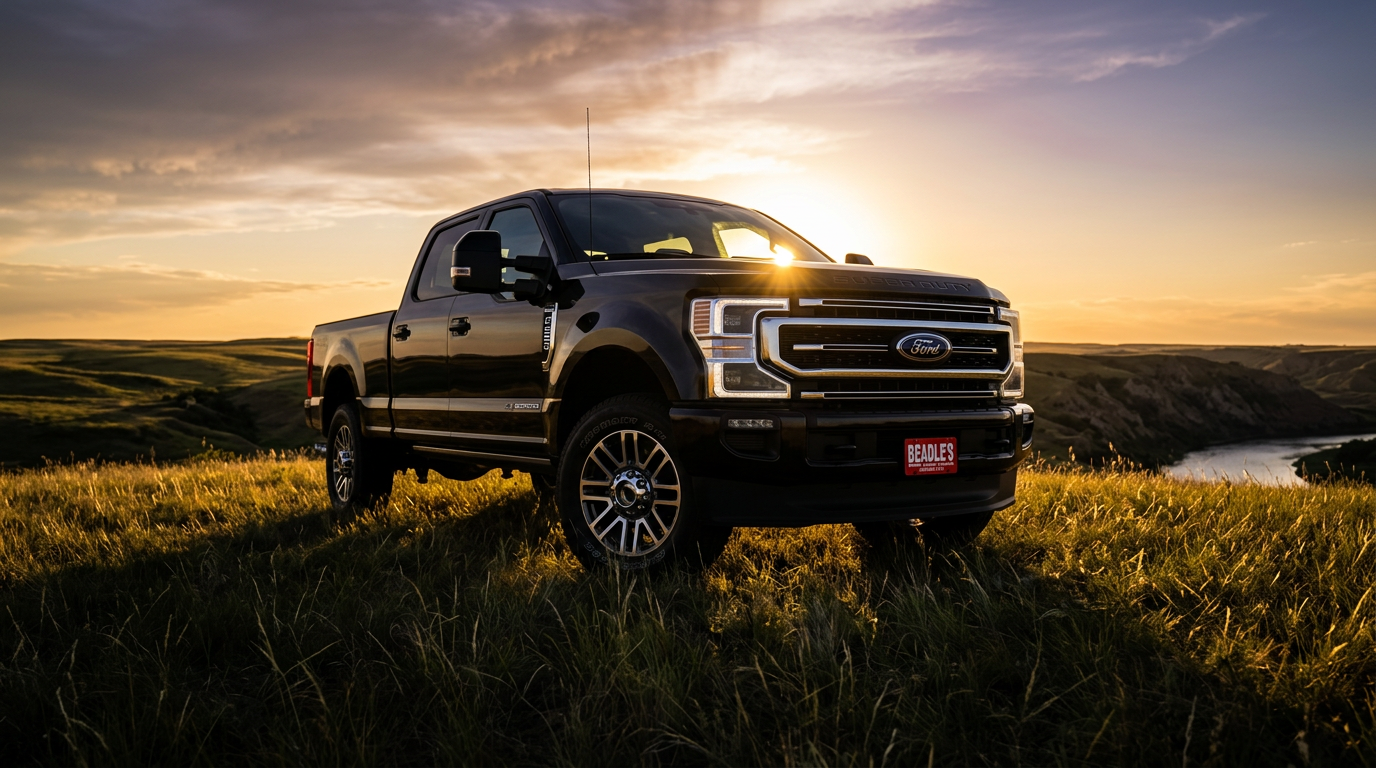
Contact Us

Fill out this form below and we'll contact you shortly
*Required Fields