
Blog

All New Vehicles Bowdle Ford Dealer Bowdle Ford Service
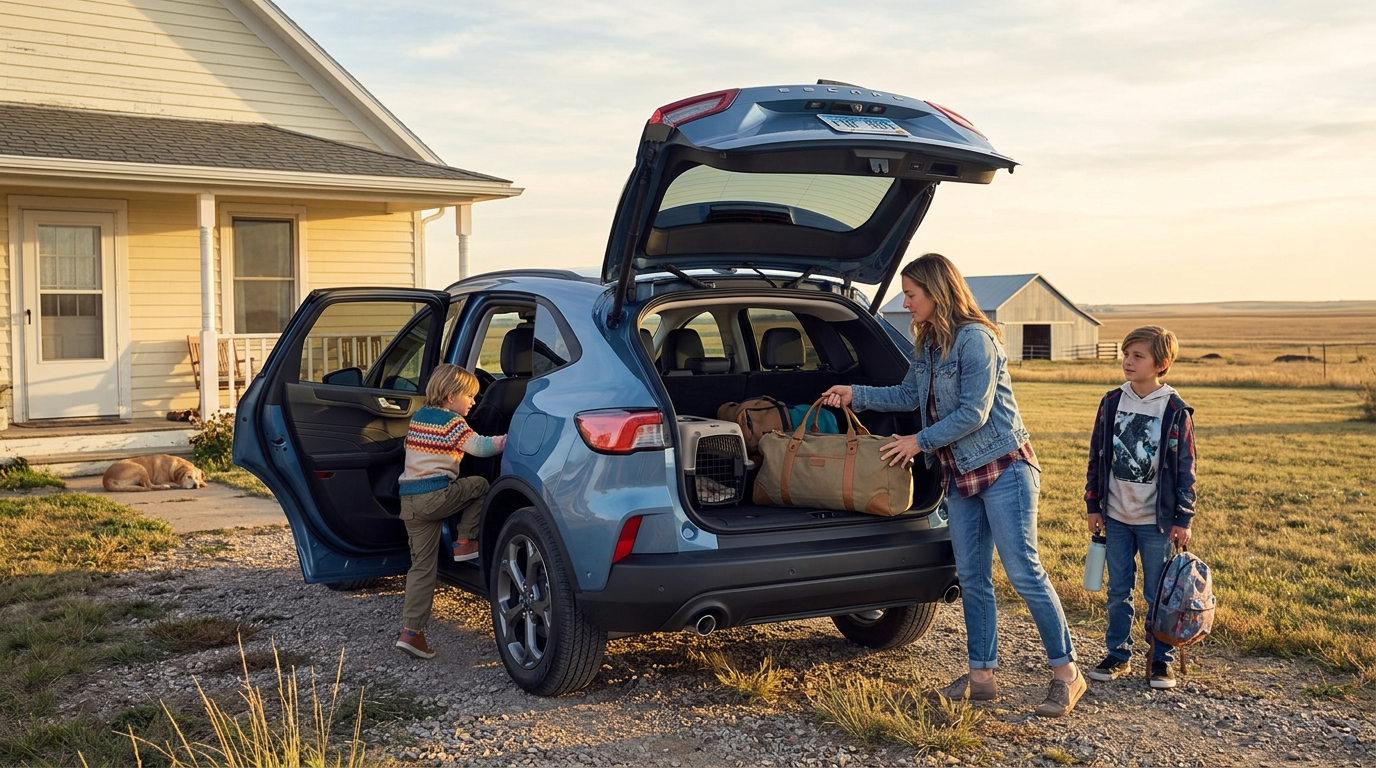
2026 Ford Escape loaded for a family trip on South Dakota plains highway

Is the 2026 Ford Escape a Good Family SUV? A Practical Look for South Dakota Buyers

The 2026 Ford Escape seats five, offers available AWD, delivers among the better fuel economy in its class through the hybrid powertrain, and includes Ford's full Co-Pilot360 safety suite as standard equipment across every trim. For South Dakota families — school runs in Bowdle, sports travel to Huron or Mitchell, longer highway trips to Aberdeen or Sioux Falls — it covers most of what a family vehicle needs to do without moving up to a larger SUV. This guide breaks down the Escape's family-specific specs and features honestly: interior room, safety systems, AWD availability for winter driving, and fuel economy for a family that logs real miles across central South Dakota. It also covers when the Escape genuinely isn't enough and the Explorer makes more sense. Shop Escapes in Stock Get Pre-Approved On This Page What Is the 2026 Ford Escape Like Inside for a Family of Five? What Kid-Friendly Features Does the 2026 Ford Escape Have? What Safety Features Come Standard on the 2026 Ford Escape? Does the 2026 Ford Escape Have AWD for Year-Round Family Driving in South Dakota? How Does the Escape's Fuel Economy Affect a Family's Monthly Driving Budget? When Should a South Dakota Family Consider the Explorer Instead of the Escape? What Is the 2026 Ford Escape Like Inside for a Family of Five? The Escape fits five passengers across two rows. It is a compact crossover, so the rear seat is sized for kids and average-build adults comfortably, but it is not a large SUV — tall adults sitting behind tall adults will feel the compact footprint on long trips. Cargo is the practical question for families. Behind the rear seats, the Escape offers approximately 37.5 cubic feet of cargo space — enough for a week of grocery runs or a weekend's worth of luggage for four. With the rear seats folded flat (60/40 split configuration), cargo capacity expands to approximately 60.8 cubic feet. Verify current figures at Ford.com, as cargo numbers are not listed in the order guide. The 60/40 split-fold rear seats are sliding as well as folding — the sliding feature lets you push the rear seats back for more legroom when cargo isn't the priority, or forward when you need the extra cargo depth. Where the Escape works well for SD families: daily driving, school pickup, commutes, and trips where you're packing light. Where it starts to feel tight: sports weekends with equipment, camping trips with gear, or anything that would fill a typical pickup bed. For most Bowdle-area families using the Escape as a daily driver and second vehicle, the cargo room is adequate. For families who routinely haul gear for multiple kids plus parents, the complete 2026 Ford Escape overview covers all configurations, and the Explorer section below covers when stepping up makes sense. What Kid-Friendly Features Does the 2026 Ford Escape Have? LATCH anchors are standard on the rear outboard seating positions across all 2026 Escape trims. For families with car seats, the sliding rear bench is genuinely useful — you can slide the second row forward to give the front passenger more room, or push it back to make car seat installation and kid loading easier. That flexibility is a practical difference from fixed-rear-seat competitors in this class. Features that matter for SD family winters — and when they become standard: heated front seats, a heated steering wheel, and remote start are all standard on ST-Line Select and up. On Active and ST-Line, they are not standard — they require either an option package or moving to a higher trim. If you're pre-warming a vehicle for school pickup in January at -10°F in Bowdle, that feature set matters, and the ST-Line Select is where it becomes baked in. A power liftgate (genuinely useful with your hands full of groceries or a kid) is also standard on ST-Line Select and up. Dual-zone electronic automatic climate control is standard across all trims — both front and rear passengers can reach their preferred temperature. The 13.2" SYNC 4 screen is standard on ST-Line Elite, PHEV, and Platinum; it's optional via tech packages on Select and lower trims. Wireless Apple CarPlay and Android Auto are included on all trims with the 8" standard screen and up. There is no factory-installed rear seat entertainment system on the 2026 Escape — families who want screen time for rear passengers will need a tablet or aftermarket solution. One honest note: the Escape trim levels guide covers which trims include the winter-ready feature set and which require option packages. What Safety Features Come Standard on the 2026 Ford Escape? Ford Co-Pilot360 is standard on every 2026 Ford Escape trim — from the entry-level Active through Platinum. This means automatic emergency braking (AEB) with pedestrian detection, forward collision warning, BLIS blind spot monitoring with rear cross-traffic braking, lane-keeping assist with driver alert, road departure warning, rear view camera, auto high-beam headlamps, and post-collision braking are included regardless of which configuration you purchase. Also standard on all trims: AdvanceTrac with Roll Stability Control (RSC), Electronic Traction Control, SOS Post-Crash Alert System, SecuriLock passive anti-theft, and a full airbag system including a Safety Canopy with rollover sensor. For highway driving on SD's open interstates where deer crossings and sudden weather changes are real risks, having AEB with pedestrian detection and road departure warning on every single trim matters. For families who want the next level of driver assistance — adaptive cruise control with stop-and-go, lane centering assist, rear parking sensors, and intersection assist — that's Co-Pilot360 Assist+. It comes standard on ST-Line Elite, PHEV, and Platinum. On Active, ST-Line, and ST-Line Select, Co-Pilot360 Assist+ requires a tech package upgrade. If highway-capable adaptive cruise is important for your family's longer South Dakota drives, the ST-Line Elite is where it becomes standard without package math. Other Ford Models to Consider Need more room? These models are also available at Beadle Ford. Ford Explorer More cargo room, available 3-row seating, more towing capacity. Shop Escapes in Stock Ford Bronco Sport Standard AWD, GOAT modes, staying in Ford's lineup. Shop Escapes in Stock Ford Maverick Compact truck with hybrid option, bed utility, and family-friendly price. Shop Escapes in Stock Does the 2026 Ford Escape Have AWD for Year-Round Family Driving in South Dakota? Yes — and the answer matters more depending on which trim you order. AWD is standard and the only drivetrain option on ST-Line Select, ST-Line Elite, and Platinum. On Active and ST-Line, FWD comes standard and AWD must be added at order — it does not come on the vehicle automatically. The PHEV trim is front-wheel drive only with no AWD option. For a family in Bowdle that's doing school pickup on packed gravel in November and running kids to Saturday morning sports in Huron in February, the AWD configuration is the practical choice. The Escape's AWD system distributes torque to the rear axle when slip is detected — it handles packed snow and gravel county roads competently. What it doesn't have is a dedicated Snow/Slippery driving mode — it's a reactive AWD system rather than a mode-switching one. The ST-Line Select is the natural starting point for South Dakota family buyers: AWD becomes non-negotiable here (you can't order FWD even if you wanted to), and it adds the full winter-ready package — heated front seats, heated steering wheel, and remote start — as standard equipment. That combination in a single trim is a clean deal for a central SD family vehicle. For more detail on how AWD availability lines up across all trims, the complete 2026 Ford Escape lineup overview covers all six configurations. How Does the Escape's Fuel Economy Affect a Family's Monthly Driving Budget? The 2026 Ford Escape's fuel economy advantage is most meaningful in the Hybrid AWD configuration. The 2.5L Hybrid AWD (available on ST-Line Select, Elite, and Platinum) delivers approximately 39 mpg combined — verify current EPA figures at fueleconomy.gov. For a family logging 15,000 miles per year, that's roughly 385 gallons of fuel annually. On the 1.5L EcoBoost FWD at approximately 30 mpg combined, the same 15,000 miles requires closer to 500 gallons. That difference — roughly 115 gallons per year — is real money on a farm family's budget where every dollar matters. The SD-specific efficiency argument is the highway leg. South Dakota families don't just drive city blocks — they're driving 30-mile county road hauls to get to a highway, then 60 to 80 miles into a larger city for errands or appointments. The Escape Hybrid's EPA highway figure (approximately 36 mpg — verify at fueleconomy.gov) holds up well on those stretches. For a Bowdle family making regular trips to Aberdeen or Huron, the Hybrid AWD pays back in fuel savings in a way that suburban buyers who drive shorter loops don't experience as directly. The PHEV is worth mentioning for context: it delivers higher MPGe when running on electricity (~101 MPGe, verify at fueleconomy.gov) and good hybrid-mode efficiency once the battery depletes (~40 mpg, verify). The practical challenge for central SD families is that reliable Level 2 charging infrastructure near Bowdle is limited — the PHEV's efficiency advantage is smaller if you're charging on a standard Level 1 outlet or not charging consistently. And the PHEV is FWD-only, which is a significant trade-off for SD winter driving. For most SD families, the non-plug-in Hybrid AWD on ST-Line Select is the stronger combination of efficiency, AWD, and real-world practicality. When Should a South Dakota Family Consider the Ford Explorer Instead of the Escape? The Explorer is the right call when the Escape's two-row, five-passenger limit is genuinely a constraint for your family's actual use. The Explorer offers available three-row seating — a real third row for a family of six or seven, not a jump seat. It also offers more cargo volume behind the second row than the Escape, more towing capacity depending on configuration, and a longer wheelbase that translates to more rear-passenger legroom on multi-hour drives. The trade-offs are straightforward: the Explorer is larger, costs more, and burns more fuel. For a family that genuinely needs three rows a few times a year (church trips, extended family hauling, carpool groups), paying the Explorer premium makes sense. For a family that's primarily two parents and two kids — the Escape's five-passenger cabin covers everyone, the cargo room handles the gear, and you're spending and fueling less for the same trip. One practical note on timing: the 2026 Escape is the final model year — Ford is not producing an Escape beyond 2026. The Explorer is continuing in Ford's lineup. If long-term model continuity and parts availability over a 10+ year ownership horizon matters to your family's decision, the Explorer's ongoing production is a real difference. For a 5–7 year ownership window, that consideration is lower — the Escape carries full Ford warranty coverage and parts support for any recently discontinued model is strong for many years post-production. Both the Escape and Explorer are available at Beadle Ford in Bowdle. Key Takeaways for South Dakota Families The Escape seats five with a sliding, 60/40 split-fold rear seat; cargo room is approximately 37.5 cu ft behind the rear seats (verify at Ford.com). It is not a three-row SUV. Ford Co-Pilot360 with AEB, pedestrian detection, BLIS, lane-keeping, and road departure warning is standard on every trim — no trim is without it. LATCH anchors are standard on rear outboard positions; heated seats, heated steering wheel, remote start, and power liftgate become standard starting at ST-Line Select. For SD family winter driving, ST-Line Select is the practical starting point: AWD is standard (no FWD option), and the full cold-weather feature set is included. The 2.5L Hybrid AWD delivers approximately 39 mpg combined — roughly 115 gallons per year less than the 1.5L gas on 15,000 annual miles, a meaningful difference for a farm family's budget. If your family regularly needs three rows or significantly more cargo capacity, step up to the Explorer — the Escape is a compact two-row vehicle and that limit is real on big gear days. Frequently Asked Questions Does the 2026 Ford Escape have LATCH anchors for car seats? Yes — LATCH anchors are standard on the rear outboard seating positions on all 2026 Ford Escape trims. The rear seat also features 60/40 split-fold and sliding functionality. The sliding capability is useful for car seat installation, as you can position the second row forward or rearward depending on car seat size and how much front-passenger legroom you want. There is no LATCH anchor on the rear center position. Which 2026 Ford Escape trim is best for a South Dakota family? For most South Dakota families, the ST-Line Select is the practical starting point. It is the first trim where AWD is standard (no FWD option), and it adds heated front seats, a heated steering wheel, remote start, and a power liftgate as standard equipment — the full winter-ready package for central SD conditions. The ST-Line Elite steps up to a 10-way power driver's seat, the 13.2" SYNC 4 screen, wireless charging, and Co-Pilot360 Assist+ as standard equipment for families who want the full tech suite without package math. Both are available with the 2.5L Hybrid AWD for families prioritizing fuel economy on long South Dakota drives. Does the 2026 Ford Escape have a third row? No — the 2026 Ford Escape is a two-row, five-passenger vehicle. There is no three-row option at any trim or configuration. If your family regularly needs seating for six or seven, or needs the cargo room that comes with a longer three-row platform, the Ford Explorer is the appropriate step up. The Explorer is available at Beadle Ford in Bowdle and offers available three-row seating with more interior volume than the Escape. Is the 2026 Ford Escape safe enough for family use? The 2026 Ford Escape includes Ford Co-Pilot360 as standard equipment on every trim — this means automatic emergency braking with pedestrian detection, BLIS blind spot monitoring with rear cross-traffic braking, lane-keeping assist, road departure warning, pre-collision warning with dynamic brake support, and a rear view camera come on every Escape regardless of price point. AdvanceTrac with Roll Stability Control and a full airbag system including a Safety Canopy with rollover sensor are also standard across all trims. Verify current NHTSA and IIHS safety ratings at their respective websites for the most recent test results. Is the Ford Escape or Explorer better for a South Dakota family? For a family of five using the vehicle primarily for daily driving, school runs, and regional highway trips, the Escape handles the job with better fuel economy and a lower price point than the Explorer. For families who need three rows, routinely haul significant equipment, or plan to use the vehicle for towing beyond the Escape's capacity (the 2.0L Escape maxes at 3,500 lbs with the Class II package; the Explorer can tow more depending on configuration), the Explorer is the right step up. If you're on the fence, both are available at Beadle Ford in Bowdle — a back-to-back comparison is the best way to make the call for your specific family use case. My Take on the 2026 Ford Escape as a South Dakota Family Vehicle The buyers I talk to who are considering the Escape for family use usually come in with one of two scenarios: they're using it as a second vehicle on the farm — mom's daily driver for town runs and kid hauling while the truck handles the heavier work — or they're a smaller family that doesn't need a full-size SUV and is trying to keep fuel costs reasonable on South Dakota highway miles. The Escape fits both of those use cases well. The ST-Line Select in Hybrid AWD hits a real sweet spot: AWD locked in, heated seats and remote start included, and approximately 39 mpg on the highway. I do tell families honestly when the Escape is going to come up short. If you've got three kids who need their own row, or you're the household that hauls ATV gear and sports equipment for multiple kids on the same trip — you're going to load the Escape to its limit and probably wish you'd gone to the Explorer. The five-passenger, two-row limit is real. It's not a knock on the vehicle; it's just what it is. The Explorer is right down the lot. If you want to walk through which trim makes the most sense for your family's actual routine, stop by Beadle Ford in Bowdle. I'm happy to go through it with you. Shop Escapes in Stock Get Pre-Approved About the Author Lexy Tabbert — Beadle Ford, Bowdle, SD Lexy Tabbert is the Director of Sales and Marketing at Beadle Ford in Bowdle, South Dakota. She covers Ford vehicles, trim comparisons, and buyer guidance — helping families, ranchers, and ag operators across the region find the right truck and configuration for their needs. Learn more about Lexy.
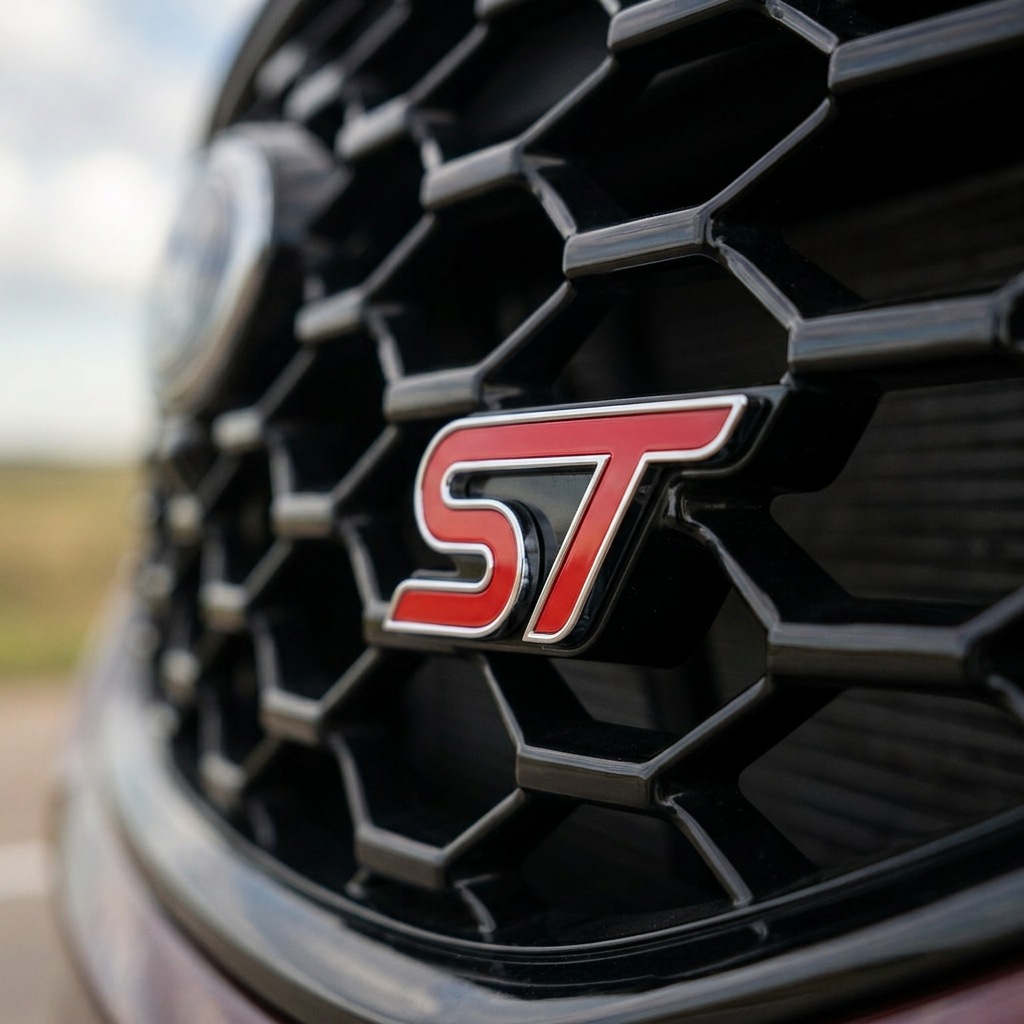
Owning a Ford Edge After Discontinuation: Maintenance, Parts, and What to Expect

Owning a Ford Edge After Discontinuation: Maintenance, Parts, and What to Expect Ford stopped building the Edge in April 2024—but that doesn’t mean your SUV is left behind. Here’s what owners need to know about parts, service, costs, and long-term ownership. Published March 31, 2026 — Lexy Tabbert, Beadle Ford, Bowdle, SD Shop Edges in Stock Get Pre-Approved Quick Navigation What “Discontinued” Actually Means Parts Availability & Where to Source Them Ford Edge Maintenance Schedule & Intervals Estimated Annual Ownership Costs Warranty & CPO Options SYNC 4A Software Updates & Support Resale Value & Depreciation Outlook South Dakota Winter Maintenance Frequently Asked Questions When Ford announced the Edge’s discontinuation in 2024, many owners wondered what it meant for the future of their vehicles. Would parts become impossible to find? Would service dry up? Would resale value plummet? The reality is much more reassuring than the headlines suggest. “Discontinued” does not mean “abandoned.” Ford dealerships maintain legal obligations to stock and order parts for discontinued models for years after production ends. The Edges on the road today—with their proven EcoBoost engines, SYNC 4A infotainment, and all-wheel-drive standard configuration—remain fully supported, maintainable, and valuable. If you own a pre-owned Edge or are considering buying one, understanding the true cost of ownership, parts availability, and maintenance expectations will help you make a confident decision. At Beadle Ford in Bowdle, SD, we service hundreds of Edge owners in the region and stay current with the latest guidance from Ford. Let’s break down what ownership really looks like. What “Discontinued” Actually Means for Owners Production has ended, but support continues. Ford stopped manufacturing the Edge in April 2024. That’s it. The factory line closed, and no new 2025 or 2026 models will be built. But discontinuation does NOT automatically trigger the end of service, parts availability, or dealer support. Automakers in the United States are legally required to make parts available for vehicles for a minimum of 10 years after the final production year. In practice, Ford maintains relationships with parts suppliers and distributors for far longer—often 15, 20, or even 30+ years for popular models. The Edge was in production for over two decades (2006–2024), which means an enormous installed base and continued demand for replacement parts. When you discontinue a vehicle, you don’t discontinue warranty coverage for owners, recall compliance, or TSB (Technical Service Bulletin) support. Ford service departments are equipped to handle the entire library of Edge maintenance and repair needs—from routine oil changes to transmission rebuilds. Why does this matter? It means the pre-owned Edge you buy today will not become a "car nobody can fix." It means resale value is not immediately crushed. And it means you are not betting on a dying vehicle platform when you choose a used Edge for your family or business. Parts Availability & Where to Source Them Ford dealerships continue to stock and order Edge parts. Your Beadle Ford service department has access to Ford’s full parts catalog for the Edge. Common wear items like brake pads, air filters, spark plugs, serpentine belts, and battery replacements are in stock or can be ordered within 1–3 business days. Larger components—transmission assemblies, engine gaskets, suspension arms, and cooling system parts—are also available through Ford’s parts network. Aftermarket suppliers fill the gap. Major retailers including RockAuto, CarParts.com, AutoAccessoriesGarage.com, PartsGeek, and Advance Auto Parts maintain extensive catalogs of Edge parts and accessories. These aftermarket sources often price below OEM (original equipment manufacturer) parts and ship nationwide. Warranty and return policies vary, but reputable aftermarket suppliers typically offer 30-day returns and satisfaction guarantees. Salvage yards and used parts. For owners on a budget, salvage yards across the Great Plains stock used Edge components. Websites like Car-Part.com let you search inventory across multiple yards and compare pricing. Used parts can reduce repair costs significantly, especially for body panels, interior trim, and mechanical assemblies from lower-mileage vehicles. What to expect pricing-wise: OEM parts from Ford dealers run 15–40% higher than equivalent aftermarket parts, depending on the component. For routine maintenance, aftermarket brake pads, filters, and fluids offer the best value. For critical systems (transmission, engine, suspension), many owners balance cost by sourcing used OEM components through salvage suppliers or choosing reputable aftermarket brands with strong warranties. Ford Edge Maintenance Schedule & Recommended Intervals The Ford Edge follows the manufacturer’s recommended preventive maintenance schedule found in your owner’s manual. Below is a summary of critical service intervals for Edge models (2020–2024, applicable to earlier years with minor adjustments): Service Interval Estimated Cost* Oil & Filter Change (5W-20) Every 10,000 miles or 12 months $45–$85 Tire Rotation & Rebalance Every 7,500–10,000 miles $40–$80 Brake Pads (front & rear) Every 50,000–70,000 miles $200–$400 Engine Air Filter Replacement Every 30,000 miles or annually $30–$60 Cabin Air Filter Replacement Every 15,000–30,000 miles $25–$50 Transmission Fluid Drain & Fill (8-spd) Every 100,000 miles or 10 years $150–$250 Coolant System Flush Every 100,000 miles or 10 years $120–$200 Spark Plugs (replacement) Every 100,000 miles $100–$180 All-Wheel-Drive Fluid Service Every 100,000 miles $150–$250 Battery Replacement (hybrid) Every 8–10 years or as needed $100–$250 *Costs are estimates for dealer service in South Dakota. Aftermarket parts and independent shops may offer lower rates. EcoBoost-specific care: The 2.0L and 2.7L EcoBoost engines in the Edge benefit from synthetic 5W-20 oil and quality fuel with detergent additives. Some owners report carbon buildup in direct-injection engines; regular use of top-tier gasoline (Shell, Chevron, Mobil) or fuel system cleaners every 10,000–15,000 miles can minimize this. Always refer to your vehicle’s maintenance manual for model-specific intervals. When in doubt, contact Beadle Ford—our service advisors can build a custom maintenance plan for your Edge based on driving habits, climate, and mileage. Estimated Annual Ownership Costs Understanding the true cost of owning a used Edge helps you budget realistically. Below is a breakdown of typical annual expenses for a 4–6 year-old Edge with 50,000–80,000 miles: Routine Maintenance (Oil changes, filters, tire rotation) $350–$500/year Tire Replacement (averaged over 4-year life) $200–$350/year Brake Service (pads, rotors, averaged) $150–$250/year Insurance (comprehensive/collision, varies by age, ZIP) $800–$1,400/year Fuel (EPA combined 22–27 MPG, 12,000 miles/year @ $3.20/gal) $1,400–$1,745/year Unexpected Repairs (averaged) $300–$600/year Total Estimated Annual Cost $3,200–$4,845/year How does this compare? The Ford Edge costs roughly 10–15% less annually to own than comparable SUVs like the Chevy Traverse or Toyota Highlander, primarily due to lower insurance costs and fuel economy. The EcoBoost engines deliver strong efficiency for their size, and parts remain affordable as the model ages. Factors that impact your costs: Annual mileage, driving conditions (city vs. highway), local fuel prices, insurance rates, and maintenance habits all play a role. Owners in South Dakota who tackle winter maintenance proactively (undercoating, rust prevention) often avoid expensive rust-related repairs later. Warranty & Certified Pre-Owned (CPO) Options Factory warranty for used Edges. If you purchase a pre-owned Edge from a Ford dealership, the original factory warranty coverage transfers to you. Most Edge models from 2020 onward still carry: Basic Warranty: 3 years or 36,000 miles (whichever comes first) Powertrain Warranty: 5 years or 60,000 miles (engine, transmission, drivetrain) Corrosion/Rust Warranty: 5 years, unlimited miles Ford Certified Pre-Owned (CPO) Warranty. Edges purchased through the Ford CPO program receive an additional layer of protection. A standard CPO warranty covers major components for up to 7 years or 100,000 miles from the original in-service date. Each CPO vehicle passes a comprehensive 200-point inspection, includes a vehicle history report, and qualifies for roadside assistance. Extended warranties. For used Edges outside factory warranty, third-party extended warranties or maintenance plans are available. Prices typically range from $1,200–$3,500 for 5–7 year coverage, depending on deductibles and coverage limits. Compare plans carefully; some exclude certain components or impose mileage caps. At Beadle Ford, we help customers navigate warranty options and provide transparent pricing. Ask us about extended warranty programs when you browse our Edge inventory or discuss pre-purchase inspections. SYNC 4A Software Updates & Long-Term Support SYNC 4A is receiving ongoing over-the-air updates. The Edge’s standard SYNC 4A infotainment system is integrated with Ford’s “Power-Up” over-the-air (OTA) update program. This means your Edge can receive software updates wirelessly—no trip to the dealer necessary (though updates can also be installed at a Ford service center if you prefer). What updates include: Security patches, performance improvements, new features (when available), and compatibility enhancements. Ford has committed to providing OTA updates for vehicles across its lineup, including discontinued models, as long as the vehicles are on the road and owners subscribe to the connected services feature. Connectivity requirements. Your Edge must have an active FordPass account and internet connectivity (via the vehicle’s cellular modem) to receive automatic updates. Over-the-air updates download silently and install at convenient times (typically overnight or when the vehicle is parked and plugged in, if equipped with wireless charging). You can also manually check for and install updates via the SYNC settings menu. Discontinuation and software support. Ford has not announced plans to discontinue SYNC 4A updates for discontinued vehicle models. In fact, discontinuing a model does not typically trigger the end of software support—Ford maintains liability and functionality obligations for the vehicles already on the road. For peace of mind, check your SYNC system’s settings regularly to confirm automatic updates are enabled. If you encounter issues with updates or connectivity, our service team at Beadle Ford can diagnose the problem and ensure your Edge stays current. Resale Value & Depreciation Outlook Discontinuation does NOT crush resale value. The Edge benefits from strong brand recognition, a loyal owner base, and a 19-year production run (2006–2024). These factors support stable used-market pricing. Unlike obscure or poorly-selling models, the Edge commands consistent demand from buyers seeking mid-size AWD SUVs. Depreciation trends: A typical pre-owned Edge depreciates about 10–15% annually in its first few years after purchase. A 2022 Edge purchased used in 2026 (4 years old) typically loses 40–50% of its original sticker price. By year 7–8, depreciation rates stabilize as older Edges become classic daily drivers rather than luxury purchases. What supports Edge resale value: Strong fuel economy for the class (AWD standard improves appeal in snow regions) Reliable EcoBoost engine and automatic transmission with proven track records SYNC 4A and Co-Pilot360 standard—modern tech that matches newer SUVs Large installed base means strong secondary market and parts availability Broad appeal to families, ranch operators, and fleet buyers across the Midwest Buy with confidence: A well-maintained 2020–2024 Edge is not a depreciating asset you should avoid. It’s a practical, supported SUV that will retain reasonable value if you maintain it properly. When you’re ready to sell or trade it in, Beadle Ford is here to help with fair valuations and seamless transactions. South Dakota Winter Maintenance & Year-Round Care South Dakota is in the “Salt Belt.” Our region uses road salt to manage winter snow and ice, which means your Edge faces unique corrosion challenges that owners in milder climates don’t encounter. Proactive winter maintenance can add years of service life and prevent costly rust repairs. Tire and traction management: The Edge’s all-wheel-drive system is excellent for snow and ice, but traction depends on quality winter tires. Many South Dakota owners swap to winter tires (rated 3PMSF) from November through April. All-season radials lose grip below 45°F; winter tires maintain traction and reduce stopping distances in snow. Tire swapping also extends your summer tire life and improves safety. Undercarriage and rust prevention: Road salt accumulates on your vehicle’s undercarriage, brake lines, suspension components, and wheel wells without you seeing it. To prevent rust: Wash your Edge regularly after snowstorms and every 2–3 weeks during winter. Use a pressure washer or car wash with an undercarriage spray to blast salt away from hidden areas. Professional undercoating applied before winter (September–October) creates a protective barrier. Cost is typically $150–$300 and can save thousands in rust repairs over a vehicle’s life. Touch up paint chips immediately. Exposed metal rust rapidly when salt is present. Keep a paint pen or touch-up bottle on hand during winter. Inspect suspension and brake components annually. Rusted brake lines or suspension links can fail unexpectedly. Our service team checks these systems during routine maintenance. Cold-weather engine and battery care: South Dakota winters can dip to –20°F or colder. Maintain your Edge with: Engine block heater (if equipped) to warm the engine overnight and improve cold starts. Ford Edge models can accommodate aftermarket block heaters for $100–$200. Synthetic 5W-20 oil (standard for Edge) flows better in cold temperatures than conventional oil. Use it year-round to support cold startups. Battery health check twice yearly (fall and spring). Cold temperatures reduce battery output by 30–50%; if your Edge struggles to start on cold mornings, a battery test takes 10 minutes and costs nothing at Beadle Ford. Coolant system maintenance prevents freeze-up and corrosion. Ford recommends a coolant flush every 100,000 miles or 10 years; in harsh South Dakota winters, consider flushing every 5 years or 50,000 miles. All-wheel-drive fluid service: The Edge’s AWD system requires periodic fluid changes. Snow and cold put extra stress on the transfer case and rear differential. Service them every 100,000 miles or, in extreme climates, every 50,000 miles. Neglecting AWD service can lead to binding, noise, and drivetrain failure. Schedule a seasonal check-up: Before winter (September–October) and before spring (March–April), bring your Edge to Beadle Ford for a comprehensive inspection. We check battery health, coolant condition, brake system integrity, tire tread and pressure, and suspension for salt damage. Small repairs prevent big problems. Call 605-285-6202 to book your seasonal appointment. Key Takeaways Discontinuation does NOT mean lack of support. Ford dealerships and aftermarket suppliers maintain parts inventory and service capability for years after production ends. Parts are readily available through Ford dealerships, major aftermarket retailers (RockAuto, CarParts.com, PartsGeek), and salvage yards. Expect OEM parts to cost 15–40% more than aftermarket alternatives. Annual ownership costs for a used Edge range $3,200–$4,845 (maintenance, insurance, fuel, repairs), making it 10–15% cheaper than comparable mid-size AWD SUVs. SYNC 4A continues to receive over-the-air updates. Discontinued models are NOT cut off from software support; Ford maintains update services for vehicles on the road. Resale value remains stable. The Edge’s strong brand reputation, large owner base, and reliable engines support consistent used-market demand. South Dakota winter ownership requires proactive rust prevention: regular washing, professional undercoating, tire swaps, coolant service, and battery maintenance. Certified Pre-Owned (CPO) Edges offer extended warranties (up to 7 years/100,000 miles) and thorough inspections. Factory warranty coverage carries over to second owners. Frequently Asked Questions About Ford Edge Ownership Is a discontinued Ford Edge still supported by Ford dealerships? Yes, absolutely. Ford dealerships are legally required to support discontinued models for a minimum of 10 years after the final production year. In practice, support typically extends far longer for popular models like the Edge. Ford service departments maintain access to parts catalogs, technical service bulletins (TSBs), recall information, and warranty coverage for all Edge model years still on the road. You can bring your Edge to any Ford dealership, including Beadle Ford in Bowdle, SD, for maintenance and repair. Where can I find replacement parts for my Edge if Ford dealership parts are too expensive? Aftermarket parts suppliers are your best option for cost savings. Major retailers including RockAuto, CarParts.com, AutoAccessoriesGarage.com, PartsGeek, and Advance Auto Parts stock extensive Edge catalogs and typically price 15–40% below OEM parts. For used components, salvage yards across the Great Plains offer lower-cost alternatives; search Car-Part.com to compare inventory and pricing nationwide. Most aftermarket suppliers offer 30-day returns and warranties on parts. For critical systems (engine, transmission), balance cost with warranty coverage to avoid future headaches. Will my Ford Edge continue to receive SYNC 4A software updates after discontinuation? Yes, the Edge will continue to receive over-the-air (OTA) updates through Ford’s Power-Up program. Discontinuation of a model does not automatically terminate software support. Your Edge can receive security patches, performance improvements, and compatibility enhancements wirelessly as long as your vehicle is equipped with a cellular modem and you maintain an active FordPass account with connected services. Updates install automatically or can be manually triggered via the SYNC settings menu. Ford has committed to supporting OTA updates across its lineup, including discontinued models, for as long as vehicles remain on the road. How much does it cost to own a used Ford Edge annually? Annual ownership costs for a typical 4–6 year-old Edge range from $3,200 to $4,845, depending on mileage, driving habits, and local repair rates. This includes routine maintenance ($350–$500), tire replacement amortized over a 4-year lifespan ($200–$350), brake service ($150–$250), insurance ($800–$1,400), fuel ($1,400–$1,745 based on 12,000 miles/year), and unexpected repairs ($300–$600). The Edge typically costs 10–15% less to own annually than comparable AWD SUVs like the Chevy Traverse or Toyota Highlander, thanks to lower insurance costs and strong fuel economy. Will a discontinued Ford Edge lose value quickly compared to models still in production? No. The Edge’s discontinuation will not significantly accelerate depreciation. The model enjoyed 19 years of continuous production (2006–2024), building a large installed base and strong owner loyalty. Resale values remain stable, supported by consistent market demand from buyers seeking reliable mid-size AWD SUVs. A well-maintained Edge from 2020–2024 will depreciate at typical rates (10–15% annually for the first few years), no worse than comparable models still in production. The Edge’s fuel efficiency, modern SYNC 4A tech, and proven EcoBoost engines maintain its appeal to buyers. Discontinuation actually strengthens the resale value of remaining inventory by reducing future supply and competitive pressure from new models. What warranty coverage applies to a used Ford Edge purchased today? Factory warranty coverage transfers to subsequent owners. A used Edge from a Ford dealer typically carries basic warranty (3 years/36,000 miles) and powertrain warranty (5 years/60,000 miles) coverage. Corrosion/rust warranty extends for 5 years, unlimited mileage. If the Edge is purchased through the Ford Certified Pre-Owned (CPO) program, coverage extends to 7 years or 100,000 miles from the original in-service date, plus roadside assistance. Extended warranties from third-party providers ($1,200–$3,500 for 5–7 years) are also available for out-of-warranty vehicles. Beadle Ford can help you review warranty options and find the right coverage for your situation. My Take on Owning a Ford Edge After Discontinuation I talk to Edge owners here in Bowdle and across the region regularly, and the concern I hear most often is some version of: “Is this thing going to become impossible to fix?” My honest answer is no—not for a long time, and probably not in your ownership window at all. The Edge was built for nearly two decades. That kind of production run creates a parts ecosystem that doesn’t just evaporate overnight. From a cost standpoint, used Edges are genuinely solid value right now. The discontinuation has taken new inventory off the table, which means less competition for used examples and more stable resale prices. If you keep up with the maintenance intervals—especially the AWD fluid and coolant service that South Dakota winters demand—you’ll get reliable miles out of this platform. The EcoBoost engines are proven, the SYNC 4A is still current enough to feel modern, and AWD standard across trims makes it practical for our climate. If you’re weighing a used Edge purchase or want a maintenance plan built for South Dakota driving, I’d encourage you to review the complete Ford Edge buyer guide for the full picture on trims, years, and what to look for. And if you have questions or want to talk through your specific situation, come see us at Beadle Ford in Bowdle—we’re here to help you make a confident decision. Shop Edges in Stock Get Pre-Approved Contact Beadle Ford Related Ford Edge Content Shop Edges in Stock Common Ford Edge Problems & How to Fix Them Best Ford Edge Years — Model Year Comparison About the Author Lexy Tabbert — Beadle Ford, Bowdle, SD Lexy Tabbert is the Director of Sales and Marketing at Beadle Ford in Bowdle, South Dakota. She covers Ford vehicles, trim comparisons, and buyer guidance — helping families, ranchers, and ag operators across the region find the right truck and configuration for their needs. Learn more about Lexy.
Ford Edge trim lineup showcase Bowdle SD

Ford Edge Trims Explained: SE, SEL, ST-Line, Titanium, and ST

Ford Edge Buyer’s Guide Ford Edge Trims Explained: SE, SEL, ST-Line, Titanium, and ST The Ford Edge comes in five distinct trims — SE, SEL, ST-Line, Titanium, and ST — each designed for different buyer priorities and budgets. Whether you’re seeking maximum value, premium comfort, or performance-tuned capability, this guide walks you through every option so you can choose with confidence. Shop Edges in Stock On This Page What Does the Ford Edge SE Include? What’s New in the Ford Edge SEL? What Is the Ford Edge ST-Line? Why Choose the Ford Edge Titanium? What Makes the Ford Edge ST Performance-Ready? Ford Edge Trim Comparison Table Which Ford Edge Trim Is Right for You? Frequently Asked Questions What Does the Ford Edge SE Include? The Ford Edge SE (100A) is the entry-level trim and the best choice for budget-conscious families seeking a spacious, reliable SUV. Every SE arrives with all-wheel drive standard — no front-wheel drive option — making it ready for South Dakota winters. Powertrain: The SE houses a 2.0L EcoBoost I-4 engine producing 250 horsepower and 280 lb-ft of torque, paired with an 8-speed automatic transmission. Fuel economy is solid for the class, and the EcoBoost platform has proven reliability across Ford’s lineup. Interior & Comfort: Cloth seats with a 4-way manual driver adjustment keep costs down without sacrificing comfort. Dual-zone automatic climate control, a leather-wrapped steering wheel, and SYNC 4A with a 12-inch touchscreen and wireless CarPlay/Android Auto come standard across all trims. The SE includes six speakers and a manual liftgate. Wheels & Styling: The SE rolls on 18-inch Sparkle Silver wheels with all-season tires (245/60R18). The Iconic Silver Honeycomb grille gives the SE a refined, distinct appearance. Towing & Cargo: Without the Class II Tow Package, the SE can tow 1,500 lbs. Cargo capacity sits at 39.2 cu ft behind the rear seats, expanding to 73.4 cu ft with seats folded — more than enough for a farm run or family road trip across the Prairie. Best for: Young families, first-time SUV buyers, rural operators who prioritize reliability and all-wheel drive capability without premium features. What’s New in the Ford Edge SEL? The SEL (201A) is where comfort upgrades begin. Stepping up to this trim unlocks power seat adjustments, heated front seats, and rear parking sensors — features that make daily driving more convenient and safer, especially during South Dakota winters. Seating: ActiveX seats with improved bolstering replace cloth on the SE. The driver seat moves with 8-way power adjustment, while the front passenger gets 4-way power adjustability. Both front seats are heated, a welcome feature on cold Prairie mornings. Lighting & Visibility: LED Signature Lighting enhances nighttime visibility and gives the SEL a more upscale exterior presence. Heated side mirrors and an auto-dimming rearview mirror round out the comfort package, reducing glare during sunrise and sunset drives across rural South Dakota. Wheels: The SEL steps up to 18-inch Split-Spoke Sparkle Silver wheels, a more refined design than the SE’s base pattern. Best for: Buyers who want the SE’s value foundation plus comfort conveniences; ranchers and ag professionals who appreciate heated seats for early-morning work. What Is the Ford Edge ST-Line? The ST-Line (250A) bridges comfort and sporty styling, appealing to buyers who want a bolder look without the V6 engine of the ST. It builds on the SEL foundation and adds distinctive design cues that make a statement on the road. Wheels & Suspension: Twenty-inch Premium Gloss Black wheels (245/50R20) replace the SEL’s 18-inchers, delivering a more aggressive stance. These larger wheels improve handling feedback without compromising ride quality over South Dakota’s gravel roads and highway stretches. Interior Design: ActiveX seating gets Miko insert accents, and red accent stitching throughout the cabin signals the ST-Line’s sportier personality. A wireless charging pad for mobile devices (increasingly essential) and remote start via smartphone round out the tech upgrades. Power Liftgate & Styling: The power liftgate is a genuine convenience, especially when your hands are full or you’re loading cargo. The Pillar Black Mesh grille and overall sharper styling differentiate the ST-Line visually from lower trims. 110V Outlet: A 110V outlet in the cargo area lets you power tools, coolers, or other equipment during ranch work or tailgating. Best for: Style-conscious buyers, outdoors enthusiasts, those who want SUV presence without sacrificing fuel efficiency of the 2.0L engine. Why Choose the Ford Edge Titanium? The Titanium (300A & 301A Lux) is Ford’s luxury play in the Edge lineup. This trim delivers premium materials, advanced driver-assistance systems, and premium audio that rival vehicles costing thousands more. Choose 300A for core luxury, or 301A Lux for the ultimate Titanium experience. Seating & Materials: Ten-way power driver seat with memory function, 6-way power passenger seat, and premium leather upholstery set the Titanium apart. Both front seats are heated as standard, and the 301A Lux adds cooled front and heated rear seats — luxury touches perfect for South Dakota’s temperature extremes. Wheels & Exterior: Nineteen-inch Luster Nickel wheels (245/55R19) provide a refined, upscale presence. The Chrome bars grille signals Titanium’s premium positioning. A hands-free foot-activated liftgate adds genuine convenience when carrying groceries or ranch supplies. Audio & Ambiance: A 12-speaker B&O system with subwoofer transforms your commute into a concert venue. Ambient lighting throughout the cabin creates a refined atmosphere during night drives. The heated steering wheel (standard on Titanium) is a game-changer during Bowdle winters. 301A Lux Upgrades: The premium package adds adaptive cruise control with stop-and-go functionality — excellent for highway drives across Nebraska and South Dakota. A panoramic roof opens the cabin visually, and a 180-degree camera system enhances parking confidence in tight farm or downtown spaces. Best for: Luxury-minded families, executives making long commutes, buyers who value premium audio and comfort technology; those shopping the used market seeking the most feature-rich, lowest-mileage Edge available. What Makes the Ford Edge ST Performance-Ready? The Ford Edge ST (400A & 401A High) is the performance flagship — a true enthusiast’s SUV powered by a 2.7L EcoBoost V6 engine. It delivers the muscle to tow trailers, haul equipment, and corner with authority, all while maintaining SUV practicality. Engine & Powertrain: The 2.7L twin-turbocharged EcoBoost V6 produces 335 horsepower and 380 lb-ft of torque — a meaningful step up from the 2.0L I-4’s 250 hp. A 7-speed automatic transmission is tuned by Ford Performance engineers for responsive acceleration and dynamic handling. Towing capacity jumps to 3,500 lbs standard, with the Class II Tow Package included. Suspension & Handling: The ST gets Ford Performance-tuned suspension geometry and dampers, delivering noticeably sharper turn-in and flatter cornering than lower trims. Yet it remains comfortable on highway stretches across the Great Plains. This is the Edge you choose when you want an SUV that feels alive behind the wheel. Interior & Seating: ST bolstered bucket seats with Miko inserts and leather trim hug you during spirited driving. Ten-way power driver seat with memory, B&O 12-speaker premium audio, and heated steering wheel come standard. The 401A High adds adaptive cruise control, panoramic roof, cooled front seats, and heated rear seats for maximum comfort and convenience. Wheels & Exterior: Twenty-inch Bright-Machined wheels (with performance tires) and ST-exclusive styling cues — including unique badging and aggressive grille treatment — make the ST unmistakable on the road. Best for: Performance enthusiasts, those who tow trailers regularly, buyers seeking an SUV with genuine dynamic personality; ranchers and operators who need both capability and confidence. Ford Edge Trim Comparison Table Use this table to compare specifications, features, and pricing across all five Ford Edge trims: Feature SE SEL ST-Line Titanium ST Engine 2.0L I-4 EcoBoost 2.0L I-4 EcoBoost 2.0L I-4 EcoBoost 2.0L I-4 EcoBoost 2.7L V6 EcoBoost Horsepower / Torque 250 hp/280 lb-ft 250 hp/280 lb-ft 250 hp/280 lb-ft 250 hp/280 lb-ft 335 hp/380 lb-ft Transmission 8-Speed Auto 8-Speed Auto 8-Speed Auto 8-Speed Auto 7-Speed Auto Drivetrain All AWD All AWD All AWD All AWD All AWD Towing (with Class II) 3,500 lbs 3,500 lbs 3,500 lbs 3,500 lbs 3,500 lbs (std) Driver Seat 4-way Manual 8-way Power 8-way Power 10-way Power + Memory 10-way Power + Memory Heated Front Seats No Yes Yes Yes Yes Audio System 6 speakers 6 speakers 6 speakers B&O 12 + Sub B&O 12 + Sub Wheels 18” Sparkle Silver 18” Split-Spoke 20” Gloss Black 19” Luster Nickel 20” Bright-Machined Liftgate Manual Manual Power Hands-free Foot TBD Adaptive Cruise No No No 301A only 401A High only SYNC 4A & Co-Pilot360 Standard Standard Standard Standard Standard All Edge trims include standard all-wheel drive, SYNC 4A 12” touchscreen, wireless CarPlay/Android Auto, and Co-Pilot360 driver-assistance suite. Which Ford Edge Trim Is Right for You? Choose SE if: You’re a budget-conscious family or first-time SUV buyer. The SE delivers all the essential tech — SYNC 4A, wireless CarPlay, Co-Pilot360 — in a proven, reliable package. Perfect for commuting and family hauling in South Dakota. Choose SEL if: You want the SE’s value but appreciate power seating, heated seats for winter, rear parking sensors, and a cleaner interior look via ActiveX trim. Ideal for ranchers and ag operators making regular long drives across the region. Choose ST-Line if: You seek style, sportier wheels, and practical upgrades (power liftgate, wireless charging, remote start) without the V6 engine premium. The ST-Line is the sweet spot for outdoors enthusiasts and those who want Edge presence without premium fuel costs. Choose Titanium if: You value luxury materials, premium audio (B&O 12-speaker + subwoofer), cooled/heated seats, and the latest driver-tech (301A Lux adds adaptive cruise, panoramic roof, 180-degree camera). Best for executives, long-distance commuters, and buyers shopping the used market for maximum feature density. Choose ST if: You tow regularly or demand SUV performance and handling. The 2.7L V6 EcoBoost (335 hp/380 lb-ft) and Ford Performance suspension deliver genuine driving excitement. The 401A High variant includes adaptive cruise, panoramic roof, and cooled/heated seating. Ranchers, equipment haulers, and performance enthusiasts will find the ST indispensable. Key Takeaways All five Edge trims come with all-wheel drive standard, SYNC 4A, wireless CarPlay/Android Auto, and Ford Co-Pilot360 driver-assistance suite. SE ($) — Best value; cloth interior, manual seats, 6 speakers. Tow 1,500 lbs base, 3,500 with Class II package. SEL ($ $) — Add power seats, heated seats, rear sensors, LED lighting, and a more refined interior. ST-Line ($ $ $) — 20-inch wheels, power liftgate, wireless charging, and sportier styling; fuel-efficient 2.0L I-4. Titanium ($ $ $ $) — Premium audio (B&O 12 + sub), leather, cooled/heated seats, hands-free liftgate. 301A adds adaptive cruise and panoramic roof. ST ($$$$ $) — 2.7L V6 EcoBoost (335 hp), Class II tow standard, Ford Performance suspension, bolstered buckets. 401A adds adaptive cruise, panoramic roof, cooled/heated seating. In the used market, Titanium 301A Lux and ST 401A High models hold strong value due to their comprehensive feature sets. Frequently Asked Questions Can I get front-wheel drive on any Ford Edge trim? No. All five Ford Edge trims — SE, SEL, ST-Line, Titanium, and ST — come exclusively with all-wheel drive. There is no front-wheel drive option. AWD is standard equipment across the entire lineup, which is ideal for South Dakota winters and unpaved rural roads. What is the difference between the Titanium and ST? The Titanium prioritizes luxury, comfort, and refinement with premium audio, cooled/heated seats, and a hands-free liftgate. The ST prioritizes performance with a 2.7L V6 EcoBoost (335 hp vs. Titanium’s 250 hp 2.0L), Ford Performance suspension tuning, and standard Class II towing. Choose Titanium for luxury; choose ST for performance and capability. How much can the Ford Edge tow? Base towing without a package is 1,500 lbs on all trims. With the Class II Tow Package (53G), 2.0L I-4 trims tow 3,500 lbs. The ST includes the Class II package standard, also rated at 3,500 lbs. Perfect for trailers, equipment, and ATV hauling across South Dakota ranches. Is SYNC 4A and CarPlay standard on all Edge trims? Yes. SYNC 4A with 12-inch touchscreen, wireless CarPlay/Android Auto, and Co-Pilot360 driver-assistance tech come standard on every Edge trim — SE through ST. No surprises; everyone gets the latest connectivity and safety tech. Which Edge trim has the best resale value? Titanium 301A Lux and ST 401A High trims typically hold value strongest on the used market because they offer comprehensive, desirable features — adaptive cruise, panoramic roof, premium audio, cooled/heated seating, and advanced cameras. Buyers seeking low-mileage, feature-rich used Edges seek these versions specifically. Do I need the Class II Tow Package, or can I tow with the base Edge? You can tow 1,500 lbs base on any Edge. If you plan to tow trailers, ATVs, or equipment regularly — common on South Dakota ranches — the Class II package (which upgrades capacity to 3,500 lbs) is recommended. The ST includes Class II standard. Related Resources Ford Edge Best Years — Which Model Year Should You Buy? Shop Edges in Stock Shop Edges in Stock My Take on the Ford Edge Trim Lineup In researching the Edge for this guide, the trim structure is one of the clearest in Ford’s lineup — each step up adds meaningful, specific features rather than just cosmetic changes. The SE and SEL represent genuine value for buyers who don’t need heated seats or premium audio; the Titanium and ST represent real capability upgrades for buyers who do. For buyers in the Bowdle area, the one trim detail worth emphasizing is that AWD is standard across every Edge — that’s not something you have to seek out or pay extra for. And for anyone towing regularly, the Class II package distinction matters: only the SE and SEL require it as an add-on, while the ST includes it outright. For context on which model years these trims appeared in and which to target used, the Ford Edge buyer guide covers the full picture. Questions about a specific vehicle? Beadle Ford in Bowdle can help. Shop Edges in Stock Contact Beadle Ford About the Author Lexy Tabbert — Beadle Ford, Bowdle, SD Lexy Tabbert is the Director of Sales and Marketing at Beadle Ford in Bowdle, South Dakota. She covers Ford vehicles, trim comparisons, and buyer guidance — helping families, ranchers, and ag operators across the region find the right truck and configuration for their needs. Learn more about Lexy.
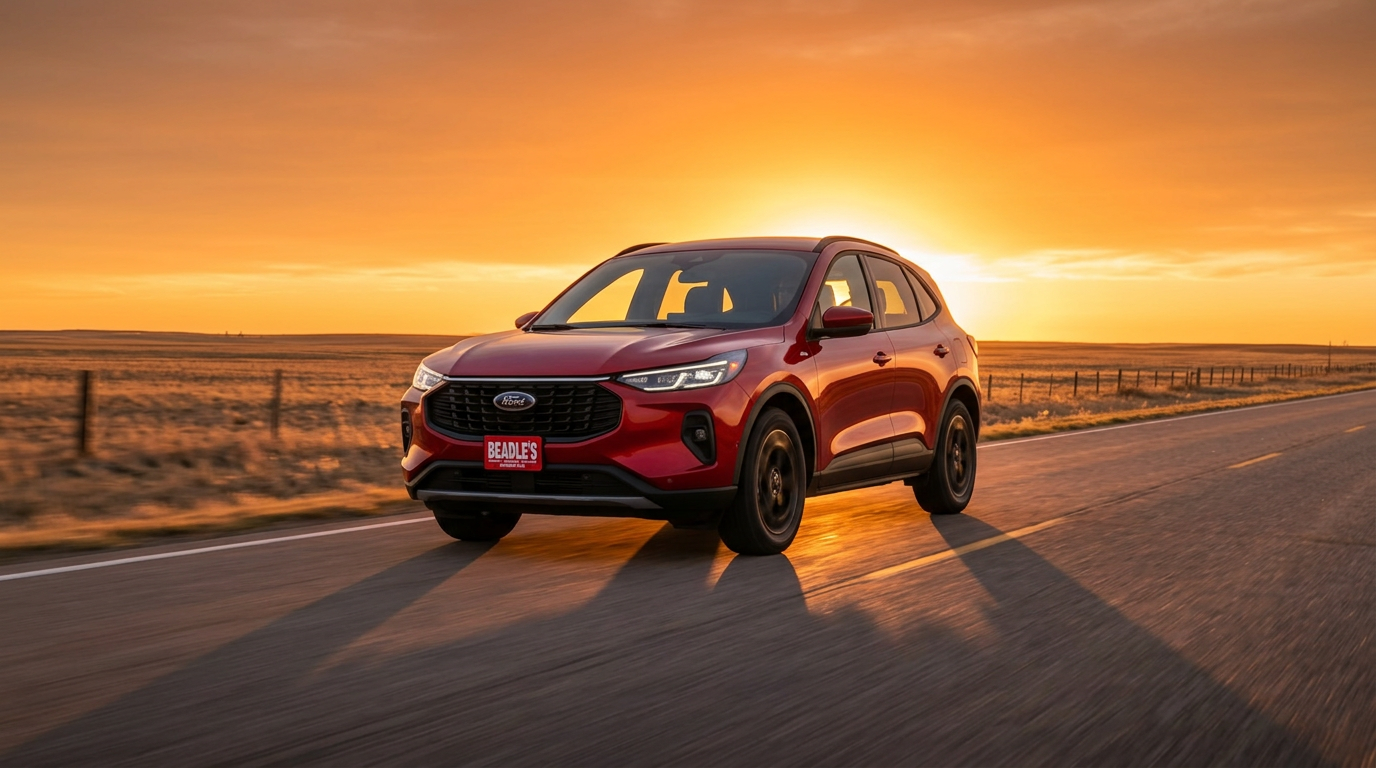
2026 Ford Escape on a South Dakota highway at golden hour

2026 Ford Escape Final Model Year: What South Dakota Buyers Need to Know

The 2026 Ford Escape is the last one Ford will ever build. If you're researching an Escape right now, that matters — not because it makes the vehicle worse, but because it changes the conversation around availability, long-term support, and what comes next on our lot. This guide covers what South Dakota buyers in and around Bowdle actually need to know: why Ford is ending Escape production, what that means for parts and service down the road, whether now is the right time to buy, and what other options to look at if you decide a different direction makes more sense for you. Shop Escapes in Stock Get Pre-Approved On This Page Why Is Ford Discontinuing the Escape After 2026? What Does the Final Model Year Mean for Pricing and Availability? Will Ford Still Support the Escape After Production Ends? Should You Buy a 2026 Escape Now — or Wait? What's Coming After the Escape at Beadle Ford? Why Is Ford Discontinuing the Escape After 2026? Ford is ending Escape production after the 2026 model year as part of a deliberate shift in its SUV lineup — moving away from car-based crossovers and toward truck-based platforms and models with stronger long-term demand. This isn't a quality problem or a recall situation. The Escape has been a reliable, well-regarded vehicle through its run. But Ford has made a strategic decision that its compact crossover slot is better served by vehicles like the Bronco Sport, which shares a similar footprint but is built on a more capable platform and stays in the lineup going forward. The car-based Escape, by contrast, has been competing in a segment that's gotten crowded, and Ford isn't planning a successor. For buyers in central South Dakota, the practical meaning is simple: the 2026 is the last new Escape you can buy. There's no 2027 version coming to wait for. If you're on the fence about an Escape, the clock on new-vehicle availability is running. What Does the Final Model Year Mean for Pricing and Availability? Final model year vehicles can go either direction on pricing — some carry incentives as the year winds down, others tighten up on allocation and become harder to find in specific trims or colors. The honest answer is that it depends on how the rest of the year plays out. What we do know: production isn't increasing. Ford isn't building more 2026 Escapes to meet late-year demand. If you have a specific trim level, powertrain, or color in mind — the ST-Line Select in hybrid AWD, for example — the chance of finding exactly what you want decreases as inventory moves. Waiting for a better deal later in the year is a reasonable strategy if you're flexible on configuration; it's a riskier strategy if you're particular about what you want. For the full picture on what trim levels and powertrains are available and how they compare for South Dakota buyers, the 2026 Ford Escape overview breaks down every configuration in detail. Will Ford Still Support the Escape After Production Ends? Yes. Ford maintains parts availability well beyond production end, and your new-vehicle warranty applies fully regardless of whether the model continues. Buying a 2026 Escape doesn't leave you stranded on parts. This is a common and reasonable concern for rural buyers — if a model disappears, does support disappear with it? Not in any meaningful way for the first decade. The Escape shares a significant number of mechanical components with other Ford vehicles still in production, including powertrains used across multiple platforms. Common wear items like brakes, filters, belts, and sensors will remain stocked through Ford's parts network and available through Beadle Ford's service department. Where you might eventually see impact — many years down the road — is on body panels and trim pieces specific to the Escape's final generation. That's a long-term consideration, not an immediate one, and not different from what happens with any discontinued vehicle over time. Didn't find what you were looking for? The Escape is Ford's final model year compact SUV — but there are three strong alternatives in the same size class and price range. Ford Bronco Sport Standard 4x4, GOAT modes, and it's staying in Ford's lineup. Built for South Dakota. Shop Escapes in Stock Ford Explorer More room, available 3-row seating, and ready for whatever the plains throw at it. Shop Escapes in Stock Ford Maverick Compact truck versatility at an Escape-comparable price. Great fuel economy too. Shop Escapes in Stock Should You Buy a 2026 Escape Now — or Wait? If the Escape fits your needs today, the 2026 is the best version Ford built — and waiting doesn't get you a newer one, because there isn't one. The case for buying now is straightforward. The 2026 Escape comes standard with Ford's Co-Pilot360 suite on every trim — automatic emergency braking, blind-spot monitoring, lane-keeping assist, and more. The hybrid AWD option (available on ST-Line Select and above) makes it one of the more capable all-weather compact crossovers in its class. If you've been considering an Escape and already know it fits your life, the argument for acting now rather than later is real. The case for waiting is narrower but valid: if you're flexible on trim, color, and powertrain, watching how incentive programs develop over the rest of the model year is reasonable. Final model year vehicles sometimes see factory-to-dealer incentive programs in the back half of the year as Ford moves remaining units. What we'd caution against is waiting with a specific configuration in mind. Central South Dakota isn't a high-volume Escape market. The trims most suited to your climate — hybrid AWD on ST-Line Select or above — aren't sitting in large numbers at regional dealers. What's Coming After the Escape at Beadle Ford? Beadle Ford will continue carrying the Bronco Sport, Explorer, and Maverick — all three of which overlap meaningfully with what Escape buyers value, depending on what mattered most to you about the Escape. The Bronco Sport is the most natural follow-on for buyers who wanted compact size and capable AWD. Where the Escape offered AWD as an optional upgrade on most trims, the Bronco Sport starts with standard 4x4 across its entire lineup — no upgrade required. For Bowdle-area buyers who know what a South Dakota winter looks like, that distinction matters. If you're weighing the two, take a look at our Escape vs. Bronco Sport comparison for a direct breakdown. The Explorer makes sense if you need more space than the Escape offered — more second-row legroom, available three-row seating, and a larger cargo area. It's a step up in size and in tow rating. The Maverick is the option to consider if part of the Escape's appeal was its price point and efficiency. The Maverick's standard hybrid (included at no charge, not an upgrade) delivers fuel economy in the same range as the Escape Hybrid, and it adds a small truck bed for buyers who occasionally need to haul something but don't want a full-size pickup. Key Takeaways The 2026 Ford Escape is the final model year — Ford is not building a 2027 Escape or any successor under that name. Parts and warranty support continue after production ends; Ford is required to supply parts for at least 10 years from the last model year. The 2026 Escape includes Ford Co-Pilot360 standard on every trim — automatic emergency braking, blind-spot monitoring, and lane-keeping assist with no upgrade required. If you need a specific trim or color — especially hybrid AWD — availability will only tighten as the year progresses. The Bronco Sport, Explorer, and Maverick are all sold at Beadle Ford and cover most of what Escape buyers are looking for. Frequently Asked Questions Is the 2026 Ford Escape really the last model year? Yes. Ford has confirmed that the 2026 model year is the final production year for the Escape. There is no 2027 Escape planned, and Ford has not announced a successor vehicle under a different name to fill the same segment. The Bronco Sport, which is staying in Ford's lineup, is the closest in size and use case. Does buying a discontinued vehicle affect resale value? It can, but the effect varies. Some discontinued vehicles hold value well because they become the last clean example of a popular model. Others depreciate faster if demand for used examples drops. The Escape has a large existing ownership base, which tends to support the used parts and service ecosystem. For buyers in central South Dakota keeping a vehicle 8–10 years, resale is usually a secondary concern compared to reliability and running costs. What happens to my Ford warranty if the Escape is discontinued? Your warranty is not affected by the model's discontinuation. A new 2026 Escape purchased from Beadle Ford comes with Ford's standard 3-year/36,000-mile bumper-to-bumper warranty and 5-year/60,000-mile powertrain warranty, just like any other new Ford vehicle. Warranty obligations are tied to the vehicle purchase, not to whether Ford continues producing that model. Is the Bronco Sport a good replacement for the Ford Escape? For most South Dakota buyers, the Bronco Sport is the closest direct alternative. It's built on a capable platform with standard 4x4 across all trims, which the Escape only offered as an optional upgrade. The trade-off is fuel economy — the Escape's hybrid AWD is more efficient than the Bronco Sport's gas-only lineup. If AWD reliability in winter is the priority, the Bronco Sport has an argument. If fuel cost over 100,000+ rural miles matters most, the Escape's hybrid makes the stronger case. Can I still order a 2026 Ford Escape from Beadle Ford? Factory orders depend on whether Ford still has production allocation available for the 2026 model year. Contact Beadle Ford directly to find out what's available to order or locate from dealer inventory. As the year progresses, ordering windows close and the inventory that exists is the inventory that exists — so the sooner you reach out, the more options you're likely to have. My Take on the 2026 Ford Escape I've talked to a lot of buyers around Bowdle who are genuinely torn on the Escape situation. They've driven Escapes, they like Escapes, and now they're being told the model is going away — and they're not sure if that means they should rush in or step back. My honest take: the 2026 is a well-built, well-equipped vehicle, and the hybrid AWD in particular is one of the better real-world winter setups I've seen in this class. If it fits your life, the final model year shouldn't scare you off — it should make you more decisive, not less. If you're not sure whether the Escape is the right fit, I'm happy to walk you through the Bronco Sport, Explorer, or Maverick options and help you find what makes the most sense for how you actually drive out here. Stop by or give us a call. Shop Escapes in Stock Get Pre-Approved About the Author Lexy Tabbert — Beadle Ford, Bowdle, SD Lexy Tabbert is the Director of Sales and Marketing at Beadle Ford in Bowdle, South Dakota. She covers Ford vehicles, trim comparisons, and buyer guidance — helping families, ranchers, and ag operators across the region find the right truck and configuration for their needs. Learn more about Lexy.
2026 Ford F-150 4x4 & Winter Driving Guide

Winter driving in South Dakota places unique demands on a full-size truck, including traction control, drivetrain configuration, and cold-weather comfort features. The 2026 Ford F-150 offers multiple systems designed to handle these conditions confidently. The 2026 Ford F-150 offers multiple drivetrain configurations, selectable drive modes, and available off-road packages designed to handle these conditions confidently. This guide explains how 4x4 systems work, which trims support winter-ready features, and what drivers should consider before ordering. For full trim and engine availability, see the complete 2026 Ford F-150 overview. Contact Beadle Ford Table of Contents Is 4x4 Necessary in South Dakota? 4x4 vs 4x2: What’s the Difference? What Drive Modes Are Available? What Is the FX4 Off-Road Package? What Winter Comfort Features Are Available? How Does Winter Affect Towing? How to Choose the Right Winter Setup Is 4x4 Necessary in South Dakota? For many rural drivers, yes. While 4x2 models can perform well with proper tires, 4x4 provides improved traction when accelerating on snow-packed roads, climbing icy inclines, and navigating unplowed surfaces. Drivers regularly traveling county highways, farm access roads, or open prairie areas during winter typically benefit from 4x4 capability. What’s the Difference Between 4x4 and 4x2? 4x2 (two-wheel drive) sends power to the rear wheels only. 4x4 systems distribute power to all four wheels when engaged, improving traction in low-grip conditions. For highway commuters staying on cleared roads, 4x2 may be sufficient. For mixed rural and winter use, 4x4 adds confidence and control. What Drive Modes Are Available on the 2026 F-150? The 2026 F-150 offers selectable drive modes that adjust throttle response, traction control behavior, and transmission logic. Normal Eco Sport Tow/Haul Slippery Deep Snow/Sand (on applicable trims) Deep Snow/Sand mode can improve throttle mapping and traction control behavior in low-traction environments. What Is the FX4 Off-Road Package? The FX4 Off-Road Package adds features such as off-road tuned shocks, skid plates, and terrain management enhancements. While designed for trail use, these features can also benefit drivers navigating uneven rural terrain. FX4 is not required for winter driving, but it may add confidence for those frequently off pavement. What Winter Comfort Features Are Available? Depending on trim, the 2026 F-150 can include: Heated front seats Heated steering wheel Remote start capability Dual-zone climate control These features improve comfort during extended winter commutes and early morning starts. How Does Winter Affect Towing? Towing in winter introduces additional traction considerations. 4x4 systems improve launch stability on icy boat ramps or snow-covered job sites. For maximum towing ratings and equipment requirements, see our detailed 2026 F-150 Towing Guide. How to Choose the Right Winter Configuration Determine whether you regularly drive unplowed or gravel roads. Evaluate trailer use during winter months. Consider available heated and remote start features. Confirm drivetrain availability within your preferred trim. Key Takeaways 4x4 improves traction and stability in snow and rural conditions. Selectable drive modes enhance low-traction performance. FX4 adds off-road durability but is not mandatory for winter use. Heated features improve daily winter comfort. Proper tires remain essential regardless of drivetrain. Frequently Asked Questions Is 4x4 required for South Dakota winters? While not legally required, 4x4 is strongly recommended for drivers navigating rural roads and heavy snow conditions. Does 4x4 improve towing in winter? Yes. It improves traction during launch and low-speed maneuvering on slippery surfaces. Is FX4 necessary for winter driving? No. FX4 enhances off-road durability but is not required for snow performance. Conclusion In my experience, winter capability decisions are less about extreme off-road features and more about honest assessment of daily driving conditions. For many South Dakota drivers, 4x4 paired with proper tires provides the balance of confidence and practicality that winter demands. Explore winter-ready 2026 F-150 configurations at Beadle Ford or contact us to discuss 4x4 availability. About the Author Lexy Tabbert provides research-driven truck configuration guidance and in-depth vehicle insights for drivers across South Dakota and the surrounding region.

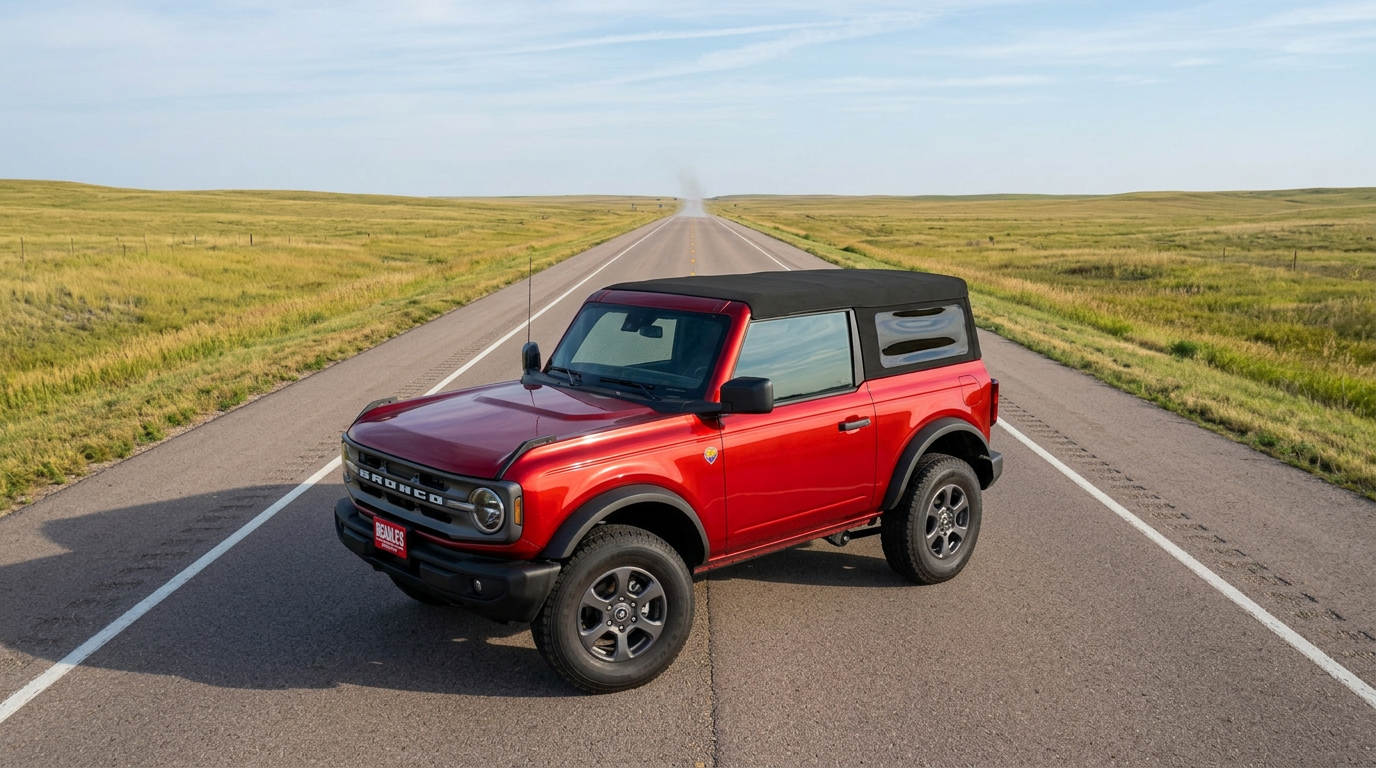
2026 Ford Bronco 2-Door Big Bend in Ruby Red Metallic Tinted Clearcoat parked on an empty South Dakota state highway with open prairie horizon

2-Door vs 4-Door 2026 Ford Bronco: How to Choose

The 2-Door versus 4-Door decision on a 2026 Ford Bronco is one of the few choices in the build process where the spec-sheet differences and the everyday driving experience point in opposite directions. The 2-Door has a tighter wheelbase, slightly better off-road breakover geometry, and the original Bronco silhouette that turns heads in a Bowdle parking lot. The 4-Door has a back seat your kids and dogs can actually use, a cargo bay that holds gear, and the resale demand to back it up. This guide is for buyers weighing the body-style choice on a 2026 Bronco at Beadle Ford. We'll cover the off-road geometry trade-off, interior space and rear-seat reality, daily-driver fit for kids and dogs and long highway runs, resale demand, and who should actually pick the 2-Door. The straight answer: most central South Dakota buyers should pick 4-Door. There's a specific 2-Door buyer, and we'll name who that is. Shop Broncos in Stock Get Pre-Approved On This Page How Do Wheelbase, Approach, and Departure Differ Between the 2-Door and 4-Door? What's the Interior Cargo Room and Rear-Seat Reality on Each Body Style? Which Body Style Fits Better for Kids, Dogs, Gear, and Long Drives? Why Does the 4-Door Dominate the Market — and What Does That Mean for Resale? Who Is the Specific Buyer Who Should Pick the 2-Door? Which Body Style Does Beadle Ford Recommend for Most Buyers? How Do Wheelbase, Approach, and Departure Differ Between the 2-Door and 4-Door? The 2-Door's shorter wheelbase gives it a slightly better breakover angle — the angle that determines whether the underbody clears a sharp ridge or a high mid-line obstacle. On the same trim and tire spec, expect the 2-Door's breakover to read a few degrees better than the 4-Door's, because there's less length between the front and rear axles to bridge across the obstacle. Approach angle (front-bumper clearance) and departure angle (rear-bumper clearance) are largely the same between body styles since they're set by the bumper, fender flare, and tire-size geometry rather than wheelbase. 2-Door (left) and 4-Door (right) Big Bend, same color, side by side. The wheelbase difference is the off-road advantage and the daily-driver compromise rolled into one. Across the lineup, ground clearance and tire-driven angles are tire-spec dependent: a Badlands on 33-inch Rugged-Terrain tires has approximately 8.8 to 9.0 inches of ground clearance with roughly 43° approach, 26° breakover, and 37° departure; a Sasquatch-equipped Bronco on 35-inch tires moves to about 11.6 inches of clearance, 43° approach, 29° breakover, and 37° departure; the Raptor on 37-inch tires sits at roughly 13.1 inches of clearance, 47° approach, 31° breakover, and 40.5° departure. The 2-Door's wheelbase advantage stacks on top of those numbers, particularly improving breakover. What this means in real terms for central SD: on the access roads, two-tracks, and CRP edges most owners actually drive, the geometry difference between 2-Door and 4-Door doesn't show up. The 2-Door's edge is real on Black Hills weekend trails or genuine rock-crawling terrain. For the rest of the lineup's geometry numbers and trim breakdowns see our 2026 Bronco trim levels guide. What's the Interior Cargo Room and Rear-Seat Reality on Each Body Style? The 4-Door's longer wheelbase translates directly into more rear-seat legroom and a noticeably bigger cargo bay behind the rear seats. A 4-Door swallows a Lab-sized kennel, a cooler, two shotgun cases, and a duffel of blaze orange behind the rear seats with the seats up. A 2-Door's cargo bay behind its small rear seats is much tighter — a kennel and a cooler fit, but a full hunting load means folding the rear seats and accepting that the rear bench isn't usable. The 2-Door's rear bench is best understood as occasional-use seating: a couple of adults can fit for a short trip, kids fit fine for daily duty, but it's not a configuration that anyone would choose for a long highway haul. Climbing into the back seat through the front-passenger door is fine for a parking lot but tedious if your day involves multiple stops. Two-Door buyers usually treat the rear seat as a folded-down cargo extension by default and use it for passengers occasionally. For everyday hunting, family, and gear-hauling use cases, the 4-Door is the meaningful answer. For full hunting context see our South Dakota hunting guide, where the 4-Door body style is the recommendation across every persona we serve. Which Body Style Fits Better for Kids, Dogs, Gear, and Long Drives? The 4-Door wins on every daily-driver use case in central SD. For a family with kids, the 4-Door's standard rear doors make car-seat installation, school pickup, and grocery loading manageable; the 2-Door's tilt-and-fold front-seat access is a functional dealbreaker for most parents within a week. For a hunter with one or more dogs, the 4-Door's rear cargo bay accepts a kennel without compromising passenger seating. A 4-Door Badlands across the central SD plains — the body style that handles kids, dogs, hunting gear, and the four-hour Bowdle-to-Black-Hills run without compromise. Long highway distances are where the 4-Door's longer wheelbase quietly earns its money. The Bowdle-to-Black-Hills run is a four-hour drive each way, and the 4-Door tracks straighter at sustained 70-plus mph speeds, handles cross-winds with less correction, and rides quieter in the cabin. The 2-Door's shorter wheelbase makes it a livelier vehicle on tight off-road courses and a slightly twitchier vehicle on a long highway haul. Neither is unsafe — but at 70 mph for four hours, the 4-Door is the more relaxed companion. Fuel economy and cargo capacity also tilt to the 4-Door for the long-haul use case. The 2-Door is slightly lighter and gets a marginal fuel-economy edge in city driving, but the 4-Door's larger cargo capacity means fewer trips and less roof-rack improvisation for a long weekend away. Across the central SD daily-driver use case, the 4-Door is the safer bet for almost every buyer profile. Get Pre-Approved Contact Beadle Ford Why Does the 4-Door Dominate the Market — and What Does That Mean for Resale? Industry-wide, 4-Door body styles outsell 2-Door body styles in this segment by a wide margin. Ford's lineup reflects this: most 2026 Bronco trims (Big Bend, Outer Banks, Heritage Edition, Stroppe, Raptor) are 4-Door only. Only the Base and Badlands trims offer both body styles, and the 2-Door is priced the same as the 4-Door at those trims — buyers don't get a discount for choosing the more limited body. Resale demand follows production volume. A used 4-Door Bronco draws a wider buyer pool — families, hunters, daily-driver shoppers, and lifestyle buyers all consider it. A used 2-Door draws a narrower pool of buyers who specifically want that body style, which means longer time on a lot when reselling and softer values relative to comparable 4-Door builds. This isn't a Bronco-specific dynamic; it's how the segment has worked for years across both Bronco and Wrangler. For a buyer who plans to own the vehicle for ten-plus years and never sell, resale doesn't matter — pick whichever body style fits your life. For a buyer who anticipates trading in within five years, the 4-Door's broader resale demand is one more factor in its favor. A 2-Door that you love is worth keeping; a 2-Door you bought for the looks and want to flip in three years won't reward you the way a 4-Door would. Who Is the Specific Buyer Who Should Pick the 2-Door? The 2-Door has a real, specific buyer. It's usually a single person or a couple without children at home, who values nimble off-road handling and the original Bronco silhouette over rear-seat practicality. Often a second vehicle in the household — an F-150 or a family SUV handles the daily-driver work, and the 2-Door Bronco is the weekend rig, the off-road tool, the lifestyle expression. For that buyer, the 2-Door is the right call and we'd never talk them out of it. The 2-Door also makes sense for an enthusiast who specifically values the breakover-angle advantage on serious off-road terrain — a Black Hills regular, a buyer who actually rock-crawls, someone who wants the most maneuverable Bronco for tight wooded trails. In central SD, that profile is rare; the terrain doesn't demand it. But if you fit it, you fit it. Where the 2-Door doesn't make sense is when it's bought for the looks alone by a buyer whose actual life involves kids in car seats, regular hunting trips with a dog and a kennel, or long highway hauls. Those buyers usually return within a year asking how to trade up to a 4-Door, and the swap is harder than getting it right the first time. Which Body Style Does Beadle Ford Recommend for Most Buyers? The 4-Door is the right call for most central SD Bronco buyers. It seats your family or your hunting partner with their dog, swallows the gear you actually carry, drives more comfortably on long highway runs, and holds resale value better. The 4-Door is available across every Bronco trim in the lineup — Base, Big Bend, Outer Banks, Badlands, Heritage Edition, and Raptor — which means you can build any spec you want without body-style limiting your trim options. The 2-Door is the right call for a specific buyer profile: single owner or no-kids couple who values nimble off-road and the original silhouette over rear-seat use. For that buyer, the 2-Door is available in Base or Badlands trim at the same MSRP as the 4-Door — $40,495 for Base, $48,890 for Badlands, before the $1,995 destination charge. Big Bend, Outer Banks, Heritage Edition, and Raptor are 4-Door only. The full lineup, every trim's body-style availability, and the broader configuration options come together in the 2026 Ford Bronco overview. If you're weighing the 2-Door versus 4-Door decision, come in and we'll walk through both with the actual use case you have in mind. The right answer is usually obvious within the first few questions. Key Takeaways The 2-Door's shorter wheelbase improves breakover angle a few degrees over the 4-Door at the same trim and tire spec; approach and departure are similar. The 4-Door wins on rear-seat usability, cargo capacity, daily-driver fit, and long-highway comfort — the meaningful differences for most central SD buyers. Body-style availability: only the Base and Badlands trims offer the 2-Door. Big Bend, Outer Banks, Heritage Edition, and Raptor are 4-Door only. Pricing is identical between body styles at the trims that offer both — $40,495 for Base, $48,890 for Badlands, before destination. Resale demand favors the 4-Door across the segment, which is one more factor for a buyer who anticipates trading in within five years. Frequently Asked Questions Is the 2026 Bronco 2-Door cheaper than the 4-Door? No. The 2-Door and 4-Door are priced identically at the trims that offer both body styles — $40,495 for Base and $48,890 for Badlands, before the $1,995 destination charge. Buyers don't get a discount for the more limited body style. Which 2026 Bronco trims are available as a 2-Door? For 2026, only the Base and Badlands trims are offered in 2-Door body style. Big Bend, Outer Banks, Heritage Edition, Stroppe, and Raptor are all 4-Door only. If you want a specific trim above Badlands, the 4-Door is your only option. Does the 2-Door Bronco have meaningfully better off-road geometry than the 4-Door? Slightly. The 2-Door's shorter wheelbase improves breakover angle by a few degrees compared to the 4-Door at the same trim and tire spec, which matters on rocky or sharply ridged terrain. Approach and departure angles are largely the same since they're set by bumper and tire geometry. For everyday central SD off-pavement use — gravel, CRP edges, ranch two-tracks — the difference doesn't show up. Will a Lab-sized kennel fit in a 2-Door 2026 Bronco? A standard intermediate or large dog kennel fits in a 2-Door, but you'll typically need to fold the rear seats down to accommodate it cleanly. That works fine for a single hunter or a couple with a dog, but it limits passenger capacity. For owners with more than one dog or a hunting partner, the 4-Door is the meaningful answer. Does the 4-Door Bronco hold resale value better than the 2-Door? Generally, yes. Industry-wide, 4-Door body styles outsell 2-Door body styles in this segment by a wide margin, and that demand carries through to the used market. A used 4-Door Bronco draws a wider buyer pool — families, hunters, daily-driver shoppers — while a used 2-Door draws a narrower pool of buyers who specifically want that body style. For a buyer who anticipates trading in within five years, the 4-Door is the safer resale bet. Who should buy a 2-Door 2026 Bronco instead of a 4-Door? A single person or couple without children at home, often using the Bronco as a second vehicle while another vehicle handles daily-driver duties. Also: enthusiasts who specifically value the breakover-angle advantage on serious off-road terrain. For most central SD buyers, the 2-Door is the wrong answer — the daily-driver compromises outweigh the off-road and styling advantages. My Take on the 2-Door vs 4-Door Decision I'll be direct: most of the customers who walk into Beadle Ford asking about a 2-Door Bronco are buying it for the looks. That's a perfectly fine reason to buy a vehicle if you can also live with the rear-seat compromise — but a year in, plenty of those buyers wish they'd ordered the 4-Door. The styling that wins them over in the showroom doesn't outweigh the daily-driver friction once kids, dogs, and gear are part of the routine. The buyers who do well with the 2-Door are the ones who walked in already knowing why — single owner or empty-nester couple, second vehicle in the household, weekend rig, off-road tool. For that profile, the 2-Door is the right answer and we'd back the call. For everyone else, the 4-Door is the safer bet, and we'd rather you hear that up front than in a regret call six months later. Come in, bring your real use case, and we'll walk through both. Shop Broncos in Stock Get Pre-Approved About the Author Lexy Tabbert — Beadle Ford, Bowdle, SD Lexy Tabbert is the Director of Sales and Marketing at Beadle Ford in Bowdle, South Dakota. She covers Ford vehicles, trim comparisons, and buyer guidance — helping families, ranchers, and ag operators across the region find the right truck and configuration for their needs. Learn more about Lexy.
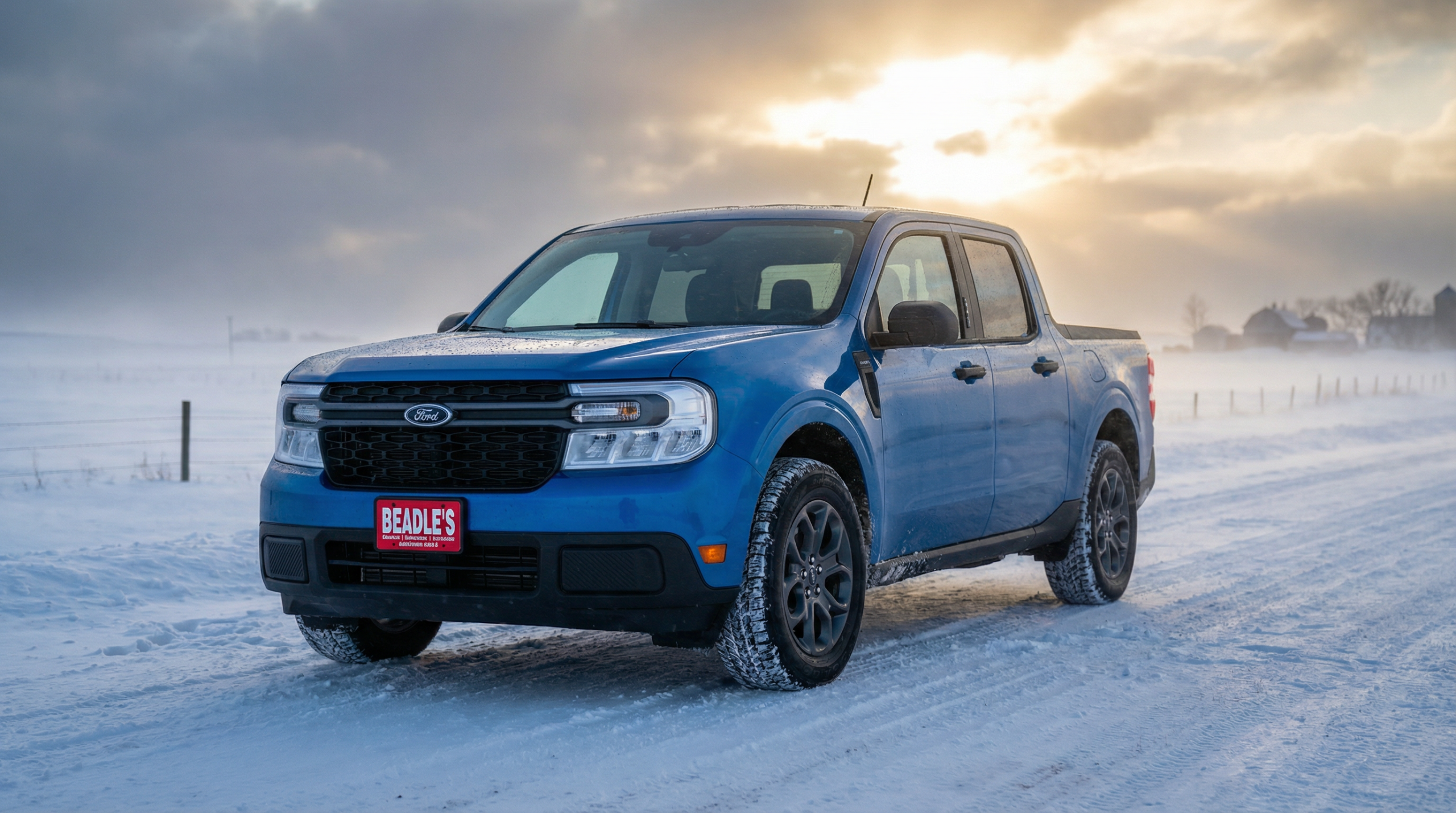
2027 Ford Expedition Platinum in Agate Black at night in the rain with signature lighting, Beadle Ford Bowdle SD

BlueCruise vs. Super Cruise vs. ProPilot 2.0: Which Hands-Free System Actually Works on South Dakota's Highways?

Home› Ford Expedition› 2027 Ford Expedition› BlueCruise vs. Super Cruise vs. ProPilot 2.0 Hands-free highway driving has gone from concept-car demo to real, purchasable feature. Three major systems are available on full-size SUVs sold in the U.S. today: Ford’s BlueCruise on the 2027 Expedition (and most of the Ford lineup), GM’s Super Cruise on the Chevrolet Tahoe, Suburban, and much of the GMC lineup, and Nissan’s ProPilot 2.0 on select vehicles like the Ariya. All three let you take your hands off the wheel on compatible highways. None of them works everywhere. For buyers in rural South Dakota, the honest question isn’t which system is technically best — it’s which system actually helps on the highways you actually drive. This guide covers how each system works, which SD highways each covers, the real subscription and ownership costs, what Consumer Reports and IIHS rankings say, and which system fits which buyer. Written for the driver who spends a lot of time on I-90, US-12, US-83, or US-281 and wants to know what’s real and what’s marketing. Browse Expedition Inventory Ask About a Custom Order On This Page How does each hands-free system actually work? Which system covers the South Dakota highways you actually drive? What are the real subscription and ownership costs for each system? What do Consumer Reports and IIHS rankings say about each system? Which hands-free system is right for you? How does each hands-free system actually work? All three systems combine three ingredients: cameras and radar for lane and vehicle detection, high-precision mapping data for road geometry, and driver-monitoring hardware to confirm you’re paying attention even when your hands are off the wheel. The differences are in how each manufacturer implements them and where each is approved to operate. BlueCruise (Ford) uses a driver-facing infrared camera to monitor your eye position and gaze. On supported highways — which Ford describes as approximately 97% of controlled-access U.S. and Canada highways — you can drive hands-free, and the system includes Lane Change Assist (automatic lane changes on your signal) and In-Lane Repositioning (lateral position adjustment within the lane). BlueCruise is available across most of the 2027 Ford Expedition lineup: a 90-Day Trial is included on Active Touring retail orders, a 1-Year + 90-Day plan is standard on Platinum Ultimate and King Ranch, and a one-time purchase is optional on other retail trims. Super Cruise (GM) uses a driver-facing infrared camera and a steering-wheel light bar that shifts color to communicate the system’s state. GM publishes coverage across more than 750,000 miles of mapped U.S. and Canada divided highways, including interstates and select divided state highways. Super Cruise supports Automatic Lane Change (on driver request) and hands-free driving while towing on compatible vehicles. It’s available on the Chevrolet Tahoe, Suburban, Silverado, and across much of the GMC lineup, typically as an option on upper trims. ProPilot 2.0 (Nissan) is Nissan’s advanced driver-assist system, launched first in Japan and available on select U.S. vehicles including the Nissan Ariya. It combines driver monitoring, lane centering, adaptive cruise, and navigation-linked automatic lane changes on mapped highways. U.S. availability and mapped-road coverage are narrower than BlueCruise or Super Cruise — ProPilot 2.0 is not on most full-size three-row SUVs sold here. Most Nissan models currently offered in the U.S. use the earlier ProPilot Assist (hands-on, not hands-free). For a complete look at the 2027 Expedition’s tech stack including BlueCruise, see the complete 2027 Ford Expedition overview. Which system covers the South Dakota highways you actually drive? Here’s the honest part of this comparison. Both BlueCruise and Super Cruise cover the interstate segments of major highways well. Neither system covers the state and U.S. highways that most rural South Dakota drivers use for everyday travel. ProPilot 2.0’s U.S. mapped-road network is narrower still. The practical coverage differences between the three systems on Dakota roads are smaller than the marketing pitches suggest. I-90 (east-west across South Dakota): Covered by BlueCruise and Super Cruise as a controlled-access interstate. This is the one highway in SD where hands-free driving delivers the marketing promise for most of its length. If your driving includes I-90 — Sioux Falls, Mitchell, Chamberlain, Murdo, Kadoka, Rapid City — both systems will work for most of that route. ProPilot 2.0 coverage on I-90 depends on the specific Nissan model. US-12 (east-west through north-central SD): Generally not on hands-free mapped networks. US-12 is a four-lane undivided highway for much of its length with at-grade intersections — the kind of geometry neither BlueCruise nor Super Cruise is approved to operate on in hands-free mode. Adaptive cruise and lane centering (hands-on) still work on US-12, but genuine hands-free driving does not. US-83 and US-281 (north-south through SD): Similar to US-12. These are primarily two-lane or four-lane undivided highways for much of their SD length. Hands-free mode generally doesn’t activate on them regardless of which system you buy. Some short four-lane divided stretches (urban bypasses) may qualify; the majority of the route does not. I-29 (north-south, eastern SD): Covered by BlueCruise and Super Cruise as a controlled-access interstate. Functions similarly to I-90. The practical takeaway: if most of your miles happen on I-90 or I-29, hands-free driving delivers a genuine benefit and both BlueCruise and Super Cruise work well. If your miles are split between state highways and interstate stretches — which is most of the Bowdle-to-Sioux Falls or Bowdle-to-Fargo routes — only the interstate portion gets the hands-free experience. The state-highway portion falls back to hands-on adaptive cruise with lane centering regardless of which system you picked. For Dakota buyers weighing a 2027 Expedition against a Chevrolet Tahoe or Toyota Sequoia, see the direct comparisons: Expedition vs. Tahoe and Suburban and Expedition vs. Toyota Sequoia. What are the real subscription and ownership costs for each system? All three systems use a tiered pricing model — initial included period, then some combination of subscription and/or purchase. The exact pricing changes over time and varies by model and trim, so the framing below is about how the structures differ rather than specific dollar figures (which you should confirm at purchase). BlueCruise (Ford). On the 2027 Expedition, a 90-Day Trial is included on Active Touring retail orders at no additional cost. The 1-Year + 90-Day plan is included standard on Platinum Ultimate and King Ranch. For other retail trims (Active Select, Tremor, Platinum base) BlueCruise is available as either a 1-Year + 90-Day plan or a one-time purchase. After the initial period expires, you can renew annually or switch to a one-time purchase for longer-term use. Super Cruise (GM). Super Cruise is typically offered with a free trial period at purchase (length varies by model and year), followed by a subscription option (Connected Services plan) for ongoing use. GM has also at times offered longer bundled periods. Current plan specifics should be confirmed with Chevrolet or GMC at purchase. ProPilot 2.0 (Nissan). Nissan’s pricing model for ProPilot 2.0 in the U.S. market varies by vehicle and has been evolving. Some vehicles bundle the system with upper trims; others may move toward subscription models. Confirm with Nissan at purchase. For a buyer in rural SD, the practical question is less “what’s the subscription cost” and more “how many miles per year will I actually use hands-free driving.” If your annual miles on interstate routes (I-90, I-29) are substantial, the subscription economics work out. If most of your miles are on state highways where the system doesn’t activate anyway, paying for the subscription is paying for capability you won’t use most of the time. What do Consumer Reports and IIHS rankings say about each system? Independent testing organizations have evaluated hands-free systems on safety, driver-attention monitoring effectiveness, and system capability. Results shift as manufacturers release software updates, but the general findings over the past several years are consistent. Consumer Reports has historically ranked GM’s Super Cruise at or near the top of their active driving assistance evaluations, praising the driver-monitoring implementation and the system’s integration. BlueCruise has typically scored in the upper tier as well, with Ford improving its ranking as newer software versions have rolled out. ProPilot 2.0 scores in the U.S. market have been less frequently evaluated due to narrower vehicle availability. IIHS (Insurance Institute for Highway Safety) has focused its partial-automation ratings on driver engagement and safeguards. When IIHS rated systems in recent studies, none of the major hands-free systems received “Good” ratings across all categories — manufacturers typically need to improve attention monitoring, shift controls, or engagement safeguards to reach top marks. Both BlueCruise and Super Cruise have improved in IIHS evaluations over successive software updates. The practical takeaway: all three systems in their current 2025–2026 iterations are legitimate and deliver on their core promise of hands-free driving on supported roads with driver-monitoring safeguards. The differences in ranking among the top systems are narrower than the gap between any of them and a car with no hands-free feature at all. For specific, up-to-date rankings, check Consumer Reports and IIHS directly at purchase time. Which hands-free system is right for you? For most full-size SUV buyers in rural South Dakota, the hands-free system is rarely the decision-point on its own — but it can be a deciding factor when you’ve narrowed down to two comparable vehicles. Here’s how I frame it. Pick BlueCruise (Ford) if: You’re cross-shopping a 2027 Ford Expedition and one of the Active Touring, Platinum Ultimate, or King Ranch configurations fits your use case You want the 90-day trial to test the system before committing to a longer plan You value the broad controlled-access highway coverage (~97% reported by Ford) You’re already a Ford customer and staying in the Ford Pass ecosystem is valuable Pick Super Cruise (GM) if: You’re buying a Chevrolet Tahoe, Suburban, or another upper-trim GM vehicle that offers it You’ve seen positive Consumer Reports rankings and the driver-monitoring approach appeals to you You tow heavy and want a hands-free system validated for towing on supported roads Consider ProPilot 2.0 (Nissan) if: You’re shopping a Nissan Ariya or other Nissan/Infiniti vehicle that offers it, and the vehicle fits your broader needs You’re buying in a market where ProPilot 2.0’s mapped-road coverage includes your regular routes Consider driving without hands-free if: Your weekly driving is almost entirely on state highways where none of these systems activate The subscription cost over a 5-to-7-year ownership period exceeds the practical benefit for your drive mix Adaptive cruise with lane centering (hands-on) meets your real highway-fatigue needs If hands-free driving is a factor in your 2027 Expedition decision, Active Touring with its included 90-day trial is the cheapest way to test BlueCruise. Platinum Ultimate and King Ranch include a longer plan standard. Stop in and we’ll demonstrate the system on I-90 or a similar controlled-access stretch if you’d like to see how it feels before committing. Key Takeaways BlueCruise (Ford) covers approximately 97% of controlled-access U.S. and Canada highways. Super Cruise (GM) covers 750,000+ mapped miles. ProPilot 2.0 (Nissan) has narrower U.S. coverage. I-90 and I-29 through South Dakota: covered by both BlueCruise and Super Cruise. US-12, US-83, and US-281: generally not on hands-free mapped networks. For most of the Bowdle-to-Sioux Falls or Bowdle-to-Fargo routes, only the interstate portion runs hands-free regardless of which system you buy. BlueCruise includes a 90-Day Trial on Active Touring; 1-Year + 90-Day plan standard on Platinum Ultimate and King Ranch. Consumer Reports has historically rated Super Cruise at the top of active driving assistance evaluations, with BlueCruise close behind. IIHS evaluates driver-monitoring safeguards and engagement systems across all major offerings. The practical value of any hands-free system depends on what percentage of your annual miles happen on supported interstate highways. Frequently Asked Questions Which is best for South Dakota highways — BlueCruise, Super Cruise, or ProPilot 2.0? For interstate coverage in SD (I-90, I-29), BlueCruise and Super Cruise both work well — they’re both approved for controlled-access interstates. Neither system activates on most of US-12, US-83, or US-281 because those are not controlled-access divided highways. ProPilot 2.0 has narrower U.S. mapped-road coverage than either of the other two. If your driving is mostly on I-90 or I-29, either BlueCruise or Super Cruise delivers real value; on state highways, none of them. Does BlueCruise work on US-12 between Bowdle and Aberdeen? Generally no. US-12 through that stretch is an undivided highway with at-grade intersections and does not meet the controlled-access criteria BlueCruise requires. Adaptive cruise control and lane centering (hands-on) still work on US-12, but full hands-free BlueCruise mode does not activate. Neither does Super Cruise on the same stretch. What’s the difference between hands-free and hands-on adaptive cruise? Hands-free systems (BlueCruise, Super Cruise, ProPilot 2.0) let you take your hands off the wheel on supported highways with a driver-monitoring camera verifying you’re paying attention. Hands-on adaptive cruise with lane centering (ProPilot Assist, Ford Co-Pilot360 Assist 2.0 core features) keeps the vehicle in the lane and manages speed, but you must keep hands on the steering wheel. Hands-on systems work on a wider range of roads than hands-free. Can I use BlueCruise while towing a trailer? BlueCruise and Super Cruise have different specifications around towing. GM has emphasized Super Cruise’s validated hands-free towing capability on supported roads. Ford’s BlueCruise specifics for towing should be verified for your specific 2027 Expedition configuration and trailer setup before counting on it. Check the Owner’s Manual and confirm with Beadle Ford before you buy. Which Expedition trims include BlueCruise standard? Platinum Ultimate and King Ranch include the BlueCruise 1-Year + 90-Day plan standard on the 2027 Ford Expedition. Active Touring includes a 90-Day Trial on retail orders. Active Select, Tremor, and Platinum base offer BlueCruise as an option (either the 1-Year + 90-Day plan or a one-time purchase). Are hands-free systems safe? When used on supported roads and with the driver-monitoring camera active, all three systems operate within manufacturer-validated safety parameters. Independent testing by Consumer Reports and IIHS evaluates driver-engagement safeguards and has noted areas for improvement across all manufacturers. None of these systems is fully autonomous — the driver is legally and functionally responsible for the vehicle at all times. Follow the manufacturer’s guidance in the Owner’s Manual. Can I try BlueCruise before I buy a 2027 Expedition? Yes — Active Touring includes a 90-Day BlueCruise Trial on retail orders, so you can experience the system for the first three months without a separate plan purchase. Beadle Ford can also demonstrate the system during a test drive on a controlled-access highway like I-90 or I-29 if you’d like to see it before you decide. Contact us and we’ll arrange it. My Take on Hands-Free Systems for Dakota Drivers The hands-free driving marketing is easy to get swept up in. Here’s the honest perspective I give Dakota buyers at Beadle Ford: if you live on interstate routes, hands-free is a real feature that reduces fatigue over long drives and earns its subscription cost. If you live off-interstate, as most of our rural customers do, you’ll use hands-on adaptive cruise with lane centering more than any hands-free system simply because that’s the infrastructure that exists on US-12, US-83, and US-281. That’s not a knock on any manufacturer — it’s a reflection of how hands-free systems are mapped. For the 2027 Expedition, BlueCruise’s 90-Day Trial on Active Touring is the low-commitment way to test the feature. Come in and drive one. If it’s useful on your routes, renew or step up to Platinum Ultimate or King Ranch where the longer plan is standard. If it isn’t, you haven’t lost anything. Shop 2027 Expeditions in Stock Contact Beadle Ford About the Author Lexy Tabbert — Beadle Ford, Bowdle, SD Lexy Tabbert is the Director of Sales and Marketing at Beadle Ford in Bowdle, South Dakota. She covers Ford vehicles, trim comparisons, and buyer guidance — helping families, ranchers, and ag operators across the region find the right truck and configuration for their needs. Learn more about Lexy.
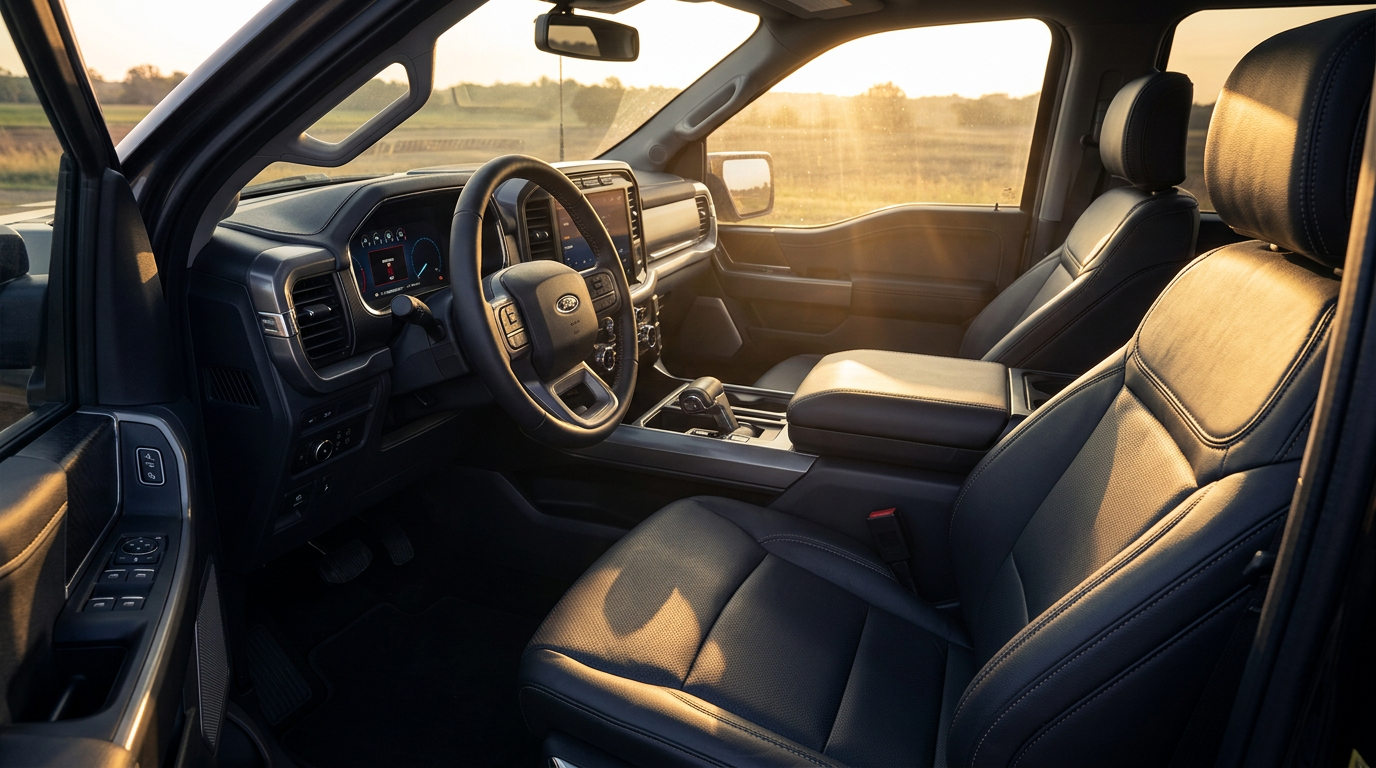
2026 Ford F-350 Exterior Colors & Styling

Quick Answer The 2026 Ford F-350 offers colors from work-friendly Oxford White, Agate Black, and Carbonized Gray to bold Ruby Red, Antimatter Blue, and premium Star White Tri-Coat. Availability varies by trim and package; tri-coat and tinted-clearcoat paints cost more, and Iconic Silver is fleet-only. Styling decisions on a heavy-duty truck are rarely "just cosmetic." Color affects how the truck represents a business, how well it hides gravel dust and winter road salt, and how easy it is to match later if you add another truck to the fleet. This guide breaks down the 2026 F-350's actual colors, wheels, and appearance packages — without assuming every color or finish is available on every trim. Shop F-350s in Stock Get Pre-Approved On This Page What colors does the 2026 F-350 come in? Neutral vs. bold: what makes sense for a work truck? Chrome vs. black appearance styling: what changes? How do wheels and stance change across the lineup? How do you choose exterior styling for your use? What colors does the 2026 F-350 come in? The 2026 F-350 palette runs from work-truck neutrals to bold and premium finishes. Standard and no-cost metallics cover most of the lineup; tri-coat and tinted-clearcoat paints are premium, and a couple of colors are limited by trim or fleet ordering. Work-friendly neutrals: Oxford White, Agate Black Metallic, Carbonized Gray Metallic, Marsh Gray, Glacier Gray Metallic Tri-Coat, and Avalanche. Bold & personal: Ruby Red Metallic Tinted Clearcoat, Antimatter Blue Metallic, Argon Blue Metallic, and Darkened Bronze Metallic. Premium finishes (extra cost): Star White Metallic Tri-Coat and Glacier Gray Tri-Coat. Fleet-only: Iconic Silver Metallic. Color availability varies by trim, package, and build timing — treat any list as a starting point and confirm on the exact configuration you want. Neutral vs. bold: what makes sense for a work truck? For a truck that works and gets traded, neutrals are usually the safe long-term play. They hide dust and salt, match a fleet, and hold the broadest resale appeal; bold colors look sharp but can narrow the buyer pool later. Neutral (Oxford White, Agate Black, Carbonized Gray): safest for resale, fleet matching, and business branding. Bold (Ruby Red, Antimatter Blue): stand out and look great, but availability can be more limited by trim and package. Two-tone: offered on select trims like King Ranch; depends on how the truck is equipped. From the Beadle Ford Lot Out here, the trucks that move fastest at trade-in are white, black, and gray — they hide the gravel dust and winter salt that coat everything by February, and a fleet buyer can match them without a second thought. Bold colors look great in the yard; just go in knowing they can narrow your resale pool. Chrome vs. black appearance styling: what changes? Appearance packages change the truck's personality fast — grille finish, bumpers, wheels, and trim accents shift from bright chrome to blacked-out. If you're chasing a specific look, choose your trim and appearance direction together so you don't back into styling after the fact. Our Recommendation For work, fleet, and resale buyers around Bowdle and Aberdeen, we recommend a neutral — Oxford White, Agate Black, or Carbonized Gray — which hides dust and salt and trades easiest. Save the premium Star White Tri-Coat or a bold Ruby Red for a personal truck you plan to keep. Match the look to a trim in our packages & trims guide. How do wheels and stance change across the lineup? Wheel designs and finishes vary by trim and package — from 18-inch painted and machined aluminum on work trims to 20-inch polished and dark-finish wheels higher up, plus the 17-inch forged wheels that come with dual-rear-wheel trucks. Wheel and tire choice isn't just looks here: winter traction and gravel-road practicality matter as much, especially if the truck tows. If you're weighing dually vs. single-rear-wheel, that stance decision is covered in the 2026 F-350 towing guide. How do you choose exterior styling for your use? Work from how the truck will be used, in four steps: Decide if the truck represents a business or fleet, or is personal. Choose a finish direction — chrome or blacked-out — before locking the trim. Confirm your paint color is available on your preferred build (premium tri-coats and fleet colors are limited). Check wheel and tire practicality for winter, gravel, and towing routes. Key Takeaways The palette spans Oxford White and Agate Black to Ruby Red and Antimatter Blue, with premium Star White and Glacier Gray Tri-Coats. Neutrals hide dust and salt, match fleets, and trade easiest in this region. Tri-coat and tinted-clearcoat paints cost more; Iconic Silver is fleet-only. Appearance packages (chrome vs. blacked-out) drive the biggest styling changes. Color and wheels vary by trim, package, and build timing — confirm on the exact truck. Frequently Asked Questions What colors does the 2026 Ford F-350 come in? Colors include Oxford White, Agate Black Metallic, Carbonized Gray Metallic, Marsh Gray, Avalanche, Antimatter Blue Metallic, Argon Blue Metallic, Darkened Bronze Metallic, Ruby Red Metallic Tinted Clearcoat, and the premium Star White and Glacier Gray Metallic Tri-Coats. Iconic Silver Metallic is fleet-only. Availability varies by trim and package. Are all colors available on all trims? No. Color availability varies by trim, package, and build timing — premium tri-coats and tinted clearcoats are extra-cost, and Iconic Silver is fleet-only. Confirm availability on the specific configuration you're shopping. Which F-350 colors are best for resale? Neutrals — Oxford White, Agate Black, and Carbonized Gray — tend to hold the broadest resale appeal and are easiest to match in a fleet. They also hide gravel dust and winter road salt better, which matters in South Dakota. Bold colors look great but can narrow the resale pool. Do appearance packages change the wheels and grille? Often, yes. Many appearance packages adjust exterior finishes — grille, bumpers, and wheel designs — shifting between bright chrome and blacked-out looks. Exact content varies by trim and package, so confirm by build. Does the 2026 F-350 offer a two-tone paint option? Yes, on select trims such as King Ranch, depending on how the truck is equipped. Two-tone availability ties to trim and appearance options, so confirm it on the build you're considering. Quick Answers: F-350 Colors & Styling One-line answers to the follow-up questions buyers ask next. Most popular work colors? Oxford White, Agate Black, and Carbonized Gray. Any premium paints? Yes — Star White and Glacier Gray Metallic Tri-Coats cost extra. What's the fleet-only color? Iconic Silver Metallic. Boldest options? Ruby Red Tinted Clearcoat and Antimatter Blue Metallic. Best color for resale? Neutral white, black, or gray. Is there a blacked-out look? Yes — via appearance packages on equipped trims. Two-tone available? Yes, on select trims like King Ranch. Do wheels change by trim? Yes — 18-inch work wheels up to 20-inch finishes; 17-inch forged on DRW. Best color to hide dust and salt? White and gray shades. How do I confirm a color on a build? We verify paint and wheels against the build sheet before you order. Keep Researching The complete 2026 Ford F-350 Super Duty overview — trims, specs, towing, and inventory in one place. 2026 F-350 packages & trims — which trims and appearance packages get the look you want. 2026 F-350 interior & comfort — pair your exterior with the right cabin. 2026 F-350 towing guide — the SRW vs. DRW stance decision behind the wheels. My Take on F-350 Colors & Styling In my experience, styling choices feel right when they match the job the truck will do. When color, wheels, and finishes fit your routine and long-term plans, owners feel good about the truck long after the newness wears off — and around here, that usually means a neutral that hides the dust and trades clean. Tell me how you'll use the truck and I'll help you land a color and finish that holds up. Stop in at Beadle Ford in Bowdle or reach out anytime. Shop F-350s in Stock Get Pre-Approved About the Author Lexy Tabbert — Beadle Ford, Bowdle, SD Lexy Tabbert is the Director of Sales and Marketing at Beadle Ford in Bowdle, South Dakota. She covers Ford vehicles, trim comparisons, and buyer guidance — helping families, ranchers, and ag operators across the region find the right truck and configuration for their needs. Learn more about Lexy.
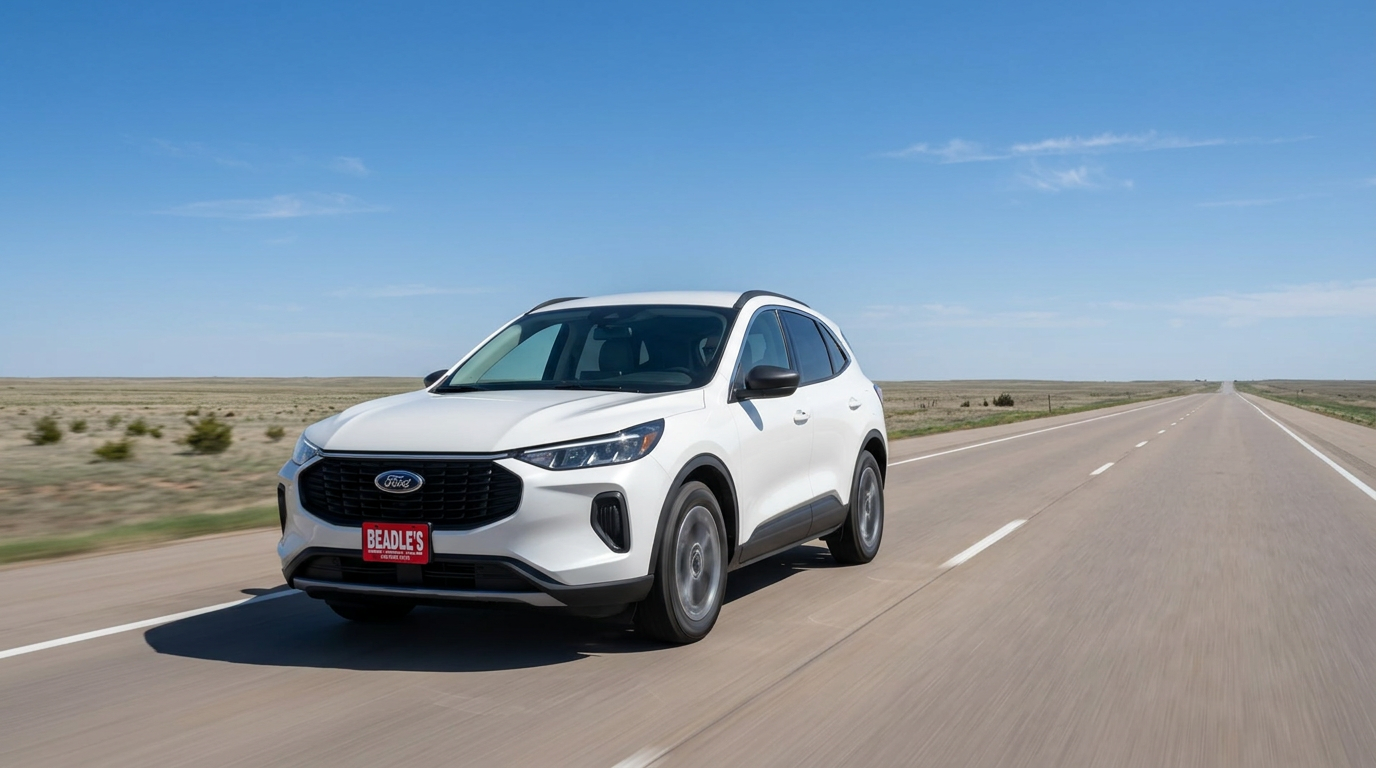
2026 Ford Maverick AWD in snowy South Dakota

2026 Ford Maverick Winter Driving Guide (AWD Confidence in South Dakota)

If you’re buying a Maverick in South Dakota, winter confidence is the real test. AWD helps—but the best winter setups come from AWD + the right tires + realistic expectations. This guide focuses on what actually makes a Maverick feel stable and predictable when roads are slick, windy, or snow-packed. Winter performance makes the most sense after you’ve decided drivetrain and configuration. If you haven’t done that step yet, start with: 2026 Maverick Specs & Configurations. For inventory and shopping help, visit the Ford Maverick model page. Shop Mavericks in Stock Contact Us Table of Contents AWD vs tires: what matters more? Traction basics for compact trucks Highway wind and stability: what to expect How to set up a Maverick for winter (practical checklist) How to choose an AWD Maverick build for SD winters FAQ AWD vs tires: what matters more? For winter driving, tires usually make the biggest difference first. AWD helps you get moving and maintain traction, but stopping and cornering confidence comes heavily from tire grip. The best winter Maverick setup is usually AWD plus tires that match your routes and snow/ice exposure. Traction basics for compact trucks Maverick is a compact truck, which is a good thing in winter: it’s easier to maneuver and less fatiguing in town. The tradeoff is that traction can change quickly when roads go from plowed to drifted, or when you transition from pavement to gravel. That’s why tires, visibility, and a stable driving rhythm matter just as much as drivetrain. If you’re balancing winter needs with ownership costs, this is explored further in: 2026 Maverick MPG & Ownership Costs. Highway wind and stability: what to expect South Dakota winter driving isn’t just snow—it’s wind. On open highways, the combination of gusts, passing semis, and uneven road surfaces can make vehicles feel “busy.” The best way to reduce stress is good tires, proper pressure, and a build that matches your real route needs. How to set up a Maverick for winter (practical checklist) Choose tires intentionally: winter tires if you drive in snow/ice daily; quality all-seasons if you’re mostly on plowed roads. Confirm AWD if it’s a non-negotiable: verify on the equipment list—not assumptions. Check wipers/visibility: winter visibility is often the “make or break” comfort factor. Keep weight realistic: don’t overload—payload still matters in winter handling. Plan for driving style: smooth inputs beat aggressive driving every time in slick conditions. Quick Overview Best winter upgrade Tires that match your routes and snow/ice exposure Best confidence combo AWD + good tires + clear visibility setup Smart shopping move Choose drivetrain first, then trim; confirm equipment list on the exact truck How to choose an AWD Maverick build for SD winters Decide where you drive: in-town, highway commute, or rural gravel routes. Choose AWD if you need traction margin for winter and variable surfaces. Budget for tires that match your winter exposure (this matters more than many packages). Keep towing/payload realistic so winter handling stays predictable. Compare two real builds on the Maverick hub to confirm equipment and value. Shop Mavericks in Stock Ask About Winter Setup FAQ Is AWD enough for South Dakota winters? AWD helps traction, but tires are usually the bigger difference-maker for winter confidence—especially for stopping and cornering. For the best setup, prioritize tires first and AWD second. Do I need winter tires if I have AWD? Not always, but many drivers prefer them if they regularly drive in snow/ice or on unplowed rural roads. AWD helps you move, but tire grip helps you stop and steer. What’s the biggest winter-driving mistake Maverick buyers make? Assuming AWD replaces the need for tires and careful driving. The best winter outcomes come from traction + visibility + smooth inputs, not drivetrain alone. Conclusion In my experience, the Maverick winter setup that feels best is simple: AWD for traction margin, tires that match your routes, and a build that stays realistic on payload and towing. When buyers plan for visibility and traction first, the Maverick feels calm and predictable even when South Dakota weather doesn’t cooperate. About the Author: Lexy Tabbert helps South Dakota and North Dakota shoppers choose winter-capable truck setups for real routes—highway commutes, rural roads, and changing weather. Her guidance focuses on practical confidence: the right drivetrain, the right tires, and a configuration that matches how you actually drive.

2027 Ford F-250 Lariat interior with the 12-inch touchscreen

2027 Ford F-250 Trims for the Everyday Buyer

Quick Answer The 2027 Ford F-250 comes in five trims: XL, XLT, Lariat, King Ranch, and Platinum. For most everyday buyers, the XLT is the value sweet spot and the Lariat is the comfort sweet spot — both with the standard 7.3L gas V8 and available 4x4. King Ranch and Platinum add Western and modern luxury. Every 2027 F-250 has the same Super Duty capability under it, so picking a trim is really about how much comfort and tech you want for the money. The good news for 2027 is that the 7.3L gas V8 is standard across the board, so you're not trading capability for a lower trim. Here's what each trim gets you, where the everyday-buyer value lands, and when the King Ranch or Platinum is worth the step up — framed for how people actually use a Super Duty around Bowdle and Aberdeen. Shop F-250s in Stock Reserve a 2027 F-250 Get Pre-Approved On This Page What trims does the 2027 F-250 come in? What do you get on XL and XLT? Why Lariat is the comfort sweet spot King Ranch and Platinum: worth the step up? What trims does the 2027 F-250 come in? Five, from work truck to luxury: XL, XLT, Lariat, King Ranch, and Platinum. The 7.3L gas V8 is standard on all of them, and the 6.7L High-Output diesel is optional across the line, so capability doesn't change with trim — only comfort, tech, and styling do. A couple of equipment notes worth knowing: Pro Power Onboard is standard from the XLT up, and 4x4 is standard beginning on the King Ranch (it's available on XL, XLT, and Lariat). The new Super Duty Carhartt Package brings work-grade style to single-rear-wheel trucks. Trim Character Right for you if XL Straightforward work truck You want the best price and a no-frills tool XLT Work plus everyday comfort You want value — capability without luxury cost Lariat Leather and the big screen You live in the truck on long drives King Ranch Western-styled luxury (4x4 standard) You want premium that still works for a living Platinum Top tech-forward luxury You want the most modern, loaded F-250 What do you get on XL and XLT? The XL is the tool: durable, hose-out-friendly, and built to work, now with the 7.3L gas V8 standard and Tremor Off-Road newly available with the STX Appearance Package. It's the lowest price of entry and exactly enough truck for a jobsite or a fleet. The XLT is where most everyday buyers land. It keeps the work capability but adds the comfort and convenience that make a truck pleasant to live with — chrome exterior trim, more interior features, available LED lighting, and standard Pro Power Onboard for running tools and gear off the truck. For value, the XLT is hard to beat. Why Lariat is the comfort sweet spot The Lariat is the trim we point most long-haul and daily-driver buyers toward. It adds leather seating, the 12-inch SYNC 4 touchscreen and 12-inch digital cluster, dual-zone automatic climate control, heated and ventilated front seats, and standard LED lighting — the features that make long Dakota highway miles genuinely comfortable. It's the step where an F-250 stops feeling like a work truck and starts feeling like a nice truck you'd happily drive every day, without climbing into King Ranch or Platinum money. If you want one truck that tows, works, and serves as the family highway vehicle, the Lariat is the sweet spot. King Ranch and Platinum: worth the step up? They're worth it if you want a luxury truck that still has full Super Duty capability. The King Ranch brings Western-themed Kingsville leather, distinctive styling, two-tone Marsh Gray lower cladding, and standard 4x4. The Platinum goes the modern-luxury route with Multicontour leather seats and the most tech-forward cabin in the lineup. Neither gives up any towing or hauling to the work trims — you're paying purely for comfort, materials, and style. If you spend serious time in the truck and want it to feel special, the step up makes sense; if you mainly want capability and value, the XLT or Lariat already covers it. Our Recommendation For most everyday F-250 buyers around Bowdle and Aberdeen, the XLT is the value pick and the Lariat is the comfort pick — both with the standard 7.3L gas V8 and 4x4. Step up to King Ranch or Platinum only if you want luxury materials and styling, since none of it changes what the truck can tow or haul. From the Beadle Ford Lot The trim conversation usually settles itself once people sit in a Lariat. They came in pricing an XLT to save money, then they feel the leather and the big screen on a test drive and realize the Lariat is the truck they'll actually want to spend time in. Both are great buys — it just comes down to how many highway miles you're putting on it. Key Takeaways The 2027 F-250 offers five trims: XL, XLT, Lariat, King Ranch, and Platinum. The 7.3L gas V8 is standard on every trim — capability doesn't change, only comfort and tech. Pro Power Onboard is standard from the XLT; 4x4 is standard beginning on the King Ranch. The XLT is the value sweet spot; the Lariat adds leather and the 12-inch SYNC 4 screen for daily comfort. King Ranch and Platinum add luxury and styling without changing what the truck can tow or haul. Frequently Asked Questions What trims does the 2027 Ford F-250 come in? Five: XL, XLT, Lariat, King Ranch, and Platinum. The 7.3L gas V8 is standard on all of them and the 6.7L High-Output diesel is optional across the line, so trim changes comfort, tech, and styling rather than capability. Which 2027 F-250 trim is the best value? The XLT. It keeps the work capability and the standard 7.3L gas V8 but adds everyday comfort, chrome trim, available LED lighting, and standard Pro Power Onboard — the value sweet spot for most buyers. The Lariat is the next step up for leather and the big touchscreen. Is 4x4 standard on the 2027 F-250? 4x4 is standard beginning on the King Ranch. On the XL, XLT, and Lariat it's available, with 4x2 as the standard drivetrain. For South Dakota winters and gravel, most buyers add 4x4 regardless of trim. Does the Lariat have leather and a touchscreen? Yes. The Lariat adds leather seating, the 12-inch SYNC 4 touchscreen, a 12-inch digital cluster, dual-zone automatic climate, heated and ventilated front seats, and standard LED lighting — the comfort sweet spot for daily driving and long highway miles. Quick Answers: 2027 F-250 Trims One-line answers to the follow-up questions buyers ask next. How many trims? Five — XL, XLT, Lariat, King Ranch, Platinum. Best value? The XLT. Comfort sweet spot? The Lariat. Which has the most luxury? The Platinum. Standard engine on all trims? The 7.3L gas V8. Where does Pro Power Onboard start? Standard on the XLT and up. Where is 4x4 standard? Beginning on the King Ranch. Which trim gets the 12-inch screen? The Lariat and up. Is there a work-style package? Yes — the new Super Duty Carhartt Package (single-rear-wheel). Where can I compare trims in person? Beadle Ford in Bowdle, SD. Keep Researching The complete 2027 Ford F-250 Super Duty overview — trims, towing, specs, and inventory 2027 F-250 colors & appearance — packages, wheels, and styling by trim Is an F-250 enough truck? — capability across the lineup Buy a 2026 now or order a 2027? — timing your purchase My Take on Picking a 2027 F-250 Trim Because the 7.3L gas is standard everywhere now, I tell people not to overthink capability and just buy the comfort level they'll appreciate. For a work-first truck, the XLT is all most folks need and a genuinely good value. For someone putting on real highway miles, the Lariat is the one I'd own — it's the point where the truck feels as nice as it is capable. The King Ranch and Platinum are wonderful, but they're about wanting them, not needing them. Come sit in an XLT and a Lariat back to back at Beadle Ford in Bowdle — that comparison usually makes the decision for you. Shop F-250s in Stock Reserve a 2027 F-250 Get Pre-Approved About the Author Lexy Tabbert — Beadle Ford, Bowdle, SD Lexy Tabbert is the Director of Sales and Marketing at Beadle Ford in Bowdle, South Dakota. She covers Ford vehicles, trim comparisons, and buyer guidance — helping families, ranchers, and ag operators across the region find the right truck and configuration for their needs. Learn more about Lexy.

2026 Ford Escape Hybrid on South Dakota highway, powertrain comparison

2026 Ford Escape Hybrid vs. Gas vs. Plug-In Hybrid: Which Powertrain Makes Sense for Rural South Dakota?

The 2026 Ford Escape comes with four distinct powertrain options: a 1.5L EcoBoost gas engine, a 2.0L EcoBoost gas engine, a 2.5L hybrid (non-plug-in), and a 2.5L plug-in hybrid (PHEV). The choice isn't just about fuel economy — each powertrain comes with different AWD availability, different trim access, and different real-world implications for buyers driving central South Dakota roads year-round. This guide breaks down what each powertrain actually delivers, who it makes sense for, and where the trade-offs land — specifically for the long-distance, all-season, rural driving conditions common to buyers in the Bowdle area. Shop Escapes in Stock Get Pre-Approved On This Page What Powertrain Options Does the 2026 Ford Escape Offer? When Does the 1.5L EcoBoost Make Sense for South Dakota Buyers? What Does the 2.0L EcoBoost Bring Over the 1.5L — and Is It Worth It? Why Do Many South Dakota Buyers Choose the 2.5L Hybrid AWD? What's the Honest Case for — and Against — the Escape PHEV Near Bowdle? Which Escape Powertrain Is the Right Choice for Rural South Dakota Driving? What Powertrain Options Does the 2026 Ford Escape Offer? The 2026 Escape offers four powertrain options across six trims. Which powertrains are available depends entirely on which trim you're looking at — and AWD availability is not consistent across all of them. Powertrain Drivetrain Available Trims 1.5L EcoBoost FWD std / AWD optional Active, ST-Line 2.0L EcoBoost AWD Only ST-Line Select, ST-Line Elite, Platinum 2.5L Hybrid AWD Only ST-Line Select, ST-Line Elite, Platinum 2.5L PHEV FWD Only — no AWD PHEV trim only The central point: if AWD matters to you — and for most South Dakota buyers it should — the 2.5L PHEV is off the table immediately. The 1.5L EcoBoost is viable only if AWD is added at the order stage on Active or ST-Line. The 2.0L EcoBoost and 2.5L Hybrid are AWD by default on Select and above, with no FWD option available. The full 2026 Ford Escape overview at Beadle Ford covers how each powertrain fits within the broader trim lineup. When Does the 1.5L EcoBoost Make Sense for South Dakota Buyers? The 1.5L EcoBoost makes the most sense when price is the primary driver and AWD is explicitly selected at the order stage. It's capable on pavement and gravel, and delivers reasonable efficiency — approximately 30 mpg combined in FWD configuration (verify at fueleconomy.gov for current EPA figures). AWD-equipped 1.5L fuel economy has not been officially published; check fueleconomy.gov for updated ratings. The limitation for SD buyers is what comes with those trims. Active and ST-Line — the only trims offering the 1.5L — don't include heated seats, a heated steering wheel, remote start, or a power liftgate as standard equipment. Adding AWD doesn't change that. On a February morning in Spink County, those features aren't luxuries. The 1.5L is paired with an 8-speed conventional automatic — not an eCVT. Towing is capped at 2,000 lbs regardless of drivetrain, and the Class II factory tow package is not available on Active or ST-Line, only through a dealer accessory. If cost is the main consideration and cold-weather standard features are less important, the 1.5L with AWD added is workable. If the goal is winter readiness as a complete package, the comparison against ST-Line Select usually goes against the 1.5L once all-in cost is factored. What Does the 2.0L EcoBoost Bring Over the 1.5L — and Is It Worth It? The 2.0L EcoBoost delivers more power and a meaningful towing capacity advantage. It's AWD only — available on ST-Line Select, ST-Line Elite, and Platinum — so AWD is always included at no additional option cost. The key practical upgrade over the 1.5L is towing: with the Class II factory tow package (code 536), the 2.0L EcoBoost AWD is rated at 3,500 lbs, compared to 2,000 lbs on the 1.5L with no factory package available. For buyers who need to move a small boat to Lake Oahe, a utility trailer, or similar light-duty loads common in central South Dakota, 3,500 lbs is the right number. A small fishing boat and trailer, a loaded single-axle utility trailer — the 2.0L covers those tasks where the 1.5L falls short. The 1.5L tops out at 2,000 lbs without a factory package option — that gap matters for buyers with regular, even occasional, towing needs. The trade-off against the 2.5L Hybrid is fuel economy. The Hybrid delivers approximately 39 mpg combined (verify at fueleconomy.gov), which compounds over significant highway miles between Bowdle and Aberdeen or Pierre. The 2.0L EcoBoost AWD fuel economy has not been officially published — check fueleconomy.gov for current EPA figures. The 2.0L also uses an 8-speed conventional automatic rather than an eCVT, which some buyers prefer for its familiar feel. If towing matters more than fuel savings, the 2.0L EcoBoost is the right call. Looking for Something in Stock? Check out these models at Beadle Ford. Ford Bronco Sport Standard 4x4, GOAT modes, staying in Ford's lineup. Shop Escapes in Stock Ford Explorer More room, available 3-row seating, ready for the plains. Shop Escapes in Stock Ford Maverick Compact truck versatility at an Escape-comparable price. Shop Escapes in Stock Why Do Many South Dakota Buyers Choose the 2.5L Hybrid AWD? Because it delivers AWD and significantly better fuel efficiency than either gas option, with no charging requirement. The 2.5L Hybrid AWD is available on ST-Line Select, ST-Line Elite, and Platinum — all trims that include heated seats, remote start, and a power liftgate as standard. The efficiency gain doesn't come at the expense of cold-weather preparedness. The hybrid system delivers approximately 39 mpg combined (verify at fueleconomy.gov for current EPA ratings). On a 200-mile round trip to Aberdeen or Sioux Falls, that's a tangible fuel savings compared to either gas option. The eCVT transmission behaves differently from a conventional automatic — it maintains a steady engine rpm during acceleration rather than stepping through gears. Most buyers adapt quickly; many appreciate the smooth, consistent pull on long open-road stretches common in central South Dakota. The trade-off is towing. With the Class II tow package, the 2.5L Hybrid AWD is rated for 1,500 lbs — significantly less than the 2.0L EcoBoost's 3,500 lbs with the same package. For buyers who only need to move a small utility trailer or a jon boat, 1,500 lbs is workable. For anything heavier, the 2.0L EcoBoost is the right call. The AWD winter performance guide covers how the Hybrid AWD system handles South Dakota winter and gravel conditions in detail. What's the Honest Case for — and Against — the Escape PHEV Near Bowdle? The PHEV is front-wheel drive only — that's the immediate limitation for most central South Dakota buyers. But for buyers who have Level 2 charging at home and can accept FWD for their use case, the PHEV is the most feature-complete single Escape configuration available. The plug-in hybrid system offers approximately 37 miles of EV-only range on a full charge (verify at fueleconomy.gov). Combined with a rated approximately 101 MPGe when operating on electricity and approximately 40 mpg fuel economy after the battery depletes, total range in hybrid mode extends to approximately 520 miles. The PHEV trim itself is well-equipped: Co-Pilot360 Assist+, 13.2" SYNC 4, heated front seats, heated steering wheel, remote start, power liftgate, and roof-rack side rails are all standard. A Mobile Power Cord for Level 1 home charging comes included; Level 2 charging requires a separate 240V charger installation. The realistic limitation for rural South Dakota buyers: Level 2 charging infrastructure is sparse around Bowdle and most of central SD. Without regular Level 2 access, the EV range advantage disappears — the PHEV effectively operates as a front-wheel-drive hybrid, and the non-plug-in 2.5L Hybrid AWD on Select, Elite, or Platinum delivers comparable gas-mode fuel economy without the charging dependency and without giving up all-wheel drive. The PHEV makes the most sense for a buyer who commutes to a larger town with Level 2 access, drives predictable daily distances within the EV range, and genuinely doesn't need AWD. Which Escape Powertrain Is the Right Choice for Rural South Dakota Driving? For most central South Dakota buyers, the 2.5L Hybrid AWD on ST-Line Select is where the decision lands. AWD is standard, efficiency is strong, and the trim's cold-weather features are included without adding packages. That combination — traction in winter, manageable fuel costs on long highway miles, and a vehicle that starts reliably in January — covers the majority of what SD buyers prioritize. The 2.0L EcoBoost AWD is the right move if towing up to 3,500 lbs with the Class II package is part of your regular use case. It's also AWD only at Select and above, so the cold-weather feature set stays intact. The trade-off is fuel economy — it won't reach the Hybrid's approximately 39 mpg combined. If you're running Lake Oahe trips with a boat in tow regularly, the 2.0L makes that trade-off worthwhile. The 1.5L EcoBoost is viable if budget is the driver and AWD is specified at order — but the buyer accepts the cold-weather feature gaps that come with Active and ST-Line. The PHEV is a niche fit for this market: strong configuration, but FWD-only and rural charging realities limit its relevance for most buyers in the area. The complete trim levels guide maps each powertrain option to the specific trim configurations available. Key Takeaways The 2.5L PHEV is front-wheel drive only with no AWD option — a meaningful limitation for most central South Dakota buyers. The 2.5L Hybrid AWD on ST-Line Select delivers the best combination of AWD, efficiency (approximately 39 mpg combined), and cold-weather standard features for rural SD use. The 2.0L EcoBoost AWD is the right call when towing up to 3,500 lbs matters — the Class II factory tow package is available on Select, Elite, and Platinum only, not on 1.5L trims. The 1.5L EcoBoost with AWD is a viable lower-cost entry, but AWD must be explicitly specified at order on Active or ST-Line, and heated seats, remote start, and power liftgate are not included. PHEV buyers near Bowdle need reliable Level 2 charging access to realize the plug-in value proposition; without it, the non-plug-in Hybrid AWD delivers comparable efficiency with AWD included. Frequently Asked Questions What engines are available in the 2026 Ford Escape? The 2026 Ford Escape offers four powertrain options: a 1.5L EcoBoost three-cylinder with 8-speed automatic (Active, ST-Line — FWD standard/AWD optional), a 2.0L EcoBoost four-cylinder with 8-speed automatic (ST-Line Select, Elite, Platinum — AWD only), a 2.5L hybrid with eCVT (ST-Line Select, Elite, Platinum — AWD only), and a 2.5L plug-in hybrid with eCVT (PHEV trim — FWD only, no AWD). The choice of powertrain determines which trims are available and whether AWD comes standard. Is the 2026 Ford Escape hybrid available with AWD? Yes — the 2.5L non-plug-in Hybrid is AWD only, available on ST-Line Select, ST-Line Elite, and Platinum. There is no FWD option on the non-plug-in Hybrid. The 2.5L PHEV (plug-in hybrid) is the opposite — it is front-wheel drive only with no AWD available at any trim or price point. How much can the 2026 Ford Escape tow? Towing capacity varies by powertrain. The 2.0L EcoBoost AWD with the Class II factory tow package (code 536) is rated at 3,500 lbs. The 2.5L Hybrid AWD and 2.5L PHEV each rate at 1,500 lbs with the Class II package. The 1.5L EcoBoost (FWD or AWD) is rated at 2,000 lbs — but the Class II factory tow package is not available on Active or ST-Line trims; only a dealer-installed accessory is available for those configurations. All figures are SAE J2807 method. How far can the 2026 Ford Escape PHEV go on electricity alone? The 2026 Ford Escape PHEV offers approximately 37 miles of EV-only range on a full charge (verify current figures at fueleconomy.gov). Once the battery is depleted, the vehicle operates as a conventional gas hybrid with approximately 40 mpg fuel economy and a total range of approximately 520 miles. A Mobile Power Cord for Level 1 home charging is included; Level 2 charging requires a separate 240V charger installation. Which 2026 Ford Escape powertrain gets the best fuel economy? On a pure fuel economy basis, the PHEV delivers the highest MPGe rating (approximately 101 MPGe) when operating on electricity. Once the battery depletes, it continues as a gas hybrid at approximately 40 mpg. The 2.5L non-plug-in Hybrid AWD delivers approximately 39 mpg combined without any charging requirement. The 1.5L EcoBoost FWD delivers approximately 30 mpg combined. The 2.0L EcoBoost AWD combined fuel economy has not been officially published — check fueleconomy.gov for current EPA figures. For most South Dakota buyers without reliable Level 2 charging access, the 2.5L Hybrid AWD is the practical efficiency leader for real-world use. My Take on the 2026 Escape Powertrain Decision for South Dakota Buyers When I'm talking through powertrain options with a buyer, the conversation usually reaches the same two questions: do you need to tow anything, and do you have Level 2 charging access at home? Those two questions separate most of the field. If neither applies — no regular towing, no home charger — the 2.5L Hybrid AWD on Select is almost always where it lands. AWD is locked in, efficiency is real on the highway miles between towns, and the cold-weather features come with the trim. That combination is hard to argue with for central South Dakota use. The PHEV comes up a fair amount, and I try to be direct about the charging situation near Bowdle. Without Level 2 access at home, the EV range advantage effectively disappears, and you end up with a front-wheel-drive hybrid. The non-plug-in Hybrid AWD covers that use case more practically for most buyers in this area. For buyers who do have that home charging setup and aren't dependent on AWD — and there are some — the PHEV is genuinely strong. If you want to work through the specifics for your situation — towing weight, typical drive distance, whether a Level 2 charger makes sense to add — I'm happy to run through that comparison with you directly. Stop by Beadle Ford in Bowdle or give us a call. Shop Escapes in Stock Get Pre-Approved About the Author Lexy Tabbert — Beadle Ford, Bowdle, SD Lexy Tabbert is the Director of Sales and Marketing at Beadle Ford in Bowdle, South Dakota. She covers Ford vehicles, trim comparisons, and buyer guidance — helping families, ranchers, and ag operators across the region find the right truck and configuration for their needs. Learn more about Lexy.

The 2026 Ford Ranger Got Some Upgrades — Here's Everything That Changed (and What Didn't)

Every year when a new model rolls out, the first question is the same: did anything actually change? For the 2026 Ford Ranger, the honest answer is yes — and a couple of those changes are more significant than the typical annual refresh. There's a new exterior color, a first-ever option for this Ranger generation, an expanded off-road package, and a handful of refinements across packages, technology, and interior materials. This guide covers every confirmed change from 2025 to 2026 — new color, new options, package updates, seating changes, and tech upgrades. It also covers the one big topic that didn't change: towing. Shop Rangers in Stock Get Pre-Approved On This Page What actually changed on the 2026 Ford Ranger? Did the 2026 Ranger get a new exterior color? Is there finally a moonroof option on the Ranger? Is the FX4 Off-Road Package available on more trims? What changed on the 2026 Ranger Lariat? What other updates came with the 2026 model year? Did the 2026 Ranger's towing capacity change? What actually changed on the 2026 Ford Ranger? The 2026 Ranger updates fall into four categories: color, options, packages, and interior. No powertrain changes, no towing changes, no new body style. Here's the full picture at a glance. What Changed 2025 2026 Exterior color Azure Gray available Avalanche added; Azure Gray removed Moonroof Not available Optional on XLT and Lariat FX4 availability XLT and Lariat only XL, XLT, and Lariat Lariat seating Leather ActiveX (leather-alternative) SiriusXM tier Standard satellite 360L on-demand + satellite Chrome Accent Package Available on XLT Lariat only 18" Chrome PVD wheels (XLT) Part of a package Available standalone Black Appearance Graphics Not available New package option Towing capacity Up to 7,500 lbs when properly equipped Unchanged Everything in the table above is confirmed for 2026. These changes apply across the lineup as noted — some are trim-specific, some are package-level. Full details on each are in the sections below. Did the 2026 Ranger get a new exterior color? Yes. Avalanche is a new color for 2026, and Azure Gray has been removed from the palette. If you were considering the Ranger in Azure Gray, that option is no longer available — Avalanche is the new addition in its place. The rest of the color lineup carries over from 2025. Confirm current color availability on the window sticker or with Beadle Ford directly, as dealer allocation can vary by model year and region. Is there finally a moonroof option on the Ranger? Yes — and this is a legitimate first. An optional power moonroof is available on XLT and Lariat trims for 2026. This is the first time Ford has offered a moonroof option on this generation of the Ranger. It is not available on the base XL or the Ranger Raptor. For buyers who've been waiting on a Ranger with a sunroof, 2026 is the year it arrived. Out here in central South Dakota where the sky is the best thing about the drive, it's an option that actually makes sense. Is the FX4 Off-Road Package available on more trims for 2026? Yes — FX4 is now available on the XL trim for 2026. In 2025, the FX4 Off-Road Package was limited to XLT and Lariat. That changes with 2026, making FX4 accessible across all three non-Raptor trim levels: XL, XLT, and Lariat. This matters for buyers who want the FX4 hardware — electronic-locking rear differential, skid plates, Trail Control™, and off-road-tuned shocks — without moving up to XLT pricing. The FX4 package itself is unchanged; it's just now available one rung lower. To see how these changes play out across each trim level, the 2026 Ranger trim breakdown has the full picture. What changed on the 2026 Ranger Lariat? Two changes are specific to the Lariat for 2026. First, seating material switches from leather to ActiveX upholstery. ActiveX is Ford's leather-alternative material — it offers a similar appearance and is designed to be easier to clean and more consistent in temperature extremes, which matters in South Dakota winters and summers alike. This is a direct material substitution, not a feature addition or removal. Second, the Chrome Accent Package is no longer available on XLT for 2026 — it's now a Lariat-only option. If you were planning to add chrome accent trim to an XLT, that configuration is not available on the 2026 model year. What other updates came with the 2026 model year? A few additional changes round out the 2026 update: SiriusXM upgraded to 360L. The 2026 Ranger upgrades SiriusXM from the standard satellite tier to the 360L on-demand service, which combines traditional satellite broadcasting with on-demand streaming. A 3-year 360L subscription plan is now an optionable add-on. 18" Chrome PVD wheels available standalone on XLT. The 18-inch Chrome PVD aluminum wheel is now available as a standalone option on XLT, rather than requiring it as part of a larger package. This gives XLT buyers more flexibility when configuring the truck. New Black Appearance Graphics package. A Black Appearance Graphics add-on is a new option for 2026, providing a blacked-out exterior accent treatment for buyers who prefer that look. New dealer-installed options are also available for 2026, including an Illuminated Ford Oval, Jump Starter, Tool Kit, Windshield Sunscreen, and roll-up tonneau cover options — practical add-ons that can be configured before delivery. Did the 2026 Ranger's towing capacity change? No. Towing capacity on the 2026 Ford Ranger is identical to 2025. Non-Raptor trims with the Trailer Tow Package are rated at up to 7,500 lbs when properly equipped. The Ranger Raptor is rated at up to 5,510 lbs when properly equipped. Bumper-only towing without the Tow Package remains 3,500 lbs. Package requirements are unchanged. This is worth stating clearly because it's a common assumption that spec sheets change annually. For towing, the 2026 Ranger is spec-for-spec identical to 2025. If you're making a towing decision, the full breakdown of capacity by engine configuration, package requirements, and GCWR is covered in the 2026 Ranger towing guide. Key Takeaways Avalanche is a new exterior color for 2026; Azure Gray has been removed A power moonroof is available for the first time on this Ranger generation — XLT and Lariat only FX4 Off-Road Package is now available on the XL trim, expanding availability to XL, XLT, and Lariat Lariat switches from leather to ActiveX seating for 2026 — same category, different material SiriusXM upgraded to the 360L on-demand tier; 3-year subscription plan now optionable Chrome Accent Package moved from XLT to Lariat-only for 2026 18" Chrome PVD wheels are now available as a standalone option on XLT Black Appearance Graphics is a new 2026 package option Towing capacity is completely unchanged from 2025 — up to 7,500 lbs when properly equipped on non-Raptor trims Frequently Asked Questions Did Ford change the Ranger's engines for 2026? No. All three engine options carry over unchanged from 2025: the 2.3L EcoBoost® I4 (270 hp, 310 lb-ft), the available 2.7L EcoBoost® V6 (315 hp, 400 lb-ft), and the Raptor-exclusive 3.0L EcoBoost® V6 (405 hp, 430 lb-ft). All pair with a 10-speed automatic transmission. Drivetrain availability by trim is also unchanged. Is Azure Gray still available on the 2026 Ranger? No. Azure Gray has been removed from the 2026 Ranger color lineup and replaced by Avalanche. If Azure Gray was your planned color, you would need to find a remaining 2025 model or choose a different 2026 color. What exactly is ActiveX upholstery on the 2026 Lariat? ActiveX is Ford's leather-alternative seating material. It is designed to approximate the appearance and feel of leather while offering easier cleaning and more consistent performance across temperature extremes — a practical consideration in a climate like South Dakota's. It replaces genuine leather on the 2026 Lariat but retains the same heated and ventilated seat functionality. Can I get the moonroof on the 2026 Ranger Raptor? No. The optional power moonroof is available on XLT and Lariat trims only. It is not available on the base XL or the Ranger Raptor. Did any of the 2026 changes affect towing or payload ratings? No. Towing ratings, payload ratings, GCWR values, and package requirements are all identical to the 2025 Ranger. None of the 2026 updates — color, moonroof, FX4 availability, seating material, or SiriusXM tier — affect the truck's rated capabilities. My Take on the 2026 Ranger Updates The question I hear at Beadle Ford in Bowdle more than almost any other is: "Is the new model year worth waiting for, or should I just buy the one on the lot?" For the 2026 Ranger, my honest answer is: it depends on what matters to you. If you've been holding out for a moonroof on a Ranger — that's a real upgrade, and it's the first time it's been available on this generation. If you've been eyeing an XL and wanted FX4 capability without jumping to XLT pricing, that's also a meaningful change. For buyers focused primarily on towing — pulling a camper out to the Badlands for a long weekend, or hauling livestock equipment — there's no functional reason to wait. The 2026 Ranger tows the same as 2025. The package setup is the same. The numbers haven't moved. These updates are best understood alongside the full picture of what this truck offers year-round — the 2026 Ford Ranger overview covers trims, engines, towing, and features in one place. If you want to talk through which configuration fits your situation, stop by or give Beadle Ford a call — we're here to help you find the right truck, not just sell you the newest one. Shop Rangers in Stock Get Pre-Approved Contact Beadle Ford About the Author Lexy Tabbert — Beadle Ford, Bowdle, SD Lexy Tabbert covers Ford vehicles, trim comparisons, and buyer guidance for Beadle Ford in Bowdle, South Dakota. Her content is grounded in real buyer conversations with families, ranchers, and ag operators across the Bowdle region and central South Dakota. Learn more about Lexy.

Contact Us

Fill out this form below and we'll contact you shortly
*Required Fields