
Blog

All New Vehicles Bowdle Ford Dealer Bowdle Ford Service
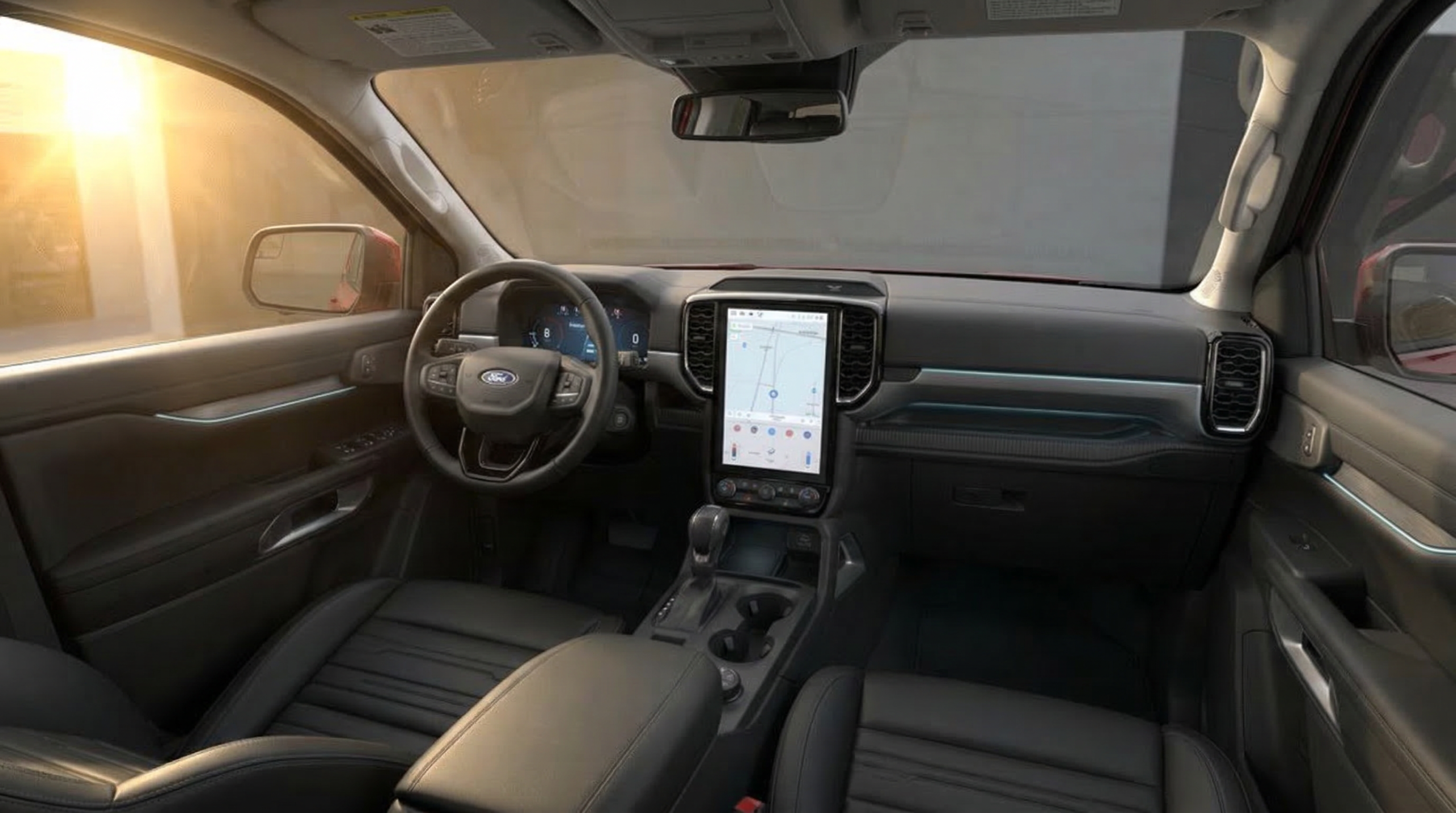
2026 Ford Ranger Lariat interior with 12 inch SYNC touchscreen and digital instrument cluster

Big Screen or Basic Setup? A Plain-English Breakdown of Every 2026 Ranger Tech Feature

Tech specs in truck brochures tend to blur together fast — every trim claims to be "well-equipped," every screen sounds massive, and it's hard to tell what's actually different between a base XL and a loaded Lariat until you're standing in the dealership trying to remember which truck had the 360-degree camera and which one didn't. This guide cuts through that. Here's a clear, trim-by-trim breakdown of every technology and safety feature on the 2026 Ford Ranger — what's standard, what you have to add, and what you simply can't get without stepping up a trim. What Every 2026 Ranger Gets — Regardless of Trim Ford's Co-Pilot360™ suite is standard equipment on all 2026 Ranger trims. That means safety technology isn't a luxury upgrade — it's built into the base price no matter which model you choose. Here's what every Ranger includes: Feature What It Does Pre-Collision Assist with Automatic Emergency Braking Detects vehicles and pedestrians ahead; warns driver and automatically applies brakes if needed Blind Spot Information System (BLIS®) Monitors blind spots and warns when a vehicle enters; Cross-Traffic Alert included Lane-Keeping System Alerts driver when drifting from lane and applies gentle steering input to keep the truck in lane Auto High-Beam Headlamps Automatically switches between high and low beams based on oncoming traffic Rear View Camera Standard rearview display when reversing Apple CarPlay® / Android Auto™ Wireless on XLT and above; wired on XL Pro Power Onboard™ — 400W In-bed 120V AC outlet for tools, chargers, and equipment — standard across all trims SYNC 4A Touchscreen: Size Varies by Trim All 2026 Rangers run SYNC 4A — Ford's connected infotainment platform. But screen size is not the same across all trims, and the difference matters in daily use. Trim SYNC 4A Screen Digital Cluster Wireless CarPlay XL 8 inches — Wired only XLT 12 inches 12-inch digital ✓ Wireless Lariat 12 inches 12-inch digital ✓ Wireless Raptor 12 inches 12-inch digital ✓ Wireless The jump from the XL's 8-inch screen to the XLT's 12-inch is significant. Beyond screen size, the XLT also gains a 12-inch digital instrument cluster in place of traditional analog gauges — the display is configurable and shows navigation, off-road data, and driver assist readouts. If you spend a lot of time interacting with navigation or media, the XLT and above deliver a noticeably better experience. What's New on Tech for 2026 Two tech-related additions stand out for 2026: Power Moonroof — New for 2026, now available as an option. Not available on every trim, but for buyers who've been waiting for a factory moonroof option on the Ranger, it's here. If outdoor visibility while parked or natural light while driving matters to you, this is worth checking at the trim level you're considering. SiriusXM 360L — The on-demand tier of SiriusXM is now included. 360L goes beyond traditional satellite radio — it adds on-demand content and personalized channel recommendations delivered over a connected data connection. Same hardware as before, better content access. The upgrade was to the tier, not the physical radio. Adaptive Cruise and Driver Assist: What's Available Where Basic cruise control is standard on all trims. Adaptive Cruise Control with Stop-and-Go — which maintains a set following distance and can bring the truck to a complete stop in traffic — is available on XLT and above, typically as part of a higher package level. If highway driving is a big part of your commute or your travel, it's a feature worth tracking when building your trim. The 360-degree camera system — which shows a bird's-eye view of the truck while maneuvering — is available on the Lariat and above. For backing into a tight space with a trailer or parallel parking on a Bowdle street with limited sight lines, the surround-view system is genuinely useful rather than a gimmick. FordPass, OTA Updates, and Connected Features The FordPass™ app connects your phone to the truck and lets you remotely start, lock, unlock, and check vehicle status — fuel level, tire pressure, and whether the doors are locked. It's a small but practical convenience when you're loading gear in the dark before a morning hunt or warming up the truck from inside the house in January. The 2026 Ranger also supports over-the-air software updates through the built-in modem. Ford can push SYNC system updates, recalibrations, and feature improvements to the truck without requiring a dealership visit — the same way a smartphone updates. Your truck can get better after you drive it off the lot. Pro Power Onboard™: The 400W In-Bed Outlet Every 2026 Ranger comes with a 400-watt 120V AC outlet in the bed as standard equipment. That's enough to run a power tool, charge a phone or laptop, power a small compressor, or run lighting at a worksite or campsite. It's not a generator replacement — 400W has limits — but for everyday use it's a useful feature that most buyers don't expect to find at this power level as a standard item. For heavier power needs, you'll want to look at F-150 with its higher Pro Power Onboard tiers, which go substantially higher. The Ranger's 400W is the right tool for typical job-site and outdoor use, not for powering large appliances. Audio Upgrades: B&O Available on Lariat The XL and XLT come with Ford's standard audio setup — functional, decent, nothing remarkable. The Lariat can be optioned with the Bang & Olufsen™ premium audio system, which is a meaningful step up in sound quality for buyers who care about audio. B&O is not available on the XL or XLT. Ambient interior lighting is also available on the Lariat, which adds configurable mood lighting along the interior panels. It's a comfort and style feature, not a function feature, but it contributes to the overall feel of the cabin in a way that photographs well and rides even better. Technology FAQ Does the base XL Ranger have Apple CarPlay? Yes, but wired only. The XL supports Apple CarPlay and Android Auto via a USB connection. Wireless CarPlay and Android Auto are available starting on the XLT and carry through to the Raptor. What is SYNC 4A and how is it different from SYNC 4? SYNC 4A is Ford's enhanced version of the SYNC 4 platform — it includes a faster processor, an improved voice command system, and support for over-the-air updates. The "A" designation reflects a hardware upgrade. All 2026 Rangers run SYNC 4A regardless of trim level. Is the Power Moonroof standard or optional on the 2026 Ranger? The Power Moonroof is a new addition for 2026 and is available as an option — it is not standard on any trim. Check the specific build configuration at your trim of interest, as availability can vary by package. It was not offered at all on the 2025 Ranger. Does the 2026 Ranger have a heads-up display? The 2026 Ranger does not offer a heads-up display. Navigation and driver information are displayed on the 12-inch digital instrument cluster (XLT and above) or the SYNC 4A touchscreen. Does the 360-degree camera come standard or is it an option? The 360-degree surround-view camera system is available on the Lariat and Raptor — it is not available on the XL or XLT. It is typically included or available as part of a higher-tier option package at the Lariat level. All trims include a standard rear view camera. Key Takeaways Ford Co-Pilot360™ safety suite is standard on all 2026 Ranger trims — no safety tech upgrades required at any level XL gets an 8-inch SYNC 4A screen; XLT, Lariat, and Raptor get a 12-inch screen and 12-inch digital cluster Wireless CarPlay and Android Auto start at the XLT — XL is wired only Power Moonroof is new for 2026 — available as an option where applicable SiriusXM 360L on-demand tier is now standard — upgraded from basic satellite for 2026 Pro Power Onboard 400W in-bed outlet is standard on all trims 360-degree camera available on Lariat and above; B&O audio available on Lariat FordPass connectivity and over-the-air SYNC updates supported across the lineup The technology story on the 2026 Ranger is straightforward once you know where the dividing lines are: XL gets the basics done well, XLT makes a real jump in screen size and cluster, and Lariat adds the camera system, audio upgrades, and comfort features that make it feel like a premium truck. The safety foundation is solid at every level. If you want to see how technology availability lines up with each trim's full feature set, the 2026 Ford Ranger overview has the full picture. And if you want a trim-by-trim comparison of which tech features appear at each price point, the trim levels guide breaks it down side by side. — Lexy Tabbert, Beadle Ford Continue Reading → Which 2026 Ranger trim includes each technology feature → Towing technology features and the Trailer Tow Package explained
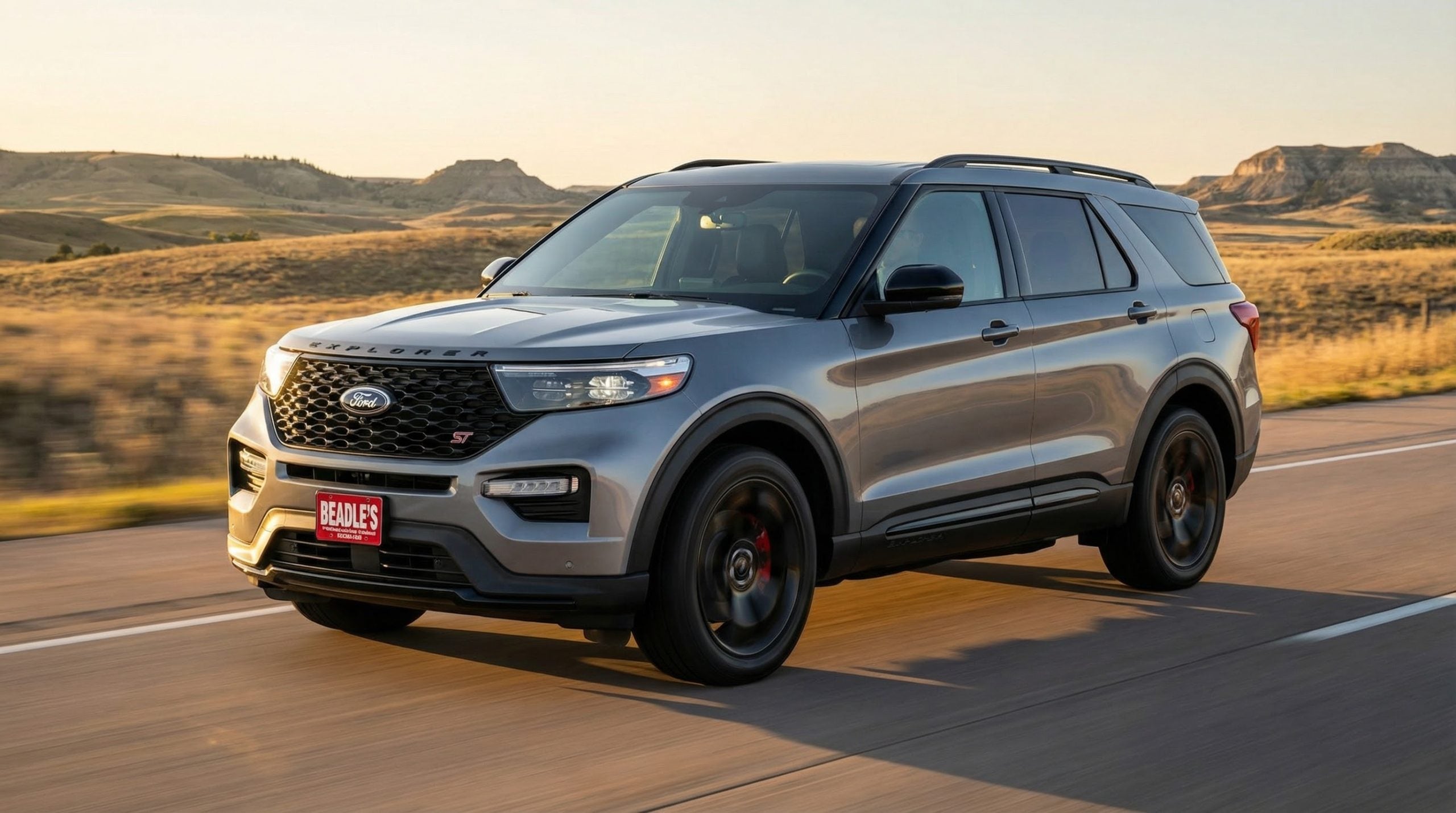
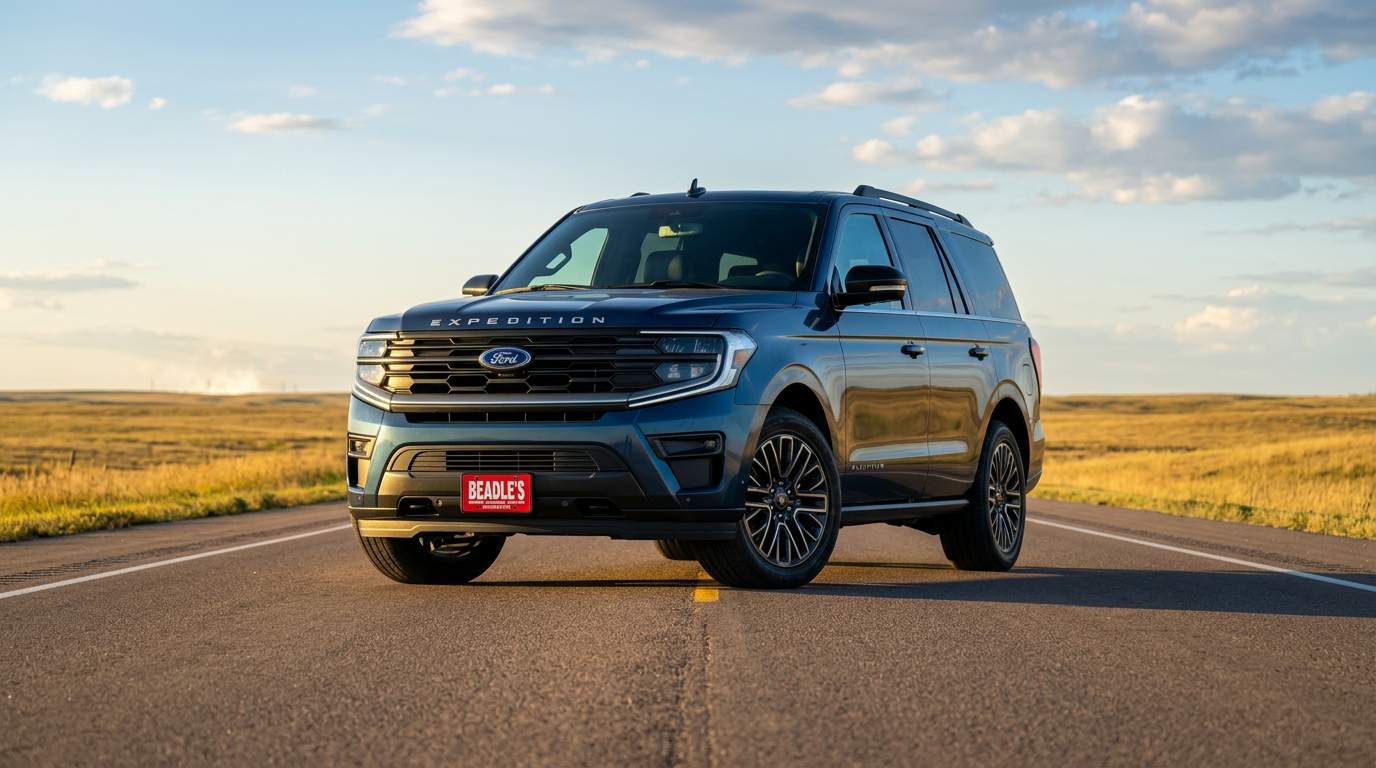
2026 Ford Explorer ST on open highway

2026 Ford Explorer ST Performance Guide

The 2026 Ford Explorer ST is built for drivers who want their three-row SUV to feel fast, responsive, and confident — not just practical. While the Explorer lineup is family-focused at its core, the ST trim shifts the personality toward performance. This guide explains what makes the Explorer ST different from other trims, how it feels in real-world driving, and who it’s truly built for. For full lineup context, including how ST fits alongside Active, Platinum, and Tremor, start with the 2026 Ford Explorer overview. Shop Explorers in Stock Table of Contents What is the Explorer ST? What engine does the ST use? How does the ST feel different to drive? Does the ST handle differently? ST vs Tremor: Performance vs Adventure Who should buy the Explorer ST? Is the ST still practical for families? How to properly test drive an Explorer ST What is the 2026 Ford Explorer ST? The Explorer ST is the performance-focused trim of the Explorer lineup. It combines three-row seating with a stronger engine and sport-tuned driving characteristics. It’s not just about horsepower — it’s about how the SUV responds when you press the accelerator, change lanes at highway speed, or drive through curves. What engine does the Explorer ST use? The 2026 Explorer ST is powered by a 3.0L EcoBoost® V6 engine. In simple terms: it produces more power and torque than the standard 2.3L engine used in other trims. What that means in everyday life: Quicker acceleration when merging Stronger passing power at highway speeds Less “working hard” feeling when loaded with passengers More confident towing feel when properly equipped If you want a full comparison between the 2.3L and 3.0L engines, see our Explorer Engine Deep Dive. How does the ST feel different to drive? This is where the difference becomes noticeable. Compared to an Active or ST-Line trim: The accelerator feels more immediate. The SUV reaches highway speed more quickly. Passing slower vehicles requires less planning. The engine feels stronger under heavy load. For drivers who spend significant time on highways — especially in areas with strong wind or long-distance travel — the ST’s power can feel more relaxed and effortless. Does the Explorer ST handle differently? Yes. The ST features sport-oriented tuning designed to provide a more controlled feel through curves and during quick lane changes. It’s still a three-row SUV — but it feels tighter and more responsive compared to family-focused trims. This makes it appealing to drivers who want practicality without sacrificing driving enjoyment. Explorer ST vs Explorer Tremor: What’s the difference? This is one of the most common questions. Explorer ST: Performance-focused Strong acceleration Sport-tuned handling On-road emphasis Explorer Tremor: Adventure-focused Designed for gravel and uneven terrain Distinct styling and capability orientation Off-road confidence priority If your driving is primarily paved roads and highways, ST is the performance path. If you regularly travel beyond pavement, Tremor may be the better fit. The full trim breakdown is available in our Explorer Trim Levels Guide. Who should buy the 2026 Explorer ST? The Explorer ST is best for drivers who: Enjoy strong acceleration Drive long highway distances regularly Want their SUV to feel athletic Carry passengers but still want performance Prefer a sport-inspired driving experience It’s especially appealing to families where at least one driver values performance feel as much as practicality. Is the ST still practical for families? Yes. The Explorer ST retains three-row seating and family functionality. Seating configurations and interior layout may vary by equipment selection, so it’s important to confirm your preferred layout. Interior space details are covered in our Interior & Cargo Guide. How should you test drive an Explorer ST? Start with a normal city drive to feel throttle response. Merge onto a highway and notice acceleration difference. Perform a controlled highway pass. Drive through a few curves to feel steering control. Compare directly with a 2.3L-equipped trim if possible. The difference becomes most obvious during highway acceleration and passing. Quick ST Overview Category Explorer ST Engine 3.0L EcoBoost V6 Driving Feel Performance-focused Personality Sporty, responsive, confident Seating Three rows (configuration varies) Key Takeaways The ST is the performance-focused Explorer trim. It uses the 3.0L EcoBoost engine. Acceleration and passing feel stronger and more effortless. It remains practical for family use. Best suited for drivers who enjoy athletic driving feel. Frequently Asked Questions Is the Explorer ST fast? The Explorer ST offers significantly stronger acceleration compared to standard trims, especially during highway merging and passing. Does the ST tow more than other Explorers? Maximum towing capacity depends on configuration, but engine strength can influence how confident towing feels. Is the Explorer ST good in winter? With available AWD and proper tires, the ST can perform confidently in winter conditions. Is the ST worth the upgrade? For drivers who value performance feel and acceleration, many find the upgrade worthwhile. For purely practical use, other trims may meet daily needs just as well. Conclusion In my experience, the Explorer ST appeals most to drivers who want their SUV to feel powerful and responsive — not just functional. When buyers test drive it back-to-back with a standard trim, the difference in acceleration and highway confidence becomes clear very quickly. For families who want practicality without sacrificing driving enjoyment, the ST often feels like the perfect balance. About the Author Lexy Tabbert provides research-driven SUV configuration guidance and performance insights for drivers across South Dakota and beyond.

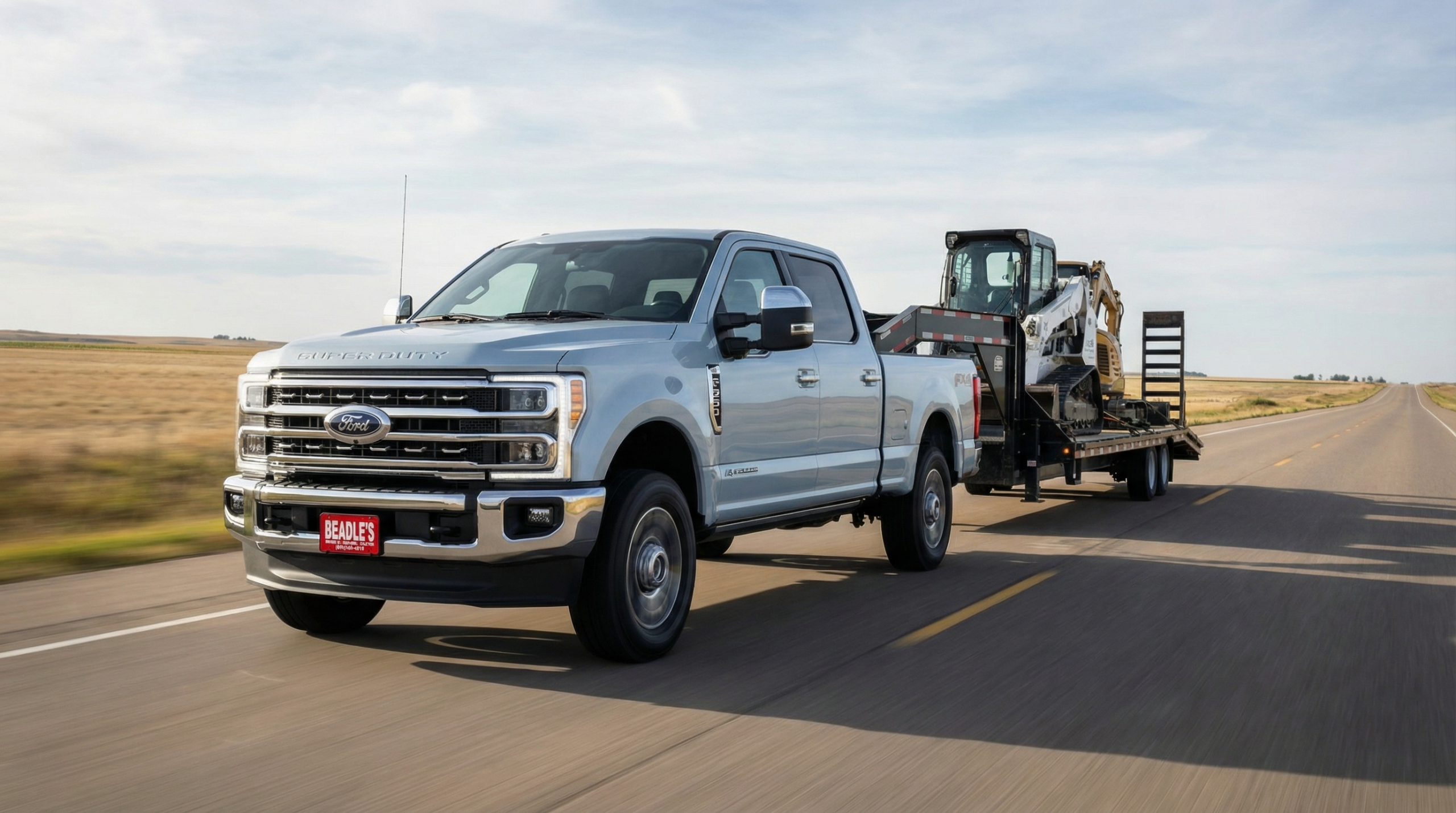
2026 Ford F-350 Super Duty towing on a rural South Dakota highway

2026 Ford F-350 Towing Guide

Quick Answer Properly equipped, the 2026 Ford F-350 Super Duty tows up to 40,000 lbs gooseneck with the 6.7L High-Output Power Stroke diesel and 40K Gooseneck Tow Package, up to about 35,000 lbs fifth-wheel, and up to 28,000 lbs conventional in dual-rear-wheel form. The 2026 Ford F-350 Super Duty is built for drivers who tow heavy on purpose — fifth-wheels, goosenecks, livestock, and equipment loads that don't leave much room for guesswork. If your towing days include long highway miles, wind, grades, or soft gravel lots, the right F-350 configuration feels noticeably more planted and in control. This guide focuses on the decisions that actually change towing confidence: the real numbers by hitch type and engine, the single-rear-wheel versus dual-rear-wheel choice, and the towing visibility features that matter once the trailer is hooked up. Because capability depends on how the truck is built, compare your options within the full lineup before you finalize a plan. Shop F-350s in Stock Get Pre-Approved On This Page What actually changes how much an F-350 can tow? How much can the 2026 F-350 tow by hitch type and engine? SRW vs. DRW: which one fits your trailer? Gooseneck vs. fifth-wheel vs. bumper pull: what's the difference? Which engine should you tow with? What towing tech is worth prioritizing? How do you choose an F-350 towing setup? What actually changes how much an F-350 can tow? Towing capacity isn't one number — on the F-350 it shifts with cab and bed choice, drivetrain, axle ratio, single- or dual-rear-wheel setup, hitch type, and packages. The headline 40,000-lb figure is a specific build, not every truck on the lot. The right way to shop is backward from your trailer: start with your real loaded weight and hitch type, then choose the configuration that gives you stability and margin instead of a close call. Around Bowdle and Aberdeen, that usually means matching the engine to how often you pull heavy and deciding honestly whether you need a dually — the two choices that move the numbers most. How much can the 2026 F-350 tow by hitch type and engine? Properly equipped, the 2026 F-350 tows up to 40,000 lbs gooseneck, up to about 35,000 lbs fifth-wheel, and up to 28,000 lbs on a conventional (bumper-pull) hitch in dual-rear-wheel form. A single-rear-wheel F-350 handles up to 25,000 lbs conventional — still well beyond any half-ton. Maximum gooseneck capability by engine breaks down like this: Engine Max Gooseneck Best For 6.8L gas V8 Up to 18,900 lbs Lighter goosenecks, occasional towing, top payload 7.3L gas V8 Up to 22,500 lbs Frequent gas towing without diesel upkeep 6.7L Power Stroke diesel Up to 38,600 lbs Regular heavy goosenecks, livestock, large fifth-wheels 6.7L High-Output Power Stroke Up to 40,000 lbs Maximum capability (DRW + 40K Gooseneck Tow Package) Maximums require proper equipment and vary with cab, bed, axle ratio, and configuration. The 40,000-lb gooseneck rating requires the dual-rear-wheel HO diesel with the 40K Gooseneck Tow Package (535). SRW vs. DRW: which one fits your trailer? Single-rear-wheel (SRW) is the better all-around choice for most heavy towing while staying easy to live with day to day; dual-rear-wheel (DRW, or dually) is for maximum stability and the heaviest goosenecks and fifth-wheels. This is the most important F-350 decision most buyers make. Single-rear-wheel (SRW) is right for you if you tow goosenecks and fifth-wheels well under the top of the range, run gravel and tight yards often, and want a truck that's easier to park and daily-drive. Dual-rear-wheel (DRW) is right for you if you regularly pull a large fifth-wheel or gooseneck near the F-350's ceiling, want the calmest feel in crosswinds and on long highway runs, or need the 40,000-lb maximum. From the Beadle Ford Lot The most common F-350 conversation we have in Bowdle is SRW vs. DRW — and plenty of buyers who assume they need a dually don't. A single-rear-wheel F-350 covers most goosenecks around here with margin to spare and is far easier to live with on gravel and in the yard. Gooseneck vs. fifth-wheel vs. bumper pull: what's the difference? The hitch type changes how the load behaves and how the truck should be equipped. Gooseneck and fifth-wheel hitches mount over the rear axle for a more stable, higher-capacity tow; a conventional bumper pull is simpler but tops out lower. Bumper pull (conventional): common for utility and many travel trailers; weight distribution and brake control matter more as loads climb. Up to 25,000 lbs SRW, 28,000 lbs DRW. Fifth-wheel: popular for larger RVs; the over-axle connection feels more stable on the highway. Up to about 35,000 lbs. Gooseneck: the livestock and equipment standard; controlled feel and tight maneuvering, and the highest ratings — up to 40,000 lbs. Which engine should you tow with? Match the engine to towing frequency and weight. Gas (6.8L or 7.3L) fits mixed driving and periodic towing; the 6.7L Power Stroke diesels are the choice when you tow heavy and often and want torque-forward control on long pulls. All four engines pair with the 10-speed TorqShift automatic. The standard diesel makes 1,050 lb-ft and pulls up to 38,600 lbs gooseneck; the High-Output diesel adds 150 lb-ft and unlocks the 40,000-lb maximum in DRW form. Our Recommendation For most ranch and farm buyers around Bowdle and Aberdeen running gooseneck stock and equipment trailers, we recommend the standard-output 6.7L Power Stroke. Its 1,050 lb-ft and up-to-38,600-lb gooseneck rating cover nearly every trailer in this part of South Dakota — the High-Output engine and a dually only pay off if you're routinely near the top of the range. The full breakdown is in our 2026 F-350 engine comparison guide. What towing tech is worth prioritizing? Prioritize the features you use every time you hook up: trailer brake control, camera visibility, trailer-aware monitoring, and proper tow mirrors. On a heavy gooseneck or a dually-and-long-trailer combo, visibility is a safety feature, not a convenience. Trailer brake control: increasingly important as trailer weight rises. Camera visibility: helps with hitch alignment, backing, and tight maneuvers. Trailer-aware monitoring: when equipped, eases lane changes and long highway runs. Tow mirrors and lighting: clear sightlines down a long trailer in a crosswind. How do you choose an F-350 towing setup? Work from the trailer to the truck, in five steps: Start with the trailer: type (bumper pull, fifth-wheel, gooseneck) and realistic loaded weight. Decide SRW vs. DRW: choose your stability margin based on how heavy and how often you tow. Pick an engine for your frequency: occasional gas vs. frequent heavy diesel pulling. Prioritize visibility and control: brake control, camera support, and tow mirrors. Confirm the exact build: ratings and equipment vary with configuration — verify before you order. Key Takeaways The 2026 F-350 tows up to 40,000 lbs gooseneck, ~35,000 lbs fifth-wheel, and up to 28,000 lbs conventional — properly equipped. SRW fits most heavy towing and daily use; DRW is the stability choice for the largest fifth-wheels and goosenecks. Hitch type changes both the rating and how the truck should be equipped. The standard 6.7L Power Stroke (38,600 lbs gooseneck) covers nearly every trailer in this region. Towing visibility tech can matter as much as horsepower in real conditions. Frequently Asked Questions How much can the 2026 Ford F-350 tow? Properly equipped, up to 40,000 lbs gooseneck with the 6.7L High-Output Power Stroke diesel in dual-rear-wheel form with the 40K Gooseneck Tow Package, up to about 35,000 lbs fifth-wheel, and up to 28,000 lbs conventional on the DRW. A single-rear-wheel F-350 tows up to 25,000 lbs conventional. Exact ratings depend on cab, bed, axle ratio, and configuration. When should I choose an F-350 instead of an F-250 for towing? Step up to an F-350 when you want more stability margin for heavy trailers, tow more frequently, or need a configuration built for large fifth-wheel or gooseneck use. The F-350's 40,000-lb gooseneck maximum is nearly double the F-250's 23,000 lbs, so if your loaded trailer is anywhere near an F-250's ceiling, the F-350 gives you headroom instead of a truck at its limit. Is DRW worth it for fifth-wheel or gooseneck towing? DRW is worth it for maximum stability and the heaviest loads — large fifth-wheels and goosenecks near the top of the range — and it's required for the 40,000-lb maximum. SRW still handles most trailers in this region with margin, so the dually pays off mainly when you're routinely running heavy or want the calmest feel in crosswinds. What is the 40K Gooseneck Tow Package? It's the factory option group (order code 535) required to reach the F-350's 40,000-lb gooseneck maximum, available with the 6.7L High-Output Power Stroke diesel in dual-rear-wheel form. Without it, gooseneck ratings are lower. We confirm the exact package and axle combination on any truck before you order. Does an F-350 ride differently when it's unloaded? Yes — a heavy-duty truck is designed around carrying and towing, so the unloaded ride is firmer, and a dually is firmer still than a single-rear-wheel. Many buyers accept that trade for a more controlled, planted feel once the trailer is connected. Quick Answers: F-350 Towing One-line answers to the follow-up questions buyers ask next. What's the max gooseneck rating? Up to 40,000 lbs with the HO diesel DRW and 40K Gooseneck Tow Package. What's the max fifth-wheel rating? Up to about 35,000 lbs, properly equipped. What's the max conventional rating? Up to 28,000 lbs DRW, 25,000 lbs SRW. How much can the gas 7.3L tow? Up to 22,500 lbs gooseneck. How much can the standard diesel tow? Up to 38,600 lbs gooseneck. Do I need a dually to tow heavy? No — SRW covers most trailers here; DRW is for the heaviest loads. What transmission handles the towing? A 10-speed TorqShift automatic, standard on all engines. Is a trailer brake controller included? Yes — an integrated trailer brake controller is available and recommended for heavy trailers. Can it tow a large livestock gooseneck? Yes — that's a core use case for the F-350 in our market. How do I confirm a specific truck's rating? We verify cab, axle, and package against the build before you order. Keep Researching The complete 2026 Ford F-350 Super Duty overview — trims, specs, towing, and inventory in one place. 2026 F-350 engine comparison — gas vs. diesel and the ownership-cost math behind the tow ratings. 2026 F-350 packages & trims — where DRW becomes available and which towing packages to order. 2026 F-350 technology — the trailer cameras and driver-assist features that matter when towing. My Take on Towing with the 2026 Ford F-350 In my experience, the best towing setups are the ones built with margin — where the truck feels composed, the trailer feels predictable, and you're not constantly managing the load. The F-350 shines when buyers choose SRW vs. DRW intentionally, match the hitch to the job, and pick the engine for how they actually tow rather than for the biggest number on the window sticker. If you bring me your trailer type and a realistic loaded weight, we can size the right F-350 in a few minutes. Stop in at Beadle Ford in Bowdle or reach out and we'll walk through it together. Shop F-350s in Stock Get Pre-Approved About the Author Lexy Tabbert — Beadle Ford, Bowdle, SD Lexy Tabbert is the Director of Sales and Marketing at Beadle Ford in Bowdle, South Dakota. She covers Ford vehicles, trim comparisons, and buyer guidance — helping families, ranchers, and ag operators across the region find the right truck and configuration for their needs. Learn more about Lexy.

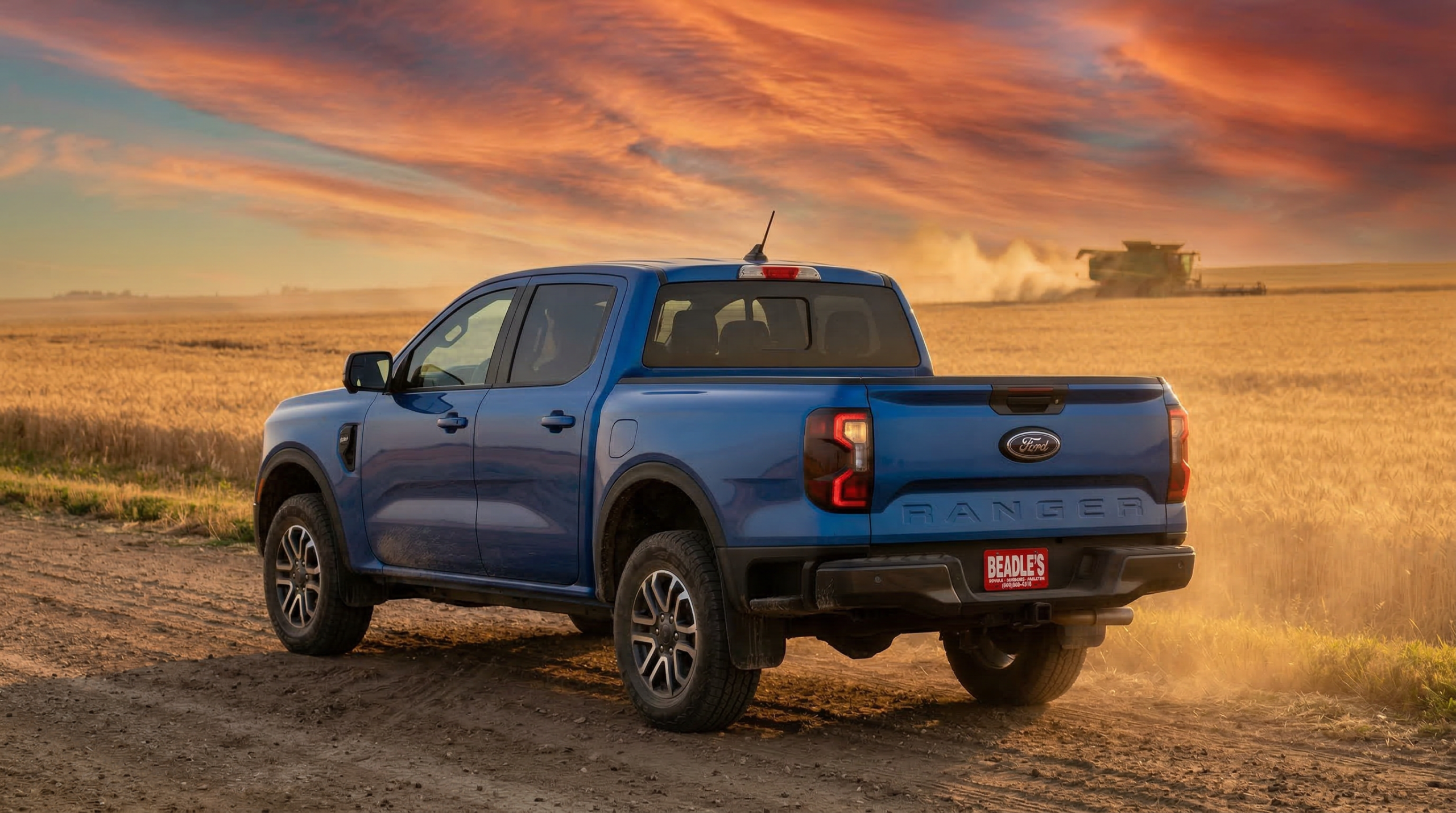
2026 Ford Ranger FX4 off-road in South Dakota

FX4 or Skip It? Here's What the 2026 Ranger's Off-Road Package Actually Does

Let's be direct: the FX4 Off-Road Package sounds impressive on a window sticker, but plenty of buyers aren't sure whether they actually need it or if it's just a checkbox that adds cost. If you spend time on gravel roads, muddy field edges, hunting access roads, or anywhere paved roads stop being a guarantee — the answer is probably yes. If you stay on pavement and well-maintained highways, you can save the money. Here's an honest breakdown of every component, what it does in the real world, and who it's actually built for. The Big 2026 Change: FX4 Now Available on the XL For 2026, Ford expanded FX4 availability down to the XL trim — that's new. Previously the package started at the XLT. Now you can spec the XL with FX4 content, which creates a lower-cost entry point for buyers who want the off-road capability without the added interior features of the XLT or Lariat. FX4 remains available on the XLT and Lariat as well. The Raptor is its own animal — it doesn't use the FX4 package name because it has more capable off-road hardware built in from the ground up. More on the Raptor vs. FX4 comparison below. What the FX4 Package Actually Includes The FX4 Off-Road Package is a collection of components that work together to improve capability in low-traction situations. Here's what's in it: Component What It Does Electronic Rear Locking Differential Locks both rear wheels to rotate at the same speed — prevents the truck from spinning the easy wheel and losing traction Trail Control™ Low-speed cruise control for off-road terrain — you steer, the truck manages throttle and braking independently at each wheel Rock Crawl Mode Activates low-range 4x4, engages e-locker, reduces throttle sensitivity for precise control on uneven terrain Off-Road-Tuned Shock Absorbers Recalibrated dampers for improved wheel articulation and stability on rough, uneven surfaces Steel Front Bash Plate Protects the front underbody from rocks, logs, and road debris when ground clearance runs out Off-Road Tires All-terrain tires on all FX4 configurations (OWL tires available on XLT models without the Black Appearance Package) FX4 Badging Box decals — the visual identifier that signals the package is equipped Trail Control: The Feature Most Buyers Underestimate Trail Control is essentially low-speed off-road cruise control. You set a target speed between 1 and 20 mph and it holds that speed — independently braking individual wheels and modulating throttle to keep you moving at a consistent pace through rough terrain. Your hands stay on the wheel for steering; the truck handles the rest. Why does this matter? On a steep rocky descent or a rutted two-track, managing throttle and brakes manually while also steering is a lot to coordinate — especially with passengers in the truck. Trail Control eliminates the brake-throttle-steer juggling act and lets you focus on your line. It's particularly useful for technical descents where too much speed leads to sliding. It's not a feature you'll use on every off-road trip. But the times you need it — loaded with gear, on a challenging grade, with a trailer behind you — it earns its place fast. The E-Locker: When It Matters and When It Doesn't The electronic rear locking differential is the most practically useful piece of the FX4 package for South Dakota driving conditions. Here's the core problem it solves: when one rear wheel is on a slippery surface and the other has grip, an open differential sends power to the wheel with less resistance — which means the slipping wheel spins freely while the good-traction wheel sits still. You go nowhere. The e-locker mechanically locks both rear wheels together so they both turn at the same speed regardless of traction. Both rear wheels become driving wheels. In soft spring mud, loose gravel, flooded field paths, or a wet boat ramp — the difference between locked and open is often the difference between moving and stuck. When to Use the E-Locker Use it: Muddy boat ramps, soft field edges, loose gravel climbs, spring thaw on two-tracks, wet grass, sand Don't use it on: Pavement or hard-packed roads — locking the rear differential on solid surfaces causes binding and handling issues You engage and disengage it with a dash button. Easy to forget you have it, easier to remember once you've needed it. FX4 vs. Raptor: Different Tools for Different Terrain The Raptor and the FX4 Ranger are not competing for the same buyer. The FX4 package improves a capable everyday truck — you're still on the same frame, same suspension travel, same ground clearance as the base Ranger. The Raptor is a purpose-built performance off-road platform with a completely different suspension architecture, significantly more wheel travel, and a 3.0L V6 tuned specifically for off-road use. XLT / Lariat w/ FX4 Raptor Engine 2.3L I4 or 2.7L V6 3.0L V6 — 405 hp Suspension Off-road tuned shocks Live-valve Fox Racing Shox, long-travel Max Towing up to 7,500 lbs up to 5,510 lbs Drive Modes Rock Crawl (FX4) Baja, Rock Crawl + more Best Use Daily driver + off-road capability Performance off-road truck Price Tier Package add-on cost Significant premium For most buyers in central South Dakota, the FX4 on an XLT or Lariat is the right call. It handles gravel roads, hunting access, boat launches, and field edges with confidence — and it still tows at the full 7,500 lb ceiling. The Raptor is for buyers who want high-speed desert running and extreme trail capability as a primary use case, not a secondary one. Worth It or Skip It: The Honest Framework Add FX4 if you regularly: Drive unpaved roads, gravel county roads, or seasonal two-tracks Back down boat ramps — especially in late fall or early spring when surfaces get soft Drive across pastures, field edges, or hunting grounds with soft or wet soil Deal with South Dakota spring mud or late-season snowpack on back roads Haul trailers off-pavement where departure traction is a concern Skip FX4 if you: Primarily drive paved highways, town streets, and well-maintained county roads Have no regular use for the e-locker, Trail Control, or rock crawl modes Are on a tight budget and the package cost matters — there's nothing wrong with a clean XLT or Lariat without it Why It Makes Sense for Bowdle-Area Drivers Living and working around Bowdle means unpaved roads aren't a novelty — they're routine. County gravel roads that turn to mud in April, field access tracks after rain, boat launches on the Missouri River system, stock dam access that gets torn up by cattle and equipment — this is exactly the environment the FX4 package is engineered for. The steel bash plate alone is worth something when you're driving roads where rocks and debris are a given. The e-locker is worth something every spring. Trail Control is worth something any time you're on a loaded descent in bad conditions. None of these are theoretical benefits in this part of the state — they're features you'll actually use. For a complete look at which trims offer FX4 and how the package fits into each build, or to understand how the e-locker improves traction at boat ramps and soft-surface towing situations, both guides have the detail. FX4 FAQ Is the FX4 package available on all 2026 Ranger trims? FX4 is available on the XL, XLT, and Lariat. The XL availability is new for 2026 — the package previously started at the XLT. The Raptor does not use the FX4 package name; it comes with a more capable off-road system as standard equipment. Does adding FX4 affect towing capacity? No — FX4 does not reduce or increase the Ranger's towing capacity. The 7,500 lb max (with Trailer Tow Package) remains the same whether or not FX4 is equipped. The e-locker can actually improve traction during soft-surface trailer departure situations, but the official tow rating is unchanged. Can I use the e-locker on pavement? No — the electronic rear locking differential is designed for low-traction, low-speed off-road use only. Using it on pavement causes drivetrain binding and handling instability. It's engaged and disengaged with a dash button, so it's easy to flip on and off as conditions change. What's the difference between Trail Control and regular cruise control? Standard cruise control maintains speed on pavement by managing throttle only. Trail Control is designed for off-road terrain and operates at very low speeds (1–20 mph) — it controls both throttle and braking independently at each wheel to maintain a consistent pace. The driver handles steering; Trail Control handles the throttle-brake balance on technical terrain. Did the FX4 package change at all for 2026? The package contents are essentially the same as 2025. The significant 2026 change is availability — FX4 is now offered on the XL trim for the first time. The components themselves (e-locker, Trail Control, off-road shocks, bash plate, FX4 tires and badging) carried over unchanged. Key Takeaways FX4 is now available on the XL for 2026 — that's new; it previously started at the XLT The package includes: e-locker, Trail Control, Rock Crawl mode, off-road shocks, steel bash plate, FX4 tires and badging The electronic rear locking differential is the most practically useful piece for South Dakota conditions Trail Control is low-speed off-road cruise control — handles throttle and braking while you steer FX4 does not reduce towing capacity — the 7,500 lb max still applies The Raptor is a different product entirely — purpose-built off-road with long-travel suspension and a 3.0L V6 If you drive unpaved roads, boat ramps, or field access regularly in central SD — FX4 is worth it The FX4 Off-Road Package isn't flashy marketing — it's a set of components that address real traction problems in real conditions. Around Bowdle, those conditions show up in April mud, gravel county roads, and every trip to a boat ramp or field edge. Whether it belongs on your build depends on how you actually use the truck. If you want to talk through trim and package combinations at Beadle Ford, I'm happy to help you land on the right build. The 2026 Ford Ranger overview is a good place to start if you want to compare the full lineup before narrowing down. — Lexy Tabbert, Beadle Ford Continue Reading → Which trims offer FX4 — and how each build stacks up on value → How the e-locker helps in soft-surface towing situations

How Much Can a Ford Edge Tow? Capacity, Cargo Space, and Real-World Capability

Ford Edge Capability Guide How Much Can a Ford Edge Tow? Capacity, Cargo Space, and Real-World Capability Definitive towing specs, Class II package details, and practical guidance for South Dakota buyers. The Ford Edge is a three-row crossover SUV built for families, outdoor enthusiasts, and SD ranchers who need a daily driver that can handle a boat, utility trailer, or camping setup. But what’s the real towing capacity? What cargo space do you actually get? And how do you know if an Edge you’re considering at a dealer lot is equipped to tow? We’ve pulled the OEM spec sheets and real-world owner feedback to give you the complete picture — exact towing limits by engine and package, GCWR numbers, tongue weight, and honest talk about what Edge owners pull across South Dakota’s lakes and back roads. Shop Edges in Stock Get Pre-Approved On This Page Ford Edge Towing Capacity: OEM Specs Class II Tow Package (53G) Explained Cargo Space & Interior Dimensions Real-World SD Use Cases What to Look for When Buying Used Frequently Asked Questions Key Takeaways Ford Edge Towing Capacity: OEM Specs The Ford Edge comes in three main powertrain configurations, and towing capacity differs significantly by engine choice and whether you add the optional Class II Tow Package (53G). Here’s the breakdown from Ford’s official 2023–2024 towing guides: Configuration Max Trailer Weight GCWR Tongue Load 2.0L EcoBoost I4 AWD (no tow package) 1,500 lbs 6,300 lbs N/A* 2.0L EcoBoost I4 AWD + Class II Package (53G) 3,500 lbs 8,300 lbs 350 lbs 2.7L EcoBoost V6 AWD ST (tow package standard) 3,500 lbs 8,500 lbs 350 lbs *The base 2.0L without tow package does NOT offer a factory Class II receiver; dealer accessory installation required. Max tongue load is 350 lbs on configurations with Class II package or factory tow prep. GCWR explained: Gross Combined Weight Rating is the total weight of your Edge plus the loaded trailer. Ford’s system stops you from overloading — if your Edge weighs 4,500 lbs, you can’t add more than 3,800 lbs of trailer and cargo in the 8,300 lbs GCWR configuration. Key takeaway: If you plan to tow more than 1,500 lbs, you need either the Class II Package on the 2.0L or the 2.7L V6 ST. The 2.7L offers a higher GCWR (8,500 vs. 8,300) and slightly more confidence for heavier loads, but both cap out at 3,500 lbs trailer weight. Expert Tip: All configurations are SAE J2807 certified, meaning they’ve been independently tested for towing safety. You can tow up to spec with confidence, but don’t exceed it. Class II Tow Package (53G): What You’re Really Getting The optional Class II Tow Package (Ford code 53G) is standard on the 2.7L V6 ST trim and optional on SE, SEL, ST-Line, and Titanium trims. Here’s exactly what Ford includes: Class II Tow Package (53G) Contents Trailer Wiring Harness (4-Pin): Powers brake lights and turn signals on your trailer. Essential for legal towing. Hitch Receiver (Class II): 1¼” square, rated for 3,500 lbs. Accepts standard hitch balls and adjustable ball mounts. Trailer Sway Control: Uses the Edge’s stability control to detect and dampen trailer oscillation at highway speeds. Activates automatically. SelectShift Automatic Transmission + Steering Wheel Paddle Shifters: Manual gear selection for engine braking on grades and towing. Better heat management than full auto. The SelectShift and paddle shifters are particularly valuable when towing. Lake Oahe and the Missouri River run through central South Dakota with plenty of hills — having the ability to lock the transmission in a lower gear means your transmission fluid stays cooler and you get better braking on the descent. That alone can add transmission lifespan by thousands of miles on a towing vehicle. Frontal area: Edges with the tow package have a larger frontal area (30 sq ft vs. 20 sq ft), which relates to air density and cooling calculations. More relevant for heat-heavy conditions like summer towing in the Black Hills. Class II hitch receiver detail: 1.25" square rated for 3,500 lbs WC (weight-carrying). Standard on ST, optional on other trims. Do You Need the Class II Package? Yes, if you plan to tow anything regularly. Even if your boat or utility trailer is only 2,500 lbs, the factory receiver, wiring, and SelectShift give you: Professional-grade towing harness (no aftermarket adapters to fail) Integrated sway control (proven to reduce accident risk by ~40% per NHTSA) Transmission management tools for safer braking on grades Better resale value (noted by used car buyers) Skip it if: You only tow every few years or plan to tow under 1,500 lbs. You can add a dealer-installed receiver later, but integrated factory towing always outperforms bolt-on kits. Cargo Space & Interior Dimensions Towing is part of the Edge story, but cargo space is equally important for SD buyers who haul feed, tools, camping gear, and equipment. Configuration Cargo Volume (Cu. Ft.) Behind 2nd row (typical) 39.2 cu. ft. 2nd row folded (max) 73.4 cu. ft. What fits in 39 cubic feet? Two large suitcases, a folded baby stroller, groceries for two weeks, camping gear for a family of four, or a side-by-side ATV frame. It’s the sweet spot for daily family hauling. What fits in 73 cubic feet? Everything above plus a second ATV, a small snowblower, pallets of feed sacks, or enough camping equipment for a week-long trip with toys and sports gear. Fold that second row and you’re in truck-like territory for volume. Second row folds flat for max cargo. Real-world: you can fit a pallet of 50-lb feed sacks in the cargo area with room to spare. Practical Cargo Scenarios for South Dakota Weekend at Lake Oahe: Beach towels, cooler, life jackets, snorkel gear, folding chairs, camping tent. Uses ~20 cu. ft. with 2nd row up. Plenty of room. Feed run to the co-op: 1,200 lbs of bagged feed (12 × 50-lb bags). Cargo area holds the volume easily; weight is within GVWR limits for all Edge configurations. Tool run + small equipment: Chainsaw, tool chest, extension ladder, tarps, fuel cans. Organize with cargo netting on the sides; 2nd row down gives you 6+ feet of length. ATV transport + camping: Fold 2nd row. Secure one ATV on a cargo dolly, load tent, sleeping bags, cooler in remaining space. This is a working Edge. Load Safety Note: Keep weight in the cargo area, not on the roof. High roof loads reduce stability at highway speeds and increase rollover risk, especially when cornering or crossing wind-exposed terrain. Real-World SD Use Cases: What Edge Owners Actually Tow Boat Trailers (Lake Oahe & Missouri River) Lake Oahe is the crown jewel of SD recreation, and Edge owners across the region use them to tow pontoon and fishing boat trailers. Here’s what works: Small fishing boat (17–19 ft): Typical dry weight 1,800–2,200 lbs, fuel + gear adds another 400–600 lbs. Total 2,200–2,800 lbs. Edge can handle with Class II package. Pontoon (20–22 ft): Dry weight 3,000–3,500 lbs, fully loaded 3,500–4,200 lbs. This exceeds Edge capacity. You need an Explorer or truck. Jet ski trailer (dual jet skis): Dry weight 800–1,200 lbs, loaded 1,500–1,800 lbs. Edge with Class II package is ideal. Tongue weight on boat trailers typically runs 10–12% of loaded trailer weight. On a 2,500 lb loaded boat, expect 250–300 lbs tongue load — right in the Edge’s 350 lbs sweet spot. Utility & Equipment Trailers Ranch work and hobby projects call for open utility trailers. Edge owners frequently tow: Single-axle enclosed trailer (6×10 ft): Empty weight 1,200 lbs. Loaded with fencing, posts, and tools: 2,500–3,000 lbs. Class II package handles this routinely. Tandem-axle utility trailer: Dry weight 2,000+ lbs before loading. Exceeds Edge capacity. Truck territory. ATV/quad trailer (single or dual): Empty 600–900 lbs, loaded with two ATVs 2,500–3,200 lbs. Edge with Class II package works. Camping & Recreational Trailers Travel trailers under 2,500 lbs: Lightweight teardrop and vintage Airstream models are increasingly popular with SD families. Edge with Class II package can tow these comfortably. Tongue load is typically 200–300 lbs. Horse trailers: A 2-horse steel trailer runs 1,500–1,800 lbs empty. With hay and equipment, 2,200–2,600 lbs. Edge can manage, but monitor fluid temps on longer hauls. Real Owner Feedback: “I tow a 2,200-lb fishing boat to Oahe on weekends with my Class II Edge. The sway control is rock-solid, and the paddle shifters let me brake downhill without riding the brakes. Transmission stays cool. Only regret is not getting the V6 for the extra GCWR headroom if we ever upgrade boats.” — James K., Pierre, SD What to Look for When Buying a Used Edge for Towing Not every used Edge you find at a dealer lot is equipped the same way. Here’s your checklist when shopping for a tow-capable Edge: 1. Confirm the Tow Package Look underneath the rear bumper: If there’s a Class II hitch receiver (1.25” square tube), the tow package is installed. If the bumper is smooth plastic, no package. Check the Monroney label (window sticker) or Carfax: Search for option code “53G” in the vehicle history. If the dealer says “we can add one,” verify the cost. Factory receivers run $600–$1,200; aftermarket adds another $300–$500. 2. Check Engine & GCWR History Ask the dealer: “Was this Edge used for towing?” Signs of heavy towing use: Transmission fluid darker than normal (should be bright red) Higher mileage on the odometer than expected for the year Wear marks on the hitch receiver Cooler hoses showing signs of stress If the Edge was towed a lot, it’s not a dealbreaker, but budget for earlier transmission service (fluid and filter every 50k miles instead of 150k). 3. Verify the Engine 2.0L EcoBoost I4: Adequate for most uses but requires the Class II package for 3,500 lbs. Single turbo, reliable engine. Check boost line clamps for leaks. 2.7L EcoBoost V6: Superior towing confidence. Dual turbo, more power, comes with tow package standard. Higher fuel consumption. Good choice if you plan heavy seasonal towing. 4. Test the Transmission (SelectShift) If the Edge has SelectShift, test the paddle shifters: Upshift and downshift using steering wheel paddles. Should respond instantly. No hesitation, grinding, or slipping. Manual mode disengages automatically above 6,500 rpm (safety feature). SelectShift adds confidence and longevity on towing-heavy vehicles. If the paddles are broken or unresponsive, factor in a transmission diagnostic (usually $100–$200). 5. Inspect Brake & Cooling Systems Brakes: Towing puts extra demand on brakes. Check pad thickness (should be >0.25”) and rotor condition. If pads are thin, budget $600–$1,000 for replacement. Transmission cooler: Open the hood and look for a secondary cooler mounted in front of the main radiator. On high-mileage Edges with heavy towing history, a failing cooler is common. Replacement runs $800–$1,500. 6. Ask the Right Questions Question What It Tells You “Was this towed, or used for towing?” Whether it endured heavy use. Transmission wear patterns differ. “Has the transmission fluid been serviced?” Maintenance history. Towed Edges need fluid changes sooner. “Any transmission issues or hesitations?” Early warning. Hesitation = internal wear. Costly repair. “Do the paddle shifters work?” Whether you have manual control for towing. Broken = electronics repair. Key Takeaways Max towing is 3,500 lbs (Class II package required on 2.0L; standard on 2.7L V6 ST). Any trailer exceeding this needs a different vehicle. Class II package is worth the cost if you tow regularly. Factory integration, sway control, and SelectShift add safety and resale value. Tongue weight maxes at 350 lbs across all Edge configurations. Most boat and utility trailers fall under this; verify before purchase. Cargo space is generous: 39.2 cu. ft. with the 2nd row up, 73.4 cu. ft. folded. Perfect for gear + weekend trips without a trailer. Real-world SD use: Fishing boats (under 2,800 lbs), jet skis, ATV trailers, light utility trailers, and small travel trailers are all safe bets. Pontoons and tandem-utility trailers exceed capacity. When buying used: Confirm the tow package, check brake and transmission cooler condition, and ask about towing history. Heavy use requires closer inspection. If your needs exceed 3,500 lbs, consider the Ford Explorer, which tows up to 5,600 lbs, or a truck like the F-150. Frequently Asked Questions Can I tow 3,500 lbs with a Ford Edge that doesn’t have the Class II package? No. Without the Class II Tow Package (53G), the 2.0L EcoBoost is rated for a maximum of 1,500 lbs. The 2.7L V6 ST comes with the package standard and can tow 3,500 lbs. If you have a 2.0L without the package and need higher capacity, you must either upgrade to the V6 or have a dealer install a Class II receiver (though Ford does not recommend towing the full 3,500 lbs without the integrated package components like trailer sway control and SelectShift). What does GCWR mean, and why does it matter? GCWR (Gross Combined Weight Rating) is the maximum total weight your Edge plus the loaded trailer can weigh. For example, a 2.0L with Class II has an 8,300 lbs GCWR. If your Edge weighs 4,500 lbs, you can add no more than 3,800 lbs of trailer and cargo. Exceeding GCWR overloads the chassis, transmission, and brakes, creating serious safety and reliability issues. You can check your Edge’s curb weight on the driver’s door jamb label. Is the Ford Edge better for towing than the Honda Pilot or Chevy Traverse? All three are competitive in the 3,500-lbs class. The Pilot maxes at 3,500 lbs, the Traverse at 5,600 lbs (with V8), and the Edge at 3,500 lbs. For towing capacity alone, the Traverse wins if you need a full-size three-row. For a mid-size vehicle, Edge, Pilot, and Traverse are equivalent. Choose based on features, interior layout, and local dealer support (we recommend Beadle Ford for Edge owners in South Dakota). Will towing an Edge void the warranty? No, as long as you stay within GCWR and tow weight limits, and follow Ford’s recommended maintenance schedule. Towing within spec is a normal use case. However, if you exceed GCWR or tow beyond the rated 3,500 lbs, Ford can deny warranty claims on related components (transmission, cooling system, brakes). Stick to the specs and service on schedule, and you’re covered. Do I need a separate brake controller for the trailer? The Class II package includes a 4-pin trailer wiring harness (12V connector). This powers trailer lights but not trailer brakes. For trailers under 3,000 lbs with surge or electric brakes, most states do not require a separate controller (South Dakota allows this). For heavier trailers or if you prefer integrated braking, a $150–$300 proportional brake controller can be added by a dealer or RV shop. Check your trailer’s manual and local regulations. Can I tow in the rain, snow, or high wind conditions common in South Dakota? Yes, with caution. The Edge’s Trailer Sway Control (included in the Class II package) helps stabilize the trailer in crosswinds and adverse conditions. However, reduce speed and increase following distance in rain, snow, and high-wind zones (common near Oahe and the Missouri River breaks). Avoid towing in whiteout conditions. The paddle shifters and SelectShift give you manual braking control on slippery descents — use it to prevent jackknifing. My Take on the Ford Edge as a Towing Vehicle From a marketing research perspective, the Edge occupies a genuinely useful position in the market: it’s a mid-size crossover that tows at the same ceiling as many buyers actually need. The 3,500-lb limit covers the most common South Dakota use cases — fishing boats at Lake Oahe, jet ski trailers, small utility trailers, and ATV setups. Buyers who regularly pull anything heavier should be looking at the Explorer or F-150 instead, and the Edge doesn’t pretend otherwise. The Class II package distinction is the most important purchasing detail in this guide. Without it, buyers on the 2.0L are limited to 1,500 lbs and don’t get trailer sway control — that’s a meaningful gap, not just a spec sheet difference. When evaluating a used Edge for towing, confirming the presence of that package should be the first question. For the complete model overview including trim and year comparisons, the Ford Edge buyer guide has the full context. Questions about a specific vehicle or tow package configuration? Beadle Ford in Bowdle can help. Shop Edges in Stock Get Pre-Approved Contact Beadle Ford Related Edge Resources Shop Edges in Stock Ford Edge Best Years & Model History Need More Towing Capacity? The Ford Explorer tows up to 5,600 lbs and offers three rows with more room. View Explorer inventory. About the Author Lexy Tabbert — Beadle Ford, Bowdle, SD Lexy Tabbert is the Director of Sales and Marketing at Beadle Ford in Bowdle, South Dakota. She covers Ford vehicles, trim comparisons, and buyer guidance — helping families, ranchers, and ag operators across the region find the right truck and configuration for their needs. Learn more about Lexy.

2026 Ford Maverick MPG & Ownership Costs (What to Expect in the Real World)

Maverick buyers are usually trying to hit the same goal: practical truck utility without taking on “full-size truck” operating costs. This guide focuses on real-world MPG expectations (especially for AWD EcoBoost shoppers), what changes in winter, and the cost factors that matter just as much as fuel. If you’re still deciding drivetrain and towing equipment (which can change how the truck is used and what it costs to run), start with: 2026 Maverick Specs & Configurations. For inventory and shopping support, visit the Ford Maverick model page. Shop Mavericks in Stock Contact Us Table of Contents What affects MPG the most on a Maverick? AWD + South Dakota winter: what changes? Ownership costs beyond fuel (the stuff buyers miss) Hybrid note: when it makes sense (without making it the focus) How to estimate your real cost to own FAQ What affects MPG the most on a Maverick? MPG isn’t a single number you “get.” It’s the result of how you drive, where you drive, and how the truck is set up. For Maverick owners in SD/ND, the biggest swing factors are highway speed, wind, winter temperatures, tire choice, and whether you spend a lot of time carrying gear or towing. Speed + wind: open highways and headwinds can reduce efficiency more than most people expect. Cold starts: short trips in winter usually lower MPG the most. Load and towing: carrying heavy gear or towing changes the truck’s workload and fuel use quickly. AWD + South Dakota winter: what changes? AWD is worth it for many buyers because traction and confidence matter more than chasing the best possible MPG. The trade-off is that winter driving usually reduces efficiency—cold air, warm-up time, snow-covered roads, and winter tires all play a role. If your priority is winter confidence and choosing the right setup (including tires), use: 2026 Maverick Winter Driving Guide. Ownership costs beyond fuel (the stuff buyers miss) Fuel matters, but most ownership cost surprises come from build choices. A truck that’s “over-optioned” for your use can cost more up front and not make your daily life any better. Option creep: adding packages that don’t solve real needs inflates payment and ownership cost. Tires: great winter tires improve safety and confidence—often more than another tech package. Usage pattern: heavy hauling/towing changes wear and operating costs more than most people budget for. Hybrid note: when it makes sense (without making it the focus) Some buyers prioritize hybrid for efficiency, especially for city-heavy driving. In our local shopping reality, many buyers still prioritize AWD for winter confidence. The right answer depends on your commute style, winter route demands, and what you value most day-to-day. Quick Overview Best for Budget-minded buyers balancing truck utility and daily efficiency Biggest swing factors Winter temperature, highway speed/wind, load/towing, tires Smart shopping move Build for your real use—don’t pay for packages you won’t feel How to estimate your real cost to own List your driving: city vs highway, daily miles, and winter usage. Decide your priority: winter traction (AWD) vs maximum efficiency (often hybrid). Account for tires: budget for winter tires if you drive in snow regularly. Be honest about towing: even light towing can change fuel use and wear. Compare two real builds: choose the one you’ll actually benefit from. Shop Mavericks in Stock Ask About AWD vs Hybrid FAQ Will winter driving reduce Maverick MPG? Typically, yes. Cold starts, warming up, snow-covered roads, and winter tires can all reduce efficiency. The biggest drops usually happen with short trips in very cold weather. Does AWD always mean worse MPG? AWD can add some efficiency trade-off depending on conditions and driving pattern, but many buyers consider it worth it for winter confidence. Tires and driving style often matter just as much as drivetrain when it comes to real-world MPG. What’s the biggest ownership-cost mistake buyers make? Paying for packages that don’t improve daily life. The best Maverick builds are usually the ones that match the use-case first, then add only the features you’ll actually notice. Conclusion In my experience, Maverick ownership feels “cheap in a good way” when the build matches the real routine—AWD for winter confidence, towing hardware only if you need it, and packages that you’ll actually feel every day. When buyers build intentionally, Maverick delivers the practicality people want without the operating cost shock. About the Author: Lexy Tabbert helps South Dakota and North Dakota buyers choose efficient, practical truck setups for real life—winter driving, commuting, weekend projects, and long-term ownership value. Her approach is straightforward: build for your real use-case first, then add features and packages that you’ll actually notice.

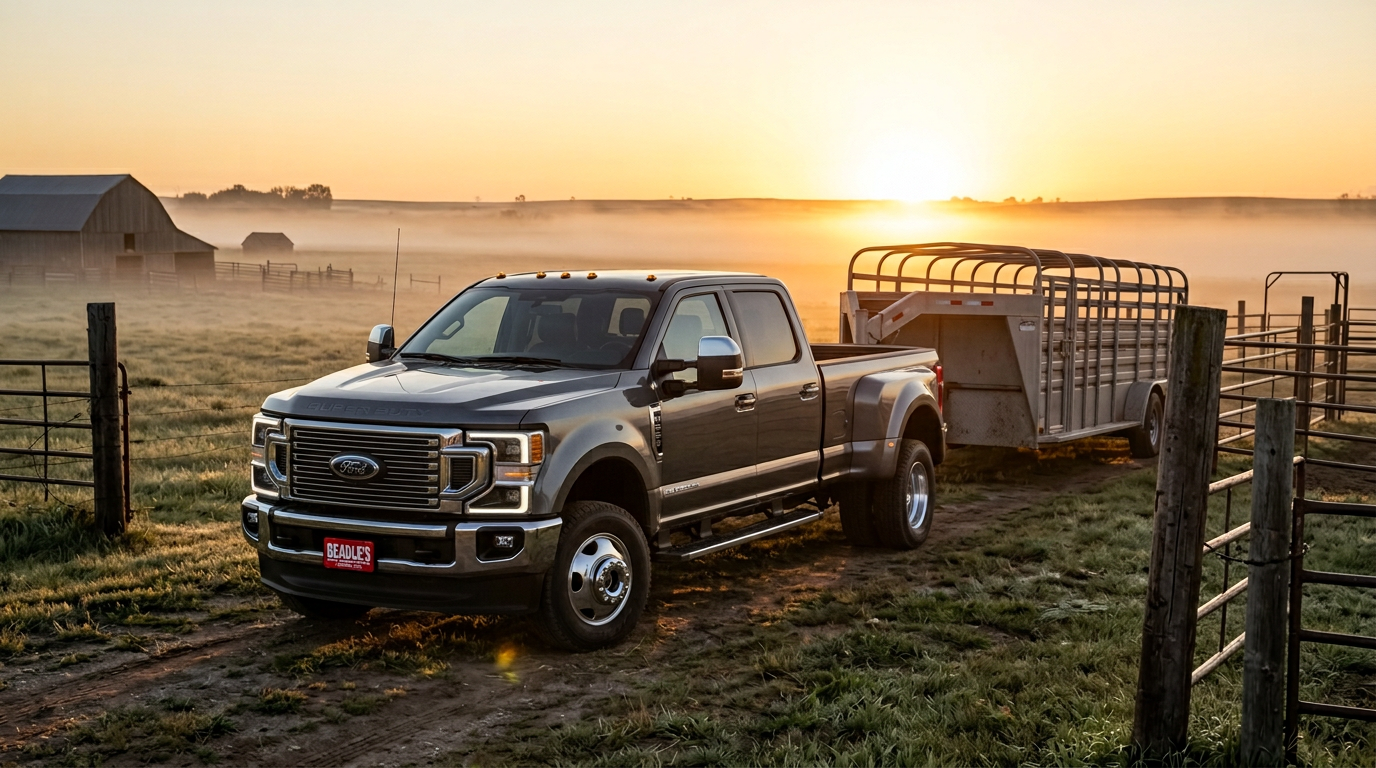
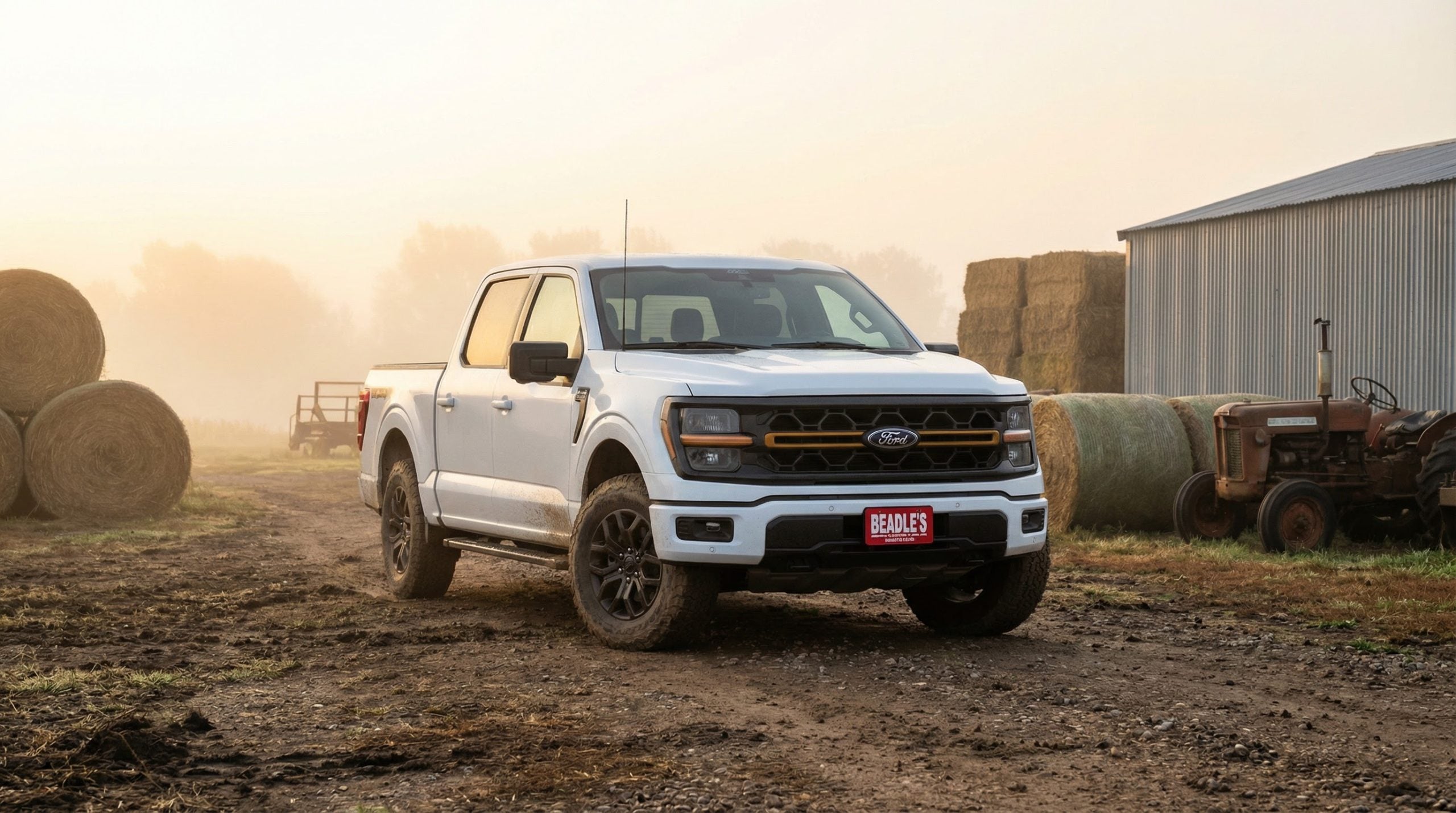
2027 Ford F-350 in Carbonized Gray Metallic at a working ranch at dawn with a gooseneck stock trailer

2027 Ford F-350 for Ag & Ranch in South Dakota

Quick Answer For South Dakota ag and ranch work, the 2027 Ford F-350 pulls loaded livestock goosenecks up to 40,000 lbs, carries up to about 7,900 lbs of payload, and comes standard with the 7.3L gas V8 — with available 4x4 and snow plow prep for gravel roads and hard winters. The High-Output diesel is there for the heaviest, most frequent hauling. Out here, a truck isn't a luxury — it's equipment. Between long gravel miles, cattle to move, hay and equipment to haul, and five months of winter, the F-350 has to earn its keep every day around Bowdle, Aberdeen, and the ranch country in between. Here's how the 2027 F-350 fits real ag and ranch work, which engine and configuration make sense, and how to build one for the conditions we actually drive in. Shop F-350s in Stock Get Pre-Approved On This Page Why the 2027 F-350 fits SD ag and ranch work What can it haul for ag? Which engine and configuration for ranch work? How does it handle winter, gravel, and plowing? How do you build a ranch F-350? Why the 2027 F-350 fits SD ag and ranch work The F-350 hits the sweet spot for most operations here: enough capability to pull a loaded gooseneck and carry a heavy load, without the cost and bulk of stepping up to an F-450. For 2027, the now-standard 7.3L gas V8 makes that capable baseline the value baseline too — and the truck's heavy-duty frame, available 4x4, and winter prep are built for our roads and seasons. It's also a truck you can live with: a single-rear-wheel F-350 runs gravel and ranch yards easily while still towing well past any half-ton. What can it haul for ag? Properly equipped, the 2027 F-350 pulls up to 40,000 lbs gooseneck — enough for a loaded triple-axle stock trailer of cow-calf pairs, a loaded equipment trailer, or hay racks — and carries up to about 7,900 lbs of payload for feed, fuel, fencing, and gear. Livestock: loaded gooseneck stock trailers, hauled to auction or pasture. Equipment: skid steers, implements, and flatbed loads within the F-350's ratings. Hay & feed: bale racks behind the truck and feed/fuel in the bed. Which engine and configuration for ranch work? For most ranches, the now-standard 7.3L gas V8 with 4x4 covers daily hauling and the goosenecks you actually pull, at the lowest cost. Step to the High-Output diesel if you tow heavy stock or equipment frequently and want maximum torque. Single-rear-wheel suits most operations; a dually is for the heaviest, most regular gooseneck loads. Our Recommendation For the typical Bowdle/Aberdeen ranch, we recommend a single-rear-wheel 7.3L gas F-350 with 4x4 and snow plow prep — it pulls the goosenecks most folks run, carries a heavy bed, handles gravel and winter, and keeps cost and upkeep down. Go diesel and/or dually only when you haul heavy stock daily. Match it to your loads with our 2027 F-350 towing guide. How does it handle winter, gravel, and plowing? Available 4x4 is the foundation for gravel roads, muddy lots, and snow, and available snow plow prep — with computer-selected springs sized for a plow — lets you clear your own yard and driveways all winter. Tow mirrors, trailer cameras, and trailer-aware blind-spot monitoring help on long two-lane hauls in crosswinds and changing weather. From the Beadle Ford Lot The add our ranch buyers most often skip and then wish they hadn't is snow plow prep — it's a small line item next to the truck, but adding it after the fact is a headache when you're plowing the yard in February. We bring it up on every ranch build for exactly that reason. How do you build a ranch F-350? Build for the work and the weather, in five steps: Start with your heaviest loaded gooseneck and your daily bed load. Pick the 7.3L gas for most ranches; the High-Output diesel if you haul heavy stock daily. Choose 4x4 for gravel, mud, and snow. Add snow plow prep, the right hitch and axle, and tow-camera/mirror options. Decide SRW vs. DRW, then confirm the exact ratings on the build sheet. Key Takeaways The 2027 F-350 pulls up to 40,000 lbs gooseneck and carries up to ~7,900 lbs of payload, properly equipped. The now-standard 7.3L gas covers most ranch hauling at the lowest cost; HO diesel for heavy daily work. Available 4x4 and snow plow prep handle gravel, mud, and SD winters. A single-rear-wheel F-350 fits most operations; dually for the heaviest stock loads. Spec snow plow prep up front — it's hard to add later. Frequently Asked Questions Is the 2027 F-350 good for hauling cattle and ag work in South Dakota? Yes — it's a core use case at Beadle Ford. Properly equipped, it pulls loaded gooseneck stock and equipment trailers up to 40,000 lbs, carries up to about 7,900 lbs of payload, and offers available 4x4 and snow plow prep for gravel and winter. Gas or diesel for ranch work? For most ranches, the now-standard 7.3L gas covers daily hauling and the goosenecks you actually pull, at the lowest cost. Choose the High-Output diesel if you tow heavy stock or equipment frequently and want maximum torque on long pulls. Do I need 4x4 on a ranch F-350 in South Dakota? For most ranch and farm buyers, yes. Available 4x4 handles gravel, mud, and snow, and adds confidence and resale value in our region — especially if you tow off paved roads or drive outside town in winter. Can the 2027 F-350 be set up for plowing? Yes — available snow plow prep includes computer-selected springs sized for plow duty, and most buyers pair it with 4x4. It's far easier to order up front than to add later, so we recommend speccing it on any truck that'll plow. SRW or DRW for a ranch truck? A single-rear-wheel F-350 fits most operations — it pulls most goosenecks with margin and is easier on gravel and in the yard. Choose a dually only if you regularly haul heavy stock near the top of the range. See our SRW vs. DRW guide for the details. Quick Answers: 2027 F-350 for Ag & Ranch One-line answers to the follow-up questions buyers ask next. Max gooseneck for stock trailers? Up to 40,000 lbs, properly equipped. Payload for feed and gear? Up to ~7,900 lbs. Best engine for most ranches? The now-standard 7.3L gas V8. When go diesel? Heavy stock or equipment hauled frequently. Do I need 4x4? For most ag/ranch use here, yes. Can it plow? Yes — available snow plow prep. SRW or DRW? SRW for most; dually for the heaviest loads. Good on gravel? Yes — especially an SRW 4x4. Did 2027 lose capability? No — same towing and payload as 2026. How do I build one? Start with your heaviest gooseneck; we'll spec it. Keep Researching The complete 2027 Ford F-350 Super Duty overview — specs, towing, trims, and how to order. 2027 F-350 towing guide — match the truck to your loaded gooseneck. 2027 F-350 engine comparison — gas vs. diesel for ranch hauling. 2027 F-350 SRW vs. DRW — the rear-wheel choice for ranch work. My Take on the F-350 for Ag & Ranch In my experience, the best ranch truck is the one built around your real loads and our real weather — not the biggest one on the lot. For most operations around here, a single-rear-wheel 7.3L gas F-350 with 4x4 and plow prep does everything that's actually asked of it, and the 2027 standard gas makes that the value pick too. Tell me your heaviest gooseneck and how you run through winter, and I'll build the right 2027 F-350 for the operation. Stop in at Beadle Ford in Bowdle or reach out anytime. Shop F-350s in Stock Get Pre-Approved About the Author Lexy Tabbert — Beadle Ford, Bowdle, SD Lexy Tabbert is the Director of Sales and Marketing at Beadle Ford in Bowdle, South Dakota. She covers Ford vehicles, trim comparisons, and buyer guidance — helping families, ranchers, and ag operators across the region find the right truck and configuration for their needs. Learn more about Lexy.

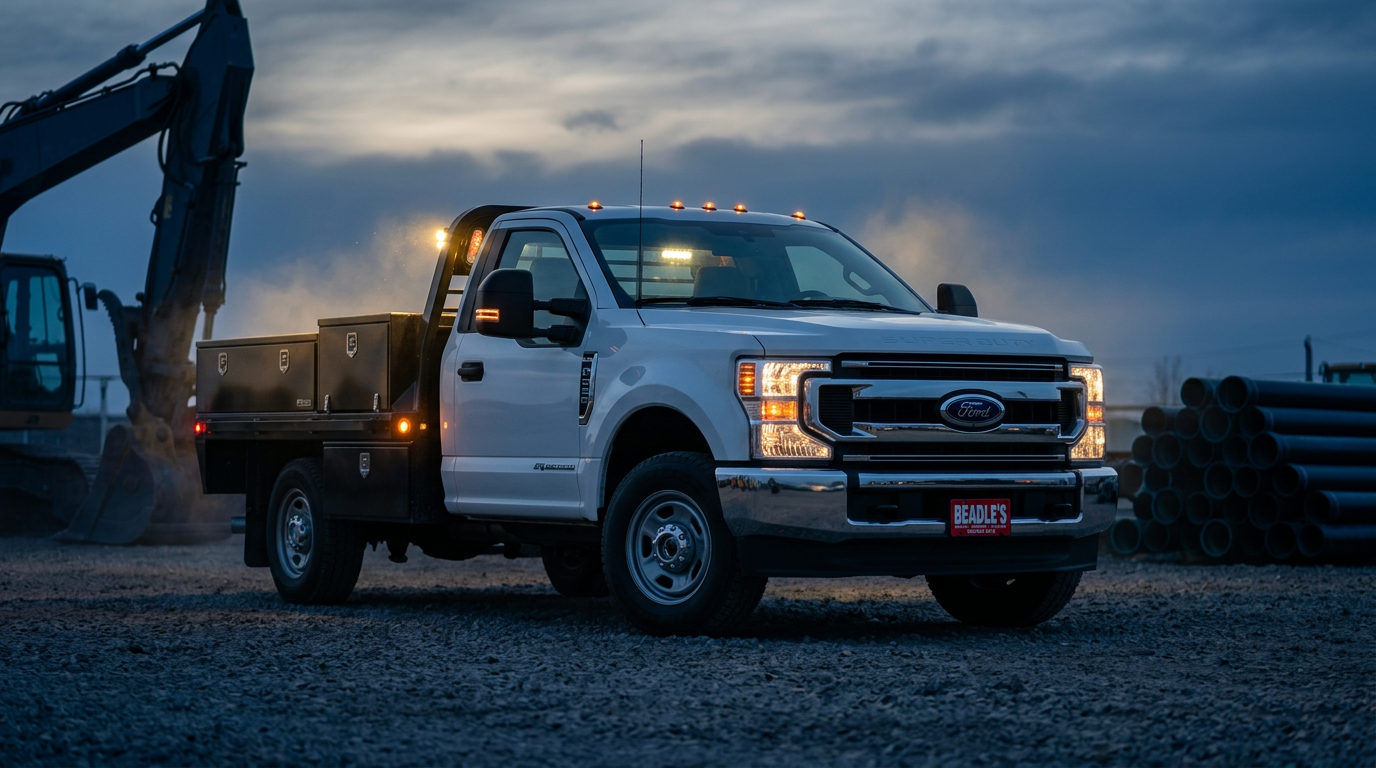
2027 Ford F-350 work truck with a flatbed upfit at a jobsite during blue hour

2027 Ford F-350 Payload & Upfit Guide

Quick Answer The 2027 Ford F-350 carries up to about 7,900 lbs of payload, properly equipped — and the now-standard 7.3L gas V8 is the payload leader because it's lighter than the diesel. A new 8-foot bed / 176-inch wheelbase is available with the High-Output diesel, and available Pro Power Onboard and Smart Hitch add real work capability. Towing gets the headlines, but for a lot of F-350 buyers around Bowdle and Aberdeen, payload is the number that actually matters — what you can carry in the bed or on a work body, day in and day out. This guide covers the 2027 F-350's payload, how cab and bed choices change it, what makes the truck upfit-friendly, and which engine to pick when carrying — not towing — is the priority. Shop F-350s in Stock Get Pre-Approved On This Page What's the 2027 F-350 max payload? How do cab and bed choices change payload? What makes the F-350 upfit-friendly? Which engine is best for payload? How do you build a payload setup? What's the 2027 F-350 max payload? Up to about 7,900 lbs, properly equipped with the 7.3L gas V8 and the heavy-duty payload package. That figure carries over from 2026 — the engine simplification didn't cost the F-350 any carrying capacity. Payload always varies with cab, bed, drivetrain, and single- or dual-rear-wheel setup, so the right way to confirm a specific truck's number is the door-jamb label or the build sheet. One thing worth saying plainly: heavy hauling in the bed eats into towing tongue weight, and vice versa. If you carry and tow at the same time, we'll work the full math so you stay inside the ratings. How do cab and bed choices change payload? Configuration drives payload as much as the engine. A lighter cab and a longer bed generally free up more carrying capacity, while loading up on options adds weight that comes out of payload. Cab: Regular Cab, SuperCab, and Crew Cab — more cab generally means more weight and less payload margin. Bed: longer beds carry more; new for 2027 is an 8-foot bed / 176-inch wheelbase available with the High-Output diesel. Packages: the heavy-duty payload package is what unlocks the ~7,900-lb maximum on the gas V8. SRW vs. DRW: dual-rear-wheel trucks generally carry more for the heaviest work; SRW stays easier to live with. What makes the F-350 upfit-friendly? The F-350's heavy-duty frame and payload make it a natural base for work bodies — flatbeds, utility/service bodies, and other upfits added through a body company. On the truck itself, available Pro Power Onboard turns it into a jobsite generator with onboard outlets, and available Smart Hitch helps you load to the correct tongue weight. From the Beadle Ford Lot For our farm and contractor buyers, payload is the spec they should be checking first and often don't. We've seen folks size up for towing they rarely do, then run out of payload carrying tools, fuel, and a slide-in load every day. We build the truck around what's actually in the bed. Which engine is best for payload? The 7.3L gas V8 — it carries the F-350's highest payload because it's lighter than the diesel, and for 2027 it's standard on every trim. If carrying is your priority and you tow only occasionally, the gas is both the higher-payload and lower-cost choice. The High-Output diesel is about torque for heavy, frequent towing, not maximum payload. Our Recommendation If you carry heavy more than you tow heavy, build a 7.3L gas F-350 with the heavy-duty payload package and the cab/bed that fits your load — that's the highest-payload, best-value path for 2027. Add a work body or Pro Power Onboard as the job needs. Weigh it against the towing side in our 2027 engine comparison. How do you build a payload setup? Work from the load, in five steps: Add up what you carry daily — tools, fuel, materials, a slide-in or service body, and passengers. Pick the 7.3L gas for maximum payload (or the diesel if heavy towing also matters). Choose cab and bed to balance payload margin with the space you need. Add the heavy-duty payload package and any upfit-supporting options (Pro Power Onboard, prep packages). Confirm the exact payload on the build sheet before you order, and account for any work body's weight. Key Takeaways 2027 F-350 payload: up to ~7,900 lbs with the 7.3L gas and heavy-duty payload package. The gas V8 is the payload leader — lighter than the diesel — and it's now standard. New 8-ft bed / 176-in wheelbase is available with the High-Output diesel. Available Pro Power Onboard and Smart Hitch add jobsite power and load guidance. Build around the load in the bed; confirm exact payload on the door-jamb label or build sheet. Frequently Asked Questions What is the max payload of the 2027 Ford F-350? Up to about 7,900 lbs, properly equipped with the 7.3L gas V8 and the heavy-duty payload package. It carries over from 2026 and varies with cab, bed, drivetrain, and single- or dual-rear-wheel configuration — confirm a specific truck on the door-jamb label or build sheet. Which engine has the most payload? The 7.3L gas V8 — it's lighter than the diesel, so more weight is available for the bed. For 2027 it's standard on every trim, making it both the payload leader and the lower-cost choice. Can I put a flatbed or service body on a 2027 F-350? Yes — the F-350's heavy-duty frame and payload make it a common base for flatbed, utility, and service-body upfits done through a body company. We can help you spec a truck that supports the upfit you have in mind and account for the body's weight in your payload. What is Pro Power Onboard? An available onboard generator system that provides power outlets to run tools and equipment directly from the truck — handy on a jobsite or a remote ranch task. Available Smart Hitch also helps you load a trailer to the correct tongue weight. Does the 2027 F-350 have a longer bed option? Yes — new for 2027 is an 8-foot bed / 176-inch wheelbase available with the 6.7L High-Output diesel, adding deck length for haulers who need it. Bed and cab options affect both payload and overall length, so we'll match them to your use. Quick Answers: 2027 F-350 Payload & Upfit One-line answers to the follow-up questions buyers ask next. Max payload? Up to ~7,900 lbs, properly equipped. Which engine for payload? The 7.3L gas V8 (lighter = more payload). Is the gas standard now? Yes, on every trim. Longest bed? New 8-ft bed / 176-in wheelbase with the HO diesel. Can I upfit a work body? Yes — flatbed, utility, and service bodies via a body company. Onboard generator? Yes — available Pro Power Onboard. Load-assist feature? Available Smart Hitch for correct tongue weight. SRW or DRW for payload? DRW carries more for the heaviest work; SRW is easier daily. How do I confirm a truck's payload? Door-jamb label or the build sheet. Carry and tow at once? We'll work the full math to keep you in the ratings. Keep Researching The complete 2027 Ford F-350 Super Duty overview — specs, towing, trims, and how to order. 2027 F-350 for commercial & fleet — work-trim ordering and upfit-ready options. 2027 F-350 SRW vs. DRW — the rear-wheel choice that affects carrying capacity. 2027 F-350 towing guide — when towing tongue weight and payload interact. My Take on Payload & Upfit In my experience, payload is the spec that quietly makes or breaks a work truck. Plenty of buyers spec for towing and then run tight on what they can actually carry every day. For 2027, the now-standard 7.3L gas makes the highest-payload build the value build too — which is a nice change. Tell me what you haul and whether you're adding a work body, and I'll build the right 2027 F-350 around the load. Stop in at Beadle Ford in Bowdle or reach out anytime. Shop F-350s in Stock Get Pre-Approved About the Author Lexy Tabbert — Beadle Ford, Bowdle, SD Lexy Tabbert is the Director of Sales and Marketing at Beadle Ford in Bowdle, South Dakota. She covers Ford vehicles, trim comparisons, and buyer guidance — helping families, ranchers, and ag operators across the region find the right truck and configuration for their needs. Learn more about Lexy.

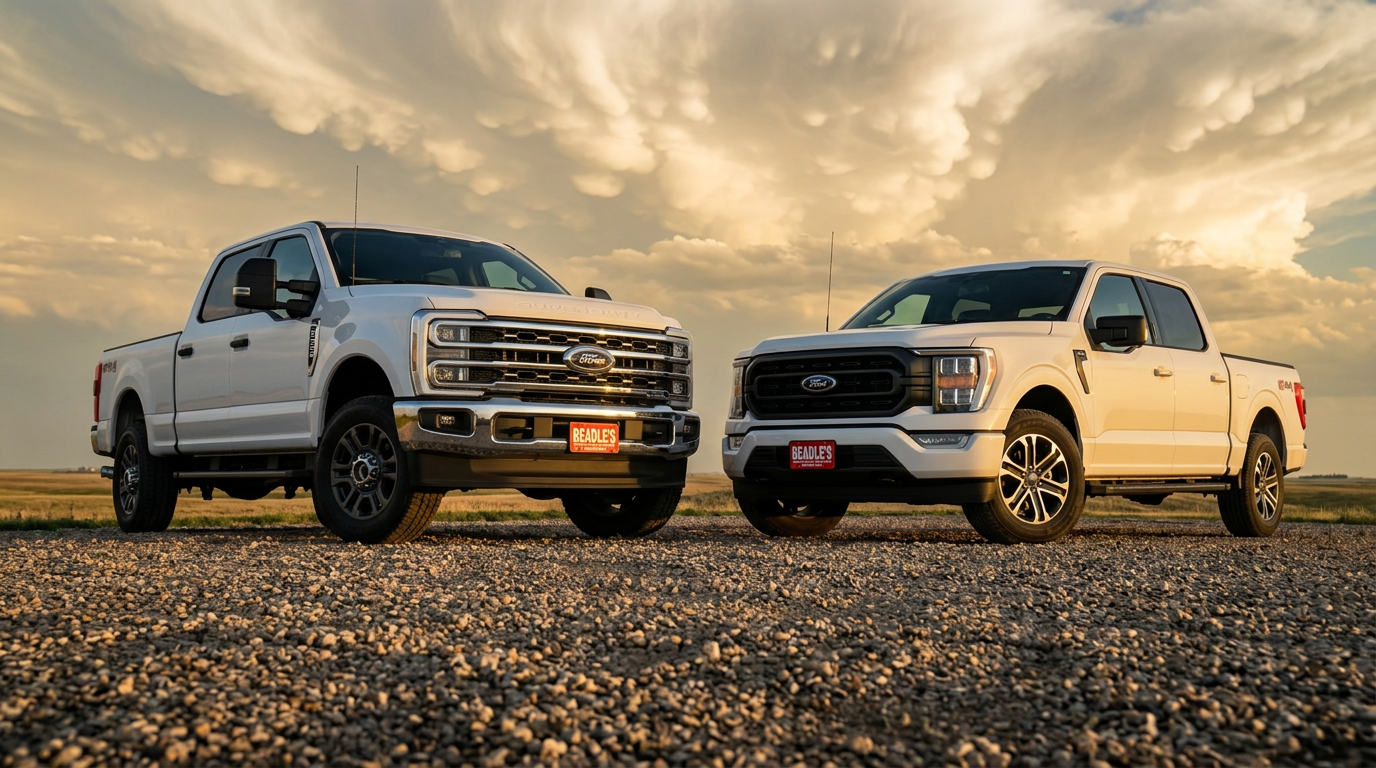
2027 Ford F-250 beside a Ford F-150 in South Dakota

2027 Ford F-150 vs. F-250: Do You Need a Super Duty?

Quick Answer Choose the 2027 Ford F-150 for light, occasional towing and the best daily ride and fuel economy. Step up to the F-250 Super Duty when you tow a fifth-wheel or gooseneck, haul heavy regularly, or want capability well beyond the 2026 F-150's 13,500-lb maximum. The 2027 Ford F-150 and F-250 look like cousins, but they're built for different jobs. The F-150 is a half-ton tuned for everyday driving and lighter loads; the F-250 Super Duty is a three-quarter-ton built to tow and haul heavy. The real question isn't which is "better" — it's whether you actually need Super Duty capability. This guide compares the two on towing and payload, ride and fuel, and daily livability, then helps you match the truck to how often and how heavy you tow around central South Dakota. Shop F-250s in Stock Reserve a 2027 F-250 Get Pre-Approved On This Page How do the 2027 F-150 and F-250 differ? Towing and payload: where's the real gap? Ride, fuel, and daily livability compared Which truck fits your towing frequency? How do the 2027 F-150 and F-250 differ? The F-150 is a half-ton; the F-250 is a three-quarter-ton Super Duty. That means heavier frames and axles, beefier brakes and suspension, and a fifth-wheel/gooseneck-ready bed on the F-250 — built for towing and hauling at weights a half-ton isn't rated for. The F-150 counters with a lighter, more refined platform: a smoother unloaded ride, better fuel economy, more engine and trim variety, and easier maneuvering. Think of the F-150 as the do-everything daily truck and the F-250 as the dedicated tow-and-haul truck that's still comfortable to live with. Towing and payload: where's the real gap? On conventional towing, the 2026 F-150 is rated up to 13,500 lbs (Ford has not published 2027 F-150 towing yet), while the 2027 F-250 reaches up to 18,200 lbs with the gas V8 and up to 22,000 lbs with the High-Output diesel. The bigger difference is fifth-wheel and gooseneck capability: the F-250 adds up to 23,000 lbs gooseneck, well beyond the F-150's fifth-wheel and gooseneck ratings (up to 11,700 lbs on a properly equipped 2026 F-150). Payload tells the same story — the F-250 carries up to about 3,700 lbs versus the F-150's lighter-duty rating. If you're hauling a fifth-wheel camper, a loaded gooseneck, or heavy material in the bed, that's Super Duty territory. If your trailer is a boat, a small utility trailer, or a bumper-pull under the F-150's limit, the half-ton has it covered. Capability (properly equipped) 2027 F-150 2027 F-250 Max conventional towing Up to 13,500 lbs (2026 rating) Up to 22,000 lbs Fifth-wheel / gooseneck Up to 11,700 lbs (2026 rating, properly equipped) Up to 23,000 lbs gooseneck Class Half-ton Three-quarter-ton (Super Duty) Best at Daily driving, light towing Heavy and frequent towing F-250 figures verified for 2027; F-150 maximum is its top conventional rating with the appropriate engine and tow package and varies by configuration. Ride, fuel, and daily livability compared Unloaded, the F-150 rides smoother and uses less fuel — its lighter-duty suspension and lineup of efficient engines make it the easier everyday truck. The F-250's heavy-duty suspension is firmer when the bed is empty, and a big gas V8 or diesel isn't sipping fuel. Flip a heavy trailer onto the back, though, and the picture changes: the F-250 stays planted and composed where a half-ton starts to feel the load. So the "better daily driver" depends entirely on whether you're usually empty or usually towing. For a truck that mostly runs errands and tows light, the F-150 wins comfort and fuel; for a truck that earns its keep with a trailer, the F-250's manners under load matter more. Which truck fits your towing frequency? Match the truck to how often and how heavy you tow. If you tow light loads occasionally and want the best ride and fuel economy, the F-150 is the smarter half-ton. If you tow a fifth-wheel or gooseneck, haul heavy in the bed, or tow with any regularity, the F-250 is built for it. Our Recommendation For buyers towing under about 13,000 lbs occasionally — a boat, a small camper, a utility trailer — the 2027 F-150 is the better daily truck. The moment a fifth-wheel, a gooseneck, or regular heavy towing enters the picture, the 2027 F-250 is the right call — it tows up to 22,000 lbs conventional and 23,000 lbs gooseneck, well past anything a half-ton should attempt. Choose the F-150 if you tow light and occasionally and want the best ride, fuel economy, and price. Choose the F-250 if you tow a fifth-wheel or gooseneck, haul heavy, or tow regularly enough to want the capability. From the Beadle Ford Lot The cleanest way we help people decide is the trailer question: if it's a gooseneck or a fifth-wheel, the conversation is over — that's a Super Duty. If it's a bumper-pull under the F-150's rating and the truck mostly runs empty, the half-ton usually makes them happier day to day. The trailer almost always answers it. Key Takeaways The F-150 is a half-ton; the F-250 is a three-quarter-ton Super Duty built for heavier towing and hauling. The 2026 F-150 is rated up to 13,500 lbs conventional (2027 F-150 ratings are not published yet); the 2027 F-250 reaches up to 22,000 lbs conventional and 23,000 lbs gooseneck. Fifth-wheel and gooseneck towing is Super Duty territory — not a half-ton job. The F-150 rides smoother and uses less fuel unloaded; the F-250 is more composed under a heavy trailer. Let the trailer decide: light bumper-pull and mostly empty means F-150; gooseneck, fifth-wheel, or frequent heavy towing means F-250. Frequently Asked Questions Do I need an F-250, or is an F-150 enough? If you tow light loads occasionally, the F-150 is enough and the better daily driver. If you tow a fifth-wheel or gooseneck, haul heavy in the bed, or tow regularly, you need the F-250's capability — up to 22,000 lbs conventional and 23,000 lbs gooseneck. How much more can the F-250 tow than the F-150? On conventional towing, the 2027 F-250 reaches up to 22,000 lbs versus up to 13,500 lbs for the 2026 F-150 (2027 F-150 ratings are not published yet) — roughly 8,500 lbs more. The F-250 also adds fifth-wheel and gooseneck towing up to 23,000 lbs, which the F-150 isn't designed for. Can an F-150 tow a fifth-wheel or gooseneck? Fifth-wheel and gooseneck towing is a Super Duty job, not a half-ton strength. For that kind of trailer you want the F-250, which is built with the frame, axles, and bed rating to handle it — up to 23,000 lbs gooseneck, properly equipped. Is the F-150 a better daily driver than the F-250? Unloaded, yes — the F-150 rides smoother and uses less fuel. But under a heavy trailer the F-250 is more composed. The better daily driver depends on whether your truck spends most of its time empty or towing. Quick Answers: F-150 vs. F-250 One-line answers to the follow-up questions buyers ask next. Which is the half-ton? The F-150; the F-250 is a three-quarter-ton. F-150 max towing? Up to 13,500 lbs conventional on the 2026 F-150, properly equipped; 2027 ratings are not published yet. F-250 max towing? Up to 22,000 lbs conventional, 23,000 lbs gooseneck. Which rides better empty? The F-150. Which uses less fuel? The F-150. Which tows a fifth-wheel? The F-250 — that's Super Duty territory. Which is the better daily driver? The F-150 if you're mostly empty; the F-250 if you tow heavy. Which has more payload? The F-250, up to about 3,700 lbs. Gas or diesel in the F-250? Gas for occasional towing; diesel for heavy, frequent hauling. Where can I compare them? Beadle Ford in Bowdle, SD. Keep Researching The complete 2027 Ford F-250 Super Duty overview — trims, towing, specs, and inventory Is an F-250 enough truck? — or do you need to step up to an F-350 2027 F-250 for recreational towing — campers and fifth-wheels on the F-250 2027 F-250 trims for the everyday buyer — where the value lands My Take on F-150 vs. F-250 I don't push people up to a Super Duty they don't need — if a buyer tows a boat or a small camper a few times a summer and the truck is otherwise empty, the F-150 is the one I'd put my own family in. But I also don't want anyone underbuying. The minute someone mentions a gooseneck or a fifth-wheel, the F-250 is the honest answer, and trying to make a half-ton do that job is how people end up unhappy and unsafe. Tell me your heaviest trailer and how often you pull it and I'll tell you straight which truck you need. Beadle Ford in Bowdle sells both, and when both are in stock you're welcome to drive them back to back. Shop F-250s in Stock Reserve a 2027 F-250 Get Pre-Approved About the Author Lexy Tabbert — Beadle Ford, Bowdle, SD Lexy Tabbert is the Director of Sales and Marketing at Beadle Ford in Bowdle, South Dakota. She covers Ford vehicles, trim comparisons, and buyer guidance — helping families, ranchers, and ag operators across the region find the right truck and configuration for their needs. Learn more about Lexy.

2027 Ford Expedition Platinum in Nocturnal Blue Metallic on a South Dakota highway at golden hour, Beadle Ford Bowdle SD

2027 Ford Expedition Trims Explained: How to Pick From Five Trims and Four Platinum Packages

Quick Answer The 2027 Ford Expedition offers four retail trims — Active, Tremor, Platinum, and King Ranch — plus four Platinum packages and the new 30th Anniversary Appearance Package. Tremor is the only trim with the 440-hp High Output V6 standard; Active Touring is the value sweet spot for most families. Picking a 2027 Expedition trim is really two decisions, not one. First you choose the trim — Active, Tremor, Platinum, or King Ranch. Then, if you land on Platinum, you choose again: base Platinum or one of four packages that change the engine, the look, and the tech in meaningful ways. This guide walks through both decisions the way we walk through them with buyers at Beadle Ford in Bowdle — who each trim is actually built for, how the Platinum packages differ, which colors pair with which trims, and where the trade-offs genuinely matter for driving in north-central South Dakota. Search Available Expedition Inventory Get Pre-Approved On This Page What trims does the 2027 Ford Expedition come in? Is the Active trim enough Expedition for most buyers? Who is the Expedition Tremor actually built for? How do the four Platinum packages differ? When does King Ranch make more sense than Platinum? Which colors can you get on each 2027 trim? Which 2027 Expedition trim should you buy? What trims does the 2027 Ford Expedition come in? Retail buyers choose from four trims: Active (in Select or Touring form), Tremor, Platinum, and King Ranch. A fifth trim, XL, exists only for fleet orders, so it won’t appear on a retail order sheet. Every 2027 Expedition runs a twin-turbo 3.5L EcoBoost V6 with a 10-speed automatic. The standard engine is rated at 400 horsepower and 480 lb-ft of torque; the High Output version raises that to 440 horsepower and 510 lb-ft, and comes standard on Tremor or with two of the Platinum packages. Both standard-length Expedition and extended-length Expedition MAX are offered on every retail trim except Tremor, which is standard-length only. Trim Engine MAX Available Best For Active (Select / Touring) 400 hp standard V6 Yes Families who want the full-size space and tech without the luxury price Tremor 440 hp High Output (standard) No — standard length, 4x4 only Gravel, pasture, snow, and trail driving with three rows intact Platinum 400 hp standard; 440 hp with Stealth Performance or Ultimate Yes — 4x2 MAX new for 2027 Luxury buyers who want to tailor the build with packages King Ranch 400 hp standard V6 Yes Western luxury — Del Rio leather, bronze accents, everything standard XL 400 hp standard V6 Yes Fleet orders only — not available at retail Maximum towing across the lineup is up to 9,600 lbs on 4x4 models with the Heavy-Duty Trailer Tow Package, properly equipped, per Ford’s official 2027 figures. Is the Active trim enough Expedition for most buyers? For most families, yes — and Active Touring in particular is where the equipment-per-dollar math peaks in the 2027 lineup. Active Select is the retail entry point, and it already includes the equipment that defines this Expedition generation: the Ford Digital Experience with a 24" panoramic display and 13.2" center screen, embedded Google Maps and Assistant, wireless Apple CarPlay and Android Auto, Ford Co-Pilot360 Assist 2.0 with adaptive cruise and Pro Trailer Backup Assist, and true 8-passenger seating with a second-row bench. Cloth seats and fewer comfort features are the trade-off. Active Touring layers on the comfort items South Dakota buyers actually use: heated front seats and heated steering wheel, ActiveX seat trim, power-folding second-row captain’s chairs, Pro Power Onboard 400W, rain-sensing wipers, a power tilt/telescoping column with memory, and a 90-day BlueCruise hands-free driving trial on retail orders. New for 2027, Touring can also add the Family Travel Package — a bundle built around road trips, with the power panoramic vista roof, 360-Degree Zone Lighting, a flex powered console, third-row power-folding flexible seating, a digital device holder with USB ports in the front seatbacks, and remote start. The honest trade-off: Active cannot be optioned to the 440-hp High Output engine, and the 22-speaker B&O Play Unleashed audio stays exclusive to higher trims. If those two things don’t matter to you, it’s hard to out-argue a Family Travel Package Touring as the family pick. Who is the Expedition Tremor actually built for? The Tremor is for the buyer whose “driveway” is a gravel section road — it’s the only 2027 Expedition trim with the 440-hp High Output V6, a two-speed transfer case, and an electronic locking rear differential all standard. Beyond the drivetrain, Tremor gets a raised off-road suspension, modified Raptor-style front and transmission skid plates with fuel tank underbody protection, all-terrain tires on 18" wheels, amber front tow hooks, seven drive modes including Rock Crawl, and Trail Control with Trail One Pedal Drive and Trail Turn Assist. It is 4x4 only and standard-length only — there is no Tremor MAX. What surprises people is how little you give up inside: leather-trimmed heated and ventilated front seats, the 22-speaker B&O Play Unleashed system, a power panoramic vista roof, and Pro Power Onboard 400W are all standard. The real limitations are the two body-style constraints — no MAX cargo length, no 4x2 price break — and a firmer ride on pavement than a Platinum on all-season tires. How do the four Platinum packages differ? Base Platinum is the luxury anchor of the lineup; the four packages then push it in different directions — more audio and convenience, a blacked-out look, more power, or all of it at once. Every Platinum starts with leather-trimmed heated and ventilated front seats, heated second-row captain’s chairs, 20" Ebony Bright Machined wheels, 360-Degree Zone Lighting, a 10-speaker B&O sound system, and the full Digital Experience. From there: Driver’s Package — upgrades audio to the 22-speaker B&O Play Unleashed with Beosonic sound spaces and adds a wireless charging pad. The pick if sound quality is your luxury. Stealth Appearance Package — the blacked-out treatment: dark exterior trim and wheels with a required Black Onyx interior. Appearance only — the standard 400-hp engine stays. Stealth Performance Package — the Stealth look plus the 440-hp High Output V6, 4x4 only, with the Heavy-Duty Trailer Tow Package standard. The driver’s pick of the Platinum family. Platinum Ultimate Package — the everything build: High Output V6, BlueCruise 1-Year + 90-Day plan, the Driver’s Package content, and 4x4 — and for 2027 it’s the only Platinum that keeps the chrome roof rails, lit grille bar, and lit tailgate applique (base Platinum goes black-trimmed this year). A fifth option, the new 30th Anniversary Appearance Package, sits apart from these four: a commemorative blacked-out spec on Platinum with exclusive Blue Ember Metallic paint and a required Salt Crystal Gray interior. It cannot be combined with Stealth Appearance, Stealth Performance, or Platinum Ultimate — and it keeps the standard 400-hp engine. The full breakdown lives in the 30th Anniversary Package guide. Our Recommendation If you’re going Platinum and you tow, order the Stealth Performance Package: it’s the least expensive route to the 440-hp / 510 lb-ft High Output V6 with Heavy-Duty Trailer Tow standard. If you want hands-free highway driving too, step up to Platinum Ultimate and the BlueCruise year is included. When does King Ranch make more sense than Platinum? Choose King Ranch when you want the flagship spec without building it from packages — and when the western character is the point. King Ranch comes one way: loaded. Del Rio leather on all three rows with the Mesa Antique armrest, 22" Sinister Bronze Diamond Cut wheels, Sinister Bronze grille bars with signature lighting, power-deployable running boards, a lit tailgate applique, the 22-speaker B&O Unleashed system, a wireless charging pad, and the BlueCruise 1-Year + 90-Day plan — all standard. There are no decision points beyond body length and drive wheels. The honest catch for 2027: King Ranch keeps the 400-hp standard V6 — the High Output engine is not offered on it. A Platinum Ultimate out-powers a King Ranch while matching most of its equipment. If the 440-hp engine matters more to you than Del Rio leather, that’s your answer; if it’s the other way around, King Ranch is the better one-decision buy. Which colors can you get on each 2027 Expedition trim? Not every 2027 color is available on every trim — and the three new paints each come with rules. Blue Ember Metallic is locked to the 30th Anniversary Package, Marsh Gray is reserved for Tremor and the Stealth packages, and the rest of the palette spreads across the retail lineup. 2027 Color Availability Agate Black Metallic All retail trims (standard, no-cost) Bronze Fire Metallic NEW Most retail trims — not offered with the 30th Anniversary Package Nocturnal Blue Metallic NEW Most retail trims — not offered with the 30th Anniversary Package Blue Ember Metallic NEW 30th Anniversary Package only — no other configuration Star White Metallic Tri-Coat Active, Tremor, Platinum, King Ranch Dark Matter Gray Metallic Most retail trims Glacier Gray Metallic Tri-Coat Most retail trims — not offered with the 30th Anniversary Package Marsh Gray Tremor, plus Platinum with Stealth Appearance or Stealth Performance Oxford White Fleet orders only for 2027 Two familiar colors are gone for 2027 — Space Silver Metallic and Stone Blue Metallic are discontinued. To see every color on the vehicle, the complete 2027 Ford Expedition overview has the full photo gallery of the 2027 palette. Which 2027 Expedition trim should you buy? Match the trim to the job, not the badge. Here’s the short version we give buyers on the lot: Active Touring is right for you if you want the most family equipment per dollar — add the Family Travel Package for road-trip duty. Tremor is right for you if gravel, pasture, snow, or Lake Oahe shoreline is part of your normal week and you want the 440-hp engine standard. Platinum with Stealth Performance is right for you if you want luxury and the High Output engine for serious towing. Platinum Ultimate is right for you if you want everything — power, BlueCruise included, premium audio — in one package. King Ranch is right for you if you want the flagship western spec with zero option-sheet homework. The 30th Anniversary Package is right for you if Blue Ember Metallic and the commemorative spec are the draw — and you can live without the High Output engine. From the Beadle Ford Lot The most common trim conversation we have is Platinum versus Platinum Ultimate — and it almost always comes down to one question: do you tow enough to want the 440-hp engine? Buyers who answer yes rarely regret the step up; buyers who answer no are usually happier putting that money toward the Family Travel Package on an Active Touring instead. Key Takeaways Four retail trims for 2027: Active (Select/Touring), Tremor, Platinum, and King Ranch — XL is fleet-only. The 2027 Expedition Tremor is the only trim with the 440-hp High Output V6 standard; Platinum can add it via the Stealth Performance or Platinum Ultimate package. Blue Ember Metallic is available on exactly one 2027 Expedition configuration: the Platinum 30th Anniversary Package. MAX extended length is offered on every retail trim except Tremor, and MAX Platinum adds a 4x2 option for the first time in 2027. Properly equipped 4x4 models with Heavy-Duty Trailer Tow are rated to tow up to 9,600 lbs per Ford’s official 2027 figures. Frequently Asked Questions How many trims does the 2027 Ford Expedition have? Five total, four of them retail: Active (offered as Select or Touring), Tremor, Platinum, and King Ranch. The fifth, XL, is a fleet-only configuration not sold to retail buyers. Which 2027 Expedition trims get the 440-hp High Output engine? The Tremor includes the 440-hp / 510 lb-ft High Output 3.5L EcoBoost V6 standard. On Platinum, it comes with the Stealth Performance Package or the Platinum Ultimate Package, both 4x4 only. Active and King Ranch use the 400-hp standard engine. What is the difference between Active Select and Active Touring? Select is the entry version with cloth seats and 8-passenger seating. Touring adds heated front seats and steering wheel, ActiveX trim with power-folding second-row captain's chairs, Pro Power Onboard 400W, a 90-day BlueCruise trial on retail orders, and the option of the new Family Travel Package. Can you get the 2027 Expedition Tremor in the MAX body style? No. The 2027 Expedition Tremor is standard-length and 4x4 only. Every other retail trim — Active, Platinum, and King Ranch — can be ordered as an extended-length Expedition MAX. What colors changed for the 2027 Ford Expedition? Three paints are new: Bronze Fire Metallic, Nocturnal Blue Metallic, and Blue Ember Metallic (30th Anniversary Package only). Space Silver Metallic and Stone Blue Metallic are discontinued, and Oxford White moves to fleet orders only. Does the King Ranch come with BlueCruise? Yes — King Ranch includes the BlueCruise 1-Year + 90-Day plan standard, as does the Platinum Ultimate Package. Active Touring includes a 90-day trial on retail orders, and other trims can add BlueCruise plans at order time. Quick Answers: 2027 Expedition Trims One-line answers to the follow-up questions buyers ask next. What's the cheapest 2027 Expedition trim? Active Select is the retail entry point. What's the top 2027 Expedition trim? King Ranch is the flagship; Platinum Ultimate is the most powerful luxury build. Is the Tremor 4x2 or 4x4? 4x4 only, with a two-speed transfer case and locking rear differential. Which trims seat 8? Active Select seats 8 standard; Touring, Tremor, and Platinum can seat 8 with the optional second-row bench. Which trim has the best audio? The 22-speaker B&O Play Unleashed is standard on Tremor and King Ranch, and comes to Platinum with the Driver's, Stealth Performance, or Ultimate package. Can the Platinum be 4x2? Yes — and for 2027, MAX-length Platinum is available in 4x2 for the first time. Does every trim tow 9,600 lbs? No — the 9,600-lb max requires a 4x4 with the Heavy-Duty Trailer Tow Package, properly equipped; 4x2 models are rated up to 6,000–6,300 lbs. What interior does the 30th Anniversary Package require? Salt Crystal Gray leather — no other interior is offered with it. Is there a hybrid 2027 Expedition? No — the 3.5L EcoBoost V6 family is the only powertrain. Can fleet buyers get the XL at retail? No — XL is fleet-only for 2027. Keep Researching The complete 2027 Ford Expedition overview — every trim, color photo, spec, and how to buy 2027 Ford Expedition: What’s New — every change from 2026, in one place The 30th Anniversary Appearance Package — every included item, plus the Blue Ember paint story The 2027 Expedition Tremor, explained — the off-road hardware in detail My Take on the 2027 Expedition Lineup In my experience, the buyers who end up happiest with their Expedition are the ones who started with the job and worked backward to the trim. Around Bowdle that usually sorts people fast: the family running kids to Aberdeen and back lands on an Active Touring, the ranch family that lives on gravel gravitates to the Tremor, and the buyer replacing a loaded 2022 or 2023 Expedition is usually deciding between Platinum Ultimate and King Ranch — which is really the engine-versus-leather question. If you’re not sure which side of those lines you fall on, stop in or call with your best guess — we’ll walk the window sticker of what is on the lot together before anything is decided. Search Available Expedition Inventory Get Pre-Approved About the Author Lexy Tabbert — Beadle Ford, Bowdle, SD Lexy Tabbert is the Director of Sales and Marketing at Beadle Ford in Bowdle, South Dakota. She covers Ford vehicles, trim comparisons, and buyer guidance — helping families, ranchers, and ag operators across the region find the right truck and configuration for their needs. Learn more about Lexy.

2026 Ford F-150 at rural farm worksite

2026 Ford F-150 Engine Options Guide

The 2026 Ford F-150 offers six distinct engine options, ranging from efficient EcoBoost configurations to a full hybrid system and high-performance Raptor variants. Each powertrain is engineered for a different balance of towing strength, daily drivability, and long-term ownership priorities. This guide breaks down each available powertrain and explains who it makes the most sense for. For full trim availability, drivetrain pairings, and feature differences, reference the complete 2026 Ford F-150 overview. Contact Beadle Ford Table of Contents How Many Engines Are Available? Is the 2.7L EcoBoost Enough? Does the 5.0L V8 Still Make Sense? Why Choose the 3.5L EcoBoost? Is the PowerBoost Hybrid Worth It? What About Raptor Engines? Which Engine Is Best for South Dakota? How to Choose the Right Engine How Many Engine Options Are Available on the 2026 F-150? The 2026 F-150 offers six distinct powertrains, including five gas engines and one full hybrid system. All are paired with a 10-speed automatic transmission and differ in torque delivery, towing capability, and overall driving character. 2.7L EcoBoost V6 5.0L V8 3.5L EcoBoost V6 3.5L PowerBoost Full Hybrid 3.5L EcoBoost High Output (Raptor) 5.2L Supercharged V8 (Raptor R) Is the 2.7L EcoBoost Enough for Most Drivers? Yes — for many drivers, the 2.7L EcoBoost provides more than enough capability. When properly equipped, it can tow up to 8,400 pounds while delivering strong low-end torque for everyday driving. This engine works well for commuting, moderate trailer use, and rural driving without stepping into maximum towing configurations. Does the 5.0L V8 Still Make Sense in 2026? The 5.0L V8 remains a popular option for buyers who prefer naturally aspirated power delivery and traditional V8 sound and feel. When properly equipped, it can tow up to 12,800 pounds. For many drivers, the V8 represents straightforward performance and proven durability. Why Choose the 3.5L EcoBoost? The 3.5L EcoBoost delivers the highest conventional towing rating in the 2026 lineup — up to 13,500 pounds when properly equipped with the Tow/Haul Package and Max Tow Axle. It balances heavy-duty capability with strong highway performance, making it ideal for long-distance towing. For axle ratios, required packages, and configuration specifics, see the detailed 2026 F-150 Towing Guide. Is the 3.5L PowerBoost Hybrid Worth It? The PowerBoost hybrid combines twin-turbo power with electric motor assistance. When properly equipped, it can tow up to 11,600 pounds. It also enables available Pro Power Onboard functionality, supplying electricity for job sites or camping setups. Long-term cost considerations between hybrid and gas configurations are explored further in our F-150 Ownership & Long-Term Costs Guide. What About Raptor and Raptor R Engines? The Raptor’s 3.5L High Output EcoBoost focuses on high-speed off-road performance, offering up to 8,200 pounds of towing capability. The Raptor R’s supercharged 5.2L V8 emphasizes extreme performance and can tow up to 8,700 pounds. Which Engine Is Best for South Dakota Driving? The right engine depends on how the truck will actually be used. Daily driving + moderate towing: 2.7L EcoBoost Traditional V8 preference: 5.0L V8 Maximum conventional towing: 3.5L EcoBoost Efficiency + onboard power: PowerBoost Hybrid Off-road performance focus: Raptor or Raptor R Engine choice becomes clearer when considered within the full 2026 Ford F-150 overview, including trim and drivetrain pairings. How to Choose the Right F-150 Engine Determine the heaviest trailer you realistically plan to tow. Confirm required equipment for maximum ratings. Consider how often you drive long highway distances. Evaluate winter traction needs. Balance capability with daily comfort. Conclusion In my experience, the right engine choice becomes much clearer once buyers focus on how often they truly need maximum towing versus how often they’ll use the truck for everyday driving. The strongest number on paper isn’t always the best fit — the best configuration is the one that matches how the truck will actually be used. Review current 2026 Ford F-150 availability at Beadle Ford or contact us to compare engine configurations in person. About the Author Lexy Tabbert provides research-driven vehicle guides and in-depth truck insights for drivers across South Dakota and the surrounding region.

2026 Ford F-350 Packages & Trims

Quick Answer The 2026 Ford F-350 comes in five trims — XL, XLT, Lariat, King Ranch, and Platinum — but towing and payload come from configuration (engine, axle, SRW/DRW), not trim. Packages like Snow Plow Prep and the 40K Gooseneck Tow Package refine capability; trims set comfort and technology. Choosing a 2026 Ford F-350 Super Duty isn't just about picking a trim badge — it's about building a truck that matches your workload, towing reality, and long-term ownership plans. Trims set your comfort level and available features; packages refine capability, appearance, and towing support. But configuration — cab, bed, drivetrain, engine, and single- vs. dual-rear-wheel — often decides what you can even select. This guide walks the trim ladder, the packages that actually change how the truck works, and the order to make those decisions in. Shop F-350s in Stock Get Pre-Approved On This Page What are the 2026 F-350 trims, and which fits you? Work-focused vs. premium trims: what changes? Which packages matter most for real-world use? Why does configuration affect package availability? How do you build the right trim & package setup? What are the 2026 F-350 trims, and which fits you? The 2026 F-350 comes in five trims: XL, XLT, Lariat, King Ranch, and Platinum. They climb from work-truck durability to full luxury — but here's the key point: a higher trim does not add towing capacity. Capability comes from configuration; trim sets comfort, technology, and styling. XL is right for you if the truck is a tool — fleet, jobsite, vinyl floors you can hose out. XLT is right for you if you want work capability plus everyday comfort at the value sweet spot. Lariat is right for you if you spend long hours in the cab and want the 12-inch touchscreen and leather. King Ranch is right for you if you want Western-styled luxury that still works for a living. Platinum is right for you if you want the most modern, tech-forward luxury Super Duty. Work-focused vs. premium trims: what actually changes? Moving up the ladder changes the cab, not the capability. What you're really buying with each step is materials, display size, driver-assist tech, and appearance. Work-focused (XL, XLT): built for durability, upfit readiness, and straightforward operation; a 4.2-inch cluster display on base. Mid-level (Lariat): the volume step — 12-inch center touchscreen with SYNC 4, leather-trimmed seating, and more towing tech. Premium (King Ranch, Platinum): refined materials, a 12-inch digital cluster, and appearance upgrades, all while keeping full heavy-duty capability. If cabin materials and technology are a major factor, that's covered in our 2026 F-350 interior & comfort guide. Which packages matter most for real-world use? Packages are where a working F-350 is really built. The ones that change what the truck can do fall into four buckets: Towing-focused: the 40K Gooseneck Tow Package that unlocks the 40,000-lb maximum, 5th-wheel/gooseneck hitch prep, and trailer camera and brake-control support. Work equipment: Snow Plow Prep Package (computer-selected springs for plow duty) and the Snowplow/Camper Package — frequent adds in our market. Off-road: the Tremor Off-Road Package and traction/underbody hardware for gravel and field work. Appearance: chrome, blacked-out styling, and wheel upgrades through XLT and Lariat premium appearance groups. From the Beadle Ford Lot The package buyers around Bowdle skip most often and regret is Snow Plow Prep — it's a small line item next to the truck, but adding it after the fact is far harder than checking the box up front when you're plowing a ranch yard all winter. Color and finish options are easier to compare in our 2026 F-350 exterior colors & styling guide, and how towing packages interact with configuration is in the 2026 F-350 towing guide. Why does configuration affect package availability? Cab style, bed length, drivetrain, axle ratio, single- or dual-rear-wheel, and engine all influence which trims and packages you can order. The 40,000-lb gooseneck rating, for instance, requires the High-Output diesel in dual-rear-wheel form — so the package depends on the configuration. That's why experienced buyers choose configuration first, then layer trim and packages on top. Our Recommendation For most ranch, farm, and contractor buyers around Bowdle and Aberdeen, we recommend building capability first — engine, SRW vs. DRW, axle, and tow package to match your trailer — then choosing XLT for a work-first value truck or Lariat for the comfort step with the 12-inch screen and leather. King Ranch and Platinum are worth it when the cab is your office; they don't change what you can pull. Compare builds in the 2026 F-350 overview. How do you build the right trim & package setup? Build in this order so capability drives the decision: Define your towing and payload requirements. Choose single- or dual-rear-wheel based on stability needs. Pick the engine that matches your towing frequency. Pick a trim that aligns with your comfort expectations. Add only the packages that directly support how you use the truck — then confirm the exact build before finalizing. Key Takeaways Five trims: XL, XLT, Lariat, King Ranch, Platinum — they set comfort and tech, not towing capacity. Configuration (engine, axle, SRW/DRW) determines capability; the 40,000-lb rating needs the HO diesel DRW. The packages that matter most: 40K Gooseneck Tow, Snow Plow Prep, Tremor Off-Road, and appearance groups. Build capability first, then trim, then packages — around real use, not badge level. Confirm the exact build before finalizing; availability varies by configuration. Frequently Asked Questions What trims does the 2026 Ford F-350 come in? Five: XL, XLT, Lariat, King Ranch, and Platinum. XL and XLT are work-focused; Lariat adds the 12-inch touchscreen and leather; King Ranch and Platinum are luxury trucks that keep full Super Duty capability. Does a higher trim increase towing capacity? Not by itself. Towing capability depends on configuration — engine, axle ratio, drivetrain, and single- or dual-rear-wheel setup — rather than the trim badge. A well-configured XL can out-tow a Platinum that wasn't built for it. Are towing packages available on lower trims? Many towing features can be added on XL and XLT depending on configuration — that's part of why they make strong work trucks. Availability varies by build, so reviewing real inventory or a build sheet confirms exact equipment. Is there a snow plow package on the 2026 F-350? Yes — the Snow Plow Prep Package, which includes computer-selected springs sized for plow duty, plus a Snowplow/Camper Package option. Both are common adds in our market and easier to order up front than to retrofit. What package do I need for maximum towing? The 40K Gooseneck Tow Package, paired with the 6.7L High-Output Power Stroke diesel in dual-rear-wheel form, is what unlocks the F-350's 40,000-lb gooseneck maximum. Without it, gooseneck ratings are lower. Quick Answers: F-350 Trims & Packages One-line answers to the follow-up questions buyers ask next. How many trims are there? Five — XL, XLT, Lariat, King Ranch, and Platinum. Which trim is the value pick? XLT, for work capability plus everyday comfort. Which trim adds the 12-inch screen and leather? Lariat. Do higher trims tow more? No — configuration sets towing, not trim. What unlocks 40,000-lb towing? The 40K Gooseneck Tow Package on the HO diesel DRW. Is there a plow package? Yes — Snow Plow Prep, with springs sized for plowing. Is there an off-road package? Yes — the Tremor Off-Road Package. Can I get appearance upgrades on XLT? Yes — chrome and blacked-out groups are available. What should I choose first? Configuration (engine, axle, SRW/DRW), then trim, then packages. How do I confirm a build's equipment? We verify it against the build sheet before you order. Keep Researching The complete 2026 Ford F-350 Super Duty overview — trims, specs, towing, and inventory in one place. 2026 F-350 towing guide — how tow packages and configuration set your real ratings. 2026 F-350 engine comparison — the gas-vs-diesel decision that drives the rest of the build. 2026 F-350 interior & comfort — what the trim step actually buys you in the cab. My Take on Building a 2026 F-350 In my experience, the best F-350 builds start with capability decisions first and trim decisions second. When configuration, packages, and comfort level are chosen intentionally, the truck feels purpose-built instead of over-equipped — and you're not paying for a badge that doesn't change what you can pull. Tell me how you'll use the truck and I'll help you build it in the right order. Stop in at Beadle Ford in Bowdle or reach out anytime. Shop F-350s in Stock Get Pre-Approved About the Author Lexy Tabbert — Beadle Ford, Bowdle, SD Lexy Tabbert is the Director of Sales and Marketing at Beadle Ford in Bowdle, South Dakota. She covers Ford vehicles, trim comparisons, and buyer guidance — helping families, ranchers, and ag operators across the region find the right truck and configuration for their needs. Learn more about Lexy.

Contact Us

Fill out this form below and we'll contact you shortly
*Required Fields