
Blog

All New Vehicles Bowdle Ford Dealer Bowdle Ford Service
2027 Ford F-350 dually beside a 2027 Ford F-450 dually on a ranch lot at dusk

2027 Ford F-350 vs. F-450: When to Step Up

HERO + QUICK ANSWER + INTRO Quick Answer The 2027 F-350 and F-450 both tow up to 40,000 lbs gooseneck. The F-450 steps up with higher conventional and fifth-wheel ratings (up to 30,000 lbs vs. 28,000), a higher GVWR and payload, 19.5-inch commercial wheels, and the 6.7L High-Output diesel as standard. The F-350 starts with the 7.3L gas, so it's the lower-cost, easier-to-live-with truck that covers most needs. The F-450 is the top of Ford's Super Duty pickup line — but more truck isn't automatically the right truck. For most heavy-haulers around Bowdle and Aberdeen, a dually F-350 is plenty; the F-450 earns its keep in a narrower set of cases. Here's exactly what the F-450 adds over the F-350 for 2027, the trade-offs that come with it, and how to know when stepping up is the right call. TOP CTA Search Available F-350 Inventory Get Pre-Approved TOC On This Page What's the difference between the F-350 and F-450? What does the F-450 give you that the F-350 doesn't? What are the trade-offs of stepping up? When should you step up to an F-450? How do you decide? SECTION 1 — DIFF + TABLE What's the difference between the F-350 and F-450? Both are 1-ton-class Super Dutys that share the same body and the same 40,000-lb gooseneck ceiling. The F-450 is the heavier-duty pickup: higher conventional and fifth-wheel ratings, a higher GVWR and payload, commercial-grade 19.5-inch wheels, and the High-Output diesel as standard equipment. Here's the head-to-head: 2027 F-350 2027 F-450 Standard engine 7.3L gas V8 6.7L High-Output diesel Max gooseneck Up to 40,000 lbs Up to 40,000 lbs Max conventional / 5th-wheel Up to 28,000 lbs (DRW) Up to 30,000 lbs Wheels 17"–20" (SRW or DRW) 19.5" forged commercial (DRW only) Best for Most heavy-haul, daily use, lower cost Maxing conventional/GVWR, commercial running gear Ratings require proper equipment and vary by configuration. 2027 horsepower/torque not yet published by Ford. SECTION 2 — F-450 MORE What does the F-450 give you that the F-350 doesn't? Higher conventional and fifth-wheel ratings — up to 30,000 lbs vs. the F-350 DRW's 28,000. Higher GVWR and payload for the heaviest carrying and upfit work. 19.5-inch forged commercial wheels and traction tires built for sustained heavy loads. The 6.7L High-Output diesel as standard — no need to option up to the heavy-tow engine. Heavier-duty running gear for maximum stability when you're routinely at the top of the range. In short, the F-450 is the truck for buyers who consistently operate where the F-350 leaves little margin. SECTION 3 — TRADE-OFFS + image + RECOMMENDATION What are the trade-offs of stepping up? The F-450's strengths come with costs: a higher purchase price, the diesel as your only standard engine, pricier 19.5-inch commercial tires to replace, a firmer ride, and a wider turning circle that's less convenient in tight yards and lots. For a truck that spends most days well under its limits, that's a lot to pay for headroom you rarely use. Our Recommendation For most heavy-haulers around Bowdle and Aberdeen, a dually F-350 with the High-Output diesel is the right truck — it reaches the same 40,000-lb gooseneck ceiling for less money and lives easier day to day. Step up to the F-450 only if you routinely max the F-350's conventional or GVWR limits, or you specifically want the commercial 19.5-inch running gear. Size it honestly with our 2027 F-350 towing guide. SECTION 4 — WHEN + FIRSTHAND When should you step up to an F-450? Step up when you're genuinely operating at the edge of an F-350: regularly running conventional or fifth-wheel loads near 28,000 lbs, needing the highest GVWR for a heavy upfit, or wanting commercial-grade wheels and tires for sustained heavy-duty use. If that's not you, the F-350 is the smarter buy. From the Beadle Ford Lot We sell far more F-350s than F-450s, and that's the right ratio. The F-450 buyers who are happiest knew exactly why they needed it — a specific commercial load or upfit that maxed an F-350. When someone's stepping up just for bragging rights, we usually steer them back to a dually F-350 that does the job for thousands less. SECTION 5 — DECIDE How do you decide? Four questions settle it: Do your loaded conventional or fifth-wheel trailers regularly approach the F-350's 28,000-lb limit? Do you need a higher GVWR than the F-350 offers for a heavy upfit or payload? Do you want commercial 19.5-inch wheels and tires for sustained heavy use? Are you willing to trade ride comfort, turning ease, and tire cost for that capability? Mostly "no"? A dually F-350 is your truck. Mostly "yes"? The F-450 is worth it. KEY TAKEAWAYS Key Takeaways F-350 and F-450 share the same body and the same 40,000-lb gooseneck ceiling. F-450 adds higher conventional/5th-wheel ratings (30,000 lbs), higher GVWR, and 19.5" commercial wheels. F-450 comes standard with the HO diesel; F-350 starts with the 7.3L gas (lower cost of entry). F-450 trade-offs: price, diesel-only standard, pricier tires, firmer ride, wider turning. Most heavy-haulers are well served by a dually F-350; step up only when you truly max it out. FAQ Frequently Asked Questions What's the difference between the 2027 F-350 and F-450? Both share the same body and a 40,000-lb gooseneck ceiling. The F-450 is the heavier-duty pickup: higher conventional/fifth-wheel ratings (up to 30,000 lbs vs. 28,000), higher GVWR and payload, 19.5-inch commercial wheels, and the 6.7L High-Output diesel as standard. The F-350 starts with the 7.3L gas and is the lower-cost, easier-to-live-with truck. Does the F-450 tow more than the F-350? On gooseneck, both reach up to 40,000 lbs. The F-450's advantage is on conventional and fifth-wheel hitches (up to 30,000 lbs vs. the F-350 DRW's 28,000) and in GVWR — so it matters most if you max those ratings. Does the 2027 F-450 come standard with the diesel? Yes — the 6.7L High-Output Power Stroke diesel is standard on the 2027 F-450, where it's optional on the F-350 (which starts with the 7.3L gas). That's part of why the F-450 carries a higher cost of entry. Is an F-450 harder to live with than an F-350? Generally yes. The F-450 rides firmer, turns wider, and runs 19.5-inch commercial tires that cost more to replace. Those are reasonable trades for buyers who need the capability, but real downsides if you don't. Do most buyers need an F-450 or is an F-350 enough? For most heavy-haulers, a dually F-350 is enough — it reaches the same 40,000-lb gooseneck ceiling for less money. The F-450 is for those who routinely max the F-350's conventional or GVWR limits, or specifically need the commercial running gear. QUICK ANSWERS Quick Answers: F-350 vs. F-450 One-line answers to the follow-up questions buyers ask next. Same gooseneck max? Yes — both up to 40,000 lbs. F-450 conventional max? Up to 30,000 lbs (vs. F-350's 28,000 DRW). F-450 standard engine? The 6.7L High-Output diesel. F-350 standard engine? The 7.3L gas V8. F-450 wheels? 19.5" forged commercial (DRW only). Which costs less? The F-350. Which rides better? The F-350. Which carries more? The F-450 (higher GVWR/payload). Do most buyers need an F-450? No — a dually F-350 covers most needs. How do I decide? Step up only if you max the F-350's conventional/GVWR limits. KEEP RESEARCHING Keep Researching The complete 2027 Ford F-350 Super Duty overview — specs, towing, trims, and how to order. 2027 F-350 towing guide — confirm whether an F-350 covers your loads first. 2027 F-350 SRW vs. DRW — a dually F-350 reaches the 40,000-lb ceiling too. 2027 F-350 payload & upfit — when GVWR is the real reason to step up. CONCLUSION My Take on F-350 vs. F-450 In my experience, the F-450 is the right truck less often than people assume — but exactly right for the few who need it. Because a dually F-350 already reaches 40,000 lbs gooseneck, the step up is really about higher conventional ratings, GVWR, and commercial running gear. If you're not maxing those, the F-350 saves you money and drives easier. Tell me your heaviest loads and how you run them, and I'll tell you honestly whether you need the F-450. Stop in at Beadle Ford in Bowdle or reach out anytime. BOTTOM CTA Search Available F-350 Inventory Get Pre-Approved ABOUT THE AUTHOR (LOCKED) About the Author Lexy Tabbert — Beadle Ford, Bowdle, SD Lexy Tabbert is the Director of Sales and Marketing at Beadle Ford in Bowdle, South Dakota. She covers Ford vehicles, trim comparisons, and buyer guidance — helping families, ranchers, and ag operators across the region find the right truck and configuration for their needs. Learn more about Lexy. JSON-LD (renders nothing visible)

2027 Ford F-350 XLT in Iconic Silver Metallic by a South Dakota grain elevator at sunset

2027 Ford F-350 for Commercial & Fleet Buyers

HERO + QUICK ANSWER + INTRO Quick Answer For commercial and fleet buyers, the 2027 F-350 leads with XL and XLT work trims and the now-standard 7.3L gas V8 — which lowers the baseline for fleets that don't need diesel. It's upfit-ready, with available Ford Telematics prep, Pro Power Onboard, and prep packages, all built to order for the exact spec a fleet needs. For a contractor, ag operation, or municipality buying trucks that have to earn their keep, the 2027 F-350's changes are mostly good news: a simpler lineup, the bigger gas engine standard, and the same work-ready bones. Here's how to think about the 2027 F-350 as a fleet and commercial truck — trims, engine, the prep and upfit options that matter, and how ordering works. TOP CTA Search Available F-350 Inventory Get Pre-Approved TOC On This Page What makes the 2027 F-350 a strong fleet truck? Which trims and engine fit a fleet? What fleet-focused prep and features are available? How does fleet ordering work? How do you spec a fleet F-350? SECTION 1 — WHY What makes the 2027 F-350 a strong fleet truck? A heavy-duty frame, up to ~7,900 lbs of payload, up to 40,000 lbs of towing, and a body that's a proven base for work upfits. For 2027, the lineup got simpler and the 7.3L gas V8 became standard on every trim — so a fleet that doesn't need diesel starts from a more capable baseline without paying for an engine upgrade. For operations running multiple trucks, that consistency matters: predictable specs, neutral colors that match across a fleet, and parts and service support close to home at Beadle Ford. SECTION 2 — TRIMS + RECOMMENDATION Which trims and engine fit a fleet? XL and XLT remain the fleet backbone — durable materials, straightforward operation, and upfit readiness. XL is the pure work truck; XLT adds everyday comfort and tech for crews who live in the cab. The now-standard 7.3L gas covers most fleet duty; the High-Output diesel is there for operations that tow heavy daily. Our Recommendation For most fleets around Bowdle and Aberdeen, spec XL or XLT with the standard 7.3L gas — it's the lowest total cost for trucks that carry more than they tow heavy, and the now-standard engine means no upcharge to get there. Reserve the High-Output diesel for the trucks in your fleet that genuinely run heavy goosenecks. Compare the two in our 2027 engine comparison. SECTION 3 — PREP (image) What fleet-focused prep and features are available? The F-350 offers the prep and tech that fleet operations actually use: Ford Telematics prep: available fleet connectivity (5G modem) to support telematics and data services for tracking and maintenance. Upfit readiness: a heavy-duty base for flatbed, utility, and service bodies through a body company. Pro Power Onboard: available onboard generator power for tools and equipment on the jobsite. Gaseous-engine prep: available CNG/propane engine prep on the gas V8 for fleets running alternative fuels. SYNC 4 and driver-assist: available connectivity and Ford Co-Pilot360 features for crews logging long miles. SECTION 4 — ORDERING + FIRSTHAND How does fleet ordering work? Because 2027 trucks are built to order, a fleet can spec exactly what it needs — consistent cab, bed, engine, axle, color, and prep across every unit — rather than settling for whatever's in stock. We handle the order, track allocation, and coordinate upfits so the trucks arrive job-ready. From the Beadle Ford Lot Our commercial buyers care about two things above all: uptime and consistency. The standard 7.3L gas for 2027 actually helps both — it's a simpler, lower-cost baseline across a fleet, and one engine to maintain on the trucks that don't need diesel. We help operations standardize their spec so every truck in the yard is the same to run and service. SECTION 5 — SPEC How do you spec a fleet F-350? Standardize from the work backward, in five steps: Define the job each truck does — carry, tow, or both — and the payload that implies. Set a standard trim (XL or XLT) and the 7.3L gas, reserving diesel for heavy-tow units. Lock cab, bed, axle, and a neutral color for fleet consistency. Add prep and upfit options — telematics, Pro Power Onboard, body-company upfits. Order the run with us; we coordinate allocation, upfit, and delivery. KEY TAKEAWAYS Key Takeaways XL and XLT are the fleet backbone; the 7.3L gas is now standard on every trim. Standard gas lowers the fleet baseline for trucks that don't need diesel. Available Ford Telematics prep, Pro Power Onboard, and gaseous-engine prep support fleet ops. The F-350 is a proven base for flatbed, utility, and service-body upfits. Build to order for consistent, job-ready specs across the whole fleet. FAQ Frequently Asked Questions Which 2027 F-350 trims are best for a fleet? XL and XLT — they're the work-focused trims built for durability, upfit readiness, and straightforward operation. XL is the pure work truck; XLT adds comfort and tech for crews that live in the cab. Both come standard with the 7.3L gas V8 for 2027. Does the standard 7.3L gas help fleet buyers? Yes. With the 7.3L gas standard on every trim for 2027, fleets that don't need diesel start from a more capable baseline without an engine upcharge, and have one gas powertrain to maintain across those units — simpler and lower-cost to run. Can a 2027 F-350 be upfit with a work body? Yes — its heavy-duty frame and payload make it a common base for flatbed, utility, and service-body upfits through a body company. We can spec the truck to support the upfit and coordinate the build so it arrives job-ready. Does the 2027 F-350 offer fleet telematics? Available Ford Telematics prep (with a 5G modem) supports connectivity and data services for tracking, diagnostics, and maintenance — useful for operations managing multiple trucks. We'll confirm the exact prep options for your build. How do I order a fleet of 2027 F-350s? Build a standard spec to your work, then order the run through Beadle Ford — we coordinate allocation, any body-company upfits, and delivery so the trucks arrive consistent and job-ready. Call 866-561-2636 or contact us to start. QUICK ANSWERS Quick Answers: 2027 F-350 Commercial & Fleet One-line answers to the follow-up questions buyers ask next. Best fleet trims? XL and XLT. Standard engine for 2027? The 7.3L gas V8, on every trim. Does standard gas cut fleet cost? Yes — no engine upcharge for the bigger gas. Max payload? Up to ~7,900 lbs, properly equipped. Can it be upfit? Yes — flatbed, utility, and service bodies via a body company. Telematics? Available Ford Telematics prep with a 5G modem. Onboard power? Available Pro Power Onboard. Alternative fuel? Available CNG/propane gaseous-engine prep on the gas V8. Can I standardize a spec? Yes — build to order across the fleet. How do I start a fleet order? Contact Beadle Ford and we'll spec and coordinate it. KEEP RESEARCHING Keep Researching The complete 2027 Ford F-350 Super Duty overview — specs, towing, trims, and how to order. 2027 F-350 payload & upfit — payload and work-body details for fleet builds. 2027 F-350 engine comparison — gas vs. diesel for the trucks in your fleet. What's new for 2027 — the lineup changes that affect fleet ordering. CONCLUSION My Take on the F-350 for Fleets In my experience, the best fleet truck is the one that's boring in the best way — consistent, easy to service, and spec'd to the job. The 2027 changes play right into that: standard gas, a simpler lineup, and the same work-ready bones. For operations that don't need diesel on every unit, it's a cleaner, lower-cost baseline. Tell me what your trucks do and how many you need, and I'll help you standardize a 2027 F-350 spec and coordinate the order. Stop in at Beadle Ford in Bowdle or reach out anytime. BOTTOM CTA Search Available F-350 Inventory Get Pre-Approved ABOUT THE AUTHOR (LOCKED) About the Author Lexy Tabbert — Beadle Ford, Bowdle, SD Lexy Tabbert is the Director of Sales and Marketing at Beadle Ford in Bowdle, South Dakota. She covers Ford vehicles, trim comparisons, and buyer guidance — helping families, ranchers, and ag operators across the region find the right truck and configuration for their needs. Learn more about Lexy. JSON-LD (renders nothing visible)

2027 Ford F-350 work truck with a flatbed upfit at a jobsite during blue hour

2027 Ford F-350 Payload & Upfit Guide

HERO + QUICK ANSWER + INTRO Quick Answer The 2027 Ford F-350 carries up to about 7,900 lbs of payload, properly equipped — and the now-standard 7.3L gas V8 is the payload leader because it's lighter than the diesel. A new 8-foot bed / 176-inch wheelbase is available with the High-Output diesel, and available Pro Power Onboard and Smart Hitch add real work capability. Towing gets the headlines, but for a lot of F-350 buyers around Bowdle and Aberdeen, payload is the number that actually matters — what you can carry in the bed or on a work body, day in and day out. This guide covers the 2027 F-350's payload, how cab and bed choices change it, what makes the truck upfit-friendly, and which engine to pick when carrying — not towing — is the priority. TOP CTA Search Available F-350 Inventory Get Pre-Approved TOC On This Page What's the 2027 F-350 max payload? How do cab and bed choices change payload? What makes the F-350 upfit-friendly? Which engine is best for payload? How do you build a payload setup? SECTION 1 — MAX What's the 2027 F-350 max payload? Up to about 7,900 lbs, properly equipped with the 7.3L gas V8 and the heavy-duty payload package. That figure carries over from 2026 — the engine simplification didn't cost the F-350 any carrying capacity. Payload always varies with cab, bed, drivetrain, and single- or dual-rear-wheel setup, so the right way to confirm a specific truck's number is the door-jamb label or the build sheet. One thing worth saying plainly: heavy hauling in the bed eats into towing tongue weight, and vice versa. If you carry and tow at the same time, we'll work the full math so you stay inside the ratings. SECTION 2 — CONFIG How do cab and bed choices change payload? Configuration drives payload as much as the engine. A lighter cab and a longer bed generally free up more carrying capacity, while loading up on options adds weight that comes out of payload. Cab: Regular Cab, SuperCab, and Crew Cab — more cab generally means more weight and less payload margin. Bed: longer beds carry more; new for 2027 is an 8-foot bed / 176-inch wheelbase available with the High-Output diesel. Packages: the heavy-duty payload package is what unlocks the ~7,900-lb maximum on the gas V8. SRW vs. DRW: dual-rear-wheel trucks generally carry more for the heaviest work; SRW stays easier to live with. SECTION 3 — UPFIT (image) + FIRSTHAND What makes the F-350 upfit-friendly? The F-350's heavy-duty frame and payload make it a natural base for work bodies — flatbeds, utility/service bodies, and other upfits added through a body company. On the truck itself, available Pro Power Onboard turns it into a jobsite generator with onboard outlets, and available Smart Hitch helps you load to the correct tongue weight. From the Beadle Ford Lot For our farm and contractor buyers, payload is the spec they should be checking first and often don't. We've seen folks size up for towing they rarely do, then run out of payload carrying tools, fuel, and a slide-in load every day. We build the truck around what's actually in the bed. SECTION 4 — ENGINE + RECOMMENDATION Which engine is best for payload? The 7.3L gas V8 — it carries the F-350's highest payload because it's lighter than the diesel, and for 2027 it's standard on every trim. If carrying is your priority and you tow only occasionally, the gas is both the higher-payload and lower-cost choice. The High-Output diesel is about torque for heavy, frequent towing, not maximum payload. Our Recommendation If you carry heavy more than you tow heavy, build a 7.3L gas F-350 with the heavy-duty payload package and the cab/bed that fits your load — that's the highest-payload, best-value path for 2027. Add a work body or Pro Power Onboard as the job needs. Weigh it against the towing side in our 2027 engine comparison. SECTION 5 — BUILD How do you build a payload setup? Work from the load, in five steps: Add up what you carry daily — tools, fuel, materials, a slide-in or service body, and passengers. Pick the 7.3L gas for maximum payload (or the diesel if heavy towing also matters). Choose cab and bed to balance payload margin with the space you need. Add the heavy-duty payload package and any upfit-supporting options (Pro Power Onboard, prep packages). Confirm the exact payload on the build sheet before you order, and account for any work body's weight. KEY TAKEAWAYS Key Takeaways 2027 F-350 payload: up to ~7,900 lbs with the 7.3L gas and heavy-duty payload package. The gas V8 is the payload leader — lighter than the diesel — and it's now standard. New 8-ft bed / 176-in wheelbase is available with the High-Output diesel. Available Pro Power Onboard and Smart Hitch add jobsite power and load guidance. Build around the load in the bed; confirm exact payload on the door-jamb label or build sheet. FAQ Frequently Asked Questions What is the max payload of the 2027 Ford F-350? Up to about 7,900 lbs, properly equipped with the 7.3L gas V8 and the heavy-duty payload package. It carries over from 2026 and varies with cab, bed, drivetrain, and single- or dual-rear-wheel configuration — confirm a specific truck on the door-jamb label or build sheet. Which engine has the most payload? The 7.3L gas V8 — it's lighter than the diesel, so more weight is available for the bed. For 2027 it's standard on every trim, making it both the payload leader and the lower-cost choice. Can I put a flatbed or service body on a 2027 F-350? Yes — the F-350's heavy-duty frame and payload make it a common base for flatbed, utility, and service-body upfits done through a body company. We can help you spec a truck that supports the upfit you have in mind and account for the body's weight in your payload. What is Pro Power Onboard? An available onboard generator system that provides power outlets to run tools and equipment directly from the truck — handy on a jobsite or a remote ranch task. Available Smart Hitch also helps you load a trailer to the correct tongue weight. Does the 2027 F-350 have a longer bed option? Yes — new for 2027 is an 8-foot bed / 176-inch wheelbase available with the 6.7L High-Output diesel, adding deck length for haulers who need it. Bed and cab options affect both payload and overall length, so we'll match them to your use. QUICK ANSWERS Quick Answers: 2027 F-350 Payload & Upfit One-line answers to the follow-up questions buyers ask next. Max payload? Up to ~7,900 lbs, properly equipped. Which engine for payload? The 7.3L gas V8 (lighter = more payload). Is the gas standard now? Yes, on every trim. Longest bed? New 8-ft bed / 176-in wheelbase with the HO diesel. Can I upfit a work body? Yes — flatbed, utility, and service bodies via a body company. Onboard generator? Yes — available Pro Power Onboard. Load-assist feature? Available Smart Hitch for correct tongue weight. SRW or DRW for payload? DRW carries more for the heaviest work; SRW is easier daily. How do I confirm a truck's payload? Door-jamb label or the build sheet. Carry and tow at once? We'll work the full math to keep you in the ratings. KEEP RESEARCHING Keep Researching The complete 2027 Ford F-350 Super Duty overview — specs, towing, trims, and how to order. 2027 F-350 for commercial & fleet — work-trim ordering and upfit-ready options. 2027 F-350 SRW vs. DRW — the rear-wheel choice that affects carrying capacity. 2027 F-350 towing guide — when towing tongue weight and payload interact. CONCLUSION My Take on Payload & Upfit In my experience, payload is the spec that quietly makes or breaks a work truck. Plenty of buyers spec for towing and then run tight on what they can actually carry every day. For 2027, the now-standard 7.3L gas makes the highest-payload build the value build too — which is a nice change. Tell me what you haul and whether you're adding a work body, and I'll build the right 2027 F-350 around the load. Stop in at Beadle Ford in Bowdle or reach out anytime. BOTTOM CTA Search Available F-350 Inventory Get Pre-Approved ABOUT THE AUTHOR (LOCKED) About the Author Lexy Tabbert — Beadle Ford, Bowdle, SD Lexy Tabbert is the Director of Sales and Marketing at Beadle Ford in Bowdle, South Dakota. She covers Ford vehicles, trim comparisons, and buyer guidance — helping families, ranchers, and ag operators across the region find the right truck and configuration for their needs. Learn more about Lexy. JSON-LD (renders nothing visible)

2027 Ford F-350 Super Duty Carhartt Edition at a ranch during a storm break

2027 Ford F-350 Carhartt Edition: Work-Ready Style

HERO + QUICK ANSWER + INTRO Quick Answer The Super Duty Carhartt Package is new for 2027 — a work-grade Carhartt-branded styling package for the F-350, offered on single-rear-wheel (SRW) trucks only. It pairs the toughness of the Carhartt name with the F-350's full capability, aimed squarely at the daily-driven work-truck buyer rather than the max-tow dually crowd. One of the standout 2027 additions is the Super Duty Carhartt Package — a tie-up with the workwear brand that's as recognizable on a South Dakota jobsite as the Ford oval. It brings Carhartt's work-grade look to the F-350 without touching the truck's capability. Here's what's confirmed about the package, who it's built for, and why its single-rear-wheel-only availability tells you exactly which buyer Ford had in mind. TOP CTA Search Available F-350 Inventory Get Pre-Approved TOC On This Page What is the 2027 Super Duty Carhartt Package? Who is the Carhartt Edition F-350 for? Why is it single-rear-wheel only? How does it fit the rest of the lineup? How do you order one? SECTION 1 — WHAT What is the 2027 Super Duty Carhartt Package? It's a new-for-2027 styling package that brings Carhartt's work-grade design to the F-350 Super Duty. Ford has confirmed the package and that it's available on single-rear-wheel trucks; the full equipment list is still being finalized, so we'll confirm exact contents — interior materials, exterior cues, and pricing — as Ford releases them. What matters most is the positioning: it's a look, not a capability change. A Carhartt-package F-350 tows and hauls exactly like any other F-350 in the same configuration — you're adding rugged, brand-right style to a truck that already works for a living. SECTION 2 — WHO (image) Who is the Carhartt Edition F-350 for? This one's for the buyer who lives in their truck the way they live in their Carhartts — ranchers, contractors, and tradespeople who want a work-first F-350 that looks the part. It's a hard-use, daily-driven truck with styling that matches the job, not a show piece. SECTION 3 — SRW ONLY + RECOMMENDATION Why is it single-rear-wheel only? The Carhartt Package is offered on single-rear-wheel F-350s only — and that tells you the buyer Ford is targeting. It's a work-truck and daily-driver play, not a dually max-hauler statement. If you want the Carhartt look, it steers your build toward SRW; you can't pair it with a dual-rear-wheel truck. That fits the way most F-350s actually get used around here: a single-rear-wheel truck still tows up to 25,000 lbs conventional and covers most goosenecks with margin, while staying easy to park and run on gravel. More on that choice in our 2027 F-350 SRW vs. DRW guide. Our Recommendation If you want the Carhartt Edition, build it as a working single-rear-wheel F-350 — XLT or Lariat with the 7.3L gas covers daily ranch and jobsite duty perfectly, and you add the Carhartt style on top. If your hauling truly needs a dually, the Carhartt look isn't available there, so we'd point you to a standard appearance package instead. SECTION 4 — FIT + FIRSTHAND How does it fit the rest of the lineup? The Carhartt Package sits alongside the F-350's other 2027 appearance and capability options — it's about style, so you still choose your trim, the 7.3L gas or High-Output diesel, and your cab and bed as usual. Pair it with the trims and packages that match your work in our 2027 F-350 colors & appearance guide. From the Beadle Ford Lot The Carhartt name carries real weight with our customers — it's what half of them are already wearing when they walk onto the lot. We expect this package to land most with the work-first buyer who wants a single-rear-wheel F-350 that looks as tough as it works, and we're happy to spec one as soon as Ford finalizes the details. SECTION 5 — GET ONE How do you order one? Because the Carhartt Edition is a 2027 build, it's an order — here's the path: Confirm you want a single-rear-wheel F-350 (the Carhartt Package requires it). Pick your trim and engine — 7.3L gas for most work, High-Output diesel if you tow heavy. Choose cab, bed, and the rest of your configuration. Add the Carhartt Package and any other appearance or work options. Place the order with us and we'll track it to delivery once Ford opens Carhartt allocation. KEY TAKEAWAYS Key Takeaways The Super Duty Carhartt Package is new for 2027 — work-grade Carhartt styling for the F-350. It's available on single-rear-wheel trucks only, pointing it at the work-truck buyer. It changes the look, not the capability — same towing and payload as any like-configured F-350. Full package contents and pricing are being finalized; we'll confirm as Ford releases them. It's a 2027 order — build it to spec with us. FAQ Frequently Asked Questions What is the 2027 Ford F-350 Carhartt Package? A new-for-2027 Super Duty styling package that brings Carhartt's work-grade design to the F-350. Ford has confirmed the package and that it's available on single-rear-wheel trucks; full equipment details and pricing are being finalized. Can I get the Carhartt Package on a dually F-350? No — it's available on single-rear-wheel (SRW) trucks only. If you want the Carhartt look, your build will be an SRW F-350. Dually buyers can choose a standard appearance package instead. Does the Carhartt Package change the F-350's capability? No. It's a styling package, so a Carhartt-equipped F-350 tows and hauls the same as any other F-350 in the same configuration. You still choose your engine, cab, bed, and trim for the capability you need. What trim and engine should I pair with the Carhartt Package? For a work-first build, XLT or Lariat with the now-standard 7.3L gas covers daily ranch and jobsite duty well. Step to the High-Output diesel if you tow heavy. The Carhartt look layers on top of your configuration. How do I get a 2027 F-350 Carhartt Edition? It's a 2027 order. Build a single-rear-wheel F-350 to your spec, add the Carhartt Package, and place the order with Beadle Ford — we'll track it to delivery once Ford opens Carhartt allocation. Call 866-561-2636 or contact us to start. QUICK ANSWERS Quick Answers: F-350 Carhartt Edition One-line answers to the follow-up questions buyers ask next. Is the Carhartt Package new? Yes — new for the 2027 Super Duty. SRW or DRW? Single-rear-wheel only. Does it change towing? No — it's styling, capability is unchanged. Who's it for? The work-first, daily-driven F-350 buyer. Best trim to pair it with? XLT or Lariat for a work build. Best engine? 7.3L gas for most; HO diesel if you tow heavy. Is it available now? It's a 2027 order; allocation opens with the model year. Full contents confirmed? Being finalized — we'll confirm as Ford releases them. Can a dually get the look? No — choose a standard appearance package instead. How do I order? Build an SRW F-350 with us and add the package. KEEP RESEARCHING Keep Researching The complete 2027 Ford F-350 Super Duty overview — specs, towing, trims, and how to order. 2027 F-350 colors & appearance — where the Carhartt look fits among the appearance options. 2027 F-350 SRW vs. DRW — why the SRW-only Carhartt build makes sense for most. What's new for 2027 — the Carhartt Package in the context of all the changes. CONCLUSION My Take on the Carhartt Edition In my experience, the Carhartt name resonates with our customers more than almost any badge Ford could put on a truck — it's the brand they already trust on their backs. Making it a single-rear-wheel package is the right call: this is a working truck for working people, dressed to match. I think it'll be a popular order once it's available. If the Carhartt Edition is on your radar, let's spec one out so you're ready to order the moment allocation opens. Stop in at Beadle Ford in Bowdle or reach out anytime. BOTTOM CTA Search Available F-350 Inventory Get Pre-Approved ABOUT THE AUTHOR (LOCKED) About the Author Lexy Tabbert — Beadle Ford, Bowdle, SD Lexy Tabbert is the Director of Sales and Marketing at Beadle Ford in Bowdle, South Dakota. She covers Ford vehicles, trim comparisons, and buyer guidance — helping families, ranchers, and ag operators across the region find the right truck and configuration for their needs. Learn more about Lexy. JSON-LD (renders nothing visible)

2027 Ford F-350 Lariat in Agate Black Metallic on a Missouri River bluff at golden hour

Buy a 2026 Ford F-350 Now or Order a 2027?

HERO + QUICK ANSWER + INTRO Quick Answer Buy a 2026 F-350 on the lot if you specifically want the 6.8L gas V8 or the standard-output 6.7L diesel — both are discontinued for 2027. Order a 2027 if you want the simplified two-engine lineup, the new Super Duty Carhartt Package, or Tremor on XL. Towing and payload are identical between the two years. With the 2027 F-350 changing more than any Super Duty in years, a lot of buyers are asking the same thing: grab a 2026 that's on the lot now, or order a 2027 to spec? The good news is the capability is the same either way — so the decision comes down to engine, timing, features, and price. Here's how to think it through for the way trucks get used around Bowdle and Aberdeen. TOP CTA Search Available F-350 Inventory Get Pre-Approved TOC On This Page The short answer What a 2026 still offers that 2027 doesn't What's better about ordering a 2027 Does the price change between years? How do you decide? SECTION 1 — SHORT ANSWER The short answer It comes down to the engine you want and how soon you need the truck. The F-350's towing and payload are identical across 2026 and 2027, so neither year wins on capability — both tow up to 40,000 lbs gooseneck, properly equipped. What differs is which engines you can get, whether you buy off the lot or order, and the new-for-2027 features. Buy a 2026 now if you want the 6.8L gas or the standard-output 6.7L diesel, or you need a truck on the lot today. Order a 2027 if you want the simplified lineup, the Carhartt Package, Tremor on XL, the new 8-ft/176" HO bed, or a build configured exactly your way. SECTION 2 — 2026 (last chance) What a 2026 still offers that 2027 doesn't The 2026 F-350 is the last model year for two engines: the 6.8L gas V8 and the standard-output 6.7L Power Stroke diesel. If you want either one — maybe the lower-cost gas base, or the standard-output diesel's balance of torque and price — a 2026 still on the lot is your last chance. A 2026 is also available now: no ordering and waiting. Browse what's in stock on the 2026 F-350 overview. SECTION 3 — 2027 (image) + RECOMMENDATION What's better about ordering a 2027 The 2027 simplifies the lineup to the 7.3L gas (now standard on every trim) and the 6.7L High-Output diesel, and adds the new Super Duty Carhartt Package, Tremor availability on XL, and a new 8-foot bed / 176-inch wheelbase with the High-Output diesel. Ordering also means building the truck exactly to your spec — cab, bed, axle, SRW or DRW, trim, and packages. Our Recommendation If your heart's set on a specific 2026 engine, don't wait — those builds won't come back. Otherwise, ordering a 2027 to your exact spec is usually the better long-term buy, especially if you want the Carhartt look or Tremor on a work trim. Not sure which engine you'd even pick? Start with our 2027 engine comparison. SECTION 4 — PRICE + FIRSTHAND Does the price change between years? It can — and the engine change is why. The 7.3L gas was an extra-cost upgrade over the base engine in 2026; for 2027 it's standard. That means a 2027's base price reflects the bigger gas engine that some 2026 buyers paid extra for. Ford hasn't published final 2027 pricing yet, so we'll have exact figures at launch — but it's a real factor in the buy-now-vs-order math, alongside any incentives on remaining 2026 stock. From the Beadle Ford Lot The buyers happiest with their decision are the ones who got specific about the engine first. If someone wants the standard-output diesel, we point them at a 2026 today; if they're open to the new lineup, ordering a 2027 to spec almost always beats settling for whatever's on a lot. We'll run both numbers with you side by side. SECTION 5 — DECIDE How do you decide? Four questions get you there: Do you specifically want an engine that's dropped for 2027 (6.8L gas or standard-output diesel)? If yes, buy a 2026. Do you need a truck now, or can you order and wait a few weeks for an exact build? Do you want any 2027-only features — Carhartt Package, Tremor on XL, the new HO bed config? How do the numbers compare — a configured 2027 vs. an in-stock 2026 with current incentives? KEY TAKEAWAYS Key Takeaways Capability is identical: 2026 and 2027 both tow up to 40,000 lbs gooseneck, properly equipped. A 2026 is the last chance for the 6.8L gas and the standard-output 6.7L diesel. A 2027 brings the simplified lineup, the Carhartt Package, Tremor on XL, and a build-to-order truck. Pricing can shift because the 7.3L gas went from an option to standard; exact 2027 prices TBD. Decide on the engine first — that usually settles which year to buy. FAQ Frequently Asked Questions Should I buy a 2026 F-350 now or order a 2027? Buy a 2026 if you want the 6.8L gas or the standard-output 6.7L diesel — both are gone for 2027 — or you need a truck now. Order a 2027 if you want the simplified lineup, the Carhartt Package, Tremor on XL, or a build configured exactly your way. Towing and payload are the same either year. Which engines are gone for 2027? The 6.8L gas V8 and the standard-output 6.7L Power Stroke diesel. For 2027, the 7.3L gas is standard on every trim and the 6.7L High-Output diesel is the only diesel. A 2026 on the lot is the last chance for the dropped engines. Does a 2026 F-350 tow less than a 2027? No — towing and payload are identical between the two years. Both tow up to 40,000 lbs gooseneck and carry up to about 7,900 lbs of payload, properly equipped. Capability isn't the deciding factor; engine, timing, features, and price are. Will a 2027 F-350 cost more than a 2026? Possibly. The 7.3L gas was an extra-cost option in 2026 and is standard for 2027, so a 2027's base price reflects the larger engine. Ford hasn't published final 2027 pricing yet — we'll compare a configured 2027 against an in-stock 2026 with current incentives when you're ready. How long does it take to order a 2027 F-350? Build-and-order timing varies with allocation and the configuration. Ordering early gets you the exact spec before trucks arrive; if you need a truck immediately, an in-stock 2026 is the faster route. We'll give you a realistic timeline for your build. QUICK ANSWERS Quick Answers: 2026 vs. 2027 F-350 One-line answers to the follow-up questions buyers ask next. Same towing both years? Yes — up to 40,000 lbs gooseneck either way. What's only on a 2026? The 6.8L gas and the standard-output 6.7L diesel. What's new for 2027? Two-engine lineup, Carhartt Package, Tremor on XL, new HO bed. Is the 7.3L gas standard for 2027? Yes, on every trim. Want the standard-output diesel? Buy a 2026 — it's discontinued. Need a truck today? An in-stock 2026 is the fast route. Want an exact build? Order a 2027 to spec. Will 2027 cost more? Possibly — pricing TBD; the gas is now standard. Are there 2026 incentives? Often — we'll check current offers on remaining stock. How do I compare them? We'll run a configured 2027 vs. an in-stock 2026 side by side. KEEP RESEARCHING Keep Researching The 2027 Ford F-350 overview — what's new and how to order. The 2026 Ford F-350 overview — what's on the lot now, including the dropped engines. What's new for 2027 — every change, in detail. 2027 engine comparison — pick the engine that settles the decision. CONCLUSION My Take on 2026 vs. 2027 In my experience, this decision gets easy the moment you name the engine. If it's one of the two the 2027 drops, a 2026 on the lot is the move and there's no reason to wait. If you're open to the new lineup, ordering a 2027 to your exact spec almost always beats settling — and you get the new features on top. Tell me how you use the truck and what you want under the hood, and I'll lay a 2026 and a 2027 side by side. Stop in at Beadle Ford in Bowdle or reach out anytime. BOTTOM CTA Search Available F-350 Inventory Get Pre-Approved ABOUT THE AUTHOR (LOCKED) About the Author Lexy Tabbert — Beadle Ford, Bowdle, SD Lexy Tabbert is the Director of Sales and Marketing at Beadle Ford in Bowdle, South Dakota. She covers Ford vehicles, trim comparisons, and buyer guidance — helping families, ranchers, and ag operators across the region find the right truck and configuration for their needs. Learn more about Lexy. JSON-LD (renders nothing visible)

Close-up of the dual rear wheels on a 2027 Ford F-350 dually at blue hour

2027 Ford F-350 SRW vs. DRW: Which Rear-Wheel Setup Fits Your Trailer

HERO + QUICK ANSWER + INTRO Quick Answer On the 2027 Ford F-350, single-rear-wheel (SRW) tows up to 25,000 lbs conventional and is easier to drive and park daily; dual-rear-wheel (DRW, or dually) raises conventional towing to 28,000 lbs, adds stability under heavy loads, and is required to reach the 40,000-lb gooseneck maximum. Most buyers who don't run near the top of the range are well served by SRW. Single- versus dual-rear-wheel is the most important decision most 2027 F-350 buyers make — it shapes both how much the truck can safely handle and how it drives every day. And it's a decision plenty of buyers get backward, assuming they need a dually when they don't. Here's how SRW and DRW differ on the 2027 F-350, what each one fits, and how to decide based on the trailers you actually pull around Bowdle and Aberdeen. TOP CTA Search Available F-350 Inventory Get Pre-Approved TOC On This Page What's the difference between SRW and DRW? Which one fits your trailer? Does DRW change the towing and payload numbers? How does each drive day to day? How do you decide? SECTION 1 — DIFFERENCE What's the difference between SRW and DRW? Single-rear-wheel (SRW) has one tire on each side of the rear axle; dual-rear-wheel (DRW, or "dually") has two, for a wider rear footprint. That extra rubber spreads heavy loads over more contact area, which is why the dually carries higher ratings and feels more planted under a big gooseneck or fifth-wheel. The trade is everyday livability: a dually is wider, harder to park, and a bit more truck to run on gravel and in the yard. Neither is "better" — they fit different loads and different daily routines. SECTION 2 — FIT (decision support) + image Which one fits your trailer? Match the rear-wheel choice to the loads you pull most, not the heaviest you'll ever pull: Single-rear-wheel (SRW) is right for you if you tow goosenecks and fifth-wheels comfortably under the top of the range, run gravel and tight yards often, and want a truck that's easier to park and daily-drive — it still tows up to 25,000 lbs conventional. Dual-rear-wheel (DRW) is right for you if you regularly run a large gooseneck or fifth-wheel near the F-350's ceiling, want the calmest feel in crosswinds and on long hauls, or need the 40,000-lb gooseneck maximum. SECTION 3 — NUMBERS + RECOMMENDATION Does DRW change the towing and payload numbers? Yes. On the 2027 F-350, SRW tows up to 25,000 lbs conventional; DRW raises that to 28,000 lbs and, with the High-Output diesel and the 40K Gooseneck Tow Package, reaches the 40,000-lb gooseneck maximum (about 35,000 lbs fifth-wheel). The dually also typically carries higher payload for the heaviest hauling. Exact figures depend on cab, bed, axle, and engine. Our Recommendation For most ranch and farm buyers around Bowdle and Aberdeen, a single-rear-wheel 2027 F-350 covers the goosenecks they actually pull with margin to spare — and it's far easier to live with. Go dually when you routinely run heavy near the top of the range or need the 40,000-lb ceiling. Build the right one with our 2027 F-350 towing guide. SECTION 4 — DAILY + FIRSTHAND How does each drive day to day? An SRW F-350 parks easier, fits a standard lane and most spots without a second thought, and is more forgiving on gravel and in the yard. A dually is wider at the rear, takes more room to maneuver, and rides a touch firmer unloaded — trades many heavy-haulers gladly make for the stability it adds under load. If the truck is also your daily driver, that everyday difference is worth weighing honestly. From the Beadle Ford Lot The most common F-350 question on our lot is still SRW vs. DRW — and plenty of buyers who walk in set on a dually leave in a single-rear-wheel truck once we look at their real trailer weight. A dually is the right call for the heaviest goosenecks, but it's more truck than most loads around here actually need. SECTION 5 — DECIDE How do you decide? Four questions settle it: What's your heaviest trailer, loaded — and how often do you actually pull it? Is the truck a daily driver, or mostly a work and tow rig? Do you need the 40,000-lb gooseneck ceiling, or is comfortable margin enough? How important is easy parking and gravel/yard maneuvering to you? If the heaviest loads are occasional and daily ease matters, SRW usually wins. If you live near the top of the range, the dually earns it. KEY TAKEAWAYS Key Takeaways SRW tows up to 25,000 lbs conventional; DRW up to 28,000 lbs and the 40,000-lb gooseneck maximum. DRW adds stability and the highest ratings; SRW is easier to park, drive, and run on gravel. Match the choice to the trailer you pull most, with honest margin — not your once-a-year heaviest. Many F-350 buyers around here are well served by SRW. Go dually when you routinely run heavy or need the 40,000-lb ceiling. FAQ Frequently Asked Questions What does SRW vs. DRW mean on the 2027 F-350? SRW (single-rear-wheel) has one tire per side at the rear; DRW (dual-rear-wheel, or "dually") has two per side for a wider footprint. The dually spreads heavy loads over more contact area, carrying higher ratings and feeling more planted under big trailers. Do I need a dually F-350? Not for most trailers. A single-rear-wheel F-350 tows up to 25,000 lbs conventional and covers many goosenecks with margin. Choose a dually if you regularly run a large gooseneck or fifth-wheel near the top of the range, want the calmest feel under load, or need the 40,000-lb gooseneck maximum. How much more can a DRW F-350 tow than SRW? Conventional towing goes from up to 25,000 lbs (SRW) to up to 28,000 lbs (DRW). And only the dually, with the High-Output diesel and the 40K Gooseneck Tow Package, reaches the 40,000-lb gooseneck maximum. Is a dually harder to drive every day? A bit. A dually is wider at the rear, takes more room to park and maneuver, and rides slightly firmer unloaded. Many heavy-haulers accept that for the added stability; if the truck is also your daily driver, an SRW is easier to live with. Can I get the Carhartt Package on a dually? No — the new 2027 Super Duty Carhartt Package is available on single-rear-wheel trucks only. If you want the Carhartt look, that points you toward an SRW build. See our Carhartt Edition guide. QUICK ANSWERS Quick Answers: F-350 SRW vs. DRW One-line answers to the follow-up questions buyers ask next. What's a dually? A dual-rear-wheel truck — two tires per side at the rear. SRW conventional tow? Up to 25,000 lbs. DRW conventional tow? Up to 28,000 lbs. Which reaches 40,000 lbs gooseneck? DRW with the HO diesel and 40K package. Which is easier to park? SRW. Which is more stable under heavy loads? DRW. Do most buyers need DRW? No — SRW covers most trailers here. Is the ride different? A dually is slightly firmer unloaded. Carhartt Package on a dually? No — SRW only. How do I decide? Match it to the trailer you pull most, with honest margin. KEEP RESEARCHING Keep Researching The complete 2027 Ford F-350 Super Duty overview — specs, towing, trims, and how to order. 2027 F-350 towing guide — full ratings by hitch type, engine, and rear-wheel setup. 2027 F-350 payload & upfit — where the dually's extra capacity matters most. 2027 F-350 engine comparison — pairing the right engine with your rear-wheel choice. CONCLUSION My Take on SRW vs. DRW In my experience, the dually is the right truck far less often than people expect walking in. It's the call for the heaviest goosenecks and the most stability under load — but for the trailers most folks around here actually pull, a single-rear-wheel F-350 does the job with margin and is a lot easier to live with the other 360 days a year. Tell me your heaviest trailer and how often you pull it, and I'll help you land on SRW or DRW with confidence. Stop in at Beadle Ford in Bowdle or reach out anytime. BOTTOM CTA Search Available F-350 Inventory Get Pre-Approved ABOUT THE AUTHOR (LOCKED) About the Author Lexy Tabbert — Beadle Ford, Bowdle, SD Lexy Tabbert is the Director of Sales and Marketing at Beadle Ford in Bowdle, South Dakota. She covers Ford vehicles, trim comparisons, and buyer guidance — helping families, ranchers, and ag operators across the region find the right truck and configuration for their needs. Learn more about Lexy. JSON-LD (renders nothing visible)

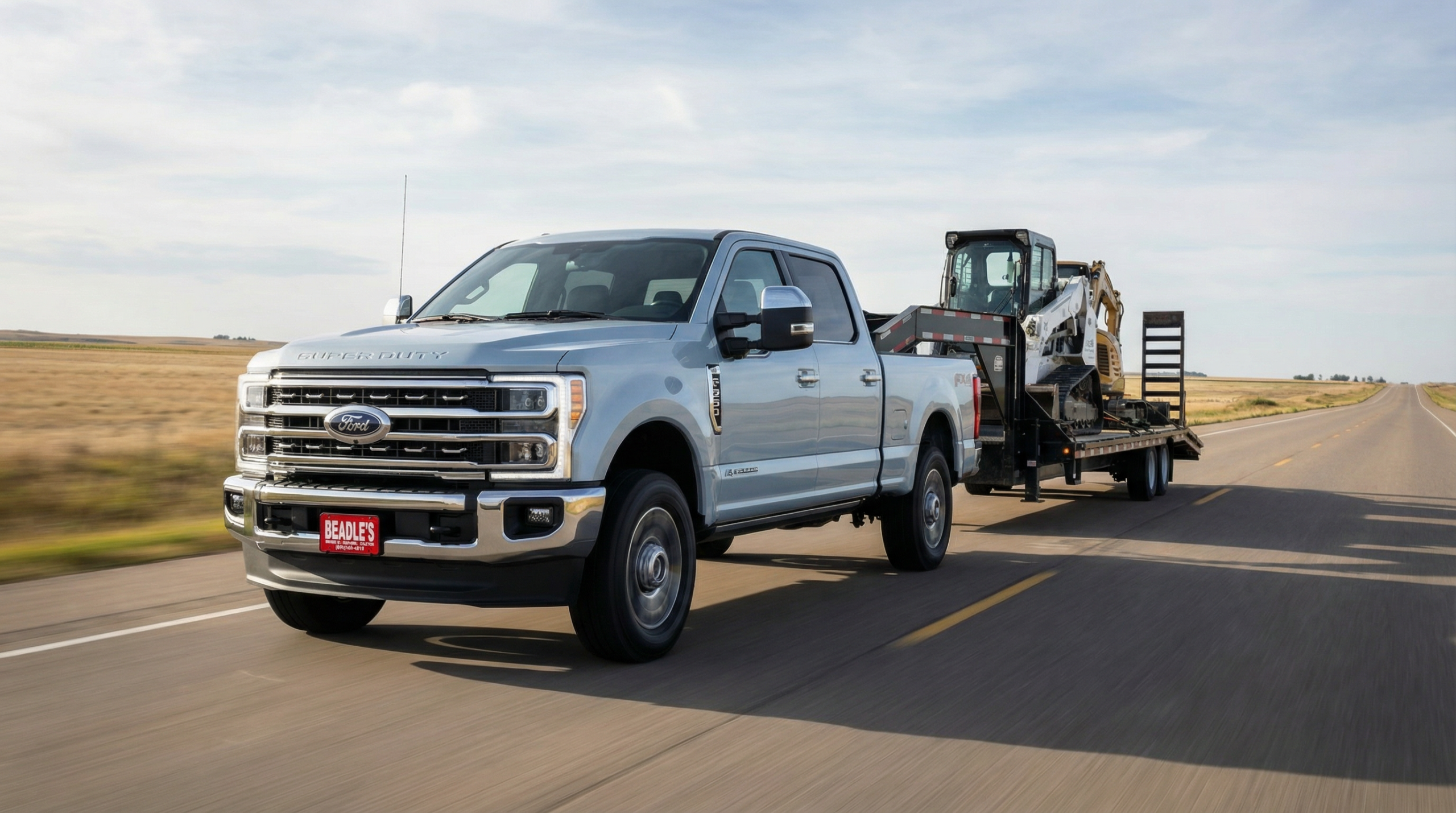
2027 Ford F-350 dually in Carbonized Gray towing a loaded gooseneck stock trailer on a gravel ranch road

2027 Ford F-350 Towing Guide: Real Numbers by Configuration

HERO + QUICK ANSWER + INTRO Quick Answer Properly equipped, the 2027 Ford F-350 tows up to 40,000 lbs gooseneck (6.7L High-Output diesel, dual-rear-wheel, 40K Gooseneck Tow Package), up to 35,000 lbs fifth-wheel, and up to 28,000 lbs conventional on the dually (25,000 lbs single-rear-wheel). Those ratings carry over unchanged from 2026. The 2027 F-350 simplified to two engines, but it didn't give up an ounce of towing capability — the ratings are identical to 2026. What changed is the path to them: the High-Output diesel is now the only diesel, and it's what anchors the big numbers. This guide breaks down what the 2027 F-350 tows by hitch type, how the engine and single- vs. dual-rear-wheel choice affect it, and how to build a towing setup with real margin for the way you haul around Bowdle and Aberdeen. TOP CTA Search Available F-350 Inventory Get Pre-Approved TOC On This Page How much can the 2027 F-350 tow? Gooseneck vs. fifth-wheel vs. conventional Does engine choice change what it tows? How does SRW vs. DRW affect towing? How do you choose a towing setup? SECTION 1 — NUMBERS + TABLE How much can the 2027 F-350 tow? Properly equipped, up to 40,000 lbs gooseneck, up to 35,000 lbs fifth-wheel, and up to 28,000 lbs conventional on the dually. A single-rear-wheel F-350 handles up to 25,000 lbs conventional. Here's the breakdown by hitch type: Hitch Type Max (properly equipped) Best For Gooseneck Up to 40,000 lbs (HO diesel, DRW, 40K package) Loaded livestock and equipment trailers, max capability Fifth-wheel Up to 35,000 lbs (diesel, DRW) Large fifth-wheel campers and toy haulers Conventional (bumper-pull) Up to 28,000 lbs DRW / 25,000 lbs SRW Utility, flatbed, and many travel trailers Maximums require proper equipment and vary with cab, bed, axle ratio, and configuration. The 40,000-lb gooseneck rating requires the High-Output diesel DRW with the 40K Gooseneck Tow Package. SECTION 2 — HITCH TYPES (image) Gooseneck vs. fifth-wheel vs. conventional The hitch type sets both the ceiling and how the load behaves. Gooseneck and fifth-wheel hitches mount over the rear axle for a more stable, higher-capacity tow; a conventional bumper-pull is simpler but tops out lower. Gooseneck: the livestock and equipment standard — controlled feel, tight maneuvering, and the highest rating at up to 40,000 lbs. Fifth-wheel: popular for large RVs; the over-axle connection feels stable on the highway, up to about 35,000 lbs. Conventional: common for utility and travel trailers; up to 28,000 lbs DRW or 25,000 lbs SRW, with weight distribution and brake control mattering more as loads climb. SECTION 3 — ENGINE + RECOMMENDATION Does engine choice change what it tows? Yes — the 6.7L High-Output Power Stroke diesel is what reaches the 40,000-lb gooseneck maximum, and it feels most composed on grades and in wind. The now-standard 7.3L gas V8 covers a wide range of lighter and moderate trailers and carries the highest payload. With only two engines for 2027, the towing decision is really "how heavy, how often." Our Recommendation For most ranch and farm buyers around Bowdle and Aberdeen, a 7.3L gas F-350 with the right hitch and axle covers the goosenecks they actually pull. Step up to the High-Output diesel and a dually when you run heavy near the top of the range or want the 40,000-lb ceiling. Compare the engines in our 2027 F-350 engine comparison. SECTION 4 — SRW VS DRW + FIRSTHAND How does SRW vs. DRW affect towing? Dual-rear-wheel (DRW) trucks reach the highest ratings and feel most planted under a heavy gooseneck or fifth-wheel; single-rear-wheel (SRW) trucks still tow well beyond any half-ton (up to 25,000 lbs conventional) and are easier to live with day to day. It's the decision that most affects both capability and how the truck drives — covered in depth in our 2027 F-350 SRW vs. DRW guide. From the Beadle Ford Lot The most common towing mistake we see isn't buying too little truck — it's buying for the heaviest trailer someone pulls twice a year. We size the F-350 to the load you actually haul most weeks, then leave honest margin on top. More often than not that lands a buyer on a single-rear-wheel truck with room to spare. SECTION 5 — HOW TO How do you choose a towing setup? Work from the trailer to the truck, in five steps: Start with the trailer: type (gooseneck, fifth-wheel, conventional) and realistic loaded weight. Decide SRW vs. DRW based on how heavy you run and how the truck will drive day to day. Pick the engine for your towing frequency — gas for most, High-Output diesel for heavy and often. Match the hitch, axle ratio, and tow package to your trailer (the 40K package for the gooseneck maximum). Confirm the exact build — ratings vary by configuration. KEY TAKEAWAYS Key Takeaways 2027 F-350 towing carries over: up to 40,000 lbs gooseneck, 35,000 lbs fifth-wheel, 28,000 lbs conventional DRW. The High-Output diesel + DRW + 40K package reach the 40,000-lb maximum. SRW still tows up to 25,000 lbs conventional — well beyond any half-ton. Hitch type sets both the ceiling and the feel; gooseneck is highest. Build to the trailer you pull most, with honest margin — not your once-a-year heaviest. FAQ Frequently Asked Questions How much can the 2027 Ford F-350 tow? Properly equipped, up to 40,000 lbs gooseneck (6.7L High-Output diesel, DRW, 40K Gooseneck Tow Package), up to 35,000 lbs fifth-wheel, and up to 28,000 lbs conventional on the dually (25,000 lbs single-rear-wheel). Ratings carry over unchanged from 2026. Did the 2027 F-350 lose towing capacity with fewer engines? No. The High-Output diesel still anchors the 40,000-lb gooseneck maximum, and all ratings match 2026 — the simplified two-engine lineup didn't cost the F-350 any capability. What package do I need for the 40,000-lb gooseneck rating? The 40K Gooseneck Tow Package, paired with the 6.7L High-Output Power Stroke diesel in dual-rear-wheel form. Without it, gooseneck ratings are lower. We confirm the exact axle and package on any truck before you order. Can the 7.3L gas F-350 tow a gooseneck? Yes. The now-standard 7.3L gas V8 handles a wide range of gooseneck and conventional trailers and carries the highest payload. For the heaviest loads near the top of the range, the High-Output diesel is the better fit. Do I need a dually to tow heavy with the 2027 F-350? Not for most trailers. A single-rear-wheel F-350 tows up to 25,000 lbs conventional and covers many goosenecks with margin. A dually is for maximum stability and the highest ratings, including the 40,000-lb gooseneck maximum. QUICK ANSWERS Quick Answers: 2027 F-350 Towing One-line answers to the follow-up questions buyers ask next. Max gooseneck? Up to 40,000 lbs (HO diesel, DRW, 40K package). Max fifth-wheel? Up to 35,000 lbs, properly equipped. Max conventional? Up to 28,000 lbs DRW, 25,000 lbs SRW. Did 2027 towing drop? No — same as 2026. Which engine for max towing? The 6.7L High-Output diesel. Can the gas tow a gooseneck? Yes — a wide range of them. Do I need a dually? Only for the heaviest loads and the 40,000-lb max. What's the 40K package? The option group required for the 40,000-lb gooseneck rating. Is a trailer brake controller included? An integrated controller is available and recommended for heavy trailers. How do I confirm a truck's rating? We verify cab, axle, and package against the build before you order. KEEP RESEARCHING Keep Researching The complete 2027 Ford F-350 Super Duty overview — specs, towing, trims, and how to order. 2027 F-350 engine comparison — gas vs. the High-Output diesel behind the ratings. 2027 F-350 SRW vs. DRW — the stance decision that shapes your towing. 2027 F-350 payload & upfit — when payload, not towing, is the limit. CONCLUSION My Take on Towing the 2027 F-350 In my experience, the best towing setup is the one built with margin — the truck feels composed, the trailer feels predictable, and you're not managing the load. The good news for 2027 is that the simpler engine lineup didn't change any of that; the F-350 still pulls everything it did before, you just have a cleaner decision to make. Bring me your trailer type and a realistic loaded weight and we'll size the right 2027 F-350. Stop in at Beadle Ford in Bowdle or reach out anytime. BOTTOM CTA Search Available F-350 Inventory Get Pre-Approved ABOUT THE AUTHOR (LOCKED) About the Author Lexy Tabbert — Beadle Ford, Bowdle, SD Lexy Tabbert is the Director of Sales and Marketing at Beadle Ford in Bowdle, South Dakota. She covers Ford vehicles, trim comparisons, and buyer guidance — helping families, ranchers, and ag operators across the region find the right truck and configuration for their needs. Learn more about Lexy. JSON-LD (renders nothing visible)

2027 Ford F-350 Super Duty engine bay with the available 6.7L High-Output Power Stroke diesel

2027 Ford F-350 Engine Comparison: 7.3L Gas vs. High-Output Diesel

HERO + QUICK ANSWER + INTRO Quick Answer For 2027 the F-350 offers just two engines: the 7.3L gas V8 (now standard on every trim) and the available 6.7L High-Output Power Stroke diesel. The gas carries the highest payload (up to ~7,900 lbs) and covers most towing; the High-Output diesel is the choice for heavy, frequent towing and the 40,000-lb gooseneck maximum. The 2027 F-350 makes the engine decision simpler than it's ever been. Gone are the 6.8L gas and the standard-output diesel — leaving a clean choice between the now-standard 7.3L gas V8 and the available 6.7L High-Output Power Stroke diesel. This guide covers what each engine is built for, how they compare on the numbers that are confirmed for 2027, and how to match one to the way you actually tow and haul around Bowdle and Aberdeen. TOP CTA Search Available F-350 Inventory Get Pre-Approved TOC On This Page What engines does the 2027 F-350 offer? Is the 7.3L gas enough without the standard diesel? When is the High-Output diesel worth it? Gas vs. diesel: ownership beyond the spec sheet How do you choose for your workload? SECTION 1 — LINEUP + TABLE What engines does the 2027 F-350 offer? Two, both paired with the 10-speed TorqShift automatic: the 7.3L gas V8, now standard on every trim, and the available 6.7L High-Output Power Stroke diesel — the only diesel for 2027. Ford hasn't published final 2027 horsepower and torque figures, so the comparison below is built on the capability numbers that are confirmed. Engine Best For Confirmed Capability 7.3L gas V8 (standard) Daily work, occasional-to-moderate towing, max payload, lower cost of ownership Highest payload — up to ~7,900 lbs 6.7L High-Output Power Stroke (available) Heavy, frequent towing; large goosenecks and fifth-wheels; max capability Up to 40,000 lbs gooseneck (DRW, 40K package) Maximums require proper equipment and vary by cab, bed, axle, and single- or dual-rear-wheel configuration. 2027 hp/torque not yet published by Ford. SECTION 2 — GAS Is the 7.3L gas enough without the standard diesel? For most F-350 buyers, yes. The 7.3L gas V8 is now standard on every trim, and it carries the F-350's highest payload — up to about 7,900 lbs — because it's lighter than the diesel. It handles daily ranch and jobsite work and a wide range of gooseneck and trailer loads without the diesel's upfront cost or maintenance. If your towing stays in the range a gas Super Duty comfortably covers, the standard 7.3L may be all the truck you need — and the money saved goes a long way toward the rest of the build. SECTION 3 — DIESEL (image) + RECOMMENDATION When is the High-Output diesel worth it? The 6.7L High-Output Power Stroke is the heavy-towing engine — it's what unlocks the 40,000-lb gooseneck maximum and feels most composed on grades, in wind, and on long highway pulls. If you tow heavy and often, run a large gooseneck or fifth-wheel, or want maximum capability headroom, it earns its premium. Our Recommendation For most ranch and farm buyers around Bowdle and Aberdeen, start with the now-standard 7.3L gas — it covers daily work, the highest payload, and most of the towing people actually do. Choose the High-Output diesel when you regularly run heavy goosenecks or want the 40,000-lb ceiling. Size it to your real loaded trailer with our 2027 F-350 towing guide. SECTION 4 — OWNERSHIP + FIRSTHAND Gas vs. diesel: ownership beyond the spec sheet The engine is an ownership decision, not just a capability one. Weigh these against how hard you'll actually work the truck: Upfront cost: the diesel carries a higher purchase price than the gas. Payload need: if you haul heavy in the bed more than you tow, the 7.3L gas and its ~7,900-lb payload may matter more than diesel torque. Use pattern: frequent heavy towing justifies diesel; mixed driving favors gas. Long-term plans: how long you keep the truck and your annual miles change the math. From the Beadle Ford Lot With the standard-output diesel gone, the conversation has flipped. Buyers used to default to "get the diesel"; now, once we walk through their real trailer weight, more are landing on the standard 7.3L gas and putting the savings toward trim or the build they actually want. SECTION 5 — HOW TO CHOOSE How do you choose for your workload? Work from how you use the truck, in four steps: Identify your heaviest trailer and how often you tow it. Decide whether maximum capability headroom matters, or whether comfortable margin is enough. Factor in payload needs, annual miles, and how long you keep trucks. Confirm the build — engine choice can affect available packages and SRW vs. DRW. KEY TAKEAWAYS Key Takeaways 2027 simplifies to two engines: 7.3L gas standard, 6.7L High-Output diesel optional. The 7.3L gas carries the highest payload — up to ~7,900 lbs — and covers most towing. The High-Output diesel is the heavy-towing choice and unlocks the 40,000-lb gooseneck maximum. Pick by use pattern and payload need, not by habit — many buyers now fit the gas. Ford hasn't published 2027 hp/torque yet; the lineup and capability figures are confirmed. FAQ Frequently Asked Questions What engines does the 2027 Ford F-350 have? Two: the 7.3L gas V8, standard on every trim, and the available 6.7L High-Output Power Stroke diesel. Both use a 10-speed TorqShift automatic. The 6.8L gas and standard-output 6.7L diesel from 2026 are discontinued. Ford hasn't published final 2027 horsepower and torque figures. Is the 7.3L gas enough for an F-350 without the diesel? For most buyers, yes. The 7.3L gas is now standard, carries the highest payload (up to ~7,900 lbs), and handles daily work and a wide range of towing. The diesel is for those who tow heavy and often or want the 40,000-lb gooseneck maximum. Which 2027 F-350 engine tows the most? The 6.7L High-Output Power Stroke diesel — it anchors the F-350's 40,000-lb gooseneck maximum in dual-rear-wheel form with the 40K Gooseneck Tow Package. The 7.3L gas covers most lighter and moderate towing. Which engine has the most payload? The 7.3L gas V8, at up to approximately 7,900 lbs with the heavy-duty payload package — more than the diesel, because the lighter engine frees up weight for the bed. Do the 2027 engines change towing or payload vs. 2026? No — the F-350's tow and payload maximums carry over. Even with two engines instead of four, the High-Output diesel still tows up to 40,000 lbs gooseneck and the gas still leads on payload at ~7,900 lbs, properly equipped. QUICK ANSWERS Quick Answers: 2027 F-350 Engines One-line answers to the follow-up questions buyers ask next. How many engines for 2027? Two — 7.3L gas standard, 6.7L HO diesel optional. What's the standard engine? The 7.3L gas V8, on every trim. Most towing? The HO diesel — up to 40,000 lbs gooseneck. Most payload? The 7.3L gas — up to ~7,900 lbs. Is the standard-output diesel gone? Yes — only the High-Output diesel remains. Is the 6.8L gas gone? Yes — discontinued for 2027. What transmission? 10-speed TorqShift on both engines. Are hp/torque published? Not yet — Ford lists 2027 outputs as TBD. Gas or diesel for occasional towing? Gas — lower cost, plenty of capability. How do I confirm the right engine? We size it to your real loaded trailer before you order. KEEP RESEARCHING Keep Researching The complete 2027 Ford F-350 Super Duty overview — specs, towing, trims, and how to order. 2027 F-350 towing guide — the ratings behind each engine, by configuration. What's new for 2027 — why the lineup dropped to two engines. Buy a 2026 now or order a 2027? — if you want a dropped engine, time matters. CONCLUSION My Take on the 2027 Engine Choice In my experience, the two-engine lineup makes this easier, not harder. Most buyers around here are better served starting with the now-standard 7.3L gas and only stepping to the High-Output diesel when their trailer math truly calls for it — and now that the gas is standard, that's a real money decision, not just a power one. Tell me your heaviest trailer and your typical week, and I'll point you to the right engine and build. Stop in at Beadle Ford in Bowdle or reach out anytime. BOTTOM CTA Search Available F-350 Inventory Get Pre-Approved ABOUT THE AUTHOR (LOCKED) About the Author Lexy Tabbert — Beadle Ford, Bowdle, SD Lexy Tabbert is the Director of Sales and Marketing at Beadle Ford in Bowdle, South Dakota. She covers Ford vehicles, trim comparisons, and buyer guidance — helping families, ranchers, and ag operators across the region find the right truck and configuration for their needs. Learn more about Lexy. JSON-LD (renders nothing visible)

2027 Ford F-350 Lariat in Agate Black Metallic on a Missouri River bluff at golden hour

What's New for the 2027 Ford F-350 Super Duty

HERO + QUICK ANSWER + INTRO Quick Answer The biggest 2027 Ford F-350 change is the engine lineup: it drops from four to two. The 7.3L gas V8 is now standard on every trim, and the 6.7L High-Output Power Stroke is the only diesel. 2027 also adds the Super Duty Carhartt Package, Tremor on XL, and a new 8-foot bed with the High-Output diesel — while towing and payload carry over unchanged. The 2027 Ford F-350 Super Duty isn't a redesign — the body, grille, and silhouette carry over — but under the hood and in the order guide, it's the most changed Super Duty in years. Ford simplified the lineup instead of restyling it. Here's everything that's new for 2027, what it means for the way trucks get used around Bowdle and Aberdeen, and how to think about ordering one — including whether a 2026 still on the lot might be the smarter buy. TOP CTA Search Available F-350 Inventory Get Pre-Approved TOC On This Page What changed on the 2027 F-350? Why did Ford cut the engines from four to two? Does the 2027 F-350 lose any capability? What new packages and features arrive for 2027? Should you buy a 2026 now or order a 2027? SECTION 1 — OVERVIEW What changed on the 2027 F-350? The 2027 F-350 keeps the current Super Duty body but reworks what's available underneath. The headline: the engine lineup goes from four to two. Alongside that, Ford added a Super Duty Carhartt Package, opened the Tremor Off-Road Package to the XL trim, and introduced a new 8-foot bed / 176-inch wheelbase with the High-Output diesel. In short: 2027 is a simplification, not a redesign. Same proven truck, a cleaner set of choices — and, importantly, no loss of towing or payload capability. SECTION 2 — ENGINES (image) Why did Ford cut the engines from four to two? For 2027, the 7.3L gas V8 becomes standard on every trim and the 6.7L High-Output Power Stroke is the only diesel. The 6.8L gas V8 and the standard-output 6.7L Power Stroke diesel are both discontinued. The move trims overlap: the 7.3L gas already covered most of what the 6.8L did, and the High-Output diesel covers everything the standard-output diesel did and more. Both engines pair with the 10-speed TorqShift automatic. One honest note: Ford hasn't published final 2027 horsepower and torque figures yet, so we're not quoting output numbers until they're official — but the lineup itself is locked, and the capability numbers below are confirmed. The full gas-vs-diesel breakdown is in our 2027 F-350 engine comparison. SECTION 3 — CAPABILITY + FIRSTHAND Does the 2027 F-350 lose any capability? No. Despite the simpler lineup, the 2027 F-350's ratings carry over: up to 40,000 lbs gooseneck (High-Output diesel, dual-rear-wheel, 40K Gooseneck Tow Package), up to 35,000 lbs fifth-wheel, up to 28,000 lbs conventional on the dually, and up to roughly 7,900 lbs of payload with the 7.3L gas and the heavy-duty payload package. The new 8-foot bed / 176-inch wheelbase with the High-Output diesel actually adds a longer-deck option for haulers. From the Beadle Ford Lot The first worry we heard about 2027 was that losing the standard-output diesel meant losing capability. It doesn't — the ratings are the same as 2026. Most buyers who tow on the lighter end are realizing the now-standard 7.3L gas covers far more than they expected, and the diesel decision comes down to how often they run heavy. SECTION 4 — NEW FEATURES + RECOMMENDATION What new packages and features arrive for 2027? Beyond the engines, 2027 brings real additions: Super Duty Carhartt Package — a new work-grade styling package, available on single-rear-wheel trucks. Tremor Off-Road on XL — the off-road package is now available on the base work trim, not just higher up the line. New 8-foot bed / 176-inch wheelbase — available with the High-Output diesel, for haulers who want the longer deck. New exterior colors added, with a few 2026 shades retired. Trim equipment shuffle — for example, memory power-adjustable pedals are no longer standard on Platinum. Our Recommendation For most ranch and farm buyers around Bowdle and Aberdeen, the 2027 simplification is good news: order the now-standard 7.3L gas for daily work and most towing, and step to the High-Output diesel only if you pull heavy and often. If you want the new Carhartt look or Tremor on an XL work truck, 2027 is the year to order it. We'll match the build to how you actually use the truck. SECTION 5 — DECISION Should you buy a 2026 now or order a 2027? It comes down to the engine you want. If you specifically want the 6.8L gas V8 or the standard-output 6.7L diesel, a 2026 still on the lot is your last chance — those are gone for 2027. If you want the simplified lineup, the new Carhartt Package, or Tremor on XL, ordering a 2027 makes sense. There's also a value angle worth weighing, since the now-standard 7.3L was an extra-cost option in 2026. We walk through the full trade-off — including pricing and timing — in our buy a 2026 now or order a 2027 guide. KEY TAKEAWAYS Key Takeaways 2027 cuts the engine lineup from four to two: 7.3L gas standard on all trims, 6.7L High-Output diesel optional. The 6.8L gas and standard-output 6.7L diesel are discontinued. Capability carries over: up to 40,000 lbs gooseneck and ~7,900 lbs payload, properly equipped. New for 2027: Super Duty Carhartt Package, Tremor on XL, and an 8-ft bed with the HO diesel. Want a dropped engine? A 2026 is the last chance. Want the new lineup? Order a 2027. FAQ Frequently Asked Questions What's the biggest change on the 2027 Ford F-350? The engine lineup drops from four to two. The 7.3L gas V8 is now standard on every trim, and the 6.7L High-Output Power Stroke is the only diesel. The 6.8L gas V8 and the standard-output 6.7L diesel are discontinued. Did the 2027 F-350 get a redesign? No. The body, grille, and silhouette carry over from the current Super Duty generation. 2027 is a powertrain and equipment update, not a styling redesign — the next full redesign is expected later. Does the 2027 F-350 tow less with fewer engines? No — ratings carry over. Properly equipped, the 2027 F-350 still tows up to 40,000 lbs gooseneck (High-Output diesel, DRW), 35,000 lbs fifth-wheel, and 28,000 lbs conventional on the dually, with payload up to about 7,900 lbs on the 7.3L gas. What is the Super Duty Carhartt Package? It's a new-for-2027 work-grade styling package, available on single-rear-wheel F-350s, that brings Carhartt-branded design cues inside and out. We cover it in the 2027 F-350 Carhartt Edition guide. Are the 2027 F-350 horsepower and torque numbers out yet? Not yet — Ford lists 2027 output figures as not-yet-published. The two-engine lineup is confirmed, and we'll update with official horsepower and torque once Ford releases them. QUICK ANSWERS Quick Answers: 2027 F-350 Changes One-line answers to the follow-up questions buyers ask next. How many engines for 2027? Two — 7.3L gas standard, 6.7L HO diesel optional. Which engines were dropped? The 6.8L gas and the standard-output 6.7L diesel. Is the 7.3L gas standard now? Yes, on every trim. Did towing drop? No — up to 40,000 lbs gooseneck, same as 2026. Is there a new bed option? Yes — an 8-ft bed / 176-in wheelbase with the HO diesel. Is Tremor on XL now? Yes, new for 2027. What's the Carhartt Package? A new SRW-only work-grade styling package. Are hp/torque published? Not yet — Ford lists them as TBD. Can I order a 2027 now? Yes — built to your spec ahead of arrival. 2026 or 2027? Want a dropped engine, buy a 2026; want the new lineup, order a 2027. KEEP RESEARCHING Keep Researching The complete 2027 Ford F-350 Super Duty overview — specs, towing, trims, and how to order. 2027 F-350 engine comparison — 7.3L gas vs. the High-Output diesel, now that it's a two-engine choice. Buy a 2026 now or order a 2027? — the decision the engine change drives. 2027 F-350 Carhartt Edition — the new work-grade package in detail. CONCLUSION My Take on the 2027 Changes In my experience, simpler usually means easier to buy right. Cutting the F-350 to two engines takes the guesswork out — gas for daily work and most towing, the High-Output diesel when you genuinely run heavy — without giving up any of the capability that makes a Super Duty worth owning around here. If you're deciding between grabbing a 2026 on the lot or ordering a 2027 to your spec, tell me how you use the truck and I'll help you land it. Stop in at Beadle Ford in Bowdle or reach out anytime. BOTTOM CTA Search Available F-350 Inventory Get Pre-Approved ABOUT THE AUTHOR (LOCKED) About the Author Lexy Tabbert — Beadle Ford, Bowdle, SD Lexy Tabbert is the Director of Sales and Marketing at Beadle Ford in Bowdle, South Dakota. She covers Ford vehicles, trim comparisons, and buyer guidance — helping families, ranchers, and ag operators across the region find the right truck and configuration for their needs. Learn more about Lexy. JSON-LD (renders nothing visible)

2026 Ford Bronco 2-Door Big Bend in Ruby Red Metallic Tinted Clearcoat parked on an empty South Dakota state highway with open prairie horizon

2-Door vs 4-Door 2026 Ford Bronco: How to Choose

The 2-Door versus 4-Door decision on a 2026 Ford Bronco is one of the few choices in the build process where the spec-sheet differences and the everyday driving experience point in opposite directions. The 2-Door has a tighter wheelbase, slightly better off-road breakover geometry, and the original Bronco silhouette that turns heads in a Bowdle parking lot. The 4-Door has a back seat your kids and dogs can actually use, a cargo bay that holds gear, and the resale demand to back it up. This guide is for buyers weighing the body-style choice on a 2026 Bronco at Beadle Ford. We'll cover the off-road geometry trade-off, interior space and rear-seat reality, daily-driver fit for kids and dogs and long highway runs, resale demand, and who should actually pick the 2-Door. The straight answer: most central South Dakota buyers should pick 4-Door. There's a specific 2-Door buyer, and we'll name who that is. Search Available Bronco Inventory Get Pre-Qualified On This Page How Do Wheelbase, Approach, and Departure Differ Between the 2-Door and 4-Door? What's the Interior Cargo Room and Rear-Seat Reality on Each Body Style? Which Body Style Fits Better for Kids, Dogs, Gear, and Long Drives? Why Does the 4-Door Dominate the Market — and What Does That Mean for Resale? Who Is the Specific Buyer Who Should Pick the 2-Door? Which Body Style Does Beadle Ford Recommend for Most Buyers? How Do Wheelbase, Approach, and Departure Differ Between the 2-Door and 4-Door? The 2-Door's shorter wheelbase gives it a slightly better breakover angle — the angle that determines whether the underbody clears a sharp ridge or a high mid-line obstacle. On the same trim and tire spec, expect the 2-Door's breakover to read a few degrees better than the 4-Door's, because there's less length between the front and rear axles to bridge across the obstacle. Approach angle (front-bumper clearance) and departure angle (rear-bumper clearance) are largely the same between body styles since they're set by the bumper, fender flare, and tire-size geometry rather than wheelbase. 2-Door (left) and 4-Door (right) Big Bend, same color, side by side. The wheelbase difference is the off-road advantage and the daily-driver compromise rolled into one. Across the lineup, ground clearance and tire-driven angles are tire-spec dependent: a Badlands on 33-inch Rugged-Terrain tires has approximately 8.8 to 9.0 inches of ground clearance with roughly 43° approach, 26° breakover, and 37° departure; a Sasquatch-equipped Bronco on 35-inch tires moves to about 11.6 inches of clearance, 43° approach, 29° breakover, and 37° departure; the Raptor on 37-inch tires sits at roughly 13.1 inches of clearance, 47° approach, 31° breakover, and 40.5° departure. The 2-Door's wheelbase advantage stacks on top of those numbers, particularly improving breakover. What this means in real terms for central SD: on the access roads, two-tracks, and CRP edges most owners actually drive, the geometry difference between 2-Door and 4-Door doesn't show up. The 2-Door's edge is real on Black Hills weekend trails or genuine rock-crawling terrain. For the rest of the lineup's geometry numbers and trim breakdowns see our 2026 Bronco trim levels guide. What's the Interior Cargo Room and Rear-Seat Reality on Each Body Style? The 4-Door's longer wheelbase translates directly into more rear-seat legroom and a noticeably bigger cargo bay behind the rear seats. A 4-Door swallows a Lab-sized kennel, a cooler, two shotgun cases, and a duffel of blaze orange behind the rear seats with the seats up. A 2-Door's cargo bay behind its small rear seats is much tighter — a kennel and a cooler fit, but a full hunting load means folding the rear seats and accepting that the rear bench isn't usable. The 2-Door's rear bench is best understood as occasional-use seating: a couple of adults can fit for a short trip, kids fit fine for daily duty, but it's not a configuration that anyone would choose for a long highway haul. Climbing into the back seat through the front-passenger door is fine for a parking lot but tedious if your day involves multiple stops. Two-Door buyers usually treat the rear seat as a folded-down cargo extension by default and use it for passengers occasionally. For everyday hunting, family, and gear-hauling use cases, the 4-Door is the meaningful answer. For full hunting context see our South Dakota hunting guide, where the 4-Door body style is the recommendation across every persona we serve. Which Body Style Fits Better for Kids, Dogs, Gear, and Long Drives? The 4-Door wins on every daily-driver use case in central SD. For a family with kids, the 4-Door's standard rear doors make car-seat installation, school pickup, and grocery loading manageable; the 2-Door's tilt-and-fold front-seat access is a functional dealbreaker for most parents within a week. For a hunter with one or more dogs, the 4-Door's rear cargo bay accepts a kennel without compromising passenger seating. A 4-Door Badlands across the central SD plains — the body style that handles kids, dogs, hunting gear, and the four-hour Bowdle-to-Black-Hills run without compromise. Long highway distances are where the 4-Door's longer wheelbase quietly earns its money. The Bowdle-to-Black-Hills run is a four-hour drive each way, and the 4-Door tracks straighter at sustained 70-plus mph speeds, handles cross-winds with less correction, and rides quieter in the cabin. The 2-Door's shorter wheelbase makes it a livelier vehicle on tight off-road courses and a slightly twitchier vehicle on a long highway haul. Neither is unsafe — but at 70 mph for four hours, the 4-Door is the more relaxed companion. Fuel economy and cargo capacity also tilt to the 4-Door for the long-haul use case. The 2-Door is slightly lighter and gets a marginal fuel-economy edge in city driving, but the 4-Door's larger cargo capacity means fewer trips and less roof-rack improvisation for a long weekend away. Across the central SD daily-driver use case, the 4-Door is the safer bet for almost every buyer profile. Get Pre-Qualified Contact Beadle Ford Why Does the 4-Door Dominate the Market — and What Does That Mean for Resale? Industry-wide, 4-Door body styles outsell 2-Door body styles in this segment by a wide margin. Ford's lineup reflects this: most 2026 Bronco trims (Big Bend, Outer Banks, Heritage Edition, Stroppe, Raptor) are 4-Door only. Only the Base and Badlands trims offer both body styles, and the 2-Door is priced the same as the 4-Door at those trims — buyers don't get a discount for choosing the more limited body. Resale demand follows production volume. A used 4-Door Bronco draws a wider buyer pool — families, hunters, daily-driver shoppers, and lifestyle buyers all consider it. A used 2-Door draws a narrower pool of buyers who specifically want that body style, which means longer time on a lot when reselling and softer values relative to comparable 4-Door builds. This isn't a Bronco-specific dynamic; it's how the segment has worked for years across both Bronco and Wrangler. For a buyer who plans to own the vehicle for ten-plus years and never sell, resale doesn't matter — pick whichever body style fits your life. For a buyer who anticipates trading in within five years, the 4-Door's broader resale demand is one more factor in its favor. A 2-Door that you love is worth keeping; a 2-Door you bought for the looks and want to flip in three years won't reward you the way a 4-Door would. Who Is the Specific Buyer Who Should Pick the 2-Door? The 2-Door has a real, specific buyer. It's usually a single person or a couple without children at home, who values nimble off-road handling and the original Bronco silhouette over rear-seat practicality. Often a second vehicle in the household — an F-150 or a family SUV handles the daily-driver work, and the 2-Door Bronco is the weekend rig, the off-road tool, the lifestyle expression. For that buyer, the 2-Door is the right call and we'd never talk them out of it. The 2-Door also makes sense for an enthusiast who specifically values the breakover-angle advantage on serious off-road terrain — a Black Hills regular, a buyer who actually rock-crawls, someone who wants the most maneuverable Bronco for tight wooded trails. In central SD, that profile is rare; the terrain doesn't demand it. But if you fit it, you fit it. Where the 2-Door doesn't make sense is when it's bought for the looks alone by a buyer whose actual life involves kids in car seats, regular hunting trips with a dog and a kennel, or long highway hauls. Those buyers usually return within a year asking how to trade up to a 4-Door, and the swap is harder than getting it right the first time. Which Body Style Does Beadle Ford Recommend for Most Buyers? The 4-Door is the right call for most central SD Bronco buyers. It seats your family or your hunting partner with their dog, swallows the gear you actually carry, drives more comfortably on long highway runs, and holds resale value better. The 4-Door is available across every Bronco trim in the lineup — Base, Big Bend, Outer Banks, Badlands, Heritage Edition, and Raptor — which means you can build any spec you want without body-style limiting your trim options. The 2-Door is the right call for a specific buyer profile: single owner or no-kids couple who values nimble off-road and the original silhouette over rear-seat use. For that buyer, the 2-Door is available in Base or Badlands trim at the same MSRP as the 4-Door — $40,495 for Base, $48,890 for Badlands, before the $1,995 destination charge. Big Bend, Outer Banks, Heritage Edition, and Raptor are 4-Door only. The full lineup, every trim's body-style availability, and the broader configuration options come together in the 2026 Ford Bronco overview. If you're weighing the 2-Door versus 4-Door decision, come in and we'll walk through both with the actual use case you have in mind. The right answer is usually obvious within the first few questions. Key Takeaways The 2-Door's shorter wheelbase improves breakover angle a few degrees over the 4-Door at the same trim and tire spec; approach and departure are similar. The 4-Door wins on rear-seat usability, cargo capacity, daily-driver fit, and long-highway comfort — the meaningful differences for most central SD buyers. Body-style availability: only the Base and Badlands trims offer the 2-Door. Big Bend, Outer Banks, Heritage Edition, and Raptor are 4-Door only. Pricing is identical between body styles at the trims that offer both — $40,495 for Base, $48,890 for Badlands, before destination. Resale demand favors the 4-Door across the segment, which is one more factor for a buyer who anticipates trading in within five years. Frequently Asked Questions Is the 2026 Bronco 2-Door cheaper than the 4-Door? No. The 2-Door and 4-Door are priced identically at the trims that offer both body styles — $40,495 for Base and $48,890 for Badlands, before the $1,995 destination charge. Buyers don't get a discount for the more limited body style. Which 2026 Bronco trims are available as a 2-Door? For 2026, only the Base and Badlands trims are offered in 2-Door body style. Big Bend, Outer Banks, Heritage Edition, Stroppe, and Raptor are all 4-Door only. If you want a specific trim above Badlands, the 4-Door is your only option. Does the 2-Door Bronco have meaningfully better off-road geometry than the 4-Door? Slightly. The 2-Door's shorter wheelbase improves breakover angle by a few degrees compared to the 4-Door at the same trim and tire spec, which matters on rocky or sharply ridged terrain. Approach and departure angles are largely the same since they're set by bumper and tire geometry. For everyday central SD off-pavement use — gravel, CRP edges, ranch two-tracks — the difference doesn't show up. Will a Lab-sized kennel fit in a 2-Door 2026 Bronco? A standard intermediate or large dog kennel fits in a 2-Door, but you'll typically need to fold the rear seats down to accommodate it cleanly. That works fine for a single hunter or a couple with a dog, but it limits passenger capacity. For owners with more than one dog or a hunting partner, the 4-Door is the meaningful answer. Does the 4-Door Bronco hold resale value better than the 2-Door? Generally, yes. Industry-wide, 4-Door body styles outsell 2-Door body styles in this segment by a wide margin, and that demand carries through to the used market. A used 4-Door Bronco draws a wider buyer pool — families, hunters, daily-driver shoppers — while a used 2-Door draws a narrower pool of buyers who specifically want that body style. For a buyer who anticipates trading in within five years, the 4-Door is the safer resale bet. Who should buy a 2-Door 2026 Bronco instead of a 4-Door? A single person or couple without children at home, often using the Bronco as a second vehicle while another vehicle handles daily-driver duties. Also: enthusiasts who specifically value the breakover-angle advantage on serious off-road terrain. For most central SD buyers, the 2-Door is the wrong answer — the daily-driver compromises outweigh the off-road and styling advantages. My Take on the 2-Door vs 4-Door Decision I'll be direct: most of the customers who walk into Beadle Ford asking about a 2-Door Bronco are buying it for the looks. That's a perfectly fine reason to buy a vehicle if you can also live with the rear-seat compromise — but a year in, plenty of those buyers wish they'd ordered the 4-Door. The styling that wins them over in the showroom doesn't outweigh the daily-driver friction once kids, dogs, and gear are part of the routine. The buyers who do well with the 2-Door are the ones who walked in already knowing why — single owner or empty-nester couple, second vehicle in the household, weekend rig, off-road tool. For that profile, the 2-Door is the right answer and we'd back the call. For everyone else, the 4-Door is the safer bet, and we'd rather you hear that up front than in a regret call six months later. Come in, bring your real use case, and we'll walk through both. Search Available Bronco Inventory Get Pre-Qualified About the Author Lexy Tabbert — Beadle Ford, Bowdle, SD Lexy Tabbert is the Director of Sales and Marketing at Beadle Ford in Bowdle, South Dakota. She covers Ford vehicles, trim comparisons, and buyer guidance — helping families, ranchers, and ag operators across the region find the right truck and configuration for their needs. Learn more about Lexy.
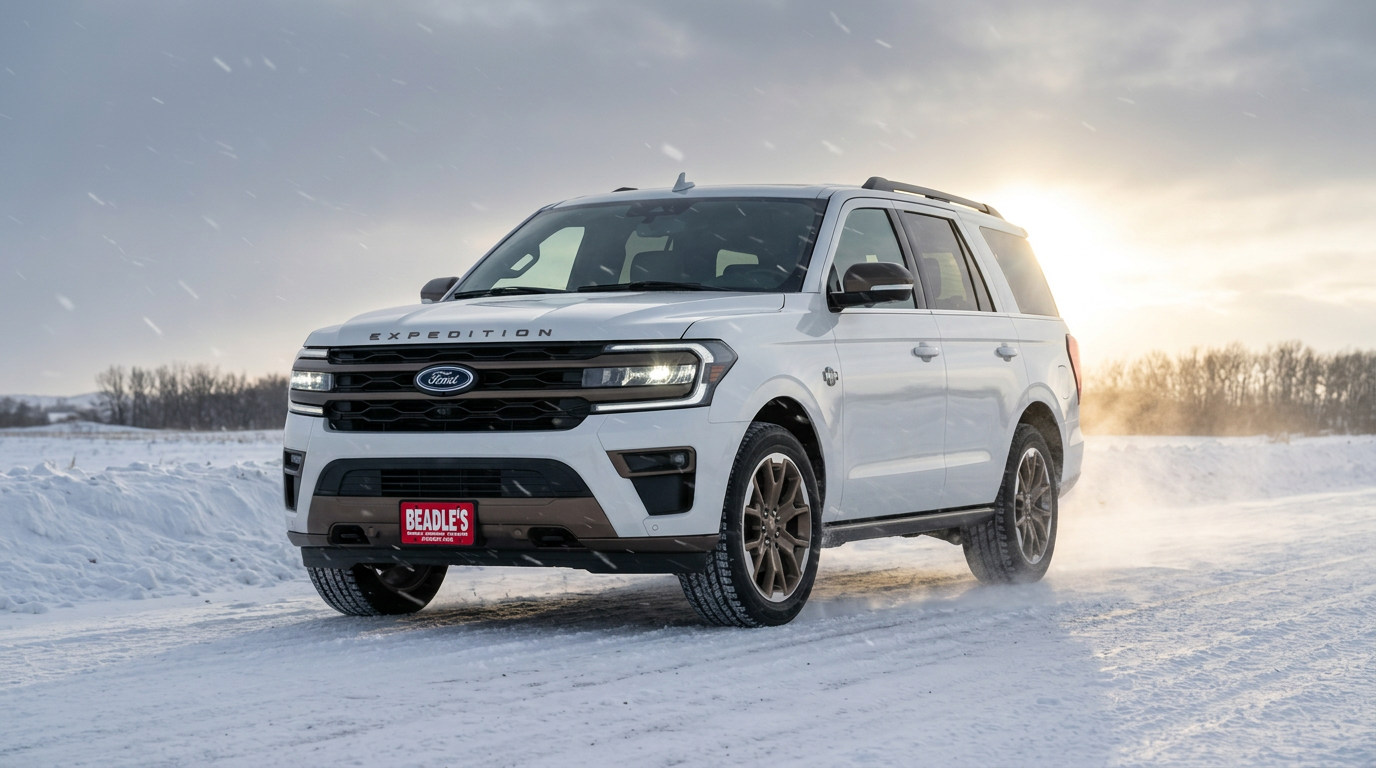
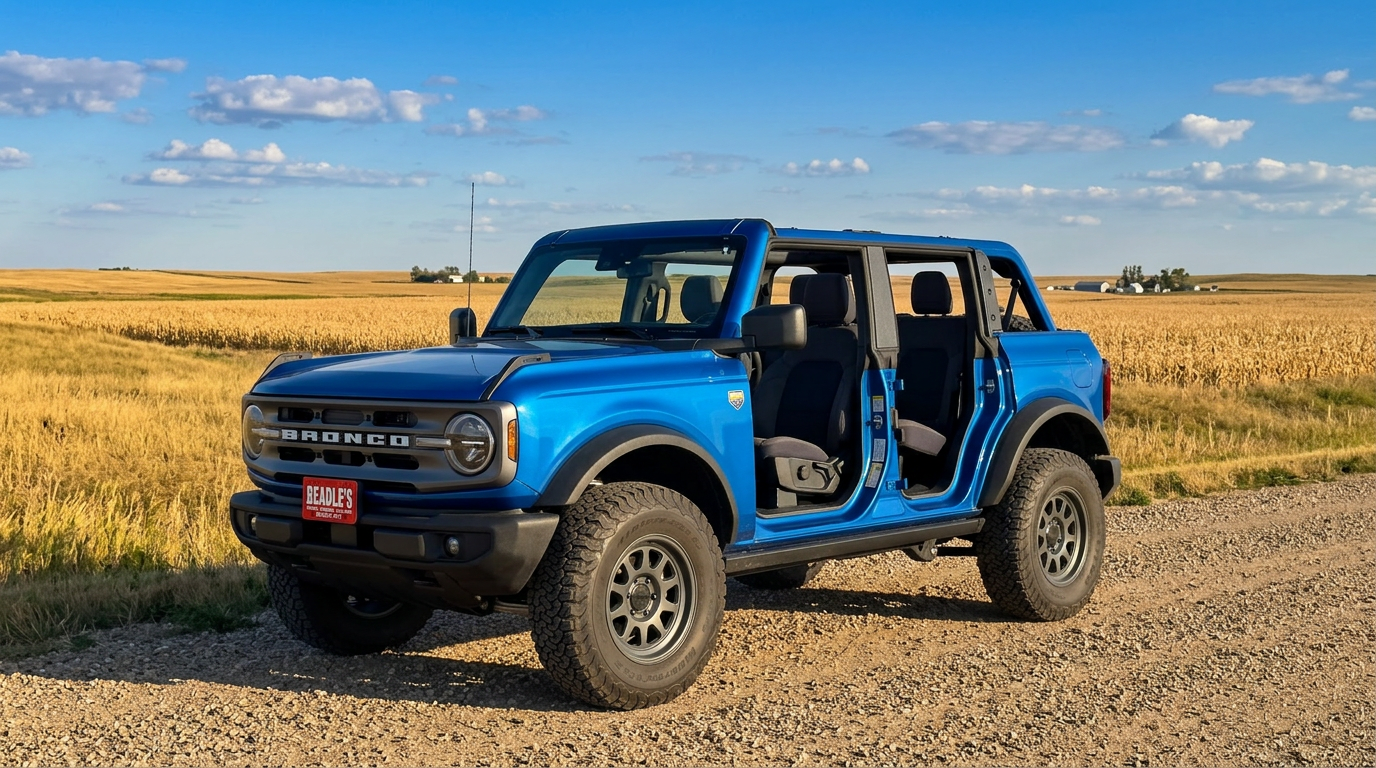
2026 Ford Bronco demonstrating G.O.A.T. Modes terrain management on a muddy CRP access road — Beadle Ford in Bowdle, SD

2026 Ford Bronco G.O.A.T. Modes Explained: When to Use Each One

G.O.A.T. stands for Goes Over Any Type of Terrain — it's Ford's terrain management system that adjusts throttle response, transmission shift points, traction control behavior, and torque distribution depending on what's under the tires. The marketing version makes every mode sound essential. The honest version, after years of selling Broncos to ranchers, hunters, and lake-bound buyers in central South Dakota, is that you'll use two or three of the modes regularly and the others maybe once a season. This guide walks through every G.O.A.T. mode on the 2026 Ford Bronco, names which trims get which modes, and pairs each one with a real central SD use case. We'll also cover Trail Control, Trail Turn Assist, and One-Pedal Trail Driving — three off-road tech features that don't get marketed as G.O.A.T. modes but matter as much as some that do. Search Available Bronco Inventory Get Pre-Qualified On This Page What's the Full G.O.A.T. Mode List for the 2026 Bronco? What Are the Five Modes Every Bronco Has — Normal, ECO, Sport, Slippery, and Sand? Which Modes Do Badlands and Raptor Add — Off-Road, Rock-Crawl, and Baja? When Would I Actually Use Each Mode in Central South Dakota? How Do G.O.A.T. Modes Compare to Jeep's Selec-Terrain System? What Do Trail Control, Trail Turn Assist, and One-Pedal Trail Driving Do? What's the Full G.O.A.T. Mode List for the 2026 Bronco? Every 2026 Bronco gets five G.O.A.T. modes as standard equipment: Normal, ECO, Sport, Slippery, and Sand. Badlands and Raptor get a different seven-mode set: Normal, ECO, Slippery, Off-Road, Sport, Rock-Crawl, and Baja. The Badlands setup drops Sand from the standard list and adds three off-road-specific modes — it's not just five-plus-two, it's a different mix tuned for harder use. The mode dial sits on the center console where the standard transmission shifter would be on a non-G.O.A.T. vehicle, and you select modes by rotating the dial. The current mode is shown both on the dial itself and in the digital instrument cluster. The Heritage Edition and Stroppe Edition use the standard five-mode set; the Big Bend and Outer Banks also get five. If the seven-mode set matters to your use case, Badlands or Raptor is the trim. For full trim breakdowns see our 2026 Bronco trim levels guide. What Are the Five Modes Every Bronco Has — Normal, ECO, Sport, Slippery, and Sand? Normal is the default mode for everyday driving — paved roads, dry gravel, light loads. The system runs balanced throttle response, normal shift mapping, and standard traction control. It's where the Bronco sits 80 percent of the time for most owners. ECO mode dials throttle response back, holds gears longer, and biases shift points for fuel economy. It's the mode for the Bowdle-to-Black-Hills highway run when you'd rather have an extra mile or two per gallon than instant pedal response. Highway only — there's no off-road benefit to ECO. Sport sharpens throttle response, holds gears longer for higher-RPM operation, and tightens steering feel slightly. It's the mode for the rare moments you actually want to drive a Bronco hard on pavement — a fun back-road run, a quick highway pass. Most Bronco owners try Sport once and never return to it. Slippery is the workhorse of the standard five-mode set in central South Dakota. It dials throttle response back so you don't break traction at takeoff, smooths shift points, and recalibrates traction control for soft or slick surfaces. Slippery covers wet gravel, packed snow, glare ice on a section line, a soft CRP access road, and frozen ruts in early winter. If you live outside Bowdle on a gravel road, this mode earns its money every week of the cold months. Sand is the mode for a Lake Oahe shoreline access lane, a soft beach approach to a boat ramp, and any deep dry-loose surface where you need wheel speed to maintain forward momentum. It defeats traction control more aggressively than Slippery does, on the principle that wheel slip is part of how you make progress through deep sand. Sand is missing from the Badlands and Raptor mode set, since those trims expect their drivers to use Off-Road or 4-Low for that work instead. Which Modes Do Badlands and Raptor Add — Off-Road, Rock-Crawl, and Baja? Off-Road is the everyday off-pavement mode for Badlands and Raptor. It engages the front axle, biases torque toward the wheels with grip, calibrates throttle for low-speed control, and prepares the system for use of the front and rear lockers if needed. This is the mode for a cattail-slough access road in late October, a river-bottom timber two-track in November, or a section line that hasn't been graded since spring thaw. The G.O.A.T. mode dial sits on the center console; the current mode reads on both the dial and the digital instrument cluster. Rock-Crawl is the slowest, most deliberate mode — designed for picking through rocky terrain with maximum control. It holds low gears, sharpens brake response, and integrates with Trail Control for hands-off-the-throttle crawling speed. In central SD, Rock-Crawl is overkill for almost everything. You'd reach for it on a Black Hills weekend or a serious hunting access trail with embedded rocks. It's a Wyoming or Colorado feature more than a Bowdle one. Baja is the high-speed off-road mode — sharp throttle, aggressive shift mapping, traction control retuned for desert-style driving. Like Rock-Crawl, it's geographically misaligned with central SD. There aren't many places within an hour of Bowdle where Baja mode is the right tool. Most Badlands owners around here never use it. It's part of the package because the Badlands trim is sold nationwide, and there are buyers in the Southwest and West Coast who do use it. Both lockers — front and rear, electronic — are standard on Badlands, Heritage Edition, Raptor, and any Bronco with the Sasquatch Package. The lockers are what get you out of a stuck situation when an open differential is just spinning one wheel; they're a separate system from the mode dial, but Off-Road and Rock-Crawl prepare the vehicle to use them. Sasquatch deep-dive in our 2026 Bronco Sasquatch Package guide. Get Pre-Qualified Contact Beadle Ford When Would I Actually Use Each Mode in Central South Dakota? Here's the honest central SD use map for each mode: For 80 percent of the miles a Bronco logs on central SD section roads, Normal mode handles it. Slippery is the wet-gravel and snow-cover answer. Normal: Paved roads anywhere — Bowdle in town, US-12, US-83, the trip to Aberdeen or Pierre. Dry gravel section roads in summer. Light errand-running on packed snow with no ice. This is where the Bronco lives most of the time. ECO: Long highway runs, particularly to the Black Hills (~four hours) when you'd rather take the small fuel-economy improvement. Skip ECO in town or on gravel — there's no benefit. Sport: Almost never. The Bronco isn't a sport-tuned vehicle, and the mode is more relevant for highway passing maneuvers than for daily driving. Slippery: Wet gravel section roads, snow-covered county roads, glare ice, frozen ruts in early winter, soft CRP access roads after rain, the muddy approach to a Lake Oahe boat ramp in spring. This is the everyday cold-weather setting for a Bronco that lives outside Bowdle. Sand: Lake Oahe shoreline access at unimproved boat ramps in summer. Some sandy two-tracks across CRP. Used a few times a season at most. Off-Road (Badlands/Raptor): Cattail-slough access roads, river-bottom timber two-tracks, ranch-property loops with deep ruts, harvested-cornfield approaches in wet conditions. This is the SD-relevant mode that actually gets used in the field. Rock-Crawl and Baja (Badlands/Raptor): Black Hills weekend trips for Rock-Crawl. Baja is mostly geographically misaligned with central SD — an interesting feature on the spec sheet that most local owners never use. How Do G.O.A.T. Modes Compare to Jeep's Selec-Terrain System? Both systems do the same job — adjust traction control, throttle response, transmission behavior, and torque distribution for different surfaces. The differences are in mode count, mode names, and how the systems integrate with other off-road tech. Jeep's Selec-Terrain typically runs four to five primary modes (Auto, Snow, Sand/Mud, Rock) depending on the trim, paired with the brand's Command-Trac, Selec-Trac, or Rock-Trac 4WD systems. G.O.A.T. tends to be more discrete in mode count — five on most Broncos, seven on Badlands and Raptor — and more electronic in feel. Selec-Terrain leans more analog, with a tighter integration with Rock-Trac's mechanical 4:1 low-range gearing on Wrangler Rubicons. Neither system has a clear edge over the other; they're tuned for the different brand philosophies. For the full Bronco vs Wrangler picture see our 2026 Bronco vs Jeep Wrangler honest comparison. For a central SD buyer, the comparison usually doesn't come down to mode count — it comes down to other factors (engine choice, towing, doors-off design, dealer relationship). The G.O.A.T. system covers everything a Bronco buyer needs in this region. The Selec-Terrain system covers everything a Wrangler buyer needs. Both work. What Do Trail Control, Trail Turn Assist, and One-Pedal Trail Driving Do? These three features get less attention than G.O.A.T. modes but matter as much in real off-road work. Trail Control is low-speed off-road cruise control — set a speed between roughly 1 and 20 mph, and the vehicle maintains it while you focus on steering. It's available on Bronco trims with the 10-Speed Automatic and is the right tool for crawling through deep ruts, soft mud, or a cattail-slough access road where you'd rather not modulate the throttle by foot. Trail Turn Assist uses individual brake application to tighten the turning radius dramatically when you're navigating a tight off-road switchback or a narrow section-line corner. It's a niche feature in central SD because most of our terrain doesn't require it, but for a Black Hills trail or a wooded ranch-property loop with tight turns it does what no amount of steering-wheel input can match. One-Pedal Trail Driving is available on Outer Banks and Badlands with the 10-Speed Automatic. It lets you control acceleration and braking with just the throttle pedal — lift off the throttle and the vehicle slows aggressively without you needing to swap to the brake pedal. For tricky off-road work where your right foot is doing more thinking than driving, it's a useful feature. All three of these tools become clearer within the full 2026 Ford Bronco overview, where capability and tech features lay out by trim. Key Takeaways Every 2026 Bronco has five G.O.A.T. modes: Normal, ECO, Sport, Slippery, and Sand. Badlands and Raptor get a different seven-mode set: Normal, ECO, Slippery, Off-Road, Sport, Rock-Crawl, and Baja (drops Sand, adds three off-road modes). For central SD buyers, Slippery is the everyday cold-weather mode — earns its money every week of the cold months on a gravel-road commute. Off-Road is the SD-relevant Badlands mode that gets real use; Rock-Crawl and Baja are tuned for terrain we don't have around Bowdle. Trail Control (low-speed off-road cruise) is the sleeper feature — pair it with Off-Road mode and a Bronco walks through ruts you'd struggle through manually. Frequently Asked Questions How many G.O.A.T. modes does a 2026 Ford Bronco have? Most 2026 Bronco trims (Base, Big Bend, Outer Banks, Heritage Edition, Stroppe) have five G.O.A.T. modes: Normal, ECO, Sport, Slippery, and Sand. The Badlands and Raptor get a different seven-mode set: Normal, ECO, Slippery, Off-Road, Sport, Rock-Crawl, and Baja. Sand is dropped from the Badlands set and replaced by the three off-road-specific modes. What does Slippery mode do on a 2026 Bronco? Slippery dials throttle response back so you don't break traction at takeoff, smooths shift points, and recalibrates traction control for soft or slick surfaces. It's the right setting for wet gravel, packed snow, glare ice, soft CRP access roads, and frozen ruts in early winter — the everyday cold-weather mode for a central SD Bronco. Does the 2026 Bronco have a Mud/Ruts mode? No. Earlier Bronco model years included a "Mud/Ruts" mode in marketing materials, but the 2026 Badlands order guide lists Off-Road in its place. The Badlands seven-mode set for 2026 is Normal, ECO, Slippery, Off-Road, Sport, Rock-Crawl, and Baja. Off-Road covers the muddy and rutted use cases that Mud/Ruts used to handle. Which G.O.A.T. mode should I use on a snow-packed South Dakota section road? Slippery mode is the right setting on every Bronco trim for snow-packed county roads. If you're in a Badlands or Raptor and the road is deep or rutted, switch to Off-Road and engage 4-High or 4-Low as conditions warrant. Trail Control is helpful when ruts get deep enough that throttle modulation by foot becomes tedious. Is Trail Control available on Bronco trims with the manual transmission? No. Trail Control and Trail Turn Assist are tied to the 10-Speed Automatic transmission. The 7-Speed Manual (paired with the 2.3L EcoBoost) does not offer them. If those features matter to your off-road use case, spec a 10-Speed Automatic configuration. Do I need Badlands or Raptor to get capable G.O.A.T. modes for South Dakota? For most central SD use cases — wet gravel, packed snow, soft CRP access roads, light off-pavement — the standard five-mode set with Slippery and Sand handles it. Badlands and Raptor add Off-Road, Rock-Crawl, and Baja, which earn their value if you regularly cross deep ruts, cattail-slough access roads, or river-bottom timber two-tracks. For a Big Bend or Outer Banks buyer in this region, the standard mode set is plenty. My Take on G.O.A.T. Modes for Central SD Buyers The marketing version of G.O.A.T. modes makes every setting sound essential. The reality, after years of selling Broncos to ranchers, hunters, and ag operators in this region, is that most owners use Normal and Slippery for ninety-five percent of their miles, reach for Sand a couple times a summer, and never touch Sport. On a Badlands, Off-Road gets actual use; Rock-Crawl and Baja stay on the dial as features the spec sheet wanted but the geography doesn't ask for. What I'd tell a customer is this: the seven-mode set on Badlands isn't worth paying for if you're not going to use Off-Road regularly. The five-mode set with a Big Bend's Black Diamond Package or an Outer Banks gets you 95 percent of the central SD Bronco experience for less money. If you actually do hunt sloughs and river bottoms, the Badlands Off-Road mode plus the standard front and rear lockers earn the upcharge. Come in and we'll figure out which math fits your week. Search Available Bronco Inventory Get Pre-Qualified About the Author Lexy Tabbert — Beadle Ford, Bowdle, SD Lexy Tabbert is the Director of Sales and Marketing at Beadle Ford in Bowdle, South Dakota. She covers Ford vehicles, trim comparisons, and buyer guidance — helping families, ranchers, and ag operators across the region find the right truck and configuration for their needs. Learn more about Lexy.
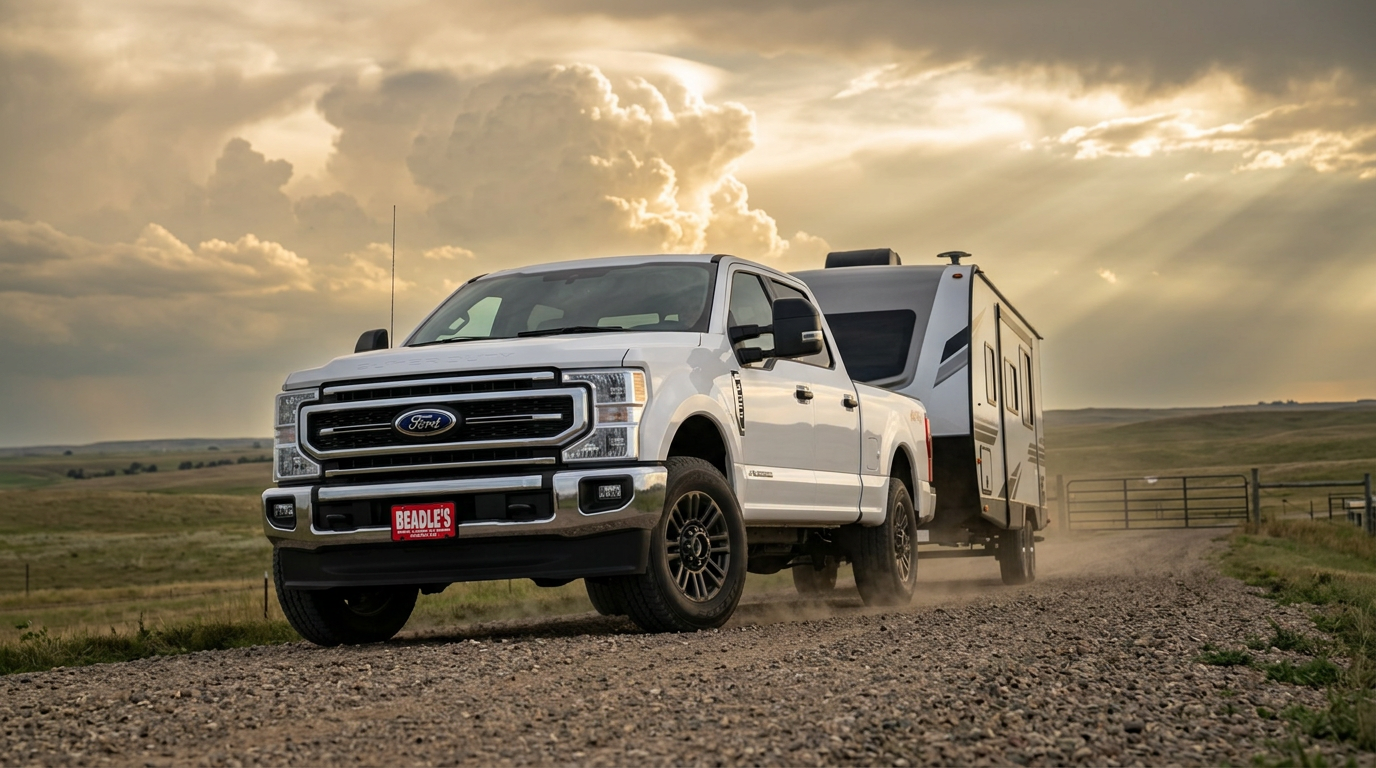
2026 Ford Bronco Badlands and 2026 Ford Bronco Sport parked side-by-side at Beadle Ford in Bowdle, SD, comparing the body-on-frame and unibody body styles

2026 Ford Bronco vs Bronco Sport: Which One Is Right for You?

Half the customers who walk into Beadle Ford asking about a Bronco actually want a Bronco Sport. The other half think the Sport is the right call until they see what the full-size Bronco can do. Two vehicles, similar names, same off-road family — and very different jobs. Knowing which one fits your week before you walk onto the lot saves time, money, and a regret call six months later. This guide is an honest comparison of the 2026 Ford Bronco and the 2026 Ford Bronco Sport for buyers in Bowdle and the central South Dakota region. We'll cover what body-on-frame versus unibody really means for daily driving, interior and cargo room, off-road hardware, towing and capability, the pricing gap and what it buys, and which one we recommend for which kind of buyer. Both are good vehicles. Only one is right for any given customer. Search Available Bronco Inventory Get Pre-Qualified On This Page What Does Body-on-Frame vs Unibody Actually Mean for Drivers? How Do Interior Space, Cargo Room, and Daily Practicality Compare? How Does the Off-Road Hardware Compare — Sasquatch vs Sport Badlands? Which One Tows More, and What Real-World Capability Does Each Offer? What's the Pricing Gap, and What Does the Money Actually Buy You? Which One Should Beadle Ford Recommend for You? What Does Body-on-Frame vs Unibody Actually Mean for Drivers? The Bronco is body-on-frame: a separate ladder frame underneath the body, the same architecture as a full-size truck. The Bronco Sport is unibody: the body and structural frame are a single welded unit, the same architecture as a crossover SUV. That single design choice drives almost every meaningful difference between the two. Body-on-frame gives you better hard off-road durability, easier flex when one wheel is up on a rock and another is in a hole, simpler frame repair after damage, and the ability to mount removable doors and a removable roof without compromising structure. It also makes the vehicle heavier, slightly louder at highway speed, and a little less refined on smooth pavement. Unibody gives you a quieter cabin, better fuel economy, smoother ride quality on pavement, lower curb weight, and a tighter turning radius. The trade-off is reduced articulation in genuine off-road conditions and a lower towing ceiling. For a buyer who lives mostly on Bowdle's blacktop and gravel and occasionally wants to access a CRP edge or a Lake Oahe boat ramp, unibody is plenty. For a buyer who needs to thread a section-line two-track in winter or pull a 3,500-lb boat trailer, body-on-frame is the right tool. How Do Interior Space, Cargo Room, and Daily Practicality Compare? Both vehicles seat five. The full-size Bronco's 4-Door is wider and taller, with more shoulder room front and rear, more rear-seat legroom, and a noticeably bigger cargo bay behind the rear seats. The Bronco Sport is narrower and lower, easier to park in a small-town downtown space, and lighter on the eyes for shorter drivers who don't want to climb up into the cabin. The full-size Bronco's wider track and taller body translate into more interior room — and a more deliberate driving feel — than the Bronco Sport's lower, lighter unibody. Cargo: a 4-Door Bronco swallows a Lab-sized kennel, a full decoy spread, and two coolers behind the rear seats with the seats up. The Bronco Sport's cargo bay handles a kennel and a cooler with the seats up, but a full decoy spread or layout blind needs the rear seat folded. For grocery-and-school-pickup duty, both are plenty. For a hunting rig that hauls dogs and gear, the full-size Bronco is the right answer. For full hunting use cases see our South Dakota hunting guide. Daily-driver feel is where the Bronco Sport pulls ahead. It rides quieter on US-12 at 70 mph, returns better fuel economy on the Bowdle-to-Hills run, and parks more easily in a narrow lot. The full-size Bronco's removable doors and roof are unique to the platform — the Bronco Sport doesn't offer them. If the doors-off summer lifestyle is part of why you're shopping, that's a Bronco-only feature. How Does the Off-Road Hardware Compare — Sasquatch vs Sport Badlands? Both vehicles can tackle a wet ranch two-track, a CRP access road, or a snow-packed section line in central SD. The line between them shows up in deep mud, real ruts, and rock crawling — situations where the full-size Bronco's hardware advantage is the difference between getting through and getting stuck. A Sasquatch-equipped Bronco runs 35-inch tires, electronic-locking front and rear differentials, and high-clearance suspension — hardware that the unibody Bronco Sport doesn't offer. The full-size Bronco's Badlands trim ships with electronic-locking front and rear differentials, 33-inch Rugged-Terrain tires, the seven-mode G.O.A.T. terrain system (Off-Road, Rock-Crawl, Baja added on top of the standard five), and the Advanced 4x4 system with 4-Auto. Add the Sasquatch Package and you get 35-inch tires and HOSS suspension upgrades. For the full breakdown see our 2026 Bronco trim levels guide. The Bronco Sport's Badlands trim is the most off-road-focused of the Sport lineup, with steel underbody skid plates, terrain modes, and twin-clutch rear axle technology. It's a capable rig for what it is — a unibody crossover with off-road tuning — but it doesn't offer beadlock-capable wheels, 35-inch tires, or the dual electronic locker setup. For everyday SD ranch and lake access, Sport Badlands handles it. For genuine off-road work, the full-size Bronco's hardware ceiling is much higher. Get Pre-Qualified Contact Beadle Ford Which One Tows More, and What Real-World Capability Does Each Offer? The full-size Bronco wins on towing. Every non-Raptor 2026 Bronco is rated for a 3,500-lb maximum loaded trailer weight, and the Raptor is rated for 4,500 lbs. The Bronco Sport's tow rating is significantly lower and is configuration-dependent — for a small utility trailer, a single-axle aluminum boat, or a lightweight pop-up camper it works; for the 3,500-lb fishing-rig-on-a-trailer use case, the full-size Bronco is the right vehicle. Real-world capability beyond towing is where each vehicle's intended use shows up. The full-size Bronco is built to handle deep snow on a section line, mud on a slough access road, and frozen ruts on a river-bottom whitetail trail. It walks through what the Bronco Sport would have to turn around at. The Bronco Sport, in turn, is built to handle the entire range of central SD daily driving with capability in reserve — gravel roads, light off-pavement, snowy commutes, dirt fairgrounds — in a more efficient and refined package. A practical note for towing: a dealer-installed OEM trailer hitch receiver is required for any towing over 2,000 lbs on the full-size Bronco, regardless of trim. Same kind of dealer-install conversation applies to the Bronco Sport for any towing setup. Bring the trailer specs to the conversation and we'll size the right tow package for either vehicle. What's the Pricing Gap, and What Does the Money Actually Buy You? The 2026 Bronco starts at $40,495 (Base 2-Door or 4-Door), runs through Big Bend at $40,995, Outer Banks at $48,090, Badlands at $48,890, Heritage Edition at $51,625, and tops out at the Raptor at $79,995 — all before the $1,995 destination charge. The 2026 Bronco Sport's lineup starts well below the full-size Bronco's entry point and tops out below the Bronco Badlands' starting price. There's typically a five-to-fifteen-thousand-dollar gap between comparably equipped Sport and Bronco trims. The money buys you four things on the full-size Bronco that the Sport can't match: removable doors and roof, body-on-frame off-road durability, a tow rating up to 3,500 or 4,500 lbs, and the highest off-road hardware ceiling in the segment (lockers, 35-inch tires, HOSS suspension on Badlands and up). If those features matter to you, the upcharge is worth it. If they don't, you're paying for capability you won't use. Cost of ownership beyond purchase price tends to favor the Bronco Sport over time. Better fuel economy, lower insurance in most cases, and lower tire-replacement costs (32-inch tires versus 33-inch or 35-inch on the full-size Bronco) all add up over a five-year ownership window. We'd rather have the straight conversation than oversell either vehicle. Which One Should Beadle Ford Recommend for You? Pick the Bronco Sport if your daily driving is mostly pavement and gravel, you want better fuel economy, parking matters in your week, and you don't tow more than light loads. Sport Badlands is plenty for ranch-property access, CRP edges, and Lake Oahe boat ramp duty in fair weather. The 2026 Bronco Sport lineup is detailed on our 2026 Ford Bronco Sport overview, and the model page with current inventory lives at the Ford Bronco Sport model page. Pick the full-size Bronco if you tow a 3,500-lb boat or trailer, you hunt cattail sloughs and river-bottom timber, you want the doors-off summer lifestyle, you regularly drive unplowed section lines in winter, or the body-on-frame durability matters because you actually use the vehicle hard. Badlands 4-Door is the sweet spot for most central SD buyers; the Sasquatch Package is the upgrade if you cross deep mud or snow regularly. Pick neither if you don't actually want or need 4WD, off-road styling, or the Bronco identity. Ford has several strong crossover options that will be cheaper, more efficient, and better suited to a pure pavement life. Both Broncos are real off-road vehicles — the value is in using what they offer. The complete 2026 Ford Bronco overview lays out trims, packages, and capability side by side if you're leaning full-size. Key Takeaways Bronco is body-on-frame; Bronco Sport is unibody. That single design choice drives almost every meaningful difference between them. Full-size Bronco tows up to 3,500 lbs (non-Raptor) or 4,500 lbs (Raptor). Bronco Sport tow rating is significantly lower and configuration-dependent. Removable doors and roof are unique to the full-size Bronco — the Bronco Sport doesn't offer them. Sport Badlands handles light off-road and gravel-road duty in central SD; full-size Bronco Badlands or Sasquatch handles cattail sloughs, river-bottom timber, and unplowed section lines. Bronco Sport wins on fuel economy, daily refinement, parking, and total cost of ownership. Full-size Bronco wins on capability ceiling, towing, and lifestyle features. Frequently Asked Questions Is the 2026 Bronco Sport built on the same platform as the full-size Bronco? No. The full-size Bronco is body-on-frame, sharing architecture with full-size trucks. The Bronco Sport is unibody, sharing architecture with crossover SUVs. They are completely different vehicles that share branding and styling cues but not platform, drivetrain, or capability ceiling. Can the Bronco Sport take its doors and roof off like the full-size Bronco? No. The Bronco Sport's unibody construction doesn't accommodate removable doors or a removable roof. If the doors-off summer lifestyle is part of why you're shopping, the full-size Bronco is the only option in the lineup. Which one is better for towing a small fishing boat to Lake Oahe? For a small aluminum boat on a single-axle trailer, either vehicle can handle the load. For a heavier fiberglass fishing rig that approaches 3,000 lbs, the full-size Bronco is the right call — every non-Raptor 2026 Bronco is rated for a 3,500-lb maximum, well above what the Bronco Sport's lower tow rating supports. A dealer-installed OEM trailer hitch is required for any towing over 2,000 lbs on the full-size Bronco. Is the Bronco Sport Badlands as capable off-road as the full-size Bronco Badlands? No. The Sport Badlands is the most off-road-focused trim of the Sport lineup, but it doesn't match the full-size Badlands' electronic-locking front and rear differentials, 33-inch Rugged-Terrain tires (or 35-inch with Sasquatch), the seven-mode G.O.A.T. terrain system, or the body-on-frame articulation in real ruts. Sport Badlands handles light off-road and gravel; full-size Badlands handles deep mud, river-bottom two-tracks, and unplowed section lines. How much more does a full-size Bronco cost than a Bronco Sport? The 2026 Bronco starts at $40,495 (Base) before destination, with Big Bend at $40,995, Badlands at $48,890, Heritage Edition at $51,625, and Raptor at $79,995. The Bronco Sport lineup starts well below the full-size Bronco's entry point and tops out below the Bronco Badlands. There's typically a five-to-fifteen-thousand-dollar gap between comparably equipped Sport and full-size trims. Which gets better fuel economy on a Bowdle-to-Black-Hills highway run? The Bronco Sport returns better EPA-estimated fuel economy than the full-size Bronco across comparable engine and trim configurations. The Sport's lower curb weight and more aerodynamic unibody profile both contribute. Always frame fuel economy claims as EPA-estimated and varying by configuration, and confirm specific numbers on fueleconomy.gov for the exact build you're shopping. My Take on the Bronco vs Bronco Sport Decision The mistake I see most often is a customer ordering the full-size Bronco because it looks more capable, then driving it for two years on pavement and gravel and never once putting it in 4-Low. That's a $15,000 capability premium for a vehicle that's not being used to its purpose — and it's a Bronco Sport in disguise. The reverse mistake also happens: a customer orders the Sport because it's more affordable, then realizes a year in that they actually do tow a fishing boat and want the doors off in summer. Honest advice: the right vehicle is the one that matches what you actually do, not what you imagine doing. We sell both at Beadle Ford, and we'd rather sell you the right one and have you back in five years than sell you the wrong one and lose you to a different brand. Bring your real use case — towing, terrain, weekly miles, summer plans — and we'll walk through both. The conversation usually settles itself in fifteen minutes. Search Available Bronco Inventory Get Pre-Qualified About the Author Lexy Tabbert — Beadle Ford, Bowdle, SD Lexy Tabbert is the Director of Sales and Marketing at Beadle Ford in Bowdle, South Dakota. She covers Ford vehicles, trim comparisons, and buyer guidance — helping families, ranchers, and ag operators across the region find the right truck and configuration for their needs. Learn more about Lexy.
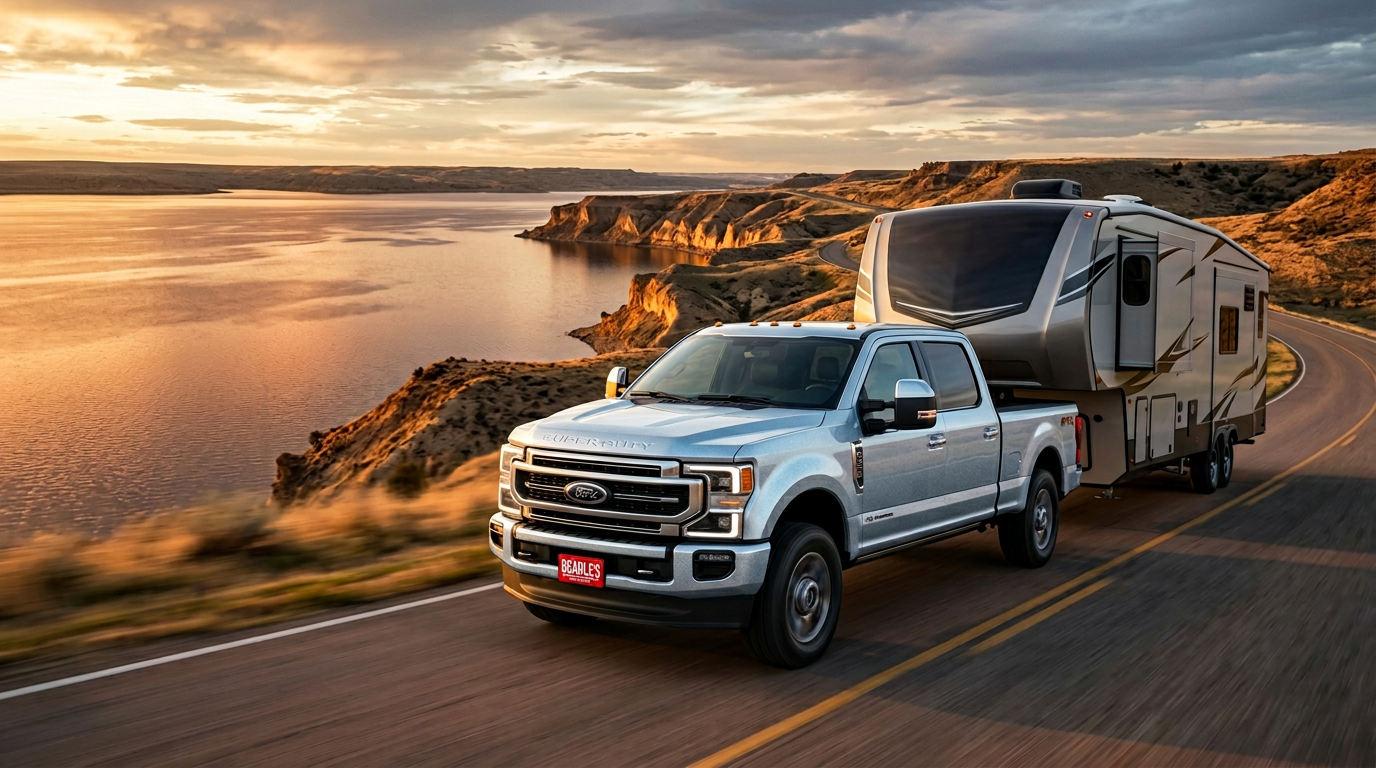
Contact Us

Fill out this form below and we'll contact you shortly
*Required Fields