Blog

All New Vehicles Bowdle Ford Dealer Bowdle Ford Service
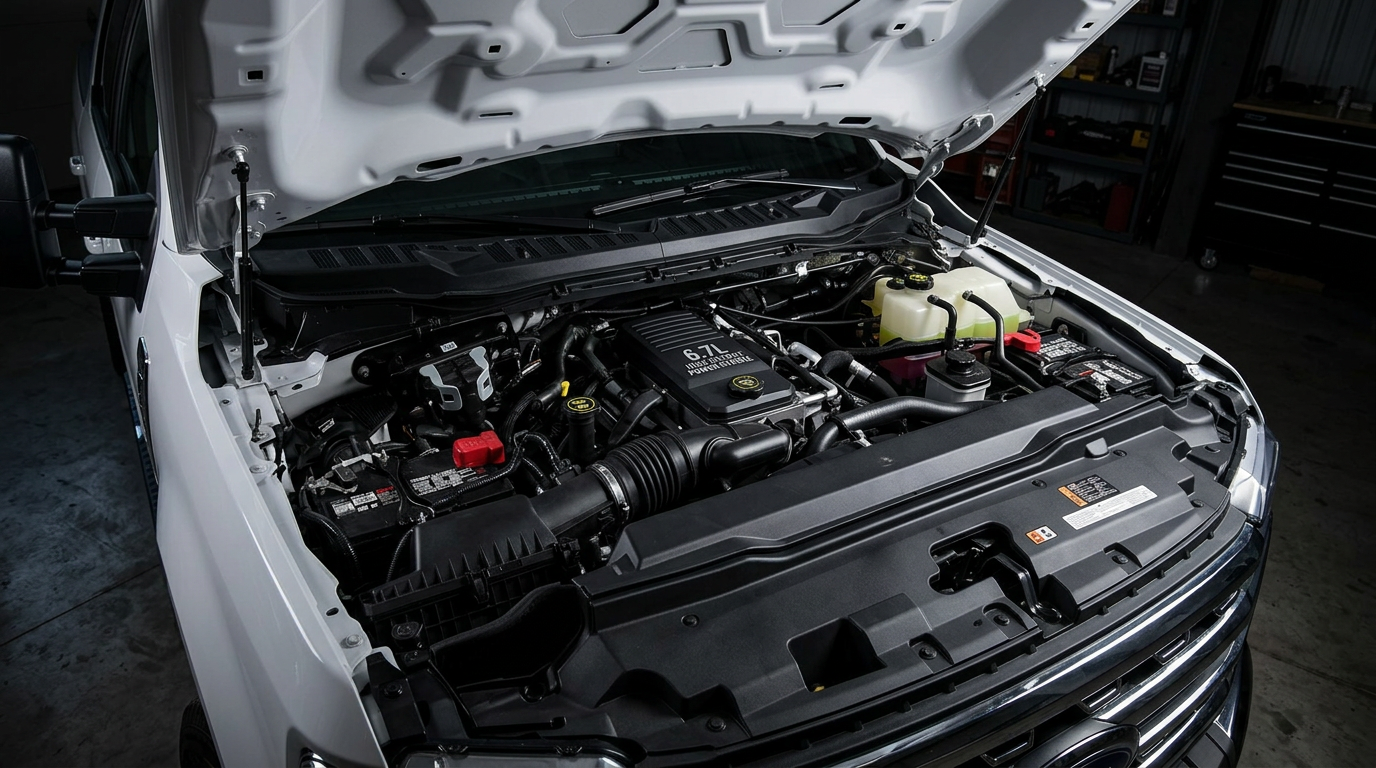
2027 Ford F-350 Super Duty engine bay with the available 6.7L High-Output Power Stroke diesel

2027 Ford F-350 Engine Comparison: 7.3L Gas vs. High-Output Diesel

Quick Answer For 2027 the F-350 offers just two engines: the 7.3L gas V8 (now standard on every trim) and the available 6.7L High-Output Power Stroke diesel. The gas carries the highest payload (up to ~7,900 lbs) and covers most towing; the High-Output diesel is the choice for heavy, frequent towing and the 40,000-lb gooseneck maximum. The 2027 F-350 makes the engine decision simpler than it's ever been. Gone are the 6.8L gas and the standard-output diesel — leaving a clean choice between the now-standard 7.3L gas V8 and the available 6.7L High-Output Power Stroke diesel. This guide covers what each engine is built for, how they compare on the numbers that are confirmed for 2027, and how to match one to the way you actually tow and haul around Bowdle and Aberdeen. Shop F-350s in Stock Get Pre-Approved On This Page What engines does the 2027 F-350 offer? Is the 7.3L gas enough without the standard diesel? When is the High-Output diesel worth it? Gas vs. diesel: ownership beyond the spec sheet How do you choose for your workload? What engines does the 2027 F-350 offer? Two, both paired with the 10-speed TorqShift automatic: the 7.3L gas V8, now standard on every trim, and the available 6.7L High-Output Power Stroke diesel — the only diesel for 2027. Ford hasn't published final 2027 horsepower and torque figures, so the comparison below is built on the capability numbers that are confirmed. Engine Best For Confirmed Capability 7.3L gas V8 (standard) Daily work, occasional-to-moderate towing, max payload, lower cost of ownership Highest payload — up to ~7,900 lbs 6.7L High-Output Power Stroke (available) Heavy, frequent towing; large goosenecks and fifth-wheels; max capability Up to 40,000 lbs gooseneck (DRW, 40K package) Maximums require proper equipment and vary by cab, bed, axle, and single- or dual-rear-wheel configuration. 2027 hp/torque not yet published by Ford. Is the 7.3L gas enough without the standard diesel? For most F-350 buyers, yes. The 7.3L gas V8 is now standard on every trim, and it carries the F-350's highest payload — up to about 7,900 lbs — because it's lighter than the diesel. It handles daily ranch and jobsite work and a wide range of gooseneck and trailer loads without the diesel's upfront cost or maintenance. If your towing stays in the range a gas Super Duty comfortably covers, the standard 7.3L may be all the truck you need — and the money saved goes a long way toward the rest of the build. When is the High-Output diesel worth it? The 6.7L High-Output Power Stroke is the heavy-towing engine — it's what unlocks the 40,000-lb gooseneck maximum and feels most composed on grades, in wind, and on long highway pulls. If you tow heavy and often, run a large gooseneck or fifth-wheel, or want maximum capability headroom, it earns its premium. Our Recommendation For most ranch and farm buyers around Bowdle and Aberdeen, start with the now-standard 7.3L gas — it covers daily work, the highest payload, and most of the towing people actually do. Choose the High-Output diesel when you regularly run heavy goosenecks or want the 40,000-lb ceiling. Size it to your real loaded trailer with our 2027 F-350 towing guide. Gas vs. diesel: ownership beyond the spec sheet The engine is an ownership decision, not just a capability one. Weigh these against how hard you'll actually work the truck: Upfront cost: the diesel carries a higher purchase price than the gas. Payload need: if you haul heavy in the bed more than you tow, the 7.3L gas and its ~7,900-lb payload may matter more than diesel torque. Use pattern: frequent heavy towing justifies diesel; mixed driving favors gas. Long-term plans: how long you keep the truck and your annual miles change the math. From the Beadle Ford Lot With the standard-output diesel gone, the conversation has flipped. Buyers used to default to "get the diesel"; now, once we walk through their real trailer weight, more are landing on the standard 7.3L gas and putting the savings toward trim or the build they actually want. How do you choose for your workload? Work from how you use the truck, in four steps: Identify your heaviest trailer and how often you tow it. Decide whether maximum capability headroom matters, or whether comfortable margin is enough. Factor in payload needs, annual miles, and how long you keep trucks. Confirm the build — engine choice can affect available packages and SRW vs. DRW. Key Takeaways 2027 simplifies to two engines: 7.3L gas standard, 6.7L High-Output diesel optional. The 7.3L gas carries the highest payload — up to ~7,900 lbs — and covers most towing. The High-Output diesel is the heavy-towing choice and unlocks the 40,000-lb gooseneck maximum. Pick by use pattern and payload need, not by habit — many buyers now fit the gas. Ford hasn't published 2027 hp/torque yet; the lineup and capability figures are confirmed. Frequently Asked Questions What engines does the 2027 Ford F-350 have? Two: the 7.3L gas V8, standard on every trim, and the available 6.7L High-Output Power Stroke diesel. Both use a 10-speed TorqShift automatic. The 6.8L gas and standard-output 6.7L diesel from 2026 are discontinued. Ford hasn't published final 2027 horsepower and torque figures. Is the 7.3L gas enough for an F-350 without the diesel? For most buyers, yes. The 7.3L gas is now standard, carries the highest payload (up to ~7,900 lbs), and handles daily work and a wide range of towing. The diesel is for those who tow heavy and often or want the 40,000-lb gooseneck maximum. Which 2027 F-350 engine tows the most? The 6.7L High-Output Power Stroke diesel — it anchors the F-350's 40,000-lb gooseneck maximum in dual-rear-wheel form with the 40K Gooseneck Tow Package. The 7.3L gas covers most lighter and moderate towing. Which engine has the most payload? The 7.3L gas V8, at up to approximately 7,900 lbs with the heavy-duty payload package — more than the diesel, because the lighter engine frees up weight for the bed. Do the 2027 engines change towing or payload vs. 2026? No — the F-350's tow and payload maximums carry over. Even with two engines instead of four, the High-Output diesel still tows up to 40,000 lbs gooseneck and the gas still leads on payload at ~7,900 lbs, properly equipped. Quick Answers: 2027 F-350 Engines One-line answers to the follow-up questions buyers ask next. How many engines for 2027? Two — 7.3L gas standard, 6.7L HO diesel optional. What's the standard engine? The 7.3L gas V8, on every trim. Most towing? The HO diesel — up to 40,000 lbs gooseneck. Most payload? The 7.3L gas — up to ~7,900 lbs. Is the standard-output diesel gone? Yes — only the High-Output diesel remains. Is the 6.8L gas gone? Yes — discontinued for 2027. What transmission? 10-speed TorqShift on both engines. Are hp/torque published? Not yet — Ford lists 2027 outputs as TBD. Gas or diesel for occasional towing? Gas — lower cost, plenty of capability. How do I confirm the right engine? We size it to your real loaded trailer before you order. Keep Researching The complete 2027 Ford F-350 Super Duty overview — specs, towing, trims, and how to order. 2027 F-350 towing guide — the ratings behind each engine, by configuration. What's new for 2027 — why the lineup dropped to two engines. Buy a 2026 now or order a 2027? — if you want a dropped engine, time matters. My Take on the 2027 Engine Choice In my experience, the two-engine lineup makes this easier, not harder. Most buyers around here are better served starting with the now-standard 7.3L gas and only stepping to the High-Output diesel when their trailer math truly calls for it — and now that the gas is standard, that's a real money decision, not just a power one. Tell me your heaviest trailer and your typical week, and I'll point you to the right engine and build. Stop in at Beadle Ford in Bowdle or reach out anytime. Shop F-350s in Stock Get Pre-Approved About the Author Lexy Tabbert — Beadle Ford, Bowdle, SD Lexy Tabbert is the Director of Sales and Marketing at Beadle Ford in Bowdle, South Dakota. She covers Ford vehicles, trim comparisons, and buyer guidance — helping families, ranchers, and ag operators across the region find the right truck and configuration for their needs. Learn more about Lexy.

2026 Ford Maverick Specs & Configurations (AWD-Forward Guide)

/* Beadle blog image fix: prevents skew/stretch from theme styles */ img.beadle-img { width: 100% !important; max-width: 980px; height: auto !important; display: block; margin: 0 auto 12px; border-radius: 10px; } If you’re shopping the 2026 Ford Maverick and you care about AWD for South Dakota winters, the smartest move is to start with the non-negotiables: drivetrain, towing needs, payload reality, and the equipment that actually shows up on the window sticker. This guide lays out the specs buyers ask for most—without assuming every Maverick is built the same way. Want the full “which one should I buy?” overview first? Use the 2026 Ford Maverick overview. If you’re browsing the full lineup and model guidance (including what’s typically available locally), start at the 2026 Ford Maverick overview. Shop Mavericks in Stock Contact Us Table of Contents What powertrains are offered for 2026? Which Maverick builds can you get with AWD? Towing specs: what changes the rating? Payload: what buyers misunderstand most What to confirm on the window sticker How to spec the right Maverick (step-by-step) FAQ What powertrains are offered for 2026? The 2026 Maverick lineup is built around two buyer profiles: people who want a compact truck that’s easy to live with every day, and people who want compact size but still prioritize winter traction and capability. Powertrain availability can vary by build and timing, so the best approach is to treat published specs as a starting point—then confirm what’s on the specific unit or order. If you’re comparing trims at the same time, the 2026 Ford Maverick overview shows how different trims are positioned and which types of buyers they typically fit. Which Maverick builds can you get with AWD? For South Dakota buyers, AWD isn’t a “nice to have”—it’s often the deciding filter. The key is that AWD availability is tied to configuration, and that configuration can also influence towing equipment, wheel/tire setup, and how the truck feels under load. AWD is a configuration decision: choose it early, because it can narrow what’s available. Don’t ignore tires: the right tire choice matters as much as drivetrain for winter confidence. Confirm the exact build: window sticker and equipment list matter more than assumptions. If winter traction is your main concern, we break down what actually matters (tires, clearance, visibility, and driving patterns) in the upcoming 2026 Maverick winter driving guide. Towing specs: what changes the rating? Maverick towing capability is heavily dependent on towing equipment and configuration. The most common mistake is shopping by a single towing number without checking whether the truck has the right package hardware to match your trailer. Trailer type matters: utility trailers and small campers are common Maverick use cases. Equipment matters: hitches, cooling/support hardware, and package content can change what’s realistic. Real loaded weight beats brochure weight: always plan around what you actually tow. For a detailed towing breakdown (including how to think about trailer weight, stability, and what to check on the equipment list), see the upcoming 2026 Maverick towing guide. Payload: what buyers misunderstand most Payload is the limit that sneaks up on people—especially if you carry passengers, tools, or bed loads at the same time. The practical way to think about payload is “everything you add to the truck” (people + gear + accessories) and whether the truck is still comfortably within spec. Passengers count toward payload. Bed loads + accessories add up faster than most people expect. When towing, tongue weight (or hitch load) also affects payload. What to confirm on the window sticker before you commit If you want a specific answer, don’t guess—verify the truck’s equipment list. Here’s what serious buyers confirm every time: Drivetrain: AWD vs FWD (and how it’s listed on the build) Towing equipment: hitch / package content that supports your trailer Wheel/tire setup: impacts winter confidence and ride feel Cab/bed configuration: affects daily usability and what you can carry Quick Overview Best for Buyers who want AWD confidence and practical truck capability Smartest move Choose drivetrain + towing needs first, then pick trim Confirm before purchase Window sticker equipment list (don’t assume) How to spec the right Maverick (step-by-step) Decide AWD vs FWD first based on your winter routes and where you drive. Write down your trailer type (if any) and realistic loaded weight. Estimate payload needs (people + gear + bed load) for your normal week. Pick trim based on comfort/tech needs after capability is locked. Verify equipment on the exact unit using the window sticker or build sheet. Shop Mavericks in Stock Ask a Maverick Question FAQ Is AWD worth it for South Dakota winters? For many drivers, yes—especially if you drive rural roads, commute early before plows, or deal with drifting snow. That said, winter tires can make a major difference too. The best setup is AWD plus a tire choice that fits how and where you drive. What’s the fastest way to avoid buying the “wrong” Maverick? Decide drivetrain and towing needs first, then confirm the equipment list on the exact truck you’re considering. Most regrets come from assuming the truck has a package or hardware that isn’t actually on that build. Should I pick trim first or capability first? Capability first. Get AWD/FWD, towing needs, and payload reality sorted—then pick trim for comfort and tech. The 2026 Ford Maverick overview helps compare trims once your configuration is clear. Conclusion In my experience, buyers feel best about a Maverick when they spec it like a tool first and a trim badge second. When AWD, towing equipment, and payload expectations line up with real life, the Maverick becomes the kind of truck that’s easy to live with year-round. About the Author: Lexy Tabbert helps South Dakota and North Dakota drivers choose the right Ford vehicle configuration for real-world use. Her Maverick guidance focuses on AWD confidence for winter driving, practical towing/payload decision-making, and verifying equipment on the exact build—so buyers get a truck that fits long-term.

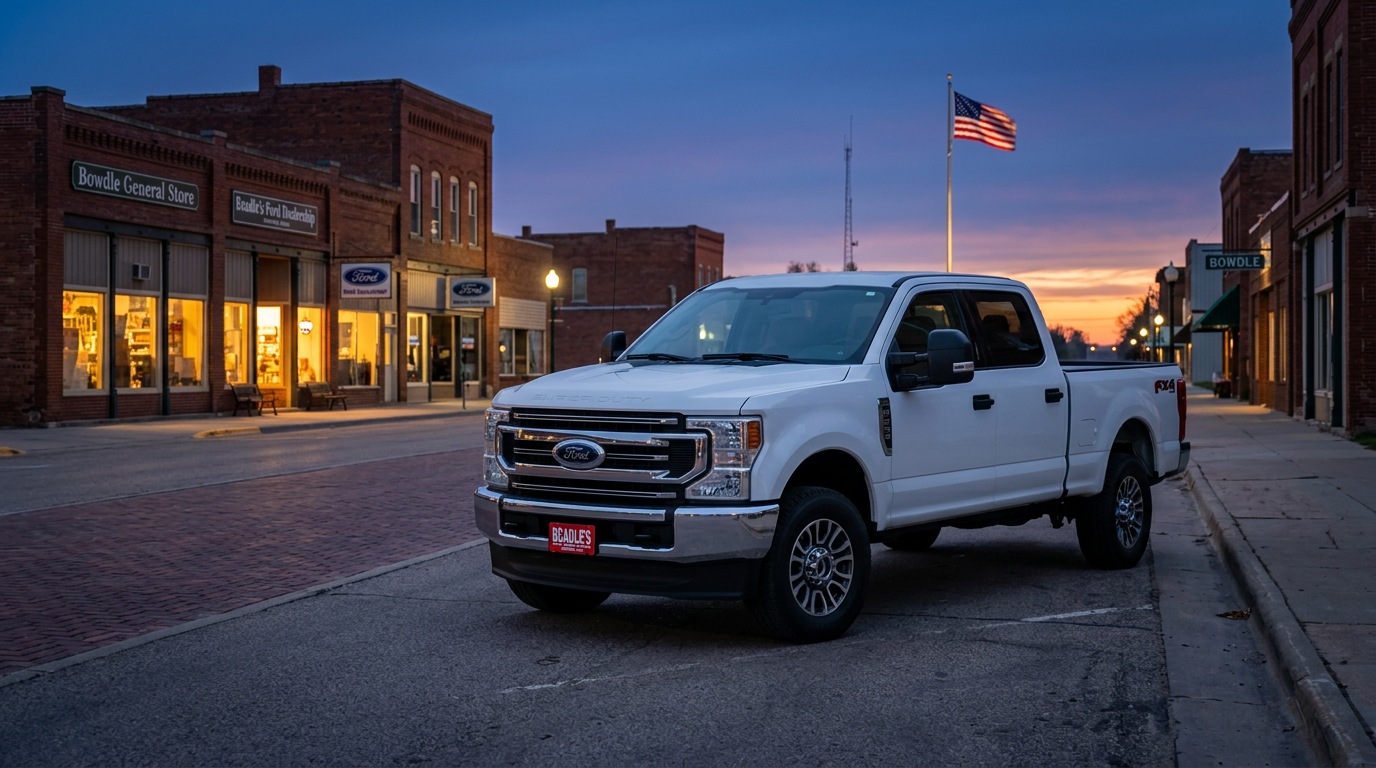
2027 Ford F-250 on a Bowdle, South Dakota main street

2027 Ford F-250 as a Daily Driver in South Dakota

Quick Answer Yes, the 2027 Ford F-250 works well as a daily driver in South Dakota. A single-rear-wheel F-250 drives and parks like a normal full-size truck, upper trims are highway-comfortable, and 4x4 makes it excellent in snow and gravel. The trade-off is a firmer unloaded ride and a thirsty gas V8. Plenty of people around here drive an F-250 every day, not just on tow days. The question isn't whether a three-quarter-ton can be a daily driver — it's whether the comfort, fuel, and winter manners line up with how you live. For most rural South Dakota owners, they do. Here's an honest look at the F-250 as an everyday vehicle: practicality, highway comfort and tech, what to really expect at the pump, and how it handles a Dakota winter and a season of gravel roads. Shop F-250s in Stock Reserve a 2027 F-250 Get Pre-Approved On This Page Is an F-250 practical as an everyday vehicle? Comfort and tech for long highway miles Real-world fuel expectations on the 7.3L Winter and gravel-road livability Is an F-250 practical as an everyday vehicle? Yes. A single-rear-wheel F-250 drives, parks, and lives like a normal full-size truck — it's the dually F-350 that gets awkward in a parking lot. For school runs, the co-op, the lumber yard, and the highway between towns, the F-250 is entirely livable as a daily. The honest trade-offs versus a half-ton are size and ride: it's a taller, heavier truck, and the heavy-duty suspension rides firmer when the bed is empty. Around here, where driveways are long, distances are real, and a truck earns its keep, those trade-offs are easy ones for most buyers to make. Comfort and tech for long highway miles On the long, straight highway miles between Dakota towns, the F-250 is a comfortable place to spend time — especially in Lariat trim and up, which add leather, the 12-inch SYNC 4 touchscreen, heated and ventilated seats, and a quieter, more settled cabin. Even the work-focused XLT is a pleasant long-haul truck. The upper trims also bring the driver-assist and connectivity tech that makes a daily truck easier: a big digital cluster, wireless phone integration, and available 360-degree cameras. If your F-250 is going to double as the family highway vehicle, the Lariat is the comfort sweet spot. Best daily-driver pick: an XLT for value or a Lariat for comfort, with the standard 7.3L gas V8 and 4x4 — capable enough for any chore, comfortable enough to live in. Real-world fuel expectations on the 7.3L Set expectations honestly: Super Duty trucks are above the 8,500-lb weight class the EPA rates, so there's no window-sticker MPG figure. In real-world driving, the 7.3L gas V8 generally returns low-to-mid teens unloaded, and less when you're towing. The 6.7L High-Output diesel does noticeably better on the highway and especially under load, which is part of why heavy, high-mileage tow buyers lean diesel. But for a daily driver that mostly runs empty, the gas V8's lower purchase and maintenance cost usually outweighs the diesel's fuel savings. A big V8 in a heavy-duty truck is never going to sip — that's the deal you make for the capability. Winter and gravel-road livability This is where the F-250 shines as a Dakota daily. With 4x4, selectable drive modes, real ground clearance, and the weight to stay planted, it handles snow-packed roads and washboard gravel about as well as anything on the lot. Add a good set of all-terrain or winter tires and it's hard to stop. The same toughness that makes it a capable tow truck makes it a confident winter commuter: heavy-duty everything, ground clearance to clear drifts, and the traction tech to put the power down. For getting to work in February or down a muddy spring two-track, it's exactly the truck you want. The full breakdown lives in our 2027 F-250 winter & gravel capability guide. Our Recommendation For an F-250 that pulls daily-driver duty around Bowdle and Aberdeen, we recommend an XLT or Lariat with the standard 7.3L gas V8 and 4x4. You get genuine heavy-duty capability, a comfortable highway cabin, excellent winter and gravel manners, and a lower cost of ownership than the diesel for a truck that mostly drives unloaded. From the Beadle Ford Lot A fair number of our F-250 buyers barely tow at all — they want one truck that handles the gravel, the winter, and the occasional heavy chore, and doubles as the everyday driver. When someone tells me they want capability they can live in daily, I point them at a Lariat with the gas V8 and 4x4, and they rarely look back. Key Takeaways A single-rear-wheel F-250 drives and parks like a normal full-size truck — livable as a daily driver. Lariat and up add leather, the 12-inch SYNC 4 touchscreen, and heated/ventilated seats for long highway miles. Super Duty trucks aren't EPA-rated; expect low-to-mid teens unloaded from the 7.3L gas, less when towing. With 4x4 and good tires, the F-250 is excellent on Dakota snow and gravel. For a daily driver, an XLT or Lariat with the 7.3L gas and 4x4 is the value-and-comfort sweet spot. Frequently Asked Questions Is a 2027 F-250 good as a daily driver? Yes. A single-rear-wheel F-250 drives and parks like a normal full-size truck and is comfortable for long highway miles, especially in Lariat trim and up. The trade-offs are a firmer unloaded ride and a thirsty gas V8 — reasonable for a capable truck you can use every day. What fuel economy does the 7.3L gas F-250 get? Super Duty trucks are above the EPA's rated weight class, so there's no official window-sticker MPG. In real-world driving, the 7.3L gas V8 typically returns low-to-mid teens unloaded and less when towing. The diesel does better, especially on the highway and under load. Is the F-250 hard to drive in winter? No — it's one of the better winter daily drivers around. With 4x4, selectable drive modes, real ground clearance, and good tires, the F-250 handles snow-packed roads and gravel confidently. The weight and traction tech help it stay planted. Which F-250 trim is best for daily driving? An XLT for value or a Lariat for comfort, with the standard 7.3L gas V8 and 4x4. The Lariat adds leather, the 12-inch SYNC 4 touchscreen, and heated/ventilated seats that make long highway miles easy, while the gas V8 keeps the cost of ownership down for a truck that mostly drives unloaded. Quick Answers: F-250 as a Daily Driver One-line answers to the follow-up questions buyers ask next. Is it too big for daily use? No — the SRW F-250 drives like a normal full-size truck. Fuel economy on the gas V8? Low-to-mid teens unloaded; not EPA-rated. Is there an MPG window sticker? No — Super Duty is above the EPA-rated weight class. Best daily trim? XLT for value, Lariat for comfort. Best daily engine? The standard 7.3L gas V8. Good in winter? Yes — excellent with 4x4 and good tires. Comfortable on the highway? Yes, especially Lariat and up. Does it have wireless phone connectivity? Yes, on upper trims with SYNC 4. Gas or diesel for a daily? Gas, unless you tow heavy and often. Where can I test drive one? Beadle Ford in Bowdle, SD. Keep Researching The complete 2027 Ford F-250 Super Duty overview — trims, towing, specs, and inventory 2027 F-250 winter & gravel capability — 4x4, drive modes, and the right tires 2027 F-250 trims for the everyday buyer — where the value lands Is an F-250 enough truck? — capability for daily and weekend use My Take on Daily-Driving an F-250 I'm upfront with daily-driver buyers about the fuel — a big gas V8 in a heavy-duty truck is going to drink more than a half-ton, and I'd rather someone know that going in than be surprised at the first fill-up. What I find, though, is that the people who want one truck to do everything around here almost never regret the F-250. It's comfortable on the highway, unstoppable in the winter, and ready the day they finally do need to tow something heavy. If you're thinking about an F-250 as your everyday truck, come drive a Lariat and see how it feels on our roads. We're at Beadle Ford in Bowdle whenever you're ready. Shop F-250s in Stock Reserve a 2027 F-250 Get Pre-Approved About the Author Lexy Tabbert — Beadle Ford, Bowdle, SD Lexy Tabbert is the Director of Sales and Marketing at Beadle Ford in Bowdle, South Dakota. She covers Ford vehicles, trim comparisons, and buyer guidance — helping families, ranchers, and ag operators across the region find the right truck and configuration for their needs. Learn more about Lexy.
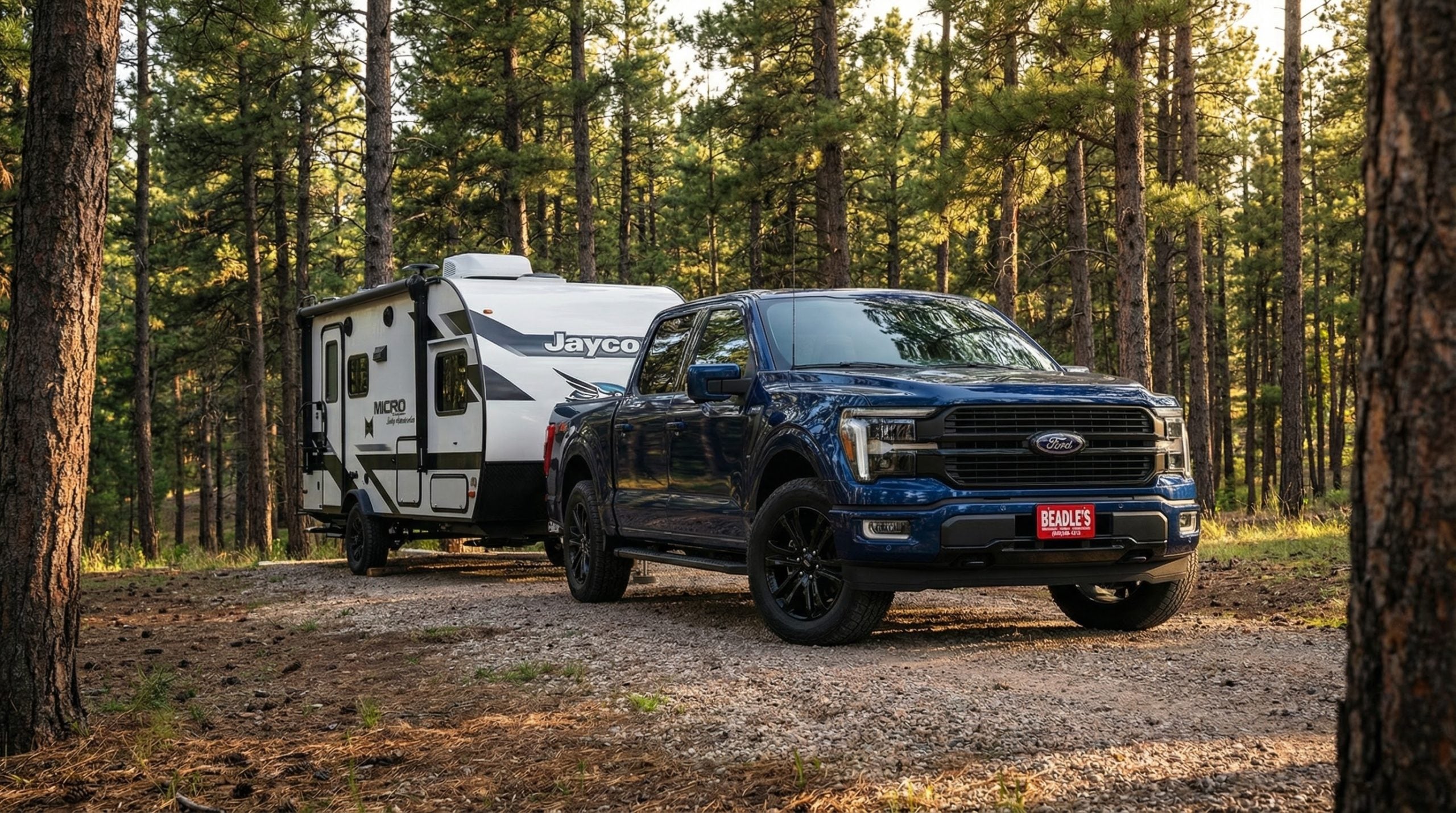
2026 Ford F-150 towing a camping trailer in South Dakota

2026 Ford F-150 Ownership, Fuel Economy & Long-Term Costs Guide

Long-term ownership costs for the 2026 Ford F-150 depend heavily on engine selection, driving habits, towing frequency, and trim configuration. This guide explains what to expect from gas and hybrid configurations, how usage patterns affect costs, and what rural drivers should consider before ordering. For full trim, engine, and towing details, see the complete 2026 Ford F-150 overview. Contact Beadle Ford Table of Contents What Is the Fuel Economy Like? Hybrid vs Gas: Which Costs Less Long-Term? What Maintenance Should Owners Expect? How Long Does the Hybrid Battery Last? Does Engine Choice Affect Fuel Tank Size? How Does the F-150 Hold Its Value? How to Choose the Most Cost-Effective Setup What Is the Fuel Economy Like on the 2026 F-150? Fuel economy varies depending on engine, drivetrain, axle ratio, and driving conditions. Smaller EcoBoost engines generally prioritize efficiency, while larger engines and performance variants prioritize capability. The PowerBoost hybrid is engineered to improve efficiency compared to traditional gas-only configurations, particularly in city and mixed driving conditions. Exact EPA ratings vary by configuration and should be reviewed alongside trim and drivetrain selection. Hybrid vs Gas: Which Costs Less Over Time? The answer depends largely on driving habits. Frequent short trips and city driving: Hybrid efficiency gains may offset higher initial cost. Heavy towing and highway use: Gas engines may offer comparable long-term operating costs. Jobsite or recreational power needs: Hybrid Pro Power capability may reduce generator costs. Buyers who rarely tow at maximum capacity but drive daily may benefit more from hybrid efficiency than those consistently hauling heavy trailers. Engine performance and towing differences are detailed in our F-150 Engine Options Guide. What Maintenance Should Owners Expect? Like all full-size trucks, maintenance includes routine oil changes, brake service, tire rotations, and fluid inspections. EcoBoost engines use turbocharging systems that require proper maintenance intervals. Hybrid models include additional electrical components but are engineered for long-term durability. Maintenance costs are more influenced by usage intensity than engine type alone. How Long Does the PowerBoost Hybrid Battery Last? Hybrid battery systems are designed for long-term operation under normal use conditions. Warranty coverage details should be reviewed at time of purchase. Battery longevity depends on driving habits, climate conditions, and regular servicing. Does Engine Choice Affect Fuel Tank Size? Yes. Certain engine configurations may impact available fuel tank sizes and range characteristics. Drivers planning long-distance towing or rural travel should verify fuel tank specifications when selecting engine and trim combinations. How Does the F-150 Hold Its Value? The Ford F-150 has historically maintained strong resale value compared to many competitors in the full-size segment. Factors influencing resale include: Engine choice Trim level Condition and mileage Regional demand Maintenance history Work-ready trims and balanced configurations often perform well in rural resale markets. How to Choose the Most Cost-Effective 2026 F-150 Estimate your realistic annual mileage. Evaluate how often you tow heavy loads. Consider whether onboard power replaces separate equipment. Balance upfront cost with projected long-term fuel savings. Choose a trim that fits both daily use and resale goals. Key Takeaways Fuel economy varies significantly by configuration. Hybrid models may benefit daily drivers more than heavy haulers. Maintenance costs depend more on usage than engine type. Fuel tank size and axle ratios affect long-distance practicality. Balanced configurations often support strong resale value. Frequently Asked Questions Is the hybrid more expensive to maintain? Maintenance costs vary by usage pattern. Hybrid systems are engineered for durability and include warranty coverage. Does towing reduce fuel economy significantly? Yes. Fuel economy decreases when towing, especially at higher weights and highway speeds. Is the F-150 a good long-term truck investment? When properly maintained and configured appropriately, the F-150 has historically demonstrated strong long-term durability and resale value. Conclusion In my experience, long-term ownership decisions are less about chasing the highest fuel economy number and more about honestly evaluating how the truck will be used. A well-matched configuration tends to deliver better satisfaction and value over time than selecting features based solely on headline statistics. Review available 2026 Ford F-150 models at Beadle Ford or contact us to discuss long-term ownership considerations. About the Author Lexy Tabbert provides research-driven truck ownership guidance and vehicle configuration insights for drivers across South Dakota and the surrounding region.

2026 Ford Explorer second-row captain’s chairs

2026 Ford Explorer Interior & 3-Row Space Guide

The 2026 Ford Explorer is designed around three-row flexibility. For many families, interior layout matters more than horsepower or trim names. Seating configuration, third-row usability, and cargo space behind the rear seats often determine whether Explorer is the right fit. This guide explains how the 2026 Explorer’s seating and cargo space are structured, and how trim and equipment choices can affect layout. For a broader overview of trim positioning and feature availability, see the 2026 Ford Explorer overview. Shop Explorers in Stock Table of Contents How many people does the Explorer seat? Captain’s chairs vs bench: what’s the difference? Is the third row usable for adults? How much cargo space is behind the third row? Is the Explorer good for road trips? How to choose the right seating layout How many people can the 2026 Ford Explorer seat? The 2026 Explorer can seat up to seven passengers, depending on second-row configuration. Second-row captain’s chairs reduce seating to six but improve passenger comfort and ease of access to the third row. A second-row bench increases capacity to seven. Captain’s chairs vs bench: what’s the difference? Captain’s chairs provide individual seating positions in the second row and a center aisle for easier third-row access. Many families prefer this layout for daily school drop-offs and passenger comfort. Bench seating increases total seating capacity and can be useful for larger families who regularly transport more than six passengers. Seating availability can vary by trim and equipment group, so it’s important to confirm configuration when selecting a vehicle. Is the Explorer third row comfortable for adults? The third row in the 2026 Explorer is generally best suited for children and shorter trips for adults. For extended travel with adult passengers, seating comfort may depend on passenger height and overall cabin configuration. Families who regularly use the third row for teenagers or adults may want to evaluate overall cabin layout during a test drive. How much cargo space is behind the third row? With all three rows upright, the Explorer provides usable cargo space suitable for groceries, sports bags, and carry-on luggage. Folding the third row significantly increases cargo capacity, allowing for larger items such as coolers, strollers, and travel gear. Real-world cargo practicality depends on how frequently all three rows are occupied. Is the 2026 Explorer good for road trips? The Explorer’s three-row layout, available infotainment features, and flexible cargo configurations make it well-suited for family road trips. For longer drives, interior materials, seating configuration, and available technology features can influence comfort more than raw cabin dimensions. Technology availability is explained further in our Technology & Safety Guide. How do you choose the right seating layout? Determine how many passengers you regularly transport. Decide whether third-row access convenience is important. Consider how often all seats will be occupied. Balance seating needs with cargo needs. Confirm trim availability of desired configuration. Quick Interior Overview Feature 2026 Explorer Maximum Seating Up to 7 passengers Second Row Options Bench or captain’s chairs (varies by configuration) Third Row Standard on all trims Cargo Flexibility Expandable with fold-flat rear seats Key Takeaways Explorer seats up to seven passengers. Captain’s chairs improve access and comfort. Bench seating increases total capacity. Cargo space expands significantly when rear seats are folded. Seating availability can vary by trim. Frequently Asked Questions Does the 2026 Explorer come standard with three rows? Yes, three-row seating is standard across the Explorer lineup. Which Explorer trims offer captain’s chairs? Captain’s chairs are available on many configurations. Availability can vary by trim and equipment group. Is the Explorer bigger than the Edge? Yes, the Explorer offers three rows, while the Edge is a two-row SUV. Is the third row suitable for adults? The third row is generally best suited for children or shorter adult trips. Conclusion In my experience, most Explorer buyers make their final decision based on seating layout rather than trim name. Once families clarify whether they need six or seven seats — and how often the third row will be used — the right configuration usually becomes clear within the 2026 lineup. About the Author Lexy Tabbert provides research-driven SUV configuration guidance for drivers throughout South Dakota and beyond.

2027 Ford Super Duty in Neptune Blue in South Dakota

2027 Ford Super Duty Colors: See Every Exterior Color

Quick Answer The 2027 Ford Super Duty comes in 10 retail exterior colors across the F-250, F-350, and F-450. Oxford White is the only no-charge paint; Neptune Blue and Iconic Silver Metallic are new for 2027, while Argon Blue Metallic and Avalanche were discontinued. Several colors are trim-exclusive. Color is one of the first calls you make on a new Super Duty — and one of the few you can't change later. Below you can click through every 2027 Ford Super Duty exterior color on the same truck, in the same light, so you're comparing paint instead of guessing from a postage-stamp swatch. Then we break down which colors are locked to specific trims, what's new and dropped for 2027, and which paint holds up best to South Dakota gravel, sun, and winter. It all applies whether you're building an F-250, an F-350, or an F-450. Shop F-250s in Stock Reserve a 2027 Super Duty Get Pre-Approved On This Page What colors does the 2027 Super Duty come in? Which 2027 Super Duty colors are trim-exclusive? What's new and what's discontinued for 2027? Which Super Duty color is best for South Dakota? What colors does the 2027 Super Duty come in? Ten retail colors. Click any swatch below to repaint the same 2027 Super Duty in that color — the scene stays put, so you're comparing paint, not lighting. Trim-exclusive colors are labeled. Oxford White No-charge · all trims New for 2027 Paint shown on a representative 2027 Super Duty for comparison — same scene each time, so you're comparing paint, not lighting. Ask us for current paint pricing and availability by trim. Enable JavaScript to use the interactive color picker, or see the full color list in the guide table below. Most of the palette — Oxford White, Agate Black Metallic, Neptune Blue, and the rest — carries across the F-250, F-350, and F-450. A handful are tied to specific trims, which we cover next. Which 2027 Super Duty colors are trim-exclusive? Most colors are available across the lineup, but a few are restricted — worth knowing before you fall for a paint you can't get on the trim you want. The two tri-coats, Glacier Gray Metallic Tri-Coat and Star White Metallic Tri-Coat, are reserved for Lariat and up. Race Red runs the other direction — it's offered on the work trims (XL, XLT, Lariat) but not on King Ranch or Platinum. Carbonized Gray Metallic and the new Iconic Silver Metallic are available on every trim except King Ranch, which leans into its own Western palette with two-tone Marsh Gray lower cladding. Want it on any trim? Oxford White, Agate Black Metallic, Neptune Blue, and Ruby Red Metallic Tinted Clearcoat (XLT and up) give you the widest reach across the Super Duty lineup. What's new and what's discontinued for 2027? Two new colors arrive for 2027 and two leave. Neptune Blue, a deep marine blue, and Iconic Silver Metallic, a bright silver, are the additions. Argon Blue Metallic and Avalanche are discontinued. If you had your eye on Argon Blue or Avalanche, a 2026 Super Duty still on the lot is your last shot — once they're gone, they're gone. Neptune Blue is the natural successor for a blue buyer, and it's available across every trim. Fleet and commercial buyers have a separate set of solid colors — Green, Green Gem, Orange, School Bus Yellow, Vermillion Red, and Yellow — available on XL and XLT with a valid fleet code. They're not part of the retail picker above and aren't available with the Tremor, STX, or Black Appearance packages. Which Super Duty color is best for South Dakota? There's no wrong answer, but a few things matter more on the Northern Plains than they might in town: how a color hides gravel dust and road grime, how visible it is in a whiteout, and how it holds up to sun and salt. Our Recommendation For most Bowdle and Aberdeen-area buyers, we point to Carbonized Gray Metallic or the new Iconic Silver Metallic — both hide the gravel-road grey between washes and stay neutral for resale. If winter visibility is your priority, Oxford White or Star White Metallic Tri-Coat are the easiest to see and keep clean. Want presence on the lot? Ruby Red Metallic Tinted Clearcoat is the one that turns heads. The deep colors — Agate Black Metallic especially — look incredible clean, but they show dust, pollen, and winter salt the fastest. If you hate washing a truck, that's worth weighing before you order. 2027 Super Duty color guide Color Availability Best for Oxford White All trims · no charge Winter visibility, easy upkeep, resale Agate Black Metallic All trims · extra-cost Premium look — shows dust fastest Carbonized Gray Metallic Not King Ranch · extra-cost Hides gravel dust, neutral resale Iconic Silver Metallic (new) Not King Ranch · extra-cost Low-maintenance, bright silver finish Neptune Blue (new) All trims · extra-cost Standout deep blue, wide availability Race Red XL, XLT, Lariat · extra-cost Classic bold red on work trims Ruby Red Metallic Tinted Clearcoat XLT and up · extra-cost Deep, glossy presence on the lot Glacier Gray Metallic Tri-Coat Lariat and up · extra-cost Upscale silver-gray depth Star White Metallic Tri-Coat Lariat and up · extra-cost Pearl-white depth, winter visibility Marsh Gray Select trims · extra-cost Warm green-gray, hides grime Source: 2027 Ford Super Duty color and trim availability. Marsh Gray is not available with the Black Appearance Package. Paint availability and charge status vary by trim and configuration — contact us for current figures. From the Beadle Ford Lot The most common color conversation we have starts with someone set on a black Super Duty because it looks sharp in the brochure — then they see how fast our gravel roads dust up a dark truck and walk out in a gray or a white. If you're torn, come stand next to your top two in daylight; it usually settles it in about five minutes. Key Takeaways The 2027 Ford Super Duty offers 10 retail exterior colors across the F-250, F-350, and F-450. Oxford White is the only no-charge color; the rest are extra-cost premium paints. Neptune Blue and Iconic Silver Metallic are new for 2027; Argon Blue Metallic and Avalanche are discontinued. The tri-coats (Glacier Gray, Star White) are Lariat-and-up; King Ranch can't get Carbonized Gray or Iconic Silver. For Dakota gravel and winter, the grays and whites stay cleanest; Agate Black shows dust the fastest. Frequently Asked Questions How many colors does the 2027 Ford Super Duty come in? Ten retail exterior colors, available across the F-250, F-350, and F-450. There is also a separate set of six fleet-only solid colors offered on XL and XLT with a valid fleet code. What are the new colors for the 2027 Super Duty? Neptune Blue, a deep marine blue, and Iconic Silver Metallic, a bright silver, are new for 2027. Argon Blue Metallic and Avalanche were discontinued. Which 2027 Super Duty colors are trim-exclusive? Glacier Gray Metallic Tri-Coat and Star White Metallic Tri-Coat are available only on Lariat and up. Race Red is offered on XL, XLT, and Lariat but not King Ranch or Platinum. Carbonized Gray Metallic and Iconic Silver Metallic are available on every trim except King Ranch. What is the only no-charge color on the 2027 Super Duty? Oxford White is the standard, no-charge color. Every other retail paint — including Neptune Blue, Agate Black Metallic, and the tri-coats — is an extra-cost premium color. Which Super Duty color hides dirt and gravel dust best? Carbonized Gray Metallic, Iconic Silver Metallic, and Marsh Gray hide gravel dust and light road grime best between washes. Dark colors like Agate Black Metallic look great clean but show dust and salt the fastest. Quick Answers: 2027 Super Duty Colors One-line answers to the follow-up questions buyers ask next. No-charge color? Oxford White. New for 2027? Neptune Blue and Iconic Silver Metallic. Discontinued for 2027? Argon Blue Metallic and Avalanche. Red options? Race Red and Ruby Red Metallic Tinted Clearcoat. Darkest color? Agate Black Metallic. Tri-coat colors? Glacier Gray and Star White, on Lariat and up. Colors King Ranch can't get? Carbonized Gray and Iconic Silver Metallic. Best for hiding dust? Carbonized Gray or Iconic Silver Metallic. Best for winter visibility? Oxford White or Star White Metallic Tri-Coat. Where can I see them in person? Beadle Ford in Bowdle, SD. Keep Researching The complete 2027 Ford F-250 Super Duty overview — trims, towing, specs, and inventory The complete 2027 Ford F-350 Super Duty overview — heavy-haul capability and dually options 2027 F-250 colors & appearance — appearance packages, wheels, and Tremor styling My Take on Picking a 2027 Super Duty Color Color is the one thing buyers second-guess most, and the one I most often tell people to go see in person. A swatch the size of a stamp can't tell you how Neptune Blue reads at golden hour or how much gravel dust Carbonized Gray quietly hides on a county road. Use the picker above to narrow it to two, then come stand next to them in daylight — that's when people know. If you want a specific color on a specific build — say a Lariat in Star White Tri-Coat or an XLT in the new Iconic Silver — we can order it exactly how you want it. Stop by Beadle Ford in Bowdle or give us a call and we'll get you sorted. Shop F-250s in Stock Reserve a 2027 Super Duty Get Pre-Approved About the Author Lexy Tabbert — Beadle Ford, Bowdle, SD Lexy Tabbert is the Director of Sales and Marketing at Beadle Ford in Bowdle, South Dakota. She covers Ford vehicles, trim comparisons, and buyer guidance — helping families, ranchers, and ag operators across the region find the right truck and configuration for their needs. Learn more about Lexy.
Ranger vs. Tacoma: The Honest Comparison That Might Actually Help You Choose

The Ford Ranger and Toyota Tacoma are the two names that come up in nearly every midsize truck conversation — and for good reason. Both are capable, both are well-established, and both have genuine strengths. This comparison isn't going to tell you one is universally better. It's going to give you an honest side-by-side on the specs that actually affect daily use, towing, off-road capability, and long-term value — so you can make the call yourself. One upfront note: Beadle Ford sells the Ranger, not the Tacoma. You should know that going in. What I'm giving you here is a factual comparison based on published specifications. If the Tacoma comes out ahead on something, you'll see it. Head-to-Head Specs: Where They Differ Spec 2026 Ford Ranger 2024 Toyota Tacoma Max Towing up to 7,500 lbs up to 6,500 lbs Max Payload up to 1,788 lbs up to 1,755 lbs Engines Available 2.3L I4 (270 hp), 2.7L V6 (315 hp), 3.0L V6 Raptor (405 hp) 2.4L I4 (228 hp), 2.4L I4 Hybrid (326 hp combined) Transmission 10-speed automatic 8-speed auto or 6-speed manual Frame High-strength steel ladder frame High-strength steel ladder frame Infotainment Screen Up to 12 inches Up to 14 inches Hybrid Option No Yes (i-FORCE MAX) Performance Off-Road Variant Ranger Raptor (405 hp) TRD Pro Cab Configuration (SuperCrew) SuperCrew only — 4 full doors Double Cab or CrewMax Tacoma specs based on published 2024 model year figures. Verify current-year specifications with Toyota before purchase. Where the Ranger Comes Out Ahead Towing capacity. The Ranger's 7,500 lb max towing rating is 1,000 lbs higher than the Tacoma's 6,500 lb ceiling. That gap is meaningful when you're near the top of the range — a loaded livestock trailer, a heavier pontoon boat, or a dual-axle utility trailer can cross from one side to the other. If towing is a regular part of your use case, the Ranger's rated edge is real and confirmed against the same SAE J2807 standard. Engine options at non-Raptor trims. The Ranger offers a 2.7L EcoBoost® V6 with 315 hp and 400 lb-ft of torque on XLT and Lariat builds — without requiring a performance variant. The Tacoma's non-hybrid engine is a 2.4L I4 producing 228 hp. For buyers who want strong power in a workhorse trim rather than an off-road showpiece, the Ranger has a meaningful advantage here. SuperCrew only. The Ranger comes exclusively in SuperCrew — four full-size doors, full rear seat. There's no access cab or double cab compromise. If rear-seat space matters, the Ranger delivers it as the only option rather than making it a premium configuration choice. Raptor vs. TRD Pro. The Ranger Raptor runs a 3.0L V6 producing 405 hp, live-valve Fox Racing Shox, and is built as a high-speed off-road performance truck. The TRD Pro is a serious off-road package but operates in a different performance tier. If maximum off-road performance matters and budget allows, the Raptor is the more capable option. Where the Tacoma Has the Edge Hybrid option. The Tacoma offers an i-FORCE MAX hybrid powertrain that Toyota claims produces 326 hp combined — Ford has no hybrid Ranger equivalent. For buyers focused on fuel efficiency alongside capability, the Tacoma hybrid is a genuine advantage the Ranger doesn't match. Larger screen at the top trim. The Tacoma's top-end infotainment goes to 14 inches vs. the Ranger's 12 inches. For buyers who prioritize the biggest possible display, the Tacoma screen is larger. Manual transmission option. The Tacoma offers a 6-speed manual on certain configurations. The Ranger is automatic-only across all trims and engines. For buyers who prefer a manual, the Tacoma is the only option in this comparison. Resale and reputation. Toyota's resale value history on the Tacoma is strong — consistently among the best in the segment. Ford Ranger resale has improved significantly but hasn't historically matched Toyota in this regard. If long-term resale is a financial priority, it's worth researching current residual value data. How to Actually Make the Call Quick Decision Guide Choose the Ranger if you: Regularly tow near or above 6,500 lbs — boats, livestock, loaded trailers. Want a V6 option in a non-performance trim. Value a full SuperCrew standard. Are considering the Raptor as your off-road variant. Want to buy locally from Beadle Ford in Bowdle. Consider the Tacoma if you: Prioritize a hybrid powertrain for fuel economy. Want a manual transmission. Value Toyota's historical resale performance above other factors. Don't tow near the top of the segment's capacity range. For most buyers in central South Dakota — where towing is a real use case and gravel roads are a given — the Ranger's capacity edge and V6 availability matter. The 1,000 lb towing advantage alone can be the deciding factor when a pontoon boat or loaded horse trailer is in the picture. One More Thing: Where You Buy Matters Too The nearest Toyota dealership to Bowdle is a significant drive. Beadle Ford is right here — which means sales support, service, warranty work, and parts availability are local. For farm trucks, work trucks, or any vehicle that gets used hard and occasionally needs attention, dealership proximity is a practical consideration that doesn't show up in a spec comparison but matters in daily ownership. That's not a pitch — it's a real factor. Local service reduces downtime. If a sensor goes out during harvest or a tow job turns into a warranty issue, having the selling dealer 20 minutes away instead of an hour-plus changes the math on truck ownership. Ranger vs. Tacoma FAQ Does the Ford Ranger tow more than the Toyota Tacoma? Yes. The 2026 Ford Ranger tows up to 7,500 lbs when properly equipped, compared to the Tacoma's 6,500 lb max. That's a 1,000 lb advantage for the Ranger — meaningful when you're pulling boats, livestock trailers, or loaded utility trailers. Does the Ford Ranger come in a hybrid version? No — the 2026 Ford Ranger does not offer a hybrid powertrain. The Tacoma does offer an i-FORCE MAX hybrid option. If hybrid capability is important to your buying decision, the Tacoma has an advantage here that the Ranger cannot match at this time. Is the Ranger Raptor better than the Tacoma TRD Pro off-road? In terms of outright off-road performance, the Ranger Raptor's 3.0L V6 with 405 hp and live-valve Fox Racing Shox long-travel suspension is a more extreme setup than the TRD Pro. The TRD Pro is a serious off-road package, but the Raptor is designed for high-speed off-road driving in a way the TRD Pro is not. For buyers who want a factory performance off-road truck, the Raptor is the stronger specification. Which has better resale value, the Ranger or the Tacoma? The Toyota Tacoma has historically had stronger resale values than the Ford Ranger. Toyota's Tacoma resale consistently ranks near the top of the segment. Ranger resale has improved but has not historically matched Toyota in this metric. If resale value is a top priority, current residual value data from a source like Kelley Blue Book or ALG should factor into your decision. Can I compare the Ranger to the F-150 instead? The Ranger and F-150 are different truck categories — the Ranger is a midsize truck, the F-150 is full-size. If your towing or payload needs consistently push near or above the Ranger's limits, the F-150 might be the better fit. Beadle Ford carries both. The key question is whether you need the additional capacity a full-size truck provides, or whether the Ranger's midsize footprint and lower cost fits your use case better. Key Takeaways The Ranger tows up to 7,500 lbs — 1,000 lbs more than the Tacoma's 6,500 lb max The Ranger offers a 315 hp V6 engine on XLT and Lariat without needing a performance trim; Tacoma non-hybrid tops at 228 hp The Tacoma offers a hybrid powertrain (i-FORCE MAX) that the Ranger does not Tacoma resale value has historically been stronger than the Ranger's The Ranger comes exclusively in SuperCrew (4 full doors) — no compromise cab configurations The Ranger Raptor (405 hp, live-valve Fox shocks) is a more extreme off-road specification than the TRD Pro For Bowdle-area buyers, Ranger availability and local Beadle Ford service are a practical ownership advantage Both trucks are genuinely good. If the Tacoma's hybrid system or manual transmission is a deciding factor for you, that's a legitimate reason to go that direction. But if you're towing regularly, want a V6 without stepping into Raptor territory, or just want to buy local and service local — the Ranger earns the comparison. Before you decide, it's worth reading the 2026 Ford Ranger overview — or stopping in at Beadle Ford in Bowdle to see one in person. That tends to settle the conversation faster than any spec sheet. — Lexy Tabbert, Beadle Ford Continue Reading → How Ranger trim levels stack up on value → Full towing breakdown for the 2026 Ranger by engine and drivetrain

2026 Ford Maverick interior technology and displays

2026 Ford Maverick Technology Guide (What Actually Helps Day-to-Day)

In a compact truck, technology should solve problems—not add complexity. For most Maverick owners, the best tech improves visibility, daily convenience, and winter confidence. This guide focuses on the tech questions people actually ask when they’re comparing trims and trying to avoid paying for features they’ll never use. Technology choices are easiest after you know your drivetrain and use-case. If you haven’t done that step yet, start here: 2026 Maverick Specs & Configurations. For shopping and inventory support, visit the Ford Maverick model page. Shop Mavericks in Stock Contact Us Table of Contents What technology matters most in a Maverick? Visibility tech: the real quality-of-life upgrade Tech that helps in winter and bad weather Why tech varies by trim and package How to shop Maverick tech without guessing FAQ What technology matters most in a Maverick? The most valuable Maverick technology is the kind that makes the truck easier to live with: clear displays, simple controls, and driver-assist features that reduce stress in traffic and on long rural drives. Start by thinking about your biggest friction points: backing, visibility in bad weather, long commutes, or managing a small trailer. Visibility tech: the real quality-of-life upgrade Camera views: reduce backing stress and help in tight driveways and parking lots. Clear displays: matter more than “biggest screen” if you want quick, readable information. Practical layout: the best tech is easy to access while wearing gloves or managing winter gear. Tech that helps in winter and bad weather For South Dakota winters, the most helpful tech usually isn’t flashy—it’s what helps you see better and stay calm when roads change fast. AWD helps with traction, but visibility and confidence features help you avoid mistakes. If your main goal is winter confidence, pair this with: 2026 Maverick Winter Driving Guide. Why tech varies by trim and package Maverick technology isn’t “all or nothing.” Availability can change by trim, package, and build timing—so it’s smart to confirm the exact equipment list instead of assuming every Maverick has the same screens or driver assistance features. If you’re choosing between trims primarily for features, use: 2026 Maverick Trims & Packages Guide. Quick Overview Best tech focus Visibility, simple usability, and confidence in daily driving Most important shopping habit Confirm equipment by window sticker/build list Related decisions Trims & packages, winter driving, light towing How to shop Maverick tech without guessing List your pain points: backing, long commutes, winter visibility, or towing a small trailer. Decide must-have vs nice-to-have: keep the list short so you don’t overpay. Compare two real builds: use the window sticker/equipment list, not assumptions. Confirm usability: readable screens, straightforward controls, and camera views where you’ll actually use them. Shop Mavericks in Stock Ask About a Specific Feature FAQ Do all 2026 Mavericks have the same screens and tech features? Not necessarily. Tech equipment can vary by trim and package. The safest approach is confirming the exact truck’s equipment list or window sticker. What tech helps the most for winter driving? Visibility and confidence features usually matter most: camera views, clear displays, and practical controls. AWD helps traction, but winter tires and visibility are still the biggest difference-makers. How should I compare tech between two trims? Compare the specific equipment lists on the window stickers (or build sheets), then decide if the features you gain match the price difference for your daily driving. Conclusion In my experience, the best Maverick tech choices are the ones that reduce daily friction—visibility, easy controls, and confidence in bad weather. When buyers focus on real-life usability instead of feature bragging rights, they end up with a truck that feels easier to own every day. About the Author: Lexy Tabbert works with South Dakota and North Dakota buyers who want practical truck guidance—winter driving confidence, feature decisions that matter, and long-term ownership value. Her focus is straightforward: confirm the essentials first, then choose the technology that makes daily life easier.

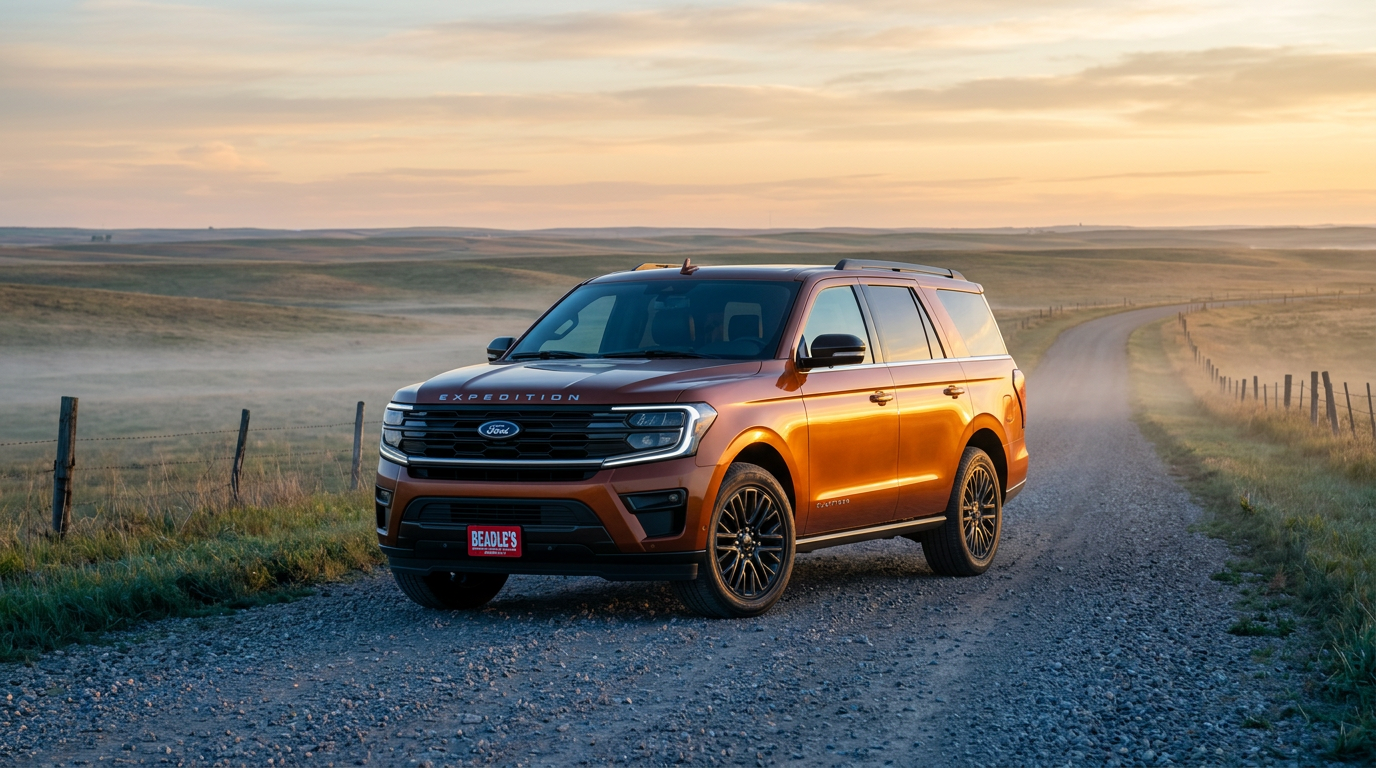
2027 Ford Expedition in Bronze Fire Metallic Tri-coat on a prairie gravel road at sunrise near Bowdle SD

When Your Family Outgrows the F-150 or Explorer: Is a 2027 Ford Expedition the Right Upsize?

Home› Ford Expedition› 2027 Ford Expedition› Your First Full-Size SUV You’re in an F-150 SuperCrew or a Ford Explorer today, and the truck or SUV that worked for your family five years ago is starting to feel small. Maybe the oldest just started driving, and the second row is shared three-across. Maybe the F-150 bed handles the cargo but you keep wishing you had room inside for everyone AND the gear. Maybe the Explorer’s third row works for kids but not for teenagers. This guide is for buyers at exactly that moment — the upsizer who’s thinking about their first full-size SUV. We’ll cover when upsizing genuinely makes sense, how the 2027 Expedition compares to the Ford Explorer (the intra-Ford decision most buyers in this spot are weighing), what actually changes when you move from a half-ton pickup or a midsize SUV to a full-size three-row — parking, fuel, tires, driveway footprint — whether the Expedition’s third row holds up for a growing family, and which trim is the right pick for a first-time full-size SUV buyer. Browse Expedition Inventory Ask About a Custom Order On This Page When is it time to upsize from an F-150 or Explorer? How does the 2027 Expedition compare to the Ford Explorer? What changes when you move from a half-ton pickup to a full-size SUV? Is the Expedition’s third row actually usable for a growing family? How do you pick the right trim on your first Expedition? When is it time to upsize from an F-150 or Explorer? Usually, the family tells you before the spec sheet does. Here are the moments we see most often at Beadle Ford. The second-row-three-across moment. You’re in an F-150 SuperCrew or an Explorer and the three kids in the second row are getting bigger every year. Car seats become booster seats; booster seats become seatbelt passengers. Elbows start touching. Road trips that used to be easy become negotiations about who sits where. That’s usually the first signal. The “everything doesn’t fit” moment. You’re packing for a weekend at Lake Oahe, a family trip to the Black Hills, or the long haul to Sioux Falls or Fargo for a tournament. In the F-150, the bed handles cargo but you can’t fit all the passengers and the dog comfortably. In the Explorer, everyone fits but the gear takes up the third-row space you’d planned to use for passengers. Either truck does part of the job but not both. The “oldest starts driving” moment. When the oldest kid gets a driver’s license, your family effectively becomes a two-vehicle operation that used to be a one-vehicle operation. If the kid inherits your F-150, you still need something that carries the rest of the family plus gear. If the kid inherits something smaller, the family vehicle still needs to handle trips that now include a teenager who’s driving themselves some of the time. A full-size SUV absorbs both scenarios. The towing-plus-passengers moment. You want to pull a boat, a camper, or a livestock trailer with the family along for the ride. An Explorer tows less than an Expedition; an F-150 tows more but loses passenger and cargo space. The Expedition does both jobs — up to 9,300 lbs on the Tremor when properly equipped, with three rows of passengers and cargo still on board. If any of those moments sound like your current situation, you’re probably not too early to consider upsizing. How does the 2027 Expedition compare to the Ford Explorer? Both are Ford three-row SUVs, but they’re different classes of vehicle with different purposes. The Explorer is Ford’s midsize three-row, built on a unibody platform with a focus on car-like ride quality, urban-friendly dimensions, and efficiency. The Expedition is Ford’s full-size three-row, built on a body-on-frame platform with full-size trucks’ capability — higher towing, larger third row, more interior volume, more presence. The practical differences for an upsizing family: the Expedition’s third row is meaningfully larger and supports adult passengers on longer trips. The cargo area behind the third row is bigger — the Expedition MAX stretches that even further. Towing capability steps up substantially: where an Explorer handles a small boat or a light utility trailer, the Expedition Tremor’s 9,300 lb max, when properly equipped, opens up livestock trailers, tandem-axle camper setups, and multi-use haulers that exceed Explorer territory. Where the Explorer still wins: tighter parking, a smaller turning radius, generally better fuel economy (final 2027 EPA ratings pending), and a lower purchase price. If you rarely carry more than four people and your trips stay on pavement, the Explorer might remain the right vehicle. The upsize case only gets stronger as your family and use case get bigger. The Expedition also offers two body styles the Explorer doesn’t: standard-length Expedition and the extended Expedition MAX. If your family trips push the cargo-behind-the-third-row question hard, MAX adds roughly a foot of wheelbase and meaningful cargo volume. The Expedition vs. Expedition MAX guide walks through that body-style decision in detail. What changes when you move from a half-ton pickup to a full-size SUV? Less than most first-time Expedition buyers expect. An F-150 SuperCrew and an Expedition share a lot of engineering lineage — the same Ford Digital Experience on upper trims, the same Ford Co-Pilot360 Assist 2.0 driver-assist standard, similar dimensions in terms of width and height, and 3.5L EcoBoost V6 architecture available in both. The transition is more about how you use the vehicle than how it drives. Parking and turning radius. The Expedition (standard length) is about the same overall length as an F-150 SuperCrew with a 6.5-foot bed. If you park an F-150 SuperCrew comfortably today, the standard Expedition fits the same spots. The MAX is longer — roughly equivalent to an F-150 SuperCrew with an 8-foot bed — and takes a little more room to maneuver. Turning radius is slightly tighter on the Expedition than on most pickups because the SUV body sits on a shorter effective wheelbase. Fuel and running costs. EPA ratings are listed on each in-stock unit’s window sticker. In general, a full-size three-row SUV uses comparable or slightly more fuel than a half-ton pickup because the SUV weighs similar and has a less aerodynamic shape under some conditions. Tire sizes on Platinum (P275/60R20) and King Ranch (P275/50R22) are larger than most F-150 SuperCrew sizes, which means tire replacement costs are higher. Tremor uses more conservative P275/70R18 all-terrains at lower replacement cost than the bigger Platinum or King Ranch rubber. What improves. All-weather passenger comfort, cargo access from inside the vehicle (versus a pickup bed), interior storage for grocery-sized and gear-sized items, and third-row flexibility for family seating configurations. Those are the day-to-day changes that most buyers actually feel after their first month. If you’re moving from an Explorer rather than an F-150, the changes are more noticeable — you’re moving up in overall footprint, ride quality shift toward truck-like dynamics, higher towing capacity, and larger interior volume. Fuel economy likely decreases, and the replacement tire and service costs step up. The Explorer-to-Expedition transition is a genuine upsize, not a lateral move. Thinking about making the upsize? Get Pre-Approved Shop 2027 Expeditions in Stock Is the Expedition’s third row actually usable for a growing family? Yes, and it holds up as kids get taller. The Expedition’s third row is full-size-SUV-class legroom and headroom, designed to support adult passengers on longer trips. That’s the practical difference buyers notice when they move from an Explorer’s more compact third row — the Expedition’s third row doesn’t become an emergency-only seat as your kids grow into it. The seating configurations matter. Active Select comes standard as 8-passenger with a second-row 40/20/40 CenterSlide bench. Active Touring is 7-passenger with power-folding captain’s chairs, with an 8-passenger bench option. Tremor, Platinum, and King Ranch are all 7-passenger with leather captain’s chairs (Tremor and Platinum offer an 8-passenger option). MAX-body Expeditions add cargo space behind the third row rather than changing the seating count — still 7 or 8 passenger. Access to the third row is tidier than most. The power-folding second-row captain’s chairs on Active Touring and above tilt and slide forward with a single button, making third-row entry easier than manually folding a second-row bench. For kids in booster seats or smaller passengers, third-row access through a captain’s chair aisle is meaningfully simpler than climbing over. If the third-row question is central to your decision — particularly if you’re considering a MAX body style for more cargo volume behind the third row — the Expedition vs. Expedition MAX guide goes deeper on the body-style trade-off. How do you pick the right trim on your first Expedition? For first-time full-size SUV buyers coming from an F-150 SuperCrew or Explorer, the Active Touring equipment group is usually the value sweet spot. It adds the features that most family buyers end up wanting — BlueCruise 90-Day Trial, Pro Power Onboard 400W, heated front seats and steering wheel, memory driver seat, ActiveX trimmed seats, and power-folding second-row captain’s chairs — over Active Select without stepping up into Platinum luxury territory. For 2027, Active Touring also offers the new Family Travel Package option with 360-Degree Zone Lighting, a Digital Device Holder, Flex Powered Console, Power Panoramic Vista Roof, and third-row PowerFold seating. If you’re moving from a Platinum-trim Explorer or an F-150 Lariat and you’re used to premium interior materials, Platinum base is worth considering — 22" Ebony Bright Machined wheels, 4-Wheel Independent Suspension, body-color bumpers with Silver Lining trim, and leather-trimmed heated/ventilated front seats with perforated inserts. Platinum Ultimate adds the 440 hp High Output engine, standard BlueCruise 1-Year + 90-Day plan, and premium appearance items that standard Platinum no longer carries for 2027. If off-pavement capability matters — gravel, pasture, or ranch access is part of your driving — the Tremor is the only factory off-road Expedition. It’s a genuinely different mechanical spec, not a cosmetic upgrade. But for pure on-pavement family use, Active Touring or Platinum makes more sense. For the complete trim-by-trim decision framework with every Platinum package detailed, see the 2027 Ford Expedition Trim Levels guide. And for the full 2027 feature list and buying options, see the complete 2027 Ford Expedition overview. Key Takeaways Typical upsize triggers: the three-across-in-row-two moment, the “everything doesn’t fit” trip moment, the oldest starting to drive, or wanting to tow plus carry passengers. Expedition vs. Explorer is midsize vs. full-size, unibody vs. body-on-frame. The Expedition has a bigger third row, more cargo, and more towing. Moving from an F-150 SuperCrew to a standard-length Expedition is a lateral shift in footprint, not an upsize in parking terms. MAX adds real length. Tire and service costs step up with 22" wheels on Platinum and King Ranch; Tremor’s 18" all-terrains are more economical to replace. Active Touring is typically the value sweet spot for first-time full-size SUV buyers; Platinum for luxury; Tremor for off-pavement use cases. Frequently Asked Questions Is the Ford Expedition a good first full-size SUV? Yes, especially for buyers moving up from an F-150 SuperCrew or a Ford Explorer. The Expedition shares much of its technology and driver-assist stack with the F-150, so the transition from a truck feels familiar. The third-row legroom and cargo flexibility are meaningful upgrades over the Explorer. Active Touring is typically the value sweet spot for first-time full-size SUV buyers. How is the 2027 Expedition different from the Ford Explorer? The Explorer is Ford’s midsize three-row SUV on a unibody platform; the Expedition is Ford’s full-size three-row on a body-on-frame platform. The Expedition has a meaningfully larger third row, more cargo space, substantially higher towing capability, and an available extended-length MAX body style. The Explorer has a smaller footprint, tighter turning radius, and generally better fuel economy. Will an Expedition fit in my garage if I currently park an F-150 SuperCrew? Standard-length Expedition is roughly comparable to an F-150 SuperCrew with a 6.5-foot bed in overall length, so if your current pickup fits, the standard Expedition generally does too. The Expedition MAX is longer — closer to an F-150 SuperCrew with an 8-foot bed — and may be tight in shorter garages. Bring your garage measurements when you visit Beadle Ford and we’ll confirm against the exact 2027 Expedition dimensions. How many people can the Expedition seat? Up to 8 passengers. Active Select comes standard as 8-passenger with a second-row 40/20/40 CenterSlide bench. Active Touring, Tremor, Platinum, and King Ranch are 7-passenger standard with leather or ActiveX captain’s chairs, with an 8-passenger option available on most. MAX body style preserves the same seat count and adds cargo space behind the third row. How much does the Expedition tow compared to the Explorer? The Expedition tows substantially more. The 2027 Expedition Tremor is rated to tow up to 9,300 lbs when properly equipped. Ford Explorer maximum tow ratings are meaningfully lower and depend on engine configuration. If towing a boat, livestock trailer, or camper is part of your use case, the Expedition opens up capabilities the Explorer doesn’t match. Does the Expedition cost more to own than an F-150 or Explorer? Compared to an Explorer, yes — purchase price, tire replacement cost (particularly on Platinum and King Ranch’s larger wheels), and likely fuel economy are all steps up. Compared to a similarly equipped F-150 SuperCrew, ownership costs are roughly comparable — the Expedition and F-150 share engine architecture and many mechanical components. EPA ratings are listed on each in-stock unit’s window sticker. Which Expedition trim is best for a first-time full-size SUV buyer? Active Touring is typically the value sweet spot. It includes BlueCruise 90-Day Trial, Pro Power Onboard 400W, heated front seats, a heated steering wheel, memory driver seat, ActiveX trimmed seats, and power-folding second-row captain’s chairs — the features most family buyers actually use. For luxury-minded upsizers, Platinum (or Platinum Ultimate with the 440 hp High Output engine) is the next step. For off-pavement use cases, Tremor is the only factory off-road Expedition. My Take on the First-Expedition Decision Most of the upsizing buyers I see at Beadle Ford are one of two types. Either they’re in an Explorer and the family has outgrown the third row, or they’re in an F-150 SuperCrew and they want the passenger flexibility an SUV brings without giving up much of what the truck does. Either way, the Expedition answers the question. For the Explorer buyer, it’s a meaningful upsize. For the F-150 buyer, it’s a lateral shift in footprint with a big improvement in interior utility. If you’re at that moment and you’d like to walk through the configuration against your actual week — school drop-offs, weekend trips, the trailer you already own — come see me. I’ll help you pick the trim and body style that genuinely fits, not just the one that looks good on the lot. Shop 2027 Expeditions in Stock Contact Beadle Ford About the Author Lexy Tabbert — Beadle Ford, Bowdle, SD Lexy Tabbert is the Director of Sales and Marketing at Beadle Ford in Bowdle, South Dakota. She covers Ford vehicles, trim comparisons, and buyer guidance — helping families, ranchers, and ag operators across the region find the right truck and configuration for their needs. Learn more about Lexy.
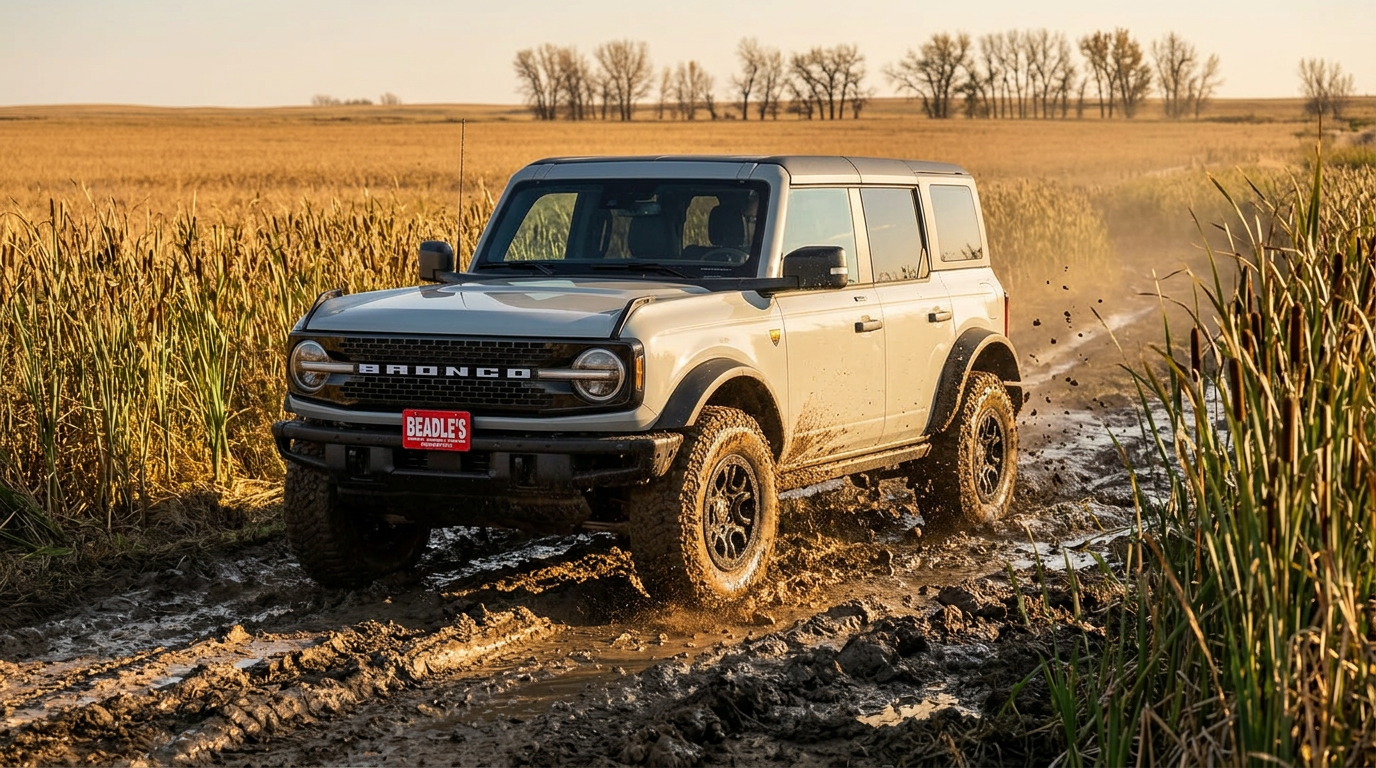
2026 Ford Bronco Wildtrak with Sasquatch Package on a muddy two-track through a central South Dakota cattail slough during late-October pheasant season

The 2026 Ford Bronco for South Dakota Hunting: Pheasants, Deer, and Waterfowl

A hunting rig in central South Dakota is asked to do four different jobs in four different seasons. It hauls a Lab and a kennel out to a CRP field at dawn for the pheasant opener, picks its way down a muddy ranch two-track to a cattail slough for late-October waterfowl, parks at the edge of river-bottom timber for a November whitetail sit, and breaks through drifted snow on a section line in late January for the closing weekend of the season. Most trucks can do one or two of those well. The 2026 Ford Bronco is built to do all four. This guide is for upland, big-game, and waterfowl hunters around Bowdle and the central South Dakota plains who are weighing whether the Bronco fits the way they actually hunt. We'll cover cargo, the removable top, the G.O.A.T. modes that matter for SD terrain, how a Bronco compares to an F-150 or a side-by-side as a hunting rig, which trim suits the job best, and what each season really demands. There's no marketing spin here — just what works. Shop Broncos in Stock Get Pre-Approved On This Page What Cargo and Gear Can the 2026 Bronco Actually Haul for a Hunt? How Does the Removable Top Help With Upland Hunting? Which G.O.A.T. Modes Handle Muddy CRP, Cattail Sloughs, and River-Bottom Timber? Bronco vs F-150 vs Side-by-Side: Which Is the Right Hunting Rig? Which 2026 Bronco Trim Is Best for the South Dakota Hunter? What Are the Real SD Use Cases, From the October Pheasant Opener Through Late Whitetail? What Cargo and Gear Can the 2026 Bronco Actually Haul for a Hunt? A 4-Door 2026 Bronco swallows a Lab-sized kennel, a full decoy spread for a small-water hunt, two coolers, a couple of shotgun cases, and a duffel of blaze orange — with the rear seats up — and still leaves room behind the seats for a wet bird dog and a muddy bird bag. Fold the rear seat down and it opens up enough room to lay down a 200-decoy mallard spread or a layout blind. This is the practical cargo case for the 4-Door, and it's the body style we recommend for almost every hunter. The 2-Door is a different conversation. It's a smaller cargo box behind the rear seats, and the rear seat itself is tight enough that a kennel of any meaningful size has to ride up front or the rear seats fold down and you lose the seats entirely. For a single hunter with a single dog and a tight gear footprint, the 2-Door works. For most hunting parties — multiple dogs, a partner, decoys, blinds, and a cooler that can hold a day's worth of birds — the 4-Door is the right call. A few details that matter on the lot. The Badlands trim ships with marine-grade vinyl seats — the right material when wet dogs, mud, blood, and bird residue are part of the routine. They wipe down with a damp rag and don't soak. Outer Banks gets leather-trimmed seats, which look sharp on the lot but require more care in a hunting context. The Bronco's swing-gate tailgate (versus a drop gate) means you load from the side rather than tailgating off the back — a small adjustment if you're used to an F-150 bed, but it works fine for cargo and for sitting on while you change boots. On the trailer side, every non-Raptor 2026 Bronco is rated for a 3,500-lb maximum loaded trailer weight. The Raptor is rated to 4,500 lbs. That's enough for a small aluminum boat for waterfowl on Lake Oahe, a single-axle utility trailer for layout blinds and a bigger decoy spread, or a small enclosed trailer for hauling dogs and gear long distance. It's not enough to tow a heavy stock trailer or a tandem-axle camper — that's an F-150 conversation, not a Bronco one. We cover the engine and towing details in our 2.3L vs 2.7L EcoBoost engine comparison. How Does the Removable Top Help With Upland Hunting? For early-season grouse, summer scouting, and warm October days when you're driving slow along section lines glassing for sign, doors-off and front-roof-panels-off is genuinely useful — you can see, hear, and load dogs without ducking through a doorframe. For cold-weather hunting, which is most of the SD season, the doors and top stay on. Doors-off and front roof panels off — the configuration that earns the Bronco its reputation, mostly useful here from May through early October. Two practical things to know. First, the Bronco's sideview mirrors are mounted to the body, not the doors, so they stay attached when the doors come off — you don't need aftermarket mirrors to drive legally without doors. That's a real engineering edge if you take the doors off often. Second, the modular hardtop comes apart in panels: the front two panels lift off easily for a sunroof effect, and the rear section can come off as a separate piece. Most days when hunters say they want "doors-off" what they really want is the front roof panels off — easier to do, easier to put back, and you keep the cabin enclosed if weather changes. The honest take: the doors-off lifestyle is a four- to six-month window in central SD, roughly May through early October. By the time the pheasant opener rolls around in mid-October, most hunters want the doors and roof on. Where the removable hardware actually helps a hunter is in the soft season — scouting trails, running dogs, checking food plots, summer grouse — not in the November cold. The full deep-dive on storage, removal time, and cold-weather trade-offs lives in our removable doors and roof guide. Which G.O.A.T. Modes Handle Muddy CRP, Cattail Sloughs, and River-Bottom Timber? Slippery mode handles most muddy CRP access roads on every Bronco trim. Off-Road and Rock-Crawl modes — available on Badlands, Heritage Edition, and Raptor — are what you reach for when a cattail slough or a river-bottom two-track gets serious. Sand mode is the one to use along Lake Oahe shorelines and at unimproved boat ramps. Every 2026 Bronco has five G.O.A.T. modes standard: Normal, ECO, Sport, Slippery, and Sand. Slippery is the workhorse for SD hunters — it dials back throttle response, reins in shift points, and biases torque distribution for a slick or soft surface. That's the right setting for a CRP access road after rain, a frozen ruts in a section line in early November, or a wet ranch two-track at first light. Badlands and Raptor add Off-Road, Rock-Crawl, and Baja modes — seven total. Off-Road is what you want for a muddy two-track to a cattail slough or a river-bottom timber stand, where ruts are deep and you need slow, deliberate progress. Pair it with Trail Control (low-speed off-road cruise control, available on the 10-speed automatic) and the Bronco crawls through at a set speed while you focus on steering. Rock-Crawl is overkill for almost everything in the central SD region — you'd reach for it on a Black Hills weekend, not at home. The lockers matter as much as the modes. Badlands, Heritage Edition, Raptor, and any Bronco equipped with the Sasquatch Package get electronic-locking front and rear differentials. When you're sitting in mud or ice and the open differentials are spinning one wheel, the lockers are what get you out. For full mode-by-mode use cases see our 2026 Bronco G.O.A.T. Modes guide. Get Pre-Approved Contact Beadle Ford Bronco vs F-150 vs Side-by-Side: Which Is the Right Hunting Rig? The Bronco isn't trying to replace an F-150 or a side-by-side — it's the rig that fills the gap between them. The F-150 is the long-haul truck and the towing king. The side-by-side is the back-pasture access tool. The Bronco is the road-legal, weather-sealed, dog-haulable middle ground that can do most of what each does without compromising on either highway manners or off-road capability. Where the F-150 still wins: open-bed cargo for elk quarters or whole deer, towing big enclosed trailers, and seating five-plus full-size adults in comfort. If you're hauling a tandem-axle stock trailer or a heavy gooseneck, that's an F-150 question. Where the F-150 loses to the Bronco: tight CRP corners, narrow ranch gates, and back-pasture two-tracks where wheelbase and overhangs start to matter. A 4-Door Bronco's wheelbase is roughly 116 inches; a 4-Door F-150 SuperCrew's is 145+. That difference shows up the second you try to thread between cottonwoods on a section line. Where a side-by-side wins: pure terrain access, low operating cost, the ability to leave it on the property full-time. Where it loses: it's not road-legal in most of the state for the long drive to a Cow Creek WMA, it has no enclosed cargo for a kennel and gear in cold rain, and it has no real cabin for a January late-season hunt when the wind chill is below zero. For most of our customers in the Bowdle area, the Bronco doesn't displace either one. It joins the F-150 in the driveway as the second vehicle — the access vehicle for the 90-mile drive to public land where the F-150 is too big for the gates and the side-by-side can't legally make the trip. That role is what the Bronco was built for. Which 2026 Bronco Trim Is Best for the South Dakota Hunter? The Badlands 4-Door is the sweet spot for most central SD hunters. It comes standard with marine-grade vinyl seats that wipe down clean, 33-inch Rugged-Terrain tires, the seven-mode G.O.A.T. system with Off-Road and Rock-Crawl, electronic-locking front and rear differentials, and the Advanced 4x4 system with 4-Auto. That's the spec sheet of a serious hunting rig at a trim that doesn't require a Sasquatch upcharge. Badlands 4-Door at a harvested cornfield on opening morning — vinyl seats, swing gate open, Lab in a blaze vest. The trim and the use case were built for each other. Big Bend with the Black Diamond Package is the budget option. Black Diamond adds an electronic-locking rear differential plus additional off-road hardware — enough capability for most hunters who don't need the Badlands' front locker or the seven-mode terrain system. It's a real working trim at a lower entry price. Outer Banks is more comfort-oriented (leather-trimmed seats, painted hardtop, body-color flares); it's a capable rig but not the one you want if dogs and decoys ride in the back every weekend. Heritage Edition is Badlands hardware in a different aesthetic — Sasquatch is standard (35-inch tires, lockers, 4.7 axle), white wheels and Oxford White hardtop give it a distinctive look, and plaid cloth seats nod to the original 1960s Bronco. It works as a hunting rig, but you're paying a premium for the styling. Raptor is overkill for SD hunting unless you're also doing Black Hills high-clearance trails on weekends — its 37-inch tires, Live Valve dampers, and 4,500-lb tow rating are built for terrain you don't have in central SD. The new-for-2026 Wildtrak Package on Badlands 4-Door (a $11,945 option) bundles the 2.7L V6, the 10-speed automatic, the Sasquatch Package, HOSS 3.0 with FOX Internal Bypass dampers, and the Black Appearance Package. For a hunter who genuinely uses the rig in deep mud, river-bottom ruts, or cattail slough access — and who wants the V6's torque for towing a small boat — Wildtrak earns its money. Full trim breakdowns are in our 2026 Bronco trim levels guide. What Are the Real SD Use Cases, From the October Pheasant Opener Through Late Whitetail? The third Saturday of October is opening day for pheasants. A Badlands 4-Door pulls up to the edge of a CRP field at dawn, swing gate opens, the Lab jumps out, the cooler and gun case come out behind. The drive in might have been a wet section road — Slippery mode for the gravel, 4-Auto for the change from pavement to dirt, no manual shifting needed. Available heated front seats and a heated steering wheel kill the cold while you wait for legal shooting time. That's the everyday pheasant scenario, and the Bronco was built for it. Late October through November shifts to waterfowl in the cattail sloughs north and west of Bowdle, and toward whitetail along the Whitlock and Cow Creek arms of Lake Oahe. The slough access roads are where Off-Road mode and electronic lockers earn their keep — soft mud, deep ruts, sometimes ice forming on the shaded side. A standard Badlands handles most of it; Wildtrak with Sasquatch handles all of it. The whitetail sit means parking at the edge of river-bottom timber and not getting stuck on the way out three hours after dark. Late season — January for resident pheasant hunters and the closing weekend of waterfowl — is where the Bronco really separates from a side-by-side. The cabin is heated and weather-sealed. The 33-inch or 35-inch tires push through drifted snow on a county section line where a stock-suspension SUV would high-center on the running boards. Slippery mode plus 4-Auto lets the rig sort traction without you needing to think about it. We cover the full winter picture in our South Dakota winter driving guide. All of this becomes clearer within the full 2026 Ford Bronco overview, which lays out trims, engines, capability, and what's new for the year side by side. The hunting use case is one of the cleanest applications of the Bronco's design — and seeing it next to the rest of the lineup helps make the trim choice obvious. Key Takeaways 4-Door is the right body style for almost every hunter — the 2-Door is too tight for kennels, decoys, and a hunting partner. Badlands 4-Door is the sweet spot: marine-grade vinyl seats, 33" R/T tires, front and rear lockers, seven G.O.A.T. modes, and Advanced 4x4 with 4-Auto. Slippery mode covers most muddy CRP access roads; Off-Road and Rock-Crawl on Badlands and up handle cattail-slough and river-bottom two-tracks. Maximum towing on every non-Raptor 2026 Bronco is 3,500 lbs — enough for a small boat or a single-axle utility trailer, not for heavy stock or gooseneck trailers. The Bronco doesn't replace an F-150 or a side-by-side — it's the road-legal, weather-sealed access vehicle that fits between them. Frequently Asked Questions Will a Lab-sized kennel fit in the back of a 2026 Ford Bronco? In a 4-Door Bronco, yes — a standard intermediate or large dog kennel fits behind the rear seats with the seats up, and slides forward easily with the rear seat folded down for a longer drive. In a 2-Door, kennel fitment is much tighter and usually requires the rear seats folded, which limits passenger space. The 4-Door is the better hunting body style for owners who travel with a dog crate. Are the Bronco's seats waterproof for wet dogs and muddy gear? The Badlands and Raptor trims come standard with marine-grade vinyl seats — the right material when wet dogs, mud, and bird residue are part of the routine, and they wipe down with a damp rag. Big Bend offers Marine Grade Vinyl as an option. Outer Banks gets leather-trimmed seats, which require more care in a hunting context. For pure utility, the Badlands' marine vinyl is the answer. Do I need the Sasquatch Package for South Dakota hunting? For most central SD hunting — CRP access roads, muddy ranch two-tracks, drifted county lines — a standard Badlands with 33-inch Rugged-Terrain tires is plenty. Sasquatch (35-inch tires, lockers, 4.7 axle) earns its keep if you regularly hunt cattail-slough access roads in real spring mud, river-bottom timber two-tracks, or unimproved Lake Oahe shoreline. It's worth it for some hunters and overkill for most. Can the 2026 Bronco tow a small fishing boat for waterfowl or summer scouting? Yes. Every non-Raptor 2026 Bronco is rated for a 3,500-lb maximum loaded trailer weight, which covers a small aluminum bass or duck boat on a single-axle trailer with room to spare. The Raptor is rated for 4,500 lbs. A dealer-installed OEM trailer hitch receiver is required for any towing over 2,000 lbs, regardless of trim. Is a Bronco better than my F-150 for hunting in central South Dakota? Different jobs. The F-150 wins on open-bed cargo, heavy towing, and full-size passenger comfort. The Bronco wins on tight CRP corners, narrow ranch gates, and back-pasture two-tracks where the F-150's longer wheelbase becomes a problem. For most hunters around Bowdle, the Bronco doesn't replace the F-150 — it's a second vehicle that goes where the F-150 can't. Which G.O.A.T. mode should I use for a CRP access road after rain? Slippery mode is the right setting on most trims — it dials back throttle response, smooths shift points, and biases torque distribution for a soft or slick surface. If you're on a Badlands or Raptor and the road is genuinely deep or rutted, switch to Off-Road mode and engage 4-High or 4-Low as conditions warrant. Trail Control (low-speed off-road cruise control on the 10-speed automatic) is a real help when ruts get deep. My Take on the 2026 Bronco as a South Dakota Hunting Rig I've watched plenty of customers come in thinking they need a Raptor or a fully loaded Sasquatch build, then walk out an hour later with a Badlands 4-Door because the spec list lined up exactly with how they actually hunt. The Badlands has been our recommendation for the central SD hunter for as long as we've been selling the new Bronco — marine vinyl seats that handle a wet Lab, 33-inch Rugged-Terrain tires that work in mud and snow, electronic lockers when you actually need them, and seven G.O.A.T. modes that cover everything from a CRP access road to a river-bottom two-track. It doesn't try to be a Black Hills rock-crawler, because most of us aren't asking it to be one. If you're weighing one as a second vehicle alongside an F-150 — which is how most of my hunting customers buy a Bronco — bring your kennel and your gear bag in for the test drive. We'll fold the seats, load the cargo bay, and you can see for yourself whether the 4-Door's footprint actually works for the way you hunt. That's the kind of conversation we'd rather have face to face than over a spec sheet. Shop Broncos in Stock Get Pre-Approved About the Author Lexy Tabbert — Beadle Ford, Bowdle, SD Lexy Tabbert is the Director of Sales and Marketing at Beadle Ford in Bowdle, South Dakota. She covers Ford vehicles, trim comparisons, and buyer guidance — helping families, ranchers, and ag operators across the region find the right truck and configuration for their needs. Learn more about Lexy.
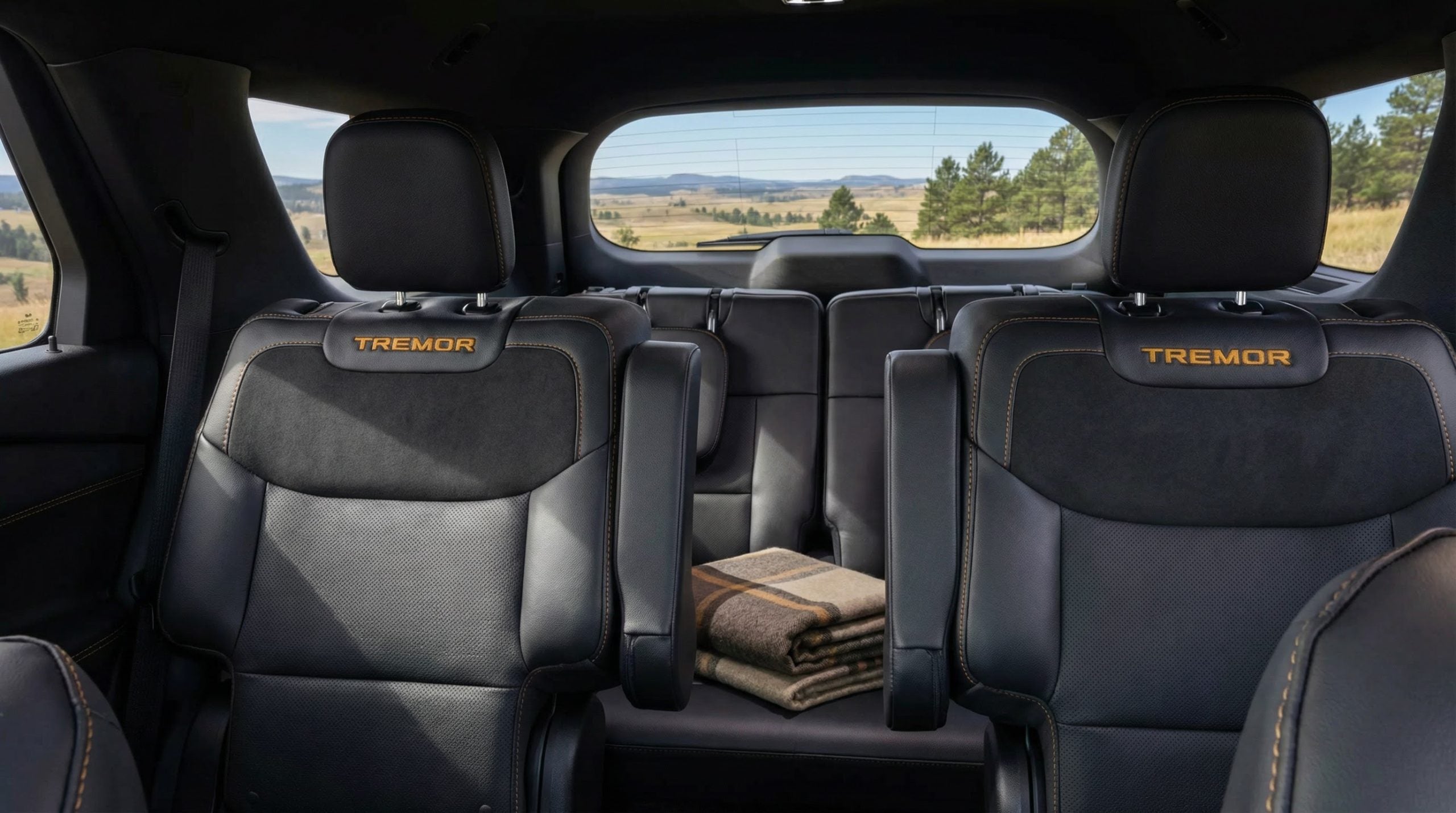
2026 Ford F-350 Interior Comfort

Quick Answer The 2026 Ford F-350 interior ranges from hose-out-durable to genuinely luxurious. XL and XLT use work-ready materials and a 4.2-inch cluster; Lariat adds a 12-inch SYNC 4 touchscreen and leather; King Ranch and Platinum add premium leather, heated and ventilated front seats, and memory adjustable pedals. A heavy-duty truck is built around capability, but the cabin still has to work for real life — long miles, cold mornings, jobsite dust, and full days behind the wheel. The 2026 F-350 can be straightforward and durable or genuinely comfortable, depending on how it's equipped. This guide focuses on what matters most: work-ready materials, the comfort features that cut fatigue on long South Dakota highway days, storage that supports tools and gear, and how the interior actually changes as you move up the trim ladder. Shop F-350s in Stock Get Pre-Approved On This Page What makes an F-350 interior "work-ready"? Which comfort features matter most for long days? How should you think about storage and usability? How does the interior change by trim? How do you choose the right interior setup? What makes an F-350 interior "work-ready"? Work-ready means surfaces that hold up, materials that clean easily, and controls you can operate quickly — sometimes with gloves on, sometimes in a hurry. On the XL and XLT, that's vinyl or hard-wearing cloth, a straightforward 4.2-inch cluster, and a layout built to take abuse. If your truck is a daily tool, that durability matters as much as towing and payload. The good news is you don't trade away capability for comfort — every F-350 cab, from XL to Platinum, sits on the same heavy-duty truck. Which comfort features matter most for long days? On the long, straight highway runs between towns out here, the features that cut fatigue are supportive seating, a quiet settled cabin, and clear displays. The bigger comfort steps come from the trim: leather-trimmed seats on Lariat, and heated-and-ventilated front seats plus memory adjustable pedals on Platinum. Supportive seating: matters more the longer you drive and the more you tow; leather and heated/ventilated options arrive on the upper trims. Cabin comfort: how quiet and settled the truck feels varies with trim and equipment. Controls and displays: the 12-inch SYNC 4 touchscreen on Lariat and up puts trailer and drive info front-and-center, which reduces fatigue when towing. For a deeper look at the displays, camera views, and driver-assist systems, see our 2026 F-350 technology guide. How should you think about storage and usability? Storage layout is something you notice every single day. If you carry straps, tools, paperwork, chargers, or jobsite gear, a usable center console and smart cabin storage make the truck feel more efficient — especially when it pulls double duty for work and family. A Crew Cab opens up the most rear-seat storage and passenger room; SuperCab and Regular Cab trade cabin space for a shorter footprint or longer bed. Match the cab to how you actually use the back seat before you think about materials. How does the interior change by trim? Materials, screen sizes, and comfort equipment vary significantly by trim — so the smart way to shop the interior is to compare real equipment lists, not assume every F-350 is the same inside. XL: durable vinyl/cloth, 4.2-inch cluster — built to be cleaned, not pampered. XLT: upgraded cloth and more comfort and tech, still work-first. Lariat: 12-inch SYNC 4 touchscreen and leather-trimmed seating — the comfort sweet spot. King Ranch: unique Kingsville leather and Western-styled trim. Platinum: the most refined cabin — heated and ventilated front seats and memory adjustable pedals. Our Recommendation For buyers who spend real hours in the cab — long hauls, daily ranch and jobsite use — we recommend Lariat as the comfort sweet spot: the 12-inch SYNC 4 screen and leather make the long days easier without luxury-trim pricing. If the truck is a pure work tool, XLT cloth is the value play; step to King Ranch or Platinum when the cab is your office. See how it pairs with capability in our packages & trims guide. How do you choose the right interior setup? Work from how you'll live with the truck, in four steps: Decide whether the truck is primarily a work tool or a dual-purpose daily driver. Choose cab size based on passengers, gear, and how often you use the back seat. Prioritize materials that fit your environment — farm, construction, winter. Confirm the comfort and tech features on the exact trim and package combination. From the Beadle Ford Lot Buyers around Bowdle almost always underestimate how many hours they'll actually sit in the truck. The ones who come back happiest tend to be the ones who stepped from XLT cloth up to Lariat leather and the 12-inch screen — once you're putting on highway miles between towns, that's the upgrade that earns its keep. Key Takeaways Work-ready interiors (XL, XLT) prioritize durability, easy cleanup, and a simple 4.2-inch cluster. Lariat is the comfort sweet spot: 12-inch SYNC 4 touchscreen and leather-trimmed seats. King Ranch adds Kingsville leather; Platinum adds heated/ventilated front seats and memory pedals. Crew Cab gives the most rear-seat room and storage; match the cab to your back-seat use. Interior equipment varies by trim and package — confirm on the exact truck. Frequently Asked Questions Are all 2026 F-350 interiors the same? No. Materials, screens, and comfort features vary by trim and package — from durable cloth and a 4.2-inch cluster on XL to leather and a 12-inch SYNC 4 touchscreen on Lariat and up. Compare the equipment list for the specific truck you're considering. Which cab is best for families and crews? A Crew Cab is the popular choice for passenger space and rear-seat comfort. SuperCab and Regular Cab trade cabin room for a shorter overall footprint or a longer bed. The right cab depends on how many people you carry and how often you need the back seat. Which 2026 F-350 trim has heated and ventilated seats? Platinum adds heated and ventilated front seats along with memory power-adjustable pedals. Heated seating and leather appear earlier on Lariat and King Ranch; XL and XLT focus on durable, work-ready materials. What screen and infotainment does the 2026 F-350 have? Higher trims run a 12-inch center touchscreen with SYNC 4 and a 12-inch digital cluster; base trims use a 4.2-inch productivity cluster. SYNC 4 supports wireless smartphone connectivity and the trailering displays that help on long tows. What's the best interior for farm and ranch use? For dusty, muddy, hard-use environments, XL or XLT with durable cloth or vinyl is the practical pick — easy to clean and built to take it. If you also log long highway miles, an XLT with the comfort upgrades, or a Lariat, balances durability with a more livable cab. Quick Answers: F-350 Interior One-line answers to the follow-up questions buyers ask next. Does the F-350 have leather seats? Yes — leather-trimmed seating starts on Lariat. Which trim has the 12-inch screen? Lariat and up, with SYNC 4. What's standard on XL? Durable materials and a 4.2-inch productivity cluster. Which trim has heated and ventilated seats? Platinum. Does it have memory adjustable pedals? Yes, on Platinum. Best cab for families? Crew Cab, for the most rear-seat room. Is there wireless phone connectivity? Yes — SYNC 4 supports it on equipped trims. Best interior for dusty work? XL or XLT cloth/vinyl for easy cleanup. Is the cab quiet on the highway? Quieter on upper trims; all share the heavy-duty platform. How do I confirm a truck's interior? We check the build sheet against the exact unit before you buy. Keep Researching The complete 2026 Ford F-350 Super Duty overview — trims, specs, towing, and inventory in one place. 2026 F-350 packages & trims — which trim and packages get you the interior you want. 2026 F-350 technology — the SYNC 4 screen, cameras, and driver-assist features in detail. 2026 F-350 colors & styling — pair your cabin choice with the right exterior. My Take on the 2026 F-350 Interior In my experience, interior decisions go from "nice" to "important" once you live with the truck every day. When the seating, storage, and controls match your routine, the F-350 feels less like a compromise and more like the right tool for the long haul — and around here, that usually means at least the XLT comfort step, often Lariat. Tell me how you'll use the cab and I'll help you land the right trim and cab. Stop in at Beadle Ford in Bowdle or reach out anytime. Shop F-350s in Stock Get Pre-Approved About the Author Lexy Tabbert — Beadle Ford, Bowdle, SD Lexy Tabbert is the Director of Sales and Marketing at Beadle Ford in Bowdle, South Dakota. She covers Ford vehicles, trim comparisons, and buyer guidance — helping families, ranchers, and ag operators across the region find the right truck and configuration for their needs. Learn more about Lexy.
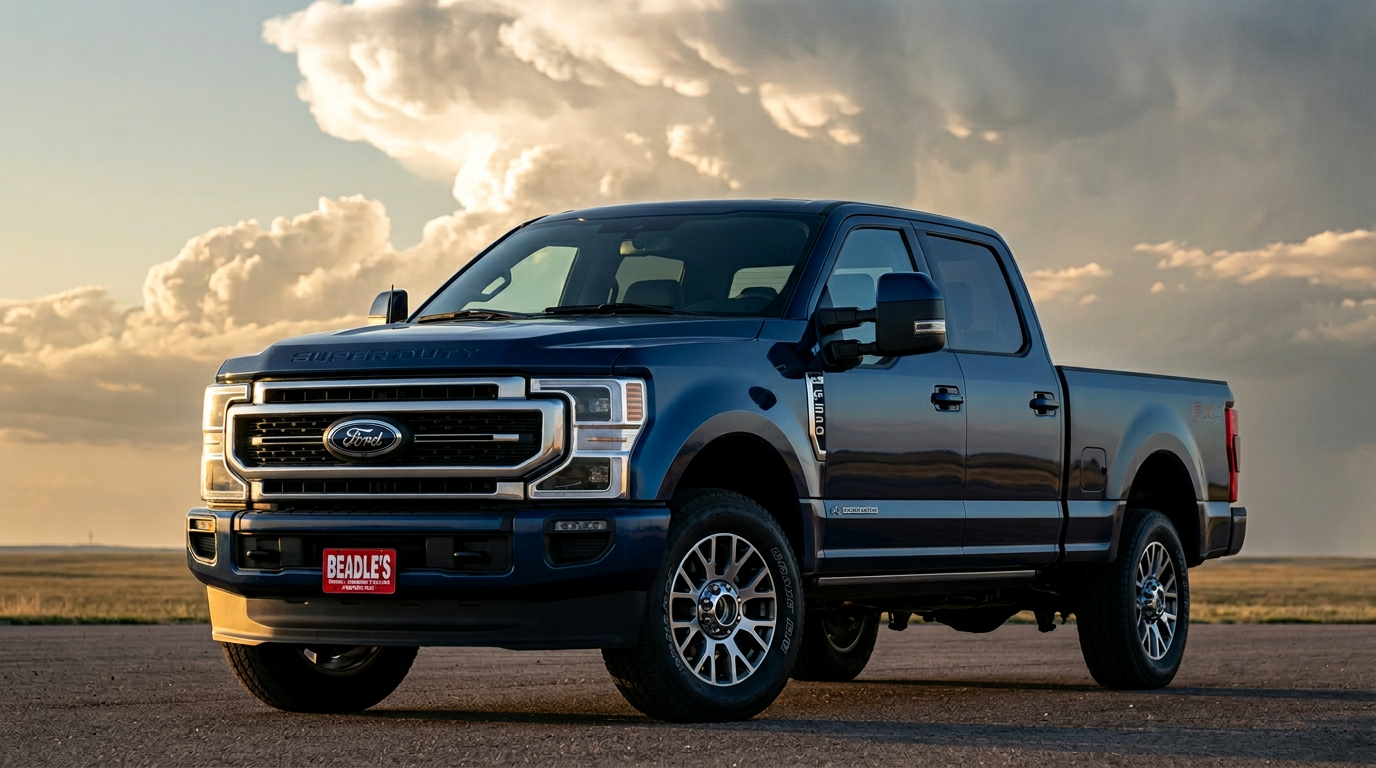
2027 Ford Expedition at golden hour on a South Dakota main street, delivery day at Beadle Ford in Bowdle

2027 Ford Expedition vs. 2026 Jeep Wagoneer and Grand Wagoneer: When a 10,000-lb Tow Rating Isn't the Full Story

Home› Ford Expedition› 2027 Ford Expedition› Expedition vs. Wagoneer If you’re cross-shopping a 2027 Ford Expedition against a 2026 Jeep Wagoneer or Grand Wagoneer, you’re weighing two genuinely different takes on the full-size three-row SUV. The Wagoneer has real advantages — a 10,000-lb maximum tow rating on paper, available Quadra-Lift air suspension, and Jeep brand heritage. The Expedition counters with a factory off-road trim (the Tremor), a 440 hp High Output engine option, BlueCruise hands-free highway driving, and Ford’s more stable long-term dealer network across the Dakotas. This guide covers the decisions that matter: whether the Wagoneer’s 10,000-lb tow figure translates to real-world advantage, how the cabins actually compare, what Stellantis’s recent reliability record means for a 5-to-7-year ownership horizon, how dealer networks and long-term service accessibility shake out in rural South Dakota, and which buyer should pick which truck. Browse Expedition Inventory Ask About a Custom Order On This Page Does the Wagoneer’s 10,000-lb tow rating actually matter in real use? Wagoneer vs. Expedition — which cabin feels more luxurious? Is Jeep reliability and resale catching up to Ford? What does dealer network stability look like across the Dakotas? Which buyers should pick the Expedition and who should try the Wagoneer? Does the Wagoneer’s 10,000-lb tow rating actually matter in real use? On a spec sheet, yes. In most real scenarios, it probably doesn’t. Jeep publishes a maximum trailer rating for the 2026 Wagoneer of approximately 10,000 lbs when properly equipped — the highest peak figure in this class. The 2027 Expedition Tremor is rated to tow up to 9,300 lbs when properly equipped. That’s a 700-lb difference, which is meaningful if your trailer is right at the ragged edge of an Expedition’s rating, and immaterial otherwise. Here’s the practical question. A bumper-pull trailer loaded with two horses, a tandem-axle enclosed trailer for a side-by-side, or a standard tri-axle boat trailer for Lake Oahe all come in well under either truck’s rating. The trailers that need a 10,000-lb rating — and actually hit close to it — are a narrow set: long livestock trailers loaded heavy, big dual-axle RVs, and some heavy utility trailers. If your actual trailer is one of those, the Wagoneer’s peak rating matters. If it isn’t, you’re buying a spec that doesn’t change your ownership. Both trucks run twin-turbocharged engines: the Expedition’s 3.5L EcoBoost V6 (with a 440 hp / 510 lb-ft High Output variant available) and the Wagoneer’s 3.0L Hurricane twin-turbo inline-six (rated by Jeep at approximately 420 hp / 468 lb-ft, with a High-Output version on the Grand Wagoneer at approximately 510 hp / 500 lb-ft). The Expedition uses a 10-speed automatic; the Wagoneer uses an 8-speed. For typical South Dakota trailer work, either truck pulls confidently. Where the Expedition adds practical value: Pro Trailer Hitch Assist and Pro Trailer Backup Assist are standard on every retail Expedition trim via Ford Co-Pilot360 Assist 2.0. BLIS with Trailer Coverage extends blind-spot monitoring around whatever you’re pulling. If you pull different trailers regularly, those assists matter more than a 400-lb peak rating difference. For more on Expedition towing, see the complete 2027 Ford Expedition overview. Wagoneer vs. Expedition — which cabin feels more luxurious? This one depends on the trim you’re comparing. A Grand Wagoneer Series III interior is genuinely premium — Palermo leather, real wood and aluminum trim, a 10-screen Uconnect-based multimedia setup with up to three displays on the front alone, and available Quadra-Lift air suspension that changes ride height for different driving modes. On material count and visual complexity, the Grand Wagoneer goes further than any Expedition trim. The 2027 Expedition counters with a different philosophy. The Ford Digital Experience pairs a 24" panoramic driver display with a 13.2" center display — fewer total screens than the Grand Wagoneer, but better integrated. Google Maps, Google Assistant, and Google Play Store are embedded natively. Wireless Apple CarPlay and Android Auto work on every retail Expedition. The King Ranch interior uses Del Rio Premium leather with Mesa Antique armrests, Del Rio steering wheel with Norias stitching, and heritage badging that the Wagoneer’s more corporate-luxury approach doesn’t try to match. The Platinum with the 30th Anniversary Appearance Package has a more distinct visual identity than any Wagoneer trim, anchored by Blue Ember Metallic paint that’s exclusive to that package. Where the Wagoneer genuinely wins on ride quality: the available Quadra-Lift air suspension delivers a smoother highway ride and better cornering behavior than the Expedition’s 4-wheel independent suspension on 22" wheels. For pure pavement comfort on long highway stretches, the air suspension is a real advantage. Where the Expedition wins: the Tremor’s off-road capability is a standalone trim with its own suspension, tires, locking differential, and drive modes — the Wagoneer doesn’t offer a direct factory off-road trim. For the full Expedition trim lineup and which one matches which use case, see the 2027 Ford Expedition trim levels guide. Ready to explore the Ford side? Get Pre-Approved Browse Current Expedition Inventory Is Jeep reliability and resale catching up to Ford? Both are narrowing, but the Wagoneer is still working from a harder starting point. The Wagoneer launched as a 2022 model year and the first two model years had documented quality issues — electronics problems, software glitches, fit-and-finish inconsistencies, and multiple recalls. Stellantis has worked to address these in 2024 and 2025 production, and more recent Wagoneer and Grand Wagoneer model years have shown improvement in third-party dependability data. The 2026 Wagoneer is a better-built vehicle than the 2022 was. That said, the company-wide picture still matters. Stellantis-brand vehicles — which includes Jeep, Chrysler, Dodge, and Ram — have ranked below industry average on multiple recent J.D. Power and Consumer Reports dependability and reliability studies. Ford’s ranking has trended upward in those same studies over the past several years. Neither brand is immune to problems, but the trajectory lines for a 2022–2025 Stellantis vehicle versus a 2022–2025 Ford vehicle have gone in different directions. Resale reflects the same story. Early-production Wagoneers (2022-2023) have seen meaningfully steeper depreciation curves than segment averages, partly because of the quality concerns and partly because Jeep over-produced initial inventory relative to demand. Expedition resale has been more stable, with the 6th-generation platform launched for 2025 still holding its value well into the used market. If you plan to trade or sell within 5 years, the resale gap compounds the initial-price comparison. If you’re planning a longer ownership horizon — 7 to 10 years — the question shifts to service accessibility and long-term parts availability, which ties into the next section. What does dealer network stability look like across the Dakotas? For practical ownership in rural South Dakota, the dealer network question matters as much as the truck itself. Ford’s retail dealer network in the Dakotas has been stable for decades. Stellantis’s CDJR (Chrysler-Dodge-Jeep-Ram) network has contracted somewhat in recent years, with dealer consolidation and restructuring affecting service access in some rural markets. Not every small-town Jeep buyer has the same dealer they did five years ago. Beadle Ford has been serving the Bowdle area for a long time. When you own a Ford, routine maintenance, recall work, warranty service, and emergency repairs happen locally. Techs who’ve been working on F-150s and Expeditions for years know the platforms. Ford parts availability through Ford’s national distribution is reliable. Over a 7-year ownership period, that consistency matters more than a 400-lb tow spec or a slightly different infotainment setup. Stellantis has also navigated more software and electronics updates than Ford over the past several years. Wagoneer owners have reported more frequent dealer trips for software updates, infotainment diagnostics, and sensor-related recalls than is typical for the class. When those trips require driving farther than your daily commute, they accumulate into real hours of lost time. If long-term service accessibility is a decision factor for you, that’s worth weighing honestly against the Wagoneer’s on-paper advantages. Which buyers should pick the Expedition and who should try the Wagoneer? Both trucks have defensible pitches. Here’s how I frame the decision for buyers walking into Beadle Ford. Pick the 2027 Ford Expedition if: You want a factory off-road trim — the Tremor has no direct Wagoneer equivalent at the Expedition price point You want BlueCruise hands-free highway driving covering approximately 97% of controlled-access U.S. highways You want Pro Trailer Hitch Assist and Pro Trailer Backup Assist standard on every retail trim (not a trim-locked feature) You want the 24" panoramic driver display and Ford Digital Experience You want the 30th Anniversary Appearance Package with Blue Ember Metallic — Ford’s distinctive visual identity option You’re planning to own for 5-plus years and want resale stability and reliable service access Try the 2026 Jeep Wagoneer or Grand Wagoneer if: You specifically need the 10,000-lb peak tow rating for a trailer that actually hits it You want Quadra-Lift air suspension for smoother highway ride quality You want the Grand Wagoneer’s multi-screen interior aesthetic and material complexity You’re committed to the Jeep brand and the Wagoneer’s heritage story matters to you You have an established Stellantis service relationship that works for you If you’re genuinely undecided, come drive an Expedition. Drive a Wagoneer too if you’re considering it. The right answer on a 5-year ownership question usually shows up in the details of a real test drive, not a spec comparison. Key Takeaways Wagoneer tops the class on peak tow rating at approximately 10,000 lbs vs. Expedition Tremor’s 9,300 lbs. The difference matters for a narrow set of trailers. Ford runs the 3.5L EcoBoost V6 with a 440 hp / 510 lb-ft High Output option and a 10-speed auto; Wagoneer runs the 3.0L Hurricane twin-turbo I6 with an 8-speed. Grand Wagoneer interior is more visually complex (multi-screen layout, available air suspension). Expedition interiors (King Ranch Del Rio leather, Platinum with 30th Anniversary) have more heritage character. Stellantis-brand dependability has ranked below industry average in recent years; Ford has trended upward. Early Wagoneer production (2022-2023) had documented quality issues. Wagoneer resale has depreciated faster than segment average; Expedition resale has been more stable. Expedition offers the factory off-road Tremor trim; Wagoneer does not offer a direct factory off-road competitor. Frequently Asked Questions How does the 2027 Ford Expedition compare to the Jeep Wagoneer? Wagoneer has a higher peak tow rating (approximately 10,000 lbs vs. 9,300 lbs for the 2027 Expedition Tremor) and available Quadra-Lift air suspension for smoother ride. Expedition has a factory off-road Tremor trim, BlueCruise hands-free driving, Pro Trailer Hitch Assist standard on every retail trim, more stable resale, and better recent dependability rankings. Can the Wagoneer really tow 10,000 lbs? Jeep publishes a maximum trailer rating of approximately 10,000 lbs when the 2026 Wagoneer is properly equipped. As with any peak rating, actual capability depends on configuration, hitch type, payload, and weight distribution. For most real trailers that fit in a family use case, both the Wagoneer and Expedition’s ratings provide adequate headroom. Is the Grand Wagoneer more luxurious than the Expedition King Ranch? On visual complexity and material count, yes — the Grand Wagoneer Series III goes further with Palermo leather, extensive wood and aluminum trim, and a multi-screen dashboard including front passenger displays. The Expedition King Ranch takes a different approach with Del Rio Premium leather, Mesa Antique armrests, Sinister Bronze wheels, and King Ranch heritage badging. The comparison is philosophical as much as material — the Wagoneer targets modern tech-luxury, the King Ranch targets heritage character. Does the Wagoneer have a factory off-road trim like the Expedition Tremor? No — Jeep does not offer a direct factory off-road trim of the Wagoneer equivalent to the Expedition Tremor. Wagoneer can be ordered with 4x4, but the off-road-specific equipment that defines the Tremor (440 hp High Output engine, 3.73 Electronic Locking Rear Differential, Rock Crawl drive mode, all-terrain tires, Trail Control, Modified Raptor-style skid plates) is Ford trim-exclusive, not a Wagoneer package. Is the Jeep Wagoneer reliable? Early Wagoneer production (2022-2023) had documented quality issues with electronics, software, and fit-and-finish. Stellantis has worked to address these in more recent production, and 2024-2026 Wagoneers show improvement. Stellantis-brand dependability overall has ranked below industry average on recent J.D. Power and Consumer Reports studies. Ford has trended upward in those same studies. Does the Expedition offer air suspension? No — the 2027 Ford Expedition uses a 4-wheel independent suspension (standard on Platinum and King Ranch), a modified higher-ride suspension with premium passive shocks on the Tremor, and conventional suspension on Active trims. It does not offer a direct air-suspension alternative to the Wagoneer’s available Quadra-Lift system. For pure highway ride comfort, the Wagoneer has an advantage; for off-road capability, the Tremor has an advantage. How do resale values compare between the Wagoneer and Expedition? Early Wagoneer production (2022-2023) has depreciated faster than segment averages due to quality concerns and initial over-supply. Expedition resale has been more stable, particularly for the sixth-generation platform launched for 2025. For buyers planning to trade or sell within 5 years, the resale difference adds to the initial-price comparison and can meaningfully narrow or widen the effective cost-of-ownership gap. My Take on the Expedition vs. Wagoneer Cross-Shop The Wagoneer has real upsides — the air suspension ride, the peak tow number, and the Grand Wagoneer’s interior ambition. I respect what Jeep built. But for the buyers we see at Beadle Ford, the practical equation usually favors the Expedition. The Tremor has no Wagoneer equivalent if capability matters to you. BlueCruise is more mature than anything Stellantis currently offers on the Wagoneer. Ford’s resale stability and Stellantis’s quality-rebuild trajectory are pointed in different directions, and that matters over a 7-year ownership window. If the Wagoneer’s air suspension or the 10,000-lb tow rating genuinely fit your use case, it’s a legitimate truck. If you’re drawn by the Grand Wagoneer’s multi-screen interior but the rest of the pitch is a wash, the Expedition is probably the smarter long-term pick. Come drive both if you’re unsure — I’ll walk you through the details against your week and your wallet honestly. Shop 2027 Expeditions in Stock Contact Beadle Ford About the Author Lexy Tabbert — Beadle Ford, Bowdle, SD Lexy Tabbert is the Director of Sales and Marketing at Beadle Ford in Bowdle, South Dakota. She covers Ford vehicles, trim comparisons, and buyer guidance — helping families, ranchers, and ag operators across the region find the right truck and configuration for their needs. Learn more about Lexy.
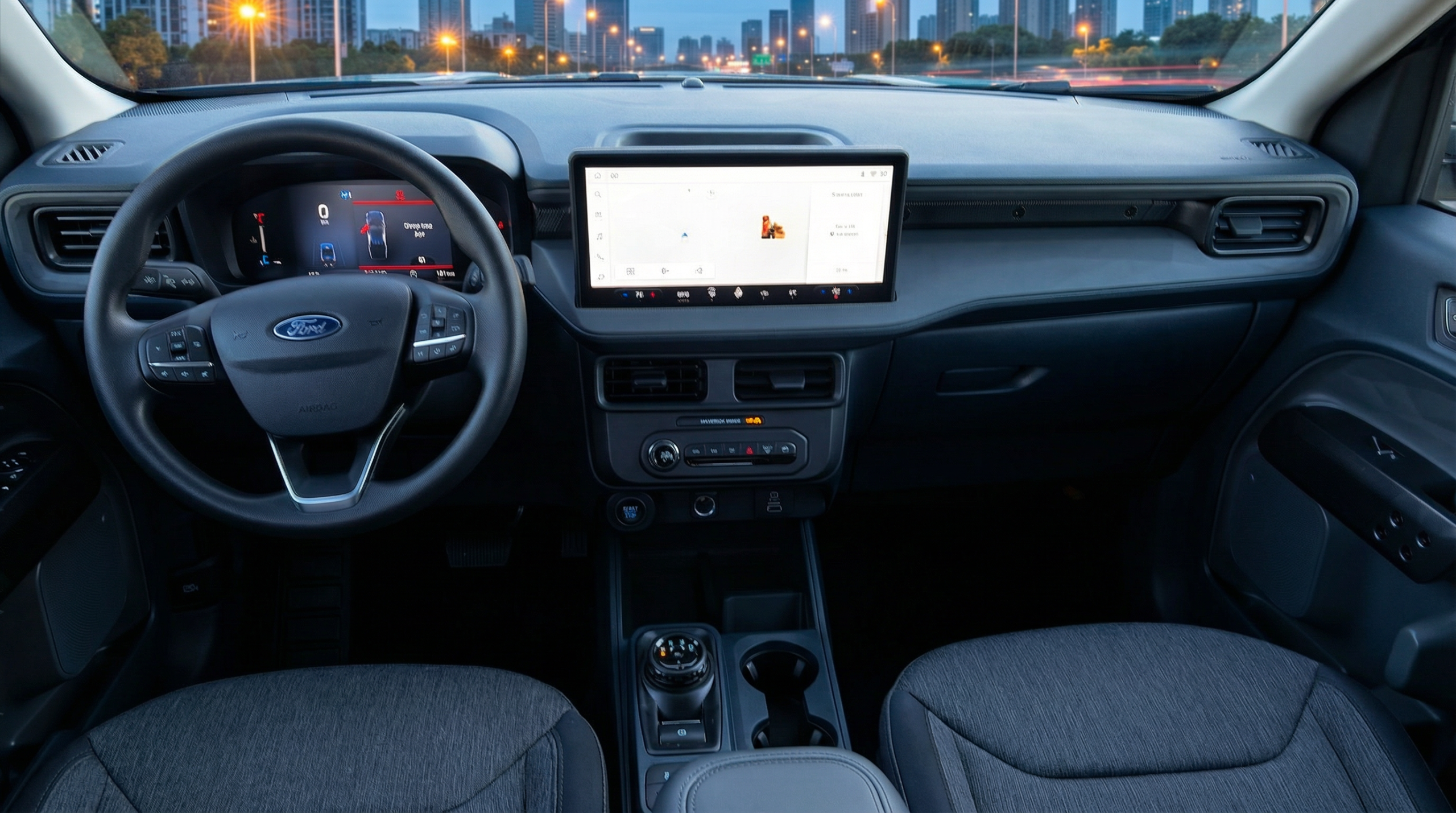
Contact Us

Fill out this form below and we'll contact you shortly
*Required Fields