
Blog

All New Vehicles Bowdle Ford Dealer Bowdle Ford Service
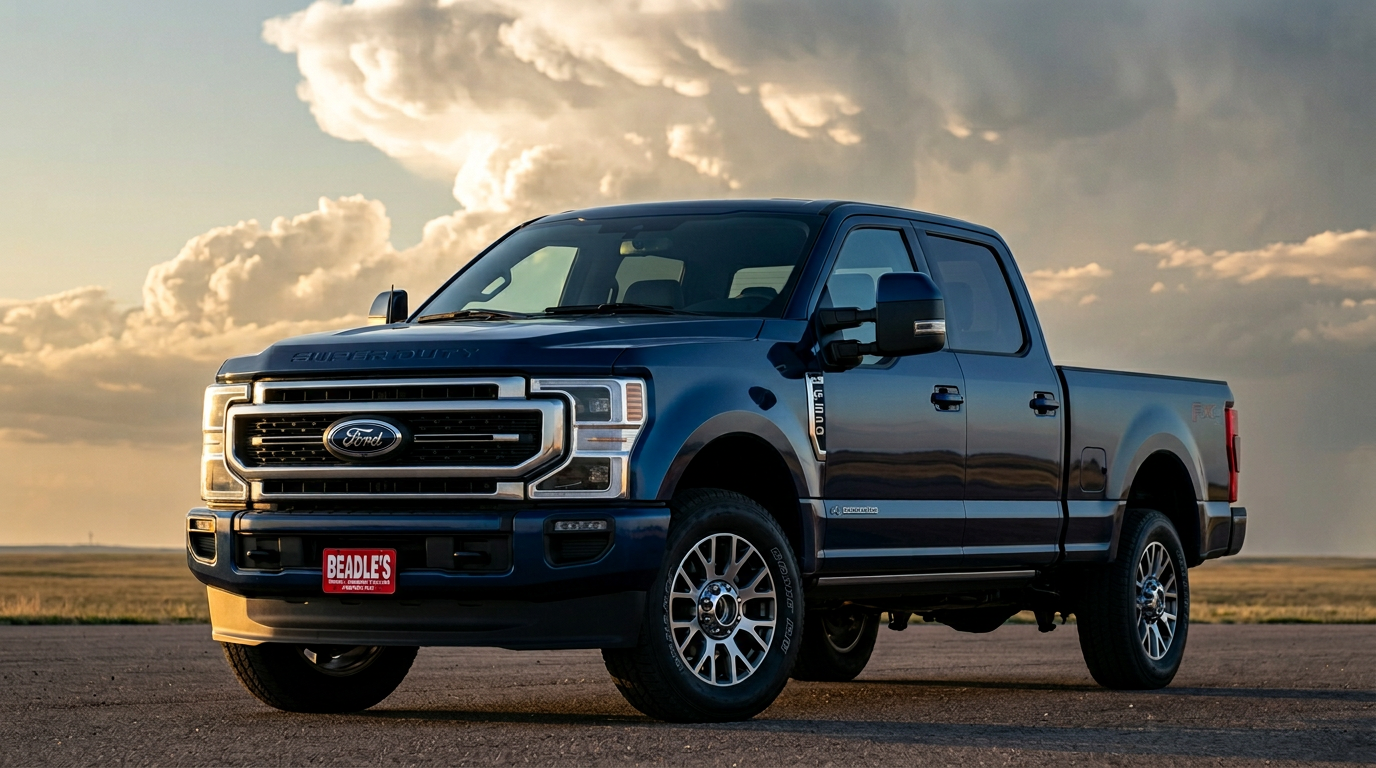
2027 Ford Super Duty in Neptune Blue in South Dakota

2027 Ford Super Duty Colors: See Every Exterior Color

Quick Answer The 2027 Ford Super Duty comes in 10 retail exterior colors across the F-250, F-350, and F-450. Oxford White is the only no-charge paint; Neptune Blue and Iconic Silver Metallic are new for 2027, while Argon Blue Metallic and Avalanche were discontinued. Several colors are trim-exclusive. Color is one of the first calls you make on a new Super Duty — and one of the few you can't change later. Below you can click through every 2027 Ford Super Duty exterior color on the same truck, in the same light, so you're comparing paint instead of guessing from a postage-stamp swatch. Then we break down which colors are locked to specific trims, what's new and dropped for 2027, and which paint holds up best to South Dakota gravel, sun, and winter. It all applies whether you're building an F-250, an F-350, or an F-450. Shop F-250s in Stock Reserve a 2027 Super Duty Get Pre-Approved On This Page What colors does the 2027 Super Duty come in? Which 2027 Super Duty colors are trim-exclusive? What's new and what's discontinued for 2027? Which Super Duty color is best for South Dakota? What colors does the 2027 Super Duty come in? Ten retail colors. Click any swatch below to repaint the same 2027 Super Duty in that color — the scene stays put, so you're comparing paint, not lighting. Trim-exclusive colors are labeled. Oxford White No-charge · all trims New for 2027 Paint shown on a representative 2027 Super Duty for comparison — same scene each time, so you're comparing paint, not lighting. Ask us for current paint pricing and availability by trim. Enable JavaScript to use the interactive color picker, or see the full color list in the guide table below. Most of the palette — Oxford White, Agate Black Metallic, Neptune Blue, and the rest — carries across the F-250, F-350, and F-450. A handful are tied to specific trims, which we cover next. Which 2027 Super Duty colors are trim-exclusive? Most colors are available across the lineup, but a few are restricted — worth knowing before you fall for a paint you can't get on the trim you want. The two tri-coats, Glacier Gray Metallic Tri-Coat and Star White Metallic Tri-Coat, are reserved for Lariat and up. Race Red runs the other direction — it's offered on the work trims (XL, XLT, Lariat) but not on King Ranch or Platinum. Carbonized Gray Metallic and the new Iconic Silver Metallic are available on every trim except King Ranch, which leans into its own Western palette with two-tone Marsh Gray lower cladding. Want it on any trim? Oxford White, Agate Black Metallic, Neptune Blue, and Ruby Red Metallic Tinted Clearcoat (XLT and up) give you the widest reach across the Super Duty lineup. What's new and what's discontinued for 2027? Two new colors arrive for 2027 and two leave. Neptune Blue, a deep marine blue, and Iconic Silver Metallic, a bright silver, are the additions. Argon Blue Metallic and Avalanche are discontinued. If you had your eye on Argon Blue or Avalanche, a 2026 Super Duty still on the lot is your last shot — once they're gone, they're gone. Neptune Blue is the natural successor for a blue buyer, and it's available across every trim. Fleet and commercial buyers have a separate set of solid colors — Green, Green Gem, Orange, School Bus Yellow, Vermillion Red, and Yellow — available on XL and XLT with a valid fleet code. They're not part of the retail picker above and aren't available with the Tremor, STX, or Black Appearance packages. Which Super Duty color is best for South Dakota? There's no wrong answer, but a few things matter more on the Northern Plains than they might in town: how a color hides gravel dust and road grime, how visible it is in a whiteout, and how it holds up to sun and salt. Our Recommendation For most Bowdle and Aberdeen-area buyers, we point to Carbonized Gray Metallic or the new Iconic Silver Metallic — both hide the gravel-road grey between washes and stay neutral for resale. If winter visibility is your priority, Oxford White or Star White Metallic Tri-Coat are the easiest to see and keep clean. Want presence on the lot? Ruby Red Metallic Tinted Clearcoat is the one that turns heads. The deep colors — Agate Black Metallic especially — look incredible clean, but they show dust, pollen, and winter salt the fastest. If you hate washing a truck, that's worth weighing before you order. 2027 Super Duty color guide Color Availability Best for Oxford White All trims · no charge Winter visibility, easy upkeep, resale Agate Black Metallic All trims · extra-cost Premium look — shows dust fastest Carbonized Gray Metallic Not King Ranch · extra-cost Hides gravel dust, neutral resale Iconic Silver Metallic (new) Not King Ranch · extra-cost Low-maintenance, bright silver finish Neptune Blue (new) All trims · extra-cost Standout deep blue, wide availability Race Red XL, XLT, Lariat · extra-cost Classic bold red on work trims Ruby Red Metallic Tinted Clearcoat XLT and up · extra-cost Deep, glossy presence on the lot Glacier Gray Metallic Tri-Coat Lariat and up · extra-cost Upscale silver-gray depth Star White Metallic Tri-Coat Lariat and up · extra-cost Pearl-white depth, winter visibility Marsh Gray Select trims · extra-cost Warm green-gray, hides grime Source: 2027 Ford Super Duty color and trim availability. Marsh Gray is not available with the Black Appearance Package. Paint availability and charge status vary by trim and configuration — contact us for current figures. From the Beadle Ford Lot The most common color conversation we have starts with someone set on a black Super Duty because it looks sharp in the brochure — then they see how fast our gravel roads dust up a dark truck and walk out in a gray or a white. If you're torn, come stand next to your top two in daylight; it usually settles it in about five minutes. Key Takeaways The 2027 Ford Super Duty offers 10 retail exterior colors across the F-250, F-350, and F-450. Oxford White is the only no-charge color; the rest are extra-cost premium paints. Neptune Blue and Iconic Silver Metallic are new for 2027; Argon Blue Metallic and Avalanche are discontinued. The tri-coats (Glacier Gray, Star White) are Lariat-and-up; King Ranch can't get Carbonized Gray or Iconic Silver. For Dakota gravel and winter, the grays and whites stay cleanest; Agate Black shows dust the fastest. Frequently Asked Questions How many colors does the 2027 Ford Super Duty come in? Ten retail exterior colors, available across the F-250, F-350, and F-450. There is also a separate set of six fleet-only solid colors offered on XL and XLT with a valid fleet code. What are the new colors for the 2027 Super Duty? Neptune Blue, a deep marine blue, and Iconic Silver Metallic, a bright silver, are new for 2027. Argon Blue Metallic and Avalanche were discontinued. Which 2027 Super Duty colors are trim-exclusive? Glacier Gray Metallic Tri-Coat and Star White Metallic Tri-Coat are available only on Lariat and up. Race Red is offered on XL, XLT, and Lariat but not King Ranch or Platinum. Carbonized Gray Metallic and Iconic Silver Metallic are available on every trim except King Ranch. What is the only no-charge color on the 2027 Super Duty? Oxford White is the standard, no-charge color. Every other retail paint — including Neptune Blue, Agate Black Metallic, and the tri-coats — is an extra-cost premium color. Which Super Duty color hides dirt and gravel dust best? Carbonized Gray Metallic, Iconic Silver Metallic, and Marsh Gray hide gravel dust and light road grime best between washes. Dark colors like Agate Black Metallic look great clean but show dust and salt the fastest. Quick Answers: 2027 Super Duty Colors One-line answers to the follow-up questions buyers ask next. No-charge color? Oxford White. New for 2027? Neptune Blue and Iconic Silver Metallic. Discontinued for 2027? Argon Blue Metallic and Avalanche. Red options? Race Red and Ruby Red Metallic Tinted Clearcoat. Darkest color? Agate Black Metallic. Tri-coat colors? Glacier Gray and Star White, on Lariat and up. Colors King Ranch can't get? Carbonized Gray and Iconic Silver Metallic. Best for hiding dust? Carbonized Gray or Iconic Silver Metallic. Best for winter visibility? Oxford White or Star White Metallic Tri-Coat. Where can I see them in person? Beadle Ford in Bowdle, SD. Keep Researching The complete 2027 Ford F-250 Super Duty overview — trims, towing, specs, and inventory The complete 2027 Ford F-350 Super Duty overview — heavy-haul capability and dually options 2027 F-250 colors & appearance — appearance packages, wheels, and Tremor styling My Take on Picking a 2027 Super Duty Color Color is the one thing buyers second-guess most, and the one I most often tell people to go see in person. A swatch the size of a stamp can't tell you how Neptune Blue reads at golden hour or how much gravel dust Carbonized Gray quietly hides on a county road. Use the picker above to narrow it to two, then come stand next to them in daylight — that's when people know. If you want a specific color on a specific build — say a Lariat in Star White Tri-Coat or an XLT in the new Iconic Silver — we can order it exactly how you want it. Stop by Beadle Ford in Bowdle or give us a call and we'll get you sorted. Shop F-250s in Stock Reserve a 2027 Super Duty Get Pre-Approved About the Author Lexy Tabbert — Beadle Ford, Bowdle, SD Lexy Tabbert is the Director of Sales and Marketing at Beadle Ford in Bowdle, South Dakota. She covers Ford vehicles, trim comparisons, and buyer guidance — helping families, ranchers, and ag operators across the region find the right truck and configuration for their needs. Learn more about Lexy.
Ranger vs. Tacoma: The Honest Comparison That Might Actually Help You Choose

The Ford Ranger and Toyota Tacoma are the two names that come up in nearly every midsize truck conversation — and for good reason. Both are capable, both are well-established, and both have genuine strengths. This comparison isn't going to tell you one is universally better. It's going to give you an honest side-by-side on the specs that actually affect daily use, towing, off-road capability, and long-term value — so you can make the call yourself. One upfront note: Beadle Ford sells the Ranger, not the Tacoma. You should know that going in. What I'm giving you here is a factual comparison based on published specifications. If the Tacoma comes out ahead on something, you'll see it. Head-to-Head Specs: Where They Differ Spec 2026 Ford Ranger 2024 Toyota Tacoma Max Towing up to 7,500 lbs up to 6,500 lbs Max Payload up to 1,788 lbs up to 1,755 lbs Engines Available 2.3L I4 (270 hp), 2.7L V6 (315 hp), 3.0L V6 Raptor (405 hp) 2.4L I4 (228 hp), 2.4L I4 Hybrid (326 hp combined) Transmission 10-speed automatic 8-speed auto or 6-speed manual Frame High-strength steel ladder frame High-strength steel ladder frame Infotainment Screen Up to 12 inches Up to 14 inches Hybrid Option No Yes (i-FORCE MAX) Performance Off-Road Variant Ranger Raptor (405 hp) TRD Pro Cab Configuration (SuperCrew) SuperCrew only — 4 full doors Double Cab or CrewMax Tacoma specs based on published 2024 model year figures. Verify current-year specifications with Toyota before purchase. Where the Ranger Comes Out Ahead Towing capacity. The Ranger's 7,500 lb max towing rating is 1,000 lbs higher than the Tacoma's 6,500 lb ceiling. That gap is meaningful when you're near the top of the range — a loaded livestock trailer, a heavier pontoon boat, or a dual-axle utility trailer can cross from one side to the other. If towing is a regular part of your use case, the Ranger's rated edge is real and confirmed against the same SAE J2807 standard. Engine options at non-Raptor trims. The Ranger offers a 2.7L EcoBoost® V6 with 315 hp and 400 lb-ft of torque on XLT and Lariat builds — without requiring a performance variant. The Tacoma's non-hybrid engine is a 2.4L I4 producing 228 hp. For buyers who want strong power in a workhorse trim rather than an off-road showpiece, the Ranger has a meaningful advantage here. SuperCrew only. The Ranger comes exclusively in SuperCrew — four full-size doors, full rear seat. There's no access cab or double cab compromise. If rear-seat space matters, the Ranger delivers it as the only option rather than making it a premium configuration choice. Raptor vs. TRD Pro. The Ranger Raptor runs a 3.0L V6 producing 405 hp, live-valve Fox Racing Shox, and is built as a high-speed off-road performance truck. The TRD Pro is a serious off-road package but operates in a different performance tier. If maximum off-road performance matters and budget allows, the Raptor is the more capable option. Where the Tacoma Has the Edge Hybrid option. The Tacoma offers an i-FORCE MAX hybrid powertrain that Toyota claims produces 326 hp combined — Ford has no hybrid Ranger equivalent. For buyers focused on fuel efficiency alongside capability, the Tacoma hybrid is a genuine advantage the Ranger doesn't match. Larger screen at the top trim. The Tacoma's top-end infotainment goes to 14 inches vs. the Ranger's 12 inches. For buyers who prioritize the biggest possible display, the Tacoma screen is larger. Manual transmission option. The Tacoma offers a 6-speed manual on certain configurations. The Ranger is automatic-only across all trims and engines. For buyers who prefer a manual, the Tacoma is the only option in this comparison. Resale and reputation. Toyota's resale value history on the Tacoma is strong — consistently among the best in the segment. Ford Ranger resale has improved significantly but hasn't historically matched Toyota in this regard. If long-term resale is a financial priority, it's worth researching current residual value data. How to Actually Make the Call Quick Decision Guide Choose the Ranger if you: Regularly tow near or above 6,500 lbs — boats, livestock, loaded trailers. Want a V6 option in a non-performance trim. Value a full SuperCrew standard. Are considering the Raptor as your off-road variant. Want to buy locally from Beadle Ford in Bowdle. Consider the Tacoma if you: Prioritize a hybrid powertrain for fuel economy. Want a manual transmission. Value Toyota's historical resale performance above other factors. Don't tow near the top of the segment's capacity range. For most buyers in central South Dakota — where towing is a real use case and gravel roads are a given — the Ranger's capacity edge and V6 availability matter. The 1,000 lb towing advantage alone can be the deciding factor when a pontoon boat or loaded horse trailer is in the picture. One More Thing: Where You Buy Matters Too The nearest Toyota dealership to Bowdle is a significant drive. Beadle Ford is right here — which means sales support, service, warranty work, and parts availability are local. For farm trucks, work trucks, or any vehicle that gets used hard and occasionally needs attention, dealership proximity is a practical consideration that doesn't show up in a spec comparison but matters in daily ownership. That's not a pitch — it's a real factor. Local service reduces downtime. If a sensor goes out during harvest or a tow job turns into a warranty issue, having the selling dealer 20 minutes away instead of an hour-plus changes the math on truck ownership. Ranger vs. Tacoma FAQ Does the Ford Ranger tow more than the Toyota Tacoma? Yes. The 2026 Ford Ranger tows up to 7,500 lbs when properly equipped, compared to the Tacoma's 6,500 lb max. That's a 1,000 lb advantage for the Ranger — meaningful when you're pulling boats, livestock trailers, or loaded utility trailers. Does the Ford Ranger come in a hybrid version? No — the 2026 Ford Ranger does not offer a hybrid powertrain. The Tacoma does offer an i-FORCE MAX hybrid option. If hybrid capability is important to your buying decision, the Tacoma has an advantage here that the Ranger cannot match at this time. Is the Ranger Raptor better than the Tacoma TRD Pro off-road? In terms of outright off-road performance, the Ranger Raptor's 3.0L V6 with 405 hp and live-valve Fox Racing Shox long-travel suspension is a more extreme setup than the TRD Pro. The TRD Pro is a serious off-road package, but the Raptor is designed for high-speed off-road driving in a way the TRD Pro is not. For buyers who want a factory performance off-road truck, the Raptor is the stronger specification. Which has better resale value, the Ranger or the Tacoma? The Toyota Tacoma has historically had stronger resale values than the Ford Ranger. Toyota's Tacoma resale consistently ranks near the top of the segment. Ranger resale has improved but has not historically matched Toyota in this metric. If resale value is a top priority, current residual value data from a source like Kelley Blue Book or ALG should factor into your decision. Can I compare the Ranger to the F-150 instead? The Ranger and F-150 are different truck categories — the Ranger is a midsize truck, the F-150 is full-size. If your towing or payload needs consistently push near or above the Ranger's limits, the F-150 might be the better fit. Beadle Ford carries both. The key question is whether you need the additional capacity a full-size truck provides, or whether the Ranger's midsize footprint and lower cost fits your use case better. Key Takeaways The Ranger tows up to 7,500 lbs — 1,000 lbs more than the Tacoma's 6,500 lb max The Ranger offers a 315 hp V6 engine on XLT and Lariat without needing a performance trim; Tacoma non-hybrid tops at 228 hp The Tacoma offers a hybrid powertrain (i-FORCE MAX) that the Ranger does not Tacoma resale value has historically been stronger than the Ranger's The Ranger comes exclusively in SuperCrew (4 full doors) — no compromise cab configurations The Ranger Raptor (405 hp, live-valve Fox shocks) is a more extreme off-road specification than the TRD Pro For Bowdle-area buyers, Ranger availability and local Beadle Ford service are a practical ownership advantage Both trucks are genuinely good. If the Tacoma's hybrid system or manual transmission is a deciding factor for you, that's a legitimate reason to go that direction. But if you're towing regularly, want a V6 without stepping into Raptor territory, or just want to buy local and service local — the Ranger earns the comparison. Before you decide, it's worth reading the 2026 Ford Ranger overview — or stopping in at Beadle Ford in Bowdle to see one in person. That tends to settle the conversation faster than any spec sheet. — Lexy Tabbert, Beadle Ford Continue Reading → How Ranger trim levels stack up on value → Full towing breakdown for the 2026 Ranger by engine and drivetrain

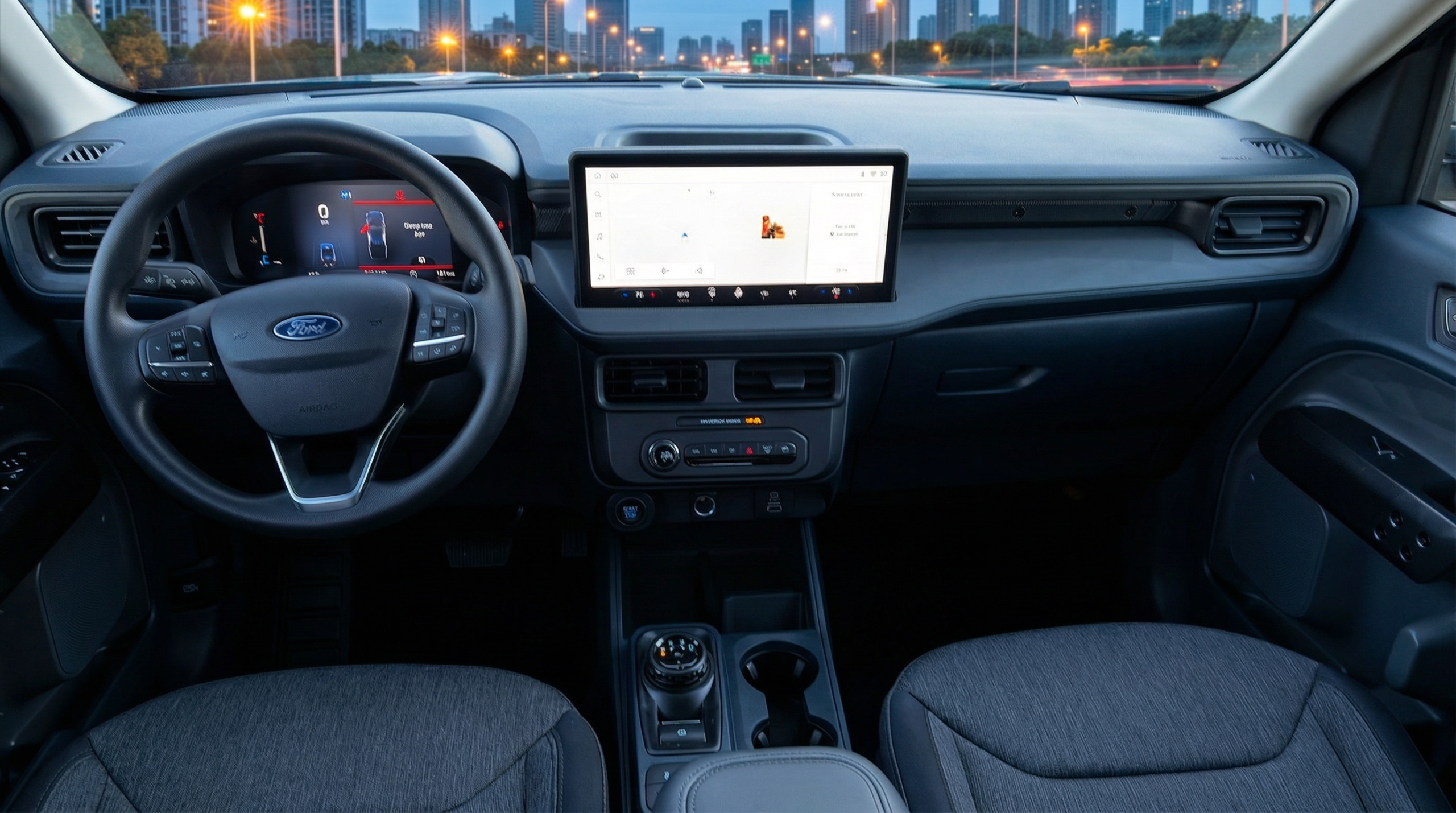
2026 Ford Maverick interior technology and displays

2026 Ford Maverick Technology Guide (What Actually Helps Day-to-Day)

In a compact truck, technology should solve problems—not add complexity. For most Maverick owners, the best tech improves visibility, daily convenience, and winter confidence. This guide focuses on the tech questions people actually ask when they’re comparing trims and trying to avoid paying for features they’ll never use. Technology choices are easiest after you know your drivetrain and use-case. If you haven’t done that step yet, start here: 2026 Maverick Specs & Configurations. For shopping and inventory support, visit the Ford Maverick model page. Shop Mavericks in Stock Contact Us Table of Contents What technology matters most in a Maverick? Visibility tech: the real quality-of-life upgrade Tech that helps in winter and bad weather Why tech varies by trim and package How to shop Maverick tech without guessing FAQ What technology matters most in a Maverick? The most valuable Maverick technology is the kind that makes the truck easier to live with: clear displays, simple controls, and driver-assist features that reduce stress in traffic and on long rural drives. Start by thinking about your biggest friction points: backing, visibility in bad weather, long commutes, or managing a small trailer. Visibility tech: the real quality-of-life upgrade Camera views: reduce backing stress and help in tight driveways and parking lots. Clear displays: matter more than “biggest screen” if you want quick, readable information. Practical layout: the best tech is easy to access while wearing gloves or managing winter gear. Tech that helps in winter and bad weather For South Dakota winters, the most helpful tech usually isn’t flashy—it’s what helps you see better and stay calm when roads change fast. AWD helps with traction, but visibility and confidence features help you avoid mistakes. If your main goal is winter confidence, pair this with: 2026 Maverick Winter Driving Guide. Why tech varies by trim and package Maverick technology isn’t “all or nothing.” Availability can change by trim, package, and build timing—so it’s smart to confirm the exact equipment list instead of assuming every Maverick has the same screens or driver assistance features. If you’re choosing between trims primarily for features, use: 2026 Maverick Trims & Packages Guide. Quick Overview Best tech focus Visibility, simple usability, and confidence in daily driving Most important shopping habit Confirm equipment by window sticker/build list Related decisions Trims & packages, winter driving, light towing How to shop Maverick tech without guessing List your pain points: backing, long commutes, winter visibility, or towing a small trailer. Decide must-have vs nice-to-have: keep the list short so you don’t overpay. Compare two real builds: use the window sticker/equipment list, not assumptions. Confirm usability: readable screens, straightforward controls, and camera views where you’ll actually use them. Shop Mavericks in Stock Ask About a Specific Feature FAQ Do all 2026 Mavericks have the same screens and tech features? Not necessarily. Tech equipment can vary by trim and package. The safest approach is confirming the exact truck’s equipment list or window sticker. What tech helps the most for winter driving? Visibility and confidence features usually matter most: camera views, clear displays, and practical controls. AWD helps traction, but winter tires and visibility are still the biggest difference-makers. How should I compare tech between two trims? Compare the specific equipment lists on the window stickers (or build sheets), then decide if the features you gain match the price difference for your daily driving. Conclusion In my experience, the best Maverick tech choices are the ones that reduce daily friction—visibility, easy controls, and confidence in bad weather. When buyers focus on real-life usability instead of feature bragging rights, they end up with a truck that feels easier to own every day. About the Author: Lexy Tabbert works with South Dakota and North Dakota buyers who want practical truck guidance—winter driving confidence, feature decisions that matter, and long-term ownership value. Her focus is straightforward: confirm the essentials first, then choose the technology that makes daily life easier.

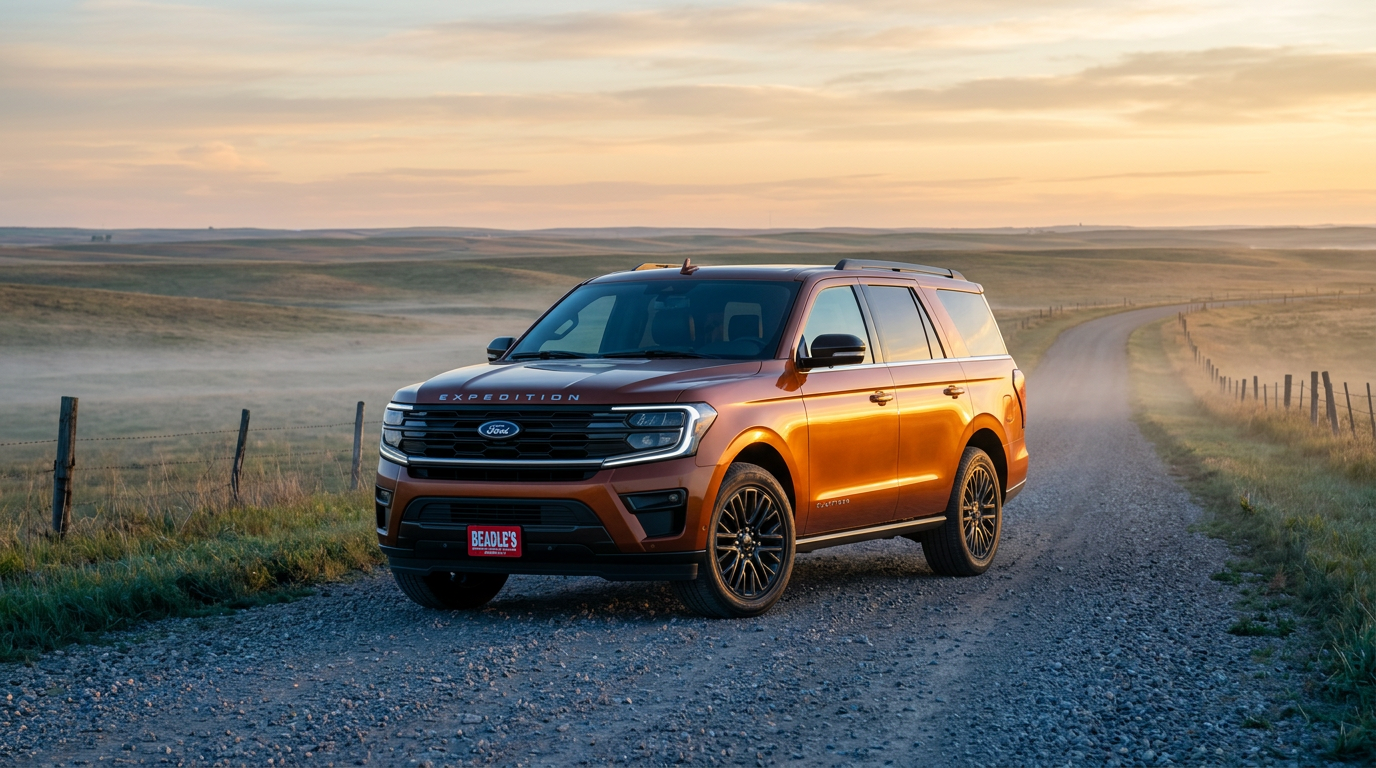
2027 Ford Expedition in Bronze Fire Metallic Tri-coat on a prairie gravel road at sunrise near Bowdle SD

When Your Family Outgrows the F-150 or Explorer: Is a 2027 Ford Expedition the Right Upsize?

Home› Ford Expedition› 2027 Ford Expedition› Your First Full-Size SUV You’re in an F-150 SuperCrew or a Ford Explorer today, and the truck or SUV that worked for your family five years ago is starting to feel small. Maybe the oldest just started driving, and the second row is shared three-across. Maybe the F-150 bed handles the cargo but you keep wishing you had room inside for everyone AND the gear. Maybe the Explorer’s third row works for kids but not for teenagers. This guide is for buyers at exactly that moment — the upsizer who’s thinking about their first full-size SUV. We’ll cover when upsizing genuinely makes sense, how the 2027 Expedition compares to the Ford Explorer (the intra-Ford decision most buyers in this spot are weighing), what actually changes when you move from a half-ton pickup or a midsize SUV to a full-size three-row — parking, fuel, tires, driveway footprint — whether the Expedition’s third row holds up for a growing family, and which trim is the right pick for a first-time full-size SUV buyer. Browse Expedition Inventory Ask About a Custom Order On This Page When is it time to upsize from an F-150 or Explorer? How does the 2027 Expedition compare to the Ford Explorer? What changes when you move from a half-ton pickup to a full-size SUV? Is the Expedition’s third row actually usable for a growing family? How do you pick the right trim on your first Expedition? When is it time to upsize from an F-150 or Explorer? Usually, the family tells you before the spec sheet does. Here are the moments we see most often at Beadle Ford. The second-row-three-across moment. You’re in an F-150 SuperCrew or an Explorer and the three kids in the second row are getting bigger every year. Car seats become booster seats; booster seats become seatbelt passengers. Elbows start touching. Road trips that used to be easy become negotiations about who sits where. That’s usually the first signal. The “everything doesn’t fit” moment. You’re packing for a weekend at Lake Oahe, a family trip to the Black Hills, or the long haul to Sioux Falls or Fargo for a tournament. In the F-150, the bed handles cargo but you can’t fit all the passengers and the dog comfortably. In the Explorer, everyone fits but the gear takes up the third-row space you’d planned to use for passengers. Either truck does part of the job but not both. The “oldest starts driving” moment. When the oldest kid gets a driver’s license, your family effectively becomes a two-vehicle operation that used to be a one-vehicle operation. If the kid inherits your F-150, you still need something that carries the rest of the family plus gear. If the kid inherits something smaller, the family vehicle still needs to handle trips that now include a teenager who’s driving themselves some of the time. A full-size SUV absorbs both scenarios. The towing-plus-passengers moment. You want to pull a boat, a camper, or a livestock trailer with the family along for the ride. An Explorer tows less than an Expedition; an F-150 tows more but loses passenger and cargo space. The Expedition does both jobs — up to approximately 9,600 lbs on the Tremor (reported, pending the 2027 Ford Towing Guide) with three rows of passengers and cargo still on board. If any of those moments sound like your current situation, you’re probably not too early to consider upsizing. How does the 2027 Expedition compare to the Ford Explorer? Both are Ford three-row SUVs, but they’re different classes of vehicle with different purposes. The Explorer is Ford’s midsize three-row, built on a unibody platform with a focus on car-like ride quality, urban-friendly dimensions, and efficiency. The Expedition is Ford’s full-size three-row, built on a body-on-frame platform with full-size trucks’ capability — higher towing, larger third row, more interior volume, more presence. The practical differences for an upsizing family: the Expedition’s third row is meaningfully larger and supports adult passengers on longer trips. The cargo area behind the third row is bigger — the Expedition MAX stretches that even further. Towing capability steps up substantially: where an Explorer handles a small boat or a light utility trailer, the Expedition Tremor’s reported 9,600 lb max (pending 2027 Ford Towing Guide) opens up gooseneck livestock trailers, tandem-axle camper setups, and multi-use haulers that exceed Explorer territory. Where the Explorer still wins: tighter parking, a smaller turning radius, generally better fuel economy (final 2027 EPA ratings pending), and a lower purchase price. If you rarely carry more than four people and your trips stay on pavement, the Explorer might remain the right vehicle. The upsize case only gets stronger as your family and use case get bigger. The Expedition also offers two body styles the Explorer doesn’t: standard-length Expedition and the extended Expedition MAX. If your family trips push the cargo-behind-the-third-row question hard, MAX adds roughly a foot of wheelbase and meaningful cargo volume. The Expedition vs. Expedition MAX guide walks through that body-style decision in detail. What changes when you move from a half-ton pickup to a full-size SUV? Less than most first-time Expedition buyers expect. An F-150 SuperCrew and an Expedition share a lot of engineering lineage — the same Ford Digital Experience on upper trims, the same Ford Co-Pilot360 Assist 2.0 driver-assist standard, similar dimensions in terms of width and height, and 3.5L EcoBoost V6 architecture available in both. The transition is more about how you use the vehicle than how it drives. Parking and turning radius. The Expedition (standard length) is about the same overall length as an F-150 SuperCrew with a 6.5-foot bed. If you park an F-150 SuperCrew comfortably today, the standard Expedition fits the same spots. The MAX is longer — roughly equivalent to an F-150 SuperCrew with an 8-foot bed — and takes a little more room to maneuver. Turning radius is slightly tighter on the Expedition than on most pickups because the SUV body sits on a shorter effective wheelbase. Fuel and running costs. EPA ratings are listed on each in-stock unit’s window sticker. In general, a full-size three-row SUV uses comparable or slightly more fuel than a half-ton pickup because the SUV weighs similar and has a less aerodynamic shape under some conditions. Tire sizes on Platinum (P275/60R20) and King Ranch (P275/50R22) are larger than most F-150 SuperCrew sizes, which means tire replacement costs are higher. Tremor uses more conservative P275/70R18 all-terrains at lower replacement cost than the bigger Platinum or King Ranch rubber. What improves. All-weather passenger comfort, cargo access from inside the vehicle (versus a pickup bed), interior storage for grocery-sized and gear-sized items, and third-row flexibility for family seating configurations. Those are the day-to-day changes that most buyers actually feel after their first month. If you’re moving from an Explorer rather than an F-150, the changes are more noticeable — you’re moving up in overall footprint, ride quality shift toward truck-like dynamics, higher towing capacity, and larger interior volume. Fuel economy likely decreases, and the replacement tire and service costs step up. The Explorer-to-Expedition transition is a genuine upsize, not a lateral move. Thinking about making the upsize? Get Pre-Approved Shop 2027 Expeditions in Stock Is the Expedition’s third row actually usable for a growing family? Yes, and it holds up as kids get taller. The Expedition’s third row is full-size-SUV-class legroom and headroom, designed to support adult passengers on longer trips. That’s the practical difference buyers notice when they move from an Explorer’s more compact third row — the Expedition’s third row doesn’t become an emergency-only seat as your kids grow into it. The seating configurations matter. Active Select (200A) comes standard as 8-passenger with a second-row 40/20/40 CenterSlide bench. Active Touring (202A) is 7-passenger with power-folding captain’s chairs, with an 8-passenger bench option. Tremor, Platinum, and King Ranch are all 7-passenger with leather captain’s chairs (Tremor and Platinum offer an 8-passenger option). MAX-body Expeditions add cargo space behind the third row rather than changing the seating count — still 7 or 8 passenger. Access to the third row is tidier than most. The power-folding second-row captain’s chairs on Active Touring and above tilt and slide forward with a single button, making third-row entry easier than manually folding a second-row bench. For kids in booster seats or smaller passengers, third-row access through a captain’s chair aisle is meaningfully simpler than climbing over. If the third-row question is central to your decision — particularly if you’re considering a MAX body style for more cargo volume behind the third row — the Expedition vs. Expedition MAX guide goes deeper on the body-style trade-off. How do you pick the right trim on your first Expedition? For first-time full-size SUV buyers coming from an F-150 SuperCrew or Explorer, the Active Touring (202A) equipment group is usually the value sweet spot. It adds the features that most family buyers end up wanting — BlueCruise 90-Day Trial, Pro Power Onboard 400W, heated front seats and steering wheel, memory driver seat, ActiveX trimmed seats, and power-folding second-row captain’s chairs — over Active Select (200A) without stepping up into Platinum luxury territory. For 2027, Active Touring also offers the new Family Travel Package option with 360-Degree Zone Lighting, a Digital Device Holder, Flex Powered Console, Power Panoramic Vista Roof, and third-row PowerFold seating. If you’re moving from a Platinum-trim Explorer or an F-150 Lariat and you’re used to premium interior materials, Platinum base (600A) is worth considering — 22" Ebony Bright Machined wheels, 4-Wheel Independent Suspension, body-color bumpers with Silver Lining trim, and leather-trimmed heated/ventilated front seats with perforated inserts. Platinum Ultimate (17A) adds the 440 hp High Output engine, standard BlueCruise 1-Year + 90-Day plan, and premium appearance items that standard Platinum 600A no longer carries for 2027. If off-pavement capability matters — gravel, pasture, or ranch access is part of your driving — the Tremor is the only factory off-road Expedition. It’s a genuinely different mechanical spec, not a cosmetic upgrade. But for pure on-pavement family use, Active Touring or Platinum makes more sense. For the complete trim-by-trim decision framework with every Platinum package detailed, see the 2027 Ford Expedition Trim Levels guide. And for the full 2027 feature list and buying options, see the complete 2027 Ford Expedition overview. Key Takeaways Typical upsize triggers: the three-across-in-row-two moment, the “everything doesn’t fit” trip moment, the oldest starting to drive, or wanting to tow plus carry passengers. Expedition vs. Explorer is midsize vs. full-size, unibody vs. body-on-frame. The Expedition has a bigger third row, more cargo, and more towing. Moving from an F-150 SuperCrew to a standard-length Expedition is a lateral shift in footprint, not an upsize in parking terms. MAX adds real length. Tire and service costs step up with 22" wheels on Platinum and King Ranch; Tremor’s 18" all-terrains are more economical to replace. Active Touring (202A) is typically the value sweet spot for first-time full-size SUV buyers; Platinum for luxury; Tremor for off-pavement use cases. Frequently Asked Questions Is the Ford Expedition a good first full-size SUV? Yes, especially for buyers moving up from an F-150 SuperCrew or a Ford Explorer. The Expedition shares much of its technology and driver-assist stack with the F-150, so the transition from a truck feels familiar. The third-row legroom and cargo flexibility are meaningful upgrades over the Explorer. Active Touring (202A) is typically the value sweet spot for first-time full-size SUV buyers. How is the 2027 Expedition different from the Ford Explorer? The Explorer is Ford’s midsize three-row SUV on a unibody platform; the Expedition is Ford’s full-size three-row on a body-on-frame platform. The Expedition has a meaningfully larger third row, more cargo space, substantially higher towing capability, and an available extended-length MAX body style. The Explorer has a smaller footprint, tighter turning radius, and generally better fuel economy. Will an Expedition fit in my garage if I currently park an F-150 SuperCrew? Standard-length Expedition is roughly comparable to an F-150 SuperCrew with a 6.5-foot bed in overall length, so if your current pickup fits, the standard Expedition generally does too. The Expedition MAX is longer — closer to an F-150 SuperCrew with an 8-foot bed — and may be tight in shorter garages. Bring your garage measurements when you visit Beadle Ford and we’ll confirm against the exact 2027 Expedition dimensions. How many people can the Expedition seat? Up to 8 passengers. Active Select (200A) comes standard as 8-passenger with a second-row 40/20/40 CenterSlide bench. Active Touring (202A), Tremor, Platinum, and King Ranch are 7-passenger standard with leather or ActiveX captain’s chairs, with an 8-passenger option available on most. MAX body style preserves the same seat count and adds cargo space behind the third row. How much does the Expedition tow compared to the Explorer? The Expedition tows substantially more. Public reporting on the current-generation Expedition Tremor cites a maximum trailer rating of approximately 9,600 lbs when properly equipped (pending the 2027 Ford Towing Guide). Ford Explorer maximum tow ratings are meaningfully lower and depend on engine configuration. If towing a boat, livestock trailer, or camper is part of your use case, the Expedition opens up capabilities the Explorer doesn’t match. Does the Expedition cost more to own than an F-150 or Explorer? Compared to an Explorer, yes — purchase price, tire replacement cost (particularly on Platinum and King Ranch’s larger wheels), and likely fuel economy are all steps up. Compared to a similarly equipped F-150 SuperCrew, ownership costs are roughly comparable — the Expedition and F-150 share engine architecture and many mechanical components. EPA ratings are listed on each in-stock unit’s window sticker. Which Expedition trim is best for a first-time full-size SUV buyer? Active Touring (202A) is typically the value sweet spot. It includes BlueCruise 90-Day Trial, Pro Power Onboard 400W, heated front seats, a heated steering wheel, memory driver seat, ActiveX trimmed seats, and power-folding second-row captain’s chairs — the features most family buyers actually use. For luxury-minded upsizers, Platinum (or Platinum Ultimate with the 440 hp High Output engine) is the next step. For off-pavement use cases, Tremor is the only factory off-road Expedition. My Take on the First-Expedition Decision Most of the upsizing buyers I see at Beadle Ford are one of two types. Either they’re in an Explorer and the family has outgrown the third row, or they’re in an F-150 SuperCrew and they want the passenger flexibility an SUV brings without giving up much of what the truck does. Either way, the Expedition answers the question. For the Explorer buyer, it’s a meaningful upsize. For the F-150 buyer, it’s a lateral shift in footprint with a big improvement in interior utility. If you’re at that moment and you’d like to walk through the configuration against your actual week — school drop-offs, weekend trips, the trailer you already own — come see me. I’ll help you pick the trim and body style that genuinely fits, not just the one that looks good on the lot. Shop 2027 Expeditions in Stock Contact Beadle Ford About the Author Lexy Tabbert — Beadle Ford, Bowdle, SD Lexy Tabbert is the Director of Sales and Marketing at Beadle Ford in Bowdle, South Dakota. She covers Ford vehicles, trim comparisons, and buyer guidance — helping families, ranchers, and ag operators across the region find the right truck and configuration for their needs. Learn more about Lexy.
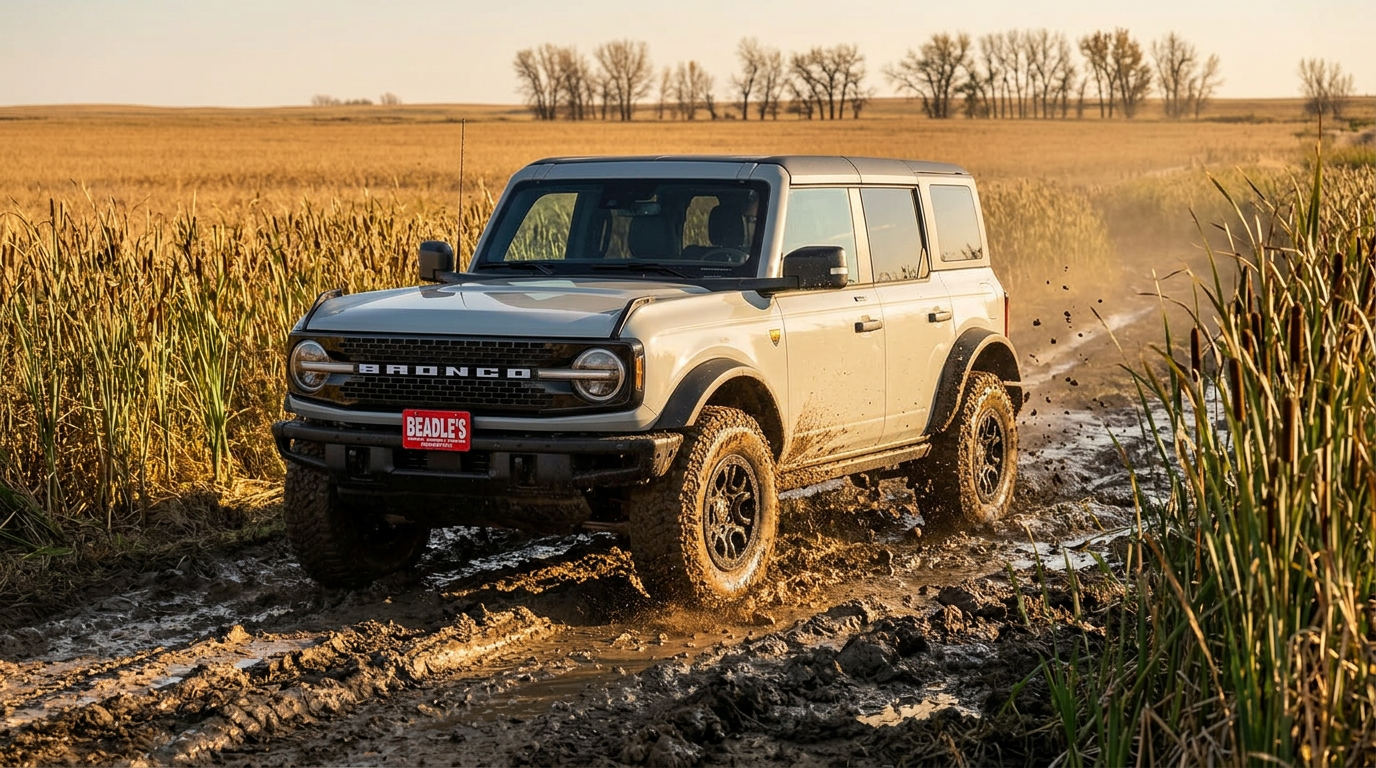
2026 Ford Bronco Wildtrak with Sasquatch Package on a muddy two-track through a central South Dakota cattail slough during late-October pheasant season

The 2026 Ford Bronco for South Dakota Hunting: Pheasants, Deer, and Waterfowl

A hunting rig in central South Dakota is asked to do four different jobs in four different seasons. It hauls a Lab and a kennel out to a CRP field at dawn for the pheasant opener, picks its way down a muddy ranch two-track to a cattail slough for late-October waterfowl, parks at the edge of river-bottom timber for a November whitetail sit, and breaks through drifted snow on a section line in late January for the closing weekend of the season. Most trucks can do one or two of those well. The 2026 Ford Bronco is built to do all four. This guide is for upland, big-game, and waterfowl hunters around Bowdle and the central South Dakota plains who are weighing whether the Bronco fits the way they actually hunt. We'll cover cargo, the removable top, the G.O.A.T. modes that matter for SD terrain, how a Bronco compares to an F-150 or a side-by-side as a hunting rig, which trim suits the job best, and what each season really demands. There's no marketing spin here — just what works. Shop Broncos in Stock Get Pre-Approved On This Page What Cargo and Gear Can the 2026 Bronco Actually Haul for a Hunt? How Does the Removable Top Help With Upland Hunting? Which G.O.A.T. Modes Handle Muddy CRP, Cattail Sloughs, and River-Bottom Timber? Bronco vs F-150 vs Side-by-Side: Which Is the Right Hunting Rig? Which 2026 Bronco Trim Is Best for the South Dakota Hunter? What Are the Real SD Use Cases, From the October Pheasant Opener Through Late Whitetail? What Cargo and Gear Can the 2026 Bronco Actually Haul for a Hunt? A 4-Door 2026 Bronco swallows a Lab-sized kennel, a full decoy spread for a small-water hunt, two coolers, a couple of shotgun cases, and a duffel of blaze orange — with the rear seats up — and still leaves room behind the seats for a wet bird dog and a muddy bird bag. Fold the rear seat down and it opens up enough room to lay down a 200-decoy mallard spread or a layout blind. This is the practical cargo case for the 4-Door, and it's the body style we recommend for almost every hunter. The 2-Door is a different conversation. It's a smaller cargo box behind the rear seats, and the rear seat itself is tight enough that a kennel of any meaningful size has to ride up front or the rear seats fold down and you lose the seats entirely. For a single hunter with a single dog and a tight gear footprint, the 2-Door works. For most hunting parties — multiple dogs, a partner, decoys, blinds, and a cooler that can hold a day's worth of birds — the 4-Door is the right call. A few details that matter on the lot. The Badlands trim ships with marine-grade vinyl seats — the right material when wet dogs, mud, blood, and bird residue are part of the routine. They wipe down with a damp rag and don't soak. Outer Banks gets leather-trimmed seats, which look sharp on the lot but require more care in a hunting context. The Bronco's swing-gate tailgate (versus a drop gate) means you load from the side rather than tailgating off the back — a small adjustment if you're used to an F-150 bed, but it works fine for cargo and for sitting on while you change boots. On the trailer side, every non-Raptor 2026 Bronco is rated for a 3,500-lb maximum loaded trailer weight. The Raptor is rated to 4,500 lbs. That's enough for a small aluminum boat for waterfowl on Lake Oahe, a single-axle utility trailer for layout blinds and a bigger decoy spread, or a small enclosed trailer for hauling dogs and gear long distance. It's not enough to tow a heavy stock trailer or a tandem-axle camper — that's an F-150 conversation, not a Bronco one. We cover the engine and towing details in our 2.3L vs 2.7L EcoBoost engine comparison. How Does the Removable Top Help With Upland Hunting? For early-season grouse, summer scouting, and warm October days when you're driving slow along section lines glassing for sign, doors-off and front-roof-panels-off is genuinely useful — you can see, hear, and load dogs without ducking through a doorframe. For cold-weather hunting, which is most of the SD season, the doors and top stay on. Doors-off and front roof panels off — the configuration that earns the Bronco its reputation, mostly useful here from May through early October. Two practical things to know. First, the Bronco's sideview mirrors are mounted to the body, not the doors, so they stay attached when the doors come off — you don't need aftermarket mirrors to drive legally without doors. That's a real engineering edge if you take the doors off often. Second, the modular hardtop comes apart in panels: the front two panels lift off easily for a sunroof effect, and the rear section can come off as a separate piece. Most days when hunters say they want "doors-off" what they really want is the front roof panels off — easier to do, easier to put back, and you keep the cabin enclosed if weather changes. The honest take: the doors-off lifestyle is a four- to six-month window in central SD, roughly May through early October. By the time the pheasant opener rolls around in mid-October, most hunters want the doors and roof on. Where the removable hardware actually helps a hunter is in the soft season — scouting trails, running dogs, checking food plots, summer grouse — not in the November cold. The full deep-dive on storage, removal time, and cold-weather trade-offs lives in our removable doors and roof guide. Which G.O.A.T. Modes Handle Muddy CRP, Cattail Sloughs, and River-Bottom Timber? Slippery mode handles most muddy CRP access roads on every Bronco trim. Off-Road and Rock-Crawl modes — available on Badlands, Heritage Edition, and Raptor — are what you reach for when a cattail slough or a river-bottom two-track gets serious. Sand mode is the one to use along Lake Oahe shorelines and at unimproved boat ramps. Every 2026 Bronco has five G.O.A.T. modes standard: Normal, ECO, Sport, Slippery, and Sand. Slippery is the workhorse for SD hunters — it dials back throttle response, reins in shift points, and biases torque distribution for a slick or soft surface. That's the right setting for a CRP access road after rain, a frozen ruts in a section line in early November, or a wet ranch two-track at first light. Badlands and Raptor add Off-Road, Rock-Crawl, and Baja modes — seven total. Off-Road is what you want for a muddy two-track to a cattail slough or a river-bottom timber stand, where ruts are deep and you need slow, deliberate progress. Pair it with Trail Control (low-speed off-road cruise control, available on the 10-speed automatic) and the Bronco crawls through at a set speed while you focus on steering. Rock-Crawl is overkill for almost everything in the central SD region — you'd reach for it on a Black Hills weekend, not at home. The lockers matter as much as the modes. Badlands, Heritage Edition, Raptor, and any Bronco equipped with the Sasquatch Package get electronic-locking front and rear differentials. When you're sitting in mud or ice and the open differentials are spinning one wheel, the lockers are what get you out. For full mode-by-mode use cases see our 2026 Bronco G.O.A.T. Modes guide. Get Pre-Approved Contact Beadle Ford Bronco vs F-150 vs Side-by-Side: Which Is the Right Hunting Rig? The Bronco isn't trying to replace an F-150 or a side-by-side — it's the rig that fills the gap between them. The F-150 is the long-haul truck and the towing king. The side-by-side is the back-pasture access tool. The Bronco is the road-legal, weather-sealed, dog-haulable middle ground that can do most of what each does without compromising on either highway manners or off-road capability. Where the F-150 still wins: open-bed cargo for elk quarters or whole deer, towing big enclosed trailers, and seating five-plus full-size adults in comfort. If you're hauling a tandem-axle stock trailer or a heavy gooseneck, that's an F-150 question. Where the F-150 loses to the Bronco: tight CRP corners, narrow ranch gates, and back-pasture two-tracks where wheelbase and overhangs start to matter. A 4-Door Bronco's wheelbase is roughly 116 inches; a 4-Door F-150 SuperCrew's is 145+. That difference shows up the second you try to thread between cottonwoods on a section line. Where a side-by-side wins: pure terrain access, low operating cost, the ability to leave it on the property full-time. Where it loses: it's not road-legal in most of the state for the long drive to a Cow Creek WMA, it has no enclosed cargo for a kennel and gear in cold rain, and it has no real cabin for a January late-season hunt when the wind chill is below zero. For most of our customers in the Bowdle area, the Bronco doesn't displace either one. It joins the F-150 in the driveway as the second vehicle — the access vehicle for the 90-mile drive to public land where the F-150 is too big for the gates and the side-by-side can't legally make the trip. That role is what the Bronco was built for. Which 2026 Bronco Trim Is Best for the South Dakota Hunter? The Badlands 4-Door is the sweet spot for most central SD hunters. It comes standard with marine-grade vinyl seats that wipe down clean, 33-inch Rugged-Terrain tires, the seven-mode G.O.A.T. system with Off-Road and Rock-Crawl, electronic-locking front and rear differentials, and the Advanced 4x4 system with 4-Auto. That's the spec sheet of a serious hunting rig at a trim that doesn't require a Sasquatch upcharge. Badlands 4-Door at a harvested cornfield on opening morning — vinyl seats, swing gate open, Lab in a blaze vest. The trim and the use case were built for each other. Big Bend with the Black Diamond Package is the budget option. Black Diamond adds an electronic-locking rear differential plus additional off-road hardware — enough capability for most hunters who don't need the Badlands' front locker or the seven-mode terrain system. It's a real working trim at a lower entry price. Outer Banks is more comfort-oriented (leather-trimmed seats, painted hardtop, body-color flares); it's a capable rig but not the one you want if dogs and decoys ride in the back every weekend. Heritage Edition is Badlands hardware in a different aesthetic — Sasquatch is standard (35-inch tires, lockers, 4.7 axle), white wheels and Oxford White hardtop give it a distinctive look, and plaid cloth seats nod to the original 1960s Bronco. It works as a hunting rig, but you're paying a premium for the styling. Raptor is overkill for SD hunting unless you're also doing Black Hills high-clearance trails on weekends — its 37-inch tires, Live Valve dampers, and 4,500-lb tow rating are built for terrain you don't have in central SD. The new-for-2026 Wildtrak Package on Badlands 4-Door (a $11,945 option) bundles the 2.7L V6, the 10-speed automatic, the Sasquatch Package, HOSS 3.0 with FOX Internal Bypass dampers, and the Black Appearance Package. For a hunter who genuinely uses the rig in deep mud, river-bottom ruts, or cattail slough access — and who wants the V6's torque for towing a small boat — Wildtrak earns its money. Full trim breakdowns are in our 2026 Bronco trim levels guide. What Are the Real SD Use Cases, From the October Pheasant Opener Through Late Whitetail? The third Saturday of October is opening day for pheasants. A Badlands 4-Door pulls up to the edge of a CRP field at dawn, swing gate opens, the Lab jumps out, the cooler and gun case come out behind. The drive in might have been a wet section road — Slippery mode for the gravel, 4-Auto for the change from pavement to dirt, no manual shifting needed. Available heated front seats and a heated steering wheel kill the cold while you wait for legal shooting time. That's the everyday pheasant scenario, and the Bronco was built for it. Late October through November shifts to waterfowl in the cattail sloughs north and west of Bowdle, and toward whitetail along the Whitlock and Cow Creek arms of Lake Oahe. The slough access roads are where Off-Road mode and electronic lockers earn their keep — soft mud, deep ruts, sometimes ice forming on the shaded side. A standard Badlands handles most of it; Wildtrak with Sasquatch handles all of it. The whitetail sit means parking at the edge of river-bottom timber and not getting stuck on the way out three hours after dark. Late season — January for resident pheasant hunters and the closing weekend of waterfowl — is where the Bronco really separates from a side-by-side. The cabin is heated and weather-sealed. The 33-inch or 35-inch tires push through drifted snow on a county section line where a stock-suspension SUV would high-center on the running boards. Slippery mode plus 4-Auto lets the rig sort traction without you needing to think about it. We cover the full winter picture in our South Dakota winter driving guide. All of this becomes clearer within the full 2026 Ford Bronco overview, which lays out trims, engines, capability, and what's new for the year side by side. The hunting use case is one of the cleanest applications of the Bronco's design — and seeing it next to the rest of the lineup helps make the trim choice obvious. Key Takeaways 4-Door is the right body style for almost every hunter — the 2-Door is too tight for kennels, decoys, and a hunting partner. Badlands 4-Door is the sweet spot: marine-grade vinyl seats, 33" R/T tires, front and rear lockers, seven G.O.A.T. modes, and Advanced 4x4 with 4-Auto. Slippery mode covers most muddy CRP access roads; Off-Road and Rock-Crawl on Badlands and up handle cattail-slough and river-bottom two-tracks. Maximum towing on every non-Raptor 2026 Bronco is 3,500 lbs — enough for a small boat or a single-axle utility trailer, not for heavy stock or gooseneck trailers. The Bronco doesn't replace an F-150 or a side-by-side — it's the road-legal, weather-sealed access vehicle that fits between them. Frequently Asked Questions Will a Lab-sized kennel fit in the back of a 2026 Ford Bronco? In a 4-Door Bronco, yes — a standard intermediate or large dog kennel fits behind the rear seats with the seats up, and slides forward easily with the rear seat folded down for a longer drive. In a 2-Door, kennel fitment is much tighter and usually requires the rear seats folded, which limits passenger space. The 4-Door is the better hunting body style for owners who travel with a dog crate. Are the Bronco's seats waterproof for wet dogs and muddy gear? The Badlands and Raptor trims come standard with marine-grade vinyl seats — the right material when wet dogs, mud, and bird residue are part of the routine, and they wipe down with a damp rag. Big Bend offers Marine Grade Vinyl as an option. Outer Banks gets leather-trimmed seats, which require more care in a hunting context. For pure utility, the Badlands' marine vinyl is the answer. Do I need the Sasquatch Package for South Dakota hunting? For most central SD hunting — CRP access roads, muddy ranch two-tracks, drifted county lines — a standard Badlands with 33-inch Rugged-Terrain tires is plenty. Sasquatch (35-inch tires, lockers, 4.7 axle) earns its keep if you regularly hunt cattail-slough access roads in real spring mud, river-bottom timber two-tracks, or unimproved Lake Oahe shoreline. It's worth it for some hunters and overkill for most. Can the 2026 Bronco tow a small fishing boat for waterfowl or summer scouting? Yes. Every non-Raptor 2026 Bronco is rated for a 3,500-lb maximum loaded trailer weight, which covers a small aluminum bass or duck boat on a single-axle trailer with room to spare. The Raptor is rated for 4,500 lbs. A dealer-installed OEM trailer hitch receiver is required for any towing over 2,000 lbs, regardless of trim. Is a Bronco better than my F-150 for hunting in central South Dakota? Different jobs. The F-150 wins on open-bed cargo, heavy towing, and full-size passenger comfort. The Bronco wins on tight CRP corners, narrow ranch gates, and back-pasture two-tracks where the F-150's longer wheelbase becomes a problem. For most hunters around Bowdle, the Bronco doesn't replace the F-150 — it's a second vehicle that goes where the F-150 can't. Which G.O.A.T. mode should I use for a CRP access road after rain? Slippery mode is the right setting on most trims — it dials back throttle response, smooths shift points, and biases torque distribution for a soft or slick surface. If you're on a Badlands or Raptor and the road is genuinely deep or rutted, switch to Off-Road mode and engage 4-High or 4-Low as conditions warrant. Trail Control (low-speed off-road cruise control on the 10-speed automatic) is a real help when ruts get deep. My Take on the 2026 Bronco as a South Dakota Hunting Rig I've watched plenty of customers come in thinking they need a Raptor or a fully loaded Sasquatch build, then walk out an hour later with a Badlands 4-Door because the spec list lined up exactly with how they actually hunt. The Badlands has been our recommendation for the central SD hunter for as long as we've been selling the new Bronco — marine vinyl seats that handle a wet Lab, 33-inch Rugged-Terrain tires that work in mud and snow, electronic lockers when you actually need them, and seven G.O.A.T. modes that cover everything from a CRP access road to a river-bottom two-track. It doesn't try to be a Black Hills rock-crawler, because most of us aren't asking it to be one. If you're weighing one as a second vehicle alongside an F-150 — which is how most of my hunting customers buy a Bronco — bring your kennel and your gear bag in for the test drive. We'll fold the seats, load the cargo bay, and you can see for yourself whether the 4-Door's footprint actually works for the way you hunt. That's the kind of conversation we'd rather have face to face than over a spec sheet. Shop Broncos in Stock Get Pre-Approved About the Author Lexy Tabbert — Beadle Ford, Bowdle, SD Lexy Tabbert is the Director of Sales and Marketing at Beadle Ford in Bowdle, South Dakota. She covers Ford vehicles, trim comparisons, and buyer guidance — helping families, ranchers, and ag operators across the region find the right truck and configuration for their needs. Learn more about Lexy.
2026 Ford F-350 Interior Comfort

Quick Answer The 2026 Ford F-350 interior ranges from hose-out-durable to genuinely luxurious. XL and XLT use work-ready materials and a 4.2-inch cluster; Lariat adds a 12-inch SYNC 4 touchscreen and leather; King Ranch and Platinum add premium leather, heated and ventilated front seats, and memory adjustable pedals. A heavy-duty truck is built around capability, but the cabin still has to work for real life — long miles, cold mornings, jobsite dust, and full days behind the wheel. The 2026 F-350 can be straightforward and durable or genuinely comfortable, depending on how it's equipped. This guide focuses on what matters most: work-ready materials, the comfort features that cut fatigue on long South Dakota highway days, storage that supports tools and gear, and how the interior actually changes as you move up the trim ladder. Shop F-350s in Stock Get Pre-Approved On This Page What makes an F-350 interior "work-ready"? Which comfort features matter most for long days? How should you think about storage and usability? How does the interior change by trim? How do you choose the right interior setup? What makes an F-350 interior "work-ready"? Work-ready means surfaces that hold up, materials that clean easily, and controls you can operate quickly — sometimes with gloves on, sometimes in a hurry. On the XL and XLT, that's vinyl or hard-wearing cloth, a straightforward 4.2-inch cluster, and a layout built to take abuse. If your truck is a daily tool, that durability matters as much as towing and payload. The good news is you don't trade away capability for comfort — every F-350 cab, from XL to Platinum, sits on the same heavy-duty truck. Which comfort features matter most for long days? On the long, straight highway runs between towns out here, the features that cut fatigue are supportive seating, a quiet settled cabin, and clear displays. The bigger comfort steps come from the trim: leather-trimmed seats on Lariat, and heated-and-ventilated front seats plus memory adjustable pedals on Platinum. Supportive seating: matters more the longer you drive and the more you tow; leather and heated/ventilated options arrive on the upper trims. Cabin comfort: how quiet and settled the truck feels varies with trim and equipment. Controls and displays: the 12-inch SYNC 4 touchscreen on Lariat and up puts trailer and drive info front-and-center, which reduces fatigue when towing. For a deeper look at the displays, camera views, and driver-assist systems, see our 2026 F-350 technology guide. How should you think about storage and usability? Storage layout is something you notice every single day. If you carry straps, tools, paperwork, chargers, or jobsite gear, a usable center console and smart cabin storage make the truck feel more efficient — especially when it pulls double duty for work and family. A Crew Cab opens up the most rear-seat storage and passenger room; SuperCab and Regular Cab trade cabin space for a shorter footprint or longer bed. Match the cab to how you actually use the back seat before you think about materials. How does the interior change by trim? Materials, screen sizes, and comfort equipment vary significantly by trim — so the smart way to shop the interior is to compare real equipment lists, not assume every F-350 is the same inside. XL: durable vinyl/cloth, 4.2-inch cluster — built to be cleaned, not pampered. XLT: upgraded cloth and more comfort and tech, still work-first. Lariat: 12-inch SYNC 4 touchscreen and leather-trimmed seating — the comfort sweet spot. King Ranch: unique Kingsville leather and Western-styled trim. Platinum: the most refined cabin — heated and ventilated front seats and memory adjustable pedals. Our Recommendation For buyers who spend real hours in the cab — long hauls, daily ranch and jobsite use — we recommend Lariat as the comfort sweet spot: the 12-inch SYNC 4 screen and leather make the long days easier without luxury-trim pricing. If the truck is a pure work tool, XLT cloth is the value play; step to King Ranch or Platinum when the cab is your office. See how it pairs with capability in our packages & trims guide. How do you choose the right interior setup? Work from how you'll live with the truck, in four steps: Decide whether the truck is primarily a work tool or a dual-purpose daily driver. Choose cab size based on passengers, gear, and how often you use the back seat. Prioritize materials that fit your environment — farm, construction, winter. Confirm the comfort and tech features on the exact trim and package combination. From the Beadle Ford Lot Buyers around Bowdle almost always underestimate how many hours they'll actually sit in the truck. The ones who come back happiest tend to be the ones who stepped from XLT cloth up to Lariat leather and the 12-inch screen — once you're putting on highway miles between towns, that's the upgrade that earns its keep. Key Takeaways Work-ready interiors (XL, XLT) prioritize durability, easy cleanup, and a simple 4.2-inch cluster. Lariat is the comfort sweet spot: 12-inch SYNC 4 touchscreen and leather-trimmed seats. King Ranch adds Kingsville leather; Platinum adds heated/ventilated front seats and memory pedals. Crew Cab gives the most rear-seat room and storage; match the cab to your back-seat use. Interior equipment varies by trim and package — confirm on the exact truck. Frequently Asked Questions Are all 2026 F-350 interiors the same? No. Materials, screens, and comfort features vary by trim and package — from durable cloth and a 4.2-inch cluster on XL to leather and a 12-inch SYNC 4 touchscreen on Lariat and up. Compare the equipment list for the specific truck you're considering. Which cab is best for families and crews? A Crew Cab is the popular choice for passenger space and rear-seat comfort. SuperCab and Regular Cab trade cabin room for a shorter overall footprint or a longer bed. The right cab depends on how many people you carry and how often you need the back seat. Which 2026 F-350 trim has heated and ventilated seats? Platinum adds heated and ventilated front seats along with memory power-adjustable pedals. Heated seating and leather appear earlier on Lariat and King Ranch; XL and XLT focus on durable, work-ready materials. What screen and infotainment does the 2026 F-350 have? Higher trims run a 12-inch center touchscreen with SYNC 4 and a 12-inch digital cluster; base trims use a 4.2-inch productivity cluster. SYNC 4 supports wireless smartphone connectivity and the trailering displays that help on long tows. What's the best interior for farm and ranch use? For dusty, muddy, hard-use environments, XL or XLT with durable cloth or vinyl is the practical pick — easy to clean and built to take it. If you also log long highway miles, an XLT with the comfort upgrades, or a Lariat, balances durability with a more livable cab. Quick Answers: F-350 Interior One-line answers to the follow-up questions buyers ask next. Does the F-350 have leather seats? Yes — leather-trimmed seating starts on Lariat. Which trim has the 12-inch screen? Lariat and up, with SYNC 4. What's standard on XL? Durable materials and a 4.2-inch productivity cluster. Which trim has heated and ventilated seats? Platinum. Does it have memory adjustable pedals? Yes, on Platinum. Best cab for families? Crew Cab, for the most rear-seat room. Is there wireless phone connectivity? Yes — SYNC 4 supports it on equipped trims. Best interior for dusty work? XL or XLT cloth/vinyl for easy cleanup. Is the cab quiet on the highway? Quieter on upper trims; all share the heavy-duty platform. How do I confirm a truck's interior? We check the build sheet against the exact unit before you buy. Keep Researching The complete 2026 Ford F-350 Super Duty overview — trims, specs, towing, and inventory in one place. 2026 F-350 packages & trims — which trim and packages get you the interior you want. 2026 F-350 technology — the SYNC 4 screen, cameras, and driver-assist features in detail. 2026 F-350 colors & styling — pair your cabin choice with the right exterior. My Take on the 2026 F-350 Interior In my experience, interior decisions go from "nice" to "important" once you live with the truck every day. When the seating, storage, and controls match your routine, the F-350 feels less like a compromise and more like the right tool for the long haul — and around here, that usually means at least the XLT comfort step, often Lariat. Tell me how you'll use the cab and I'll help you land the right trim and cab. Stop in at Beadle Ford in Bowdle or reach out anytime. Shop F-350s in Stock Get Pre-Approved About the Author Lexy Tabbert — Beadle Ford, Bowdle, SD Lexy Tabbert is the Director of Sales and Marketing at Beadle Ford in Bowdle, South Dakota. She covers Ford vehicles, trim comparisons, and buyer guidance — helping families, ranchers, and ag operators across the region find the right truck and configuration for their needs. Learn more about Lexy.
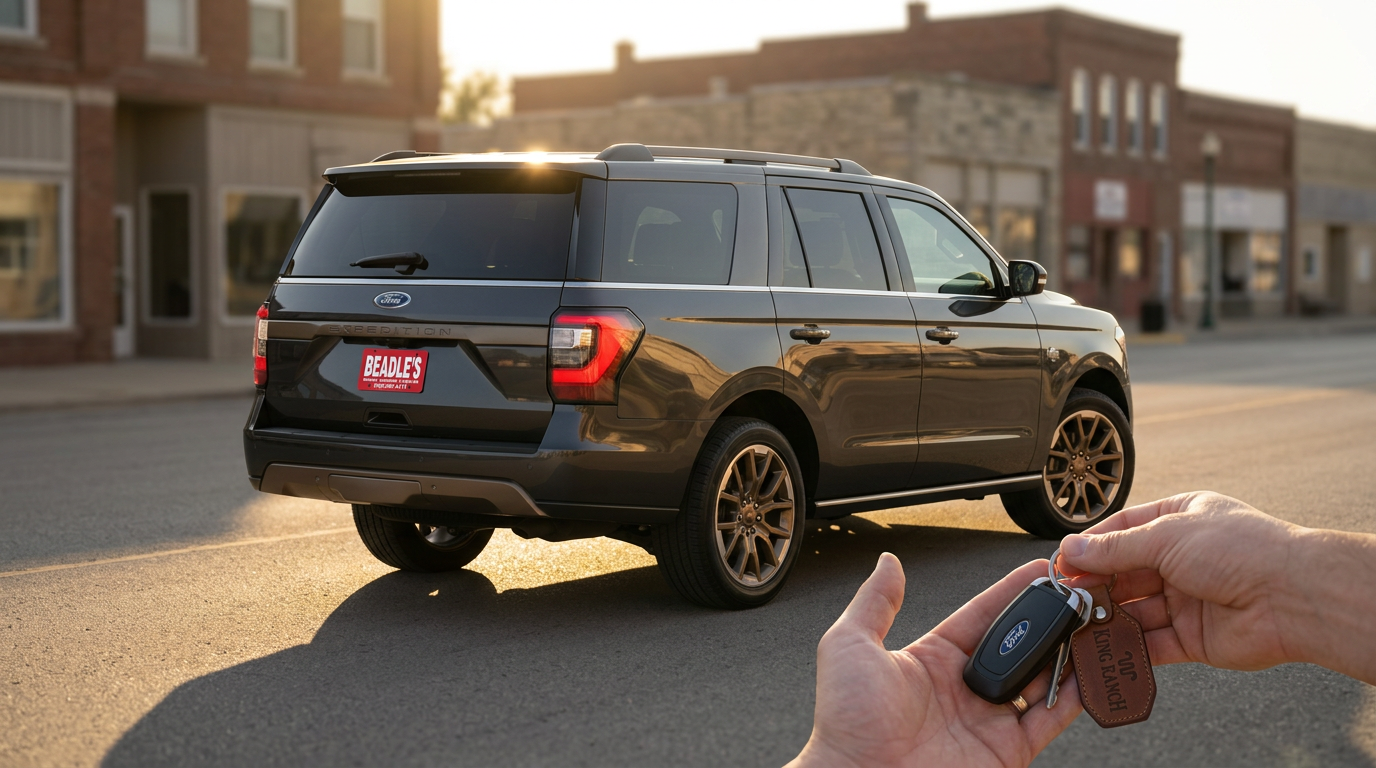
2027 Ford Expedition at golden hour on a South Dakota main street, delivery day at Beadle Ford in Bowdle

2027 Ford Expedition vs. 2026 Jeep Wagoneer and Grand Wagoneer: When a 10,000-lb Tow Rating Isn't the Full Story

Home› Ford Expedition› 2027 Ford Expedition› Expedition vs. Wagoneer If you’re cross-shopping a 2027 Ford Expedition against a 2026 Jeep Wagoneer or Grand Wagoneer, you’re weighing two genuinely different takes on the full-size three-row SUV. The Wagoneer has real advantages — a 10,000-lb maximum tow rating on paper, available Quadra-Lift air suspension, and Jeep brand heritage. The Expedition counters with a factory off-road trim (the Tremor), a 440 hp High Output engine option, BlueCruise hands-free highway driving, and Ford’s more stable long-term dealer network across the Dakotas. This guide covers the decisions that matter: whether the Wagoneer’s 10,000-lb tow figure translates to real-world advantage, how the cabins actually compare, what Stellantis’s recent reliability record means for a 5-to-7-year ownership horizon, how dealer networks and long-term service accessibility shake out in rural South Dakota, and which buyer should pick which truck. Browse Expedition Inventory Ask About a Custom Order On This Page Does the Wagoneer’s 10,000-lb tow rating actually matter in real use? Wagoneer vs. Expedition — which cabin feels more luxurious? Is Jeep reliability and resale catching up to Ford? What does dealer network stability look like across the Dakotas? Which buyers should pick the Expedition and who should try the Wagoneer? Does the Wagoneer’s 10,000-lb tow rating actually matter in real use? On a spec sheet, yes. In most real scenarios, it probably doesn’t. Jeep publishes a maximum trailer rating for the 2026 Wagoneer of approximately 10,000 lbs when properly equipped — the highest peak figure in this class. Public reporting on the current-generation Expedition Tremor cites approximately 9,600 lbs when properly equipped, pending the 2027 Ford Towing Guide release. That’s a 400-lb difference, which is meaningful if your trailer is right at the ragged edge of an Expedition’s rating, and immaterial otherwise. Here’s the practical question. A 24-foot gooseneck loaded with two horses, a tandem-axle enclosed trailer for a side-by-side, or a standard tri-axle boat trailer for Lake Oahe all come in well under either truck’s rating. The trailers that need a 10,000-lb rating — and actually hit close to it — are a narrow set: long gooseneck livestock trailers loaded heavy, big dual-axle RVs, and some heavy utility trailers. If your actual trailer is one of those, the Wagoneer’s peak rating matters. If it isn’t, you’re buying a spec that doesn’t change your ownership. Both trucks run twin-turbocharged engines: the Expedition’s 3.5L EcoBoost V6 (with a 440 hp / 510 lb-ft High Output variant available) and the Wagoneer’s 3.0L Hurricane twin-turbo inline-six (rated by Jeep at approximately 420 hp / 468 lb-ft, with a High-Output version on the Grand Wagoneer at approximately 510 hp / 500 lb-ft). The Expedition uses a 10-speed automatic; the Wagoneer uses an 8-speed. For typical South Dakota trailer work, either truck pulls confidently. Where the Expedition adds practical value: Pro Trailer Hitch Assist and Pro Trailer Backup Assist are standard on every retail Expedition trim via Ford Co-Pilot360 Assist 2.0. BLIS with Trailer Coverage extends blind-spot monitoring around whatever you’re pulling. If you pull different trailers regularly, those assists matter more than a 400-lb peak rating difference. For more on Expedition towing, see the complete 2027 Ford Expedition overview. Wagoneer vs. Expedition — which cabin feels more luxurious? This one depends on the trim you’re comparing. A Grand Wagoneer Series III interior is genuinely premium — Palermo leather, real wood and aluminum trim, a 10-screen Uconnect-based multimedia setup with up to three displays on the front alone, and available Quadra-Lift air suspension that changes ride height for different driving modes. On material count and visual complexity, the Grand Wagoneer goes further than any Expedition trim. The 2027 Expedition counters with a different philosophy. The Ford Digital Experience pairs a 24" panoramic driver display with a 13.2" center display — fewer total screens than the Grand Wagoneer, but better integrated. Google Maps, Google Assistant, and Google Play Store are embedded natively. Wireless Apple CarPlay and Android Auto work on every retail Expedition. The King Ranch interior uses Del Rio Premium leather with Mesa Antique armrests, Del Rio steering wheel with Norias stitching, and heritage badging that the Wagoneer’s more corporate-luxury approach doesn’t try to match. The Platinum with the 30th Anniversary Appearance Package has a more distinct visual identity than any Wagoneer trim, anchored by Blue Ember Metallic paint that’s exclusive to that package. Where the Wagoneer genuinely wins on ride quality: the available Quadra-Lift air suspension delivers a smoother highway ride and better cornering behavior than the Expedition’s 4-wheel independent suspension on 22" wheels. For pure pavement comfort on long highway stretches, the air suspension is a real advantage. Where the Expedition wins: the Tremor’s off-road capability is a standalone trim with its own suspension, tires, locking differential, and drive modes — the Wagoneer doesn’t offer a direct factory off-road trim. For the full Expedition trim lineup and which one matches which use case, see the 2027 Ford Expedition trim levels guide. Ready to explore the Ford side? Get Pre-Approved Browse Current Expedition Inventory Is Jeep reliability and resale catching up to Ford? Both are narrowing, but the Wagoneer is still working from a harder starting point. The Wagoneer launched as a 2022 model year and the first two model years had documented quality issues — electronics problems, software glitches, fit-and-finish inconsistencies, and multiple recalls. Stellantis has worked to address these in 2024 and 2025 production, and more recent Wagoneer and Grand Wagoneer model years have shown improvement in third-party dependability data. The 2026 Wagoneer is a better-built vehicle than the 2022 was. That said, the company-wide picture still matters. Stellantis-brand vehicles — which includes Jeep, Chrysler, Dodge, and Ram — have ranked below industry average on multiple recent J.D. Power and Consumer Reports dependability and reliability studies. Ford’s ranking has trended upward in those same studies over the past several years. Neither brand is immune to problems, but the trajectory lines for a 2022–2025 Stellantis vehicle versus a 2022–2025 Ford vehicle have gone in different directions. Resale reflects the same story. Early-production Wagoneers (2022-2023) have seen meaningfully steeper depreciation curves than segment averages, partly because of the quality concerns and partly because Jeep over-produced initial inventory relative to demand. Expedition resale has been more stable, with the 6th-generation platform launched for 2025 still holding its value well into the used market. If you plan to trade or sell within 5 years, the resale gap compounds the initial-price comparison. If you’re planning a longer ownership horizon — 7 to 10 years — the question shifts to service accessibility and long-term parts availability, which ties into the next section. What does dealer network stability look like across the Dakotas? For practical ownership in rural South Dakota, the dealer network question matters as much as the truck itself. Ford’s retail dealer network in the Dakotas has been stable for decades. Stellantis’s CDJR (Chrysler-Dodge-Jeep-Ram) network has contracted somewhat in recent years, with dealer consolidation and restructuring affecting service access in some rural markets. Not every small-town Jeep buyer has the same dealer they did five years ago. Beadle Ford has been serving the Bowdle area for a long time. When you own a Ford, routine maintenance, recall work, warranty service, and emergency repairs happen locally. Techs who’ve been working on F-150s and Expeditions for years know the platforms. Ford parts availability through Ford’s national distribution is reliable. Over a 7-year ownership period, that consistency matters more than a 400-lb tow spec or a slightly different infotainment setup. Stellantis has also navigated more software and electronics updates than Ford over the past several years. Wagoneer owners have reported more frequent dealer trips for software updates, infotainment diagnostics, and sensor-related recalls than is typical for the class. When those trips require driving farther than your daily commute, they accumulate into real hours of lost time. If long-term service accessibility is a decision factor for you, that’s worth weighing honestly against the Wagoneer’s on-paper advantages. Which buyers should pick the Expedition and who should try the Wagoneer? Both trucks have defensible pitches. Here’s how I frame the decision for buyers walking into Beadle Ford. Pick the 2027 Ford Expedition if: You want a factory off-road trim — the Tremor has no direct Wagoneer equivalent at the Expedition price point You want BlueCruise hands-free highway driving covering approximately 97% of controlled-access U.S. highways You want Pro Trailer Hitch Assist and Pro Trailer Backup Assist standard on every retail trim (not a trim-locked feature) You want the 24" panoramic driver display and Ford Digital Experience You want the 30th Anniversary Appearance Package with Blue Ember Metallic — Ford’s distinctive visual identity option You’re planning to own for 5-plus years and want resale stability and reliable service access Try the 2026 Jeep Wagoneer or Grand Wagoneer if: You specifically need the 10,000-lb peak tow rating for a trailer that actually hits it You want Quadra-Lift air suspension for smoother highway ride quality You want the Grand Wagoneer’s multi-screen interior aesthetic and material complexity You’re committed to the Jeep brand and the Wagoneer’s heritage story matters to you You have an established Stellantis service relationship that works for you If you’re genuinely undecided, come drive an Expedition. Drive a Wagoneer too if you’re considering it. The right answer on a 5-year ownership question usually shows up in the details of a real test drive, not a spec comparison. Key Takeaways Wagoneer tops the class on peak tow rating at approximately 10,000 lbs vs. Expedition Tremor’s reported 9,600 lbs. The difference matters for a narrow set of trailers. Ford runs the 3.5L EcoBoost V6 with a 440 hp / 510 lb-ft High Output option and a 10-speed auto; Wagoneer runs the 3.0L Hurricane twin-turbo I6 with an 8-speed. Grand Wagoneer interior is more visually complex (multi-screen layout, available air suspension). Expedition interiors (King Ranch Del Rio leather, Platinum with 30th Anniversary) have more heritage character. Stellantis-brand dependability has ranked below industry average in recent years; Ford has trended upward. Early Wagoneer production (2022-2023) had documented quality issues. Wagoneer resale has depreciated faster than segment average; Expedition resale has been more stable. Expedition offers the factory off-road Tremor trim; Wagoneer does not offer a direct factory off-road competitor. Frequently Asked Questions How does the 2027 Ford Expedition compare to the Jeep Wagoneer? Wagoneer has a higher peak tow rating (approximately 10,000 lbs vs. approximately 9,600 lbs for the current-gen Expedition Tremor) and available Quadra-Lift air suspension for smoother ride. Expedition has a factory off-road Tremor trim, BlueCruise hands-free driving, Pro Trailer Hitch Assist standard on every retail trim, more stable resale, and better recent dependability rankings. Can the Wagoneer really tow 10,000 lbs? Jeep publishes a maximum trailer rating of approximately 10,000 lbs when the 2026 Wagoneer is properly equipped. As with any peak rating, actual capability depends on configuration, hitch type, payload, and weight distribution. For most real trailers that fit in a family use case, both the Wagoneer and Expedition’s ratings provide adequate headroom. Is the Grand Wagoneer more luxurious than the Expedition King Ranch? On visual complexity and material count, yes — the Grand Wagoneer Series III goes further with Palermo leather, extensive wood and aluminum trim, and a multi-screen dashboard including front passenger displays. The Expedition King Ranch takes a different approach with Del Rio Premium leather, Mesa Antique armrests, Sinister Bronze wheels, and King Ranch heritage badging. The comparison is philosophical as much as material — the Wagoneer targets modern tech-luxury, the King Ranch targets heritage character. Does the Wagoneer have a factory off-road trim like the Expedition Tremor? No — Jeep does not offer a direct factory off-road trim of the Wagoneer equivalent to the Expedition Tremor. Wagoneer can be ordered with 4x4, but the off-road-specific equipment that defines the Tremor (440 hp High Output engine, 3.73 Electronic Locking Rear Differential, Rock Crawl drive mode, all-terrain tires, Trail Control, Modified Raptor-style skid plates) is Ford trim-exclusive, not a Wagoneer package. Is the Jeep Wagoneer reliable? Early Wagoneer production (2022-2023) had documented quality issues with electronics, software, and fit-and-finish. Stellantis has worked to address these in more recent production, and 2024-2026 Wagoneers show improvement. Stellantis-brand dependability overall has ranked below industry average on recent J.D. Power and Consumer Reports studies. Ford has trended upward in those same studies. Does the Expedition offer air suspension? No — the 2027 Ford Expedition uses a 4-wheel independent suspension (standard on Platinum and King Ranch), a modified higher-ride suspension with premium passive shocks on the Tremor, and conventional suspension on Active trims. It does not offer a direct air-suspension alternative to the Wagoneer’s available Quadra-Lift system. For pure highway ride comfort, the Wagoneer has an advantage; for off-road capability, the Tremor has an advantage. How do resale values compare between the Wagoneer and Expedition? Early Wagoneer production (2022-2023) has depreciated faster than segment averages due to quality concerns and initial over-supply. Expedition resale has been more stable, particularly for the sixth-generation platform launched for 2025. For buyers planning to trade or sell within 5 years, the resale difference adds to the initial-price comparison and can meaningfully narrow or widen the effective cost-of-ownership gap. My Take on the Expedition vs. Wagoneer Cross-Shop The Wagoneer has real upsides — the air suspension ride, the peak tow number, and the Grand Wagoneer’s interior ambition. I respect what Jeep built. But for the buyers we see at Beadle Ford, the practical equation usually favors the Expedition. The Tremor has no Wagoneer equivalent if capability matters to you. BlueCruise is more mature than anything Stellantis currently offers on the Wagoneer. Ford’s resale stability and Stellantis’s quality-rebuild trajectory are pointed in different directions, and that matters over a 7-year ownership window. If the Wagoneer’s air suspension or the 10,000-lb tow rating genuinely fit your use case, it’s a legitimate truck. If you’re drawn by the Grand Wagoneer’s multi-screen interior but the rest of the pitch is a wash, the Expedition is probably the smarter long-term pick. Come drive both if you’re unsure — I’ll walk you through the details against your week and your wallet honestly. Shop 2027 Expeditions in Stock Contact Beadle Ford About the Author Lexy Tabbert — Beadle Ford, Bowdle, SD Lexy Tabbert is the Director of Sales and Marketing at Beadle Ford in Bowdle, South Dakota. She covers Ford vehicles, trim comparisons, and buyer guidance — helping families, ranchers, and ag operators across the region find the right truck and configuration for their needs. Learn more about Lexy.
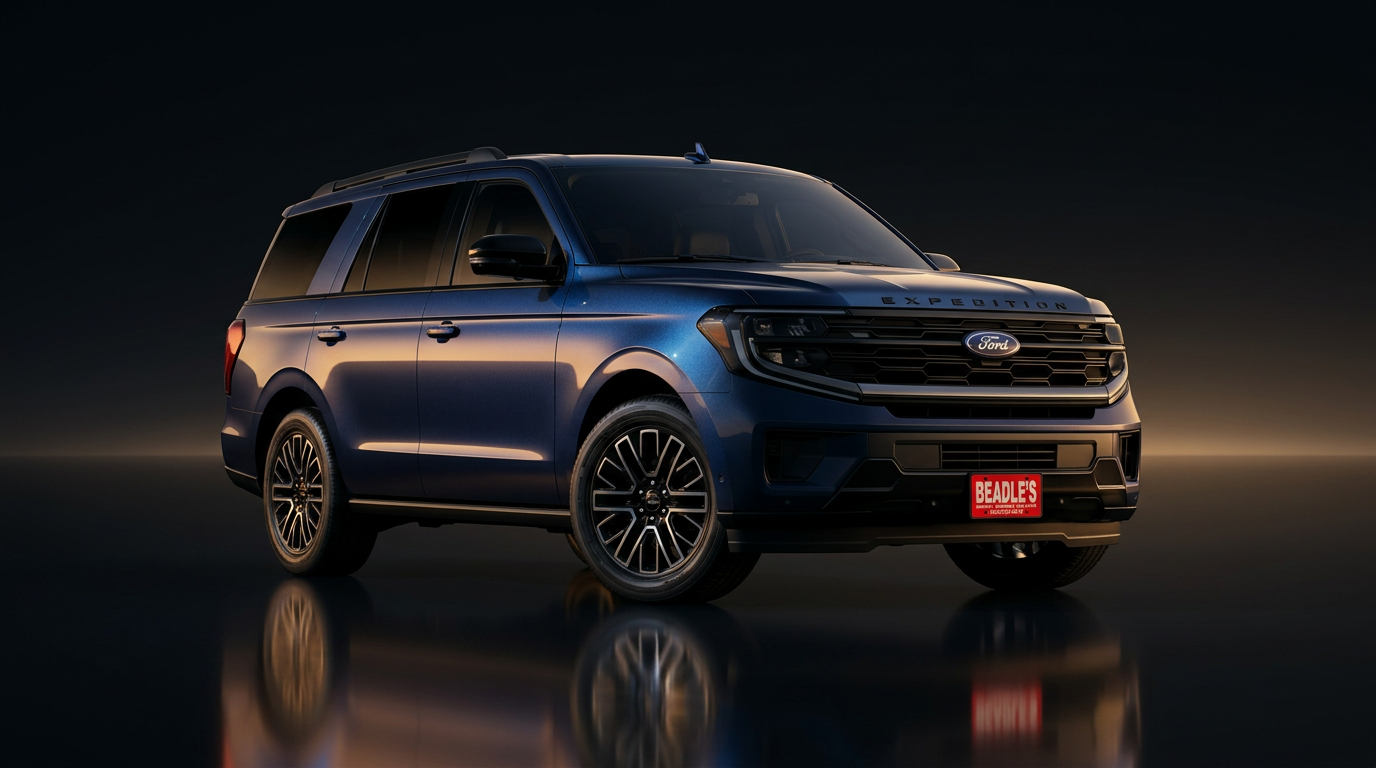
2027 Ford Expedition 30th Anniversary Package in exclusive Blue Ember Metallic at Beadle Ford, Bowdle SD

The 2027 Ford Expedition 30th Anniversary Appearance Package: Every Detail, Plus the Paint You Can't Order Anywhere Else

Home› Ford Expedition› 2027 Ford Expedition› 30th Anniversary Appearance Package The 30th Anniversary Appearance Package is the headline option on the 2027 Ford Expedition Platinum — a new-for-2027 commemorative package that marks thirty years of the Expedition nameplate. It’s an appearance package, not a performance package, but it includes a paint finish you can’t order anywhere else in the Ford Expedition lineup: Blue Ember Metallic, a color that previously lived only on the Mustang Dark Horse. This guide covers what Ford is actually celebrating, every piece of the package item by item, the story behind Blue Ember Metallic’s jump from Mustang to full-size SUV, what trims and colors it pairs with, and whether it’s the right call for you — or whether a standard Platinum (with or without one of the other four Platinum packages) is the smarter pick. If you’re shopping at Beadle Ford, this is the section of the Order Guide worth thinking through carefully. Get Pre-Approved Browse Expedition Inventory On This Page What is Ford actually celebrating with the 30th Anniversary Package? What’s included in the 30th Anniversary Appearance Package? Why did Blue Ember Metallic come from the Mustang to the Expedition? Which trims and colors can you pair with the Anniversary Package? Should you wait for the Anniversary Package or order a standard Platinum? What is Ford actually celebrating with the 30th Anniversary Package? Thirty years of the Expedition nameplate. The Ford Expedition launched as a 1997 model year vehicle in the fall of 1996, which puts the 2027 model year at the thirty-year mark. In those three decades, the Expedition has gone through multiple generations, moved from body-on-frame steel to a sixth-generation platform with an aluminum body, gained a High Output twin-turbo V6 option, and picked up a factory off-road trim — the Tremor — that none of the original Expeditions even hinted at. The Anniversary Package is Ford’s way of marking that milestone on a single trim — the Platinum — with a cohesive blacked-out appearance treatment, anniversary-specific badging and scuff plates, a unique paint option, and the Platinum Interior Accent Package included standard. It’s appearance-focused, not mechanical. You’re not getting a different engine, a different transmission, or different tuning. You’re getting a commemorative cosmetic spec on a Platinum Expedition. What’s included in the 30th Anniversary Appearance Package? Every inclusion in the package, taken directly from the 2027 Ford Expedition Order Guide. The package code is 91A, and it’s optional on Platinum (600A). Exterior: 22" × 9" Ebony Bright Machined Painted Aluminum wheels with P275/50R22 all-season tires Carbon Black front bumper and fascia Ebony painted grille Black Bezel headlamps with Ebony trim applique Beltline molding in black “30th ANNIVERSARY” and “EXPEDITION” liftgate lettering in black “MAX” badge in black when ordered with Expedition MAX Rear side window laminated glass Interior: Salt Crystal Gray leather interior required (no other interior option with this package) Unique center console with 30th Anniversary embossment Platinum Interior Accent Package standard Cargo Organizer Front and second-row tray-style floor liners Front scuff plates in Black Onyx with satin-aluminum “30th” lettering and inner racetrack trim Rear scuff plates in Black Onyx with satin-aluminum metal inner racetrack trim What’s not in the package but is worth noting: because 91A is built on Platinum (600A), you inherit all of the Platinum’s standard equipment — the Ford Digital Experience with the 24" panoramic and 13.2" center displays, Ford Co-Pilot360 Assist 2.0, a 10-speaker B&O Sound System (base Platinum), 360-Degree Zone Lighting, ambient lighting, and the full interior leather spec. The Anniversary Package layers on top of that; it doesn’t replace it. For a full view of how Platinum fits in the lineup next to the other trims, the 2027 Ford Expedition trim levels guide walks through each trim and package in context. Why did Blue Ember Metallic come from the Mustang to the Expedition? Blue Ember Metallic is an extra-cost Ford finish that was previously exclusive to the Mustang Dark Horse — a performance-oriented trim Ford introduced as part of the 2024 Mustang refresh. Pulling it onto the Expedition 30th Anniversary Package is a deliberate choice: it’s the only paint color on the Expedition’s 2027 palette that carries a performance pedigree from another Ford nameplate, and it’s the only finish on the entire 2027 Expedition that’s locked to a single package and trim. The finish itself is deep and warm — a dark blue with pigment that shifts slightly under direct sun versus overcast light. It reads differently in a driveway at golden hour than it does under shop fluorescents, which is part of why Ford sent it to the Mustang first. On an Expedition Platinum with a Carbon Black front fascia, Ebony painted grille, and Ebony-trimmed headlamps, it ends up looking much more subdued than on a Mustang, but the pigment is the same. If Blue Ember Metallic is the reason you’re interested in the package, availability matters — that specific finish is not available on any other 2027 Expedition configuration, so check inventory or ask us to order one. You can’t add it to a standard Platinum, a King Ranch, a Tremor, or an Active Touring. If you want it, you’re ordering a Platinum with 91A. Want Blue Ember Metallic? Ask us today. Blue Ember is locked to the 30th Anniversary Package. If a 30th Anniversary Platinum is not on the lot, a custom order gets you the exact configuration you want. Get Pre-Approved Which trims and colors can you pair with the Anniversary Package? The 30th Anniversary Appearance Package is optional on Platinum (600A) only. It’s offered on both standard-length Expedition Platinum and Expedition MAX Platinum, which means the MAX body style is on the table if you need the extended cargo area. It is not available on XL, Active (Select or Touring), Tremor, or King Ranch. Three exterior paint options are offered with the package: Agate Black Metallic — the carryover black with a satin-smooth metallic Star White Metallic Tri-Coat — a multi-layer white that shifts slightly under direct sun Blue Ember Metallic — new for 2027, exclusive to this package Bronze Fire Metallic Tri-coat, Nocturnal Blue Metallic, Dark Matter Gray Metallic, and Glacier Gray Metallic Tri-Coat — all available on standard 2027 Platinum — are not on the menu for the 91A package. The interior is Salt Crystal Gray leather; no other interior option is offered with 91A. The Anniversary Package also has package-level incompatibilities. It can’t be combined with the Platinum Ultimate Package (17A), the Stealth Appearance Package (60D), or the Stealth Performance Package (19B). That means if you’re choosing the Anniversary Package, you’re giving up the High Output 440 hp engine that comes with Stealth Performance or Platinum Ultimate. The Anniversary Package is built on Platinum 600A’s standard 3.5L EcoBoost V6, not the High Output variant. Should you wait for the Anniversary Package or order a standard Platinum? It comes down to three questions. Do you want Blue Ember Metallic specifically? Is a commemorative cosmetic spec worth the package cost to you? And are you OK giving up the High Output engine and the Platinum Ultimate package content to get it? If the answers are yes, the 30th Anniversary Package is probably the right call. If any of those answers is no, a standard Platinum — or a Platinum Ultimate, or a Platinum with the Stealth Performance Package — likely fits better. Order the 30th Anniversary Package if: you want Blue Ember Metallic, you want the commemorative anniversary badging and interior embossment, you value the unified blacked-out exterior treatment, you want the Platinum Interior Accent Package included standard, or you’re planning to keep the Expedition long enough that a thirtieth-anniversary spec will be meaningful when you look back at it. Order a different Platinum configuration if: you want the 440 hp High Output V6 (order the Stealth Performance or Platinum Ultimate package), you want BlueCruise 1-Year + 90-Day plan standard (order Platinum Ultimate), you want Chrome Roof Rails and a Lit Tailgate Applique (only Platinum Ultimate 17A retains those for 2027 — standard Platinum 600A and the 91A package both come with black roof rails and a black tailgate applique), or you want a paint not offered with 91A like Bronze Fire Metallic Tri-coat or Nocturnal Blue Metallic. For a full framing of every 2027 Expedition trim, engine, and package decision in one place, the complete 2027 Ford Expedition overview pulls it together. Key Takeaways The 30th Anniversary Appearance Package (91A) is new for 2027, optional on Platinum (600A) only, commemorating 30 years of the Expedition nameplate since 1997. Blue Ember Metallic — previously a Mustang Dark Horse exclusive — is only available with this package. It’s an appearance package, not a performance package. The High Output V6 is not included. Three paint options: Agate Black Metallic, Star White Metallic Tri-coat, or Blue Ember Metallic. Salt Crystal Gray interior is required. Not compatible with Platinum Ultimate (17A), Stealth Appearance (60D), or Stealth Performance (19B). Available on standard-length and MAX Platinum. Frequently Asked Questions Which trim does the 30th Anniversary Appearance Package come on? Platinum (600A) only. It’s not offered on XL, Active Select or Active Touring, Tremor, or King Ranch. It is available on both the standard-length Expedition Platinum and the Expedition MAX Platinum. What paint colors can I get with the Anniversary Package? Three paint options: Agate Black Metallic, Star White Metallic Tri-Coat, or Blue Ember Metallic. Other 2027 Expedition paints — including Bronze Fire Metallic Tri-coat, Nocturnal Blue Metallic, Dark Matter Gray Metallic, and Glacier Gray Metallic Tri-Coat — are not offered with the 91A package. Is Blue Ember Metallic available on any other Expedition configuration? No. Blue Ember Metallic is exclusive to Platinum with the 30th Anniversary Appearance Package (91A). If you want the finish, you’re ordering that specific configuration. Does the Anniversary Package include the High Output engine? No. The 91A package is built on Platinum (600A), which uses the standard 3.5L EcoBoost V6. The 3.5L EcoBoost V6 High Output at 440 hp and 510 lb-ft of torque is only paired with the Stealth Performance Package (19B) or the Platinum Ultimate Package (17A) on Platinum — and neither of those is compatible with the 30th Anniversary Package. Can I order the Anniversary Package on an Expedition MAX? Yes. The 30th Anniversary Appearance Package is available on both standard-length Expedition Platinum and Expedition MAX Platinum. When ordered on MAX, the “MAX” badge is finished in black to match the rest of the package styling. What interior comes with the Anniversary Package? Salt Crystal Gray leather with perforated seat inserts is required with the 91A package. The Platinum Interior Accent Package is standard. The center console carries a unique 30th Anniversary embossment, and the front scuff plates feature satin-aluminum “30th” lettering in an inner racetrack motif. How do I get a 30th Anniversary Expedition at Beadle Ford? Check our live Expedition inventory or call Beadle Ford at (866) 561-2636. If a 30th Anniversary Platinum is on the lot, you can drive it today; if not, we’ll custom order it — confirm the paint, walk through MAX versus standard-length, and lock in the Salt Crystal Gray interior. Because Blue Ember is exclusive to this package, it is worth asking early. My Take on the 30th Anniversary Package Appearance packages are usually an easy “pass” for me in a buyer conversation — they don’t change the driving experience, and most of them fade into the background after the first six months of ownership. The 30th Anniversary Package is the exception. It’s genuinely cohesive, the interior detailing is substantial, and Blue Ember Metallic is a paint that people notice. If you’re already ordering a Platinum and you want something visually distinct from every other Platinum on the road, it’s worth considering. The caveat: you’re giving up the 440 hp High Output engine that comes with Platinum Ultimate or Stealth Performance. If the extra power matters more to you than the anniversary styling, order one of those packages instead. If you want to talk through how the decision shakes out against your specific use case, stop in at Beadle Ford or call and we’ll walk through it together. Shop 2027 Expeditions in Stock Contact Beadle Ford About the Author Lexy Tabbert — Beadle Ford, Bowdle, SD Lexy Tabbert is the Director of Sales and Marketing at Beadle Ford in Bowdle, South Dakota. She covers Ford vehicles, trim comparisons, and buyer guidance — helping families, ranchers, and ag operators across the region find the right truck and configuration for their needs. Learn more about Lexy.
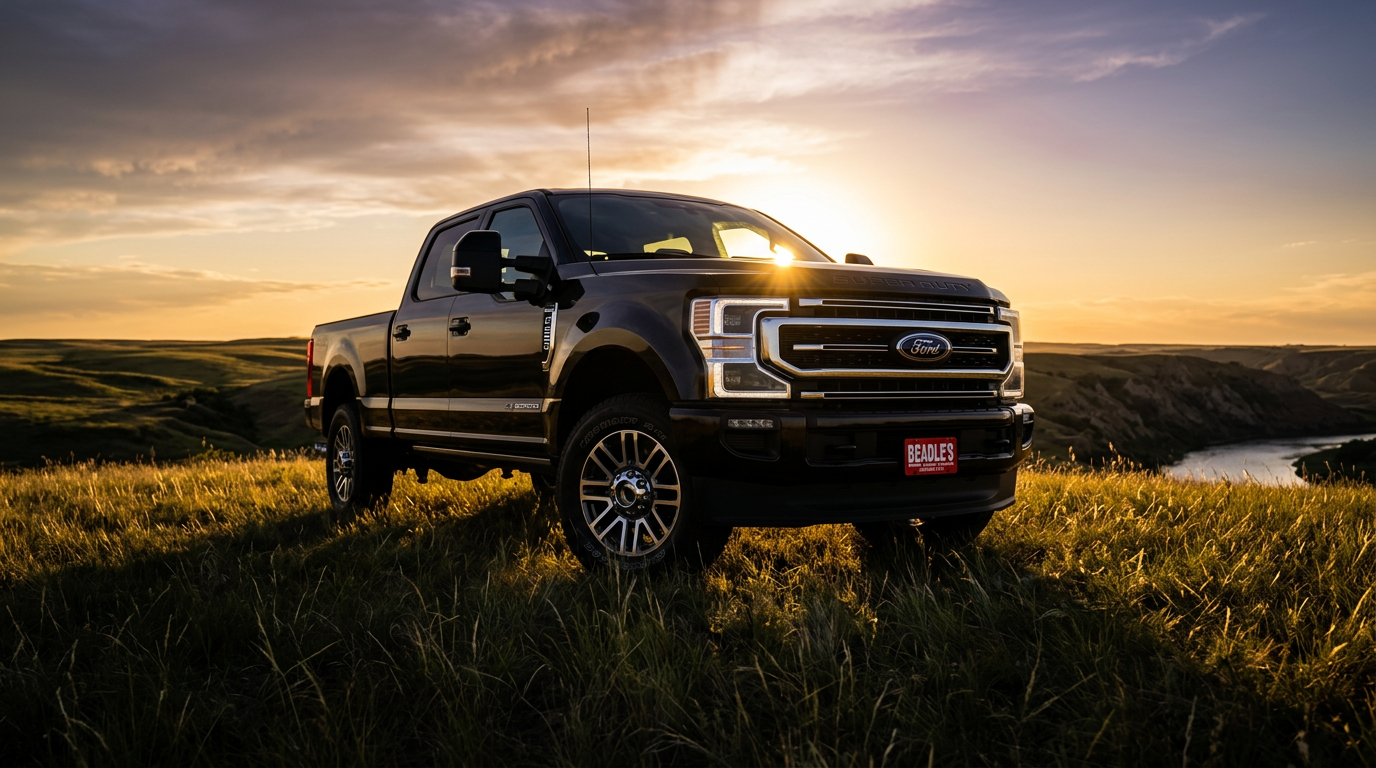
2026 Ford F-350 Technology

Quick Answer The 2026 Ford F-350's most useful technology is towing-focused: a 360-Degree Camera, Pro Trailer Backup Assist, Trailer Reverse Guidance, and BLIS blind-spot monitoring with trailer coverage, all on a 12-inch SYNC 4 touchscreen. Ford Co-Pilot360 adds Adaptive Cruise Control and lane-keeping for long hauls. In a heavy-duty truck, technology should earn its place. The best features aren't "nice-to-haves" — they cut stress by improving visibility, control, and decision-making when you're towing, backing, or driving through changing weather. This guide highlights the technology that matters most on a 2026 F-350 — and names the actual systems to look for — especially for drivers around Bowdle and Aberdeen who tow regularly or rack up long miles between towns. Shop F-350s in Stock Get Pre-Approved On This Page What technology matters most in a heavy-duty truck? Which camera views help most with towing and backing? What trailer-aware safety features should you look for? Which cabin tech improves daily driving most? How do you choose tech features for how you drive? What technology matters most in a heavy-duty truck? The technology that makes the biggest difference falls into three buckets: towing visibility (the 360-Degree Camera and trailer camera views), trailer-aware safety (BLIS with trailer coverage and the integrated trailer brake controller), and driver convenience for long days (SYNC 4 and Ford Co-Pilot360). Equipment varies by trim and package, so prioritize the systems that solve your real pain points, then confirm them on the specific truck. Which camera views help most with towing and backing? The available 360-Degree Camera and trailering camera views are the single most useful towing tech on the F-350. They take the guesswork out of hookup and tight maneuvers, especially with a long trailer or a dually. Pro Trailer Backup Assist: steer the trailer with a knob — it takes the reverse-steering guesswork out of backing. 360-Degree Camera & hitch views: line up the ball on the first try and watch clearance on every side. Trailer Reverse Guidance: on-screen cues that make backing in tight lots far less stressful. What trailer-aware safety features should you look for? The features worth prioritizing are the ones that keep helping once the trailer is connected: BLIS (Blind Spot Information System) with trailer coverage that extends down the length of your trailer, the integrated trailer brake controller, and Tow/Haul mode. On open highways with crosswinds and passing traffic, those reduce fatigue more than any screen. Our Recommendation If you tow, prioritize three features over everything else: the 360-Degree Camera, Pro Trailer Backup Assist, and BLIS with trailer coverage. Those three earn their keep on every hookup and every two-lane highway run around here — far more than touchscreen size. Match them to a build in our 2026 F-350 towing guide. Which cabin tech improves daily driving most? For the long rural drives out here, the cabin tech that matters is the 12-inch SYNC 4 touchscreen with wireless smartphone connectivity, clear driver-information displays that keep towing and trip data at a glance, and Ford Co-Pilot360 features like Adaptive Cruise Control and lane-keeping that cut fatigue on the highway. Available Pro Power Onboard turns the truck into a jobsite generator, and Smart Hitch helps you load to the right tongue weight. From the Beadle Ford Lot The tech first-time heavy-duty buyers come back and thank us for is almost never the screen — it's the cameras and the trailer blind-spot monitoring. Once you've lined up a gooseneck on the first try or caught a car hiding alongside a 30-foot trailer, those features stop feeling optional. How do you choose tech features for how you drive? Match the tech to your routine: If you tow weekly: prioritize the 360-Degree Camera, Pro Trailer Backup Assist, and BLIS with trailer coverage. If you drive long miles: prioritize SYNC 4, clear driver displays, and Co-Pilot360 Adaptive Cruise Control. If you work in tight spaces: prioritize the camera views and Trailer Reverse Guidance. If you run equipment off the truck: look at Pro Power Onboard and Smart Hitch — then confirm the build, since tech varies by trim and package. Key Takeaways The towing tech that matters most: 360-Degree Camera, Pro Trailer Backup Assist, and BLIS with trailer coverage. SYNC 4 on a 12-inch touchscreen runs the displays, with wireless smartphone connectivity. Ford Co-Pilot360 adds Adaptive Cruise Control and lane-keeping for long hauls. Pro Power Onboard and Smart Hitch add jobsite generator power and load guidance. Tech availability varies by trim and package — confirm on the exact truck. Frequently Asked Questions What technology does the 2026 Ford F-350 have? Key features include a 12-inch SYNC 4 touchscreen, an available 360-Degree Camera, Pro Trailer Backup Assist, Trailer Reverse Guidance, BLIS blind-spot monitoring with trailer coverage, an integrated trailer brake controller, and Ford Co-Pilot360 driver-assist features like Adaptive Cruise Control and lane-keeping. Pro Power Onboard and Smart Hitch are also available. Availability varies by trim and package. Does the 2026 F-350 have Pro Trailer Backup Assist? Yes, it's available. Pro Trailer Backup Assist lets you steer the trailer with a knob while the truck manages the reverse steering, paired with Trailer Reverse Guidance on the screen. It's one of the features that makes backing a long trailer far less stressful, especially in tight lots. Do all F-350 trucks have the same screens and technology? No. Screen size, camera views, and driver-assist features vary by trim and package — the 12-inch SYNC 4 touchscreen and 360-Degree Camera arrive on higher trims or as options. Review the equipment list for the specific truck you're considering. What is Pro Power Onboard on the F-350? Pro Power Onboard is an available onboard generator system that provides power outlets to run tools and equipment directly from the truck — useful on a jobsite or a remote ranch task. Smart Hitch, also available, helps you load a trailer to the correct tongue weight. What technology is most helpful for rural South Dakota driving? For long stretches of open road and changing weather, SYNC 4 navigation, clear driver displays, and Co-Pilot360 Adaptive Cruise Control reduce fatigue, while the 360-Degree Camera and BLIS with trailer coverage matter most if you tow. Those are the systems that earn their place between towns out here. Quick Answers: F-350 Technology One-line answers to the follow-up questions buyers ask next. What infotainment system does it use? SYNC 4 on a 12-inch touchscreen. Does it have a 360 camera? Yes — an available 360-Degree Camera. Does it have trailer backup assist? Yes — Pro Trailer Backup Assist. Is blind-spot monitoring trailer-aware? Yes — BLIS extends coverage down the trailer. Is there adaptive cruise control? Yes — through Ford Co-Pilot360. Does it have wireless Apple CarPlay/Android Auto? Yes — SYNC 4 supports wireless connectivity. What's Pro Power Onboard? An onboard generator to run tools and equipment. What's Smart Hitch? Onboard guidance to load the right trailer tongue weight. Is there an integrated trailer brake controller? Yes, and it's recommended for heavy trailers. How do I confirm a truck's tech? We check the build sheet against the exact unit before you buy. Keep Researching The complete 2026 Ford F-350 Super Duty overview — trims, specs, towing, and inventory in one place. 2026 F-350 towing guide — how the camera and trailer-aware features pair with your towing setup. 2026 F-350 packages & trims — which trims and packages include the tech you want. 2026 F-350 interior & comfort — the cabin and displays the tech lives in. My Take on F-350 Technology In my experience, the technology that matters most is the technology you can rely on when you're loaded, tired, and dealing with real conditions. When the cameras, blind-spot coverage, and trailer-aware features are in place, towing feels more controlled and daily driving feels less demanding — and around here, those beat screen size every time. Tell me how you use the truck and I'll point you to the features worth prioritizing. Stop in at Beadle Ford in Bowdle or reach out anytime. Shop F-350s in Stock Get Pre-Approved About the Author Lexy Tabbert — Beadle Ford, Bowdle, SD Lexy Tabbert is the Director of Sales and Marketing at Beadle Ford in Bowdle, South Dakota. She covers Ford vehicles, trim comparisons, and buyer guidance — helping families, ranchers, and ag operators across the region find the right truck and configuration for their needs. Learn more about Lexy.
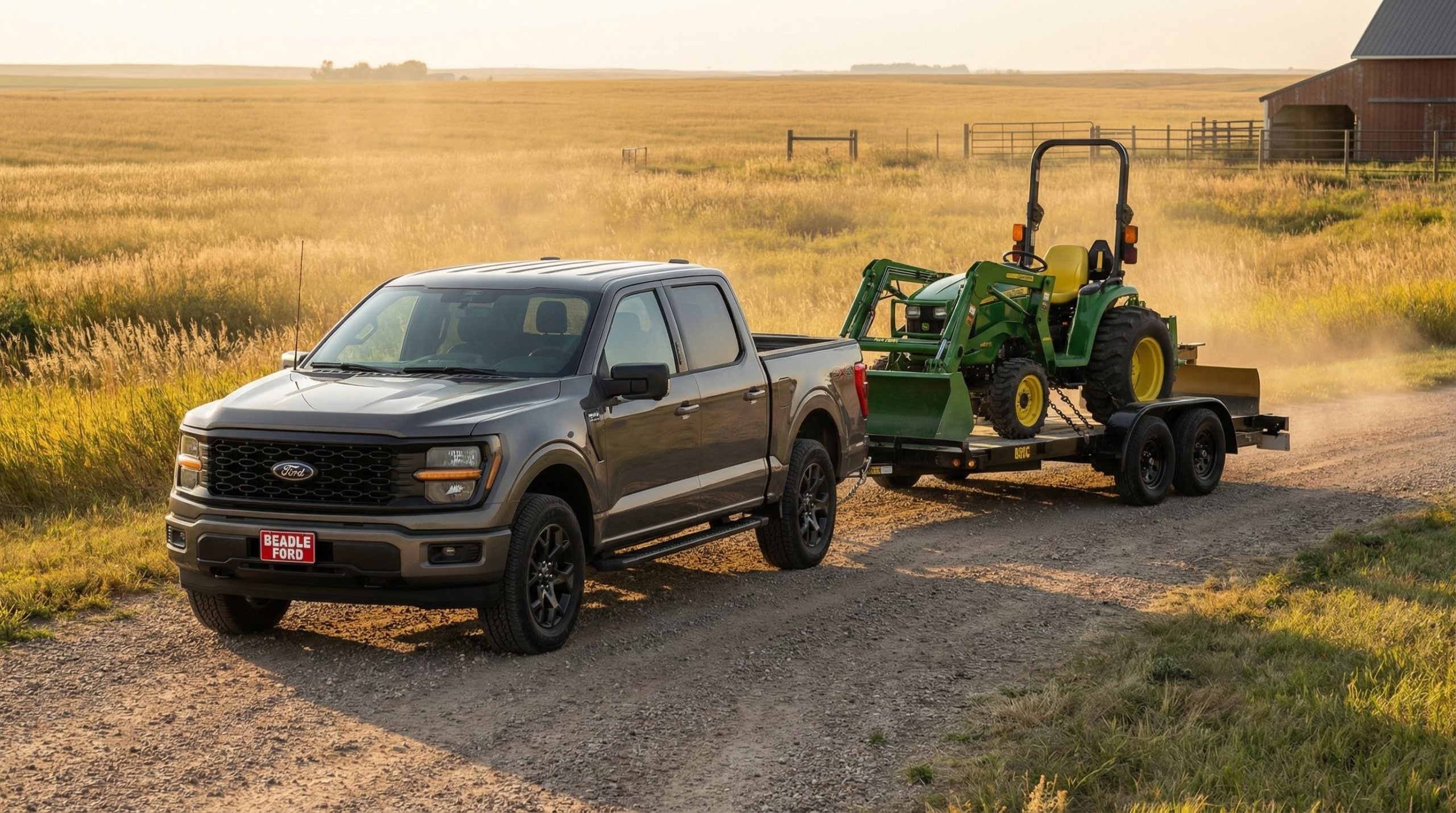
2027 Ford F-350 Lariat in Agate Black Metallic on a Missouri River bluff at golden hour

What's New for the 2027 Ford F-350 Super Duty

Quick Answer The biggest 2027 Ford F-350 change is the engine lineup: it drops from four to two. The 7.3L gas V8 is now standard on every trim, and the 6.7L High-Output Power Stroke is the only diesel. 2027 also adds the Super Duty Carhartt Package, Tremor on XL, and a new 8-foot bed with the High-Output diesel — while towing and payload carry over unchanged. The 2027 Ford F-350 Super Duty isn't a redesign — the body, grille, and silhouette carry over — but under the hood and in the order guide, it's the most changed Super Duty in years. Ford simplified the lineup instead of restyling it. Here's everything that's new for 2027, what it means for the way trucks get used around Bowdle and Aberdeen, and how to think about ordering one — including whether a 2026 still on the lot might be the smarter buy. Shop F-350s in Stock Get Pre-Approved On This Page What changed on the 2027 F-350? Why did Ford cut the engines from four to two? Does the 2027 F-350 lose any capability? What new packages and features arrive for 2027? Should you buy a 2026 now or order a 2027? What changed on the 2027 F-350? The 2027 F-350 keeps the current Super Duty body but reworks what's available underneath. The headline: the engine lineup goes from four to two. Alongside that, Ford added a Super Duty Carhartt Package, opened the Tremor Off-Road Package to the XL trim, and introduced a new 8-foot bed / 176-inch wheelbase with the High-Output diesel. In short: 2027 is a simplification, not a redesign. Same proven truck, a cleaner set of choices — and, importantly, no loss of towing or payload capability. Why did Ford cut the engines from four to two? For 2027, the 7.3L gas V8 becomes standard on every trim and the 6.7L High-Output Power Stroke is the only diesel. The 6.8L gas V8 and the standard-output 6.7L Power Stroke diesel are both discontinued. The move trims overlap: the 7.3L gas already covered most of what the 6.8L did, and the High-Output diesel covers everything the standard-output diesel did and more. Both engines pair with the 10-speed TorqShift automatic. One honest note: Ford hasn't published final 2027 horsepower and torque figures yet, so we're not quoting output numbers until they're official — but the lineup itself is locked, and the capability numbers below are confirmed. The full gas-vs-diesel breakdown is in our 2027 F-350 engine comparison. Does the 2027 F-350 lose any capability? No. Despite the simpler lineup, the 2027 F-350's ratings carry over: up to 40,000 lbs gooseneck (High-Output diesel, dual-rear-wheel, 40K Gooseneck Tow Package), up to 35,000 lbs fifth-wheel, up to 28,000 lbs conventional on the dually, and up to roughly 7,900 lbs of payload with the 7.3L gas and the heavy-duty payload package. The new 8-foot bed / 176-inch wheelbase with the High-Output diesel actually adds a longer-deck option for haulers. From the Beadle Ford Lot The first worry we heard about 2027 was that losing the standard-output diesel meant losing capability. It doesn't — the ratings are the same as 2026. Most buyers who tow on the lighter end are realizing the now-standard 7.3L gas covers far more than they expected, and the diesel decision comes down to how often they run heavy. What new packages and features arrive for 2027? Beyond the engines, 2027 brings real additions: Super Duty Carhartt Package — a new work-grade styling package, available on single-rear-wheel trucks. Tremor Off-Road on XL — the off-road package is now available on the base work trim, not just higher up the line. New 8-foot bed / 176-inch wheelbase — available with the High-Output diesel, for haulers who want the longer deck. New exterior colors added, with a few 2026 shades retired. Trim equipment shuffle — for example, memory power-adjustable pedals are no longer standard on Platinum. Our Recommendation For most ranch and farm buyers around Bowdle and Aberdeen, the 2027 simplification is good news: order the now-standard 7.3L gas for daily work and most towing, and step to the High-Output diesel only if you pull heavy and often. If you want the new Carhartt look or Tremor on an XL work truck, 2027 is the year to order it. We'll match the build to how you actually use the truck. Should you buy a 2026 now or order a 2027? It comes down to the engine you want. If you specifically want the 6.8L gas V8 or the standard-output 6.7L diesel, a 2026 still on the lot is your last chance — those are gone for 2027. If you want the simplified lineup, the new Carhartt Package, or Tremor on XL, ordering a 2027 makes sense. There's also a value angle worth weighing, since the now-standard 7.3L was an extra-cost option in 2026. We walk through the full trade-off — including pricing and timing — in our buy a 2026 now or order a 2027 guide. Key Takeaways 2027 cuts the engine lineup from four to two: 7.3L gas standard on all trims, 6.7L High-Output diesel optional. The 6.8L gas and standard-output 6.7L diesel are discontinued. Capability carries over: up to 40,000 lbs gooseneck and ~7,900 lbs payload, properly equipped. New for 2027: Super Duty Carhartt Package, Tremor on XL, and an 8-ft bed with the HO diesel. Want a dropped engine? A 2026 is the last chance. Want the new lineup? Order a 2027. Frequently Asked Questions What's the biggest change on the 2027 Ford F-350? The engine lineup drops from four to two. The 7.3L gas V8 is now standard on every trim, and the 6.7L High-Output Power Stroke is the only diesel. The 6.8L gas V8 and the standard-output 6.7L diesel are discontinued. Did the 2027 F-350 get a redesign? No. The body, grille, and silhouette carry over from the current Super Duty generation. 2027 is a powertrain and equipment update, not a styling redesign — the next full redesign is expected later. Does the 2027 F-350 tow less with fewer engines? No — ratings carry over. Properly equipped, the 2027 F-350 still tows up to 40,000 lbs gooseneck (High-Output diesel, DRW), 35,000 lbs fifth-wheel, and 28,000 lbs conventional on the dually, with payload up to about 7,900 lbs on the 7.3L gas. What is the Super Duty Carhartt Package? It's a new-for-2027 work-grade styling package, available on single-rear-wheel F-350s, that brings Carhartt-branded design cues inside and out. We cover it in the 2027 F-350 Carhartt Edition guide. Are the 2027 F-350 horsepower and torque numbers out yet? Not yet — Ford lists 2027 output figures as not-yet-published. The two-engine lineup is confirmed, and we'll update with official horsepower and torque once Ford releases them. Quick Answers: 2027 F-350 Changes One-line answers to the follow-up questions buyers ask next. How many engines for 2027? Two — 7.3L gas standard, 6.7L HO diesel optional. Which engines were dropped? The 6.8L gas and the standard-output 6.7L diesel. Is the 7.3L gas standard now? Yes, on every trim. Did towing drop? No — up to 40,000 lbs gooseneck, same as 2026. Is there a new bed option? Yes — an 8-ft bed / 176-in wheelbase with the HO diesel. Is Tremor on XL now? Yes, new for 2027. What's the Carhartt Package? A new SRW-only work-grade styling package. Are hp/torque published? Not yet — Ford lists them as TBD. Is the 2027 on the lot? Yes — the first 2027 F-350s are here, and we can still build one to your spec. 2026 or 2027? Want a dropped engine, buy a 2026; want the new lineup, order a 2027. Keep Researching The complete 2027 Ford F-350 Super Duty overview — specs, towing, trims, and how to order. 2027 F-350 engine comparison — 7.3L gas vs. the High-Output diesel, now that it's a two-engine choice. Buy a 2026 now or order a 2027? — the decision the engine change drives. 2027 F-350 Carhartt Edition — the new work-grade package in detail. My Take on the 2027 Changes In my experience, simpler usually means easier to buy right. Cutting the F-350 to two engines takes the guesswork out — gas for daily work and most towing, the High-Output diesel when you genuinely run heavy — without giving up any of the capability that makes a Super Duty worth owning around here. If you're deciding between grabbing a 2026 on the lot or ordering a 2027 to your spec, tell me how you use the truck and I'll help you land it. Stop in at Beadle Ford in Bowdle or reach out anytime. Shop F-350s in Stock Get Pre-Approved About the Author Lexy Tabbert — Beadle Ford, Bowdle, SD Lexy Tabbert is the Director of Sales and Marketing at Beadle Ford in Bowdle, South Dakota. She covers Ford vehicles, trim comparisons, and buyer guidance — helping families, ranchers, and ag operators across the region find the right truck and configuration for their needs. Learn more about Lexy.
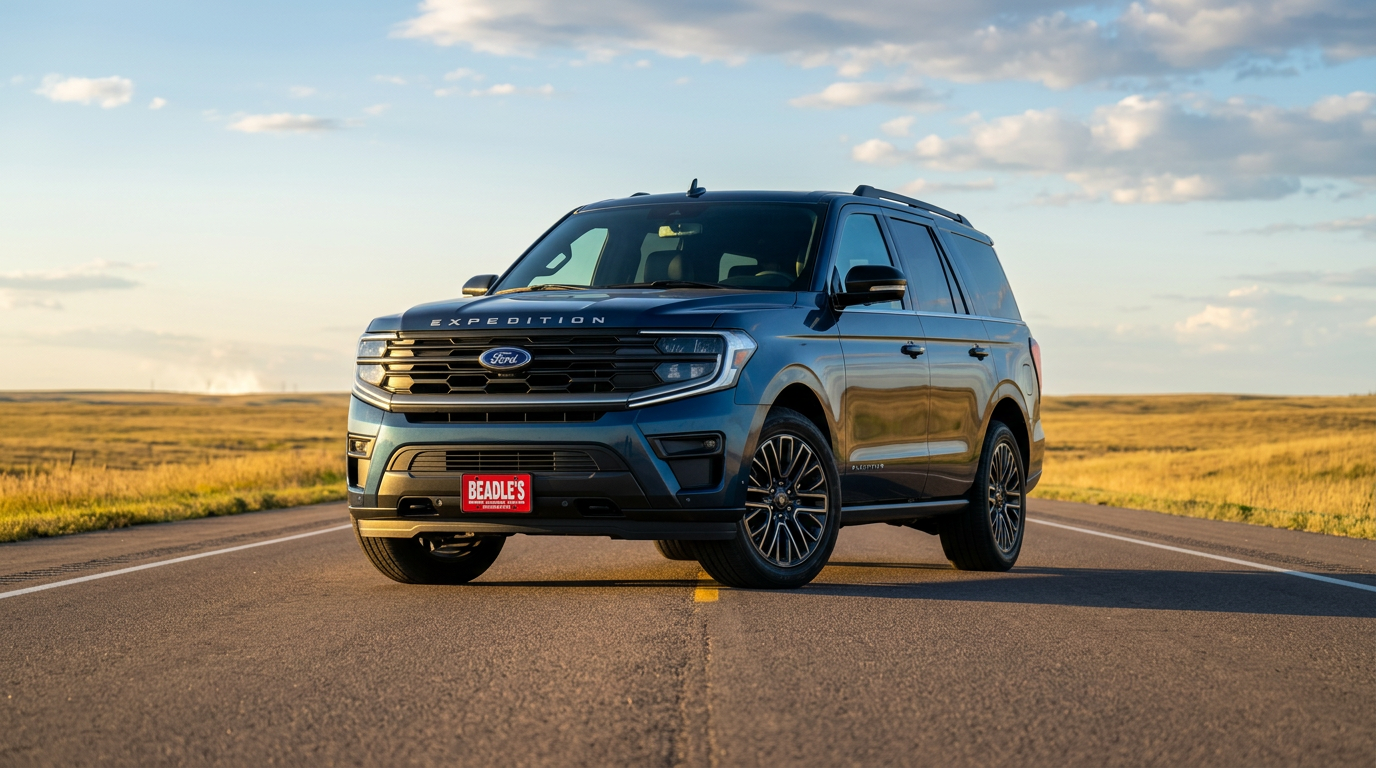
2026 Ford F-150 towing equipment trailer

2026 Ford F-150 Towing & Payload Guide

The 2026 Ford F-150 delivers serious towing capability across multiple engine configurations. When properly equipped, it can tow up to 13,500 pounds — but reaching that number depends on engine choice, axle ratio, and required equipment. This guide breaks down maximum towing ratings, required packages, 5th-wheel limits, axle considerations, altitude adjustments, and what South Dakota buyers should verify before ordering. For full trim and engine availability details, reference the complete 2026 Ford F-150 overview. Contact Beadle Ford Table of Contents What Is the Maximum Towing Capacity? Towing Capacity by Engine What Equipment Is Required? 5th-Wheel & Gooseneck Limits Frontal Area Limits Does Altitude Affect Towing? What About Raptor Models? How to Choose the Right Setup What Is the Maximum Towing Capacity of the 2026 F-150? The highest conventional towing capacity available on the 2026 Ford F-150 is 13,500 pounds when properly equipped with the 3.5L EcoBoost engine and required towing packages. Not all trims and configurations qualify for maximum towing, which is why engine and equipment selection matters. 2026 F-150 Towing Capacity by Engine Engine Max Conventional Tow (lbs.) 2.7L EcoBoost V6 8,400 5.0L V8 12,800 3.5L EcoBoost V6 13,500 3.5L PowerBoost Hybrid 11,600 3.5L EcoBoost High Output (Raptor) 8,200 5.2L Supercharged V8 (Raptor R) 8,700 Maximum ratings require proper configuration. Engine selection is explained further in our F-150 Engine Options Guide. What Equipment Is Required to Reach Maximum Tow Ratings? For gas engines towing above 11,600 pounds — and hybrids above 10,800 pounds — the Tow/Haul Package and Max Tow Axle configuration are required. Tow/Haul Package Integrated Trailer Brake Controller Max Tow Axle Ratio (varies by engine) Proper hitch setup Without these components, your truck will not reach published maximum ratings. What Are the 5th-Wheel and Gooseneck Limits? The 2026 F-150 can tow up to 7,200 pounds via 5th-wheel or gooseneck when properly equipped with the appropriate hitch kit. Note that Raptor models are not recommended for 5th-wheel towing. Do Trailer Frontal Area Limits Matter? Yes. Trailer frontal area affects safe towing limits. Under 7,700 lbs: 55 sq ft frontal area Over 7,701 lbs: 65 sq ft frontal area 5th-wheel/gooseneck: 75 sq ft frontal area Enclosed trailers and campers can exceed frontal area limits even if weight appears within range. This is commonly overlooked. Does Altitude Affect Towing Capacity? Yes. Ford recommends reducing Gross Combined Weight by 2% per 1,000 feet above sea level. This matters for drivers traveling through higher elevations in western South Dakota and neighboring states. How Do Raptor and Raptor R Compare for Towing? Raptor models prioritize suspension travel and off-road performance over maximum conventional towing numbers. While capable, they are not designed to compete with the 3.5L EcoBoost’s 13,500-pound maximum rating. How to Choose the Right Towing Configuration Confirm the exact loaded weight of your trailer. Verify required Tow/Haul and axle configurations. Check frontal area limits if towing enclosed trailers. Consider elevation if towing long distance. Match engine and trim to your real usage pattern. Key Takeaways Maximum towing reaches 13,500 lbs with the 3.5L EcoBoost. Proper equipment is required to achieve published ratings. Hybrid models offer strong capability but lower max ratings. Frontal area and altitude adjustments are often overlooked. Raptor models prioritize performance over max towing. For fuel economy and long-term operating considerations while towing, see our Ownership & Fuel Economy Guide. Frequently Asked Questions Which 2026 F-150 engine tows the most? The 3.5L EcoBoost delivers the highest conventional towing capacity at up to 13,500 pounds when properly equipped. Do I need the Tow/Haul Package for maximum towing? Yes. Maximum ratings require specific packages and axle ratios. Can the hybrid tow over 11,000 pounds? Yes. The PowerBoost hybrid can tow up to 11,600 pounds when properly equipped. Conclusion In my experience, towing decisions become much clearer once buyers move beyond advertised maximum numbers and focus on equipment requirements and real trailer weight. The strongest configuration is the one that matches your actual towing habits — not just the biggest headline figure. See how current 2026 F-150 models are configured at Beadle Ford or contact us to verify towing equipment availability. About the Author Lexy Tabbert provides in-depth truck research and configuration guidance for drivers across South Dakota and the surrounding region.

2027 Ford Expedition Platinum in Nocturnal Blue Metallic on a South Dakota highway at golden hour, Beadle Ford Bowdle SD

Should You Trade Your Current Ford Expedition for a 2027? The Honest Generation-by-Generation Answer

Home› Ford Expedition› 2027 Ford Expedition› Trade In for a 2027 Most of the Expedition drivers I talk to in Bowdle have had the same Expedition for five years or more. Some are on their second. A few are on a Ford Expedition that Ford started building before the sixth-generation platform even existed. If you’re one of those drivers and you’re thinking about trading for a 2027, this guide walks through whether the jump is actually worth it — and the answer honestly depends on what you’re driving today. We’ll cover three specific trade-in conversations — whether you’re in a 2021–2024 Expedition (pre-6th-gen), a 2025 or 2026 (same-generation swap), or an older Limited that doesn’t have a direct equivalent on the 2027 trim menu — plus the timing question of trading now or waiting for a specific configuration, and how to actually value your trade and buy at Beadle Ford. Value Your Trade Shop 2027 Expeditions in Stock On This Page If you drive a 2021–2024 Expedition, is a 2027 a real upgrade? If you drive a 2025 or 2026 Expedition, does the 2027 change enough to swap? If you own a Limited, what’s the equivalent trim on the 2027? Should you trade in now, or wait for a specific 2027 configuration? How do you value your trade and buy a 2027 at Beadle Ford? If you drive a 2021–2024 Expedition, is a 2027 a real upgrade? Yes, and the gap is bigger than most drivers expect. The 2021 through 2024 Expeditions are the fifth generation of the nameplate — a different platform, a different interior architecture, a different infotainment system, and a different driver-assist stack than the sixth-generation Expedition that launched for 2025. Moving from a 2024 to a 2027 is genuinely a generational step up, not a model-year refresh. What actually changes: the Ford Digital Experience replaces SYNC 4, giving you a 24" panoramic driver display and a 13.2" center display with Google Maps, Google Assistant, and Google Play Store embedded natively. Ford Co-Pilot360 Assist 2.0 is a significant upgrade over the fifth-gen Co-Pilot360 tier, with a 360-degree camera, off-road camera overlays, Predictive Speed Assist, and BLIS with Trailer Coverage. The 3.5L EcoBoost V6 High Output option at 440 hp and 510 lb-ft of torque on Tremor, Platinum Stealth Performance, and Platinum Ultimate didn’t exist on the fifth-gen platform. BlueCruise hands-free highway driving is available across the lineup on the sixth-gen. The Tremor — the Expedition’s first factory off-road trim — also launched with the 2025 generation. Practically, if your 2021–2024 Expedition has 60,000 to 100,000 miles on it and you’re hitting the window where bigger maintenance items come due — brakes, suspension, battery, bigger service intervals — the math of trading into a 6th-gen Expedition often works out favorably. The 2026 vs. 2027 distinction is smaller than the 2024 vs. 2026 (or 2027) distinction. Either current-generation Expedition is a generational jump from where you are today. For a complete look at what the 2027 model year specifically adds on top of the sixth-generation platform, see the What’s New for the 2027 Ford Expedition guide. If you drive a 2025 or 2026 Expedition, does the 2027 change enough to swap? This is a harder decision. The 2025 and 2026 Expeditions are the same sixth-generation platform as the 2027, with the same Ford Digital Experience, the same Co-Pilot360 Assist 2.0 stack, the same engine family, and the same Tremor trim. The 2027 brings six specific changes on top of that foundation: the 30th Anniversary Appearance Package on Platinum, three new paint colors (Bronze Fire Metallic Tri-coat, Nocturnal Blue Metallic, Blue Ember Metallic), the Ford Security Package newly optional across every trim, a laminated windshield standard across the lineup, the new Family Travel Package on Active Touring, and 4x2 availability on MAX Platinum (previously 4x4 only). For most same-generation owners, those changes don’t justify the swap on their own. If you bought a 2025 or 2026 Expedition and it’s serving your use case, you’re already in the same truck the 2027 represents — just with a slightly different options catalog. The exception is if one of the 2027-specific changes is genuinely a must-have for you: Blue Ember Metallic paint on a 30th Anniversary Package Platinum, the 4x2 MAX Platinum configuration if that wasn’t available when you bought your 2026, or the Family Travel Package if you’re looking at an Active Touring with young kids. There’s also a financial reality. Trading a 2025 or 2026 for a 2027 within 12-18 months of the original purchase usually involves absorbing significant depreciation. If that math doesn’t work for you, the honest answer is probably to stay in your current Expedition for another two or three years and revisit the trade-in question then. Come see us either way — we’ll walk through your trade number and the 2027 cost side-by-side honestly. If you own a Limited, what’s the equivalent trim on the 2027? There isn’t a direct one. The 2027 Ford Expedition retail lineup is Active, Tremor, Platinum, and King Ranch — no Limited. Ford reorganized the trim ladder for the sixth-generation platform, and Limited didn’t carry over. For Limited owners trading in, the question becomes which new trim best matches what you liked about your Limited. In most cases, the closest replacement is Platinum — it sits in a similar position on the lineup as Limited did, with a comparable luxury emphasis, leather interior, premium audio, and broader feature content. If you had a Limited with the Max Recline Seats and a higher-content interior, a Platinum Ultimate Package (17A) moves you up further to include the 440 hp High Output engine, the BlueCruise 1-Year + 90-Day plan standard, and Platinum’s most premium appearance items retained (Chrome Roof Rails, Lit Tailgate Applique, Lit Grille Bar) that standard Platinum 600A no longer includes for 2027. If you loved the Limited’s road feel but find Platinum too conspicuous, Active Touring (202A) is actually a strong alternative. It has heated front seats, a heated steering wheel, BlueCruise 90-Day Trial, Pro Power Onboard 400W, and power-folding second-row captain’s chairs — the “enough luxury without the flagship-trim optics” spot in the lineup. Think of Active Touring as the 2027’s practical upper-value trim. For the full trim-by-trim breakdown with decision framework by use case, see the 2027 Ford Expedition Trim Levels guide. Ready to see what your Expedition is worth? Value Your Trade Ask About a Custom Order Should you trade in now, or wait for a specific 2027 configuration? This depends more on your configuration needs than on the timing itself. Here’s how I frame it for buyers at Beadle Ford. Custom order (wait for your exact spec): if the configuration you want is not on the lot, ordering lets you lock in your trim, packages, paint, and options. You’ll have time to work out the trade-in number at a pace that doesn’t feel rushed. The downside: you’re committing to a truck you haven’t physically driven, and your current Expedition continues depreciating while you wait for delivery. Wait until a 2027 is on the lot (in-stock path): if you want to see and drive a specific trim and color combination before deciding, waiting for inventory gives you that. You can walk through the actual vehicle, compare it to your current Expedition in the lot lane, and make the decision with the truck in front of you. The downside: in-stock choices are narrower than order choices, and popular configurations (Tremor, 30th Anniversary Package) may require a wait regardless. One more consideration: if your current Expedition is approaching a milestone that meaningfully affects its value — crossing 100,000 miles, needing a major service, coming off a manufacturer warranty — trading sooner rather than later usually protects more of your trade equity. Whichever path fits your situation, the trade-in conversation can happen in parallel. We can value your current Expedition now, hold that value for a reasonable window while you decide on the 2027 spec, and line up the transition. Call us and we’ll set that up. How do you value your trade and buy a 2027 at Beadle Ford? Three steps, and you can do them in any order. 1. Value your trade. Submit your current Expedition through the Value Your Trade form on our site, or bring it in for an appraisal. We’ll look at year, trim, mileage, options, condition, and current market data to give you an honest number. We’ll also tell you if a private-party sale would get you meaningfully more — sometimes it does, sometimes it doesn’t, and we’ll tell you the truth either way. 2. Configure your 2027. Decide on standard vs. MAX body, trim, package (if Platinum), paint, interior, and optional equipment. If you’re unsure, we’ll walk through the trim lineup against your actual driving needs and show you the cost difference between configurations. If what you want is on the lot, this step is a test drive; if not, we’ll build the order together. 3. Buy and hand over. Finalize the trade number when your 2027 is ready — today if it is on the lot — and take delivery. The Ford factory handles the build and delivery; we handle the hand-off, trade settlement, and any financing or leasing arrangement. The paperwork is straightforward if you work with us — and we’ll explain every line before you sign it. For the trim-by-trim lineup, engine options, package combinations, and buying options, see the complete 2027 Ford Expedition overview. Key Takeaways Moving from a 2021–2024 Expedition to a 2027 is a generational jump: new platform, Ford Digital Experience, Co-Pilot360 Assist 2.0, BlueCruise, High Output engine option, and the Tremor trim. Going from a 2025 or 2026 to a 2027 is a smaller step — worthwhile mainly if specific 2027 changes (30th Anniversary Package, new paints, Family Travel Package, 4x2 MAX Platinum) are must-haves for you. The 2027 lineup does not include a Limited trim. Platinum is the closest equivalent; Active Touring is a strong alternative for Limited owners who want heated seats and BlueCruise without flagship-trim optics. Buying from the lot means a physical drive before deciding; a custom order means the exact configuration but a wait for delivery. Value the trade, pick or configure the 2027, buy — the three steps can happen in any order and in parallel. Frequently Asked Questions Should I trade in my Ford Expedition for a 2027? It depends on what you’re driving today. A 2021–2024 Expedition to a 2027 is a generational jump worth considering seriously. A 2025 or 2026 to a 2027 is a smaller step — worthwhile if specific 2027 changes (30th Anniversary Package, new paints, Family Travel Package, 4x2 MAX Platinum) are must-haves for you. Come see Beadle Ford and we’ll walk through the math honestly. What’s the 2027 equivalent to the Ford Expedition Limited trim? The 2027 Expedition retail lineup doesn’t include a Limited trim. Platinum is the closest replacement with a comparable luxury emphasis. If you want more content, Platinum Ultimate (17A) adds the 440 hp High Output engine, BlueCruise 1-Year + 90-Day plan, and premium appearance items standard Platinum 600A no longer includes. Active Touring is a strong alternative if you want heated seats and BlueCruise without flagship-trim optics. Is it better to buy a 2027 Expedition from the lot or custom order one? It depends on your configuration needs. A custom order locks in your trim, packages, paint, and options but means you’re committing without a physical drive. Buying from on-lot inventory lets you see and drive the truck before deciding but narrows your configuration choices. If your current Expedition is approaching a milestone that affects its value (100,000 miles, major service, warranty expiration), trading sooner typically protects more equity. How do I get my Expedition trade-in value? Submit your vehicle through the Value Your Trade form on beadleford.net, or bring it to Beadle Ford for an appraisal. We’ll assess year, trim, mileage, options, and condition against current market data. We’ll give you an honest number and also tell you if a private-party sale would likely net meaningfully more — sometimes it does, sometimes it doesn’t. Can I hold my trade-in value while waiting for a custom-ordered 2027? For a reasonable window, yes — depending on market conditions and the length of the order timeline. We’ll work with you on how to structure the transition so your current Expedition serves you until the 2027 is ready. Call Beadle Ford at (866) 561-2636 to walk through the specifics against your situation. Does moving from the fifth generation to the sixth generation change insurance or maintenance? Insurance rates typically reflect the vehicle’s replacement value and safety-feature tier, so a newer, more technology-equipped Expedition may see different premiums — sometimes higher due to replacement cost, sometimes offset by updated safety discounts. Maintenance intervals and warranty coverage reset with the new vehicle. For specifics on your situation, talk to your insurance agent and reference the 2027 Owner’s Manual for service intervals. Can I trade in a leased Expedition? Yes, lease trade-ins are common and can be structured in several ways — early buyout to trade, lease-end trade with residual alignment, or lease pull-ahead if your lessor offers one for the 2027 order. Bring your lease documents when you come in and we’ll walk through the options against your specific lease terms. My Take on the Expedition Trade-In Decision I talk to a lot of long-time Expedition drivers in Bowdle and the surrounding ranch and farm country, and the trade-in conversation is one I genuinely like having. If you’re in a 2021 or 2022 Expedition, the 2027 (or the 2026 on our current lot) is a real upgrade — it’s a different truck in the places that matter. If you’re already in a 2025 or 2026, the honest answer is usually “not yet,” unless one of the 2027-specific changes lands exactly where you needed it to. Either way, the conversation is worth having. Come in, let’s walk through your Expedition and the 2027 options side-by-side, and we’ll figure out what actually makes sense for you. No pressure. No scripts. The right answer is usually obvious when you see both trucks against each other. Shop 2027 Expeditions in Stock Contact Beadle Ford About the Author Lexy Tabbert — Beadle Ford, Bowdle, SD Lexy Tabbert is the Director of Sales and Marketing at Beadle Ford in Bowdle, South Dakota. She covers Ford vehicles, trim comparisons, and buyer guidance — helping families, ranchers, and ag operators across the region find the right truck and configuration for their needs. Learn more about Lexy.

Contact Us

Fill out this form below and we'll contact you shortly
*Required Fields