
Quick Answer
The 2026 Ford F-350’s most useful technology is towing-focused: a 360-Degree Camera, Pro Trailer Backup Assist, Trailer Reverse Guidance, and BLIS blind-spot monitoring with trailer coverage, all on a 12-inch SYNC 4 touchscreen. Ford Co-Pilot360 adds Adaptive Cruise Control and lane-keeping for long hauls.
In a heavy-duty truck, technology should earn its place. The best features aren’t “nice-to-haves” — they cut stress by improving visibility, control, and decision-making when you’re towing, backing, or driving through changing weather.
This guide highlights the technology that matters most on a 2026 F-350 — and names the actual systems to look for — especially for drivers around Bowdle and Aberdeen who tow regularly or rack up long miles between towns.
What technology matters most in a heavy-duty truck?
The technology that makes the biggest difference falls into three buckets: towing visibility (the 360-Degree Camera and trailer camera views), trailer-aware safety (BLIS with trailer coverage and the integrated trailer brake controller), and driver convenience for long days (SYNC 4 and Ford Co-Pilot360). Equipment varies by trim and package, so prioritize the systems that solve your real pain points, then confirm them on the specific truck.
Which camera views help most with towing and backing?
The available 360-Degree Camera and trailering camera views are the single most useful towing tech on the F-350. They take the guesswork out of hookup and tight maneuvers, especially with a long trailer or a dually.
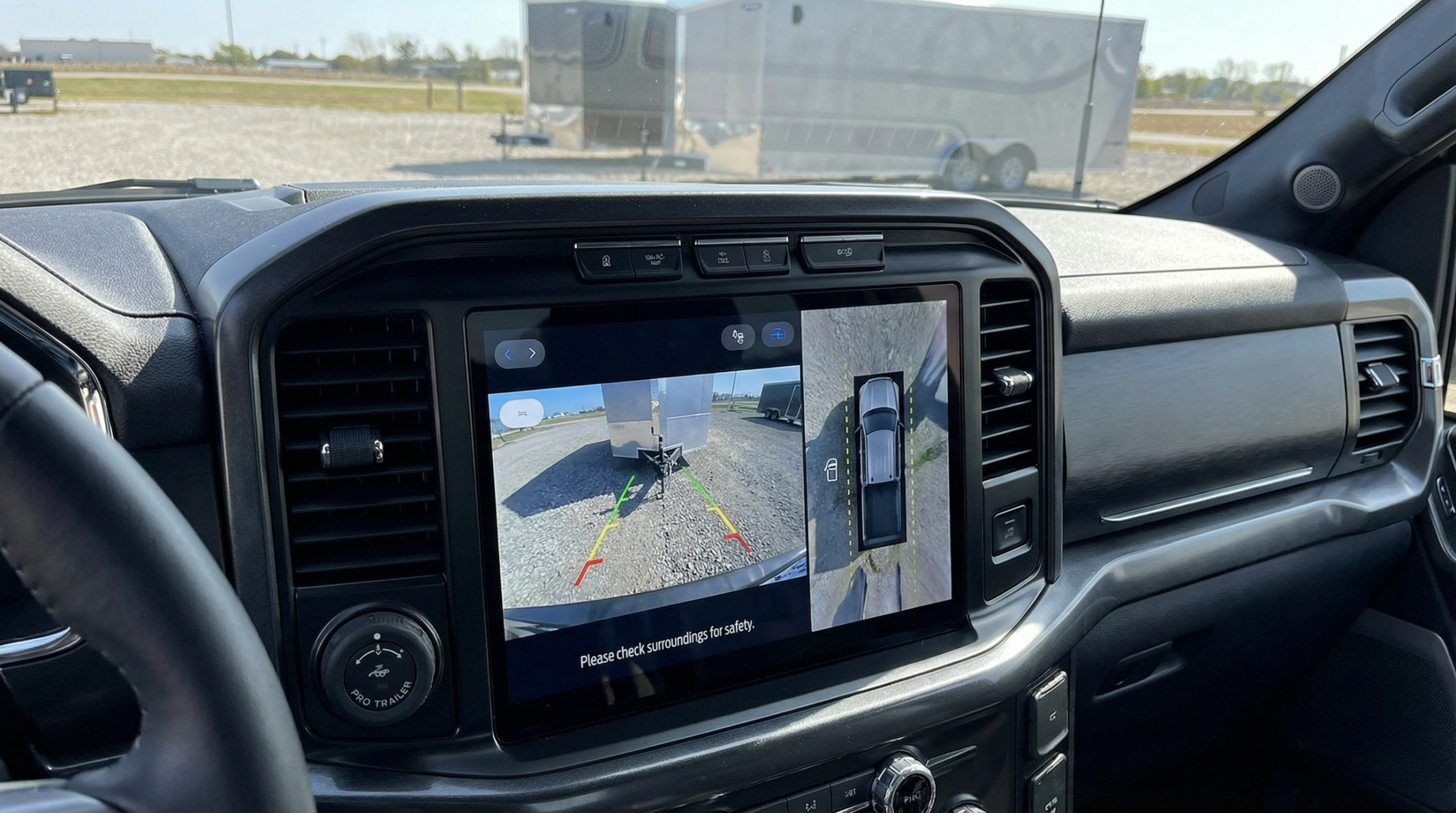
- Pro Trailer Backup Assist: steer the trailer with a knob — it takes the reverse-steering guesswork out of backing.
- 360-Degree Camera & hitch views: line up the ball on the first try and watch clearance on every side.
- Trailer Reverse Guidance: on-screen cues that make backing in tight lots far less stressful.
What trailer-aware safety features should you look for?
The features worth prioritizing are the ones that keep helping once the trailer is connected: BLIS (Blind Spot Information System) with trailer coverage that extends down the length of your trailer, the integrated trailer brake controller, and Tow/Haul mode. On open highways with crosswinds and passing traffic, those reduce fatigue more than any screen.
Our Recommendation
If you tow, prioritize three features over everything else: the 360-Degree Camera, Pro Trailer Backup Assist, and BLIS with trailer coverage. Those three earn their keep on every hookup and every two-lane highway run around here — far more than touchscreen size. Match them to a build in our 2026 F-350 towing guide.
Which cabin tech improves daily driving most?
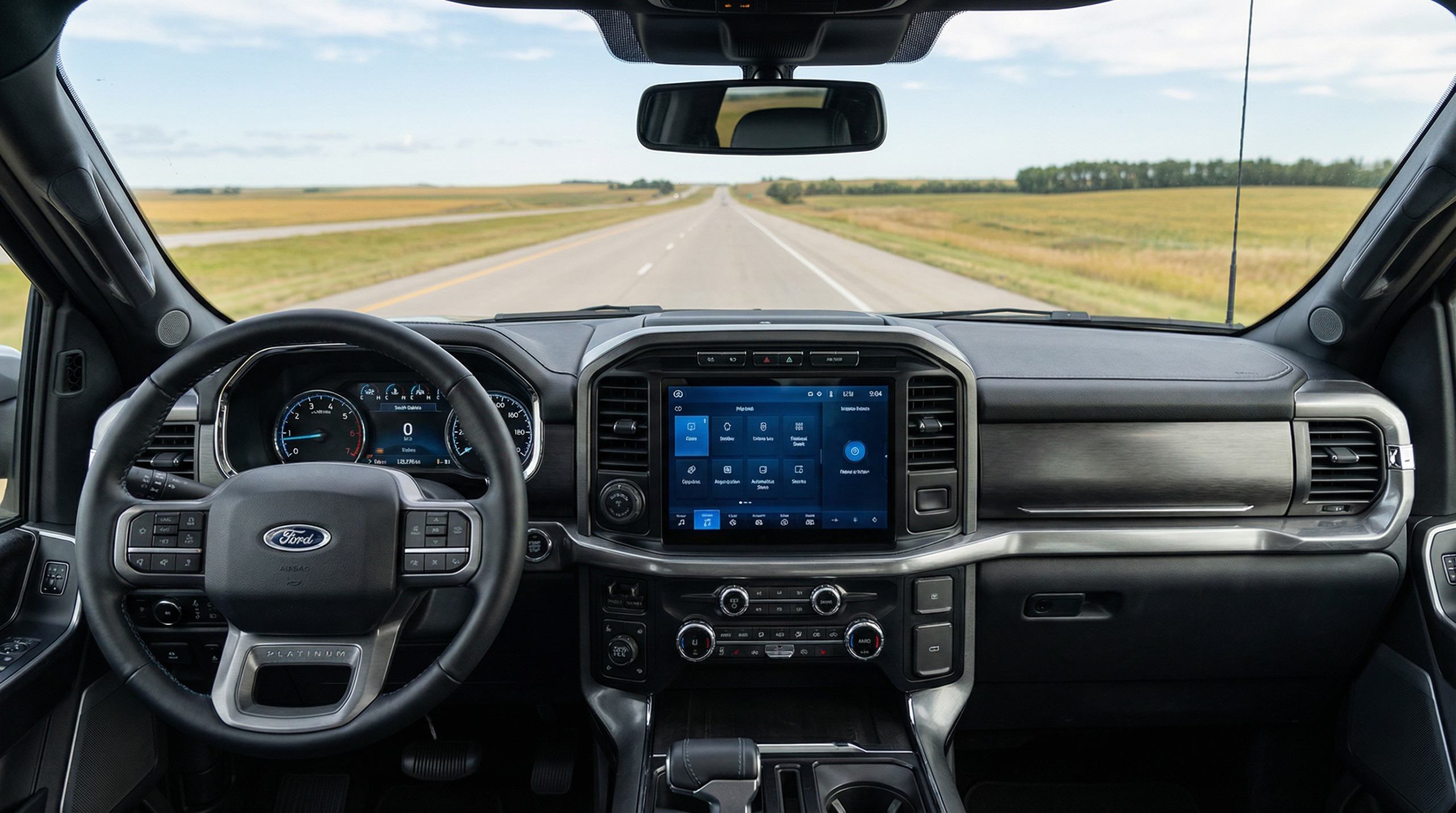
For the long rural drives out here, the cabin tech that matters is the 12-inch SYNC 4 touchscreen with wireless smartphone connectivity, clear driver-information displays that keep towing and trip data at a glance, and Ford Co-Pilot360 features like Adaptive Cruise Control and lane-keeping that cut fatigue on the highway. Available Pro Power Onboard turns the truck into a jobsite generator, and Smart Hitch helps you load to the right tongue weight.
From the Beadle Ford Lot
The tech first-time heavy-duty buyers come back and thank us for is almost never the screen — it’s the cameras and the trailer blind-spot monitoring. Once you’ve lined up a gooseneck on the first try or caught a car hiding alongside a 30-foot trailer, those features stop feeling optional.
How do you choose tech features for how you drive?
Match the tech to your routine:
- If you tow weekly: prioritize the 360-Degree Camera, Pro Trailer Backup Assist, and BLIS with trailer coverage.
- If you drive long miles: prioritize SYNC 4, clear driver displays, and Co-Pilot360 Adaptive Cruise Control.
- If you work in tight spaces: prioritize the camera views and Trailer Reverse Guidance.
- If you run equipment off the truck: look at Pro Power Onboard and Smart Hitch — then confirm the build, since tech varies by trim and package.
Key Takeaways
- The towing tech that matters most: 360-Degree Camera, Pro Trailer Backup Assist, and BLIS with trailer coverage.
- SYNC 4 on a 12-inch touchscreen runs the displays, with wireless smartphone connectivity.
- Ford Co-Pilot360 adds Adaptive Cruise Control and lane-keeping for long hauls.
- Pro Power Onboard and Smart Hitch add jobsite generator power and load guidance.
- Tech availability varies by trim and package — confirm on the exact truck.
Frequently Asked Questions
Quick Answers: F-350 Technology
One-line answers to the follow-up questions buyers ask next.
What infotainment system does it use? SYNC 4 on a 12-inch touchscreen.
Does it have a 360 camera? Yes — an available 360-Degree Camera.
Does it have trailer backup assist? Yes — Pro Trailer Backup Assist.
Is blind-spot monitoring trailer-aware? Yes — BLIS extends coverage down the trailer.
Is there adaptive cruise control? Yes — through Ford Co-Pilot360.
Does it have wireless Apple CarPlay/Android Auto? Yes — SYNC 4 supports wireless connectivity.
What’s Pro Power Onboard? An onboard generator to run tools and equipment.
What’s Smart Hitch? Onboard guidance to load the right trailer tongue weight.
Is there an integrated trailer brake controller? Yes, and it’s recommended for heavy trailers.
How do I confirm a truck’s tech? We check the build sheet against the exact unit before you buy.
Keep Researching
The complete 2026 Ford F-350 Super Duty overview — trims, specs, towing, and inventory in one place.
2026 F-350 towing guide — how the camera and trailer-aware features pair with your towing setup.
2026 F-350 packages & trims — which trims and packages include the tech you want.
2026 F-350 interior & comfort — the cabin and displays the tech lives in.
My Take on F-350 Technology
In my experience, the technology that matters most is the technology you can rely on when you’re loaded, tired, and dealing with real conditions. When the cameras, blind-spot coverage, and trailer-aware features are in place, towing feels more controlled and daily driving feels less demanding — and around here, those beat screen size every time.
Tell me how you use the truck and I’ll point you to the features worth prioritizing. Stop in at Beadle Ford in Bowdle or reach out anytime.
About the Author
Lexy Tabbert — Beadle Ford, Bowdle, SD
Lexy Tabbert is the Director of Sales and Marketing at Beadle Ford in Bowdle, South Dakota. She covers Ford vehicles, trim comparisons, and buyer guidance — helping families, ranchers, and ag operators across the region find the right truck and configuration for their needs. Learn more about Lexy.
Connect with us

