
Quick Answer
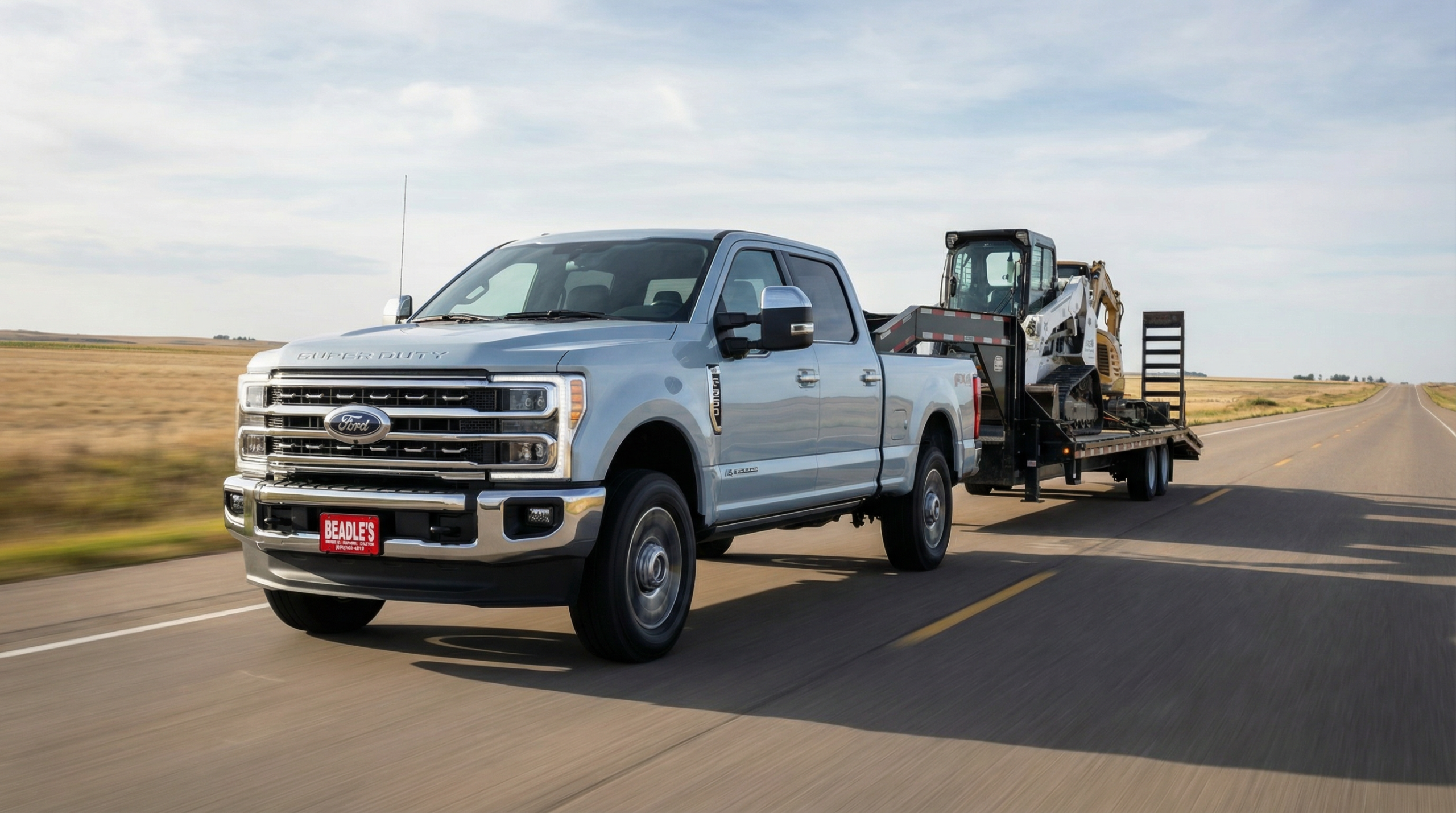
Properly equipped, the 2026 Ford F-350 Super Duty tows up to 40,000 lbs gooseneck with the 6.7L High-Output Power Stroke diesel and 40K Gooseneck Tow Package, up to about 35,000 lbs fifth-wheel, and up to 28,000 lbs conventional in dual-rear-wheel form.
The 2026 Ford F-350 Super Duty is built for drivers who tow heavy on purpose — fifth-wheels, goosenecks, livestock, and equipment loads that don’t leave much room for guesswork. If your towing days include long highway miles, wind, grades, or soft gravel lots, the right F-350 configuration feels noticeably more planted and in control.
This guide focuses on the decisions that actually change towing confidence: the real numbers by hitch type and engine, the single-rear-wheel versus dual-rear-wheel choice, and the towing visibility features that matter once the trailer is hooked up. Because capability depends on how the truck is built, compare your options within the full lineup before you finalize a plan.
On This Page
- What actually changes how much an F-350 can tow?
- How much can the 2026 F-350 tow by hitch type and engine?
- SRW vs. DRW: which one fits your trailer?
- Gooseneck vs. fifth-wheel vs. bumper pull: what’s the difference?
- Which engine should you tow with?
- What towing tech is worth prioritizing?
- How do you choose an F-350 towing setup?
What actually changes how much an F-350 can tow?
Towing capacity isn’t one number — on the F-350 it shifts with cab and bed choice, drivetrain, axle ratio, single- or dual-rear-wheel setup, hitch type, and packages. The headline 40,000-lb figure is a specific build, not every truck on the lot.
The right way to shop is backward from your trailer: start with your real loaded weight and hitch type, then choose the configuration that gives you stability and margin instead of a close call. Around Bowdle and Aberdeen, that usually means matching the engine to how often you pull heavy and deciding honestly whether you need a dually — the two choices that move the numbers most.
How much can the 2026 F-350 tow by hitch type and engine?
Properly equipped, the 2026 F-350 tows up to 40,000 lbs gooseneck, up to about 35,000 lbs fifth-wheel, and up to 28,000 lbs on a conventional (bumper-pull) hitch in dual-rear-wheel form. A single-rear-wheel F-350 handles up to 25,000 lbs conventional — still well beyond any half-ton.
Maximum gooseneck capability by engine breaks down like this:
| Engine | Max Gooseneck | Best For |
| 6.8L gas V8 | Up to 18,900 lbs | Lighter goosenecks, occasional towing, top payload |
| 7.3L gas V8 | Up to 22,500 lbs | Frequent gas towing without diesel upkeep |
| 6.7L Power Stroke diesel | Up to 38,600 lbs | Regular heavy goosenecks, livestock, large fifth-wheels |
| 6.7L High-Output Power Stroke | Up to 40,000 lbs | Maximum capability (DRW + 40K Gooseneck Tow Package) |
Maximums require proper equipment and vary with cab, bed, axle ratio, and configuration. The 40,000-lb gooseneck rating requires the dual-rear-wheel HO diesel with the 40K Gooseneck Tow Package (535).
SRW vs. DRW: which one fits your trailer?
Single-rear-wheel (SRW) is the better all-around choice for most heavy towing while staying easy to live with day to day; dual-rear-wheel (DRW, or dually) is for maximum stability and the heaviest goosenecks and fifth-wheels. This is the most important F-350 decision most buyers make.
Single-rear-wheel (SRW) is right for you if you tow goosenecks and fifth-wheels well under the top of the range, run gravel and tight yards often, and want a truck that’s easier to park and daily-drive.
Dual-rear-wheel (DRW) is right for you if you regularly pull a large fifth-wheel or gooseneck near the F-350’s ceiling, want the calmest feel in crosswinds and on long highway runs, or need the 40,000-lb maximum.
From the Beadle Ford Lot
The most common F-350 conversation we have in Bowdle is SRW vs. DRW — and plenty of buyers who assume they need a dually don’t. A single-rear-wheel F-350 covers most goosenecks around here with margin to spare and is far easier to live with on gravel and in the yard.
Gooseneck vs. fifth-wheel vs. bumper pull: what’s the difference?
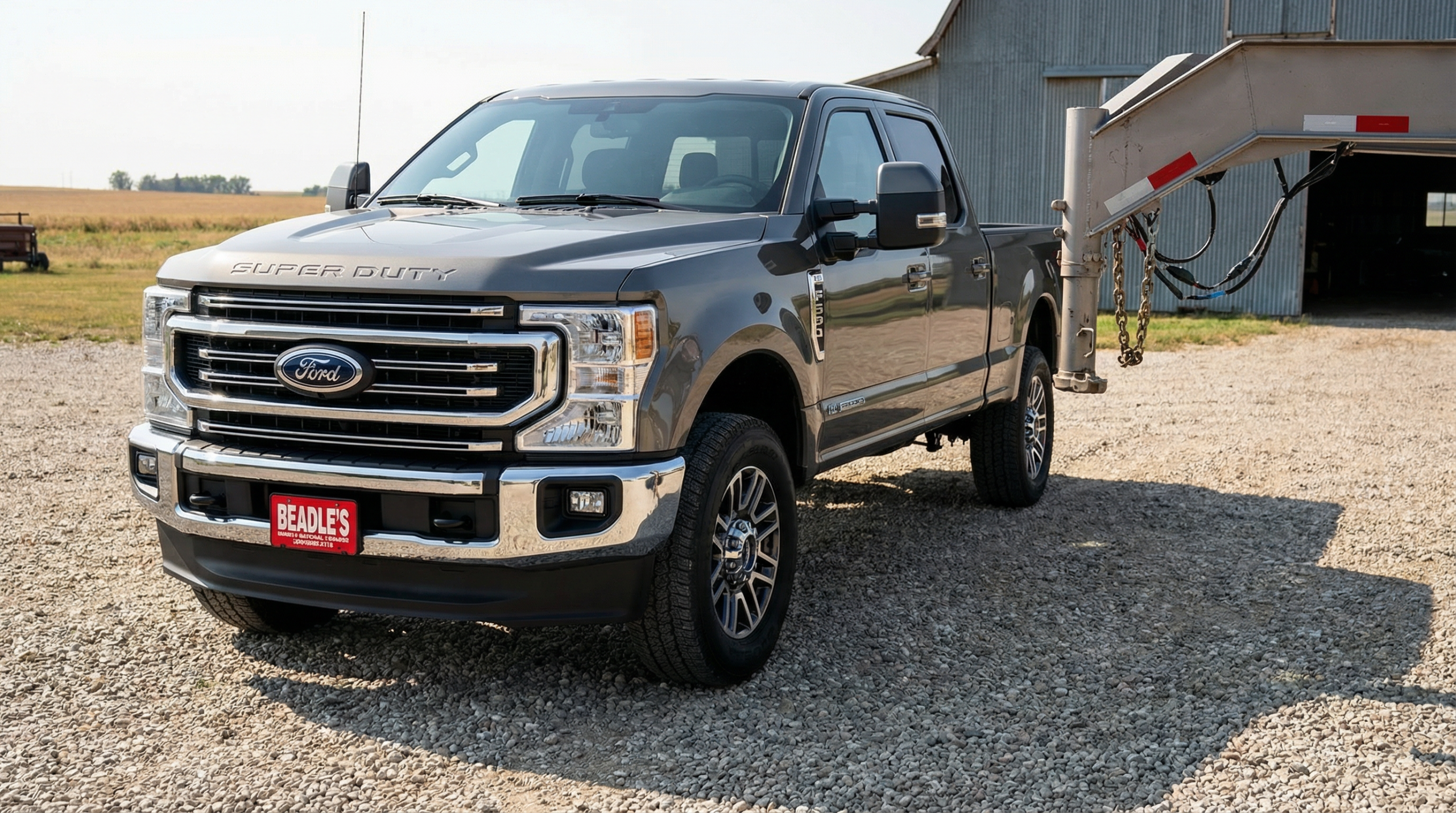
The hitch type changes how the load behaves and how the truck should be equipped. Gooseneck and fifth-wheel hitches mount over the rear axle for a more stable, higher-capacity tow; a conventional bumper pull is simpler but tops out lower.
- Bumper pull (conventional): common for utility and many travel trailers; weight distribution and brake control matter more as loads climb. Up to 25,000 lbs SRW, 28,000 lbs DRW.
- Fifth-wheel: popular for larger RVs; the over-axle connection feels more stable on the highway. Up to about 35,000 lbs.
- Gooseneck: the livestock and equipment standard; controlled feel and tight maneuvering, and the highest ratings — up to 40,000 lbs.
Which engine should you tow with?
Match the engine to towing frequency and weight. Gas (6.8L or 7.3L) fits mixed driving and periodic towing; the 6.7L Power Stroke diesels are the choice when you tow heavy and often and want torque-forward control on long pulls.
All four engines pair with the 10-speed TorqShift automatic. The standard diesel makes 1,050 lb-ft and pulls up to 38,600 lbs gooseneck; the High-Output diesel adds 150 lb-ft and unlocks the 40,000-lb maximum in DRW form.
Our Recommendation
For most ranch and farm buyers around Bowdle and Aberdeen running gooseneck stock and equipment trailers, we recommend the standard-output 6.7L Power Stroke. Its 1,050 lb-ft and up-to-38,600-lb gooseneck rating cover nearly every trailer in this part of South Dakota — the High-Output engine and a dually only pay off if you’re routinely near the top of the range. The full breakdown is in our 2026 F-350 engine comparison guide.
What towing tech is worth prioritizing?
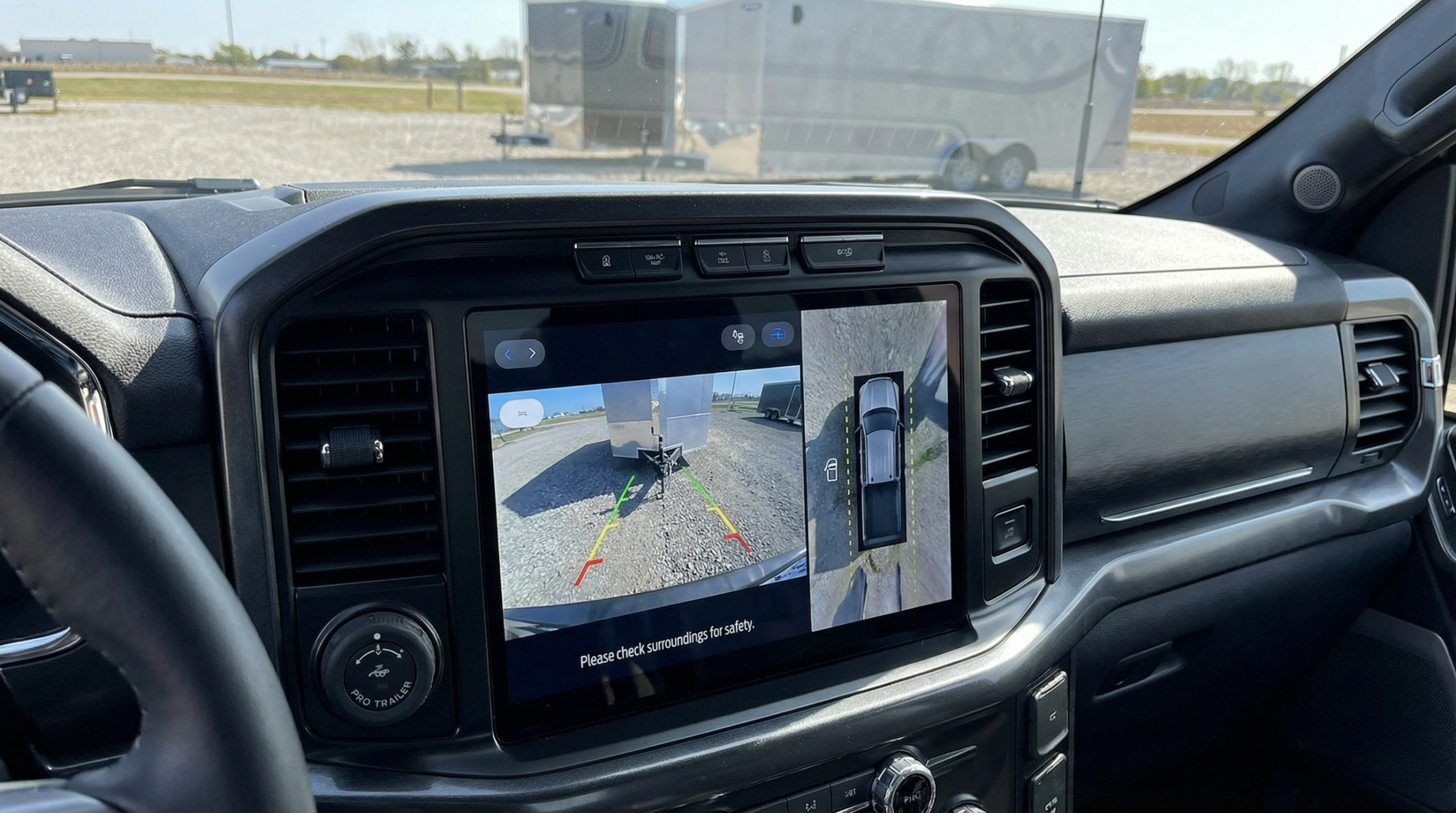
Prioritize the features you use every time you hook up: trailer brake control, camera visibility, trailer-aware monitoring, and proper tow mirrors. On a heavy gooseneck or a dually-and-long-trailer combo, visibility is a safety feature, not a convenience.
- Trailer brake control: increasingly important as trailer weight rises.
- Camera visibility: helps with hitch alignment, backing, and tight maneuvers.
- Trailer-aware monitoring: when equipped, eases lane changes and long highway runs.
- Tow mirrors and lighting: clear sightlines down a long trailer in a crosswind.
How do you choose an F-350 towing setup?
Work from the trailer to the truck, in five steps:
- Start with the trailer: type (bumper pull, fifth-wheel, gooseneck) and realistic loaded weight.
- Decide SRW vs. DRW: choose your stability margin based on how heavy and how often you tow.
- Pick an engine for your frequency: occasional gas vs. frequent heavy diesel pulling.
- Prioritize visibility and control: brake control, camera support, and tow mirrors.
- Confirm the exact build: ratings and equipment vary with configuration — verify before you order.
Key Takeaways
- The 2026 F-350 tows up to 40,000 lbs gooseneck, ~35,000 lbs fifth-wheel, and up to 28,000 lbs conventional — properly equipped.
- SRW fits most heavy towing and daily use; DRW is the stability choice for the largest fifth-wheels and goosenecks.
- Hitch type changes both the rating and how the truck should be equipped.
- The standard 6.7L Power Stroke (38,600 lbs gooseneck) covers nearly every trailer in this region.
- Towing visibility tech can matter as much as horsepower in real conditions.
Frequently Asked Questions
Quick Answers: F-350 Towing
One-line answers to the follow-up questions buyers ask next.
What’s the max gooseneck rating? Up to 40,000 lbs with the HO diesel DRW and 40K Gooseneck Tow Package.
What’s the max fifth-wheel rating? Up to about 35,000 lbs, properly equipped.
What’s the max conventional rating? Up to 28,000 lbs DRW, 25,000 lbs SRW.
How much can the gas 7.3L tow? Up to 22,500 lbs gooseneck.
How much can the standard diesel tow? Up to 38,600 lbs gooseneck.
Do I need a dually to tow heavy? No — SRW covers most trailers here; DRW is for the heaviest loads.
What transmission handles the towing? A 10-speed TorqShift automatic, standard on all engines.
Is a trailer brake controller included? Yes — an integrated trailer brake controller is available and recommended for heavy trailers.
Can it tow a large livestock gooseneck? Yes — that’s a core use case for the F-350 in our market.
How do I confirm a specific truck’s rating? We verify cab, axle, and package against the build before you order.
Keep Researching
The complete 2026 Ford F-350 Super Duty overview — trims, specs, towing, and inventory in one place.
2026 F-350 engine comparison — gas vs. diesel and the ownership-cost math behind the tow ratings.
2026 F-350 packages & trims — where DRW becomes available and which towing packages to order.
2026 F-350 technology — the trailer cameras and driver-assist features that matter when towing.
My Take on Towing with the 2026 Ford F-350
In my experience, the best towing setups are the ones built with margin — where the truck feels composed, the trailer feels predictable, and you’re not constantly managing the load. The F-350 shines when buyers choose SRW vs. DRW intentionally, match the hitch to the job, and pick the engine for how they actually tow rather than for the biggest number on the window sticker.
If you bring me your trailer type and a realistic loaded weight, we can size the right F-350 in a few minutes. Stop in at Beadle Ford in Bowdle or reach out and we’ll walk through it together.
About the Author
Lexy Tabbert — Beadle Ford, Bowdle, SD
Lexy Tabbert is the Director of Sales and Marketing at Beadle Ford in Bowdle, South Dakota. She covers Ford vehicles, trim comparisons, and buyer guidance — helping families, ranchers, and ag operators across the region find the right truck and configuration for their needs. Learn more about Lexy.
Connect with us

