
Blog / New Vehicles

Blog

All New Vehicles Bowdle Ford Dealer Bowdle Ford Service
2026 Ford F-150 towing equipment trailer

2026 Ford F-150 Towing & Payload Guide

The 2026 Ford F-150 delivers serious towing capability across multiple engine configurations. When properly equipped, it can tow up to 13,500 pounds — but reaching that number depends on engine choice, axle ratio, and required equipment. This guide breaks down maximum towing ratings, required packages, 5th-wheel limits, axle considerations, altitude adjustments, and what South Dakota buyers should verify before ordering. For full trim and engine availability details, reference the complete 2026 Ford F-150 overview. Contact Beadle Ford Table of Contents What Is the Maximum Towing Capacity? Towing Capacity by Engine What Equipment Is Required? 5th-Wheel & Gooseneck Limits Frontal Area Limits Does Altitude Affect Towing? What About Raptor Models? How to Choose the Right Setup What Is the Maximum Towing Capacity of the 2026 F-150? The highest conventional towing capacity available on the 2026 Ford F-150 is 13,500 pounds when properly equipped with the 3.5L EcoBoost engine and required towing packages. Not all trims and configurations qualify for maximum towing, which is why engine and equipment selection matters. 2026 F-150 Towing Capacity by Engine Engine Max Conventional Tow (lbs.) 2.7L EcoBoost V6 8,400 5.0L V8 12,800 3.5L EcoBoost V6 13,500 3.5L PowerBoost Hybrid 11,600 3.5L EcoBoost High Output (Raptor) 8,200 5.2L Supercharged V8 (Raptor R) 8,700 Maximum ratings require proper configuration. Engine selection is explained further in our F-150 Engine Options Guide. What Equipment Is Required to Reach Maximum Tow Ratings? For gas engines towing above 11,600 pounds — and hybrids above 10,800 pounds — the Tow/Haul Package and Max Tow Axle configuration are required. Tow/Haul Package Integrated Trailer Brake Controller Max Tow Axle Ratio (varies by engine) Proper hitch setup Without these components, your truck will not reach published maximum ratings. What Are the 5th-Wheel and Gooseneck Limits? The 2026 F-150 can tow up to 7,200 pounds via 5th-wheel or gooseneck when properly equipped with the appropriate hitch kit. Note that Raptor models are not recommended for 5th-wheel towing. Do Trailer Frontal Area Limits Matter? Yes. Trailer frontal area affects safe towing limits. Under 7,700 lbs: 55 sq ft frontal area Over 7,701 lbs: 65 sq ft frontal area 5th-wheel/gooseneck: 75 sq ft frontal area Enclosed trailers and campers can exceed frontal area limits even if weight appears within range. This is commonly overlooked. Does Altitude Affect Towing Capacity? Yes. Ford recommends reducing Gross Combined Weight by 2% per 1,000 feet above sea level. This matters for drivers traveling through higher elevations in western South Dakota and neighboring states. How Do Raptor and Raptor R Compare for Towing? Raptor models prioritize suspension travel and off-road performance over maximum conventional towing numbers. While capable, they are not designed to compete with the 3.5L EcoBoost’s 13,500-pound maximum rating. How to Choose the Right Towing Configuration Confirm the exact loaded weight of your trailer. Verify required Tow/Haul and axle configurations. Check frontal area limits if towing enclosed trailers. Consider elevation if towing long distance. Match engine and trim to your real usage pattern. Key Takeaways Maximum towing reaches 13,500 lbs with the 3.5L EcoBoost. Proper equipment is required to achieve published ratings. Hybrid models offer strong capability but lower max ratings. Frontal area and altitude adjustments are often overlooked. Raptor models prioritize performance over max towing. For fuel economy and long-term operating considerations while towing, see our Ownership & Fuel Economy Guide. Frequently Asked Questions Which 2026 F-150 engine tows the most? The 3.5L EcoBoost delivers the highest conventional towing capacity at up to 13,500 pounds when properly equipped. Do I need the Tow/Haul Package for maximum towing? Yes. Maximum ratings require specific packages and axle ratios. Can the hybrid tow over 11,000 pounds? Yes. The PowerBoost hybrid can tow up to 11,600 pounds when properly equipped. Conclusion In my experience, towing decisions become much clearer once buyers move beyond advertised maximum numbers and focus on equipment requirements and real trailer weight. The strongest configuration is the one that matches your actual towing habits — not just the biggest headline figure. See how current 2026 F-150 models are configured at Beadle Ford or contact us to verify towing equipment availability. About the Author Lexy Tabbert provides in-depth truck research and configuration guidance for drivers across South Dakota and the surrounding region.

2026 Ford F-150 at rural farm worksite

2026 Ford F-150 Engine Options Guide

The 2026 Ford F-150 offers six distinct engine options, ranging from efficient EcoBoost configurations to a full hybrid system and high-performance Raptor variants. Each powertrain is engineered for a different balance of towing strength, daily drivability, and long-term ownership priorities. This guide breaks down each available powertrain and explains who it makes the most sense for. For full trim availability, drivetrain pairings, and feature differences, reference the complete 2026 Ford F-150 overview. Contact Beadle Ford Table of Contents How Many Engines Are Available? Is the 2.7L EcoBoost Enough? Does the 5.0L V8 Still Make Sense? Why Choose the 3.5L EcoBoost? Is the PowerBoost Hybrid Worth It? What About Raptor Engines? Which Engine Is Best for South Dakota? How to Choose the Right Engine How Many Engine Options Are Available on the 2026 F-150? The 2026 F-150 offers six distinct powertrains, including five gas engines and one full hybrid system. All are paired with a 10-speed automatic transmission and differ in torque delivery, towing capability, and overall driving character. 2.7L EcoBoost V6 5.0L V8 3.5L EcoBoost V6 3.5L PowerBoost Full Hybrid 3.5L EcoBoost High Output (Raptor) 5.2L Supercharged V8 (Raptor R) Is the 2.7L EcoBoost Enough for Most Drivers? Yes — for many drivers, the 2.7L EcoBoost provides more than enough capability. When properly equipped, it can tow up to 8,400 pounds while delivering strong low-end torque for everyday driving. This engine works well for commuting, moderate trailer use, and rural driving without stepping into maximum towing configurations. Does the 5.0L V8 Still Make Sense in 2026? The 5.0L V8 remains a popular option for buyers who prefer naturally aspirated power delivery and traditional V8 sound and feel. When properly equipped, it can tow up to 12,800 pounds. For many drivers, the V8 represents straightforward performance and proven durability. Why Choose the 3.5L EcoBoost? The 3.5L EcoBoost delivers the highest conventional towing rating in the 2026 lineup — up to 13,500 pounds when properly equipped with the Tow/Haul Package and Max Tow Axle. It balances heavy-duty capability with strong highway performance, making it ideal for long-distance towing. For axle ratios, required packages, and configuration specifics, see the detailed 2026 F-150 Towing Guide. Is the 3.5L PowerBoost Hybrid Worth It? The PowerBoost hybrid combines twin-turbo power with electric motor assistance. When properly equipped, it can tow up to 11,600 pounds. It also enables available Pro Power Onboard functionality, supplying electricity for job sites or camping setups. Long-term cost considerations between hybrid and gas configurations are explored further in our F-150 Ownership & Long-Term Costs Guide. What About Raptor and Raptor R Engines? The Raptor’s 3.5L High Output EcoBoost focuses on high-speed off-road performance, offering up to 8,200 pounds of towing capability. The Raptor R’s supercharged 5.2L V8 emphasizes extreme performance and can tow up to 8,700 pounds. Which Engine Is Best for South Dakota Driving? The right engine depends on how the truck will actually be used. Daily driving + moderate towing: 2.7L EcoBoost Traditional V8 preference: 5.0L V8 Maximum conventional towing: 3.5L EcoBoost Efficiency + onboard power: PowerBoost Hybrid Off-road performance focus: Raptor or Raptor R Engine choice becomes clearer when considered within the full 2026 F-150 lineup, including trim and drivetrain pairings. How to Choose the Right F-150 Engine Determine the heaviest trailer you realistically plan to tow. Confirm required equipment for maximum ratings. Consider how often you drive long highway distances. Evaluate winter traction needs. Balance capability with daily comfort. Conclusion In my experience, the right engine choice becomes much clearer once buyers focus on how often they truly need maximum towing versus how often they’ll use the truck for everyday driving. The strongest number on paper isn’t always the best fit — the best configuration is the one that matches how the truck will actually be used. Review current 2026 Ford F-150 availability at Beadle Ford or contact us to compare engine configurations in person. About the Author Lexy Tabbert provides research-driven vehicle guides and in-depth truck insights for drivers across South Dakota and the surrounding region.

2026 Ford Maverick interior technology and displays

2026 Ford Maverick Technology Guide (What Actually Helps Day-to-Day)

HERO HERO IMAGE (MAV-INT-01) In a compact truck, technology should solve problems—not add complexity. For most Maverick owners, the best tech improves visibility, daily convenience, and winter confidence. This guide focuses on the tech questions people actually ask when they’re comparing trims and trying to avoid paying for features they’ll never use. Technology choices are easiest after you know your drivetrain and use-case. If you haven’t done that step yet, start here: 2026 Maverick Specs & Configurations. For shopping and inventory support, visit the Ford Maverick hub. TOP CTAs Browse the Ford Maverick Hub Contact Us TOC Table of Contents What technology matters most in a Maverick? Visibility tech: the real quality-of-life upgrade Tech that helps in winter and bad weather Why tech varies by trim and package How to shop Maverick tech without guessing FAQ SECTION What technology matters most in a Maverick? The most valuable Maverick technology is the kind that makes the truck easier to live with: clear displays, simple controls, and driver-assist features that reduce stress in traffic and on long rural drives. Start by thinking about your biggest friction points: backing, visibility in bad weather, long commutes, or managing a small trailer. SECTION Visibility tech: the real quality-of-life upgrade IMAGE (MAV-INT-02) Camera views: reduce backing stress and help in tight driveways and parking lots. Clear displays: matter more than “biggest screen” if you want quick, readable information. Practical layout: the best tech is easy to access while wearing gloves or managing winter gear. SECTION Tech that helps in winter and bad weather For South Dakota winters, the most helpful tech usually isn’t flashy—it’s what helps you see better and stay calm when roads change fast. AWD helps with traction, but visibility and confidence features help you avoid mistakes. If your main goal is winter confidence, pair this with: 2026 Maverick Winter Driving Guide. SECTION Why tech varies by trim and package Maverick technology isn’t “all or nothing.” Availability can change by trim, package, and build timing—so it’s smart to confirm the exact equipment list instead of assuming every Maverick has the same screens or driver assistance features. If you’re choosing between trims primarily for features, use: 2026 Maverick Trims & Packages Guide. QUICK OVERVIEW Quick Overview Best tech focus Visibility, simple usability, and confidence in daily driving Most important shopping habit Confirm equipment by window sticker/build list Related decisions Trims & packages, winter driving, light towing HOW TO How to shop Maverick tech without guessing List your pain points: backing, long commutes, winter visibility, or towing a small trailer. Decide must-have vs nice-to-have: keep the list short so you don’t overpay. Compare two real builds: use the window sticker/equipment list, not assumptions. Confirm usability: readable screens, straightforward controls, and camera views where you’ll actually use them. Compare Maverick Features on the Hub Ask About a Specific Feature FAQ FAQ Do all 2026 Mavericks have the same screens and tech features? Not necessarily. Tech equipment can vary by trim and package. The safest approach is confirming the exact truck’s equipment list or window sticker. What tech helps the most for winter driving? Visibility and confidence features usually matter most: camera views, clear displays, and practical controls. AWD helps traction, but winter tires and visibility are still the biggest difference-makers. How should I compare tech between two trims? Compare the specific equipment lists on the window stickers (or build sheets), then decide if the features you gain match the price difference for your daily driving. CONCLUSION (FIRST PERSON ONLY) Conclusion In my experience, the best Maverick tech choices are the ones that reduce daily friction—visibility, easy controls, and confidence in bad weather. When buyers focus on real-life usability instead of feature bragging rights, they end up with a truck that feels easier to own every day. ABOUT About the Author: Lexy Tabbert works with South Dakota and North Dakota buyers who want practical truck guidance—winter driving confidence, feature decisions that matter, and long-term ownership value. Her focus is straightforward: confirm the essentials first, then choose the technology that makes daily life easier.

2026 Ford Maverick MPG & Ownership Costs (What to Expect in the Real World)

HERO 2026 Ford Maverick MPG & Ownership Costs (What to Expect in the Real World) HERO IMAGE (MAV-EXT-05) Maverick buyers are usually trying to hit the same goal: practical truck utility without taking on “full-size truck” operating costs. This guide focuses on real-world MPG expectations (especially for AWD EcoBoost shoppers), what changes in winter, and the cost factors that matter just as much as fuel. If you’re still deciding drivetrain and towing equipment (which can change how the truck is used and what it costs to run), start with: 2026 Maverick Specs & Configurations. For inventory and shopping support, visit the Ford Maverick hub. TOP CTAs Browse the Ford Maverick Hub Contact Us TOC Table of Contents What affects MPG the most on a Maverick? AWD + South Dakota winter: what changes? Ownership costs beyond fuel (the stuff buyers miss) Hybrid note: when it makes sense (without making it the focus) How to estimate your real cost to own FAQ SECTION What affects MPG the most on a Maverick? MPG isn’t a single number you “get.” It’s the result of how you drive, where you drive, and how the truck is set up. For Maverick owners in SD/ND, the biggest swing factors are highway speed, wind, winter temperatures, tire choice, and whether you spend a lot of time carrying gear or towing. Speed + wind: open highways and headwinds can reduce efficiency more than most people expect. Cold starts: short trips in winter usually lower MPG the most. Load and towing: carrying heavy gear or towing changes the truck’s workload and fuel use quickly. SECTION AWD + South Dakota winter: what changes? IMAGE (MAV-EXT-02) AWD is worth it for many buyers because traction and confidence matter more than chasing the best possible MPG. The trade-off is that winter driving usually reduces efficiency—cold air, warm-up time, snow-covered roads, and winter tires all play a role. If your priority is winter confidence and choosing the right setup (including tires), use: 2026 Maverick Winter Driving Guide. SECTION Ownership costs beyond fuel (the stuff buyers miss) Fuel matters, but most ownership cost surprises come from build choices. A truck that’s “over-optioned” for your use can cost more up front and not make your daily life any better. Option creep: adding packages that don’t solve real needs inflates payment and ownership cost. Tires: great winter tires improve safety and confidence—often more than another tech package. Usage pattern: heavy hauling/towing changes wear and operating costs more than most people budget for. SUPPORT IMAGE (MAV-INT-01) SECTION Hybrid note: when it makes sense (without making it the focus) Some buyers prioritize hybrid for efficiency, especially for city-heavy driving. In our local shopping reality, many buyers still prioritize AWD for winter confidence. The right answer depends on your commute style, winter route demands, and what you value most day-to-day. QUICK OVERVIEW Quick Overview Best for Budget-minded buyers balancing truck utility and daily efficiency Biggest swing factors Winter temperature, highway speed/wind, load/towing, tires Smart shopping move Build for your real use—don’t pay for packages you won’t feel HOW TO How to estimate your real cost to own List your driving: city vs highway, daily miles, and winter usage. Decide your priority: winter traction (AWD) vs maximum efficiency (often hybrid). Account for tires: budget for winter tires if you drive in snow regularly. Be honest about towing: even light towing can change fuel use and wear. Compare two real builds: choose the one you’ll actually benefit from. Compare Maverick Builds on the Hub Ask About AWD vs Hybrid FAQ FAQ Will winter driving reduce Maverick MPG? Typically, yes. Cold starts, warming up, snow-covered roads, and winter tires can all reduce efficiency. The biggest drops usually happen with short trips in very cold weather. Does AWD always mean worse MPG? AWD can add some efficiency trade-off depending on conditions and driving pattern, but many buyers consider it worth it for winter confidence. Tires and driving style often matter just as much as drivetrain when it comes to real-world MPG. What’s the biggest ownership-cost mistake buyers make? Paying for packages that don’t improve daily life. The best Maverick builds are usually the ones that match the use-case first, then add only the features you’ll actually notice. CONCLUSION (FIRST PERSON ONLY) Conclusion In my experience, Maverick ownership feels “cheap in a good way” when the build matches the real routine—AWD for winter confidence, towing hardware only if you need it, and packages that you’ll actually feel every day. When buyers build intentionally, Maverick delivers the practicality people want without the operating cost shock. ABOUT About the Author: Lexy Tabbert helps South Dakota and North Dakota buyers choose efficient, practical truck setups for real life—winter driving, commuting, weekend projects, and long-term ownership value. Her approach is straightforward: build for your real use-case first, then add features and packages that you’ll actually notice.

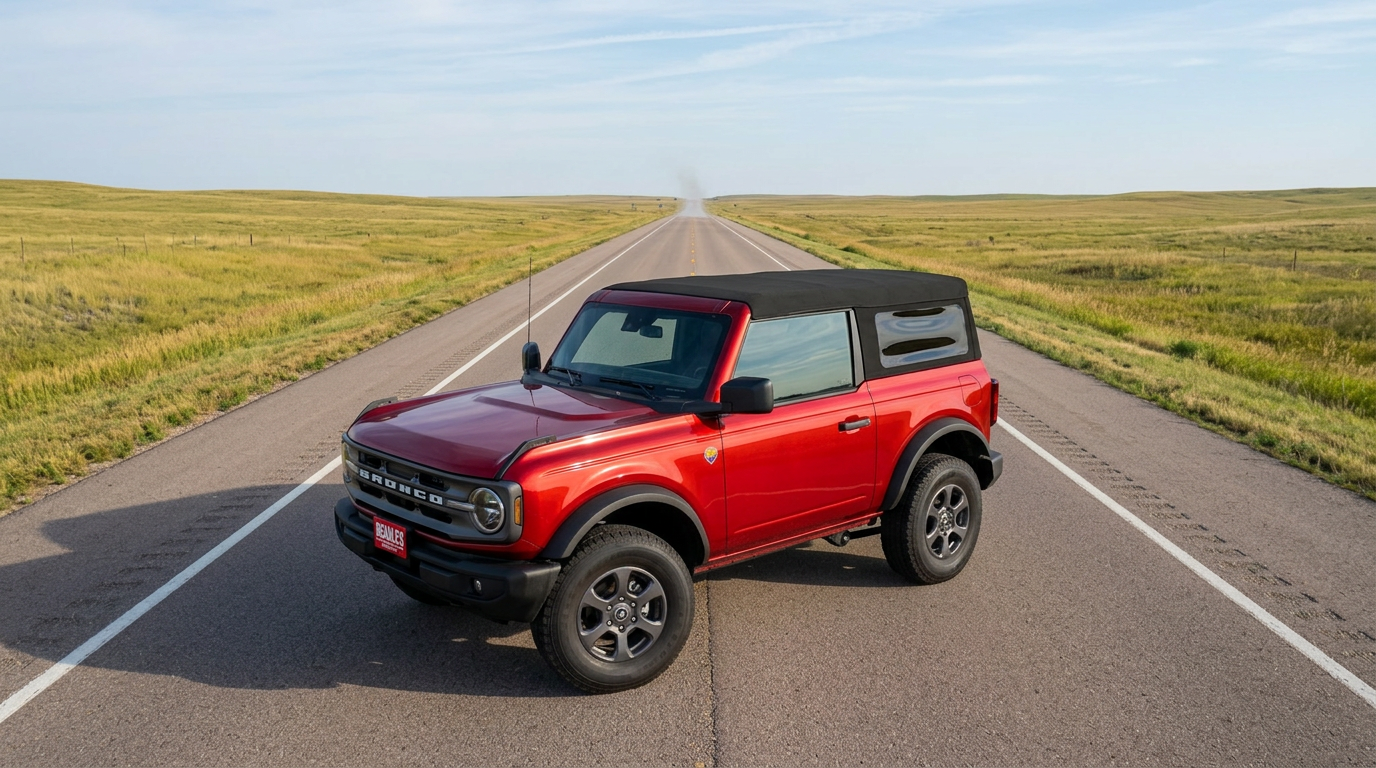
2026 Ford Maverick AWD in snowy South Dakota

2026 Ford Maverick Winter Driving Guide (AWD Confidence in South Dakota)

HERO HERO IMAGE (MAV-EXT-02) If you’re buying a Maverick in South Dakota, winter confidence is the real test. AWD helps—but the best winter setups come from AWD + the right tires + realistic expectations. This guide focuses on what actually makes a Maverick feel stable and predictable when roads are slick, windy, or snow-packed. Winter performance makes the most sense after you’ve decided drivetrain and configuration. If you haven’t done that step yet, start with: 2026 Maverick Specs & Configurations. For inventory and shopping help, visit the Ford Maverick hub. TOP CTAs Find an AWD Maverick on the Hub Contact Us TOC Table of Contents AWD vs tires: what matters more? Traction basics for compact trucks Highway wind and stability: what to expect How to set up a Maverick for winter (practical checklist) How to choose an AWD Maverick build for SD winters FAQ SECTION AWD vs tires: what matters more? For winter driving, tires usually make the biggest difference first. AWD helps you get moving and maintain traction, but stopping and cornering confidence comes heavily from tire grip. The best winter Maverick setup is usually AWD plus tires that match your routes and snow/ice exposure. SECTION Traction basics for compact trucks Maverick is a compact truck, which is a good thing in winter: it’s easier to maneuver and less fatiguing in town. The tradeoff is that traction can change quickly when roads go from plowed to drifted, or when you transition from pavement to gravel. That’s why tires, visibility, and a stable driving rhythm matter just as much as drivetrain. SUPPORT IMAGE (MAV-INT-01) If you’re balancing winter needs with ownership costs, this is explored further in: 2026 Maverick MPG & Ownership Costs. SECTION Highway wind and stability: what to expect South Dakota winter driving isn’t just snow—it’s wind. On open highways, the combination of gusts, passing semis, and uneven road surfaces can make vehicles feel “busy.” The best way to reduce stress is good tires, proper pressure, and a build that matches your real route needs. SECTION How to set up a Maverick for winter (practical checklist) Choose tires intentionally: winter tires if you drive in snow/ice daily; quality all-seasons if you’re mostly on plowed roads. Confirm AWD if it’s a non-negotiable: verify on the equipment list—not assumptions. Check wipers/visibility: winter visibility is often the “make or break” comfort factor. Keep weight realistic: don’t overload—payload still matters in winter handling. Plan for driving style: smooth inputs beat aggressive driving every time in slick conditions. QUICK OVERVIEW Quick Overview Best winter upgrade Tires that match your routes and snow/ice exposure Best confidence combo AWD + good tires + clear visibility setup Smart shopping move Choose drivetrain first, then trim; confirm equipment list on the exact truck HOW TO How to choose an AWD Maverick build for SD winters Decide where you drive: in-town, highway commute, or rural gravel routes. Choose AWD if you need traction margin for winter and variable surfaces. Budget for tires that match your winter exposure (this matters more than many packages). Keep towing/payload realistic so winter handling stays predictable. Compare two real builds on the Maverick hub to confirm equipment and value. Browse AWD Mavericks on the Hub Ask About Winter Setup FAQ FAQ Is AWD enough for South Dakota winters? AWD helps traction, but tires are usually the bigger difference-maker for winter confidence—especially for stopping and cornering. For the best setup, prioritize tires first and AWD second. Do I need winter tires if I have AWD? Not always, but many drivers prefer them if they regularly drive in snow/ice or on unplowed rural roads. AWD helps you move, but tire grip helps you stop and steer. What’s the biggest winter-driving mistake Maverick buyers make? Assuming AWD replaces the need for tires and careful driving. The best winter outcomes come from traction + visibility + smooth inputs, not drivetrain alone. CONCLUSION (FIRST PERSON ONLY) Conclusion In my experience, the Maverick winter setup that feels best is simple: AWD for traction margin, tires that match your routes, and a build that stays realistic on payload and towing. When buyers plan for visibility and traction first, the Maverick feels calm and predictable even when South Dakota weather doesn’t cooperate. ABOUT About the Author: Lexy Tabbert helps South Dakota and North Dakota shoppers choose winter-capable truck setups for real routes—highway commutes, rural roads, and changing weather. Her guidance focuses on practical confidence: the right drivetrain, the right tires, and a configuration that matches how you actually drive.

2026 Ford Maverick Trims & Packages

HERO 2026 Ford Maverick Trims & Packages (What to Choose, What to Skip) Picking a 2026 Ford Maverick trim is only “step two.” The buyers who end up happiest usually decide drivetrain (AWD vs FWD), payload reality, and towing hardware first—then use trims and packages to fine-tune comfort, convenience, and appearance. If you haven’t locked in your must-haves yet, start with: 2026 Maverick Specs & Configurations. For inventory, model guidance, and local help in one place, visit the Ford Maverick hub. Browse the Ford Maverick Hub Contact Us TOC Table of Contents Which 2026 Maverick trims are offered? What trims change (and what they don’t) Packages that actually change ownership Why AWD-first shopping changes the best trim choice How to choose a trim/package setup (step-by-step) FAQ TRIMS Which 2026 Maverick trims are offered? The 2026 Maverick lineup is commonly shown with these model lines: XL, XLT, Lobo, Lariat, and Tremor. The biggest mistake buyers make is assuming the trim name automatically equals capability. On Maverick, capability is driven by drivetrain, payload, and towing equipment. WHAT TRIMS CHANGE What trims change (and what they don’t) Trims primarily change comfort, interior materials, feature access, and appearance. They can also influence which options are easier to add, because packages and required equipment can be tied to certain trims. What trims usually change: cabin feel, tech convenience, appearance details, and option availability. What trims do not automatically change: your real towing readiness if the truck doesn’t have the right towing hardware. What to do instead: verify the exact truck’s equipment list before assuming it’s “the towing one” or “the winter one.” If towing is part of your decision, pair this with: 2026 Maverick Towing Guide. PACKAGES Packages that actually change ownership Most packages fall into a few real-world categories. The “best” packages aren’t the fanciest—they’re the ones that solve problems you actually have. Towing-focused packages: aim at real towing hardware (brake controller, 7-pin, hitch class). Confirm on the window sticker. Winter/traction-minded equipment: AWD helps, but tires and visibility features often matter just as much. Comfort/commute packages: worthwhile if you drive long miles and want the truck to feel “easy” every day. Appearance packages: great when they don’t interfere with capability priorities or budget. AWD Why AWD-first shopping changes the best trim choice In South Dakota, many Maverick buyers shop AWD first because winter traction is a non-negotiable. That changes how you should evaluate trims: you want the trim that lets you get the drivetrain you want without forcing unwanted extras. QUICK OVERVIEW Quick Overview Best approach Choose drivetrain + towing needs first, then pick trim for comfort/features Most common mistake Buying a trim for the badge and missing the equipment you actually need Smart confirmation Verify the window sticker for towing hardware, AWD, and required option bundles HOW TO How to choose a trim/package setup (step-by-step) Decide AWD vs FWD based on winter routes and confidence needs. Decide towing level (light hitch vs full towing hardware) based on your trailer’s loaded weight. Confirm payload reality (people + gear + bed cargo) so the build actually fits your routine. Pick your trim to match comfort/feature expectations without forcing extras you don’t want. Add packages intentionally —choose only what solves a real need. Compare Maverick Builds on the Hub Ask About a Specific Trim FAQ FAQ Does a higher trim automatically tow more? Not automatically. Towing readiness depends on the towing hardware on that exact build (hitch class, wiring, brake controller), plus drivetrain and configuration. Always confirm the window sticker. What’s the best way to avoid overpaying for packages? Start with your non-negotiables (AWD, towing equipment, payload needs), then choose the lowest trim that supports those needs. Add only packages that solve real problems for your driving routine. Where can I compare trims and real inventory together? The fastest method is browsing the Ford Maverick hub, then checking each truck’s equipment list. If you want help comparing two specific builds, contact us. CONCLUSION Conclusion In my experience, the best Maverick purchases happen when buyers choose capability first and trim second. When AWD, towing hardware, and payload reality are locked in up front, trims and packages become a simple “fit and finish” decision—not a gamble. ABOUT About the Author: Lexy Tabbert helps South Dakota and North Dakota shoppers choose truck configurations that fit real driving—winter roads, weekend projects, towing needs, and long-term ownership. Her approach is straightforward: confirm the capability requirements first, then choose the trim and packages that support how you actually use the truck.

2026 Ford Maverick Towing Guide (What to Buy, What to Avoid)

/* Beadle blog image fix: prevents skew/stretch from theme styles */ img.beadle-img{ width:100% !important; max-width:980px; height:auto !important; display:block; margin:0 auto 12px; border-radius:10px; } HERO 2026 Ford Maverick Towing Guide (What to Buy, What to Avoid) Maverick towing success isn’t about hype—it’s about buying the right towing hardware for the trailer you actually pull. This guide breaks down the two towing equipment levels (basic hitch vs 4K Tow Package), what each includes, and the questions you should answer before you commit. If you’re still deciding AWD vs FWD and overall configuration, start here first: 2026 Maverick Specs & Configurations. For inventory and shopping support in one place, visit the Ford Maverick hub. TOP CTAs View Maverick Inventory Ask a Towing Question TOC Table of Contents Step 1: Identify which towing “level” you need 2K Trailer Hitch (4-pin): what it’s for 4K Tow Package: what it includes (and why it matters) What to confirm on the exact truck before you buy How to choose the right Maverick for your trailer FAQ SECTION: TWO LEVELS Step 1: Identify which towing “level” you need For 2026, the order guide makes it clear that Maverick towing equipment generally lands in one of two setups: a basic hitch for light trailers, or the full 4K Tow Package hardware for higher towing needs. The right choice depends on your trailer’s loaded weight, not the empty brochure number. Quick decision rule (real-world) Light utility trailer, occasional use: basic 2K hitch can be appropriate (depending on your actual load). Brake-equipped trailers or frequent towing: look for the 4K Tow Package because it adds a brake controller and higher-grade hitch/wiring. If you’re uncertain: it’s usually better to buy the right hardware now than “try to upgrade later.” SECTION: 2K 2K Trailer Hitch (4-pin): what it’s for The 2K hitch setup is a light-duty tow solution. In the order guide, it’s shown as a 2K Trailer Hitch Receiver with a 4-pin connector on various configurations. This setup is best for simpler trailers where you don’t need a brake controller integrated into the truck. Wiring: 4-pin connector (typical for trailer lights on lighter trailers). Best for: small utility trailers and light loads. Important restriction: the order guide notes the 2K hitch is not available with the 4K Tow Package —they’re different equipment paths. SECTION: 4K 4K Tow Package: what it includes (and why it matters) The 4K Tow Package is the towing setup most serious Maverick towers should focus on because it includes the critical hardware buyers try to add later. In the 2026 order guide, the 4K Tow Package includes: Trailer Brake Controller Trailer Hitch (Class III) 2” receiver with 4-pin and 7-pin connector Upgraded cooling components (engine-dependent): higher capacity radiator for 2.0L gas; transmission oil cooler for 2.5L Hybrid; upgraded cooling fan Conventional 17” spare tire (215/70R17) There’s also a practical ordering detail: on XL and XLT, the 4K Tow Package requires Ford Co-Pilot360. That matters if you’re trying to build a value trim with towing hardware. SECTION: WHAT TO CHECK What to confirm on the exact truck before you buy If you want a specific answer (not “it depends”), this is the checklist that prevents towing regret. Confirm these on the actual truck you’re buying—window sticker + physical walkaround: Do you have the trailer brake controller? If your trailer has brakes, you generally want this integrated. Do you have a 7-pin connector? The 4K package includes 4-pin + 7-pin; the basic hitch is typically 4-pin only. Hitch class and receiver size: confirm Class III 2” receiver if you’re planning heavier towing. Payload sticker: towing isn’t only tow rating—payload limits tongue weight + people + gear. Trailer type reality: loaded trailer weight (not empty) and how often you tow in wind/winter. QUICK OVERVIEW Quick Overview Best for 2K hitch Light towing, simpler trailers, occasional use Best for 4K Tow Package Frequent towing, brake-equipped trailers, higher confidence setup Most important check Brake controller + 7-pin connector + payload sticker on the exact truck HOW TO How to choose the right Maverick for your trailer Write down your trailer type (utility, small camper, equipment, etc.). Estimate loaded trailer weight (cargo + fuel + water + tools + everything you actually carry). Decide if you need brakes (many trailers do—if yes, prioritize a truck with the brake controller). Choose towing hardware level: 2K hitch vs 4K Tow Package. Confirm payload sticker so tongue weight + passengers + bed cargo stays realistic. Find Mavericks Equipped for Towing Get Help Matching a Trailer to a Maverick FAQ FAQ What’s the fastest way to tell if a Maverick has the 4K Tow Package? Check the window sticker/build sheet for “4K Tow Package,” then confirm you have a trailer brake controller and a 7-pin connector. The 4K package also uses a Class III 2” receiver. Can I order the 2K hitch and the 4K Tow Package together? No—these are different towing equipment paths. The order guide notes the 2K hitch is not available when the 4K Tow Package is selected. Does towing depend on trim (XL vs XLT vs Lariat)? Trim affects feature access, but towing readiness depends on the towing hardware on that specific build. For example, the 4K Tow Package on XL/XLT requires Ford Co-Pilot360—so equipment availability can vary by how the truck is configured. Why do payload and towing feel connected? Payload is what you can carry in the truck (people + cargo + accessories). Towing adds tongue weight and gear, which can eat into payload quickly. That’s why the payload sticker matters for towing confidence—especially with passengers in the cab. CONCLUSION (FIRST PERSON ONLY) Conclusion In my experience, Maverick towing goes well when buyers shop the hardware first: brake controller, 7-pin, hitch class, and the right cooling support. If you buy the correct towing equipment up front, the truck feels calmer and more predictable—especially in South Dakota wind and winter conditions. ABOUT About the Author: Lexy Tabbert works with South Dakota and North Dakota buyers who need practical answers on towing setups, winter capability, and long-term ownership. Her process is simple: match the towing hardware and payload reality to the trailer you actually use, then choose trim and features with confidence.

2026 Ford Maverick Specs & Configurations (AWD-Forward Guide)

/* Beadle blog image fix: prevents skew/stretch from theme styles */ img.beadle-img { width: 100% !important; max-width: 980px; height: auto !important; display: block; margin: 0 auto 12px; border-radius: 10px; } HERO 2026 Ford Maverick Specs & Configurations (AWD-Forward Guide) If you’re shopping the 2026 Ford Maverick and you care about AWD for South Dakota winters, the smartest move is to start with the non-negotiables: drivetrain, towing needs, payload reality, and the equipment that actually shows up on the window sticker. This guide lays out the specs buyers ask for most—without assuming every Maverick is built the same way. Want the full “which one should I buy?” overview first? Use the 2026 Ford Maverick overview. If you’re browsing the full lineup and model guidance (including what’s typically available locally), start at the Ford Maverick hub. TOP CTAs View the 2026 Ford Maverick Overview Contact Us TOC Table of Contents What powertrains are offered for 2026? Which Maverick builds can you get with AWD? Towing specs: what changes the rating? Payload: what buyers misunderstand most What to confirm on the window sticker How to spec the right Maverick (step-by-step) FAQ SECTION 1 What powertrains are offered for 2026? The 2026 Maverick lineup is built around two buyer profiles: people who want a compact truck that’s easy to live with every day, and people who want compact size but still prioritize winter traction and capability. Powertrain availability can vary by build and timing, so the best approach is to treat published specs as a starting point—then confirm what’s on the specific unit or order. If you’re comparing trims at the same time, the 2026 Maverick overview shows how different trims are positioned and which types of buyers they typically fit. SECTION 2 Which Maverick builds can you get with AWD? For South Dakota buyers, AWD isn’t a “nice to have”—it’s often the deciding filter. The key is that AWD availability is tied to configuration, and that configuration can also influence towing equipment, wheel/tire setup, and how the truck feels under load. AWD is a configuration decision: choose it early, because it can narrow what’s available. Don’t ignore tires: the right tire choice matters as much as drivetrain for winter confidence. Confirm the exact build: window sticker and equipment list matter more than assumptions. If winter traction is your main concern, we break down what actually matters (tires, clearance, visibility, and driving patterns) in the upcoming 2026 Maverick winter driving guide. SECTION 3 Towing specs: what changes the rating? Maverick towing capability is heavily dependent on towing equipment and configuration. The most common mistake is shopping by a single towing number without checking whether the truck has the right package hardware to match your trailer. Trailer type matters: utility trailers and small campers are common Maverick use cases. Equipment matters: hitches, cooling/support hardware, and package content can change what’s realistic. Real loaded weight beats brochure weight: always plan around what you actually tow. For a detailed towing breakdown (including how to think about trailer weight, stability, and what to check on the equipment list), see the upcoming 2026 Maverick towing guide. SECTION 4 Payload: what buyers misunderstand most Payload is the limit that sneaks up on people—especially if you carry passengers, tools, or bed loads at the same time. The practical way to think about payload is “everything you add to the truck” (people + gear + accessories) and whether the truck is still comfortably within spec. Passengers count toward payload. Bed loads + accessories add up faster than most people expect. When towing, tongue weight (or hitch load) also affects payload. SECTION 5 What to confirm on the window sticker before you commit If you want a specific answer, don’t guess—verify the truck’s equipment list. Here’s what serious buyers confirm every time: Drivetrain: AWD vs FWD (and how it’s listed on the build) Towing equipment: hitch / package content that supports your trailer Wheel/tire setup: impacts winter confidence and ride feel Cab/bed configuration: affects daily usability and what you can carry QUICK OVERVIEW Quick Overview Best for Buyers who want AWD confidence and practical truck capability Smartest move Choose drivetrain + towing needs first, then pick trim Confirm before purchase Window sticker equipment list (don’t assume) HOW TO How to spec the right Maverick (step-by-step) Decide AWD vs FWD first based on your winter routes and where you drive. Write down your trailer type (if any) and realistic loaded weight. Estimate payload needs (people + gear + bed load) for your normal week. Pick trim based on comfort/tech needs after capability is locked. Verify equipment on the exact unit using the window sticker or build sheet. Compare 2026 Maverick Configurations Ask a Maverick Question FAQ FAQ Is AWD worth it for South Dakota winters? For many drivers, yes—especially if you drive rural roads, commute early before plows, or deal with drifting snow. That said, winter tires can make a major difference too. The best setup is AWD plus a tire choice that fits how and where you drive. What’s the fastest way to avoid buying the “wrong” Maverick? Decide drivetrain and towing needs first, then confirm the equipment list on the exact truck you’re considering. Most regrets come from assuming the truck has a package or hardware that isn’t actually on that build. Should I pick trim first or capability first? Capability first. Get AWD/FWD, towing needs, and payload reality sorted—then pick trim for comfort and tech. The 2026 Maverick overview helps compare trims once your configuration is clear. CONCLUSION (FIRST PERSON ONLY) Conclusion In my experience, buyers feel best about a Maverick when they spec it like a tool first and a trim badge second. When AWD, towing equipment, and payload expectations line up with real life, the Maverick becomes the kind of truck that’s easy to live with year-round. ABOUT (Lexy) About the Author: Lexy Tabbert helps South Dakota and North Dakota drivers choose the right Ford vehicle configuration for real-world use. Her Maverick guidance focuses on AWD confidence for winter driving, practical towing/payload decision-making, and verifying equipment on the exact build—so buyers get a truck that fits long-term.

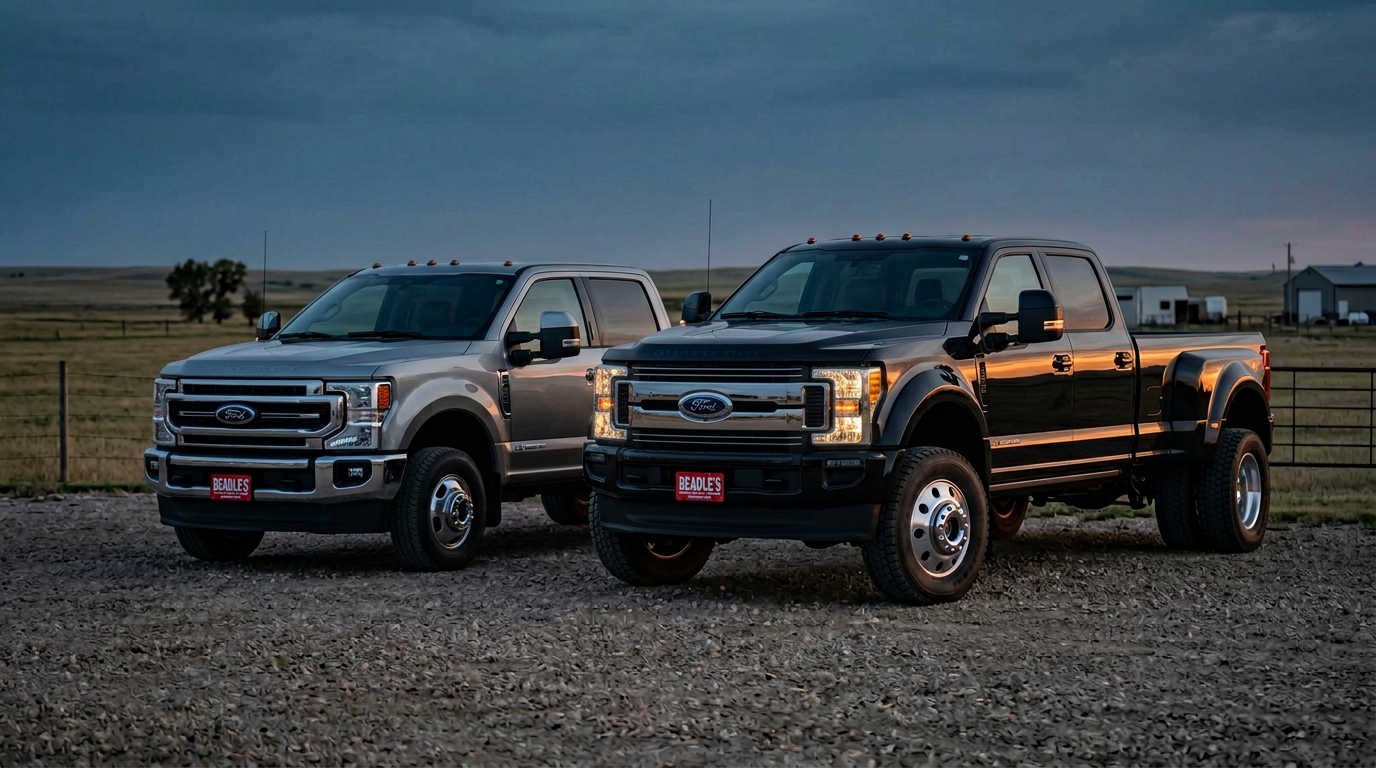
2026 Ford F-350 Exterior Colors & Styling

HERO + QUICK ANSWER + INTRO Quick Answer The 2026 Ford F-350 offers colors from work-friendly Oxford White, Agate Black, and Carbonized Gray to bold Ruby Red, Antimatter Blue, and premium Star White Tri-Coat. Availability varies by trim and package; tri-coat and tinted-clearcoat paints cost more, and Iconic Silver is fleet-only. Styling decisions on a heavy-duty truck are rarely "just cosmetic." Color affects how the truck represents a business, how well it hides gravel dust and winter road salt, and how easy it is to match later if you add another truck to the fleet. This guide breaks down the 2026 F-350's actual colors, wheels, and appearance packages — without assuming every color or finish is available on every trim. TOP CTA Search Available F-350 Inventory Get Pre-Approved TOC On This Page What colors does the 2026 F-350 come in? Neutral vs. bold: what makes sense for a work truck? Chrome vs. black appearance styling: what changes? How do wheels and stance change across the lineup? How do you choose exterior styling for your use? SECTION 1 — COLORS + DECISION SUPPORT What colors does the 2026 F-350 come in? The 2026 F-350 palette runs from work-truck neutrals to bold and premium finishes. Standard and no-cost metallics cover most of the lineup; tri-coat and tinted-clearcoat paints are premium, and a couple of colors are limited by trim or fleet ordering. Work-friendly neutrals: Oxford White, Agate Black Metallic, Carbonized Gray Metallic, Marsh Gray, Glacier Gray Metallic Tri-Coat, and Avalanche. Bold & personal: Ruby Red Metallic Tinted Clearcoat, Antimatter Blue Metallic, Argon Blue Metallic, and Darkened Bronze Metallic. Premium finishes (extra cost): Star White Metallic Tri-Coat and Glacier Gray Tri-Coat. Fleet-only: Iconic Silver Metallic. Color availability varies by trim, package, and build timing — treat any list as a starting point and confirm on the exact configuration you want. SECTION 2 — NEUTRAL VS BOLD (EXT-06) + FIRSTHAND Neutral vs. bold: what makes sense for a work truck? For a truck that works and gets traded, neutrals are usually the safe long-term play. They hide dust and salt, match a fleet, and hold the broadest resale appeal; bold colors look sharp but can narrow the buyer pool later. Neutral (Oxford White, Agate Black, Carbonized Gray): safest for resale, fleet matching, and business branding. Bold (Ruby Red, Antimatter Blue): stand out and look great, but availability can be more limited by trim and package. Two-tone: offered on select trims like King Ranch; depends on how the truck is equipped. From the Beadle Ford Lot Out here, the trucks that move fastest at trade-in are white, black, and gray — they hide the gravel dust and winter salt that coat everything by February, and a fleet buyer can match them without a second thought. Bold colors look great in the yard; just go in knowing they can narrow your resale pool. SECTION 3 — APPEARANCE + RECOMMENDATION Chrome vs. black appearance styling: what changes? Appearance packages change the truck's personality fast — grille finish, bumpers, wheels, and trim accents shift from bright chrome to blacked-out. If you're chasing a specific look, choose your trim and appearance direction together so you don't back into styling after the fact. Our Recommendation For work, fleet, and resale buyers around Bowdle and Aberdeen, we recommend a neutral — Oxford White, Agate Black, or Carbonized Gray — which hides dust and salt and trades easiest. Save the premium Star White Tri-Coat or a bold Ruby Red for a personal truck you plan to keep. Match the look to a trim in our packages & trims guide. SECTION 4 — WHEELS How do wheels and stance change across the lineup? Wheel designs and finishes vary by trim and package — from 18-inch painted and machined aluminum on work trims to 20-inch polished and dark-finish wheels higher up, plus the 17-inch forged wheels that come with dual-rear-wheel trucks. Wheel and tire choice isn't just looks here: winter traction and gravel-road practicality matter as much, especially if the truck tows. If you're weighing dually vs. single-rear-wheel, that stance decision is covered in the 2026 F-350 towing guide. SECTION 5 — HOW TO CHOOSE How do you choose exterior styling for your use? Work from how the truck will be used, in four steps: Decide if the truck represents a business or fleet, or is personal. Choose a finish direction — chrome or blacked-out — before locking the trim. Confirm your paint color is available on your preferred build (premium tri-coats and fleet colors are limited). Check wheel and tire practicality for winter, gravel, and towing routes. KEY TAKEAWAYS Key Takeaways The palette spans Oxford White and Agate Black to Ruby Red and Antimatter Blue, with premium Star White and Glacier Gray Tri-Coats. Neutrals hide dust and salt, match fleets, and trade easiest in this region. Tri-coat and tinted-clearcoat paints cost more; Iconic Silver is fleet-only. Appearance packages (chrome vs. blacked-out) drive the biggest styling changes. Color and wheels vary by trim, package, and build timing — confirm on the exact truck. FAQ Frequently Asked Questions What colors does the 2026 Ford F-350 come in? Colors include Oxford White, Agate Black Metallic, Carbonized Gray Metallic, Marsh Gray, Avalanche, Antimatter Blue Metallic, Argon Blue Metallic, Darkened Bronze Metallic, Ruby Red Metallic Tinted Clearcoat, and the premium Star White and Glacier Gray Metallic Tri-Coats. Iconic Silver Metallic is fleet-only. Availability varies by trim and package. Are all colors available on all trims? No. Color availability varies by trim, package, and build timing — premium tri-coats and tinted clearcoats are extra-cost, and Iconic Silver is fleet-only. Confirm availability on the specific configuration you're shopping. Which F-350 colors are best for resale? Neutrals — Oxford White, Agate Black, and Carbonized Gray — tend to hold the broadest resale appeal and are easiest to match in a fleet. They also hide gravel dust and winter road salt better, which matters in South Dakota. Bold colors look great but can narrow the resale pool. Do appearance packages change the wheels and grille? Often, yes. Many appearance packages adjust exterior finishes — grille, bumpers, and wheel designs — shifting between bright chrome and blacked-out looks. Exact content varies by trim and package, so confirm by build. Does the 2026 F-350 offer a two-tone paint option? Yes, on select trims such as King Ranch, depending on how the truck is equipped. Two-tone availability ties to trim and appearance options, so confirm it on the build you're considering. QUICK ANSWERS MICRO Q&A Quick Answers: F-350 Colors & Styling One-line answers to the follow-up questions buyers ask next. Most popular work colors? Oxford White, Agate Black, and Carbonized Gray. Any premium paints? Yes — Star White and Glacier Gray Metallic Tri-Coats cost extra. What's the fleet-only color? Iconic Silver Metallic. Boldest options? Ruby Red Tinted Clearcoat and Antimatter Blue Metallic. Best color for resale? Neutral white, black, or gray. Is there a blacked-out look? Yes — via appearance packages on equipped trims. Two-tone available? Yes, on select trims like King Ranch. Do wheels change by trim? Yes — 18-inch work wheels up to 20-inch finishes; 17-inch forged on DRW. Best color to hide dust and salt? White and gray shades. How do I confirm a color on a build? We verify paint and wheels against the build sheet before you order. KEEP RESEARCHING Keep Researching The complete 2026 Ford F-350 Super Duty overview — trims, specs, towing, and inventory in one place. 2026 F-350 packages & trims — which trims and appearance packages get the look you want. 2026 F-350 interior & comfort — pair your exterior with the right cabin. 2026 F-350 towing guide — the SRW vs. DRW stance decision behind the wheels. CONCLUSION My Take on F-350 Colors & Styling In my experience, styling choices feel right when they match the job the truck will do. When color, wheels, and finishes fit your routine and long-term plans, owners feel good about the truck long after the newness wears off — and around here, that usually means a neutral that hides the dust and trades clean. Tell me how you'll use the truck and I'll help you land a color and finish that holds up. Stop in at Beadle Ford in Bowdle or reach out anytime. BOTTOM CTA Search Available F-350 Inventory Get Pre-Approved ABOUT THE AUTHOR (LOCKED) About the Author Lexy Tabbert — Beadle Ford, Bowdle, SD Lexy Tabbert is the Director of Sales and Marketing at Beadle Ford in Bowdle, South Dakota. She covers Ford vehicles, trim comparisons, and buyer guidance — helping families, ranchers, and ag operators across the region find the right truck and configuration for their needs. Learn more about Lexy. JSON-LD (renders nothing visible)
2026 Ford F-350 Interior Comfort

HERO + QUICK ANSWER + INTRO Quick Answer The 2026 Ford F-350 interior ranges from hose-out-durable to genuinely luxurious. XL and XLT use work-ready materials and a 4.2-inch cluster; Lariat adds a 12-inch SYNC 4 touchscreen and leather; King Ranch and Platinum add premium leather, heated and ventilated front seats, and memory adjustable pedals. A heavy-duty truck is built around capability, but the cabin still has to work for real life — long miles, cold mornings, jobsite dust, and full days behind the wheel. The 2026 F-350 can be straightforward and durable or genuinely comfortable, depending on how it's equipped. This guide focuses on what matters most: work-ready materials, the comfort features that cut fatigue on long South Dakota highway days, storage that supports tools and gear, and how the interior actually changes as you move up the trim ladder. TOP CTA Search Available F-350 Inventory Get Pre-Approved TOC On This Page What makes an F-350 interior "work-ready"? Which comfort features matter most for long days? How should you think about storage and usability? How does the interior change by trim? How do you choose the right interior setup? SECTION 1 — WORK-READY What makes an F-350 interior "work-ready"? Work-ready means surfaces that hold up, materials that clean easily, and controls you can operate quickly — sometimes with gloves on, sometimes in a hurry. On the XL and XLT, that's vinyl or hard-wearing cloth, a straightforward 4.2-inch cluster, and a layout built to take abuse. If your truck is a daily tool, that durability matters as much as towing and payload. The good news is you don't trade away capability for comfort — every F-350 cab, from XL to Platinum, sits on the same heavy-duty truck. SECTION 2 — COMFORT (INT-03 reused per original) Which comfort features matter most for long days? On the long, straight highway runs between towns out here, the features that cut fatigue are supportive seating, a quiet settled cabin, and clear displays. The bigger comfort steps come from the trim: leather-trimmed seats on Lariat, and heated-and-ventilated front seats plus memory adjustable pedals on Platinum. Supportive seating: matters more the longer you drive and the more you tow; leather and heated/ventilated options arrive on the upper trims. Cabin comfort: how quiet and settled the truck feels varies with trim and equipment. Controls and displays: the 12-inch SYNC 4 touchscreen on Lariat and up puts trailer and drive info front-and-center, which reduces fatigue when towing. For a deeper look at the displays, camera views, and driver-assist systems, see our 2026 F-350 technology guide. SECTION 3 — STORAGE (INT-04) How should you think about storage and usability? Storage layout is something you notice every single day. If you carry straps, tools, paperwork, chargers, or jobsite gear, a usable center console and smart cabin storage make the truck feel more efficient — especially when it pulls double duty for work and family. A Crew Cab opens up the most rear-seat storage and passenger room; SuperCab and Regular Cab trade cabin space for a shorter footprint or longer bed. Match the cab to how you actually use the back seat before you think about materials. SECTION 4 — BY TRIM + RECOMMENDATION How does the interior change by trim? Materials, screen sizes, and comfort equipment vary significantly by trim — so the smart way to shop the interior is to compare real equipment lists, not assume every F-350 is the same inside. XL: durable vinyl/cloth, 4.2-inch cluster — built to be cleaned, not pampered. XLT: upgraded cloth and more comfort and tech, still work-first. Lariat: 12-inch SYNC 4 touchscreen and leather-trimmed seating — the comfort sweet spot. King Ranch: unique Kingsville leather and Western-styled trim. Platinum: the most refined cabin — heated and ventilated front seats and memory adjustable pedals. Our Recommendation For buyers who spend real hours in the cab — long hauls, daily ranch and jobsite use — we recommend Lariat as the comfort sweet spot: the 12-inch SYNC 4 screen and leather make the long days easier without luxury-trim pricing. If the truck is a pure work tool, XLT cloth is the value play; step to King Ranch or Platinum when the cab is your office. See how it pairs with capability in our packages & trims guide. SECTION 5 — HOW TO CHOOSE + FIRSTHAND How do you choose the right interior setup? Work from how you'll live with the truck, in four steps: Decide whether the truck is primarily a work tool or a dual-purpose daily driver. Choose cab size based on passengers, gear, and how often you use the back seat. Prioritize materials that fit your environment — farm, construction, winter. Confirm the comfort and tech features on the exact trim and package combination. From the Beadle Ford Lot Buyers around Bowdle almost always underestimate how many hours they'll actually sit in the truck. The ones who come back happiest tend to be the ones who stepped from XLT cloth up to Lariat leather and the 12-inch screen — once you're putting on highway miles between towns, that's the upgrade that earns its keep. KEY TAKEAWAYS Key Takeaways Work-ready interiors (XL, XLT) prioritize durability, easy cleanup, and a simple 4.2-inch cluster. Lariat is the comfort sweet spot: 12-inch SYNC 4 touchscreen and leather-trimmed seats. King Ranch adds Kingsville leather; Platinum adds heated/ventilated front seats and memory pedals. Crew Cab gives the most rear-seat room and storage; match the cab to your back-seat use. Interior equipment varies by trim and package — confirm on the exact truck. FAQ Frequently Asked Questions Are all 2026 F-350 interiors the same? No. Materials, screens, and comfort features vary by trim and package — from durable cloth and a 4.2-inch cluster on XL to leather and a 12-inch SYNC 4 touchscreen on Lariat and up. Compare the equipment list for the specific truck you're considering. Which cab is best for families and crews? A Crew Cab is the popular choice for passenger space and rear-seat comfort. SuperCab and Regular Cab trade cabin room for a shorter overall footprint or a longer bed. The right cab depends on how many people you carry and how often you need the back seat. Which 2026 F-350 trim has heated and ventilated seats? Platinum adds heated and ventilated front seats along with memory power-adjustable pedals. Heated seating and leather appear earlier on Lariat and King Ranch; XL and XLT focus on durable, work-ready materials. What screen and infotainment does the 2026 F-350 have? Higher trims run a 12-inch center touchscreen with SYNC 4 and a 12-inch digital cluster; base trims use a 4.2-inch productivity cluster. SYNC 4 supports wireless smartphone connectivity and the trailering displays that help on long tows. What's the best interior for farm and ranch use? For dusty, muddy, hard-use environments, XL or XLT with durable cloth or vinyl is the practical pick — easy to clean and built to take it. If you also log long highway miles, an XLT with the comfort upgrades, or a Lariat, balances durability with a more livable cab. QUICK ANSWERS MICRO Q&A Quick Answers: F-350 Interior One-line answers to the follow-up questions buyers ask next. Does the F-350 have leather seats? Yes — leather-trimmed seating starts on Lariat. Which trim has the 12-inch screen? Lariat and up, with SYNC 4. What's standard on XL? Durable materials and a 4.2-inch productivity cluster. Which trim has heated and ventilated seats? Platinum. Does it have memory adjustable pedals? Yes, on Platinum. Best cab for families? Crew Cab, for the most rear-seat room. Is there wireless phone connectivity? Yes — SYNC 4 supports it on equipped trims. Best interior for dusty work? XL or XLT cloth/vinyl for easy cleanup. Is the cab quiet on the highway? Quieter on upper trims; all share the heavy-duty platform. How do I confirm a truck's interior? We check the build sheet against the exact unit before you buy. KEEP RESEARCHING Keep Researching The complete 2026 Ford F-350 Super Duty overview — trims, specs, towing, and inventory in one place. 2026 F-350 packages & trims — which trim and packages get you the interior you want. 2026 F-350 technology — the SYNC 4 screen, cameras, and driver-assist features in detail. 2026 F-350 colors & styling — pair your cabin choice with the right exterior. CONCLUSION My Take on the 2026 F-350 Interior In my experience, interior decisions go from "nice" to "important" once you live with the truck every day. When the seating, storage, and controls match your routine, the F-350 feels less like a compromise and more like the right tool for the long haul — and around here, that usually means at least the XLT comfort step, often Lariat. Tell me how you'll use the cab and I'll help you land the right trim and cab. Stop in at Beadle Ford in Bowdle or reach out anytime. BOTTOM CTA Search Available F-350 Inventory Get Pre-Approved ABOUT THE AUTHOR (LOCKED) About the Author Lexy Tabbert — Beadle Ford, Bowdle, SD Lexy Tabbert is the Director of Sales and Marketing at Beadle Ford in Bowdle, South Dakota. She covers Ford vehicles, trim comparisons, and buyer guidance — helping families, ranchers, and ag operators across the region find the right truck and configuration for their needs. Learn more about Lexy. JSON-LD (renders nothing visible)
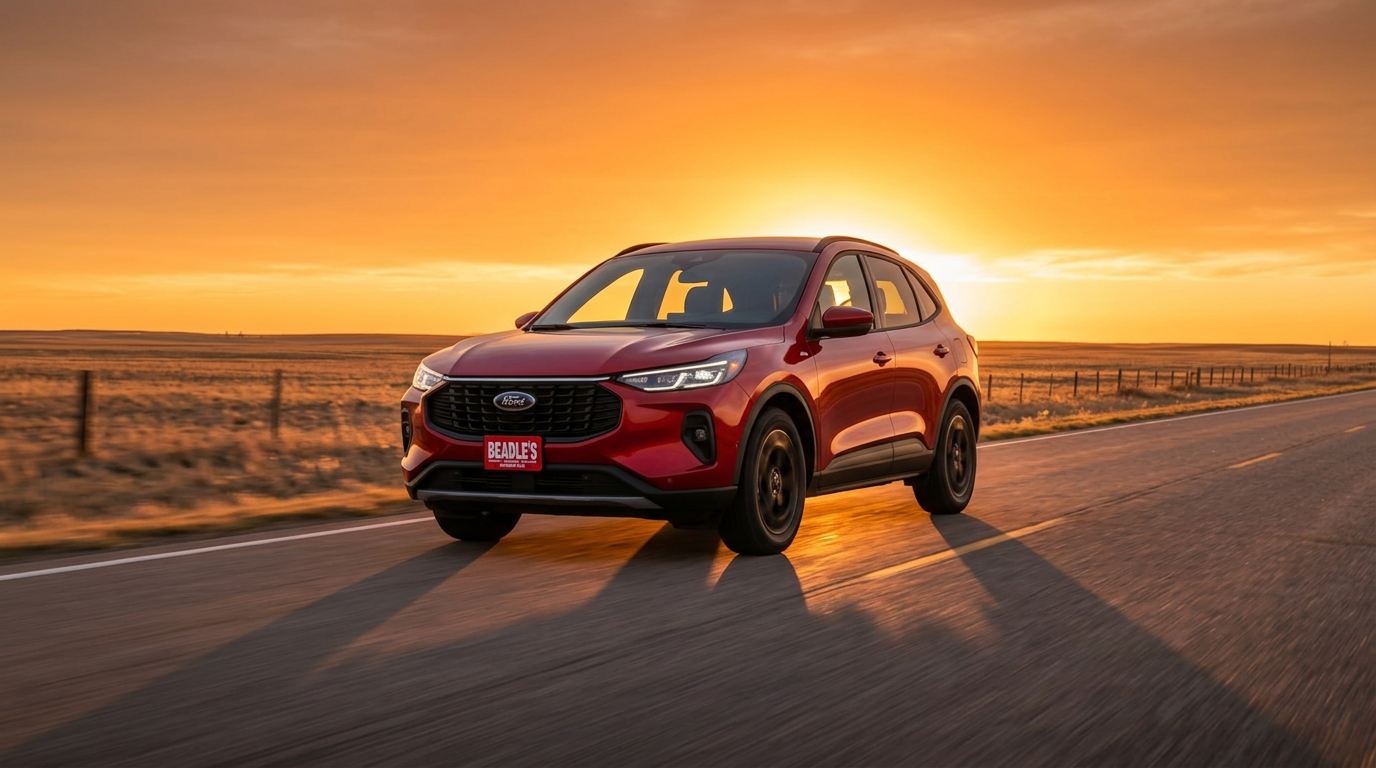
2026 Ford F-350 Super Duty driving on a rural South Dakota road

2026 Ford F-350 Engine Comparison

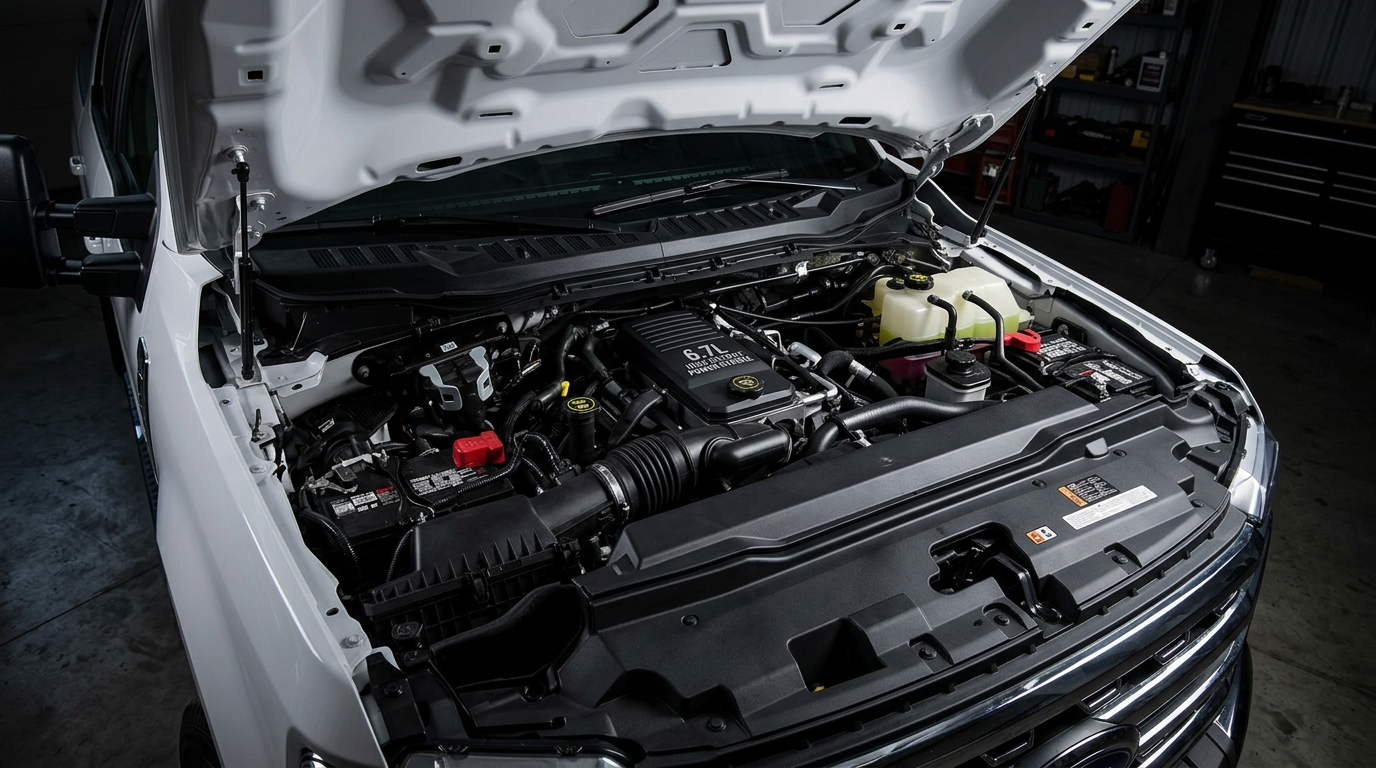
HERO + QUICK ANSWER + INTRO Quick Answer The 2026 Ford F-350 offers four engines: a 6.8L gas V8 (405 hp), a 7.3L gas V8 (430 hp), a 6.7L Power Stroke diesel (1,050 lb-ft), and a 6.7L High-Output Power Stroke (1,200 lb-ft, up to 40,000 lbs gooseneck). Gas suits mixed driving and top payload; diesel wins for frequent heavy towing. The "best" engine on a 2026 Ford F-350 Super Duty is the one that matches how you actually use the truck. If you tow heavy frequently, drive long distances, or want an effortless feel under load, your priorities look different than someone doing mixed driving with occasional towing. This guide lays out the four engines with their real numbers, how gas and diesel actually feel when towing, the ownership considerations beyond fuel, and how to match the engine to your workload here in South Dakota and North Dakota. TOP CTA Search Available F-350 Inventory Get Pre-Approved TOC On This Page What are the 2026 F-350 engine options and specs? Gas vs. diesel: what changes in real use? Which engine feels best for towing? Ownership considerations beyond fuel How do you match an engine to your workload? SECTION 1 — LINEUP + SPECS TABLE What are the 2026 F-350 engine options and specs? The 2026 F-350 offers four engines, all paired with a 10-speed TorqShift automatic: two gas V8s and two 6.7L Power Stroke diesels. The 6.8L gas is standard on XL, XLT, and Lariat; the 7.3L gas becomes standard on King Ranch and up; both diesels are optional across the line. Engine Output Max Tow / Payload 6.8L gas V8 405 hp / 445 lb-ft 18,900 lbs / up to 8,000 lbs payload 7.3L gas V8 430 hp / 485 lb-ft 22,500 lbs / 7,635 lbs payload 6.7L Power Stroke diesel 475 hp / 1,050 lb-ft 38,600 lbs / 6,952 lbs payload 6.7L High-Output Power Stroke 500 hp / 1,200 lb-ft 40,000 lbs / 6,935 lbs payload Tow figures are maximum gooseneck, properly equipped; the 40,000-lb rating requires the dual-rear-wheel HO diesel with the 40K Gooseneck Tow Package. Payload and towing vary with cab, bed, axle, and configuration. SECTION 2 — GAS VS DIESEL Gas vs. diesel: what changes in real use? Both can be strong choices — for different patterns. Gas is the simpler, lower-cost-of-entry option for mixed driving and occasional towing, and the 6.8L gas actually carries the highest payload of any F-350 at up to 8,000 lbs. Diesel earns its premium when towing is frequent and heavy, trading purchase price for torque and a composed feel under load. Engine availability ties to trim and packages, so it helps to compare powertrains alongside equipment. That framework is in our 2026 F-350 packages & trims guide. SECTION 3 — TOWING FEEL (EXT-02) + RECOMMENDATION Which engine feels best for towing? For heavy, frequent towing, the diesels feel best — stable and unstrained on grades, in wind, and on long highway runs — which is why they're the common pick above roughly 20,000 lbs. The standard 6.7L Power Stroke (1,050 lb-ft, up to 38,600 lbs) covers nearly every gooseneck around here; the High-Output (1,200 lb-ft, up to 40,000 lbs) is for the heaviest loads. If your towing is occasional and mixed, the 7.3L gas is capable to 22,500 lbs without diesel upkeep. Our Recommendation For most ranch and farm buyers around Bowdle and Aberdeen who tow gooseneck trailers regularly, we recommend the standard 6.7L Power Stroke — its 1,050 lb-ft and 38,600-lb rating cover nearly every trailer here without paying for the High-Output engine. If you tow only occasionally and want maximum payload and the lowest cost of ownership, the 7.3L gas V8 is the smarter buy. Match it to a build with our 2026 F-350 towing guide. SECTION 4 — OWNERSHIP (EXT-04) Ownership considerations beyond fuel The right engine is an ownership decision, not just a spec-sheet one. Weigh the purchase premium against how hard and how often you'll actually work the truck. Upfront cost: diesel configurations carry a higher purchase price than gas. Use pattern: frequent heavy towing justifies diesel; mixed driving favors gas. Payload need: if you haul heavy in the bed more than you tow, the 6.8L gas and its 8,000-lb payload may matter more than diesel torque. Long-term plans: how long you keep the truck changes the value equation. Work reality: in wind, winter, and long distances, "effortless under load" can matter more than mileage. SECTION 5 — HOW TO MATCH How do you match an engine to your workload? Work from how you use the truck, in four steps: Identify your heaviest trailer and how often you tow it. Decide whether "effortless under load" on grades and in wind is a priority. Factor in payload needs, annual miles, and how long you keep trucks. Compare real builds — engine choice can affect available equipment, packages, and SRW vs. DRW. From the Beadle Ford Lot Most F-350 shoppers come in asking about the High-Output diesel, but once we walk through their real trailer weight, more leave with the standard 6.7L Power Stroke or the 7.3L gas — the High-Output engine and a dually mostly earn their premium once you're routinely past what those two cover. KEY TAKEAWAYS Key Takeaways Four engines, all 10-speed TorqShift: 6.8L gas (405 hp), 7.3L gas (430 hp), 6.7L diesel (1,050 lb-ft), 6.7L HO diesel (1,200 lb-ft). The 6.8L gas carries the highest payload of any F-350 — up to 8,000 lbs. Diesel tows farthest: 38,600 lbs standard, 40,000 lbs High-Output (DRW). Pick by workload pattern, not headline torque — gas for mixed/occasional, diesel for frequent heavy towing. Engine choice can affect equipment and packages, so confirm on a real build. FAQ Frequently Asked Questions What are the 2026 Ford F-350 engine specs? Four engines, all with a 10-speed TorqShift automatic: the 6.8L gas V8 (405 hp / 445 lb-ft), the 7.3L gas V8 (430 hp / 485 lb-ft), the 6.7L Power Stroke diesel (475 hp / 1,050 lb-ft), and the 6.7L High-Output Power Stroke (500 hp / 1,200 lb-ft). Is diesel always the best choice for an F-350? Not always. Diesel shines for frequent heavy towing — up to 38,600 lbs standard or 40,000 lbs High-Output — but gas can be a strong fit for mixed driving and occasional towing. The best choice depends on your trailer weight, towing frequency, payload needs, and ownership priorities. Which 2026 F-350 engine has the most payload? The 6.8L gas V8, at up to 8,000 lbs properly equipped — more than either diesel — because the lighter engine leaves more weight available for the bed. The 7.3L gas follows at 7,635 lbs, with the diesels near 6,950 lbs. Does engine choice affect towing features and packages? It can. Some towing equipment and packages vary by trim, engine, and configuration — the 40,000-lb gooseneck rating, for example, requires the High-Output diesel in dual-rear-wheel form with the 40K Gooseneck Tow Package. Confirm the equipment list on the exact truck you're considering. Which engine should I get if I tow heavy every week? For regular heavy gooseneck towing in this region, the standard 6.7L Power Stroke is the value pick — 1,050 lb-ft and up to 38,600 lbs covers nearly every trailer. Step up to the High-Output diesel only if you routinely run near 40,000 lbs, where the dually and 40K package pay off. QUICK ANSWERS MICRO Q&A Quick Answers: F-350 Engines One-line answers to the follow-up questions buyers ask next. How many engines does the 2026 F-350 offer? Four — two gas V8s and two 6.7L Power Stroke diesels. What transmission do they use? A 10-speed TorqShift automatic, standard on all four. Most powerful engine? The 6.7L High-Output Power Stroke — 500 hp and 1,200 lb-ft. Most payload? The 6.8L gas V8 — up to 8,000 lbs. Most towing? The High-Output diesel — up to 40,000 lbs gooseneck (DRW). Best value diesel? The standard 6.7L Power Stroke — 1,050 lb-ft, up to 38,600 lbs. Which gas engine is standard? The 6.8L on XL/XLT/Lariat; the 7.3L on King Ranch and up. Is gas good enough to tow? Yes — the 7.3L gas tows up to 22,500 lbs gooseneck. Does diesel cost more upfront? Yes, but frequent heavy towing can justify it. How do I confirm an engine on a build? We verify engine, axle, and packages before you order. KEEP RESEARCHING Keep Researching The complete 2026 Ford F-350 Super Duty overview — trims, specs, towing, and inventory in one place. 2026 F-350 towing guide — the gooseneck, fifth-wheel, and conventional ratings behind each engine. 2026 F-350 packages & trims — which engine is standard on which trim, and where DRW becomes available. 2026 F-350 technology — the trailering tech that pairs with your powertrain choice. CONCLUSION My Take on the 2026 F-350 Engines In my experience, engine decisions are easiest when you stop thinking in headlines and start thinking in workload. When the engine matches how often — and how heavy — you tow, the truck feels more confident to drive and simpler to live with over time. Around here, that lands more buyers on the standard diesel or the 7.3L gas than on the High-Output engine they came in asking about. Tell me your heaviest trailer and your typical week, and we'll match the engine to it. Stop in at Beadle Ford in Bowdle or reach out anytime. BOTTOM CTA Search Available F-350 Inventory Get Pre-Approved ABOUT THE AUTHOR (LOCKED) About the Author Lexy Tabbert — Beadle Ford, Bowdle, SD Lexy Tabbert is the Director of Sales and Marketing at Beadle Ford in Bowdle, South Dakota. She covers Ford vehicles, trim comparisons, and buyer guidance — helping families, ranchers, and ag operators across the region find the right truck and configuration for their needs. Learn more about Lexy. JSON-LD (renders nothing visible)
2026 Ford F-350 Technology

HERO + QUICK ANSWER + INTRO Quick Answer The 2026 Ford F-350's most useful technology is towing-focused: a 360-Degree Camera, Pro Trailer Backup Assist, Trailer Reverse Guidance, and BLIS blind-spot monitoring with trailer coverage, all on a 12-inch SYNC 4 touchscreen. Ford Co-Pilot360 adds Adaptive Cruise Control and lane-keeping for long hauls. In a heavy-duty truck, technology should earn its place. The best features aren't "nice-to-haves" — they cut stress by improving visibility, control, and decision-making when you're towing, backing, or driving through changing weather. This guide highlights the technology that matters most on a 2026 F-350 — and names the actual systems to look for — especially for drivers around Bowdle and Aberdeen who tow regularly or rack up long miles between towns. TOP CTA Search Available F-350 Inventory Get Pre-Approved TOC On This Page What technology matters most in a heavy-duty truck? Which camera views help most with towing and backing? What trailer-aware safety features should you look for? Which cabin tech improves daily driving most? How do you choose tech features for how you drive? SECTION 1 — WHAT MATTERS What technology matters most in a heavy-duty truck? The technology that makes the biggest difference falls into three buckets: towing visibility (the 360-Degree Camera and trailer camera views), trailer-aware safety (BLIS with trailer coverage and the integrated trailer brake controller), and driver convenience for long days (SYNC 4 and Ford Co-Pilot360). Equipment varies by trim and package, so prioritize the systems that solve your real pain points, then confirm them on the specific truck. SECTION 2 — CAMERAS (INT-02) Which camera views help most with towing and backing? The available 360-Degree Camera and trailering camera views are the single most useful towing tech on the F-350. They take the guesswork out of hookup and tight maneuvers, especially with a long trailer or a dually. Pro Trailer Backup Assist: steer the trailer with a knob — it takes the reverse-steering guesswork out of backing. 360-Degree Camera & hitch views: line up the ball on the first try and watch clearance on every side. Trailer Reverse Guidance: on-screen cues that make backing in tight lots far less stressful. SECTION 3 — TRAILER-AWARE SAFETY + RECOMMENDATION What trailer-aware safety features should you look for? The features worth prioritizing are the ones that keep helping once the trailer is connected: BLIS (Blind Spot Information System) with trailer coverage that extends down the length of your trailer, the integrated trailer brake controller, and Tow/Haul mode. On open highways with crosswinds and passing traffic, those reduce fatigue more than any screen. Our Recommendation If you tow, prioritize three features over everything else: the 360-Degree Camera, Pro Trailer Backup Assist, and BLIS with trailer coverage. Those three earn their keep on every hookup and every two-lane highway run around here — far more than touchscreen size. Match them to a build in our 2026 F-350 towing guide. SECTION 4 — CABIN TECH (INT-01 reused per original) + FIRSTHAND Which cabin tech improves daily driving most? For the long rural drives out here, the cabin tech that matters is the 12-inch SYNC 4 touchscreen with wireless smartphone connectivity, clear driver-information displays that keep towing and trip data at a glance, and Ford Co-Pilot360 features like Adaptive Cruise Control and lane-keeping that cut fatigue on the highway. Available Pro Power Onboard turns the truck into a jobsite generator, and Smart Hitch helps you load to the right tongue weight. From the Beadle Ford Lot The tech first-time heavy-duty buyers come back and thank us for is almost never the screen — it's the cameras and the trailer blind-spot monitoring. Once you've lined up a gooseneck on the first try or caught a car hiding alongside a 30-foot trailer, those features stop feeling optional. SECTION 5 — HOW TO CHOOSE How do you choose tech features for how you drive? Match the tech to your routine: If you tow weekly: prioritize the 360-Degree Camera, Pro Trailer Backup Assist, and BLIS with trailer coverage. If you drive long miles: prioritize SYNC 4, clear driver displays, and Co-Pilot360 Adaptive Cruise Control. If you work in tight spaces: prioritize the camera views and Trailer Reverse Guidance. If you run equipment off the truck: look at Pro Power Onboard and Smart Hitch — then confirm the build, since tech varies by trim and package. KEY TAKEAWAYS Key Takeaways The towing tech that matters most: 360-Degree Camera, Pro Trailer Backup Assist, and BLIS with trailer coverage. SYNC 4 on a 12-inch touchscreen runs the displays, with wireless smartphone connectivity. Ford Co-Pilot360 adds Adaptive Cruise Control and lane-keeping for long hauls. Pro Power Onboard and Smart Hitch add jobsite generator power and load guidance. Tech availability varies by trim and package — confirm on the exact truck. FAQ Frequently Asked Questions What technology does the 2026 Ford F-350 have? Key features include a 12-inch SYNC 4 touchscreen, an available 360-Degree Camera, Pro Trailer Backup Assist, Trailer Reverse Guidance, BLIS blind-spot monitoring with trailer coverage, an integrated trailer brake controller, and Ford Co-Pilot360 driver-assist features like Adaptive Cruise Control and lane-keeping. Pro Power Onboard and Smart Hitch are also available. Availability varies by trim and package. Does the 2026 F-350 have Pro Trailer Backup Assist? Yes, it's available. Pro Trailer Backup Assist lets you steer the trailer with a knob while the truck manages the reverse steering, paired with Trailer Reverse Guidance on the screen. It's one of the features that makes backing a long trailer far less stressful, especially in tight lots. Do all F-350 trucks have the same screens and technology? No. Screen size, camera views, and driver-assist features vary by trim and package — the 12-inch SYNC 4 touchscreen and 360-Degree Camera arrive on higher trims or as options. Review the equipment list for the specific truck you're considering. What is Pro Power Onboard on the F-350? Pro Power Onboard is an available onboard generator system that provides power outlets to run tools and equipment directly from the truck — useful on a jobsite or a remote ranch task. Smart Hitch, also available, helps you load a trailer to the correct tongue weight. What technology is most helpful for rural South Dakota driving? For long stretches of open road and changing weather, SYNC 4 navigation, clear driver displays, and Co-Pilot360 Adaptive Cruise Control reduce fatigue, while the 360-Degree Camera and BLIS with trailer coverage matter most if you tow. Those are the systems that earn their place between towns out here. QUICK ANSWERS MICRO Q&A Quick Answers: F-350 Technology One-line answers to the follow-up questions buyers ask next. What infotainment system does it use? SYNC 4 on a 12-inch touchscreen. Does it have a 360 camera? Yes — an available 360-Degree Camera. Does it have trailer backup assist? Yes — Pro Trailer Backup Assist. Is blind-spot monitoring trailer-aware? Yes — BLIS extends coverage down the trailer. Is there adaptive cruise control? Yes — through Ford Co-Pilot360. Does it have wireless Apple CarPlay/Android Auto? Yes — SYNC 4 supports wireless connectivity. What's Pro Power Onboard? An onboard generator to run tools and equipment. What's Smart Hitch? Onboard guidance to load the right trailer tongue weight. Is there an integrated trailer brake controller? Yes, and it's recommended for heavy trailers. How do I confirm a truck's tech? We check the build sheet against the exact unit before you buy. KEEP RESEARCHING Keep Researching The complete 2026 Ford F-350 Super Duty overview — trims, specs, towing, and inventory in one place. 2026 F-350 towing guide — how the camera and trailer-aware features pair with your towing setup. 2026 F-350 packages & trims — which trims and packages include the tech you want. 2026 F-350 interior & comfort — the cabin and displays the tech lives in. CONCLUSION My Take on F-350 Technology In my experience, the technology that matters most is the technology you can rely on when you're loaded, tired, and dealing with real conditions. When the cameras, blind-spot coverage, and trailer-aware features are in place, towing feels more controlled and daily driving feels less demanding — and around here, those beat screen size every time. Tell me how you use the truck and I'll point you to the features worth prioritizing. Stop in at Beadle Ford in Bowdle or reach out anytime. BOTTOM CTA Search Available F-350 Inventory Get Pre-Approved ABOUT THE AUTHOR (LOCKED) About the Author Lexy Tabbert — Beadle Ford, Bowdle, SD Lexy Tabbert is the Director of Sales and Marketing at Beadle Ford in Bowdle, South Dakota. She covers Ford vehicles, trim comparisons, and buyer guidance — helping families, ranchers, and ag operators across the region find the right truck and configuration for their needs. Learn more about Lexy. JSON-LD (renders nothing visible)
Contact Us

Fill out this form below and we'll contact you shortly
*Required Fields