
Blog / New Vehicles

Blog

All New Vehicles Bowdle Ford Dealer Bowdle Ford Service
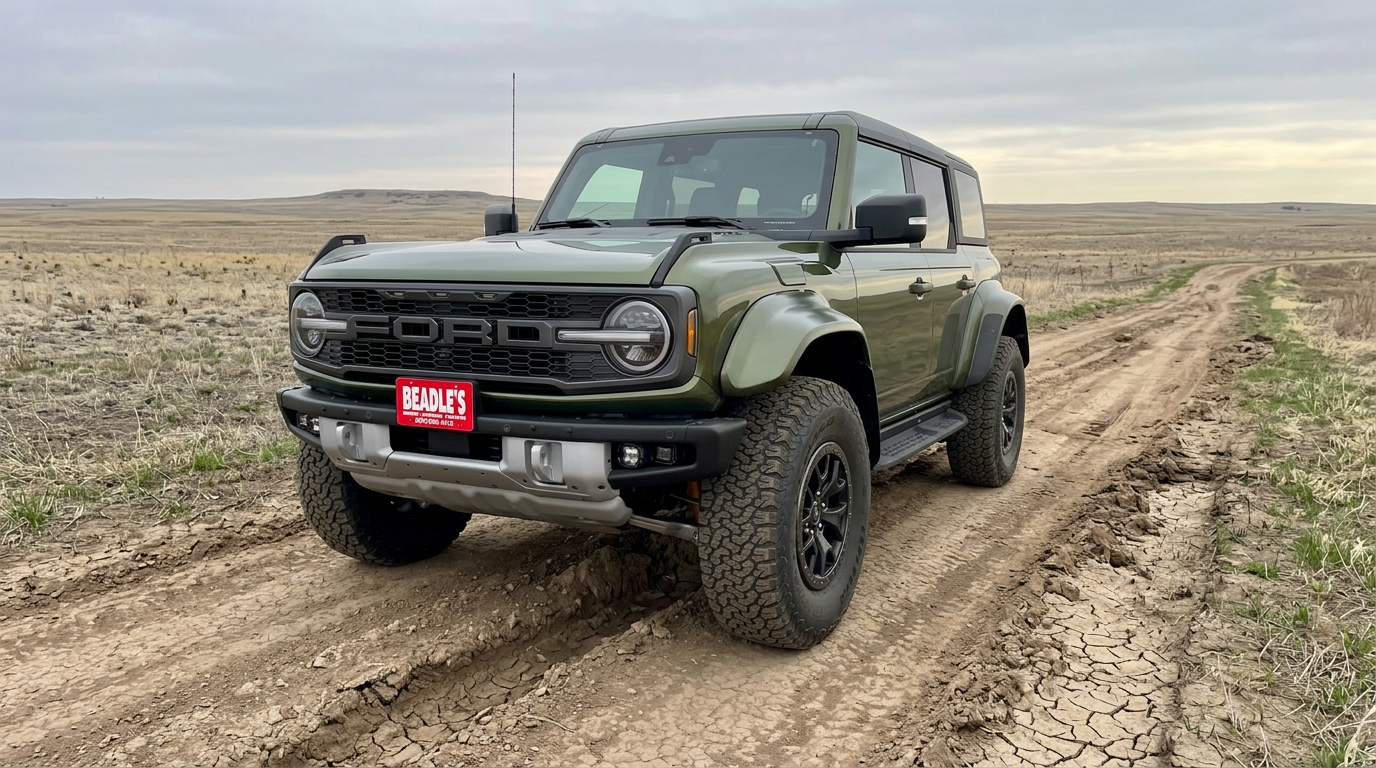
2026 Ford Bronco 4-Door Raptor in Shelter Green Metallic on a rutted section-line dirt road in central South Dakota

2026 Ford Bronco vs 2026 Jeep Wrangler: An Honest Comparison From a Ford Store

The 2026 Ford Bronco and the 2026 Jeep Wrangler are the two body-on-frame, four-wheel-drive, removable-top SUVs in the segment. They share a buyer profile and a use case — both are bought as second vehicles, weekend rigs, and lifestyle expressions as much as transportation. Cross-shopping is real, and most Bronco buyers in central South Dakota have driven a Wrangler at least once before signing. This is an honest comparison from a Ford store, played even-handedly. We'll cover engines and transmissions, off-road hardware, the doors-off and roof-off designs, on-road comfort, what the money actually buys, and where the Wrangler still wins versus where the Bronco is the right call for most Beadle-area buyers. There are real differences in both directions. Shop Broncos in Stock Get Pre-Approved On This Page How Do the 2026 Bronco and Wrangler Compare on Engines and Transmissions? How Does the Off-Road Hardware Stack Up? Removable Doors and Roof: How Do the Two Designs Differ? Which One Drives Better on Long Highway Hauls? What Do You Actually Get for the Money With Each One? Where Does the Wrangler Still Win — and Where Does the Bronco Win? How Do the 2026 Bronco and Wrangler Compare on Engines and Transmissions? The two lineups are organized differently. The Bronco offers three EcoBoost engines (2.3L I-4, 2.7L V6, 3.0L V6 Raptor) and the only manual transmission in the segment — a 7-speed paired with the 2.3L. The Wrangler runs a 2.0L turbo I-4 and a 3.6L Pentastar V6 across most of its lineup, with the 6.4L HEMI V8 reserved for the new-for-2026 Moab 392 and the limited-edition Willys 392. The Wrangler offers a 6-speed manual on the 3.6L V6, and an 8-speed automatic across the lineup. On peak horsepower, Wrangler wins at the top — the 6.4L HEMI V8 in the Moab 392 makes 470 horsepower and 470 lb-ft of torque versus the Bronco Raptor's 418 horsepower and 440 lb-ft from its 3.0L EcoBoost V6. The HEMI also makes a sound the Raptor doesn't try to make. For buyers cross-shopping at the very top of each lineup — Bronco Raptor versus Wrangler 392 — the Wrangler is the more powerful vehicle on paper. In the meaningful middle of the lineup, the Bronco's 2.7L EcoBoost V6 (330 hp / 415 lb-ft) outpunches the Wrangler 3.6L Pentastar (285 hp / 260 lb-ft) on torque by a wide margin — 415 versus 260 lb-ft is the difference between an engine that pulls effortlessly from low RPM and one that needs to rev to make work. The Bronco's base 2.3L (300 hp / 325 lb-ft) similarly outpunches the Wrangler 2.0L turbo (270 hp / 295 lb-ft). The transmission story is more even. Bronco's 10-speed automatic has more ratios than Wrangler's 8-speed, which gives the Bronco a smoother shift cadence at highway speed and more precise gearing for off-road crawl. But Wrangler still offers a manual with the V6 — Bronco's manual is 2.3L-only. For buyers who want a V6 with a stick shift, the Wrangler is the only option. For full Bronco engine context see our 2.3L vs 2.7L EcoBoost engine comparison. How Does the Off-Road Hardware Stack Up? Both vehicles are genuinely capable. The differences are in how each is engineered to be capable, not in whether they are. At the top spec, the numbers are within a half-degree of each other on most published metrics. On terrain management systems, the Bronco uses G.O.A.T. Modes (Goes Over Any Type of Terrain) — five modes on most trims, seven on Badlands and Raptor, including Off-Road, Rock-Crawl, and Baja. Wrangler uses Selec-Terrain with four primary modes (Auto, Snow, Sand/Mud, Rock) plus the brand's familiar 4WD systems (Command-Trac, Selec-Trac, or Rock-Trac depending on trim). Both work well; G.O.A.T. tends to be more discrete in mode count, while Selec-Terrain is broader by default. See our 2026 Bronco G.O.A.T. Modes guide for the full mode-by-mode breakdown. On locking differentials, both vehicles offer electronic-locking front and rear lockers at their off-road-focused trims. Bronco standardizes them on Badlands, Heritage Edition, Raptor, and any trim equipped with the Sasquatch Package. Wrangler standardizes them on Rubicon trims (and the new Moab 392 / Willys 392). Big Bend with the Black Diamond Package gets a rear locker only — Wrangler's Sport S and Sahara are similar. On front sway-bar disconnect, both vehicles offer it. Wrangler's electronic disconnect (on Rubicon and up) has been the segment benchmark for years. Bronco offers Front Stabilizer Bar Disconnect standard on Raptor and Stroppe, and new for 2026 Ford made it a standalone $1,305 option on Badlands (previously only via Sasquatch). Bronco Wildtrak with Sasquatch in the kind of cattail-slough mud that Wrangler buyers also cross-shop for — both vehicles handle it; the question is which one fits how you live with it the rest of the week. On geometry numbers at the most-capable spec: the Bronco Raptor (37" tires) lists approximately 13.1 inches of ground clearance, 47.2° approach, 30.8° breakover, and 40.5° departure. The Wrangler Moab 392 lists approximately 12.9 inches of ground clearance, 47.4° approach, and 40.4° departure (Jeep doesn't always publish breakover the same way). The Bronco Sasquatch (35" tires) lists approximately 11.6 inches of ground clearance with similar angle values. Wrangler Rubicon with the Xtreme 35 Package is in roughly the same neighborhood. These numbers are within rounding error of each other at the top spec — neither vehicle has a meaningful geometry advantage. For Sasquatch context specifically, see our 2026 Bronco Sasquatch Package guide. On 4WD systems, Wrangler's Rock-Trac (Rubicon-only) gets a 4:1 low-range gear that's sharper than what the Bronco uses, and the Bronco compensates with the GOAT Off-Road and Rock-Crawl modes plus Trail Control (low-speed off-road cruise control). Both are capable; Wrangler is slightly more analog, Bronco is slightly more electronic. Get Pre-Approved Contact Beadle Ford Removable Doors and Roof: How Do the Two Designs Differ? Both vehicles have removable doors and removable tops. The differences are in how the engineering is executed — and in how often you'd actually take advantage of it. 2026 Ford Bronco 4-Door Big Bend in doors-off configuration with front roof panels removed — what most buyers picture when they imagine the doors-off lifestyle. Bronco's frameless doors are designed to be removed without specialty tools — the Tool Kit is standard on Base and inherited up the trim ladder. The mirrors stay attached to the body (not the door), which means you keep your sideview mirrors when the doors are off. Wrangler's mirrors are mounted to the doors, so when those come off, the mirrors come with them — and Jeep sells aftermarket frame-mounted mirrors as an accessory if you want to drive doors-off legally on the highway. On the roof, Bronco offers a Modular Hardtop with separate front panels (driver and passenger T-tops) that can come off independently of the rear, plus a soft-top option. Wrangler offers either a one-piece hardtop, a two-piece hardtop (Freedom Top), or the soft top. Both designs work; Wrangler's Freedom Top is generally faster to take off than Bronco's modular setup, while Bronco's lets you go partial — front panels off, rear panels on — which is a useful in-between for a sunny day with cooler weather behind you. Honest take for central South Dakota: the doors-off and roof-off lifestyle is mostly a 4–6 month window. From mid-October through early April, the doors stay on and the hardtop earns its keep. Both vehicles handle the cold months equivalently — but if you're bought either of them for the doors-off feature, plan around the calendar. Our 2026 Bronco removable doors and roof guide covers this in more detail. Which One Drives Better on Long Highway Hauls? This is one of the clearer differences. The Bronco generally rides quieter, tracks straighter at highway speeds, and feels less truck-like over expansion joints than the Wrangler does — particularly on Outer Banks and on any non-Sasquatch configuration. The Wrangler's solid front axle (a feature for off-road purists) is also why it tends to wander more at 75 mph and follow road crowns more aggressively than the Bronco's independent front suspension does. For long-distance drivers — anyone making the four-hour Bowdle-to-Black-Hills run a few times a year — the Bronco's on-road manners are a real, daily-felt advantage. Wind noise is lower, steering feel is closer to a modern crossover, and the cabin doesn't ask the driver to actively manage the wheel the way a Wrangler can on a windy day. Both vehicles offer modern infotainment. Bronco runs SYNC 4 with a 12-inch standard touchscreen on every trim — including Base — and wireless Apple CarPlay and Android Auto. Wrangler runs Uconnect 5 with an 8.4-inch standard screen (12.3-inch optional). Both interfaces are good. Bronco's standard screen is bigger; Wrangler's tactile controls are arguably better for off-road glove use. Worth flagging: the 2026 Bronco does not offer Ford's BlueCruise hands-free highway driving. Wrangler doesn't offer a competing hands-free system either. So while BlueCruise is a Ford brand strength elsewhere in the lineup, it's not a differentiator here. What Do You Actually Get for the Money With Each One? At MSRP, the two lineups overlap heavily. The 2026 Bronco starts at $40,495 (Base, before destination) and tops out at $79,995 (Raptor). The 2026 Wrangler starts comparably (depending on trim and body style) and tops out near $90,000+ for the Moab 392 and the limited-edition Willys 392. For mainstream comparison, a Bronco Big Bend, Outer Banks, or Badlands sits roughly in line with a Wrangler Sport S, Sahara, or Rubicon respectively. Where the math diverges is in standard equipment per dollar. The Bronco runs SYNC 4 with the 12-inch screen, wireless CarPlay and Android Auto, and Co-Pilot360 driver-assist (BLIS, lane-keeping, AEB) standard from Big Bend up. Wrangler delivers similar tech but more of it lands in optional packages or higher trims. A Bronco Big Bend at MSRP usually has more standard tech than a Wrangler Sport S at the same price. For trim-by-trim Bronco context, see our 2026 Bronco trim levels guide. On towing, Wrangler wins on paper: the 4-door Wrangler Rubicon with the 4.10 axle (and the Moab 392 / Willys 392) is rated to tow up to 5,000 lbs. Every non-Raptor 2026 Bronco caps at 3,500 lbs; the Bronco Raptor caps at 4,500 lbs. If you're regularly towing a trailer that puts you above 3,500 lbs, that pushes you to a Bronco Raptor or to the Wrangler. For most buyers towing a fishing boat, an ATV trailer, or a small camper, both are well within capacity. Resale value is roughly comparable. Wrangler has historically held value extremely well — that hasn't completely changed — but the Bronco's resale has been strong since launch and continues to track close to Wrangler's at three- and five-year points. Both vehicles depreciate less than the average mainstream SUV. Where Does the Wrangler Still Win — and Where Does the Bronco Win? The Wrangler still wins if you want the highest-output engine in the segment (the 470-hp HEMI V8 Moab 392 / Willys 392 — the Bronco Raptor doesn't try to chase it), if you want a manual transmission paired with a V6 (Bronco's manual is 2.3L-only), if your tow load lives between 3,500 and 5,000 lbs (Bronco caps at 3,500 lb non-Raptor / 4,500 lb Raptor), or if you place a strong premium on the Wrangler's brand identity and aftermarket community — both are real and longstanding strengths. The Bronco wins if you do a lot of long-distance highway miles, if you want the segment's best standard-tech-per-dollar (SYNC 4, 12-inch screen, Co-Pilot360 from Big Bend up), if you want creature comforts in your off-road SUV without stepping all the way up to a top-trim Wrangler, if you appreciate that the Bronco's mirrors stay on when the doors come off, or if you want the GOAT mode terrain system rather than Selec-Terrain. The third factor — the one that doesn't show up on a spec sheet — is the dealer relationship. The nearest Jeep dealership to Bowdle is enough miles away that warranty service, recall work, and trade-in conversations all become a half-day commitment. Beadle Ford is twenty minutes from most of our buyers, and we've been here for decades. For a vehicle that's going to need an oil change four times in the first year and a service item or two over its life, that proximity matters more than most buyers think when they're shopping on paper. Either vehicle is a good choice. We recommend driving both — and we'll tell you straight up which one fits your specific use case, even if that answer isn't the Bronco. For the broader 2026 Bronco context, the full 2026 Ford Bronco overview covers engines, capability, and what's new for the year. Key Takeaways Top engines: Wrangler 6.4L HEMI V8 (470 hp / 470 lb-ft) outpowers Bronco Raptor 3.0L V6 (418 hp / 440 lb-ft). In the meaningful middle, Bronco's 2.7L EcoBoost V6 outpunches Wrangler's 3.6L V6 on torque (415 vs 260 lb-ft). Off-road geometry at top spec is within rounding error: Bronco Raptor ~13.1" GC, 47.2° approach, 40.5° departure; Wrangler Moab 392 ~12.9" GC, 47.4° approach, 40.4° departure. Towing: Wrangler tops out at 5,000 lbs (4-Dr Rubicon w/ 4.10 axle); Bronco caps at 3,500 lbs non-Raptor, 4,500 lbs Raptor. Doors-off design: Bronco's mirrors are body-mounted (stay on); Wrangler's mirrors come off with the doors and require aftermarket frame mirrors for legal road use. Bronco wins on long-highway comfort, standard tech per dollar (SYNC 4 + 12-inch screen + Co-Pilot360), and dealer proximity for central-SD buyers. Wrangler wins on top-spec horsepower, V6+manual availability, max towing, and aftermarket community. Frequently Asked Questions Is the 2026 Ford Bronco better off-road than the 2026 Jeep Wrangler? Neither has a meaningful geometry advantage at top spec — published approach, departure, and ground-clearance numbers are within a half-degree or half-inch of each other. Both have front and rear lockers and front sway-bar disconnect at their off-road trims. The vehicles are differently engineered to the same end: Bronco leans more electronic (GOAT modes, Trail Control), Wrangler more analog (Rock-Trac 4:1 low range, solid front axle). Does the 2026 Bronco tow more than the 2026 Wrangler? No. Wrangler wins on max towing. The 4-Door Wrangler Rubicon with the 4.10 axle and the Moab 392 / Willys 392 are rated up to 5,000 lbs. The 2026 Ford Bronco tops out at 4,500 lbs (Raptor only); every other Bronco trim caps at 3,500 lbs. Can you get a manual transmission on either the 2026 Bronco or Wrangler? Both vehicles offer a manual transmission. The Bronco's 7-speed manual is paired exclusively with the 2.3L EcoBoost. The Wrangler's 6-speed manual is offered with the 3.6L Pentastar V6. If you want a V6 with a stick shift, only the Wrangler offers that combination. Which is more comfortable on the highway: 2026 Bronco or Wrangler? The Bronco is generally quieter, tracks straighter, and handles wind and road crowns better at 70+ mph than the Wrangler does. The Wrangler's solid front axle is a feature for off-road purists but trades on-road manners for it. If long highway miles are a regular part of how you'll use the vehicle, the Bronco is the more comfortable highway companion. Do you keep the sideview mirrors when you take the doors off the 2026 Bronco? Yes. The Bronco's sideview mirrors are mounted to the body, not the doors, so they stay attached when the doors are removed. On the Wrangler, the mirrors are door-mounted — when the doors come off, the mirrors come off with them, and aftermarket frame-mounted mirrors are required for legal on-road use without doors. My Take on the 2026 Bronco vs Wrangler Decision I'll be honest — I've sold a few customers a Bronco who would have been better off with a Wrangler, and I've sent a couple of long-time Wrangler owners home in a Bronco who didn't expect to like it. The decision usually comes down to two questions: how many highway miles will you put on it, and how committed are you to the brand identity and the community that comes with each one. If long highway runs are a big part of your year and you don't have strong loyalty either way, the Bronco's on-road manners and standard-tech-per-dollar usually carry the day. If you've owned three Wranglers and you know what you love about them, no amount of EcoBoost torque is going to change that — and that's a perfectly valid reason to stay with what you know. The thing the spec sheet doesn't capture is the dealer side of the deal. We've been at Beadle Ford in Bowdle long enough to remember a lot of our customers' previous trucks — and the closest Jeep store is far enough away that the relationship is harder to build. If you're cross-shopping and the trucks land at a near-tie on paper, the dealer math is worth weighing. Either way, come drive both. We'll be square with you about which one fits. Shop Broncos in Stock Get Pre-Approved About the Author Lexy Tabbert — Beadle Ford, Bowdle, SD Lexy Tabbert is the Director of Sales and Marketing at Beadle Ford in Bowdle, South Dakota. She covers Ford vehicles, trim comparisons, and buyer guidance — helping families, ranchers, and ag operators across the region find the right truck and configuration for their needs. Learn more about Lexy.
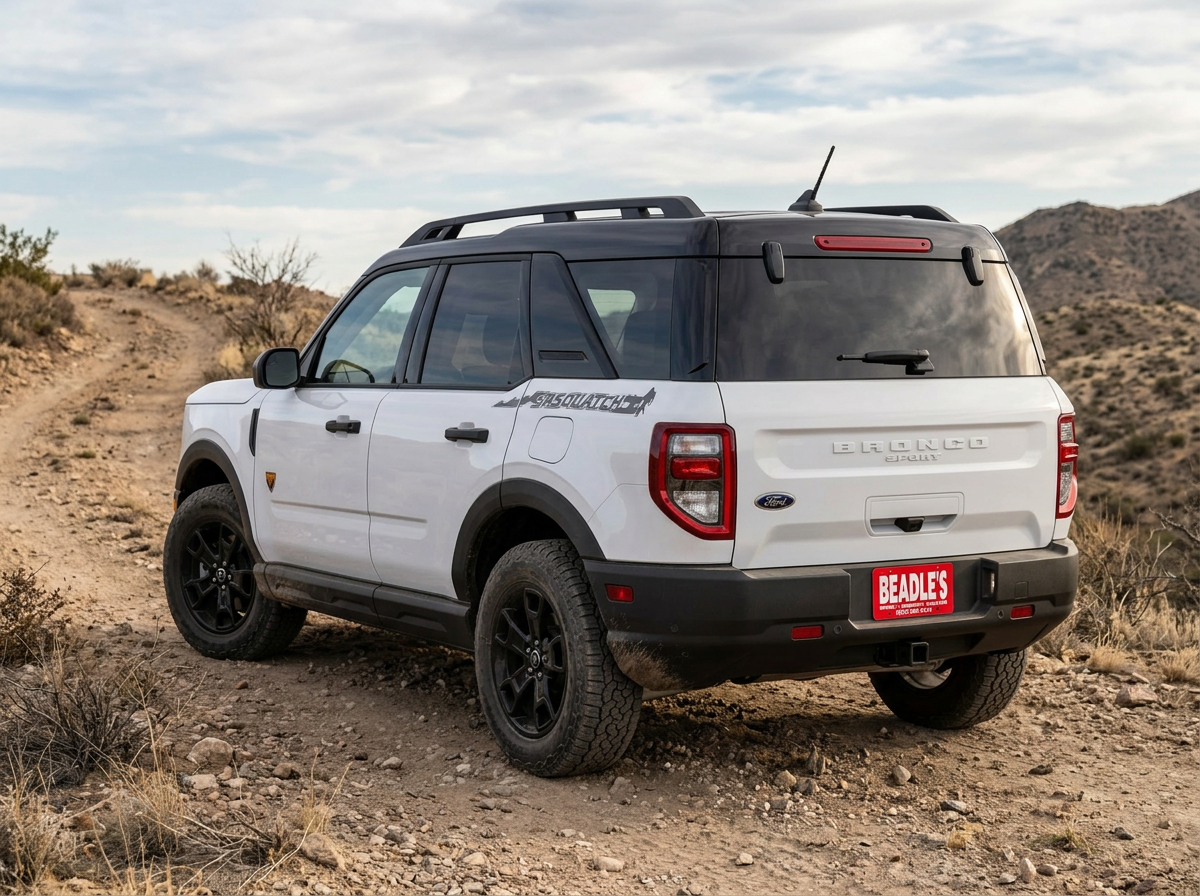
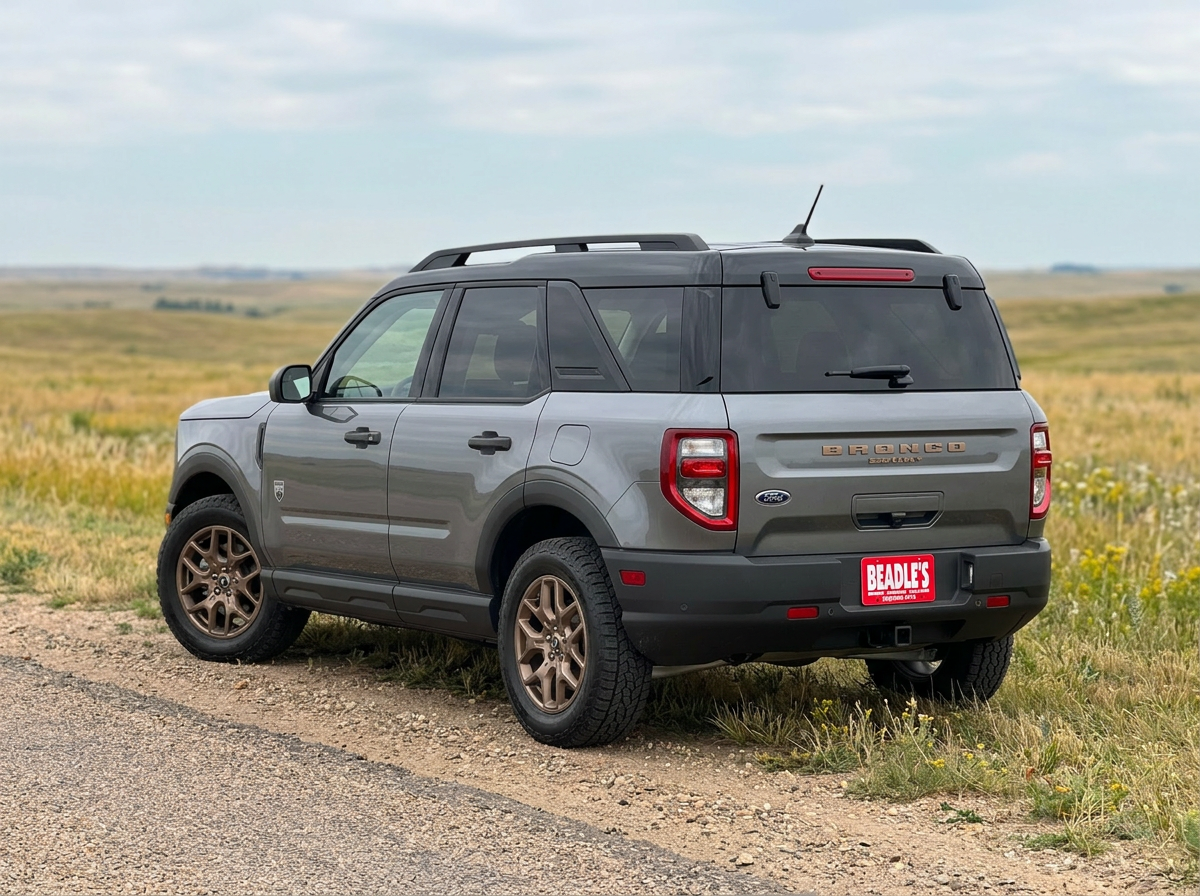
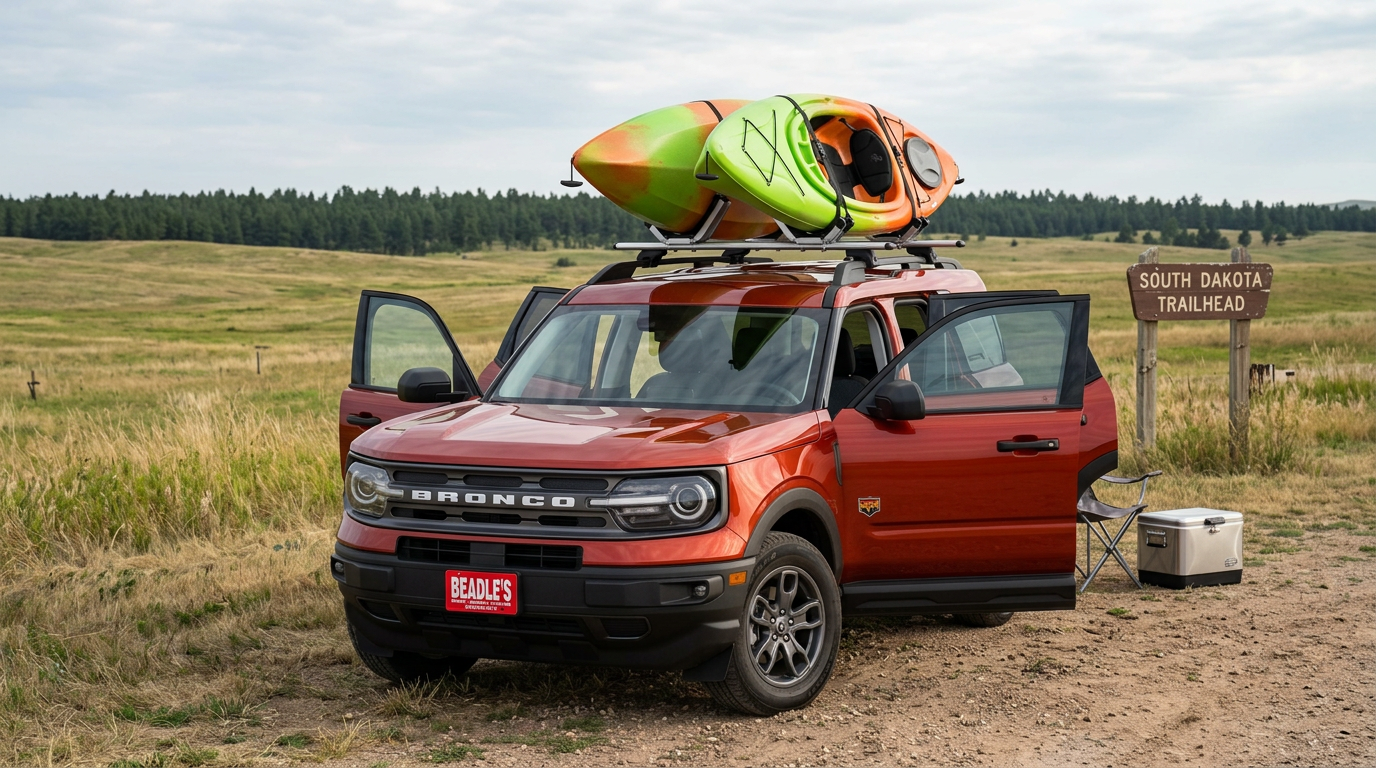
2026 Ford Bronco Sport Outer Banks with Sasquatch Package in South Dakota

Outer Banks Sasquatch vs Badlands: What the 2026 Bronco Sport Sasquatch Package Adds and Who It's Actually For

The 2026 Ford Bronco Sport Sasquatch Package turns the Outer Banks trim into a legitimate off-road machine — but it's not the same thing as buying a Badlands. If you're deciding between adding the Sasquatch Package to an Outer Banks or stepping up to the Badlands outright, the answer depends on what you're actually planning to do with the vehicle and how much the Outer Banks' interior upgrades matter to you. Here's what the Sasquatch Package adds, what it can't change, and which buyer each option is really built for. Shop Bronco Sports in Stock Get Pre-Approved In This Guide What Is the Sasquatch Package on the 2026 Bronco Sport? What Does the Sasquatch Package Actually Include? Outer Banks Sasquatch vs. Badlands: Full Comparison Does the Outer Banks Sasquatch Get Rock Crawl and Rally Modes? Is the Sasquatch Package Worth It on the Outer Banks? Who Should Buy the Outer Banks Sasquatch vs. the Badlands? What Is the Sasquatch Package on the 2026 Bronco Sport? The Sasquatch Package (option code 67A) is a factory off-road upgrade available exclusively on the 2026 Bronco Sport Outer Banks trim. It cannot be added to Big Bend, Heritage, or Heritage Limited — and it has no place on the Badlands, because the Badlands already includes most of its hardware as standard equipment. The package was built to give Outer Banks buyers access to Badlands-tier off-road hardware without giving up the Outer Banks' comfort and luxury features. You get the Advanced 4x4 system with twin-clutch rear axle, HOSS 2.0 off-road suspension, aggressive A/T tires, Trail Control, recovery hooks, and underbody protection — all on a trim that also offers available B&O audio, a panoramic fixed glass roof, and leather-trimmed seating. One important note: the Sasquatch Package requires the Outer Banks Tech Package (option code 96T) to be ordered first. For Bowdle buyers who want a capable trail rig that can also serve as a comfortable vehicle for longer South Dakota road trips, the Outer Banks Sasquatch is worth a serious look — as long as you understand exactly what it does and doesn't give you. What Does the Sasquatch Package Actually Include? The Sasquatch Package is one of the most content-rich factory option packages on the Bronco Sport lineup. Here's what's bundled in: Feature What It Means Advanced 4x4 with Twin-Clutch DRSC Active torque-vectoring rear axle — the same system standard on Badlands HOSS 2.0 Off-Road Suspension High-performance Off-Road Stabilization & Suspension with Bilstein position-sensitive dampers Trail Control Low-speed cruise control that manages throttle and braking over technical terrain Trail One-Pedal Drive Regenerative deceleration for precise throttle control at slow off-road speeds Pro Power Onboard 400W 110V outlet with up to 400 watts for power tools, camp gear, or electronics 17" Ebony Black Aluminum Wheels Larger-diameter wheels replacing Outer Banks' standard alloys P235/65R17 All-Terrain Tires All-terrain compound for improved grip on gravel, dirt, snow, and soft ground High Clearance Front Fender Flares Wider clearance to accommodate bigger tires and improve approach angles Front Brush Guard with Recovery Hooks Black MIC (Molded-In Color) construction; integrated front recovery points Black MIC Front & Rear Bumpers Replaces body-color bumpers with a more rugged, trail-ready look Rear Recovery Hooks — 2 D-rings Frame-mounted rear anchor points for recovery straps or tow lines Class II Trailer Tow Package Required for towing above 1,500 lbs; adds hitch receiver and wiring harness 12.3" Digital Instrument Cluster Full-color reconfigurable display replacing analog gauges Rubberized Floor Covering Easier cleanup after muddy or wet adventures Underbody Protection Front and rear skid plates to guard against rocks and trail debris That's a significant list. The Sasquatch Package essentially bolts Badlands-level off-road hardware onto the Outer Banks platform — giving you access to two capability sets that normally live on separate trim lines. The remaining question is what it leaves out, which is covered in the next section. Outer Banks Sasquatch vs. Badlands: Full Comparison On the surface, the Outer Banks Sasquatch and the Badlands look nearly identical once the package is installed. But there are meaningful differences — primarily in the engine room and the G.O.A.T. mode system — that matter to serious off-road buyers. Feature Outer Banks + Sasquatch Badlands Base Engine 1.5L EcoBoost (180 hp / 190 lb-ft) 2.0L EcoBoost (250 hp / 280 lb-ft) 2.0L Engine Available? Yes — optional add-on Standard, included Advanced 4x4 with Twin Clutch Yes (via Sasquatch Package) Standard HOSS 2.0 Suspension Yes (via Sasquatch Package) Standard Trail Control + Trail One-Pedal Yes (via Sasquatch Package) Standard P235/65R17 A/T Tires Yes (via Sasquatch Package) Standard Total G.O.A.T. Modes 5 modes 7 modes Rock Crawl Mode No Yes Rally Mode No Yes Leather-Trimmed Seating Available Available (heated) B&O Sound System Available Not available Panoramic Fixed Glass Roof Available Not available Pro Power Onboard 400W Yes (via Sasquatch Package) Standard The short version: the Outer Banks Sasquatch gives you Badlands hardware while keeping the Outer Banks' luxury features, but starts with the 1.5L engine and lacks Rock Crawl and Rally modes. The Badlands comes with the 2.0L, Rock Crawl, and Rally as standard — but trades away the panoramic roof and B&O audio options. Does the Outer Banks Sasquatch Get Rock Crawl and Rally Modes? No. Rock Crawl and Rally are exclusive to the Badlands trim and cannot be unlocked by any package or option on the Outer Banks. This is one of the most important differences between the two configurations — and the one buyers most often overlook when spec-shopping. The Outer Banks Sasquatch gets the five standard G.O.A.T. (Goes Over Any Type of Terrain) modes: Normal, Eco, Sport, Slippery, and Sand. These are genuinely capable across a wide range of conditions. But Rock Crawl and Rally require the Badlands' powertrain calibration and the 2.0L engine's specific torque curve — neither of which transfers to the Outer Banks through a package alone. G.O.A.T. Mode Availability by Configuration Mode Outer Banks Sasquatch Badlands Normal Yes Yes Eco Yes Yes Sport Yes Yes Slippery Yes Yes Sand Yes Yes Rock Crawl No Yes Rally No Yes If you're regularly running rocky terrain in the Badlands (the geographic region, not the trim) or want Rock Crawl's precise throttle management for technical obstacles, the Badlands trim is the right call. If your off-roading consists of trail riding, forest roads, pasture tracks, or winter traction across western South Dakota, the Outer Banks Sasquatch's five modes are fully up to the task. Is the Sasquatch Package Worth It on the Outer Banks? For the right buyer, yes. The Sasquatch Package bundles gear that would cost substantially more to source aftermarket — an upgraded 4x4 system, skid plates, recovery hooks front and rear, A/T tires, upgraded suspension, Pro Power Onboard, Trail Control, and the Class II tow package. Buying those components separately would run well past the package price, and they wouldn't be factory-integrated or covered under your Ford warranty. The value question is different depending on your use case: Worth It If You... Want the Outer Banks' interior upgrades and off-road hardware in a single build Plan to tow a jon boat, ATV trailer, or utility load (up to 2,200 lbs with the 2.0L) Drive gravel, pasture, or forest roads regularly but don't need Rock Crawl mode Want A/T tires and capable 4x4 for South Dakota winters without buying aftermarket Want the 400W outlet for worksites, hunting camp, or charging gear on the road Skip It If You... Primarily drive pavement and rarely go off-road Need Rock Crawl or Rally modes for technical terrain Want the 2.0L engine as standard without a separate upgrade Are comparing total cost to a Badlands without factoring in the required Tech Package One important consideration: the Sasquatch Package requires the Outer Banks Tech Package (96T) to be ordered first, which means the actual entry cost includes both packages stacked. Build your full configuration before comparing it to Badlands pricing — the sticker difference is often smaller than buyers expect. Who Should Buy the Outer Banks Sasquatch vs. the Badlands? This decision usually comes down to one core question: what matters more to you — the interior experience or the maximum off-road performance ceiling? Here's how to map your use case to the right build: Use Case Outer Banks Sasquatch Badlands Weekend trail riding + comfortable daily commute Better fit Also capable Serious rock crawling or technical off-road routes Limited — no Rock Crawl mode Better fit Long road trips, premium audio, comfort features Better fit Fewer luxury options Towing a boat to Lake Oahe or a small utility trailer Better fit (Class II included) Also capable Maximum horsepower and torque without upgrades Requires separate 2.0L add-on Better fit — 2.0L standard South Dakota winter driving and gravel roads year-round Strong Strong Our full 2026 Bronco Sport trim comparison guide breaks down all five trims side-by-side — including base prices, standard features, and which engine each gets — so you can see exactly where the Outer Banks Sasquatch and the Badlands land against each other before you make a decision. Key Takeaways The Sasquatch Package (67A) is available only on the Outer Banks trim and requires the Tech Package (96T) first — it cannot be added to other trims. It includes Advanced 4x4 with twin clutch, HOSS 2.0 suspension, A/T tires, Trail Control, Trail One-Pedal Drive, Pro Power 400W, front brush guard, front and rear recovery hooks, underbody protection, and the Class II Tow Package. The Outer Banks Sasquatch does NOT include Rock Crawl or Rally modes — those remain exclusive to the Badlands trim regardless of packages ordered. The Outer Banks base engine is the 1.5L EcoBoost (180 hp); the 2.0L is available as a separate upgrade but is not included with the Sasquatch Package. The Badlands includes the 2.0L EcoBoost, Rock Crawl, and Rally as standard — but the panoramic roof and B&O audio are not available on Badlands. Factor in both the Tech Package and Sasquatch Package when budgeting — the combined cost may put you close to Badlands pricing, so run both configurations before committing. Frequently Asked Questions Can I add the Sasquatch Package to any Bronco Sport trim? No. The Sasquatch Package (67A) is only available on the Outer Banks for the 2026 model year. It cannot be added to Big Bend, Heritage, Heritage Limited, or Badlands. It also requires the Outer Banks Tech Package (96T) as a prerequisite order. Does the Sasquatch Package include Rock Crawl mode? No. Rock Crawl is a Badlands-exclusive G.O.A.T. mode and is not available on the Outer Banks regardless of which packages are added. The Outer Banks Sasquatch receives five G.O.A.T. modes: Normal, Eco, Sport, Slippery, and Sand. Does the Outer Banks Sasquatch automatically come with the 2.0L engine? No. The Outer Banks base engine is the 1.5L EcoBoost three-cylinder (180 hp, 190 lb-ft). The 2.0L EcoBoost is available as a separate option on the Outer Banks but is not bundled with the Sasquatch Package. If you want the 2.0L, you need to add it separately when you configure your order. Is the Outer Banks Sasquatch more expensive than the Badlands? It depends on how you configure both. The Outer Banks requires the Tech Package before the Sasquatch Package can be added, meaning your real starting point is Outer Banks base + Tech Package + Sasquatch Package. When stacked, the total is often close to a similarly equipped Badlands. Compare both full builds before committing — the gap is usually smaller than buyers expect. Can the Outer Banks Sasquatch tow a boat to Lake Oahe? Yes. With the Class II Trailer Tow Package included in the Sasquatch bundle, the 2026 Bronco Sport Outer Banks Sasquatch is capable of towing up to 2,200 lbs when properly equipped with the 2.0L EcoBoost. A jon boat, small aluminum fishing boat, or personal watercraft trailer is well within that range. Confirm your loaded boat-and-trailer weight before you head to the ramp. Bottom Line for Bowdle Buyers I've walked a lot of buyers through the Outer Banks Sasquatch vs. Badlands decision, and it almost always comes down to one question: how often are you on technical rocky terrain versus gravel roads, dirt trails, and slick winter conditions? For most buyers in this area — running fence lines, heading out to hunting ground, pulling a boat to Lake Oahe, or managing winter roads between towns — the Outer Banks Sasquatch is genuinely well-equipped. The hardware is serious, and the Outer Banks interior makes those longer trips a lot more comfortable. But if Rock Crawl matters to you, or you want the 2.0L as a given rather than an add-on, the Badlands is the cleaner answer. Either way, you're looking at one of the most capable compact SUVs in this price class for the way South Dakotans actually use their vehicles. For a full side-by-side of all five trims — including standard features, engine options, and package breakdowns — our 2026 Ford Bronco Sport guide at Beadle Ford has everything you need to finalize your configuration. Shop Bronco Sports in Stock Get Pre-Approved Contact Us About the Author Lexy Tabbert Lexy Tabbert is an automotive content writer and researcher at Beadle Ford in Bowdle, SD. She covers Ford lineup updates, trim comparisons, package breakdowns, and regional buying guides to help South Dakota shoppers make confident vehicle decisions. When she's not comparing option codes, she's watching the roads between here and the Badlands — the geographic ones, not the trim.

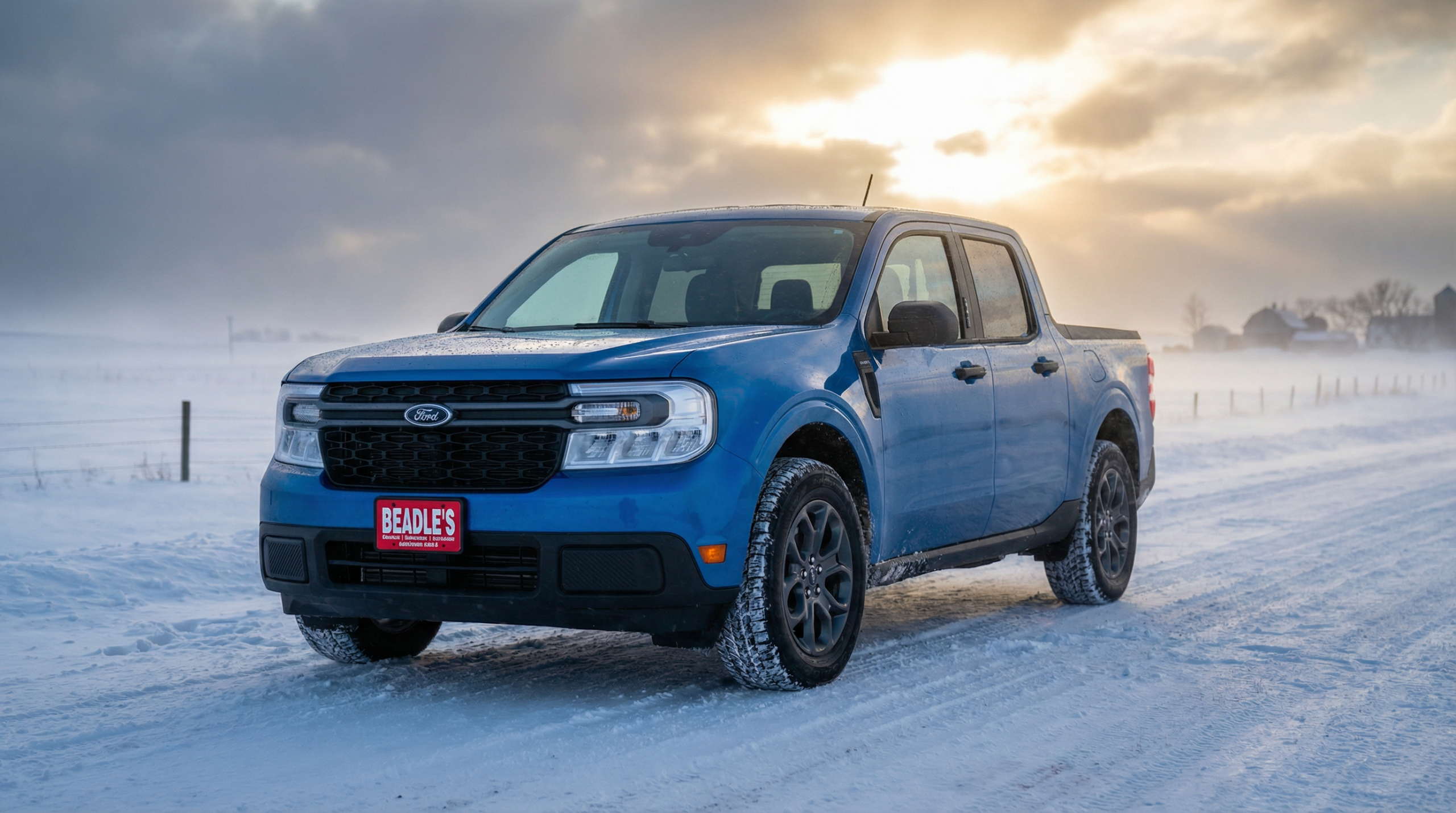
2026 Ford Maverick Trims & Packages

Picking a 2026 Ford Maverick trim is only “step two.” The buyers who end up happiest usually decide drivetrain (AWD vs FWD), payload reality, and towing hardware first—then use trims and packages to fine-tune comfort, convenience, and appearance. If you haven’t locked in your must-haves yet, start with: 2026 Maverick Specs & Configurations. For inventory, model guidance, and local help in one place, visit the Ford Maverick model page. Shop Mavericks in Stock Contact Us Table of Contents Which 2026 Maverick trims are offered? What trims change (and what they don’t) Packages that actually change ownership Why AWD-first shopping changes the best trim choice How to choose a trim/package setup (step-by-step) FAQ Which 2026 Maverick trims are offered? The 2026 Maverick lineup is commonly shown with these model lines: XL, XLT, Lobo, Lariat, and Tremor. The biggest mistake buyers make is assuming the trim name automatically equals capability. On Maverick, capability is driven by drivetrain, payload, and towing equipment. What trims change (and what they don’t) Trims primarily change comfort, interior materials, feature access, and appearance. They can also influence which options are easier to add, because packages and required equipment can be tied to certain trims. What trims usually change: cabin feel, tech convenience, appearance details, and option availability. What trims do not automatically change: your real towing readiness if the truck doesn’t have the right towing hardware. What to do instead: verify the exact truck’s equipment list before assuming it’s “the towing one” or “the winter one.” If towing is part of your decision, pair this with: 2026 Maverick Towing Guide. Packages that actually change ownership Most packages fall into a few real-world categories. The “best” packages aren’t the fanciest—they’re the ones that solve problems you actually have. Towing-focused packages: aim at real towing hardware (brake controller, 7-pin, hitch class). Confirm on the window sticker. Winter/traction-minded equipment: AWD helps, but tires and visibility features often matter just as much. Comfort/commute packages: worthwhile if you drive long miles and want the truck to feel “easy” every day. Appearance packages: great when they don’t interfere with capability priorities or budget. Why AWD-first shopping changes the best trim choice In South Dakota, many Maverick buyers shop AWD first because winter traction is a non-negotiable. That changes how you should evaluate trims: you want the trim that lets you get the drivetrain you want without forcing unwanted extras. Quick Overview Best approach Choose drivetrain + towing needs first, then pick trim for comfort/features Most common mistake Buying a trim for the badge and missing the equipment you actually need Smart confirmation Verify the window sticker for towing hardware, AWD, and required option bundles How to choose a trim/package setup (step-by-step) Decide AWD vs FWD based on winter routes and confidence needs. Decide towing level (light hitch vs full towing hardware) based on your trailer’s loaded weight. Confirm payload reality (people + gear + bed cargo) so the build actually fits your routine. Pick your trim to match comfort/feature expectations without forcing extras you don’t want. Add packages intentionally —choose only what solves a real need. Shop Mavericks in Stock Ask About a Specific Trim FAQ Does a higher trim automatically tow more? Not automatically. Towing readiness depends on the towing hardware on that exact build (hitch class, wiring, brake controller), plus drivetrain and configuration. Always confirm the window sticker. What’s the best way to avoid overpaying for packages? Start with your non-negotiables (AWD, towing equipment, payload needs), then choose the lowest trim that supports those needs. Add only packages that solve real problems for your driving routine. Where can I compare trims and real inventory together? The fastest method is browsing the Ford Maverick model page, then checking each truck’s equipment list. If you want help comparing two specific builds, contact us. Conclusion In my experience, the best Maverick purchases happen when buyers choose capability first and trim second. When AWD, towing hardware, and payload reality are locked in up front, trims and packages become a simple “fit and finish” decision—not a gamble. About the Author: Lexy Tabbert helps South Dakota and North Dakota shoppers choose truck configurations that fit real driving—winter roads, weekend projects, towing needs, and long-term ownership. Her approach is straightforward: confirm the capability requirements first, then choose the trim and packages that support how you actually use the truck.

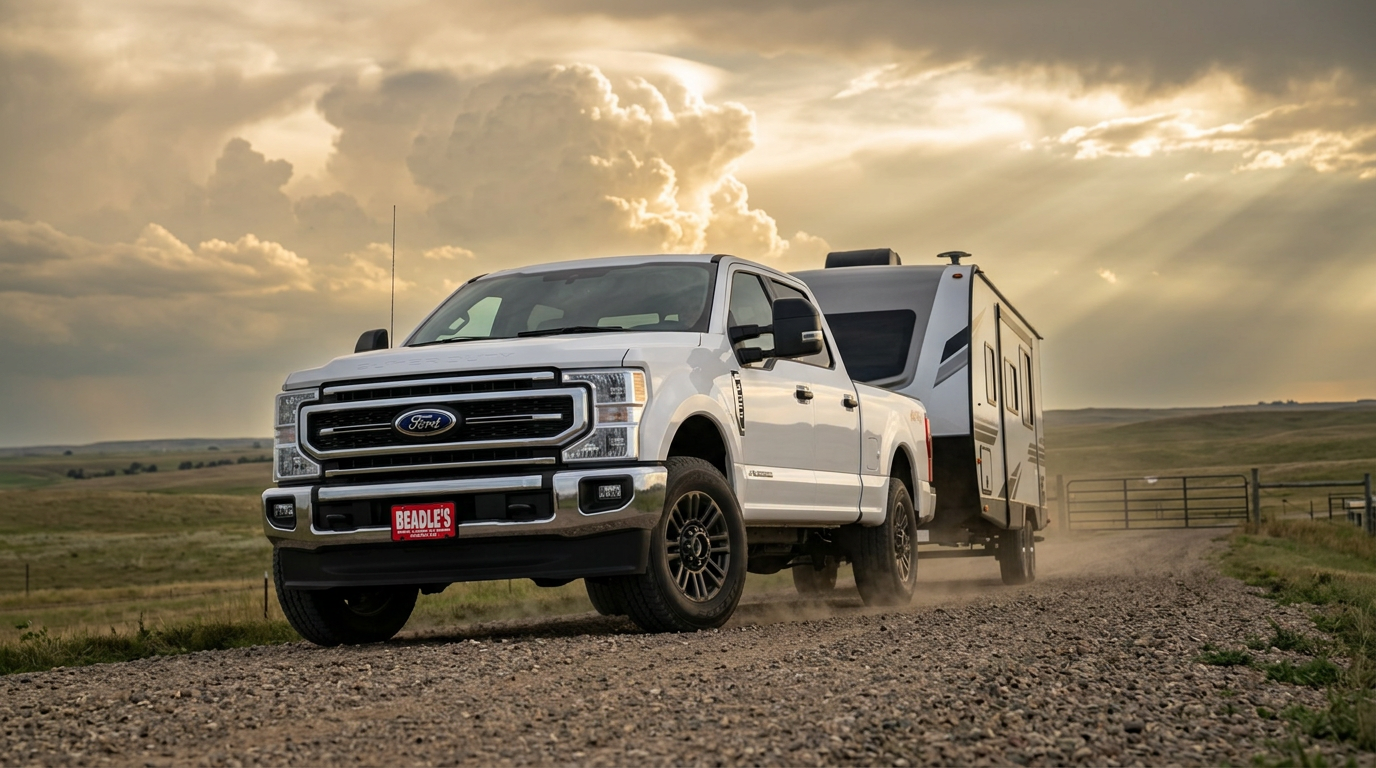
2027 Ford F-250 towing a travel trailer in South Dakota

2027 Ford F-250: 7.3L Gas vs. 6.7L HO Diesel

Quick Answer The 2027 F-250 offers a standard 7.3L gas V8 and an optional 6.7L High-Output Power Stroke diesel. The gas V8 tows up to about 19,500 lbs and suits daily driving and occasional towing; the diesel raises the maximum to 23,000 lbs gooseneck for heavy, frequent hauling. With the 2027 F-250 down to two engines, the choice is cleaner than it used to be: the now-standard 7.3L gas V8, or the available 6.7L High-Output Power Stroke diesel. For most buyers around here, the real question isn't which engine is "better" — it's how often and how heavy you actually tow. This guide breaks down what each engine tows, when the gas V8 is the smarter buy, when the diesel earns its premium, and what each costs to own over time — framed for the occasional-to-regular tower in central South Dakota. Shop F-250s in Stock Reserve a 2027 F-250 Get Pre-Approved On This Page What engines does the 2027 F-250 offer? How much can the gas V8 tow vs. the HO diesel? When is the 7.3L gas the smarter buy? When does the HO diesel pay off? What does each engine cost to own? What engines does the 2027 F-250 offer? Two. The 7.3L gas V8 is standard on every trim, and the 6.7L High-Output Power Stroke V8 turbo diesel is optional across the line. Both use a 10-speed TorqShift automatic. The 7.3L gas is a big, simple, naturally aspirated V8 — strong, easy to live with, and inexpensive to maintain. The High-Output diesel trades that simplicity for far more low-end torque and the highest tow ratings in the F-250 lineup. There's no longer a "middle" engine to overthink; you're choosing between a capable standard gas V8 and the heavy-haul diesel. How much can the gas V8 tow vs. the HO diesel? Properly equipped, the 7.3L gas tows up to about 19,500 lbs on a fifth-wheel or gooseneck and 18,200 lbs conventional. The 6.7L High-Output diesel raises that to up to 23,000 lbs gooseneck, 22,100 lbs fifth-wheel, and 22,000 lbs conventional with the F-250 High-Capacity Axle Upgrade. That gap matters only if your trailer lives in it. A loaded tandem-axle stock trailer or a typical fifth-wheel camper sits comfortably inside the gas truck's range. It's the heavy gooseneck — equipment, big livestock loads, the trailer that's near the top of the range every week — where the diesel's extra ceiling and torque pull ahead. Max towing (properly equipped) 7.3L Gas V8 6.7L HO Diesel Conventional Up to 18,200 lbs Up to 22,000 lbs Fifth-wheel About 19,500 lbs Up to 22,100 lbs Gooseneck About 19,500 lbs Up to 23,000 lbs Maximums require proper equipment and vary by cab, bed, axle, and configuration. The highest diesel ratings require the F-250 High-Capacity Axle Upgrade. When is the 7.3L gas the smarter buy? When you tow occasionally rather than constantly, and your loads stay under roughly 19,500 lbs. For a camper on weekends, a stock trailer to the sale barn, or an occasional gooseneck, the gas V8 has the room without the diesel's upfront cost or added upkeep. It also wins on the unglamorous stuff: a lower purchase price, cheaper oil changes, no diesel exhaust fluid to manage, and easier cold-weather starting in a Dakota January. For a truck that spends most of its life unloaded and tows on weekends, that adds up. Our Recommendation For most F-250 buyers around Bowdle and Aberdeen — daily drivers who tow a camper or a gooseneck occasionally — the standard 7.3L gas V8 is the smarter buy. It covers up to about 19,500 lbs of towing and saves you several thousand dollars up front plus the diesel's ongoing maintenance. When does the HO diesel pay off? When you tow heavy and often. The High-Output diesel's extra torque, higher tow ceiling, and better fuel economy under load make it worth the premium for buyers who run near the top of the range regularly — loaded goosenecks, equipment hauling, or long highway miles with a fifth-wheel. The diesel also tends to hold its value well and is built for high-mileage, hard-working duty cycles. If towing is your truck's main job rather than an occasional weekend, the diesel usually earns back its upfront cost in capability, comfort under load, and resale. Pair it with the High-Capacity Axle Upgrade to unlock the 23,000-lb gooseneck maximum. What does each engine cost to own? The gas V8 is cheaper to buy and cheaper to maintain; the diesel costs several thousand dollars more up front and more per service, but returns better towing fuel economy and stronger resale. Ford has not yet published final 2027 pricing, so the exact diesel premium is to be confirmed. The honest math comes down to use. If you tow occasionally, the gas truck's lower cost of ownership is hard to beat. If you tow heavy and rack up loaded miles, the diesel's efficiency and durability under load close the gap and often come out ahead over a long ownership period. Factor 7.3L Gas V8 6.7L HO Diesel Best for Daily driving, occasional towing Heavy, frequent towing Upfront cost Lower (standard) Several thousand more Maintenance Lower; no DEF Higher; DEF, larger oil capacity Towing fuel economy Good for the class Better under heavy load Resale Solid Strong, especially high-mileage From the Beadle Ford Lot The question we ask every gas-versus-diesel shopper is the same: what's your heaviest trailer, and how often do you pull it? When we weigh a buyer's actual loaded trailer against the now-standard 7.3L gas, most realize the gas truck covers it with room to spare — and the diesel decision turns out to be about frequency, not whether it'll handle the job. Key Takeaways The 7.3L gas V8 is standard and tows up to about 19,500 lbs on a fifth-wheel or gooseneck. The 6.7L High-Output diesel raises the max to 23,000 lbs gooseneck with the High-Capacity Axle Upgrade. Choose the gas V8 for daily driving and occasional towing; choose the diesel for heavy, frequent hauling. The gas V8 costs less to buy and maintain; the diesel returns better towing economy and stronger resale. The deciding factor is frequency and trailer weight, not whether the gas truck can do the job. Frequently Asked Questions Is the 7.3L gas enough for towing a fifth-wheel? For most fifth-wheel campers, yes. The 7.3L gas V8 tows up to about 19,500 lbs on a fifth-wheel or gooseneck, properly equipped, which covers the large majority of recreational fifth-wheels. Step up to the diesel if your loaded trailer runs higher or you tow heavy every week. How much more can the diesel tow than the gas V8? The 6.7L High-Output diesel tows up to 23,000 lbs gooseneck and 22,000 lbs conventional with the High-Capacity Axle Upgrade, versus about 19,500 lbs gooseneck and 18,200 lbs conventional for the 7.3L gas. That's roughly 3,500 to 4,000 lbs more capability at the top. Does the diesel cost more to own? Up front and per service, yes — the diesel is a several-thousand-dollar option and costs more to maintain, including diesel exhaust fluid and larger oil changes. It returns better fuel economy under heavy load and stronger resale, so over a long ownership period of frequent towing it can come out ahead. Which engine is better for South Dakota winters? The 7.3L gas V8 is the simpler cold-weather choice — easy starting in deep cold and no diesel-specific cold-start considerations. Diesels run fine in Dakota winters with proper fuel and plug-in use, but for a truck that mostly drives unloaded, the gas V8 is lower-hassle. Do I need the High-Capacity Axle Upgrade? Only if you want the diesel's maximum tow ratings. The F-250 High-Capacity Axle Upgrade is what unlocks the 23,000-lb gooseneck and 22,000-lb conventional figures on the High-Output diesel. If your loads sit well below those numbers, you may not need it — we can match the axle to your trailer. Quick Answers: 2027 F-250 Gas vs. Diesel One-line answers to the follow-up questions buyers ask next. Which engine is standard? The 7.3L gas V8. Gas towing max? About 19,500 lbs fifth-wheel/gooseneck, 18,200 lbs conventional. Diesel towing max? Up to 23,000 lbs gooseneck with the High-Capacity Axle Upgrade. Which is cheaper to buy? The gas V8 — it's standard. Which is cheaper to maintain? The gas V8 — no DEF, smaller oil changes. Which has better towing fuel economy? The diesel, under heavy load. Which holds value better? The diesel, especially at high mileage. Best for occasional towing? The 7.3L gas V8. Best for daily heavy hauling? The 6.7L High-Output diesel. Do both use the same transmission? Yes — a 10-speed TorqShift automatic. Keep Researching The complete 2027 Ford F-250 Super Duty overview — trims, towing, specs, and inventory 2027 F-250 for recreational towing — campers and fifth-wheels on the gas V8 What's new for the 2027 F-250 — the four-to-two engine change explained Is an F-250 enough truck? — when to consider stepping up to an F-350 My Take on Gas vs. Diesel in the 2027 F-250 I steer a lot of people toward the gas V8, and not because it's the cheaper sale — it's because most of the folks who ask me are towing a camper or a stock trailer a handful of times a year, not running a loaded gooseneck every week. For that buyer, the now-standard 7.3L is genuinely the right truck, and it keeps several thousand dollars in their pocket. When someone really does pull heavy and often, the diesel is the obvious call and I'll say so. The best way to settle it is to tell me your heaviest trailer and how often you pull it. Bring those numbers to Beadle Ford in Bowdle and we'll match the engine to how you actually use the truck. Shop F-250s in Stock Reserve a 2027 F-250 Get Pre-Approved About the Author Lexy Tabbert — Beadle Ford, Bowdle, SD Lexy Tabbert is the Director of Sales and Marketing at Beadle Ford in Bowdle, South Dakota. She covers Ford vehicles, trim comparisons, and buyer guidance — helping families, ranchers, and ag operators across the region find the right truck and configuration for their needs. Learn more about Lexy.
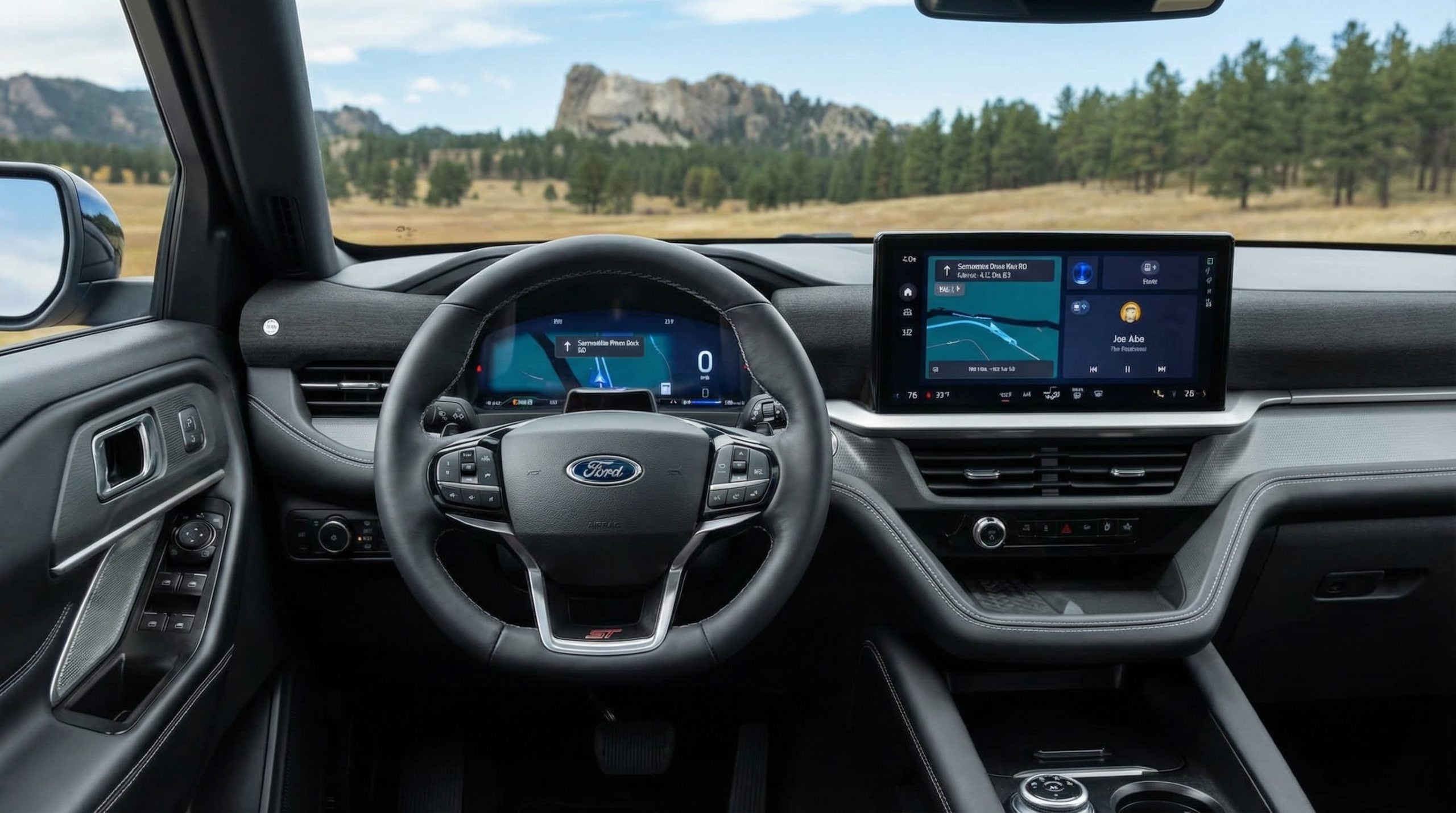
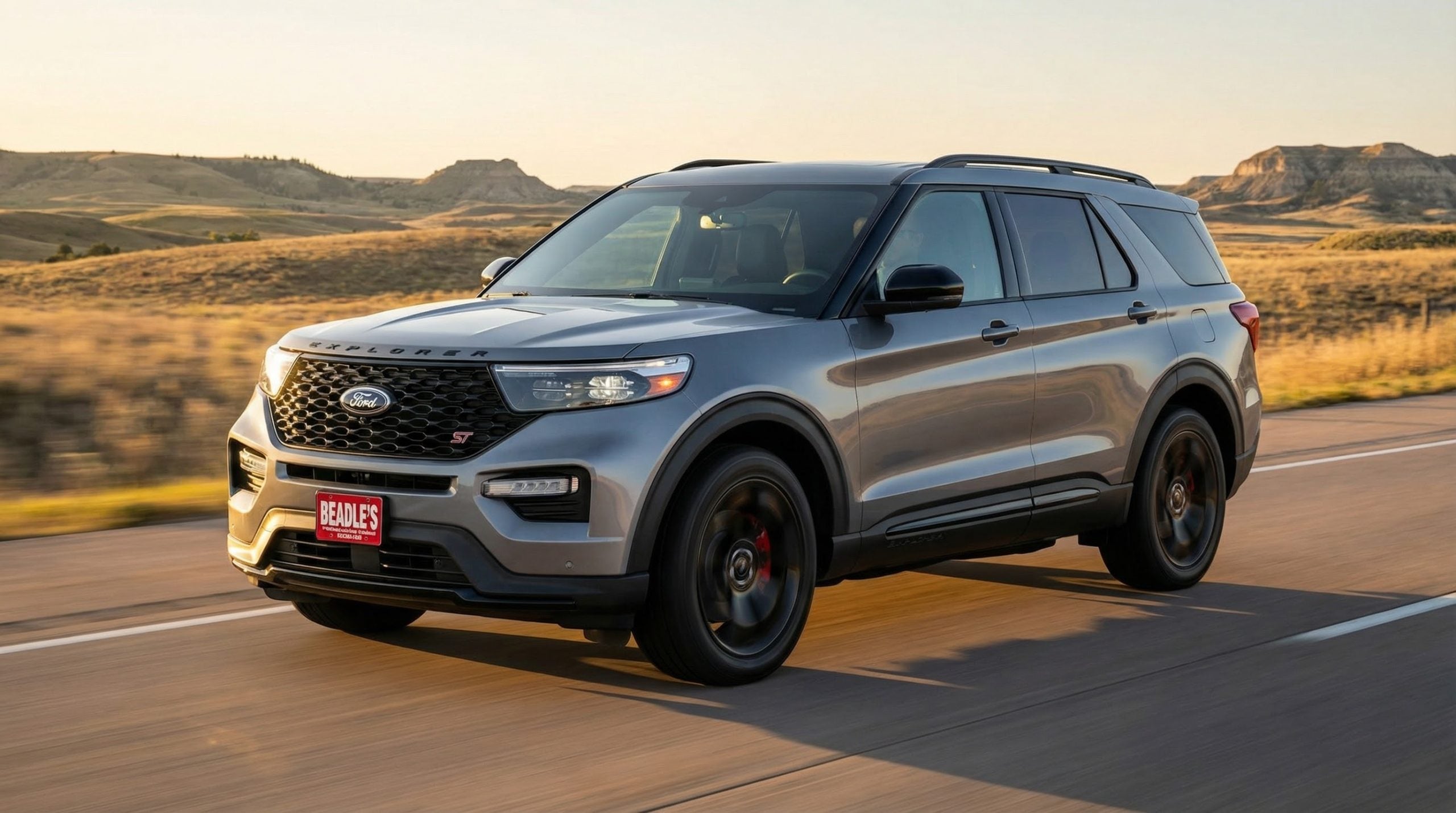
2026 Ford Explorer ST on open highway

2026 Ford Explorer Engine Options Deep Dive (2.3L vs 3.0L)

If you’re shopping for a 2026 Ford Explorer, the engine choice matters because it changes how the SUV feels every day — how easily it merges onto the highway, how confident it feels when loaded with people and gear, and how relaxed it is when towing or driving into headwinds. This guide explains the two main engine paths in plain language: what the 2.3L EcoBoost is best at, what the 3.0L EcoBoost does differently, and how to choose based on real life (not confusing specs). For the full lineup context (trims, seating layouts, towing structure, and how it all fits together), start with the 2026 Ford Explorer overview. Shop Explorers in Stock Table of Contents What engines are available on the 2026 Explorer? What does “turbocharged” actually mean? Who is the 2.3L EcoBoost best for? Who is the 3.0L EcoBoost best for? Real-world examples: when the engine choice matters ST vs Tremor: how engine choice changes the vibe Does the engine affect fuel and day-to-day costs? How to choose the right engine in 5 steps What engines are available on the 2026 Ford Explorer? The 2026 Ford Explorer is generally built around two EcoBoost options: 2.3L EcoBoost® I-4 (commonly found on Explorer Active and ST-Line, and used across much of the lineup depending on configuration) 3.0L EcoBoost® V6 (the performance-focused option, standard on Explorer ST and available on some Tremor configurations depending on equipment selection) Simple takeaway: The 2.3L is the “everyday balanced” engine. The 3.0L is the “effortless power” engine. Trim-level structure and availability changes are best understood inside the full lineup guide: 2026 Ford Explorer overview. What does “turbocharged” actually mean? A turbo is like a “power helper.” Instead of making the engine bigger, it pushes more air into the engine so it can make more power when you need it — like when you accelerate, merge, or climb a hill. What that means in real life: You can have a smaller engine that still feels strong when you press the gas. Power can come in quickly when you need it (great for merging and passing). How smooth it feels depends on the engine size and tuning (which is where 2.3 vs 3.0 starts to matter). Who is the 2.3L EcoBoost best for? The 2.3L EcoBoost is usually the best fit for drivers who want a three-row SUV that feels confident and modern without paying extra for performance they won’t use every day. Best match if your life looks like: School drop-offs, errands, commuting, and weekend travel Mostly highway driving at steady speeds Occasional towing (with the right tow equipment) You want capability, but you don’t need “sports SUV” acceleration How it feels: responsive, balanced, and easy to live with — especially in Active and ST-Line trims. If your priority is family layout and space, this pairs well with what we cover in the Interior & Cargo Guide. Who is the 3.0L EcoBoost V6 best for? The 3.0L EcoBoost is for drivers who want the Explorer to feel effortless — especially when the SUV is loaded with people, gear, and long-distance highway miles. Best match if: You routinely drive with 5–7 passengers plus cargo You live on the highway and want strong passing power You tow more often (or want towing to feel less strained) You simply enjoy the feeling of confident acceleration How it feels: smoother power delivery, less “working hard” sensation on hills and passing, and a more performance-oriented personality — especially in Explorer ST. If you’re considering ST specifically, the deeper performance angle is covered in the Explorer ST Performance Guide. Real-world examples: when the engine choice matters Most people don’t notice engine differences in a calm test drive. They notice it during the moments that actually matter in real life. Here are the most common situations where your engine choice will feel different: 1) Merging onto the highway with kids in the back 2.3L: capable and responsive, but you may press the gas more to get the same “go now” feeling. 3.0L: feels more immediate and relaxed — less effort, more confidence. 2) Passing a semi on a two-lane highway 2.3L: does the job, but you’ll plan your pass a little more. 3.0L: passing power feels easier and quicker, especially at speed. 3) Driving into strong South Dakota wind 2.3L: steady, but you may notice more downshifts or effort in gusty conditions. 3.0L: maintains speed more effortlessly with less “strain” sensation. 4) Towing a small camper or boat The 2026 Explorer can tow up to 5,000 pounds when properly equipped, but engine choice impacts how confident it feels while towing — especially on hills, in wind, or when the SUV is loaded. For the full towing breakdown (including tongue weight, trailer frontal area, and setup tips), see the 2026 Explorer Towing & AWD Guide. ST vs Tremor: how engine choice changes the vibe This is a very common question: “If I want something special, should I choose ST or Tremor?” ST: performance personality — the engine and tuning are meant to feel fast and responsive on pavement. Tremor: adventure personality — designed for confidence on rougher roads and travel routes beyond pavement, with engine availability depending on how it’s equipped. If you want a trim-level decision guide that compares these clearly, the best reference is the 2026 Explorer Trim Levels Guide (it frames the “who each trim is for” question). Does the engine affect fuel and day-to-day costs? In plain terms: the more performance you choose, the more you should expect the vehicle to use fuel when you drive it like a performance vehicle. But driving habits matter just as much as engine choice. If you drive calmly, fuel use may be closer than you’d expect. If you accelerate aggressively or drive at high speeds often, the difference becomes more noticeable. Simple way to think about it: 2.3L: optimized for everyday efficiency and balance 3.0L: optimized for effortless power and performance feel How to choose the right Explorer engine in 5 steps This is voice-search friendly on purpose — it’s the simplest way to decide without getting lost. List your “most common” week. Commute, school, errands, highway miles. Think about your “most demanding” day. Full family load + gear + winter driving + highway passing. Decide how you want it to feel. “Fine and capable” vs “effortless and confident.” If you tow, decide how often. Occasional towing vs frequent towing. Use the trim structure as your shortcut. ST = performance path, Active/ST-Line = balanced path, Tremor = adventure path depending on configuration. Quick Specs / Overview (Plain Language) Engine What it’s best at Who it fits best 2.3L EcoBoost I-4 Everyday balance and confident daily driving Most families, commuters, general travel 3.0L EcoBoost V6 Effortless power, highway passing, performance feel ST shoppers, frequent highway drivers, heavy loads Key Takeaways The 2.3L EcoBoost is the “balanced everyday” engine for most families. The 3.0L EcoBoost is the “effortless power” option that feels stronger under load. Engine choice matters most in merging, passing, wind, hills, and towing feel. Trim choice is often the easiest way to narrow engine options. For full lineup context, the pillar page ties everything together. FAQ Is the 2.3L engine enough for a family SUV? For most families, yes. It’s designed to provide confident everyday performance for commuting, errands, highway travel, and family trips. The difference is less about “enough” and more about whether you want power to feel effortless under heavy loads. When does the 3.0L engine make the biggest difference? Most drivers notice the difference during highway merging and passing, when the vehicle is fully loaded with passengers, when driving into strong wind, and when towing or climbing hills. Does the engine change towing capacity? The Explorer can tow up to 5,000 pounds when properly equipped, but engine choice can change how confident and relaxed towing feels. Equipment configuration also matters, which is why towing should be evaluated as a full setup. Do I need the ST to get the stronger engine? Explorer ST is the most direct performance path, and the 3.0L EcoBoost is standard there. Other trims may have different availability depending on configuration, so the trim guide is the best starting point. What should I test drive to compare engines? If possible, drive an Explorer Active (2.3L) and an Explorer ST (3.0L). Use the same roads: a highway merge, a passing situation, and a rougher road section. The “feel” difference becomes clear quickly. Conclusion In my experience, engine decisions get much easier when shoppers stop thinking in “car specs” and instead focus on real moments: merging with kids in the back, passing on a two-lane highway, driving into wind, or towing on a weekend trip. When you match the engine to the life you actually live, the right Explorer configuration usually becomes obvious. About the Author Lexy Tabbert provides research-driven SUV configuration guidance and ownership insights for drivers across South Dakota and beyond.

2026 Ford F-150 at rural farm worksite

2026 Ford F-150 Engine Options Guide

The 2026 Ford F-150 offers six distinct engine options, ranging from efficient EcoBoost configurations to a full hybrid system and high-performance Raptor variants. Each powertrain is engineered for a different balance of towing strength, daily drivability, and long-term ownership priorities. This guide breaks down each available powertrain and explains who it makes the most sense for. For full trim availability, drivetrain pairings, and feature differences, reference the complete 2026 Ford F-150 overview. Contact Beadle Ford Table of Contents How Many Engines Are Available? Is the 2.7L EcoBoost Enough? Does the 5.0L V8 Still Make Sense? Why Choose the 3.5L EcoBoost? Is the PowerBoost Hybrid Worth It? What About Raptor Engines? Which Engine Is Best for South Dakota? How to Choose the Right Engine How Many Engine Options Are Available on the 2026 F-150? The 2026 F-150 offers six distinct powertrains, including five gas engines and one full hybrid system. All are paired with a 10-speed automatic transmission and differ in torque delivery, towing capability, and overall driving character. 2.7L EcoBoost V6 5.0L V8 3.5L EcoBoost V6 3.5L PowerBoost Full Hybrid 3.5L EcoBoost High Output (Raptor) 5.2L Supercharged V8 (Raptor R) Is the 2.7L EcoBoost Enough for Most Drivers? Yes — for many drivers, the 2.7L EcoBoost provides more than enough capability. When properly equipped, it can tow up to 8,400 pounds while delivering strong low-end torque for everyday driving. This engine works well for commuting, moderate trailer use, and rural driving without stepping into maximum towing configurations. Does the 5.0L V8 Still Make Sense in 2026? The 5.0L V8 remains a popular option for buyers who prefer naturally aspirated power delivery and traditional V8 sound and feel. When properly equipped, it can tow up to 12,800 pounds. For many drivers, the V8 represents straightforward performance and proven durability. Why Choose the 3.5L EcoBoost? The 3.5L EcoBoost delivers the highest conventional towing rating in the 2026 lineup — up to 13,500 pounds when properly equipped with the Tow/Haul Package and Max Tow Axle. It balances heavy-duty capability with strong highway performance, making it ideal for long-distance towing. For axle ratios, required packages, and configuration specifics, see the detailed 2026 F-150 Towing Guide. Is the 3.5L PowerBoost Hybrid Worth It? The PowerBoost hybrid combines twin-turbo power with electric motor assistance. When properly equipped, it can tow up to 11,600 pounds. It also enables available Pro Power Onboard functionality, supplying electricity for job sites or camping setups. Long-term cost considerations between hybrid and gas configurations are explored further in our F-150 Ownership & Long-Term Costs Guide. What About Raptor and Raptor R Engines? The Raptor’s 3.5L High Output EcoBoost focuses on high-speed off-road performance, offering up to 8,200 pounds of towing capability. The Raptor R’s supercharged 5.2L V8 emphasizes extreme performance and can tow up to 8,700 pounds. Which Engine Is Best for South Dakota Driving? The right engine depends on how the truck will actually be used. Daily driving + moderate towing: 2.7L EcoBoost Traditional V8 preference: 5.0L V8 Maximum conventional towing: 3.5L EcoBoost Efficiency + onboard power: PowerBoost Hybrid Off-road performance focus: Raptor or Raptor R Engine choice becomes clearer when considered within the full 2026 Ford F-150 overview, including trim and drivetrain pairings. How to Choose the Right F-150 Engine Determine the heaviest trailer you realistically plan to tow. Confirm required equipment for maximum ratings. Consider how often you drive long highway distances. Evaluate winter traction needs. Balance capability with daily comfort. Conclusion In my experience, the right engine choice becomes much clearer once buyers focus on how often they truly need maximum towing versus how often they’ll use the truck for everyday driving. The strongest number on paper isn’t always the best fit — the best configuration is the one that matches how the truck will actually be used. Review current 2026 Ford F-150 availability at Beadle Ford or contact us to compare engine configurations in person. About the Author Lexy Tabbert provides research-driven vehicle guides and in-depth truck insights for drivers across South Dakota and the surrounding region.

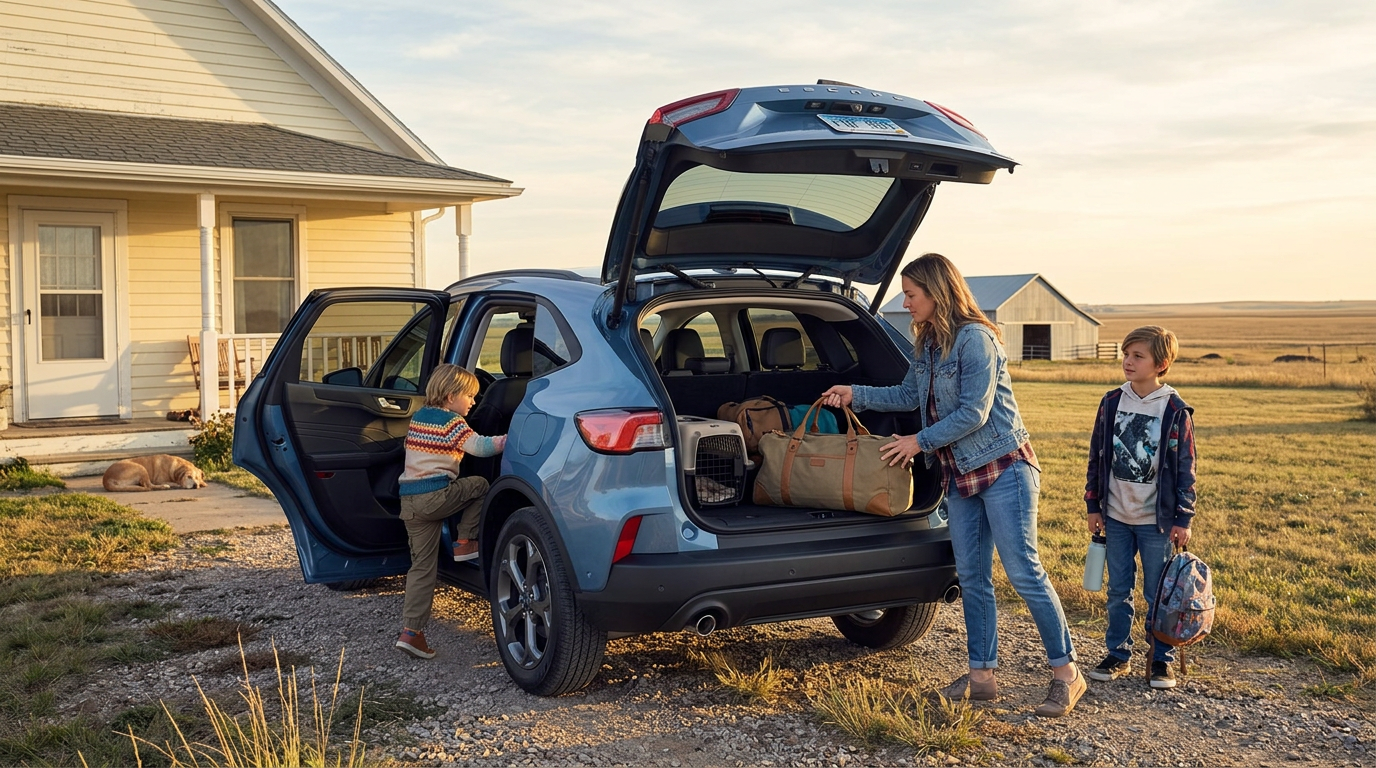
2026 Ford Escape loaded for a family trip on South Dakota plains highway

Is the 2026 Ford Escape a Good Family SUV? A Practical Look for South Dakota Buyers

The 2026 Ford Escape seats five, offers available AWD, delivers among the better fuel economy in its class through the hybrid powertrain, and includes Ford's full Co-Pilot360 safety suite as standard equipment across every trim. For South Dakota families — school runs in Bowdle, sports travel to Huron or Mitchell, longer highway trips to Aberdeen or Sioux Falls — it covers most of what a family vehicle needs to do without moving up to a larger SUV. This guide breaks down the Escape's family-specific specs and features honestly: interior room, safety systems, AWD availability for winter driving, and fuel economy for a family that logs real miles across central South Dakota. It also covers when the Escape genuinely isn't enough and the Explorer makes more sense. Shop Escapes in Stock Get Pre-Approved On This Page What Is the 2026 Ford Escape Like Inside for a Family of Five? What Kid-Friendly Features Does the 2026 Ford Escape Have? What Safety Features Come Standard on the 2026 Ford Escape? Does the 2026 Ford Escape Have AWD for Year-Round Family Driving in South Dakota? How Does the Escape's Fuel Economy Affect a Family's Monthly Driving Budget? When Should a South Dakota Family Consider the Explorer Instead of the Escape? What Is the 2026 Ford Escape Like Inside for a Family of Five? The Escape fits five passengers across two rows. It is a compact crossover, so the rear seat is sized for kids and average-build adults comfortably, but it is not a large SUV — tall adults sitting behind tall adults will feel the compact footprint on long trips. Cargo is the practical question for families. Behind the rear seats, the Escape offers approximately 37.5 cubic feet of cargo space — enough for a week of grocery runs or a weekend's worth of luggage for four. With the rear seats folded flat (60/40 split configuration), cargo capacity expands to approximately 60.8 cubic feet. Verify current figures at Ford.com, as cargo numbers are not listed in the order guide. The 60/40 split-fold rear seats are sliding as well as folding — the sliding feature lets you push the rear seats back for more legroom when cargo isn't the priority, or forward when you need the extra cargo depth. Where the Escape works well for SD families: daily driving, school pickup, commutes, and trips where you're packing light. Where it starts to feel tight: sports weekends with equipment, camping trips with gear, or anything that would fill a typical pickup bed. For most Bowdle-area families using the Escape as a daily driver and second vehicle, the cargo room is adequate. For families who routinely haul gear for multiple kids plus parents, the complete 2026 Ford Escape overview covers all configurations, and the Explorer section below covers when stepping up makes sense. What Kid-Friendly Features Does the 2026 Ford Escape Have? LATCH anchors are standard on the rear outboard seating positions across all 2026 Escape trims. For families with car seats, the sliding rear bench is genuinely useful — you can slide the second row forward to give the front passenger more room, or push it back to make car seat installation and kid loading easier. That flexibility is a practical difference from fixed-rear-seat competitors in this class. Features that matter for SD family winters — and when they become standard: heated front seats, a heated steering wheel, and remote start are all standard on ST-Line Select and up. On Active and ST-Line, they are not standard — they require either an option package or moving to a higher trim. If you're pre-warming a vehicle for school pickup in January at -10°F in Bowdle, that feature set matters, and the ST-Line Select is where it becomes baked in. A power liftgate (genuinely useful with your hands full of groceries or a kid) is also standard on ST-Line Select and up. Dual-zone electronic automatic climate control is standard across all trims — both front and rear passengers can reach their preferred temperature. The 13.2" SYNC 4 screen is standard on ST-Line Elite, PHEV, and Platinum; it's optional via tech packages on Select and lower trims. Wireless Apple CarPlay and Android Auto are included on all trims with the 8" standard screen and up. There is no factory-installed rear seat entertainment system on the 2026 Escape — families who want screen time for rear passengers will need a tablet or aftermarket solution. One honest note: the Escape trim levels guide covers which trims include the winter-ready feature set and which require option packages. What Safety Features Come Standard on the 2026 Ford Escape? Ford Co-Pilot360 is standard on every 2026 Ford Escape trim — from the entry-level Active through Platinum. This means automatic emergency braking (AEB) with pedestrian detection, forward collision warning, BLIS blind spot monitoring with rear cross-traffic braking, lane-keeping assist with driver alert, road departure warning, rear view camera, auto high-beam headlamps, and post-collision braking are included regardless of which configuration you purchase. Also standard on all trims: AdvanceTrac with Roll Stability Control (RSC), Electronic Traction Control, SOS Post-Crash Alert System, SecuriLock passive anti-theft, and a full airbag system including a Safety Canopy with rollover sensor. For highway driving on SD's open interstates where deer crossings and sudden weather changes are real risks, having AEB with pedestrian detection and road departure warning on every single trim matters. For families who want the next level of driver assistance — adaptive cruise control with stop-and-go, lane centering assist, rear parking sensors, and intersection assist — that's Co-Pilot360 Assist+. It comes standard on ST-Line Elite, PHEV, and Platinum. On Active, ST-Line, and ST-Line Select, Co-Pilot360 Assist+ requires a tech package upgrade. If highway-capable adaptive cruise is important for your family's longer South Dakota drives, the ST-Line Elite is where it becomes standard without package math. Other Ford Models to Consider Need more room? These models are also available at Beadle Ford. Ford Explorer More cargo room, available 3-row seating, more towing capacity. Shop Escapes in Stock Ford Bronco Sport Standard AWD, GOAT modes, staying in Ford's lineup. Shop Escapes in Stock Ford Maverick Compact truck with hybrid option, bed utility, and family-friendly price. Shop Escapes in Stock Does the 2026 Ford Escape Have AWD for Year-Round Family Driving in South Dakota? Yes — and the answer matters more depending on which trim you order. AWD is standard and the only drivetrain option on ST-Line Select, ST-Line Elite, and Platinum. On Active and ST-Line, FWD comes standard and AWD must be added at order — it does not come on the vehicle automatically. The PHEV trim is front-wheel drive only with no AWD option. For a family in Bowdle that's doing school pickup on packed gravel in November and running kids to Saturday morning sports in Huron in February, the AWD configuration is the practical choice. The Escape's AWD system distributes torque to the rear axle when slip is detected — it handles packed snow and gravel county roads competently. What it doesn't have is a dedicated Snow/Slippery driving mode — it's a reactive AWD system rather than a mode-switching one. The ST-Line Select is the natural starting point for South Dakota family buyers: AWD becomes non-negotiable here (you can't order FWD even if you wanted to), and it adds the full winter-ready package — heated front seats, heated steering wheel, and remote start — as standard equipment. That combination in a single trim is a clean deal for a central SD family vehicle. For more detail on how AWD availability lines up across all trims, the complete 2026 Ford Escape lineup overview covers all six configurations. How Does the Escape's Fuel Economy Affect a Family's Monthly Driving Budget? The 2026 Ford Escape's fuel economy advantage is most meaningful in the Hybrid AWD configuration. The 2.5L Hybrid AWD (available on ST-Line Select, Elite, and Platinum) delivers approximately 39 mpg combined — verify current EPA figures at fueleconomy.gov. For a family logging 15,000 miles per year, that's roughly 385 gallons of fuel annually. On the 1.5L EcoBoost FWD at approximately 30 mpg combined, the same 15,000 miles requires closer to 500 gallons. That difference — roughly 115 gallons per year — is real money on a farm family's budget where every dollar matters. The SD-specific efficiency argument is the highway leg. South Dakota families don't just drive city blocks — they're driving 30-mile county road hauls to get to a highway, then 60 to 80 miles into a larger city for errands or appointments. The Escape Hybrid's EPA highway figure (approximately 36 mpg — verify at fueleconomy.gov) holds up well on those stretches. For a Bowdle family making regular trips to Aberdeen or Huron, the Hybrid AWD pays back in fuel savings in a way that suburban buyers who drive shorter loops don't experience as directly. The PHEV is worth mentioning for context: it delivers higher MPGe when running on electricity (~101 MPGe, verify at fueleconomy.gov) and good hybrid-mode efficiency once the battery depletes (~40 mpg, verify). The practical challenge for central SD families is that reliable Level 2 charging infrastructure near Bowdle is limited — the PHEV's efficiency advantage is smaller if you're charging on a standard Level 1 outlet or not charging consistently. And the PHEV is FWD-only, which is a significant trade-off for SD winter driving. For most SD families, the non-plug-in Hybrid AWD on ST-Line Select is the stronger combination of efficiency, AWD, and real-world practicality. When Should a South Dakota Family Consider the Ford Explorer Instead of the Escape? The Explorer is the right call when the Escape's two-row, five-passenger limit is genuinely a constraint for your family's actual use. The Explorer offers available three-row seating — a real third row for a family of six or seven, not a jump seat. It also offers more cargo volume behind the second row than the Escape, more towing capacity depending on configuration, and a longer wheelbase that translates to more rear-passenger legroom on multi-hour drives. The trade-offs are straightforward: the Explorer is larger, costs more, and burns more fuel. For a family that genuinely needs three rows a few times a year (church trips, extended family hauling, carpool groups), paying the Explorer premium makes sense. For a family that's primarily two parents and two kids — the Escape's five-passenger cabin covers everyone, the cargo room handles the gear, and you're spending and fueling less for the same trip. One practical note on timing: the 2026 Escape is the final model year — Ford is not producing an Escape beyond 2026. The Explorer is continuing in Ford's lineup. If long-term model continuity and parts availability over a 10+ year ownership horizon matters to your family's decision, the Explorer's ongoing production is a real difference. For a 5–7 year ownership window, that consideration is lower — the Escape carries full Ford warranty coverage and parts support for any recently discontinued model is strong for many years post-production. Both the Escape and Explorer are available at Beadle Ford in Bowdle. Key Takeaways for South Dakota Families The Escape seats five with a sliding, 60/40 split-fold rear seat; cargo room is approximately 37.5 cu ft behind the rear seats (verify at Ford.com). It is not a three-row SUV. Ford Co-Pilot360 with AEB, pedestrian detection, BLIS, lane-keeping, and road departure warning is standard on every trim — no trim is without it. LATCH anchors are standard on rear outboard positions; heated seats, heated steering wheel, remote start, and power liftgate become standard starting at ST-Line Select. For SD family winter driving, ST-Line Select is the practical starting point: AWD is standard (no FWD option), and the full cold-weather feature set is included. The 2.5L Hybrid AWD delivers approximately 39 mpg combined — roughly 115 gallons per year less than the 1.5L gas on 15,000 annual miles, a meaningful difference for a farm family's budget. If your family regularly needs three rows or significantly more cargo capacity, step up to the Explorer — the Escape is a compact two-row vehicle and that limit is real on big gear days. Frequently Asked Questions Does the 2026 Ford Escape have LATCH anchors for car seats? Yes — LATCH anchors are standard on the rear outboard seating positions on all 2026 Ford Escape trims. The rear seat also features 60/40 split-fold and sliding functionality. The sliding capability is useful for car seat installation, as you can position the second row forward or rearward depending on car seat size and how much front-passenger legroom you want. There is no LATCH anchor on the rear center position. Which 2026 Ford Escape trim is best for a South Dakota family? For most South Dakota families, the ST-Line Select is the practical starting point. It is the first trim where AWD is standard (no FWD option), and it adds heated front seats, a heated steering wheel, remote start, and a power liftgate as standard equipment — the full winter-ready package for central SD conditions. The ST-Line Elite steps up to a 10-way power driver's seat, the 13.2" SYNC 4 screen, wireless charging, and Co-Pilot360 Assist+ as standard equipment for families who want the full tech suite without package math. Both are available with the 2.5L Hybrid AWD for families prioritizing fuel economy on long South Dakota drives. Does the 2026 Ford Escape have a third row? No — the 2026 Ford Escape is a two-row, five-passenger vehicle. There is no three-row option at any trim or configuration. If your family regularly needs seating for six or seven, or needs the cargo room that comes with a longer three-row platform, the Ford Explorer is the appropriate step up. The Explorer is available at Beadle Ford in Bowdle and offers available three-row seating with more interior volume than the Escape. Is the 2026 Ford Escape safe enough for family use? The 2026 Ford Escape includes Ford Co-Pilot360 as standard equipment on every trim — this means automatic emergency braking with pedestrian detection, BLIS blind spot monitoring with rear cross-traffic braking, lane-keeping assist, road departure warning, pre-collision warning with dynamic brake support, and a rear view camera come on every Escape regardless of price point. AdvanceTrac with Roll Stability Control and a full airbag system including a Safety Canopy with rollover sensor are also standard across all trims. Verify current NHTSA and IIHS safety ratings at their respective websites for the most recent test results. Is the Ford Escape or Explorer better for a South Dakota family? For a family of five using the vehicle primarily for daily driving, school runs, and regional highway trips, the Escape handles the job with better fuel economy and a lower price point than the Explorer. For families who need three rows, routinely haul significant equipment, or plan to use the vehicle for towing beyond the Escape's capacity (the 2.0L Escape maxes at 3,500 lbs with the Class II package; the Explorer can tow more depending on configuration), the Explorer is the right step up. If you're on the fence, both are available at Beadle Ford in Bowdle — a back-to-back comparison is the best way to make the call for your specific family use case. My Take on the 2026 Ford Escape as a South Dakota Family Vehicle The buyers I talk to who are considering the Escape for family use usually come in with one of two scenarios: they're using it as a second vehicle on the farm — mom's daily driver for town runs and kid hauling while the truck handles the heavier work — or they're a smaller family that doesn't need a full-size SUV and is trying to keep fuel costs reasonable on South Dakota highway miles. The Escape fits both of those use cases well. The ST-Line Select in Hybrid AWD hits a real sweet spot: AWD locked in, heated seats and remote start included, and approximately 39 mpg on the highway. I do tell families honestly when the Escape is going to come up short. If you've got three kids who need their own row, or you're the household that hauls ATV gear and sports equipment for multiple kids on the same trip — you're going to load the Escape to its limit and probably wish you'd gone to the Explorer. The five-passenger, two-row limit is real. It's not a knock on the vehicle; it's just what it is. The Explorer is right down the lot. If you want to walk through which trim makes the most sense for your family's actual routine, stop by Beadle Ford in Bowdle. I'm happy to go through it with you. Shop Escapes in Stock Get Pre-Approved About the Author Lexy Tabbert — Beadle Ford, Bowdle, SD Lexy Tabbert is the Director of Sales and Marketing at Beadle Ford in Bowdle, South Dakota. She covers Ford vehicles, trim comparisons, and buyer guidance — helping families, ranchers, and ag operators across the region find the right truck and configuration for their needs. Learn more about Lexy.
Ford Edge trim lineup showcase Bowdle SD

Ford Edge Trims Explained: SE, SEL, ST-Line, Titanium, and ST

Ford Edge Buyer’s Guide Ford Edge Trims Explained: SE, SEL, ST-Line, Titanium, and ST The Ford Edge comes in five distinct trims — SE, SEL, ST-Line, Titanium, and ST — each designed for different buyer priorities and budgets. Whether you’re seeking maximum value, premium comfort, or performance-tuned capability, this guide walks you through every option so you can choose with confidence. Shop Edges in Stock On This Page What Does the Ford Edge SE Include? What’s New in the Ford Edge SEL? What Is the Ford Edge ST-Line? Why Choose the Ford Edge Titanium? What Makes the Ford Edge ST Performance-Ready? Ford Edge Trim Comparison Table Which Ford Edge Trim Is Right for You? Frequently Asked Questions What Does the Ford Edge SE Include? The Ford Edge SE (100A) is the entry-level trim and the best choice for budget-conscious families seeking a spacious, reliable SUV. Every SE arrives with all-wheel drive standard — no front-wheel drive option — making it ready for South Dakota winters. Powertrain: The SE houses a 2.0L EcoBoost I-4 engine producing 250 horsepower and 280 lb-ft of torque, paired with an 8-speed automatic transmission. Fuel economy is solid for the class, and the EcoBoost platform has proven reliability across Ford’s lineup. Interior & Comfort: Cloth seats with a 4-way manual driver adjustment keep costs down without sacrificing comfort. Dual-zone automatic climate control, a leather-wrapped steering wheel, and SYNC 4A with a 12-inch touchscreen and wireless CarPlay/Android Auto come standard across all trims. The SE includes six speakers and a manual liftgate. Wheels & Styling: The SE rolls on 18-inch Sparkle Silver wheels with all-season tires (245/60R18). The Iconic Silver Honeycomb grille gives the SE a refined, distinct appearance. Towing & Cargo: Without the Class II Tow Package, the SE can tow 1,500 lbs. Cargo capacity sits at 39.2 cu ft behind the rear seats, expanding to 73.4 cu ft with seats folded — more than enough for a farm run or family road trip across the Prairie. Best for: Young families, first-time SUV buyers, rural operators who prioritize reliability and all-wheel drive capability without premium features. What’s New in the Ford Edge SEL? The SEL (201A) is where comfort upgrades begin. Stepping up to this trim unlocks power seat adjustments, heated front seats, and rear parking sensors — features that make daily driving more convenient and safer, especially during South Dakota winters. Seating: ActiveX seats with improved bolstering replace cloth on the SE. The driver seat moves with 8-way power adjustment, while the front passenger gets 4-way power adjustability. Both front seats are heated, a welcome feature on cold Prairie mornings. Lighting & Visibility: LED Signature Lighting enhances nighttime visibility and gives the SEL a more upscale exterior presence. Heated side mirrors and an auto-dimming rearview mirror round out the comfort package, reducing glare during sunrise and sunset drives across rural South Dakota. Wheels: The SEL steps up to 18-inch Split-Spoke Sparkle Silver wheels, a more refined design than the SE’s base pattern. Best for: Buyers who want the SE’s value foundation plus comfort conveniences; ranchers and ag professionals who appreciate heated seats for early-morning work. What Is the Ford Edge ST-Line? The ST-Line (250A) bridges comfort and sporty styling, appealing to buyers who want a bolder look without the V6 engine of the ST. It builds on the SEL foundation and adds distinctive design cues that make a statement on the road. Wheels & Suspension: Twenty-inch Premium Gloss Black wheels (245/50R20) replace the SEL’s 18-inchers, delivering a more aggressive stance. These larger wheels improve handling feedback without compromising ride quality over South Dakota’s gravel roads and highway stretches. Interior Design: ActiveX seating gets Miko insert accents, and red accent stitching throughout the cabin signals the ST-Line’s sportier personality. A wireless charging pad for mobile devices (increasingly essential) and remote start via smartphone round out the tech upgrades. Power Liftgate & Styling: The power liftgate is a genuine convenience, especially when your hands are full or you’re loading cargo. The Pillar Black Mesh grille and overall sharper styling differentiate the ST-Line visually from lower trims. 110V Outlet: A 110V outlet in the cargo area lets you power tools, coolers, or other equipment during ranch work or tailgating. Best for: Style-conscious buyers, outdoors enthusiasts, those who want SUV presence without sacrificing fuel efficiency of the 2.0L engine. Why Choose the Ford Edge Titanium? The Titanium (300A & 301A Lux) is Ford’s luxury play in the Edge lineup. This trim delivers premium materials, advanced driver-assistance systems, and premium audio that rival vehicles costing thousands more. Choose 300A for core luxury, or 301A Lux for the ultimate Titanium experience. Seating & Materials: Ten-way power driver seat with memory function, 6-way power passenger seat, and premium leather upholstery set the Titanium apart. Both front seats are heated as standard, and the 301A Lux adds cooled front and heated rear seats — luxury touches perfect for South Dakota’s temperature extremes. Wheels & Exterior: Nineteen-inch Luster Nickel wheels (245/55R19) provide a refined, upscale presence. The Chrome bars grille signals Titanium’s premium positioning. A hands-free foot-activated liftgate adds genuine convenience when carrying groceries or ranch supplies. Audio & Ambiance: A 12-speaker B&O system with subwoofer transforms your commute into a concert venue. Ambient lighting throughout the cabin creates a refined atmosphere during night drives. The heated steering wheel (standard on Titanium) is a game-changer during Bowdle winters. 301A Lux Upgrades: The premium package adds adaptive cruise control with stop-and-go functionality — excellent for highway drives across Nebraska and South Dakota. A panoramic roof opens the cabin visually, and a 180-degree camera system enhances parking confidence in tight farm or downtown spaces. Best for: Luxury-minded families, executives making long commutes, buyers who value premium audio and comfort technology; those shopping the used market seeking the most feature-rich, lowest-mileage Edge available. What Makes the Ford Edge ST Performance-Ready? The Ford Edge ST (400A & 401A High) is the performance flagship — a true enthusiast’s SUV powered by a 2.7L EcoBoost V6 engine. It delivers the muscle to tow trailers, haul equipment, and corner with authority, all while maintaining SUV practicality. Engine & Powertrain: The 2.7L twin-turbocharged EcoBoost V6 produces 335 horsepower and 380 lb-ft of torque — a meaningful step up from the 2.0L I-4’s 250 hp. A 7-speed automatic transmission is tuned by Ford Performance engineers for responsive acceleration and dynamic handling. Towing capacity jumps to 3,500 lbs standard, with the Class II Tow Package included. Suspension & Handling: The ST gets Ford Performance-tuned suspension geometry and dampers, delivering noticeably sharper turn-in and flatter cornering than lower trims. Yet it remains comfortable on highway stretches across the Great Plains. This is the Edge you choose when you want an SUV that feels alive behind the wheel. Interior & Seating: ST bolstered bucket seats with Miko inserts and leather trim hug you during spirited driving. Ten-way power driver seat with memory, B&O 12-speaker premium audio, and heated steering wheel come standard. The 401A High adds adaptive cruise control, panoramic roof, cooled front seats, and heated rear seats for maximum comfort and convenience. Wheels & Exterior: Twenty-inch Bright-Machined wheels (with performance tires) and ST-exclusive styling cues — including unique badging and aggressive grille treatment — make the ST unmistakable on the road. Best for: Performance enthusiasts, those who tow trailers regularly, buyers seeking an SUV with genuine dynamic personality; ranchers and operators who need both capability and confidence. Ford Edge Trim Comparison Table Use this table to compare specifications, features, and pricing across all five Ford Edge trims: Feature SE SEL ST-Line Titanium ST Engine 2.0L I-4 EcoBoost 2.0L I-4 EcoBoost 2.0L I-4 EcoBoost 2.0L I-4 EcoBoost 2.7L V6 EcoBoost Horsepower / Torque 250 hp/280 lb-ft 250 hp/280 lb-ft 250 hp/280 lb-ft 250 hp/280 lb-ft 335 hp/380 lb-ft Transmission 8-Speed Auto 8-Speed Auto 8-Speed Auto 8-Speed Auto 7-Speed Auto Drivetrain All AWD All AWD All AWD All AWD All AWD Towing (with Class II) 3,500 lbs 3,500 lbs 3,500 lbs 3,500 lbs 3,500 lbs (std) Driver Seat 4-way Manual 8-way Power 8-way Power 10-way Power + Memory 10-way Power + Memory Heated Front Seats No Yes Yes Yes Yes Audio System 6 speakers 6 speakers 6 speakers B&O 12 + Sub B&O 12 + Sub Wheels 18” Sparkle Silver 18” Split-Spoke 20” Gloss Black 19” Luster Nickel 20” Bright-Machined Liftgate Manual Manual Power Hands-free Foot TBD Adaptive Cruise No No No 301A only 401A High only SYNC 4A & Co-Pilot360 Standard Standard Standard Standard Standard All Edge trims include standard all-wheel drive, SYNC 4A 12” touchscreen, wireless CarPlay/Android Auto, and Co-Pilot360 driver-assistance suite. Which Ford Edge Trim Is Right for You? Choose SE if: You’re a budget-conscious family or first-time SUV buyer. The SE delivers all the essential tech — SYNC 4A, wireless CarPlay, Co-Pilot360 — in a proven, reliable package. Perfect for commuting and family hauling in South Dakota. Choose SEL if: You want the SE’s value but appreciate power seating, heated seats for winter, rear parking sensors, and a cleaner interior look via ActiveX trim. Ideal for ranchers and ag operators making regular long drives across the region. Choose ST-Line if: You seek style, sportier wheels, and practical upgrades (power liftgate, wireless charging, remote start) without the V6 engine premium. The ST-Line is the sweet spot for outdoors enthusiasts and those who want Edge presence without premium fuel costs. Choose Titanium if: You value luxury materials, premium audio (B&O 12-speaker + subwoofer), cooled/heated seats, and the latest driver-tech (301A Lux adds adaptive cruise, panoramic roof, 180-degree camera). Best for executives, long-distance commuters, and buyers shopping the used market for maximum feature density. Choose ST if: You tow regularly or demand SUV performance and handling. The 2.7L V6 EcoBoost (335 hp/380 lb-ft) and Ford Performance suspension deliver genuine driving excitement. The 401A High variant includes adaptive cruise, panoramic roof, and cooled/heated seating. Ranchers, equipment haulers, and performance enthusiasts will find the ST indispensable. Key Takeaways All five Edge trims come with all-wheel drive standard, SYNC 4A, wireless CarPlay/Android Auto, and Ford Co-Pilot360 driver-assistance suite. SE ($) — Best value; cloth interior, manual seats, 6 speakers. Tow 1,500 lbs base, 3,500 with Class II package. SEL ($ $) — Add power seats, heated seats, rear sensors, LED lighting, and a more refined interior. ST-Line ($ $ $) — 20-inch wheels, power liftgate, wireless charging, and sportier styling; fuel-efficient 2.0L I-4. Titanium ($ $ $ $) — Premium audio (B&O 12 + sub), leather, cooled/heated seats, hands-free liftgate. 301A adds adaptive cruise and panoramic roof. ST ($$$$ $) — 2.7L V6 EcoBoost (335 hp), Class II tow standard, Ford Performance suspension, bolstered buckets. 401A adds adaptive cruise, panoramic roof, cooled/heated seating. In the used market, Titanium 301A Lux and ST 401A High models hold strong value due to their comprehensive feature sets. Frequently Asked Questions Can I get front-wheel drive on any Ford Edge trim? No. All five Ford Edge trims — SE, SEL, ST-Line, Titanium, and ST — come exclusively with all-wheel drive. There is no front-wheel drive option. AWD is standard equipment across the entire lineup, which is ideal for South Dakota winters and unpaved rural roads. What is the difference between the Titanium and ST? The Titanium prioritizes luxury, comfort, and refinement with premium audio, cooled/heated seats, and a hands-free liftgate. The ST prioritizes performance with a 2.7L V6 EcoBoost (335 hp vs. Titanium’s 250 hp 2.0L), Ford Performance suspension tuning, and standard Class II towing. Choose Titanium for luxury; choose ST for performance and capability. How much can the Ford Edge tow? Base towing without a package is 1,500 lbs on all trims. With the Class II Tow Package (53G), 2.0L I-4 trims tow 3,500 lbs. The ST includes the Class II package standard, also rated at 3,500 lbs. Perfect for trailers, equipment, and ATV hauling across South Dakota ranches. Is SYNC 4A and CarPlay standard on all Edge trims? Yes. SYNC 4A with 12-inch touchscreen, wireless CarPlay/Android Auto, and Co-Pilot360 driver-assistance tech come standard on every Edge trim — SE through ST. No surprises; everyone gets the latest connectivity and safety tech. Which Edge trim has the best resale value? Titanium 301A Lux and ST 401A High trims typically hold value strongest on the used market because they offer comprehensive, desirable features — adaptive cruise, panoramic roof, premium audio, cooled/heated seating, and advanced cameras. Buyers seeking low-mileage, feature-rich used Edges seek these versions specifically. Do I need the Class II Tow Package, or can I tow with the base Edge? You can tow 1,500 lbs base on any Edge. If you plan to tow trailers, ATVs, or equipment regularly — common on South Dakota ranches — the Class II package (which upgrades capacity to 3,500 lbs) is recommended. The ST includes Class II standard. Related Resources Ford Edge Best Years — Which Model Year Should You Buy? Shop Edges in Stock Shop Edges in Stock My Take on the Ford Edge Trim Lineup In researching the Edge for this guide, the trim structure is one of the clearest in Ford’s lineup — each step up adds meaningful, specific features rather than just cosmetic changes. The SE and SEL represent genuine value for buyers who don’t need heated seats or premium audio; the Titanium and ST represent real capability upgrades for buyers who do. For buyers in the Bowdle area, the one trim detail worth emphasizing is that AWD is standard across every Edge — that’s not something you have to seek out or pay extra for. And for anyone towing regularly, the Class II package distinction matters: only the SE and SEL require it as an add-on, while the ST includes it outright. For context on which model years these trims appeared in and which to target used, the Ford Edge buyer guide covers the full picture. Questions about a specific vehicle? Beadle Ford in Bowdle can help. Shop Edges in Stock Contact Beadle Ford About the Author Lexy Tabbert — Beadle Ford, Bowdle, SD Lexy Tabbert is the Director of Sales and Marketing at Beadle Ford in Bowdle, South Dakota. She covers Ford vehicles, trim comparisons, and buyer guidance — helping families, ranchers, and ag operators across the region find the right truck and configuration for their needs. Learn more about Lexy.
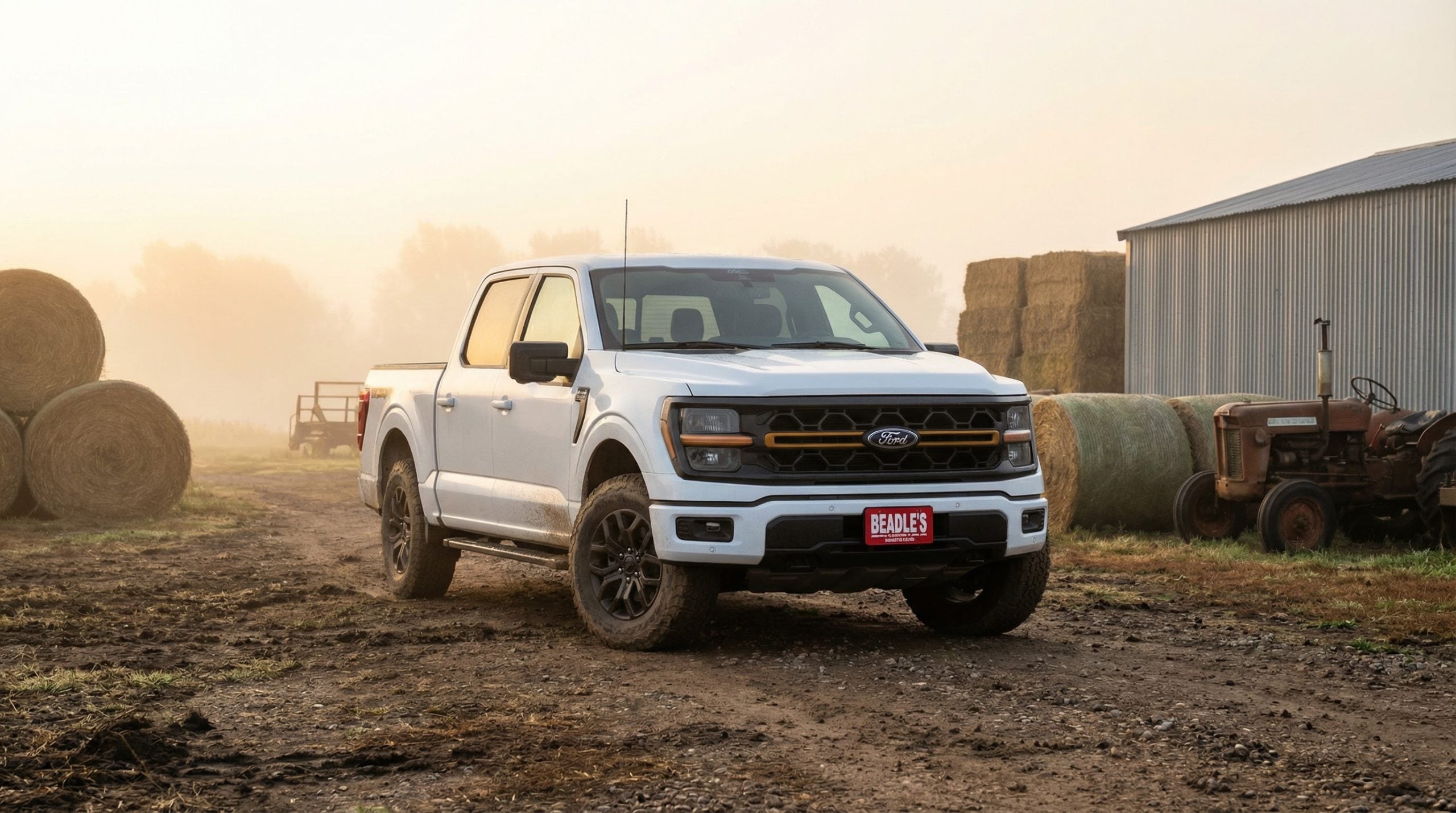
2026 Ford Maverick AWD in snowy South Dakota

2026 Ford Maverick Winter Driving Guide (AWD Confidence in South Dakota)

If you’re buying a Maverick in South Dakota, winter confidence is the real test. AWD helps—but the best winter setups come from AWD + the right tires + realistic expectations. This guide focuses on what actually makes a Maverick feel stable and predictable when roads are slick, windy, or snow-packed. Winter performance makes the most sense after you’ve decided drivetrain and configuration. If you haven’t done that step yet, start with: 2026 Maverick Specs & Configurations. For inventory and shopping help, visit the Ford Maverick model page. Shop Mavericks in Stock Contact Us Table of Contents AWD vs tires: what matters more? Traction basics for compact trucks Highway wind and stability: what to expect How to set up a Maverick for winter (practical checklist) How to choose an AWD Maverick build for SD winters FAQ AWD vs tires: what matters more? For winter driving, tires usually make the biggest difference first. AWD helps you get moving and maintain traction, but stopping and cornering confidence comes heavily from tire grip. The best winter Maverick setup is usually AWD plus tires that match your routes and snow/ice exposure. Traction basics for compact trucks Maverick is a compact truck, which is a good thing in winter: it’s easier to maneuver and less fatiguing in town. The tradeoff is that traction can change quickly when roads go from plowed to drifted, or when you transition from pavement to gravel. That’s why tires, visibility, and a stable driving rhythm matter just as much as drivetrain. If you’re balancing winter needs with ownership costs, this is explored further in: 2026 Maverick MPG & Ownership Costs. Highway wind and stability: what to expect South Dakota winter driving isn’t just snow—it’s wind. On open highways, the combination of gusts, passing semis, and uneven road surfaces can make vehicles feel “busy.” The best way to reduce stress is good tires, proper pressure, and a build that matches your real route needs. How to set up a Maverick for winter (practical checklist) Choose tires intentionally: winter tires if you drive in snow/ice daily; quality all-seasons if you’re mostly on plowed roads. Confirm AWD if it’s a non-negotiable: verify on the equipment list—not assumptions. Check wipers/visibility: winter visibility is often the “make or break” comfort factor. Keep weight realistic: don’t overload—payload still matters in winter handling. Plan for driving style: smooth inputs beat aggressive driving every time in slick conditions. Quick Overview Best winter upgrade Tires that match your routes and snow/ice exposure Best confidence combo AWD + good tires + clear visibility setup Smart shopping move Choose drivetrain first, then trim; confirm equipment list on the exact truck How to choose an AWD Maverick build for SD winters Decide where you drive: in-town, highway commute, or rural gravel routes. Choose AWD if you need traction margin for winter and variable surfaces. Budget for tires that match your winter exposure (this matters more than many packages). Keep towing/payload realistic so winter handling stays predictable. Compare two real builds on the Maverick hub to confirm equipment and value. Shop Mavericks in Stock Ask About Winter Setup FAQ Is AWD enough for South Dakota winters? AWD helps traction, but tires are usually the bigger difference-maker for winter confidence—especially for stopping and cornering. For the best setup, prioritize tires first and AWD second. Do I need winter tires if I have AWD? Not always, but many drivers prefer them if they regularly drive in snow/ice or on unplowed rural roads. AWD helps you move, but tire grip helps you stop and steer. What’s the biggest winter-driving mistake Maverick buyers make? Assuming AWD replaces the need for tires and careful driving. The best winter outcomes come from traction + visibility + smooth inputs, not drivetrain alone. Conclusion In my experience, the Maverick winter setup that feels best is simple: AWD for traction margin, tires that match your routes, and a build that stays realistic on payload and towing. When buyers plan for visibility and traction first, the Maverick feels calm and predictable even when South Dakota weather doesn’t cooperate. About the Author: Lexy Tabbert helps South Dakota and North Dakota shoppers choose winter-capable truck setups for real routes—highway commutes, rural roads, and changing weather. Her guidance focuses on practical confidence: the right drivetrain, the right tires, and a configuration that matches how you actually drive.

2026 Bronco Sport Bronze Package Sinister Bronze wheels Shadow Black roof SD

Is the 2026 Bronco Sport Bronze Appearance Package Worth It? What It Includes and Who Should Add It

The Bronze Package is new for 2026 and exclusive to the Big Bend trim. It's an appearance package with a specific aesthetic: Sinister Bronze wheels, bronze badge and grille lettering, a Shadow Black roof, and bronze-stitched sport seats. For buyers who want a distinctive look at a lower price point than stepping up to Outer Banks or Badlands, it's a worthwhile option to understand. This guide covers exactly what the Bronze Package includes in both configurations, what it costs in terms of capability trade-offs, and who it actually makes sense for. Shop Bronco Sports in Stock Get Pre-Approved On This Page What is the Bronze Package on the 2026 Bronco Sport? What does the Bronze Package (60F) include? What does the Bronze + Black Diamond Package (60H) include? How do 60F and 60H compare? Is the Bronze Package worth adding? Who is the Bronze Package actually for? What is the Bronze Package on the 2026 Bronco Sport? The Bronze Package is a new option for 2026, available only on the Big Bend trim. It comes in two versions: the Bronze Package (order code 60F) and the Bronze + Black Diamond Off-Road Package (order code 60H). Both are appearance-focused additions that build a visual identity around a bronze color theme applied to exterior and interior details. The 60H variant also adds off-road and towing capability hardware. Key Facts About the Bronze Package Available only on Big Bend — not offered on Heritage, Outer Banks, or Badlands New for 2026 — not carried over from 2025 Two configurations: 60F (appearance only) and 60H (appearance + off-road hardware) Exterior theme: Sinister Bronze wheels, bronze badge and grille lettering, Shadow Black roof Interior theme: Sport contour seats with bronze stitching, all-weather floor liners with bronze accents What does the Bronze Package (60F) include? The base Bronze Package (60F) is a pure appearance package. It changes how the vehicle looks — inside and out — without modifying the drivetrain, tires, or off-road capability from the standard Big Bend. Component What's Included Wheels 17” Sinister Bronze painted aluminum wheels Tires All-season (A/S) tires Roof Shadow Black painted roof Badges and grille Bronze badge lettering, bronze grille lettering, body-color door handles Seats Sport contour premium seats with bronze stitching Floor liners All-weather floor liners with bronze accent The 60F package does not include the Class II Trailer Tow Package, A/T tires, or any suspension upgrades. The Big Bend's standard 4x4, HOSS 1.0 suspension, and all-season tires remain unchanged. What does the Bronze + Black Diamond Package (60H) include? The Bronze + Black Diamond Package (60H) is the 60F appearance package combined with the Black Diamond Off-Road Package. This combination adds meaningful capability hardware on top of the visual upgrades: A/T tires replace the A/S tires, and the Class II Trailer Tow Package is included, raising the tow rating to 2,200 lbs. Component What's Included Everything in 60F All Bronze Package appearance items listed above Tires A/T tires — replaces A/S tires in the 60F base package Towing Class II Trailer Tow Package included — max tow rating 2,200 lbs (SAE J2807) The 60H combination is the version that makes functional sense for buyers who also need towing capability or who want A/T tires without moving to a higher trim. It delivers the Bronze Package's look alongside Big Bend's highest available tow rating. How do the Bronze Package (60F) and Bronze + Black Diamond (60H) compare? The decision between 60F and 60H comes down to whether you need A/T tires and towing capacity above 1,500 lbs. Both carry the same appearance changes — the functional difference is entirely in the tire and tow package. Feature 60F Bronze Package 60H Bronze + Black Diamond Bronze appearance items Included Included Tires All-season (A/S) All-terrain (A/T) Class II Tow Package Not included Included Max tow rating 1,500 lbs 2,200 lbs Is the Bronze Package worth adding to a Big Bend? The Bronze Package is an honest appearance upgrade. It doesn't inflate the truck's mechanical capability — it changes the way it looks, and it does so with a coherent visual theme rather than a scattered set of trim additions. The Sinister Bronze wheels against the Shadow Black roof give a Big Bend a significantly more distinctive appearance than the base configuration. Worth It If You want a visually distinctive Bronco Sport at a Big Bend price point You prefer the bronze/black exterior theme over the standard Big Bend look For 60H: you need A/T tires and occasional towing up to 2,200 lbs without stepping to a higher trim Skip It If You need heated seats, dual-zone climate, or remote start — those are Outer Banks features the Bronze Package doesn't add. If cold-weather comfort is a priority, consider the Outer Banks rather than a Bronze Package Big Bend. The 60F package is purely cosmetic. The 60H package adds real capability alongside the look. If towing or off-road tires matter, go with 60H over 60F — the A/T tires alone make it a more complete package for buyers who drive rural SD roads regularly. Who is the Bronze Package actually for? The Bronze Package makes the most sense for buyers who want a visually individualized compact SUV without the price of the Outer Banks or Badlands. It positions the Big Bend as something distinct — not a base-model look, but a specific visual package that stands apart from both the standard Big Bend and the higher trims' aesthetic. For buyers in north-central SD who need both the appearance and functional capability — A/T tires for gravel roads and occasional towing — the 60H combination delivers that at a lower total price than Heritage + A/T tires through dealer add-ons. The Heritage gets A/T tires standard on its own, but in a different visual direction (retro white roof and plaid) without a tow package. If towing is part of your need, 60H Big Bend is the only way to get that combination at the Big Bend price level. The full trim comparison — where the Bronze Package fits alongside Heritage, Outer Banks, and Badlands — is covered in the 2026 Bronco Sport trim guide, and the complete 2026 model year overview is at the 2026 Bronco Sport overview page. Key Takeaways The Bronze Package is new for 2026 and exclusive to the Big Bend trim. 60F is a pure appearance package: bronze wheels, bronze accents, Shadow Black roof, sport seats with bronze stitching — no capability upgrades. 60H (Bronze + Black Diamond) adds A/T tires and the Class II Trailer Tow Package, raising max tow to 2,200 lbs. Neither Bronze Package configuration adds heated seats, dual-zone climate, or remote start — those are Outer Banks features. 60H is the better choice for buyers who drive gravel roads regularly or need occasional towing above 1,500 lbs. The Bronze Package does not change the engine, 4x4 system, or HOSS 1.0 suspension. Frequently Asked Questions Can I get the Bronze Package on a Heritage, Outer Banks, or Badlands? No. The Bronze Package (60F and 60H) is only available on the Big Bend trim. It is not offered on any other 2026 Bronco Sport trim. If you want bronze accent styling on a higher trim, that's not currently an available configuration. Does the Bronze Package work with all exterior colors? The Bronze Package is designed to be applied to available Big Bend exterior colors, with the Shadow Black painted roof as part of the package itself. Confirm color pairing availability when configuring your order — not all exterior colors may be available with the Bronze Package depending on production scheduling. Check with Beadle Ford in Bowdle for current availability. Is the Bronze + Black Diamond (60H) worth it over just ordering the Heritage? They serve different priorities. The Heritage gives you A/T tires standard and the retro-white aesthetic — but no tow package path. The 60H Bronze + Black Diamond Big Bend gives you A/T tires and the Class II tow package at potentially a lower price point than the Heritage, with a different visual theme (bronze/black vs white/retro). If towing above 1,500 lbs matters, 60H is the only Big Bend path to that capability. Confirm current pricing at Beadle Ford. Was the Bronze Package available on the 2025 Bronco Sport? No. The Bronze Package is a new addition for the 2026 model year. It was not available on 2025 Bronco Sports in any configuration. My Take on the 2026 Bronze Package The Bronze Package is a straightforward option — Ford added it to give Big Bend buyers a distinctive appearance path without pushing them up to the Outer Banks price point. For some buyers that's exactly what they want: a Bronco Sport that looks different from the standard Big Bend without paying for features they don't need. When buyers come into Beadle Ford in Bowdle asking about it, my typical advice is: if you're going to add the Bronze Package, go with 60H over 60F. The A/T tires and tow package make it a more functional vehicle for the kinds of driving people do around here — gravel roads, occasional trailer hauls, boat launches. The appearance upgrade is there either way. If you want to see where the Bronze Package fits in the full 2026 lineup, the 2026 Ford Bronco Sport overview covers all trims and packages in one place. Come into Beadle Ford and we can build out the right configuration for what you need. Shop Bronco Sports in Stock Get Pre-Approved Contact Beadle Ford About the Author Lexy Tabbert — Beadle Ford, Bowdle, SD Lexy Tabbert covers Ford vehicles, trim comparisons, and buyer guidance for Beadle Ford in Bowdle, South Dakota. Her content is grounded in real buyer conversations with farmers, ranchers, and outdoor enthusiasts across north-central South Dakota and beyond. Learn more about Lexy.

2026 Ford Bronco Sport at trailhead loaded roof rails South Dakota

The 2026 Ford Bronco Sport's Cargo and Adventure Gear Features: Slide-Out Table, MOLLE Straps, and Pro Power Explained

The 2026 Ford Bronco Sport isn't just built for off-road terrain — it's designed for the gear you bring along. Ford engineered specific cargo and adventure features into the Bronco Sport's architecture from the start: a slide-out cargo table, MOLLE straps on the liftgate, roof-rack side rails, carabiner tie-down hooks, and a cargo area built to accept wet gear and dirty boots. These aren't add-ons — they're part of the vehicle's original design intent. This guide breaks down every adventure-oriented cargo feature on the 2026 Bronco Sport, which trims have what, and how these features actually work in real use for hunters, anglers, and outdoor buyers in South Dakota. Shop Bronco Sports in Stock Get Pre-Approved On This Page What is the slide-out cargo table and how does it work? What are the MOLLE straps and how do you use them? What do the roof-rack side rails allow you to carry? What interior cargo features does the Bronco Sport have? Which trims have which cargo features? How does the cargo system pair with towing capability? What is the slide-out cargo table and how does it work? The Bronco Sport includes a factory-installed slide-out load floor table integrated into the cargo area. It's a flat surface that extends from under the cargo floor — slide it out and it becomes a working surface at liftgate height. The table is designed for field use: cleaning fish, packing gear, organizing equipment, or staging items you're loading or unloading. For anglers heading to Lake Oahe or along the Missouri River, the slide-out table is a practical feature that's genuinely useful at a boat ramp or on a bank where you need a flat surface off the vehicle. It's not designed as a heavy-duty work surface, but for the outdoor use cases the Bronco Sport is built for, it performs well. The table is part of the cargo area design on the Bronco Sport and is not trim-exclusive — confirm on the specific vehicle you're considering, as option availability can vary. What are the MOLLE straps on the Bronco Sport and how do you use them? MOLLE (Modular Lightweight Load-carrying Equipment) straps are the webbing attachment system originally developed for military load-bearing equipment. On the Bronco Sport, Ford installs a MOLLE panel on the liftgate interior — standard on the Big Bend. The system allows attachment of MOLLE-compatible accessories directly to the vehicle: pouches, organizers, tool holders, first aid kits, recovery equipment, and similar gear. In practical terms, MOLLE straps turn the liftgate into an organized gear wall. Instead of loose items rolling around the cargo area, frequently-accessed gear can be attached to the liftgate in defined positions. For a hunter carrying calls, a first aid kit, ammunition storage, and a compact toolkit — or for a trail user with recovery gear — the system keeps frequently-needed items reachable without digging through a packed cargo area. MOLLE Availability by Trim Big Bend: MOLLE Straps System standard on the liftgate Heritage, Outer Banks, Badlands: Confirm on specific vehicle build — availability varies What do the roof-rack side rails allow you to carry? Roof-rack side rails are standard on every 2026 Bronco Sport trim. The rails accept compatible crossbars and mounting accessories, expanding the vehicle's carry capacity above the roofline. Common uses include kayaks, canoes, cargo boxes, ski and snowboard racks, bike carriers, and rooftop tents. Crossbars are not always included as standard equipment — confirm whether the vehicle you're ordering has factory crossbars or rails only. Factory crossbar additions and compatible accessories are available through the Ford accessories catalog and Beadle Ford. For buyers heading out to the Missouri River breaks or accessing remote areas of SD's public hunting land, a rooftop tent or cargo box significantly expands what the Bronco Sport can carry. The rails-first design means the roof system is integrated structurally — not an afterthought bolted to a bare roof. What interior cargo features does the Bronco Sport have? The Bronco Sport's interior cargo design prioritizes utility alongside everyday usability. Several features distinguish it from standard compact SUVs: Feature What It Does Availability Cargo tie-down carabiner hooks Four anchor points for securing cargo bags, dry bags, and gear Standard all trims Cargo tie-down loops Integrated floor loops for strapping down larger items Standard all trims Bottle opener (liftgate hatch) Built into the liftgate — a functional utility detail in a practical location Standard all trims Rubberized cargo floor Easy-clean surface for wet gear, mud, and messy cargo Badlands standard; other trims: check build Rubberized cabin floor Durable floor surface for work boots, wet clothing, and mud Badlands standard Under-seat storage cubby Dedicated storage compartment below rear seat Available on select trims — confirm on build Pro Power Onboard 400W 120V household-style outlet in the cargo area for tools, chargers, and equipment Badlands standard; Outer Banks with Sasquatch Package The Badlands' rubberized floors — both cargo and cabin — are a meaningful upgrade for buyers who regularly bring wet, muddy, or messy gear into the vehicle. They clean with a hose rather than requiring carpet extraction. For hunters, anglers, and anyone doing serious outdoor work, this is a durability feature that matters over the life of the vehicle. Which trims have which cargo and adventure features? Here's how the adventure-oriented cargo features break down across the 2026 lineup: Feature Big Bend Heritage Outer Banks Badlands Roof-rack side rails ✓ ✓ ✓ ✓ MOLLE straps (liftgate) ✓ Standard Confirm Confirm Confirm Carabiner hooks + loops ✓ ✓ ✓ ✓ Bottle opener (liftgate) ✓ ✓ ✓ ✓ Rubberized cargo + cabin floor — — — ✓ Standard Pro Power Onboard 400W — — With Sasquatch Pkg ✓ Standard How does the Bronco Sport's cargo system pair with its towing capability? The Bronco Sport's adventure cargo features and its towing capability are designed to work together. The slide-out table and carabiner hooks handle the gear inside the vehicle. The trailer hitch handles what you're pulling — a fishing boat to Lake Oahe, a utility trailer for gear and equipment, or a small camper for longer trips off the highway grid. The combination matters most on day trips or multi-day outings where you're carrying equipment inside the vehicle and towing a trailer at the same time. Understanding the GCWR — the combined weight limit for vehicle plus trailer — is important when you're loaded up with passengers and gear. The more you carry inside, the less margin you have against the GCWR for the trailer. For the full towing breakdown — capacity by configuration, Class II package requirements, and what the numbers mean in real-world use — see the 2026 Bronco Sport towing guide. Key Takeaways The Bronco Sport's adventure cargo features — slide-out table, MOLLE straps, carabiner hooks, bottle opener — are factory-built, not aftermarket additions. Roof-rack side rails are standard on every 2026 Bronco Sport trim. MOLLE Straps System is standard on Big Bend; confirm availability on other trims by build. Rubberized cargo and cabin flooring is standard on Badlands only — it's the easiest-to-clean configuration for outdoor use. Pro Power Onboard 400W (household outlet in cargo area) is standard on Badlands and available with Outer Banks Sasquatch Package. When loading cargo and towing simultaneously, factor your vehicle's loaded weight into the GCWR calculation. Frequently Asked Questions Can I add crossbars to the roof-rack rails that come standard? Yes. The factory roof-rack side rails are designed to accept compatible crossbars. Ford offers crossbars through its accessories catalog that are engineered to fit the Bronco Sport's specific rail pattern. Third-party crossbar systems compatible with factory rails are also widely available. Confirm crossbar load ratings before carrying heavy cargo — the rail system has specific weight limits. What MOLLE accessories are compatible with the Bronco Sport liftgate system? Any MOLLE-compatible accessory that fits the standard 1” webbing grid spacing will attach to the Bronco Sport's liftgate system. Ford offers branded accessories through the accessories catalog, including soft cases, organizers, and tool holders. Third-party MOLLE gear from outdoor and tactical suppliers is equally compatible. The standard MOLLE webbing pattern is universal across brands. How much cargo space does the Bronco Sport have? The 2026 Bronco Sport provides approximately 32.5 cubic feet of cargo space behind the rear seat, expandable to approximately 65.2 cubic feet with the rear seat folded. These figures are competitive within the compact SUV segment. The slide-out table and carabiner anchor system maximize usable space by keeping gear organized rather than loose in the cargo area. Confirm exact figures for the 2026 model year at Beadle Ford. Is the Pro Power Onboard 400W useful for hunting or fishing trips? Yes. The 400W household-style outlet in the Badlands' cargo area powers portable fish finders during charging, electric pumps, small power tools, camera battery chargers, and similar equipment. For overnight trips or remote locations with no shore power — which covers a lot of the public land and river access points across SD — having a dedicated 120V outlet integrated into the vehicle is a practical advantage over carrying a separate generator or battery bank. My Take on the Bronco Sport's Adventure Gear System At Beadle Ford, we talk to a lot of buyers who are choosing the Bronco Sport specifically because they want a smaller, more maneuverable vehicle than a full-size truck that can still handle outdoor use. The cargo system is a genuine differentiator. The slide-out table, MOLLE liftgate, and carabiner hooks aren't features that feel bolted on — they feel like someone who actually uses this vehicle for outdoor work designed them into it. For the buyers heading out to the Missouri River, Lake Oahe, or public hunting ground west of here, the Badlands with its rubberized floors and Pro Power Onboard is the most complete setup. You can come back with a muddy liftgate, wet waders, and gear everywhere, clean it out easily, and charge your equipment in the cargo area. For those who don't need the full Badlands package, the Big Bend's MOLLE setup and the standard roof rails on every trim give you a solid foundation. The full overview — including how the cargo system fits with the Bronco Sport's towing and off-road capability — is covered in the 2026 Ford Bronco Sport overview. Come into Beadle Ford in Bowdle and we'll walk you through the build that fits your use case. Shop Bronco Sports in Stock Get Pre-Approved Contact Beadle Ford About the Author Lexy Tabbert — Beadle Ford, Bowdle, SD Lexy Tabbert covers Ford vehicles, trim comparisons, and buyer guidance for Beadle Ford in Bowdle, South Dakota. Her content is grounded in real buyer conversations with farmers, ranchers, and outdoor enthusiasts across north-central South Dakota and beyond. Learn more about Lexy.

2026 Ford Explorer 13.2-inch touchscreen display

2026 Ford Explorer Technology & Safety Guide

The 2026 Ford Explorer offers modern technology designed to make driving easier, safer, and more connected. But many of the feature names — like BlueCruise, digital clusters, connectivity packages, and driver-assist systems — can feel confusing if you’re not familiar with Ford terminology. This guide explains what the technology actually does in plain language, how it works in everyday life, and what you should pay attention to when choosing a trim. For a full breakdown of how technology fits into the overall trim structure, see the 2026 Ford Explorer overview. Shop Explorers in Stock Table of Contents What is the 13.2-inch touchscreen? What is a digital instrument cluster? What is Ford BlueCruise? What driver-assist features are available? What is Ford connectivity? Do you have to pay for subscriptions? Which trim has the most technology? How to choose the right tech setup What is the 13.2-inch touchscreen in the 2026 Explorer? The 13.2-inch touchscreen is the main control center in the middle of the dashboard. It replaces many physical buttons and allows you to control navigation, music, phone calls, climate settings, and vehicle settings through a large display. Think of it like a large tablet built into your vehicle. It responds to touch and allows menu navigation similar to a smartphone. Apple CarPlay and Android Auto allow you to mirror your phone onto the screen so you can use familiar apps like maps and music. What is a digital instrument cluster? The digital instrument cluster is the screen directly in front of the driver. Instead of traditional analog gauges, it shows speed, fuel level, navigation prompts, and safety alerts on a customizable display. This means the information can change depending on what you’re doing. For example, when using navigation, directions may appear directly in your line of sight. What is Ford BlueCruise and how does it work? BlueCruise is Ford’s hands-free highway driving system. On certain pre-mapped highways, BlueCruise can allow the driver to remove their hands from the steering wheel while the vehicle maintains lane position and speed. Important points: The driver must still pay attention to the road. The system uses cameras and sensors to monitor driver awareness. It works only on approved highways. Availability depends on trim and equipment selection. BlueCruise does not replace the driver. It assists during long highway stretches to reduce fatigue. What driver-assist features are available? Driver-assist features are systems that help prevent accidents or reduce driver workload. These may include: Lane Keeping Assist – Gently helps keep the vehicle centered in its lane. Adaptive Cruise Control – Automatically adjusts speed to maintain distance from the vehicle ahead. Blind Spot Monitoring – Alerts you if a vehicle is in your blind spot. Pre-Collision Assist – Can warn you of potential frontal collisions. Rear Cross-Traffic Alert – Detects vehicles approaching from the side when backing out. These systems support safer driving but do not replace driver responsibility. What is Ford connectivity? Connectivity refers to the Explorer’s ability to connect to the internet and communicate with your smartphone. This enables features like: Remote start from your phone Vehicle location tracking Software updates over Wi-Fi Connected navigation services Some features may require activation or subscription after an initial trial period. Do you have to pay for subscriptions? Some connected features and BlueCruise functionality may require a subscription after a trial period, depending on configuration. It’s important to confirm what is included with your specific vehicle and how long any complimentary service lasts. Which 2026 Explorer trim has the most technology? Platinum and ST trims typically include the most advanced technology availability, though final feature inclusion depends on equipment group selection. Trim comparison is explained further in our Explorer Trim Levels Guide. How do you choose the right technology setup? Decide whether hands-free highway driving matters to you. Consider how often you use smartphone navigation. Determine whether remote access features are important. Review trim-level availability carefully. Confirm subscription details before purchase. Key Takeaways The 13.2-inch screen functions like a large built-in tablet. The digital cluster replaces traditional gauges. BlueCruise allows hands-free highway driving in approved areas. Driver-assist systems help reduce risk but do not replace drivers. Some connected services may require subscriptions. Frequently Asked Questions Does the 2026 Explorer drive itself? No. BlueCruise assists on certain highways, but the driver must remain attentive and responsible at all times. Is BlueCruise standard? BlueCruise availability depends on trim and equipment group selection. Can I use Apple CarPlay without a subscription? Apple CarPlay and Android Auto functionality do not require a subscription. Does the Explorer update its software automatically? Some vehicles can receive over-the-air software updates when connected to Wi-Fi. Conclusion In my experience, Explorer technology feels overwhelming at first because of the terminology — but once it’s broken down into what each system actually does in daily life, it becomes much easier to decide what matters. Most families don’t need every feature; they just need the right combination for how they drive. About the Author Lexy Tabbert provides research-driven SUV configuration guidance for drivers throughout South Dakota and beyond.

Contact Us

Fill out this form below and we'll contact you shortly
*Required Fields