
Blog / Bowdle Ford Dealer

Blog

All Bowdle Ford Dealer New Vehicles Bowdle Ford Service
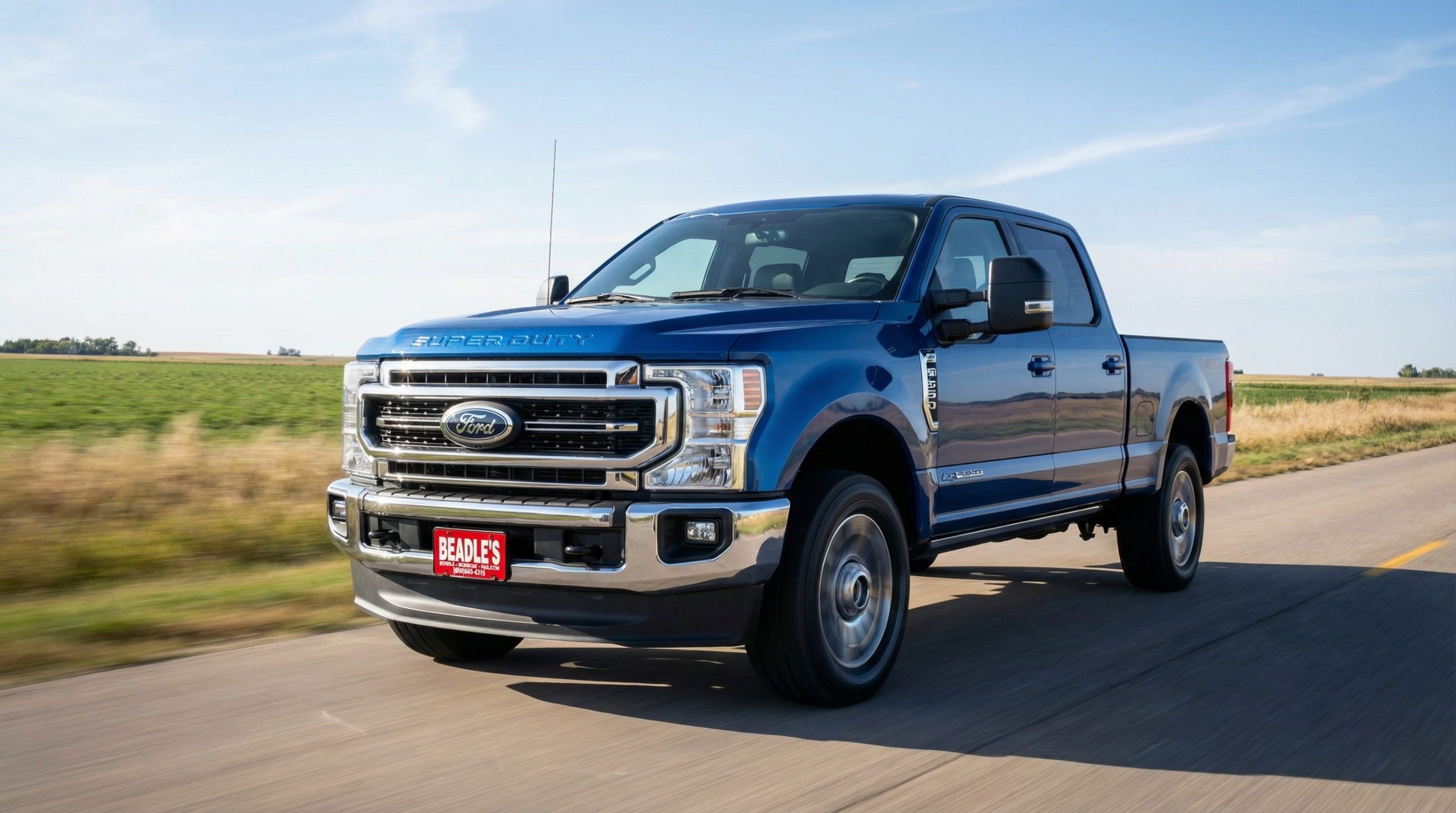
2026 Ford F-350 Super Duty driving on a rural South Dakota road

2026 Ford F-350 Engine Comparison

Quick Answer The 2026 Ford F-350 offers four engines: a 6.8L gas V8 (405 hp), a 7.3L gas V8 (430 hp), a 6.7L Power Stroke diesel (1,050 lb-ft), and a 6.7L High-Output Power Stroke (1,200 lb-ft, up to 40,000 lbs gooseneck). Gas suits mixed driving and top payload; diesel wins for frequent heavy towing. The "best" engine on a 2026 Ford F-350 Super Duty is the one that matches how you actually use the truck. If you tow heavy frequently, drive long distances, or want an effortless feel under load, your priorities look different than someone doing mixed driving with occasional towing. This guide lays out the four engines with their real numbers, how gas and diesel actually feel when towing, the ownership considerations beyond fuel, and how to match the engine to your workload here in South Dakota and North Dakota. Shop F-350s in Stock Get Pre-Approved On This Page What are the 2026 F-350 engine options and specs? Gas vs. diesel: what changes in real use? Which engine feels best for towing? Ownership considerations beyond fuel How do you match an engine to your workload? What are the 2026 F-350 engine options and specs? The 2026 F-350 offers four engines, all paired with a 10-speed TorqShift automatic: two gas V8s and two 6.7L Power Stroke diesels. The 6.8L gas is standard on XL, XLT, and Lariat; the 7.3L gas becomes standard on King Ranch and up; both diesels are optional across the line. Engine Output Max Tow / Payload 6.8L gas V8 405 hp / 445 lb-ft 18,900 lbs / up to 8,000 lbs payload 7.3L gas V8 430 hp / 485 lb-ft 22,500 lbs / 7,635 lbs payload 6.7L Power Stroke diesel 475 hp / 1,050 lb-ft 38,600 lbs / 6,952 lbs payload 6.7L High-Output Power Stroke 500 hp / 1,200 lb-ft 40,000 lbs / 6,935 lbs payload Tow figures are maximum gooseneck, properly equipped; the 40,000-lb rating requires the dual-rear-wheel HO diesel with the 40K Gooseneck Tow Package. Payload and towing vary with cab, bed, axle, and configuration. Gas vs. diesel: what changes in real use? Both can be strong choices — for different patterns. Gas is the simpler, lower-cost-of-entry option for mixed driving and occasional towing, and the 6.8L gas actually carries the highest payload of any F-350 at up to 8,000 lbs. Diesel earns its premium when towing is frequent and heavy, trading purchase price for torque and a composed feel under load. Engine availability ties to trim and packages, so it helps to compare powertrains alongside equipment. That framework is in our 2026 F-350 packages & trims guide. Which engine feels best for towing? For heavy, frequent towing, the diesels feel best — stable and unstrained on grades, in wind, and on long highway runs — which is why they're the common pick above roughly 20,000 lbs. The standard 6.7L Power Stroke (1,050 lb-ft, up to 38,600 lbs) covers nearly every gooseneck around here; the High-Output (1,200 lb-ft, up to 40,000 lbs) is for the heaviest loads. If your towing is occasional and mixed, the 7.3L gas is capable to 22,500 lbs without diesel upkeep. Our Recommendation For most ranch and farm buyers around Bowdle and Aberdeen who tow gooseneck trailers regularly, we recommend the standard 6.7L Power Stroke — its 1,050 lb-ft and 38,600-lb rating cover nearly every trailer here without paying for the High-Output engine. If you tow only occasionally and want maximum payload and the lowest cost of ownership, the 7.3L gas V8 is the smarter buy. Match it to a build with our 2026 F-350 towing guide. Ownership considerations beyond fuel The right engine is an ownership decision, not just a spec-sheet one. Weigh the purchase premium against how hard and how often you'll actually work the truck. Upfront cost: diesel configurations carry a higher purchase price than gas. Use pattern: frequent heavy towing justifies diesel; mixed driving favors gas. Payload need: if you haul heavy in the bed more than you tow, the 6.8L gas and its 8,000-lb payload may matter more than diesel torque. Long-term plans: how long you keep the truck changes the value equation. Work reality: in wind, winter, and long distances, "effortless under load" can matter more than mileage. How do you match an engine to your workload? Work from how you use the truck, in four steps: Identify your heaviest trailer and how often you tow it. Decide whether "effortless under load" on grades and in wind is a priority. Factor in payload needs, annual miles, and how long you keep trucks. Compare real builds — engine choice can affect available equipment, packages, and SRW vs. DRW. From the Beadle Ford Lot Most F-350 shoppers come in asking about the High-Output diesel, but once we walk through their real trailer weight, more leave with the standard 6.7L Power Stroke or the 7.3L gas — the High-Output engine and a dually mostly earn their premium once you're routinely past what those two cover. Key Takeaways Four engines, all 10-speed TorqShift: 6.8L gas (405 hp), 7.3L gas (430 hp), 6.7L diesel (1,050 lb-ft), 6.7L HO diesel (1,200 lb-ft). The 6.8L gas carries the highest payload of any F-350 — up to 8,000 lbs. Diesel tows farthest: 38,600 lbs standard, 40,000 lbs High-Output (DRW). Pick by workload pattern, not headline torque — gas for mixed/occasional, diesel for frequent heavy towing. Engine choice can affect equipment and packages, so confirm on a real build. Frequently Asked Questions What are the 2026 Ford F-350 engine specs? Four engines, all with a 10-speed TorqShift automatic: the 6.8L gas V8 (405 hp / 445 lb-ft), the 7.3L gas V8 (430 hp / 485 lb-ft), the 6.7L Power Stroke diesel (475 hp / 1,050 lb-ft), and the 6.7L High-Output Power Stroke (500 hp / 1,200 lb-ft). Is diesel always the best choice for an F-350? Not always. Diesel shines for frequent heavy towing — up to 38,600 lbs standard or 40,000 lbs High-Output — but gas can be a strong fit for mixed driving and occasional towing. The best choice depends on your trailer weight, towing frequency, payload needs, and ownership priorities. Which 2026 F-350 engine has the most payload? The 6.8L gas V8, at up to 8,000 lbs properly equipped — more than either diesel — because the lighter engine leaves more weight available for the bed. The 7.3L gas follows at 7,635 lbs, with the diesels near 6,950 lbs. Does engine choice affect towing features and packages? It can. Some towing equipment and packages vary by trim, engine, and configuration — the 40,000-lb gooseneck rating, for example, requires the High-Output diesel in dual-rear-wheel form with the 40K Gooseneck Tow Package. Confirm the equipment list on the exact truck you're considering. Which engine should I get if I tow heavy every week? For regular heavy gooseneck towing in this region, the standard 6.7L Power Stroke is the value pick — 1,050 lb-ft and up to 38,600 lbs covers nearly every trailer. Step up to the High-Output diesel only if you routinely run near 40,000 lbs, where the dually and 40K package pay off. Quick Answers: F-350 Engines One-line answers to the follow-up questions buyers ask next. How many engines does the 2026 F-350 offer? Four — two gas V8s and two 6.7L Power Stroke diesels. What transmission do they use? A 10-speed TorqShift automatic, standard on all four. Most powerful engine? The 6.7L High-Output Power Stroke — 500 hp and 1,200 lb-ft. Most payload? The 6.8L gas V8 — up to 8,000 lbs. Most towing? The High-Output diesel — up to 40,000 lbs gooseneck (DRW). Best value diesel? The standard 6.7L Power Stroke — 1,050 lb-ft, up to 38,600 lbs. Which gas engine is standard? The 6.8L on XL/XLT/Lariat; the 7.3L on King Ranch and up. Is gas good enough to tow? Yes — the 7.3L gas tows up to 22,500 lbs gooseneck. Does diesel cost more upfront? Yes, but frequent heavy towing can justify it. How do I confirm an engine on a build? We verify engine, axle, and packages before you order. Keep Researching The complete 2026 Ford F-350 Super Duty overview — trims, specs, towing, and inventory in one place. 2026 F-350 towing guide — the gooseneck, fifth-wheel, and conventional ratings behind each engine. 2026 F-350 packages & trims — which engine is standard on which trim, and where DRW becomes available. 2026 F-350 technology — the trailering tech that pairs with your powertrain choice. My Take on the 2026 F-350 Engines In my experience, engine decisions are easiest when you stop thinking in headlines and start thinking in workload. When the engine matches how often — and how heavy — you tow, the truck feels more confident to drive and simpler to live with over time. Around here, that lands more buyers on the standard diesel or the 7.3L gas than on the High-Output engine they came in asking about. Tell me your heaviest trailer and your typical week, and we'll match the engine to it. Stop in at Beadle Ford in Bowdle or reach out anytime. Shop F-350s in Stock Get Pre-Approved About the Author Lexy Tabbert — Beadle Ford, Bowdle, SD Lexy Tabbert is the Director of Sales and Marketing at Beadle Ford in Bowdle, South Dakota. She covers Ford vehicles, trim comparisons, and buyer guidance — helping families, ranchers, and ag operators across the region find the right truck and configuration for their needs. Learn more about Lexy.
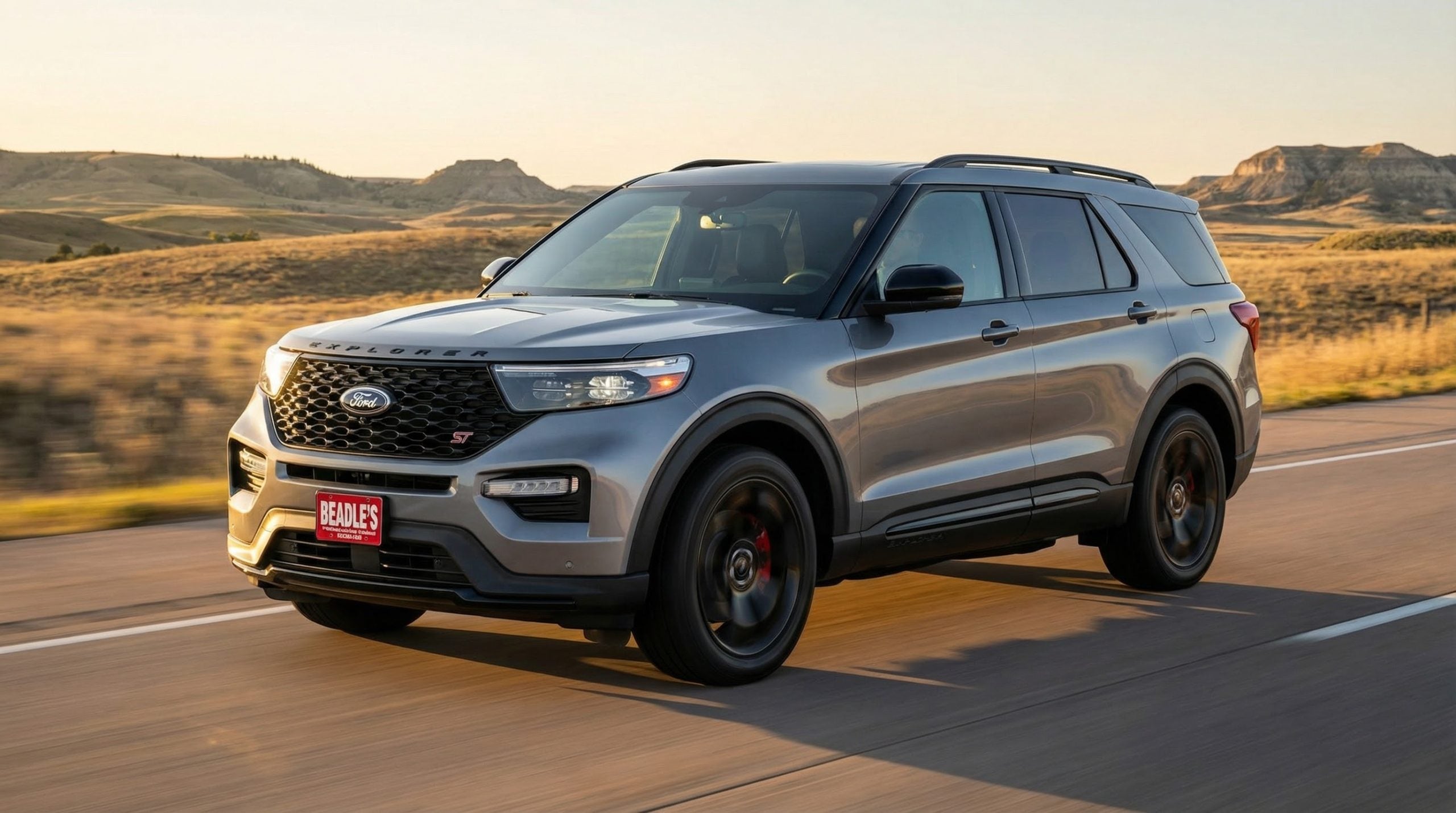
2026 Ford Explorer ST on open highway

2026 Ford Explorer Engine Options Deep Dive (2.3L vs 3.0L)

If you’re shopping for a 2026 Ford Explorer, the engine choice matters because it changes how the SUV feels every day — how easily it merges onto the highway, how confident it feels when loaded with people and gear, and how relaxed it is when towing or driving into headwinds. This guide explains the two main engine paths in plain language: what the 2.3L EcoBoost is best at, what the 3.0L EcoBoost does differently, and how to choose based on real life (not confusing specs). For the full lineup context (trims, seating layouts, towing structure, and how it all fits together), start with the 2026 Ford Explorer overview. Shop Explorers in Stock Table of Contents What engines are available on the 2026 Explorer? What does “turbocharged” actually mean? Who is the 2.3L EcoBoost best for? Who is the 3.0L EcoBoost best for? Real-world examples: when the engine choice matters ST vs Tremor: how engine choice changes the vibe Does the engine affect fuel and day-to-day costs? How to choose the right engine in 5 steps What engines are available on the 2026 Ford Explorer? The 2026 Ford Explorer is generally built around two EcoBoost options: 2.3L EcoBoost® I-4 (commonly found on Explorer Active and ST-Line, and used across much of the lineup depending on configuration) 3.0L EcoBoost® V6 (the performance-focused option, standard on Explorer ST and available on some Tremor configurations depending on equipment selection) Simple takeaway: The 2.3L is the “everyday balanced” engine. The 3.0L is the “effortless power” engine. Trim-level structure and availability changes are best understood inside the full lineup guide: 2026 Ford Explorer overview. What does “turbocharged” actually mean? A turbo is like a “power helper.” Instead of making the engine bigger, it pushes more air into the engine so it can make more power when you need it — like when you accelerate, merge, or climb a hill. What that means in real life: You can have a smaller engine that still feels strong when you press the gas. Power can come in quickly when you need it (great for merging and passing). How smooth it feels depends on the engine size and tuning (which is where 2.3 vs 3.0 starts to matter). Who is the 2.3L EcoBoost best for? The 2.3L EcoBoost is usually the best fit for drivers who want a three-row SUV that feels confident and modern without paying extra for performance they won’t use every day. Best match if your life looks like: School drop-offs, errands, commuting, and weekend travel Mostly highway driving at steady speeds Occasional towing (with the right tow equipment) You want capability, but you don’t need “sports SUV” acceleration How it feels: responsive, balanced, and easy to live with — especially in Active and ST-Line trims. If your priority is family layout and space, this pairs well with what we cover in the Interior & Cargo Guide. Who is the 3.0L EcoBoost V6 best for? The 3.0L EcoBoost is for drivers who want the Explorer to feel effortless — especially when the SUV is loaded with people, gear, and long-distance highway miles. Best match if: You routinely drive with 5–7 passengers plus cargo You live on the highway and want strong passing power You tow more often (or want towing to feel less strained) You simply enjoy the feeling of confident acceleration How it feels: smoother power delivery, less “working hard” sensation on hills and passing, and a more performance-oriented personality — especially in Explorer ST. If you’re considering ST specifically, the deeper performance angle is covered in the Explorer ST Performance Guide. Real-world examples: when the engine choice matters Most people don’t notice engine differences in a calm test drive. They notice it during the moments that actually matter in real life. Here are the most common situations where your engine choice will feel different: 1) Merging onto the highway with kids in the back 2.3L: capable and responsive, but you may press the gas more to get the same “go now” feeling. 3.0L: feels more immediate and relaxed — less effort, more confidence. 2) Passing a semi on a two-lane highway 2.3L: does the job, but you’ll plan your pass a little more. 3.0L: passing power feels easier and quicker, especially at speed. 3) Driving into strong South Dakota wind 2.3L: steady, but you may notice more downshifts or effort in gusty conditions. 3.0L: maintains speed more effortlessly with less “strain” sensation. 4) Towing a small camper or boat The 2026 Explorer can tow up to 5,000 pounds when properly equipped, but engine choice impacts how confident it feels while towing — especially on hills, in wind, or when the SUV is loaded. For the full towing breakdown (including tongue weight, trailer frontal area, and setup tips), see the 2026 Explorer Towing & AWD Guide. ST vs Tremor: how engine choice changes the vibe This is a very common question: “If I want something special, should I choose ST or Tremor?” ST: performance personality — the engine and tuning are meant to feel fast and responsive on pavement. Tremor: adventure personality — designed for confidence on rougher roads and travel routes beyond pavement, with engine availability depending on how it’s equipped. If you want a trim-level decision guide that compares these clearly, the best reference is the 2026 Explorer Trim Levels Guide (it frames the “who each trim is for” question). Does the engine affect fuel and day-to-day costs? In plain terms: the more performance you choose, the more you should expect the vehicle to use fuel when you drive it like a performance vehicle. But driving habits matter just as much as engine choice. If you drive calmly, fuel use may be closer than you’d expect. If you accelerate aggressively or drive at high speeds often, the difference becomes more noticeable. Simple way to think about it: 2.3L: optimized for everyday efficiency and balance 3.0L: optimized for effortless power and performance feel How to choose the right Explorer engine in 5 steps This is voice-search friendly on purpose — it’s the simplest way to decide without getting lost. List your “most common” week. Commute, school, errands, highway miles. Think about your “most demanding” day. Full family load + gear + winter driving + highway passing. Decide how you want it to feel. “Fine and capable” vs “effortless and confident.” If you tow, decide how often. Occasional towing vs frequent towing. Use the trim structure as your shortcut. ST = performance path, Active/ST-Line = balanced path, Tremor = adventure path depending on configuration. Quick Specs / Overview (Plain Language) Engine What it’s best at Who it fits best 2.3L EcoBoost I-4 Everyday balance and confident daily driving Most families, commuters, general travel 3.0L EcoBoost V6 Effortless power, highway passing, performance feel ST shoppers, frequent highway drivers, heavy loads Key Takeaways The 2.3L EcoBoost is the “balanced everyday” engine for most families. The 3.0L EcoBoost is the “effortless power” option that feels stronger under load. Engine choice matters most in merging, passing, wind, hills, and towing feel. Trim choice is often the easiest way to narrow engine options. For full lineup context, the pillar page ties everything together. FAQ Is the 2.3L engine enough for a family SUV? For most families, yes. It’s designed to provide confident everyday performance for commuting, errands, highway travel, and family trips. The difference is less about “enough” and more about whether you want power to feel effortless under heavy loads. When does the 3.0L engine make the biggest difference? Most drivers notice the difference during highway merging and passing, when the vehicle is fully loaded with passengers, when driving into strong wind, and when towing or climbing hills. Does the engine change towing capacity? The Explorer can tow up to 5,000 pounds when properly equipped, but engine choice can change how confident and relaxed towing feels. Equipment configuration also matters, which is why towing should be evaluated as a full setup. Do I need the ST to get the stronger engine? Explorer ST is the most direct performance path, and the 3.0L EcoBoost is standard there. Other trims may have different availability depending on configuration, so the trim guide is the best starting point. What should I test drive to compare engines? If possible, drive an Explorer Active (2.3L) and an Explorer ST (3.0L). Use the same roads: a highway merge, a passing situation, and a rougher road section. The “feel” difference becomes clear quickly. Conclusion In my experience, engine decisions get much easier when shoppers stop thinking in “car specs” and instead focus on real moments: merging with kids in the back, passing on a two-lane highway, driving into wind, or towing on a weekend trip. When you match the engine to the life you actually live, the right Explorer configuration usually becomes obvious. About the Author Lexy Tabbert provides research-driven SUV configuration guidance and ownership insights for drivers across South Dakota and beyond.

2026 Ford Ranger FX4 off-road in South Dakota

FX4 or Skip It? Here's What the 2026 Ranger's Off-Road Package Actually Does

Let's be direct: the FX4 Off-Road Package sounds impressive on a window sticker, but plenty of buyers aren't sure whether they actually need it or if it's just a checkbox that adds cost. If you spend time on gravel roads, muddy field edges, hunting access roads, or anywhere paved roads stop being a guarantee — the answer is probably yes. If you stay on pavement and well-maintained highways, you can save the money. Here's an honest breakdown of every component, what it does in the real world, and who it's actually built for. The Big 2026 Change: FX4 Now Available on the XL For 2026, Ford expanded FX4 availability down to the XL trim — that's new. Previously the package started at the XLT. Now you can spec the XL with FX4 content, which creates a lower-cost entry point for buyers who want the off-road capability without the added interior features of the XLT or Lariat. FX4 remains available on the XLT and Lariat as well. The Raptor is its own animal — it doesn't use the FX4 package name because it has more capable off-road hardware built in from the ground up. More on the Raptor vs. FX4 comparison below. What the FX4 Package Actually Includes The FX4 Off-Road Package is a collection of components that work together to improve capability in low-traction situations. Here's what's in it: Component What It Does Electronic Rear Locking Differential Locks both rear wheels to rotate at the same speed — prevents the truck from spinning the easy wheel and losing traction Trail Control™ Low-speed cruise control for off-road terrain — you steer, the truck manages throttle and braking independently at each wheel Rock Crawl Mode Activates low-range 4x4, engages e-locker, reduces throttle sensitivity for precise control on uneven terrain Off-Road-Tuned Shock Absorbers Recalibrated dampers for improved wheel articulation and stability on rough, uneven surfaces Steel Front Bash Plate Protects the front underbody from rocks, logs, and road debris when ground clearance runs out Off-Road Tires All-terrain tires on all FX4 configurations (OWL tires available on XLT models without the Black Appearance Package) FX4 Badging Box decals — the visual identifier that signals the package is equipped Trail Control: The Feature Most Buyers Underestimate Trail Control is essentially low-speed off-road cruise control. You set a target speed between 1 and 20 mph and it holds that speed — independently braking individual wheels and modulating throttle to keep you moving at a consistent pace through rough terrain. Your hands stay on the wheel for steering; the truck handles the rest. Why does this matter? On a steep rocky descent or a rutted two-track, managing throttle and brakes manually while also steering is a lot to coordinate — especially with passengers in the truck. Trail Control eliminates the brake-throttle-steer juggling act and lets you focus on your line. It's particularly useful for technical descents where too much speed leads to sliding. It's not a feature you'll use on every off-road trip. But the times you need it — loaded with gear, on a challenging grade, with a trailer behind you — it earns its place fast. The E-Locker: When It Matters and When It Doesn't The electronic rear locking differential is the most practically useful piece of the FX4 package for South Dakota driving conditions. Here's the core problem it solves: when one rear wheel is on a slippery surface and the other has grip, an open differential sends power to the wheel with less resistance — which means the slipping wheel spins freely while the good-traction wheel sits still. You go nowhere. The e-locker mechanically locks both rear wheels together so they both turn at the same speed regardless of traction. Both rear wheels become driving wheels. In soft spring mud, loose gravel, flooded field paths, or a wet boat ramp — the difference between locked and open is often the difference between moving and stuck. When to Use the E-Locker Use it: Muddy boat ramps, soft field edges, loose gravel climbs, spring thaw on two-tracks, wet grass, sand Don't use it on: Pavement or hard-packed roads — locking the rear differential on solid surfaces causes binding and handling issues You engage and disengage it with a dash button. Easy to forget you have it, easier to remember once you've needed it. FX4 vs. Raptor: Different Tools for Different Terrain The Raptor and the FX4 Ranger are not competing for the same buyer. The FX4 package improves a capable everyday truck — you're still on the same frame, same suspension travel, same ground clearance as the base Ranger. The Raptor is a purpose-built performance off-road platform with a completely different suspension architecture, significantly more wheel travel, and a 3.0L V6 tuned specifically for off-road use. XLT / Lariat w/ FX4 Raptor Engine 2.3L I4 or 2.7L V6 3.0L V6 — 405 hp Suspension Off-road tuned shocks Live-valve Fox Racing Shox, long-travel Max Towing up to 7,500 lbs up to 5,510 lbs Drive Modes Rock Crawl (FX4) Baja, Rock Crawl + more Best Use Daily driver + off-road capability Performance off-road truck Price Tier Package add-on cost Significant premium For most buyers in central South Dakota, the FX4 on an XLT or Lariat is the right call. It handles gravel roads, hunting access, boat launches, and field edges with confidence — and it still tows at the full 7,500 lb ceiling. The Raptor is for buyers who want high-speed desert running and extreme trail capability as a primary use case, not a secondary one. Worth It or Skip It: The Honest Framework Add FX4 if you regularly: Drive unpaved roads, gravel county roads, or seasonal two-tracks Back down boat ramps — especially in late fall or early spring when surfaces get soft Drive across pastures, field edges, or hunting grounds with soft or wet soil Deal with South Dakota spring mud or late-season snowpack on back roads Haul trailers off-pavement where departure traction is a concern Skip FX4 if you: Primarily drive paved highways, town streets, and well-maintained county roads Have no regular use for the e-locker, Trail Control, or rock crawl modes Are on a tight budget and the package cost matters — there's nothing wrong with a clean XLT or Lariat without it Why It Makes Sense for Bowdle-Area Drivers Living and working around Bowdle means unpaved roads aren't a novelty — they're routine. County gravel roads that turn to mud in April, field access tracks after rain, boat launches on the Missouri River system, stock dam access that gets torn up by cattle and equipment — this is exactly the environment the FX4 package is engineered for. The steel bash plate alone is worth something when you're driving roads where rocks and debris are a given. The e-locker is worth something every spring. Trail Control is worth something any time you're on a loaded descent in bad conditions. None of these are theoretical benefits in this part of the state — they're features you'll actually use. For a complete look at which trims offer FX4 and how the package fits into each build, or to understand how the e-locker improves traction at boat ramps and soft-surface towing situations, both guides have the detail. FX4 FAQ Is the FX4 package available on all 2026 Ranger trims? FX4 is available on the XL, XLT, and Lariat. The XL availability is new for 2026 — the package previously started at the XLT. The Raptor does not use the FX4 package name; it comes with a more capable off-road system as standard equipment. Does adding FX4 affect towing capacity? No — FX4 does not reduce or increase the Ranger's towing capacity. The 7,500 lb max (with Trailer Tow Package) remains the same whether or not FX4 is equipped. The e-locker can actually improve traction during soft-surface trailer departure situations, but the official tow rating is unchanged. Can I use the e-locker on pavement? No — the electronic rear locking differential is designed for low-traction, low-speed off-road use only. Using it on pavement causes drivetrain binding and handling instability. It's engaged and disengaged with a dash button, so it's easy to flip on and off as conditions change. What's the difference between Trail Control and regular cruise control? Standard cruise control maintains speed on pavement by managing throttle only. Trail Control is designed for off-road terrain and operates at very low speeds (1–20 mph) — it controls both throttle and braking independently at each wheel to maintain a consistent pace. The driver handles steering; Trail Control handles the throttle-brake balance on technical terrain. Did the FX4 package change at all for 2026? The package contents are essentially the same as 2025. The significant 2026 change is availability — FX4 is now offered on the XL trim for the first time. The components themselves (e-locker, Trail Control, off-road shocks, bash plate, FX4 tires and badging) carried over unchanged. Key Takeaways FX4 is now available on the XL for 2026 — that's new; it previously started at the XLT The package includes: e-locker, Trail Control, Rock Crawl mode, off-road shocks, steel bash plate, FX4 tires and badging The electronic rear locking differential is the most practically useful piece for South Dakota conditions Trail Control is low-speed off-road cruise control — handles throttle and braking while you steer FX4 does not reduce towing capacity — the 7,500 lb max still applies The Raptor is a different product entirely — purpose-built off-road with long-travel suspension and a 3.0L V6 If you drive unpaved roads, boat ramps, or field access regularly in central SD — FX4 is worth it The FX4 Off-Road Package isn't flashy marketing — it's a set of components that address real traction problems in real conditions. Around Bowdle, those conditions show up in April mud, gravel county roads, and every trip to a boat ramp or field edge. Whether it belongs on your build depends on how you actually use the truck. If you want to talk through trim and package combinations at Beadle Ford, I'm happy to help you land on the right build. The 2026 Ford Ranger overview is a good place to start if you want to compare the full lineup before narrowing down. — Lexy Tabbert, Beadle Ford Continue Reading → Which trims offer FX4 — and how each build stacks up on value → How the e-locker helps in soft-surface towing situations

2026 Ford Maverick MPG & Ownership Costs (What to Expect in the Real World)

Maverick buyers are usually trying to hit the same goal: practical truck utility without taking on “full-size truck” operating costs. This guide focuses on real-world MPG expectations (especially for AWD EcoBoost shoppers), what changes in winter, and the cost factors that matter just as much as fuel. If you’re still deciding drivetrain and towing equipment (which can change how the truck is used and what it costs to run), start with: 2026 Maverick Specs & Configurations. For inventory and shopping support, visit the Ford Maverick model page. Shop Mavericks in Stock Contact Us Table of Contents What affects MPG the most on a Maverick? AWD + South Dakota winter: what changes? Ownership costs beyond fuel (the stuff buyers miss) Hybrid note: when it makes sense (without making it the focus) How to estimate your real cost to own FAQ What affects MPG the most on a Maverick? MPG isn’t a single number you “get.” It’s the result of how you drive, where you drive, and how the truck is set up. For Maverick owners in SD/ND, the biggest swing factors are highway speed, wind, winter temperatures, tire choice, and whether you spend a lot of time carrying gear or towing. Speed + wind: open highways and headwinds can reduce efficiency more than most people expect. Cold starts: short trips in winter usually lower MPG the most. Load and towing: carrying heavy gear or towing changes the truck’s workload and fuel use quickly. AWD + South Dakota winter: what changes? AWD is worth it for many buyers because traction and confidence matter more than chasing the best possible MPG. The trade-off is that winter driving usually reduces efficiency—cold air, warm-up time, snow-covered roads, and winter tires all play a role. If your priority is winter confidence and choosing the right setup (including tires), use: 2026 Maverick Winter Driving Guide. Ownership costs beyond fuel (the stuff buyers miss) Fuel matters, but most ownership cost surprises come from build choices. A truck that’s “over-optioned” for your use can cost more up front and not make your daily life any better. Option creep: adding packages that don’t solve real needs inflates payment and ownership cost. Tires: great winter tires improve safety and confidence—often more than another tech package. Usage pattern: heavy hauling/towing changes wear and operating costs more than most people budget for. Hybrid note: when it makes sense (without making it the focus) Some buyers prioritize hybrid for efficiency, especially for city-heavy driving. In our local shopping reality, many buyers still prioritize AWD for winter confidence. The right answer depends on your commute style, winter route demands, and what you value most day-to-day. Quick Overview Best for Budget-minded buyers balancing truck utility and daily efficiency Biggest swing factors Winter temperature, highway speed/wind, load/towing, tires Smart shopping move Build for your real use—don’t pay for packages you won’t feel How to estimate your real cost to own List your driving: city vs highway, daily miles, and winter usage. Decide your priority: winter traction (AWD) vs maximum efficiency (often hybrid). Account for tires: budget for winter tires if you drive in snow regularly. Be honest about towing: even light towing can change fuel use and wear. Compare two real builds: choose the one you’ll actually benefit from. Shop Mavericks in Stock Ask About AWD vs Hybrid FAQ Will winter driving reduce Maverick MPG? Typically, yes. Cold starts, warming up, snow-covered roads, and winter tires can all reduce efficiency. The biggest drops usually happen with short trips in very cold weather. Does AWD always mean worse MPG? AWD can add some efficiency trade-off depending on conditions and driving pattern, but many buyers consider it worth it for winter confidence. Tires and driving style often matter just as much as drivetrain when it comes to real-world MPG. What’s the biggest ownership-cost mistake buyers make? Paying for packages that don’t improve daily life. The best Maverick builds are usually the ones that match the use-case first, then add only the features you’ll actually notice. Conclusion In my experience, Maverick ownership feels “cheap in a good way” when the build matches the real routine—AWD for winter confidence, towing hardware only if you need it, and packages that you’ll actually feel every day. When buyers build intentionally, Maverick delivers the practicality people want without the operating cost shock. About the Author: Lexy Tabbert helps South Dakota and North Dakota buyers choose efficient, practical truck setups for real life—winter driving, commuting, weekend projects, and long-term ownership value. Her approach is straightforward: build for your real use-case first, then add features and packages that you’ll actually notice.

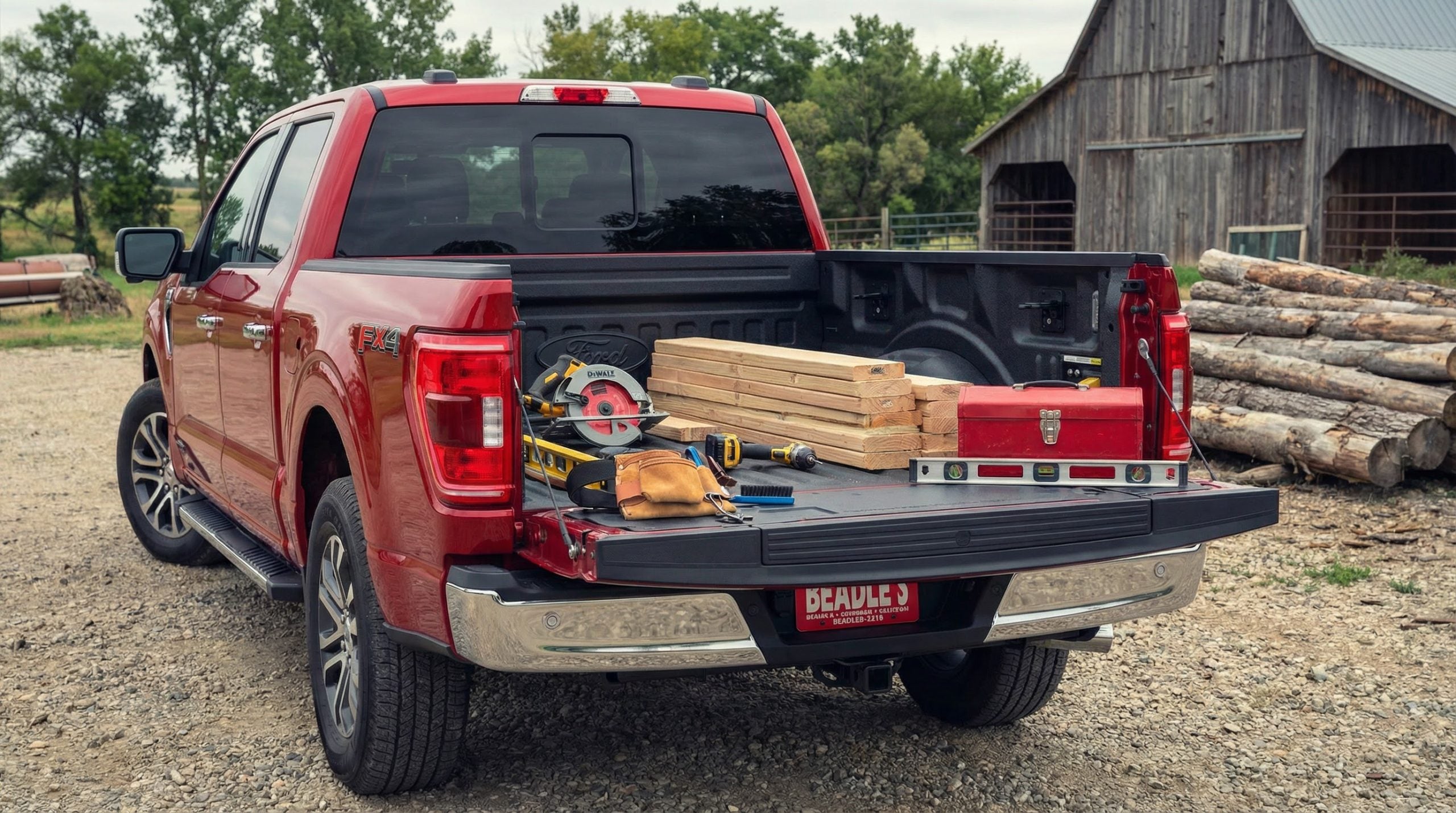
2027 Ford F-350 work truck with a flatbed upfit at a jobsite during blue hour

2027 Ford F-350 Payload & Upfit Guide

Quick Answer The 2027 Ford F-350 carries up to about 7,900 lbs of payload, properly equipped — and the now-standard 7.3L gas V8 is the payload leader because it's lighter than the diesel. A new 8-foot bed / 176-inch wheelbase is available with the High-Output diesel, and available Pro Power Onboard and Smart Hitch add real work capability. Towing gets the headlines, but for a lot of F-350 buyers around Bowdle and Aberdeen, payload is the number that actually matters — what you can carry in the bed or on a work body, day in and day out. This guide covers the 2027 F-350's payload, how cab and bed choices change it, what makes the truck upfit-friendly, and which engine to pick when carrying — not towing — is the priority. Shop F-350s in Stock Get Pre-Approved On This Page What's the 2027 F-350 max payload? How do cab and bed choices change payload? What makes the F-350 upfit-friendly? Which engine is best for payload? How do you build a payload setup? What's the 2027 F-350 max payload? Up to about 7,900 lbs, properly equipped with the 7.3L gas V8 and the heavy-duty payload package. That figure carries over from 2026 — the engine simplification didn't cost the F-350 any carrying capacity. Payload always varies with cab, bed, drivetrain, and single- or dual-rear-wheel setup, so the right way to confirm a specific truck's number is the door-jamb label or the build sheet. One thing worth saying plainly: heavy hauling in the bed eats into towing tongue weight, and vice versa. If you carry and tow at the same time, we'll work the full math so you stay inside the ratings. How do cab and bed choices change payload? Configuration drives payload as much as the engine. A lighter cab and a longer bed generally free up more carrying capacity, while loading up on options adds weight that comes out of payload. Cab: Regular Cab, SuperCab, and Crew Cab — more cab generally means more weight and less payload margin. Bed: longer beds carry more; new for 2027 is an 8-foot bed / 176-inch wheelbase available with the High-Output diesel. Packages: the heavy-duty payload package is what unlocks the ~7,900-lb maximum on the gas V8. SRW vs. DRW: dual-rear-wheel trucks generally carry more for the heaviest work; SRW stays easier to live with. What makes the F-350 upfit-friendly? The F-350's heavy-duty frame and payload make it a natural base for work bodies — flatbeds, utility/service bodies, and other upfits added through a body company. On the truck itself, available Pro Power Onboard turns it into a jobsite generator with onboard outlets, and available Smart Hitch helps you load to the correct tongue weight. From the Beadle Ford Lot For our farm and contractor buyers, payload is the spec they should be checking first and often don't. We've seen folks size up for towing they rarely do, then run out of payload carrying tools, fuel, and a slide-in load every day. We build the truck around what's actually in the bed. Which engine is best for payload? The 7.3L gas V8 — it carries the F-350's highest payload because it's lighter than the diesel, and for 2027 it's standard on every trim. If carrying is your priority and you tow only occasionally, the gas is both the higher-payload and lower-cost choice. The High-Output diesel is about torque for heavy, frequent towing, not maximum payload. Our Recommendation If you carry heavy more than you tow heavy, build a 7.3L gas F-350 with the heavy-duty payload package and the cab/bed that fits your load — that's the highest-payload, best-value path for 2027. Add a work body or Pro Power Onboard as the job needs. Weigh it against the towing side in our 2027 engine comparison. How do you build a payload setup? Work from the load, in five steps: Add up what you carry daily — tools, fuel, materials, a slide-in or service body, and passengers. Pick the 7.3L gas for maximum payload (or the diesel if heavy towing also matters). Choose cab and bed to balance payload margin with the space you need. Add the heavy-duty payload package and any upfit-supporting options (Pro Power Onboard, prep packages). Confirm the exact payload on the build sheet before you order, and account for any work body's weight. Key Takeaways 2027 F-350 payload: up to ~7,900 lbs with the 7.3L gas and heavy-duty payload package. The gas V8 is the payload leader — lighter than the diesel — and it's now standard. New 8-ft bed / 176-in wheelbase is available with the High-Output diesel. Available Pro Power Onboard and Smart Hitch add jobsite power and load guidance. Build around the load in the bed; confirm exact payload on the door-jamb label or build sheet. Frequently Asked Questions What is the max payload of the 2027 Ford F-350? Up to about 7,900 lbs, properly equipped with the 7.3L gas V8 and the heavy-duty payload package. It carries over from 2026 and varies with cab, bed, drivetrain, and single- or dual-rear-wheel configuration — confirm a specific truck on the door-jamb label or build sheet. Which engine has the most payload? The 7.3L gas V8 — it's lighter than the diesel, so more weight is available for the bed. For 2027 it's standard on every trim, making it both the payload leader and the lower-cost choice. Can I put a flatbed or service body on a 2027 F-350? Yes — the F-350's heavy-duty frame and payload make it a common base for flatbed, utility, and service-body upfits done through a body company. We can help you spec a truck that supports the upfit you have in mind and account for the body's weight in your payload. What is Pro Power Onboard? An available onboard generator system that provides power outlets to run tools and equipment directly from the truck — handy on a jobsite or a remote ranch task. Available Smart Hitch also helps you load a trailer to the correct tongue weight. Does the 2027 F-350 have a longer bed option? Yes — new for 2027 is an 8-foot bed / 176-inch wheelbase available with the 6.7L High-Output diesel, adding deck length for haulers who need it. Bed and cab options affect both payload and overall length, so we'll match them to your use. Quick Answers: 2027 F-350 Payload & Upfit One-line answers to the follow-up questions buyers ask next. Max payload? Up to ~7,900 lbs, properly equipped. Which engine for payload? The 7.3L gas V8 (lighter = more payload). Is the gas standard now? Yes, on every trim. Longest bed? New 8-ft bed / 176-in wheelbase with the HO diesel. Can I upfit a work body? Yes — flatbed, utility, and service bodies via a body company. Onboard generator? Yes — available Pro Power Onboard. Load-assist feature? Available Smart Hitch for correct tongue weight. SRW or DRW for payload? DRW carries more for the heaviest work; SRW is easier daily. How do I confirm a truck's payload? Door-jamb label or the build sheet. Carry and tow at once? We'll work the full math to keep you in the ratings. Keep Researching The complete 2027 Ford F-350 Super Duty overview — specs, towing, trims, and how to order. 2027 F-350 for commercial & fleet — work-trim ordering and upfit-ready options. 2027 F-350 SRW vs. DRW — the rear-wheel choice that affects carrying capacity. 2027 F-350 towing guide — when towing tongue weight and payload interact. My Take on Payload & Upfit In my experience, payload is the spec that quietly makes or breaks a work truck. Plenty of buyers spec for towing and then run tight on what they can actually carry every day. For 2027, the now-standard 7.3L gas makes the highest-payload build the value build too — which is a nice change. Tell me what you haul and whether you're adding a work body, and I'll build the right 2027 F-350 around the load. Stop in at Beadle Ford in Bowdle or reach out anytime. Shop F-350s in Stock Get Pre-Approved About the Author Lexy Tabbert — Beadle Ford, Bowdle, SD Lexy Tabbert is the Director of Sales and Marketing at Beadle Ford in Bowdle, South Dakota. She covers Ford vehicles, trim comparisons, and buyer guidance — helping families, ranchers, and ag operators across the region find the right truck and configuration for their needs. Learn more about Lexy.
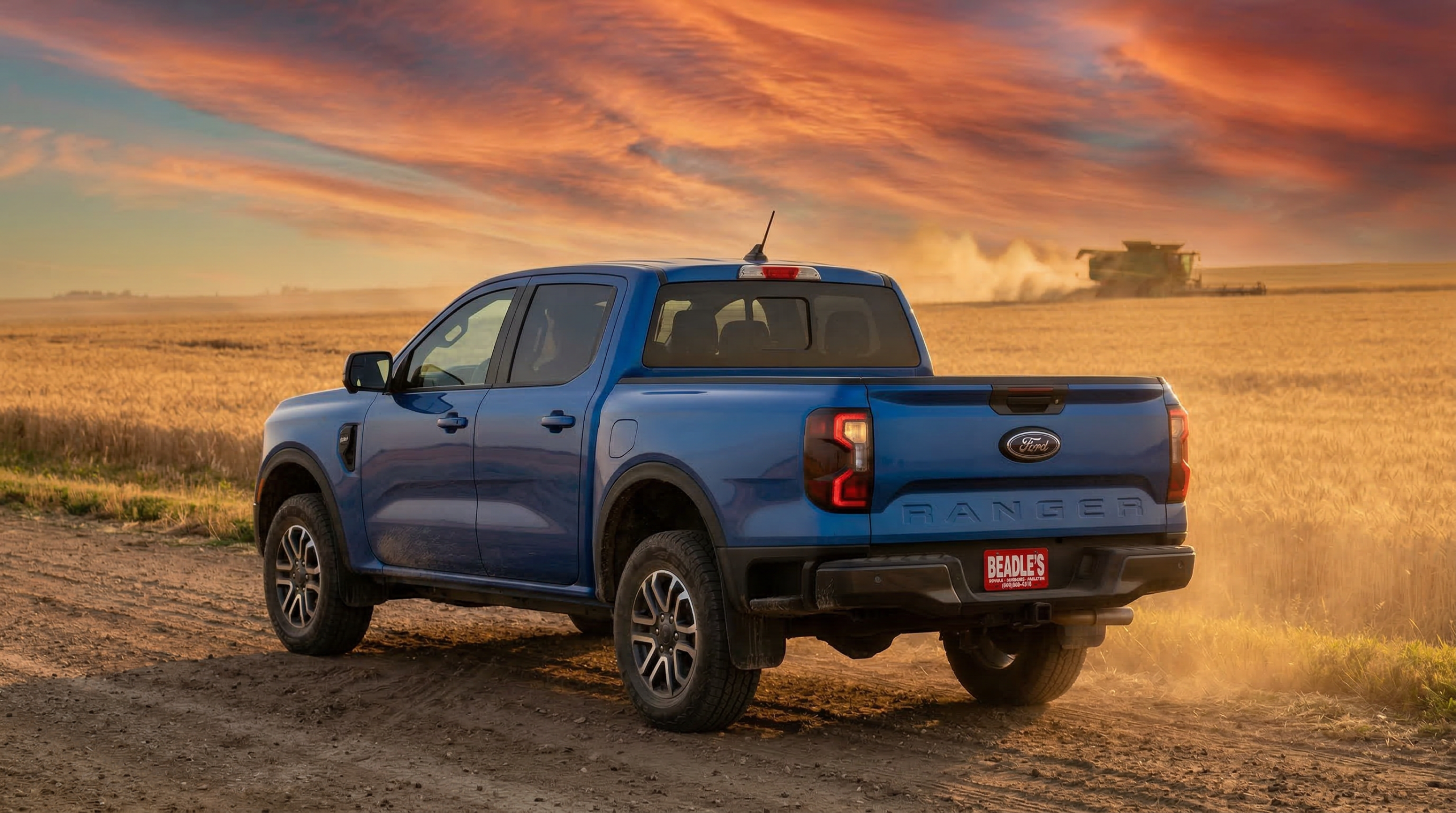
Ford Edge trim lineup showcase Bowdle SD

Ford Edge Trims Explained: SE, SEL, ST-Line, Titanium, and ST

Ford Edge Buyer’s Guide Ford Edge Trims Explained: SE, SEL, ST-Line, Titanium, and ST The Ford Edge comes in five distinct trims — SE, SEL, ST-Line, Titanium, and ST — each designed for different buyer priorities and budgets. Whether you’re seeking maximum value, premium comfort, or performance-tuned capability, this guide walks you through every option so you can choose with confidence. Shop Edges in Stock On This Page What Does the Ford Edge SE Include? What’s New in the Ford Edge SEL? What Is the Ford Edge ST-Line? Why Choose the Ford Edge Titanium? What Makes the Ford Edge ST Performance-Ready? Ford Edge Trim Comparison Table Which Ford Edge Trim Is Right for You? Frequently Asked Questions What Does the Ford Edge SE Include? The Ford Edge SE (100A) is the entry-level trim and the best choice for budget-conscious families seeking a spacious, reliable SUV. Every SE arrives with all-wheel drive standard — no front-wheel drive option — making it ready for South Dakota winters. Powertrain: The SE houses a 2.0L EcoBoost I-4 engine producing 250 horsepower and 280 lb-ft of torque, paired with an 8-speed automatic transmission. Fuel economy is solid for the class, and the EcoBoost platform has proven reliability across Ford’s lineup. Interior & Comfort: Cloth seats with a 4-way manual driver adjustment keep costs down without sacrificing comfort. Dual-zone automatic climate control, a leather-wrapped steering wheel, and SYNC 4A with a 12-inch touchscreen and wireless CarPlay/Android Auto come standard across all trims. The SE includes six speakers and a manual liftgate. Wheels & Styling: The SE rolls on 18-inch Sparkle Silver wheels with all-season tires (245/60R18). The Iconic Silver Honeycomb grille gives the SE a refined, distinct appearance. Towing & Cargo: Without the Class II Tow Package, the SE can tow 1,500 lbs. Cargo capacity sits at 39.2 cu ft behind the rear seats, expanding to 73.4 cu ft with seats folded — more than enough for a farm run or family road trip across the Prairie. Best for: Young families, first-time SUV buyers, rural operators who prioritize reliability and all-wheel drive capability without premium features. What’s New in the Ford Edge SEL? The SEL (201A) is where comfort upgrades begin. Stepping up to this trim unlocks power seat adjustments, heated front seats, and rear parking sensors — features that make daily driving more convenient and safer, especially during South Dakota winters. Seating: ActiveX seats with improved bolstering replace cloth on the SE. The driver seat moves with 8-way power adjustment, while the front passenger gets 4-way power adjustability. Both front seats are heated, a welcome feature on cold Prairie mornings. Lighting & Visibility: LED Signature Lighting enhances nighttime visibility and gives the SEL a more upscale exterior presence. Heated side mirrors and an auto-dimming rearview mirror round out the comfort package, reducing glare during sunrise and sunset drives across rural South Dakota. Wheels: The SEL steps up to 18-inch Split-Spoke Sparkle Silver wheels, a more refined design than the SE’s base pattern. Best for: Buyers who want the SE’s value foundation plus comfort conveniences; ranchers and ag professionals who appreciate heated seats for early-morning work. What Is the Ford Edge ST-Line? The ST-Line (250A) bridges comfort and sporty styling, appealing to buyers who want a bolder look without the V6 engine of the ST. It builds on the SEL foundation and adds distinctive design cues that make a statement on the road. Wheels & Suspension: Twenty-inch Premium Gloss Black wheels (245/50R20) replace the SEL’s 18-inchers, delivering a more aggressive stance. These larger wheels improve handling feedback without compromising ride quality over South Dakota’s gravel roads and highway stretches. Interior Design: ActiveX seating gets Miko insert accents, and red accent stitching throughout the cabin signals the ST-Line’s sportier personality. A wireless charging pad for mobile devices (increasingly essential) and remote start via smartphone round out the tech upgrades. Power Liftgate & Styling: The power liftgate is a genuine convenience, especially when your hands are full or you’re loading cargo. The Pillar Black Mesh grille and overall sharper styling differentiate the ST-Line visually from lower trims. 110V Outlet: A 110V outlet in the cargo area lets you power tools, coolers, or other equipment during ranch work or tailgating. Best for: Style-conscious buyers, outdoors enthusiasts, those who want SUV presence without sacrificing fuel efficiency of the 2.0L engine. Why Choose the Ford Edge Titanium? The Titanium (300A & 301A Lux) is Ford’s luxury play in the Edge lineup. This trim delivers premium materials, advanced driver-assistance systems, and premium audio that rival vehicles costing thousands more. Choose 300A for core luxury, or 301A Lux for the ultimate Titanium experience. Seating & Materials: Ten-way power driver seat with memory function, 6-way power passenger seat, and premium leather upholstery set the Titanium apart. Both front seats are heated as standard, and the 301A Lux adds cooled front and heated rear seats — luxury touches perfect for South Dakota’s temperature extremes. Wheels & Exterior: Nineteen-inch Luster Nickel wheels (245/55R19) provide a refined, upscale presence. The Chrome bars grille signals Titanium’s premium positioning. A hands-free foot-activated liftgate adds genuine convenience when carrying groceries or ranch supplies. Audio & Ambiance: A 12-speaker B&O system with subwoofer transforms your commute into a concert venue. Ambient lighting throughout the cabin creates a refined atmosphere during night drives. The heated steering wheel (standard on Titanium) is a game-changer during Bowdle winters. 301A Lux Upgrades: The premium package adds adaptive cruise control with stop-and-go functionality — excellent for highway drives across Nebraska and South Dakota. A panoramic roof opens the cabin visually, and a 180-degree camera system enhances parking confidence in tight farm or downtown spaces. Best for: Luxury-minded families, executives making long commutes, buyers who value premium audio and comfort technology; those shopping the used market seeking the most feature-rich, lowest-mileage Edge available. What Makes the Ford Edge ST Performance-Ready? The Ford Edge ST (400A & 401A High) is the performance flagship — a true enthusiast’s SUV powered by a 2.7L EcoBoost V6 engine. It delivers the muscle to tow trailers, haul equipment, and corner with authority, all while maintaining SUV practicality. Engine & Powertrain: The 2.7L twin-turbocharged EcoBoost V6 produces 335 horsepower and 380 lb-ft of torque — a meaningful step up from the 2.0L I-4’s 250 hp. A 7-speed automatic transmission is tuned by Ford Performance engineers for responsive acceleration and dynamic handling. Towing capacity jumps to 3,500 lbs standard, with the Class II Tow Package included. Suspension & Handling: The ST gets Ford Performance-tuned suspension geometry and dampers, delivering noticeably sharper turn-in and flatter cornering than lower trims. Yet it remains comfortable on highway stretches across the Great Plains. This is the Edge you choose when you want an SUV that feels alive behind the wheel. Interior & Seating: ST bolstered bucket seats with Miko inserts and leather trim hug you during spirited driving. Ten-way power driver seat with memory, B&O 12-speaker premium audio, and heated steering wheel come standard. The 401A High adds adaptive cruise control, panoramic roof, cooled front seats, and heated rear seats for maximum comfort and convenience. Wheels & Exterior: Twenty-inch Bright-Machined wheels (with performance tires) and ST-exclusive styling cues — including unique badging and aggressive grille treatment — make the ST unmistakable on the road. Best for: Performance enthusiasts, those who tow trailers regularly, buyers seeking an SUV with genuine dynamic personality; ranchers and operators who need both capability and confidence. Ford Edge Trim Comparison Table Use this table to compare specifications, features, and pricing across all five Ford Edge trims: Feature SE SEL ST-Line Titanium ST Engine 2.0L I-4 EcoBoost 2.0L I-4 EcoBoost 2.0L I-4 EcoBoost 2.0L I-4 EcoBoost 2.7L V6 EcoBoost Horsepower / Torque 250 hp/280 lb-ft 250 hp/280 lb-ft 250 hp/280 lb-ft 250 hp/280 lb-ft 335 hp/380 lb-ft Transmission 8-Speed Auto 8-Speed Auto 8-Speed Auto 8-Speed Auto 7-Speed Auto Drivetrain All AWD All AWD All AWD All AWD All AWD Towing (with Class II) 3,500 lbs 3,500 lbs 3,500 lbs 3,500 lbs 3,500 lbs (std) Driver Seat 4-way Manual 8-way Power 8-way Power 10-way Power + Memory 10-way Power + Memory Heated Front Seats No Yes Yes Yes Yes Audio System 6 speakers 6 speakers 6 speakers B&O 12 + Sub B&O 12 + Sub Wheels 18” Sparkle Silver 18” Split-Spoke 20” Gloss Black 19” Luster Nickel 20” Bright-Machined Liftgate Manual Manual Power Hands-free Foot TBD Adaptive Cruise No No No 301A only 401A High only SYNC 4A & Co-Pilot360 Standard Standard Standard Standard Standard All Edge trims include standard all-wheel drive, SYNC 4A 12” touchscreen, wireless CarPlay/Android Auto, and Co-Pilot360 driver-assistance suite. Which Ford Edge Trim Is Right for You? Choose SE if: You’re a budget-conscious family or first-time SUV buyer. The SE delivers all the essential tech — SYNC 4A, wireless CarPlay, Co-Pilot360 — in a proven, reliable package. Perfect for commuting and family hauling in South Dakota. Choose SEL if: You want the SE’s value but appreciate power seating, heated seats for winter, rear parking sensors, and a cleaner interior look via ActiveX trim. Ideal for ranchers and ag operators making regular long drives across the region. Choose ST-Line if: You seek style, sportier wheels, and practical upgrades (power liftgate, wireless charging, remote start) without the V6 engine premium. The ST-Line is the sweet spot for outdoors enthusiasts and those who want Edge presence without premium fuel costs. Choose Titanium if: You value luxury materials, premium audio (B&O 12-speaker + subwoofer), cooled/heated seats, and the latest driver-tech (301A Lux adds adaptive cruise, panoramic roof, 180-degree camera). Best for executives, long-distance commuters, and buyers shopping the used market for maximum feature density. Choose ST if: You tow regularly or demand SUV performance and handling. The 2.7L V6 EcoBoost (335 hp/380 lb-ft) and Ford Performance suspension deliver genuine driving excitement. The 401A High variant includes adaptive cruise, panoramic roof, and cooled/heated seating. Ranchers, equipment haulers, and performance enthusiasts will find the ST indispensable. Key Takeaways All five Edge trims come with all-wheel drive standard, SYNC 4A, wireless CarPlay/Android Auto, and Ford Co-Pilot360 driver-assistance suite. SE ($) — Best value; cloth interior, manual seats, 6 speakers. Tow 1,500 lbs base, 3,500 with Class II package. SEL ($ $) — Add power seats, heated seats, rear sensors, LED lighting, and a more refined interior. ST-Line ($ $ $) — 20-inch wheels, power liftgate, wireless charging, and sportier styling; fuel-efficient 2.0L I-4. Titanium ($ $ $ $) — Premium audio (B&O 12 + sub), leather, cooled/heated seats, hands-free liftgate. 301A adds adaptive cruise and panoramic roof. ST ($$$$ $) — 2.7L V6 EcoBoost (335 hp), Class II tow standard, Ford Performance suspension, bolstered buckets. 401A adds adaptive cruise, panoramic roof, cooled/heated seating. In the used market, Titanium 301A Lux and ST 401A High models hold strong value due to their comprehensive feature sets. Frequently Asked Questions Can I get front-wheel drive on any Ford Edge trim? No. All five Ford Edge trims — SE, SEL, ST-Line, Titanium, and ST — come exclusively with all-wheel drive. There is no front-wheel drive option. AWD is standard equipment across the entire lineup, which is ideal for South Dakota winters and unpaved rural roads. What is the difference between the Titanium and ST? The Titanium prioritizes luxury, comfort, and refinement with premium audio, cooled/heated seats, and a hands-free liftgate. The ST prioritizes performance with a 2.7L V6 EcoBoost (335 hp vs. Titanium’s 250 hp 2.0L), Ford Performance suspension tuning, and standard Class II towing. Choose Titanium for luxury; choose ST for performance and capability. How much can the Ford Edge tow? Base towing without a package is 1,500 lbs on all trims. With the Class II Tow Package (53G), 2.0L I-4 trims tow 3,500 lbs. The ST includes the Class II package standard, also rated at 3,500 lbs. Perfect for trailers, equipment, and ATV hauling across South Dakota ranches. Is SYNC 4A and CarPlay standard on all Edge trims? Yes. SYNC 4A with 12-inch touchscreen, wireless CarPlay/Android Auto, and Co-Pilot360 driver-assistance tech come standard on every Edge trim — SE through ST. No surprises; everyone gets the latest connectivity and safety tech. Which Edge trim has the best resale value? Titanium 301A Lux and ST 401A High trims typically hold value strongest on the used market because they offer comprehensive, desirable features — adaptive cruise, panoramic roof, premium audio, cooled/heated seating, and advanced cameras. Buyers seeking low-mileage, feature-rich used Edges seek these versions specifically. Do I need the Class II Tow Package, or can I tow with the base Edge? You can tow 1,500 lbs base on any Edge. If you plan to tow trailers, ATVs, or equipment regularly — common on South Dakota ranches — the Class II package (which upgrades capacity to 3,500 lbs) is recommended. The ST includes Class II standard. Related Resources Ford Edge Best Years — Which Model Year Should You Buy? Shop Edges in Stock Shop Edges in Stock My Take on the Ford Edge Trim Lineup In researching the Edge for this guide, the trim structure is one of the clearest in Ford’s lineup — each step up adds meaningful, specific features rather than just cosmetic changes. The SE and SEL represent genuine value for buyers who don’t need heated seats or premium audio; the Titanium and ST represent real capability upgrades for buyers who do. For buyers in the Bowdle area, the one trim detail worth emphasizing is that AWD is standard across every Edge — that’s not something you have to seek out or pay extra for. And for anyone towing regularly, the Class II package distinction matters: only the SE and SEL require it as an add-on, while the ST includes it outright. For context on which model years these trims appeared in and which to target used, the Ford Edge buyer guide covers the full picture. Questions about a specific vehicle? Beadle Ford in Bowdle can help. Shop Edges in Stock Contact Beadle Ford About the Author Lexy Tabbert — Beadle Ford, Bowdle, SD Lexy Tabbert is the Director of Sales and Marketing at Beadle Ford in Bowdle, South Dakota. She covers Ford vehicles, trim comparisons, and buyer guidance — helping families, ranchers, and ag operators across the region find the right truck and configuration for their needs. Learn more about Lexy.
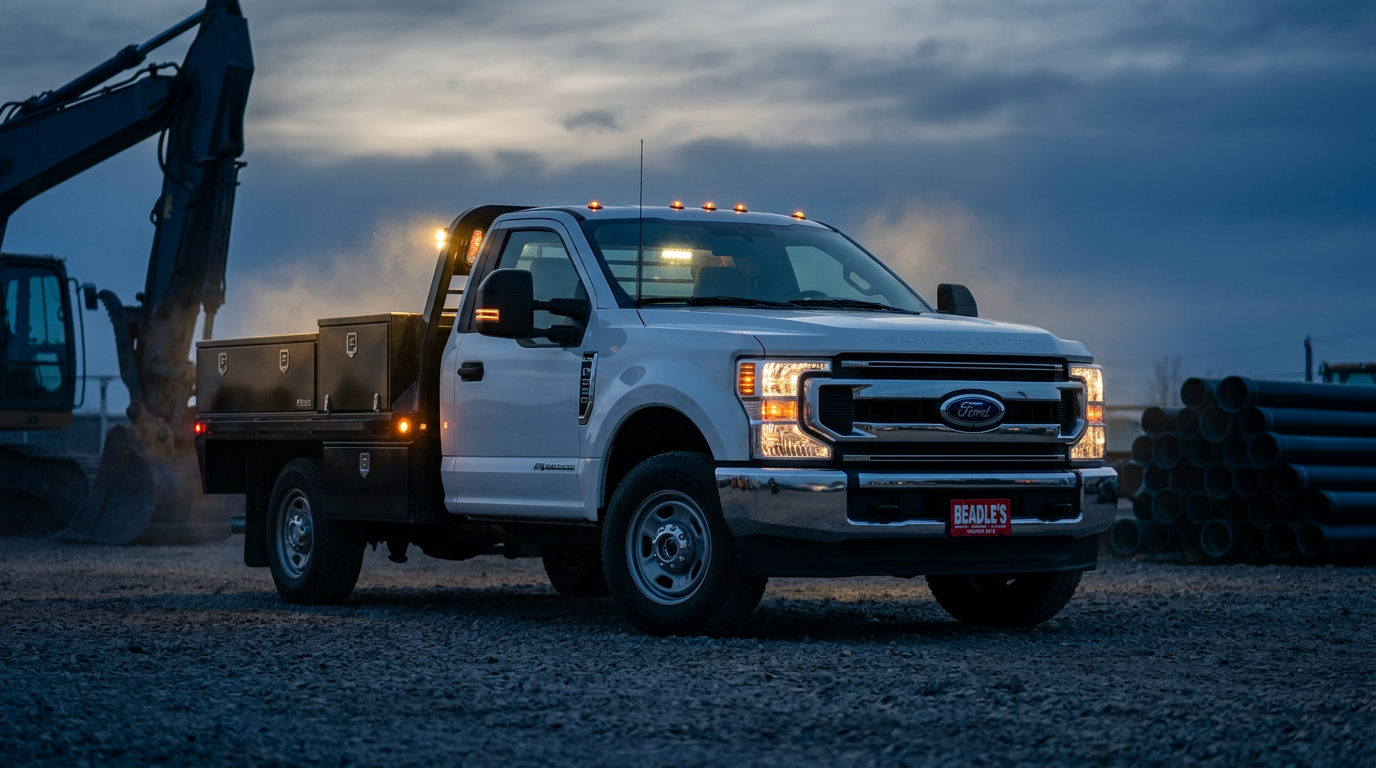
2026 Ford F-350 Exterior Colors & Styling

Quick Answer The 2026 Ford F-350 offers colors from work-friendly Oxford White, Agate Black, and Carbonized Gray to bold Ruby Red, Antimatter Blue, and premium Star White Tri-Coat. Availability varies by trim and package; tri-coat and tinted-clearcoat paints cost more, and Iconic Silver is fleet-only. Styling decisions on a heavy-duty truck are rarely "just cosmetic." Color affects how the truck represents a business, how well it hides gravel dust and winter road salt, and how easy it is to match later if you add another truck to the fleet. This guide breaks down the 2026 F-350's actual colors, wheels, and appearance packages — without assuming every color or finish is available on every trim. Shop F-350s in Stock Get Pre-Approved On This Page What colors does the 2026 F-350 come in? Neutral vs. bold: what makes sense for a work truck? Chrome vs. black appearance styling: what changes? How do wheels and stance change across the lineup? How do you choose exterior styling for your use? What colors does the 2026 F-350 come in? The 2026 F-350 palette runs from work-truck neutrals to bold and premium finishes. Standard and no-cost metallics cover most of the lineup; tri-coat and tinted-clearcoat paints are premium, and a couple of colors are limited by trim or fleet ordering. Work-friendly neutrals: Oxford White, Agate Black Metallic, Carbonized Gray Metallic, Marsh Gray, Glacier Gray Metallic Tri-Coat, and Avalanche. Bold & personal: Ruby Red Metallic Tinted Clearcoat, Antimatter Blue Metallic, Argon Blue Metallic, and Darkened Bronze Metallic. Premium finishes (extra cost): Star White Metallic Tri-Coat and Glacier Gray Tri-Coat. Fleet-only: Iconic Silver Metallic. Color availability varies by trim, package, and build timing — treat any list as a starting point and confirm on the exact configuration you want. Neutral vs. bold: what makes sense for a work truck? For a truck that works and gets traded, neutrals are usually the safe long-term play. They hide dust and salt, match a fleet, and hold the broadest resale appeal; bold colors look sharp but can narrow the buyer pool later. Neutral (Oxford White, Agate Black, Carbonized Gray): safest for resale, fleet matching, and business branding. Bold (Ruby Red, Antimatter Blue): stand out and look great, but availability can be more limited by trim and package. Two-tone: offered on select trims like King Ranch; depends on how the truck is equipped. From the Beadle Ford Lot Out here, the trucks that move fastest at trade-in are white, black, and gray — they hide the gravel dust and winter salt that coat everything by February, and a fleet buyer can match them without a second thought. Bold colors look great in the yard; just go in knowing they can narrow your resale pool. Chrome vs. black appearance styling: what changes? Appearance packages change the truck's personality fast — grille finish, bumpers, wheels, and trim accents shift from bright chrome to blacked-out. If you're chasing a specific look, choose your trim and appearance direction together so you don't back into styling after the fact. Our Recommendation For work, fleet, and resale buyers around Bowdle and Aberdeen, we recommend a neutral — Oxford White, Agate Black, or Carbonized Gray — which hides dust and salt and trades easiest. Save the premium Star White Tri-Coat or a bold Ruby Red for a personal truck you plan to keep. Match the look to a trim in our packages & trims guide. How do wheels and stance change across the lineup? Wheel designs and finishes vary by trim and package — from 18-inch painted and machined aluminum on work trims to 20-inch polished and dark-finish wheels higher up, plus the 17-inch forged wheels that come with dual-rear-wheel trucks. Wheel and tire choice isn't just looks here: winter traction and gravel-road practicality matter as much, especially if the truck tows. If you're weighing dually vs. single-rear-wheel, that stance decision is covered in the 2026 F-350 towing guide. How do you choose exterior styling for your use? Work from how the truck will be used, in four steps: Decide if the truck represents a business or fleet, or is personal. Choose a finish direction — chrome or blacked-out — before locking the trim. Confirm your paint color is available on your preferred build (premium tri-coats and fleet colors are limited). Check wheel and tire practicality for winter, gravel, and towing routes. Key Takeaways The palette spans Oxford White and Agate Black to Ruby Red and Antimatter Blue, with premium Star White and Glacier Gray Tri-Coats. Neutrals hide dust and salt, match fleets, and trade easiest in this region. Tri-coat and tinted-clearcoat paints cost more; Iconic Silver is fleet-only. Appearance packages (chrome vs. blacked-out) drive the biggest styling changes. Color and wheels vary by trim, package, and build timing — confirm on the exact truck. Frequently Asked Questions What colors does the 2026 Ford F-350 come in? Colors include Oxford White, Agate Black Metallic, Carbonized Gray Metallic, Marsh Gray, Avalanche, Antimatter Blue Metallic, Argon Blue Metallic, Darkened Bronze Metallic, Ruby Red Metallic Tinted Clearcoat, and the premium Star White and Glacier Gray Metallic Tri-Coats. Iconic Silver Metallic is fleet-only. Availability varies by trim and package. Are all colors available on all trims? No. Color availability varies by trim, package, and build timing — premium tri-coats and tinted clearcoats are extra-cost, and Iconic Silver is fleet-only. Confirm availability on the specific configuration you're shopping. Which F-350 colors are best for resale? Neutrals — Oxford White, Agate Black, and Carbonized Gray — tend to hold the broadest resale appeal and are easiest to match in a fleet. They also hide gravel dust and winter road salt better, which matters in South Dakota. Bold colors look great but can narrow the resale pool. Do appearance packages change the wheels and grille? Often, yes. Many appearance packages adjust exterior finishes — grille, bumpers, and wheel designs — shifting between bright chrome and blacked-out looks. Exact content varies by trim and package, so confirm by build. Does the 2026 F-350 offer a two-tone paint option? Yes, on select trims such as King Ranch, depending on how the truck is equipped. Two-tone availability ties to trim and appearance options, so confirm it on the build you're considering. Quick Answers: F-350 Colors & Styling One-line answers to the follow-up questions buyers ask next. Most popular work colors? Oxford White, Agate Black, and Carbonized Gray. Any premium paints? Yes — Star White and Glacier Gray Metallic Tri-Coats cost extra. What's the fleet-only color? Iconic Silver Metallic. Boldest options? Ruby Red Tinted Clearcoat and Antimatter Blue Metallic. Best color for resale? Neutral white, black, or gray. Is there a blacked-out look? Yes — via appearance packages on equipped trims. Two-tone available? Yes, on select trims like King Ranch. Do wheels change by trim? Yes — 18-inch work wheels up to 20-inch finishes; 17-inch forged on DRW. Best color to hide dust and salt? White and gray shades. How do I confirm a color on a build? We verify paint and wheels against the build sheet before you order. Keep Researching The complete 2026 Ford F-350 Super Duty overview — trims, specs, towing, and inventory in one place. 2026 F-350 packages & trims — which trims and appearance packages get the look you want. 2026 F-350 interior & comfort — pair your exterior with the right cabin. 2026 F-350 towing guide — the SRW vs. DRW stance decision behind the wheels. My Take on F-350 Colors & Styling In my experience, styling choices feel right when they match the job the truck will do. When color, wheels, and finishes fit your routine and long-term plans, owners feel good about the truck long after the newness wears off — and around here, that usually means a neutral that hides the dust and trades clean. Tell me how you'll use the truck and I'll help you land a color and finish that holds up. Stop in at Beadle Ford in Bowdle or reach out anytime. Shop F-350s in Stock Get Pre-Approved About the Author Lexy Tabbert — Beadle Ford, Bowdle, SD Lexy Tabbert is the Director of Sales and Marketing at Beadle Ford in Bowdle, South Dakota. She covers Ford vehicles, trim comparisons, and buyer guidance — helping families, ranchers, and ag operators across the region find the right truck and configuration for their needs. Learn more about Lexy.
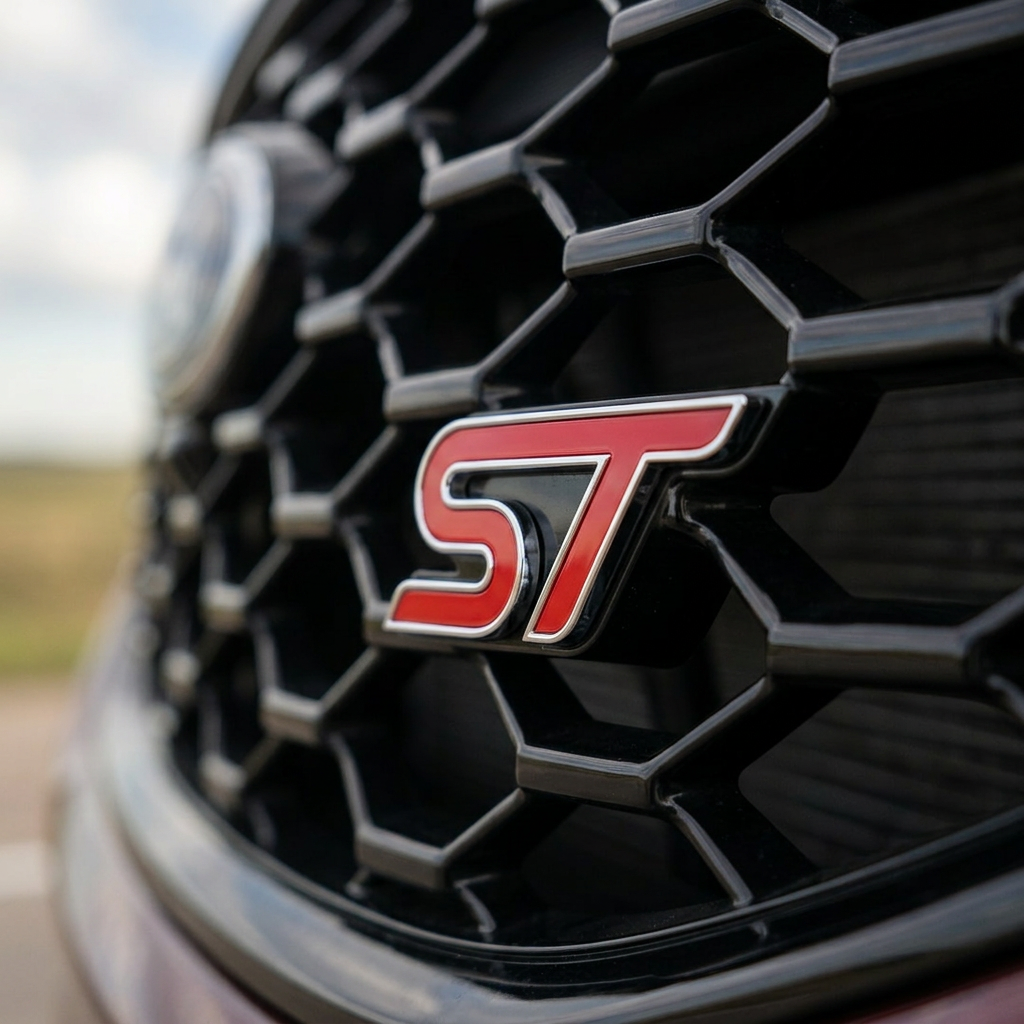
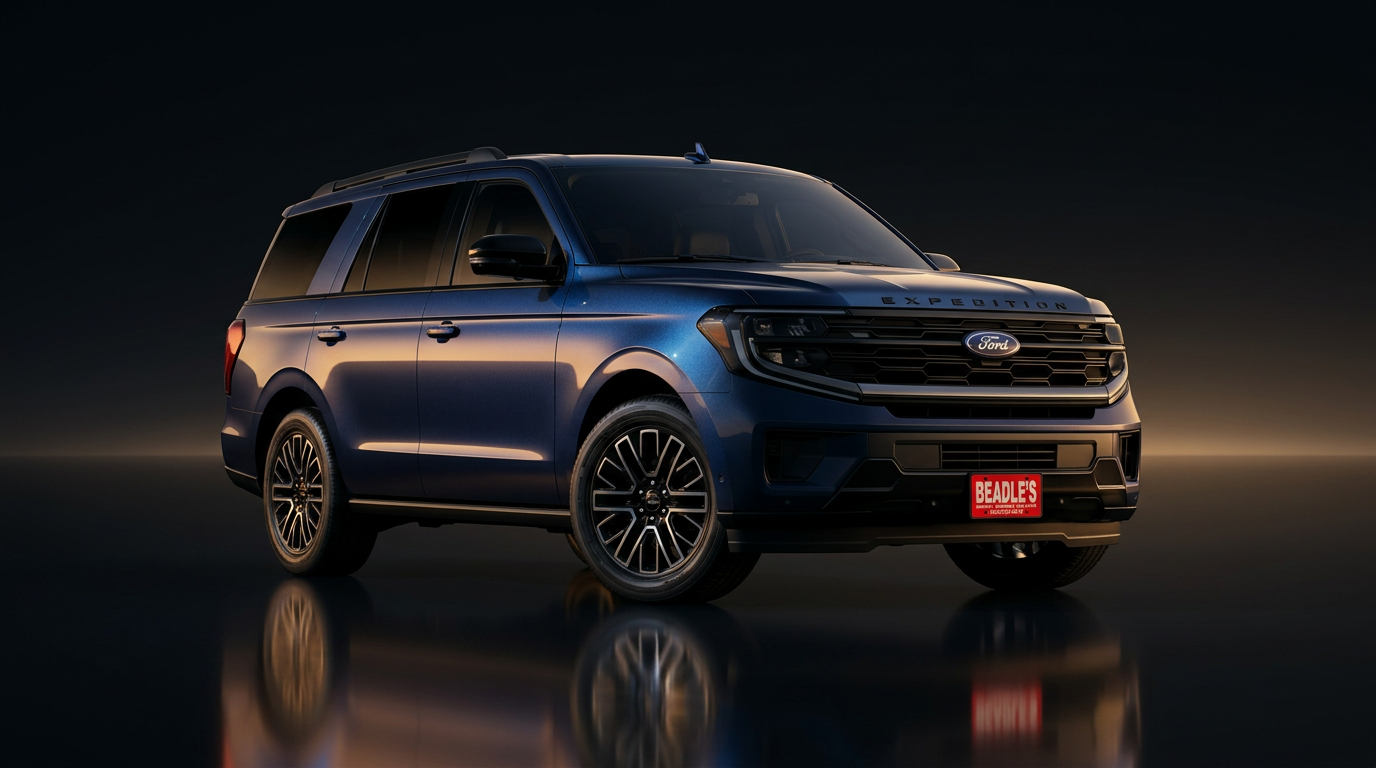
2026 Ford Expedition MAX extended wheelbase side profile

2026 Ford Expedition vs. Expedition MAX: Which One Is Right for You?

The 2026 Ford Expedition and Expedition MAX share the same engine, the same trim lineup, and the same core technology. The difference between them comes down to one thing: the MAX is about a foot longer, and that extra length changes what the vehicle can do for you day to day. This guide walks through every meaningful difference — cargo space, towing, trim availability, seating, garage fit, and the one thing buyers often overlook — so you can decide which configuration actually fits your life. Shop Expeditions in Stock Get Pre-Approved On This Page Side-by-side specs: what actually changes? How much more cargo space does the MAX actually add? Does the MAX tow less than the standard Expedition? Which trims are available on each wheelbase? Is the passenger experience different in the MAX? Will the MAX fit in my garage? Which one should you choose? FAQ Side-by-side specs: what actually changes between Expedition and Expedition MAX? Most specs are identical — same engine, same horsepower, same axle options, same technology. The differences are limited to body dimensions, towing capacity, and one trim exclusion. Here's everything in one table. Expedition (SWB) Expedition MAX Overall length ~210 in. ~221.9 in. Engine 3.5L EcoBoost® V6 — identical on both Standard horsepower 400 HP (standard) / 440 HP (High Output — Tremor® or optional Platinum packages) Transmission 10-speed automatic with SelectShift® — identical on both Max tow — 4x4 w/HDTT 9,600 lbs 9,000 lbs Max tow — 4x2, no HDTT 6,000 lbs 6,300 lbs Cargo — behind 3rd row 22.9 cu. ft. 37.4 cu. ft. Cargo — all rows folded 108.5 cu. ft. 123.1 cu. ft. Passenger seating 7 or 8 passengers — same on both Tremor® available Yes — SWB only No Active, Platinum, King Ranch® SWB and MAX SWB and MAX Drivetrain options 4x2 or 4x4 (Active); 4x4 only (Tremor®, Platinum, King Ranch®) Source note: Towing figures from Ford's official 2026 Expedition Towing Guide (SAE J2807® method). Trim availability confirmed from the 2026 Expedition Order Guide. Exterior dimensions and cargo volumes are manufacturer-published specifications; fuel economy figures are TBD per the order guide and will be updated when EPA ratings are released. How much more cargo space does the MAX actually add? The ~12-inch longer body translates to approximately 15 additional cubic feet behind the third row — the space that matters most when all three rows are occupied and you still need to carry gear. With rows folded, the MAX adds roughly 15 cubic feet over the standard Expedition. Expedition (SWB) 22.9 cu. ft. behind 3rd row (all seats up) 108.5 cu. ft. all rows folded flat Expedition MAX 37.4 cu. ft. behind 3rd row (all seats up) 123.1 cu. ft. all rows folded flat The difference behind the third row is significant. The standard Expedition offers around 23 cubic feet with all seats up — enough for a few bags and a cooler. The MAX jumps to 37.4 cubic feet, which means a full row of luggage, a large stroller, sporting equipment, or a week's worth of gear without folding any seats. What ~15 extra cubic feet behind row 3 actually holds A full-size double stroller without folding 3–4 large checked-bag-size rolling suitcases upright Two large sporting equipment bags (hockey, lacrosse, wrestling) A loaded dog crate (large breed) without encroaching on the third row A week of groceries for a family of 7 — without Tetris If your third row is occupied most of the time and you regularly carry cargo behind it — sports gear, strollers, hunting equipment, travel luggage — the MAX pays for itself in daily convenience. If your third row is folded more often than not, the additional cargo space is largely redundant because both vehicles provide an enormous flat floor when the seats are down. Does the Expedition MAX tow less — and does it matter? Yes — the MAX tows 600 lbs less than the SWB on the 4x4 configuration. Per Ford's official 2026 Expedition Towing Guide, the SWB 4x4 with HDTT is rated at 9,600 lbs and the MAX 4x4 with HDTT is rated at 9,000 lbs. Both require the 3.73 rear axle and HDTT package to reach their respective maximums. Configuration Max Tow GCWR SWB 4x4 — 3.73 axle w/HDTT 9,600 lbs 15,900 lbs MAX 4x4 — 3.73 axle w/HDTT 9,000 lbs 15,900 lbs SWB 4x2 — 3.31 axle, no HDTT 6,000 lbs 12,000 lbs MAX 4x2 — 3.31 axle, no HDTT 6,300 lbs 12,500 lbs For most buyers in this region pulling a two-horse trailer, a bumper-pull camper, or a boat in the 5,000–8,500 lb range, both configurations are comfortably within their rated limits. The 600 lb difference only matters if you're regularly towing near the absolute ceiling — say, a fully loaded four-horse LQ trailer pushing 9,000+ lbs. For a full breakdown of all towing configurations, requirements, and real-world trailer scenarios, see the 2026 Expedition Towing Guide. Which trims are available on each wheelbase? The most important trim-availability difference: the Tremor® is only available on the standard wheelbase (SWB). If you want the Tremor®, you're getting the standard Expedition — the MAX body is not available on that trim. All other trims offer both wheelbases. Trim SWB Available MAX Available Notes Active ✓ Yes ✓ Yes 4x2 or 4x4 Tremor® ✓ Yes ✗ Not available 4x4 only Platinum ✓ Yes ✓ Yes 4x4 only King Ranch® ✓ Yes ✓ Yes 4x4 only The Tremor® exclusivity to the SWB is a meaningful constraint for buyers who want both off-road capability and maximum cargo space. That combination isn't available in a single vehicle — a Tremor® buyer is getting the standard wheelbase, period. For full trim details, see the 2026 Expedition Trims & Packages guide. Is the passenger experience different in the MAX? Passenger seating capacity is identical — both wheelbases seat 7 or 8 depending on second-row configuration. The extra length in the MAX goes to cargo space behind the third row, not to the passenger cabin itself. Third-row legroom and second-row space are the same in both. Seating configurations — identical on SWB and MAX Active Select (200A): 8-passenger bench standard, captain's chairs optional Active Touring (202A): 7-passenger captain's chairs standard, 8-passenger bench optional Tremor® (501A): 7-passenger captain's chairs standard, 8-passenger bench optional — SWB only Platinum (600A): 7-passenger captain's chairs standard, 8-passenger bench optional (not available with Stealth packages) King Ranch® (400A): 7-passenger captain's chairs only — bench not available on either wheelbase The key distinction: if you frequently carry 7 passengers and need cargo space behind the third row at the same time, the MAX is the vehicle for that use case. If you have 7 passengers occasionally and fold the third row most of the time, the standard Expedition's 108 cubic feet of flat floor is more than adequate. For car-seat families: both wheelbases offer the same LATCH anchor and tether coverage. The Expedition leads its class in lower anchor and top tether availability across all three rows — and that's not changed by wheelbase selection. Will the Expedition MAX fit in my garage? This is the question that decides it for more buyers than they'd expect. The MAX at approximately 221.9 inches long is just over 18.5 feet. Many standard two-car garages are 20–22 feet deep, but clearance matters — you need room to walk around the vehicle and open the Split Gate liftgate fully. Vehicle Length Min. Recommended Garage Depth Expedition SWB ~210 in. (17.5 ft.) ~20 ft. with clearance Expedition MAX ~221.9 in. (18.5 ft.) ~21–22 ft. recommended Before you order a MAX Measure your garage depth from the closed door to the back wall. Standard garage doors open overhead and reclaim 12–18 inches of that depth. If your actual usable depth is under 21 feet, the MAX may not give you comfortable clearance to fully open the liftgate. Measure first — don't assume. Parking lot and drive-through clearance is the same consideration. The MAX is noticeably longer in tight turns, multi-level parking structures, and ranch or farm lane situations. Most buyers adapt quickly, but if you regularly park in constrained environments, the SWB is the easier daily driver. Which one should you choose? The decision usually comes down to how you use the third row. Here's a straightforward decision framework based on the real differences between these two vehicles. Choose the Expedition MAX if: Your third row is occupied regularly and you still need to carry cargo behind it You have a large family (4+ kids) and routinely pack sports gear, strollers, or luggage You take long road trips with all seats full and need space for a week of bags You want Platinum or King Ranch® and the extra cargo is valuable to you Your garage comfortably accommodates 22 feet or longer Choose the standard Expedition (SWB) if: You want the Tremor® — it's only available on the SWB Your third row is folded more often than occupied You want maximum towing capacity (9,600 lbs vs. 9,000 lbs) Your garage, parking, or daily route rewards a shorter footprint You're towing near the upper limit and need every pound of rated capacity The honest summary For most families in this part of South Dakota, the standard Expedition handles the daily load — including towing and cargo — without the added length. The MAX earns its premium when your third row is regularly occupied and cargo behind it matters. If you're ever torn, come to Beadle Ford and spend 15 minutes actually loading your real gear into both. The right answer usually becomes obvious fast. Frequently Asked Questions What is the difference between the Expedition and Expedition MAX? The Expedition MAX is the extended-wheelbase version of the standard Expedition — approximately 12 inches longer overall. That extra length adds roughly 15 cubic feet of cargo space behind the third row. Everything else — engine, transmission, seating capacity, trim options, and most dimensions — is shared between the two. The Tremor® off-road trim is the one exception: it's available on the SWB only, not the MAX. Does the Expedition MAX seat more passengers than the standard? No — both wheelbases seat 7 or 8 passengers depending on second-row configuration. The extra length in the MAX goes to cargo space behind the third row, not to passenger room. Third-row and second-row space are the same in both vehicles. Can I get the Tremor® in an Expedition MAX? No. Per the 2026 Expedition Order Guide, the Tremor® is only offered on the standard wheelbase (SWB). There is no Expedition MAX Tremor®. Active, Platinum, and King Ranch® are all available on both wheelbases. Is the MAX harder to drive and park than the standard Expedition? The MAX is 12 inches longer, which is noticeable in tight turns, parking structures, and narrow lanes. Both vehicles come with a 360-degree camera and Pro Trailer Hitch Assist™ (with HDTT), which help significantly. Most buyers adapt to the size quickly. The practical concern is garage fit — if your garage is under about 21 feet deep, the MAX may be tight for liftgate clearance. Which gets better fuel economy — the Expedition or Expedition MAX? The 2026 Expedition's official EPA fuel economy figures are listed as TBD in the Ford order guide at the time of this writing and will be updated when EPA ratings are released. Historically the standard SWB has rated slightly higher in city driving due to the lighter body; highway numbers have been essentially equivalent between the two. Check the window sticker for final EPA estimates on any specific vehicle. How much more does the Expedition MAX cost than the standard? Pricing varies by trim, configuration, and market. Contact Beadle Ford directly for current MSRP on specific configurations — we'll pull the exact numbers on any build you're considering. You can also browse current inventory at the link below. My Take: SWB vs. MAX When buyers ask me which one they should get, my first question is always: do you use that third row as actual seating, or as a shelf? If the answer is "mostly a shelf," the standard Expedition is a cleaner choice — easier to park, rated for 600 more pounds of towing, and available in the Tremor® if off-road matters to you. If you have four kids and at least two of them regularly ride in the third row, the MAX starts making real sense. Not because the third row is bigger — it isn't — but because the cargo you need to carry with everyone aboard actually fits without a game of Tetris every time you leave the house. Garage fit is the thing I remind buyers to check before they leave. I've had more than a few people order the MAX, fall in love with it, and then spend a weekend reorganizing their garage. Measure your depth, account for the door track overhead, and make sure you can open the liftgate all the way without hitting the back wall. For the full picture on trim options, available packages, and what comes standard at each level, the 2026 Ford Expedition overview at Beadle Ford covers it all. Come see us in Bowdle or reach out — we're happy to spec out both wheelbases side by side for you. Shop Expeditions in Stock Get Pre-Approved Contact Beadle Ford About the Author Lexy Tabbert — Beadle Ford, Bowdle, SD Lexy Tabbert covers Ford vehicles, trim comparisons, and buyer guidance for Beadle Ford in Bowdle, South Dakota. Her content is grounded in real buyer conversations with families, ranchers, and ag operators across the region. Learn more about Lexy.

Ranger vs. Tacoma: The Honest Comparison That Might Actually Help You Choose

The Ford Ranger and Toyota Tacoma are the two names that come up in nearly every midsize truck conversation — and for good reason. Both are capable, both are well-established, and both have genuine strengths. This comparison isn't going to tell you one is universally better. It's going to give you an honest side-by-side on the specs that actually affect daily use, towing, off-road capability, and long-term value — so you can make the call yourself. One upfront note: Beadle Ford sells the Ranger, not the Tacoma. You should know that going in. What I'm giving you here is a factual comparison based on published specifications. If the Tacoma comes out ahead on something, you'll see it. Head-to-Head Specs: Where They Differ Spec 2026 Ford Ranger 2024 Toyota Tacoma Max Towing up to 7,500 lbs up to 6,500 lbs Max Payload up to 1,788 lbs up to 1,755 lbs Engines Available 2.3L I4 (270 hp), 2.7L V6 (315 hp), 3.0L V6 Raptor (405 hp) 2.4L I4 (228 hp), 2.4L I4 Hybrid (326 hp combined) Transmission 10-speed automatic 8-speed auto or 6-speed manual Frame High-strength steel ladder frame High-strength steel ladder frame Infotainment Screen Up to 12 inches Up to 14 inches Hybrid Option No Yes (i-FORCE MAX) Performance Off-Road Variant Ranger Raptor (405 hp) TRD Pro Cab Configuration (SuperCrew) SuperCrew only — 4 full doors Double Cab or CrewMax Tacoma specs based on published 2024 model year figures. Verify current-year specifications with Toyota before purchase. Where the Ranger Comes Out Ahead Towing capacity. The Ranger's 7,500 lb max towing rating is 1,000 lbs higher than the Tacoma's 6,500 lb ceiling. That gap is meaningful when you're near the top of the range — a loaded livestock trailer, a heavier pontoon boat, or a dual-axle utility trailer can cross from one side to the other. If towing is a regular part of your use case, the Ranger's rated edge is real and confirmed against the same SAE J2807 standard. Engine options at non-Raptor trims. The Ranger offers a 2.7L EcoBoost® V6 with 315 hp and 400 lb-ft of torque on XLT and Lariat builds — without requiring a performance variant. The Tacoma's non-hybrid engine is a 2.4L I4 producing 228 hp. For buyers who want strong power in a workhorse trim rather than an off-road showpiece, the Ranger has a meaningful advantage here. SuperCrew only. The Ranger comes exclusively in SuperCrew — four full-size doors, full rear seat. There's no access cab or double cab compromise. If rear-seat space matters, the Ranger delivers it as the only option rather than making it a premium configuration choice. Raptor vs. TRD Pro. The Ranger Raptor runs a 3.0L V6 producing 405 hp, live-valve Fox Racing Shox, and is built as a high-speed off-road performance truck. The TRD Pro is a serious off-road package but operates in a different performance tier. If maximum off-road performance matters and budget allows, the Raptor is the more capable option. Where the Tacoma Has the Edge Hybrid option. The Tacoma offers an i-FORCE MAX hybrid powertrain that Toyota claims produces 326 hp combined — Ford has no hybrid Ranger equivalent. For buyers focused on fuel efficiency alongside capability, the Tacoma hybrid is a genuine advantage the Ranger doesn't match. Larger screen at the top trim. The Tacoma's top-end infotainment goes to 14 inches vs. the Ranger's 12 inches. For buyers who prioritize the biggest possible display, the Tacoma screen is larger. Manual transmission option. The Tacoma offers a 6-speed manual on certain configurations. The Ranger is automatic-only across all trims and engines. For buyers who prefer a manual, the Tacoma is the only option in this comparison. Resale and reputation. Toyota's resale value history on the Tacoma is strong — consistently among the best in the segment. Ford Ranger resale has improved significantly but hasn't historically matched Toyota in this regard. If long-term resale is a financial priority, it's worth researching current residual value data. How to Actually Make the Call Quick Decision Guide Choose the Ranger if you: Regularly tow near or above 6,500 lbs — boats, livestock, loaded trailers. Want a V6 option in a non-performance trim. Value a full SuperCrew standard. Are considering the Raptor as your off-road variant. Want to buy locally from Beadle Ford in Bowdle. Consider the Tacoma if you: Prioritize a hybrid powertrain for fuel economy. Want a manual transmission. Value Toyota's historical resale performance above other factors. Don't tow near the top of the segment's capacity range. For most buyers in central South Dakota — where towing is a real use case and gravel roads are a given — the Ranger's capacity edge and V6 availability matter. The 1,000 lb towing advantage alone can be the deciding factor when a pontoon boat or loaded horse trailer is in the picture. One More Thing: Where You Buy Matters Too The nearest Toyota dealership to Bowdle is a significant drive. Beadle Ford is right here — which means sales support, service, warranty work, and parts availability are local. For farm trucks, work trucks, or any vehicle that gets used hard and occasionally needs attention, dealership proximity is a practical consideration that doesn't show up in a spec comparison but matters in daily ownership. That's not a pitch — it's a real factor. Local service reduces downtime. If a sensor goes out during harvest or a tow job turns into a warranty issue, having the selling dealer 20 minutes away instead of an hour-plus changes the math on truck ownership. Ranger vs. Tacoma FAQ Does the Ford Ranger tow more than the Toyota Tacoma? Yes. The 2026 Ford Ranger tows up to 7,500 lbs when properly equipped, compared to the Tacoma's 6,500 lb max. That's a 1,000 lb advantage for the Ranger — meaningful when you're pulling boats, livestock trailers, or loaded utility trailers. Does the Ford Ranger come in a hybrid version? No — the 2026 Ford Ranger does not offer a hybrid powertrain. The Tacoma does offer an i-FORCE MAX hybrid option. If hybrid capability is important to your buying decision, the Tacoma has an advantage here that the Ranger cannot match at this time. Is the Ranger Raptor better than the Tacoma TRD Pro off-road? In terms of outright off-road performance, the Ranger Raptor's 3.0L V6 with 405 hp and live-valve Fox Racing Shox long-travel suspension is a more extreme setup than the TRD Pro. The TRD Pro is a serious off-road package, but the Raptor is designed for high-speed off-road driving in a way the TRD Pro is not. For buyers who want a factory performance off-road truck, the Raptor is the stronger specification. Which has better resale value, the Ranger or the Tacoma? The Toyota Tacoma has historically had stronger resale values than the Ford Ranger. Toyota's Tacoma resale consistently ranks near the top of the segment. Ranger resale has improved but has not historically matched Toyota in this metric. If resale value is a top priority, current residual value data from a source like Kelley Blue Book or ALG should factor into your decision. Can I compare the Ranger to the F-150 instead? The Ranger and F-150 are different truck categories — the Ranger is a midsize truck, the F-150 is full-size. If your towing or payload needs consistently push near or above the Ranger's limits, the F-150 might be the better fit. Beadle Ford carries both. The key question is whether you need the additional capacity a full-size truck provides, or whether the Ranger's midsize footprint and lower cost fits your use case better. Key Takeaways The Ranger tows up to 7,500 lbs — 1,000 lbs more than the Tacoma's 6,500 lb max The Ranger offers a 315 hp V6 engine on XLT and Lariat without needing a performance trim; Tacoma non-hybrid tops at 228 hp The Tacoma offers a hybrid powertrain (i-FORCE MAX) that the Ranger does not Tacoma resale value has historically been stronger than the Ranger's The Ranger comes exclusively in SuperCrew (4 full doors) — no compromise cab configurations The Ranger Raptor (405 hp, live-valve Fox shocks) is a more extreme off-road specification than the TRD Pro For Bowdle-area buyers, Ranger availability and local Beadle Ford service are a practical ownership advantage Both trucks are genuinely good. If the Tacoma's hybrid system or manual transmission is a deciding factor for you, that's a legitimate reason to go that direction. But if you're towing regularly, want a V6 without stepping into Raptor territory, or just want to buy local and service local — the Ranger earns the comparison. Before you decide, it's worth reading the 2026 Ford Ranger overview — or stopping in at Beadle Ford in Bowdle to see one in person. That tends to settle the conversation faster than any spec sheet. — Lexy Tabbert, Beadle Ford Continue Reading → How Ranger trim levels stack up on value → Full towing breakdown for the 2026 Ranger by engine and drivetrain

2027 Ford Expedition at golden hour on a South Dakota main street, delivery day at Beadle Ford in Bowdle

2027 Ford Expedition vs. 2026 Jeep Wagoneer and Grand Wagoneer: When a 10,000-lb Tow Rating Isn't the Full Story

Home› Ford Expedition› 2027 Ford Expedition› Expedition vs. Wagoneer If you’re cross-shopping a 2027 Ford Expedition against a 2026 Jeep Wagoneer or Grand Wagoneer, you’re weighing two genuinely different takes on the full-size three-row SUV. The Wagoneer has real advantages — a 10,000-lb maximum tow rating on paper, available Quadra-Lift air suspension, and Jeep brand heritage. The Expedition counters with a factory off-road trim (the Tremor), a 440 hp High Output engine option, BlueCruise hands-free highway driving, and Ford’s more stable long-term dealer network across the Dakotas. This guide covers the decisions that matter: whether the Wagoneer’s 10,000-lb tow figure translates to real-world advantage, how the cabins actually compare, what Stellantis’s recent reliability record means for a 5-to-7-year ownership horizon, how dealer networks and long-term service accessibility shake out in rural South Dakota, and which buyer should pick which truck. Browse Expedition Inventory Ask About a Custom Order On This Page Does the Wagoneer’s 10,000-lb tow rating actually matter in real use? Wagoneer vs. Expedition — which cabin feels more luxurious? Is Jeep reliability and resale catching up to Ford? What does dealer network stability look like across the Dakotas? Which buyers should pick the Expedition and who should try the Wagoneer? Does the Wagoneer’s 10,000-lb tow rating actually matter in real use? On a spec sheet, yes. In most real scenarios, it probably doesn’t. Jeep publishes a maximum trailer rating for the 2026 Wagoneer of approximately 10,000 lbs when properly equipped — the highest peak figure in this class. Public reporting on the current-generation Expedition Tremor cites approximately 9,600 lbs when properly equipped, pending the 2027 Ford Towing Guide release. That’s a 400-lb difference, which is meaningful if your trailer is right at the ragged edge of an Expedition’s rating, and immaterial otherwise. Here’s the practical question. A 24-foot gooseneck loaded with two horses, a tandem-axle enclosed trailer for a side-by-side, or a standard tri-axle boat trailer for Lake Oahe all come in well under either truck’s rating. The trailers that need a 10,000-lb rating — and actually hit close to it — are a narrow set: long gooseneck livestock trailers loaded heavy, big dual-axle RVs, and some heavy utility trailers. If your actual trailer is one of those, the Wagoneer’s peak rating matters. If it isn’t, you’re buying a spec that doesn’t change your ownership. Both trucks run twin-turbocharged engines: the Expedition’s 3.5L EcoBoost V6 (with a 440 hp / 510 lb-ft High Output variant available) and the Wagoneer’s 3.0L Hurricane twin-turbo inline-six (rated by Jeep at approximately 420 hp / 468 lb-ft, with a High-Output version on the Grand Wagoneer at approximately 510 hp / 500 lb-ft). The Expedition uses a 10-speed automatic; the Wagoneer uses an 8-speed. For typical South Dakota trailer work, either truck pulls confidently. Where the Expedition adds practical value: Pro Trailer Hitch Assist and Pro Trailer Backup Assist are standard on every retail Expedition trim via Ford Co-Pilot360 Assist 2.0. BLIS with Trailer Coverage extends blind-spot monitoring around whatever you’re pulling. If you pull different trailers regularly, those assists matter more than a 400-lb peak rating difference. For more on Expedition towing, see the complete 2027 Ford Expedition overview. Wagoneer vs. Expedition — which cabin feels more luxurious? This one depends on the trim you’re comparing. A Grand Wagoneer Series III interior is genuinely premium — Palermo leather, real wood and aluminum trim, a 10-screen Uconnect-based multimedia setup with up to three displays on the front alone, and available Quadra-Lift air suspension that changes ride height for different driving modes. On material count and visual complexity, the Grand Wagoneer goes further than any Expedition trim. The 2027 Expedition counters with a different philosophy. The Ford Digital Experience pairs a 24" panoramic driver display with a 13.2" center display — fewer total screens than the Grand Wagoneer, but better integrated. Google Maps, Google Assistant, and Google Play Store are embedded natively. Wireless Apple CarPlay and Android Auto work on every retail Expedition. The King Ranch interior uses Del Rio Premium leather with Mesa Antique armrests, Del Rio steering wheel with Norias stitching, and heritage badging that the Wagoneer’s more corporate-luxury approach doesn’t try to match. The Platinum with the 30th Anniversary Appearance Package has a more distinct visual identity than any Wagoneer trim, anchored by Blue Ember Metallic paint that’s exclusive to that package. Where the Wagoneer genuinely wins on ride quality: the available Quadra-Lift air suspension delivers a smoother highway ride and better cornering behavior than the Expedition’s 4-wheel independent suspension on 22" wheels. For pure pavement comfort on long highway stretches, the air suspension is a real advantage. Where the Expedition wins: the Tremor’s off-road capability is a standalone trim with its own suspension, tires, locking differential, and drive modes — the Wagoneer doesn’t offer a direct factory off-road trim. For the full Expedition trim lineup and which one matches which use case, see the 2027 Ford Expedition trim levels guide. Ready to explore the Ford side? Get Pre-Approved Browse Current Expedition Inventory Is Jeep reliability and resale catching up to Ford? Both are narrowing, but the Wagoneer is still working from a harder starting point. The Wagoneer launched as a 2022 model year and the first two model years had documented quality issues — electronics problems, software glitches, fit-and-finish inconsistencies, and multiple recalls. Stellantis has worked to address these in 2024 and 2025 production, and more recent Wagoneer and Grand Wagoneer model years have shown improvement in third-party dependability data. The 2026 Wagoneer is a better-built vehicle than the 2022 was. That said, the company-wide picture still matters. Stellantis-brand vehicles — which includes Jeep, Chrysler, Dodge, and Ram — have ranked below industry average on multiple recent J.D. Power and Consumer Reports dependability and reliability studies. Ford’s ranking has trended upward in those same studies over the past several years. Neither brand is immune to problems, but the trajectory lines for a 2022–2025 Stellantis vehicle versus a 2022–2025 Ford vehicle have gone in different directions. Resale reflects the same story. Early-production Wagoneers (2022-2023) have seen meaningfully steeper depreciation curves than segment averages, partly because of the quality concerns and partly because Jeep over-produced initial inventory relative to demand. Expedition resale has been more stable, with the 6th-generation platform launched for 2025 still holding its value well into the used market. If you plan to trade or sell within 5 years, the resale gap compounds the initial-price comparison. If you’re planning a longer ownership horizon — 7 to 10 years — the question shifts to service accessibility and long-term parts availability, which ties into the next section. What does dealer network stability look like across the Dakotas? For practical ownership in rural South Dakota, the dealer network question matters as much as the truck itself. Ford’s retail dealer network in the Dakotas has been stable for decades. Stellantis’s CDJR (Chrysler-Dodge-Jeep-Ram) network has contracted somewhat in recent years, with dealer consolidation and restructuring affecting service access in some rural markets. Not every small-town Jeep buyer has the same dealer they did five years ago. Beadle Ford has been serving the Bowdle area for a long time. When you own a Ford, routine maintenance, recall work, warranty service, and emergency repairs happen locally. Techs who’ve been working on F-150s and Expeditions for years know the platforms. Ford parts availability through Ford’s national distribution is reliable. Over a 7-year ownership period, that consistency matters more than a 400-lb tow spec or a slightly different infotainment setup. Stellantis has also navigated more software and electronics updates than Ford over the past several years. Wagoneer owners have reported more frequent dealer trips for software updates, infotainment diagnostics, and sensor-related recalls than is typical for the class. When those trips require driving farther than your daily commute, they accumulate into real hours of lost time. If long-term service accessibility is a decision factor for you, that’s worth weighing honestly against the Wagoneer’s on-paper advantages. Which buyers should pick the Expedition and who should try the Wagoneer? Both trucks have defensible pitches. Here’s how I frame the decision for buyers walking into Beadle Ford. Pick the 2027 Ford Expedition if: You want a factory off-road trim — the Tremor has no direct Wagoneer equivalent at the Expedition price point You want BlueCruise hands-free highway driving covering approximately 97% of controlled-access U.S. highways You want Pro Trailer Hitch Assist and Pro Trailer Backup Assist standard on every retail trim (not a trim-locked feature) You want the 24" panoramic driver display and Ford Digital Experience You want the 30th Anniversary Appearance Package with Blue Ember Metallic — Ford’s distinctive visual identity option You’re planning to own for 5-plus years and want resale stability and reliable service access Try the 2026 Jeep Wagoneer or Grand Wagoneer if: You specifically need the 10,000-lb peak tow rating for a trailer that actually hits it You want Quadra-Lift air suspension for smoother highway ride quality You want the Grand Wagoneer’s multi-screen interior aesthetic and material complexity You’re committed to the Jeep brand and the Wagoneer’s heritage story matters to you You have an established Stellantis service relationship that works for you If you’re genuinely undecided, come drive an Expedition. Drive a Wagoneer too if you’re considering it. The right answer on a 5-year ownership question usually shows up in the details of a real test drive, not a spec comparison. Key Takeaways Wagoneer tops the class on peak tow rating at approximately 10,000 lbs vs. Expedition Tremor’s reported 9,600 lbs. The difference matters for a narrow set of trailers. Ford runs the 3.5L EcoBoost V6 with a 440 hp / 510 lb-ft High Output option and a 10-speed auto; Wagoneer runs the 3.0L Hurricane twin-turbo I6 with an 8-speed. Grand Wagoneer interior is more visually complex (multi-screen layout, available air suspension). Expedition interiors (King Ranch Del Rio leather, Platinum with 30th Anniversary) have more heritage character. Stellantis-brand dependability has ranked below industry average in recent years; Ford has trended upward. Early Wagoneer production (2022-2023) had documented quality issues. Wagoneer resale has depreciated faster than segment average; Expedition resale has been more stable. Expedition offers the factory off-road Tremor trim; Wagoneer does not offer a direct factory off-road competitor. Frequently Asked Questions How does the 2027 Ford Expedition compare to the Jeep Wagoneer? Wagoneer has a higher peak tow rating (approximately 10,000 lbs vs. approximately 9,600 lbs for the current-gen Expedition Tremor) and available Quadra-Lift air suspension for smoother ride. Expedition has a factory off-road Tremor trim, BlueCruise hands-free driving, Pro Trailer Hitch Assist standard on every retail trim, more stable resale, and better recent dependability rankings. Can the Wagoneer really tow 10,000 lbs? Jeep publishes a maximum trailer rating of approximately 10,000 lbs when the 2026 Wagoneer is properly equipped. As with any peak rating, actual capability depends on configuration, hitch type, payload, and weight distribution. For most real trailers that fit in a family use case, both the Wagoneer and Expedition’s ratings provide adequate headroom. Is the Grand Wagoneer more luxurious than the Expedition King Ranch? On visual complexity and material count, yes — the Grand Wagoneer Series III goes further with Palermo leather, extensive wood and aluminum trim, and a multi-screen dashboard including front passenger displays. The Expedition King Ranch takes a different approach with Del Rio Premium leather, Mesa Antique armrests, Sinister Bronze wheels, and King Ranch heritage badging. The comparison is philosophical as much as material — the Wagoneer targets modern tech-luxury, the King Ranch targets heritage character. Does the Wagoneer have a factory off-road trim like the Expedition Tremor? No — Jeep does not offer a direct factory off-road trim of the Wagoneer equivalent to the Expedition Tremor. Wagoneer can be ordered with 4x4, but the off-road-specific equipment that defines the Tremor (440 hp High Output engine, 3.73 Electronic Locking Rear Differential, Rock Crawl drive mode, all-terrain tires, Trail Control, Modified Raptor-style skid plates) is Ford trim-exclusive, not a Wagoneer package. Is the Jeep Wagoneer reliable? Early Wagoneer production (2022-2023) had documented quality issues with electronics, software, and fit-and-finish. Stellantis has worked to address these in more recent production, and 2024-2026 Wagoneers show improvement. Stellantis-brand dependability overall has ranked below industry average on recent J.D. Power and Consumer Reports studies. Ford has trended upward in those same studies. Does the Expedition offer air suspension? No — the 2027 Ford Expedition uses a 4-wheel independent suspension (standard on Platinum and King Ranch), a modified higher-ride suspension with premium passive shocks on the Tremor, and conventional suspension on Active trims. It does not offer a direct air-suspension alternative to the Wagoneer’s available Quadra-Lift system. For pure highway ride comfort, the Wagoneer has an advantage; for off-road capability, the Tremor has an advantage. How do resale values compare between the Wagoneer and Expedition? Early Wagoneer production (2022-2023) has depreciated faster than segment averages due to quality concerns and initial over-supply. Expedition resale has been more stable, particularly for the sixth-generation platform launched for 2025. For buyers planning to trade or sell within 5 years, the resale difference adds to the initial-price comparison and can meaningfully narrow or widen the effective cost-of-ownership gap. My Take on the Expedition vs. Wagoneer Cross-Shop The Wagoneer has real upsides — the air suspension ride, the peak tow number, and the Grand Wagoneer’s interior ambition. I respect what Jeep built. But for the buyers we see at Beadle Ford, the practical equation usually favors the Expedition. The Tremor has no Wagoneer equivalent if capability matters to you. BlueCruise is more mature than anything Stellantis currently offers on the Wagoneer. Ford’s resale stability and Stellantis’s quality-rebuild trajectory are pointed in different directions, and that matters over a 7-year ownership window. If the Wagoneer’s air suspension or the 10,000-lb tow rating genuinely fit your use case, it’s a legitimate truck. If you’re drawn by the Grand Wagoneer’s multi-screen interior but the rest of the pitch is a wash, the Expedition is probably the smarter long-term pick. Come drive both if you’re unsure — I’ll walk you through the details against your week and your wallet honestly. Shop 2027 Expeditions in Stock Contact Beadle Ford About the Author Lexy Tabbert — Beadle Ford, Bowdle, SD Lexy Tabbert is the Director of Sales and Marketing at Beadle Ford in Bowdle, South Dakota. She covers Ford vehicles, trim comparisons, and buyer guidance — helping families, ranchers, and ag operators across the region find the right truck and configuration for their needs. Learn more about Lexy.
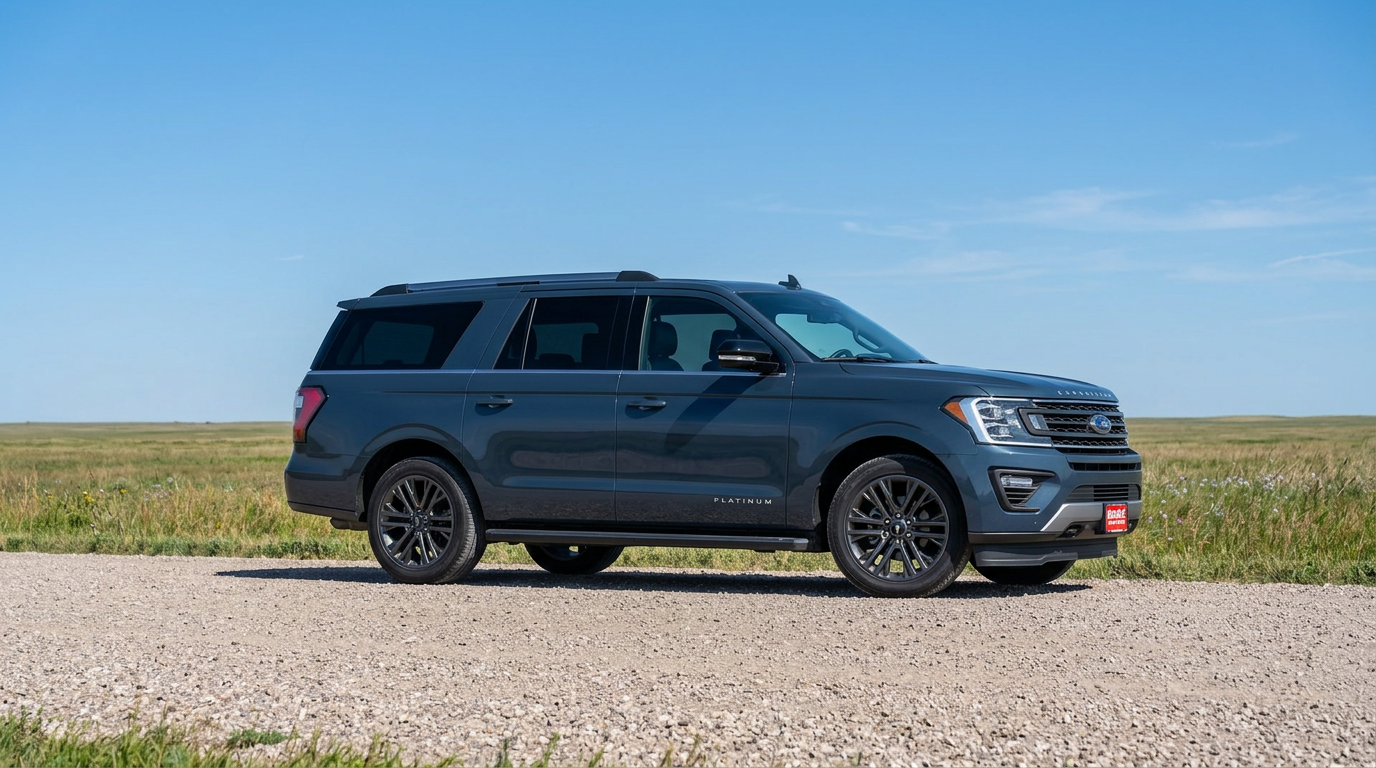
2027 Ford Expedition 30th Anniversary Package in exclusive Blue Ember Metallic at Beadle Ford, Bowdle SD

The 2027 Ford Expedition 30th Anniversary Appearance Package: Every Detail, Plus the Paint You Can't Order Anywhere Else

Home› Ford Expedition› 2027 Ford Expedition› 30th Anniversary Appearance Package The 30th Anniversary Appearance Package is the headline option on the 2027 Ford Expedition Platinum — a new-for-2027 commemorative package that marks thirty years of the Expedition nameplate. It’s an appearance package, not a performance package, but it includes a paint finish you can’t order anywhere else in the Ford Expedition lineup: Blue Ember Metallic, a color that previously lived only on the Mustang Dark Horse. This guide covers what Ford is actually celebrating, every piece of the package item by item, the story behind Blue Ember Metallic’s jump from Mustang to full-size SUV, what trims and colors it pairs with, and whether it’s the right call for you — or whether a standard Platinum (with or without one of the other four Platinum packages) is the smarter pick. If you’re shopping at Beadle Ford, this is the section of the Order Guide worth thinking through carefully. Get Pre-Approved Browse Expedition Inventory On This Page What is Ford actually celebrating with the 30th Anniversary Package? What’s included in the 30th Anniversary Appearance Package? Why did Blue Ember Metallic come from the Mustang to the Expedition? Which trims and colors can you pair with the Anniversary Package? Should you wait for the Anniversary Package or order a standard Platinum? What is Ford actually celebrating with the 30th Anniversary Package? Thirty years of the Expedition nameplate. The Ford Expedition launched as a 1997 model year vehicle in the fall of 1996, which puts the 2027 model year at the thirty-year mark. In those three decades, the Expedition has gone through multiple generations, moved from body-on-frame steel to a sixth-generation platform with an aluminum body, gained a High Output twin-turbo V6 option, and picked up a factory off-road trim — the Tremor — that none of the original Expeditions even hinted at. The Anniversary Package is Ford’s way of marking that milestone on a single trim — the Platinum — with a cohesive blacked-out appearance treatment, anniversary-specific badging and scuff plates, a unique paint option, and the Platinum Interior Accent Package included standard. It’s appearance-focused, not mechanical. You’re not getting a different engine, a different transmission, or different tuning. You’re getting a commemorative cosmetic spec on a Platinum Expedition. What’s included in the 30th Anniversary Appearance Package? Every inclusion in the package, taken directly from the 2027 Ford Expedition Order Guide. The package code is 91A, and it’s optional on Platinum (600A). Exterior: 22" × 9" Ebony Bright Machined Painted Aluminum wheels with P275/50R22 all-season tires Carbon Black front bumper and fascia Ebony painted grille Black Bezel headlamps with Ebony trim applique Beltline molding in black “30th ANNIVERSARY” and “EXPEDITION” liftgate lettering in black “MAX” badge in black when ordered with Expedition MAX Rear side window laminated glass Interior: Salt Crystal Gray leather interior required (no other interior option with this package) Unique center console with 30th Anniversary embossment Platinum Interior Accent Package standard Cargo Organizer Front and second-row tray-style floor liners Front scuff plates in Black Onyx with satin-aluminum “30th” lettering and inner racetrack trim Rear scuff plates in Black Onyx with satin-aluminum metal inner racetrack trim What’s not in the package but is worth noting: because 91A is built on Platinum (600A), you inherit all of the Platinum’s standard equipment — the Ford Digital Experience with the 24" panoramic and 13.2" center displays, Ford Co-Pilot360 Assist 2.0, a 10-speaker B&O Sound System (base Platinum), 360-Degree Zone Lighting, ambient lighting, and the full interior leather spec. The Anniversary Package layers on top of that; it doesn’t replace it. For a full view of how Platinum fits in the lineup next to the other trims, the 2027 Ford Expedition trim levels guide walks through each trim and package in context. Why did Blue Ember Metallic come from the Mustang to the Expedition? Blue Ember Metallic is an extra-cost Ford finish that was previously exclusive to the Mustang Dark Horse — a performance-oriented trim Ford introduced as part of the 2024 Mustang refresh. Pulling it onto the Expedition 30th Anniversary Package is a deliberate choice: it’s the only paint color on the Expedition’s 2027 palette that carries a performance pedigree from another Ford nameplate, and it’s the only finish on the entire 2027 Expedition that’s locked to a single package and trim. The finish itself is deep and warm — a dark blue with pigment that shifts slightly under direct sun versus overcast light. It reads differently in a driveway at golden hour than it does under shop fluorescents, which is part of why Ford sent it to the Mustang first. On an Expedition Platinum with a Carbon Black front fascia, Ebony painted grille, and Ebony-trimmed headlamps, it ends up looking much more subdued than on a Mustang, but the pigment is the same. If Blue Ember Metallic is the reason you’re interested in the package, availability matters — that specific finish is not available on any other 2027 Expedition configuration, so check inventory or ask us to order one. You can’t add it to a standard Platinum, a King Ranch, a Tremor, or an Active Touring. If you want it, you’re ordering a Platinum with 91A. Want Blue Ember Metallic? Ask us today. Blue Ember is locked to the 30th Anniversary Package. If a 30th Anniversary Platinum is not on the lot, a custom order gets you the exact configuration you want. Get Pre-Approved Which trims and colors can you pair with the Anniversary Package? The 30th Anniversary Appearance Package is optional on Platinum (600A) only. It’s offered on both standard-length Expedition Platinum and Expedition MAX Platinum, which means the MAX body style is on the table if you need the extended cargo area. It is not available on XL, Active (Select or Touring), Tremor, or King Ranch. Three exterior paint options are offered with the package: Agate Black Metallic — the carryover black with a satin-smooth metallic Star White Metallic Tri-Coat — a multi-layer white that shifts slightly under direct sun Blue Ember Metallic — new for 2027, exclusive to this package Bronze Fire Metallic Tri-coat, Nocturnal Blue Metallic, Dark Matter Gray Metallic, and Glacier Gray Metallic Tri-Coat — all available on standard 2027 Platinum — are not on the menu for the 91A package. The interior is Salt Crystal Gray leather; no other interior option is offered with 91A. The Anniversary Package also has package-level incompatibilities. It can’t be combined with the Platinum Ultimate Package (17A), the Stealth Appearance Package (60D), or the Stealth Performance Package (19B). That means if you’re choosing the Anniversary Package, you’re giving up the High Output 440 hp engine that comes with Stealth Performance or Platinum Ultimate. The Anniversary Package is built on Platinum 600A’s standard 3.5L EcoBoost V6, not the High Output variant. Should you wait for the Anniversary Package or order a standard Platinum? It comes down to three questions. Do you want Blue Ember Metallic specifically? Is a commemorative cosmetic spec worth the package cost to you? And are you OK giving up the High Output engine and the Platinum Ultimate package content to get it? If the answers are yes, the 30th Anniversary Package is probably the right call. If any of those answers is no, a standard Platinum — or a Platinum Ultimate, or a Platinum with the Stealth Performance Package — likely fits better. Order the 30th Anniversary Package if: you want Blue Ember Metallic, you want the commemorative anniversary badging and interior embossment, you value the unified blacked-out exterior treatment, you want the Platinum Interior Accent Package included standard, or you’re planning to keep the Expedition long enough that a thirtieth-anniversary spec will be meaningful when you look back at it. Order a different Platinum configuration if: you want the 440 hp High Output V6 (order the Stealth Performance or Platinum Ultimate package), you want BlueCruise 1-Year + 90-Day plan standard (order Platinum Ultimate), you want Chrome Roof Rails and a Lit Tailgate Applique (only Platinum Ultimate 17A retains those for 2027 — standard Platinum 600A and the 91A package both come with black roof rails and a black tailgate applique), or you want a paint not offered with 91A like Bronze Fire Metallic Tri-coat or Nocturnal Blue Metallic. For a full framing of every 2027 Expedition trim, engine, and package decision in one place, the complete 2027 Ford Expedition overview pulls it together. Key Takeaways The 30th Anniversary Appearance Package (91A) is new for 2027, optional on Platinum (600A) only, commemorating 30 years of the Expedition nameplate since 1997. Blue Ember Metallic — previously a Mustang Dark Horse exclusive — is only available with this package. It’s an appearance package, not a performance package. The High Output V6 is not included. Three paint options: Agate Black Metallic, Star White Metallic Tri-coat, or Blue Ember Metallic. Salt Crystal Gray interior is required. Not compatible with Platinum Ultimate (17A), Stealth Appearance (60D), or Stealth Performance (19B). Available on standard-length and MAX Platinum. Frequently Asked Questions Which trim does the 30th Anniversary Appearance Package come on? Platinum (600A) only. It’s not offered on XL, Active Select or Active Touring, Tremor, or King Ranch. It is available on both the standard-length Expedition Platinum and the Expedition MAX Platinum. What paint colors can I get with the Anniversary Package? Three paint options: Agate Black Metallic, Star White Metallic Tri-Coat, or Blue Ember Metallic. Other 2027 Expedition paints — including Bronze Fire Metallic Tri-coat, Nocturnal Blue Metallic, Dark Matter Gray Metallic, and Glacier Gray Metallic Tri-Coat — are not offered with the 91A package. Is Blue Ember Metallic available on any other Expedition configuration? No. Blue Ember Metallic is exclusive to Platinum with the 30th Anniversary Appearance Package (91A). If you want the finish, you’re ordering that specific configuration. Does the Anniversary Package include the High Output engine? No. The 91A package is built on Platinum (600A), which uses the standard 3.5L EcoBoost V6. The 3.5L EcoBoost V6 High Output at 440 hp and 510 lb-ft of torque is only paired with the Stealth Performance Package (19B) or the Platinum Ultimate Package (17A) on Platinum — and neither of those is compatible with the 30th Anniversary Package. Can I order the Anniversary Package on an Expedition MAX? Yes. The 30th Anniversary Appearance Package is available on both standard-length Expedition Platinum and Expedition MAX Platinum. When ordered on MAX, the “MAX” badge is finished in black to match the rest of the package styling. What interior comes with the Anniversary Package? Salt Crystal Gray leather with perforated seat inserts is required with the 91A package. The Platinum Interior Accent Package is standard. The center console carries a unique 30th Anniversary embossment, and the front scuff plates feature satin-aluminum “30th” lettering in an inner racetrack motif. How do I get a 30th Anniversary Expedition at Beadle Ford? Check our live Expedition inventory or call Beadle Ford at (866) 561-2636. If a 30th Anniversary Platinum is on the lot, you can drive it today; if not, we’ll custom order it — confirm the paint, walk through MAX versus standard-length, and lock in the Salt Crystal Gray interior. Because Blue Ember is exclusive to this package, it is worth asking early. My Take on the 30th Anniversary Package Appearance packages are usually an easy “pass” for me in a buyer conversation — they don’t change the driving experience, and most of them fade into the background after the first six months of ownership. The 30th Anniversary Package is the exception. It’s genuinely cohesive, the interior detailing is substantial, and Blue Ember Metallic is a paint that people notice. If you’re already ordering a Platinum and you want something visually distinct from every other Platinum on the road, it’s worth considering. The caveat: you’re giving up the 440 hp High Output engine that comes with Platinum Ultimate or Stealth Performance. If the extra power matters more to you than the anniversary styling, order one of those packages instead. If you want to talk through how the decision shakes out against your specific use case, stop in at Beadle Ford or call and we’ll walk through it together. Shop 2027 Expeditions in Stock Contact Beadle Ford About the Author Lexy Tabbert — Beadle Ford, Bowdle, SD Lexy Tabbert is the Director of Sales and Marketing at Beadle Ford in Bowdle, South Dakota. She covers Ford vehicles, trim comparisons, and buyer guidance — helping families, ranchers, and ag operators across the region find the right truck and configuration for their needs. Learn more about Lexy.
2026 Ford F-150 tailgate work surface at jobsite

2026 Ford F-150 Trim Levels Explained

The 2026 Ford F-150 is available in multiple trim levels, each engineered for a distinct balance of work capability, technology integration, and interior refinement. Understanding these differences prevents overbuying or underconfiguring your truck. This guide explains what each trim level is designed for and how they compare. For engine specifications and towing ratings, reference the full 2026 Ford F-150 overview. Contact Beadle Ford Table of Contents How Many Trim Levels Are Available? What Does the XL Offer? What Is the STX Package? Is XLT the Most Popular Choice? What Does Lariat Add? King Ranch vs Platinum Where Does Raptor Fit? How to Choose the Right Trim How Many Trim Levels Are Available on the 2026 F-150? The 2026 F-150 is available in multiple trim levels, each designed for a different type of buyer — from work-focused configurations to premium luxury and off-road performance models. XL STX XLT Lariat King Ranch Platinum Raptor Raptor R What Does the F-150 XL Offer? The XL is the most straightforward work-focused trim. It emphasizes durability, utility, and value. It is commonly selected for fleet use, agricultural work, and buyers who plan to configure towing and drivetrain capability without additional luxury features. What Is the STX Package? The STX builds on the XL by adding upgraded exterior styling and additional interior convenience features. It provides a more modern appearance without stepping into higher trim pricing. For buyers who want a clean look without luxury-level features, STX strikes a practical balance. Is XLT the Most Popular Trim? Yes. XLT is often considered the sweet spot in the lineup. It adds upgraded interior materials, expanded technology features, and access to popular equipment groups while maintaining strong towing and engine flexibility. Many buyers who want both capability and everyday comfort begin their search here. What Does Lariat Add Over XLT? Lariat moves into premium territory. It typically includes upgraded seating materials, expanded technology features, and enhanced interior finishes. For buyers who spend long hours behind the wheel or use their truck for both work and family travel, Lariat offers a noticeable refinement upgrade. Technology differences across trims are explained in greater detail in our F-150 Technology & Interior Guide. King Ranch vs Platinum: What’s the Difference? Both trims represent the upper tier of the F-150 lineup. King Ranch emphasizes distinctive styling and premium materials. Platinum focuses on modern luxury and high-end technology. Capability remains strong at this level, but the focus shifts toward comfort and elevated interior design. Where Do Raptor and Raptor R Fit? Raptor models prioritize off-road suspension travel, performance tuning, and aggressive styling. They are engineered for terrain capability and high-speed off-road driving rather than maximum conventional towing numbers. How to Choose the Right 2026 F-150 Trim Determine whether the truck will be primarily work-focused or mixed-use. Identify must-have technology or comfort features. Confirm engine and towing needs first. Then evaluate equipment groups within your preferred trim. Key Takeaways XL and STX prioritize value and work capability. XLT is often the most balanced trim. Lariat adds premium interior refinement. King Ranch and Platinum emphasize luxury. Raptor models focus on performance and off-road capability. Frequently Asked Questions Which 2026 F-150 trim is best for towing? Towing capability depends more on engine and equipment configuration than trim level alone. Is Lariat worth the upgrade from XLT? For buyers prioritizing interior comfort and upgraded materials, Lariat offers noticeable refinement improvements. Is Raptor built for heavy towing? Raptor models prioritize performance and suspension travel rather than maximum conventional towing ratings. Conclusion In my experience, trim selection becomes much easier once buyers separate capability requirements from comfort preferences. Start with the engine and towing needs, then layer in the interior and technology features that matter most. That order prevents overbuying or underconfiguring the truck. Compare available 2026 F-150 trims at Beadle Ford or contact us to review equipment group differences. About the Author Lexy Tabbert provides detailed truck research and configuration guidance for drivers across South Dakota and the surrounding region.

Contact Us

Fill out this form below and we'll contact you shortly
*Required Fields