

Blog / Bowdle Ford Dealer

Blog

All Bowdle Ford Dealer New Vehicles Bowdle Ford Service
2026 Ford Escape Hybrid on South Dakota highway, powertrain comparison

2026 Ford Escape Hybrid vs. Gas vs. Plug-In Hybrid: Which Powertrain Makes Sense for Rural South Dakota?

HERO + INTRO The 2026 Ford Escape comes with four distinct powertrain options: a 1.5L EcoBoost gas engine, a 2.0L EcoBoost gas engine, a 2.5L hybrid (non-plug-in), and a 2.5L plug-in hybrid (PHEV). The choice isn't just about fuel economy — each powertrain comes with different AWD availability, different trim access, and different real-world implications for buyers driving central South Dakota roads year-round. This guide breaks down what each powertrain actually delivers, who it makes sense for, and where the trade-offs land — specifically for the long-distance, all-season, rural driving conditions common to buyers in the Bowdle area. TOP CTA ROW Search Available Escape Inventory Get Pre-Qualified TABLE OF CONTENTS On This Page What Powertrain Options Does the 2026 Ford Escape Offer? When Does the 1.5L EcoBoost Make Sense for South Dakota Buyers? What Does the 2.0L EcoBoost Bring Over the 1.5L — and Is It Worth It? Why Do Many South Dakota Buyers Choose the 2.5L Hybrid AWD? What's the Honest Case for — and Against — the Escape PHEV Near Bowdle? Which Escape Powertrain Is the Right Choice for Rural South Dakota Driving? H2 1: POWERTRAIN OVERVIEW What Powertrain Options Does the 2026 Ford Escape Offer? The 2026 Escape offers four powertrain options across six trims. Which powertrains are available depends entirely on which trim you're looking at — and AWD availability is not consistent across all of them. Powertrain Drivetrain Available Trims 1.5L EcoBoost FWD std / AWD optional Active, ST-Line 2.0L EcoBoost AWD Only ST-Line Select, ST-Line Elite, Platinum 2.5L Hybrid AWD Only ST-Line Select, ST-Line Elite, Platinum 2.5L PHEV FWD Only — no AWD PHEV trim only The central point: if AWD matters to you — and for most South Dakota buyers it should — the 2.5L PHEV is off the table immediately. The 1.5L EcoBoost is viable only if AWD is added at the order stage on Active or ST-Line. The 2.0L EcoBoost and 2.5L Hybrid are AWD by default on Select and above, with no FWD option available. The full 2026 Ford Escape overview at Beadle Ford covers how each powertrain fits within the broader trim lineup. H2 2: 1.5L ECOBOOST When Does the 1.5L EcoBoost Make Sense for South Dakota Buyers? The 1.5L EcoBoost makes the most sense when price is the primary driver and AWD is explicitly selected at the order stage. It's capable on pavement and gravel, and delivers reasonable efficiency — approximately 30 mpg combined in FWD configuration (verify at fueleconomy.gov for current EPA figures). AWD-equipped 1.5L fuel economy has not been officially published; check fueleconomy.gov for updated ratings. The limitation for SD buyers is what comes with those trims. Active and ST-Line — the only trims offering the 1.5L — don't include heated seats, a heated steering wheel, remote start, or a power liftgate as standard equipment. Adding AWD doesn't change that. On a February morning in Spink County, those features aren't luxuries. The 1.5L is paired with an 8-speed conventional automatic — not an eCVT. Towing is capped at 2,000 lbs regardless of drivetrain, and the Class II factory tow package is not available on Active or ST-Line, only through a dealer accessory. If cost is the main consideration and cold-weather standard features are less important, the 1.5L with AWD added is workable. If the goal is winter readiness as a complete package, the comparison against ST-Line Select usually goes against the 1.5L once all-in cost is factored. H2 3: 2.0L ECOBOOST What Does the 2.0L EcoBoost Bring Over the 1.5L — and Is It Worth It? The 2.0L EcoBoost delivers more power and a meaningful towing capacity advantage. It's AWD only — available on ST-Line Select, ST-Line Elite, and Platinum — so AWD is always included at no additional option cost. The key practical upgrade over the 1.5L is towing: with the Class II factory tow package (code 536), the 2.0L EcoBoost AWD is rated at 3,500 lbs, compared to 2,000 lbs on the 1.5L with no factory package available. For buyers who need to move a small boat to Lake Oahe, a utility trailer, or similar light-duty loads common in central South Dakota, 3,500 lbs is the right number. A small fishing boat and trailer, a loaded single-axle utility trailer — the 2.0L covers those tasks where the 1.5L falls short. The 1.5L tops out at 2,000 lbs without a factory package option — that gap matters for buyers with regular, even occasional, towing needs. The trade-off against the 2.5L Hybrid is fuel economy. The Hybrid delivers approximately 39 mpg combined (verify at fueleconomy.gov), which compounds over significant highway miles between Bowdle and Aberdeen or Pierre. The 2.0L EcoBoost AWD fuel economy has not been officially published — check fueleconomy.gov for current EPA figures. The 2.0L also uses an 8-speed conventional automatic rather than an eCVT, which some buyers prefer for its familiar feel. If towing matters more than fuel savings, the 2.0L EcoBoost is the right call. COMPARABLE MODELS CTA (MID-BLOG) Looking for Something in Stock? Check out these models available now at Beadle Ford. Ford Bronco Sport Standard 4x4, GOAT modes, staying in Ford's lineup. View Bronco Sport Inventory Ford Explorer More room, available 3-row seating, ready for the plains. View Explorer Inventory Ford Maverick Compact truck versatility at an Escape-comparable price. View Maverick Inventory H2 4: 2.5L HYBRID AWD Why Do Many South Dakota Buyers Choose the 2.5L Hybrid AWD? Because it delivers AWD and significantly better fuel efficiency than either gas option, with no charging requirement. The 2.5L Hybrid AWD is available on ST-Line Select, ST-Line Elite, and Platinum — all trims that include heated seats, remote start, and a power liftgate as standard. The efficiency gain doesn't come at the expense of cold-weather preparedness. The hybrid system delivers approximately 39 mpg combined (verify at fueleconomy.gov for current EPA ratings). On a 200-mile round trip to Aberdeen or Sioux Falls, that's a tangible fuel savings compared to either gas option. The eCVT transmission behaves differently from a conventional automatic — it maintains a steady engine rpm during acceleration rather than stepping through gears. Most buyers adapt quickly; many appreciate the smooth, consistent pull on long open-road stretches common in central South Dakota. The trade-off is towing. With the Class II tow package, the 2.5L Hybrid AWD is rated for 1,500 lbs — significantly less than the 2.0L EcoBoost's 3,500 lbs with the same package. For buyers who only need to move a small utility trailer or a jon boat, 1,500 lbs is workable. For anything heavier, the 2.0L EcoBoost is the right call. The AWD winter performance guide covers how the Hybrid AWD system handles South Dakota winter and gravel conditions in detail. H2 5: PHEV HONEST ASSESSMENT What's the Honest Case for — and Against — the Escape PHEV Near Bowdle? The PHEV is front-wheel drive only — that's the immediate limitation for most central South Dakota buyers. But for buyers who have Level 2 charging at home and can accept FWD for their use case, the PHEV is the most feature-complete single Escape configuration available. The plug-in hybrid system offers approximately 37 miles of EV-only range on a full charge (verify at fueleconomy.gov). Combined with a rated approximately 101 MPGe when operating on electricity and approximately 40 mpg fuel economy after the battery depletes, total range in hybrid mode extends to approximately 520 miles. The PHEV trim itself is well-equipped: Co-Pilot360 Assist+, 13.2" SYNC 4, heated front seats, heated steering wheel, remote start, power liftgate, and roof-rack side rails are all standard. A Mobile Power Cord for Level 1 home charging comes included; Level 2 charging requires a separate 240V charger installation. The realistic limitation for rural South Dakota buyers: Level 2 charging infrastructure is sparse around Bowdle and most of central SD. Without regular Level 2 access, the EV range advantage disappears — the PHEV effectively operates as a front-wheel-drive hybrid, and the non-plug-in 2.5L Hybrid AWD on Select, Elite, or Platinum delivers comparable gas-mode fuel economy without the charging dependency and without giving up all-wheel drive. The PHEV makes the most sense for a buyer who commutes to a larger town with Level 2 access, drives predictable daily distances within the EV range, and genuinely doesn't need AWD. H2 6: WHICH POWERTRAIN Which Escape Powertrain Is the Right Choice for Rural South Dakota Driving? For most central South Dakota buyers, the 2.5L Hybrid AWD on ST-Line Select is where the decision lands. AWD is standard, efficiency is strong, and the trim's cold-weather features are included without adding packages. That combination — traction in winter, manageable fuel costs on long highway miles, and a vehicle that starts reliably in January — covers the majority of what SD buyers prioritize. The 2.0L EcoBoost AWD is the right move if towing up to 3,500 lbs with the Class II package is part of your regular use case. It's also AWD only at Select and above, so the cold-weather feature set stays intact. The trade-off is fuel economy — it won't reach the Hybrid's approximately 39 mpg combined. If you're running Lake Oahe trips with a boat in tow regularly, the 2.0L makes that trade-off worthwhile. The 1.5L EcoBoost is viable if budget is the driver and AWD is specified at order — but the buyer accepts the cold-weather feature gaps that come with Active and ST-Line. The PHEV is a niche fit for this market: strong configuration, but FWD-only and rural charging realities limit its relevance for most buyers in the area. The complete trim levels guide maps each powertrain option to the specific trim configurations available. KEY TAKEAWAYS Key Takeaways The 2.5L PHEV is front-wheel drive only with no AWD option — a meaningful limitation for most central South Dakota buyers. The 2.5L Hybrid AWD on ST-Line Select delivers the best combination of AWD, efficiency (approximately 39 mpg combined), and cold-weather standard features for rural SD use. The 2.0L EcoBoost AWD is the right call when towing up to 3,500 lbs matters — the Class II factory tow package is available on Select, Elite, and Platinum only, not on 1.5L trims. The 1.5L EcoBoost with AWD is a viable lower-cost entry, but AWD must be explicitly specified at order on Active or ST-Line, and heated seats, remote start, and power liftgate are not included. PHEV buyers near Bowdle need reliable Level 2 charging access to realize the plug-in value proposition; without it, the non-plug-in Hybrid AWD delivers comparable efficiency with AWD included. FAQ Frequently Asked Questions What engines are available in the 2026 Ford Escape? The 2026 Ford Escape offers four powertrain options: a 1.5L EcoBoost three-cylinder with 8-speed automatic (Active, ST-Line — FWD standard/AWD optional), a 2.0L EcoBoost four-cylinder with 8-speed automatic (ST-Line Select, Elite, Platinum — AWD only), a 2.5L hybrid with eCVT (ST-Line Select, Elite, Platinum — AWD only), and a 2.5L plug-in hybrid with eCVT (PHEV trim — FWD only, no AWD). The choice of powertrain determines which trims are available and whether AWD comes standard. Is the 2026 Ford Escape hybrid available with AWD? Yes — the 2.5L non-plug-in Hybrid is AWD only, available on ST-Line Select, ST-Line Elite, and Platinum. There is no FWD option on the non-plug-in Hybrid. The 2.5L PHEV (plug-in hybrid) is the opposite — it is front-wheel drive only with no AWD available at any trim or price point. How much can the 2026 Ford Escape tow? Towing capacity varies by powertrain. The 2.0L EcoBoost AWD with the Class II factory tow package (code 536) is rated at 3,500 lbs. The 2.5L Hybrid AWD and 2.5L PHEV each rate at 1,500 lbs with the Class II package. The 1.5L EcoBoost (FWD or AWD) is rated at 2,000 lbs — but the Class II factory tow package is not available on Active or ST-Line trims; only a dealer-installed accessory is available for those configurations. All figures are SAE J2807 method. How far can the 2026 Ford Escape PHEV go on electricity alone? The 2026 Ford Escape PHEV offers approximately 37 miles of EV-only range on a full charge (verify current figures at fueleconomy.gov). Once the battery is depleted, the vehicle operates as a conventional gas hybrid with approximately 40 mpg fuel economy and a total range of approximately 520 miles. A Mobile Power Cord for Level 1 home charging is included; Level 2 charging requires a separate 240V charger installation. Which 2026 Ford Escape powertrain gets the best fuel economy? On a pure fuel economy basis, the PHEV delivers the highest MPGe rating (approximately 101 MPGe) when operating on electricity. Once the battery depletes, it continues as a gas hybrid at approximately 40 mpg. The 2.5L non-plug-in Hybrid AWD delivers approximately 39 mpg combined without any charging requirement. The 1.5L EcoBoost FWD delivers approximately 30 mpg combined. The 2.0L EcoBoost AWD combined fuel economy has not been officially published — check fueleconomy.gov for current EPA figures. For most South Dakota buyers without reliable Level 2 charging access, the 2.5L Hybrid AWD is the practical efficiency leader for real-world use. FIRST-PERSON CONCLUSION My Take on the 2026 Escape Powertrain Decision for South Dakota Buyers When I'm talking through powertrain options with a buyer, the conversation usually reaches the same two questions: do you need to tow anything, and do you have Level 2 charging access at home? Those two questions separate most of the field. If neither applies — no regular towing, no home charger — the 2.5L Hybrid AWD on Select is almost always where it lands. AWD is locked in, efficiency is real on the highway miles between towns, and the cold-weather features come with the trim. That combination is hard to argue with for central South Dakota use. The PHEV comes up a fair amount, and I try to be direct about the charging situation near Bowdle. Without Level 2 access at home, the EV range advantage effectively disappears, and you end up with a front-wheel-drive hybrid. The non-plug-in Hybrid AWD covers that use case more practically for most buyers in this area. For buyers who do have that home charging setup and aren't dependent on AWD — and there are some — the PHEV is genuinely strong. If you want to work through the specifics for your situation — towing weight, typical drive distance, whether a Level 2 charger makes sense to add — I'm happy to run through that comparison with you directly. Stop by Beadle Ford in Bowdle or give us a call. BOTTOM CTA ROW Search Available Escape Inventory Get Pre-Qualified ABOUT THE AUTHOR About the Author Lexy Tabbert — Beadle Ford, Bowdle, SD Lexy Tabbert is the Director of Sales and Marketing at Beadle Ford in Bowdle, South Dakota. She covers Ford vehicles, trim comparisons, and buyer guidance — helping families, ranchers, and ag operators across the region find the right truck and configuration for their needs. Learn more about Lexy.
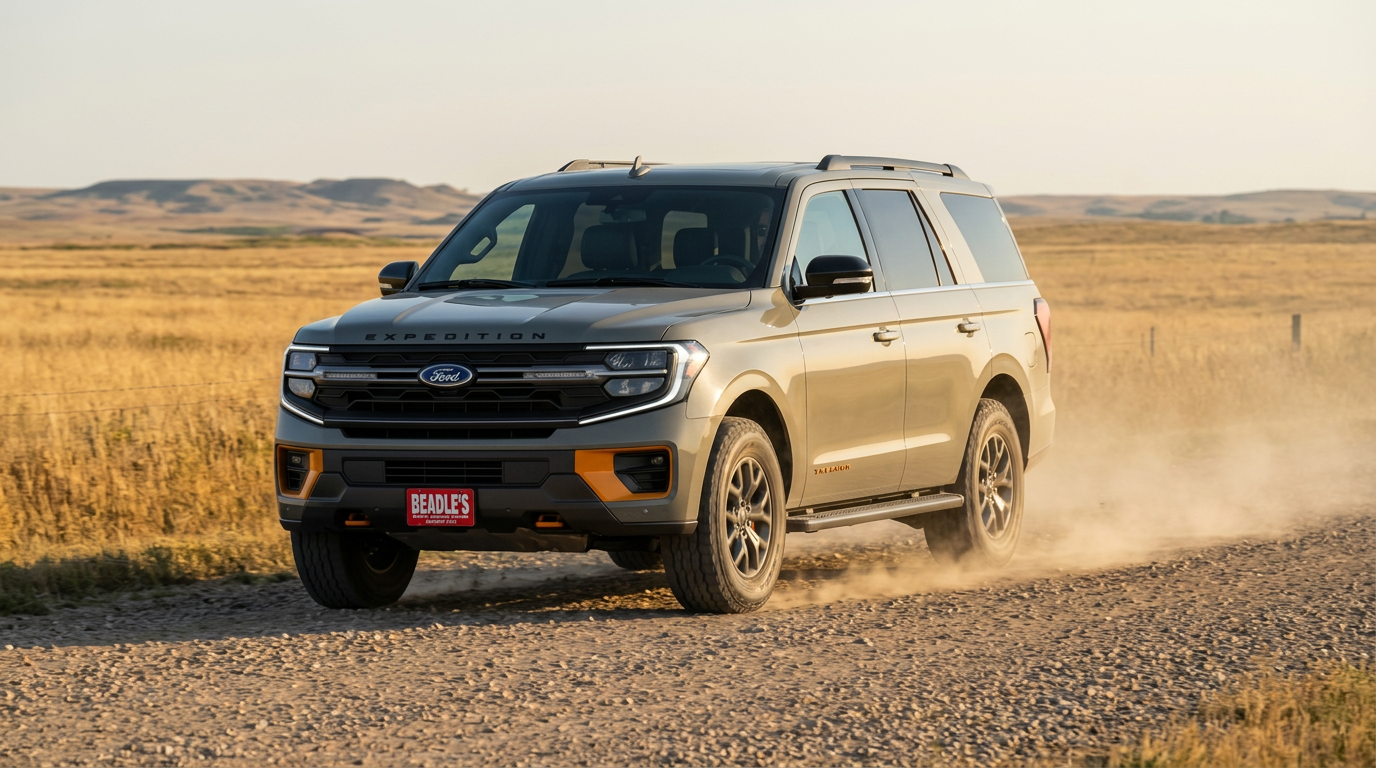
2026 Ford Escape ST-Line Select on South Dakota plains, clean sky background

2026 Ford Escape Trim Levels Explained: Which One Is Right for You?

HERO + INTRO The 2026 Ford Escape comes in six trim levels: Active, PHEV, ST-Line, ST-Line Select, ST-Line Elite, and Platinum. For buyers in central South Dakota, one variable shapes that decision more than any other: AWD. The AWD picture changes dramatically depending on which trim you're looking at — some include it standard, some require you to add it, and one trim can't get it at all. This guide breaks down what changes at each trim level, what you're actually paying for, and which configuration makes the most practical sense for buyers driving county roads and South Dakota winters. The focus is on the decisions that matter here — AWD, cold-weather features, and real-world usability for rural SD driving. TOP CTA ROW Search Available Escape Inventory Get Pre-Qualified TABLE OF CONTENTS On This Page Which Trims Include AWD — and Why Does It Shape Every Decision? Is the Escape Active the Right Starting Point for South Dakota Buyers? What Does the Escape ST-Line Add Over the Active? Why Is the ST-Line Select the Natural Starting Point for South Dakota Buyers? What Does the Escape ST-Line Elite Add Over the Select? Should South Dakota Buyers Consider the Escape PHEV? What Makes the Escape Platinum Worth the Step Up? H2 1: AWD AS ORGANIZING PRINCIPLE Which Trims Include AWD — and Why Does It Shape Every Decision? AWD is optional on Active and ST-Line, standard (and mandatory) on ST-Line Select, ST-Line Elite, and Platinum, and unavailable on the PHEV. That single variable changes the practical suitability of each trim for central South Dakota winters more than any other spec on the sheet. Here's how the lineup splits on drivetrain: Trim Drivetrain Engine Options Active FWD standard / AWD optional 1.5L EcoBoost ST-Line FWD standard / AWD optional 1.5L EcoBoost ST-Line Select AWD Only 2.5L Hybrid or 2.0L EcoBoost ST-Line Elite AWD Only 2.5L Hybrid or 2.0L EcoBoost Platinum AWD Only 2.5L Hybrid or 2.0L EcoBoost PHEV FWD Only — no AWD 2.5L Plug-In Hybrid The dividing line is ST-Line Select. Below it, AWD must be added explicitly at the order stage and you'll still be on the 1.5L EcoBoost. At Select and above, AWD is locked in and the engine steps up to a 2.0L EcoBoost or 2.5L Hybrid. The full AWD breakdown covers how Ford's Intelligent AWD performs in South Dakota winter conditions. The complete 2026 Escape overview at Beadle Ford covers all six trims and powertrains in full. H2 2: ACTIVE Is the 2026 Escape Active the Right Starting Point for South Dakota Buyers? The Active is the value entry point of the Escape lineup — capable vehicle, lower price point, and Co-Pilot360 standard. But in South Dakota, what matters is that AWD is optional, not included. Buyers who skip it end up with an FWD crossover on packed county roads in January. What the Active includes standard: 1.5L EcoBoost with 8-speed automatic, 17" Shadow Silver-painted aluminum wheels, cloth seating with 6-way manual driver and 4-way manual passenger adjustment, 8" SYNC 4 touchscreen, dual-zone electronic automatic climate, and the full Ford Co-Pilot360 suite. What it does not include: heated seats, a heated steering wheel, remote start, or a power liftgate. On a -15°F morning outside Bowdle, those absences are noticeable. The Active is a reasonable choice if AWD is added at order and you're comparing total cost to what the ST-Line Select offers. If the all-in price with AWD added comes within range of ST-Line Select territory, the Select is usually the better use of that money — you'd be getting AWD standard plus heated seats, remote start, and a power liftgate without needing to option everything separately. H2 3: ST-LINE What Does the Escape ST-Line Add Over the Active? The ST-Line adds sport exterior styling and a more supportive seat. The powertrain and AWD situation are identical to the Active — 1.5L EcoBoost, FWD standard, AWD optional — and the cold-weather feature gaps remain the same. What changes over Active: 18" Rock Metallic painted aluminum wheels (with a slightly lower-profile tire), a black mesh grille, large rear spoiler, rear skid plate, and ST-Line exterior badging that give the Escape a more aggressive profile. Inside, ST-Line replaces the standard cloth with Sport Contour bucket seats in partial vinyl and cloth with red accent stitching, and steps the driver's seat up to an 8-way power adjustment versus the Active's 6-way manual. That's a meaningful seat upgrade for long highway drives. What doesn't change: still no heated seats, still no heated steering wheel, still no remote start, still no power liftgate. For South Dakota buyers, the ST-Line is worth considering if styling and seat comfort matter to you — but AWD still has to be added specifically if you want it, and the same cost comparison against ST-Line Select applies. COMPARABLE MODELS CTA (MID-BLOG) Looking for Something in Stock? Check out these models available now at Beadle Ford. Ford Bronco Sport Standard 4x4, GOAT modes, staying in Ford's lineup. Built for South Dakota. View Bronco Sport Inventory Ford Explorer More room, available 3-row seating, ready for the plains. View Explorer Inventory Ford Maverick Compact truck versatility at an Escape-comparable price. View Maverick Inventory H2 4: ST-LINE SELECT Why Is the ST-Line Select the Natural Starting Point for South Dakota Buyers? Because AWD is standard on every unit — there's no FWD version to accidentally end up with — and it brings heated front seats, a heated steering wheel, remote start, and a power liftgate in the same configuration. The Select is the first trim that addresses a central South Dakota winter in a complete way, in one package. The engine also steps up significantly at Select. Unlike Active and ST-Line which use the 1.5L EcoBoost, the Select runs either the 2.5L Hybrid AWD or the 2.0L EcoBoost AWD — both AWD only, no FWD version available. Additional standard equipment over ST-Line: body-color heated mirrors, LED fog lamps, illuminated vanity mirrors, and one-touch-up/down front and rear windows. Optional packages on Select include Tech Pack 1 (adds Co-Pilot360 Assist+ with adaptive cruise and lane centering, plus the 13.2" SYNC 4 screen) and Tech Pack 2 (adds 360° camera, B&O premium audio, 12.3" digital cluster, power passenger seat, and wireless charging). For buyers who want a fully equipped Select without stepping up to Elite, Tech Pack 2 covers most of what changes between the two trims. Choosing between the 2.5L Hybrid and 2.0L EcoBoost at this trim level is its own decision — the powertrain comparison guide covers that in detail. H2 5: ST-LINE ELITE What Does the Escape ST-Line Elite Add Over the Select? The Elite is a substantial comfort and technology step. The 12.3" Digital Productivity Screen, Co-Pilot360 Assist+, and wireless charging all become standard equipment — no optional packages needed. Seating upgrades to a 10-way heated power driver seat and 6-way heated power passenger seat, and a memory package for driver seat and mirrors is added. AWD remains standard, same as Select. Exterior: 19" Machined-face Ebony-painted aluminum wheels (up from 18" on Select). Interior: the 13.2" SYNC 4 touchscreen is standard here without requiring Tech Pack 1, and the LED light bar headlamps, auto-dimming rearview mirror, and perimeter alarm all come built in. For South Dakota buyers logging significant highway miles between towns, Co-Pilot360 Assist+'s adaptive cruise with stop-and-go and lane centering adds real-world value on long straight stretches. The memory package matters less in a personal vehicle but is useful if multiple drivers share the car regularly. The Elite makes the strongest case for buyers who want the full technology experience without moving to the top trim. SUPPORTING IMAGE H2 6: PHEV Should South Dakota Buyers Consider the Escape PHEV? Probably not as their first choice. The PHEV is front-wheel drive only — no AWD option exists at any price point — which is a significant limitation for buyers in central South Dakota facing winter driving on county roads and gravel. On paper, the PHEV is well-equipped: Co-Pilot360 Assist+ standard, 13.2" SYNC 4 standard, heated front seats, heated steering wheel, remote start, power liftgate, and roof-rack side rails — all built in. The plug-in hybrid system offers approximately 37 miles of EV-only range (verify at fueleconomy.gov) on a full charge, with a Mobile Power Cord for Level 1 home charging included. Total range in hybrid mode extends well beyond that once the battery depletes. The practical reality for rural South Dakota buyers: Level 2 charging infrastructure is limited around Bowdle and much of central SD, which means most PHEV owners in this area end up relying on the gas hybrid mode for the majority of their miles. That undercuts the primary value proposition of plug-in ownership. If fuel efficiency without a charging requirement is the goal, the 2.5L Hybrid AWD on Select, Elite, or Platinum delivers strong economy without the AWD trade-off. If charging access isn't a concern, the PHEV's feature content is strong. The powertrain comparison guide covers this decision in detail. H2 7: PLATINUM What Makes the Escape Platinum Worth the Step Up? The Platinum is the top trim, and its primary differentiator over Elite is interior material quality and the Space Gray interior option. Seats step up to ActiveX trimmed material with mini-perforation — the only Escape trim available in the Space Gray interior environment. AWD is standard, same as Elite. Standard equipment over Elite: Universal Garage Door Opener and roof-rack side rails join the list, and the 10-way heated power driver seat and 6-way heated power passenger seat carry forward with the premium ActiveX seating material. Memory package, wireless charging, power liftgate, and the full 13.2" SYNC 4 with 12.3" digital cluster — all standard, same as Elite. Engine options remain 2.5L Hybrid AWD or 2.0L EcoBoost AWD. The Platinum is the right choice if the interior material and the Space Gray color combination matter to you, or if you want the full-feature vehicle without building it through optional packages. Buyers comparing Elite with Tech Pack 2 added to the Platinum should run the specific price difference — in some configurations the gap is narrower than expected. KEY TAKEAWAYS Key Takeaways AWD is standard and mandatory on ST-Line Select, Elite, and Platinum — on Active and ST-Line it must be added specifically, and the PHEV has no AWD option at any price. The ST-Line Select is where most central South Dakota buyers should start — AWD is locked in and heated seats, heated steering wheel, and remote start all come with it. The 1.5L EcoBoost is only available on Active and ST-Line; Select and above use the 2.0L EcoBoost or 2.5L Hybrid, both AWD only. The PHEV's FWD-only configuration is a real limitation for winter driving in SD — the 2.5L Hybrid AWD on Select, Elite, or Platinum is the better efficiency option for most buyers in this area. The Elite is the natural choice when technology and seat comfort on highway miles matter — Co-Pilot360 Assist+, the 12.3" cluster, and wireless charging are all standard without option packages. FAQ Frequently Asked Questions What are the trim levels of the 2026 Ford Escape? The 2026 Ford Escape comes in six trim levels: Active, PHEV, ST-Line, ST-Line Select, ST-Line Elite, and Platinum. Each trim has different drivetrain availability, engine options, and standard features. Active and ST-Line use the 1.5L EcoBoost with optional AWD. Select, Elite, and Platinum use the 2.5L Hybrid or 2.0L EcoBoost with AWD standard. The PHEV is a front-wheel-drive-only plug-in hybrid trim. Which 2026 Ford Escape trims come with AWD standard? AWD is standard — and the only drivetrain option — on the ST-Line Select, ST-Line Elite, and Platinum trims. On the Active and ST-Line, FWD comes standard and AWD must be added as an option at order. The PHEV trim is front-wheel drive only with no AWD available at any configuration. What is the difference between the Escape ST-Line and ST-Line Select? The ST-Line Select is a significant step up from the ST-Line. AWD becomes standard on the Select (no FWD option), the engine steps up from the 1.5L EcoBoost to either the 2.5L Hybrid or 2.0L EcoBoost, and the Select adds heated front seats, a heated steering wheel, remote start, a power liftgate, and body-color heated mirrors as standard equipment. The ST-Line has sport styling over the Active but shares the same powertrain and cold-weather feature gaps. Is the Escape PHEV AWD or FWD? The 2026 Ford Escape PHEV is front-wheel drive only. There is no AWD option available on the PHEV trim at any price point. Buyers who want both plug-in capability and all-wheel drive will need to look at a different vehicle. The 2.5L non-plug-in Hybrid on the ST-Line Select, Elite, and Platinum is AWD only and delivers strong fuel economy without requiring a charger. Which 2026 Ford Escape trim is best for winter driving in South Dakota? The ST-Line Select is the natural starting point for South Dakota buyers. AWD is standard with no FWD option, and it includes heated front seats, a heated steering wheel, remote start, and a power liftgate — the full winter preparedness package in one trim. ST-Line Elite and Platinum offer more technology and comfort upgrades while keeping AWD standard. Active and ST-Line with AWD added are viable but require specifically requesting AWD at order to avoid an FWD unit. FIRST-PERSON CONCLUSION My Take on the 2026 Escape Trim Lineup for South Dakota Buyers When I'm working through trim options with a buyer, the conversation almost always lands on ST-Line Select as the starting point — not because it's the cheapest or the most expensive, but because it's where the math makes sense for someone who needs to drive in January. AWD is already in, heated seats and remote start are in, and you're not piecing together options to get there. That combination at one trim level is hard to argue against for central South Dakota use. From there it usually comes down to whether adaptive cruise and the larger technology suite matter enough to step to Elite, or whether the buyer is looking for the full-feature experience and the Platinum makes sense. The PHEV is worth a look if you have a charging setup at home and AWD isn't a requirement — but for most buyers around here, the gas hybrid AWD is the configuration that holds up best year-round. If you want to talk through which trim fits your situation, I'm happy to run the comparison with you directly. Stop by Beadle Ford in Bowdle or give us a call. BOTTOM CTA ROW Search Available Escape Inventory Get Pre-Qualified ABOUT THE AUTHOR About the Author Lexy Tabbert — Beadle Ford, Bowdle, SD Lexy Tabbert is the Director of Sales and Marketing at Beadle Ford in Bowdle, South Dakota. She covers Ford vehicles, trim comparisons, and buyer guidance — helping families, ranchers, and ag operators across the region find the right truck and configuration for their needs. Learn more about Lexy.
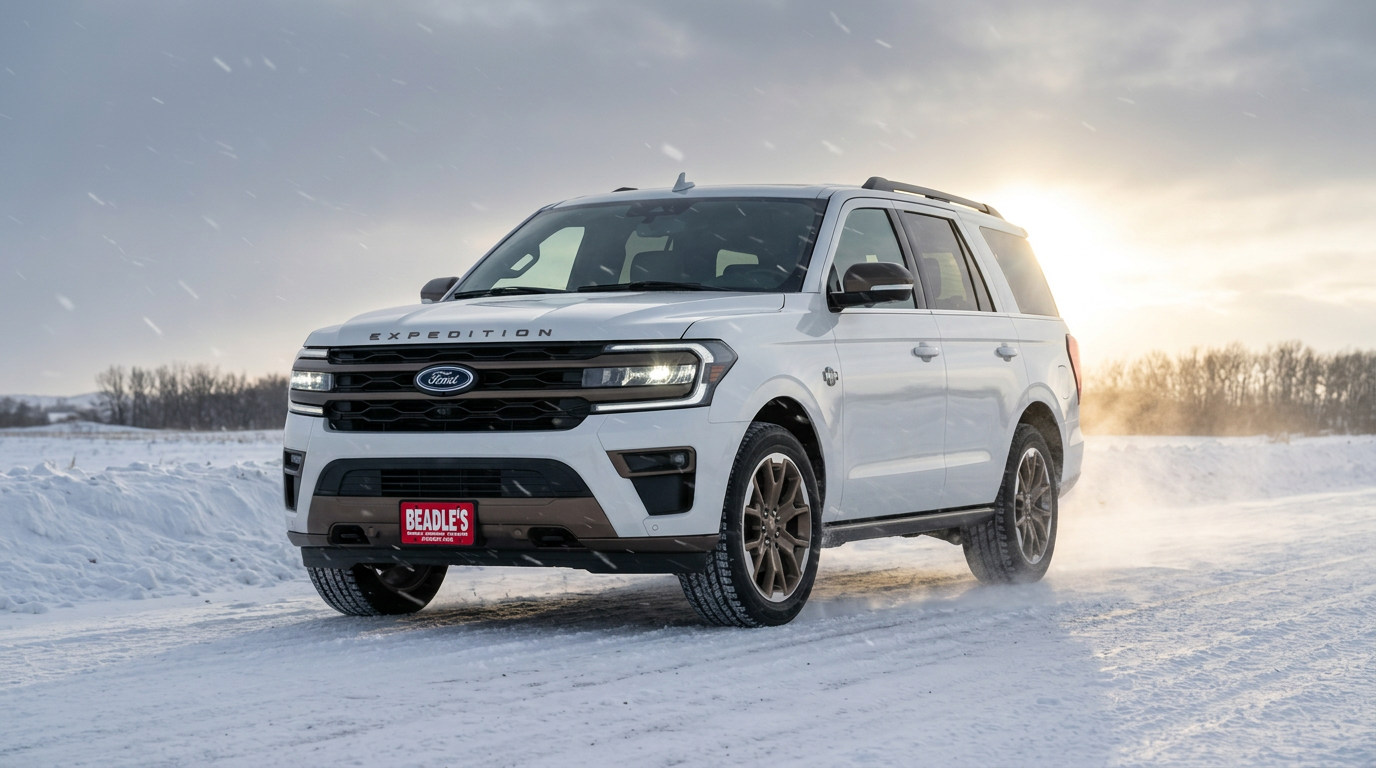
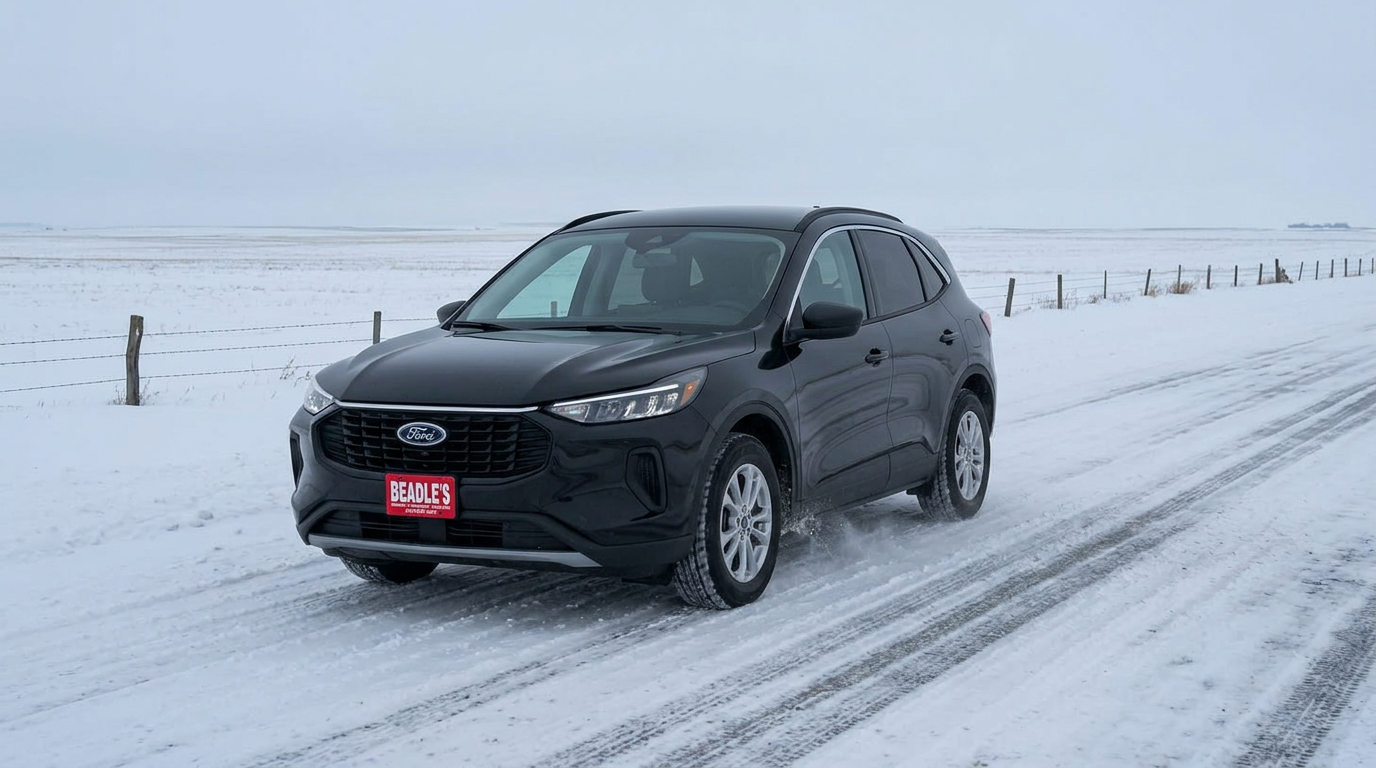
2026 Ford Escape AWD on snow-covered South Dakota highway in winter

2026 Ford Escape AWD in South Dakota Winters: What You Actually Need to Know

HERO + INTRO If you're shopping for a 2026 Ford Escape in South Dakota, AWD is probably on your checklist — and for good reason. But the answer to "does it come with AWD?" isn't a simple yes or no. Some trims include it standard. Some have it as an option you must add at the order stage. And one trim can't get it at all. Getting this wrong at purchase is costly — in most cases, drivetrain can't be changed after the vehicle is built. This guide covers what central South Dakota buyers specifically need to know: which 2026 Escape trims come with AWD, how the system performs on packed snow and gravel county roads, whether the optional AWD upgrade on entry trims is worth the cost, and why the PHEV has a limitation most buyers don't discover until it's too late. TOP CTA ROW Search Available Escape Inventory Get Pre-Qualified TABLE OF CONTENTS On This Page Which 2026 Ford Escape Trims Come with AWD? What Does Ford's Intelligent AWD Actually Do in Snow and Ice? Active and ST-Line AWD: Is the Optional Upgrade Worth It? Why PHEV Buyers Should Think Twice (It's FWD Only) How Does the Escape AWD Hold Up on Gravel Roads and Through South Dakota's Mud Season? H2 1: WHICH TRIMS HAVE AWD Which 2026 Ford Escape Trims Come with AWD? AWD is standard — and the only drivetrain option — on the ST-Line Select, ST-Line Elite, and Platinum trims. On the Active and ST-Line, FWD comes standard and AWD is an option you must specifically select at order. The PHEV trim is front-wheel drive only with no AWD available at any configuration. Here's the full breakdown: Trim AWD Status Engine Active Optional (FWD standard — must add) 1.5L EcoBoost ST-Line Optional (FWD standard — must add) 1.5L EcoBoost ST-Line Select AWD Only — standard, no FWD 2.0L EcoBoost or 2.5L Hybrid ST-Line Elite AWD Only — standard, no FWD 2.0L EcoBoost or 2.5L Hybrid Platinum AWD Only — standard, no FWD 2.0L EcoBoost or 2.5L Hybrid PHEV FWD Only — no AWD available 2.5L Plug-In Hybrid The practical takeaway for buyers in this area: if you want AWD without having to think about it at the order stage, start at ST-Line Select. At that trim and above, every unit built is AWD — there is no FWD version to accidentally end up with. For buyers considering Active or ST-Line, AWD must be explicitly specified when the vehicle is ordered. You cannot add it to a finished vehicle later. H2 2: HOW INTELLIGENT AWD WORKS What Does Ford's Intelligent AWD Actually Do in Snow and Ice? Ford's Intelligent All-Wheel Drive monitors wheel slip continuously and transfers torque between the front and rear axles as conditions change — without any driver input required. In normal driving, the system defaults toward front-wheel drive to preserve fuel economy. When it detects wheel slip on snow, ice, or slippery surfaces, it engages the rear axle and redistributes power to where traction is available. This is on-demand AWD, not a locked four-wheel-drive system. That distinction matters for South Dakota buyers. The Escape's Intelligent AWD is designed to handle the conditions most drivers in this area encounter most often: packed snow on county roads, ice-covered intersections, slippery highway on-ramps in January, and the slow grip loss that starts on a gravel road in early October. For those conditions, it performs well. Where it starts to show limits is in deeper unpacked snow, significant off-camber terrain, or situations where a driver wants to manually lock in four-wheel drive. That's where the Bronco Sport's standard 4x4 system with GOAT (Goes Over Any Type of Terrain) modes has a genuine edge. For most Escape buyers — highway commuters, school-run vehicles, buyers who see gravel roads but not serious off-road terrain — the Intelligent AWD is well-suited to what a central South Dakota winter actually looks like. The full 2026 Ford Escape overview at Beadle Ford covers the complete powertrain and AWD picture if you want to compare everything at once. SUPPORTING IMAGE 1 COMPARABLE MODELS CTA Looking for Something in Stock? Check out these models available now at Beadle Ford. Ford Bronco Sport Standard 4x4, GOAT modes, staying in Ford's lineup. Built for South Dakota. View Bronco Sport Inventory Ford Explorer More room, available 3-row seating, ready for the plains. View Explorer Inventory Ford Maverick Compact truck versatility at an Escape-comparable price. View Maverick Inventory H2 3: OPTIONAL AWD ON ACTIVE / ST-LINE Active and ST-Line AWD: Is the Optional Upgrade Worth It? For most South Dakota buyers, yes. Winter driving in Spink or Walworth County is not the same as winter driving in a warm-climate suburb, and the optional AWD on Active and ST-Line trims is one of those decisions where the cost of skipping it tends to show up in February. The critical point is that it's a factory-order decision — it must be selected when the vehicle is built. Once an FWD Escape leaves the assembly line, it stays FWD. Before committing to the AWD add on an Active or ST-Line, it's worth looking at the ST-Line Select as a comparison. The Select starts at AWD as its only configuration — no option needed, no risk of an FWD unit being delivered — and it also brings heated front seats, a heated steering wheel, remote start, a power liftgate, and body-color heated mirrors as standard equipment. At -15°F outside Bowdle on a January morning, those aren't comfort upgrades — they're practical ones. For many buyers, the total picture at ST-Line Select represents better value per dollar than adding only AWD to a base trim and still missing those features. That comparison gets clearer when you see all six trims laid out with specific feature detail. The 2026 Ford Escape trim levels guide walks through every trim with a South Dakota buyer's lens — including which features matter most in this climate and at this price point. H2 4: PHEV FWD ONLY Why PHEV Buyers Should Think Twice (It's FWD Only) The 2026 Escape PHEV is front-wheel drive only. There is no AWD option, no upgrade path, no workaround. That's confirmed in the 2026 order guide. If you purchase a 2026 Escape PHEV, it will be FWD — regardless of trim package or added options. The PHEV's approximately 37-mile EV-only range sounds appealing on paper, but that figure comes with a significant infrastructure assumption: regular access to Level 2 charging. In practice, the Level 2 charging network that makes plug-in hybrids most cost-effective is concentrated in larger cities. If you're primarily driving around Bowdle, Gettysburg, or Redfield, the realistic scenario involves Level 1 home charging — slower, and in many cases insufficient to keep the battery consistently topped for daily use. Many rural PHEV owners end up running in hybrid gas mode the majority of the time anyway, which means they've paid for plug-in capability they can't fully use, in a vehicle that can't get AWD. For central South Dakota buyers, the 2.5L Hybrid AWD — available on ST-Line Select, ST-Line Elite, and Platinum — is typically the more practical choice. It delivers strong fuel economy without requiring a charger, and AWD is standard on every unit. The PHEV has its place in the right situation; that situation is more easily found closer to a city with established charging infrastructure than it is in rural central South Dakota. SUPPORTING IMAGE 2 H2 5: GRAVEL / MUD / YEAR-ROUND SD CONDITIONS How Does the Escape AWD Hold Up on Gravel Roads and Through South Dakota's Mud Season? AWD earns its value in central South Dakota well beyond December through February. The seasonal picture for a vehicle driven in this area breaks into four distinct challenges: deep-winter cold and packed snow from December through March, spring mud season on gravel roads through April and May, dry-season gravel and dust from June through September, and early freeze and frost conditions in October and November. Ford's Intelligent AWD handles the winter and fall scenarios well for a vehicle in the Escape's class — the on-demand torque transfer responds quickly to the kind of gradual slip that packed county roads and icy intersections produce. Spring mud adds a different kind of AWD value: gravel township roads that soften and rut through May are manageable with AWD in a way that FWD crossovers often aren't. The Escape isn't a dedicated mud vehicle — all-season tires and moderate ground clearance define its limits clearly — but it handles the general surface variability of rural South Dakota driving better than FWD alternatives in the same class. One honest caveat worth stating clearly: if your driving regularly involves unimproved ranch access roads, significant off-camber terrain, or anything approaching serious off-road conditions, the Escape AWD will reach its limits before the Bronco Sport does. The Bronco Sport's standard 4x4, higher ground clearance, and GOAT mode settings are built for more demanding use. For the majority of South Dakota Escape buyers — county road commuters, farm families using the vehicle as a daily driver, buyers who encounter gravel roads but not livestock trails — the Escape AWD handles the year-round reality of this area well. KEY TAKEAWAYS Key Takeaways AWD is standard on ST-Line Select, ST-Line Elite, and Platinum — on Active and ST-Line, it's an option that must be explicitly added at the order stage. The PHEV trim is front-wheel drive only — there is no AWD available on the 2026 Escape PHEV at any price point. Ford's Intelligent AWD handles packed snow, ice, and gravel roads well — it's well-matched to typical central South Dakota winter and spring driving conditions. ST-Line Select is where AWD becomes mandatory, and it also brings heated seats, heated steering wheel, and remote start — making it a single-decision answer to winter preparedness for most buyers. For buyers who need deeper off-road capability or want standard 4x4 engagement, the Bronco Sport is the stronger option in Ford's current lineup. FAQ Frequently Asked Questions Does the 2026 Ford Escape come with AWD standard? AWD is standard — and the only drivetrain option — on the ST-Line Select, ST-Line Elite, and Platinum trims. On the Active and ST-Line, FWD comes standard and AWD is an optional add that must be specified at order. The PHEV trim is front-wheel drive only with no AWD available at any configuration or price point. Is the 2026 Ford Escape hybrid AWD or FWD? It depends on which hybrid. The 2.5L Hybrid (gas-electric, non-plug-in) is AWD only — available on the ST-Line Select, ST-Line Elite, and Platinum trims. The 2.5L Plug-In Hybrid (PHEV trim) is front-wheel drive only, with no AWD option available on that trim. Can you get the 2026 Ford Escape PHEV with AWD? No. The 2026 Ford Escape PHEV is front-wheel drive only. There is no AWD configuration available for the PHEV trim at any price point. Buyers who want both plug-in hybrid capability and all-wheel drive will need to consider a different vehicle. Which 2026 Ford Escape trim is best for South Dakota winter driving? The ST-Line Select is the natural starting point for South Dakota buyers. AWD is standard on that trim with no FWD option, and it also includes heated front seats, a heated steering wheel, remote start, and a power liftgate — all of which matter in sub-zero temperatures. ST-Line Elite and Platinum add more comfort and technology upgrades. Active and ST-Line with the optional AWD add are viable, but require explicitly specifying AWD at order to avoid receiving an FWD unit. How does the Escape's AWD compare to the Bronco Sport's 4x4? The Escape uses Ford's Intelligent AWD, an on-demand system that monitors slip and engages the rear axle as conditions require. The Bronco Sport uses a standard 4x4 system with GOAT modes and higher ground clearance, designed for more demanding off-road and rough-terrain use. For typical South Dakota winter driving — packed snow, ice, gravel roads, spring mud — both are capable. The Bronco Sport has an advantage in deeper snow, off-camber terrain, and situations calling for engaged four-wheel drive. The Escape Hybrid AWD has an advantage in fuel economy on highway miles. FIRST-PERSON CONCLUSION My Take on AWD and the 2026 Ford Escape The AWD question comes up in almost every Escape conversation I have, and the answer that surprises most buyers is that it isn't guaranteed by the model — it depends on which trim they're actually ordering. My default starting point in those conversations is usually ST-Line Select, because AWD is already locked in, and so are the heated seats and remote start that make the first start of a February morning significantly less unpleasant. Getting all three in a single trim decision takes a lot of the complexity out of it. If you're trying to decide between adding AWD to an Active or ST-Line versus stepping up to Select, or if you're weighing the Escape against the Bronco Sport on traction grounds, I'm happy to walk through the specifics. Those are real trade-offs worth talking through before you commit. Stop by or give us a call. BOTTOM CTA ROW Search Available Escape Inventory Get Pre-Qualified ABOUT THE AUTHOR About the Author Lexy Tabbert — Beadle Ford, Bowdle, SD Lexy Tabbert is the Director of Sales and Marketing at Beadle Ford in Bowdle, South Dakota. She covers Ford vehicles, trim comparisons, and buyer guidance — helping families, ranchers, and ag operators across the region find the right truck and configuration for their needs. Learn more about Lexy.
2026 Ford Escape on a South Dakota highway at golden hour

2026 Ford Escape Final Model Year: What South Dakota Buyers Need to Know

HERO IMAGE + INTRO The 2026 Ford Escape is the last one Ford will ever build. If you're researching an Escape right now, that matters — not because it makes the vehicle worse, but because it changes the conversation around availability, long-term support, and what comes next on our lot. This guide covers what South Dakota buyers in and around Bowdle actually need to know: why Ford is ending Escape production, what that means for parts and service down the road, whether now is the right time to buy, and what options we have in stock if you decide a different direction makes more sense for you. TOP CTA ROW Search Available Escape Inventory Get Pre-Qualified TABLE OF CONTENTS On This Page Why Is Ford Discontinuing the Escape After 2026? What Does the Final Model Year Mean for Pricing and Availability? Will Ford Still Support the Escape After Production Ends? Should You Buy a 2026 Escape Now — or Wait? What's Coming After the Escape at Beadle Ford? H2 1: WHY DISCONTINUED Why Is Ford Discontinuing the Escape After 2026? Ford is ending Escape production after the 2026 model year as part of a deliberate shift in its SUV lineup — moving away from car-based crossovers and toward truck-based platforms and models with stronger long-term demand. This isn't a quality problem or a recall situation. The Escape has been a reliable, well-regarded vehicle through its run. But Ford has made a strategic decision that its compact crossover slot is better served by vehicles like the Bronco Sport, which shares a similar footprint but is built on a more capable platform and stays in the lineup going forward. The car-based Escape, by contrast, has been competing in a segment that's gotten crowded, and Ford isn't planning a successor. For buyers in central South Dakota, the practical meaning is simple: the 2026 is the last new Escape you can buy. There's no 2027 version coming to wait for. If you're on the fence about an Escape, the clock on new-vehicle availability is running. H2 2: PRICING AND AVAILABILITY What Does the Final Model Year Mean for Pricing and Availability? Final model year vehicles can go either direction on pricing — some carry incentives as the year winds down, others tighten up on allocation and become harder to find in specific trims or colors. The honest answer is that it depends on how the rest of the year plays out. What we do know: production isn't increasing. Ford isn't building more 2026 Escapes to meet late-year demand. If you have a specific trim level, powertrain, or color in mind — the ST-Line Select in hybrid AWD, for example — the chance of finding exactly what you want decreases as inventory moves. Waiting for a better deal later in the year is a reasonable strategy if you're flexible on configuration; it's a riskier strategy if you're particular about what you want. For the full picture on what trim levels and powertrains are available and how they compare for South Dakota buyers, the 2026 Ford Escape overview breaks down every configuration in detail. SUPPORTING IMAGE H2 3: PARTS AND SUPPORT Will Ford Still Support the Escape After Production Ends? Yes. Ford maintains parts availability well beyond production end, and your new-vehicle warranty applies fully regardless of whether the model continues. Buying a 2026 Escape doesn't leave you stranded on parts. This is a common and reasonable concern for rural buyers — if a model disappears, does support disappear with it? Not in any meaningful way for the first decade. The Escape shares a significant number of mechanical components with other Ford vehicles still in production, including powertrains used across multiple platforms. Common wear items like brakes, filters, belts, and sensors will remain stocked through Ford's parts network and available through Beadle Ford's service department. Where you might eventually see impact — many years down the road — is on body panels and trim pieces specific to the Escape's final generation. That's a long-term consideration, not an immediate one, and not different from what happens with any discontinued vehicle over time. COMPARABLE MODELS CTA BLOCK Didn't find what you were looking for? The Escape is Ford's final model year compact SUV — but we have three strong alternatives in the same size class and price range in stock now. Ford Bronco Sport Standard 4x4, GOAT modes, and it's staying in Ford's lineup. Built for South Dakota. View Bronco Sport Inventory Ford Explorer More room, available 3-row seating, and ready for whatever the plains throw at it. View Explorer Inventory Ford Maverick Compact truck versatility at an Escape-comparable price. Great fuel economy too. View Maverick Inventory H2 4: BUY NOW OR WAIT Should You Buy a 2026 Escape Now — or Wait? If the Escape fits your needs today, the 2026 is the best version Ford built — and waiting doesn't get you a newer one, because there isn't one. The case for buying now is straightforward. The 2026 Escape comes standard with Ford's Co-Pilot360 suite on every trim — automatic emergency braking, blind-spot monitoring, lane-keeping assist, and more. The hybrid AWD option (available on ST-Line Select and above) makes it one of the more capable all-weather compact crossovers in its class. If you've been considering an Escape and already know it fits your life, the argument for acting now rather than later is real. The case for waiting is narrower but valid: if you're flexible on trim, color, and powertrain, watching how incentive programs develop over the rest of the model year is reasonable. Final model year vehicles sometimes see factory-to-dealer incentive programs in the back half of the year as Ford moves remaining units. What we'd caution against is waiting with a specific configuration in mind. Central South Dakota isn't a high-volume Escape market. The trims most suited to your climate — hybrid AWD on ST-Line Select or above — aren't sitting in large numbers at regional dealers. H2 5: WHAT'S NEXT What's Coming After the Escape at Beadle Ford? Beadle Ford will continue carrying the Bronco Sport, Explorer, and Maverick — all three of which overlap meaningfully with what Escape buyers value, depending on what mattered most to you about the Escape. The Bronco Sport is the most natural follow-on for buyers who wanted compact size and capable AWD. Where the Escape offered AWD as an optional upgrade on most trims, the Bronco Sport starts with standard 4x4 across its entire lineup — no upgrade required. For Bowdle-area buyers who know what a South Dakota winter looks like, that distinction matters. If you're weighing the two, take a look at our Escape vs. Bronco Sport comparison for a direct breakdown. The Explorer makes sense if you need more space than the Escape offered — more second-row legroom, available three-row seating, and a larger cargo area. It's a step up in size and in tow rating. The Maverick is the option to consider if part of the Escape's appeal was its price point and efficiency. The Maverick's standard hybrid (included at no charge, not an upgrade) delivers fuel economy in the same range as the Escape Hybrid, and it adds a small truck bed for buyers who occasionally need to haul something but don't want a full-size pickup. KEY TAKEAWAYS Key Takeaways The 2026 Ford Escape is the final model year — Ford is not building a 2027 Escape or any successor under that name. Parts and warranty support continue after production ends; Ford is required to supply parts for at least 10 years from the last model year. The 2026 Escape includes Ford Co-Pilot360 standard on every trim — automatic emergency braking, blind-spot monitoring, and lane-keeping assist with no upgrade required. If you need a specific trim or color — especially hybrid AWD — availability will only tighten as the year progresses. The Bronco Sport, Explorer, and Maverick are all in stock at Beadle Ford and cover most of what Escape buyers are looking for. FAQ SECTION Frequently Asked Questions Is the 2026 Ford Escape really the last model year? Yes. Ford has confirmed that the 2026 model year is the final production year for the Escape. There is no 2027 Escape planned, and Ford has not announced a successor vehicle under a different name to fill the same segment. The Bronco Sport, which is staying in Ford's lineup, is the closest in size and use case. Does buying a discontinued vehicle affect resale value? It can, but the effect varies. Some discontinued vehicles hold value well because they become the last clean example of a popular model. Others depreciate faster if demand for used examples drops. The Escape has a large existing ownership base, which tends to support the used parts and service ecosystem. For buyers in central South Dakota keeping a vehicle 8–10 years, resale is usually a secondary concern compared to reliability and running costs. What happens to my Ford warranty if the Escape is discontinued? Your warranty is not affected by the model's discontinuation. A new 2026 Escape purchased from Beadle Ford comes with Ford's standard 3-year/36,000-mile bumper-to-bumper warranty and 5-year/60,000-mile powertrain warranty, just like any other new Ford vehicle. Warranty obligations are tied to the vehicle purchase, not to whether Ford continues producing that model. Is the Bronco Sport a good replacement for the Ford Escape? For most South Dakota buyers, the Bronco Sport is the closest direct alternative. It's built on a capable platform with standard 4x4 across all trims, which the Escape only offered as an optional upgrade. The trade-off is fuel economy — the Escape's hybrid AWD is more efficient than the Bronco Sport's gas-only lineup. If AWD reliability in winter is the priority, the Bronco Sport has an argument. If fuel cost over 100,000+ rural miles matters most, the Escape's hybrid makes the stronger case. Can I still order a 2026 Ford Escape from Beadle Ford? Factory orders depend on whether Ford still has production allocation available for the 2026 model year. Contact Beadle Ford directly to find out what's available to order or locate from dealer inventory. As the year progresses, ordering windows close and the inventory that exists is the inventory that exists — so the sooner you reach out, the more options you're likely to have. FIRST-PERSON CONCLUSION My Take on the 2026 Ford Escape I've talked to a lot of buyers around Bowdle who are genuinely torn on the Escape situation. They've driven Escapes, they like Escapes, and now they're being told the model is going away — and they're not sure if that means they should rush in or step back. My honest take: the 2026 is a well-built, well-equipped vehicle, and the hybrid AWD in particular is one of the better real-world winter setups I've seen in this class. If it fits your life, the final model year shouldn't scare you off — it should make you more decisive, not less. If you're not sure whether the Escape is the right fit, I'm happy to walk you through the Bronco Sport, Explorer, or Maverick options we have on the lot and help you find what makes the most sense for how you actually drive out here. Stop by or give us a call. BOTTOM CTA ROW Search Available Escape Inventory Get Pre-Qualified ABOUT THE AUTHOR About the Author Lexy Tabbert — Beadle Ford, Bowdle, SD Lexy Tabbert is the Director of Sales and Marketing at Beadle Ford in Bowdle, South Dakota. She covers Ford vehicles, trim comparisons, and buyer guidance — helping families, ranchers, and ag operators across the region find the right truck and configuration for their needs. Learn more about Lexy.
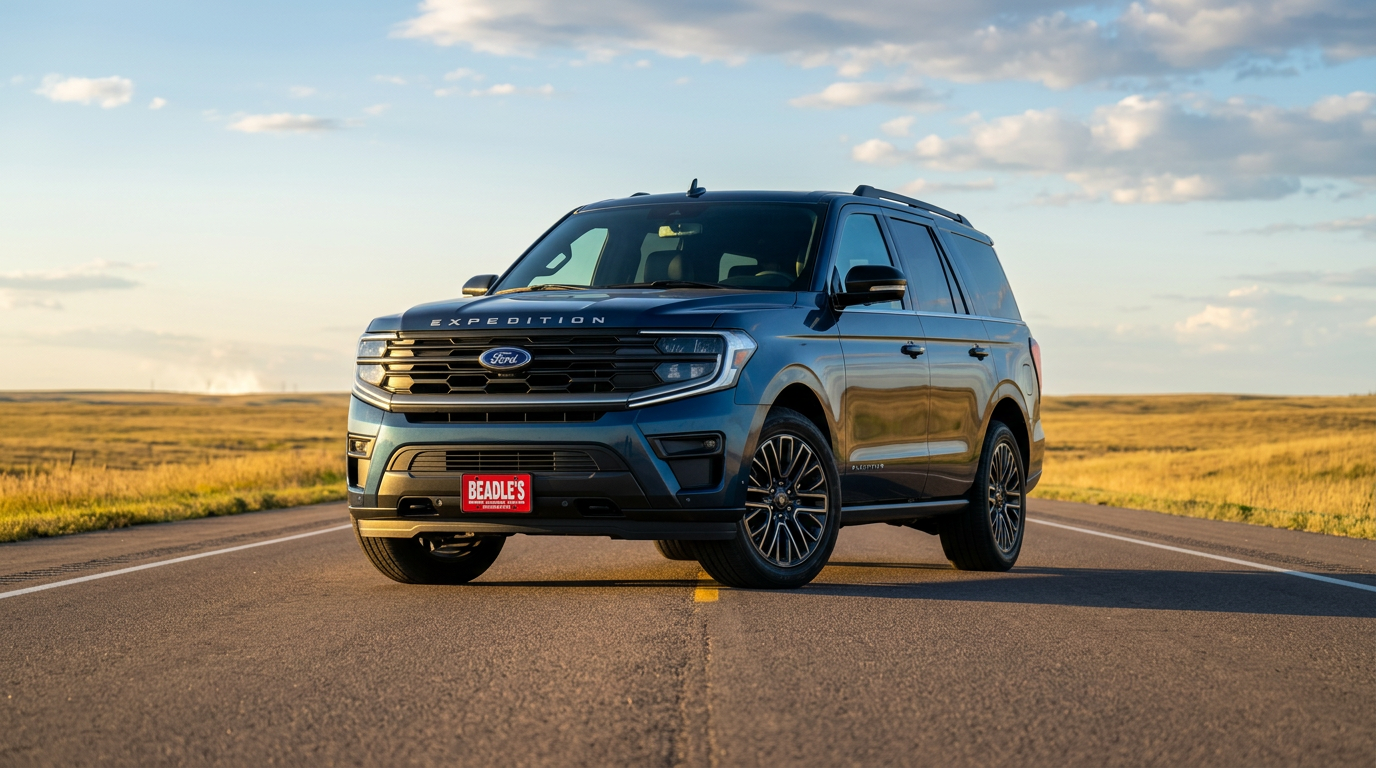
Ford Edge driving on South Dakota highway

Best Ford SUV for South Dakota Families: Edge, Escape, Bronco Sport, or Explorer?

HERO SECTION Best Ford SUV for South Dakota Families: Edge, Escape, Bronco Sport, or Explorer? Choosing the right SUV for your South Dakota family means balancing winter driving, gravel roads, cargo needs, and budget. We’ve tested and researched all four of Ford’s best family SUVs to help you find your perfect fit. TOP CTA 1 Edge Inventory Escape Inventory Bronco Sport Inventory Explorer Inventory INTRO South Dakota families face unique challenges: long highway drives between towns, winter snow and ice, gravel county roads, and the need to haul gear for camping, sports, and ranch work. Your SUV choice matters. Ford offers four excellent family SUVs, each with a different profile. This guide compares them side by side so you can skip the confusion and find the one that matches your family’s lifestyle, budget, and adventures. Whether you need a nimble compact for city runs, a versatile midsize for balanced duty, or a spacious three-row for road trips, we’ll walk you through the specs, real-world performance in SD conditions, and scenarios where each shines. TABLE OF CONTENTS In This Guide Ford Escape: Compact, Nimble, Best for Budget Ford Bronco Sport: Compact 4x4, Best for Backcountry Ford Edge: Midsize Champion, Best Value Ford Explorer: Three-Row Family Powerhouse Master Comparison Table Which SUV Fits Your Family? Frequently Asked Questions FORD ESCAPE SECTION Ford Escape: The Compact, Budget-Smart Choice The Escape is Ford’s most affordable SUV option and a favorite for couples, small families, and first-time SUV buyers in South Dakota. It offers surprising versatility in a tight footprint. Escape Specs at a Glance Class: Compact crossover SUV Drivetrain: FWD standard, AWD optional on most trims Engines: 1.5L EcoBoost (180 hp), 2.0L EcoBoost (250 hp), 2.5L Hybrid (192 hp), 2.5L Plug-in Hybrid (210 hp) Cargo: 37.5 cu ft (behind rear seats), 65.4 cu ft (fully folded) — gas models Towing: 2,000 lbs (1.5L), 3,500 lbs (2.0L EcoBoost), 1,500 lbs (Hybrid/PHEV) Tech: 8”–13.2” touchscreen, Ford Co-Pilot360 (varies by trim) Fuel Economy: Hybrid: 42 city / 36 hwy. PHEV: 101 MPGe Why Families Love the Escape Easy to drive and park: Smaller than the Edge and Explorer, it feels confident on narrow county roads and in tight parking situations around Bowdle and surrounding towns. Winter traction: Optional AWD handles South Dakota snow well, and the lower price means easier repairs if you need winter service. Hybrid and plug-in options: If you spend a lot of time in town, the hybrid models save significantly on fuel. The 2.5L Hybrid gets an impressive 39 mpg combined in AWD. Good for daily driving: School runs, errands, weekend getaways — the Escape handles everything South Dakota families throw at it. Escape Challenges for SD Families Limited towing: Max 3,500 lbs (with 2.0L EcoBoost), which means you can’t haul mid-size boats or trailers. Forget about towing a cabin trailer or horse trailer. Tight cargo space: 65.4 cu ft isn’t much for a week-long camping trip or hauling sports equipment for multiple kids. Short driving range on long highway trips: Between fuel stops from Bowdle to Rapid City or northeast to the lakes, you’ll stop often. FORD BRONCO SPORT SECTION Ford Bronco Sport: The Off-Road Adventurer The Bronco Sport is purpose-built for families who love gravel roads, camping, and exploring backcountry spots across South Dakota. It’s compact, tough, and equipped with Ford’s famous G.O.A.T. (Goes Over Any Terrain) modes. Bronco Sport Specs at a Glance Class: Compact SUV, all-terrain focused Drivetrain: 4x4 standard (no FWD option) Engines: 1.5L EcoBoost (181 hp), 2.0L EcoBoost (250 hp) Cargo: 32.5 cu ft (behind rear seats), 65.2 cu ft (fully folded) Towing: 2,200 lbs (1.5L), 2,700 lbs (2.0L Badlands) G.O.A.T. Modes: Sand, Slippery, Sport, Eco, Normal; Badlands adds Mud/Ruts & Rock Crawl Tech: Ford Co-Pilot360, available 13.2” touchscreen Why Adventurous Families Choose the Bronco Sport All-terrain confidence: Standard 4x4 and G.O.A.T. modes mean you can handle gravel roads to remote camping spots, muddy ranch access roads, and sandy creek beds with confidence. Badlands trim for serious off-road: The Badlands adds rock crawl, mud/ruts modes, and locking diffs, making it ready for extreme terrain adventures in the Black Hills and beyond. Compact but capable: Small enough to be nimble, tough enough to handle backcountry roads that bigger SUVs avoid. Fun factor: Kids love the adventure vibe, and parents appreciate the genuine 4x4 hardware rather than a pretend outdoor package. Bronco Sport Trade-offs Lower towing capacity: Max 2,700 lbs (Badlands only), so no large trailers or boats. Compact cargo space: 65.2 cu ft is tight for week-long trips with a family of four or more. Slightly higher fuel costs: 4x4 standard means less fuel economy than a comparable FWD vehicle. Plan for around 22–24 mpg highway. FORD EDGE SECTION (WITH HERO BREAK) Ford Edge: The Midsize Sweet Spot (Best Value) The Ford Edge is the goldilocks SUV for South Dakota families: bigger than the Escape and Bronco Sport, more affordable than the Explorer, and loaded with premium features as standard. It’s purpose-built for families who want space, comfort, and value. Edge Specs at a Glance Class: Midsize SUV, 2-row seating (5 passengers) Drivetrain: All-wheel drive (AWD) standard on all trims Engines: 2.0L EcoBoost (250 hp), 2.7L V6 EcoBoost (335 hp) on ST trim Cargo: 39.2 cu ft (behind rear seats), 73.4 cu ft (fully folded) Interior Roominess: Front legroom 42.6”, rear 40.6”; front shoulder room 60.3”, rear 60.5” Towing: 1,500 lbs (standard 2.0L), 3,500 lbs (2.7L V6 ST) Tech: SYNC 4A with 12” touchscreen, wireless Apple CarPlay & Android Auto, Co-Pilot360+ standard Note: Edge is discontinued (2024 was final year). Best Edge deals are used 2021–2024 models. Why the Edge is South Dakota’s Best Midsize Value All-wheel drive standard: No need to upgrade for winter traction. Every Edge comes with AWD, giving you confidence in South Dakota snow and ice. Loaded with premium tech: SYNC 4A 12” screen, wireless CarPlay/Android Auto, and Co-Pilot360+ (adaptive cruise, lane centering, automatic parking) come on all trims. You’re not buying stripped-down versions. Generous cargo: 73.4 cu ft fully folded beats the Escape and Bronco Sport, matches the base Explorer, and fits a week of camping gear plus sports equipment. Comfortable seating for five: 40.6” of rear legroom means kids and passengers sit comfortably on long highway drives across SD. Towing flexibility: Standard 2.0L handles 1,500 lbs (small trailers, jet skis). ST trim with 2.7L V6 hits 3,500 lbs, perfect for mid-size boats. Exceptional used market: Because production ended, 2021–2024 used Edges are plentiful and priced 20–30% below comparable new competitors. You get nearly-new cars with dealer warranties at incredible value. Edge Considerations Used only: Ford discontinued the Edge in 2024, so new inventory is gone. But that’s actually good news — we have quality used examples with low miles at fantastic prices. No third row: The Edge seats five max. If you need room for six or seven, the Explorer is your answer. V6 power for heavier towing: If you want to tow 3,500 lbs, you need the ST trim with the 2.7L V6. The base 2.0L EcoBoost maxes out at 1,500 lbs. STRATEGIC BREAK IMAGE FORD EXPLORER SECTION Ford Explorer: The Full-Size Family Power Player The Explorer is Ford’s flagship three-row family SUV. If you need seven seats, serious towing power, and maximum cargo space, the Explorer is built for you. It’s the choice for large families and those who tow boats to Lake Oahe or haul horse trailers. Explorer Specs at a Glance Class: Full-size SUV, three-row, up to seven passengers Drivetrain: RWD standard, AWD available Engines: 2.3L EcoBoost (300 hp), 3.0L Twin-Turbo V6 (400 hp) Cargo: 18.2 cu ft (all rows), 48 cu ft (3rd row folded), 87.8 cu ft (all rear folded) Towing: 5,000 lbs standard with Class III Tow Package; 2024 models up to 5,600 lbs Tech: 8”–13.2” touchscreen, Ford Co-Pilot360, available hands-free PowerFold third row Seating: Standard E-Z Entry second-row seats for easy third-row access Why Larger SD Families Choose the Explorer Genuine three-row seating: Seat five comfortably, or squeeze in seven. Perfect for big families, grandparent road trips, or active families with multiple kids and friends. Massive cargo capacity: 87.8 cu ft with all seats folded is 14+ cu ft more than the Edge. Haul a week’s worth of camping gear, sports equipment, or ranch supplies. Serious towing: 5,000 lbs base (5,600 lbs available) handles large fishing boats for Lake Oahe, horse trailers, and serious recreational equipment. Powerful engines: Choose between the efficient 2.3L EcoBoost (300 hp) or the muscular 3.0L Twin-Turbo V6 (400 hp). The V6 is perfect if you tow large boats or drive heavily loaded. Easy third-row access: Standard E-Z Entry second row slides and tilts forward, plus available PowerFold third-row seats make setup effortless with kids and car seats. Explorer Trade-offs Larger fuel consumption: Expect 24–28 mpg on highway with the 2.3L, less with the V6. Budget more for gas. Bigger price tag: Base Explorer starts several thousand more than an Edge or Escape. But the space and capability justify the cost for growing families. RWD standard means AWD is an upgrade: If you want AWD for South Dakota winter confidence, budget extra. Most buyers choose AWD in our climate. MASTER COMPARISON TABLE Master Comparison: All Four Ford SUVs Side by Side Feature Escape Bronco Sport Edge Explorer Class Compact Compact Midsize Full-size Seating 5 5 5 5–7 Drivetrain FWD std / AWD opt 4x4 standard AWD standard RWD std / AWD opt Cargo (max) 65.4 cu ft 65.2 cu ft 73.4 cu ft 87.8 cu ft Towing Max 3,500 lbs 2,700 lbs 3,500 lbs (ST) 5,600 lbs Tech Highlight Hybrid / PHEV options G.O.A.T. Modes SYNC 4A, CarPlay std PowerFold 3rd row New or Used? New available New available Used only (2021–24) New & Used Best For Budget, fuel economy Off-road, adventure Value, balance Large families, towing SCENARIOS SECTION Which Ford SUV Fits Your South Dakota Family? Scenario 1: “Just the Two of Us (Plus a Dog)” Best choice: Ford Escape or Bronco Sport. Both seat five and offer excellent fuel economy. The Escape with FWD and a 1.5L or 2.0L EcoBoost is nimble, affordable, and easy on gas. The Bronco Sport with its standard 4x4 is perfect if you enjoy gravel-road adventures and camping in the Black Hills. Either hauls your camping gear, kayaks, or fishing equipment with ease. Scenario 2: “Family of Four – School, Errands, Weekend Trips” Best choice: Ford Escape or Ford Edge. The Escape gives you excellent value and fuel economy for daily driving. The Edge is the goldilocks option: more space than the Escape, better cargo (73.4 cu ft), standard AWD for South Dakota winter, and premium tech (SYNC 4A, wireless CarPlay) included. If you want the newest model and don’t mind a used purchase, a 2023–2024 Edge is an unbeatable value. Escape Hybrid models hit 39 mpg combined if you want maximum fuel economy. Scenario 3: “Weekend Adventurers – Camping, Gravel Roads, Remote Spots” Best choice: Ford Bronco Sport (especially Badlands trim). The Bronco Sport’s standard 4x4, G.O.A.T. modes, and Badlands rock crawl mean you can confidently explore remote camping areas, old mining roads, and rugged terrain across South Dakota and Wyoming. The compact size makes tight forest roads manageable. Pair it with a roof rack and you’ve got the perfect weekend adventure machine. Scenario 4: “Family of Five or More – Sports Gear, Friends, Extended Trips” Best choice: Ford Explorer (7-seater). Need to haul three kids, their sports equipment, a grandmother, and a friend? The Explorer seats seven and offers 87.8 cu ft of cargo with all seats folded. It’s comfortable for long highway drives from Bowdle to the Black Hills or beyond. The PowerFold third-row seats make setup painless with kids and car seats. Scenario 5: “Towing a Boat to Lake Oahe (or Horse Trailer)” Ford Edge ST (3,500 lbs) or Ford Explorer (5,000–5,600 lbs). Small to mid-size boats? The Edge ST with its 2.7L V6 handles 3,500 lbs. Larger boats or horse trailers? The Explorer’s 5,600 lbs capacity handles almost anything South Dakota families need to pull. Both offer the comfort and tech to enjoy the lake trip, not just survive it. Scenario 6: “Budget-Conscious, Best Bang for the Buck” Used Ford Edge (2021–2024). This is the hidden gem of the Ford SUV lineup. Because production ended, used Edges are abundant and priced 20–30% below new competitors. You get a midsize SUV with standard AWD, SYNC 4A, wireless CarPlay/Android Auto, and 73.4 cu ft of cargo at prices that beat a new Escape. If you’re smart, you buy a used Edge with low miles and a dealer warranty. It’s the best-value family SUV on the market right now. KEY TAKEAWAYS Key Takeaways Escape: Most affordable, great fuel economy, best for couples and small families. Bronco Sport: Purpose-built for off-road adventure and gravel roads; standard 4x4 and G.O.A.T. modes. Edge: Best midsize value (especially used); standard AWD, premium tech, 73.4 cu ft cargo. Explorer: Three-row power player; seats up to seven, tows 5,600 lbs, maximum cargo space. South Dakota winters: All four offer AWD or 4x4 options; Bronco Sport and Edge lead in standard all-weather traction. Best overall value: Used Ford Edge — discontinued model means abundant inventory and strong pricing. FAQ SECTION WITH MICRODATA Frequently Asked Questions Which Ford SUV is best for South Dakota winters? The Ford Edge has the winter advantage: all-wheel drive is standard on every model, year, and trim. You don’t need to pay extra for winter traction. The Bronco Sport is a close second with standard 4x4 and G.O.A.T. modes. Both inspire confidence on snow and ice. The Escape and Explorer require AWD upgrades, which adds cost. Can I tow a boat with any of these? Yes, but capacity varies. Escape (2.0L): up to 3,500 lbs. Bronco Sport: up to 2,700 lbs (not ideal for heavy boats). Edge ST (2.7L V6): 3,500 lbs (good for mid-size boats). Explorer: 5,000–5,600 lbs (handles large boats and horse trailers). For a 20–24 ft boat at Lake Oahe, the Explorer is your safest bet. Is the Ford Edge really discontinued? Yes. Ford ended Edge production in 2024. This has created an excellent used-market opportunity: quality 2021–2024 examples are available at 20–30% below the cost of comparable new vehicles, and many still have remaining powertrain warranty coverage. For budget-conscious buyers, a low-mileage used Edge represents strong value in the current market. How much cargo space do I really need? A practical guide: 65 cu ft (Escape/Bronco Sport) fits a week of camping gear for a family of four, plus sports equipment. 73 cu ft (Edge) adds meaningful breathing room for gear-heavy trips. 87 cu ft (Explorer) handles extended family trips with everyone’s luggage plus extra cargo. If you take frequent road trips or haul ranch or farm equipment, 75+ cu ft is the better target. What’s the real-world fuel economy for each model? Escape (1.5L FWD): 28–30 mpg highway; (2.0L AWD): 26–28 mpg; (Hybrid): 39 mpg combined. Bronco Sport (4x4): 22–24 mpg highway. Edge (AWD): 28–30 mpg highway. Explorer (2.3L RWD): 26–28 mpg; (V6): 24–26 mpg. For long highway drives across South Dakota, the Escape Hybrid is the most fuel-efficient option. The Edge balances efficiency with cargo capacity. Do I need the 2.0L EcoBoost or is the 1.5L enough? For daily driving, school runs, and light towing, the 1.5L EcoBoost is adequate. The 2.0L delivers noticeably better power for highway merging, loaded driving, and towing up to 3,500 lbs. If towing is a regular part of your use case, or you frequently drive fully loaded, the 2.0L upgrade is worth the added cost for Escape and Bronco Sport buyers. MY TAKE CONCLUSION My Take on Finding the Right Ford SUV for a South Dakota Family Researching all four of these vehicles, the clearest takeaway is that the decision depends almost entirely on use case—and that most South Dakota families I’ve analyzed the data for are better served by the Edge or Escape than they initially expect. The Edge in particular stands out as a value opportunity right now. Because production ended in 2024, used 2021–2024 inventory is available at prices that are genuinely hard to match in this segment: standard AWD across all trims, premium tech included, and 73+ cu ft of cargo space at used-vehicle pricing. The Bronco Sport earns its place for families who actually use off-road capability—gravel roads, camping, backcountry access. The Explorer is the right answer when three rows are genuinely needed on a regular basis, or when towing capacity above 3,500 lbs is a real requirement. The Escape makes the most sense when fuel economy and a lower price point are the primary drivers. The scenarios in this guide are designed to cut through the marketing and focus on how these vehicles actually perform in the conditions South Dakota families deal with every day. Match the vehicle to your real use, not the hypothetical one. BOTTOM CTA Browse Edge Inventory Browse Explorer Inventory Contact Beadle Ford ABOUT THE AUTHOR About the Author Lexy Tabbert — Beadle Ford, Bowdle, SD Lexy Tabbert is the Director of Sales and Marketing at Beadle Ford in Bowdle, South Dakota. She covers Ford vehicles, trim comparisons, and buyer guidance — helping families, ranchers, and ag operators across the region find the right truck and configuration for their needs. Learn more about Lexy. JSON-LD SCHEMA (as comment) { "@context": "https://schema.org", "@graph": }, { "@type": "BreadcrumbList", "itemListElement": } ] }
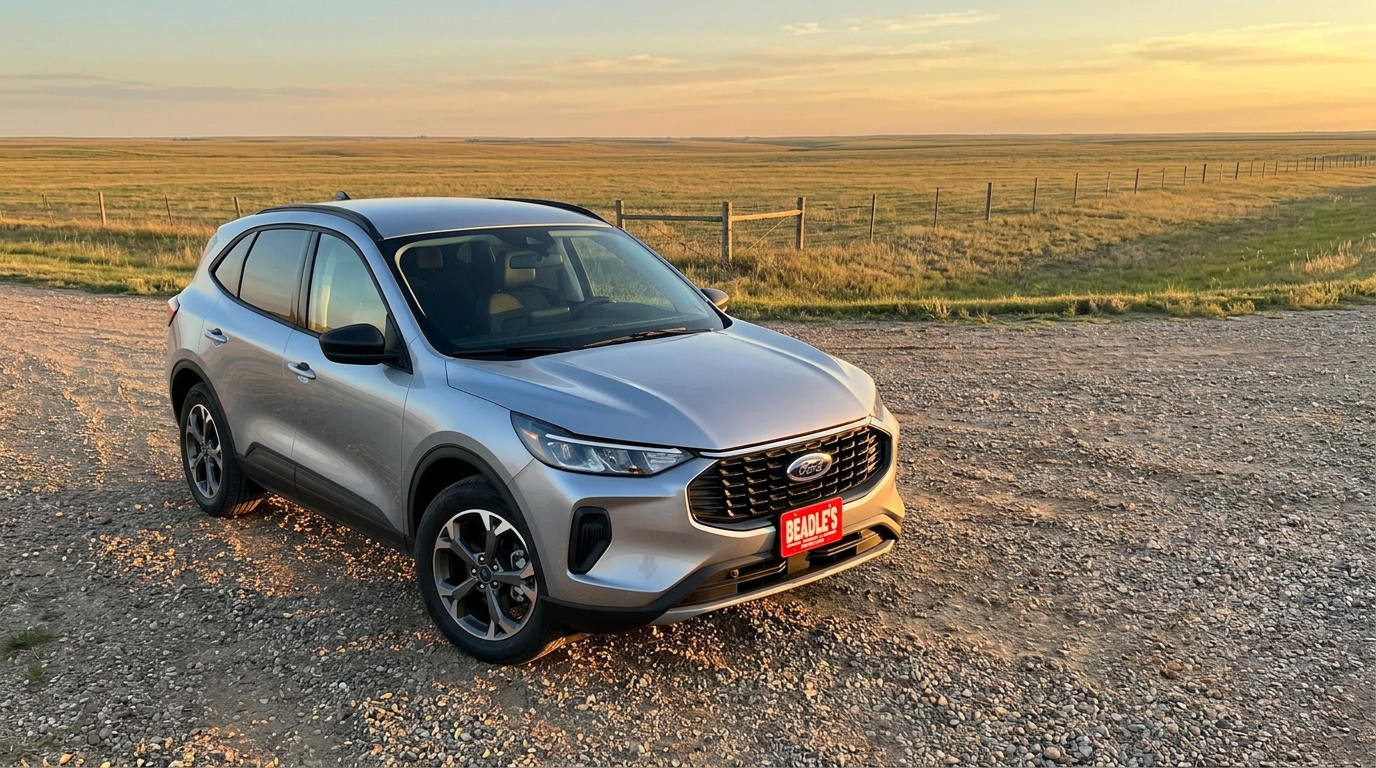
Ford Edge vs. Explorer: Do You Actually Need Three Rows?

HERO SECTION Ford Edge vs. Explorer: Do You Actually Need Three Rows? You’re shopping for a midsize Ford SUV, and the decision feels straightforward: the Explorer has three rows, the Edge has two. More seats must mean more value, right? Not necessarily. For buyers across South Dakota’s ranches, rural routes, and small towns, the real choice comes down to how you actually use the vehicle, what you tow, and whether you’re paying for capacity you’ll never use. At Beadle Ford in Bowdle, we help families and operators understand the honest difference. This guide cuts through the noise. TOP CTA SECTION View Edge Inventory View Explorer Inventory TABLE OF CONTENTS Quick Navigation Interior Space & Legroom Cargo Capacity Towing & Power Price & Value Real-World Use in SD Frequently Asked Questions INTERIOR SPACE SECTION Interior Space & Legroom: The Surprise Winner The most surprising discovery when you sit in both vehicles? The Edge’s second row is actually competitive with the Explorer’s. Many buyers assume the third row means more space everywhere, but that’s not how midsize SUVs work. Edge Interior Dimensions: Front legroom: 42.6 inches Rear legroom: 40.6 inches Five-seat configuration (midsize 2-row) All trims standard with AWD Explorer Interior Dimensions: Front legroom: competitive with Edge Second-row legroom: comparable Third row: tight, best for children or short-distance adult passengers Seven-seat standard; RWD base, AWD on higher trims If you have a family of five or fewer, or if passengers don’t regularly sit in the third row, the Edge delivers the same comfort in the front and second rows with a cleaner, simpler driving experience. The Explorer’s third row exists, but many Bowdle-area families tell us it spends more time folded down than occupied. CARGO SECTION Cargo Capacity: Different Jobs, Different Winners Here’s where the comparison gets interesting. The Edge actually has a surprising cargo advantage for certain uses. Cargo Metric Edge Explorer Behind 2nd/3rd row 39.2 cu ft (both rows up) 18.2 cu ft (all rows up) 2nd row folded 73.4 cu ft 47.9 cu ft (3rd row up) All rows folded 73.4 cu ft (2-row, no 3rd) 87.8 cu ft What this means: If you regularly haul lumber, farm equipment, gear, or full loads for work, the Edge gives you significantly more usable space with the second row up. You don’t have to fold seats flat to move a pallet or load of feed. The Explorer wins only if you need maximum volume and can fold all seats flat, which defeats the purpose of having seven seats. For South Dakota ranchers and operators, this advantage matters. The Edge is built for the job; the Explorer is built for the idea of a job. TOWING SECTION Towing & Power: Explorer Takes the Lead If towing is non-negotiable, the Explorer has a clear advantage. Spec Edge Explorer Base Towing 1,500 lbs 5,000 lbs standard Max Towing 3,500 lbs (ST with Class II) 5,000 lbs (all engines) Engine Options 2.0L EcoBoost (250hp) or 2.7L V6 (335hp) 2.3L EcoBoost (300hp) or 3.0L Twin-Turbo (400hp) Class III Tow Package ST trim only (Class II) Standard on all models The Reality: If you’re hauling a small utility trailer, a motorcycle trailer, or light agricultural loads under 3,000 lbs, the Edge works. If you need to pull a larger boat, livestock trailer, or equipment regularly, the Explorer is the right choice. The towing gap is real and meaningful. For ranches across South Dakota, the Explorer’s Class III standard tow package and higher capacity make it the practical choice when heavy pulling is part of the job. PRICE & VALUE SECTION Price & Value: Edge Offers Used-Market Strength Ford discontinued the Edge in April 2024, which means one critical fact: the Edge is now available only on the used market. This creates a significant value difference. Edge Pricing Reality: 2023–2024 models available used at major discounts from original MSRP Low mileage models still within factory warranty Buyers get a nearly-new midsize SUV for $25,000–$35,000 depending on condition and year Monthly payments typically $400–$550 financed Explorer Pricing Reality: 2025–2026 new models start around $35,000–$40,000 for base trims Popular ST and Platinum trims run $45,000–$55,000+ Monthly payments typically $600–$900+ financed Full manufacturer warranty on all new units The Math for Bowdle-Area Buyers: If you’re budget-conscious and want a low-mileage, reliable midsize SUV that handles daily driving and light towing, a used Edge from 2023–2024 costs $200–$300 less per month than a new Explorer. That’s $2,400–$3,600 per year. Over five years, that’s $12,000–$18,000 in savings. For families stretched on a budget, that difference matters. REAL-WORLD SECTION Real-World Use: What South Dakota Drivers Actually Do After years of selling both vehicles across South Dakota’s ranching and rural communities, we’ve learned how buyers actually use these SUVs. Choose the Edge if you: Are a couple or family of three to five Want competitive second-row legroom and comfort Need strong cargo space with seats up (farm supplies, feed, equipment) Tow light to moderate loads (under 3,000 lbs) Prioritize fuel efficiency and daily driving simplicity Are budget-conscious and want lower monthly payments Enjoy easy parking and maneuverability in town Choose the Explorer if you: Have a family of six to seven who actually ride together regularly Need to haul larger trailers or equipment (3,000+ lbs) Want the maximum flexibility of three usable rows Prefer a new vehicle with full manufacturer warranty Are willing to accept slightly larger fuel consumption for capability Want the latest tech (2025–2026 infotainment and safety features) The Honest Take: Most buyers we work with in Bowdle and the surrounding area fall into the Edge category. Couples, young families with young children, and business owners who need cargo space but don’t regularly tow heavy loads. The Explorer is the right choice only when those three rows are actually used, not just available. It’s about matching the vehicle to your real life, not paying for capacity you’ll never use. FAQ SECTION Frequently Asked Questions Can the Edge’s third row be added later? No. The Edge is engineered as a two-row vehicle. Ford does not offer a third-row retrofit or accessory. The platform, wheelbase, and interior design do not accommodate a third row. If you think you’ll need a third row in the future, the Explorer is the only choice. Is the Explorer’s third row comfortable for adults? The Explorer’s third row is designed for children or adults on short trips. Legroom is tight, and headroom is limited. For a cross-state drive or full day of driving, adults will be uncomfortable. It’s truly an occasional-use feature. Many owners fold it down immediately and use the expanded cargo space instead. Which SUV has better fuel economy? The Edge generally achieves slightly better fuel economy due to its lighter weight and smaller engines. The 2.0L EcoBoost Edge on AWD averages around 23–25 MPG highway, while the 2025 Explorer 2.3L EcoBoost ranges around 20–23 MPG. The difference compounds over time. For frequent highway miles across South Dakota, the Edge saves fuel costs. Why was the Ford Edge discontinued? Ford discontinued the Edge to focus on the Explorer and expand their truck and performance-oriented SUV lines. The decision reflects market trends toward larger SUVs and electric vehicles, but it doesn’t mean the Edge is a bad vehicle. Many Bowdle-area owners keep their Edges well past 150,000 miles. The discontinuation just means used market prices and availability will gradually tighten. Does Beadle Ford have used Edges in stock? Yes. Beadle Ford maintains inventory of used Ford Edges from recent model years. Availability varies, but we work with regional and franchise resources to locate specific models and configurations. Check our current Edge inventory, or contact the team at (605) 285–6202 if you’re looking for a specific year or trim. Can I test drive both to decide? Yes. Back-to-back test drives of both vehicles reveal the differences in interior space, cargo layout, driving position, and steering feel immediately. It’s the most reliable way to determine which vehicle fits your lifestyle. Contact Beadle Ford to schedule a drive. KEY TAKEAWAYS SECTION Key Takeaways Interior Space: The Edge’s second row is competitive with the Explorer’s. Five-seat comfort rivals seven-seat flexibility for most families. Cargo: The Edge wins for working loads (39.2 cu ft seats-up). The Explorer only wins when all rows fold flat. Towing: Explorer dominates with 5,000-lb standard towing vs. Edge’s 1,500–3,500-lb range. Non-negotiable for heavy haulers. Cost: Used Edge models cost $200–$300 per month less than new Explorers. A significant five-year savings for budget-aware buyers. Daily Use: Most Edge owners say they never missed the third row. Most Explorer owners fold the third row and wish they had the Edge’s cargo space. Best Question: Do you actually need three rows, or are you paying for what sounds good? That answer determines your choice. LEXY CONCLUSION My Take on the Edge vs. Explorer Researching this comparison, the question that consistently separates the right answer from the wrong one is straightforward: how many people are actually riding together on a regular basis? For families of five or fewer, the data points clearly toward the Edge—more usable cargo space with seats up, a lower price point in the current used market, and a smaller footprint that’s easier to manage on rural routes and in town. The Explorer makes sense when those third-row seats are genuinely needed—regular carpooling with six or seven passengers, or when towing heavier loads is a consistent requirement. The 5,000-lb standard tow rating is a real advantage for ag operators and families pulling larger trailers across South Dakota. Both vehicles are well-built and well-supported. The decision comes down to matching the capability to the actual use case—not the hypothetical one. BOTTOM CTA SECTION View Edge Inventory View Explorer Inventory Contact Beadle Ford ABOUT THE AUTHOR About the Author Lexy Tabbert — Beadle Ford, Bowdle, SD Lexy Tabbert is the Director of Sales and Marketing at Beadle Ford in Bowdle, South Dakota. She covers Ford vehicles, trim comparisons, and buyer guidance — helping families, ranchers, and ag operators across the region find the right truck and configuration for their needs. Learn more about Lexy. JSON-LD SCHEMA
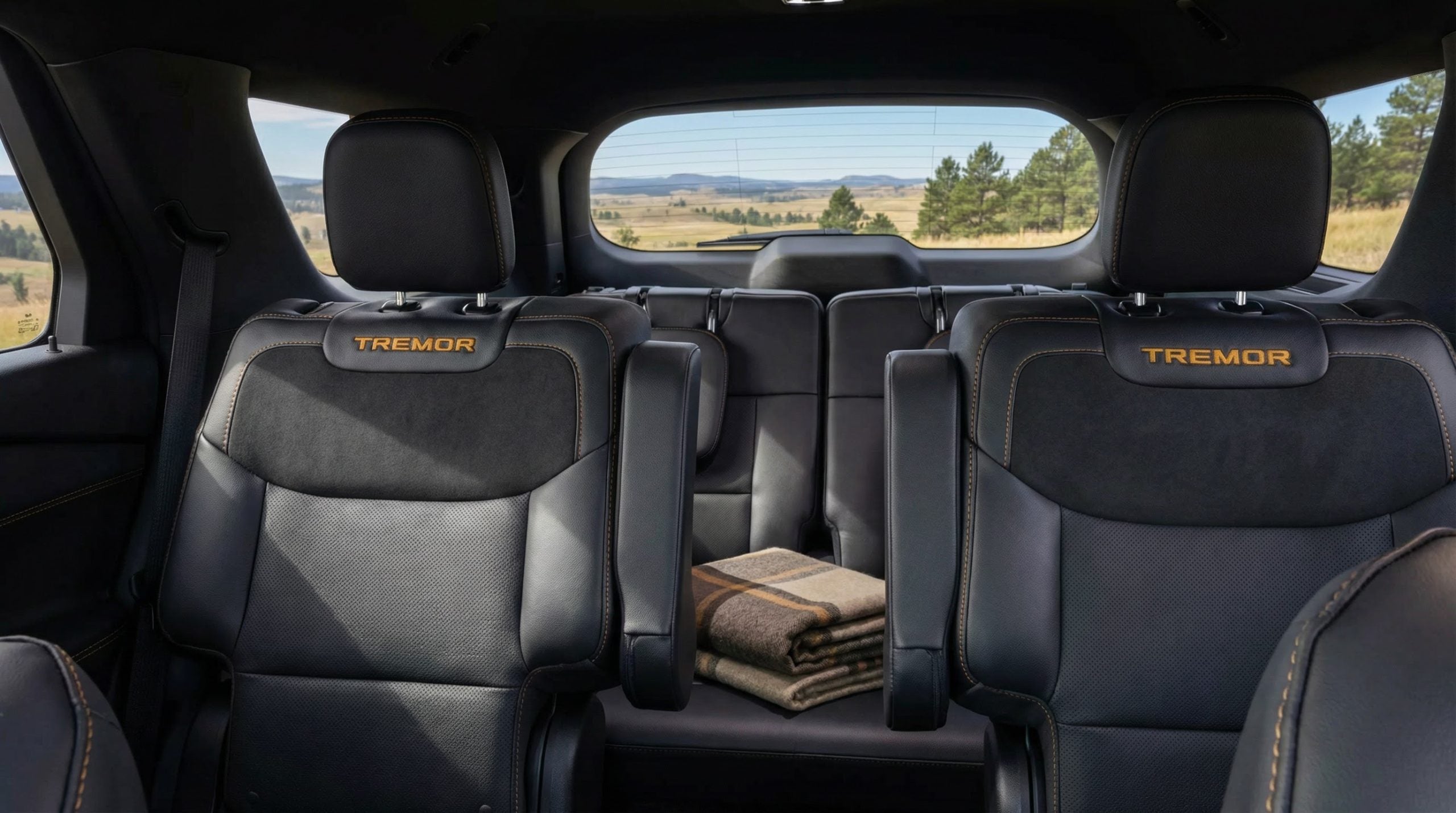
Owning a Ford Edge After Discontinuation: Maintenance, Parts, and What to Expect

HERO SECTION Owning a Ford Edge After Discontinuation: Maintenance, Parts, and What to Expect Ford stopped building the Edge in April 2024—but that doesn’t mean your SUV is left behind. Here’s what owners need to know about parts, service, costs, and long-term ownership. Published March 31, 2026 — Lexy Tabbert, Beadle Ford, Bowdle, SD TOP CTA ROW Search Available Edge Inventory Get Pre-Qualified TABLE OF CONTENTS Quick Navigation What “Discontinued” Actually Means Parts Availability & Where to Source Them Ford Edge Maintenance Schedule & Intervals Estimated Annual Ownership Costs Warranty & CPO Options SYNC 4A Software Updates & Support Resale Value & Depreciation Outlook South Dakota Winter Maintenance Frequently Asked Questions INTRO SECTION When Ford announced the Edge’s discontinuation in 2024, many owners wondered what it meant for the future of their vehicles. Would parts become impossible to find? Would service dry up? Would resale value plummet? The reality is much more reassuring than the headlines suggest. “Discontinued” does not mean “abandoned.” Ford dealerships maintain legal obligations to stock and order parts for discontinued models for years after production ends. The Edges on the road today—with their proven EcoBoost engines, SYNC 4A infotainment, and all-wheel-drive standard configuration—remain fully supported, maintainable, and valuable. If you own a pre-owned Edge or are considering buying one, understanding the true cost of ownership, parts availability, and maintenance expectations will help you make a confident decision. At Beadle Ford in Bowdle, SD, we service hundreds of Edge owners in the region and stay current with the latest guidance from Ford. Let’s break down what ownership really looks like. H2 SECTION 1: What Discontinuation Means What “Discontinued” Actually Means for Owners Production has ended, but support continues. Ford stopped manufacturing the Edge in April 2024. That’s it. The factory line closed, and no new 2025 or 2026 models will be built. But discontinuation does NOT automatically trigger the end of service, parts availability, or dealer support. Automakers in the United States are legally required to make parts available for vehicles for a minimum of 10 years after the final production year. In practice, Ford maintains relationships with parts suppliers and distributors for far longer—often 15, 20, or even 30+ years for popular models. The Edge was in production for over two decades (2006–2024), which means an enormous installed base and continued demand for replacement parts. When you discontinue a vehicle, you don’t discontinue warranty coverage for owners, recall compliance, or TSB (Technical Service Bulletin) support. Ford service departments are equipped to handle the entire library of Edge maintenance and repair needs—from routine oil changes to transmission rebuilds. Why does this matter? It means the pre-owned Edge you buy today will not become a "car nobody can fix." It means resale value is not immediately crushed. And it means you are not betting on a dying vehicle platform when you choose a used Edge for your family or business. H2 SECTION 2: Parts Availability Parts Availability & Where to Source Them Ford dealerships continue to stock and order Edge parts. Your Beadle Ford service department has access to Ford’s full parts catalog for the Edge. Common wear items like brake pads, air filters, spark plugs, serpentine belts, and battery replacements are in stock or can be ordered within 1–3 business days. Larger components—transmission assemblies, engine gaskets, suspension arms, and cooling system parts—are also available through Ford’s parts network. Aftermarket suppliers fill the gap. Major retailers including RockAuto, CarParts.com, AutoAccessoriesGarage.com, PartsGeek, and Advance Auto Parts maintain extensive catalogs of Edge parts and accessories. These aftermarket sources often price below OEM (original equipment manufacturer) parts and ship nationwide. Warranty and return policies vary, but reputable aftermarket suppliers typically offer 30-day returns and satisfaction guarantees. Salvage yards and used parts. For owners on a budget, salvage yards across the Great Plains stock used Edge components. Websites like Car-Part.com let you search inventory across multiple yards and compare pricing. Used parts can reduce repair costs significantly, especially for body panels, interior trim, and mechanical assemblies from lower-mileage vehicles. What to expect pricing-wise: OEM parts from Ford dealers run 15–40% higher than equivalent aftermarket parts, depending on the component. For routine maintenance, aftermarket brake pads, filters, and fluids offer the best value. For critical systems (transmission, engine, suspension), many owners balance cost by sourcing used OEM components through salvage suppliers or choosing reputable aftermarket brands with strong warranties. H2 SECTION 3: Maintenance Schedule Ford Edge Maintenance Schedule & Recommended Intervals The Ford Edge follows the manufacturer’s recommended preventive maintenance schedule found in your owner’s manual. Below is a summary of critical service intervals for Edge models (2020–2024, applicable to earlier years with minor adjustments): Service Interval Estimated Cost* Oil & Filter Change (5W-20) Every 10,000 miles or 12 months $45–$85 Tire Rotation & Rebalance Every 7,500–10,000 miles $40–$80 Brake Pads (front & rear) Every 50,000–70,000 miles $200–$400 Engine Air Filter Replacement Every 30,000 miles or annually $30–$60 Cabin Air Filter Replacement Every 15,000–30,000 miles $25–$50 Transmission Fluid Drain & Fill (8-spd) Every 100,000 miles or 10 years $150–$250 Coolant System Flush Every 100,000 miles or 10 years $120–$200 Spark Plugs (replacement) Every 100,000 miles $100–$180 All-Wheel-Drive Fluid Service Every 100,000 miles $150–$250 Battery Replacement (hybrid) Every 8–10 years or as needed $100–$250 *Costs are estimates for dealer service in South Dakota. Aftermarket parts and independent shops may offer lower rates. EcoBoost-specific care: The 2.0L and 2.7L EcoBoost engines in the Edge benefit from synthetic 5W-20 oil and quality fuel with detergent additives. Some owners report carbon buildup in direct-injection engines; regular use of top-tier gasoline (Shell, Chevron, Mobil) or fuel system cleaners every 10,000–15,000 miles can minimize this. Always refer to your vehicle’s maintenance manual for model-specific intervals. When in doubt, contact Beadle Ford—our service advisors can build a custom maintenance plan for your Edge based on driving habits, climate, and mileage. H2 SECTION 4: Ownership Costs Estimated Annual Ownership Costs Understanding the true cost of owning a used Edge helps you budget realistically. Below is a breakdown of typical annual expenses for a 4–6 year-old Edge with 50,000–80,000 miles: Routine Maintenance (Oil changes, filters, tire rotation) $350–$500/year Tire Replacement (averaged over 4-year life) $200–$350/year Brake Service (pads, rotors, averaged) $150–$250/year Insurance (comprehensive/collision, varies by age, ZIP) $800–$1,400/year Fuel (EPA combined 22–27 MPG, 12,000 miles/year @ $3.20/gal) $1,400–$1,745/year Unexpected Repairs (averaged) $300–$600/year Total Estimated Annual Cost $3,200–$4,845/year How does this compare? The Ford Edge costs roughly 10–15% less annually to own than comparable SUVs like the Chevy Traverse or Toyota Highlander, primarily due to lower insurance costs and fuel economy. The EcoBoost engines deliver strong efficiency for their size, and parts remain affordable as the model ages. Factors that impact your costs: Annual mileage, driving conditions (city vs. highway), local fuel prices, insurance rates, and maintenance habits all play a role. Owners in South Dakota who tackle winter maintenance proactively (undercoating, rust prevention) often avoid expensive rust-related repairs later. H2 SECTION 5: Warranty & CPO Warranty & Certified Pre-Owned (CPO) Options Factory warranty for used Edges. If you purchase a pre-owned Edge from a Ford dealership, the original factory warranty coverage transfers to you. Most Edge models from 2020 onward still carry: Basic Warranty: 3 years or 36,000 miles (whichever comes first) Powertrain Warranty: 5 years or 60,000 miles (engine, transmission, drivetrain) Corrosion/Rust Warranty: 5 years, unlimited miles Ford Certified Pre-Owned (CPO) Warranty. Edges purchased through the Ford CPO program receive an additional layer of protection. A standard CPO warranty covers major components for up to 7 years or 100,000 miles from the original in-service date. Each CPO vehicle passes a comprehensive 200-point inspection, includes a vehicle history report, and qualifies for roadside assistance. Extended warranties. For used Edges outside factory warranty, third-party extended warranties or maintenance plans are available. Prices typically range from $1,200–$3,500 for 5–7 year coverage, depending on deductibles and coverage limits. Compare plans carefully; some exclude certain components or impose mileage caps. At Beadle Ford, we help customers navigate warranty options and provide transparent pricing. Ask us about extended warranty programs when you browse our Edge inventory or discuss pre-purchase inspections. H2 SECTION 6: SYNC 4A Updates SYNC 4A Software Updates & Long-Term Support SYNC 4A is receiving ongoing over-the-air updates. The Edge’s standard SYNC 4A infotainment system is integrated with Ford’s “Power-Up” over-the-air (OTA) update program. This means your Edge can receive software updates wirelessly—no trip to the dealer necessary (though updates can also be installed at a Ford service center if you prefer). What updates include: Security patches, performance improvements, new features (when available), and compatibility enhancements. Ford has committed to providing OTA updates for vehicles across its lineup, including discontinued models, as long as the vehicles are on the road and owners subscribe to the connected services feature. Connectivity requirements. Your Edge must have an active FordPass account and internet connectivity (via the vehicle’s cellular modem) to receive automatic updates. Over-the-air updates download silently and install at convenient times (typically overnight or when the vehicle is parked and plugged in, if equipped with wireless charging). You can also manually check for and install updates via the SYNC settings menu. Discontinuation and software support. Ford has not announced plans to discontinue SYNC 4A updates for discontinued vehicle models. In fact, discontinuing a model does not typically trigger the end of software support—Ford maintains liability and functionality obligations for the vehicles already on the road. For peace of mind, check your SYNC system’s settings regularly to confirm automatic updates are enabled. If you encounter issues with updates or connectivity, our service team at Beadle Ford can diagnose the problem and ensure your Edge stays current. H2 SECTION 7: Resale & Depreciation Resale Value & Depreciation Outlook Discontinuation does NOT crush resale value. The Edge benefits from strong brand recognition, a loyal owner base, and a 19-year production run (2006–2024). These factors support stable used-market pricing. Unlike obscure or poorly-selling models, the Edge commands consistent demand from buyers seeking mid-size AWD SUVs. Depreciation trends: A typical pre-owned Edge depreciates about 10–15% annually in its first few years after purchase. A 2022 Edge purchased used in 2026 (4 years old) typically loses 40–50% of its original sticker price. By year 7–8, depreciation rates stabilize as older Edges become classic daily drivers rather than luxury purchases. What supports Edge resale value: Strong fuel economy for the class (AWD standard improves appeal in snow regions) Reliable EcoBoost engine and automatic transmission with proven track records SYNC 4A and Co-Pilot360 standard—modern tech that matches newer SUVs Large installed base means strong secondary market and parts availability Broad appeal to families, ranch operators, and fleet buyers across the Midwest Buy with confidence: A well-maintained 2020–2024 Edge is not a depreciating asset you should avoid. It’s a practical, supported SUV that will retain reasonable value if you maintain it properly. When you’re ready to sell or trade it in, Beadle Ford is here to help with fair valuations and seamless transactions. H2 SECTION 8: South Dakota Winter Maintenance South Dakota Winter Maintenance & Year-Round Care South Dakota is in the “Salt Belt.” Our region uses road salt to manage winter snow and ice, which means your Edge faces unique corrosion challenges that owners in milder climates don’t encounter. Proactive winter maintenance can add years of service life and prevent costly rust repairs. Tire and traction management: The Edge’s all-wheel-drive system is excellent for snow and ice, but traction depends on quality winter tires. Many South Dakota owners swap to winter tires (rated 3PMSF) from November through April. All-season radials lose grip below 45°F; winter tires maintain traction and reduce stopping distances in snow. Tire swapping also extends your summer tire life and improves safety. Undercarriage and rust prevention: Road salt accumulates on your vehicle’s undercarriage, brake lines, suspension components, and wheel wells without you seeing it. To prevent rust: Wash your Edge regularly after snowstorms and every 2–3 weeks during winter. Use a pressure washer or car wash with an undercarriage spray to blast salt away from hidden areas. Professional undercoating applied before winter (September–October) creates a protective barrier. Cost is typically $150–$300 and can save thousands in rust repairs over a vehicle’s life. Touch up paint chips immediately. Exposed metal rust rapidly when salt is present. Keep a paint pen or touch-up bottle on hand during winter. Inspect suspension and brake components annually. Rusted brake lines or suspension links can fail unexpectedly. Our service team checks these systems during routine maintenance. Cold-weather engine and battery care: South Dakota winters can dip to –20°F or colder. Maintain your Edge with: Engine block heater (if equipped) to warm the engine overnight and improve cold starts. Ford Edge models can accommodate aftermarket block heaters for $100–$200. Synthetic 5W-20 oil (standard for Edge) flows better in cold temperatures than conventional oil. Use it year-round to support cold startups. Battery health check twice yearly (fall and spring). Cold temperatures reduce battery output by 30–50%; if your Edge struggles to start on cold mornings, a battery test takes 10 minutes and costs nothing at Beadle Ford. Coolant system maintenance prevents freeze-up and corrosion. Ford recommends a coolant flush every 100,000 miles or 10 years; in harsh South Dakota winters, consider flushing every 5 years or 50,000 miles. All-wheel-drive fluid service: The Edge’s AWD system requires periodic fluid changes. Snow and cold put extra stress on the transfer case and rear differential. Service them every 100,000 miles or, in extreme climates, every 50,000 miles. Neglecting AWD service can lead to binding, noise, and drivetrain failure. Schedule a seasonal check-up: Before winter (September–October) and before spring (March–April), bring your Edge to Beadle Ford for a comprehensive inspection. We check battery health, coolant condition, brake system integrity, tire tread and pressure, and suspension for salt damage. Small repairs prevent big problems. Call 605-285-6202 to book your seasonal appointment. KEY TAKEAWAYS Key Takeaways Discontinuation does NOT mean lack of support. Ford dealerships and aftermarket suppliers maintain parts inventory and service capability for years after production ends. Parts are readily available through Ford dealerships, major aftermarket retailers (RockAuto, CarParts.com, PartsGeek), and salvage yards. Expect OEM parts to cost 15–40% more than aftermarket alternatives. Annual ownership costs for a used Edge range $3,200–$4,845 (maintenance, insurance, fuel, repairs), making it 10–15% cheaper than comparable mid-size AWD SUVs. SYNC 4A continues to receive over-the-air updates. Discontinued models are NOT cut off from software support; Ford maintains update services for vehicles on the road. Resale value remains stable. The Edge’s strong brand reputation, large owner base, and reliable engines support consistent used-market demand. South Dakota winter ownership requires proactive rust prevention: regular washing, professional undercoating, tire swaps, coolant service, and battery maintenance. Certified Pre-Owned (CPO) Edges offer extended warranties (up to 7 years/100,000 miles) and thorough inspections. Factory warranty coverage carries over to second owners. FAQ SECTION Frequently Asked Questions About Ford Edge Ownership Is a discontinued Ford Edge still supported by Ford dealerships? Yes, absolutely. Ford dealerships are legally required to support discontinued models for a minimum of 10 years after the final production year. In practice, support typically extends far longer for popular models like the Edge. Ford service departments maintain access to parts catalogs, technical service bulletins (TSBs), recall information, and warranty coverage for all Edge model years still on the road. You can bring your Edge to any Ford dealership, including Beadle Ford in Bowdle, SD, for maintenance and repair. Where can I find replacement parts for my Edge if Ford dealership parts are too expensive? Aftermarket parts suppliers are your best option for cost savings. Major retailers including RockAuto, CarParts.com, AutoAccessoriesGarage.com, PartsGeek, and Advance Auto Parts stock extensive Edge catalogs and typically price 15–40% below OEM parts. For used components, salvage yards across the Great Plains offer lower-cost alternatives; search Car-Part.com to compare inventory and pricing nationwide. Most aftermarket suppliers offer 30-day returns and warranties on parts. For critical systems (engine, transmission), balance cost with warranty coverage to avoid future headaches. Will my Ford Edge continue to receive SYNC 4A software updates after discontinuation? Yes, the Edge will continue to receive over-the-air (OTA) updates through Ford’s Power-Up program. Discontinuation of a model does not automatically terminate software support. Your Edge can receive security patches, performance improvements, and compatibility enhancements wirelessly as long as your vehicle is equipped with a cellular modem and you maintain an active FordPass account with connected services. Updates install automatically or can be manually triggered via the SYNC settings menu. Ford has committed to supporting OTA updates across its lineup, including discontinued models, for as long as vehicles remain on the road. How much does it cost to own a used Ford Edge annually? Annual ownership costs for a typical 4–6 year-old Edge range from $3,200 to $4,845, depending on mileage, driving habits, and local repair rates. This includes routine maintenance ($350–$500), tire replacement amortized over a 4-year lifespan ($200–$350), brake service ($150–$250), insurance ($800–$1,400), fuel ($1,400–$1,745 based on 12,000 miles/year), and unexpected repairs ($300–$600). The Edge typically costs 10–15% less to own annually than comparable AWD SUVs like the Chevy Traverse or Toyota Highlander, thanks to lower insurance costs and strong fuel economy. Will a discontinued Ford Edge lose value quickly compared to models still in production? No. The Edge’s discontinuation will not significantly accelerate depreciation. The model enjoyed 19 years of continuous production (2006–2024), building a large installed base and strong owner loyalty. Resale values remain stable, supported by consistent market demand from buyers seeking reliable mid-size AWD SUVs. A well-maintained Edge from 2020–2024 will depreciate at typical rates (10–15% annually for the first few years), no worse than comparable models still in production. The Edge’s fuel efficiency, modern SYNC 4A tech, and proven EcoBoost engines maintain its appeal to buyers. Discontinuation actually strengthens the resale value of remaining inventory by reducing future supply and competitive pressure from new models. What warranty coverage applies to a used Ford Edge purchased today? Factory warranty coverage transfers to subsequent owners. A used Edge from a Ford dealer typically carries basic warranty (3 years/36,000 miles) and powertrain warranty (5 years/60,000 miles) coverage. Corrosion/rust warranty extends for 5 years, unlimited mileage. If the Edge is purchased through the Ford Certified Pre-Owned (CPO) program, coverage extends to 7 years or 100,000 miles from the original in-service date, plus roadside assistance. Extended warranties from third-party providers ($1,200–$3,500 for 5–7 years) are also available for out-of-warranty vehicles. Beadle Ford can help you review warranty options and find the right coverage for your situation. FIRST-PERSON CONCLUSION My Take on Owning a Ford Edge After Discontinuation I talk to Edge owners here in Bowdle and across the region regularly, and the concern I hear most often is some version of: “Is this thing going to become impossible to fix?” My honest answer is no—not for a long time, and probably not in your ownership window at all. The Edge was built for nearly two decades. That kind of production run creates a parts ecosystem that doesn’t just evaporate overnight. From a cost standpoint, used Edges are genuinely solid value right now. The discontinuation has taken new inventory off the table, which means less competition for used examples and more stable resale prices. If you keep up with the maintenance intervals—especially the AWD fluid and coolant service that South Dakota winters demand—you’ll get reliable miles out of this platform. The EcoBoost engines are proven, the SYNC 4A is still current enough to feel modern, and AWD standard across trims makes it practical for our climate. If you’re weighing a used Edge purchase or want a maintenance plan built for South Dakota driving, I’d encourage you to review the complete Ford Edge buyer guide for the full picture on trims, years, and what to look for. And if you have questions or want to talk through your specific situation, come see us at Beadle Ford in Bowdle—we’re here to help you make a confident decision. BOTTOM CTA ROW Search Available Edge Inventory Get Pre-Qualified Contact Beadle Ford RELATED CONTENT LINKS Related Ford Edge Content Ford Edge Hub — Complete Buyer Guide Common Ford Edge Problems & How to Fix Them Best Ford Edge Years — Model Year Comparison ABOUT AUTHOR SECTION About the Author Lexy Tabbert — Beadle Ford, Bowdle, SD Lexy Tabbert is the Director of Sales and Marketing at Beadle Ford in Bowdle, South Dakota. She covers Ford vehicles, trim comparisons, and buyer guidance — helping families, ranchers, and ag operators across the region find the right truck and configuration for their needs. Learn more about Lexy. JSON-LD SCHEMA (Comment Block)
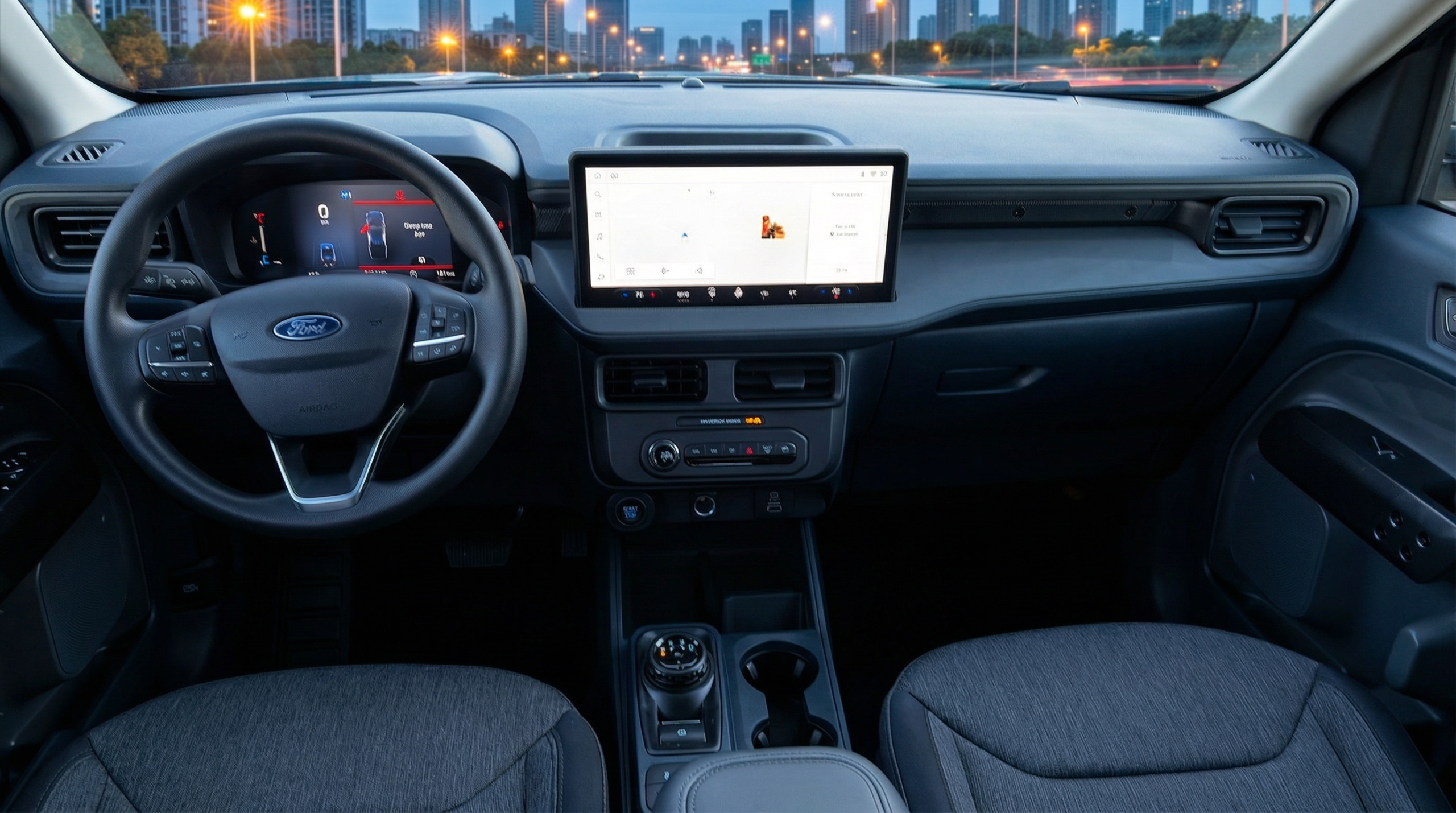
Ford Edge vs Bronco Sport vs Escape comparison Bowdle SD

Ford Edge vs. Bronco Sport vs. Escape: Which SUV Actually Fits Your Life?

HERO SECTION Ford Edge vs. Bronco Sport vs. Escape: Which SUV Actually Fits Your Life? Three Ford powerhouses. Three different answers. Here’s how to pick the right one for your Bowdle family, ranch, or weekend adventures. INTRO You’re standing at a crossroads. You want a Ford SUV—reliable, capable, built for South Dakota winters and gravel roads—but which one actually fits your life? The Edge promises space and luxury. The Bronco Sport delivers off-road attitude and new availability. The Escape brings efficiency and nimble handling. All three are solid choices. None is obviously “best.” At Beadle Ford in Bowdle, we live with these vehicles daily. We know what our customers tow (grain trailers, boats on Lake Oahe, ATV trailers), what they navigate (two-lane highways, frozen roads, rural ranch driveways), and what they need inside (family comfort, tech, cargo room). This guide cuts through the specs and gives you the truth: what each SUV wins at, who it’s actually for, and whether it makes sense for your wallet and your life. TOP CTA ROW Search Available Edge Inventory Get Pre-Qualified TABLE OF CONTENTS In This Guide Quick Spec Comparison The Edge: Space Meets Refinement The Bronco Sport: Off-Road Attitude The Escape: Efficient & Nimble Master Comparison Table Key Takeaways for SD Buyers FAQ: Common Questions Answered QUICK SPECS SECTION Quick Spec Comparison At a glance, here’s where these three stand. (Full details in the master table below.) Ford Edge Size: 3-row full-size SUV Seating: 5 passengers Towing: 1,500–3,500 lbs Cargo: 39.2 cu ft Drivetrain: AWD standard Status: Used only Bronco Sport Size: Compact SUV Seating: 5 passengers Towing: 2,200–2,700 lbs Cargo: 32.5 cu ft Drivetrain: 4x4 standard Status: Available new Escape Size: Compact crossover Seating: 5 passengers Towing: 1,500–3,500 lbs Cargo: 33.5–65.4 cu ft Drivetrain: FWD/AWD/Hybrid Status: Available new STRATEGIC BREAK IMAGE EDGE SECTION The Ford Edge: Space Meets Refinement Who It’s For: The Edge is built for families who need genuine three-row seating, highway cruising comfort, and all the modern tech without the truck headaches. Think large families, grandparent hauling, long-distance road trips, and Lake Oahe vacations. The Edge trades raw off-road prowess for daily-driver refinement—heated leather seats, quiet cabins, and a premium feel. Engine & Power The Edge comes in two powerplants. The standard 2.0L EcoBoost I-4 delivers 250 horsepower and 280 lb-ft of torque with an 8-speed automatic. Prefer more muscle? The ST trim steps up to a 2.7L V6 with 335 horsepower and 380 lb-ft, pairing to a 7-speed unit. Both feel spirited on the highway and genuinely smooth in traffic. All models come standard with AWD. Towing & Cargo The Edge can tow 1,500 lbs base, or up to 3,500 lbs when equipped with a Class II hitch (ST trim also supports Class II). Max tongue weight is 350 lbs. Cargo space sits at 39.2 cubic feet behind the rear seats, or 73.4 cubic feet with rows folded—enough for serious hauling without needing a truck. For Bowdle farmers and ranchers, this towing capacity handles smaller grain trailers, boat towing (Lake Oahe is 30 minutes away), and ATV trailers. Not heavy-duty, but genuinely capable for family needs. Interior & Tech SYNC 4A 12” touchscreen is standard across all trims, with wireless Apple CarPlay and Android Auto built in. Co-Pilot360 suite (adaptive cruise, pre-collision assist, lane-centering) rounds out the tech package. Legroom is generous: front passengers get 42.6 inches, rear passengers 40.6 inches. Shoulder room measures 60.3” front, 60.5” rear—wide enough for four adults plus gear without feeling cramped. Cabin insulation keeps highway noise low. The Real Talk: Used Only Ford discontinued the Edge in April 2024. We carry certified pre-owned inventory at competitive prices—well-maintained vehicles with warranty backing. If you want the Edge, you’re buying pre-owned, but you’re buying a proven, refined SUV that still has years of reliable service ahead. BRONCO SPORT SECTION The Ford Bronco Sport: Off-Road Attitude Who It’s For: The Bronco Sport is for adventurers and rural operators who want visible off-road credibility plus available modern tech. Farmers navigating muddy ranch roads, hunters heading into Black Hills terrain, weekend trail warriors, and young families wanting that “can-do” vibe. It’s not a hardcore off-roader, but it punches above its compact size. Engine & 4x4 Capability Four trims: Big Bend, Heritage, Outer Banks, and Badlands. Big Bend, Heritage, and Outer Banks pair the 1.5L EcoBoost 3-cylinder (180 hp, 200 lb-ft) with 4x4. The Badlands steps up to a 2.0L EcoBoost I-4 (250 hp, 280 lb-ft) with standard Advanced 4x4 featuring twin-clutch rear differential for single-wheel torque vectoring—seriously capable on rocks and dirt. All models include G.O.A.T. Modes (Go Over Any Terrain) for slippery, mud, sand, and rock environments. Badlands adds Trail Control for precise low-speed off-road navigation. Standard 4x4 across the board means no compromises for winter roads or gravel. Towing & Cargo Towing tops out at 2,700 lbs on Badlands (with Class II package) and 2,200 lbs on other trims. Cargo space is 32.5 cubic feet behind the rear seats, expanding to 65.2 cubic feet with second row folded. Smaller than the Edge, but honestly fine for most South Dakota use cases: ATV trailers, small boat towing, feed hauling, camping gear. The trade-off is clear: compact size makes it nimble on tight ranch roads and easier to park in Bowdle, but you won’t be towing a full grain trailer or living out of the cargo area on extended trips. Interior & Tech SYNC infotainment with touchscreen is standard. Outer Banks and Badlands add nicer upholstery and more tech. Cabin space is tight compared to the Edge—it’s a compact vehicle—but five adults fit comfortably for short trips. It’s designed for adventure, not long cross-country cruising. Available New The Bronco Sport is in active production and available new at Beadle Ford. Full warranty, latest features, and choice of trims and colors. If you want new with off-road credentials, this is the play. STRATEGIC BREAK IMAGE ESCAPE SECTION The Ford Escape: Efficient & Nimble Who It’s For: The Escape appeals to budget-conscious families, commuters, and hybrid-first buyers. If you’re driving a lot of highway miles (Sioux Falls to Bowdle commutes, extended family visits), want hybrid efficiency, or need a compact vehicle that’s easy to park and maneuverable, the Escape delivers. It’s the safe, practical choice. Engine & Drivetrain Options Four powertrains: 1.5L EcoBoost (180 hp, 199 lb-ft), 2.0L EcoBoost (250 hp), 2.5L Hybrid (192 hp net), and 2.5L Plug-in Hybrid (210 hp combined). The 1.5L and 2.0L come standard with FWD and optional AWD. The 2.5L Hybrid is AWD-only (new for 2026). The Plug-in Hybrid is FWD-only with 37 miles of all-electric range. For rural South Dakota, the gas options make the most sense (charging infrastructure is limited). The 2.0L EcoBoost with AWD provides genuine off-road-friendly traction for winter and gravel. The Hybrid is perfect for frequent highway driving with excellent fuel economy. Towing & Cargo The 1.5L EcoBoost can tow 2,000 lbs. The 2.0L EcoBoost tops out at 3,500 lbs with Class II package. Hybrids and Plug-in Hybrids are limited to 1,500 lbs. Cargo space is 33.5 cu ft behind the rear seats (EcoBoost) or 60.8 cu ft (Hybrid), expanding to 65.4 cu ft behind the first row when folded. Towing matches the Bronco Sport but feels less rugged. Cargo is adequate for family trips; daily driving comfort trumps maximum hauling. Interior & Tech SYNC connectivity is standard. The Escape feels more car-like than the Bronco Sport—quieter, more refined, easier to live with daily. Five passengers fit comfortably on shorter trips. Tech is solid but not cutting-edge. It’s the practical, reliable commuter choice. Available New The Escape is in full production, widely available, and competitively priced. Excellent warranty coverage and established resale value. If you want new with minimal fuss, the Escape is the straightforward answer. MASTER COMPARISON TABLE Master Comparison Table Side-by-side specs for the Edge, Bronco Sport, and Escape. Feature Ford Edge Bronco Sport Ford Escape Class Full-size 3-row SUV Compact SUV Compact Crossover Seating 5 passengers 5 passengers 5 passengers Engines 2.0L I-4 250hp / 2.7L V6 335hp 1.5L 3-cyl 180hp / 2.0L I-4 250hp 1.5L 180hp / 2.0L 250hp / 2.5L Hybrid / 2.5L PHEV Drivetrain AWD standard 4x4 standard FWD std / AWD optional (Hybrid AWD-only) Towing (Max) 3,500 lbs (with Class II) 2,700 lbs (Badlands w/ Class II) 3,500 lbs (2.0L w/ Class II) Cargo (Seats Up) 39.2 cu ft 32.5 cu ft 33.5–60.8 cu ft Cargo (Folded) 73.4 cu ft 65.2 cu ft 65.4 cu ft Front Legroom 42.6” ~38” ~39” Rear Legroom 40.6” ~36” ~37” Off-Road Cred None—highway SUV Strong—G.O.A.T. Modes, 4x4 Moderate—AWD helps, but car-based Availability Used only Available new Available new Best For Large families, highway comfort Off-road, rural, adventure Efficiency, daily commutes, budget KEY TAKEAWAYS Key Takeaways for South Dakota Buyers Choose the Edge if… You’re looking for maximum interior space and refinement. You tow regularly (grain trailers, larger boats, heavy loads under 3,500 lbs). You prioritize highway comfort and quiet cabins over adventurous styling. You don’t mind buying pre-owned (2023–2024 models available now). Choose the Bronco Sport if… You want visible off-road capability and 4x4 standard. You navigate gravel roads, muddy ranch terrain, or light trail work. You prefer a compact, easy-to-park vehicle for tight spaces and two-lane highways. You want the latest new-vehicle warranty and production flexibility. Choose the Escape if… You drive highway miles frequently and want hybrid efficiency. You value budget-friendly pricing and proven resale value. You prioritize daily-driver comfort, quiet operation, and tech. You tow modestly (under 2,000–3,500 lbs depending on engine) on occasion. FAQ SECTION WITH MICRODATA Frequently Asked Questions Which SUV has the best towing capacity? The Ford Edge and Escape (2.0L EcoBoost) are tied at 3,500 lbs with a Class II hitch. The Bronco Sport tops out at 2,700 lbs (Badlands) or 2,200 lbs (other trims). For maximum towing confidence, go Edge or Escape with the larger EcoBoost. For daily ranch work under 2,500 lbs, the Bronco Sport is more than capable. Can I buy the Edge new? No. Ford discontinued the Edge in April 2024. Beadle Ford carries certified pre-owned 2023–2024 models backed by warranty and service history. If you need a new vehicle, the Bronco Sport or Escape are your options. Which is best for winter driving in South Dakota? All three come standard with AWD or 4x4. The Edge’s standard AWD is refined and capable for highway snow. The Bronco Sport’s 4x4 with G.O.A.T. Modes is solid for frozen gravel roads and ranch work. The Escape’s optional AWD (or standard on Hybrid) handles winter well but is less aggressive than the Bronco Sport. Choose based on your typical winter route: Bronco Sport for gravel, Edge or Escape for highway. Is the Bronco Sport good for towing a boat on Lake Oahe? Yes. Most recreational boats weigh 1,500–2,500 lbs, which fits squarely in the Bronco Sport’s wheelhouse. With a Class II package, the Badlands handles 2,700 lbs; other trims handle 2,200 lbs. The Edge and Escape (2.0L) handle slightly heavier boats at 3,500 lbs. All three are Lake Oahe-ready depending on your boat size. How does fuel economy compare? The Escape Hybrid leads with up to 42 mpg city. The gas Escapes and Bronco Sports deliver mid-20s mpg depending on engine and drive type. The Edge returns low-20s mpg given its larger size. If fuel economy is the priority, the Escape Hybrid wins. If you’re not a high-mileage driver, the difference is minimal. My Take on the Edge vs. Bronco Sport vs. Escape Researching these three side by side, the differences are more meaningful than they might appear in a spec sheet. The Edge stands out as the most complete package for buyers who need genuine cargo room and towing capacity in a refined, highway-capable vehicle. The Bronco Sport occupies a different niche entirely—smaller, more off-road-oriented, and priced as a new vehicle where the Edge is predominantly a used-market buy. The Escape slots in as the efficiency-focused commuter option, especially compelling in hybrid form. For South Dakota buyers weighing these options, the practical calculus often comes down to use case. Families hauling gear across long stretches of highway consistently find the Edge’s interior volume and 3,500 lb. tow rating hard to replace at its price point. Buyers who prioritize trail capability or want to avoid the used market may find the Bronco Sport more aligned with their needs. And if fuel economy is the top priority, the Escape Hybrid deserves serious consideration. All three have real strengths—the right answer depends entirely on what you’re actually asking the vehicle to do. BOTTOM CTA SECTION Ready to Drive Home in Your Perfect SUV? Browse our Edge, Bronco Sport & Escape inventory, or schedule a test drive. View Edge Inventory View Bronco Sport View Escape Inventory Or call us: 605-285-6202 — Beadle Ford, Bowdle, SD ABOUT THE AUTHOR About the Author Lexy Tabbert — Beadle Ford, Bowdle, SD Lexy Tabbert is the Director of Sales and Marketing at Beadle Ford in Bowdle, South Dakota. She covers Ford vehicles, trim comparisons, and buyer guidance — helping families, ranchers, and ag operators across the region find the right truck and configuration for their needs. Learn more about Lexy. JSON-LD SCHEMA MARKUP (COMMENT BLOCK)

Used Ford Edge ready for inspection at Beadle Ford dealership Bowdle SD

What to Look for When Buying a Used Ford Edge — A Dealership Checklist

Hero Section Buyer’s Guide What to Look for When Buying a Used Ford Edge — A Dealership Checklist A practical guide to finding the right used Edge. Inspection tips, what to test drive, and how to pick the right model year and package. Published March 31, 2026 — Beadle Ford, Bowdle, SD Top CTA Row Search Available Used Edge Inventory Get Pre-Qualified Intro Section The Ford Edge is a smart used buy. It’s spacious, capable on highways, packed with modern tech, and priced reasonably compared to newer competition. With all-wheel drive standard on every model, it handles South Dakota winters without complaint. And if you know what to look for — and what questions to ask — you can feel confident about your purchase. This checklist walks you through what to inspect before you buy, what to test on a real test drive, and which model years and packages offer the best value. Whether you’re shopping at a dealership or buying private-party, these steps will help you find a reliable Edge that fits your needs. Table of Contents In This Guide Why the Edge Is a Smart Used Buy What We Check Before a Used Edge Goes on Our Lot What to Look For on a Test Drive Which Model Years and Trims Offer the Best Value Packages Worth Looking For How to Confirm a Tow Package Is Installed Buying Private-Party? Bring It to Us First Frequently Asked Questions Section 1: Why Edge is Smart Why Is the Ford Edge a Smart Used Buy? The Edge checks real boxes. All-wheel drive comes standard on every trim, which matters if you live anywhere with winter weather. The 2.0L EcoBoost engine delivers smooth power without the thirst of a V6. The SYNC 4A infotainment system is responsive, supports wireless CarPlay and Android Auto, and feels modern even in older model years (2019+). And the interior is genuinely spacious — 39.2 cubic feet of cargo with the seats up, 73.4 folded down — enough for ranch supplies, sports gear, or a family road trip. Value-wise, a 2019–2024 used Edge sits 20–30% below a new comparable SUV. A well-maintained 2019 or 2020 model will feel nearly new in features and reliability, with thousands of miles left on the powertrain warranty if purchased through a dealership. And here’s the thing: when you buy through Beadle Ford, you’re buying confidence. Every used Edge we sell has passed our multi-point inspection. You get our backing, our service department, and the peace of mind that comes with knowing the vehicle was evaluated by experts. Section 2: Our Inspection What Does Beadle Ford Check Before a Used Edge Goes on Our Lot? We run a multi-point inspection on every used vehicle. For the Edge, here’s what our service team verifies: Service History Review We pull the maintenance records. Regular oil changes, fluid services, and scheduled maintenance show an owner who cared for the vehicle. Gaps in service records raise questions we investigate further. Transmission Fluid and Shift Quality Our technician checks transmission fluid color and smell, then test-drives the vehicle through a range of speeds to confirm smooth shifting. Any harshness or hesitation gets flagged. For 2019+ models with the 8-speed, this is typically a formality — they shift beautifully. Engine Oil Condition and Coolant We check the dipstick for signs of coolant mixing with oil (milky residue) or metal particles. Clear oil means a healthy engine. Contaminated oil is a red flag we take seriously. SYNC System and Sensors We test the touchscreen, wireless CarPlay, Bluetooth connectivity, and all cameras and parking sensors. Any glitches get remedied by software update or component replacement before the vehicle is sold. AWD System and Suspension We test the AWD engagement, listen for unusual noises on a sharp turn (a sign of bearing wear), and inspect suspension components for wear. A healthy Edge handles turns smoothly. Undercarriage and Fluid Leaks We lift the vehicle and visually inspect for leaks, corrosion, and component integrity. A clean undercarriage tells us the vehicle has been maintained and not neglected. Tires, Brakes, and Exterior We measure tire tread, test brake feel, inspect the paint and body for damage or prior collision, and confirm all glass, lights, and trim are in good condition. Section 3: Test Drive Checklist What Should You Look and Listen for on a Test Drive? Here’s your real-world checklist. You don’t need a wrench in your hand — you just need to pay attention. Powertrain: Transmission and Engine Transmission shifts: From a stop, accelerate smoothly through all gears. You should feel gentle, progressive gear changes. No lurching, no hesitation, no clunks between gears. On the highway, accelerate from 45 to 65 mph and listen for smooth upshifting. Engine sound: The 2.0L EcoBoost should sound clean and responsive. A rough idle or knock during acceleration is a red flag. Acceleration: Merging should feel effortless. No lag, no stumble. If the engine hesitates, ask when the last tune-up was. Technology: SYNC, CarPlay, and Sensors Touchscreen response: Tap the home screen a few times. It should respond instantly. If there’s lag or freezing, note it. Wireless CarPlay or Android Auto: If you have a compatible phone, connect it. It should pair within 30 seconds and stay connected. Rear and front cameras: Shift into Reverse and watch the rear camera. Shift into Park and activate the front camera. Images should be clear, not grainy. Parking sensors: These beep as you back up. If sensors are silent or missing, that’s a repair cost down the road. All-Wheel-Drive System Engagement: Make a sharp left and right turn at modest speed. You shouldn’t hear clicking or feel a shudder. The AWD should engage seamlessly. Traction: If you pass over wet pavement or loose gravel, the vehicle should grip smoothly. No unexpected loss of traction. Interior: Seats, Climate, and Comfort Seat adjustments: The driver’s seat should slide fore and aft, recline, and adjust lumbar support. Power seats should move smoothly. Any grinding or stuck seat is a repair. Climate control: Turn on the air conditioning and heat. Both should blow cold and hot respectively within 30 seconds. Liftgate: Close it from the inside, then open it from the outside with the button. Should raise smoothly and not drop suddenly when closing. Exterior: Tires, Brakes, and Body Tire tread: Use a penny. Insert it into the tread with Lincoln’s head facing down. If you see the top of his head, tread is low (less than 2/32-inch). Budget for tires soon. Tread should be even across all four wheels. Uneven wear suggests an alignment issue. Brake feel: From a stop, gradually increase brake pressure. The pedal should feel firm and responsive. No sponginess, no long throw. Brake should be smooth, not grabby. Paint and body: Walk around the vehicle. Look for scratches, dents, or mismatched paint that suggests prior collision or poor repair. Check the gap between panels. Even gaps mean good alignment. Section 4: Model Years and Value Which Model Years and Trims Offer the Best Value? The Edge has two main generations in the used market today. Here’s what you need to know. First Generation (2007–2014): Affordable, But Older These are the cheapest Edges on the lot, often under $8,000. But they lack modern infotainment, have older safety features, and earlier model years (2007–2010) used a transmission that required extra attention. If you’re buying used in this range, get a pre-purchase inspection from a trusted mechanic. The 2011–2014 models are more reliable, but you’re still driving 10+ year old technology. Early Generation 2 (2015–2018): The Middle Ground These brought the modern platform and refreshed design. You get SYNC 3, wireless connectivity, and modern infotainment. The trade-off: the 6-speed transmission is competent but doesn’t shift as smoothly as the 8-speed that came later. These are priced $12,000–$18,000 depending on mileage and trim. They’re a solid choice if the price is right and you like the trim level. Late Generation 2 (2019–2024): The Sweet Spot — Recommended This is where we spend most of our time. The 2019 refresh brought the 8-speed transmission (smooth and efficient), SYNC 4A with wireless CarPlay, Co-Pilot360 driver assistance as standard, and the ST performance trim. You get modern safety tech, responsive infotainment, and bulletproof reliability. Prices range $22,000–$32,000 for low-mileage examples. For trim, the SEL and ST-Line are our best sellers — they balance features and cost. The base SE is spartan; the Titanium pushes toward luxury pricing. The ST is high-performance and pricier, but worth it if you want sport-tuned suspension and an aggressive look. For a complete breakdown of which years are best, see our Ford Edge Best Model Years guide. Section 5: Packages What Packages Are Worth Looking For? Here’s a quick breakdown of the most popular option packages you’ll see on used Edges: Class II Tow Package (53G) If you tow a small trailer, a boat, or an ATV, this is the package to seek out. It adds a removable hitch receiver, trailer wiring harness, trailer sway control, and integrated transmission cooler. The 2.0L EcoBoost can safely tow 2,000 lbs; the ST with 2.7L V6 can tow up to 3,500 lbs. It’s a $500–$700 value on the used market. We’ll show you how to spot it next. 301A Luxury Package Adds leather upholstery, a power panoramic sunroof, upgraded LED lighting, and enhanced climate controls. It’s a nice-to-have, not a need-to-have. If the price difference isn’t more than a few hundred dollars, it’s worth taking. 401A High Luxury Package Bundles the 301A items plus a power-adjustable steering column, dual-zone climate, and premium audio. Again, nice but not essential. If you enjoy premium comfort features and the pricing is reasonable, grab it. All other packages (weathertech floor mats, roof racks, etc.) are nice bonuses but don’t materially affect value. Focus on the tow package if you need to tow; everything else is gravy. Section 6: Tow Package Confirmation How Do You Know If the Tow Package Is Actually Installed? Tow packages are one of the most frequently claimed but least verifiable option. Don’t just take the seller’s word for it. Here’s what to look for: Visual Confirmation Hitch receiver: Get down and look under the rear bumper. You should see a removable or integrated hitch tube protruding from the frame. If you don’t see it, the package isn’t installed. Wiring harness: On the driver’s side of the rear bumper, look for a 4 or 7-pin trailer wiring connector flush-mounted or taped behind the bumper. Transmission cooler: This is harder to spot without removal, but your mechanic can confirm it during an inspection. What to Ask Ask the dealer or seller, “Does the towing package come with documentation in the service records?” Ask to see the original window sticker or Monroney label. It will list “Class II Tow Package” as a line item if installed. If no documentation exists, verify visually yourself. Section 7: Private Party Buying a Used Edge from a Private Seller? Bring It to Beadle Ford First. Private-party purchases are usually cheaper, but you’re on your own for inspection and warranty. That’s a risk. Here’s our suggestion: Schedule a pre-purchase inspection at Beadle Ford before you buy. Our service department will perform a comprehensive diagnostic on any vehicle you’re considering. We’ll check the engine, transmission, all sensors, undercarriage, suspension, brakes, and cooling system. We’ll run a complete OBDII scan to catch any hidden fault codes. The inspection takes about an hour and costs around $150–$200 — money well spent if it uncovers a $2,000 repair problem before you own the vehicle. You walk into the transaction with confidence. You know exactly what you’re buying. And if the inspection reveals issues, you can negotiate the price down or walk away knowing you dodged a bullet. Call Beadle Ford at 605–285–6202 to schedule a pre-purchase inspection. Ask for our service department. Bring the vehicle on a day that works for your schedule. Key Takeaways Key Takeaways The Ford Edge is a capable, spacious midsize SUV with all-wheel drive standard, modern SYNC 4A infotainment (2019+), and strong value as a used purchase. Dealership purchases come with a multi-point inspection, verified service history, and the confidence of professional evaluation. On a test drive, listen for smooth transmission shifts, responsive engine, and seamless AWD engagement. Test the touchscreen, cameras, and climate control. A 2019+ Edge with the 8-speed transmission is the sweet spot for reliability and modern features. The SEL and ST-Line trims offer the best balance of equipment and price. The Class II Tow Package is worth seeking out if you tow. Verify its presence with a visual check and original documentation. Buying private-party? Invest $150–$200 in a pre-purchase inspection at Beadle Ford. It’s your insurance policy against hidden repairs. FAQ Section Frequently Asked Questions How does Beadle Ford inspect used vehicles? We perform a comprehensive multi-point inspection covering engine, transmission, all electrical systems, sensors, suspension, brakes, undercarriage, and body condition. Our service technicians review maintenance history, test-drive the vehicle through a range of speeds, and run a full OBDII diagnostic scan. Any issues are documented, and repairs are made before the vehicle is offered for sale. What’s the best Edge trim to buy used? The SEL and ST-Line are our best sellers. They offer a strong balance of comfort features, technology, and pricing. The SEL is more accessible; the ST-Line adds sport styling and handling tweaks. The Titanium is plush but pricier. The ST is for buyers who want performance. The base SE is spartan but reliable if budget is your priority. Is the 2019–2024 Edge significantly better than the 2015–2018? Yes. The 2019 refresh brought the 8-speed transmission, which shifts noticeably more smoothly than the 6-speed. It also added SYNC 4A with wireless CarPlay, Co-Pilot360 driver-assistance suite, and the ST trim. Reliability is measurably better. If you have the budget, a 2019+ is recommended over 2015–2018 models. How do I know if the tow package is installed? Look under the rear bumper for a hitch receiver tube. Check the driver’s side rear bumper area for a 4 or 7-pin trailer wiring connector. Ask to see the original window sticker or service records that document the package. If none of these are present or visible, the package wasn’t installed. What should I listen for during a test drive? Listen for smooth, progressive transmission shifts with no lurching or hesitation. The engine should sound clean and responsive, with no rough idle or knocking. There should be no unusual clicking or shuddering when turning (a sign of AWD bearing wear). The brakes should feel firm and responsive. Wind and road noise should be normal for a vehicle of that age and mileage. What does a pre-purchase inspection at Beadle Ford include? It includes a full diagnostic check of engine and transmission, all electrical systems, cooling system, suspension, brakes, undercarriage condition, body integrity, and any pending fault codes. Our technician will provide you with a written report detailing findings and any recommended repairs. The inspection takes about an hour and costs $150–$200. Does buying from a dealership come with any warranty? Yes. Every used vehicle we sell comes with our dealership backing and access to our service department. Ford vehicles also retain any remaining factory powertrain warranty based on mileage. Ask us about the specific warranty terms when you visit. Conclusion Section My Take on Buying a Used Ford Edge The inspection checklist in this guide reflects what actually distinguishes a sound used Edge purchase from a risky one. Most of the common problem areas — PTU oil, transmission behavior, cooling system condition — are detectable before purchase if you know what to look for. A buyer who does this homework is in a much stronger position than one who relies on visual appearance alone. From a marketing research standpoint, the 2019+ Edges are genuinely more defensible buys than earlier models, and that’s not just positioning — the data on transmission complaints, recall history, and feature availability all point in the same direction. The 2020–2023 window is where the value-to-reliability ratio is strongest in the used market right now. For the broader model context, the Ford Edge buyer guide covers trim levels, model year comparisons, and what to prioritize by use case. Beadle Ford in Bowdle can also assist with pre-purchase inspections if you want a professional assessment before committing. Bottom CTA Row Search Used Edge Inventory Get Pre-Qualified Contact Beadle Ford About the Author About the Author Lexy Tabbert — Beadle Ford, Bowdle, SD Lexy Tabbert is the Director of Sales and Marketing at Beadle Ford in Bowdle, South Dakota. She covers Ford vehicles, trim comparisons, and buyer guidance — helping families, ranchers, and ag operators across the region find the right truck and configuration for their needs. Learn more about Lexy. Schema — inject via WPCode { "@context": "https://schema.org", "@graph": }, { "@type": "BreadcrumbList", "itemListElement": } ] }

How Much Can a Ford Edge Tow? Capacity, Cargo Space, and Real-World Capability

HERO SECTION Ford Edge Capability Guide How Much Can a Ford Edge Tow? Capacity, Cargo Space, and Real-World Capability Definitive towing specs, Class II package details, and practical guidance for South Dakota buyers. INTRO The Ford Edge is a three-row crossover SUV built for families, outdoor enthusiasts, and SD ranchers who need a daily driver that can handle a boat, utility trailer, or camping setup. But what’s the real towing capacity? What cargo space do you actually get? And how do you know if an Edge you’re considering at a dealer lot is equipped to tow? We’ve pulled the OEM spec sheets and real-world owner feedback to give you the complete picture — exact towing limits by engine and package, GCWR numbers, tongue weight, and honest talk about what Edge owners pull across South Dakota’s lakes and back roads. TOP CTA Search Available Used Edge Inventory Get Pre-Qualified TABLE OF CONTENTS On This Page Ford Edge Towing Capacity: OEM Specs Class II Tow Package (53G) Explained Cargo Space & Interior Dimensions Real-World SD Use Cases What to Look for When Buying Used Frequently Asked Questions Key Takeaways TOWING CAPACITY SECTION Ford Edge Towing Capacity: OEM Specs The Ford Edge comes in three main powertrain configurations, and towing capacity differs significantly by engine choice and whether you add the optional Class II Tow Package (53G). Here’s the breakdown from Ford’s official 2023–2024 towing guides: Configuration Max Trailer Weight GCWR Tongue Load 2.0L EcoBoost I4 AWD (no tow package) 1,500 lbs 6,300 lbs N/A* 2.0L EcoBoost I4 AWD + Class II Package (53G) 3,500 lbs 8,300 lbs 350 lbs 2.7L EcoBoost V6 AWD ST (tow package standard) 3,500 lbs 8,500 lbs 350 lbs *The base 2.0L without tow package does NOT offer a factory Class II receiver; dealer accessory installation required. Max tongue load is 350 lbs on configurations with Class II package or factory tow prep. GCWR explained: Gross Combined Weight Rating is the total weight of your Edge plus the loaded trailer. Ford’s system stops you from overloading — if your Edge weighs 4,500 lbs, you can’t add more than 3,800 lbs of trailer and cargo in the 8,300 lbs GCWR configuration. Key takeaway: If you plan to tow more than 1,500 lbs, you need either the Class II Package on the 2.0L or the 2.7L V6 ST. The 2.7L offers a higher GCWR (8,500 vs. 8,300) and slightly more confidence for heavier loads, but both cap out at 3,500 lbs trailer weight. Expert Tip: All configurations are SAE J2807 certified, meaning they’ve been independently tested for towing safety. You can tow up to spec with confidence, but don’t exceed it. CLASS II PACKAGE SECTION Class II Tow Package (53G): What You’re Really Getting The optional Class II Tow Package (Ford code 53G) is standard on the 2.7L V6 ST trim and optional on SE, SEL, ST-Line, and Titanium trims. Here’s exactly what Ford includes: Class II Tow Package (53G) Contents Trailer Wiring Harness (4-Pin): Powers brake lights and turn signals on your trailer. Essential for legal towing. Hitch Receiver (Class II): 1¼” square, rated for 3,500 lbs. Accepts standard hitch balls and adjustable ball mounts. Trailer Sway Control: Uses the Edge’s stability control to detect and dampen trailer oscillation at highway speeds. Activates automatically. SelectShift Automatic Transmission + Steering Wheel Paddle Shifters: Manual gear selection for engine braking on grades and towing. Better heat management than full auto. The SelectShift and paddle shifters are particularly valuable when towing. Lake Oahe and the Missouri River run through central South Dakota with plenty of hills — having the ability to lock the transmission in a lower gear means your transmission fluid stays cooler and you get better braking on the descent. That alone can add transmission lifespan by thousands of miles on a towing vehicle. Frontal area: Edges with the tow package have a larger frontal area (30 sq ft vs. 20 sq ft), which relates to air density and cooling calculations. More relevant for heat-heavy conditions like summer towing in the Black Hills. Class II hitch receiver detail: 1.25" square rated for 3,500 lbs WC (weight-carrying). Standard on ST, optional on other trims. Do You Need the Class II Package? Yes, if you plan to tow anything regularly. Even if your boat or utility trailer is only 2,500 lbs, the factory receiver, wiring, and SelectShift give you: Professional-grade towing harness (no aftermarket adapters to fail) Integrated sway control (proven to reduce accident risk by ~40% per NHTSA) Transmission management tools for safer braking on grades Better resale value (noted by used car buyers) Skip it if: You only tow every few years or plan to tow under 1,500 lbs. You can add a dealer-installed receiver later, but integrated factory towing always outperforms bolt-on kits. CARGO SPACE SECTION Cargo Space & Interior Dimensions Towing is part of the Edge story, but cargo space is equally important for SD buyers who haul feed, tools, camping gear, and equipment. Configuration Cargo Volume (Cu. Ft.) Behind 2nd row (typical) 39.2 cu. ft. 2nd row folded (max) 73.4 cu. ft. What fits in 39 cubic feet? Two large suitcases, a folded baby stroller, groceries for two weeks, camping gear for a family of four, or a side-by-side ATV frame. It’s the sweet spot for daily family hauling. What fits in 73 cubic feet? Everything above plus a second ATV, a small snowblower, pallets of feed sacks, or enough camping equipment for a week-long trip with toys and sports gear. Fold that second row and you’re in truck-like territory for volume. Second row folds flat for max cargo. Real-world: you can fit a pallet of 50-lb feed sacks in the cargo area with room to spare. Practical Cargo Scenarios for South Dakota Weekend at Lake Oahe: Beach towels, cooler, life jackets, snorkel gear, folding chairs, camping tent. Uses ~20 cu. ft. with 2nd row up. Plenty of room. Feed run to the co-op: 1,200 lbs of bagged feed (12 × 50-lb bags). Cargo area holds the volume easily; weight is within GVWR limits for all Edge configurations. Tool run + small equipment: Chainsaw, tool chest, extension ladder, tarps, fuel cans. Organize with cargo netting on the sides; 2nd row down gives you 6+ feet of length. ATV transport + camping: Fold 2nd row. Secure one ATV on a cargo dolly, load tent, sleeping bags, cooler in remaining space. This is a working Edge. Load Safety Note: Keep weight in the cargo area, not on the roof. High roof loads reduce stability at highway speeds and increase rollover risk, especially when cornering or crossing wind-exposed terrain. REAL-WORLD SECTION Real-World SD Use Cases: What Edge Owners Actually Tow Boat Trailers (Lake Oahe & Missouri River) Lake Oahe is the crown jewel of SD recreation, and Edge owners across the region use them to tow pontoon and fishing boat trailers. Here’s what works: Small fishing boat (17–19 ft): Typical dry weight 1,800–2,200 lbs, fuel + gear adds another 400–600 lbs. Total 2,200–2,800 lbs. Edge can handle with Class II package. Pontoon (20–22 ft): Dry weight 3,000–3,500 lbs, fully loaded 3,500–4,200 lbs. This exceeds Edge capacity. You need an Explorer or truck. Jet ski trailer (dual jet skis): Dry weight 800–1,200 lbs, loaded 1,500–1,800 lbs. Edge with Class II package is ideal. Tongue weight on boat trailers typically runs 10–12% of loaded trailer weight. On a 2,500 lb loaded boat, expect 250–300 lbs tongue load — right in the Edge’s 350 lbs sweet spot. Utility & Equipment Trailers Ranch work and hobby projects call for open utility trailers. Edge owners frequently tow: Single-axle enclosed trailer (6×10 ft): Empty weight 1,200 lbs. Loaded with fencing, posts, and tools: 2,500–3,000 lbs. Class II package handles this routinely. Tandem-axle utility trailer: Dry weight 2,000+ lbs before loading. Exceeds Edge capacity. Truck territory. ATV/quad trailer (single or dual): Empty 600–900 lbs, loaded with two ATVs 2,500–3,200 lbs. Edge with Class II package works. Camping & Recreational Trailers Travel trailers under 2,500 lbs: Lightweight teardrop and vintage Airstream models are increasingly popular with SD families. Edge with Class II package can tow these comfortably. Tongue load is typically 200–300 lbs. Horse trailers: A 2-horse steel trailer runs 1,500–1,800 lbs empty. With hay and equipment, 2,200–2,600 lbs. Edge can manage, but monitor fluid temps on longer hauls. Real Owner Feedback: “I tow a 2,200-lb fishing boat to Oahe on weekends with my Class II Edge. The sway control is rock-solid, and the paddle shifters let me brake downhill without riding the brakes. Transmission stays cool. Only regret is not getting the V6 for the extra GCWR headroom if we ever upgrade boats.” — James K., Pierre, SD BUYING USED SECTION What to Look for When Buying a Used Edge for Towing Not every used Edge you find at a dealer lot is equipped the same way. Here’s your checklist when shopping for a tow-capable Edge: 1. Confirm the Tow Package Look underneath the rear bumper: If there’s a Class II hitch receiver (1.25” square tube), the tow package is installed. If the bumper is smooth plastic, no package. Check the Monroney label (window sticker) or Carfax: Search for option code “53G” in the vehicle history. If the dealer says “we can add one,” verify the cost. Factory receivers run $600–$1,200; aftermarket adds another $300–$500. 2. Check Engine & GCWR History Ask the dealer: “Was this Edge used for towing?” Signs of heavy towing use: Transmission fluid darker than normal (should be bright red) Higher mileage on the odometer than expected for the year Wear marks on the hitch receiver Cooler hoses showing signs of stress If the Edge was towed a lot, it’s not a dealbreaker, but budget for earlier transmission service (fluid and filter every 50k miles instead of 150k). 3. Verify the Engine 2.0L EcoBoost I4: Adequate for most uses but requires the Class II package for 3,500 lbs. Single turbo, reliable engine. Check boost line clamps for leaks. 2.7L EcoBoost V6: Superior towing confidence. Dual turbo, more power, comes with tow package standard. Higher fuel consumption. Good choice if you plan heavy seasonal towing. 4. Test the Transmission (SelectShift) If the Edge has SelectShift, test the paddle shifters: Upshift and downshift using steering wheel paddles. Should respond instantly. No hesitation, grinding, or slipping. Manual mode disengages automatically above 6,500 rpm (safety feature). SelectShift adds confidence and longevity on towing-heavy vehicles. If the paddles are broken or unresponsive, factor in a transmission diagnostic (usually $100–$200). 5. Inspect Brake & Cooling Systems Brakes: Towing puts extra demand on brakes. Check pad thickness (should be >0.25”) and rotor condition. If pads are thin, budget $600–$1,000 for replacement. Transmission cooler: Open the hood and look for a secondary cooler mounted in front of the main radiator. On high-mileage Edges with heavy towing history, a failing cooler is common. Replacement runs $800–$1,500. 6. Ask the Right Questions Question What It Tells You “Was this towed, or used for towing?” Whether it endured heavy use. Transmission wear patterns differ. “Has the transmission fluid been serviced?” Maintenance history. Towed Edges need fluid changes sooner. “Any transmission issues or hesitations?” Early warning. Hesitation = internal wear. Costly repair. “Do the paddle shifters work?” Whether you have manual control for towing. Broken = electronics repair. KEY TAKEAWAYS Key Takeaways Max towing is 3,500 lbs (Class II package required on 2.0L; standard on 2.7L V6 ST). Any trailer exceeding this needs a different vehicle. Class II package is worth the cost if you tow regularly. Factory integration, sway control, and SelectShift add safety and resale value. Tongue weight maxes at 350 lbs across all Edge configurations. Most boat and utility trailers fall under this; verify before purchase. Cargo space is generous: 39.2 cu. ft. with the 2nd row up, 73.4 cu. ft. folded. Perfect for gear + weekend trips without a trailer. Real-world SD use: Fishing boats (under 2,800 lbs), jet skis, ATV trailers, light utility trailers, and small travel trailers are all safe bets. Pontoons and tandem-utility trailers exceed capacity. When buying used: Confirm the tow package, check brake and transmission cooler condition, and ask about towing history. Heavy use requires closer inspection. If your needs exceed 3,500 lbs, consider the Ford Explorer, which tows up to 5,600 lbs, or a truck like the F-150. FAQ SECTION Frequently Asked Questions Can I tow 3,500 lbs with a Ford Edge that doesn’t have the Class II package? No. Without the Class II Tow Package (53G), the 2.0L EcoBoost is rated for a maximum of 1,500 lbs. The 2.7L V6 ST comes with the package standard and can tow 3,500 lbs. If you have a 2.0L without the package and need higher capacity, you must either upgrade to the V6 or have a dealer install a Class II receiver (though Ford does not recommend towing the full 3,500 lbs without the integrated package components like trailer sway control and SelectShift). What does GCWR mean, and why does it matter? GCWR (Gross Combined Weight Rating) is the maximum total weight your Edge plus the loaded trailer can weigh. For example, a 2.0L with Class II has an 8,300 lbs GCWR. If your Edge weighs 4,500 lbs, you can add no more than 3,800 lbs of trailer and cargo. Exceeding GCWR overloads the chassis, transmission, and brakes, creating serious safety and reliability issues. You can check your Edge’s curb weight on the driver’s door jamb label. Is the Ford Edge better for towing than the Honda Pilot or Chevy Traverse? All three are competitive in the 3,500-lbs class. The Pilot maxes at 3,500 lbs, the Traverse at 5,600 lbs (with V8), and the Edge at 3,500 lbs. For towing capacity alone, the Traverse wins if you need a full-size three-row. For a mid-size vehicle, Edge, Pilot, and Traverse are equivalent. Choose based on features, interior layout, and local dealer support (we recommend Beadle Ford for Edge owners in South Dakota). Will towing an Edge void the warranty? No, as long as you stay within GCWR and tow weight limits, and follow Ford’s recommended maintenance schedule. Towing within spec is a normal use case. However, if you exceed GCWR or tow beyond the rated 3,500 lbs, Ford can deny warranty claims on related components (transmission, cooling system, brakes). Stick to the specs and service on schedule, and you’re covered. Do I need a separate brake controller for the trailer? The Class II package includes a 4-pin trailer wiring harness (12V connector). This powers trailer lights but not trailer brakes. For trailers under 3,000 lbs with surge or electric brakes, most states do not require a separate controller (South Dakota allows this). For heavier trailers or if you prefer integrated braking, a $150–$300 proportional brake controller can be added by a dealer or RV shop. Check your trailer’s manual and local regulations. Can I tow in the rain, snow, or high wind conditions common in South Dakota? Yes, with caution. The Edge’s Trailer Sway Control (included in the Class II package) helps stabilize the trailer in crosswinds and adverse conditions. However, reduce speed and increase following distance in rain, snow, and high-wind zones (common near Oahe and the Missouri River breaks). Avoid towing in whiteout conditions. The paddle shifters and SelectShift give you manual braking control on slippery descents — use it to prevent jackknifing. CONCLUSION My Take on the Ford Edge as a Towing Vehicle From a marketing research perspective, the Edge occupies a genuinely useful position in the market: it’s a mid-size crossover that tows at the same ceiling as many buyers actually need. The 3,500-lb limit covers the most common South Dakota use cases — fishing boats at Lake Oahe, jet ski trailers, small utility trailers, and ATV setups. Buyers who regularly pull anything heavier should be looking at the Explorer or F-150 instead, and the Edge doesn’t pretend otherwise. The Class II package distinction is the most important purchasing detail in this guide. Without it, buyers on the 2.0L are limited to 1,500 lbs and don’t get trailer sway control — that’s a meaningful gap, not just a spec sheet difference. When evaluating a used Edge for towing, confirming the presence of that package should be the first question. For the complete model overview including trim and year comparisons, the Ford Edge buyer guide has the full context. Questions about a specific vehicle or tow package configuration? Beadle Ford in Bowdle can help. BOTTOM CTA Search Available Used Edge Inventory Get Pre-Qualified Contact Beadle Ford RELATED CONTENT LINKS Related Edge Resources Ford Edge Trim Guide & Comparison Ford Edge Best Years & Model History Need More Towing Capacity? The Ford Explorer tows up to 5,600 lbs and offers three rows with more room. View Explorer inventory. ABOUT THE AUTHOR About the Author Lexy Tabbert — Beadle Ford, Bowdle, SD Lexy Tabbert is the Director of Sales and Marketing at Beadle Ford in Bowdle, South Dakota. She covers Ford vehicles, trim comparisons, and buyer guidance — helping families, ranchers, and ag operators across the region find the right truck and configuration for their needs. Learn more about Lexy. JSON-LD SCHEMA (Hidden comment) { "@context": "https://schema.org", "@graph": } }, { "@type": "FAQPage", "mainEntity": } ] }

Ford Edge trim lineup showcase Bowdle SD

Ford Edge Trims Explained: SE, SEL, ST-Line, Titanium, and ST

HERO SECTION Ford Edge Buyer’s Guide Ford Edge Trims Explained: SE, SEL, ST-Line, Titanium, and ST The Ford Edge comes in five distinct trims — SE, SEL, ST-Line, Titanium, and ST — each designed for different buyer priorities and budgets. Whether you’re seeking maximum value, premium comfort, or performance-tuned capability, this guide walks you through every option so you can choose with confidence. TOP CTA BUTTONS Search Available Used Edge Inventory Get Pre-Qualified TABLE OF CONTENTS On This Page What Does the Ford Edge SE Include? What’s New in the Ford Edge SEL? What Is the Ford Edge ST-Line? Why Choose the Ford Edge Titanium? What Makes the Ford Edge ST Performance-Ready? Ford Edge Trim Comparison Table Which Ford Edge Trim Is Right for You? Frequently Asked Questions FORD EDGE SE SECTION What Does the Ford Edge SE Include? The Ford Edge SE (100A) is the entry-level trim and the best choice for budget-conscious families seeking a spacious, reliable SUV. Every SE arrives with all-wheel drive standard — no front-wheel drive option — making it ready for South Dakota winters. Powertrain: The SE houses a 2.0L EcoBoost I-4 engine producing 250 horsepower and 280 lb-ft of torque, paired with an 8-speed automatic transmission. Fuel economy is solid for the class, and the EcoBoost platform has proven reliability across Ford’s lineup. Interior & Comfort: Cloth seats with a 4-way manual driver adjustment keep costs down without sacrificing comfort. Dual-zone automatic climate control, a leather-wrapped steering wheel, and SYNC 4A with a 12-inch touchscreen and wireless CarPlay/Android Auto come standard across all trims. The SE includes six speakers and a manual liftgate. Wheels & Styling: The SE rolls on 18-inch Sparkle Silver wheels with all-season tires (245/60R18). The Iconic Silver Honeycomb grille gives the SE a refined, distinct appearance. Towing & Cargo: Without the Class II Tow Package, the SE can tow 1,500 lbs. Cargo capacity sits at 39.2 cu ft behind the rear seats, expanding to 73.4 cu ft with seats folded — more than enough for a farm run or family road trip across the Prairie. Best for: Young families, first-time SUV buyers, rural operators who prioritize reliability and all-wheel drive capability without premium features. FORD EDGE SEL SECTION What’s New in the Ford Edge SEL? The SEL (201A) is where comfort upgrades begin. Stepping up to this trim unlocks power seat adjustments, heated front seats, and rear parking sensors — features that make daily driving more convenient and safer, especially during South Dakota winters. Seating: ActiveX seats with improved bolstering replace cloth on the SE. The driver seat moves with 8-way power adjustment, while the front passenger gets 4-way power adjustability. Both front seats are heated, a welcome feature on cold Prairie mornings. Lighting & Visibility: LED Signature Lighting enhances nighttime visibility and gives the SEL a more upscale exterior presence. Heated side mirrors and an auto-dimming rearview mirror round out the comfort package, reducing glare during sunrise and sunset drives across rural South Dakota. Wheels: The SEL steps up to 18-inch Split-Spoke Sparkle Silver wheels, a more refined design than the SE’s base pattern. Best for: Buyers who want the SE’s value foundation plus comfort conveniences; ranchers and ag professionals who appreciate heated seats for early-morning work. MID-CONTENT IMAGE FORD EDGE ST-LINE SECTION What Is the Ford Edge ST-Line? The ST-Line (250A) bridges comfort and sporty styling, appealing to buyers who want a bolder look without the V6 engine of the ST. It builds on the SEL foundation and adds distinctive design cues that make a statement on the road. Wheels & Suspension: Twenty-inch Premium Gloss Black wheels (245/50R20) replace the SEL’s 18-inchers, delivering a more aggressive stance. These larger wheels improve handling feedback without compromising ride quality over South Dakota’s gravel roads and highway stretches. Interior Design: ActiveX seating gets Miko insert accents, and red accent stitching throughout the cabin signals the ST-Line’s sportier personality. A wireless charging pad for mobile devices (increasingly essential) and remote start via smartphone round out the tech upgrades. Power Liftgate & Styling: The power liftgate is a genuine convenience, especially when your hands are full or you’re loading cargo. The Pillar Black Mesh grille and overall sharper styling differentiate the ST-Line visually from lower trims. 110V Outlet: A 110V outlet in the cargo area lets you power tools, coolers, or other equipment during ranch work or tailgating. Best for: Style-conscious buyers, outdoors enthusiasts, those who want SUV presence without sacrificing fuel efficiency of the 2.0L engine. FORD EDGE TITANIUM SECTION Why Choose the Ford Edge Titanium? The Titanium (300A & 301A Lux) is Ford’s luxury play in the Edge lineup. This trim delivers premium materials, advanced driver-assistance systems, and premium audio that rival vehicles costing thousands more. Choose 300A for core luxury, or 301A Lux for the ultimate Titanium experience. Seating & Materials: Ten-way power driver seat with memory function, 6-way power passenger seat, and premium leather upholstery set the Titanium apart. Both front seats are heated as standard, and the 301A Lux adds cooled front and heated rear seats — luxury touches perfect for South Dakota’s temperature extremes. Wheels & Exterior: Nineteen-inch Luster Nickel wheels (245/55R19) provide a refined, upscale presence. The Chrome bars grille signals Titanium’s premium positioning. A hands-free foot-activated liftgate adds genuine convenience when carrying groceries or ranch supplies. Audio & Ambiance: A 12-speaker B&O system with subwoofer transforms your commute into a concert venue. Ambient lighting throughout the cabin creates a refined atmosphere during night drives. The heated steering wheel (standard on Titanium) is a game-changer during Bowdle winters. 301A Lux Upgrades: The premium package adds adaptive cruise control with stop-and-go functionality — excellent for highway drives across Nebraska and South Dakota. A panoramic roof opens the cabin visually, and a 180-degree camera system enhances parking confidence in tight farm or downtown spaces. Best for: Luxury-minded families, executives making long commutes, buyers who value premium audio and comfort technology; those shopping the used market seeking the most feature-rich, lowest-mileage Edge available. FORD EDGE ST SECTION What Makes the Ford Edge ST Performance-Ready? The Ford Edge ST (400A & 401A High) is the performance flagship — a true enthusiast’s SUV powered by a 2.7L EcoBoost V6 engine. It delivers the muscle to tow trailers, haul equipment, and corner with authority, all while maintaining SUV practicality. Engine & Powertrain: The 2.7L twin-turbocharged EcoBoost V6 produces 335 horsepower and 380 lb-ft of torque — a meaningful step up from the 2.0L I-4’s 250 hp. A 7-speed automatic transmission is tuned by Ford Performance engineers for responsive acceleration and dynamic handling. Towing capacity jumps to 3,500 lbs standard, with the Class II Tow Package included. Suspension & Handling: The ST gets Ford Performance-tuned suspension geometry and dampers, delivering noticeably sharper turn-in and flatter cornering than lower trims. Yet it remains comfortable on highway stretches across the Great Plains. This is the Edge you choose when you want an SUV that feels alive behind the wheel. Interior & Seating: ST bolstered bucket seats with Miko inserts and leather trim hug you during spirited driving. Ten-way power driver seat with memory, B&O 12-speaker premium audio, and heated steering wheel come standard. The 401A High adds adaptive cruise control, panoramic roof, cooled front seats, and heated rear seats for maximum comfort and convenience. Wheels & Exterior: Twenty-inch Bright-Machined wheels (with performance tires) and ST-exclusive styling cues — including unique badging and aggressive grille treatment — make the ST unmistakable on the road. Best for: Performance enthusiasts, those who tow trailers regularly, buyers seeking an SUV with genuine dynamic personality; ranchers and operators who need both capability and confidence. MID-CONTENT IMAGE #2 TRIM COMPARISON TABLE Ford Edge Trim Comparison Table Use this table to compare specifications, features, and pricing across all five Ford Edge trims: Feature SE SEL ST-Line Titanium ST Engine 2.0L I-4 EcoBoost 2.0L I-4 EcoBoost 2.0L I-4 EcoBoost 2.0L I-4 EcoBoost 2.7L V6 EcoBoost Horsepower / Torque 250 hp/280 lb-ft 250 hp/280 lb-ft 250 hp/280 lb-ft 250 hp/280 lb-ft 335 hp/380 lb-ft Transmission 8-Speed Auto 8-Speed Auto 8-Speed Auto 8-Speed Auto 7-Speed Auto Drivetrain All AWD All AWD All AWD All AWD All AWD Towing (with Class II) 3,500 lbs 3,500 lbs 3,500 lbs 3,500 lbs 3,500 lbs (std) Driver Seat 4-way Manual 8-way Power 8-way Power 10-way Power + Memory 10-way Power + Memory Heated Front Seats No Yes Yes Yes Yes Audio System 6 speakers 6 speakers 6 speakers B&O 12 + Sub B&O 12 + Sub Wheels 18” Sparkle Silver 18” Split-Spoke 20” Gloss Black 19” Luster Nickel 20” Bright-Machined Liftgate Manual Manual Power Hands-free Foot TBD Adaptive Cruise No No No 301A only 401A High only SYNC 4A & Co-Pilot360 Standard Standard Standard Standard Standard All Edge trims include standard all-wheel drive, SYNC 4A 12” touchscreen, wireless CarPlay/Android Auto, and Co-Pilot360 driver-assistance suite. WHICH TRIM SECTION Which Ford Edge Trim Is Right for You? Choose SE if: You’re a budget-conscious family or first-time SUV buyer. The SE delivers all the essential tech — SYNC 4A, wireless CarPlay, Co-Pilot360 — in a proven, reliable package. Perfect for commuting and family hauling in South Dakota. Choose SEL if: You want the SE’s value but appreciate power seating, heated seats for winter, rear parking sensors, and a cleaner interior look via ActiveX trim. Ideal for ranchers and ag operators making regular long drives across the region. Choose ST-Line if: You seek style, sportier wheels, and practical upgrades (power liftgate, wireless charging, remote start) without the V6 engine premium. The ST-Line is the sweet spot for outdoors enthusiasts and those who want Edge presence without premium fuel costs. Choose Titanium if: You value luxury materials, premium audio (B&O 12-speaker + subwoofer), cooled/heated seats, and the latest driver-tech (301A Lux adds adaptive cruise, panoramic roof, 180-degree camera). Best for executives, long-distance commuters, and buyers shopping the used market for maximum feature density. Choose ST if: You tow regularly or demand SUV performance and handling. The 2.7L V6 EcoBoost (335 hp/380 lb-ft) and Ford Performance suspension deliver genuine driving excitement. The 401A High variant includes adaptive cruise, panoramic roof, and cooled/heated seating. Ranchers, equipment haulers, and performance enthusiasts will find the ST indispensable. KEY TAKEAWAYS SECTION Key Takeaways All five Edge trims come with all-wheel drive standard, SYNC 4A, wireless CarPlay/Android Auto, and Ford Co-Pilot360 driver-assistance suite. SE ($) — Best value; cloth interior, manual seats, 6 speakers. Tow 1,500 lbs base, 3,500 with Class II package. SEL ($ $) — Add power seats, heated seats, rear sensors, LED lighting, and a more refined interior. ST-Line ($ $ $) — 20-inch wheels, power liftgate, wireless charging, and sportier styling; fuel-efficient 2.0L I-4. Titanium ($ $ $ $) — Premium audio (B&O 12 + sub), leather, cooled/heated seats, hands-free liftgate. 301A adds adaptive cruise and panoramic roof. ST ($$$$ $) — 2.7L V6 EcoBoost (335 hp), Class II tow standard, Ford Performance suspension, bolstered buckets. 401A adds adaptive cruise, panoramic roof, cooled/heated seating. In the used market, Titanium 301A Lux and ST 401A High models hold strong value due to their comprehensive feature sets. FAQ SECTION Frequently Asked Questions FAQ 1 Can I get front-wheel drive on any Ford Edge trim? No. All five Ford Edge trims — SE, SEL, ST-Line, Titanium, and ST — come exclusively with all-wheel drive. There is no front-wheel drive option. AWD is standard equipment across the entire lineup, which is ideal for South Dakota winters and unpaved rural roads. FAQ 2 What is the difference between the Titanium and ST? The Titanium prioritizes luxury, comfort, and refinement with premium audio, cooled/heated seats, and a hands-free liftgate. The ST prioritizes performance with a 2.7L V6 EcoBoost (335 hp vs. Titanium’s 250 hp 2.0L), Ford Performance suspension tuning, and standard Class II towing. Choose Titanium for luxury; choose ST for performance and capability. FAQ 3 How much can the Ford Edge tow? Base towing without a package is 1,500 lbs on all trims. With the Class II Tow Package (53G), 2.0L I-4 trims tow 3,500 lbs. The ST includes the Class II package standard, also rated at 3,500 lbs. Perfect for trailers, equipment, and ATV hauling across South Dakota ranches. FAQ 4 Is SYNC 4A and CarPlay standard on all Edge trims? Yes. SYNC 4A with 12-inch touchscreen, wireless CarPlay/Android Auto, and Co-Pilot360 driver-assistance tech come standard on every Edge trim — SE through ST. No surprises; everyone gets the latest connectivity and safety tech. FAQ 5 Which Edge trim has the best resale value? Titanium 301A Lux and ST 401A High trims typically hold value strongest on the used market because they offer comprehensive, desirable features — adaptive cruise, panoramic roof, premium audio, cooled/heated seating, and advanced cameras. Buyers seeking low-mileage, feature-rich used Edges seek these versions specifically. FAQ 6 Do I need the Class II Tow Package, or can I tow with the base Edge? You can tow 1,500 lbs base on any Edge. If you plan to tow trailers, ATVs, or equipment regularly — common on South Dakota ranches — the Class II package (which upgrades capacity to 3,500 lbs) is recommended. The ST includes Class II standard. CROSS-LINKS SECTION Related Resources Ford Edge Best Years — Which Model Year Should You Buy? Ford Edge Towing Capacity & Class II Package Guide Browse Available Ford Edge Inventory at Beadle Ford CONCLUSION SECTION My Take on the Ford Edge Trim Lineup In researching the Edge for this guide, the trim structure is one of the clearest in Ford’s lineup — each step up adds meaningful, specific features rather than just cosmetic changes. The SE and SEL represent genuine value for buyers who don’t need heated seats or premium audio; the Titanium and ST represent real capability upgrades for buyers who do. For buyers in the Bowdle area, the one trim detail worth emphasizing is that AWD is standard across every Edge — that’s not something you have to seek out or pay extra for. And for anyone towing regularly, the Class II package distinction matters: only the SE and SEL require it as an add-on, while the ST includes it outright. For context on which model years these trims appeared in and which to target used, the Ford Edge buyer guide covers the full picture. Questions about a specific vehicle? Beadle Ford in Bowdle can help. BOTTOM CTA BUTTONS Search Available Used Edge Inventory Get Pre-Qualified Contact Beadle Ford ABOUT THE AUTHOR About the Author Lexy Tabbert — Beadle Ford, Bowdle, SD Lexy Tabbert is the Director of Sales and Marketing at Beadle Ford in Bowdle, South Dakota. She covers Ford vehicles, trim comparisons, and buyer guidance — helping families, ranchers, and ag operators across the region find the right truck and configuration for their needs. Learn more about Lexy. SCHEMA MARKUP FOR WORDPRESS INJECTION VIA WPCODE Schema — inject via WPCode

The Best Ford Edge Model Years to Buy Used — And Which Ones to Skip

Hero Section Ford Edge Buying Guide The Best Ford Edge Model Years to Buy Used — And Which Ones to Skip The Ford Edge has been a trusted three-row crossover for nearly two decades. But not all model years are created equal. Whether you’re looking for a second family vehicle in Bowdle or need cargo capacity for ranch work, this guide breaks down which Edge generations and years deliver the best reliability, features, and value — and which ones to avoid. Published by Lexy Tabbert | Beadle Ford, Bowdle, SD | March 31, 2026 Top CTA Row Search Available Used Edge Inventory Get Pre-Qualified Table of Contents In This Guide Generation Overview: Gen 1 vs. Gen 2 Why 2019 Changed Everything The Best Model Years to Target Which Years Should You Avoid? Edge Ownership in South Dakota Frequently Asked Questions Generation Overview What’s the Difference Between Generation 1 and Generation 2 Edge Models? Gen 1 (2007–2014) and Gen 2 (2015–2024) represent fundamentally different platforms, powertrains, and technology approaches. Here’s what matters for your used purchase: Generation 1: 2007–2014 Older transmission technology (6-speed auto) No modern safety suite (no Co-Pilot360) Older infotainment systems; many without smartphone integration Lower fuel economy than Gen 2 Now 12–19 years old; higher mileage and maintenance costs Best for: Budget-conscious buyers who don’t need advanced safety tech, willing to maintain aging systems. Generation 2: 2015–2024 Modern architecture with 8-speed transmission (2019+) Co-Pilot360 standard (adaptive cruise, lane-keep assist) in 2019+ SYNC 4A infotainment with wireless CarPlay and Android Auto Better fuel economy and towing capacity Younger vehicle — lower maintenance, longer remaining lifespan Best for: Families, commercial buyers, and anyone who values modern safety and tech. 2019 Refresh Why Did the 2019 Ford Edge Mark a Major Turning Point? 2019 was the year Ford fully modernized the Edge generation. Three critical upgrades happened simultaneously, making it the obvious threshold to remember when shopping used. The Three Game-Changing Upgrades in 2019: 8-Speed Transmission Replaced the aging 6-speed auto. Better acceleration, smoother shifts, improved fuel economy. This single change makes pre-2019 Edges feel sluggish by comparison. Co-Pilot360 Safety Suite Standard Adaptive cruise control, lane-keeping assist, blind-spot monitoring, and collision warning became standard across all trims. Pre-2019 models either lack these entirely or had them as options. ST Performance Trim Introduced The high-output 2.7L EcoBoost (335 hp / 380 lb-ft) became available for the first time, delivering real performance if you need it for towing or highway merging. The 2023 and 2024 model years are virtually identical to 2019–2022. Ford didn’t perform another major refresh during this period, so you’re not missing anything by choosing a 2020 or 2021 instead of waiting for 2024. Best Model Years Which Ford Edge Model Years Should You Target for Best Value and Reliability? If you’re buying used right now in 2026, your sweet spot is 2020–2023. Here’s why: 2020–2023 Edge: The Goldilocks Zone Still covered by remaining factory warranty on most units Full access to modern safety suite and 8-speed transmission Mature generation with proven reliability track record Reasonable mileage for their age (typically 40,000–80,000 miles) Good pricing — no longer brand-new premiums, but not yet aging Recommended trims: SE, SEL, or ST-Line with AWD. All come standard with Co-Pilot360 and 8-speed transmission. 2019 Edge: Last-Chance Deal on Original Refresh Lowest prices on a post-refresh Edge (now 7 years old) All the core upgrades: 8-speed, Co-Pilot360, modern infotainment May carry higher mileage or require out-of-warranty repairs Warranty coverage likely expired; budget for potential repairs Best for: Budget buyers who are comfortable with out-of-warranty maintenance. 2015–2018 Edge: Proceed with Caution Early Gen 2 models with 6-speed transmission (dated, less efficient) No Co-Pilot360 standard (must verify option) Some transmission complaints reported on 2015–2016 models Now 8–11 years old with moderate-to-high mileage If considering: Get a full pre-purchase inspection and transmission history. The price savings may not be worth the added risk. Years to Avoid Which Ford Edge Model Years Should You Avoid? Not all Edges are worth your money. Here’s what to skip and why: 2007–2014 (Gen 1) — Not Recommended These vehicles are now 12–19 years old. While some may still run, you’re likely to face: Aging electrical systems and potential infotainment failures Transmission issues on some units; no modern transmission tech Absence of modern safety features (no adaptive cruise, no lane-keeping assist) High maintenance costs relative to remaining lifespan Exception: If you find a Gen 1 with very low mileage (<100,000 miles) and perfect maintenance history, it might work as a budget commuter. Still get a pre-purchase inspection. 2015–2016 Edge with 6-Speed Transmission These early Gen 2 models reported transmission shudder and hesitation issues. Ford addressed the problem in later model years, but affected units may require costly repairs. If interested: Request full transmission service history. Avoid if the owner can’t provide maintenance records. South Dakota Ownership What Should South Dakota Buyers Know About Edge Ownership? Living in Bowdle or across South Dakota means winter weather, gravel roads, and potential towing needs. The Edge handles all three—but your model year choice affects that capability. Winter Driving and AWD Good news: All modern Edge trims (2019+) come with standard AWD. This means better traction in snow and on icy roads from State Highway 45 to the Missouri River bottoms. You don’t need to hunt for an optional AWD system—it’s built in. Towing for Ranch and Farm Work The 2019–2024 Edge with the 2.0L EcoBoost offers up to 3,500 lbs. towing capacity. If you need more power, the ST trim with the 2.7L V6 EcoBoost delivers 5,600 lbs. —enough for trailers, equipment, or livestock haul jobs. Learn more: Check our complete Edge towing guide for payload specs and hitch recommendations. Gravel Road Durability The Edge is built on a sturdy unibody platform designed for North American drivers. Its ground clearance (8.9 inches) handles ranch roads and unmowed driveways without scraping. Co-Pilot360 (2019+) includes blind-spot monitoring, which is especially valuable when driving on rural roads where visibility can be limited. Cargo for the Countryside All Edges offer 39.2 cubic feet of cargo space with the rear seats up, and 73.4 cubic feet with them folded. That’s enough for feed sacks, ranch tools, hunting gear, and weekend supplies. The ST-Line and Titanium trims include a power liftgate, which is handy when your hands are full. Key Takeaways Key Takeaways Best target: 2020–2023 Edge with SE, SEL, or ST-Line trim. All include 8-speed transmission, Co-Pilot360, and modern tech. Sweet spot for value: 2020–2021 models offer the best balance of remaining warranty, lower mileage, and competitive pricing. 2019 is the key threshold: This is when Ford introduced the 8-speed transmission, Co-Pilot360, and the ST performance trim. Earlier models lack one or all of these. Avoid 2015–2016: Early Gen 2 models had transmission issues. Skip these unless you find exceptional low-mileage examples with full service records. Pass on Gen 1 (2007–2014): These vehicles are 12–19 years old. Maintenance costs and safety gaps make newer Edges a better investment. South Dakota advantage: All modern Edges come with standard AWD—perfect for our winters. ST trim delivers 5,600 lbs. towing for ranch work. FAQ Section Frequently Asked Questions About Buying a Used Ford Edge How long do Ford Edges typically last? With regular maintenance, a Ford Edge can easily reach 200,000 miles. Gen 2 models (2015+) are particularly durable, especially if you keep up with oil changes, transmission fluid checks, and seasonal tire rotations. South Dakota’s cold winters mean you should also monitor battery health and use quality winter fluids. Is a 2020 Ford Edge better than a 2023? Practically no. Ford didn’t perform a major refresh between 2019 and 2024, so a 2020 and a 2023 Edge are nearly identical in design, features, and performance. The 2023 will have lower mileage and potentially more remaining warranty, but you’ll pay a premium. A 2020 with 50,000 miles is usually a smarter buy than a 2023 with 40,000 miles at a higher price. What’s the difference between SE, SEL, ST-Line, Titanium, and ST trims? SE: Base model with manual climate control and standard SYNC 4A. Best for budget buyers. SEL: Adds dual-zone climate, power liftgate, and enhanced trim. Solid value upgrade. ST-Line: Sport-tuned suspension, aggressive styling, upgraded interior. Great for drivers who want a sportier feel on gravel roads. Titanium: Premium comfort with leather, panoramic roof, power seats. Best for luxury buyers. ST: Performance trim with 2.7L V6 EcoBoost (335 hp), sport suspension, and unique styling. Only choice if you need maximum towing or want performance. For South Dakota use, we recommend SE or SEL with AWD as the sweet spot. The ST-Line is ideal if you want sportiness without the fuel penalty of the V6. Should I choose the 2.0L EcoBoost or 2.7L V6 engine? 2.0L EcoBoost (250 hp / 280 lb-ft): Available on SE, SEL, ST-Line, and Titanium trims. Delivers 28–29 mpg highway and ample power for everyday driving. Best for commuters and families. 2.7L V6 EcoBoost (335 hp / 380 lb-ft): ST trim only. Provides 5,600 lbs. towing capacity and aggressive acceleration. Best for ranch work and highway towing. For most Bowdle buyers, the 2.0L is the right choice. Choose the 2.7L only if you regularly tow trailers or need peak performance. Can I find a 2024 Ford Edge for sale? No. Ford discontinued the Edge after the 2024 model year. If you’re shopping in 2026, your newest option is 2024 (if any remain in dealer inventory), followed by 2023 and earlier. We recommend focusing on 2020–2023 models for the best balance of price and remaining lifespan. What is Co-Pilot360 and why does it matter? Co-Pilot360 is Ford’s standard safety bundle on 2019+ Edges. It includes adaptive cruise control, lane-keeping assist, blind-spot monitoring, and collision warning. For South Dakota drivers navigating winter conditions and rural highways, this suite significantly reduces accident risk. Pre-2019 Edges either lack these features or have them as expensive options. This is one major reason to target 2019+ models. Conclusion / First-Person My Take on Choosing a Used Ford Edge Based on the research I do to support Beadle Ford’s buyers, the 2019 model year is the clearest dividing line in this platform’s history. Everything before it is a different vehicle in terms of drivetrain and safety tech. Everything after it is a well-sorted SUV that holds up well in our climate. For buyers in and around Bowdle, the case for a 2020–2023 Edge is straightforward: AWD is standard, the EcoBoost engines are efficient for their size, and the safety suite works. If you’re hauling anything or driving rural roads in winter, those aren’t optional features—they matter. For a full picture of what the Edge offers across trims and years, the Ford Edge buyer guide covers the complete model lineup. If you have questions about a specific vehicle or want a pre-purchase inspection, Beadle Ford in Bowdle is here to help. Bottom CTA Row Search Available Used Edge Inventory Get Pre-Qualified Contact Beadle Ford About the Author About the Author Lexy Tabbert — Beadle Ford, Bowdle, SD Lexy Tabbert is the Director of Sales and Marketing at Beadle Ford in Bowdle, South Dakota. She covers Ford vehicles, trim comparisons, and buyer guidance — helping families, ranchers, and ag operators across the region find the right truck and configuration for their needs. Learn more about Lexy. Schema &mdash; inject via WPCode { "@context": "https://schema.org", "@graph": }, { "@type": "BreadcrumbList", "itemListElement": } ] }

Contact Us

Fill out this form below and we'll contact you shortly
*Required Fields