
Blog / Bowdle Ford Dealer

Blog

All Bowdle Ford Dealer New Vehicles Bowdle Ford Service
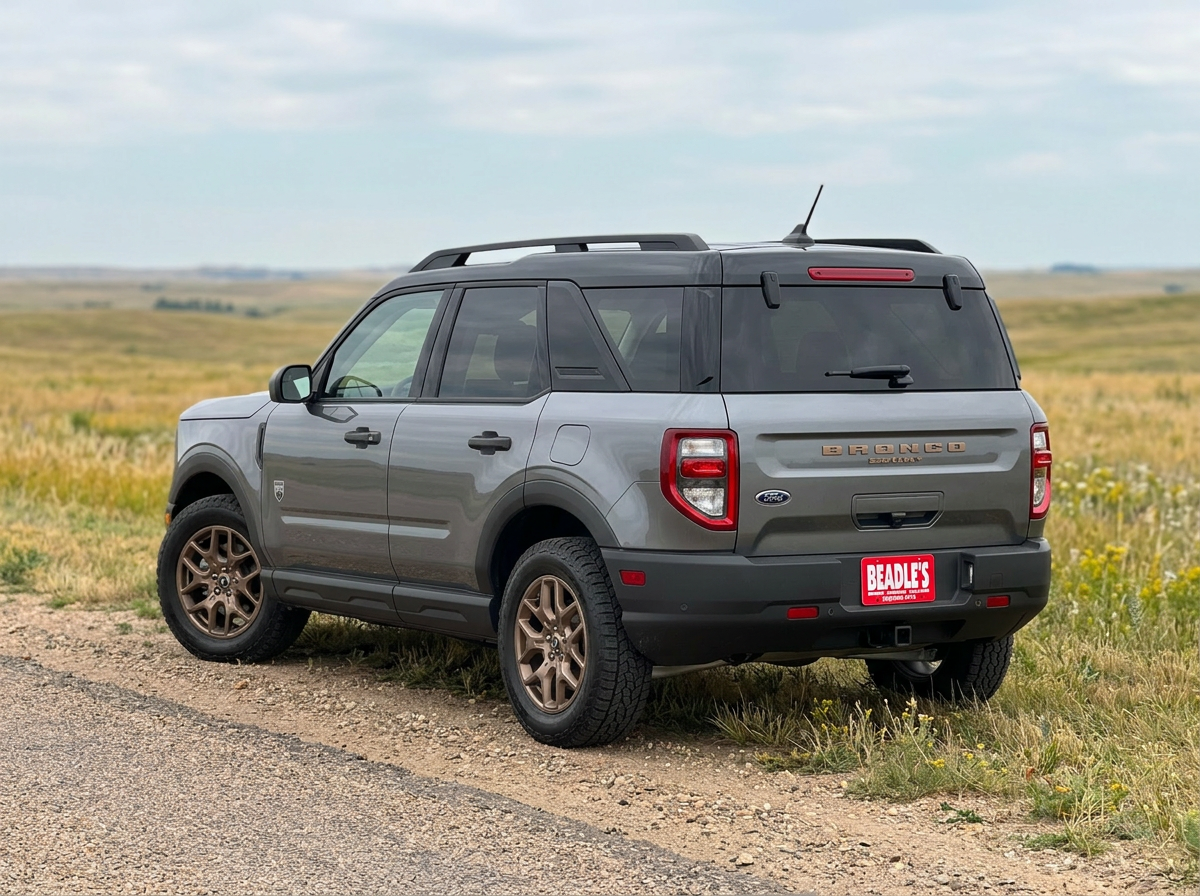
2026 Ford Bronco Sport on South Dakota terrain compared to Subaru Crosstrek and Jeep Compass

2026 Ford Bronco Sport vs Subaru Crosstrek vs Jeep Compass: Which Compact SUV Wins for South Dakota Buyers?

The 2026 Ford Bronco Sport, Subaru Crosstrek, and Jeep Compass are three of the most common compact SUV comparisons in this price class — and for buyers in South Dakota, the right answer looks different than it does for someone shopping in a suburb. Towing capacity, winter traction, off-pavement capability, and interior utility for active use all carry more weight here than they might in a city market. This is a full, honest comparison of how all three stack up across the categories that matter most to Bowdle-area buyers. View Bronco Sport Inventory Pre-Qualify Now In This Guide How Do the Bronco Sport, Crosstrek, and Compass Compare on Paper? Which Has the Best Off-Road Capability for South Dakota? Which Compact SUV Can Tow a Boat or Utility Trailer? How Do All Three Handle South Dakota Winters? Which Has the Most Useful Interior for Active Use? Which Compact SUV Is the Best Value for South Dakota Buyers? How Do the Bronco Sport, Crosstrek, and Compass Compare on Paper? Before diving into the real-world use cases, here's how the three vehicles compare on the core specifications that drive buying decisions in this class: Spec 2026 Ford Bronco Sport 2026 Subaru Crosstrek 2026 Jeep Compass Base Engine 1.5L EcoBoost 3-cyl (180 hp) 2.0L Boxer 4-cyl (152 hp) 2.0L Turbo 4-cyl (200 hp) Top Engine 2.0L EcoBoost (250 hp) 2.5L Boxer 4-cyl (182 hp) 2.0L Turbo (200 hp) Max Towing 2,200 lbs 1,500 lbs 2,000 lbs AWD / 4x4 System Standard 4x4 or Advanced 4x4 with twin-clutch DRSC Symmetrical All-Wheel Drive FWD standard; optional AWD or Rock & Trail 4x4 Off-Road Terrain Modes 5–7 G.O.A.T. modes X-Mode (upper trims) Selec-Terrain (Trailhawk) A/T Tires Standard Yes (Heritage, OB Sasquatch, Badlands) No (all-season standard) Trailhawk only Trail Control Yes (Sasquatch / Badlands) No No Pro Power Onboard Outlet Yes (up to 400W) No No Cargo-Specific Features Slide-out table, MOLLE straps, carabiner hooks Standard cargo area Standard cargo area On paper, the Bronco Sport holds a meaningful edge on towing capacity, terrain modes, and adventure-specific utility features. The Crosstrek's strength is its well-proven Symmetrical AWD and strong reliability reputation. The Compass offers competitive power in its base engine but is somewhat inconsistent in what comes standard at each price point versus what requires an upgrade. Which Has the Best Off-Road Capability for South Dakota? For off-pavement use — gravel roads, two-tracks, pasture lanes, dirt forest roads — the Bronco Sport is the most capable of the three across every tier of the comparison. This is by design: the Bronco Sport was engineered as a purpose-built off-road crossover, while the Crosstrek and Compass are primarily road-oriented vehicles with varying degrees of trail capability added in. Off-Road Category Bronco Sport Crosstrek Compass Gravel road daily driving Excellent Very good Good (with AWD) Trail / forest road use Excellent Moderate Moderate (Trailhawk) Technical rock / obstacle terrain Capable (Badlands: Rock Crawl) Limited Limited Sand / loose terrain modes Sand mode (all trims) Not available Sand mode (Trailhawk) Standard A/T tires available Yes (Heritage, Badlands, Sasquatch) No Trailhawk only The Crosstrek's Symmetrical AWD is genuinely excellent for everyday conditions — it's always-on and very predictable — but it's not a trail-tuned system. Subaru's X-Mode (available on upper Crosstrek trims) adds descent control and torque management for slippery slopes, but it doesn't match the Bronco Sport's dedicated trail calibration or G.O.A.T. mode system. The Compass Trailhawk is the most capable off-road Compass, but the Trailhawk trim requires significant investment to reach that capability level. The base Compass with FWD or basic AWD is a pavement vehicle. The Bronco Sport starts from a position of off-road readiness across most of its lineup, which matters when you're choosing a single vehicle for mixed use in rural South Dakota. Which Compact SUV Can Tow a Boat or Utility Trailer? Towing capacity is where the Bronco Sport separates itself most clearly — and it's a meaningful differentiator for buyers in this part of South Dakota, where heading to Lake Oahe with a boat or running an ATV trailer to the Badlands isn't an occasional thing. Vehicle Max Tow Rating Class II Hitch What It Can Tow 2026 Ford Bronco Sport Up to 2,200 lbs Optional (standard on Badlands, included with Sasquatch Package) Jon boat, 14–16 ft aluminum fishing boat, personal watercraft, small livestock trailer, single ATV/UTV 2026 Subaru Crosstrek 1,500 lbs Optional (dealer-installed) Small kayak trailer, light utility trailer, personal watercraft (lightweight) 2026 Jeep Compass Up to 2,000 lbs Optional Small boat, utility trailer, single ATV (weight-dependent) The Crosstrek's 1,500 lb tow rating is the most limiting of the three — a loaded aluminum fishing boat with motor and gear is typically 1,200–1,600 lbs before adding a trailer, which puts many common setups at or above the Crosstrek's limit. The Compass gets closer to the Bronco Sport, but the Bronco Sport's Class II Tow Package is integrated into the most popular off-road configurations (Badlands standard, included in the Sasquatch Package). If towing a boat to Lake Oahe or running an ATV trailer is part of your regular use, the Bronco Sport is the clear choice in this comparison. The Crosstrek simply doesn't have the tow rating headroom that rural South Dakota use often requires. How Do All Three Handle South Dakota Winters? All three vehicles have AWD or 4x4 capability, which is the baseline requirement for South Dakota winters. But how they manage winter conditions — and how accessible that capability is — differs meaningfully between them. The Crosstrek's Symmetrical AWD is perhaps the most well-known winter system in its class. Subaru has built its entire brand identity around this drivetrain, and it's genuinely excellent on packed snow and ice. It's always engaged and requires no driver input to activate — you just drive. The Crosstrek also tends to have strong winter tire availability because of its loyal following. The Bronco Sport's winter advantage comes from its Slippery G.O.A.T. mode — a purpose-built winter calibration that adjusts throttle, braking, and traction management specifically for slick conditions. Combined with A/T tires standard on several trims, the Bronco Sport is genuinely well-prepared for South Dakota winters. The Badlands and Outer Banks Sasquatch configurations also benefit from the HOSS 2.0 suspension's ability to handle rutted, frozen surfaces better than standard suspension setups. The Compass with AWD handles winter roads adequately but without the same purpose-engineered winter mode. The Trailhawk adds Selec-Terrain with Snow mode, but the base Compass AWD is a more generic all-weather system. The Compass also starts with FWD as standard on lower trims — a meaningful disadvantage in this market that buyers often overlook when comparing sticker prices. South Dakota Winter Features Summary Winter Feature Bronco Sport Crosstrek Compass AWD / 4x4 standard on all trims Yes Yes No — FWD base Dedicated Slippery / Snow mode Yes (Slippery G.O.A.T.) X-Mode (upper trims) Snow mode (Trailhawk) A/T tires available standard Yes (multiple trims) No Trailhawk only Heated seats available Yes (multiple trims) Yes (upper trims) Yes (upper trims) The Crosstrek is a strong winter vehicle and deserves its reputation. But the Bronco Sport's combination of Slippery mode, standard A/T tires on several trims, and purpose-built 4x4 calibration makes it equally well-suited — and the fact that 4x4 is standard across the entire Bronco Sport lineup (the Compass offers FWD as a base option) gives it a reliability advantage for buyers who want winter capability without having to think about it. Which Has the Most Useful Interior for Active Use? Interior utility — how the vehicle is actually configured to support active and working use — is where the Bronco Sport creates the largest separation from both competitors. It's not just about cargo space on paper; it's about the specific features Ford engineered into the cargo area. The Bronco Sport includes a fold-out cargo table that slides out from the rear cargo area, MOLLE strap panels for securing gear, integrated carabiner hooks, a built-in bottle opener, available rubberized flooring for easy cleanup, and — on equipped trims — a 400W Pro Power Onboard outlet for running tools or charging gear. None of these features exist on the Crosstrek or Compass. The Crosstrek and Compass both offer solid, practical cargo areas — but they're designed for conventional use: fold the seat, load your gear, drive. The Bronco Sport's cargo area is designed for people who use their vehicle as a base camp, work vehicle, or gear transport system. That's a meaningful difference for a specific type of buyer. Interior and Cargo Features Comparison Feature Bronco Sport Crosstrek Compass Fold-out cargo table Yes No No MOLLE gear straps Yes No No Pro Power Onboard 400W outlet Yes (upper trims) No No Rubberized cargo flooring Available Not standard Not standard Roof rack / rails standard Standard (multiple trims) Available Available If you're using your compact SUV primarily as a commuter vehicle with occasional weekend use, all three are functional. If you're regularly packing for hunting trips, hauling gear to the range, setting up a trailhead basecamp, or running tools to a jobsite, the Bronco Sport's purpose-built cargo features are genuinely useful in ways the Crosstrek and Compass aren't designed to match. Which Compact SUV Is the Best Value for South Dakota Buyers? Value depends entirely on what you're optimizing for. Here's how each vehicle creates value for different buyer priorities: Buyer Priority Best Pick Why Towing a boat or trailer Bronco Sport 2,200 lbs max; Crosstrek caps at 1,500 lbs Off-road trail capability Bronco Sport G.O.A.T. modes, A/T tires, HOSS 2.0 (upper trims), Trail Control Long-term reliability reputation Crosstrek Subaru's AWD track record is industry-proven over decades Active cargo / gear hauling utility Bronco Sport Slide-out table, MOLLE, Pro Power — no equivalent on competitors Lowest entry price point Crosstrek or Compass Base pricing can be lower, though comparisons must account for feature differences South Dakota winter + off-pavement daily use Bronco Sport 4x4 standard on all trims, Slippery mode, A/T tires available throughout lineup For South Dakota buyers who need a vehicle that does more than just drive to town and back — towing, off-pavement work, gear hauling, winter confidence — the Bronco Sport delivers more capability per dollar at each competitive price point. The Crosstrek earns its reputation for reliability and is a legitimate alternative for buyers whose primary use is road-biased. The Compass requires more careful trim-level comparison to arrive at a competitive configuration, and its FWD base is a consideration in this climate. Key Takeaways The Bronco Sport leads on towing (2,200 lbs) vs. Crosstrek (1,500 lbs) and Compass (2,000 lbs) — a meaningful difference for Lake Oahe boat owners or ATV trailer users. 4x4 is standard on every Bronco Sport trim; the Compass starts with FWD on lower trims, which requires buyers to step up to get all-weather drivetrain capability. The Bronco Sport's G.O.A.T. mode system — including Slippery mode for winter — is the most purpose-built terrain management system in this comparison. The Crosstrek's Symmetrical AWD is excellent for everyday winter driving and has a strong long-term reliability reputation — it's the most credible alternative for road-primary buyers. The Bronco Sport's cargo features — slide-out table, MOLLE straps, Pro Power outlet — have no equivalent on either the Crosstrek or Compass at any trim level. For the way most South Dakota buyers actually use their vehicles — mixed on/off pavement, towing, winter driving, gear hauling — the Bronco Sport is the strongest all-around fit in this comparison. Frequently Asked Questions Is the Subaru Crosstrek more reliable than the Ford Bronco Sport? The Crosstrek has a well-established long-term reliability track record built over multiple generations of Subaru's Symmetrical AWD platform. The Bronco Sport is a newer nameplate (introduced 2021), so there's less historical data over the same time horizon. Subaru consistently scores well in owner satisfaction and reliability surveys, which is a real consideration for buyers who prioritize long-term ownership costs. That said, the Bronco Sport's Ford platform is not unproven — the underlying engineering is shared with the global Ford small SUV lineup. Can the Crosstrek tow enough for a jon boat to Lake Oahe? Possibly, but you'd be close to the limit. The Crosstrek's maximum tow rating is 1,500 lbs. A basic aluminum jon boat (14 ft, with motor) typically weighs 500–700 lbs, and a single-axle trailer adds another 300–500 lbs. A loaded setup with fuel, gear, and motor can easily reach 1,200–1,500 lbs — which puts you right at the Crosstrek's rated limit with no headroom. The Bronco Sport's 2,200 lb rating gives you substantially more margin for the same types of trailers. Does the Jeep Compass come with 4x4 as standard? No. The base Jeep Compass Sport starts with front-wheel drive. All-wheel drive is available on higher trim levels, and the more capable Rock & Trail 4x4 system is available on the Trailhawk. For South Dakota buyers who need all-weather capability as a given, compare Compass AWD or Trailhawk trim pricing — not the FWD base price — when doing an apples-to-apples comparison with the Bronco Sport or Crosstrek. Which has the better fuel economy — Bronco Sport, Crosstrek, or Compass? The Crosstrek generally leads in fuel economy in this comparison, particularly with its base 2.0L Boxer. The Bronco Sport's 1.5L EcoBoost is competitive in mixed driving, while the 2.0L EcoBoost (Badlands) trades some efficiency for performance. The Compass is comparable to the Bronco Sport in most configurations. For buyers doing long highway miles across South Dakota, the Crosstrek's fuel economy advantage may be worth factoring into the long-term cost comparison. Is the Bronco Sport actually worth more than the Crosstrek or Compass for South Dakota use? For buyers who tow, go off-pavement regularly, or need purpose-built cargo utility, yes — the Bronco Sport's capability advantages in those categories create genuine value that the Crosstrek and Compass don't match. If your use is primarily highway and city driving with light weather needs, the Crosstrek's reliability reputation and lower entry pricing may make more sense for your situation. The honest answer is: it depends on your use case, not just the sticker price. The Bottom Line for South Dakota Shoppers These three vehicles serve similar market positions but are built with different buyers in mind. The Crosstrek is a well-rounded, reliable AWD crossover that does everything adequately and nothing dramatically. The Compass is a capable daily driver that requires trim-level navigation to get to its best configurations. The Bronco Sport is built for people who need their compact SUV to do more: tow more, go further off-road, carry more gear, and handle South Dakota winters with purpose-engineered tools rather than just adequate all-weather programming. If you're shopping in a market where you rarely leave pavement and never tow, the Crosstrek deserves serious consideration. If your driving life looks like most of ours out here — mixed pavement and gravel, seasonal towing, actual winters — the Bronco Sport is the vehicle this comparison is built around. Ready to see how the Bronco Sport lineup breaks down from Big Bend through Badlands? Our 2026 Ford Bronco Sport guide at Beadle Ford covers every trim, every package, and every configuration in detail. View Bronco Sport Inventory Pre-Qualify Now Contact Us About the Author Lexy Tabbert Lexy Tabbert is an automotive content writer and researcher at Beadle Ford in Bowdle, SD. She covers Ford lineup comparisons, regional buying guides, towing specs, and off-road capability breakdowns to help South Dakota shoppers cut through manufacturer marketing and find the vehicle that actually fits how they live and work. She's not neutral in this comparison and isn't pretending to be.

2026 Ford Bronco Sport Heritage with Oxford White roof and retro styling in South Dakota

The 2026 Ford Bronco Sport Heritage: White Roof, Plaid Seats, A/T Tires Standard — Who This Trim Is Actually Built For

The 2026 Ford Bronco Sport Heritage is the most visually distinctive trim in the lineup — and the most misunderstood. Buyers see the Oxford White contrasting roof and the plaid seats and assume it's a fashion trim built for looks and nothing more. But the Heritage also comes standard with all-terrain tires, retro-inspired exterior cues drawn from the original 1966 Bronco, and unique color combinations you can't get on any other trim. Here's what actually sets the Heritage apart, who it's built for, and whether it belongs on your short list. View Bronco Sport Inventory Pre-Qualify Now In This Guide What Makes the 2026 Bronco Sport Heritage Different From Every Other Trim? Is the Oxford White Roof Standard or an Option? Are the Heritage's A/T Tires Enough for Off-Road Use? Heritage vs. Heritage Limited: What Do You Actually Get for the Upgrade? Heritage vs. Outer Banks: Same Price Range, Very Different Character Who Is the 2026 Bronco Sport Heritage Actually Built For? What Makes the 2026 Bronco Sport Heritage Different From Every Other Trim? The Heritage trim occupies a unique spot in the Bronco Sport lineup. It's positioned above Big Bend but below Outer Banks in terms of features, yet it stands out from both because of its deliberate throwback styling — drawing direct visual cues from the first-generation Ford Bronco that debuted in 1966. What makes the Heritage distinctly its own: Heritage-Exclusive Feature What Makes It Unique Oxford White Contrasting Hardtop Roof Standard on every Heritage — not an option, not an upgrade; the white roof is built into the trim identity Plaid Cloth Seat Inserts Tartan plaid pattern referencing the original Bronco's interior; not available on any other Bronco Sport trim Heritage Badging Distinctive "Bronco" script fender badges and retro-styled exterior badging Unique Exterior Color Combinations Heritage-exclusive two-tone body colors not offered on other trims, including Robin's Egg Blue and Yellowstone Metallic All-Terrain Tires Standard A/T tires included at the base Heritage trim level — Big Bend uses highway-terrain tires Body-Color Front Fender Flares Matched to body paint rather than black; contributes to the Heritage's distinct two-tone look No other Bronco Sport trim gets the plaid seats or the white roof as a standard feature. They aren't options you can add to a Big Bend or Outer Banks — they exist only on the Heritage and Heritage Limited trims. If this look appeals to you, these are the only two ways to get it. Is the Oxford White Roof Standard or an Option? The Oxford White contrasting roof is standard on the Heritage. It's not an option you select, and it's not something you can delete from the build. Every 2026 Bronco Sport Heritage leaves the factory with the white hardtop, regardless of which body color you choose. This is an important detail for buyers who see the Heritage at a dealer and wonder whether they can order one in a single solid color without the white roof — the answer is no. The two-tone look is fundamental to the trim's identity, not an add-on. The body-color exterior combined with the Oxford White roof is what creates the Heritage's visual personality, and it's styled to echo the early Broncos that came in two-tone white-over-body-color schemes. In practice, this works well with most of the Heritage's available body colors. Ford specifically curated the Heritage's color palette to complement the white roof, so combinations like Eruption Green with white, Robin's Egg Blue with white, and Yellowstone Metallic with white all look intentional rather than mismatched. If you want a Bronco Sport without the white roof, the Big Bend, Outer Banks, or Badlands trims give you standard solid or monochromatic roof options. Are the Heritage's A/T Tires Enough for Off-Road Use? The Heritage comes with P225/60R18 all-terrain tires as standard equipment — the same A/T compound found on several of the higher trims. This is a meaningful upgrade over the Big Bend's highway-terrain tires, which prioritize ride comfort and fuel economy over grip on loose or slick surfaces. What the Heritage's A/T tires help with versus what they don't: A/T Tires Help With... Gravel roads and two-track pasture lanes Light trail use and forest roads Snow and ice traction in South Dakota winters Wet grass and soft ground near water or fields Muddy access roads after spring rain A/T Tires Won't Replace... Advanced 4x4 with twin-clutch torque vectoring (requires Sasquatch or Badlands) HOSS 2.0 off-road suspension for technical terrain Trail Control for low-speed technical obstacles Rock Crawl mode calibration (Badlands exclusive) The Heritage's 4x4 system is the standard configuration — capable and reliable for the vast majority of off-pavement use in South Dakota, but not the same as the Advanced 4x4 twin-clutch system on the Outer Banks Sasquatch or Badlands. For buyers who need a capable crossover that handles gravel lanes and winter roads between Bowdle and the next town over, the Heritage's standard 4x4 and A/T tires are genuinely well-suited. For buyers planning serious rock-crawling or technical trail runs, the Badlands is the more appropriate tool. The key point: the Heritage is more capable in real-world South Dakota conditions than its retro styling might suggest — the A/T tires are a functional upgrade, not just an aesthetic detail. Heritage vs. Heritage Limited: What Do You Actually Get for the Upgrade? The Heritage Limited is the premium version of the retro-themed lineup. Both share the signature Oxford White roof and plaid seat identity, but the Limited adds a meaningful set of interior and technology upgrades. Feature Heritage Heritage Limited Oxford White Contrasting Roof Standard Standard Plaid Seat Inserts Cloth plaid Plaid with premium trim A/T Tires Standard Yes Yes Heated Front Seats Not standard Available Remote Start Not standard Available Upgraded Wheels Standard alloys Premium finish alloys 12.3" Digital Cluster Display Not standard Available Exclusive Color Options Heritage palette Heritage + Limited-exclusive colors The Heritage Limited is the better fit if you're buying the Heritage primarily for the retro look but want the comfort features — especially heated seats and remote start — that make a Bowdle winter more bearable. If the base Heritage's price point is the draw and you don't need the cold-weather comfort features, the standard Heritage delivers the same visual personality at a lower entry price. Heritage vs. Outer Banks: Same Price Range, Very Different Character The Heritage Limited and the Outer Banks land in a similar price bracket, which means buyers often find themselves choosing between them. They're very different vehicles in terms of personality and feature priorities. Priority Heritage / Heritage Limited Outer Banks Retro / throwback styling Designed for it Modern styling Premium audio (B&O) Not available Available Panoramic fixed glass roof Not available Available Unique plaid seats + white roof Standard Not available Upgrade path to Sasquatch Package Not available Available (with Tech Package) Heritage-exclusive color palette Yes No The Heritage wins on personality and uniqueness. The Outer Banks wins on upgrade flexibility and premium interior options. If you're drawn to the Heritage because of the way it looks, that's a completely valid reason — there's no other Bronco Sport that gives you that aesthetic. If you're drawn to it for practical capability, just be aware that the Outer Banks with the Sasquatch Package can go significantly further off-road when properly equipped. Who Is the 2026 Bronco Sport Heritage Actually Built For? The Heritage is a confident choice for a specific kind of buyer. It's not trying to be the most capable off-road vehicle in the lineup, and it's not trying to be the most loaded-up comfort cruiser. It's built for buyers who care about how their vehicle looks, value individuality, and want a capable daily driver that handles South Dakota's roads without being a cookie-cutter crossover. The Heritage Is the Right Pick If You... Love the original Bronco's look and want that lineage reflected in your vehicle Want a Bronco Sport that looks genuinely different from every other one on the road Drive gravel or dirt roads regularly and want A/T tires without paying for full off-road hardware Want a two-tone color combination that works out of the factory — no custom paint needed Are buying for yourself, not for what someone else thinks is the most "capable" trim Want the Heritage Limited's cold-weather features (heated seats, remote start) at a mid-range price The Heritage is not the right fit if your primary goal is maximum off-road performance — the Badlands does that more effectively. It's also not the right fit if premium audio or a panoramic roof are top priorities — those belong to the Outer Banks. But for buyers who want something that turns heads at the trailhead and at the grocery store equally, the Heritage delivers that in a way none of the other trims can match. For more detail on where every trim sits in terms of standard features, pricing, and drivetrain options, our full 2026 Bronco Sport trim comparison guide breaks it all down side-by-side. Key Takeaways The Oxford White contrasting roof is standard on every 2026 Bronco Sport Heritage — it's not an option and cannot be deleted from the build. Plaid cloth seat inserts are Heritage and Heritage Limited exclusive — they are not available on any other Bronco Sport trim. The Heritage comes standard with all-terrain tires, which is a functional upgrade over Big Bend's highway-terrain tires for gravel roads and South Dakota winters. The Heritage uses the standard 4x4 system — the Advanced 4x4 with twin-clutch torque vectoring requires the Sasquatch Package (Outer Banks only) or Badlands trim. Heritage Limited adds heated seats, remote start, upgraded wheels, and additional technology features — worth the step-up for buyers who need cold-weather comfort in South Dakota. The Heritage is built for buyers who value retro character and visual uniqueness — not for those optimizing for maximum off-road performance or premium interior luxury. Frequently Asked Questions Can I get a Bronco Sport Heritage without the white roof? No. The Oxford White contrasting hardtop is standard on every 2026 Bronco Sport Heritage and Heritage Limited. It's a defining feature of these trims and cannot be removed or replaced with a body-color roof. If you want a Bronco Sport without the white roof, the Big Bend, Outer Banks, and Badlands are your options. Are the plaid seats available on other trims? No. The tartan plaid seat inserts are exclusive to the Heritage and Heritage Limited trims. They cannot be added to the Big Bend, Outer Banks, or Badlands through any package or option. If the plaid seats are part of your decision, these two trims are the only way to get them. Is the Heritage more capable off-road than Big Bend? The Heritage comes with all-terrain tires as standard, while the Big Bend uses highway-terrain tires. That A/T tire difference gives the Heritage a meaningful advantage on gravel, loose terrain, and snow. However, both trims share the same standard 4x4 system — neither has the Advanced 4x4 with twin-clutch torque vectoring found on the Outer Banks Sasquatch and Badlands. For light to moderate off-road use, the Heritage is better equipped than Big Bend. For technical trail work, the Badlands is a more capable platform. What colors are available on the Heritage? The Heritage is available in a curated palette that includes Heritage-exclusive colors such as Robin's Egg Blue, Yellowstone Metallic, and Eruption Green, in addition to some colors shared across the lineup. All Heritage colors are paired with the Oxford White hardtop roof. Confirm specific color availability for the current model year with our team, as production cuts can affect availability on lot versus order. Does the Heritage come with heated seats? Heated seats are not standard on the base Heritage trim. They are available on the Heritage Limited through its available packages. If heated seats are a priority for South Dakota winters, the Heritage Limited or the step up to Outer Banks are the paths to get them configured into your build. My Take on the Heritage for Bowdle Buyers The Heritage is the Bronco Sport I'd point you toward if you've been staring at the same five gray crossovers in every parking lot and want something that looks like it has a point of view. The white roof is polarizing — some buyers love it immediately, others aren't sure what to make of it. But once you see it in Robin's Egg Blue with the white top, you either get it or you don't. What I appreciate from a practical standpoint is that the A/T tires are standard — so you're not sacrificing capability to get the retro look. On the gravel roads between here and the next county line, that matters. The Heritage Limited adds enough cold-weather features to make it a comfortable year-round daily driver in South Dakota without a lot of package stacking. For a full breakdown of how the Heritage stacks up against every other Bronco Sport trim in the 2026 lineup, our 2026 Ford Bronco Sport guide at Beadle Ford has the full comparison with pricing and standard features for each trim level. View Bronco Sport Inventory Pre-Qualify Now Contact Us About the Author Lexy Tabbert Lexy Tabbert is an automotive content writer and researcher at Beadle Ford in Bowdle, SD. She covers Ford lineup updates, trim comparisons, package guides, and regional buying content to help South Dakota shoppers make confident decisions. She has strong opinions about two-tone roof color combinations and is not sorry about it.

2026 Ford Bronco Sport Outer Banks with Sasquatch Package in South Dakota

Outer Banks Sasquatch vs Badlands: What the 2026 Bronco Sport Sasquatch Package Adds and Who It's Actually For

The 2026 Ford Bronco Sport Sasquatch Package turns the Outer Banks trim into a legitimate off-road machine — but it's not the same thing as buying a Badlands. If you're deciding between adding the Sasquatch Package to an Outer Banks or stepping up to the Badlands outright, the answer depends on what you're actually planning to do with the vehicle and how much the Outer Banks' interior upgrades matter to you. Here's what the Sasquatch Package adds, what it can't change, and which buyer each option is really built for. View Bronco Sport Inventory Pre-Qualify Now In This Guide What Is the Sasquatch Package on the 2026 Bronco Sport? What Does the Sasquatch Package Actually Include? Outer Banks Sasquatch vs. Badlands: Full Comparison Does the Outer Banks Sasquatch Get Rock Crawl and Rally Modes? Is the Sasquatch Package Worth It on the Outer Banks? Who Should Buy the Outer Banks Sasquatch vs. the Badlands? What Is the Sasquatch Package on the 2026 Bronco Sport? The Sasquatch Package (option code 67A) is a factory off-road upgrade available exclusively on the 2026 Bronco Sport Outer Banks trim. It cannot be added to Big Bend, Heritage, or Heritage Limited — and it has no place on the Badlands, because the Badlands already includes most of its hardware as standard equipment. The package was built to give Outer Banks buyers access to Badlands-tier off-road hardware without giving up the Outer Banks' comfort and luxury features. You get the Advanced 4x4 system with twin-clutch rear axle, HOSS 2.0 off-road suspension, aggressive A/T tires, Trail Control, recovery hooks, and underbody protection — all on a trim that also offers available B&O audio, a panoramic fixed glass roof, and leather-trimmed seating. One important note: the Sasquatch Package requires the Outer Banks Tech Package (option code 96T) to be ordered first. For Bowdle buyers who want a capable trail rig that can also serve as a comfortable vehicle for longer South Dakota road trips, the Outer Banks Sasquatch is worth a serious look — as long as you understand exactly what it does and doesn't give you. What Does the Sasquatch Package Actually Include? The Sasquatch Package is one of the most content-rich factory option packages on the Bronco Sport lineup. Here's what's bundled in: Feature What It Means Advanced 4x4 with Twin-Clutch DRSC Active torque-vectoring rear axle — the same system standard on Badlands HOSS 2.0 Off-Road Suspension High-performance Off-Road Stabilization & Suspension with Bilstein position-sensitive dampers Trail Control Low-speed cruise control that manages throttle and braking over technical terrain Trail One-Pedal Drive Regenerative deceleration for precise throttle control at slow off-road speeds Pro Power Onboard 400W 110V outlet with up to 400 watts for power tools, camp gear, or electronics 17" Ebony Black Aluminum Wheels Larger-diameter wheels replacing Outer Banks' standard alloys P235/65R17 All-Terrain Tires All-terrain compound for improved grip on gravel, dirt, snow, and soft ground High Clearance Front Fender Flares Wider clearance to accommodate bigger tires and improve approach angles Front Brush Guard with Recovery Hooks Black MIC (Molded-In Color) construction; integrated front recovery points Black MIC Front & Rear Bumpers Replaces body-color bumpers with a more rugged, trail-ready look Rear Recovery Hooks — 2 D-rings Frame-mounted rear anchor points for recovery straps or tow lines Class II Trailer Tow Package Required for towing above 1,500 lbs; adds hitch receiver and wiring harness 12.3" Digital Instrument Cluster Full-color reconfigurable display replacing analog gauges Rubberized Floor Covering Easier cleanup after muddy or wet adventures Underbody Protection Front and rear skid plates to guard against rocks and trail debris That's a significant list. The Sasquatch Package essentially bolts Badlands-level off-road hardware onto the Outer Banks platform — giving you access to two capability sets that normally live on separate trim lines. The remaining question is what it leaves out, which is covered in the next section. Outer Banks Sasquatch vs. Badlands: Full Comparison On the surface, the Outer Banks Sasquatch and the Badlands look nearly identical once the package is installed. But there are meaningful differences — primarily in the engine room and the G.O.A.T. mode system — that matter to serious off-road buyers. Feature Outer Banks + Sasquatch Badlands Base Engine 1.5L EcoBoost (180 hp / 190 lb-ft) 2.0L EcoBoost (250 hp / 280 lb-ft) 2.0L Engine Available? Yes — optional add-on Standard, included Advanced 4x4 with Twin Clutch Yes (via Sasquatch Package) Standard HOSS 2.0 Suspension Yes (via Sasquatch Package) Standard Trail Control + Trail One-Pedal Yes (via Sasquatch Package) Standard P235/65R17 A/T Tires Yes (via Sasquatch Package) Standard Total G.O.A.T. Modes 5 modes 7 modes Rock Crawl Mode No Yes Rally Mode No Yes Leather-Trimmed Seating Available Available (heated) B&O Sound System Available Not available Panoramic Fixed Glass Roof Available Not available Pro Power Onboard 400W Yes (via Sasquatch Package) Standard The short version: the Outer Banks Sasquatch gives you Badlands hardware while keeping the Outer Banks' luxury features, but starts with the 1.5L engine and lacks Rock Crawl and Rally modes. The Badlands comes with the 2.0L, Rock Crawl, and Rally as standard — but trades away the panoramic roof and B&O audio options. Does the Outer Banks Sasquatch Get Rock Crawl and Rally Modes? No. Rock Crawl and Rally are exclusive to the Badlands trim and cannot be unlocked by any package or option on the Outer Banks. This is one of the most important differences between the two configurations — and the one buyers most often overlook when spec-shopping. The Outer Banks Sasquatch gets the five standard G.O.A.T. (Goes Over Any Type of Terrain) modes: Normal, Eco, Sport, Slippery, and Sand. These are genuinely capable across a wide range of conditions. But Rock Crawl and Rally require the Badlands' powertrain calibration and the 2.0L engine's specific torque curve — neither of which transfers to the Outer Banks through a package alone. G.O.A.T. Mode Availability by Configuration Mode Outer Banks Sasquatch Badlands Normal Yes Yes Eco Yes Yes Sport Yes Yes Slippery Yes Yes Sand Yes Yes Rock Crawl No Yes Rally No Yes If you're regularly running rocky terrain in the Badlands (the geographic region, not the trim) or want Rock Crawl's precise throttle management for technical obstacles, the Badlands trim is the right call. If your off-roading consists of trail riding, forest roads, pasture tracks, or winter traction across western South Dakota, the Outer Banks Sasquatch's five modes are fully up to the task. Is the Sasquatch Package Worth It on the Outer Banks? For the right buyer, yes. The Sasquatch Package bundles gear that would cost substantially more to source aftermarket — an upgraded 4x4 system, skid plates, recovery hooks front and rear, A/T tires, upgraded suspension, Pro Power Onboard, Trail Control, and the Class II tow package. Buying those components separately would run well past the package price, and they wouldn't be factory-integrated or covered under your Ford warranty. The value question is different depending on your use case: Worth It If You... Want the Outer Banks' interior upgrades and off-road hardware in a single build Plan to tow a jon boat, ATV trailer, or utility load (up to 2,200 lbs with the 2.0L) Drive gravel, pasture, or forest roads regularly but don't need Rock Crawl mode Want A/T tires and capable 4x4 for South Dakota winters without buying aftermarket Want the 400W outlet for worksites, hunting camp, or charging gear on the road Skip It If You... Primarily drive pavement and rarely go off-road Need Rock Crawl or Rally modes for technical terrain Want the 2.0L engine as standard without a separate upgrade Are comparing total cost to a Badlands without factoring in the required Tech Package One important consideration: the Sasquatch Package requires the Outer Banks Tech Package (96T) to be ordered first, which means the actual entry cost includes both packages stacked. Build your full configuration before comparing it to Badlands pricing — the sticker difference is often smaller than buyers expect. Who Should Buy the Outer Banks Sasquatch vs. the Badlands? This decision usually comes down to one core question: what matters more to you — the interior experience or the maximum off-road performance ceiling? Here's how to map your use case to the right build: Use Case Outer Banks Sasquatch Badlands Weekend trail riding + comfortable daily commute Better fit Also capable Serious rock crawling or technical off-road routes Limited — no Rock Crawl mode Better fit Long road trips, premium audio, comfort features Better fit Fewer luxury options Towing a boat to Lake Oahe or a small utility trailer Better fit (Class II included) Also capable Maximum horsepower and torque without upgrades Requires separate 2.0L add-on Better fit — 2.0L standard South Dakota winter driving and gravel roads year-round Strong Strong Our full 2026 Bronco Sport trim comparison guide breaks down all five trims side-by-side — including base prices, standard features, and which engine each gets — so you can see exactly where the Outer Banks Sasquatch and the Badlands land against each other before you make a decision. Key Takeaways The Sasquatch Package (67A) is available only on the Outer Banks trim and requires the Tech Package (96T) first — it cannot be added to other trims. It includes Advanced 4x4 with twin clutch, HOSS 2.0 suspension, A/T tires, Trail Control, Trail One-Pedal Drive, Pro Power 400W, front brush guard, front and rear recovery hooks, underbody protection, and the Class II Tow Package. The Outer Banks Sasquatch does NOT include Rock Crawl or Rally modes — those remain exclusive to the Badlands trim regardless of packages ordered. The Outer Banks base engine is the 1.5L EcoBoost (180 hp); the 2.0L is available as a separate upgrade but is not included with the Sasquatch Package. The Badlands includes the 2.0L EcoBoost, Rock Crawl, and Rally as standard — but the panoramic roof and B&O audio are not available on Badlands. Factor in both the Tech Package and Sasquatch Package when budgeting — the combined cost may put you close to Badlands pricing, so run both configurations before committing. Frequently Asked Questions Can I add the Sasquatch Package to any Bronco Sport trim? No. The Sasquatch Package (67A) is only available on the Outer Banks for the 2026 model year. It cannot be added to Big Bend, Heritage, Heritage Limited, or Badlands. It also requires the Outer Banks Tech Package (96T) as a prerequisite order. Does the Sasquatch Package include Rock Crawl mode? No. Rock Crawl is a Badlands-exclusive G.O.A.T. mode and is not available on the Outer Banks regardless of which packages are added. The Outer Banks Sasquatch receives five G.O.A.T. modes: Normal, Eco, Sport, Slippery, and Sand. Does the Outer Banks Sasquatch automatically come with the 2.0L engine? No. The Outer Banks base engine is the 1.5L EcoBoost three-cylinder (180 hp, 190 lb-ft). The 2.0L EcoBoost is available as a separate option on the Outer Banks but is not bundled with the Sasquatch Package. If you want the 2.0L, you need to add it separately when you configure your order. Is the Outer Banks Sasquatch more expensive than the Badlands? It depends on how you configure both. The Outer Banks requires the Tech Package before the Sasquatch Package can be added, meaning your real starting point is Outer Banks base + Tech Package + Sasquatch Package. When stacked, the total is often close to a similarly equipped Badlands. Compare both full builds before committing — the gap is usually smaller than buyers expect. Can the Outer Banks Sasquatch tow a boat to Lake Oahe? Yes. With the Class II Trailer Tow Package included in the Sasquatch bundle, the 2026 Bronco Sport Outer Banks Sasquatch is capable of towing up to 2,200 lbs when properly equipped with the 2.0L EcoBoost. A jon boat, small aluminum fishing boat, or personal watercraft trailer is well within that range. Confirm your loaded boat-and-trailer weight before you head to the ramp. Bottom Line for Bowdle Buyers I've walked a lot of buyers through the Outer Banks Sasquatch vs. Badlands decision, and it almost always comes down to one question: how often are you on technical rocky terrain versus gravel roads, dirt trails, and slick winter conditions? For most buyers in this area — running fence lines, heading out to hunting ground, pulling a boat to Lake Oahe, or managing winter roads between towns — the Outer Banks Sasquatch is genuinely well-equipped. The hardware is serious, and the Outer Banks interior makes those longer trips a lot more comfortable. But if Rock Crawl matters to you, or you want the 2.0L as a given rather than an add-on, the Badlands is the cleaner answer. Either way, you're looking at one of the most capable compact SUVs in this price class for the way South Dakotans actually use their vehicles. For a full side-by-side of all five trims — including standard features, engine options, and package breakdowns — our 2026 Ford Bronco Sport guide at Beadle Ford has everything you need to finalize your configuration. View Bronco Sport Inventory Pre-Qualify Now Contact Us About the Author Lexy Tabbert Lexy Tabbert is an automotive content writer and researcher at Beadle Ford in Bowdle, SD. She covers Ford lineup updates, trim comparisons, package breakdowns, and regional buying guides to help South Dakota shoppers make confident vehicle decisions. When she's not comparing option codes, she's watching the roads between here and the Badlands — the geographic ones, not the trim.
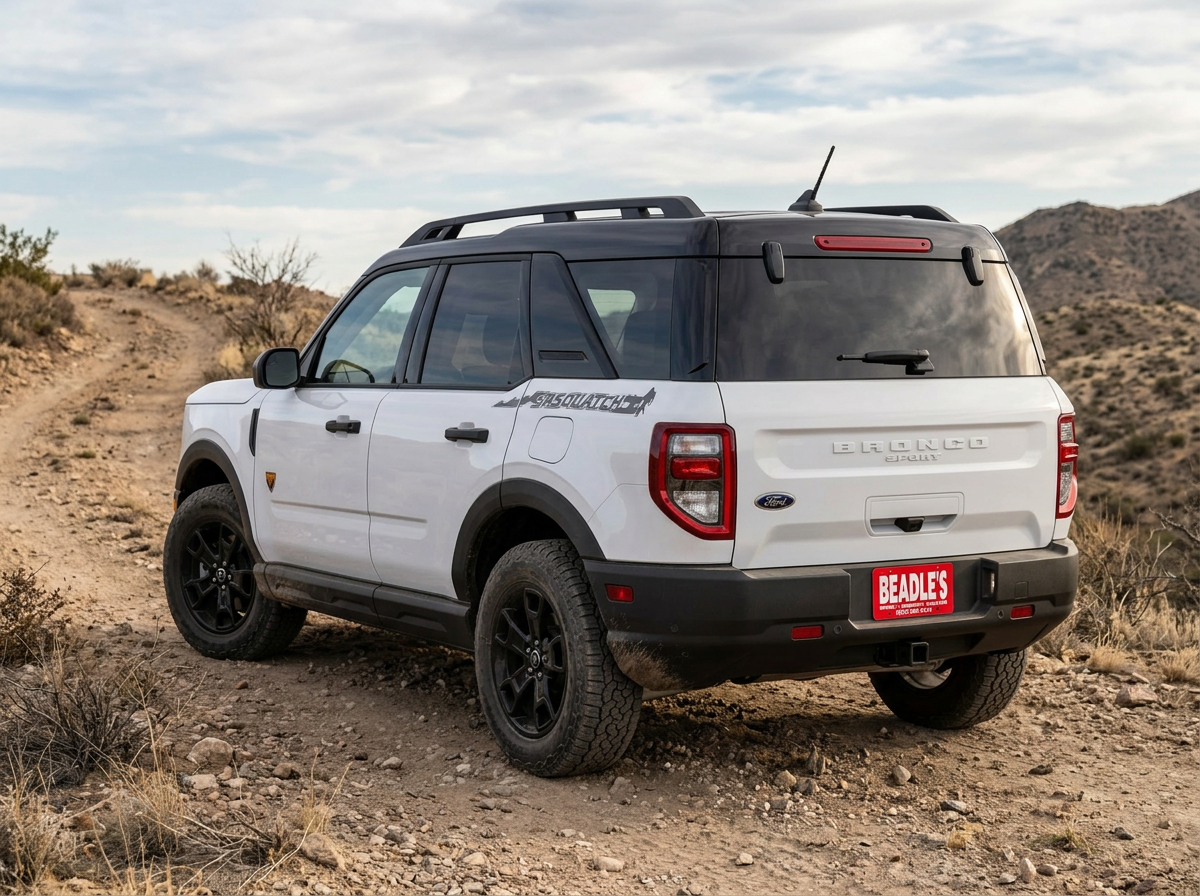
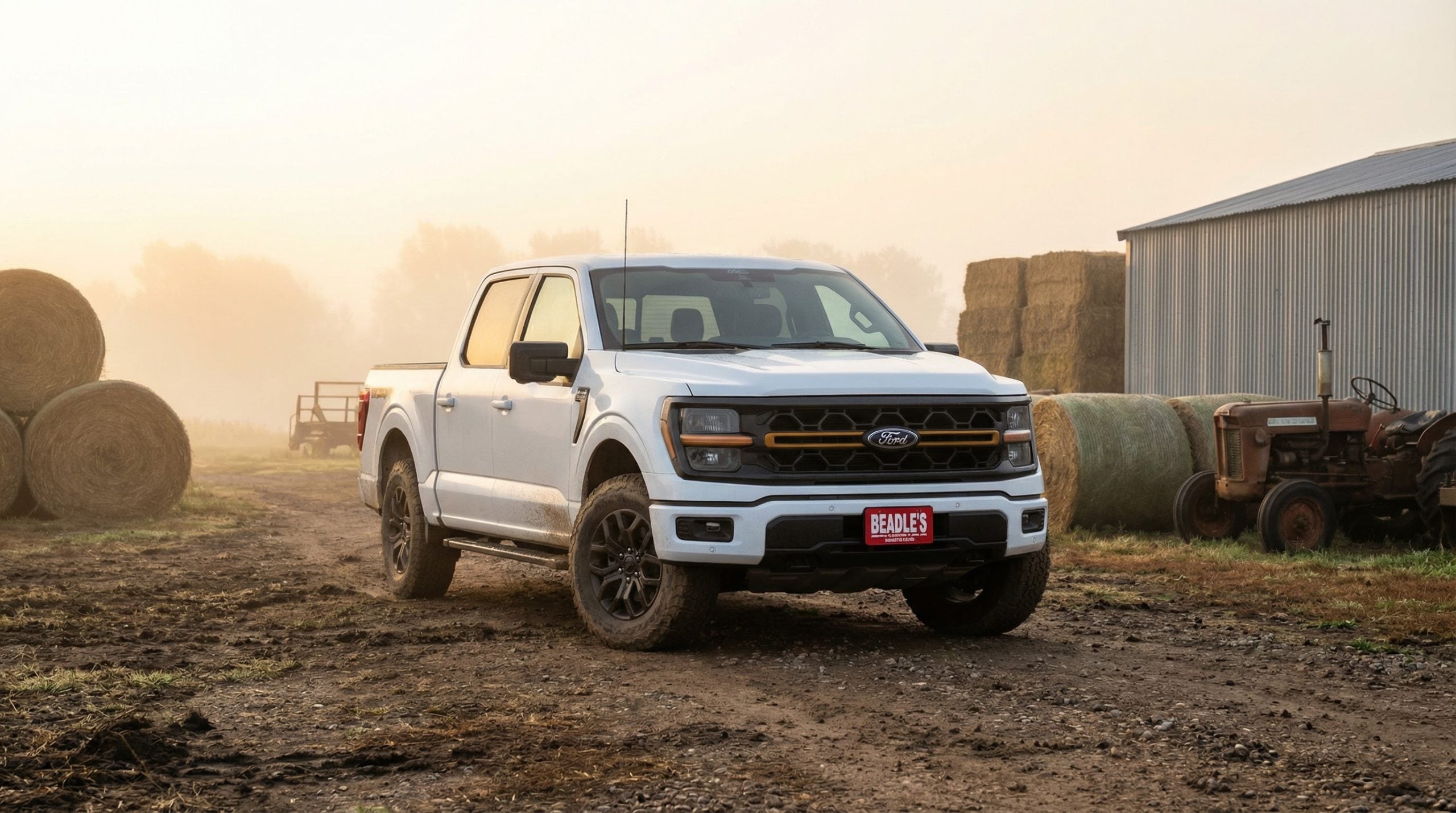
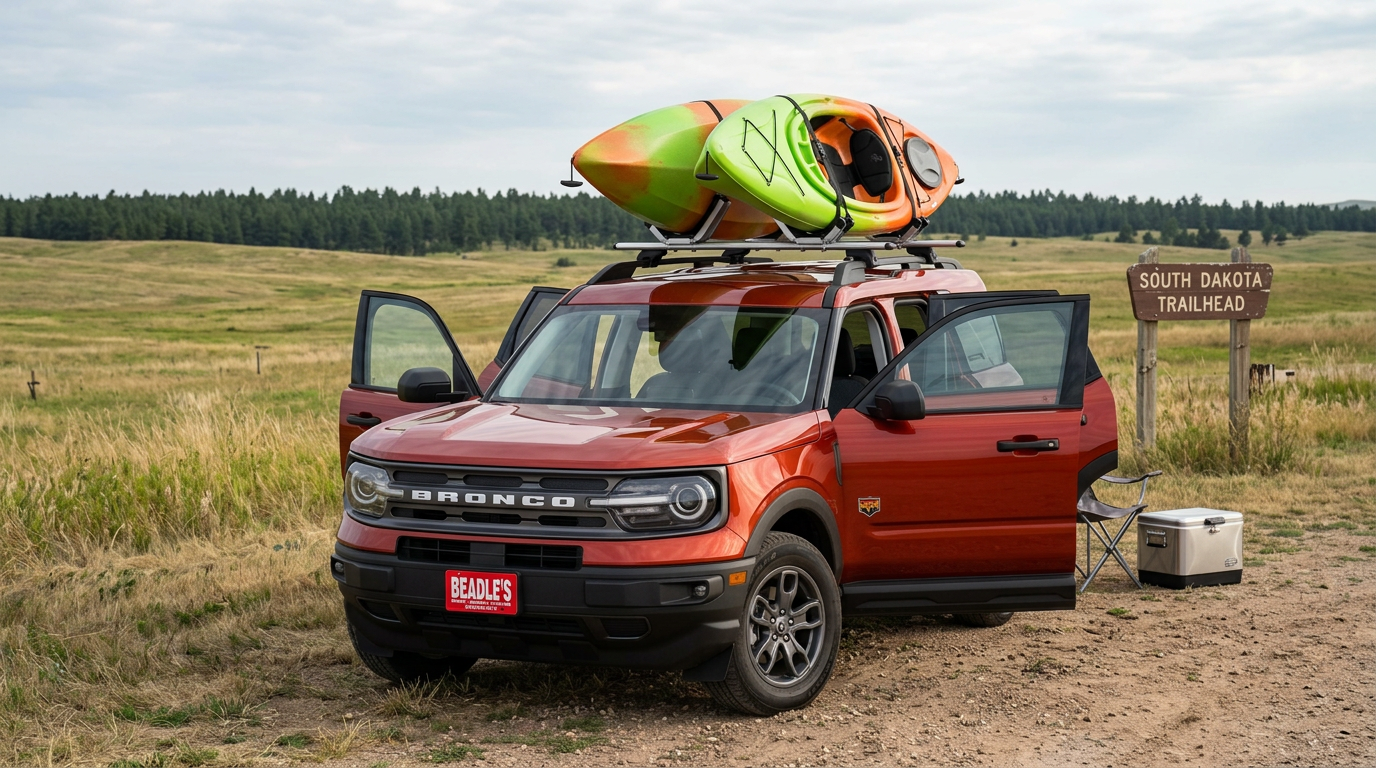
2026 Ford Bronco Sport at trailhead loaded roof rails South Dakota

The 2026 Ford Bronco Sport's Cargo and Adventure Gear Features: Slide-Out Table, MOLLE Straps, and Pro Power Explained

The 2026 Ford Bronco Sport isn't just built for off-road terrain — it's designed for the gear you bring along. Ford engineered specific cargo and adventure features into the Bronco Sport's architecture from the start: a slide-out cargo table, MOLLE straps on the liftgate, roof-rack side rails, carabiner tie-down hooks, and a cargo area built to accept wet gear and dirty boots. These aren't add-ons — they're part of the vehicle's original design intent. This guide breaks down every adventure-oriented cargo feature on the 2026 Bronco Sport, which trims have what, and how these features actually work in real use for hunters, anglers, and outdoor buyers in South Dakota. Search Available Bronco Sport Inventory Get Pre-Qualified On This Page What is the slide-out cargo table and how does it work? What are the MOLLE straps and how do you use them? What do the roof-rack side rails allow you to carry? What interior cargo features does the Bronco Sport have? Which trims have which cargo features? How does the cargo system pair with towing capability? What is the slide-out cargo table and how does it work? The Bronco Sport includes a factory-installed slide-out load floor table integrated into the cargo area. It's a flat surface that extends from under the cargo floor — slide it out and it becomes a working surface at liftgate height. The table is designed for field use: cleaning fish, packing gear, organizing equipment, or staging items you're loading or unloading. For anglers heading to Lake Oahe or along the Missouri River, the slide-out table is a practical feature that's genuinely useful at a boat ramp or on a bank where you need a flat surface off the vehicle. It's not designed as a heavy-duty work surface, but for the outdoor use cases the Bronco Sport is built for, it performs well. The table is part of the cargo area design on the Bronco Sport and is not trim-exclusive — confirm on the specific vehicle you're considering, as option availability can vary. What are the MOLLE straps on the Bronco Sport and how do you use them? MOLLE (Modular Lightweight Load-carrying Equipment) straps are the webbing attachment system originally developed for military load-bearing equipment. On the Bronco Sport, Ford installs a MOLLE panel on the liftgate interior — standard on the Big Bend. The system allows attachment of MOLLE-compatible accessories directly to the vehicle: pouches, organizers, tool holders, first aid kits, recovery equipment, and similar gear. In practical terms, MOLLE straps turn the liftgate into an organized gear wall. Instead of loose items rolling around the cargo area, frequently-accessed gear can be attached to the liftgate in defined positions. For a hunter carrying calls, a first aid kit, ammunition storage, and a compact toolkit — or for a trail user with recovery gear — the system keeps frequently-needed items reachable without digging through a packed cargo area. MOLLE Availability by Trim Big Bend: MOLLE Straps System standard on the liftgate Heritage, Outer Banks, Badlands: Confirm on specific vehicle build — availability varies What do the roof-rack side rails allow you to carry? Roof-rack side rails are standard on every 2026 Bronco Sport trim. The rails accept compatible crossbars and mounting accessories, expanding the vehicle's carry capacity above the roofline. Common uses include kayaks, canoes, cargo boxes, ski and snowboard racks, bike carriers, and rooftop tents. Crossbars are not always included as standard equipment — confirm whether the vehicle you're ordering has factory crossbars or rails only. Factory crossbar additions and compatible accessories are available through the Ford accessories catalog and Beadle Ford. For buyers heading out to the Missouri River breaks or accessing remote areas of SD's public hunting land, a rooftop tent or cargo box significantly expands what the Bronco Sport can carry. The rails-first design means the roof system is integrated structurally — not an afterthought bolted to a bare roof. What interior cargo features does the Bronco Sport have? The Bronco Sport's interior cargo design prioritizes utility alongside everyday usability. Several features distinguish it from standard compact SUVs: Feature What It Does Availability Cargo tie-down carabiner hooks Four anchor points for securing cargo bags, dry bags, and gear Standard all trims Cargo tie-down loops Integrated floor loops for strapping down larger items Standard all trims Bottle opener (liftgate hatch) Built into the liftgate — a functional utility detail in a practical location Standard all trims Rubberized cargo floor Easy-clean surface for wet gear, mud, and messy cargo Badlands standard; other trims: check build Rubberized cabin floor Durable floor surface for work boots, wet clothing, and mud Badlands standard Under-seat storage cubby Dedicated storage compartment below rear seat Available on select trims — confirm on build Pro Power Onboard 400W 120V household-style outlet in the cargo area for tools, chargers, and equipment Badlands standard; Outer Banks with Sasquatch Package The Badlands' rubberized floors — both cargo and cabin — are a meaningful upgrade for buyers who regularly bring wet, muddy, or messy gear into the vehicle. They clean with a hose rather than requiring carpet extraction. For hunters, anglers, and anyone doing serious outdoor work, this is a durability feature that matters over the life of the vehicle. Which trims have which cargo and adventure features? Here's how the adventure-oriented cargo features break down across the 2026 lineup: Feature Big Bend Heritage Outer Banks Badlands Roof-rack side rails ✓ ✓ ✓ ✓ MOLLE straps (liftgate) ✓ Standard Confirm Confirm Confirm Carabiner hooks + loops ✓ ✓ ✓ ✓ Bottle opener (liftgate) ✓ ✓ ✓ ✓ Rubberized cargo + cabin floor — — — ✓ Standard Pro Power Onboard 400W — — With Sasquatch Pkg ✓ Standard How does the Bronco Sport's cargo system pair with its towing capability? The Bronco Sport's adventure cargo features and its towing capability are designed to work together. The slide-out table and carabiner hooks handle the gear inside the vehicle. The trailer hitch handles what you're pulling — a fishing boat to Lake Oahe, a utility trailer for gear and equipment, or a small camper for longer trips off the highway grid. The combination matters most on day trips or multi-day outings where you're carrying equipment inside the vehicle and towing a trailer at the same time. Understanding the GCWR — the combined weight limit for vehicle plus trailer — is important when you're loaded up with passengers and gear. The more you carry inside, the less margin you have against the GCWR for the trailer. For the full towing breakdown — capacity by configuration, Class II package requirements, and what the numbers mean in real-world use — see the 2026 Bronco Sport towing guide. Key Takeaways The Bronco Sport's adventure cargo features — slide-out table, MOLLE straps, carabiner hooks, bottle opener — are factory-built, not aftermarket additions. Roof-rack side rails are standard on every 2026 Bronco Sport trim. MOLLE Straps System is standard on Big Bend; confirm availability on other trims by build. Rubberized cargo and cabin flooring is standard on Badlands only — it's the easiest-to-clean configuration for outdoor use. Pro Power Onboard 400W (household outlet in cargo area) is standard on Badlands and available with Outer Banks Sasquatch Package. When loading cargo and towing simultaneously, factor your vehicle's loaded weight into the GCWR calculation. Frequently Asked Questions Can I add crossbars to the roof-rack rails that come standard? Yes. The factory roof-rack side rails are designed to accept compatible crossbars. Ford offers crossbars through its accessories catalog that are engineered to fit the Bronco Sport's specific rail pattern. Third-party crossbar systems compatible with factory rails are also widely available. Confirm crossbar load ratings before carrying heavy cargo — the rail system has specific weight limits. What MOLLE accessories are compatible with the Bronco Sport liftgate system? Any MOLLE-compatible accessory that fits the standard 1” webbing grid spacing will attach to the Bronco Sport's liftgate system. Ford offers branded accessories through the accessories catalog, including soft cases, organizers, and tool holders. Third-party MOLLE gear from outdoor and tactical suppliers is equally compatible. The standard MOLLE webbing pattern is universal across brands. How much cargo space does the Bronco Sport have? The 2026 Bronco Sport provides approximately 32.5 cubic feet of cargo space behind the rear seat, expandable to approximately 65.2 cubic feet with the rear seat folded. These figures are competitive within the compact SUV segment. The slide-out table and carabiner anchor system maximize usable space by keeping gear organized rather than loose in the cargo area. Confirm exact figures for the 2026 model year at Beadle Ford. Is the Pro Power Onboard 400W useful for hunting or fishing trips? Yes. The 400W household-style outlet in the Badlands' cargo area powers portable fish finders during charging, electric pumps, small power tools, camera battery chargers, and similar equipment. For overnight trips or remote locations with no shore power — which covers a lot of the public land and river access points across SD — having a dedicated 120V outlet integrated into the vehicle is a practical advantage over carrying a separate generator or battery bank. My Take on the Bronco Sport's Adventure Gear System At Beadle Ford, we talk to a lot of buyers who are choosing the Bronco Sport specifically because they want a smaller, more maneuverable vehicle than a full-size truck that can still handle outdoor use. The cargo system is a genuine differentiator. The slide-out table, MOLLE liftgate, and carabiner hooks aren't features that feel bolted on — they feel like someone who actually uses this vehicle for outdoor work designed them into it. For the buyers heading out to the Missouri River, Lake Oahe, or public hunting ground west of here, the Badlands with its rubberized floors and Pro Power Onboard is the most complete setup. You can come back with a muddy liftgate, wet waders, and gear everywhere, clean it out easily, and charge your equipment in the cargo area. For those who don't need the full Badlands package, the Big Bend's MOLLE setup and the standard roof rails on every trim give you a solid foundation. The full overview — including how the cargo system fits with the Bronco Sport's towing and off-road capability — is covered in the 2026 Ford Bronco Sport overview. Come into Beadle Ford in Bowdle and we'll walk you through the build that fits your use case. Search Available Bronco Sport Inventory Get Pre-Qualified Contact Beadle Ford About the Author Lexy Tabbert — Beadle Ford, Bowdle, SD Lexy Tabbert covers Ford vehicles, trim comparisons, and buyer guidance for Beadle Ford in Bowdle, South Dakota. Her content is grounded in real buyer conversations with farmers, ranchers, and outdoor enthusiasts across north-central South Dakota and beyond. Learn more about Lexy.

2026 Ford Bronco Sport on snow-covered gravel road South Dakota winter

How the 2026 Ford Bronco Sport Handles South Dakota Winters: Tires, Modes, and Real-World Cold-Weather Performance

A South Dakota winter puts real demands on a daily driver. Highway 12 in January, gravel county roads in a March freeze-thaw cycle, and remote distances from the nearest service bay mean your vehicle has to perform across a range of cold-weather conditions without cutting corners. The 2026 Bronco Sport's 4x4 standard across all trims, Slippery G.O.A.T. mode, and available winter features make it a genuinely capable winter vehicle — but some configurations handle it better than others. This guide breaks down what the Bronco Sport actually offers for winter driving, which trim configurations matter most for cold-weather capability, and what to realistically expect on the roads around Bowdle and north-central South Dakota from November through March. Search Available Bronco Sport Inventory Get Pre-Qualified On This Page How does the Bronco Sport's standard 4x4 handle winter conditions? What does Slippery mode do in snow and ice? Which trim has the best tires for winter driving? What cold-weather comfort features does the Bronco Sport have? Which trim is best for South Dakota winter daily driving? What are the Bronco Sport's winter limitations? How does the Bronco Sport's standard 4x4 handle winter conditions? Every 2026 Bronco Sport comes with 4x4 as standard equipment — not AWD, not a front-wheel-drive base with an optional upgrade. This matters for winter driving because 4x4 systems are engineered to handle torque distribution differently than most AWD systems, particularly on uneven or deeply compromised surfaces. On packed snow, ice-over gravel, or unprepared roads, the mechanical engagement provides real traction rather than relying solely on electronic bias. Big Bend, Heritage, and Outer Banks use the standard 4x4 system with HOSS 1.0 Off-Road Tuned Suspension. The Badlands uses Advanced 4x4 with a twin-clutch rear drive unit that allows individual wheel torque control — more precise in demanding conditions but not meaningfully different for typical winter highway and gravel road use. For the driving most buyers in north-central SD actually do in winter — highway runs, gravel county roads, town errands in cold and wind — the standard 4x4 system on Big Bend, Heritage, and Outer Banks handles all of it without issue. The Badlands' Advanced 4x4 advantage shows up more on technical off-road terrain than on winter pavement. What does Slippery mode do in snow and ice? Slippery is one of the five standard G.O.A.T. modes on every 2026 Bronco Sport trim. It's specifically designed for low-traction surfaces — snow, ice, wet packed gravel, and rain-slicked pavement. In Slippery mode, the throttle response is significantly reduced (pressing the accelerator delivers power more gradually, preventing sudden wheel spin), the transmission shifts up earlier to keep engine RPM lower, and the traction control system intervenes earlier before wheel spin develops into a slide. On Highway 12 between Bowdle and Aberdeen in January, Slippery mode is the right selection for most conditions. It removes the abrupt throttle response that can induce a slide when accelerating from a stop on a snow-covered intersection, and it keeps the AWD torque distribution optimized for surfaces where grip is unreliable. Don't leave Slippery mode on all winter. It reduces power response in a way that's appropriate for ice and packed snow but not necessary on dry cold pavement. Use Normal for clear roads and switch to Slippery when conditions warrant. Which trim has the best tires for winter driving? Tire choice is the single most important factor in winter traction, more than 4x4 system, more than electronic stability control. The Bronco Sport's trim-level tire differences are meaningful for winter performance. Trim Standard Tires Winter Performance Big Bend (base) All-season (A/S) Adequate for packed snow and light ice; not optimized for deep winter Big Bend + Bronze Package (60H) All-terrain (A/T) Better biting edges for loose snow and gravel, improved on unprepared roads Heritage 225/65R17 A/T standard Best standard winter grip in 1.5L lineup — A/T tread handles snow and gravel well Outer Banks (base) All-season on 18” wheels Comparable to Big Bend base; comfort-focused A/S tires Outer Banks + Sasquatch P235/65R17 A/T Strong winter grip, especially on loose snow Badlands A/T tires standard Full winter capability alongside the best mechanical 4x4 hardware in the lineup For dedicated winter use in deep snow or on unplowed gravel, a set of winter-specific tires on any of these trims will outperform the factory A/T or A/S tires. Dedicated winter tires use a softer rubber compound that stays pliable at low temperatures where all-season and all-terrain compounds stiffen and lose grip. This is the upgrade that makes the most difference if you're in genuinely harsh conditions for extended periods. What cold-weather comfort features does the Bronco Sport have? Cold-weather comfort features vary by trim. The key features — heated seats, heated steering wheel, and remote start — are not available on every trim. Feature Big Bend Heritage Outer Banks Badlands Heated front seats — — ✓ Standard ✓ Standard Heated steering wheel — — ✓ Standard ✓ Standard Remote start — — ✓ Standard ✓ Standard Dual-zone climate — — ✓ Standard ✓ Standard Standard 4x4 ✓ ✓ ✓ ✓ Slippery G.O.A.T. Mode ✓ ✓ ✓ ✓ Remote start is a genuine winter convenience — starting the Bronco Sport from inside to pre-warm the cabin before you walk out at −20° in January is a real quality-of-life feature. It's standard on Outer Banks and Badlands only. Big Bend and Heritage don't have it unless you add an aftermarket system. Which trim is best for South Dakota winter daily driving? The best trim depends on whether your priority is winter traction, winter comfort, or both. Best for Winter Traction (Budget-Conscious) Heritage — A/T tires standard, full 4x4, Slippery mode, and the lowest price point among trims with standard all-terrain rubber. No heated features, but the traction hardware is there without adding packages. Best for Winter Comfort + Traction Outer Banks — Heated seats, heated steering wheel, remote start, and dual-zone climate as standard. A/S tires on the base, but adding the Sasquatch Package upgrades to A/T tires. The combination of comfort features and available traction hardware makes this the best all-around winter daily driver. Best for Maximum Winter Capability Badlands — Advanced 4x4, HOSS 2.0 suspension, A/T tires, heated leather seats, heated steering wheel, remote start, and the highest tow rating if you're pulling anything in winter. More capability than most buyers need for daily driving, but no compromises. What are the Bronco Sport's winter limitations? The Bronco Sport handles South Dakota winters well within its class, but it has real limits that are worth understanding before depending on it in extreme conditions. Ground clearance: The Bronco Sport's clearance is adequate for packed snow but not designed for deep, unplowed drifts. In conditions where a truck would push through, the Bronco Sport will high-center. Heated seats are trim-limited: Buyers who want heated seats must be on Outer Banks or Badlands. Big Bend and Heritage don't offer them, even as an option. All-season tires on base trims: Big Bend and Outer Banks (without Sasquatch) ship with all-season tires. In extreme cold, dedicated winter tires provide significantly better stopping distances and lateral grip than A/S rubber. Not a plow vehicle: The Bronco Sport is not a worksite winter vehicle. It handles everyday winter driving conditions well — it is not built for heavy duty winter work use. For context on how these features fit the full 2026 Bronco Sport lineup, the 2026 Bronco Sport overview covers all trims and configurations in one place. Key Takeaways Every 2026 Bronco Sport trim includes 4x4 and Slippery G.O.A.T. mode as standard — no FWD models exist in this lineup. Slippery mode is specifically designed for snow, ice, and wet packed gravel — use it on Highway 12 in winter, not as your year-round default. The Heritage is the only 1.5L trim with A/T tires as standard equipment — without adding a package. Heated seats, heated steering wheel, and remote start are only standard on Outer Banks and Badlands. For the best combination of winter comfort and traction, the Outer Banks (especially with Sasquatch Package) or the Badlands are the strongest choices. Dedicated winter tires on any trim will outperform factory A/T and A/S tires in extreme cold conditions. Frequently Asked Questions Is the Bronco Sport better than an AWD crossover for South Dakota winter driving? For the conditions most common in north-central SD — packed snow on highways, gravel roads, occasional deeper snow — the Bronco Sport's standard 4x4 and Slippery mode provide more predictable and capable winter performance than a typical AWD crossover. AWD systems are designed primarily for on-road use. The Bronco Sport's 4x4 system combined with the HOSS suspension and G.O.A.T. modes is tuned for a wider range of surfaces. The tire choice still matters more than the drivetrain type on any platform. Can I add heated seats to a Big Bend or Heritage? Heated seats are not available as a factory option on Big Bend or Heritage. They are standard equipment only on Outer Banks and Badlands. Aftermarket heated seat installations are possible through dealer accessories or aftermarket shops, but the factory integration with the climate control system is not replicable after the fact. If heated seats are a priority, the Outer Banks is the minimum trim to consider. Do all-terrain tires actually help on ice? All-terrain tires improve performance in snow and loose-surface conditions over all-season tires, primarily because of their more aggressive tread pattern and siping. On ice specifically, A/T tires do not provide significantly better grip than A/S tires — both compounds stiffen in extreme cold. For ice, dedicated winter tires (which use a silica-enhanced compound that stays flexible below freezing) are meaningfully better than both A/T and A/S options. A/T tires shine in snow, slush, loose gravel, and dirt — not primarily on bare ice. How far in advance should I warm up the Bronco Sport at -20 degrees? Modern fuel-injected engines, including the Bronco Sport's EcoBoost turbocharged units, do not require extended warm-up times for engine protection purposes — they can be driven gently within a minute or two at any temperature. The reason to use remote start at very cold temperatures is primarily cabin comfort — getting the interior to a usable temperature before you get in — and windshield defrost. Five to ten minutes of remote start at −20°F will warm the cabin and defrost the glass. Drive gently until the engine temperature reaches normal operating range. My Take on the Bronco Sport as a South Dakota Winter Vehicle I hear this question a lot at Beadle Ford in Bowdle, usually starting in October: is the Bronco Sport actually going to be okay out here in January? The honest answer is yes — for the conditions most buyers around here actually face, it handles them well. Standard 4x4 on every trim, Slippery mode that works, and a cabin that holds heat are the three things that matter most for daily winter driving. What I'd tell any buyer focused on winter: the trim that gives you the most useful combination is the Outer Banks. The heated seats, heated steering wheel, and remote start are the difference between a cold-weather capable vehicle and a genuinely comfortable one for a South Dakota January. If budget is a factor, the Heritage gets you A/T tires standard without the comfort features. Both are solid options — it comes down to whether traction or comfort is the priority. The full picture of how the Bronco Sport handles all four seasons in SD — including the off-road and towing capability that make it a year-round vehicle — is in the 2026 Ford Bronco Sport overview. Come in and let's talk through the right build for your winter driving situation. Search Available Bronco Sport Inventory Get Pre-Qualified Contact Beadle Ford About the Author Lexy Tabbert — Beadle Ford, Bowdle, SD Lexy Tabbert covers Ford vehicles, trim comparisons, and buyer guidance for Beadle Ford in Bowdle, South Dakota. Her content is grounded in real buyer conversations with farmers, ranchers, and outdoor enthusiasts across north-central South Dakota and beyond. Learn more about Lexy.

2026 Bronco Sport Bronze Package Sinister Bronze wheels Shadow Black roof SD

Is the 2026 Bronco Sport Bronze Appearance Package Worth It? What It Includes and Who Should Add It

The Bronze Package is new for 2026 and exclusive to the Big Bend trim. It's an appearance package with a specific aesthetic: Sinister Bronze wheels, bronze badge and grille lettering, a Shadow Black roof, and bronze-stitched sport seats. For buyers who want a distinctive look at a lower price point than stepping up to Outer Banks or Badlands, it's a worthwhile option to understand. This guide covers exactly what the Bronze Package includes in both configurations, what it costs in terms of capability trade-offs, and who it actually makes sense for. Search Available Bronco Sport Inventory Get Pre-Qualified On This Page What is the Bronze Package on the 2026 Bronco Sport? What does the Bronze Package (60F) include? What does the Bronze + Black Diamond Package (60H) include? How do 60F and 60H compare? Is the Bronze Package worth adding? Who is the Bronze Package actually for? What is the Bronze Package on the 2026 Bronco Sport? The Bronze Package is a new option for 2026, available only on the Big Bend trim. It comes in two versions: the Bronze Package (order code 60F) and the Bronze + Black Diamond Off-Road Package (order code 60H). Both are appearance-focused additions that build a visual identity around a bronze color theme applied to exterior and interior details. The 60H variant also adds off-road and towing capability hardware. Key Facts About the Bronze Package Available only on Big Bend — not offered on Heritage, Outer Banks, or Badlands New for 2026 — not carried over from 2025 Two configurations: 60F (appearance only) and 60H (appearance + off-road hardware) Exterior theme: Sinister Bronze wheels, bronze badge and grille lettering, Shadow Black roof Interior theme: Sport contour seats with bronze stitching, all-weather floor liners with bronze accents What does the Bronze Package (60F) include? The base Bronze Package (60F) is a pure appearance package. It changes how the vehicle looks — inside and out — without modifying the drivetrain, tires, or off-road capability from the standard Big Bend. Component What's Included Wheels 17” Sinister Bronze painted aluminum wheels Tires All-season (A/S) tires Roof Shadow Black painted roof Badges and grille Bronze badge lettering, bronze grille lettering, body-color door handles Seats Sport contour premium seats with bronze stitching Floor liners All-weather floor liners with bronze accent The 60F package does not include the Class II Trailer Tow Package, A/T tires, or any suspension upgrades. The Big Bend's standard 4x4, HOSS 1.0 suspension, and all-season tires remain unchanged. What does the Bronze + Black Diamond Package (60H) include? The Bronze + Black Diamond Package (60H) is the 60F appearance package combined with the Black Diamond Off-Road Package. This combination adds meaningful capability hardware on top of the visual upgrades: A/T tires replace the A/S tires, and the Class II Trailer Tow Package is included, raising the tow rating to 2,200 lbs. Component What's Included Everything in 60F All Bronze Package appearance items listed above Tires A/T tires — replaces A/S tires in the 60F base package Towing Class II Trailer Tow Package included — max tow rating 2,200 lbs (SAE J2807) The 60H combination is the version that makes functional sense for buyers who also need towing capability or who want A/T tires without moving to a higher trim. It delivers the Bronze Package's look alongside Big Bend's highest available tow rating. How do the Bronze Package (60F) and Bronze + Black Diamond (60H) compare? The decision between 60F and 60H comes down to whether you need A/T tires and towing capacity above 1,500 lbs. Both carry the same appearance changes — the functional difference is entirely in the tire and tow package. Feature 60F Bronze Package 60H Bronze + Black Diamond Bronze appearance items Included Included Tires All-season (A/S) All-terrain (A/T) Class II Tow Package Not included Included Max tow rating 1,500 lbs 2,200 lbs Is the Bronze Package worth adding to a Big Bend? The Bronze Package is an honest appearance upgrade. It doesn't inflate the truck's mechanical capability — it changes the way it looks, and it does so with a coherent visual theme rather than a scattered set of trim additions. The Sinister Bronze wheels against the Shadow Black roof give a Big Bend a significantly more distinctive appearance than the base configuration. Worth It If You want a visually distinctive Bronco Sport at a Big Bend price point You prefer the bronze/black exterior theme over the standard Big Bend look For 60H: you need A/T tires and occasional towing up to 2,200 lbs without stepping to a higher trim Skip It If You need heated seats, dual-zone climate, or remote start — those are Outer Banks features the Bronze Package doesn't add. If cold-weather comfort is a priority, consider the Outer Banks rather than a Bronze Package Big Bend. The 60F package is purely cosmetic. The 60H package adds real capability alongside the look. If towing or off-road tires matter, go with 60H over 60F — the A/T tires alone make it a more complete package for buyers who drive rural SD roads regularly. Who is the Bronze Package actually for? The Bronze Package makes the most sense for buyers who want a visually individualized compact SUV without the price of the Outer Banks or Badlands. It positions the Big Bend as something distinct — not a base-model look, but a specific visual package that stands apart from both the standard Big Bend and the higher trims' aesthetic. For buyers in north-central SD who need both the appearance and functional capability — A/T tires for gravel roads and occasional towing — the 60H combination delivers that at a lower total price than Heritage + A/T tires through dealer add-ons. The Heritage gets A/T tires standard on its own, but in a different visual direction (retro white roof and plaid) without a tow package. If towing is part of your need, 60H Big Bend is the only way to get that combination at the Big Bend price level. The full trim comparison — where the Bronze Package fits alongside Heritage, Outer Banks, and Badlands — is covered in the 2026 Bronco Sport trim guide, and the complete 2026 model year overview is at the 2026 Bronco Sport overview page. Key Takeaways The Bronze Package is new for 2026 and exclusive to the Big Bend trim. 60F is a pure appearance package: bronze wheels, bronze accents, Shadow Black roof, sport seats with bronze stitching — no capability upgrades. 60H (Bronze + Black Diamond) adds A/T tires and the Class II Trailer Tow Package, raising max tow to 2,200 lbs. Neither Bronze Package configuration adds heated seats, dual-zone climate, or remote start — those are Outer Banks features. 60H is the better choice for buyers who drive gravel roads regularly or need occasional towing above 1,500 lbs. The Bronze Package does not change the engine, 4x4 system, or HOSS 1.0 suspension. Frequently Asked Questions Can I get the Bronze Package on a Heritage, Outer Banks, or Badlands? No. The Bronze Package (60F and 60H) is only available on the Big Bend trim. It is not offered on any other 2026 Bronco Sport trim. If you want bronze accent styling on a higher trim, that's not currently an available configuration. Does the Bronze Package work with all exterior colors? The Bronze Package is designed to be applied to available Big Bend exterior colors, with the Shadow Black painted roof as part of the package itself. Confirm color pairing availability when configuring your order — not all exterior colors may be available with the Bronze Package depending on production scheduling. Check with Beadle Ford in Bowdle for current availability. Is the Bronze + Black Diamond (60H) worth it over just ordering the Heritage? They serve different priorities. The Heritage gives you A/T tires standard and the retro-white aesthetic — but no tow package path. The 60H Bronze + Black Diamond Big Bend gives you A/T tires and the Class II tow package at potentially a lower price point than the Heritage, with a different visual theme (bronze/black vs white/retro). If towing above 1,500 lbs matters, 60H is the only Big Bend path to that capability. Confirm current pricing at Beadle Ford. Was the Bronze Package available on the 2025 Bronco Sport? No. The Bronze Package is a new addition for the 2026 model year. It was not available on 2025 Bronco Sports in any configuration. My Take on the 2026 Bronze Package The Bronze Package is a straightforward option — Ford added it to give Big Bend buyers a distinctive appearance path without pushing them up to the Outer Banks price point. For some buyers that's exactly what they want: a Bronco Sport that looks different from the standard Big Bend without paying for features they don't need. When buyers come into Beadle Ford in Bowdle asking about it, my typical advice is: if you're going to add the Bronze Package, go with 60H over 60F. The A/T tires and tow package make it a more functional vehicle for the kinds of driving people do around here — gravel roads, occasional trailer hauls, boat launches. The appearance upgrade is there either way. If you want to see where the Bronze Package fits in the full 2026 lineup, the 2026 Ford Bronco Sport overview covers all trims and packages in one place. Come into Beadle Ford and we can build out the right configuration for what you need. Search Available Bronco Sport Inventory Get Pre-Qualified Contact Beadle Ford About the Author Lexy Tabbert — Beadle Ford, Bowdle, SD Lexy Tabbert covers Ford vehicles, trim comparisons, and buyer guidance for Beadle Ford in Bowdle, South Dakota. Her content is grounded in real buyer conversations with farmers, ranchers, and outdoor enthusiasts across north-central South Dakota and beyond. Learn more about Lexy.

2026 Ford Bronco Sport climbing rocky muddy off-road terrain South Dakota

Every G.O.A.T. Mode on the 2026 Ford Bronco Sport Explained — and When to Actually Use Each One

G.O.A.T. stands for Goes Over Any Type of Terrain — and it's not just a name. The system actively adjusts how the Bronco Sport's throttle, transmission, AWD torque split, and stability control all behave based on the surface you're on. Selecting the right mode changes how the vehicle responds in a meaningful way. This guide walks through every G.O.A.T. mode available on the 2026 Bronco Sport — what each one does mechanically, which trims have it, and when it makes sense to use it in South Dakota conditions. Search Available Bronco Sport Inventory Get Pre-Qualified On This Page What does the G.O.A.T. system actually do? What are the five standard G.O.A.T. modes? What do Rock Crawl and Rally add on the Badlands? Which modes are most useful for South Dakota conditions? Which trims have which G.O.A.T. modes? What does the G.O.A.T. system actually do? G.O.A.T. modes adjust multiple vehicle systems simultaneously when you select a mode. Depending on the mode, the system modifies throttle response mapping (how aggressively the engine responds to accelerator input), transmission shift points (when the gearbox shifts up or holds), AWD torque distribution between front and rear axles, and stability control thresholds (how much wheel slip is tolerated before intervention). Some modes also modify traction control aggressiveness. This is not just traction control with a different label. Changing modes changes fundamental vehicle behavior in each of those systems at once. The difference between Sport mode on a dry highway and Off-Road mode on a wet two-track is real and noticeable. What are the five standard G.O.A.T. modes? Every 2026 Bronco Sport trim — Big Bend, Heritage, Outer Banks, and Badlands — includes these five modes as standard: Mode What It Does Best For Normal Balanced throttle, standard AWD split, full stability control active Everyday driving, dry pavement, highway miles ECO Reduced throttle sensitivity, early upshifts, power limited to favor efficiency Long highway stretches, light daily commuting, maximizing fuel range Sport Sharpened throttle response, holds gears longer, more rear torque bias Dry pavement passing, spirited driving, highway on-ramps Slippery Reduced throttle sensitivity, earlier traction intervention, smooth power delivery Snow, ice, packed gravel, wet roads — South Dakota winter conditions Off-Road Raised stability control threshold (allows more wheel slip), adjusted torque split for uneven terrain Dirt two-tracks, loose gravel, rutted trails, mud These five modes cover the full range of conditions most Bronco Sport buyers will encounter. Normal and ECO handle the majority of time on pavement. Slippery is genuinely useful for Highway 12 in January. Off-Road handles trail and ranch access where the road surface gets unpredictable. What do Rock Crawl and Rally add on the Badlands? The Badlands is the only 2026 Bronco Sport trim with seven G.O.A.T. modes. Rock Crawl and Rally are exclusive to this trim and address two specific situations on opposite ends of the speed and terrain spectrum. Rock Crawl Designed for very slow, technical terrain — loose rock, steep ledges, deep ruts. Rock Crawl maximizes available traction by applying throttle very progressively (prevents sudden wheel spin on loose surfaces), locking the AWD system to distribute power as evenly as possible between all four wheels, and loosening stability control thresholds to allow each wheel to move somewhat independently. Trail Control (Badlands-exclusive) works with Rock Crawl to let the driver focus on steering while the system manages brake and throttle to maintain a selected crawl speed. This is where the Advanced 4x4 twin-clutch system on the Badlands separates from the standard 4x4 on other trims — individual rear wheel torque control enables true traction management on uneven surfaces. Rally Rally is the high-speed dirt counterpart. It's designed for fast gravel, loose dirt roads, and aggressive off-pavement driving where controlled oversteer is useful. It loosens stability control intervention further than Off-Road mode and sharpens throttle response, allowing the rear to step out in a controlled way when momentum and cornering demands it. For most buyers in north-central SD who run highway and gravel roads — not competitive rally stages — this mode is rarely needed in practice. Rock Crawl and Rally are real tools for specific scenarios. If your Bronco Sport use involves technical trail work at slow speed, Rock Crawl matters. If it's primarily gravel roads and light trails, the five standard modes cover everything you'll encounter. Which G.O.A.T. modes are most useful for South Dakota conditions? North-central South Dakota presents a specific mix of conditions across seasons. Here's how the modes map to what you'll actually encounter: Condition Recommended Mode Why Highway 12 in winter (snow/ice) Slippery Smoothest throttle delivery, earliest traction intervention — prevents abrupt wheel spin on ice Gravel county roads (dry) Normal or Off-Road Normal handles packed gravel fine; Off-Road if surface is loose or washboarded Spring mud, field access roads Off-Road Allows wheel slip needed to dig through soft surfaces without cutting power too quickly Lake Oahe boat ramp (wet concrete/gravel) Slippery or Off-Road Slippery if ramp is wet but solid; Off-Road if the base is loose gravel Long highway miles to Aberdeen or Pierre Normal or ECO ECO reduces fuel consumption on open highway stretches Trail access, two-track ranch roads Off-Road Raised slip threshold handles uneven terrain without cutting power mid-obstacle Technical rocky terrain (Badlands only) Rock Crawl Maximum traction control with Trail Control for hands-free speed management Most buyers will find that Slippery, Off-Road, and Normal cover 95% of their driving. ECO is worth using on long highway stretches between towns. Sport sees use on dry roads when you want more responsive throttle. Rock Crawl and Rally come into play for the specific scenarios they were designed for. Which trims have which G.O.A.T. modes? Mode availability is consistent across the three 1.5L trims. The Badlands is the only trim with the full seven-mode system. Mode Big Bend Heritage Outer Banks Badlands Normal ✓ ✓ ✓ ✓ ECO ✓ ✓ ✓ ✓ Sport ✓ ✓ ✓ ✓ Slippery ✓ ✓ ✓ ✓ Off-Road ✓ ✓ ✓ ✓ Rock Crawl — — — ✓ Badlands only Rally — — — ✓ Badlands only The trim-by-trim overview, including what else separates the Badlands from other trims, is part of the broader 2026 Bronco Sport overview. Key Takeaways G.O.A.T. modes adjust throttle, transmission, AWD torque split, and stability control simultaneously — not just traction control. All five base modes (Normal, ECO, Sport, Slippery, Off-Road) are standard on every 2026 Bronco Sport trim. Rock Crawl and Rally are exclusive to the Badlands — not available on Big Bend, Heritage, or Outer Banks. Slippery mode is the right choice for South Dakota winter conditions — snow, ice, and wet packed gravel. Off-Road mode handles spring mud, two-track ranch roads, and loose gravel. Rock Crawl requires the Badlands' Advanced 4x4 with twin-clutch rear drive unit to function as intended. Frequently Asked Questions Should I use Slippery mode or Off-Road mode on a snow-covered gravel road? Slippery mode is the better choice on snow-covered or icy gravel. It's tuned to deliver power as smoothly as possible to avoid wheelspin on low-traction surfaces, and it intervenes earlier when wheels start to slip. Off-Road mode allows more wheel slip — useful on dirt and loose rock, but more likely to cause instability on ice. If the road is cold, packed, and slick, use Slippery. If the surface is loose, soft, or rutted dirt or gravel without ice, use Off-Road. Can I switch G.O.A.T. modes while driving? Yes, most G.O.A.T. modes can be changed while the vehicle is moving. This is intentional — conditions change quickly on rural roads where you may transition from pavement to gravel to mud within a short stretch. Some modes have speed limitations for selection. Consult your owner's manual for the specific operating requirements for each mode. Does using ECO mode significantly reduce performance? ECO mode makes the throttle less sensitive and shifts up earlier, which reduces available power response. On the open highway between Bowdle and Aberdeen where you're at a steady cruise speed, this has minimal effect. At highway speeds, the engine is operating efficiently regardless. ECO mode has a more noticeable impact on acceleration from a stop or when climbing grades. For mixed driving or when you need quick throttle response (passing, merging), switch back to Normal. Does Rock Crawl work on all Badlands versions including with the Sasquatch Package? Rock Crawl is available on the Badlands trim in all configurations, including with the Badlands Sasquatch Package (67B). The Badlands Sasquatch adds HOSS 3.0 suspension with Bilstein position-sensitive dampers, which further improves the off-road hardware that Rock Crawl operates through. All seven G.O.A.T. modes are present on the Badlands regardless of package configuration. Will I actually use Rock Crawl in South Dakota? For most buyers in north-central SD, Rock Crawl is a rarely-used mode. The terrain around Bowdle, along the Missouri River, and on most ranch and farm access roads doesn't present the slow-speed technical obstacles Rock Crawl is designed for. It becomes more relevant on dedicated off-road trails, in the Badlands of western SD, or on routes that involve significant loose rock and steep approach angles. It's there when you need it — but Slippery, Off-Road, and Normal will cover the vast majority of your driving time. My Take on G.O.A.T. Modes for SD Buyers When I talk about G.O.A.T. modes with customers at Beadle Ford, the question I usually hear is: do I actually need to think about this, or is it just a marketing feature? It's a fair question. The honest answer is that two modes in particular are genuinely useful for everyday driving in this part of South Dakota: Slippery and Off-Road. If you're driving gravel roads to a farm or ranch, or running Highway 12 in January, those modes make a real difference in how the vehicle behaves. Rock Crawl and Rally are on the Badlands for a reason, but they're not modes most buyers will touch on a Tuesday morning. They're there for the people who actually get into that terrain. If you're heading west toward the Badlands or the Black Hills and want to run technical trails, they matter. For everyone else, the five standard modes cover everything. If you want to understand how the G.O.A.T. modes fit alongside the broader capability and trim picture, that's covered in the 2026 Ford Bronco Sport overview. Stop into Beadle Ford in Bowdle and we can walk you through the full system. Search Available Bronco Sport Inventory Get Pre-Qualified Contact Beadle Ford About the Author Lexy Tabbert — Beadle Ford, Bowdle, SD Lexy Tabbert covers Ford vehicles, trim comparisons, and buyer guidance for Beadle Ford in Bowdle, South Dakota. Her content is grounded in real buyer conversations with farmers, ranchers, and outdoor enthusiasts across north-central South Dakota and beyond. Learn more about Lexy.

2026 Ford Bronco Sport at Lake Oahe boat ramp trailer hitch visible SD

2026 Ford Bronco Sport Towing Capacity: What You Can Actually Pull and How to Set It Up Right

The 2026 Ford Bronco Sport can tow — but how much depends entirely on which trim you have and whether your vehicle is equipped with the right package. The difference between a properly equipped Bronco Sport and one without the required tow package isn't just a number on a spec sheet: exceeding the unpackaged limit can void your warranty. This guide breaks down the actual towing numbers by configuration, explains the Class II Trailer Tow Package requirement, and puts the ratings in real-world context for buyers around Bowdle hauling boats to Lake Oahe or pulling livestock trailers across north-central South Dakota. Search Available Bronco Sport Inventory Get Pre-Qualified On This Page What are the actual towing numbers by configuration? What is the Class II Trailer Tow Package and why does it matter? What is tongue weight and why does it matter? What does GCWR mean and how does it limit what you can tow? What can the Bronco Sport actually tow in South Dakota? Does elevation affect towing capacity in western South Dakota? What are the actual towing numbers by configuration? All 2026 Bronco Sport towing figures are SAE J2807 rated, which means they've been tested under a standardized methodology that accounts for vehicle weight, trailer geometry, and a driver plus 150 lbs of passenger weight. Not all towing claims in the industry use this standard — the J2807 rating is the credible benchmark. Configuration Max Tow (lbs) Tongue Weight (lbs) GCWR (lbs) Big Bend — Black Diamond Off-Road Package (67C) 2,200 220 6,100 Outer Banks — Sasquatch Package (67A) 2,200 220 6,320 Badlands (Class II tow package standard) 2,700 270 6,990 Class II Tow Package Is Required Above 1,500 lbs For trailers over 1,500 lbs, the Class II Trailer Tow Package is required. Towing without it when exceeding this threshold may void your vehicle's warranty. Confirm your vehicle's equipment before loading a trailer. Note that towing capacity is only available on specific configurations. A base Big Bend or base Outer Banks without the required package has a maximum tow rating of 1,500 lbs — adequate for a small utility trailer but not for most boats, campers, or livestock trailers common to this area. What is the Class II Trailer Tow Package and why does it matter? The Class II Trailer Tow Package is what allows the Bronco Sport to safely tow above 1,500 lbs. Without it, towing beyond that threshold risks exceeding the vehicle's engineering limits and can void warranty coverage. The package includes the hardware and wiring that supports the higher tow ratings listed above. Trim Class II Tow Package How to Get It Big Bend Included with Black Diamond Off-Road Package (67C) Must add package 67C Heritage Not available Tow rating limited to 1,500 lbs Outer Banks Included with Sasquatch Package (67A) Must add packages 96T + 67A Badlands Standard — included on every Badlands No additional package required The Heritage trim does not have a path to Class II towing. If towing above 1,500 lbs is a regular need — hauling a fishing boat to Lake Oahe, pulling a small livestock trailer — the Heritage is not the right trim for that use case regardless of its other merits. The Badlands is the simplest configuration for buyers with consistent towing needs since the package is standard and requires no separate ordering. What is tongue weight and why does it matter for trailer setup? Tongue weight is the downward force the trailer tongue applies to the hitch ball. For the Bronco Sport, tongue weight limits are 220 lbs for the 2,200 lb configurations and 270 lbs for the Badlands at 2,700 lbs. These limits are just as binding as the max tow rating — exceeding tongue weight causes rear-end sag, instability, and steering problems even when the total trailer weight is within limits. Tongue weight should be 10–15% of total trailer weight. For a 2,200 lb trailer, that's 220–330 lbs. The Bronco Sport's 220 lb limit sits at the lower end of that range, meaning proper trailer weight distribution matters more here than on a truck with a higher tongue weight allowance. Moving cargo forward or back on the trailer to balance the load before hitching makes a real difference. The Bronco Sport also has a frontal area limit: 20 sq ft without the tow package and 30 sq ft with it. For context, a typical boat trailer with a boat is usually under 20 sq ft frontal area. A wider enclosed trailer may approach the limit. What does GCWR mean and how does it limit what you can tow? GCWR stands for Gross Combined Weight Rating — the maximum total weight of the vehicle plus trailer, fully loaded. The Bronco Sport's GCWR is 6,100 lbs for the Big Bend configuration, 6,320 lbs for Outer Banks Sasquatch, and 6,990 lbs for the Badlands. This is a hard limit that governs the combined load the drivetrain, brakes, and chassis are rated to handle. Configuration GCWR (lbs) Max Trailer (approx, loaded vehicle) Big Bend + Black Diamond (67C) 6,100 ≈2,200 lbs (at estimated curb weight ~3,700 lbs + 200 lbs cargo) Outer Banks + Sasquatch (67A) 6,320 ≈2,200 lbs Badlands 6,990 ≈2,700 lbs GCWR matters most when your vehicle is loaded — carrying passengers, gear, or cargo in addition to towing a trailer. A fully loaded Bronco Sport with passengers and equipment will have less margin against the GCWR than an empty vehicle. Factor your expected vehicle load into the equation before assuming you can tow at the maximum trailer weight. What can the Bronco Sport actually tow in South Dakota real-world use? Put the ratings in practical terms for the kinds of towing common to this part of South Dakota: What You're Towing Typical Weight Range Compatible Configuration Jon boat or small fishing boat to Lake Oahe 800–1,400 lbs Any trim (within 1,500 lb unpackaged limit) Bass boat on single-axle trailer 1,500–2,200 lbs Big Bend + Black Diamond, OB + Sasquatch, or Badlands Small livestock trailer (2–3 calves) 1,800–2,400 lbs Badlands preferred; Class II required Small utility/equipment trailer 600–1,200 lbs Any trim Pop-up camper or small travel trailer 1,500–2,700 lbs Badlands at top range; lighter units on other equipped trims The Bronco Sport is a capable light-duty tower for the most common towing scenarios around the Missouri River corridor. It is not a heavy-duty towing platform — for trailers above 2,700 lbs, a truck or larger SUV is the appropriate vehicle. For more detail on cargo carrying and the gear storage system, the adventure gear guide covers that territory in full. Does elevation affect towing capacity on western South Dakota routes? Yes. The towing figures listed in Ford's towing guide assume sea-level conditions. At altitude, turbocharged engines produce less power because of reduced air density. The 1.5L and 2.0L EcoBoost engines compensate well compared to naturally aspirated engines, but there is still a reduction at elevation. Routes heading west from north-central SD toward the Black Hills climb from around 1,800 ft (Bowdle area) to 3,200 ft (Rapid City) and then to 4,000–7,200 ft in the Hills themselves. For local towing around Bowdle, Lake Oahe, and the Missouri River corridor, elevation is not a factor. For buyers who occasionally haul toward the Black Hills or Wyoming, build in extra margin below the rated maximum and expect the engine to work harder on extended grades. The Badlands' 2.0L has more reserve capacity for those scenarios than the 1.5L on the other trims. Key Takeaways All towing figures are SAE J2807 rated — the credible industry standard. The Badlands has the highest rating at 2,700 lbs with the Class II Tow Package included standard. Big Bend + Black Diamond (67C) and Outer Banks + Sasquatch (67A) each reach 2,200 lbs when properly equipped. The Heritage trim tops out at 1,500 lbs with no path to higher capacity. The Class II Tow Package is required for any trailer over 1,500 lbs — towing without it above that weight may void warranty. Tongue weight limits (220–270 lbs) and GCWR are just as binding as the max tow rating. For western SD towing at elevation, use the Badlands and keep a buffer below the rated max. Frequently Asked Questions Can a base Big Bend tow a boat without any packages? A base Big Bend without the Black Diamond Off-Road Package can tow up to 1,500 lbs. That covers small jon boats, light fishing boats, or a small utility trailer. For anything heavier — including most aluminum fishing boats with a full tank and gear — the Black Diamond Off-Road Package (67C) is required to reach the 2,200 lb rating. Can the Bronco Sport tow a livestock trailer? A small bumper-pull livestock trailer loaded with two to three calves typically falls in the 1,800–2,400 lb range. The Badlands rated at 2,700 lbs can handle the lighter end of that range. The Big Bend + Black Diamond and Outer Banks + Sasquatch at 2,200 lbs are workable for smaller loads. Heavier livestock trailers with multiple animals or full-grown cattle will exceed the Bronco Sport's capacity — a truck is the right tool for that application. Does the Heritage have a tow hitch? The Heritage can tow up to 1,500 lbs but does not have a path to the Class II Tow Package required for higher ratings. Confirm whether a trailer hitch is factory-installed or available as a dealer-installed option for your specific Heritage build. For any towing above 1,500 lbs on a regular basis, the Heritage is not the appropriate trim. What happens if I tow more than 1,500 lbs without the Class II package? Towing above 1,500 lbs without the Class II Trailer Tow Package can void your vehicle's powertrain warranty coverage. The package is not just about the hitch hardware — it includes the engineering validation that the drivetrain, transmission cooling, and electrical systems are rated to handle the additional load. Always confirm your vehicle's actual installed equipment before loading a trailer. How does the Bronco Sport compare to a truck for towing? The Bronco Sport maxes out at 2,700 lbs. A half-ton truck like the F-150 is rated to tow up to 13,000+ lbs depending on configuration. The Bronco Sport fills a real niche for buyers who need a capable 4x4 daily driver that can handle a boat, a small camper, or an occasional livestock run — but it is not a substitute for a truck when heavy towing is a regular requirement. My Take on Bronco Sport Towing for South Dakota Buyers The towing question comes up a lot at Beadle Ford. People around Bowdle use their vehicles for real work — whether that's pulling a fishing boat down to the Lake Oahe boat ramps in spring, hauling a small livestock trailer to move a few head, or dragging a utility trailer out to a field. The Bronco Sport can handle most of those jobs, but only with the right configuration. What I tell buyers is straightforward: if towing above 1,500 lbs is a consistent need, either get the Badlands — where the package is already included — or make sure the Big Bend or Outer Banks you're ordering has the required package in the build. Don't assume it's there. Check the window sticker. The package restriction is real and the warranty implications are real. Towing is one piece of the 2026 Bronco Sport picture. The full overview — trims, packages, what's new for 2026 — is covered in the 2026 Ford Bronco Sport overview. Come into Beadle Ford in Bowdle and we can walk through the exact build that works for what you're pulling. Search Available Bronco Sport Inventory Get Pre-Qualified Contact Beadle Ford About the Author Lexy Tabbert — Beadle Ford, Bowdle, SD Lexy Tabbert covers Ford vehicles, trim comparisons, and buyer guidance for Beadle Ford in Bowdle, South Dakota. Her content is grounded in real buyer conversations with farmers, ranchers, and outdoor enthusiasts across north-central South Dakota and beyond. Learn more about Lexy.

2026 Ford Bronco Sport on South Dakota plains at golden hour

2026 Ford Bronco Sport Trim Levels Explained: Big Bend, Heritage, Outer Banks, and Badlands Compared

The 2026 Ford Bronco Sport comes in four trims — Big Bend, Heritage, Outer Banks, and Badlands — and the differences between them go well beyond the price tag. Engine choice, suspension tuning, 4x4 system, seat material, and available packages all vary by trim in ways that matter for how you'll actually use the vehicle day to day. This guide breaks down every trim, compares what each one adds, and helps you figure out which configuration makes the most sense for buyers in Bowdle and across north-central South Dakota. Search Available Bronco Sport Inventory Get Pre-Qualified On This Page What are the four 2026 Bronco Sport trims? What does the Big Bend come with as standard? What does the Heritage add? What does the Outer Banks add? What makes the Badlands different from every other trim? How do the engines compare across trims? How does the 4x4 system differ on the Badlands? Which trim is right for your use case? What are the four 2026 Bronco Sport trims? The 2026 Bronco Sport lineup consists of Big Bend, Heritage, Outer Banks, and Badlands. The Free Wheeling trim was discontinued after 2025 and does not carry forward into 2026. Trim Engine 4x4 System Suspension Big Bend 1.5L EcoBoost Standard 4x4 HOSS 1.0 Heritage 1.5L EcoBoost Standard 4x4 HOSS 1.0 Outer Banks 1.5L EcoBoost Standard 4x4 HOSS 1.0 Badlands 2.0L EcoBoost Advanced 4x4 HOSS 2.0 Every 2026 Bronco Sport trim includes 4x4 as standard equipment — there is no front-wheel-drive option in this lineup. Every trim also comes with a 13.2-inch SYNC 4 touchscreen, wireless Apple CarPlay and Android Auto, and Ford Co-Pilot360 Assist+ as standard features. What does the Big Bend come with as standard? The Big Bend is the entry trim, but its standard equipment list is more complete than most entry-level compact SUVs. You get the full SYNC 4 suite, Ford Co-Pilot360 Assist+, 4x4, HOSS 1.0 suspension, and the full G.O.A.T. mode system. For 2026, the 8-inch digital cluster display is now standard on Big Bend — previously that was an add-on. Big Bend Standard Equipment Highlights 1.5L EcoBoost I3 with 8-speed automatic transmission Standard 4x4 with HOSS 1.0 Off-Road Tuned Suspension 5 G.O.A.T. Modes: Normal, ECO, Sport, Slippery, Off-Road 13.2” SYNC 4 center display, wireless Apple CarPlay and Android Auto 8” digital cluster display (new standard for 2026) Ford Co-Pilot360 Assist+ (adaptive cruise, lane centering, BLIS, auto emergency braking) MOLLE Straps System on the liftgate (standard on Big Bend) Roof-rack side rails Ford Connectivity Package — 1 year included Ford Security Package — 1 year included (new for 2026) For buyers who primarily want reliable 4x4 capability, modern tech, and the standard safety suite without paying for comfort upgrades they may not need, the Big Bend delivers strong value. The 2026 Bronze Package (60F) option is also exclusive to Big Bend — more on that below. What does the Heritage add over the Big Bend? The Heritage sits between the Big Bend and the Outer Banks in the lineup and is built around a distinct retro-inspired look. Its most practically useful addition over the Big Bend is the all-terrain tires that come standard — a meaningful upgrade for anyone running gravel county roads or accessing fields and trails regularly. Feature Big Bend Heritage Tires All-season All-terrain (225/65R17 A/T) — standard Roof color Body color Oxford White (unique to Heritage) Wheel color Standard Oxford White wheels Seat material Cloth Plaid cloth bucket seats Door ring Standard Oxford White door ring Armrest Standard Navy Pier micro suede, Race Red stitching Side decals None Heritage Bronco script decals The Heritage's A/T tires are the standout practical advantage. For buyers driving gravel roads between Bowdle and rural properties, or accessing lakeside boat ramps at Lake Oahe in spring mud season, having all-terrain tires standard removes the need to source and mount them separately. Everything else Heritage adds is cosmetic — the powertrain and 4x4 system are identical to the Big Bend. What does the Outer Banks add over the Big Bend and Heritage? The Outer Banks is where the comfort upgrades come in. It steps up to heated front seats, heated steering wheel, dual-zone climate control, power-adjustable seating with memory, remote start, and 18-inch machined-face wheels. The Outer Banks also opens access to the Sasquatch Package (67A), which adds the most significant off-road hardware short of the Badlands. Feature Added on Outer Banks Detail Climate Dual-zone automatic climate control Seating 8-way power driver seat, 6-way power passenger seat, memory function Heated features Heated front seats, heated steering wheel Convenience Remote start, auto-dimming rearview mirror Exterior 18” Machined-Face Ebony Black wheels, Shadow Black painted roof, LED fog lamps Available upgrade Sasquatch Package (67A) — requires Tech Package (96T) For buyers who spend long miles on the road — highway runs to Aberdeen or Pierre and back — the heated seat and steering wheel standard on Outer Banks are genuinely useful during a South Dakota winter. The Outer Banks with the Sasquatch Package is the closest the non-Badlands lineup gets to serious off-road hardware. What makes the Badlands different from every other trim? The Badlands is in a different category from the other three trims. It uses a larger engine, a more capable 4x4 system, upgraded suspension, a longer list of off-road features, and is the only trim with Rock Crawl and Rally G.O.A.T. modes. It also comes with the Class II Trailer Tow Package as standard equipment and carries the highest tow rating in the lineup at 2,700 lbs. Badlands-Only Features 2.0L EcoBoost I4 with SelectShift and paddle shifters Advanced 4x4 with twin-clutch rear drive unit (precise torque vectoring) HOSS 2.0 suspension with stiffer off-road tuning 7 G.O.A.T. Modes — adds Rock Crawl and Rally over the standard 5 Trail Control with Trail One-Pedal Drive Pro Power Onboard 400W 12.3” digital cluster display (vs 8” on other trims) Leather-trimmed heated front seats Rubberized cargo floor and cabin floor 360-degree camera with Trail View and front parking sensors Steel underbody protection (engine skid plate + fuel tank shields) Class II Trailer Tow Package — standard, not optional Max tow rating: 2,700 lbs (SAE J2807) If your primary use involves trails, rough terrain, livestock trailer towing, or any scenario where you want the most capability the Bronco Sport can offer, the Badlands is the only trim designed for that role. How do the engines compare across trims? Big Bend, Heritage, and Outer Banks all use the same proven 1.5L EcoBoost three-cylinder. The Badlands is the only trim that gets the larger 2.0L EcoBoost four-cylinder. Both use an 8-speed automatic transmission with a 3.80 final drive ratio. Ford has not yet published confirmed output figures for the 2026 model year — based on the 2025 lineup, the 1.5L produced 181 hp and 190 lb-ft of torque, and the 2.0L produced 250 hp and 277 lb-ft. Engine Available On Transmission Final Drive 1.5L EcoBoost I3 Big Bend, Heritage, Outer Banks 8-speed automatic 3.80 2.0L EcoBoost I4 Badlands only 8-speed automatic (SelectShift + paddles) 3.80 For most day-to-day driving across SD — highway miles, gravel roads, light trail access — the 1.5L is sufficient. The 2.0L's additional torque becomes relevant when towing near the Badlands' 2,700 lb limit, running steeper off-road terrain, or driving loaded at elevation on western SD routes toward the Black Hills. How does the 4x4 system differ on the Badlands? Big Bend, Heritage, and Outer Banks use a standard 4x4 system that distributes torque to all four wheels. The Badlands uses Advanced 4x4 with a twin-clutch rear drive unit, which allows independent torque control to the left and right rear wheels. This enables true torque vectoring — the system can send more power to an individual wheel when traction is uneven, rather than splitting torque equally across the rear axle. In practical terms, this is the difference between a 4x4 system that works well on gravel and light trails versus one designed to handle technical terrain where one wheel may be lifted or spinning. For buyers using the vehicle on structured roads and maintained trails, the standard 4x4 on Big Bend, Heritage, and Outer Banks is more than adequate. The Advanced 4x4 matters more in technical off-road scenarios or when adding the Sasquatch Package to Outer Banks — which also upgrades to Advanced 4x4 and the twin-clutch system. Which Bronco Sport trim is right for your use case? Here's how the trims stack up for different buyer profiles common to north-central South Dakota: Use Case Best Trim Why Daily driver, mostly pavement and highway Big Bend or Outer Banks Full tech suite at entry level; Outer Banks adds heated features for winter Gravel roads, light trail, farm access Heritage A/T tires standard, no extra cost to add off-road rubber Towing a boat to Lake Oahe, livestock trailer Badlands 2,700 lb tow rating, Class II package included standard Off-road trails, technical terrain Badlands or OB Sasquatch Advanced 4x4, HOSS 2.0, Rock Crawl and Rally modes Long SD winters, Highway 12 daily Outer Banks or Heritage Outer Banks: heated seat and wheel standard; Heritage: A/T tires standard Budget-conscious, want retro look Big Bend + Bronze Package Bronze Package exclusive to Big Bend; adds distinctive look at lower trim price point The full 2026 Bronco Sport model year overview — including how trims fit within the broader lineup, package options, and what's new for 2026 — is covered in detail in the 2026 Bronco Sport overview page. Key Takeaways The 2026 Bronco Sport comes in four trims: Big Bend, Heritage, Outer Banks, and Badlands. Free Wheeling is discontinued. Every trim includes 4x4 standard — there is no FWD Bronco Sport. Big Bend, Heritage, and Outer Banks use the 1.5L EcoBoost. The Badlands is the only trim with the 2.0L. The Heritage's most practical advantage is standard all-terrain tires — no other 1.5L trim includes them standard. The Outer Banks adds the comfort package — heated seats, heated steering wheel, dual-zone climate, remote start. The Badlands has a completely different 4x4 system (Advanced 4x4 with twin-clutch), HOSS 2.0 suspension, Rock Crawl and Rally modes, and the highest tow rating at 2,700 lbs. The Bronze Package (new for 2026) is exclusive to Big Bend and adds a distinctive appearance package with 17” Sinister Bronze wheels. Frequently Asked Questions Which 2026 Bronco Sport trim has the best value? It depends on your use. The Big Bend offers the strongest value if you want the full tech and safety suite without comfort upgrades. The Heritage edges ahead for buyers who drive gravel regularly and want A/T tires without paying to add them separately. If you want heated seats and steering wheel for South Dakota winters, the Outer Banks makes sense. The Badlands is the only valid choice if you need maximum tow capacity or serious off-road hardware. Can I get all-terrain tires on a Big Bend or Outer Banks? The Heritage is the only trim that comes with A/T tires as standard equipment. On the Big Bend, the Bronze + Black Diamond Package (60H) includes A/T tires as part of that package bundle. On the Outer Banks, the Sasquatch Package (67A) includes 17” Ebony Black wheels with P235/65R17 A/T tires. The Badlands comes with its own A/T tire setup as standard. The base Big Bend and base Outer Banks come with all-season tires only. What is the difference between HOSS 1.0 and HOSS 2.0 suspension? HOSS stands for High-Performance Off-Road Stability Suspension. HOSS 1.0 is the off-road tuned suspension on Big Bend, Heritage, and Outer Banks — it provides better articulation and stability than a standard passenger car suspension. HOSS 2.0 on the Badlands (and Outer Banks with Sasquatch) adds stiffer springs and more aggressive damper tuning for harder off-road use. The Badlands Sasquatch Package upgrades further to HOSS 3.0 with Bilstein position-sensitive dampers. Is the Badlands worth the extra cost over Outer Banks? The Badlands justifies its price premium when you need what only it offers: the 2.0L engine, Advanced 4x4 with twin-clutch, HOSS 2.0 suspension, Trail Control, Rock Crawl and Rally modes, and a standard tow rating of 2,700 lbs. If you're primarily on pavement and light gravel with occasional trail use, the Outer Banks (with optional Sasquatch Package for off-road hardware) often comes closer to the Badlands' capability at a lower total cost. Confirm current pricing and availability at Beadle Ford in Bowdle. Does the Heritage come with heated seats? No. Heated front seats are not standard on the Heritage trim. Heated seats become standard at the Outer Banks level. If winter comfort features are a priority alongside the Heritage's retro aesthetic, you would need to step up to the Outer Banks — which carries the heated seats, heated steering wheel, and dual-zone climate control as standard. My Take on the 2026 Bronco Sport Trim Lineup When I talk through trim choices with buyers at Beadle Ford, the conversation usually lands quickly on a few real questions: Do you need the tow capacity? Do you drive gravel regularly enough to want A/T tires? Do you spend enough time in the vehicle during a South Dakota winter to care about heated seats? Those three questions alone narrow the lineup down to one or two options in most cases. For the majority of buyers I talk to around Bowdle, the Heritage is underrated. The A/T tires standard — at a price point below the Outer Banks — is genuinely useful for the kind of driving most people in this area actually do. If you're regularly running a mix of pavement and gravel, you're going to want those tires, and getting them standard rather than adding them later saves money and hassle. The Badlands earns its place at the top of the lineup — if you're towing or running hard terrain, it's the one to have. The complete year-specific overview — including what changed for 2026, package breakdowns, and towing details — is covered in the 2026 Ford Bronco Sport overview. Stop by Beadle Ford in Bowdle if you want to talk through which trim makes sense for your situation. Search Available Bronco Sport Inventory Get Pre-Qualified Contact Beadle Ford About the Author Lexy Tabbert — Beadle Ford, Bowdle, SD Lexy Tabbert covers Ford vehicles, trim comparisons, and buyer guidance for Beadle Ford in Bowdle, South Dakota. Her content is grounded in real buyer conversations with farmers, ranchers, and outdoor enthusiasts across north-central South Dakota and beyond. Learn more about Lexy.

Ranger vs. Tacoma: The Honest Comparison That Might Actually Help You Choose

Hero Image Intro The Ford Ranger and Toyota Tacoma are the two names that come up in nearly every midsize truck conversation — and for good reason. Both are capable, both are well-established, and both have genuine strengths. This comparison isn't going to tell you one is universally better. It's going to give you an honest side-by-side on the specs that actually affect daily use, towing, off-road capability, and long-term value — so you can make the call yourself. One upfront note: Beadle Ford sells the Ranger, not the Tacoma. You should know that going in. What I'm giving you here is a factual comparison based on published specifications. If the Tacoma comes out ahead on something, you'll see it. Section 1: Head to Head Table Head-to-Head Specs: Where They Differ Spec 2026 Ford Ranger 2024 Toyota Tacoma Max Towing up to 7,500 lbs up to 6,500 lbs Max Payload up to 1,788 lbs up to 1,755 lbs Engines Available 2.3L I4 (270 hp), 2.7L V6 (315 hp), 3.0L V6 Raptor (405 hp) 2.4L I4 (228 hp), 2.4L I4 Hybrid (326 hp combined) Transmission 10-speed automatic 8-speed auto or 6-speed manual Frame High-strength steel ladder frame High-strength steel ladder frame Infotainment Screen Up to 12 inches Up to 14 inches Hybrid Option No Yes (i-FORCE MAX) Performance Off-Road Variant Ranger Raptor (405 hp) TRD Pro Cab Configuration (SuperCrew) SuperCrew only — 4 full doors Double Cab or CrewMax Tacoma specs based on published 2024 model year figures. Verify current-year specifications with Toyota before purchase. Section 2: Ranger Advantages Where the Ranger Comes Out Ahead Towing capacity. The Ranger's 7,500 lb max towing rating is 1,000 lbs higher than the Tacoma's 6,500 lb ceiling. That gap is meaningful when you're near the top of the range — a loaded livestock trailer, a heavier pontoon boat, or a dual-axle utility trailer can cross from one side to the other. If towing is a regular part of your use case, the Ranger's rated edge is real and confirmed against the same SAE J2807 standard. Engine options at non-Raptor trims. The Ranger offers a 2.7L EcoBoost® V6 with 315 hp and 400 lb-ft of torque on XLT and Lariat builds — without requiring a performance variant. The Tacoma's non-hybrid engine is a 2.4L I4 producing 228 hp. For buyers who want strong power in a workhorse trim rather than an off-road showpiece, the Ranger has a meaningful advantage here. SuperCrew only. The Ranger comes exclusively in SuperCrew — four full-size doors, full rear seat. There's no access cab or double cab compromise. If rear-seat space matters, the Ranger delivers it as the only option rather than making it a premium configuration choice. Raptor vs. TRD Pro. The Ranger Raptor runs a 3.0L V6 producing 405 hp, live-valve Fox Racing Shox, and is built as a high-speed off-road performance truck. The TRD Pro is a serious off-road package but operates in a different performance tier. If maximum off-road performance matters and budget allows, the Raptor is the more capable option. Section 3: Tacoma Advantages Where the Tacoma Has the Edge Hybrid option. The Tacoma offers an i-FORCE MAX hybrid powertrain that Toyota claims produces 326 hp combined — Ford has no hybrid Ranger equivalent. For buyers focused on fuel efficiency alongside capability, the Tacoma hybrid is a genuine advantage the Ranger doesn't match. Larger screen at the top trim. The Tacoma's top-end infotainment goes to 14 inches vs. the Ranger's 12 inches. For buyers who prioritize the biggest possible display, the Tacoma screen is larger. Manual transmission option. The Tacoma offers a 6-speed manual on certain configurations. The Ranger is automatic-only across all trims and engines. For buyers who prefer a manual, the Tacoma is the only option in this comparison. Resale and reputation. Toyota's resale value history on the Tacoma is strong — consistently among the best in the segment. Ford Ranger resale has improved significantly but hasn't historically matched Toyota in this regard. If long-term resale is a financial priority, it's worth researching current residual value data. Mid-Post Image Section 4: Decision Framework How to Actually Make the Call Decision Info Box Quick Decision Guide Choose the Ranger if you: Regularly tow near or above 6,500 lbs — boats, livestock, loaded trailers. Want a V6 option in a non-performance trim. Value a full SuperCrew standard. Are considering the Raptor as your off-road variant. Want to buy locally from Beadle Ford in Bowdle. Consider the Tacoma if you: Prioritize a hybrid powertrain for fuel economy. Want a manual transmission. Value Toyota's historical resale performance above other factors. Don't tow near the top of the segment's capacity range. For most buyers in central South Dakota — where towing is a real use case and gravel roads are a given — the Ranger's capacity edge and V6 availability matter. The 1,000 lb towing advantage alone can be the deciding factor when a pontoon boat or loaded horse trailer is in the picture. Section 5: Local Angle One More Thing: Where You Buy Matters Too The nearest Toyota dealership to Bowdle is a significant drive. Beadle Ford is right here — which means sales support, service, warranty work, and parts availability are local. For farm trucks, work trucks, or any vehicle that gets used hard and occasionally needs attention, dealership proximity is a practical consideration that doesn't show up in a spec comparison but matters in daily ownership. That's not a pitch — it's a real factor. Local service reduces downtime. If a sensor goes out during harvest or a tow job turns into a warranty issue, having the selling dealer 20 minutes away instead of an hour-plus changes the math on truck ownership. FAQ Ranger vs. Tacoma FAQ Does the Ford Ranger tow more than the Toyota Tacoma? Yes. The 2026 Ford Ranger tows up to 7,500 lbs when properly equipped, compared to the Tacoma's 6,500 lb max. That's a 1,000 lb advantage for the Ranger — meaningful when you're pulling boats, livestock trailers, or loaded utility trailers. Does the Ford Ranger come in a hybrid version? No — the 2026 Ford Ranger does not offer a hybrid powertrain. The Tacoma does offer an i-FORCE MAX hybrid option. If hybrid capability is important to your buying decision, the Tacoma has an advantage here that the Ranger cannot match at this time. Is the Ranger Raptor better than the Tacoma TRD Pro off-road? In terms of outright off-road performance, the Ranger Raptor's 3.0L V6 with 405 hp and live-valve Fox Racing Shox long-travel suspension is a more extreme setup than the TRD Pro. The TRD Pro is a serious off-road package, but the Raptor is designed for high-speed off-road driving in a way the TRD Pro is not. For buyers who want a factory performance off-road truck, the Raptor is the stronger specification. Which has better resale value, the Ranger or the Tacoma? The Toyota Tacoma has historically had stronger resale values than the Ford Ranger. Toyota's Tacoma resale consistently ranks near the top of the segment. Ranger resale has improved but has not historically matched Toyota in this metric. If resale value is a top priority, current residual value data from a source like Kelley Blue Book or ALG should factor into your decision. Can I compare the Ranger to the F-150 instead? The Ranger and F-150 are different truck categories — the Ranger is a midsize truck, the F-150 is full-size. If your towing or payload needs consistently push near or above the Ranger's limits, the F-150 might be the better fit. Beadle Ford carries both. The key question is whether you need the additional capacity a full-size truck provides, or whether the Ranger's midsize footprint and lower cost fits your use case better. Key Takeaways Key Takeaways The Ranger tows up to 7,500 lbs — 1,000 lbs more than the Tacoma's 6,500 lb max The Ranger offers a 315 hp V6 engine on XLT and Lariat without needing a performance trim; Tacoma non-hybrid tops at 228 hp The Tacoma offers a hybrid powertrain (i-FORCE MAX) that the Ranger does not Tacoma resale value has historically been stronger than the Ranger's The Ranger comes exclusively in SuperCrew (4 full doors) — no compromise cab configurations The Ranger Raptor (405 hp, live-valve Fox shocks) is a more extreme off-road specification than the TRD Pro For Bowdle-area buyers, Ranger availability and local Beadle Ford service are a practical ownership advantage Conclusion Both trucks are genuinely good. If the Tacoma's hybrid system or manual transmission is a deciding factor for you, that's a legitimate reason to go that direction. But if you're towing regularly, want a V6 without stepping into Raptor territory, or just want to buy local and service local — the Ranger earns the comparison. Before you decide, it's worth reading the complete 2026 Ranger overview before deciding — or stopping in at Beadle Ford in Bowdle to see one in person. That tends to settle the conversation faster than any spec sheet. — Lexy Tabbert, Beadle Ford Internal Links Footer Continue Reading → How Ranger trim levels stack up on value → Full towing breakdown for the 2026 Ranger by engine and drivetrain

FX4 or Skip It? Here's What the 2026 Ranger's Off-Road Package Actually Does

Hero Image Intro Let's be direct: the FX4 Off-Road Package sounds impressive on a window sticker, but plenty of buyers aren't sure whether they actually need it or if it's just a checkbox that adds cost. If you spend time on gravel roads, muddy field edges, hunting access roads, or anywhere paved roads stop being a guarantee — the answer is probably yes. If you stay on pavement and well-maintained highways, you can save the money. Here's an honest breakdown of every component, what it does in the real world, and who it's actually built for. Section 1: What's New for 2026 The Big 2026 Change: FX4 Now Available on the XL For 2026, Ford expanded FX4 availability down to the XL trim — that's new. Previously the package started at the XLT. Now you can spec the XL with FX4 content, which creates a lower-cost entry point for buyers who want the off-road capability without the added interior features of the XLT or Lariat. FX4 remains available on the XLT and Lariat as well. The Raptor is its own animal — it doesn't use the FX4 package name because it has more capable off-road hardware built in from the ground up. More on the Raptor vs. FX4 comparison below. Section 2: What's In the Package What the FX4 Package Actually Includes The FX4 Off-Road Package is a collection of components that work together to improve capability in low-traction situations. Here's what's in it: Components Table Component What It Does Electronic Rear Locking Differential Locks both rear wheels to rotate at the same speed — prevents the truck from spinning the easy wheel and losing traction Trail Control™ Low-speed cruise control for off-road terrain — you steer, the truck manages throttle and braking independently at each wheel Rock Crawl Mode Activates low-range 4x4, engages e-locker, reduces throttle sensitivity for precise control on uneven terrain Off-Road-Tuned Shock Absorbers Recalibrated dampers for improved wheel articulation and stability on rough, uneven surfaces Steel Front Bash Plate Protects the front underbody from rocks, logs, and road debris when ground clearance runs out Off-Road Tires All-terrain tires on all FX4 configurations (OWL tires available on XLT models without the Black Appearance Package) FX4 Badging Box decals — the visual identifier that signals the package is equipped Section 3: Trail Control Explained Trail Control: The Feature Most Buyers Underestimate Trail Control is essentially low-speed off-road cruise control. You set a target speed between 1 and 20 mph and it holds that speed — independently braking individual wheels and modulating throttle to keep you moving at a consistent pace through rough terrain. Your hands stay on the wheel for steering; the truck handles the rest. Why does this matter? On a steep rocky descent or a rutted two-track, managing throttle and brakes manually while also steering is a lot to coordinate — especially with passengers in the truck. Trail Control eliminates the brake-throttle-steer juggling act and lets you focus on your line. It's particularly useful for technical descents where too much speed leads to sliding. It's not a feature you'll use on every off-road trip. But the times you need it — loaded with gear, on a challenging grade, with a trailer behind you — it earns its place fast. Section 4: E-Locker Use Cases The E-Locker: When It Matters and When It Doesn't The electronic rear locking differential is the most practically useful piece of the FX4 package for South Dakota driving conditions. Here's the core problem it solves: when one rear wheel is on a slippery surface and the other has grip, an open differential sends power to the wheel with less resistance — which means the slipping wheel spins freely while the good-traction wheel sits still. You go nowhere. The e-locker mechanically locks both rear wheels together so they both turn at the same speed regardless of traction. Both rear wheels become driving wheels. In soft spring mud, loose gravel, flooded field paths, or a wet boat ramp — the difference between locked and open is often the difference between moving and stuck. Info Box When to Use the E-Locker Use it: Muddy boat ramps, soft field edges, loose gravel climbs, spring thaw on two-tracks, wet grass, sand Don't use it on: Pavement or hard-packed roads — locking the rear differential on solid surfaces causes binding and handling issues You engage and disengage it with a dash button. Easy to forget you have it, easier to remember once you've needed it. Mid-Post Image Section 5: Raptor vs FX4 FX4 vs. Raptor: Different Tools for Different Terrain The Raptor and the FX4 Ranger are not competing for the same buyer. The FX4 package improves a capable everyday truck — you're still on the same frame, same suspension travel, same ground clearance as the base Ranger. The Raptor is a purpose-built performance off-road platform with a completely different suspension architecture, significantly more wheel travel, and a 3.0L V6 tuned specifically for off-road use. Comparison Table XLT / Lariat w/ FX4 Raptor Engine 2.3L I4 or 2.7L V6 3.0L V6 — 405 hp Suspension Off-road tuned shocks Live-valve Fox Racing Shox, long-travel Max Towing up to 7,500 lbs up to 5,510 lbs Drive Modes Rock Crawl (FX4) Baja, Rock Crawl + more Best Use Daily driver + off-road capability Performance off-road truck Price Tier Package add-on cost Significant premium For most buyers in central South Dakota, the FX4 on an XLT or Lariat is the right call. It handles gravel roads, hunting access, boat launches, and field edges with confidence — and it still tows at the full 7,500 lb ceiling. The Raptor is for buyers who want high-speed desert running and extreme trail capability as a primary use case, not a secondary one. Section 6: Worth It / Skip It Worth It or Skip It: The Honest Framework Add FX4 if you regularly: Drive unpaved roads, gravel county roads, or seasonal two-tracks Back down boat ramps — especially in late fall or early spring when surfaces get soft Drive across pastures, field edges, or hunting grounds with soft or wet soil Deal with South Dakota spring mud or late-season snowpack on back roads Haul trailers off-pavement where departure traction is a concern Skip FX4 if you: Primarily drive paved highways, town streets, and well-maintained county roads Have no regular use for the e-locker, Trail Control, or rock crawl modes Are on a tight budget and the package cost matters — there's nothing wrong with a clean XLT or Lariat without it Section 7: SD Local Angle Why It Makes Sense for Bowdle-Area Drivers Living and working around Bowdle means unpaved roads aren't a novelty — they're routine. County gravel roads that turn to mud in April, field access tracks after rain, boat launches on the Missouri River system, stock dam access that gets torn up by cattle and equipment — this is exactly the environment the FX4 package is engineered for. The steel bash plate alone is worth something when you're driving roads where rocks and debris are a given. The e-locker is worth something every spring. Trail Control is worth something any time you're on a loaded descent in bad conditions. None of these are theoretical benefits in this part of the state — they're features you'll actually use. For a complete look at which trims offer FX4 and how the package fits into each build, or to understand how the e-locker improves traction at boat ramps and soft-surface towing situations, both guides have the detail. FAQ FX4 FAQ Is the FX4 package available on all 2026 Ranger trims? FX4 is available on the XL, XLT, and Lariat. The XL availability is new for 2026 — the package previously started at the XLT. The Raptor does not use the FX4 package name; it comes with a more capable off-road system as standard equipment. Does adding FX4 affect towing capacity? No — FX4 does not reduce or increase the Ranger's towing capacity. The 7,500 lb max (with Trailer Tow Package) remains the same whether or not FX4 is equipped. The e-locker can actually improve traction during soft-surface trailer departure situations, but the official tow rating is unchanged. Can I use the e-locker on pavement? No — the electronic rear locking differential is designed for low-traction, low-speed off-road use only. Using it on pavement causes drivetrain binding and handling instability. It's engaged and disengaged with a dash button, so it's easy to flip on and off as conditions change. What's the difference between Trail Control and regular cruise control? Standard cruise control maintains speed on pavement by managing throttle only. Trail Control is designed for off-road terrain and operates at very low speeds (1–20 mph) — it controls both throttle and braking independently at each wheel to maintain a consistent pace. The driver handles steering; Trail Control handles the throttle-brake balance on technical terrain. Did the FX4 package change at all for 2026? The package contents are essentially the same as 2025. The significant 2026 change is availability — FX4 is now offered on the XL trim for the first time. The components themselves (e-locker, Trail Control, off-road shocks, bash plate, FX4 tires and badging) carried over unchanged. Key Takeaways Key Takeaways FX4 is now available on the XL for 2026 — that's new; it previously started at the XLT The package includes: e-locker, Trail Control, Rock Crawl mode, off-road shocks, steel bash plate, FX4 tires and badging The electronic rear locking differential is the most practically useful piece for South Dakota conditions Trail Control is low-speed off-road cruise control — handles throttle and braking while you steer FX4 does not reduce towing capacity — the 7,500 lb max still applies The Raptor is a different product entirely — purpose-built off-road with long-travel suspension and a 3.0L V6 If you drive unpaved roads, boat ramps, or field access regularly in central SD — FX4 is worth it Conclusion The FX4 Off-Road Package isn't flashy marketing — it's a set of components that address real traction problems in real conditions. Around Bowdle, those conditions show up in April mud, gravel county roads, and every trip to a boat ramp or field edge. Whether it belongs on your build depends on how you actually use the truck. If you want to talk through trim and package combinations at Beadle Ford, I'm happy to help you land on the right build. The complete 2026 Ranger overview is a good place to start if you want to compare the full lineup before narrowing down. — Lexy Tabbert, Beadle Ford Internal Links Footer Continue Reading → Which trims offer FX4 — and how each build stacks up on value → How the e-locker helps in soft-surface towing situations

Can the 2026 Ford Ranger Tow That? A No-Nonsense Guide to Capacity, Packages, and Real Trailers

Hero Image Intro If you're hauling a boat to Lake Oahe, pulling a livestock trailer across gravel roads, or packing a travel trailer for a Black Hills trip, the number that matters most is towing capacity — and the 2026 Ford Ranger has a story worth knowing. Not just one number. A few of them, depending on which engine you pick, whether you tow with a hitch or the bumper, and whether the Raptor is even on your radar. This guide breaks all of it down in plain terms so you can answer the real question: can the Ranger tow what you need to tow? Quick note before we get into it: towing is one area where nothing changed for 2026 — same figures as 2025, same packages, same ratings. So if you've been researching the Ranger for a while, this data is current and confirmed. Section 1: Towing by Configuration The Numbers: Towing Capacity by Engine and Drivetrain The 2026 Ford Ranger offers three engine options across its trim lineup. Two of them — the 2.3L EcoBoost® I4 and the 2.7L EcoBoost® V6 — deliver the same maximum towing rating. The third is the Raptor-exclusive 3.0L, which is tuned for off-road performance and tows a different number entirely. All figures are SAE J2807 certified and require proper equipment. Towing Table Configuration Max Towing GCWR 2.3L EcoBoost® I4 — 4x2 up to 7,500 lbs 12,370 lbs 2.3L EcoBoost® I4 — 4x4 up to 7,500 lbs 12,590 lbs 2.7L EcoBoost® V6 — 4x4 up to 7,500 lbs 12,745 lbs 3.0L EcoBoost® V6 — Raptor 4x4 up to 5,510 lbs 11,465 lbs All max towing figures require the Trailer Tow Package and proper setup per Ford's towing guidelines. Figures rated to SAE J2807. Section 2: What GCWR Means What Is GCWR — and Why Does It Matter? GCWR stands for Gross Combined Weight Rating — the maximum allowable weight of your fully loaded truck plus your fully loaded trailer combined. It's the number that protects your drivetrain, brakes, and frame from being overloaded even when your trailer alone is within the max towing limit. Here's a practical example: say you're towing a 6,800 lb loaded horse trailer with a 2.3L 4x4 Ranger. That's within the 7,500 lb tow limit. But if your truck is fully loaded with gear, fuel, passengers, and payload, you'll want to add those weights together and confirm the total stays under 12,590 lbs. Most drivers never get close — but on a long haul with a packed cab and a loaded trailer, it's worth checking. The Raptor's GCWR of 11,465 lbs is lower than the other configurations, which is one reason its max trailer rating sits at 5,510 lbs rather than 7,500 lbs. More on that below. Section 3: Tow Package The Trailer Tow Package: You Need It to Reach 7,500 lbs Without the Trailer Tow Package, the Ranger's maximum towing capacity drops to 3,500 lbs — bumper-pull only. That's enough for a small utility trailer, a personal watercraft, or a light single-horse trailer, but it won't get you to the 7,500 lb figure most people are asking about. The Trailer Tow Package adds a Class IV trailer hitch receiver and wiring harness, which enables the full 7,500 lb rating and increases the allowed frontal trailer area from 30 sq ft to 55 sq ft. Frontal area matters because a tall, wide trailer creates more aerodynamic drag — the package accounts for that additional load on the powertrain and cooling system. Info Box: Tongue Load Tongue Load Limits — Know These Before You Hitch Up Tongue load is the downward force the trailer puts on your hitch ball. Too little and the trailer sways. Too much and you stress the rear suspension. Hitch receiver (with Trailer Tow Package): up to 750 lbs The rule of thumb is to keep tongue weight between 10–15% of total trailer weight. On a 6,000 lb trailer, that's 600–900 lbs — so you'd want to load toward the lighter end for the Ranger. Mid-Post Image Section 4: Real Trailers Real Trailers, Real Numbers: What Can You Actually Pull? Spec sheets are one thing. Knowing whether your actual trailer fits those specs is another. Here's a look at common trailers around Bowdle and the surrounding area and where they land against the Ranger's ratings. Real Trailers Table Trailer Type Typical Loaded Weight Ranger (w/ Tow Pkg) 16–18 ft pontoon boat + trailer 3,500–5,500 lbs ✓ Handles it Single-horse or 2-horse bumper-pull trailer 3,000–5,000 lbs loaded ✓ Handles it Livestock trailer (2–3 head cattle) 4,500–6,500 lbs loaded ✓ Within range Mid-size travel trailer 4,000–6,500 lbs ✓ Within range Larger travel trailer / toy hauler 7,000–10,000+ lbs ⚠ Exceeds rating Enclosed car/equipment trailer varies widely Confirm loaded weight For the trip from Bowdle down to the Badlands or out to the Black Hills with a loaded travel trailer, the Ranger's 7,500 lb ceiling comfortably handles most smaller-to-mid travel trailers. Once you're looking at larger trailers in the 8,000–10,000 lb range, you'll want to be looking at a full-size truck like the F-150 instead. Section 5: Raptor What About the Raptor? Why It Tows Less The Raptor's towing capacity of up to 5,510 lbs when properly equipped is lower than the other Ranger configurations — and that's by design, not a weakness. The Raptor is built around a different mission: high-speed off-road capability. It runs on a long-travel suspension setup with live-valve Fox Racing Shox that's tuned for absorbing rough terrain at speed, not for maximum towing geometry. The 3.0L EcoBoost® V6 in the Raptor makes 405 hp and 430 lb-ft of torque — more output than the other two engines — but that power is optimized for rock crawling and Baja-style driving, not fifth-wheel pulling. The shorter GCWR (11,465 lbs) reflects the overall system's tow-optimized limits relative to its suspension and frame tuning. Bottom line: if towing is your primary use case, the XLT or Lariat with the Trailer Tow Package is the smarter configuration. The Raptor's 5,510 lb limit handles a pontoon boat or a horse trailer just fine — it's just not the right tool if you're regularly running at or near the 7,500 lb ceiling. Section 6: 2025 vs 2026 2026 vs. 2025: Towing Didn't Change If you've been cross-referencing 2025 and 2026 Ranger specs trying to find a difference in towing — there isn't one. The 7,500 lb max, the GCWR figures, the bumper-pull limit, the tongue load specs — all identical to 2025. Ford updated a number of other things for 2026 (new color, FX4 availability changes, SiriusXM tier upgrade, Power Moonroof added), but towing capacity was not touched. That's actually a good thing — 7,500 lbs is near the top of the midsize truck segment, and there's no structural reason Ford would need to change it. The platform has plenty of capability left for most real-world towing jobs. Section 7: FX4 + e-locker Towing on Soft Ground: Where the FX4 Package Helps Getting a trailer out of a muddy boat ramp or pulling up a loose gravel access road to a hunting spot is a different kind of challenge than highway towing. That's where the FX4 Off-Road Package earns its place in a towing conversation. The FX4 Package adds an electronic rear locking differential, which locks both rear wheels to the same rotational speed when you need maximum traction. At a boat ramp where one rear tire is in loose sand and the other is on wet concrete, the e-locker prevents the truck from spinning the easy wheel and losing momentum. It makes a meaningful difference in low-traction departure situations — the kind that happen all the time around Lake Oahe. For a deeper look at everything the FX4 adds, the FX4 Off-Road Package guide covers every component and who actually needs it. FAQ Towing FAQ Does the 2026 Ford Ranger need the Trailer Tow Package to tow 7,500 lbs? Yes. Without the Trailer Tow Package, the Ranger's maximum towing capacity is 3,500 lbs — bumper-pull only. The Trailer Tow Package adds the Class IV hitch receiver and wiring needed to reach the 7,500 lb rating. Is the 2.7L V6 significantly better for towing than the 2.3L four-cylinder? Both engines cap at the same 7,500 lb max towing rating, so on paper they're equal. The 2.7L makes 315 hp and 400 lb-ft of torque vs. 270 hp and 310 lb-ft for the 2.3L — so you'll feel more effortless power at highway speeds and on grades with the V6. If you're regularly towing near the top of the range, the 2.7L is the more comfortable choice. What is the payload capacity of the 2026 Ranger? The 2026 Ford Ranger has a payload capacity of up to 1,788 lbs on 4x2 models and up to 1,711 lbs on 4x4 models. Payload includes passengers, cargo in the bed, and gear in the cab — everything the truck carries, not what it pulls. Your specific truck's payload limit is on the sticker inside the driver's door. Can the Raptor tow a boat or horse trailer? Yes — the Raptor can tow up to 5,510 lbs when properly equipped, which covers a pontoon boat, a 2-horse trailer, or a mid-size travel trailer. It won't reach the 7,500 lb figure of the other configurations due to its off-road-tuned suspension and frame setup, but it's not a no-tow vehicle by any stretch. Did towing capacity change from 2025 to 2026? No. Towing capacity is identical between the 2025 and 2026 Ford Ranger across all configurations. The 7,500 lb max for non-Raptor models with the Trailer Tow Package, the 5,510 lb Raptor rating, the GCWR figures, and the tongue load limits are all unchanged. Key Takeaways Key Takeaways The 2026 Ford Ranger tows up to 7,500 lbs when properly equipped — same on the 2.3L I4 and 2.7L V6 The Raptor tows up to 5,510 lbs — intentionally lower due to its off-road suspension tuning Without the Trailer Tow Package, maximum towing drops to 3,500 lbs bumper-pull only GCWR accounts for the combined weight of truck and trailer — always check it, not just the tow limit Max tongue load is 750 lbs (hitch) — stay in the 10–15% range of your total trailer weight The FX4 e-locker improves traction on boat ramps, muddy fields, and loose-surface departure situations Towing figures are identical to 2025 — no change for 2026 All figures rated to SAE J2807 — the industry standard for consistent towing measurement Conclusion For most of what people around Bowdle are actually pulling — boats, horse trailers, livestock loads, a travel trailer to Custer or Wall Drug — the 2026 Ranger with the Trailer Tow Package sits comfortably in range. The 7,500 lb ceiling is one of the highest ratings in the midsize segment, and the 2.7L V6 makes that capacity feel effortless rather than strained. At Beadle Ford in Bowdle, I can walk you through the trim and package combination that makes the most sense for what you're hauling. If you want to see how trim choice affects your towing setup options, the full 2026 Ranger overview breaks down the complete lineup. — Lexy Tabbert, Beadle Ford Internal Links Footer Continue Reading → Everything that's new on the 2026 Ranger — and what towing specs stayed the same → How the FX4 e-locker helps in soft-surface towing situations

Contact Us

Fill out this form below and we'll contact you shortly
*Required Fields