
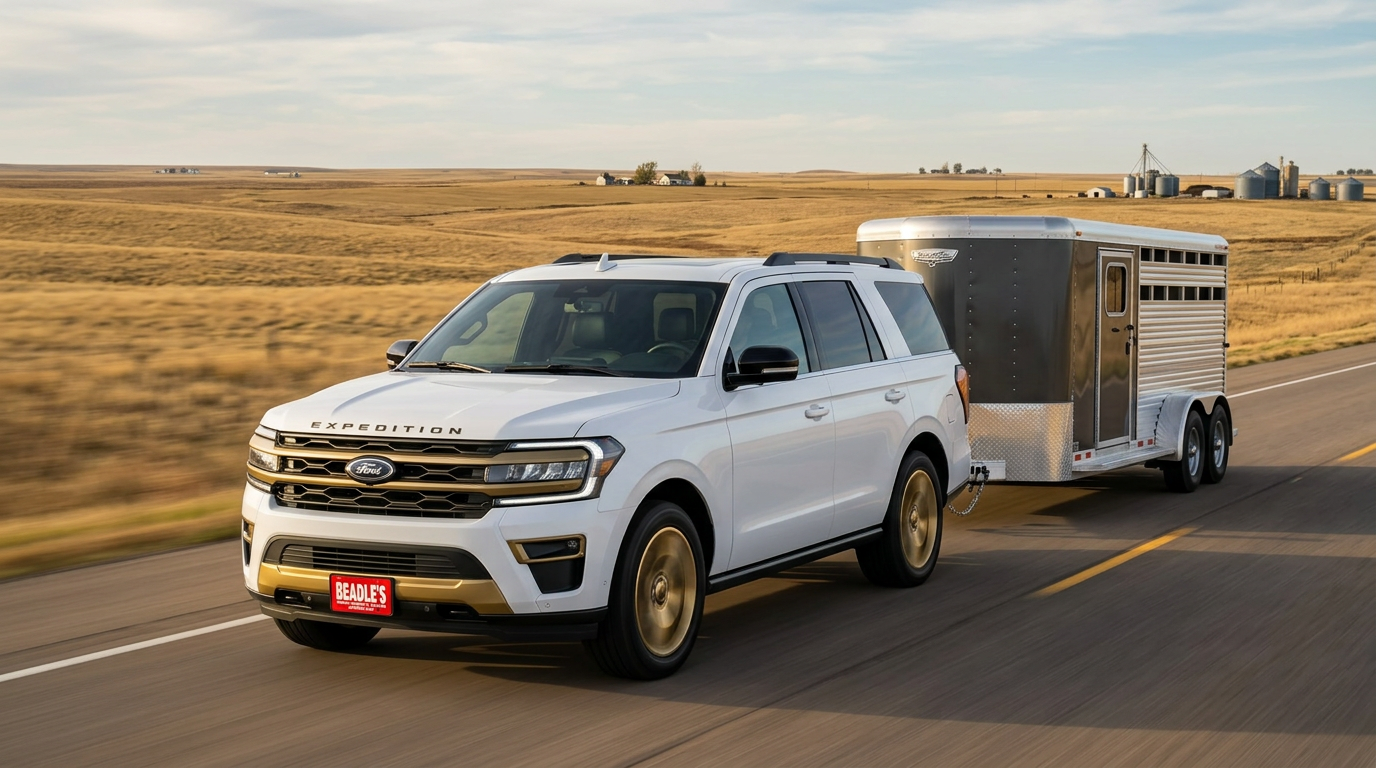
The 2026 Ford Expedition can tow up to 9,600 lbs — but that number only applies to one specific configuration. The actual rating for your build depends on drivetrain, axle ratio, wheelbase, and whether the Heavy-Duty Trailer Tow package is installed. Get one of those wrong and you may be operating beyond your rated limit without knowing it.
This guide breaks down every towing figure from Ford’s official 2026 Expedition Towing Guide, explains the equipment required to reach the higher ratings, and connects those numbers to the trailers South Dakota buyers actually pull — horse trailers, bumper-pull campers, hay equipment, and boats on the Missouri River system.
On This Page
- What are the actual 2026 Expedition tow ratings by configuration?
- What does the Heavy-Duty Trailer Tow package include?
- Why does the axle ratio matter so much?
- When is a weight-distributing hitch required?
- Real-world towing scenarios: what can the Expedition actually pull?
- Does elevation affect towing capacity in South Dakota?
- Does the Expedition MAX tow less than the standard Expedition?
- What towing technology comes with the Expedition?
- Key Takeaways
- FAQ
What are the actual 2026 Expedition tow ratings — by configuration?
The 9,600 lb headline figure applies to the Expedition SWB 4×4 with the 3.73 axle ratio and the Heavy-Duty Trailer Tow package installed. Every other configuration is rated lower. The table below reflects Ford’s official 2026 Expedition Towing Guide, calculated using the SAE J2807® method.
| Configuration | Axle | GCWR (lbs.) | Max Tow (lbs.) |
|---|---|---|---|
| Expedition SWB 4×4 | 3.73 | 15,900 | 9,600 |
| Expedition SWB 4×2 — Tremor® High Output | 3.73 | 15,600 | 9,300 |
| Expedition SWB 4×2 — standard (24″ wheels) | 3.73 | 15,600 | 9,200 |
| Expedition MAX 4×4 | 3.73 | 15,900 | 9,000 |
| Expedition SWB 4×2 — standard | 3.31 | 12,000 | 6,000 |
| Expedition MAX 4×2 — standard | 3.31 | 12,500 | 6,300 |
Source
All figures from Ford’s official 2026 Expedition Towing Guide, calculated using the SAE J2807® method. Maximum towing varies based on cargo, vehicle configuration, accessories, and number of passengers. Ratings assume a 150-lb. driver and passenger.
The difference between the 6,000 lb and 9,600 lb rating comes down to two things: the 3.73 rear axle ratio and the Heavy-Duty Trailer Tow package. Without both, you’re operating at the lower end of the range. On the Active 4×2, neither is included as standard — both are required additions.
What does the Heavy-Duty Trailer Tow package include — and which trims get it standard?
The HDTT package is the single most important option for any Expedition buyer who plans to tow above 6,000 lbs. It bundles the upgraded axle, integrated brake controller, trailer camera, and Pro Trailer Backup Assist™ 2.0 in one package — and it’s standard on every trim except the Active.
| Trim | HDTT Status | Note |
|---|---|---|
| Active | Optional | Requires 4×4. Not available on 4×2. |
| Tremor® | Standard | 28MM radiator (vs. 26MM on other trims) |
| King Ranch® | Standard | 26MM radiator |
| Platinum | Standard | 26MM radiator |
What the Heavy-Duty Trailer Tow package includes on all 2026 Expedition configurations:
Warranty Note
Per Ford’s 2026 Expedition Towing Guide: your New Vehicle Limited Warranty may be voided if you tow above the rating for your configuration without the required equipment. Confirm your specific build’s tow rating on the window sticker before purchase.
Why does the axle ratio matter so much for towing?
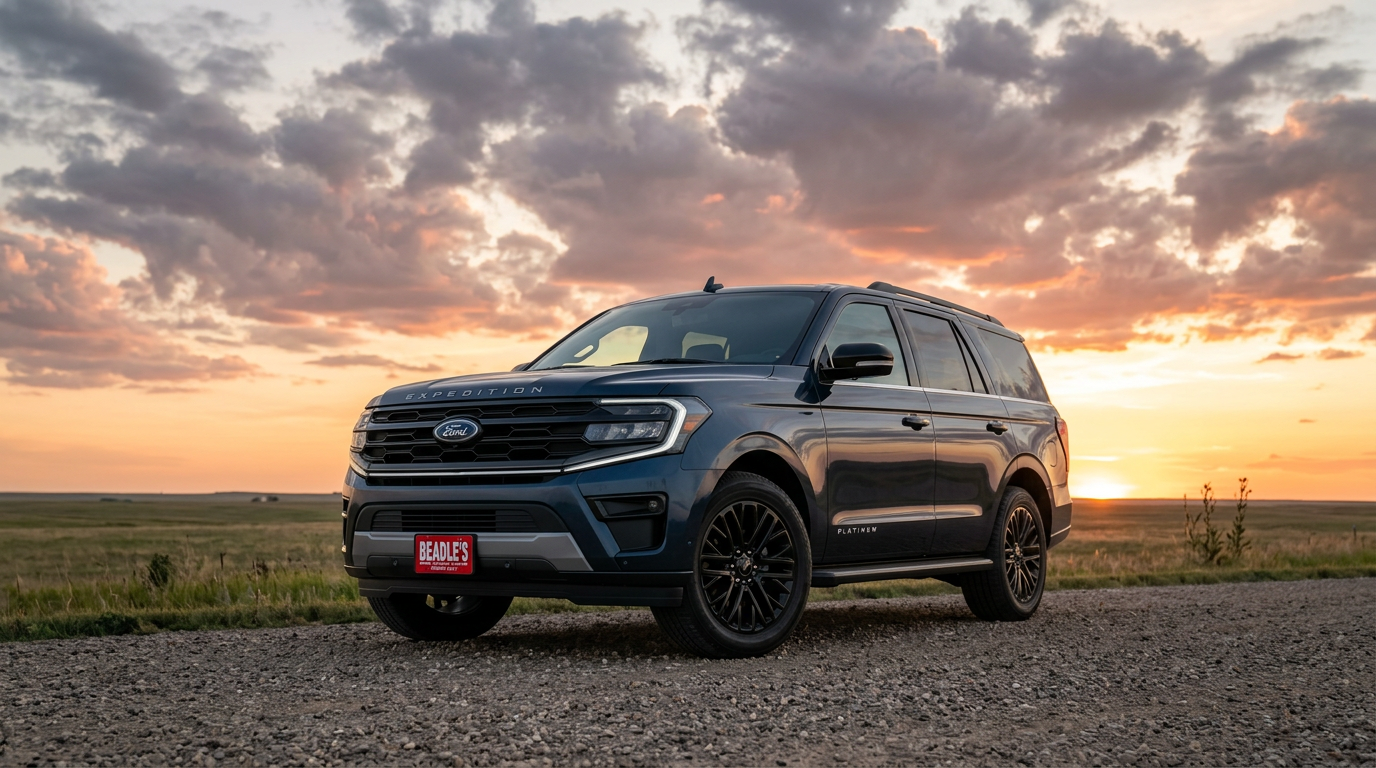
The axle ratio is one of the two biggest factors separating the 6,000 lb rating from the 9,600 lb rating. The 3.31 axle ratio is standard on Active 4×2 configurations — and with it, towing is capped at 6,000 lbs (SWB) or 6,300 lbs (MAX). Moving to the 3.73 ratio — which comes with the HDTT package — unlocks the full rating for your drivetrain.
What the axle ratio codes mean on your window sticker
Check the Safety Compliance Certification Label on the left front door lock facing. Below the bar code, you’ll see “AXLE” followed by a two-digit code:
- Code 15 = 3.31 ratio (Non-Limited Slip) — base towing rating
- Code 2L = 3.73 ratio (Non-Limited Slip) — required for maximum tow ratings
A numerically higher axle ratio multiplies torque at the wheels more aggressively, which is what allows the Expedition to pull heavier loads from a stop and maintain controlled speed on grades. For buyers towing loaded livestock trailers or heavy campers on the grades around the Missouri River breaks, the 3.73 isn’t just a preference — it’s required for the job.
When is a weight-distributing hitch required — and what does that mean in practice?
Per Ford’s official towing guide: any trailer over 7,000 lbs requires a weight-distributing hitch on both the Expedition SWB and the Expedition MAX. This is not optional — it’s a requirement to tow safely within the rated limit, and Ford’s warranty language references it directly.
Hitch Receiver Weight Capacity — Per Ford’s Official Towing Guide
| Vehicle | Weight-Carrying Max | Max Tongue (WC) | Weight-Distributing Max | Max Tongue (WD) |
|---|---|---|---|---|
| Expedition SWB 4×4 | 7,000 lbs | 700 lbs | 9,600 lbs | 960 lbs |
| Expedition MAX 4×4 | 7,000 lbs | 700 lbs | 9,000 lbs | 900 lbs |
What this means practically: if you’re pulling a bumper-pull horse trailer or loaded camper above 7,000 lbs, you need a weight-distributing hitch setup — not just the ball mount that comes with the receiver. The hitch receiver is standard on the vehicle; the ball mount, hitch ball, and weight-distributing head are the buyer’s responsibility.
Tongue weight should be approximately 10% of the total loaded trailer weight. A 9,000 lb trailer requires roughly 900 lbs of tongue weight — which must be within your vehicle’s available payload after accounting for passengers and cargo.
What can the 2026 Expedition actually tow — real-world scenarios for South Dakota buyers?
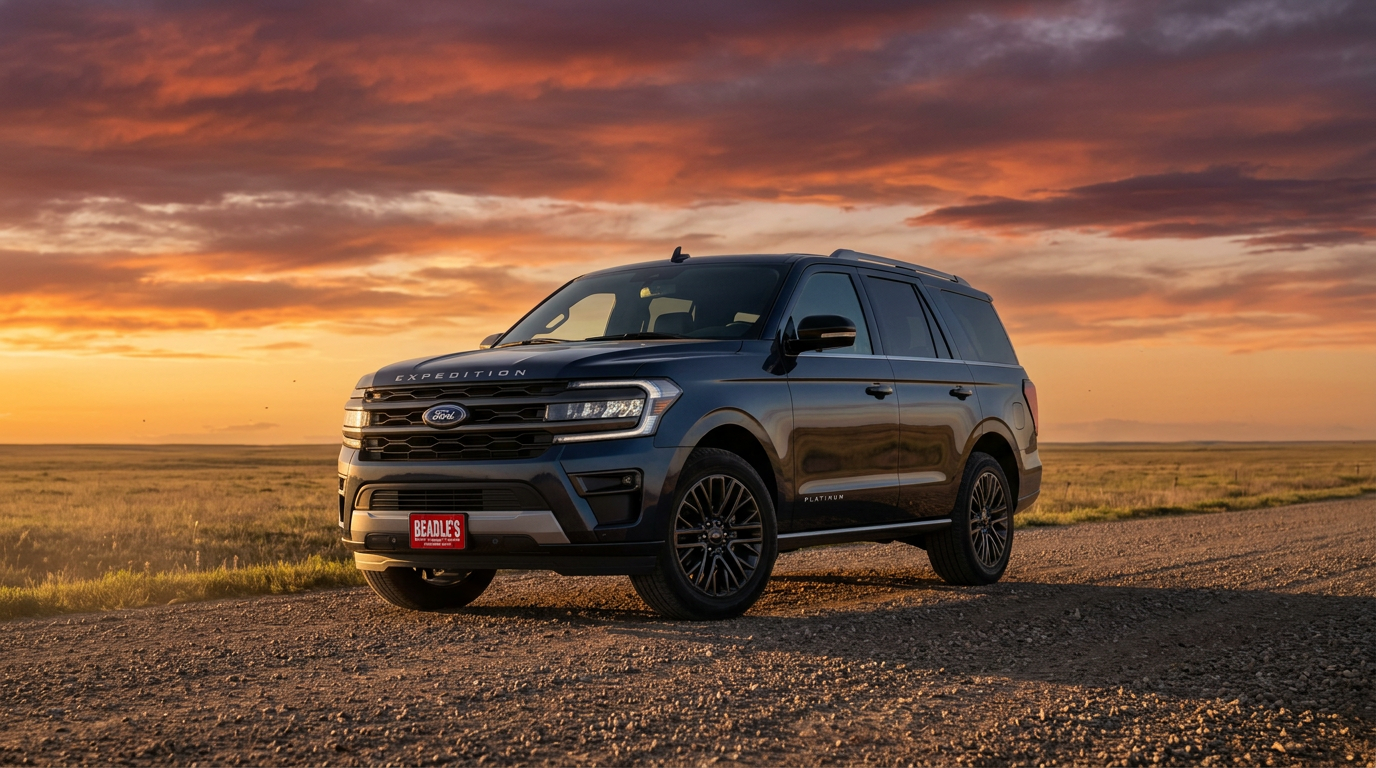
The numbers on the tow chart only matter when matched to the trailers buyers here actually pull. Here’s how the Expedition’s ratings map to common loads in this part of South Dakota and the upper plains.
Two-horse bumper-pull trailer (loaded)
A two-horse straight-load bumper-pull trailer with horses typically weighs 5,000–7,000 lbs loaded depending on trailer weight and horse size. This falls within the Expedition’s rating on any 4×4 configuration with HDTT — including the Active 4×4. A weight-distributing hitch is required at the upper end of this range (above 7,000 lbs).
✓ Within rating on: Active 4×4 w/HDTT, Tremor®, King Ranch®, Platinum (SWB or MAX)
Four-horse slant-load with living quarters
A four-horse LQ trailer can weigh 8,000–9,500 lbs loaded. An Expedition SWB 4×4 properly equipped is rated at 9,600 lbs — which covers most configurations at the lower end. At 9,000+ lbs, you’re near or above maximum. A weight-distributing hitch is mandatory, and tongue weight must be carefully managed. At this weight, many buyers consider a truck instead — but the Expedition SWB 4×4 is in the conversation up to 9,600 lbs when properly equipped.
⚠ Approaching limit: SWB 4×4 only, weight-distributing hitch required, verify loaded weight before towing
Bumper-pull travel trailer or fifth-wheel camper
Most bumper-pull travel trailers in the 24–30 ft range weigh 5,000–8,500 lbs loaded. The Expedition handles this range comfortably on any 4×4 configuration with HDTT. Fifth-wheel trailers require a different hitch setup and are generally better suited for a pickup — the Expedition is not recommended for fifth-wheel use given hitch type and bed requirements.
✓ Within rating on: Active 4×4 w/HDTT, Tremor®, King Ranch®, Platinum — bumper-pull only
Boat and trailer (Lake Oahe, Sharpe, or Francis Case)
A 20–24 ft fiberglass fishing or pontoon boat with a loaded trailer typically runs 4,500–7,500 lbs. The Expedition handles this range on 4×4 with HDTT without issue. Tongue weight management matters on boat trailers — ensure the trailer is loaded with roughly 60% of weight in the front half.
✓ Comfortably within rating on all 4×4 configurations with HDTT
Utility / hay / livestock trailer
Gooseneck livestock trailers with hay or cattle typically exceed 10,000–15,000 lbs loaded — well beyond the Expedition’s 9,600 lb maximum. For regular heavy livestock or gooseneck use, a pickup truck is the correct tool. The Expedition is not rated for gooseneck or fifth-wheel hitch configurations.
✗ Exceeds Expedition’s max rating — a truck is the right tool for gooseneck/heavy livestock loads
Does elevation affect towing capacity in South Dakota and the western plains?
Yes — and this matters for buyers in western South Dakota more than most people realize. Ford’s official towing guide states: reduce Gross Vehicle Weight (GVW) and Gross Combination Weight (GCW) by 2% per 1,000 ft. of elevation when towing at altitude.
Elevation context — western South Dakota
- Bowdle, SD: approximately 1,800 ft — about a 3.6% reduction (~346 lbs off 9,600 lb max)
- Rapid City, SD: approximately 3,200 ft — about a 6.4% reduction (~614 lbs off 9,600 lb max)
- Black Hills region: 4,000–7,200 ft — 8–14% reduction in effective GCW
- Western routes into Wyoming/Montana: 4,500–7,000 ft — significant reduction applies
If you’re hauling a loaded trailer from Bowdle to Rapid City and up into the Hills, the effective towing capacity at elevation is meaningfully lower than what the sticker says at sea level. Build in a margin — don’t tow at the absolute maximum if your route includes significant elevation gain.
Does the Expedition MAX tow less than the standard Expedition?
Yes — by 600 lbs on the 4×4 configuration. The Expedition MAX 4×4 is rated at 9,000 lbs vs. 9,600 lbs for the SWB 4×4, both properly equipped. The difference comes from the additional body weight of the extended wheelbase. The engine, axle, and HDTT package are identical — the body is heavier.
| Expedition SWB | Expedition MAX | |
|---|---|---|
| Max tow — 4×4 w/HDTT | 9,600 lbs | 9,000 lbs |
| Max tow — 4×2, no HDTT | 6,000 lbs | 6,300 lbs |
| GCWR — 4×4 w/HDTT | 15,900 lbs | 15,900 lbs |
| Tremor® available | Yes | No |
For most buyers pulling trailers in the 5,000–8,500 lb range, the 600 lb difference between SWB and MAX is irrelevant — both configurations are within rating. The decision between them is really about cargo space and third-row legroom, not towing. The full comparison is covered in the 2026 Expedition vs. Expedition MAX guide.
What towing technology comes with the 2026 Expedition?
The HDTT package bundles a set of active and passive towing technologies that make a real difference for buyers who tow regularly. These aren’t marketing features — they’re the systems that prevent trailer sway incidents and take the stress out of backing a trailer in a crowded boat launch.
Pro Trailer Backup Assist™ 2.0
Steer the trailer using a knob on the dash — the system translates your input into counter-intuitive steering corrections automatically. Particularly useful on narrow boat ramps, tight ranch lanes, and unfamiliar campsites.
Pro Trailer Hitch Assist™
Uses the 360-degree camera system to guide the hitch ball directly under the trailer coupler. Eliminates the guesswork of lining up solo — a practical tool when you’re hooking up alone in the dark or in tight quarters.
Integrated Trailer Brake Controller
Provides proportional braking output to the trailer’s electric brakes based on the Expedition’s brake pressure. Built into the vehicle — no external controller to purchase or calibrate. Required for trailers with electric brakes.
Trailer Sway Control
Detects trailer sway and automatically applies selective braking or reduces engine torque to bring the combination back under control. Standard on all 2026 Expedition configurations — not just HDTT-equipped vehicles.
Tow/Haul Mode
Adjusts the 10-speed automatic’s shift points for towing — holds gears longer on grades, uses engine braking on descents, and reduces hunting between gears on hilly terrain. Engage it anytime you’re pulling a loaded trailer.
360-Degree Camera with BLIS® Trailer Coverage
The camera system gives a top-down view during hitching and maneuvering. BLIS® with Trailer Coverage extends blind spot monitoring to account for the trailer’s length — useful on highway passes when the trailer obscures your rear sightlines.
Key Takeaways
- 9,600 lbs = SWB 4×4 only, with 3.73 axle and HDTT — not every Expedition configuration
- Without HDTT, the Active 4×2 is limited to 6,000 lbs (SWB) or 6,300 lbs (MAX)
- HDTT is optional on Active (requires 4×4), standard on Tremor®, King Ranch®, and Platinum
- Any trailer over 7,000 lbs requires a weight-distributing hitch — per Ford’s official towing guide
- The Expedition MAX tows up to 9,000 lbs (4×4 w/HDTT) — 600 lbs less than SWB
- Tongue weight should be approximately 10% of total loaded trailer weight
- Reduce GVW and GCW by 2% per 1,000 ft. of elevation — relevant for western SD routes
- The Expedition is not rated for gooseneck or fifth-wheel hitch configurations
- Tow ratings are calculated with a 150-lb driver and passenger — real-world payload reduces effective capacity
- Confirm your build’s specific tow rating on the window sticker before purchase
Frequently Asked Questions
What is the maximum towing capacity of the 2026 Ford Expedition?
9,600 lbs — but only on the Expedition SWB 4×4, properly equipped with the 3.73 rear axle and Heavy-Duty Trailer Tow package. Trailers above 7,000 lbs also require a weight-distributing hitch. The Active 4×2 without HDTT is limited to 6,000 lbs (SWB) or 6,300 lbs (MAX). All figures are from Ford’s official 2026 Expedition Towing Guide, calculated using the SAE J2807® method.
Can the 2026 Expedition tow a horse trailer?
Yes — a two-horse bumper-pull loaded at 5,000–7,000 lbs is well within rating on any Expedition 4×4 with HDTT. A four-horse LQ trailer at 8,000–9,500 lbs loaded approaches or exceeds the SWB 4×4 maximum of 9,600 lbs and requires careful weight management, a weight-distributing hitch, and verified loaded weights before towing. Heavy gooseneck livestock trailers exceeding 10,000 lbs require a pickup truck — the Expedition is not rated for gooseneck hitch use.
Does the Expedition MAX tow less than the standard Expedition?
Yes — by 600 lbs. The MAX 4×4 with HDTT is rated at 9,000 lbs vs. 9,600 lbs for the SWB 4×4. The longer wheelbase adds body weight, which reduces available tow capacity. For most trailer loads in the 5,000–8,500 lb range, both configurations are comfortably within rating — the difference only matters if you’re regularly near the upper limit.
Do I need the Heavy-Duty Trailer Tow package to tow with the Expedition?
Not for loads under 6,000 lbs on the Active 4×2 — but you cannot add it to a 4×2 configuration. For any load above 6,000 lbs, the HDTT package is required to reach the higher ratings, and it requires 4×4 on the Active trim. On Tremor®, King Ranch®, and Platinum, HDTT is standard. The package also includes the integrated trailer brake controller, Pro Trailer Backup Assist™ 2.0, and 360-degree camera — features most towing buyers want regardless of trailer weight.
Is a weight-distributing hitch included with the Expedition?
No. The hitch receiver is factory-installed and standard on the Expedition. The ball mount, hitch ball, and weight-distributing head are the buyer’s responsibility. Per Ford’s towing guide, a weight-distributing hitch is required for any trailer over 7,000 lbs on both SWB and MAX configurations.
Does elevation affect how much the Expedition can tow?
Yes. Ford’s official guidance calls for reducing Gross Vehicle Weight and Gross Combination Weight by 2% per 1,000 ft. of elevation. Buyers in western South Dakota or those routing through the Black Hills should account for this when loading near maximum — especially on routes that climb from 1,800 ft near Bowdle to 4,000+ ft in the Hills region.
My Take on Towing with the 2026 Expedition
The towing conversation I have most often at Beadle Ford goes like this: a buyer comes in saying they need to tow a horse trailer or a camper, they’ve seen the 9,600 lb headline, and they assume any Expedition will get them there. The first thing I do is ask what configuration they’re looking at — because that number only belongs to one specific build.
For most buyers around here pulling a two- or three-horse trailer or a mid-size camper in the 6,000–8,500 lb range, the Active 4×4 with HDTT gets the job done and is the most affordable path to the full tow package. If you’re pushing above 8,500 lbs regularly, you’re looking at the Tremor® or Platinum — where HDTT is already standard — or you’re having a different conversation about whether a truck is a better fit for your use case.
The elevation piece matters more than most buyers realize. If your route takes you through Rapid City or up into the Hills, you’re losing real effective capacity at altitude. Build in a margin — don’t configure at the absolute maximum if your route climbs.
For the full picture on how trim and configuration choices interact with towing, the 2026 Ford Expedition overview covers it all in one place. If you want to talk through a specific trailer and build, come see us at Beadle Ford in Bowdle or reach out anytime.
About the Author
Lexy Tabbert — Beadle Ford, Bowdle, SD
Lexy Tabbert covers Ford vehicles, trim comparisons, and buyer guidance for Beadle Ford in Bowdle, South Dakota. Her content is grounded in real buyer conversations with families, ranchers, and ag operators across the region. Learn more about Lexy.
2026 Ford Expedition Trims & Packages
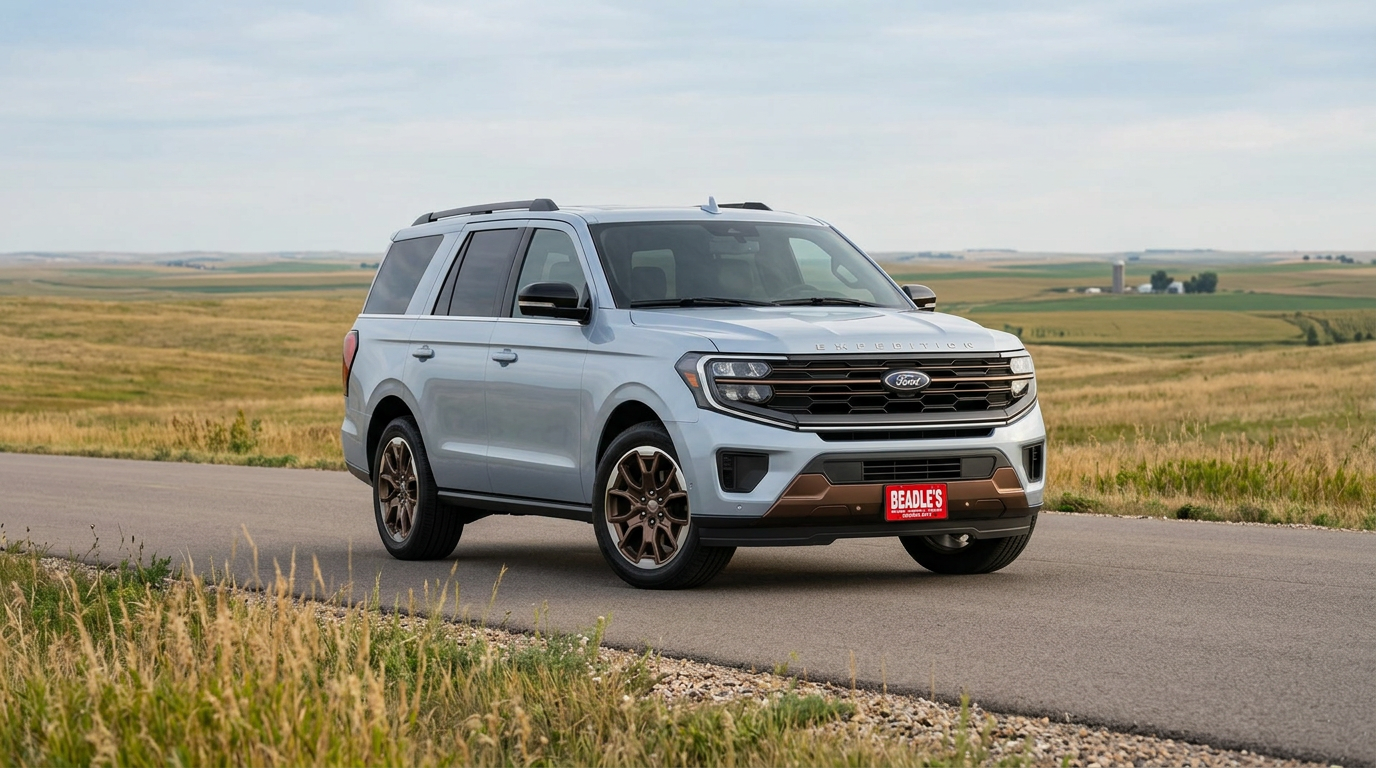
The 2026 Ford Expedition comes in four distinct trims — Active, Tremor®, King Ranch®, and Platinum — each designed around a different kind of buyer. Understanding what separates them, and which packages actually move the needle for South Dakota families and ranch buyers, is the difference between a vehicle that fits your life and one that falls short on a gravel road in February.
This guide maps every trim, its drivetrain requirements, seating configuration, key standard features, and which packages are worth considering — so you can walk into Beadle Ford in Bowdle with a clear picture of what you want.
On This Page
- How do the four Expedition trims differ?
- What does the Active trim include?
- What makes the Tremor® different?
- Who is the King Ranch® for?
- What does Platinum add over King Ranch®?
- 7-passenger vs. 8-passenger: which trim gets which?
- Which trims include the Heavy-Duty Trailer Tow package?
- How to choose the right Expedition trim
- Key Takeaways
- FAQ
How do the four 2026 Expedition trims differ from each other?
The four trims follow a clear progression — value and capability on one end, luxury and heritage on the other — but drivetrain availability and standard features vary significantly between them. The biggest decisions aren’t just about price; they’re about whether you need 4×4, how many seats you need, and whether you’ll be towing at the upper end of the rating.
| Trim | Drivetrain | Wheelbase | Engine | HDTT |
|---|---|---|---|---|
| Active | 4×2 or 4×4 | SWB & MAX | 400 HP | Optional (4×4 only) |
| Tremor® | 4×4 only | SWB only | 440 HP / 510 lb-ft | Standard |
| King Ranch® | 4×4 only | SWB & MAX | 400 HP | Standard |
| Platinum | 4×4 only | SWB & MAX | 400 HP (HO available) | Standard |
The Active is the only trim with 4×2 availability — all others are 4×4 only. The Tremor® is the only trim that cannot be ordered as a MAX. For South Dakota buyers dealing with winter roads, gravel approaches, and ranch use, the 4×4 configuration is worth examining closely across every trim.
What does the 2026 Expedition Active trim include — and is it enough?
The Active is the entry retail trim and, by most measures, the most flexible configuration in the lineup. It’s the only trim available in 4×2, and the only one that offers both the standard and MAX wheelbase without requiring 4×4.
Standard on Active: body-on-frame construction, trailer sway control, the Ford Digital Experience with 24-inch panoramic display and 13.2-inch SYNC® 4 touchscreen, LED headlights and taillights, tri-zone automatic climate control, 10-way power driver’s seat, wireless Apple CarPlay and Android Auto, and the new Split Gate rear liftgate.
Active — What to Know
- Available in 4×2 or 4×4 — the only trim with 4×2 as an option
- Available in standard wheelbase (SWB) and MAX
- Standard seating: 8-passenger bench (Select configuration)
- Touring configuration adds captain’s chairs, SYNC® 4 upgrades, and additional driver assistance
- Heavy-Duty Trailer Tow package is optional — and requires 4×4
- Without HDTT, towing is limited to the base rating; with HDTT on 4×4, the SWB reaches 9,200 lbs
- Ford Security Package (1-year) now standard across all 2026 Expedition trims
Worth it if: You want the most affordable path to a full-size 3-row Ford SUV, plan to configure it in 4×4 with the HDTT package for towing, or need the MAX body for additional cargo room without stepping into a luxury trim price. Skip it if: You need the High Output engine or want standard 4×4 with the tow package included at no additional cost — in that case, the Tremor® or Platinum makes more sense.
What makes the 2026 Expedition Tremor® different from every other trim?
The Tremor® is all-new for this generation and built around a specific purpose: off-road capability without sacrificing family functionality. It’s the only trim in the Expedition lineup that comes standard with the High Output engine and a locking rear differential.
The Tremor® is 4×4 only and available in standard wheelbase only — it cannot be configured as a MAX. It comes standard with the 3.5L EcoBoost® High Output engine producing 440 HP and 510 lb-ft of torque, a 3.73 electronic locking rear differential, and a heavier-duty 28MM radiator (compared to 26MM on other trims). The Heavy-Duty Trailer Tow package is standard.
Tremor® — What Sets It Apart
- 3.5L EcoBoost® High Output — 440 HP / 510 lb-ft torque — standard
- 3.73 electronic locking rear differential — standard
- 28MM heavy-duty radiator (upgraded vs. 26MM on other trims)
- Terrain management modes tuned for off-pavement surfaces
- 18″ x 8.5″ Dark Carbonized Gray Painted Aluminum wheels with 33″ all-terrain tires
- Digital Device Holder — standard (not available when Rear Seat Entertainment is selected)
- Rear Seat Entertainment — available (not available when Digital Device Holder is selected)
- Standard captain’s chairs (7-passenger); 8-passenger bench optional
- Not available as MAX
- HDTT standard — SWB 4×4 towing up to 9,600 lbs when properly equipped
Worth it if: You need off-road capability, regularly drive gravel roads or mixed terrain around Bowdle or the Standing Rock region, want the High Output engine as standard equipment, and don’t need the extended MAX body. Skip it if: You need more than 7 or 8 passengers regularly in MAX configuration, or if off-road capability isn’t a priority and the Platinum’s luxury features are more relevant to how you use the vehicle.
Who is the King Ranch® Expedition built for?
The King Ranch® draws from Ford’s Western heritage and positions itself as the luxury trim for buyers who want distinctive styling, premium interior materials, and a strong connection to that Western ranch aesthetic — without the technology-forward focus of the Platinum.
The King Ranch® is 4×4 only, available in both standard and MAX wheelbase. It comes standard with the 3.73 rear axle and the Heavy-Duty Trailer Tow package — so unlike the Active, you’re not paying extra to reach the higher tow ratings. Standard seating is 7-passenger captain’s chairs.
King Ranch® — What to Know
- 4×4 only — available in SWB and MAX
- Standard engine: 3.5L EcoBoost® V6 at 400 HP
- HDTT standard — no additional cost to reach 4×4 tow ratings
- Premium two-tone exterior with King Ranch® badging throughout
- Distinctive heritage leather interior with King Ranch® stitching
- Standard 7-passenger captain’s chairs — 8-passenger bench not available on King Ranch®
- Digital Device Holder — standard
- Rear Seat Entertainment — available
- Ford BlueCruise hands-free highway driving — available (one-time purchase option)
Worth it if: You want a premium interior with Western heritage styling, need 4×4 with towing capability included as standard, and prefer captain’s chairs over bench seating as a baseline. Skip it if: You need 8-passenger capacity (the bench is not available on King Ranch®), or if you want the High Output engine — that’s only accessible through the Tremor® or select Platinum packages.
What does the Platinum add — and is it worth the step up from King Ranch®?
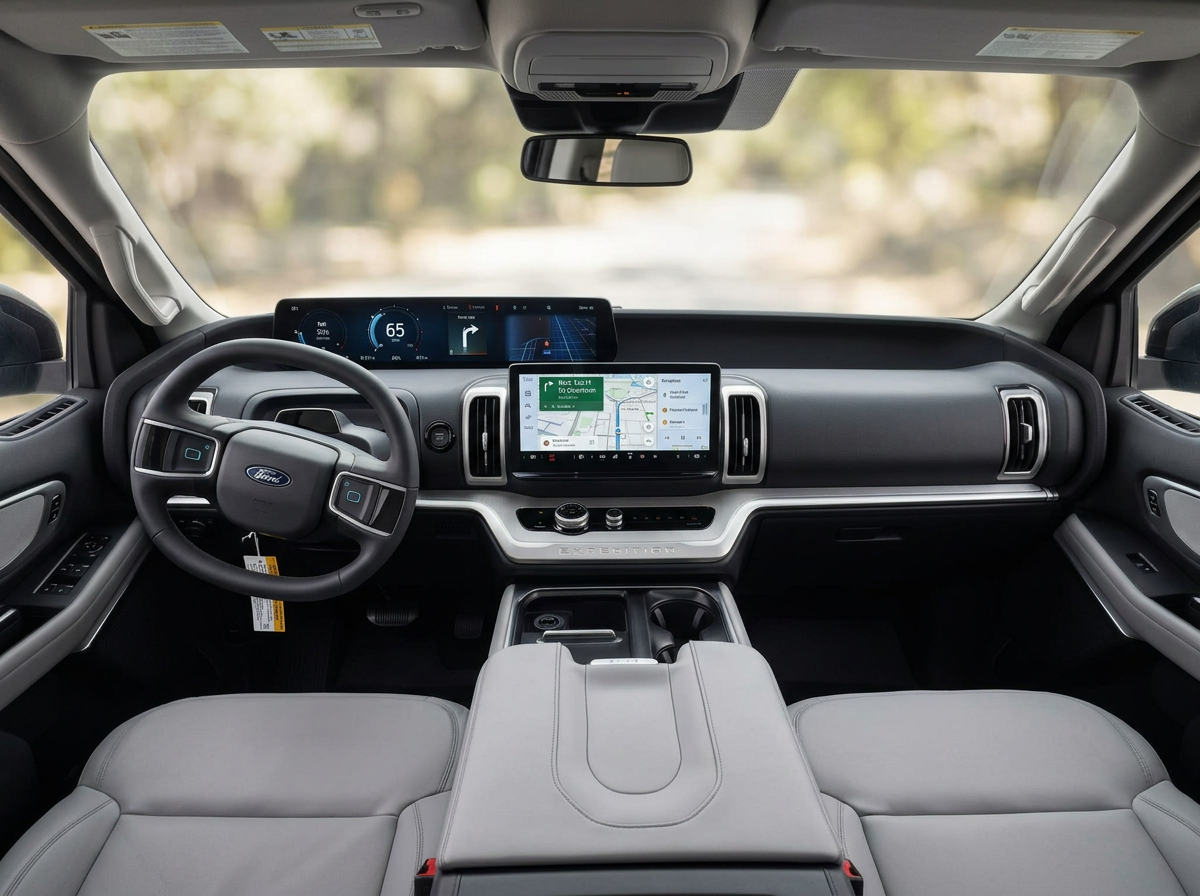
The Platinum is the top luxury configuration in the Expedition lineup. Where the King Ranch® leans into heritage styling, the Platinum leans into technology, comfort, and driver assistance features — including the clearest path to the High Output engine outside of the Tremor®.
The Platinum is 4×4 only, available in both standard and MAX wheelbase. HDTT is standard. Standard seating is 7-passenger captain’s chairs, with the 8-passenger bench available as an option. The High Output engine (440 HP) is accessible through select Platinum packages.
Platinum — What’s Included or Available
- 4×4 only — available in SWB and MAX
- Standard engine: 3.5L EcoBoost® V6 at 400 HP; High Output (440 HP) available via select packages
- HDTT standard
- Premium leather interior with advanced driver assistance technology
- Ford BlueCruise — 90-day trial included with retail orders; upgradeable to 1-year or one-time purchase
- Rear Seat Entertainment — available (not available when Digital Device Holder is selected)
- Digital Device Holder — standard (not available when Rear Seat Entertainment is selected)
- Standard 7-passenger captain’s chairs; 8-passenger bench optional
- Adaptive Cruise Control with Stop-and-Go
Worth it if: You want the maximum technology and driver assistance package, value the fact that BlueCruise is included as a 90-day trial on retail orders (upgradeable from there), want access to the High Output engine without the off-road trim, or need the option of 8-passenger seating with premium materials. Skip it if: The Western heritage styling of the King Ranch® is more appealing and BlueCruise isn’t a priority for your driving patterns.
7-passenger or 8-passenger — which trims offer which seating configuration?
Seating configuration in the 2026 Expedition is tied directly to which trim you choose and which second-row setup is standard or optional for that trim. This is one of the most commonly misunderstood parts of Expedition shopping.
| Trim | Standard Seating | 8-Passenger Available? |
|---|---|---|
| Active (Select) | 8-passenger bench | Standard |
| Active (Touring) | 7-passenger captain’s chairs | Yes — optional |
| Tremor® | 7-passenger captain’s chairs | Yes — optional |
| King Ranch® | 7-passenger captain’s chairs | No — bench not available |
| Platinum | 7-passenger captain’s chairs | Yes — optional |
If 8-passenger capacity is a firm requirement at the premium trim level, the Platinum is your only path — the King Ranch® does not offer a bench option. On the Active, the bench is standard in the Select configuration and optional in the Touring configuration. Captain’s chairs improve third-row access significantly but reduce total capacity by one seat.
Which trims include the Heavy-Duty Trailer Tow package — and why does it matter?
The Heavy-Duty Trailer Tow (HDTT) package is what unlocks the Expedition’s highest tow ratings. Without it, towing capacity drops significantly — and on the Active trim, it costs extra and requires 4×4. On all other trims, it comes standard.
Important for Towing Buyers
The Active 4×2 cannot receive the HDTT package at all — it requires 4×4. If you’re planning to tow a horse trailer, bumper-pull camper, or any load above 6,000 lbs, you need the Active in 4×4 with HDTT added, or a higher trim where HDTT is standard.
What the Heavy-Duty Trailer Tow package includes on 2026 Expedition:
- 4-pin and 7-pin trailer connector
- Class IV hitch receiver
- Upgraded 3.73 rear axle ratio
- Upgraded 26MM radiator (28MM on Tremor®)
- Tow/Haul mode
- Integrated trailer brake controller
- Trailer sway control
- Pro Trailer Hitch Assist™
- Pro Trailer Backup Assist™ 2.0
- 360-degree camera
For buyers near Bowdle hauling livestock trailers, campers, or equipment along routes around Lake Oahe and the Standing Rock region, the HDTT package is not optional — it’s the difference between a truck-rated tow and a light-duty setup. Confirm your specific configuration’s tow rating with the window sticker before purchase.
How to choose the right 2026 Expedition trim for your situation
Work through these questions in order. The answer to each one narrows the field.
-
Do you need to tow more than 6,000 lbs?
If yes — you need the Active 4×4 with HDTT added, or any trim above Active where HDTT is standard. Eliminate the Active 4×2 entirely.
-
Do you drive gravel roads, mixed terrain, or need proven winter traction in South Dakota?
If yes — 4×4 is the right configuration. That eliminates the Active 4×2. The Tremor® adds dedicated off-road hardware if terrain is a priority.
-
Do you need to seat 8 passengers?
If yes — the Active (Select configuration) or Platinum are your options. The King Ranch® bench is not available; the Tremor® bench is optional.
-
Do you need the High Output engine (440 HP)?
If yes — the Tremor® has it as standard. The Platinum can be configured with it through select packages. The Active and King Ranch® do not offer it.
-
Do you need the extended MAX body for cargo or third-row legroom?
If yes — the Tremor® is off the table. The Active, King Ranch®, and Platinum all offer a MAX configuration.
-
Is BlueCruise hands-free highway driving a priority for long highway miles?
If yes — the Platinum is the best fit. It’s available on the King Ranch® as well, but is most prominently featured in Platinum packages. Confirm availability on your specific build with Beadle Ford.
Key Takeaways
- Four retail trims: Active, Tremor®, King Ranch®, Platinum — each with a distinct purpose
- Active is the only trim available in 4×2; all others are 4×4 only
- Tremor® is the only trim with the High Output engine as standard and the only SWB-only trim
- King Ranch® does not offer the 8-passenger bench — captain’s chairs only
- HDTT is optional on Active (requires 4×4), standard on all other trims
- Without HDTT, towing capacity is significantly lower regardless of trim
- The High Output engine is accessible on Platinum through select packages only
- The new Split Gate liftgate is standard across all 2026 Expedition trims
- Ford Security Package (1-year) now standard across the lineup
Frequently Asked Questions
Which 2026 Expedition trim is available in 4×2?
Only the Active trim is available in 4×2. Tremor®, King Ranch®, and Platinum are all 4×4 only. For South Dakota buyers dealing with winter conditions, gravel roads, and variable terrain around Bowdle and across north-central South Dakota, the 4×4 configuration is worth the consideration — but 4×2 is an option for buyers who primarily drive paved highway routes.
Can you get the Expedition Tremor® as a MAX?
No. The Tremor® is standard wheelbase only. If you need the extended MAX body for additional cargo room or third-row space, you’ll need to look at the Active, King Ranch®, or Platinum — all of which are available in MAX configuration.
Does the King Ranch® offer 8-passenger seating?
No. The King Ranch® comes standard with 7-passenger captain’s chairs and the 8-passenger bench is not available on this trim. If 8-passenger capacity is a requirement at the premium trim level, the Platinum is the correct choice — it offers the bench as an option.
Is the Heavy-Duty Trailer Tow package standard on all trims?
No — it’s optional on the Active trim (and requires 4×4 to add). On the Tremor®, King Ranch®, and Platinum, the HDTT package is standard. Without HDTT, towing capacity is significantly lower. Buyers who plan to tow livestock trailers, campers, or boats should confirm their configuration includes the package before purchase — the window sticker will verify this.
Which trim has the most powerful engine?
The Tremor® comes standard with the 3.5L EcoBoost® High Output engine at 440 HP and 510 lb-ft of torque. The Platinum can also be configured with the High Output engine through select packages. The Active and King Ranch® use the standard 3.5L EcoBoost® V6 at 400 HP, which is not available in a High Output configuration on those trims.
What is the new Split Gate on the 2026 Expedition?
The Split Gate is a new rear liftgate design introduced for 2026. The upper three-quarters lifts like a traditional hatch, while the lower section drops down like a truck tailgate and is rated to support up to 500 lbs. It functions as a seat, loading platform, or tailgate surface. The Split Gate is standard across all 2026 Expedition trims.
My Take on the 2026 Expedition Trim Lineup
After working through a lot of Expedition builds with buyers here in Bowdle and the surrounding area, the trim question almost always comes down to two things: do you need to tow at the top of the rating, and do you need the MAX body? Everything else follows from there.
For most South Dakota ranch and farm buyers I talk to, the Active 4×4 with HDTT is where the conversation starts — it gets you into the full towing package at the most accessible price point. From there, buyers who want the off-road capability for mixed terrain and gravel roads are almost always better served by the Tremor®, which brings the High Output engine and the locking diff as standard. I wouldn’t talk anyone out of it for how we use vehicles around here.
The King Ranch® is the right call for buyers who want the luxury feel with a heritage identity — but I always make sure buyers know the bench seat is off the table at that trim. That’s a dealbreaker for some families, and the Platinum becomes the obvious answer when 8-passenger capacity matters alongside premium features.
The full context for how these trims connect to towing capacity, seating configurations, and what the MAX adds for families is covered in the 2026 Ford Expedition overview — that’s where the complete picture comes together. If you’re ready to look at what’s available or want to talk through a specific build, I’m here at Beadle Ford in Bowdle.
About the Author
Lexy Tabbert — Beadle Ford, Bowdle, SD
Lexy Tabbert covers Ford vehicles, trim comparisons, and buyer guidance for Beadle Ford in Bowdle, South Dakota. Her content is grounded in real buyer conversations with families, ranchers, and ag operators across the region. Learn more about Lexy.
2026 Ford Explorer ST Performance Guide
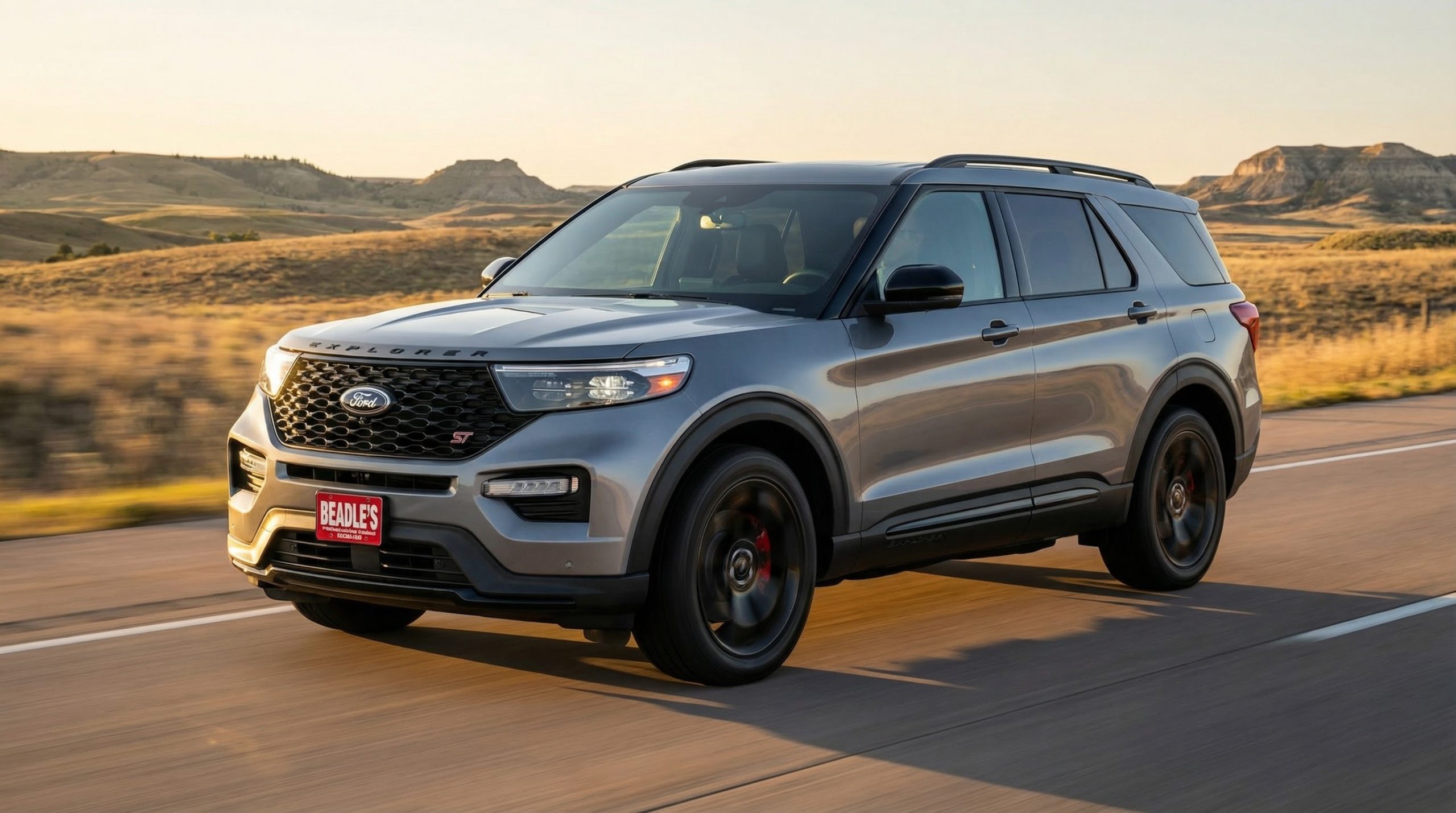
2026 Ford Explorer ST Performance Guide: What Makes It Different?
The 2026 Ford Explorer ST is built for drivers who want their three-row SUV to feel fast, responsive, and confident — not just practical. While the Explorer lineup is family-focused at its core, the ST trim shifts the personality toward performance.
This guide explains what makes the Explorer ST different from other trims, how it feels in real-world driving, and who it’s truly built for.
For full lineup context, including how ST fits alongside Active, Platinum, and Tremor, start with the 2026 Ford Explorer overview.
Table of Contents
- What is the Explorer ST?
- What engine does the ST use?
- How does the ST feel different to drive?
- Does the ST handle differently?
- ST vs Tremor: Performance vs Adventure
- Who should buy the Explorer ST?
- Is the ST still practical for families?
- How to properly test drive an Explorer ST
What is the 2026 Ford Explorer ST?
The Explorer ST is the performance-focused trim of the Explorer lineup. It combines three-row seating with a stronger engine and sport-tuned driving characteristics.
It’s not just about horsepower — it’s about how the SUV responds when you press the accelerator, change lanes at highway speed, or drive through curves.
What engine does the Explorer ST use?
The 2026 Explorer ST is powered by a 3.0L EcoBoost® V6 engine.
In simple terms: it produces more power and torque than the standard 2.3L engine used in other trims.
What that means in everyday life:
- Quicker acceleration when merging
- Stronger passing power at highway speeds
- Less “working hard” feeling when loaded with passengers
- More confident towing feel when properly equipped
If you want a full comparison between the 2.3L and 3.0L engines, see our Explorer Engine Deep Dive.
How does the ST feel different to drive?
This is where the difference becomes noticeable.
Compared to an Active or ST-Line trim:
- The accelerator feels more immediate.
- The SUV reaches highway speed more quickly.
- Passing slower vehicles requires less planning.
- The engine feels stronger under heavy load.
For drivers who spend significant time on highways — especially in areas with strong wind or long-distance travel — the ST’s power can feel more relaxed and effortless.
Does the Explorer ST handle differently?
Yes. The ST features sport-oriented tuning designed to provide a more controlled feel through curves and during quick lane changes.
It’s still a three-row SUV — but it feels tighter and more responsive compared to family-focused trims.
This makes it appealing to drivers who want practicality without sacrificing driving enjoyment.
Explorer ST vs Explorer Tremor: What’s the difference?
This is one of the most common questions.
Explorer ST:
- Performance-focused
- Strong acceleration
- Sport-tuned handling
- On-road emphasis
Explorer Tremor:
- Adventure-focused
- Designed for gravel and uneven terrain
- Distinct styling and capability orientation
- Off-road confidence priority
If your driving is primarily paved roads and highways, ST is the performance path. If you regularly travel beyond pavement, Tremor may be the better fit.
The full trim breakdown is available in our Explorer Trim Levels Guide.
Who should buy the 2026 Explorer ST?
The Explorer ST is best for drivers who:
- Enjoy strong acceleration
- Drive long highway distances regularly
- Want their SUV to feel athletic
- Carry passengers but still want performance
- Prefer a sport-inspired driving experience
It’s especially appealing to families where at least one driver values performance feel as much as practicality.
Is the ST still practical for families?
Yes. The Explorer ST retains three-row seating and family functionality.
Seating configurations and interior layout may vary by equipment selection, so it’s important to confirm your preferred layout.
Interior space details are covered in our Interior & Cargo Guide.
How should you test drive an Explorer ST?
- Start with a normal city drive to feel throttle response.
- Merge onto a highway and notice acceleration difference.
- Perform a controlled highway pass.
- Drive through a few curves to feel steering control.
- Compare directly with a 2.3L-equipped trim if possible.
The difference becomes most obvious during highway acceleration and passing.
Quick ST Overview
| Category | Explorer ST |
|---|---|
| Engine | 3.0L EcoBoost V6 |
| Driving Feel | Performance-focused |
| Personality | Sporty, responsive, confident |
| Seating | Three rows (configuration varies) |
Key Takeaways
- The ST is the performance-focused Explorer trim.
- It uses the 3.0L EcoBoost engine.
- Acceleration and passing feel stronger and more effortless.
- It remains practical for family use.
- Best suited for drivers who enjoy athletic driving feel.
Frequently Asked Questions
Is the Explorer ST fast?
The Explorer ST offers significantly stronger acceleration compared to standard trims, especially during highway merging and passing.
Does the ST tow more than other Explorers?
Maximum towing capacity depends on configuration, but engine strength can influence how confident towing feels.
Is the Explorer ST good in winter?
With available AWD and proper tires, the ST can perform confidently in winter conditions.
Is the ST worth the upgrade?
For drivers who value performance feel and acceleration, many find the upgrade worthwhile. For purely practical use, other trims may meet daily needs just as well.
Conclusion
In my experience, the Explorer ST appeals most to drivers who want their SUV to feel powerful and responsive — not just functional. When buyers test drive it back-to-back with a standard trim, the difference in acceleration and highway confidence becomes clear very quickly. For families who want practicality without sacrificing driving enjoyment, the ST often feels like the perfect balance.
About the Author
Lexy Tabbert provides research-driven SUV configuration guidance and performance insights for drivers across South Dakota and beyond.
2026 Ford Explorer Engine Options Deep Dive: 2.3L vs 3.0L (Explained Simply)
If you’re shopping for a 2026 Ford Explorer, the engine choice matters because it changes how the SUV feels every day — how easily it merges onto the highway, how confident it feels when loaded with people and gear, and how relaxed it is when towing or driving into headwinds.
This guide explains the two main engine paths in plain language: what the 2.3L EcoBoost is best at, what the 3.0L EcoBoost does differently, and how to choose based on real life (not confusing specs).
For the full lineup context (trims, seating layouts, towing structure, and how it all fits together), start with the 2026 Ford Explorer overview.
Table of Contents
- What engines are available on the 2026 Explorer?
- What does “turbocharged” actually mean?
- Who is the 2.3L EcoBoost best for?
- Who is the 3.0L EcoBoost best for?
- Real-world examples: when the engine choice matters
- ST vs Tremor: how engine choice changes the vibe
- Does the engine affect fuel and day-to-day costs?
- How to choose the right engine in 5 steps
What engines are available on the 2026 Ford Explorer?
The 2026 Ford Explorer is generally built around two EcoBoost options:
- 2.3L EcoBoost® I-4 (commonly found on Explorer Active and ST-Line, and used across much of the lineup depending on configuration)
- 3.0L EcoBoost® V6 (the performance-focused option, standard on Explorer ST and available on some Tremor configurations depending on equipment selection)
Simple takeaway: The 2.3L is the “everyday balanced” engine. The 3.0L is the “effortless power” engine.
Trim-level structure and availability changes are best understood inside the full lineup guide: 2026 Ford Explorer overview.
What does “turbocharged” actually mean?
A turbo is like a “power helper.” Instead of making the engine bigger, it pushes more air into the engine so it can make more power when you need it — like when you accelerate, merge, or climb a hill.
What that means in real life:
- You can have a smaller engine that still feels strong when you press the gas.
- Power can come in quickly when you need it (great for merging and passing).
- How smooth it feels depends on the engine size and tuning (which is where 2.3 vs 3.0 starts to matter).
Who is the 2.3L EcoBoost best for?
The 2.3L EcoBoost is usually the best fit for drivers who want a three-row SUV that feels confident and modern without paying extra for performance they won’t use every day.
Best match if your life looks like:
- School drop-offs, errands, commuting, and weekend travel
- Mostly highway driving at steady speeds
- Occasional towing (with the right tow equipment)
- You want capability, but you don’t need “sports SUV” acceleration
How it feels: responsive, balanced, and easy to live with — especially in Active and ST-Line trims.
If your priority is family layout and space, this pairs well with what we cover in the Interior & Cargo Guide.
Who is the 3.0L EcoBoost V6 best for?
The 3.0L EcoBoost is for drivers who want the Explorer to feel effortless — especially when the SUV is loaded with people, gear, and long-distance highway miles.
Best match if:
- You routinely drive with 5–7 passengers plus cargo
- You live on the highway and want strong passing power
- You tow more often (or want towing to feel less strained)
- You simply enjoy the feeling of confident acceleration
How it feels: smoother power delivery, less “working hard” sensation on hills and passing, and a more performance-oriented personality — especially in Explorer ST.
If you’re considering ST specifically, the deeper performance angle is covered in the Explorer ST Performance Guide.
Real-world examples: when the engine choice matters
Most people don’t notice engine differences in a calm test drive. They notice it during the moments that actually matter in real life. Here are the most common situations where your engine choice will feel different:
1) Merging onto the highway with kids in the back
2.3L: capable and responsive, but you may press the gas more to get the same “go now” feeling.
3.0L: feels more immediate and relaxed — less effort, more confidence.
2) Passing a semi on a two-lane highway
2.3L: does the job, but you’ll plan your pass a little more.
3.0L: passing power feels easier and quicker, especially at speed.
3) Driving into strong South Dakota wind
2.3L: steady, but you may notice more downshifts or effort in gusty conditions.
3.0L: maintains speed more effortlessly with less “strain” sensation.
4) Towing a small camper or boat
The 2026 Explorer can tow up to 5,000 pounds when properly equipped, but engine choice impacts how confident it feels while towing — especially on hills, in wind, or when the SUV is loaded.
For the full towing breakdown (including tongue weight, trailer frontal area, and setup tips), see the 2026 Explorer Towing & AWD Guide.
ST vs Tremor: how engine choice changes the vibe
This is a very common question: “If I want something special, should I choose ST or Tremor?”
- ST: performance personality — the engine and tuning are meant to feel fast and responsive on pavement.
- Tremor: adventure personality — designed for confidence on rougher roads and travel routes beyond pavement, with engine availability depending on how it’s equipped.
If you want a trim-level decision guide that compares these clearly, the best reference is the 2026 Explorer Trim Levels Guide (it frames the “who each trim is for” question).
Does the engine affect fuel and day-to-day costs?
In plain terms: the more performance you choose, the more you should expect the vehicle to use fuel when you drive it like a performance vehicle.
But driving habits matter just as much as engine choice. If you drive calmly, fuel use may be closer than you’d expect. If you accelerate aggressively or drive at high speeds often, the difference becomes more noticeable.
Simple way to think about it:
- 2.3L: optimized for everyday efficiency and balance
- 3.0L: optimized for effortless power and performance feel
How to choose the right Explorer engine in 5 steps
This is voice-search friendly on purpose — it’s the simplest way to decide without getting lost.
- List your “most common” week. Commute, school, errands, highway miles.
- Think about your “most demanding” day. Full family load + gear + winter driving + highway passing.
- Decide how you want it to feel. “Fine and capable” vs “effortless and confident.”
- If you tow, decide how often. Occasional towing vs frequent towing.
- Use the trim structure as your shortcut. ST = performance path, Active/ST-Line = balanced path, Tremor = adventure path depending on configuration.
Quick Specs / Overview (Plain Language)
| Engine | What it’s best at | Who it fits best |
|---|---|---|
| 2.3L EcoBoost I-4 | Everyday balance and confident daily driving | Most families, commuters, general travel |
| 3.0L EcoBoost V6 | Effortless power, highway passing, performance feel | ST shoppers, frequent highway drivers, heavy loads |
Key Takeaways
- The 2.3L EcoBoost is the “balanced everyday” engine for most families.
- The 3.0L EcoBoost is the “effortless power” option that feels stronger under load.
- Engine choice matters most in merging, passing, wind, hills, and towing feel.
- Trim choice is often the easiest way to narrow engine options.
- For full lineup context, the pillar page ties everything together.
FAQ
Is the 2.3L engine enough for a family SUV?
For most families, yes. It’s designed to provide confident everyday performance for commuting, errands, highway travel, and family trips. The difference is less about “enough” and more about whether you want power to feel effortless under heavy loads.
When does the 3.0L engine make the biggest difference?
Most drivers notice the difference during highway merging and passing, when the vehicle is fully loaded with passengers, when driving into strong wind, and when towing or climbing hills.
Does the engine change towing capacity?
The Explorer can tow up to 5,000 pounds when properly equipped, but engine choice can change how confident and relaxed towing feels. Equipment configuration also matters, which is why towing should be evaluated as a full setup.
Do I need the ST to get the stronger engine?
Explorer ST is the most direct performance path, and the 3.0L EcoBoost is standard there. Other trims may have different availability depending on configuration, so the trim guide is the best starting point.
What should I test drive to compare engines?
If possible, drive an Explorer Active (2.3L) and an Explorer ST (3.0L). Use the same roads: a highway merge, a passing situation, and a rougher road section. The “feel” difference becomes clear quickly.
Conclusion
In my experience, engine decisions get much easier when shoppers stop thinking in “car specs” and instead focus on real moments: merging with kids in the back, passing on a two-lane highway, driving into wind, or towing on a weekend trip. When you match the engine to the life you actually live, the right Explorer configuration usually becomes obvious.
About the Author
Lexy Tabbert provides research-driven SUV configuration guidance and ownership insights for drivers across South Dakota and beyond.
2026 Ford Explorer Technology & Safety Guide
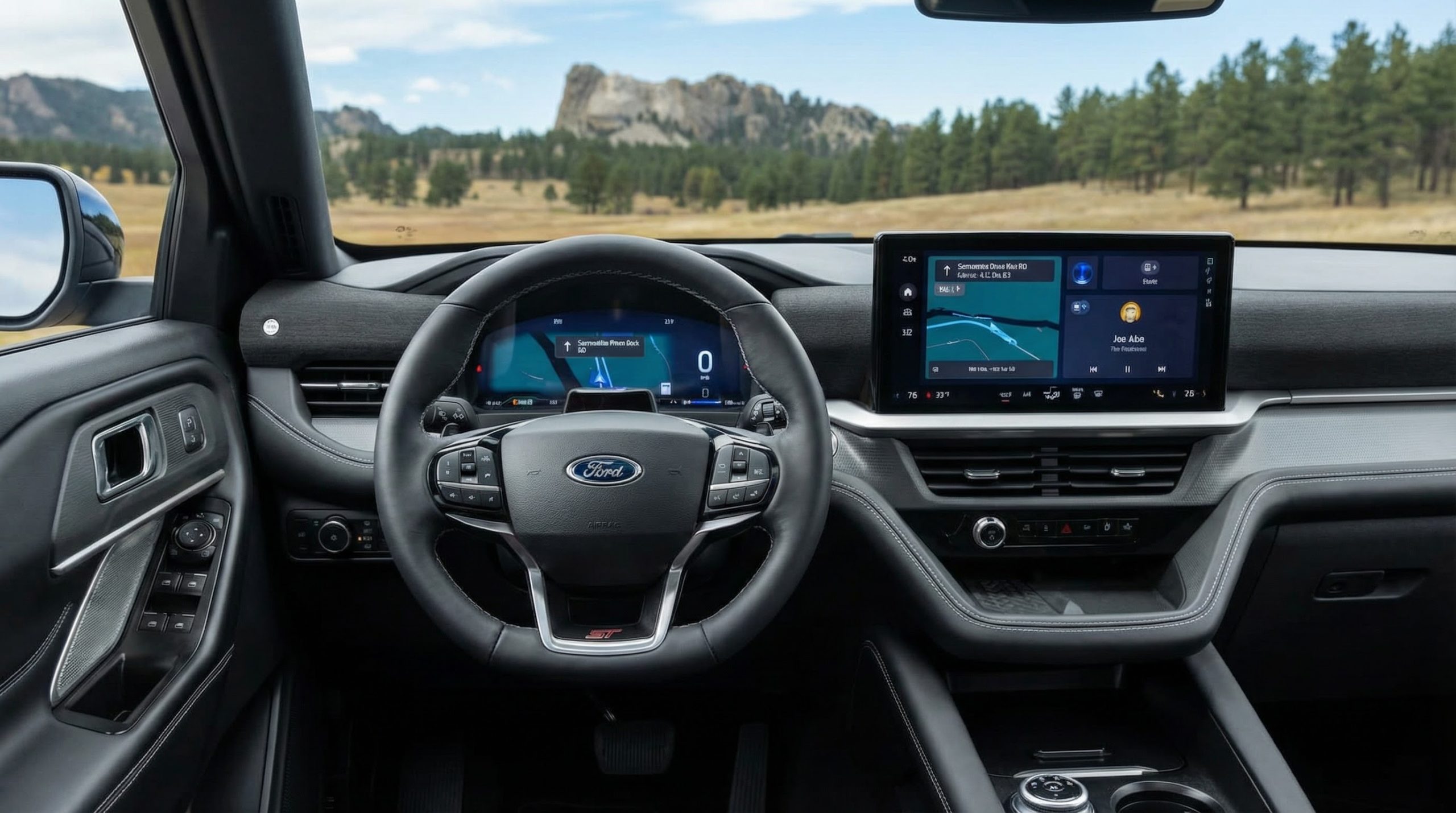
2026 Ford Explorer Technology & Safety Features Explained
The 2026 Ford Explorer offers modern technology designed to make driving easier, safer, and more connected. But many of the feature names — like BlueCruise, digital clusters, connectivity packages, and driver-assist systems — can feel confusing if you’re not familiar with Ford terminology.
This guide explains what the technology actually does in plain language, how it works in everyday life, and what you should pay attention to when choosing a trim.
For a full breakdown of how technology fits into the overall trim structure, see the complete 2026 Ford Explorer overview.
Table of Contents
- What is the 13.2-inch touchscreen?
- What is a digital instrument cluster?
- What is Ford BlueCruise?
- What driver-assist features are available?
- What is Ford connectivity?
- Do you have to pay for subscriptions?
- Which trim has the most technology?
- How to choose the right tech setup
What is the 13.2-inch touchscreen in the 2026 Explorer?
The 13.2-inch touchscreen is the main control center in the middle of the dashboard. It replaces many physical buttons and allows you to control navigation, music, phone calls, climate settings, and vehicle settings through a large display.
Think of it like a large tablet built into your vehicle. It responds to touch and allows menu navigation similar to a smartphone.
Apple CarPlay and Android Auto allow you to mirror your phone onto the screen so you can use familiar apps like maps and music.
What is a digital instrument cluster?
The digital instrument cluster is the screen directly in front of the driver. Instead of traditional analog gauges, it shows speed, fuel level, navigation prompts, and safety alerts on a customizable display.
This means the information can change depending on what you’re doing. For example, when using navigation, directions may appear directly in your line of sight.
What is Ford BlueCruise and how does it work?
BlueCruise is Ford’s hands-free highway driving system.
On certain pre-mapped highways, BlueCruise can allow the driver to remove their hands from the steering wheel while the vehicle maintains lane position and speed.
Important points:
- The driver must still pay attention to the road.
- The system uses cameras and sensors to monitor driver awareness.
- It works only on approved highways.
- Availability depends on trim and equipment selection.
BlueCruise does not replace the driver. It assists during long highway stretches to reduce fatigue.
What driver-assist features are available?
Driver-assist features are systems that help prevent accidents or reduce driver workload. These may include:
- Lane Keeping Assist – Gently helps keep the vehicle centered in its lane.
- Adaptive Cruise Control – Automatically adjusts speed to maintain distance from the vehicle ahead.
- Blind Spot Monitoring – Alerts you if a vehicle is in your blind spot.
- Pre-Collision Assist – Can warn you of potential frontal collisions.
- Rear Cross-Traffic Alert – Detects vehicles approaching from the side when backing out.
These systems support safer driving but do not replace driver responsibility.
What is Ford connectivity?
Connectivity refers to the Explorer’s ability to connect to the internet and communicate with your smartphone.
This enables features like:
- Remote start from your phone
- Vehicle location tracking
- Software updates over Wi-Fi
- Connected navigation services
Some features may require activation or subscription after an initial trial period.
Do you have to pay for subscriptions?
Some connected features and BlueCruise functionality may require a subscription after a trial period, depending on configuration.
It’s important to confirm what is included with your specific vehicle and how long any complimentary service lasts.
Which 2026 Explorer trim has the most technology?
Platinum and ST trims typically include the most advanced technology availability, though final feature inclusion depends on equipment group selection.
Trim comparison is explained further in our Explorer Trim Levels Guide.
How do you choose the right technology setup?
- Decide whether hands-free highway driving matters to you.
- Consider how often you use smartphone navigation.
- Determine whether remote access features are important.
- Review trim-level availability carefully.
- Confirm subscription details before purchase.
Key Takeaways
- The 13.2-inch screen functions like a large built-in tablet.
- The digital cluster replaces traditional gauges.
- BlueCruise allows hands-free highway driving in approved areas.
- Driver-assist systems help reduce risk but do not replace drivers.
- Some connected services may require subscriptions.
Frequently Asked Questions
Does the 2026 Explorer drive itself?
No. BlueCruise assists on certain highways, but the driver must remain attentive and responsible at all times.
Is BlueCruise standard?
BlueCruise availability depends on trim and equipment group selection.
Can I use Apple CarPlay without a subscription?
Apple CarPlay and Android Auto functionality do not require a subscription.
Does the Explorer update its software automatically?
Some vehicles can receive over-the-air software updates when connected to Wi-Fi.
Conclusion
In my experience, Explorer technology feels overwhelming at first because of the terminology — but once it’s broken down into what each system actually does in daily life, it becomes much easier to decide what matters. Most families don’t need every feature; they just need the right combination for how they drive.
About the Author
Lexy Tabbert provides research-driven SUV configuration guidance for drivers throughout South Dakota and beyond.
2026 Ford Explorer Interior & 3-Row Space Guide
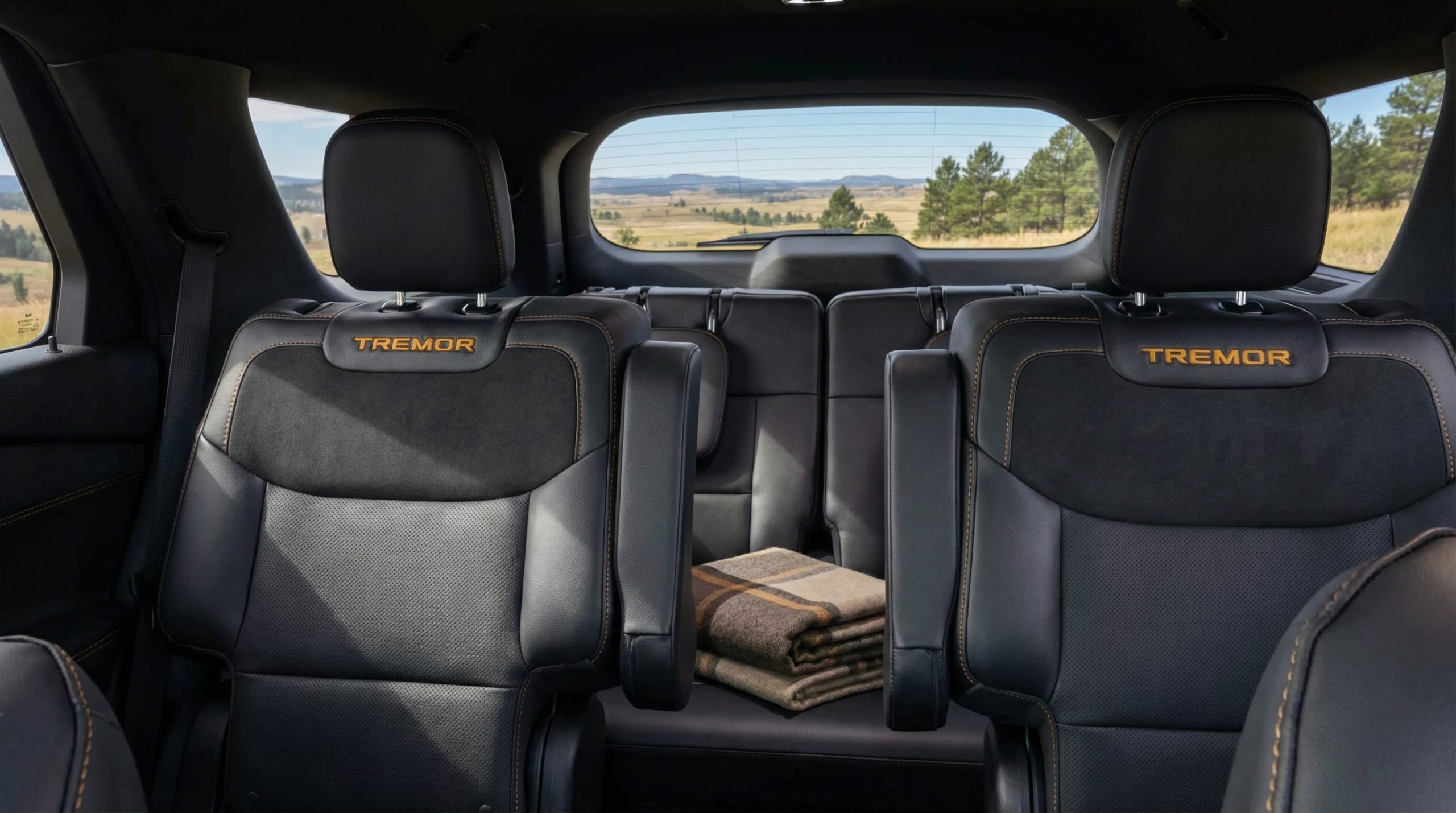
2026 Ford Explorer Interior & 3-Row Space Guide
The 2026 Ford Explorer is designed around three-row flexibility. For many families, interior layout matters more than horsepower or trim names. Seating configuration, third-row usability, and cargo space behind the rear seats often determine whether Explorer is the right fit.
This guide explains how the 2026 Explorer’s seating and cargo space are structured, and how trim and equipment choices can affect layout.
For a broader overview of trim positioning and feature availability, see the complete 2026 Ford Explorer overview.
Table of Contents
- How many people does the Explorer seat?
- Captain’s chairs vs bench: what’s the difference?
- Is the third row usable for adults?
- How much cargo space is behind the third row?
- Is the Explorer good for road trips?
- How to choose the right seating layout
How many people can the 2026 Ford Explorer seat?
The 2026 Explorer can seat up to seven passengers, depending on second-row configuration.
Second-row captain’s chairs reduce seating to six but improve passenger comfort and ease of access to the third row. A second-row bench increases capacity to seven.
Captain’s chairs vs bench: what’s the difference?
Captain’s chairs provide individual seating positions in the second row and a center aisle for easier third-row access. Many families prefer this layout for daily school drop-offs and passenger comfort.
Bench seating increases total seating capacity and can be useful for larger families who regularly transport more than six passengers.
Seating availability can vary by trim and equipment group, so it’s important to confirm configuration when selecting a vehicle.
Is the Explorer third row comfortable for adults?
The third row in the 2026 Explorer is generally best suited for children and shorter trips for adults. For extended travel with adult passengers, seating comfort may depend on passenger height and overall cabin configuration.
Families who regularly use the third row for teenagers or adults may want to evaluate overall cabin layout during a test drive.
How much cargo space is behind the third row?

With all three rows upright, the Explorer provides usable cargo space suitable for groceries, sports bags, and carry-on luggage.
Folding the third row significantly increases cargo capacity, allowing for larger items such as coolers, strollers, and travel gear.
Real-world cargo practicality depends on how frequently all three rows are occupied.
Is the 2026 Explorer good for road trips?
The Explorer’s three-row layout, available infotainment features, and flexible cargo configurations make it well-suited for family road trips.
For longer drives, interior materials, seating configuration, and available technology features can influence comfort more than raw cabin dimensions.
Technology availability is explained further in our Technology & Safety Guide.
How do you choose the right seating layout?
- Determine how many passengers you regularly transport.
- Decide whether third-row access convenience is important.
- Consider how often all seats will be occupied.
- Balance seating needs with cargo needs.
- Confirm trim availability of desired configuration.
Quick Interior Overview
| Feature | 2026 Explorer |
|---|---|
| Maximum Seating | Up to 7 passengers |
| Second Row Options | Bench or captain’s chairs (varies by configuration) |
| Third Row | Standard on all trims |
| Cargo Flexibility | Expandable with fold-flat rear seats |
Key Takeaways
- Explorer seats up to seven passengers.
- Captain’s chairs improve access and comfort.
- Bench seating increases total capacity.
- Cargo space expands significantly when rear seats are folded.
- Seating availability can vary by trim.
Frequently Asked Questions
Does the 2026 Explorer come standard with three rows?
Yes, three-row seating is standard across the Explorer lineup.
Which Explorer trims offer captain’s chairs?
Captain’s chairs are available on many configurations. Availability can vary by trim and equipment group.
Is the Explorer bigger than the Edge?
Yes, the Explorer offers three rows, while the Edge is a two-row SUV.
Is the third row suitable for adults?
The third row is generally best suited for children or shorter adult trips.
Conclusion
In my experience, most Explorer buyers make their final decision based on seating layout rather than trim name. Once families clarify whether they need six or seven seats — and how often the third row will be used — the right configuration usually becomes clear within the 2026 lineup.
About the Author
Lexy Tabbert provides research-driven SUV configuration guidance for drivers throughout South Dakota and beyond.
2026 Ford Explorer Towing Capacity & AWD Guide
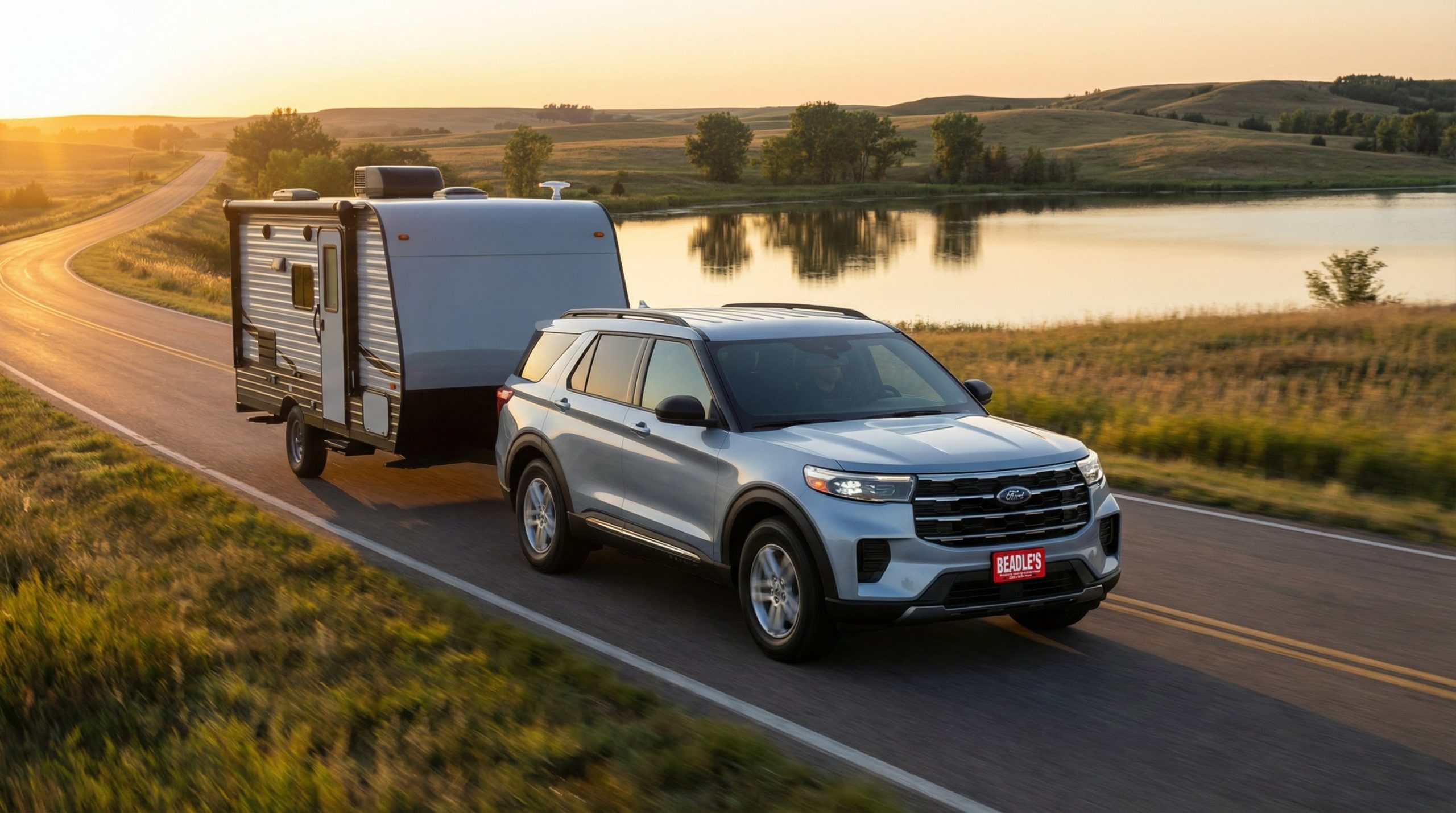
2026 Ford Explorer Towing Capacity & AWD Guide
The 2026 Ford Explorer can tow up to 5,000 pounds when properly equipped. That makes it capable of handling small campers, fishing boats, and utility trailers — while still serving as a daily family SUV.
This guide explains what “properly equipped” means, how towing varies by configuration, and what you should know about trailer setup, tongue weight, and all-wheel drive.
For a full overview of trim and engine structure, see the 2026 Ford Explorer model guide.
Table of Contents
- What is the maximum towing capacity?
- What does “properly equipped” mean?
- What can the Explorer realistically tow?
- What is the maximum tongue weight?
- What is trailer frontal area limitation?
- Does altitude affect towing?
- Does AWD improve towing confidence?
- Is Explorer good for winter towing?
- How to prepare your Explorer for towing
What is the maximum towing capacity of the 2026 Explorer?
When properly equipped, the 2026 Ford Explorer can tow up to 5,000 pounds.
This rating applies across engine options when configured correctly with the appropriate trailer tow equipment.
What does “properly equipped” mean?
“Properly equipped” typically refers to vehicles configured with the available Trailer Tow Package, correct hitch receiver setup, and appropriate drivetrain configuration.
Towing capability can depend on:
- Engine selection
- Drivetrain configuration
- Trailer Tow Package equipment
- Weight distribution and trailer setup
What can the Explorer realistically tow?
A 5,000-pound rating generally covers:
- Small travel trailers
- Single-axle campers
- Fishing boats
- Small enclosed utility trailers
Trailer weight, loaded cargo weight, and frontal area all matter when determining real-world performance.
What is the maximum tongue weight?
The Explorer’s maximum tongue weight rating is typically 500 pounds when properly equipped.
Proper tongue weight distribution is critical for stable towing.
What is trailer frontal area limitation?
The maximum recommended trailer frontal area is approximately 40 square feet. Larger frontal areas can increase aerodynamic drag and reduce towing performance.
This factor is often overlooked but plays an important role in safe towing.
Does altitude affect towing capacity?
Yes. At higher elevations, towing capacity can be reduced. As a general guideline, gross combined weight ratings may be reduced by approximately 2% per 1,000 feet of elevation.
This primarily matters when traveling through mountainous terrain.
Does AWD improve towing confidence?
Available all-wheel drive can improve traction when launching a trailer, especially on wet, snowy, or gravel surfaces. AWD does not increase maximum tow rating but can improve stability in certain conditions.
Is the Explorer good for winter towing?
When equipped with AWD and appropriate tires, the Explorer can provide confident winter towing for properly sized trailers. Trailer sway control and tow/haul modes also contribute to stability.
How do you prepare your Explorer for towing?
- Confirm trailer weight is within limits.
- Verify tongue weight.
- Ensure proper hitch setup.
- Check tire pressure.
- Use Tow/Haul mode when appropriate.
Key Takeaways
- Maximum towing is 5,000 pounds when properly equipped.
- Tongue weight rating is typically 500 pounds.
- Frontal area limits impact towing performance.
- Altitude can reduce effective towing capacity.
- AWD improves traction but not max rating.
Frequently Asked Questions
Can the 2026 Explorer tow a camper?
Yes, small campers within the 5,000-pound limit can be towed when properly equipped.
Is the Trailer Tow Package standard?
Tow equipment availability depends on trim and configuration.
Does AWD increase towing capacity?
AWD improves traction but does not increase maximum rated towing capacity.
Conclusion
In my experience, most Explorer owners tow well within the 5,000-pound rating, and understanding trailer setup matters more than chasing the highest number. When configured correctly, the 2026 Explorer offers a balanced combination of family practicality and light-duty towing capability.
About the Author
Lexy Tabbert provides research-driven SUV configuration guidance and towing insights for drivers across South Dakota and beyond.
2026 Ford Explorer Trim Levels Guide
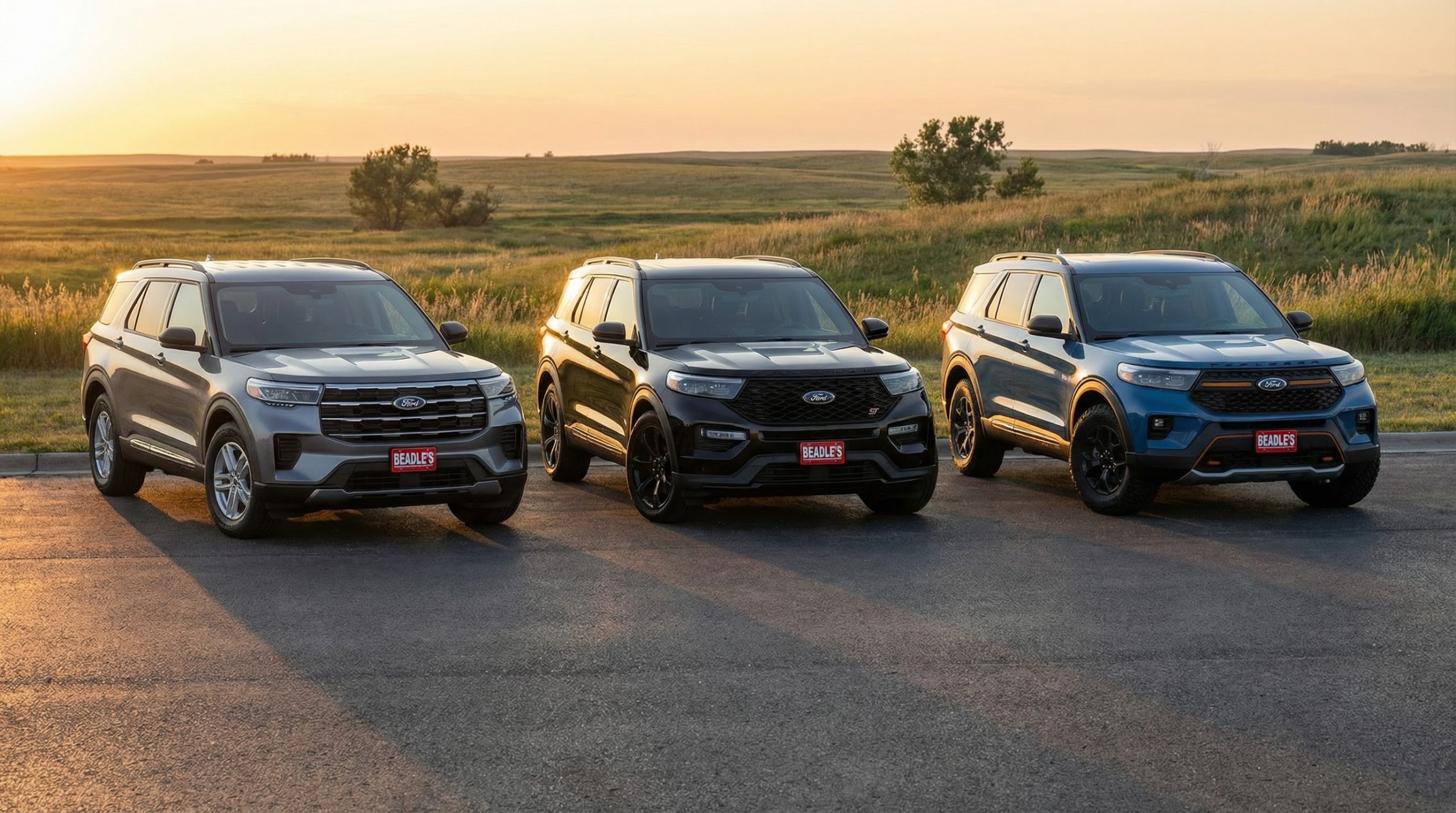
2026 Ford Explorer Trim Levels: Active vs ST-Line vs ST vs Platinum vs Tremor
The 2026 Ford Explorer lineup includes five primary trims, each designed around a different driving priority: everyday family flexibility, sport-inspired styling, performance acceleration, premium comfort, or off-road confidence.
This guide explains how Active, ST-Line, ST, Platinum, and Tremor differ — and how equipment groups within each trim affect seating, technology availability, and capability.
Before narrowing trims, it helps to understand how the full 2026 lineup is structured. That broader context is outlined in our complete 2026 Ford Explorer overview.
Table of Contents
- What trims are available?
- How do the trims compare side by side?
- What is the Explorer Active?
- What is the Explorer ST-Line?
- What is the Explorer ST?
- What is the Explorer Tremor?
- What is the Explorer Platinum?
- ST vs Tremor: Which is better?
- Best trim for families?
- How to choose the right trim
What trims are available on the 2026 Ford Explorer?
The 2026 Explorer is available in:
- Active (100A and 200A equipment groups)
- ST-Line
- ST
- Platinum
- Tremor
Equipment groups within each trim can alter seating configuration, technology availability, and certain features. Availability can vary by configuration.
How do the 2026 Explorer trims compare?
| Trim | Primary Focus | Engine Type | Personality |
|---|---|---|---|
| Active | Family practicality | 2.3L EcoBoost | Balanced, everyday flexibility |
| ST-Line | Sport styling | 2.3L EcoBoost | Athletic appearance without full performance tuning |
| ST | Performance | 3.0L EcoBoost | Stronger acceleration, sport-tuned feel |
| Platinum | Premium comfort | Varies by configuration | Upscale interior and technology focus |
| Tremor | Off-road confidence | 2.3L standard, 3.0L available | Adventure-oriented capability |
What is the 2026 Explorer Active?
Explorer Active is built around everyday family use. It prioritizes flexible seating, practical technology, and a balanced driving experience.
It is often the trim families choose when upgrading from a smaller SUV because it delivers three-row seating without emphasizing performance or luxury over usability.
What is the 2026 Explorer ST-Line?
ST-Line emphasizes sporty design elements while maintaining the standard 2.3L EcoBoost powertrain. It is for buyers who prefer an athletic appearance but do not require the full performance tuning of the ST model.
What is the 2026 Explorer ST?
Explorer ST is performance-focused. It features the 3.0L EcoBoost engine and sport-tuned characteristics designed for stronger acceleration and a more responsive driving feel.
Seating configurations may vary by equipment group. For families balancing performance and practicality, ST can provide both — depending on layout selection.
Performance differences are explored more deeply in our Explorer ST Performance Guide.
What is the 2026 Explorer Tremor?
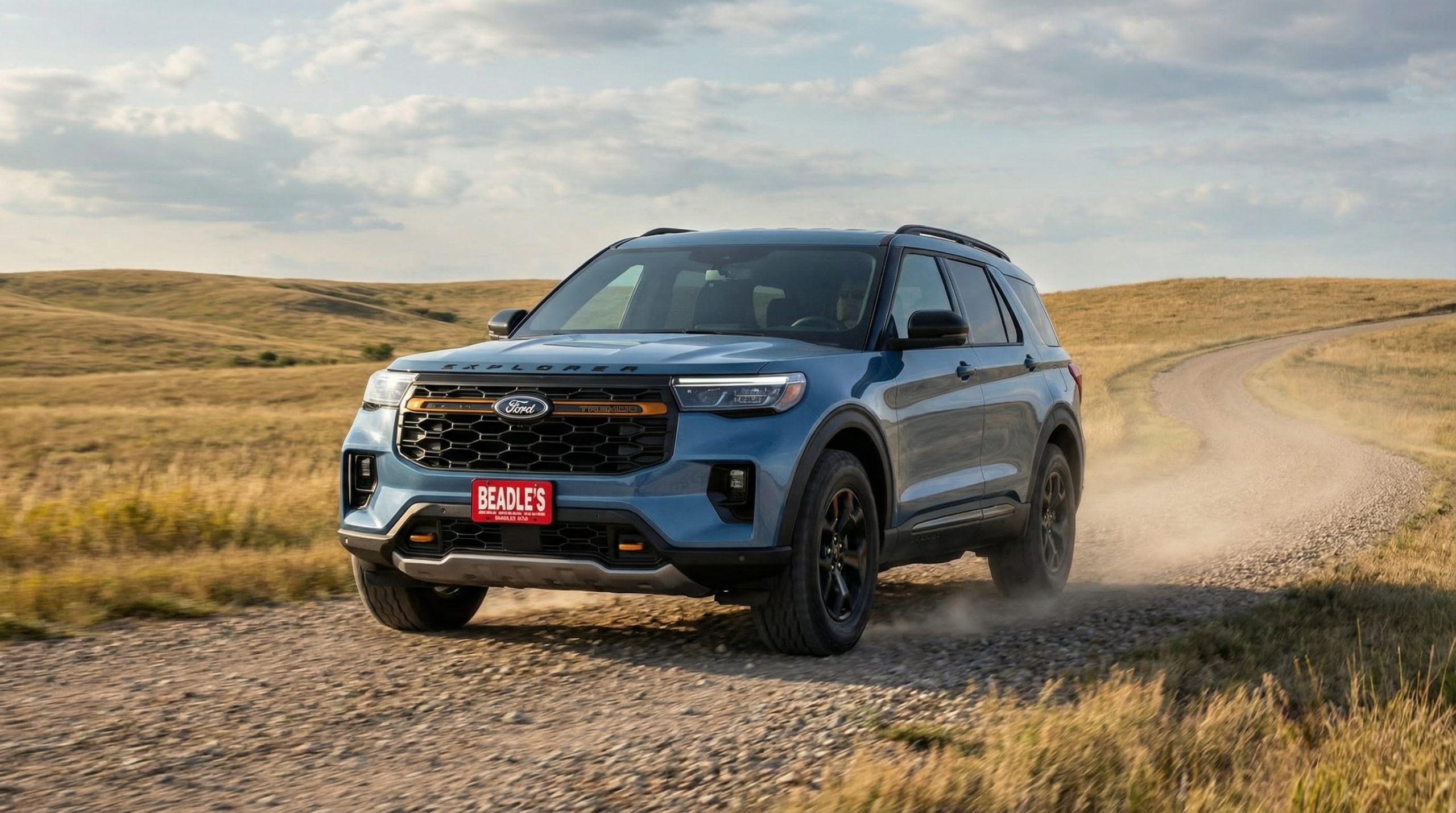
Explorer Tremor is designed for drivers who travel gravel roads, uneven terrain, and outdoor destinations more frequently. It adds a distinct visual identity and adventure-oriented configuration.
Engine availability depends on equipment selection. Tremor can be configured differently than standard trims.
What is the 2026 Explorer Platinum?
Explorer Platinum focuses on interior refinement, advanced technology availability, and upscale finishes. It appeals to drivers who prioritize comfort and premium design elements.
ST vs Tremor: Which is better?
ST is better for performance-focused drivers who value acceleration and sport handling. Tremor is better for drivers who prioritize confidence beyond pavement and travel versatility.
The decision depends on driving environment more than horsepower alone.
Which Explorer trim is best for families?
Active and ST-Line are commonly selected by families because they balance space, usability, and technology without shifting into full performance or premium positioning.
Interior layout differences are explained further in our Interior & Cargo Guide.
How do you choose the right 2026 Explorer trim?
- Identify your primary use (family commuting, towing, performance, adventure).
- Confirm seating configuration needs.
- Review engine preferences.
- Compare technology availability.
- View inventory within that trim.
Key Takeaways
- Active focuses on family practicality.
- ST-Line adds sport-inspired styling.
- ST prioritizes performance.
- Tremor emphasizes adventure capability.
- Platinum delivers premium comfort.
Frequently Asked Questions
Does Explorer ST always have captain’s chairs?
Seating configuration availability can vary by equipment group and configuration.
Is Tremor more powerful than ST?
ST is performance-oriented, while Tremor is capability-oriented. Engine availability varies by configuration.
Which trim includes BlueCruise?
Driver-assist technology availability varies by trim and equipment group selection.
Conclusion
In my experience, the right Explorer trim becomes clear once buyers identify whether their daily driving leans more toward family logistics, performance enjoyment, or outdoor travel. When you match the trim to how you actually use your SUV, the 2026 Explorer lineup makes a lot more sense.
About the Author
Lexy Tabbert provides research-driven SUV configuration guidance for drivers throughout South Dakota and beyond.
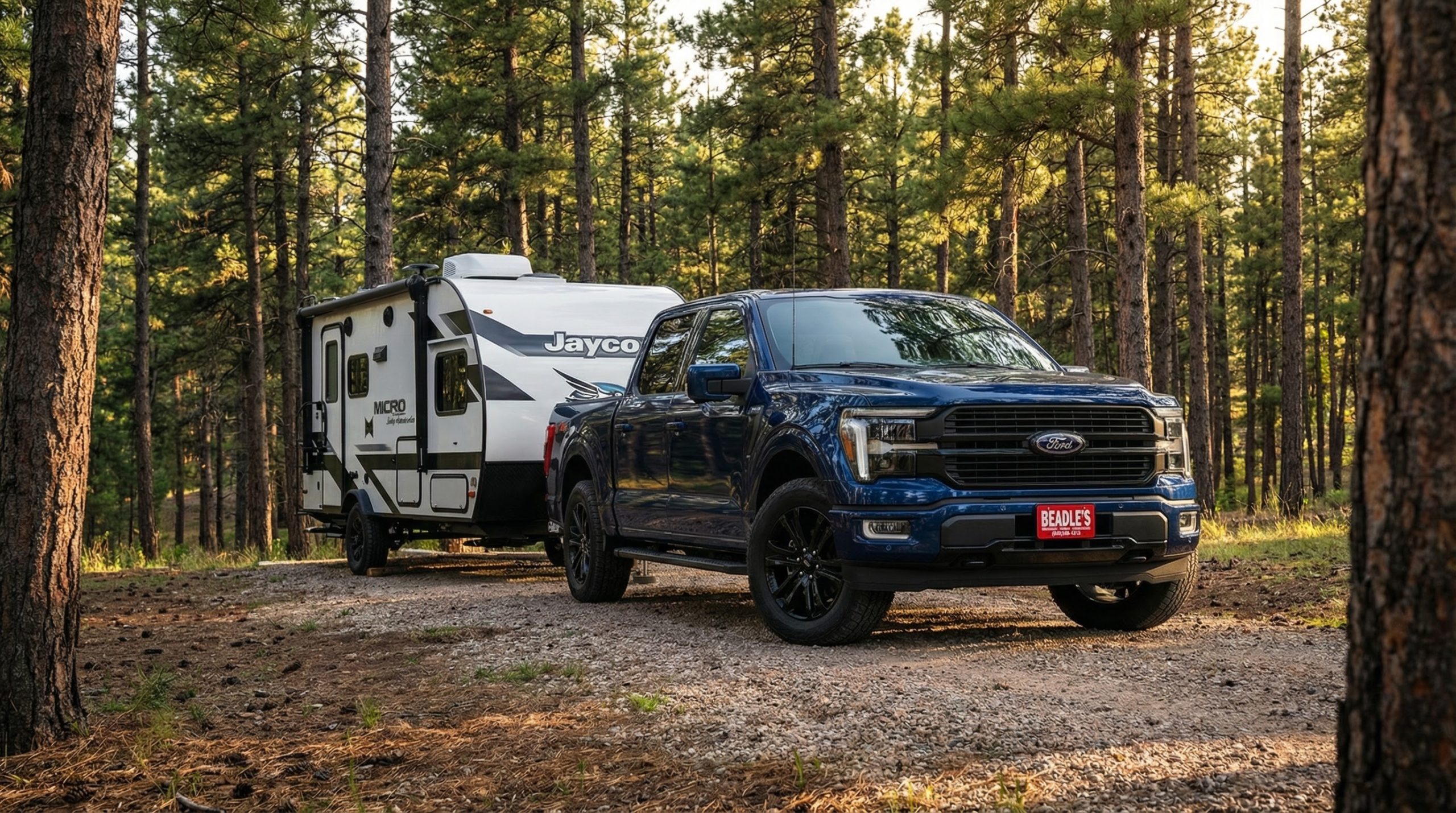
Long-term ownership costs for the 2026 Ford F-150 depend heavily on engine selection, driving habits, towing frequency, and trim configuration.
This guide explains what to expect from gas and hybrid configurations, how usage patterns affect costs, and what rural drivers should consider before ordering.
For full trim, engine, and towing details, see the complete 2026 Ford F-150 overview.
What Is the Fuel Economy Like on the 2026 F-150?
Fuel economy varies depending on engine, drivetrain, axle ratio, and driving conditions. Smaller EcoBoost engines generally prioritize efficiency, while larger engines and performance variants prioritize capability.
The PowerBoost hybrid is engineered to improve efficiency compared to traditional gas-only configurations, particularly in city and mixed driving conditions.
Exact EPA ratings vary by configuration and should be reviewed alongside trim and drivetrain selection.
Hybrid vs Gas: Which Costs Less Over Time?
The answer depends largely on driving habits.
- Frequent short trips and city driving: Hybrid efficiency gains may offset higher initial cost.
- Heavy towing and highway use: Gas engines may offer comparable long-term operating costs.
- Jobsite or recreational power needs: Hybrid Pro Power capability may reduce generator costs.
Buyers who rarely tow at maximum capacity but drive daily may benefit more from hybrid efficiency than those consistently hauling heavy trailers.
Engine performance and towing differences are detailed in our F-150 Engine Options Guide.
What Maintenance Should Owners Expect?
Like all full-size trucks, maintenance includes routine oil changes, brake service, tire rotations, and fluid inspections.
EcoBoost engines use turbocharging systems that require proper maintenance intervals. Hybrid models include additional electrical components but are engineered for long-term durability.
Maintenance costs are more influenced by usage intensity than engine type alone.
How Long Does the PowerBoost Hybrid Battery Last?
Hybrid battery systems are designed for long-term operation under normal use conditions. Warranty coverage details should be reviewed at time of purchase.
Battery longevity depends on driving habits, climate conditions, and regular servicing.
Does Engine Choice Affect Fuel Tank Size?
Yes. Certain engine configurations may impact available fuel tank sizes and range characteristics.
Drivers planning long-distance towing or rural travel should verify fuel tank specifications when selecting engine and trim combinations.
How Does the F-150 Hold Its Value?
The Ford F-150 has historically maintained strong resale value compared to many competitors in the full-size segment.
Factors influencing resale include:
- Engine choice
- Trim level
- Condition and mileage
- Regional demand
- Maintenance history
Work-ready trims and balanced configurations often perform well in rural resale markets.
How to Choose the Most Cost-Effective 2026 F-150
- Estimate your realistic annual mileage.
- Evaluate how often you tow heavy loads.
- Consider whether onboard power replaces separate equipment.
- Balance upfront cost with projected long-term fuel savings.
- Choose a trim that fits both daily use and resale goals.
Key Takeaways
- Fuel economy varies significantly by configuration.
- Hybrid models may benefit daily drivers more than heavy haulers.
- Maintenance costs depend more on usage than engine type.
- Fuel tank size and axle ratios affect long-distance practicality.
- Balanced configurations often support strong resale value.
Frequently Asked Questions
Is the hybrid more expensive to maintain?
Maintenance costs vary by usage pattern. Hybrid systems are engineered for durability and include warranty coverage.
Does towing reduce fuel economy significantly?
Yes. Fuel economy decreases when towing, especially at higher weights and highway speeds.
Is the F-150 a good long-term truck investment?
When properly maintained and configured appropriately, the F-150 has historically demonstrated strong long-term durability and resale value.
Conclusion
In my experience, long-term ownership decisions are less about chasing the highest fuel economy number and more about honestly evaluating how the truck will be used. A well-matched configuration tends to deliver better satisfaction and value over time than selecting features based solely on headline statistics.
Review available 2026 Ford F-150 models at Beadle Ford or contact us to discuss long-term ownership considerations.
About the Author
Lexy Tabbert provides research-driven truck ownership guidance and vehicle configuration insights for drivers across South Dakota and the surrounding region.
2026 Ford F-150 Technology & Interior Guide
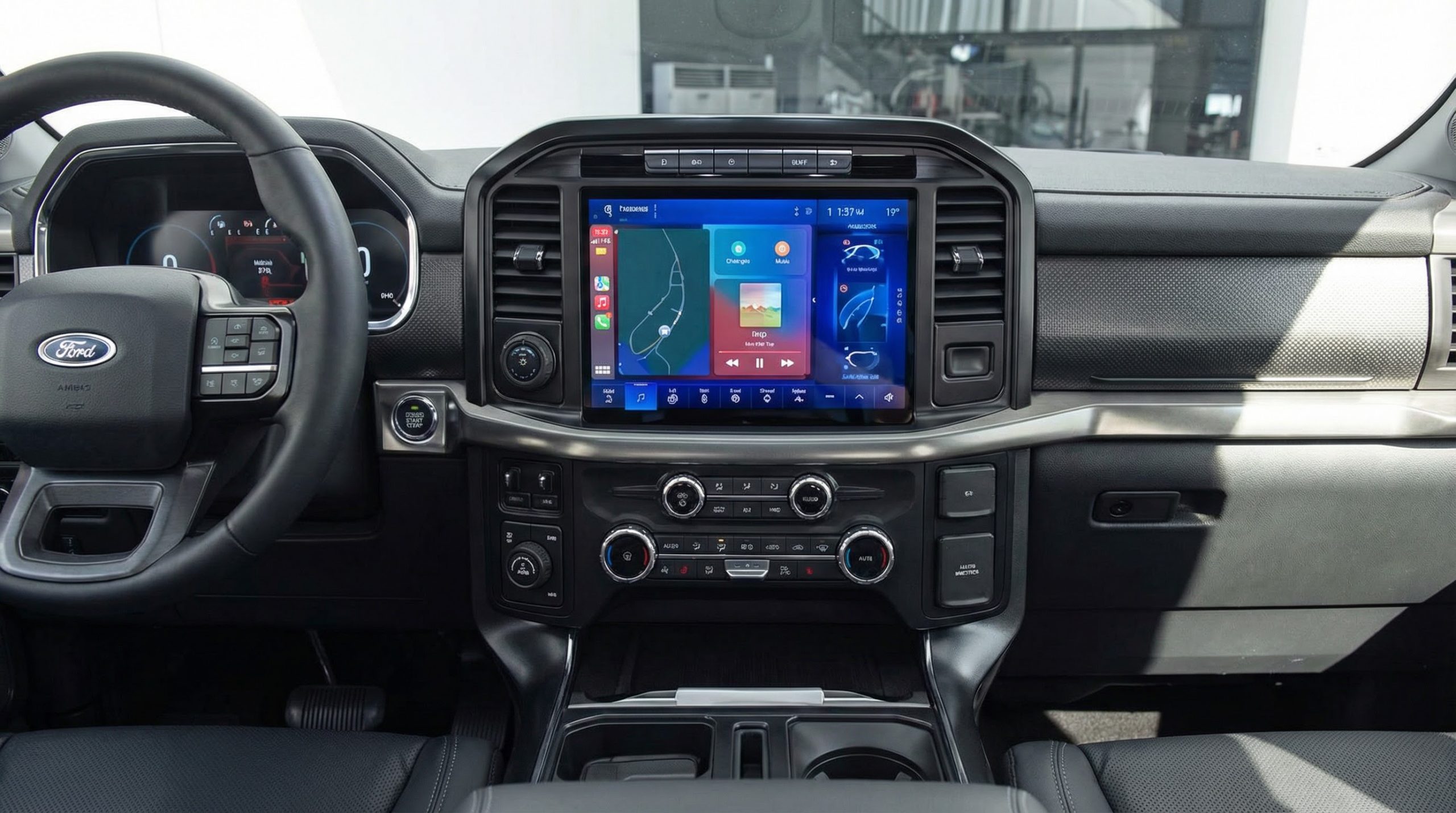
The 2026 Ford F-150 integrates advanced infotainment, driver assistance systems, and interior refinement features that elevate it beyond traditional work-truck expectations.
This guide explains available technology, interior materials, connectivity features, and comfort upgrades. For trim-by-trim availability and engine pairing, see the full 2026 Ford F-150 overview.
What Is SYNC 4 on the 2026 F-150?
SYNC 4 is Ford’s advanced infotainment system. It supports touchscreen functionality, smartphone integration, voice recognition, and over-the-air update capability.
Depending on trim, the F-150 may feature a large center touchscreen display with split-screen capability for navigation, media, and vehicle settings.
Feature availability varies by trim and equipment group, which is outlined in our F-150 Trim Levels Guide.
Does the 2026 F-150 Have a Digital Instrument Cluster?
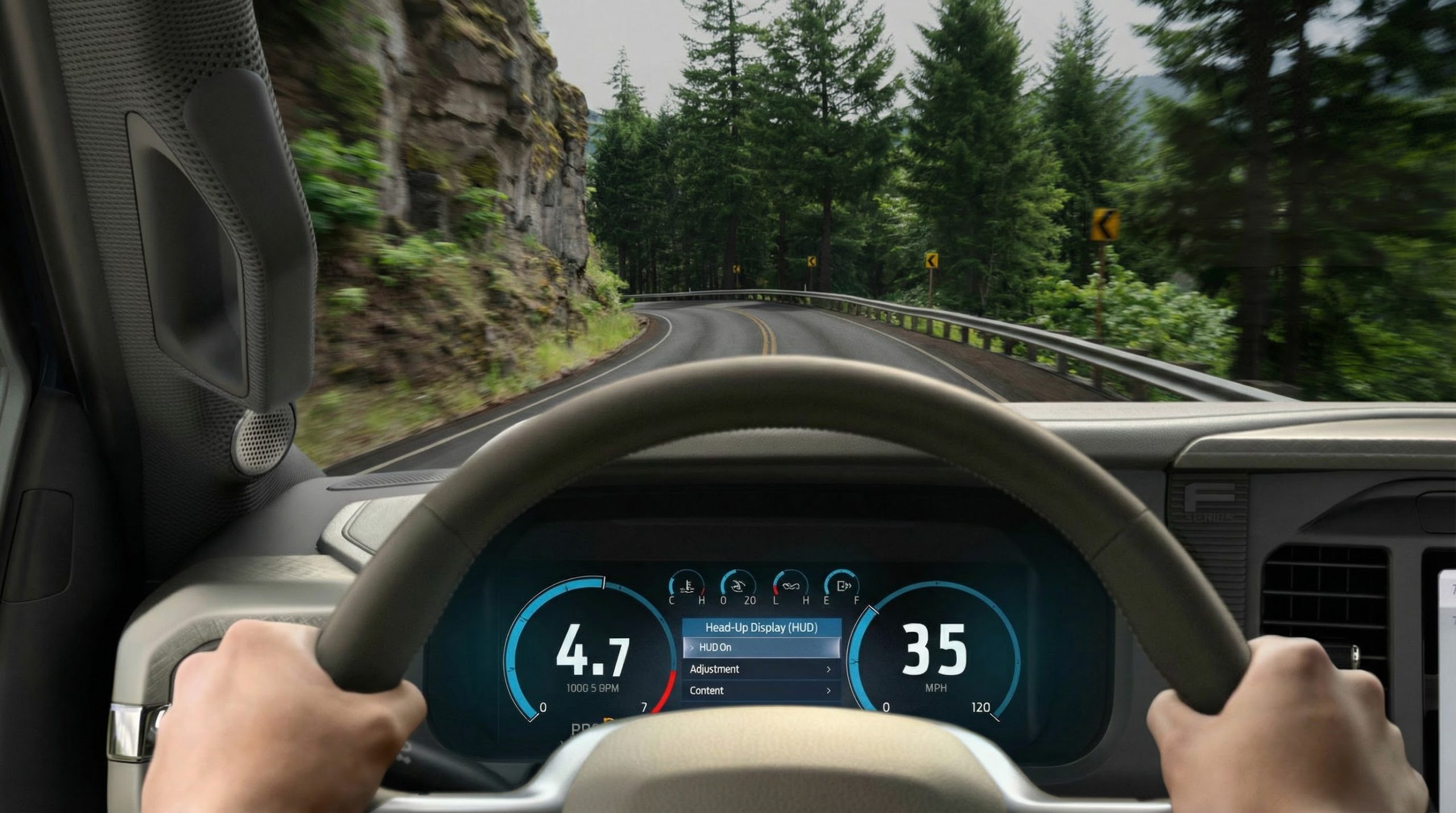
Yes. Select trims offer a fully digital instrument cluster that replaces traditional analog gauges. This display can present navigation prompts, towing information, off-road data, and customizable vehicle information.
Cluster availability varies by trim and equipment group.
Is BlueCruise Available on the 2026 F-150?
Available on select trims, BlueCruise is a hands-free highway driving assistance feature designed for compatible divided highways. It uses camera and radar systems to help maintain lane position and adaptive speed control.
Feature availability and subscription requirements depend on trim and package selection.
What Is the Ford Connectivity Package?
The available Ford Connectivity Package enhances data-based services, navigation functionality, and connected features through Ford’s digital ecosystem.
Buyers considering advanced connected features should review package requirements alongside their selected trim.
What Is Pro Power Onboard?
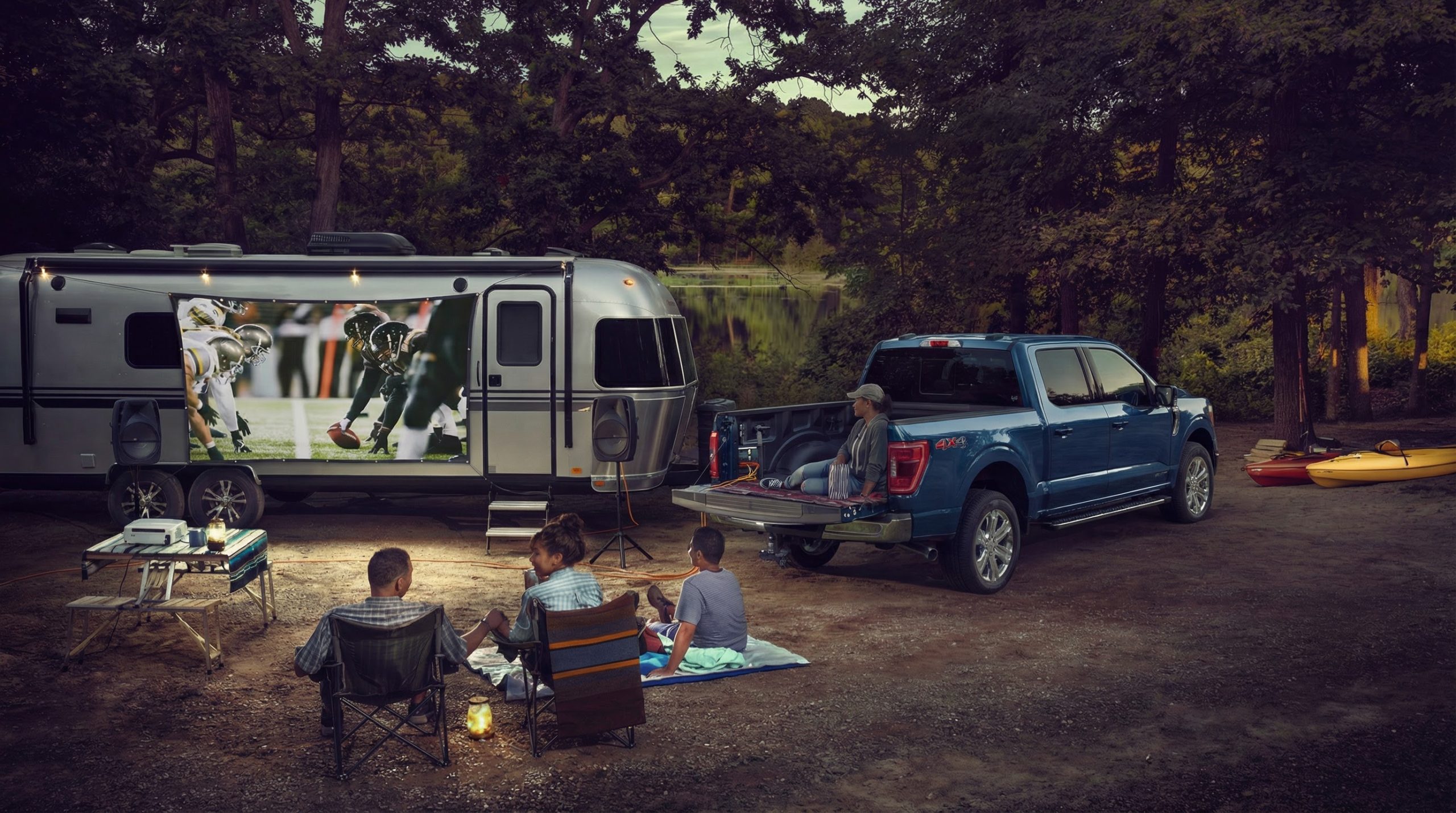
Pro Power Onboard provides integrated electrical outlets in the truck bed, allowing drivers to power tools, appliances, and jobsite equipment directly from the vehicle.
This feature is especially valuable for contractors, outdoor recreation users, and rural property owners.
Engine pairing and output levels may vary depending on configuration.
How Do Interior Materials Differ by Trim?
Interior finishes vary significantly across the lineup.
- XL / STX: Durable cloth-focused interiors
- XLT: Upgraded materials with expanded tech availability
- Lariat: Premium seating surfaces and refined finishes
- King Ranch / Platinum: High-end materials and distinctive trim accents
- Raptor: Performance-focused interior styling
For a full breakdown of trim positioning, see our F-150 Trim Levels Guide.
Does the 2026 F-150 Offer a Mobile Office Setup?
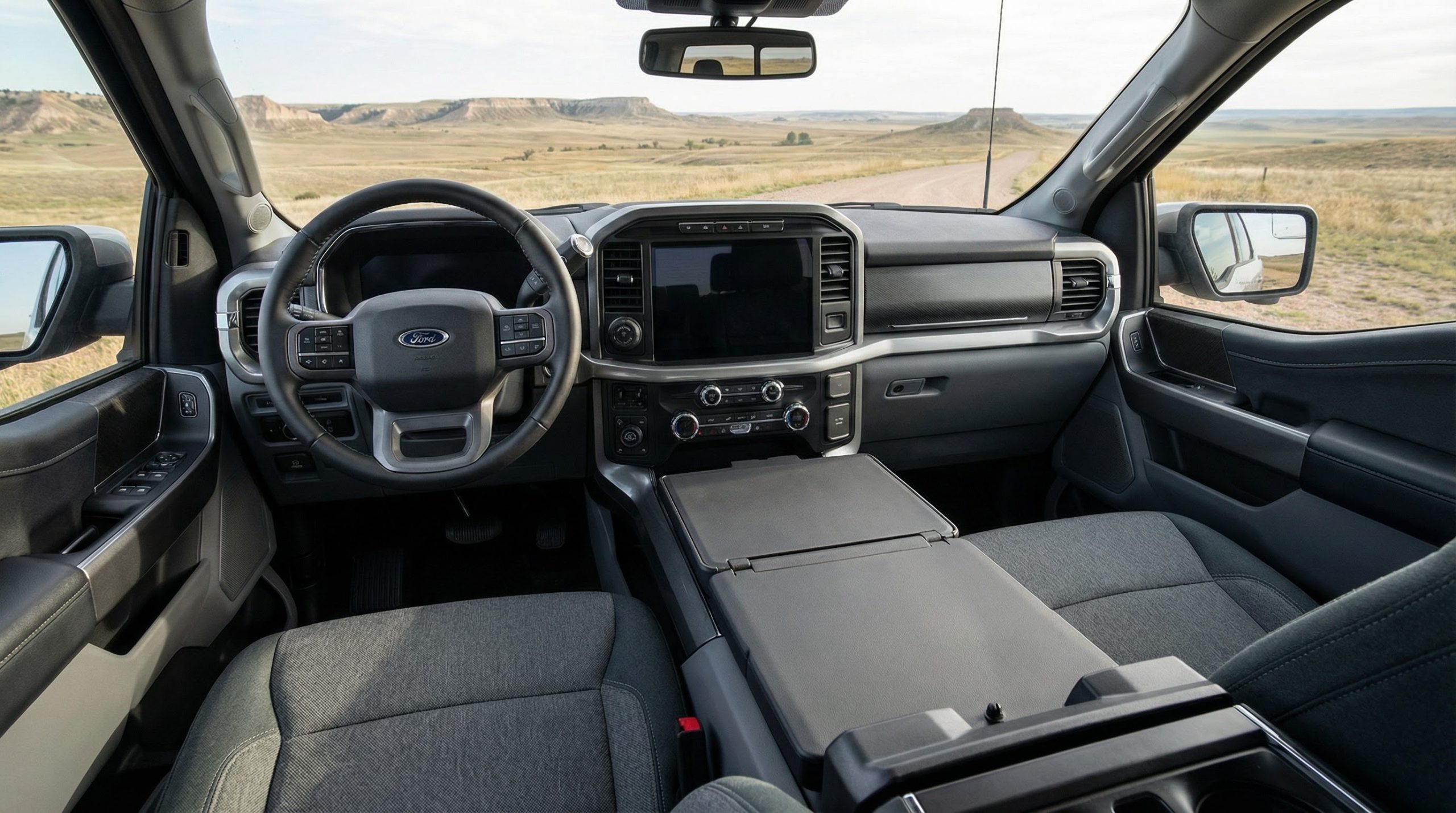
Yes. Select configurations offer a fold-flat work surface in the center console, creating a stable workspace for laptops, paperwork, and tablets.
Combined with available connectivity features and Pro Power Onboard, this setup allows the truck to function as a mobile workspace.
How to Choose the Right Technology Setup
- Determine whether advanced driver assistance is a priority.
- Identify if onboard power is needed for work or recreation.
- Consider how much time is spent commuting or traveling long distance.
- Match desired features to trim and equipment groups.
Key Takeaways
- SYNC 4 supports modern infotainment and connectivity features.
- Digital clusters are available on select trims.
- BlueCruise availability varies by configuration.
- Pro Power Onboard enhances jobsite and recreational flexibility.
- Interior refinement increases significantly at higher trims.
Frequently Asked Questions
Does every 2026 F-150 include a large touchscreen?
Screen size and feature availability vary by trim and equipment group.
Is BlueCruise standard?
No. It is available on select trims and may require specific packages or subscription activation.
Can Pro Power Onboard run power tools?
Yes. Output capability depends on configuration and engine pairing.
Conclusion
In my experience, technology decisions should support how the truck will actually be used. For some buyers, advanced driver assistance features are essential for long highway drives. For others, onboard power and mobile workspace functionality provide more real-world value. Choosing the right setup means aligning features with daily routines rather than simply selecting the highest trim.
View current 2026 F-150 technology-equipped models at Beadle Ford or contact us to compare trim features.
About the Author
Lexy Tabbert provides research-driven vehicle guidance and truck configuration insights for drivers across South Dakota and the surrounding region.
Connect with us

