
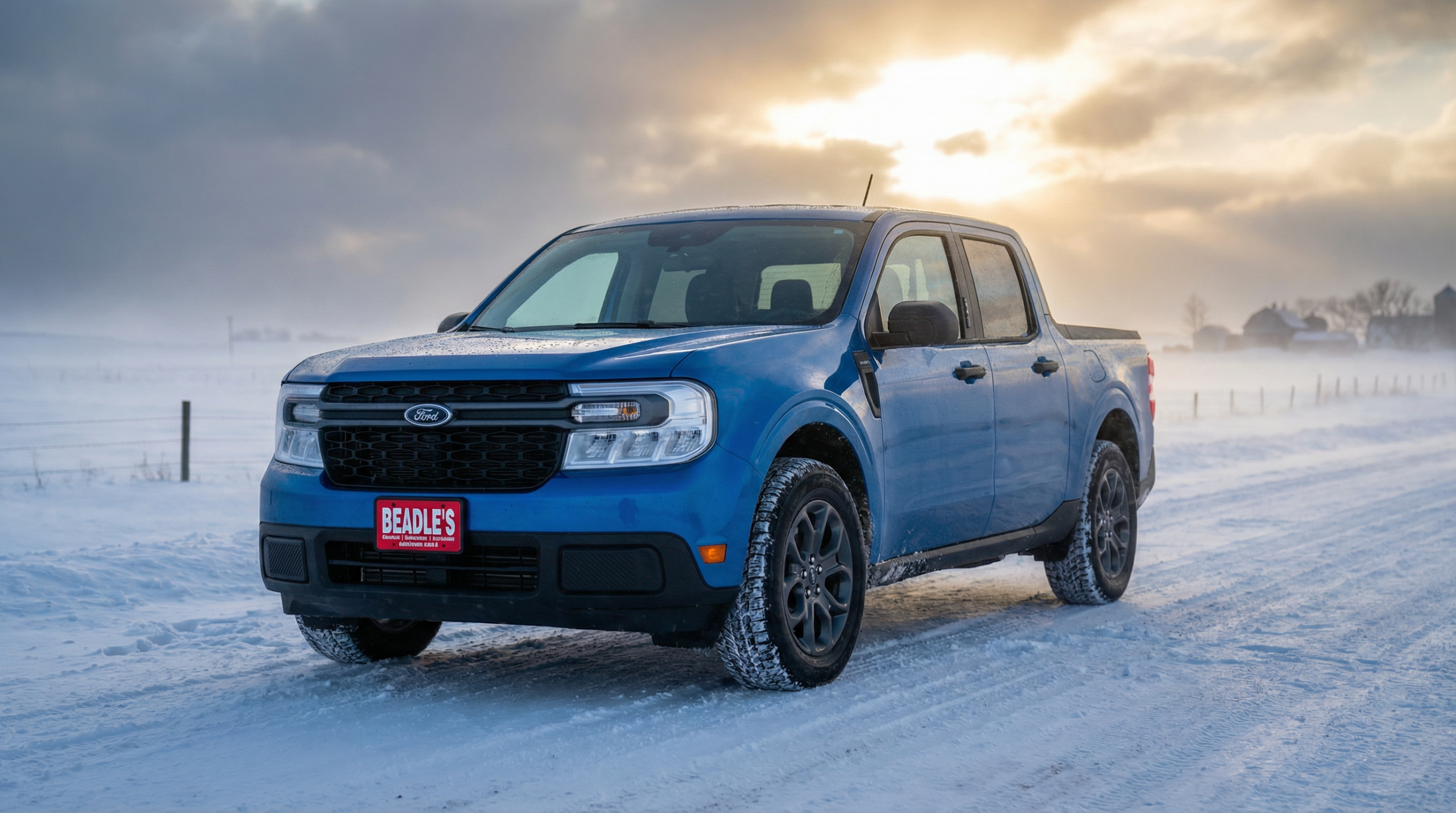
If you’re buying a Maverick in South Dakota, winter confidence is the real test. AWD helps—but the best winter setups come from AWD + the right tires + realistic expectations. This guide focuses on what actually makes a Maverick feel stable and predictable when roads are slick, windy, or snow-packed.
Winter performance makes the most sense after you’ve decided drivetrain and configuration. If you haven’t done that step yet, start with: 2026 Maverick Specs & Configurations. For inventory and shopping help, visit the Ford Maverick hub.
AWD vs tires: what matters more?
For winter driving, tires usually make the biggest difference first. AWD helps you get moving and maintain traction, but stopping and cornering confidence comes heavily from tire grip. The best winter Maverick setup is usually AWD plus tires that match your routes and snow/ice exposure.
Traction basics for compact trucks
Maverick is a compact truck, which is a good thing in winter: it’s easier to maneuver and less fatiguing in town. The tradeoff is that traction can change quickly when roads go from plowed to drifted, or when you transition from pavement to gravel. That’s why tires, visibility, and a stable driving rhythm matter just as much as drivetrain.
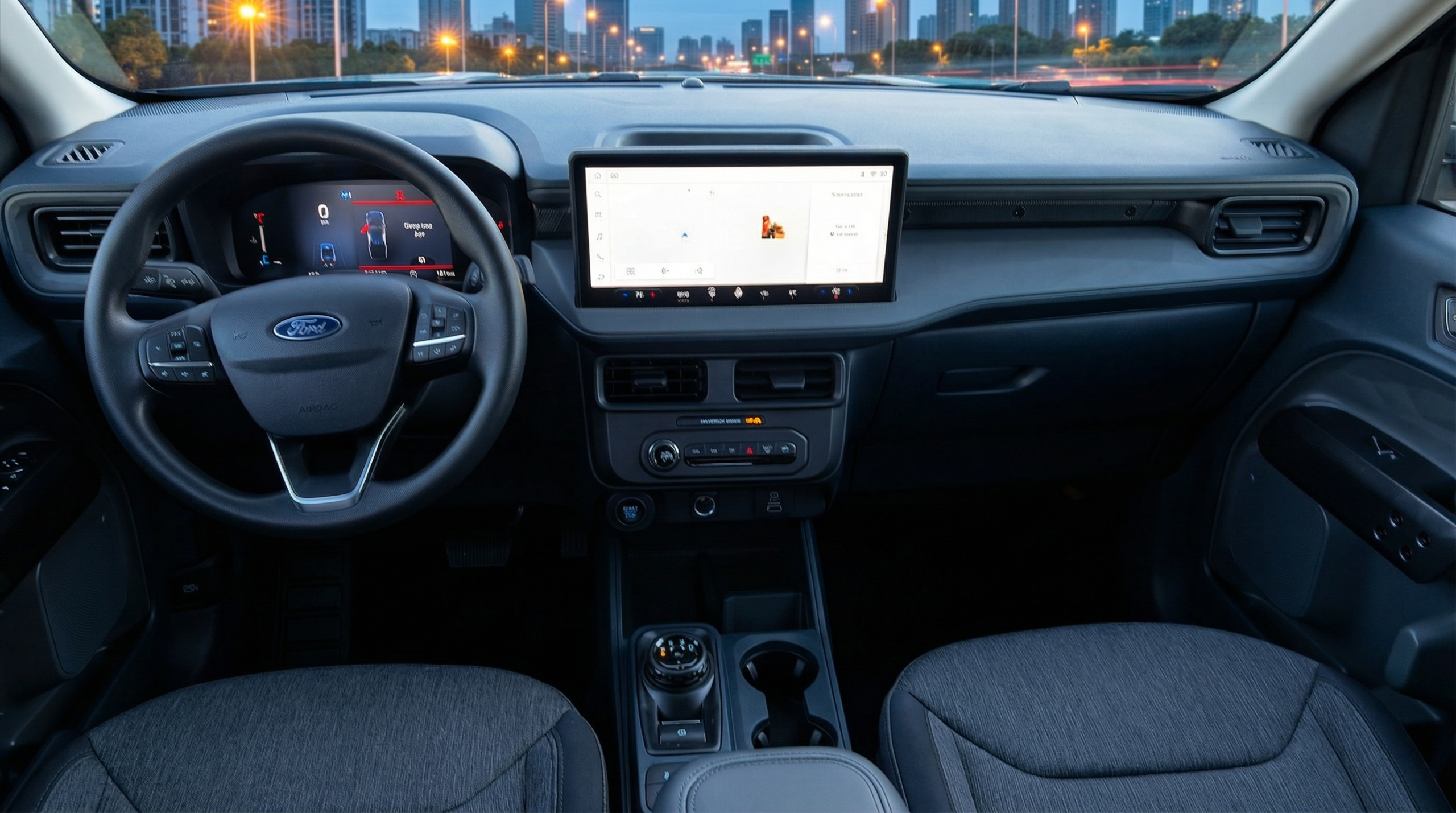
If you’re balancing winter needs with ownership costs, this is explored further in: 2026 Maverick MPG & Ownership Costs.
Highway wind and stability: what to expect
South Dakota winter driving isn’t just snow—it’s wind. On open highways, the combination of gusts, passing semis, and uneven road surfaces can make vehicles feel “busy.” The best way to reduce stress is good tires, proper pressure, and a build that matches your real route needs.
How to set up a Maverick for winter (practical checklist)
- Choose tires intentionally: winter tires if you drive in snow/ice daily; quality all-seasons if you’re mostly on plowed roads.
- Confirm AWD if it’s a non-negotiable: verify on the equipment list—not assumptions.
- Check wipers/visibility: winter visibility is often the “make or break” comfort factor.
- Keep weight realistic: don’t overload—payload still matters in winter handling.
- Plan for driving style: smooth inputs beat aggressive driving every time in slick conditions.
Quick Overview
| Best winter upgrade | Tires that match your routes and snow/ice exposure |
| Best confidence combo | AWD + good tires + clear visibility setup |
| Smart shopping move | Choose drivetrain first, then trim; confirm equipment list on the exact truck |
How to choose an AWD Maverick build for SD winters
- Decide where you drive: in-town, highway commute, or rural gravel routes.
- Choose AWD if you need traction margin for winter and variable surfaces.
- Budget for tires that match your winter exposure (this matters more than many packages).
- Keep towing/payload realistic so winter handling stays predictable.
- Compare two real builds on the Maverick hub to confirm equipment and value.
FAQ
Is AWD enough for South Dakota winters?
Do I need winter tires if I have AWD?
What’s the biggest winter-driving mistake Maverick buyers make?
Conclusion
In my experience, the Maverick winter setup that feels best is simple: AWD for traction margin, tires that match your routes, and a build that stays realistic on payload and towing. When buyers plan for visibility and traction first, the Maverick feels calm and predictable even when South Dakota weather doesn’t cooperate.
About the Author: Lexy Tabbert helps South Dakota and North Dakota shoppers choose winter-capable truck setups for real routes—highway commutes, rural roads, and changing weather. Her guidance focuses on practical confidence: the right drivetrain, the right tires, and a configuration that matches how you actually drive.
Connect with us

