
Ford Edge Capability Guide
How Much Can a Ford Edge Tow? Capacity, Cargo Space, and Real-World Capability
Definitive towing specs, Class II package details, and practical guidance for South Dakota buyers.
The Ford Edge is a three-row crossover SUV built for families, outdoor enthusiasts, and SD ranchers who need a daily driver that can handle a boat, utility trailer, or camping setup. But what’s the real towing capacity? What cargo space do you actually get? And how do you know if an Edge you’re considering at a dealer lot is equipped to tow?
We’ve pulled the OEM spec sheets and real-world owner feedback to give you the complete picture — exact towing limits by engine and package, GCWR numbers, tongue weight, and honest talk about what Edge owners pull across South Dakota’s lakes and back roads.
On This Page
Ford Edge Towing Capacity: OEM Specs
The Ford Edge comes in three main powertrain configurations, and towing capacity differs significantly by engine choice and whether you add the optional Class II Tow Package (53G). Here’s the breakdown from Ford’s official 2023–2024 towing guides:
| Configuration | Max Trailer Weight | GCWR | Tongue Load |
|---|---|---|---|
| 2.0L EcoBoost I4 AWD (no tow package) | 1,500 lbs | 6,300 lbs | N/A* |
| 2.0L EcoBoost I4 AWD + Class II Package (53G) | 3,500 lbs | 8,300 lbs | 350 lbs |
| 2.7L EcoBoost V6 AWD ST (tow package standard) | 3,500 lbs | 8,500 lbs | 350 lbs |
*The base 2.0L without tow package does NOT offer a factory Class II receiver; dealer accessory installation required. Max tongue load is 350 lbs on configurations with Class II package or factory tow prep.
GCWR explained: Gross Combined Weight Rating is the total weight of your Edge plus the loaded trailer. Ford’s system stops you from overloading — if your Edge weighs 4,500 lbs, you can’t add more than 3,800 lbs of trailer and cargo in the 8,300 lbs GCWR configuration.
Key takeaway: If you plan to tow more than 1,500 lbs, you need either the Class II Package on the 2.0L or the 2.7L V6 ST. The 2.7L offers a higher GCWR (8,500 vs. 8,300) and slightly more confidence for heavier loads, but both cap out at 3,500 lbs trailer weight.
Expert Tip:
All configurations are SAE J2807 certified, meaning they’ve been independently tested for towing safety. You can tow up to spec with confidence, but don’t exceed it.
Class II Tow Package (53G): What You’re Really Getting
The optional Class II Tow Package (Ford code 53G) is standard on the 2.7L V6 ST trim and optional on SE, SEL, ST-Line, and Titanium trims. Here’s exactly what Ford includes:
Class II Tow Package (53G) Contents
- Trailer Wiring Harness (4-Pin): Powers brake lights and turn signals on your trailer. Essential for legal towing.
- Hitch Receiver (Class II): 1¼” square, rated for 3,500 lbs. Accepts standard hitch balls and adjustable ball mounts.
- Trailer Sway Control: Uses the Edge’s stability control to detect and dampen trailer oscillation at highway speeds. Activates automatically.
- SelectShift Automatic Transmission + Steering Wheel Paddle Shifters: Manual gear selection for engine braking on grades and towing. Better heat management than full auto.
The SelectShift and paddle shifters are particularly valuable when towing. Lake Oahe and the Missouri River run through central South Dakota with plenty of hills — having the ability to lock the transmission in a lower gear means your transmission fluid stays cooler and you get better braking on the descent. That alone can add transmission lifespan by thousands of miles on a towing vehicle.
Frontal area: Edges with the tow package have a larger frontal area (30 sq ft vs. 20 sq ft), which relates to air density and cooling calculations. More relevant for heat-heavy conditions like summer towing in the Black Hills.
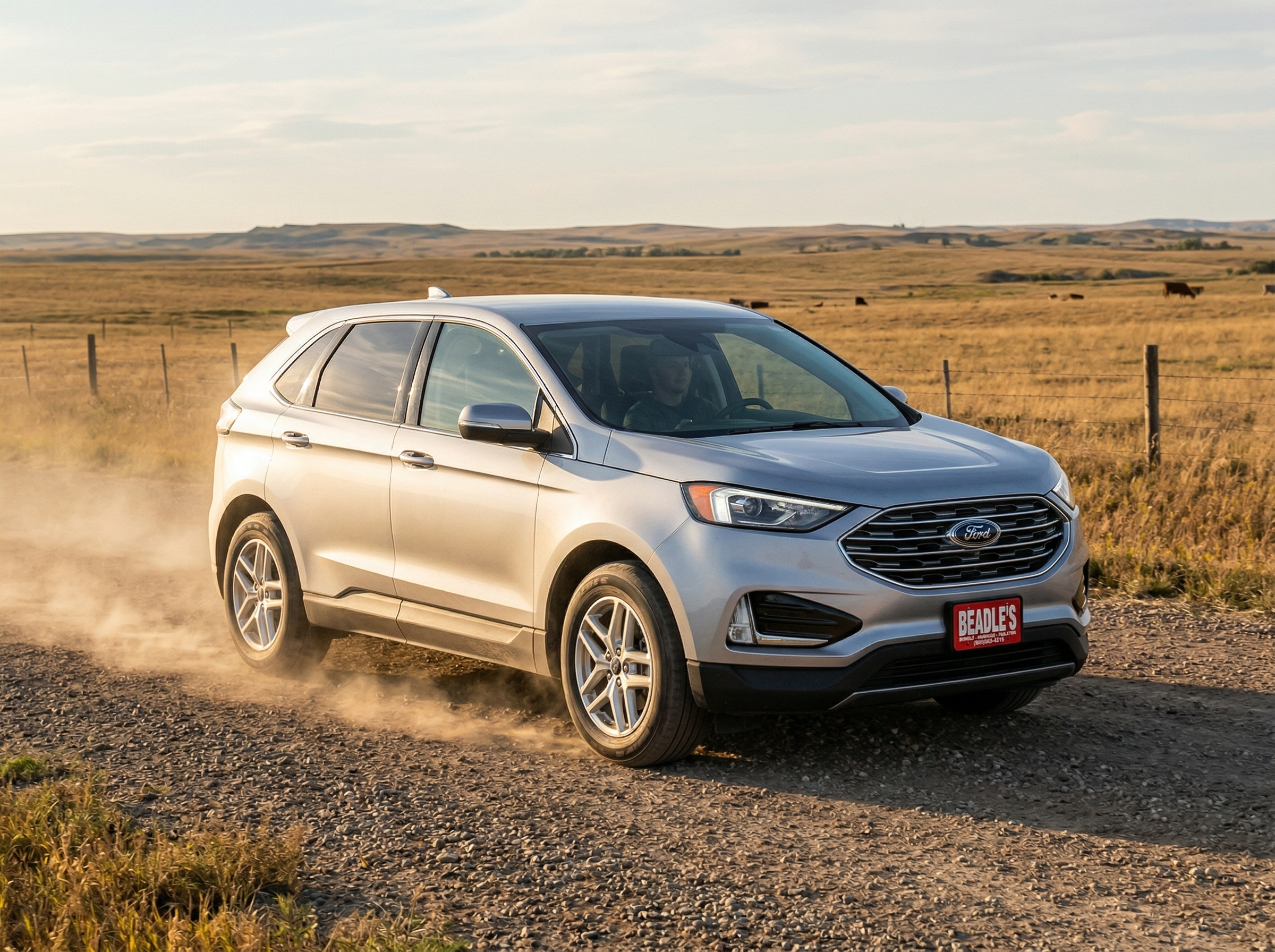
Class II hitch receiver detail: 1.25" square rated for 3,500 lbs WC (weight-carrying). Standard on ST, optional on other trims.
Do You Need the Class II Package?
Yes, if you plan to tow anything regularly. Even if your boat or utility trailer is only 2,500 lbs, the factory receiver, wiring, and SelectShift give you:
- Professional-grade towing harness (no aftermarket adapters to fail)
- Integrated sway control (proven to reduce accident risk by ~40% per NHTSA)
- Transmission management tools for safer braking on grades
- Better resale value (noted by used car buyers)
Skip it if: You only tow every few years or plan to tow under 1,500 lbs. You can add a dealer-installed receiver later, but integrated factory towing always outperforms bolt-on kits.
Cargo Space & Interior Dimensions
Towing is part of the Edge story, but cargo space is equally important for SD buyers who haul feed, tools, camping gear, and equipment.
| Configuration | Cargo Volume (Cu. Ft.) |
|---|---|
| Behind 2nd row (typical) | 39.2 cu. ft. |
| 2nd row folded (max) | 73.4 cu. ft. |
What fits in 39 cubic feet? Two large suitcases, a folded baby stroller, groceries for two weeks, camping gear for a family of four, or a side-by-side ATV frame. It’s the sweet spot for daily family hauling.
What fits in 73 cubic feet? Everything above plus a second ATV, a small snowblower, pallets of feed sacks, or enough camping equipment for a week-long trip with toys and sports gear. Fold that second row and you’re in truck-like territory for volume.
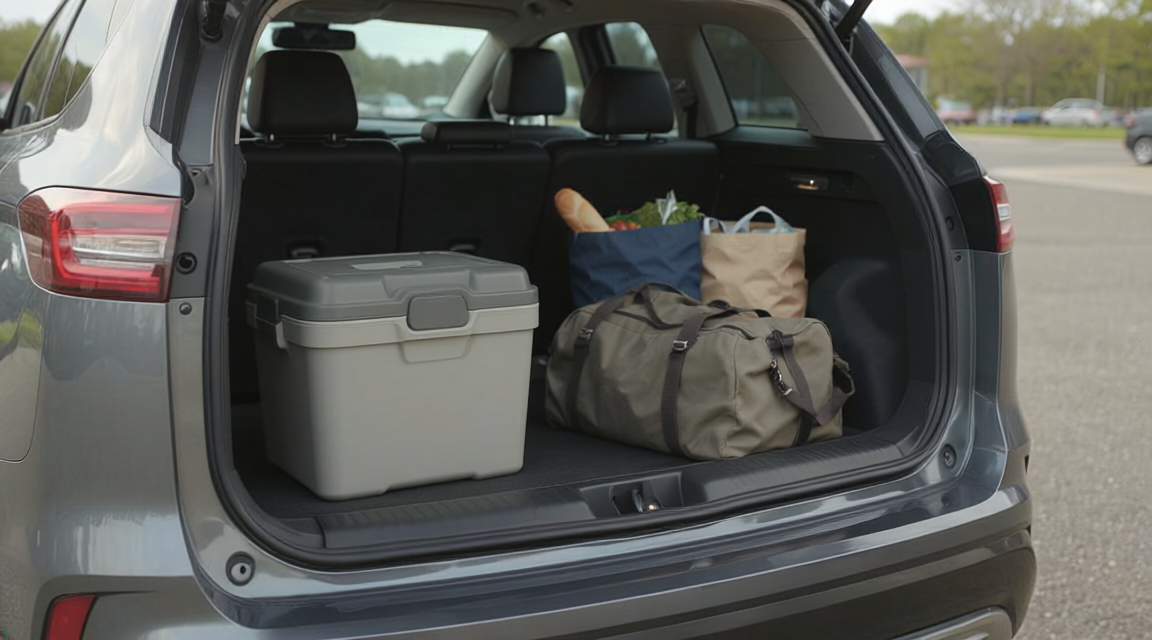
Second row folds flat for max cargo. Real-world: you can fit a pallet of 50-lb feed sacks in the cargo area with room to spare.
Practical Cargo Scenarios for South Dakota
- Weekend at Lake Oahe: Beach towels, cooler, life jackets, snorkel gear, folding chairs, camping tent. Uses ~20 cu. ft. with 2nd row up. Plenty of room.
- Feed run to the co-op: 1,200 lbs of bagged feed (12 × 50-lb bags). Cargo area holds the volume easily; weight is within GVWR limits for all Edge configurations.
- Tool run + small equipment: Chainsaw, tool chest, extension ladder, tarps, fuel cans. Organize with cargo netting on the sides; 2nd row down gives you 6+ feet of length.
- ATV transport + camping: Fold 2nd row. Secure one ATV on a cargo dolly, load tent, sleeping bags, cooler in remaining space. This is a working Edge.
Load Safety Note:
Keep weight in the cargo area, not on the roof. High roof loads reduce stability at highway speeds and increase rollover risk, especially when cornering or crossing wind-exposed terrain.
Real-World SD Use Cases: What Edge Owners Actually Tow
Boat Trailers (Lake Oahe & Missouri River)
Lake Oahe is the crown jewel of SD recreation, and Edge owners across the region use them to tow pontoon and fishing boat trailers. Here’s what works:
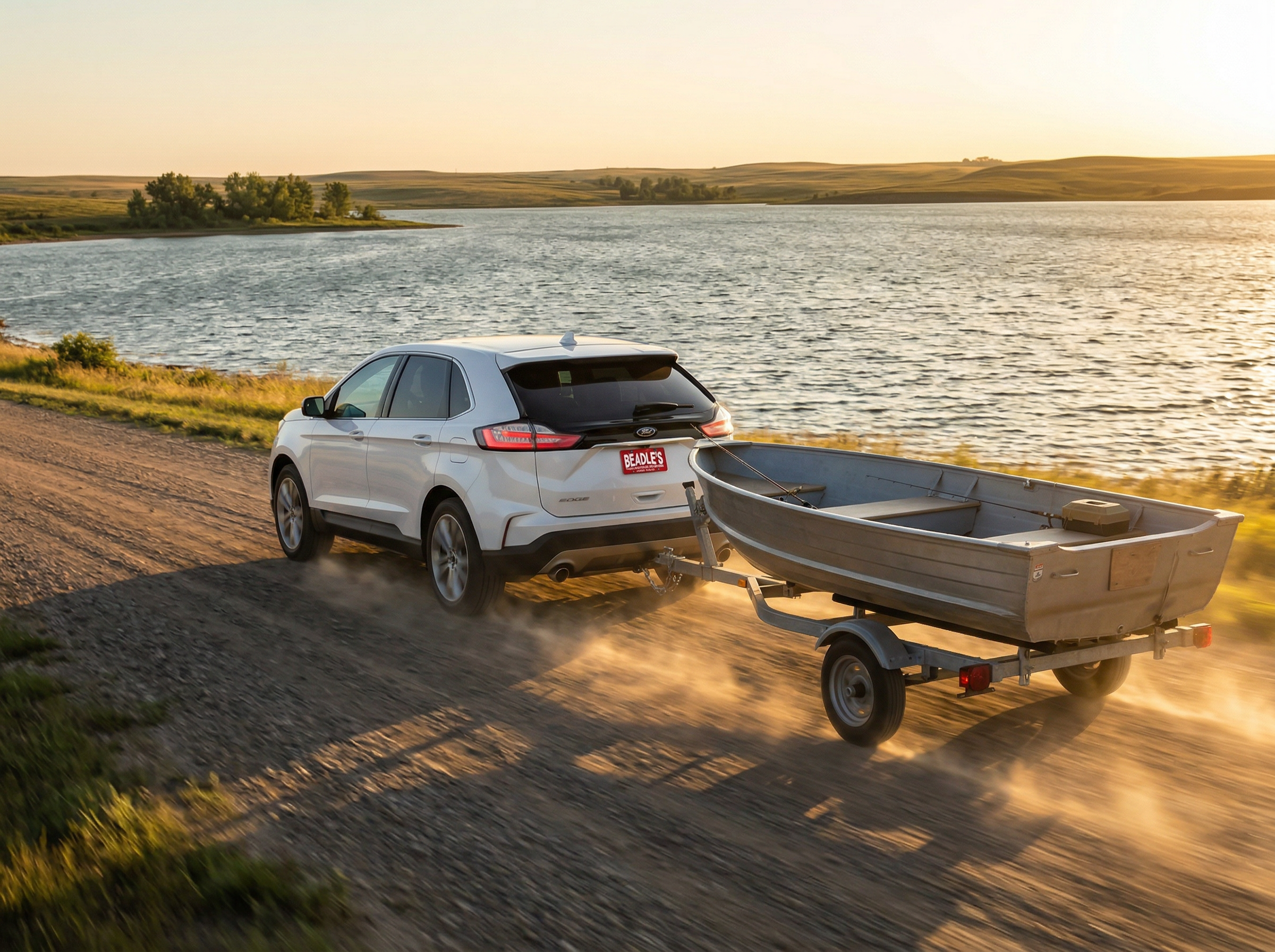
- Small fishing boat (17–19 ft): Typical dry weight 1,800–2,200 lbs, fuel + gear adds another 400–600 lbs. Total 2,200–2,800 lbs. Edge can handle with Class II package.
- Pontoon (20–22 ft): Dry weight 3,000–3,500 lbs, fully loaded 3,500–4,200 lbs. This exceeds Edge capacity. You need an Explorer or truck.
- Jet ski trailer (dual jet skis): Dry weight 800–1,200 lbs, loaded 1,500–1,800 lbs. Edge with Class II package is ideal.
Tongue weight on boat trailers typically runs 10–12% of loaded trailer weight. On a 2,500 lb loaded boat, expect 250–300 lbs tongue load — right in the Edge’s 350 lbs sweet spot.
Utility & Equipment Trailers
Ranch work and hobby projects call for open utility trailers. Edge owners frequently tow:
- Single-axle enclosed trailer (6×10 ft): Empty weight 1,200 lbs. Loaded with fencing, posts, and tools: 2,500–3,000 lbs. Class II package handles this routinely.
- Tandem-axle utility trailer: Dry weight 2,000+ lbs before loading. Exceeds Edge capacity. Truck territory.
- ATV/quad trailer (single or dual): Empty 600–900 lbs, loaded with two ATVs 2,500–3,200 lbs. Edge with Class II package works.
Camping & Recreational Trailers
Travel trailers under 2,500 lbs: Lightweight teardrop and vintage Airstream models are increasingly popular with SD families. Edge with Class II package can tow these comfortably. Tongue load is typically 200–300 lbs.
Horse trailers: A 2-horse steel trailer runs 1,500–1,800 lbs empty. With hay and equipment, 2,200–2,600 lbs. Edge can manage, but monitor fluid temps on longer hauls.
Real Owner Feedback:
“I tow a 2,200-lb fishing boat to Oahe on weekends with my Class II Edge. The sway control is rock-solid, and the paddle shifters let me brake downhill without riding the brakes. Transmission stays cool. Only regret is not getting the V6 for the extra GCWR headroom if we ever upgrade boats.” — James K., Pierre, SD
What to Look for When Buying a Used Edge for Towing
Not every used Edge you find at a dealer lot is equipped the same way. Here’s your checklist when shopping for a tow-capable Edge:
1. Confirm the Tow Package
Look underneath the rear bumper: If there’s a Class II hitch receiver (1.25” square tube), the tow package is installed. If the bumper is smooth plastic, no package.
Check the Monroney label (window sticker) or Carfax: Search for option code “53G” in the vehicle history. If the dealer says “we can add one,” verify the cost. Factory receivers run $600–$1,200; aftermarket adds another $300–$500.
2. Check Engine & GCWR History
Ask the dealer: “Was this Edge used for towing?” Signs of heavy towing use:
- Transmission fluid darker than normal (should be bright red)
- Higher mileage on the odometer than expected for the year
- Wear marks on the hitch receiver
- Cooler hoses showing signs of stress
If the Edge was towed a lot, it’s not a dealbreaker, but budget for earlier transmission service (fluid and filter every 50k miles instead of 150k).
3. Verify the Engine
- 2.0L EcoBoost I4: Adequate for most uses but requires the Class II package for 3,500 lbs. Single turbo, reliable engine. Check boost line clamps for leaks.
- 2.7L EcoBoost V6: Superior towing confidence. Dual turbo, more power, comes with tow package standard. Higher fuel consumption. Good choice if you plan heavy seasonal towing.
4. Test the Transmission (SelectShift)
If the Edge has SelectShift, test the paddle shifters:
- Upshift and downshift using steering wheel paddles. Should respond instantly.
- No hesitation, grinding, or slipping.
- Manual mode disengages automatically above 6,500 rpm (safety feature).
SelectShift adds confidence and longevity on towing-heavy vehicles. If the paddles are broken or unresponsive, factor in a transmission diagnostic (usually $100–$200).
5. Inspect Brake & Cooling Systems
Brakes: Towing puts extra demand on brakes. Check pad thickness (should be >0.25”) and rotor condition. If pads are thin, budget $600–$1,000 for replacement.
Transmission cooler: Open the hood and look for a secondary cooler mounted in front of the main radiator. On high-mileage Edges with heavy towing history, a failing cooler is common. Replacement runs $800–$1,500.
6. Ask the Right Questions
| Question | What It Tells You |
|---|---|
| “Was this towed, or used for towing?” | Whether it endured heavy use. Transmission wear patterns differ. |
| “Has the transmission fluid been serviced?” | Maintenance history. Towed Edges need fluid changes sooner. |
| “Any transmission issues or hesitations?” | Early warning. Hesitation = internal wear. Costly repair. |
| “Do the paddle shifters work?” | Whether you have manual control for towing. Broken = electronics repair. |
Key Takeaways
- Max towing is 3,500 lbs (Class II package required on 2.0L; standard on 2.7L V6 ST). Any trailer exceeding this needs a different vehicle.
- Class II package is worth the cost if you tow regularly. Factory integration, sway control, and SelectShift add safety and resale value.
- Tongue weight maxes at 350 lbs across all Edge configurations. Most boat and utility trailers fall under this; verify before purchase.
- Cargo space is generous: 39.2 cu. ft. with the 2nd row up, 73.4 cu. ft. folded. Perfect for gear + weekend trips without a trailer.
- Real-world SD use: Fishing boats (under 2,800 lbs), jet skis, ATV trailers, light utility trailers, and small travel trailers are all safe bets. Pontoons and tandem-utility trailers exceed capacity.
- When buying used: Confirm the tow package, check brake and transmission cooler condition, and ask about towing history. Heavy use requires closer inspection.
- If your needs exceed 3,500 lbs, consider the Ford Explorer, which tows up to 5,600 lbs, or a truck like the F-150.
Frequently Asked Questions
Can I tow 3,500 lbs with a Ford Edge that doesn’t have the Class II package?
No. Without the Class II Tow Package (53G), the 2.0L EcoBoost is rated for a maximum of 1,500 lbs. The 2.7L V6 ST comes with the package standard and can tow 3,500 lbs. If you have a 2.0L without the package and need higher capacity, you must either upgrade to the V6 or have a dealer install a Class II receiver (though Ford does not recommend towing the full 3,500 lbs without the integrated package components like trailer sway control and SelectShift).
What does GCWR mean, and why does it matter?
GCWR (Gross Combined Weight Rating) is the maximum total weight your Edge plus the loaded trailer can weigh. For example, a 2.0L with Class II has an 8,300 lbs GCWR. If your Edge weighs 4,500 lbs, you can add no more than 3,800 lbs of trailer and cargo. Exceeding GCWR overloads the chassis, transmission, and brakes, creating serious safety and reliability issues. You can check your Edge’s curb weight on the driver’s door jamb label.
Is the Ford Edge better for towing than the Honda Pilot or Chevy Traverse?
All three are competitive in the 3,500-lbs class. The Pilot maxes at 3,500 lbs, the Traverse at 5,600 lbs (with V8), and the Edge at 3,500 lbs. For towing capacity alone, the Traverse wins if you need a full-size three-row. For a mid-size vehicle, Edge, Pilot, and Traverse are equivalent. Choose based on features, interior layout, and local dealer support (we recommend Beadle Ford for Edge owners in South Dakota).
Will towing an Edge void the warranty?
No, as long as you stay within GCWR and tow weight limits, and follow Ford’s recommended maintenance schedule. Towing within spec is a normal use case. However, if you exceed GCWR or tow beyond the rated 3,500 lbs, Ford can deny warranty claims on related components (transmission, cooling system, brakes). Stick to the specs and service on schedule, and you’re covered.
Do I need a separate brake controller for the trailer?
The Class II package includes a 4-pin trailer wiring harness (12V connector). This powers trailer lights but not trailer brakes. For trailers under 3,000 lbs with surge or electric brakes, most states do not require a separate controller (South Dakota allows this). For heavier trailers or if you prefer integrated braking, a $150–$300 proportional brake controller can be added by a dealer or RV shop. Check your trailer’s manual and local regulations.
Can I tow in the rain, snow, or high wind conditions common in South Dakota?
Yes, with caution. The Edge’s Trailer Sway Control (included in the Class II package) helps stabilize the trailer in crosswinds and adverse conditions. However, reduce speed and increase following distance in rain, snow, and high-wind zones (common near Oahe and the Missouri River breaks). Avoid towing in whiteout conditions. The paddle shifters and SelectShift give you manual braking control on slippery descents — use it to prevent jackknifing.
My Take on the Ford Edge as a Towing Vehicle
From a marketing research perspective, the Edge occupies a genuinely useful position in the market: it’s a mid-size crossover that tows at the same ceiling as many buyers actually need. The 3,500-lb limit covers the most common South Dakota use cases — fishing boats at Lake Oahe, jet ski trailers, small utility trailers, and ATV setups. Buyers who regularly pull anything heavier should be looking at the Explorer or F-150 instead, and the Edge doesn’t pretend otherwise.
The Class II package distinction is the most important purchasing detail in this guide. Without it, buyers on the 2.0L are limited to 1,500 lbs and don’t get trailer sway control — that’s a meaningful gap, not just a spec sheet difference. When evaluating a used Edge for towing, confirming the presence of that package should be the first question.
For the complete model overview including trim and year comparisons, the Ford Edge buyer guide has the full context. Questions about a specific vehicle or tow package configuration? Beadle Ford in Bowdle can help.
Related Edge Resources
Need More Towing Capacity?
The Ford Explorer tows up to 5,600 lbs and offers three rows with more room. View Explorer inventory.
About the Author
Lexy Tabbert — Beadle Ford, Bowdle, SD
Lexy Tabbert is the Director of Sales and Marketing at Beadle Ford in Bowdle, South Dakota. She covers Ford vehicles, trim comparisons, and buyer guidance — helping families, ranchers, and ag operators across the region find the right truck and configuration for their needs. Learn more about Lexy.
Connect with us

