
Quick Answer
On the 2027 Ford F-350, single-rear-wheel (SRW) tows up to 25,000 lbs conventional and is easier to drive and park daily; dual-rear-wheel (DRW, or dually) raises conventional towing to 28,000 lbs, adds stability under heavy loads, and is required to reach the 40,000-lb gooseneck maximum. Most buyers who don't run near the top of the range are well served by SRW.
Single- versus dual-rear-wheel is the most important decision most 2027 F-350 buyers make — it shapes both how much the truck can safely handle and how it drives every day. And it's a decision plenty of buyers get backward, assuming they need a dually when they don't.
Here's how SRW and DRW differ on the 2027 F-350, what each one fits, and how to decide based on the trailers you actually pull around Bowdle and Aberdeen.
What's the difference between SRW and DRW?
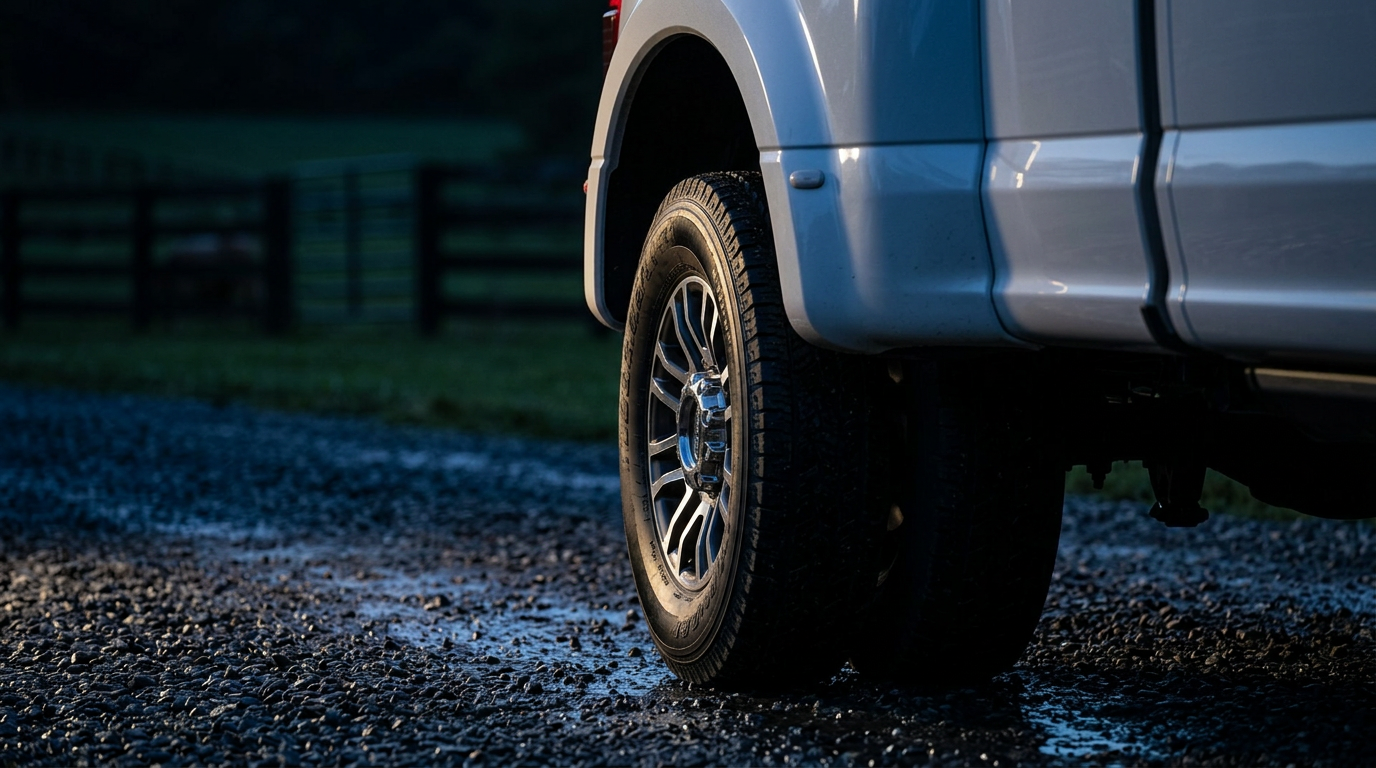
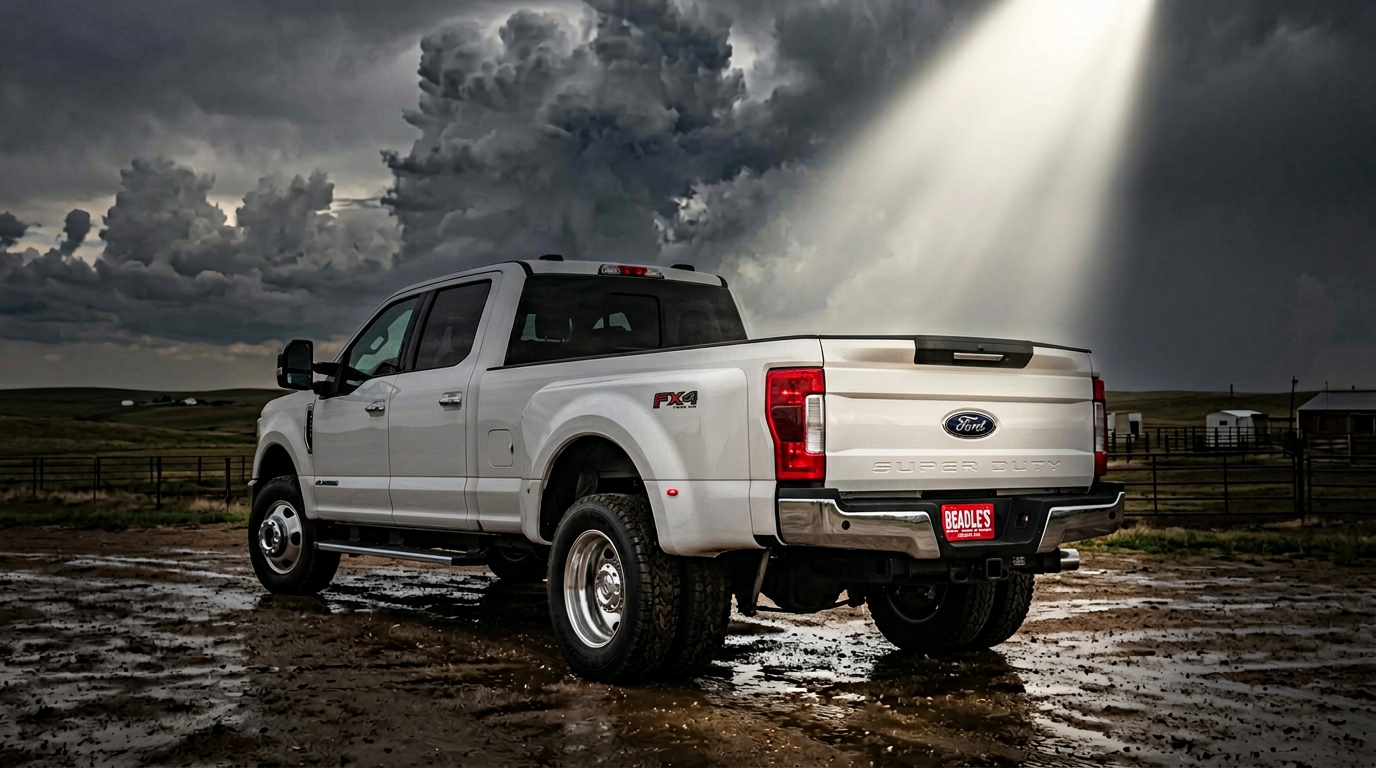
Single-rear-wheel (SRW) has one tire on each side of the rear axle; dual-rear-wheel (DRW, or "dually") has two, for a wider rear footprint. That extra rubber spreads heavy loads over more contact area, which is why the dually carries higher ratings and feels more planted under a big gooseneck or fifth-wheel.
The trade is everyday livability: a dually is wider, harder to park, and a bit more truck to run on gravel and in the yard. Neither is "better" — they fit different loads and different daily routines.
Which one fits your trailer?
Match the rear-wheel choice to the loads you pull most, not the heaviest you'll ever pull:
Single-rear-wheel (SRW) is right for you if you tow goosenecks and fifth-wheels comfortably under the top of the range, run gravel and tight yards often, and want a truck that's easier to park and daily-drive — it still tows up to 25,000 lbs conventional.
Dual-rear-wheel (DRW) is right for you if you regularly run a large gooseneck or fifth-wheel near the F-350's ceiling, want the calmest feel in crosswinds and on long hauls, or need the 40,000-lb gooseneck maximum.
Does DRW change the towing and payload numbers?
Yes. On the 2027 F-350, SRW tows up to 25,000 lbs conventional; DRW raises that to 28,000 lbs and, with the High-Output diesel and the 40K Gooseneck Tow Package, reaches the 40,000-lb gooseneck maximum (about 35,000 lbs fifth-wheel). The dually also typically carries higher payload for the heaviest hauling. Exact figures depend on cab, bed, axle, and engine.
Our Recommendation
For most ranch and farm buyers around Bowdle and Aberdeen, a single-rear-wheel 2027 F-350 covers the goosenecks they actually pull with margin to spare — and it's far easier to live with. Go dually when you routinely run heavy near the top of the range or need the 40,000-lb ceiling. Build the right one with our 2027 F-350 towing guide.
How does each drive day to day?
An SRW F-350 parks easier, fits a standard lane and most spots without a second thought, and is more forgiving on gravel and in the yard. A dually is wider at the rear, takes more room to maneuver, and rides a touch firmer unloaded — trades many heavy-haulers gladly make for the stability it adds under load. If the truck is also your daily driver, that everyday difference is worth weighing honestly.
From the Beadle Ford Lot
The most common F-350 question on our lot is still SRW vs. DRW — and plenty of buyers who walk in set on a dually leave in a single-rear-wheel truck once we look at their real trailer weight. A dually is the right call for the heaviest goosenecks, but it's more truck than most loads around here actually need.
How do you decide?
Four questions settle it:
- What's your heaviest trailer, loaded — and how often do you actually pull it?
- Is the truck a daily driver, or mostly a work and tow rig?
- Do you need the 40,000-lb gooseneck ceiling, or is comfortable margin enough?
- How important is easy parking and gravel/yard maneuvering to you?
If the heaviest loads are occasional and daily ease matters, SRW usually wins. If you live near the top of the range, the dually earns it.
Key Takeaways
- SRW tows up to 25,000 lbs conventional; DRW up to 28,000 lbs and the 40,000-lb gooseneck maximum.
- DRW adds stability and the highest ratings; SRW is easier to park, drive, and run on gravel.
- Match the choice to the trailer you pull most, with honest margin — not your once-a-year heaviest.
- Many F-350 buyers around here are well served by SRW.
- Go dually when you routinely run heavy or need the 40,000-lb ceiling.
Frequently Asked Questions
Quick Answers: F-350 SRW vs. DRW
One-line answers to the follow-up questions buyers ask next.
What's a dually? A dual-rear-wheel truck — two tires per side at the rear.
SRW conventional tow? Up to 25,000 lbs.
DRW conventional tow? Up to 28,000 lbs.
Which reaches 40,000 lbs gooseneck? DRW with the HO diesel and 40K package.
Which is easier to park? SRW.
Which is more stable under heavy loads? DRW.
Do most buyers need DRW? No — SRW covers most trailers here.
Is the ride different? A dually is slightly firmer unloaded.
Carhartt Package on a dually? No — SRW only.
How do I decide? Match it to the trailer you pull most, with honest margin.
Keep Researching
The complete 2027 Ford F-350 Super Duty overview — specs, towing, trims, and how to order.
2027 F-350 towing guide — full ratings by hitch type, engine, and rear-wheel setup.
2027 F-350 payload & upfit — where the dually's extra capacity matters most.
2027 F-350 engine comparison — pairing the right engine with your rear-wheel choice.
My Take on SRW vs. DRW
In my experience, the dually is the right truck far less often than people expect walking in. It's the call for the heaviest goosenecks and the most stability under load — but for the trailers most folks around here actually pull, a single-rear-wheel F-350 does the job with margin and is a lot easier to live with the other 360 days a year.
Tell me your heaviest trailer and how often you pull it, and I'll help you land on SRW or DRW with confidence. Stop in at Beadle Ford in Bowdle or reach out anytime.
About the Author
Lexy Tabbert — Beadle Ford, Bowdle, SD
Lexy Tabbert is the Director of Sales and Marketing at Beadle Ford in Bowdle, South Dakota. She covers Ford vehicles, trim comparisons, and buyer guidance — helping families, ranchers, and ag operators across the region find the right truck and configuration for their needs. Learn more about Lexy.