
Quick Answer
The 2026 Ford F-250 offers four engines: the 6.8L gas V8 (405 hp), 7.3L gas V8 (430 hp), 6.7L Power Stroke diesel (1,050 lb-ft), and 6.7L High-Output Power Stroke (1,200 lb-ft). Tow regularly, buy the diesel; tow occasionally, the 7.3L gas is the value pick.
The gas-or-diesel question is the most expensive checkbox on an F-250 order, and most advice answers it with “it depends.” Here’s the more useful version: the deciding number is how many heavy-tow days you put on the truck per month, not the maximum rating on the brochure. This comparison puts real output and towing figures side by side so you can run that math.
Below: all four engines with verified numbers, whether the 7.3L is worth it over the 6.8L, when each Power Stroke earns its premium, and the ownership costs that don’t show up on the window sticker. For trims, packages, and everything beyond the engine bay, the complete 2026 Ford F-250 overview covers the full picture.
What Engines Does the 2026 F-250 Offer?
Four: two gas V8s and two versions of the 6.7L Power Stroke V8 Turbo Diesel, all paired with the 10-speed TorqShift automatic. The spread between them is wide — the 6.7L Power Stroke makes 1,050 lb-ft of torque at just 1,600 rpm, more than double the 6.8L gas V8’s 445 lb-ft.
| Engine | Horsepower | Torque | Max Towing |
|---|---|---|---|
| 6.8L gas V8 | 405 hp @ 5,000 rpm | 445 lb-ft @ 4,000 rpm | 18,900 lbs gooseneck* |
| 7.3L gas V8 | 430 hp @ 5,500 rpm | 485 lb-ft @ 4,000 rpm | 19,500 lbs gooseneck* |
| 6.7L Power Stroke diesel | 475 hp @ 2,600 rpm | 1,050 lb-ft @ 1,600 rpm | 22,900 lbs gooseneck* |
| 6.7L High-Output Power Stroke | 500 hp @ 2,600 rpm | 1,200 lb-ft @ 1,600 rpm | 23,000 lbs gooseneck* |
*Maximum ratings, properly equipped: gas figures require the HD Payload Package (6.8L) or 4.30 axle (7.3L); diesel maximums require the High-Capacity Axle Upgrade Package. Exact ratings vary by cab, bed, and axle — full breakdown in our 2026 F-250 towing guide.
Is the 7.3L Gas V8 Worth It Over the 6.8L?
If you tow or haul near the gas engines’ limits, yes — the 7.3L adds 25 hp, 40 lb-ft, 600 lbs of towing headroom, and the lineup’s highest payload at 4,246 lbs. If the truck is mostly transportation with light loads, the 6.8L’s 405 hp covers the job and saves the option cost.
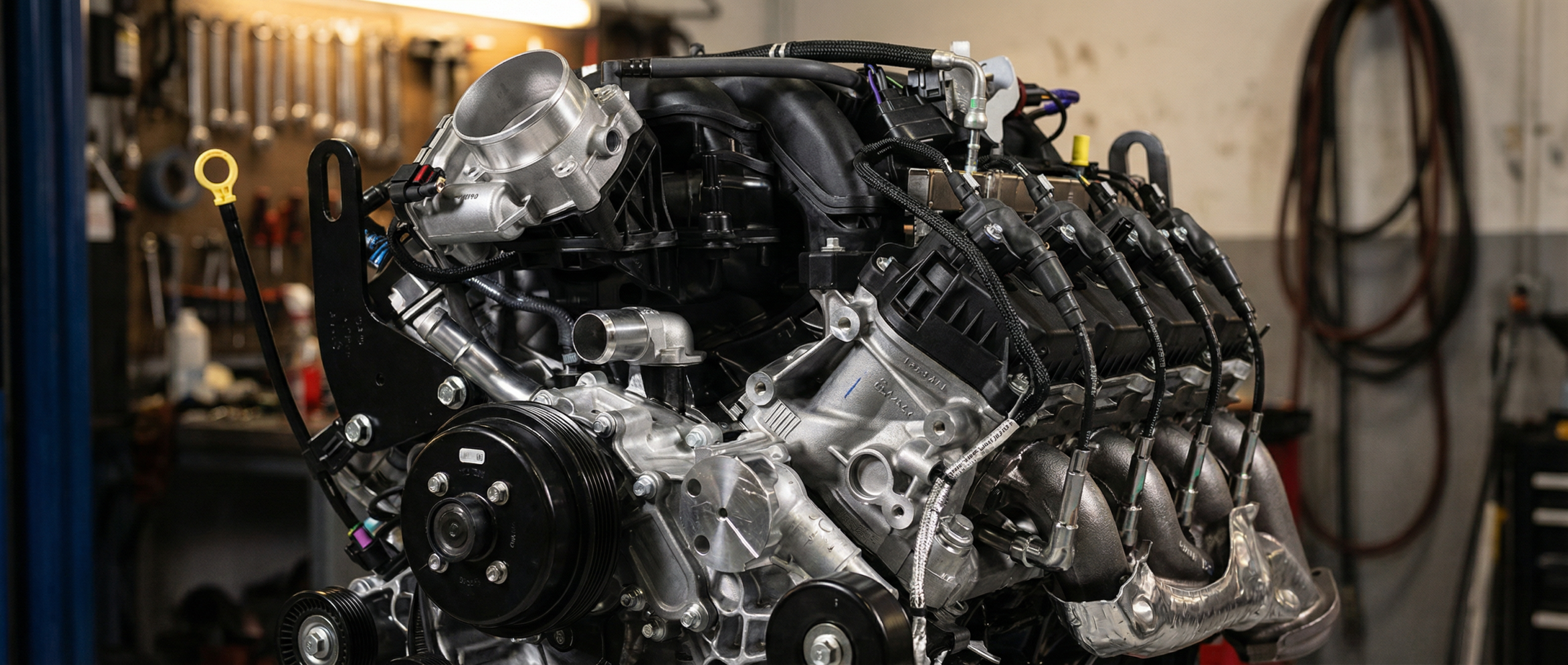
The practical difference shows up under sustained load: the 7.3L holds speed better with a stock trailer on the grades along the Missouri River breaks and runs less strained doing it. The payload edge matters too — a bed full of fencing supplies, a slide-in toolbox, and a passenger eat into a payload number fast, and the 7.3L gives you the most room of any F-250 engine. For a work truck that tows monthly rather than weekly, the 7.3L is the smarter gas choice; the 6.8L is the right fleet-spec answer.
When Does the Power Stroke Diesel Make Sense?
When heavy towing is routine. The 6.7L Power Stroke’s 1,050 lb-ft arrives at 1,600 rpm — barely above idle — which is why a loaded gooseneck feels planted behind the diesel in a way no gas V8 matches. Its tow ratings run 3,400+ lbs higher than the 7.3L gas at the top of the range.
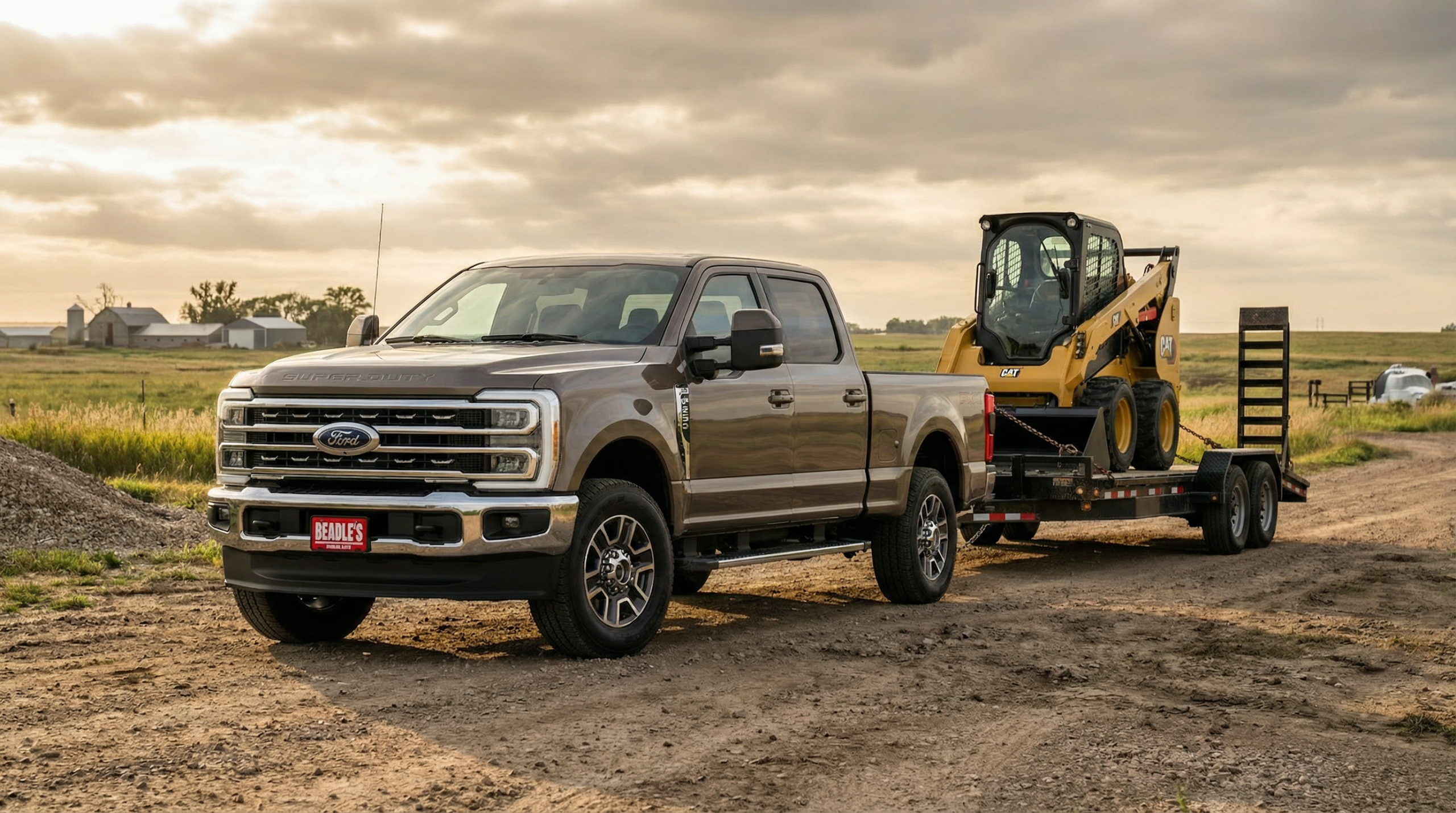
Between the two diesels: the standard-output engine (475 hp / 1,050 lb-ft, up to 22,900 lbs gooseneck) covers nearly every stock and equipment trailer in this part of South Dakota. The High-Output version (500 hp / 1,200 lb-ft, 23,000 lbs) exists for buyers who live at the very top of the rating chart — if your loaded trailer doesn’t cross 22,000 lbs regularly, the standard output does the same work for less money.
Our Recommendation
For ranch and farm buyers around Bowdle who tow gooseneck trailers weekly, we recommend the standard-output 6.7L Power Stroke — 1,050 lb-ft and up to 22,000 lbs conventional covers nearly every local trailer. For buyers who tow monthly or less and stay under 15,000 lbs, the 7.3L gas V8 delivers the better total cost: lower purchase price, simpler maintenance, and the highest payload in the lineup at 4,246 lbs.
Gas vs. Diesel: What Does Ownership Actually Cost?
The diesel costs more three ways — upfront option price, fuel system maintenance (filters, diesel exhaust fluid), and repair complexity — and pays it back two ways: stronger resale on trucks that tow, and better fuel efficiency under sustained heavy load. One fact most comparisons skip: Ford publishes no MPG figures for the F-250 because heavy-duty trucks over 8,500 lbs GVWR aren’t EPA-rated, so any MPG number you see online is an owner estimate, not an official spec.
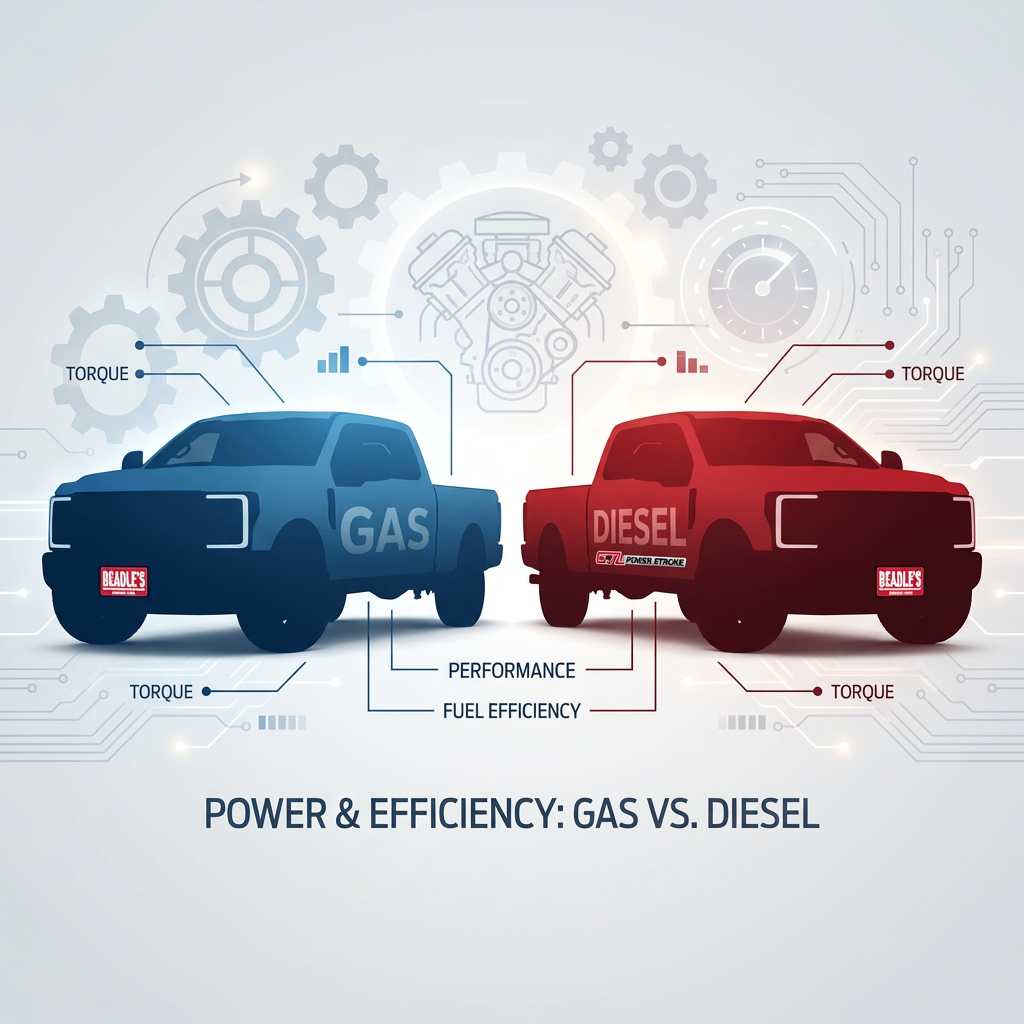
The other hidden cost is payload. The diesel powertrain is heavier, and that weight comes straight out of what the truck can carry — in Ford’s own weight tables, comparable F-250 configurations show the gas truck carrying 700+ lbs more cargo than the diesel. If your work is more bed weight than trailer weight, gas isn’t the compromise choice; it’s the correct one.
From the Beadle Ford Lot
When we walk engine choice with buyers in Bowdle, the conversation usually starts at gas versus diesel and ends at a simpler number: heavy-tow days per month. Buyers who count more than a couple land on the diesel and never regret it; buyers who count zero or one usually do better putting the diesel premium toward the trim or packages they’ll use every day.
Which F-250 Engine Should You Choose?
Match the engine to your heaviest regular job — not your rarest one. In one line each:
6.8L gas is right for you if the F-250 is daily transportation and jobsite duty with light towing — fleet spec, lowest cost.
7.3L gas is right for you if you tow monthly, haul heavy in the bed (4,246-lb max payload), and want simple ownership.
6.7L Power Stroke is right for you if heavy trailers are weekly work — 1,050 lb-ft covers nearly everything in this region.
6.7L High-Output is right for you if your loaded trailer regularly crosses 22,000 lbs — otherwise save the money.
Key Takeaways
- Four engines: 6.8L gas (405 hp / 445 lb-ft), 7.3L gas (430 / 485), 6.7L Power Stroke (475 / 1,050), High-Output (500 / 1,200) — all with the 10-speed TorqShift.
- The diesel’s torque arrives at 1,600 rpm and out-pulls the gas engines by 3,400+ lbs at the top of the range.
- The 7.3L gas carries the lineup’s highest payload (4,246 lbs) — gas trucks carry 700+ lbs more than comparable diesels.
- The F-250 has no official MPG rating — heavy-duty trucks aren’t EPA-tested, so compare fuel costs by usage pattern, not internet MPG claims.
- Decide by heavy-tow days per month: 2+ favors the diesel, 0–1 favors the 7.3L gas.
Frequently Asked Questions
Quick Answers: F-250 Engines
One-line answers to the follow-up questions buyers ask next.
Which engine is standard? The 6.8L gas V8 — every other engine is an option.
What transmission do they use? All four engines pair with the 10-speed TorqShift automatic.
How much torque does the diesel make? 1,050 lb-ft standard output; 1,200 lb-ft High-Output — both at 1,600 rpm.
What’s the most powerful F-250 engine? The 6.7L High-Output Power Stroke at 500 hp / 1,200 lb-ft.
Which engine has the best payload? The 7.3L gas V8, at up to 4,246 lbs properly equipped.
Does the diesel need DEF? Yes — diesel exhaust fluid is part of routine diesel ownership.
Is the High-Output diesel worth it? Only if your loaded trailer regularly crosses 22,000 lbs.
Can I get 4×4 with any engine? Yes — four-wheel drive is available across the engine lineup.
Can Beadle Ford order any engine combination? Yes — custom orders are common; call 866-561-2636.
Keep Researching
The complete 2026 Ford F-250 overview — trims, pricing, specs, and inventory
2026 F-250 towing guide — exact ratings by engine, axle, and hitch type
2026 F-250 packages and trims — which trims pair with which engines
My Take on Choosing an F-250 Engine
The pattern I see at Beadle Ford is that buyers walk in assuming diesel and walk out deciding by workload. Around Bowdle, the trucks that genuinely need 1,000+ lb-ft — weekly stock trailers, heavy equipment — are real, but they’re not the majority. Plenty of buyers do their best work with the 7.3L gas and put the savings into the packages they touch every day.
If you’re torn between two engines, bring in your trailer weights and your typical month — we’ll put the actual ratings next to your actual work and the answer usually makes itself obvious.
About the Author
Lexy Tabbert — Beadle Ford, Bowdle, SD
Lexy Tabbert is the Director of Sales and Marketing at Beadle Ford in Bowdle, South Dakota. She covers Ford vehicles, trim comparisons, and buyer guidance — helping families, ranchers, and ag operators across the region find the right truck and configuration for their needs. Learn more about Lexy.
Connect with us

