

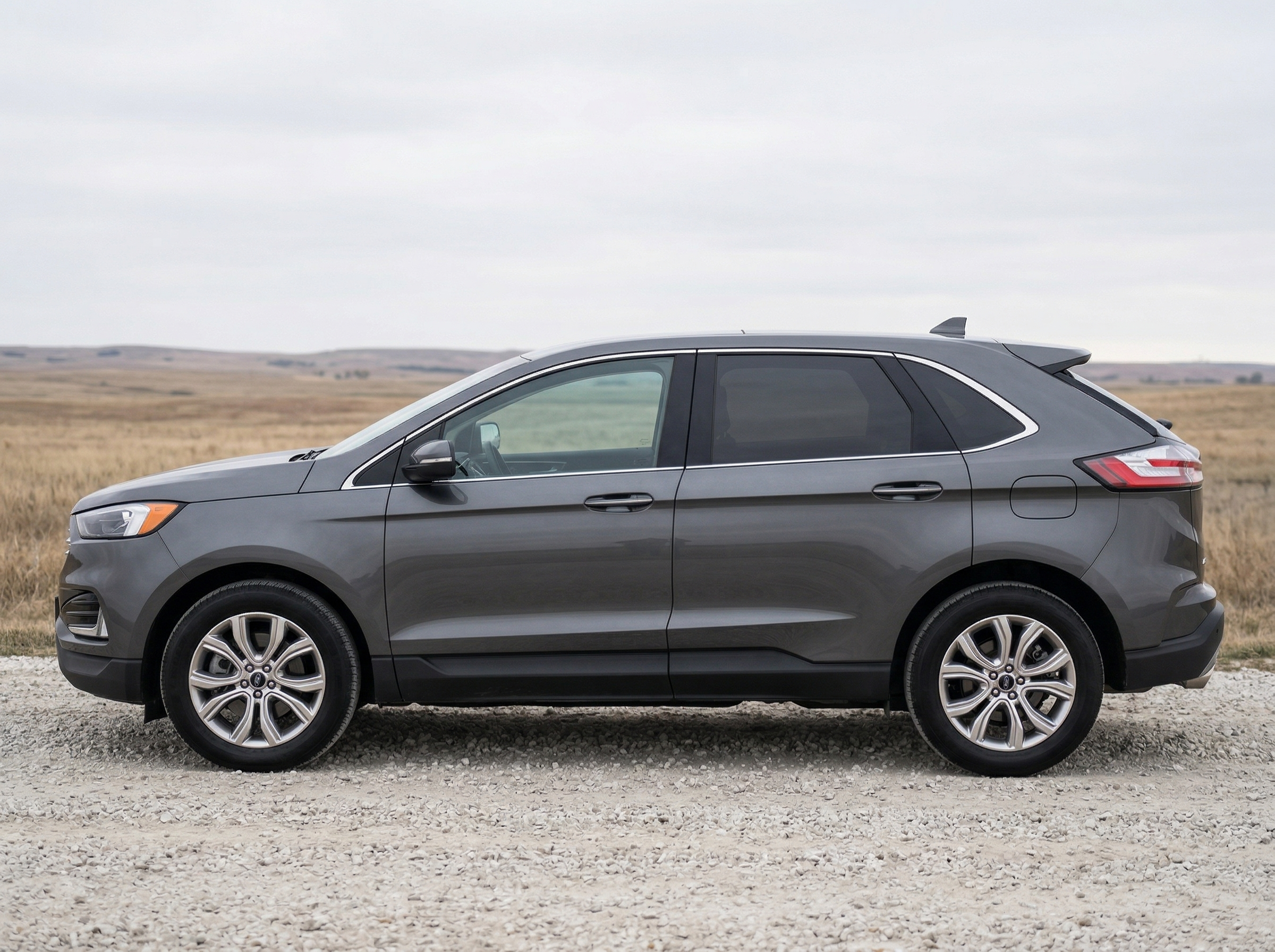
Ford Edge vs. Explorer: Do You Actually Need Three Rows?
You’re shopping for a midsize Ford SUV, and the decision feels straightforward: the Explorer has three rows, the Edge has two. More seats must mean more value, right? Not necessarily. For buyers across South Dakota’s ranches, rural routes, and small towns, the real choice comes down to how you actually use the vehicle, what you tow, and whether you’re paying for capacity you’ll never use.
At Beadle Ford in Bowdle, we help families and operators understand the honest difference. This guide cuts through the noise.
Interior Space & Legroom: The Surprise Winner
The most surprising discovery when you sit in both vehicles? The Edge’s second row is actually competitive with the Explorer’s. Many buyers assume the third row means more space everywhere, but that’s not how midsize SUVs work.
Edge Interior Dimensions:
- Front legroom: 42.6 inches
- Rear legroom: 40.6 inches
- Five-seat configuration (midsize 2-row)
- All trims standard with AWD
Explorer Interior Dimensions:
- Front legroom: competitive with Edge
- Second-row legroom: comparable
- Third row: tight, best for children or short-distance adult passengers
- Seven-seat standard; RWD base, AWD on higher trims
If you have a family of five or fewer, or if passengers don’t regularly sit in the third row, the Edge delivers the same comfort in the front and second rows with a cleaner, simpler driving experience. The Explorer’s third row exists, but many Bowdle-area families tell us it spends more time folded down than occupied.
Cargo Capacity: Different Jobs, Different Winners
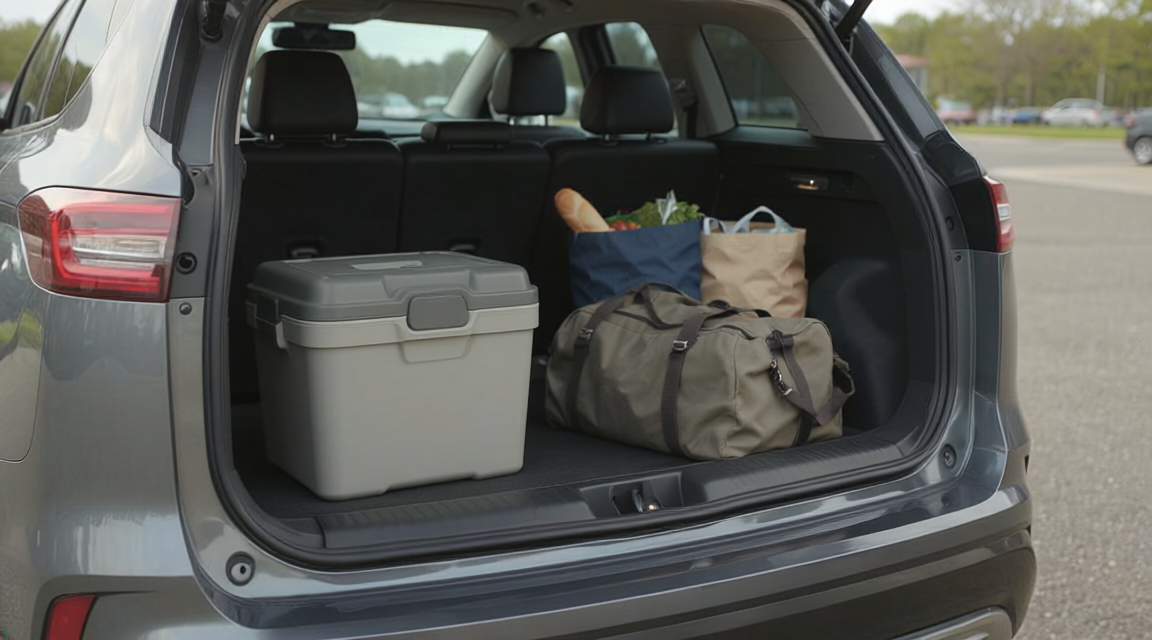
Here’s where the comparison gets interesting. The Edge actually has a surprising cargo advantage for certain uses.
| Cargo Metric | Edge | Explorer |
|---|---|---|
| Behind 2nd/3rd row | 39.2 cu ft (both rows up) | 18.2 cu ft (all rows up) |
| 2nd row folded | 73.4 cu ft | 47.9 cu ft (3rd row up) |
| All rows folded | 73.4 cu ft (2-row, no 3rd) | 87.8 cu ft |
What this means: If you regularly haul lumber, farm equipment, gear, or full loads for work, the Edge gives you significantly more usable space with the second row up. You don’t have to fold seats flat to move a pallet or load of feed. The Explorer wins only if you need maximum volume and can fold all seats flat, which defeats the purpose of having seven seats.
For South Dakota ranchers and operators, this advantage matters. The Edge is built for the job; the Explorer is built for the idea of a job.
Towing & Power: Explorer Takes the Lead
If towing is non-negotiable, the Explorer has a clear advantage.
| Spec | Edge | Explorer |
|---|---|---|
| Base Towing | 1,500 lbs | 5,000 lbs standard |
| Max Towing | 3,500 lbs (ST with Class II) | 5,000 lbs (all engines) |
| Engine Options | 2.0L EcoBoost (250hp) or 2.7L V6 (335hp) | 2.3L EcoBoost (300hp) or 3.0L Twin-Turbo (400hp) |
| Class III Tow Package | ST trim only (Class II) | Standard on all models |
The Reality: If you’re hauling a small utility trailer, a motorcycle trailer, or light agricultural loads under 3,000 lbs, the Edge works. If you need to pull a larger boat, livestock trailer, or equipment regularly, the Explorer is the right choice. The towing gap is real and meaningful.
For ranches across South Dakota, the Explorer’s Class III standard tow package and higher capacity make it the practical choice when heavy pulling is part of the job.
Price & Value: Edge Offers Used-Market Strength
Ford discontinued the Edge in April 2024, which means one critical fact: the Edge is now available only on the used market. This creates a significant value difference.
Edge Pricing Reality:
- 2023–2024 models available used at major discounts from original MSRP
- Low mileage models still within factory warranty
- Buyers get a nearly-new midsize SUV for $25,000–$35,000 depending on condition and year
- Monthly payments typically $400–$550 financed
Explorer Pricing Reality:
- 2025–2026 new models start around $35,000–$40,000 for base trims
- Popular ST and Platinum trims run $45,000–$55,000+
- Monthly payments typically $600–$900+ financed
- Full manufacturer warranty on all new units
The Math for Bowdle-Area Buyers: If you’re budget-conscious and want a low-mileage, reliable midsize SUV that handles daily driving and light towing, a used Edge from 2023–2024 costs $200–$300 less per month than a new Explorer. That’s $2,400–$3,600 per year. Over five years, that’s $12,000–$18,000 in savings. For families stretched on a budget, that difference matters.
Real-World Use: What South Dakota Drivers Actually Do
After years of selling both vehicles across South Dakota’s ranching and rural communities, we’ve learned how buyers actually use these SUVs.
Choose the Edge if you:
- Are a couple or family of three to five
- Want competitive second-row legroom and comfort
- Need strong cargo space with seats up (farm supplies, feed, equipment)
- Tow light to moderate loads (under 3,000 lbs)
- Prioritize fuel efficiency and daily driving simplicity
- Are budget-conscious and want lower monthly payments
- Enjoy easy parking and maneuverability in town
Choose the Explorer if you:
- Have a family of six to seven who actually ride together regularly
- Need to haul larger trailers or equipment (3,000+ lbs)
- Want the maximum flexibility of three usable rows
- Prefer a new vehicle with full manufacturer warranty
- Are willing to accept slightly larger fuel consumption for capability
- Want the latest tech (2025–2026 infotainment and safety features)
The Honest Take: Most buyers we work with in Bowdle and the surrounding area fall into the Edge category. Couples, young families with young children, and business owners who need cargo space but don’t regularly tow heavy loads. The Explorer is the right choice only when those three rows are actually used, not just available. It’s about matching the vehicle to your real life, not paying for capacity you’ll never use.
Frequently Asked Questions
Can the Edge’s third row be added later?
No. The Edge is engineered as a two-row vehicle. Ford does not offer a third-row retrofit or accessory. The platform, wheelbase, and interior design do not accommodate a third row. If you think you’ll need a third row in the future, the Explorer is the only choice.
Is the Explorer’s third row comfortable for adults?
The Explorer’s third row is designed for children or adults on short trips. Legroom is tight, and headroom is limited. For a cross-state drive or full day of driving, adults will be uncomfortable. It’s truly an occasional-use feature. Many owners fold it down immediately and use the expanded cargo space instead.
Which SUV has better fuel economy?
The Edge generally achieves slightly better fuel economy due to its lighter weight and smaller engines. The 2.0L EcoBoost Edge on AWD averages around 23–25 MPG highway, while the 2025 Explorer 2.3L EcoBoost ranges around 20–23 MPG. The difference compounds over time. For frequent highway miles across South Dakota, the Edge saves fuel costs.
Why was the Ford Edge discontinued?
Ford discontinued the Edge to focus on the Explorer and expand their truck and performance-oriented SUV lines. The decision reflects market trends toward larger SUVs and electric vehicles, but it doesn’t mean the Edge is a bad vehicle. Many Bowdle-area owners keep their Edges well past 150,000 miles. The discontinuation just means used market prices and availability will gradually tighten.
Does Beadle Ford have used Edges in stock?
Yes. Beadle Ford maintains inventory of used Ford Edges from recent model years. Availability varies, but we work with regional and franchise resources to locate specific models and configurations. Check our current Edge inventory, or contact the team at (605) 285–6202 if you’re looking for a specific year or trim.
Can I test drive both to decide?
Yes. Back-to-back test drives of both vehicles reveal the differences in interior space, cargo layout, driving position, and steering feel immediately. It’s the most reliable way to determine which vehicle fits your lifestyle. Contact Beadle Ford to schedule a drive.
Key Takeaways
- Interior Space: The Edge’s second row is competitive with the Explorer’s. Five-seat comfort rivals seven-seat flexibility for most families.
- Cargo: The Edge wins for working loads (39.2 cu ft seats-up). The Explorer only wins when all rows fold flat.
- Towing: Explorer dominates with 5,000-lb standard towing vs. Edge’s 1,500–3,500-lb range. Non-negotiable for heavy haulers.
- Cost: Used Edge models cost $200–$300 per month less than new Explorers. A significant five-year savings for budget-aware buyers.
- Daily Use: Most Edge owners say they never missed the third row. Most Explorer owners fold the third row and wish they had the Edge’s cargo space.
- Best Question: Do you actually need three rows, or are you paying for what sounds good? That answer determines your choice.
My Take on the Edge vs. Explorer
Researching this comparison, the question that consistently separates the right answer from the wrong one is straightforward: how many people are actually riding together on a regular basis? For families of five or fewer, the data points clearly toward the Edge—more usable cargo space with seats up, a lower price point in the current used market, and a smaller footprint that’s easier to manage on rural routes and in town.
The Explorer makes sense when those third-row seats are genuinely needed—regular carpooling with six or seven passengers, or when towing heavier loads is a consistent requirement. The 5,000-lb standard tow rating is a real advantage for ag operators and families pulling larger trailers across South Dakota.
Both vehicles are well-built and well-supported. The decision comes down to matching the capability to the actual use case—not the hypothetical one.
About the Author
Lexy Tabbert — Beadle Ford, Bowdle, SD
Lexy Tabbert is the Director of Sales and Marketing at Beadle Ford in Bowdle, South Dakota. She covers Ford vehicles, trim comparisons, and buyer guidance — helping families, ranchers, and ag operators across the region find the right truck and configuration for their needs. Learn more about Lexy.
Connect with us

