
Quick Answer
The 2027 F-250 offers a standard 7.3L gas V8 and an optional 6.7L High-Output Power Stroke diesel. The gas V8 tows up to about 19,500 lbs and suits daily driving and occasional towing; the diesel raises the maximum to 23,000 lbs gooseneck for heavy, frequent hauling.
With the 2027 F-250 down to two engines, the choice is cleaner than it used to be: the now-standard 7.3L gas V8, or the available 6.7L High-Output Power Stroke diesel. For most buyers around here, the real question isn't which engine is "better" — it's how often and how heavy you actually tow.
This guide breaks down what each engine tows, when the gas V8 is the smarter buy, when the diesel earns its premium, and what each costs to own over time — framed for the occasional-to-regular tower in central South Dakota.
What engines does the 2027 F-250 offer?
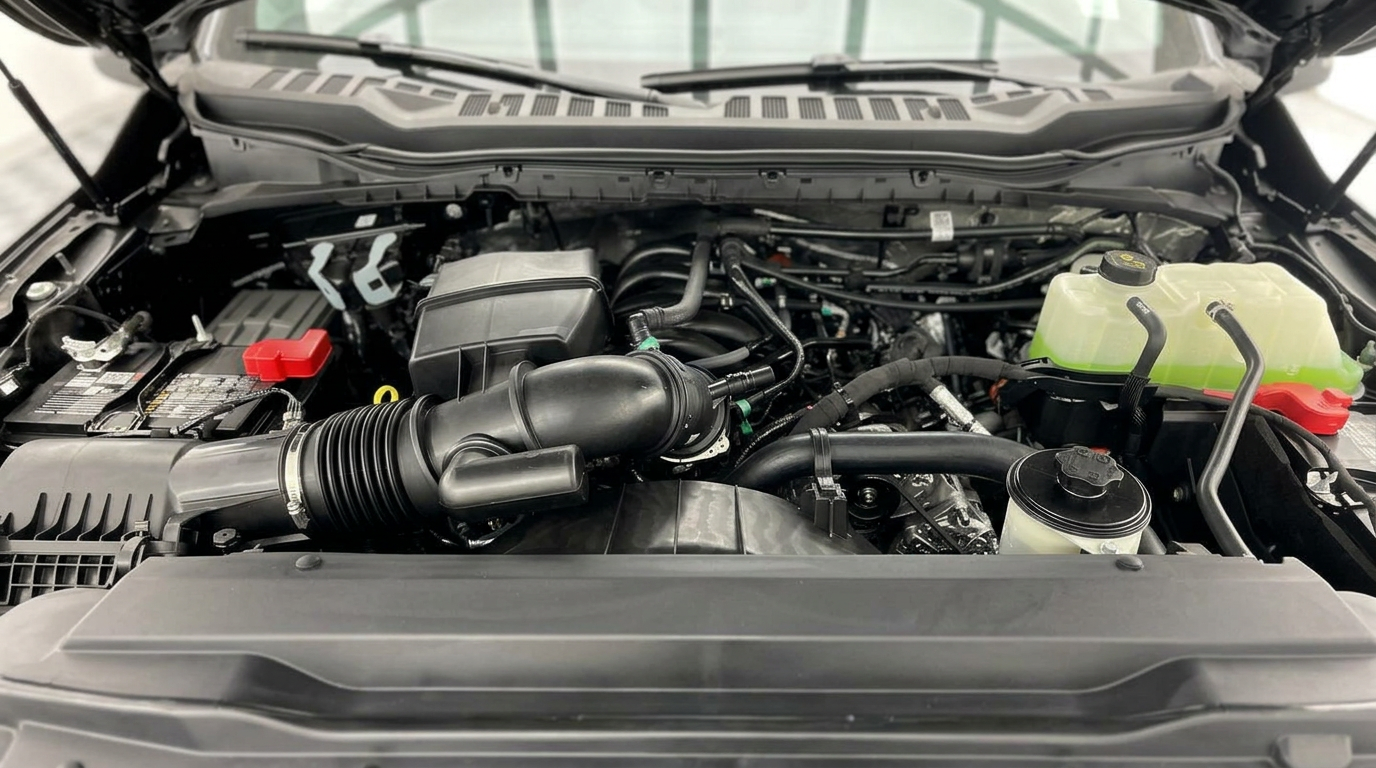
Two. The 7.3L gas V8 is standard on every trim, and the 6.7L High-Output Power Stroke V8 turbo diesel is optional across the line. Both use a 10-speed TorqShift automatic.
The 7.3L gas is a big, simple, naturally aspirated V8 — strong, easy to live with, and inexpensive to maintain. The High-Output diesel trades that simplicity for far more low-end torque and the highest tow ratings in the F-250 lineup. There's no longer a "middle" engine to overthink; you're choosing between a capable standard gas V8 and the heavy-haul diesel.
How much can the gas V8 tow vs. the HO diesel?
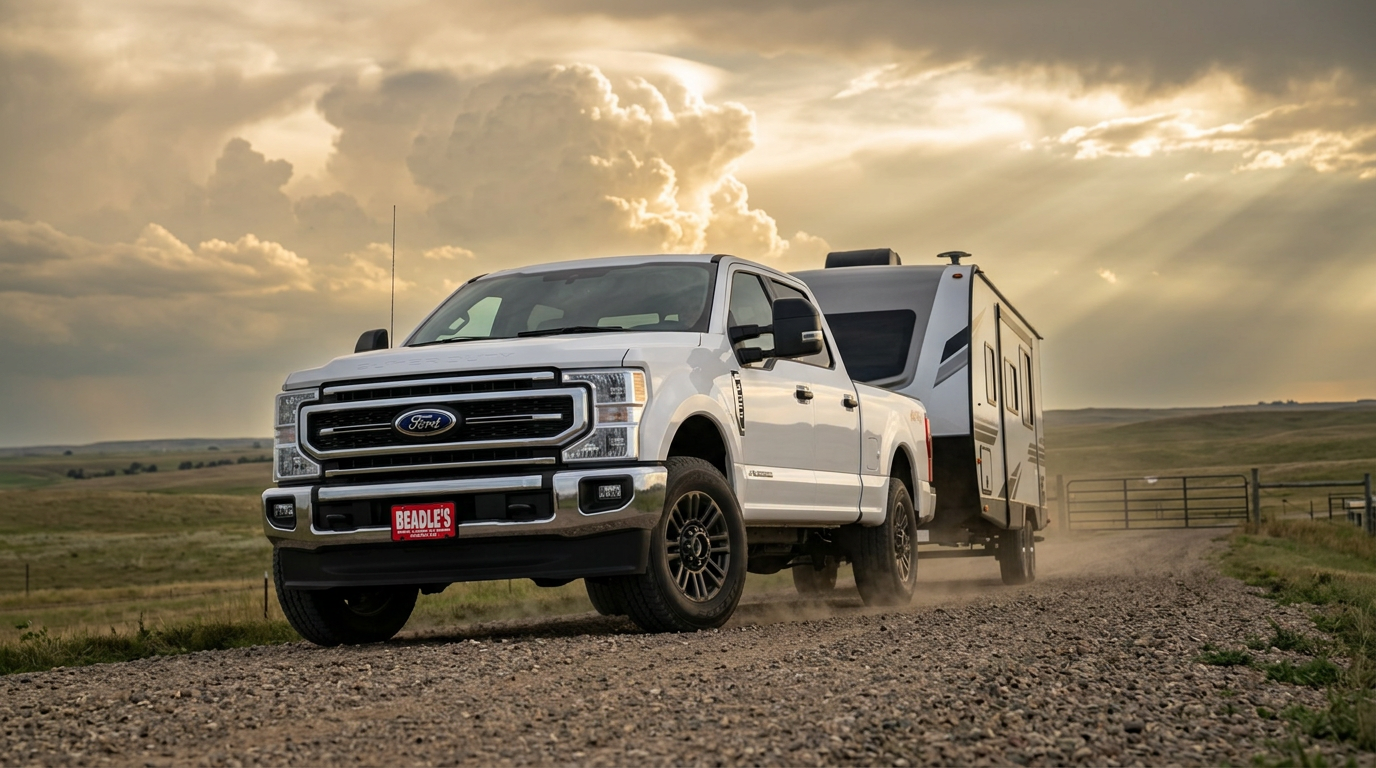
Properly equipped, the 7.3L gas tows up to about 19,500 lbs on a fifth-wheel or gooseneck and 18,200 lbs conventional. The 6.7L High-Output diesel raises that to up to 23,000 lbs gooseneck, 22,100 lbs fifth-wheel, and 22,000 lbs conventional with the F-250 High-Capacity Axle Upgrade.
That gap matters only if your trailer lives in it. A loaded tandem-axle stock trailer or a typical fifth-wheel camper sits comfortably inside the gas truck's range. It's the heavy gooseneck — equipment, big livestock loads, the trailer that's near the top of the range every week — where the diesel's extra ceiling and torque pull ahead.
| Max towing (properly equipped) | 7.3L Gas V8 | 6.7L HO Diesel |
| Conventional | Up to 18,200 lbs | Up to 22,000 lbs |
| Fifth-wheel | About 19,500 lbs | Up to 22,100 lbs |
| Gooseneck | About 19,500 lbs | Up to 23,000 lbs |
Maximums require proper equipment and vary by cab, bed, axle, and configuration. The highest diesel ratings require the F-250 High-Capacity Axle Upgrade.
When is the 7.3L gas the smarter buy?
When you tow occasionally rather than constantly, and your loads stay under roughly 19,500 lbs. For a camper on weekends, a stock trailer to the sale barn, or an occasional gooseneck, the gas V8 has the room without the diesel's upfront cost or added upkeep.
It also wins on the unglamorous stuff: a lower purchase price, cheaper oil changes, no diesel exhaust fluid to manage, and easier cold-weather starting in a Dakota January. For a truck that spends most of its life unloaded and tows on weekends, that adds up.
Our Recommendation
For most F-250 buyers around Bowdle and Aberdeen — daily drivers who tow a camper or a gooseneck occasionally — the standard 7.3L gas V8 is the smarter buy. It covers up to about 19,500 lbs of towing and saves you several thousand dollars up front plus the diesel's ongoing maintenance.
When does the HO diesel pay off?
When you tow heavy and often. The High-Output diesel's extra torque, higher tow ceiling, and better fuel economy under load make it worth the premium for buyers who run near the top of the range regularly — loaded goosenecks, equipment hauling, or long highway miles with a fifth-wheel.
The diesel also tends to hold its value well and is built for high-mileage, hard-working duty cycles. If towing is your truck's main job rather than an occasional weekend, the diesel usually earns back its upfront cost in capability, comfort under load, and resale. Pair it with the High-Capacity Axle Upgrade to unlock the 23,000-lb gooseneck maximum.
What does each engine cost to own?
The gas V8 is cheaper to buy and cheaper to maintain; the diesel costs several thousand dollars more up front and more per service, but returns better towing fuel economy and stronger resale. Ford has not yet published final 2027 pricing, so the exact diesel premium is to be confirmed.
The honest math comes down to use. If you tow occasionally, the gas truck's lower cost of ownership is hard to beat. If you tow heavy and rack up loaded miles, the diesel's efficiency and durability under load close the gap and often come out ahead over a long ownership period.
| Factor | 7.3L Gas V8 | 6.7L HO Diesel |
| Best for | Daily driving, occasional towing | Heavy, frequent towing |
| Upfront cost | Lower (standard) | Several thousand more |
| Maintenance | Lower; no DEF | Higher; DEF, larger oil capacity |
| Towing fuel economy | Good for the class | Better under heavy load |
| Resale | Solid | Strong, especially high-mileage |
From the Beadle Ford Lot
The question we ask every gas-versus-diesel shopper is the same: what's your heaviest trailer, and how often do you pull it? When we weigh a buyer's actual loaded trailer against the now-standard 7.3L gas, most realize the gas truck covers it with room to spare — and the diesel decision turns out to be about frequency, not whether it'll handle the job.
Key Takeaways
- The 7.3L gas V8 is standard and tows up to about 19,500 lbs on a fifth-wheel or gooseneck.
- The 6.7L High-Output diesel raises the max to 23,000 lbs gooseneck with the High-Capacity Axle Upgrade.
- Choose the gas V8 for daily driving and occasional towing; choose the diesel for heavy, frequent hauling.
- The gas V8 costs less to buy and maintain; the diesel returns better towing economy and stronger resale.
- The deciding factor is frequency and trailer weight, not whether the gas truck can do the job.
Frequently Asked Questions
Quick Answers: 2027 F-250 Gas vs. Diesel
One-line answers to the follow-up questions buyers ask next.
Which engine is standard? The 7.3L gas V8.
Gas towing max? About 19,500 lbs fifth-wheel/gooseneck, 18,200 lbs conventional.
Diesel towing max? Up to 23,000 lbs gooseneck with the High-Capacity Axle Upgrade.
Which is cheaper to buy? The gas V8 — it's standard.
Which is cheaper to maintain? The gas V8 — no DEF, smaller oil changes.
Which has better towing fuel economy? The diesel, under heavy load.
Which holds value better? The diesel, especially at high mileage.
Best for occasional towing? The 7.3L gas V8.
Best for daily heavy hauling? The 6.7L High-Output diesel.
Do both use the same transmission? Yes — a 10-speed TorqShift automatic.
Keep Researching
The complete 2027 Ford F-250 Super Duty overview — trims, towing, specs, and inventory
2027 F-250 for recreational towing — campers and fifth-wheels on the gas V8
What's new for the 2027 F-250 — the four-to-two engine change explained
Is an F-250 enough truck? — when to consider stepping up to an F-350
My Take on Gas vs. Diesel in the 2027 F-250
I steer a lot of people toward the gas V8, and not because it's the cheaper sale — it's because most of the folks who ask me are towing a camper or a stock trailer a handful of times a year, not running a loaded gooseneck every week. For that buyer, the now-standard 7.3L is genuinely the right truck, and it keeps several thousand dollars in their pocket. When someone really does pull heavy and often, the diesel is the obvious call and I'll say so.
The best way to settle it is to tell me your heaviest trailer and how often you pull it. Bring those numbers to Beadle Ford in Bowdle and we'll match the engine to how you actually use the truck.
About the Author
Lexy Tabbert — Beadle Ford, Bowdle, SD
Lexy Tabbert is the Director of Sales and Marketing at Beadle Ford in Bowdle, South Dakota. She covers Ford vehicles, trim comparisons, and buyer guidance — helping families, ranchers, and ag operators across the region find the right truck and configuration for their needs. Learn more about Lexy.