
Quick Answer
The Grand Highlander is the roomier box with hybrid powertrains and a genuine eight-seat layout; the Explorer is rear-drive-based with available 4WD and far more power at the top of the range. Both tow 5,000 lbs properly equipped. Choose the Grand Highlander for third-row space and fuel economy, and the Explorer for winter traction, how it drives, and the Tremor and ST versions Toyota has no answer for.
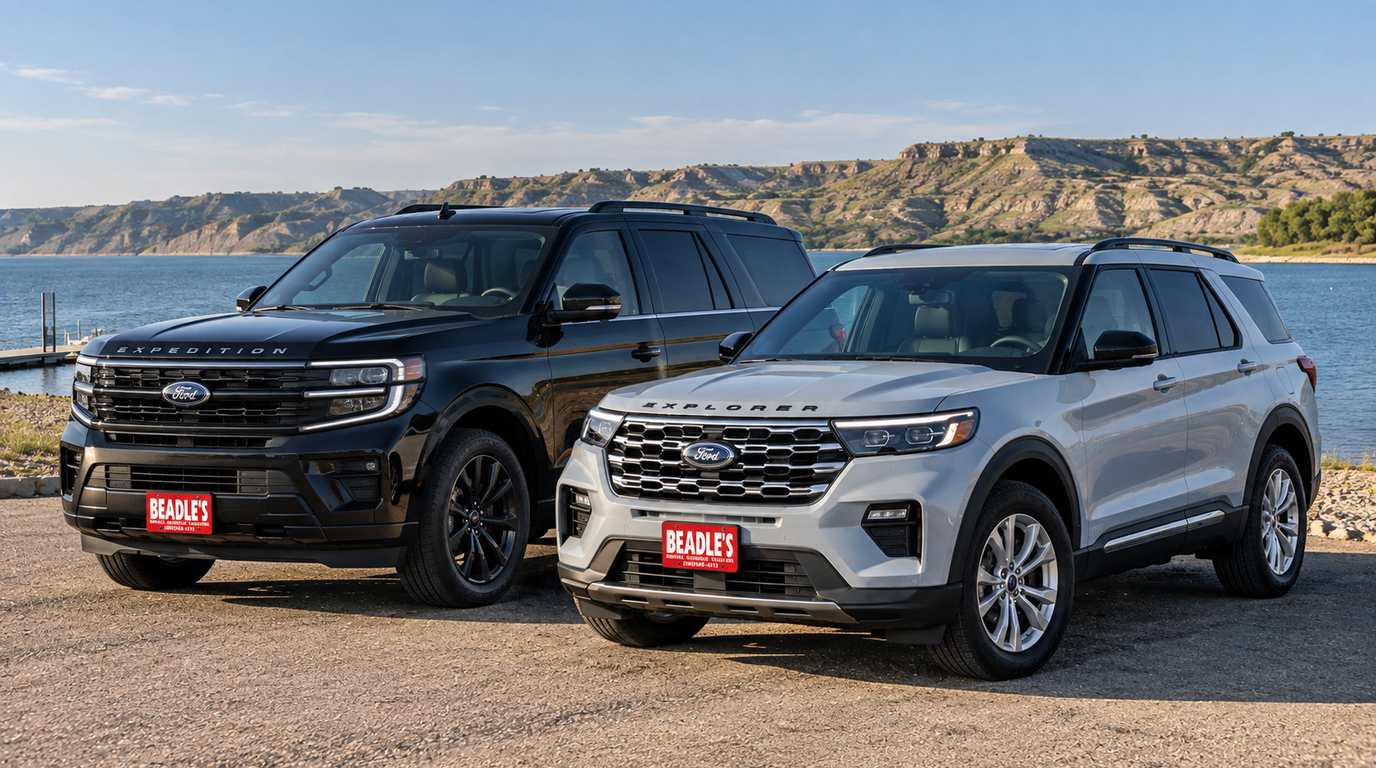
The Toyota Grand Highlander is the three-row most of our Explorer shoppers cross-shop, and it deserves the comparison: it is roomy, it is well built, and the hybrid options are real. The 2027 Explorer answers with more power at every price, a 4WD system built on a rear-drive layout, an off-road trim Toyota does not offer, and a lower starting price. Which one is right depends on what your family actually does with it.
This is a straight comparison on the things that matter here: engines, towing, third-row and cargo space, winter capability, tech, and price. Toyota figures are from Toyota’s published 2026 Grand Highlander specifications and should be confirmed on a specific unit. Explorer figures are Ford’s 2027 numbers from the 2027 Ford Explorer Buyers Guide.
The short answer
Pick the Grand Highlander if you want a hybrid, if you regularly carry adults in the third row, or if maximum cargo volume is the deciding factor. It is a larger vehicle inside, with up to eight seats and more cargo space than the Explorer.
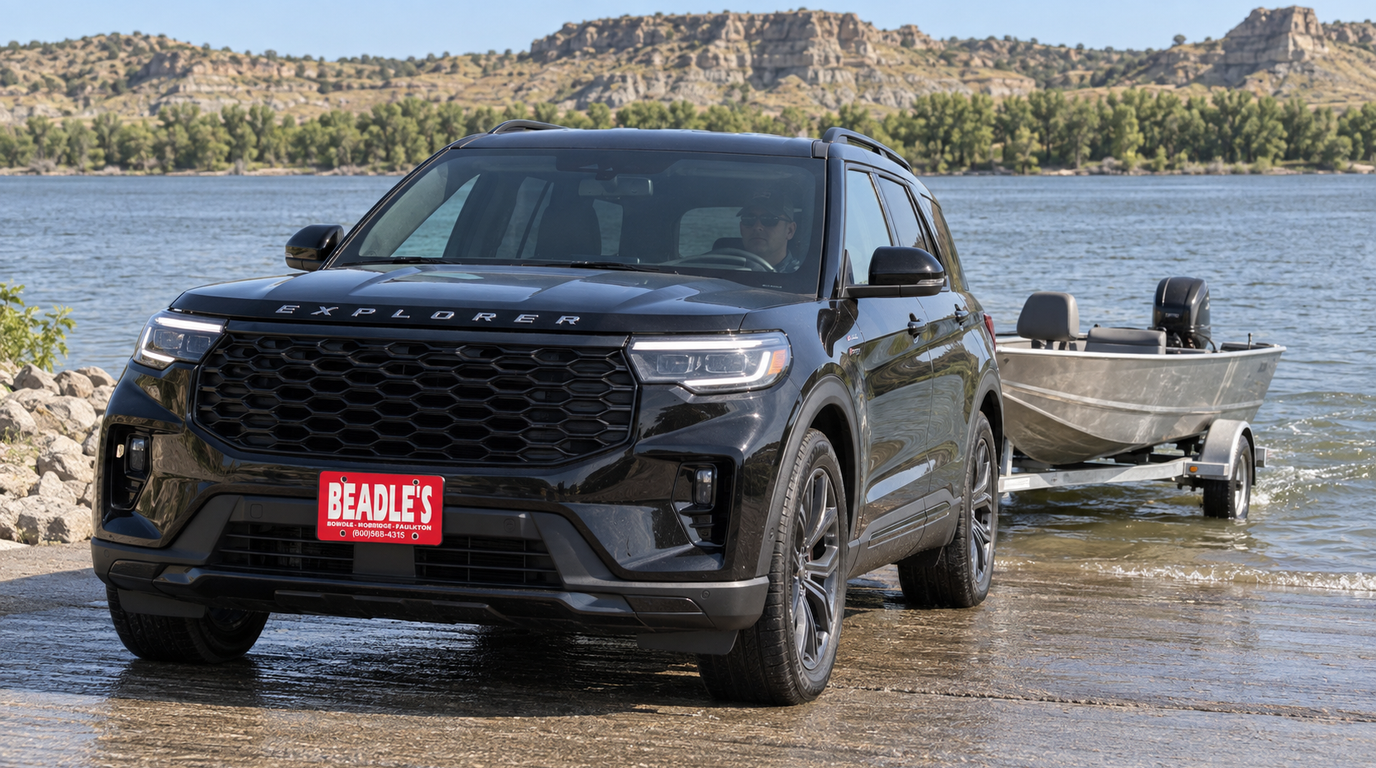
Pick the Explorer if you want more power for the money (300 hp standard, up to 400 hp available, against Toyota’s 265-hp turbo four), a rear-drive-based 4WD system with real drive modes and an off-road Tremor trim, a lower starting price, or the ability to walk onto the lot in Bowdle and drive one home today. Both tow 5,000 lbs when properly equipped, so the boat is not the tiebreaker.
Engines: EcoBoost vs. turbo four and hybrids
| 2027 Ford Explorer | 2026 Toyota Grand Highlander | |
|---|---|---|
| Standard engine | 2.3L EcoBoost I-4, 300 hp / 310 lb-ft, 10-speed automatic | 2.4L turbo I-4, 265 hp / 310 lb-ft, 8-speed automatic |
| Available engine | 3.0L EcoBoost V6, up to 400 hp / 415 lb-ft (ST, Tremor 801A, Platinum) | 2.5L Hybrid, 245 hp combined; Hybrid MAX 2.4L turbo hybrid, 362 hp |
| Drive | RWD or Intelligent 4WD (rear-drive based) | FWD or AWD (front-drive based); Hybrid MAX is AWD |
| Max towing | 5,000 lbs, every trim | 5,000 lbs, properly equipped |
| Fuel economy | 2.3L 4WD: 20 / 27 / 23 mpg (EPA); other combinations not yet posted | Varies by powertrain; the 2.5L Hybrid is the efficiency leader |
Explorer figures are Ford’s published 2027 specifications; towing requires proper equipment. Toyota figures per Toyota’s 2026 published specifications.
The gap at the base is the headline: an Explorer Active 100A has 35 more horsepower than a Grand Highlander LE and costs less. At the top, Toyota’s Hybrid MAX is a strong engine at 362 hp, and the Explorer ST and V6 Platinum answer it with up to 400 hp. Where Toyota clearly wins is the 2.5L Hybrid: if your priority is fuel economy over power, the Explorer does not offer a hybrid, and I am not going to pretend otherwise. Explorer details by engine: Platinum 2.3L or 3.0L.
Third row, cargo, and seating
The Grand Highlander was designed around the third row, and it shows. It seats up to eight and Toyota lists up to 97.5 cubic feet of cargo with the rear rows folded. The Explorer seats up to seven and lists 16.3 cubic feet behind the third row and up to 85.3 cubic feet folded. If you regularly haul three teenagers plus their friends, or you need the third row to be adult-comfortable on a three-hour drive, the Toyota has the edge on room.
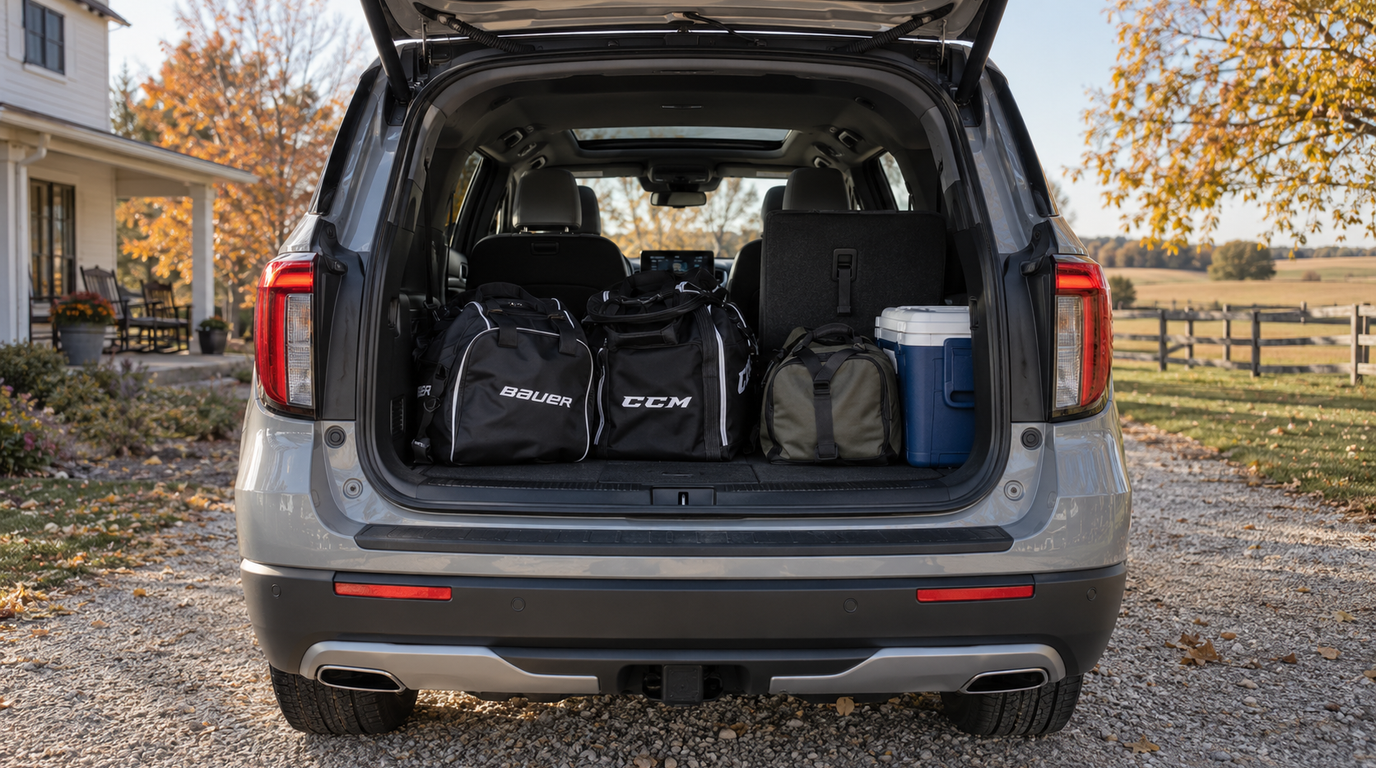
Where the Explorer’s space works: the second-row captain’s chairs are standard, which is the configuration most families with car seats prefer; the third row folds flat and is power-folding on ST, Platinum, and Tremor 801A; and 16.3 cubic feet behind the third row is enough for the hockey bags with the seats up. Come put your actual gear in the back of one on our lot. That settles this faster than any table.
Bring the hockey bags
Load your real gear into an Explorer on the lot in Bowdle. It settles the space question faster than any spec sheet.
Winter and gravel: 4WD vs. AWD
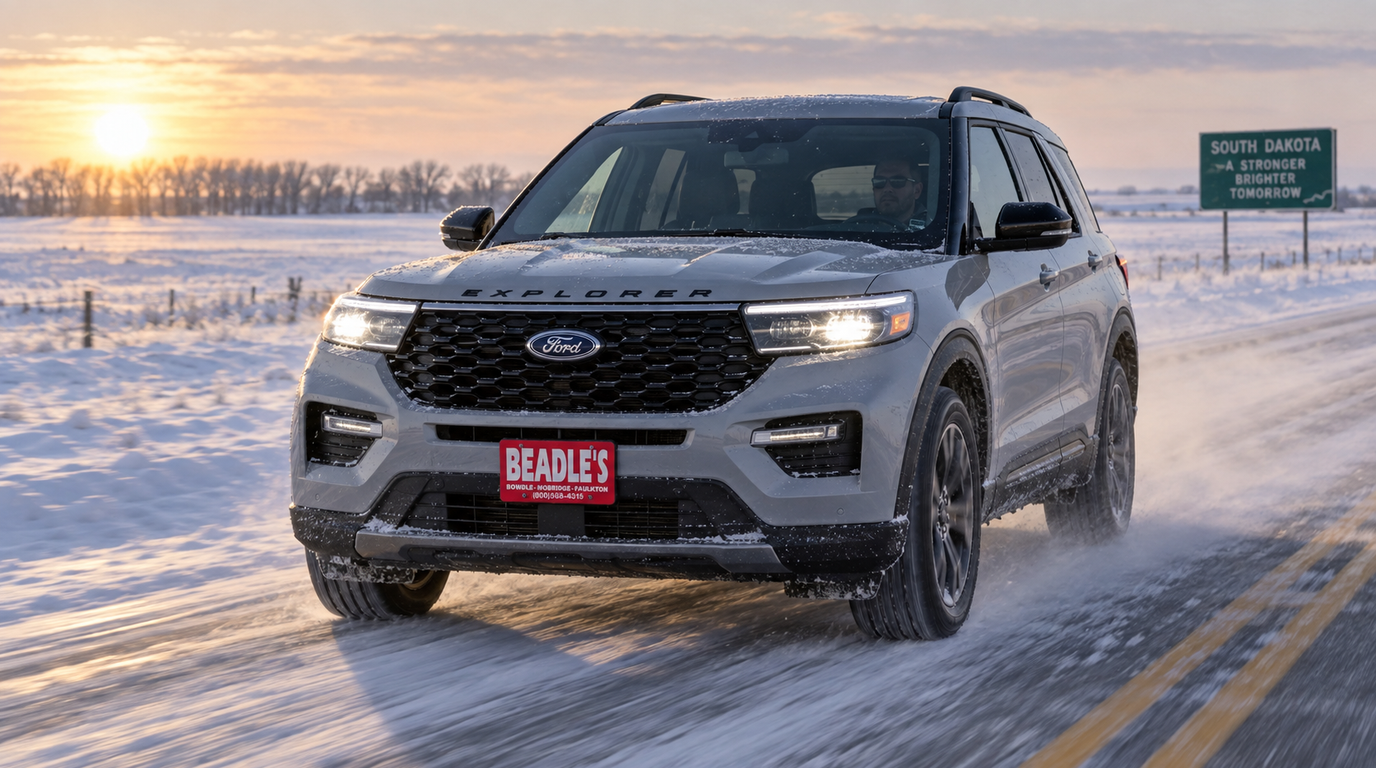
This is where the layouts matter. The Explorer is rear-drive based with Intelligent 4WD, seven selectable drive modes including Slippery and Deep Snow/Sand, and Hill Descent Control. The Grand Highlander is front-drive based with an on-demand AWD system. On a snow-packed highway both will get you there. On a rutted section road, a soft boat ramp, or a hill in an ice storm, a rear-drive-based 4WD with a true Deep Snow mode is more composed and more predictable, and the Explorer’s 7.6 to 8.7 inches of ground clearance depending on trim helps.
Toyota does not offer a Grand Highlander with all-terrain tires, skid plates, or a limited-slip rear. The Explorer Tremor has all three, plus front tow hooks, on a three-row family vehicle. If any part of your driving leaves pavement on purpose, that is a category Toyota is not in. The 2027 Explorer Tremor guide covers it.
Technology and driver assistance
Both have the modern basics: a large center screen, wireless Apple CarPlay and Android Auto, a digital cluster, and a full driver-assist suite standard. The Explorer’s 13.2-inch touchscreen runs the Ford Digital Experience with Google built in (Google Maps, Google Assistant, Google Play) and takes over-the-air updates through a 5G modem. Ford Co-Pilot360™ Assist+ is standard on every Explorer, with the 360-degree camera from ST-Line up. Toyota Safety Sense is standard on every Grand Highlander.
The Explorer’s tech edge is BlueCruise: hands-free highway driving that is included on Platinum for a year plus 90 days and trial-included on ST and Tremor 801A. Toyota does not offer a hands-free system on the Grand Highlander. If your drives are I-90 or I-29 to Sioux Falls or Rapid City, that is a real difference; here is how BlueCruise compares with the other systems.
Price
The 2027 Explorer Active 100A starts at $38,465 in RWD and $40,465 in 4WD, plus $1,795 destination. The Active 200A, the trim most families buy, is $40,400 / $42,400. Toyota lists the 2026 Grand Highlander LE from about $42,855 before destination, with AWD and the hybrids above that. Trim for trim, the Explorer starts a few thousand dollars lower and gives you more horsepower at each step. Full Explorer pricing: 2027 Explorer trim levels.
The other price factor is availability. Both the 2026 and 2027 Explorer are on the lot at Beadle Ford; see what is in stock and get pre-approved before you come in.
Key Takeaways
- Explorer wins on power at every price: 300 hp standard vs. 265, up to 400 hp available vs. 362.
- Grand Highlander wins on interior room (up to 8 seats, up to 97.5 cu ft) and offers hybrids; the Explorer does not have a hybrid.
- Both tow 5,000 lbs. The Explorer’s rear-drive-based 4WD and the Tremor trim give it the edge off pavement and in deep snow.
- Explorer offers BlueCruise hands-free driving; the Grand Highlander does not offer a hands-free system.
- Explorer starts a few thousand dollars lower trim for trim, and both model years are on the lot in Bowdle.
Frequently Asked Questions
My Take
I will give Toyota its due: if a family tells me the third row is for adults every week and they want a hybrid, the Grand Highlander is the right vehicle and I would rather say so than sell them the wrong one. Most families I talk to are not that family. They put car seats in the second row, kids in the third a few times a month, a boat behind it in summer, and they drive gravel to get home. For that, the Explorer is more vehicle for less money, and the 4WD is the kind you can trust in February.
Come load your gear into one. The space question answers itself in about five minutes.
About the Author
Lexy Tabbert — Beadle Ford, Bowdle, SD
Lexy Tabbert is the Director of Sales and Marketing at Beadle Ford in Bowdle, South Dakota. She covers Ford vehicles, trim comparisons, and buyer guidance — helping families, ranchers, and ag operators across the region find the right truck and configuration for their needs. Learn more about Lexy.