
Blog / New Vehicles

2.3L vs 2.7L EcoBoost: Which 2026 Ford Bronco Engine Is Right for You?

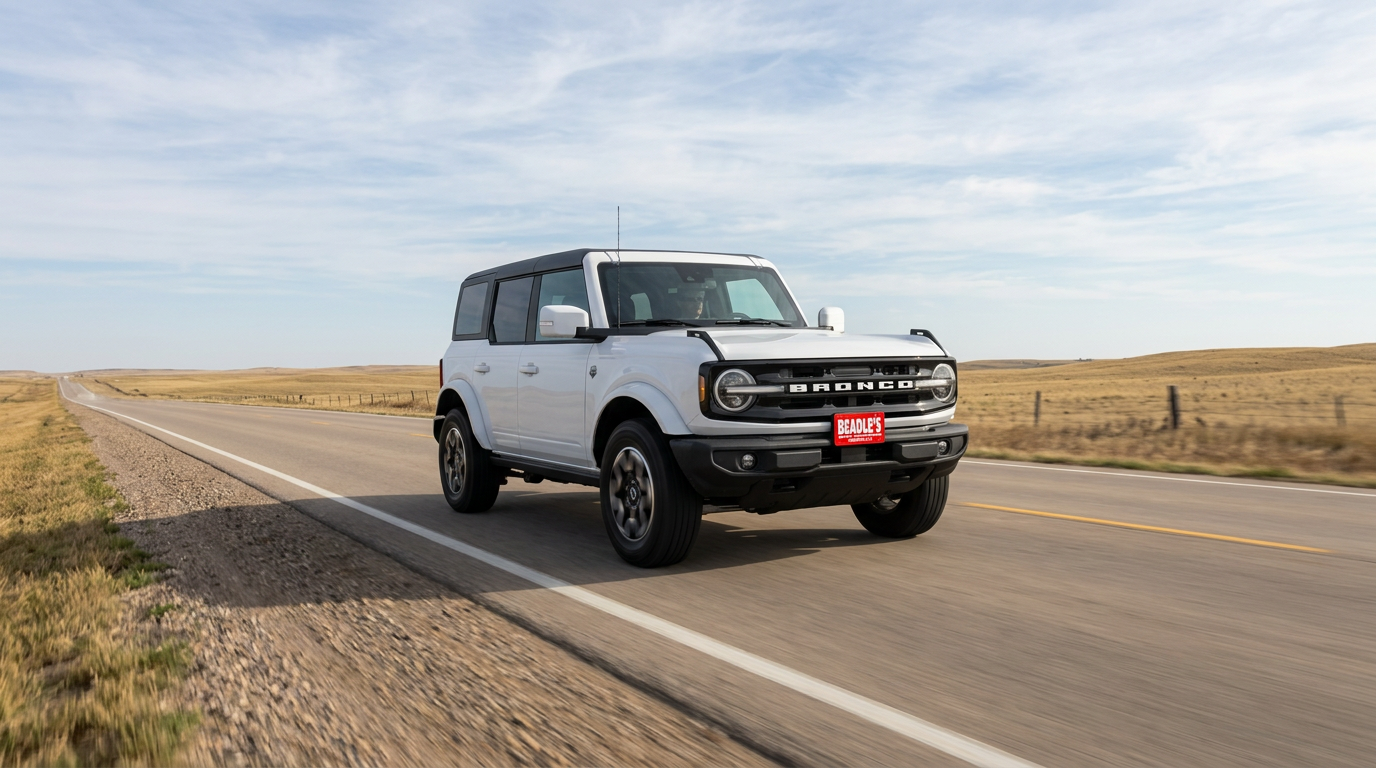
2026 Ford Bronco Outer Banks in Velocity Blue Metallic in motion on a two-lane South Dakota highway, prairie horizon

Two engines power most 2026 Ford Bronco orders: a 2.3L EcoBoost I-4 making 300 horsepower and 325 lb-ft of torque, and a 2.7L EcoBoost V6 making 330 horsepower and 415 lb-ft. The Raptor's 3.0L V6 sits in its own tier (418 hp / 440 lb-ft) and isn't part of this comparison. For everyone else, the choice is between the four-cylinder and the V6 — and it's a closer call than most buyers expect.

This is an honest decision tool. We'll cover what each engine actually feels like behind the wheel, what towing looks like (spoiler: nearly identical), what to expect at the pump on a Bowdle-to-Black-Hills run, whether the 7-speed manual still earns its place, and which engine matches which buyer in central South Dakota.

Why Is the 2.3L EcoBoost the Default Engine on the 2026 Bronco?

The 2.3L EcoBoost is the default because it's the broadest-fit engine in the lineup — the only one offered with the 7-speed manual transmission, standard on every trim from Base through Heritage Edition (other than Outer Banks, where it pairs with the auto only), and capable of the same 3,500-pound tow rating as the V6. For most buyers it's enough engine.

Output is 300 horsepower at 5,700 RPM and 325 lb-ft of torque at 3,400 RPM on premium fuel (275 hp / 315 lb-ft on regular). It's a turbocharged inline-four with direct injection, and in a body-on-frame Bronco it pulls cleanly from low RPM and turns the four-cylinder displacement gap into a non-issue most of the time. On a county-road merge or a Black Hills two-track, the four cylinder doesn't feel undersized.

Where the 2.3L gives ground is at sustained high-load output: a long uphill grade with a trailer, or the upper third of the rev range when you want immediate punch from 50 to 75. The four cylinder works harder there than the V6 does — you'll hear it through the firewall, and you'll feel the turbo spooling rather than the V6's broader torque shelf. For most central-SD use cases, that distinction doesn't show up in everyday driving.

Trim availability: standard on Base, Big Bend, Outer Banks, Badlands, and Heritage Edition. New for 2026, the 10-speed automatic is now available with the 2.3L on Heritage (was 2.7L-only before). Stroppe and Raptor don't offer the 2.3L. For full trim-by-trim context, see our 2026 Ford Bronco trim levels guide.
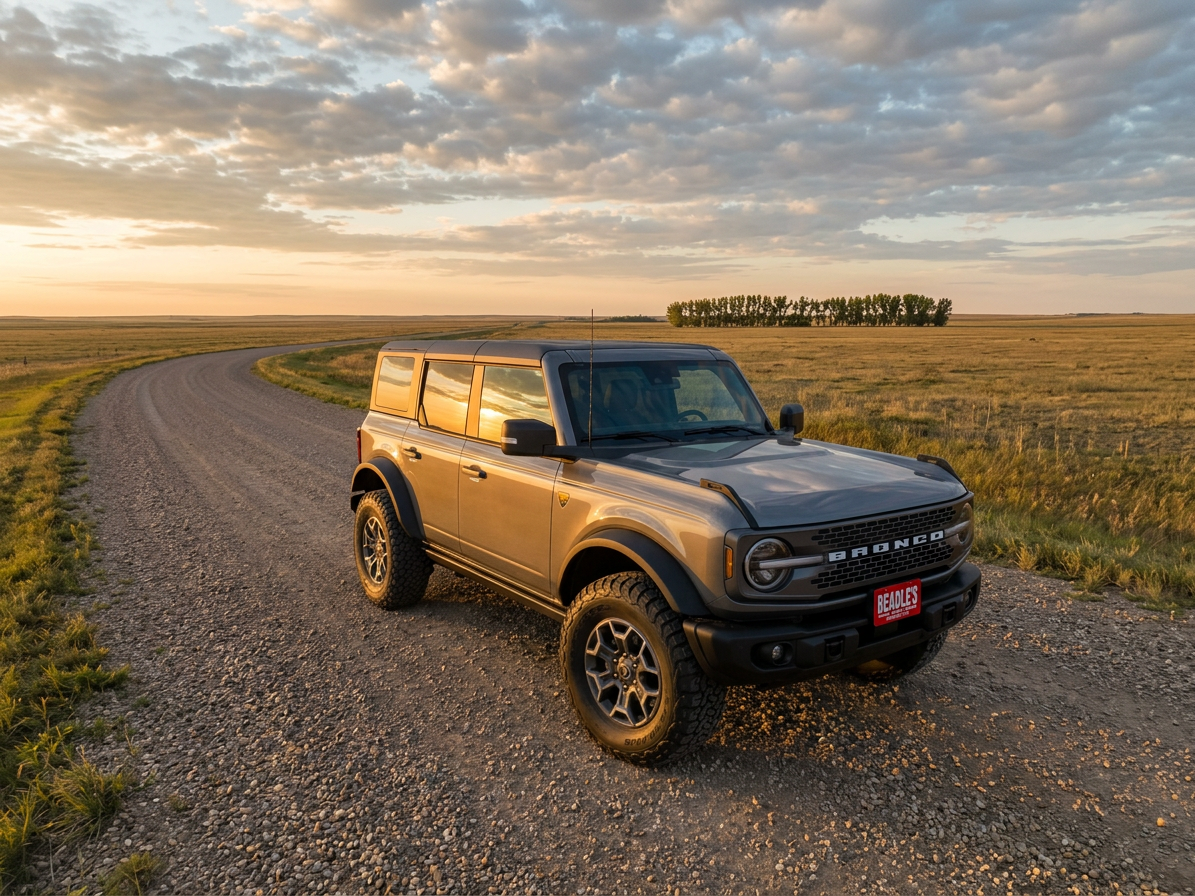
2026 Ford Bronco 4-Door Badlands in Marsh Gray with the 2.3L EcoBoost on a gravel county road in central South Dakota at golden hour
A 2.3L EcoBoost Badlands in its natural habitat — gravel county road, prairie horizon, the Bowdle-to-Hills run that 80% of central-SD Bronco miles look like.

What Does the 2.7L EcoBoost V6 Actually Buy You Over the 2.3L?

The 2.7L EcoBoost V6 buys you 30 more horsepower (330 vs 300) and — much more meaningfully — 90 more lb-ft of torque (415 vs 325) on premium fuel. The torque is what you actually feel: stronger pull from a stop, easier passing at highway speed, and a smoother delivery profile that doesn't ask the engine to work as hard. The upcharge is $2,995.

The 2.7L is a turbocharged V6 with direct injection. It's automatic-only — there's no manual-transmission option with the V6. It's available on Outer Banks, Badlands 4-Door, and Heritage Edition, and it's the only engine offered on the Stroppe Edition (fleet/military only). It is not offered on Base, Big Bend, Badlands 2-Door, or Raptor.

Day-to-day, the V6 is most noticeable at the moments the 2.3L works hardest — uphill grades with weight, on-ramp acceleration, sustained 70+ highway speeds with a headwind, and the kind of pull-from-2,500-RPM situations where a V6's torque shelf flattens out before a four cylinder's turbo fully spools. For drivers who do a lot of long highway miles or pull a small trailer regularly, the V6 reduces the engine's working effort. For drivers who mostly do town errands and gravel section roads, that effort difference is real but often not worth the upcharge.

There's also a refinement gap. The V6 is quieter at cruise and smoother at idle — small things, but the kind of thing you notice on a four-hour run to the Hills. If long highway distance is a big part of your annual miles, that refinement adds up.

How Different Is Towing Between the 2.3L and 2.7L?

On paper, almost not at all. Both the 2.3L and 2.7L EcoBoost are rated to tow 3,500 lbs on every non-Raptor 2026 Bronco — regardless of trim, axle ratio, body style, or transmission. The Raptor is the only 2026 Bronco rated higher, at 4,500 lbs. The standard hitch receiver on every non-Raptor caps at 3,500 / 350 lbs (trailer / tongue), so the engine choice doesn't change the ceiling.
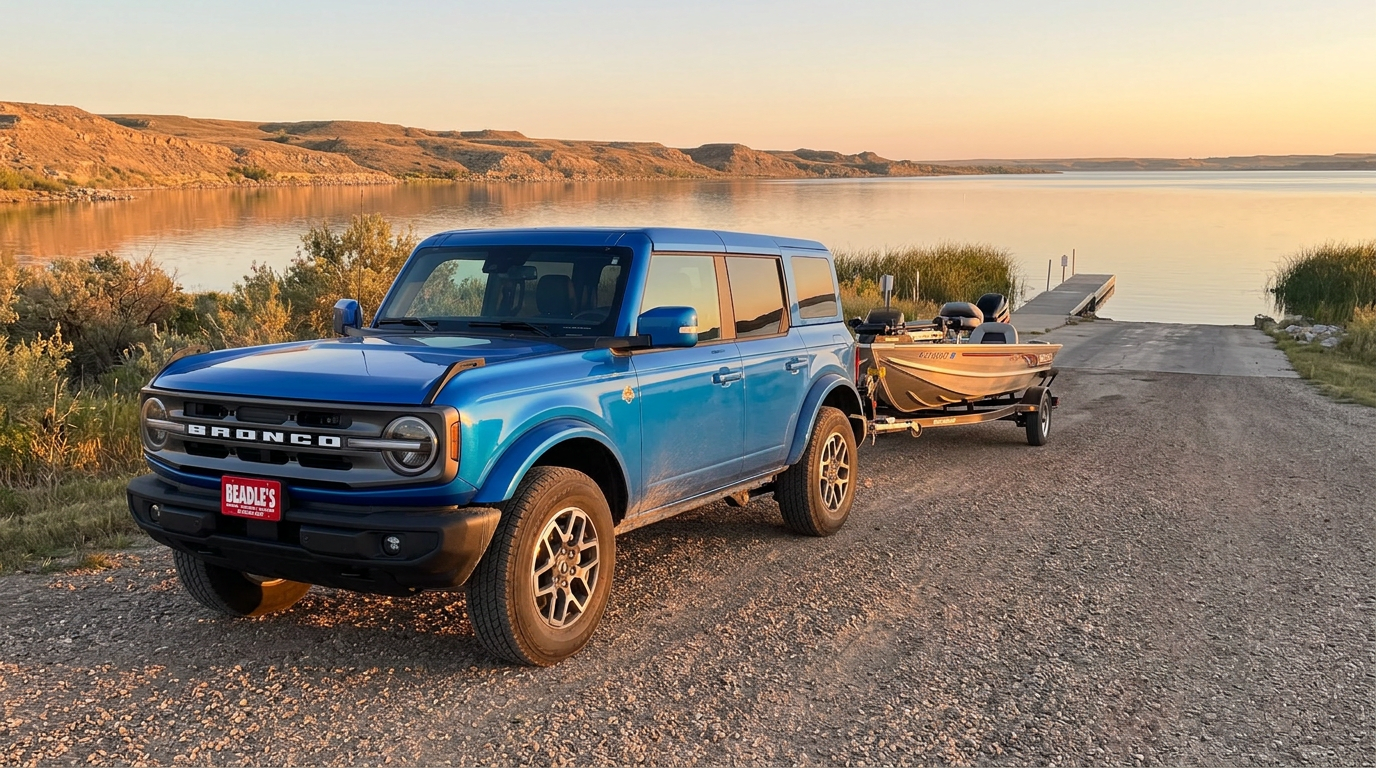
2026 Ford Bronco Outer Banks in Velocity Blue Metallic towing an aluminum bass boat on a single-axle trailer to a Lake Oahe boat ramp
Outer Banks 2.7L EcoBoost towing a small bass-fishing rig to a Lake Oahe boat ramp — well within the Bronco's 3,500-pound non-Raptor cap.

Where the engines actually differ is in how they pull that 3,500 lbs, not how much. The 2.7L V6's extra torque means the engine works less hard at the same load — fewer downshifts on grade, less turbo build-up before getting underway, lower thermal load on long pulls. If you're pulling a single-axle aluminum bass boat to Lake Oahe a few times a summer, the 2.3L handles it with no issue. If you're pulling a 3,400-pound enclosed trailer with sled or ATV to the Hills regularly, the V6 will feel measurably less stressed at the end of a long day.

A 2026 footnote worth knowing: the Badlands 4-Door with the 2.7L V6 and 4.46 axle has a slightly lower published rating of 3,460 lbs (versus 3,500 on every other configuration). It's a 40-pound spread — not relevant to most buyers, but if you've got a trailer that's right at the line, that's the one config to flag.

The Trailer Tow Prep Package is included on every non-Raptor Bronco, but the dealer-installed OEM trailer hitch receiver is required for any towing over 2,000 lbs. The frontal-area limit is 30 sq ft (non-Raptor), which rules out tall enclosed trailers regardless of weight rating.

What's the EPA Fuel Economy for Each 2026 Bronco Engine?

EPA-estimated fuel economy varies by door count, transmission, axle ratio, and tire size — there isn't one single number that applies. As a baseline, the 2.3L EcoBoost rates roughly 18 city / 20 highway / 19 combined on a 4-Door automatic, and the 2.7L EcoBoost V6 rates roughly 17 / 17 / 17 on the same body. The 2-Door 2.3L generally rates a touch higher (around 20 / 21 / 20). Verify your specific configuration on fueleconomy.gov before purchase — Sasquatch's 35-inch tires and 4.70 axle, in particular, drop EPA combined by a noticeable margin on either engine.

For a Bowdle-to-Black-Hills round trip (about 720 miles total at mostly highway speeds), the math comes out roughly like this on each engine, before fuel-cost variations. A 2.3L 4-Door averaging 20 mpg highway burns about 36 gallons. A 2.7L V6 4-Door averaging 17 mpg burns about 42 gallons — a six-gallon difference per round trip, which adds up over a year of regular Hills runs but doesn't move the needle on a single weekend.

What changes more than the engine choice is what's hung off the Bronco. Sasquatch's bigger tires and steeper axle ratio are the single biggest fuel-economy variable in the lineup — a non-Sasquatch 2.3L Badlands and a Sasquatch-equipped 2.3L Badlands aren't really the same vehicle for MPG purposes. If saving fuel on long highway hauls is a priority, lean toward the smaller-tire trim and the 4-Door 2.3L auto. If you're already at Sasquatch spec, the 2.7L's torque advantage often offsets the V6's combined-MPG penalty for the way most buyers actually use the truck.

Both engines run on regular 87-octane fuel; premium is recommended for peak rated horsepower and torque but not required. Real-world MPG from owner forums tends to track within 1–2 mpg of EPA combined under mixed driving, with bigger gaps when towing or running deep snow.

Should You Pick the 7-Speed Manual or the 10-Speed Automatic?

For most buyers in central South Dakota, the 10-speed automatic is the practical pick. The 7-speed manual is a real driver's-engagement choice, and it earns its keep for buyers who want it — but the auto wins on towing, on long-distance highway comfort, and on every winter morning where the manual's clutch and Crank-in-Gear function become extra effort instead of fun.

The 7-speed manual (Ford code 44Q) is offered with the 2.3L EcoBoost only — never with the V6. It's standard on Base, Big Bend, Badlands, and Heritage Edition. It includes a Granny Gear (an ultra-low first), Crank-in-Gear functionality (lets you start the engine while in gear with the clutch pressed), and Hill Descent Control. For genuine off-road work — slow, technical climbs in the Black Hills or precise low-speed crawl situations — the manual gives the driver more direct control than even a well-tuned automatic.

The 10-speed automatic (Ford code 44T) is available with the 2.3L on most trims (NEW for 2026 on Heritage Edition with the 2.3L) and standard with the 2.7L V6 and 3.0L Raptor V6. With the auto you also get Trail Control (low-speed cruise control for off-road), Trail Turn Assist (tightens the turning radius by braking the inside rear wheel), and on Outer Banks and Badlands, Trail One-Pedal Driving. Those features pair tightly with the GOAT modes — see our 2026 Bronco G.O.A.T. Modes guide for how those interact in practice.

The honest take: if you're choosing between a 2.3L manual and a 2.3L auto, and you're not specifically excited about driving a manual, take the auto. It's better for towing, better in stop-and-go, better for resale value, and better in winter clutch-leg fatigue. If you genuinely want the manual — and a meaningful number of Bronco buyers do — get it. It's one of the few capable off-road SUVs that still offers a true row-your-own option.

Which 2026 Bronco Engine Is Right for You?

The 2.3L EcoBoost fits the buyer who wants the broadest-fit engine and is doing mostly daily driving, gravel section roads, light recreational towing, and weekend trips to the Hills. It's the right call for the Plains Outdoorsman who already owns an F-150 for heavy work and uses the Bronco as a secondary vehicle, the buyer who wants the manual transmission, and anyone primarily driving in town or on county roads where the V6's extra torque doesn't get used.

The 2.7L EcoBoost V6 fits the buyer who runs long highway miles regularly, regularly tows close to the 3,500-pound limit, wants the smoother and quieter cruise feel, and doesn't want the manual transmission anyway. The Ranch-Country Daily who's pulling a small trailer to and from a property weekly, or the buyer who makes the Hills run six or eight times a year, will appreciate the V6's torque shelf. The $2,995 upcharge is real money, but for the right use case, it's well-spent.

For SD winter driving — a topic worth its own treatment — both engines handle cold starts and traction well. See our 2026 Bronco in South Dakota winter guide for the cold-weather details that matter at 30 below.

For the broader 2026 Bronco context — engines, capability, what's new for the year — the full 2026 Ford Bronco overview walks through the lineup side by side. And if Sasquatch is on your build sheet, our honest take on whether Sasquatch is worth it in central South Dakota covers that decision in detail — Sasquatch is the single biggest variable on either engine's fuel economy.

Key Takeaways

  • 2.3L EcoBoost: 300 hp / 325 lb-ft, available with 7-speed manual, the broadest-fit engine for most buyers.
  • 2.7L EcoBoost V6: 330 hp / 415 lb-ft, automatic-only, $2,995 upcharge — buys torque, refinement, and easier highway and towing duty.
  • Both engines tow 3,500 lbs (non-Raptor cap). The Raptor's 3.0L V6 is in its own tier at 4,500 lbs.
  • EPA estimates: 2.3L 4-Door auto ~18/20/19; 2.7L V6 4-Door ~17/17/17. Verify your specific configuration on fueleconomy.gov before purchase.
  • The 7-speed manual is 2.3L-only and rewards engaged drivers; the 10-speed auto is the practical pick for most central-SD buyers.

Frequently Asked Questions

How much horsepower does each 2026 Bronco engine make?

On premium fuel, the 2.3L EcoBoost makes 300 horsepower and 325 lb-ft of torque, the 2.7L EcoBoost V6 makes 330 horsepower and 415 lb-ft, and the Raptor's 3.0L EcoBoost V6 makes 418 horsepower and 440 lb-ft. Output drops slightly on regular 87-octane fuel.

Can both engines tow the same amount?

Yes. Every non-Raptor 2026 Bronco — 2.3L or 2.7L, manual or automatic, any trim — is rated to tow 3,500 lbs. The hitch receiver on non-Raptor models caps there. Only the Raptor (3.0L V6) is rated higher at 4,500 lbs. One small footnote: the Badlands 4-Door with the 2.7L V6 and 4.46 axle is rated at 3,460 lbs.

Which trims offer the 2.7L EcoBoost V6?

The 2.7L EcoBoost V6 is offered on Outer Banks, Badlands 4-Door, and Heritage Edition, and is the only engine on the Stroppe Edition (fleet/military only). The upcharge is $2,995. It is not offered on Base, Big Bend, Badlands 2-Door, or Raptor.

Is the 7-speed manual transmission available with the 2.7L V6?

No. The 7-speed manual is offered exclusively with the 2.3L EcoBoost. The 2.7L EcoBoost V6 and the Raptor's 3.0L EcoBoost V6 are 10-speed automatic only. New for 2026, the 10-speed automatic is now also available with the 2.3L on the Heritage Edition (was 2.7L-only before).

Does the 2026 Ford Bronco require premium fuel?

No. Both the 2.3L EcoBoost and 2.7L EcoBoost V6 run on regular 87-octane fuel. Premium is recommended for peak rated horsepower and torque (300 hp / 325 lb-ft on the 2.3L; 330 hp / 415 lb-ft on the 2.7L), but the engines are calibrated to run safely on regular with a small drop in output.

My Take on the 2026 Bronco Engine Choice

In my time at Beadle Ford, I've watched buyers wrestle with this decision more than any other on the Bronco. The honest answer for most of them: the 2.3L is enough engine. The buyers who actually use the V6's torque tend to know they need it before they walk in — they have a specific trailer, a specific commute, or a specific feel they're after. The buyers who pick the V6 because they're worried the four cylinder is "too small" usually find out a year later that the 2.3L would have done the job.

If you're between the two, drive both back to back. Twenty minutes of seat time on the same county road outside Bowdle, with the same kind of load, settles the question for almost everyone — and saves you a $3,000 second-guess.

About the Author

Lexy Tabbert — Beadle Ford, Bowdle, SD

Lexy Tabbert is the Director of Sales and Marketing at Beadle Ford in Bowdle, South Dakota. She covers Ford vehicles, trim comparisons, and buyer guidance — helping families, ranchers, and ag operators across the region find the right truck and configuration for their needs.

Posted in:

Related Posts

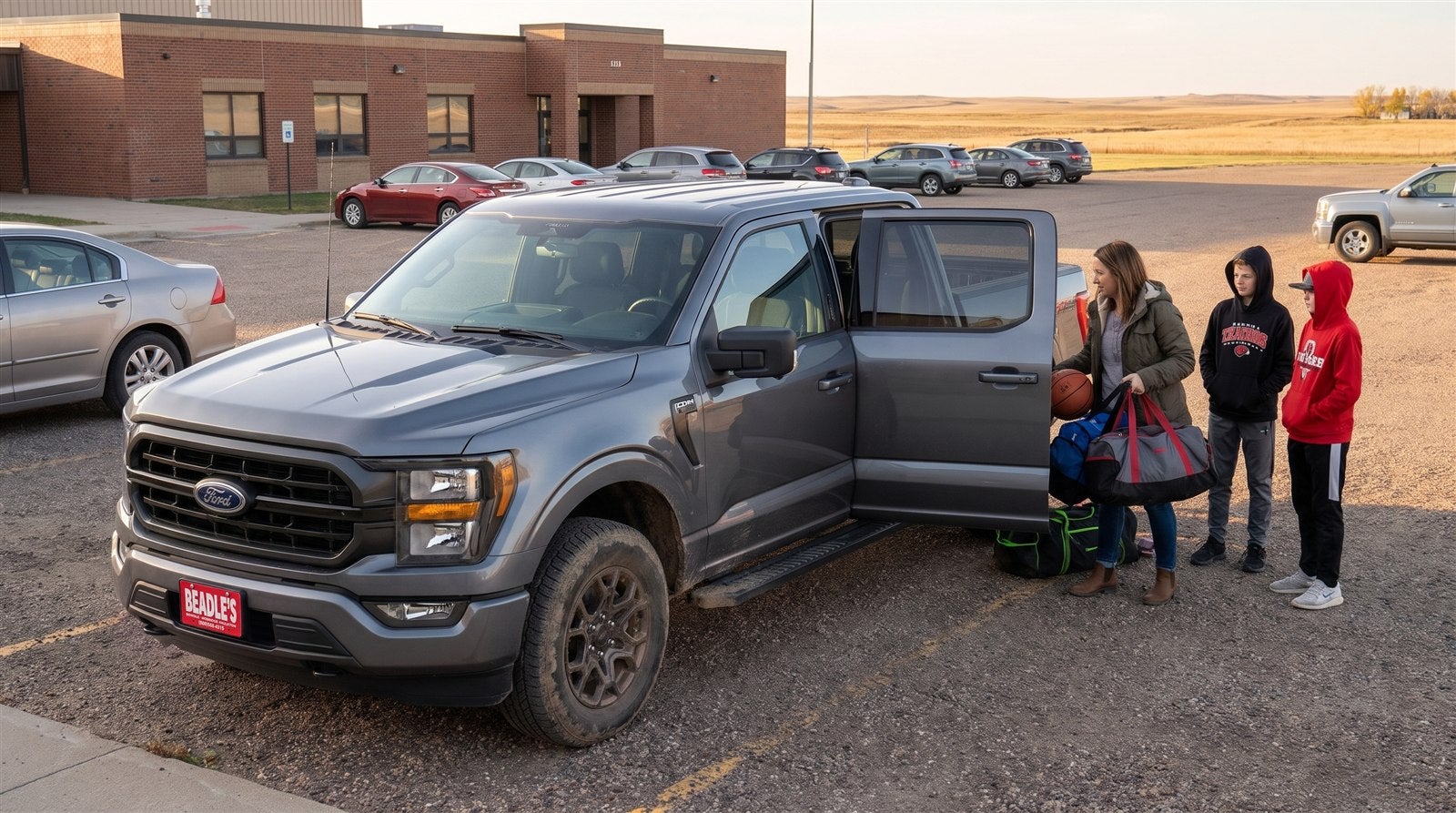
Carbonized Gray 2026 Ford F-150 XLT SuperCrew at a small-town South Dakota school as a family loads sports bags

2026 F-150 SuperCrew vs. a Three-Row SUV for a South Dakota Family

Quick Answer A 2026 Ford F-150 SuperCrew seats five, or six with a front bench, and tows up to 13,500 lbs when properly equipped. A three-row SUV carries more people under one roof. South Dakota families of five or fewer who tow or haul should buy the F-150. Around Bowdle, the family vehicle has a long job list. It runs kids to school and practice, makes the drive to a Saturday tournament, gets everyone to church on Sunday, and pulls the camper or the boat to Lake Oahe once the ice is off. Some families do all of that in a three-row SUV. A lot of others do it in a pickup. This guide compares a 2026 F-150 SuperCrew with a three-row SUV on the things a South Dakota family actually weighs: seats, cargo, towing, winter and the weekly routine. Then it tells you which families should buy which. Search Available F-150 Inventory Get Pre-Approved On This Page Can a 2026 F-150 SuperCrew really be the family vehicle? How do seating and the back seat compare with a three-row SUV? Bed or cargo area: where do the sports bags, groceries and coolers go? Which tows the camper or boat better? Which handles a Dakota winter and gravel roads better? How do school, sports, church and lake weekends play out in each? Which should your family buy: the F-150 or a three-row SUV? Can a 2026 F-150 SuperCrew really be the family vehicle? Yes, if your family fits in five seats on a normal week. The SuperCrew has four full-size doors and a full-size back seat, and it brings the same driver-assist and connectivity features families look for in an SUV. Every 2026 F-150 comes with Ford Co-Pilot360™ 2.0: Pre-Collision Assist with Automatic Emergency Braking and Pedestrian Detection, BLIS® with Cross-Traffic Alert, the Lane-Keeping System, a rear camera, rear parking sensors and Reverse Brake Assist. That last pair earns its keep in a school parking lot full of kids and backpacks. SYNC® 4 with a 12-inch center screen, a wireless phone connection, and Apple CarPlay and Android Auto compatibility is standard, and the Ford Connectivity Package includes a Wi-Fi hotspot for one year once it's activated in the Ford app. Where the truck asks for compromise is the count. If six or more people ride together every week, or grandparents need a seat on Sunday along with three kids, you're shopping for a three-row SUV. How do seating and the back seat compare with a three-row SUV? The F-150 SuperCrew seats five in two rows, or six if it has a front bench. A three-row SUV adds a third row, which is the whole reason to buy one. Five or six seats. The XL comes with a 40/20/40 front bench, and it's offered on some XLT builds, which adds a middle front seat for a sixth rider. The XLT and Lariat trucks most families buy usually have a 40/console/40 front row, which seats five with a center console. The back seat is the family seat. On a SuperCrew, everyone in back rides in a full-size second row with full-size doors, which makes car seats, booster seats and a growing teenager easier to manage than the third row of most SUVs. Kids in car seats belong in the back seat, not the front middle. Comfort features. The upper XLT equipment groups add heated front seats and remote start. The Lariat adds ActiveX™ heated and ventilated front seats, and the top Lariat group adds heated second-row seats. Hidden storage. The XLT has storage under the rear seat, a good spot for jumper cables, a blanket and the winter survival kit. If you're choosing between three-row Fords, our Ford Explorer vs. Expedition guide compares third-row room, cargo space and towing. For two-row family SUVs, see the best Ford SUV for South Dakota families. Bed or cargo area: where do the sports bags, groceries and coolers go? A pickup bed holds more, and dirtier, gear than any SUV cargo area. An SUV keeps everything warm, dry and locked up. Which one wins depends on what you carry and in what weather. The bed is open. A 5.5-foot or 6.5-foot box swallows hockey bags, a cooler, firewood, a bike or two and a load of mineral tubs, and you hose it out after. Without a cover, everything in it sees the snow, rain and road dust. Dealer-installed soft and hard bed covers fix most of that. The cab is the dry space. Groceries, backpacks and the casserole for the church potluck ride inside on the back seat or the floor. With five people aboard, that space fills fast. The Bed Utility Package helps. On the XLT and Lariat it adds bed storage boxes, a Tailgate Step, a Tailgate Work Surface, four tie-down plates and LED box lighting, which matters at a dark ballfield in October. An SUV's cargo area shrinks with the third row up. With every seat full, a three-row SUV has its least cargo space exactly when the family is biggest, which is when a truck bed shines. For how the 5.5-foot and 6.5-foot boxes fit garages and gear, see our 2026 F-150 cab and bed guide. Which tows the camper or boat better? The F-150 does. With the 3.5L EcoBoost® V6, the 2026 F-150 SuperCrew 4x4 is rated up to 13,500 lbs when properly equipped with the Tow/Haul Package and Max Tow Axle, and every F-150 comes ready to hook up with a Class IV hitch, Smart Trailer Tow Connector, 4-pin and 7-pin wiring and Trailer Sway Control. Ford's three-row SUVs are rated for lighter trailers; our Explorer vs. Expedition guide lists their ratings. If your family's camper or boat is heavy, or might get heavier with the next trade, the truck gives you room to grow. The upper XLT equipment groups and every Lariat also add Pro Trailer Backup Assist™ and Pro Trailer Hitch Assist™, which make backing a camper into a site or a boat down a ramp much less stressful. The family-truck catch is payload. Every passenger, every bag in the bed and the trailer's tongue weight count against the truck's payload. A conventional trailer puts roughly 10% of its weight on the hitch. Five people, a cooler and a camper's tongue can use up the payload well before you reach the tow rating. Before you buy a camper, read the Tire and Loading Information label on the driver's door jamb of the exact truck, and run the numbers in our 2026 F-150 payload guide. Pulling a boat to the lake? Our Lake Oahe boat-towing guide covers ramps, crosswinds and the trailer tech by trim. Which handles a Dakota winter and gravel roads better? Both handle it with four-wheel drive and good winter tires. The F-150 4x4 adds truck tools for unplowed section-line roads and drifted yards; its weak spot is an empty bed on glare ice. 4x4 hardware. Every F-150 4x4 has Electronic Shift-On-the-Fly and drive modes that include Slippery and Deep Snow/Sand. Our 2026 F-150 winter driving guide explains when to use each 4x4 setting and drive mode. Range for away games. A gas F-150 SuperCrew carries a 36-gallon tank, a real comfort on long two-lane drives to away games when small-town stations close early. An empty bed is a light rear end. On glare ice a pickup with nothing in the box can feel loose at the back. Drive it with the 4x4 engaged in the right conditions and slow down, the same as any truck. Cold mornings. Remote start on the upper XLT groups, plus heated seats and the Lariat's heated steering wheel, make a 20-below school morning easier on everyone. How do school, sports, church and lake weekends play out in each? Walk through a normal week before you decide. The vehicle that fits Monday through Sunday beats the one that fits the single biggest trip of the year. Family moment 2026 F-150 SuperCrew Three-row SUV School drop-off and pickup Full-size back doors; rear sensors and Reverse Brake Assist standard; longer to park Easier to park and step into for small kids Practice and away games Team gear and coolers in the bed; 36-gallon tank on gas trucks Carries a carpool of extra kids Church on Sunday with grandparents Works if the total is five, or six with a front bench Better when the count runs to seven or eight Lake weekend with the camper or boat Tow ratings up to 13,500 lbs properly equipped; trailer tech on upper XLT and Lariat Check the SUV's rating against the loaded trailer Tailgating or camp power Pro Power Onboard™ 400 W in the cab and bed on upper XLT groups and Lariat Varies by model Helping on the farm or moving a kid to college Open bed for posts, feed, furniture and appliances Limited to what fits inside You can see the full 2026 lineup, from engines and towing to technology and winter driving, in the complete 2026 Ford F-150 overview. Which should your family buy: the F-150 or a three-row SUV? Count the seats you fill on a normal week, then weigh the trailer. Five or fewer and a camper, boat or farm chores: buy the F-150. Six or more most weeks: buy a three-row SUV. Our Recommendation For a South Dakota family of five or fewer that tows a camper or boat or helps on the farm, we recommend the 2026 F-150 Lariat SuperCrew 4x4 with the 3.5L EcoBoost V6. It's rated up to 13,500 lbs when properly equipped and includes Pro Trailer Backup Assist and heated and ventilated seats. If six or more ride together every week, buy a three-row SUV: the Expedition if you also tow, the Explorer if you don't. Your family Best fit Why Four or five, camper or boat F-150 Lariat SuperCrew 4x4 Tow rating, trailer tech and comfort in one vehicle Four or five, ranch or acreage F-150 SuperCrew 4x4, 6.5-ft box Back seat for the kids, room in the box for posts and feed Six now and then F-150 with a front bench, or a three-row SUV A bench covers the occasional sixth rider; not for car seats Six or more every week, towing Ford Expedition Third row plus the heavier Ford SUV tow rating Six or more every week, no trailer Ford Explorer Third row in an easier-to-park size Plenty of families end up with both: an SUV for the school year and a truck for the camper, the lake and the farm. If that's you, pick the F-150 for what the SUV can't do, and the comparison gets simpler. We'll gladly line up an F-150 for your family to sit in. Bring the car seats. From the Beadle Ford Lot When a family is torn between a truck and a three-row SUV, the question that usually settles it is how many people ride along on a normal week, not on the one big trip a year. Families who count five or fewer and pull a camper or boat tend to end up in a SuperCrew. Families with a third row full of kids and friends most weeks tend to end up in an SUV. Key Takeaways A 2026 F-150 SuperCrew seats five, or six with a 40/20/40 front bench; six or more riders every week points to a three-row SUV. With the 3.5L EcoBoost, the F-150 SuperCrew 4x4 is rated up to 13,500 lbs when properly equipped with the Tow/Haul Package and Max Tow Axle. Passengers and gear count against payload, so check the door-jamb label before you buy a camper for a family truck. Co-Pilot360 2.0, SYNC 4 with a 12-inch screen and a one-year Wi-Fi hotspot are standard on every 2026 F-150. Frequently Asked Questions How many people can a 2026 F-150 SuperCrew seat? Five with a 40/console/40 front row, which is what most XLT and Lariat trucks have. With a 40/20/40 front bench, standard on the XL and offered on some XLT builds, it seats six. Kids in car seats should ride in the back seat. Is an F-150 SuperCrew good with car seats? Yes. The SuperCrew has four full-size doors and a full-size back seat, so installing and buckling car seats is straightforward. Bring your own seats to the lot and try them in the truck before you buy. Can an F-150 tow more than a Ford three-row SUV? Yes. With the 3.5L EcoBoost, the 2026 F-150 SuperCrew 4x4 is rated up to 13,500 lbs when properly equipped with the Tow/Haul Package and Max Tow Axle. The Explorer and Expedition are rated for lighter trailers. Do passengers affect how much an F-150 can tow? Yes. Passengers, cargo and the trailer's tongue weight all count against payload. A full family plus gear can reach the payload limit before the trailer reaches the tow rating, so check the Tire and Loading Information label on the driver's door jamb. Is a pickup or an SUV better in a South Dakota winter? Both work with four-wheel drive and good winter tires. An F-150 4x4 adds Electronic Shift-On-the-Fly and a Deep Snow/Sand mode for unplowed gravel and drifted yards. On glare ice, drive an empty pickup carefully because the light rear end can slide. Quick Answers: F-150 vs. a Three-Row SUV One-line answers to the follow-up questions buyers ask next. Does the F-150 have a third row? No, every F-150 has at most two rows. Which F-150 cab is best for a family? The SuperCrew, with four full-size doors and a full-size back seat. Does every 2026 F-150 have automatic emergency braking? Yes, Pre-Collision Assist with Automatic Emergency Braking is standard through Ford Co-Pilot360 2.0. Does the 2026 F-150 have a Wi-Fi hotspot? Yes, the Ford Connectivity Package includes one for a year after activation. Can a 2026 F-150 have heated rear seats? Yes, the top Lariat equipment group adds them, and the King Ranch has them standard. How big is the F-150 SuperCrew fuel tank? 36 gallons on gas models. What bed lengths does the SuperCrew offer? 5.5 feet or 6.5 feet. Where do I find my truck's payload? On the Tire and Loading Information label on the driver's door jamb. Keep Researching The complete 2026 Ford F-150 overview: engines, towing, trims, technology and winter driving in one place 2026 F-150 XLT vs. Lariat: What Changed for 2026 and Which to Buy: the family-truck trim decision 2026 F-150 SuperCrew vs. SuperCab and Bed Lengths Explained: which box fits your garage and gear Ford Explorer vs. Expedition: Which Ford Three-Row Should You Buy?: if the third row wins My Take on the F-150 as a Family Vehicle I see a lot of families around Bowdle make the F-150 their main vehicle, and it works because life out here asks a family vehicle to do more than carry people. The same week can include a volleyball tournament, a load of feed and a camper headed for the lake. I'd still tell a family of six or seven to look hard at a three-row SUV. A truck that leaves someone home on Sunday isn't the right truck, no matter what it can tow. If you're on the fence, bring the whole family and the car seats out to the lot. Ten minutes of loading in and out tells you more than any spec sheet. Search Available F-150 Inventory Get Pre-Approved Contact Beadle Ford About the Author Lexy Tabbert — Beadle Ford, Bowdle, SD Lexy Tabbert is the Director of Sales and Marketing at Beadle Ford in Bowdle, South Dakota. She covers Ford vehicles, trim comparisons, and buyer guidance — helping families, ranchers, and ag operators across the region find the right truck and configuration for their needs. Learn more about Lexy.
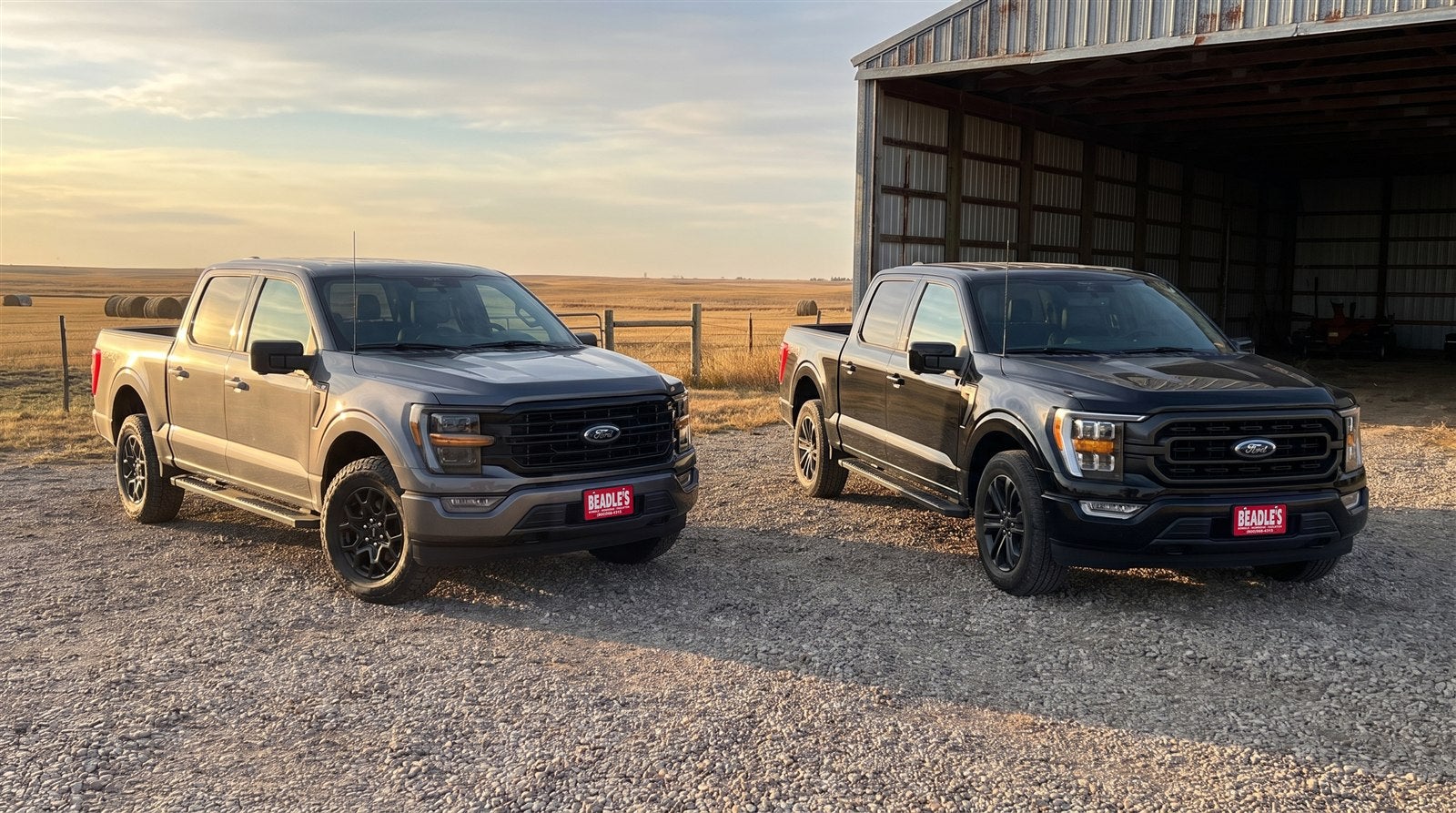
Carbonized Gray 2026 Ford F-150 XLT and Agate Black 2026 F-150 Lariat parked side by side in South Dakota

2026 F-150 XLT vs. Lariat: What Changed for 2026 and Which to Buy

Quick Answer For 2026, the Ford F-150 XLT gets body-color bumpers and 18-inch painted aluminum wheels, with its chrome trim moved into an optional package. The 2026 Lariat now comes standard with the 3.5L EcoBoost V6, and the 5.0L V8 is optional. For most Bowdle-area buyers, we recommend the Lariat. If you're comparing a 2026 XLT and Lariat against a 2025, the two trims don't line up the way they used to. Ford moved chrome off the XLT, put a different engine under the Lariat's hood, and shuffled several features between equipment groups. This guide covers only what changed for 2026 and where the XLT equipment groups end and the Lariat begins, then makes a call on which to buy. For a plain overview of every trim from XL to Raptor, start with our 2026 F-150 trim levels guide. Search Available F-150 Inventory Get Pre-Approved On This Page What changed on the 2026 F-150 XLT? What changed on the 2026 F-150 Lariat? What are the 2025-to-2026 changes, side by side? Where do the XLT equipment groups stop and the Lariat start? Does XLT or Lariat change what the truck can tow? Is a King Ranch or Platinum base group a better buy than a loaded Lariat? Which should you buy: the 2026 XLT or the 2026 Lariat? What changed on the 2026 F-150 XLT? The 2026 XLT looks different before you open a door. Chrome bumpers became body-color bumpers, the standard 4x4 wheel changed from an 18-inch chrome-like PVD finish to 18-inch painted aluminum, and the chrome trim most 2025 XLTs carried now comes in an optional appearance package. Body-color front and rear bumpers are standard. In 2025 the XLT came with chrome bumpers. 18-inch painted aluminum wheels on every XLT 4x4. They replace the 18-inch chrome-like PVD wheel. A 4x2 XLT on the entry equipment group keeps a 17-inch silver painted aluminum wheel. The chrome moved into a new optional package. On a 2025 XLT, the bright step bars, chrome door handles, chrome exhaust tip and chrome grille bar came with every equipment group above the entry one. For 2026 they're bundled in an optional chrome appearance package with 20-inch chrome-like PVD wheels, chrome bumpers and a black mesh grille with a chrome center bar. It's included on the top XLT group and can't be combined with the XLT black appearance packages. The 3.5L EcoBoost® V6 is standard on the XLT SuperCrew 4x4 with the 6.5-foot box. That truck came with the 5.0L V8 in 2025. Other XLTs still start with the 2.7L EcoBoost V6. Connectivity changed. The Ford Connectivity Package now comes with one year included, covering a Wi-Fi hotspot and, on the upper XLT equipment groups, connected navigation. It replaces 2025's three-month Wi-Fi trial. BlueCruise can be bought once. On the upper XLT equipment groups, BlueCruise hands-free driving is optional with a one-year-plus-90-day plan or a new one-time purchase that keeps the service active for at least 7 years. New colors. Argon Blue Metallic, Ruby Red Metallic Tinted Clearcoat and the returning Avalanche are on the 2026 XLT color list. Atlas Blue, Rapid Red and Space White are gone. Two 2026 XLTs can look very different, so if the chrome look matters to you, check the window sticker for the package, not the trim badge. What changed on the 2026 F-150 Lariat? The biggest 2026 Lariat change is under the hood: the 3.5L EcoBoost V6 replaced the 5.0L V8 as the standard engine, and the V8 moved to the options list. A few comfort features also moved from standard into the upper Lariat equipment groups. 3.5L EcoBoost standard, 5.0L V8 optional. If you want a V8 Lariat, you can still get one. It's now an option you order, not the default. The 3.5L PowerBoost™ Full Hybrid V6 is available on the upper Lariat groups. Power-adjustable pedals with memory are no longer standard. They come with the upper Lariat equipment groups for 2026. The head-up display is now optional on the top Lariat group. In 2025 it was included. The entry Lariat rides on 18-inch painted aluminum wheels, the same new wheel the XLT 4x4 gets. The upper Lariat groups move to 20-inch chrome-like PVD wheels. BlueCruise stays standard as a 90-day trial, now with the option of a one-year-plus-90-day plan or the one-time purchase. New colors. Argon Blue, Avalanche and Ruby Red join the list, and Marsh Gray is no longer limited to the upper Lariat groups. The 3.5L EcoBoost is the engine behind the F-150's highest conventional tow rating, and every 2026 Lariat now starts with it. The full engine-by-engine comparison lives in our 2026 F-150 engine options guide. What are the 2025-to-2026 changes, side by side? Use this table to compare a 2026 window sticker against a 2025 trade-in or used truck. Item 2025 F-150 2026 F-150 XLT bumpers Chrome Body-color XLT 4x4 standard wheel 18-in chrome-like PVD 18-in painted aluminum XLT chrome step bars, handles, exhaust tip, grille bar On every group above the entry XLT Optional chrome appearance package; included on the top XLT group XLT SuperCrew 4x4, 6.5-ft box, standard engine 5.0L V8 3.5L EcoBoost V6 Lariat standard engine 5.0L V8 3.5L EcoBoost V6 (5.0L V8 optional) Entry Lariat wheel 18-in chrome-like PVD 18-in painted aluminum Lariat power pedals with memory Standard Upper Lariat groups Lariat head-up display Included on the top group Optional on the top group BlueCruise purchase options Subscription plans Plans plus a one-time purchase (at least 7 years of service) Connectivity 3-month Wi-Fi trial Ford Connectivity Package, 1 year included Colors Atlas Blue, Rapid Red, Space White Those three dropped; Argon Blue, Ruby Red and Avalanche added One more change worth knowing if you load the bed: the optional Bed Utility Package on the XLT and the entry Lariat now includes bed storage boxes, along with the Tailgate Step, Tailgate Work Surface, four tie-down plates and LED box lighting. Where do the XLT equipment groups stop and the Lariat start? The upper XLT equipment groups close most of the technology gap with the Lariat. What the Lariat adds is mostly comfort: heated and ventilated seats with memory, a premium stereo, better headlamps and a set of driver conveniences that are standard instead of optional. Feature Entry XLT groups Upper XLT groups Lariat Ford Co-Pilot360™ Assist 2.0 (360-degree camera, adaptive cruise with Lane Centering and Stop-and-Go) No Yes Standard Pro Trailer Backup Assist™ and Pro Trailer Hitch Assist™ No Yes Standard Front seats Cloth; 8-way power driver from the second group Heated front seats, remote start, push-button start ActiveX™ heated and ventilated, with memory Pro Power Onboard™ 400 W (cab and bed) Optional on the second XLT group (Mobile Office Package) Yes Standard BlueCruise Not offered Optional Standard 90-day trial Audio 7 speakers B&O® 8-speaker on the top XLT group B&O 8-speaker; B&O Unleashed 14-speaker on the top Lariat group Headlamps, mirrors, wipers, wheel Standard XLT Standard XLT LED projector headlamps with dynamic bending, power-folding mirrors, rain-sensing wipers, heated steering wheel Cab choices SuperCab or SuperCrew SuperCrew only SuperCrew only An upper-group XLT is worth it if you want the trailer tech, the 360-degree camera and heated seats, and you don't care about cooled seats, memory settings or the premium stereo. An entry XLT is worth it if you want a simpler truck, a SuperCab, or the 2.7L EcoBoost, and you'll back up a trailer the old-fashioned way. The Lariat is worth it if you spend long days in the seat, want ventilated seats for harvest-season heat and a heated wheel for January, or want BlueCruise without building an XLT up to get it. For how SYNC® 4, the 12-inch center screen and Ford's driver-assist features work day to day, see the 2026 F-150 technology guide. Does XLT or Lariat change what the truck can tow? Not directly. For the XLT and Lariat, Ford's ratings follow engine, cab, box, axle and equipment, not the trim badge. An XLT and a Lariat with the same 3.5L EcoBoost, SuperCrew 4x4 and 6.5-foot box share the same rating: up to 13,500 lbs when properly equipped with the Tow/Haul Package and Max Tow Axle. Trim does decide which towing equipment you can get. Three 2026 details trip people up: The new 18-inch painted aluminum wheel rules out the Max Tow Axle. Ford doesn't offer the Max Tow Axle with that wheel, and it's the standard wheel on the XLT 4x4 and the entry Lariat. If you're shopping for a truck rated over 11,600 lbs, look for one on a different wheel. The Max Tow Axle isn't offered on the entry XLT group, and the Tow/Haul Package isn't offered with the 2.7L EcoBoost at all. A 2.7L XLT can add the stand-alone Integrated Trailer Brake Controller instead. Pro Trailer Backup Assist comes with Co-Pilot360 Assist 2.0, which means the upper XLT groups or any Lariat. If you back a stock trailer or a boat by yourself, that's often the feature that decides the trim. Gas F-150s towing over 11,600 lbs need both the Tow/Haul Package and the Max Tow Axle. Every rating by engine and configuration is in our 2026 F-150 towing guide, and the payload guide explains why the door-jamb label, not the trim, tells you what your truck can carry. Is a King Ranch or Platinum base group a better buy than a loaded Lariat? Sometimes. For 2026, Ford added a new entry equipment group to both the King Ranch® and the Platinum®, and those base groups give up some features that came standard on every 2025 King Ranch and Platinum. Compare them line by line against an upper-group Lariat before you assume the higher badge means more truck. What the base King Ranch gives up: power-deployable running boards (6-inch extended running boards instead), the 14-speaker B&O Unleashed (8-speaker B&O instead) and multicontour seats with Active Motion®, which move to the upper King Ranch group. The Twin Panel Moonroof becomes an option, and the head-up display is optional on the upper King Ranch group. What the base King Ranch still includes: the Tow/Haul Package, Bed Utility Package and Mobile Office Package as standard, heated rear seats, a power tilt-and-telescoping column with memory, and a one-year-plus-90-day BlueCruise plan. What the base Platinum gives up: power-deployable running boards and multicontour seats, which start one group higher. The base Platinum still includes the Tow/Haul, Bed Utility and Mobile Office packages and the same BlueCruise plan. If the Tow/Haul Package and a heated back seat are on your list anyway, a base King Ranch deserves a look next to a top Lariat. We don't stock King Ranch or Platinum F-150s in Bowdle, so contact us and we'll help you compare and order the right build. Which should you buy: the 2026 XLT or the 2026 Lariat? If the truck is your daily driver and does any towing, buy the Lariat. If it's a working truck that has to stay simple, or you want a SuperCab or the 2.7L EcoBoost, the XLT is the better fit. Our Recommendation For families and dual-duty ranch owners around Bowdle, we recommend the 2026 F-150 Lariat SuperCrew 4x4. It now comes standard with the 3.5L EcoBoost V6, the engine behind the F-150's top 13,500-lb conventional rating when properly equipped, plus Pro Trailer Backup Assist, heated and ventilated seats and a BlueCruise trial without building up an XLT. Best for Pick Why Family truck that also tows a camper or boat Lariat SuperCrew 4x4 3.5L EcoBoost standard, trailer tech and comfort standard Long highway days, sales calls, away games Lariat Ventilated seats with memory, heated wheel, BlueCruise trial Ranch truck that backs trailers solo Upper-group XLT or Lariat Pro Trailer Backup Assist and 360-degree camera Hired-hand or parts-run truck Entry XLT Simpler equipment, SuperCab available Buyer who wants a V8 XLT or Lariat, ordered The 5.0L V8 is optional on both for 2026 Check our current F-150 inventory before you decide, and drive whichever trim is here. If the truck you want is not, contact us and we'll check availability or help you order the equipment group you want. You can also see how both trims sit in the full lineup in the complete 2026 Ford F-150 overview. From the Beadle Ford Lot The XLT-or-Lariat question on our lot usually comes down to how many hours a week someone spends in the seat. Buyers who put on long two-lane miles for work, games and trips to Aberdeen tend to land on the Lariat. Buyers whose truck mostly stays on the place tend to stay with an XLT. Key Takeaways The 2026 XLT trades chrome bumpers and 18-inch chrome-like wheels for body-color bumpers and 18-inch painted aluminum; chrome is now an optional package. The 2026 Lariat comes standard with the 3.5L EcoBoost V6; the 5.0L V8 is optional on both XLT and Lariat. Between XLT and Lariat, trim doesn't set the tow rating, but the 18-inch painted aluminum wheel rules out the Max Tow Axle needed above 11,600 lbs. The upper XLT groups add Pro Trailer Backup Assist and the 360-degree camera; the Lariat adds ventilated seats with memory, B&O audio and a BlueCruise trial as standard. Frequently Asked Questions Can you still get a V8 in a 2026 F-150 Lariat? Yes. The 5.0L V8 is optional on the 2026 Lariat. What changed is the standard engine: the 3.5L EcoBoost V6 replaced the V8 as the Lariat's default for 2026. Why doesn't my 2026 F-150 XLT have chrome bumpers? Body-color bumpers are standard on the 2026 XLT. Chrome bumpers, chrome door handles, bright step bars and 20-inch chrome-like PVD wheels now come in an optional chrome appearance package, which is included on the top XLT equipment group. Does the 2026 F-150 XLT have Pro Trailer Backup Assist? On the upper XLT equipment groups, yes. Pro Trailer Backup Assist and Pro Trailer Hitch Assist come with Ford Co-Pilot360 Assist 2.0, which is part of the upper XLT groups and standard on every Lariat. The entry XLT groups don't include it. Is the 2026 Lariat worth the step up from an XLT? For a daily driver that tows, usually yes. The 2026 Lariat includes the 3.5L EcoBoost, Co-Pilot360 Assist 2.0, ActiveX heated and ventilated seats with memory, B&O audio and a BlueCruise trial as standard. If you don't need cooled seats or the trailer tech, a well-equipped XLT saves money. Does Beadle Ford have 2026 F-150 Lariats in stock? Our stock changes as trucks sell and arrive. Search our F-150 inventory for current trucks, or contact Beadle Ford for help with an XLT or a specific build. Quick Answers: 2026 F-150 XLT vs. Lariat One-line answers to the follow-up questions buyers ask next. What is the standard engine on the 2026 Lariat? The 3.5L EcoBoost V6. What is the standard engine on most 2026 XLTs? The 2.7L EcoBoost V6, except the XLT SuperCrew 4x4 with the 6.5-foot box, which gets the 3.5L EcoBoost. What wheels does a 2026 XLT 4x4 come with? 18-inch painted aluminum wheels. Does the Lariat have ventilated seats? Yes, ActiveX heated and ventilated front seats with memory are standard. Is BlueCruise standard on the Lariat? It comes standard as a 90-day trial, with a plan or one-time purchase available after that. Is BlueCruise offered on the entry XLT? No, only on the upper XLT equipment groups. Does an XLT or Lariat badge change the tow rating? No, engine, axle, cab, box and equipment set the rating for both. Which 2026 colors are new on the XLT and Lariat? Argon Blue Metallic, Ruby Red Metallic Tinted Clearcoat and the returning Avalanche. Keep Researching The complete 2026 Ford F-150 overview: engines, towing, trims, technology and winter driving in one place 2026 Ford F-150 Trim Levels Explained: what every trim from XL to Raptor is built for 2026 F-150 SuperCrew vs. SuperCab and Bed Lengths Explained: the cab and box choices behind each trim 2026 F-150 Towing Guide: every rating by engine, axle and hitch type My Take on the 2026 F-150 XLT vs. Lariat The 2026 changes make the Lariat an easier call than it used to be. The 3.5L EcoBoost is standard, and so are the trailer tech and the comfort features people end up wanting after their first winter of early mornings and their first summer of harvest heat. In my experience, the buyers who regret a trim are usually the ones who saved on the seat they sit in every day. That doesn't make the XLT the wrong truck. An entry XLT is still the honest choice for a truck that hauls posts and parts and doesn't need anything fancy. If you're torn, come see us and tell us how you use your truck. We'll show you what each XLT group adds so you can decide what's worth it to you. Search Available F-150 Inventory Get Pre-Approved Contact Beadle Ford About the Author Lexy Tabbert — Beadle Ford, Bowdle, SD Lexy Tabbert is the Director of Sales and Marketing at Beadle Ford in Bowdle, South Dakota. She covers Ford vehicles, trim comparisons, and buyer guidance — helping families, ranchers, and ag operators across the region find the right truck and configuration for their needs. Learn more about Lexy.
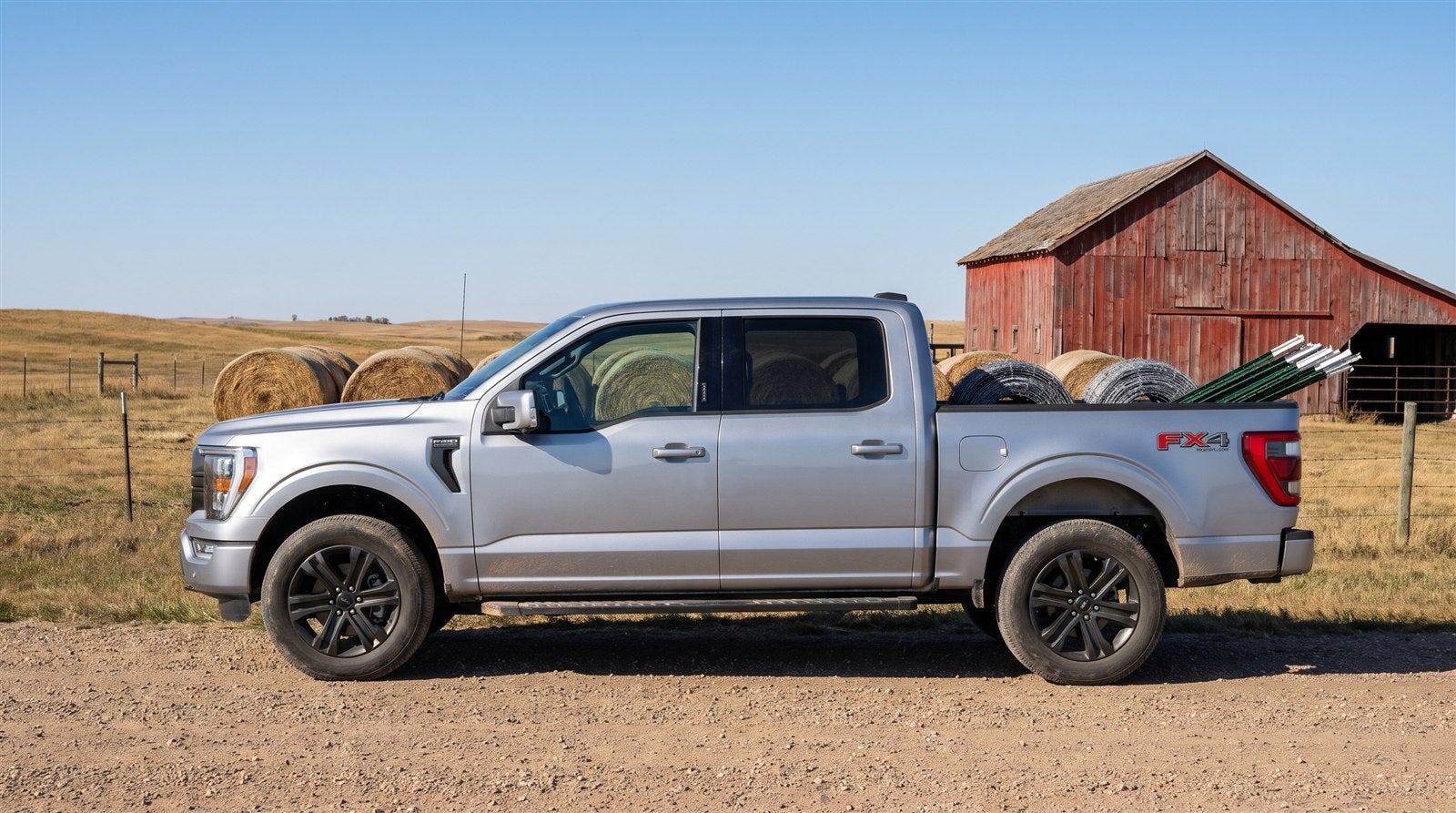
Iconic Silver 2026 Ford F-150 Lariat SuperCrew with the 6.5-foot box loaded with fence posts by a South Dakota red barn

2026 F-150 SuperCrew vs. SuperCab and Bed Lengths Explained

Quick Answer The 2026 Ford F-150 comes in three cabs and three box lengths. Regular Cab (6.5- or 8-foot box) is XL only. SuperCab pairs only with the 6.5-foot box. SuperCrew offers 5.5- or 6.5-foot boxes. For most Bowdle-area buyers, a SuperCrew 4x4 with the 6.5-foot box covers family and ranch work. Cab and bed are the two F-150 choices you live with every day, and the hardest to change later. Pick the wrong cab and the kids ride knees-to-seatback to every away game. Pick the wrong bed and the fence posts hang past the tailgate on every trip to the pasture. This guide covers every 2026 F-150 cab and box combination, which trims offer each one, and how each changes towing, payload, parking and ride for ranchers, families and highway drivers around Bowdle. Search Available F-150 Inventory Get Pre-Approved On This Page What cab and bed combinations does the 2026 F-150 come in? Which trims can you get with each cab and bed? SuperCrew or SuperCab: which cab fits your family and crew? 5.5, 6.5 or 8-foot bed: which box fits your work? How do cab and bed change towing and payload? How do cab and bed affect parking, ride and highway miles? Which cab and bed fit a rancher, a family or a highway driver? What does Beadle Ford stock, and can you get a different cab or bed? What cab and bed combinations does the 2026 F-150 come in? Ford builds the 2026 F-150 in five cab-and-box combinations: Regular Cab with a 6.5- or 8-foot box, SuperCab with a 6.5-foot box, and SuperCrew with a 5.5- or 6.5-foot box. There is no SuperCab or SuperCrew with an 8-foot box, and the 5.5-foot box only comes on a SuperCrew. A Regular Cab has two doors and one row of seats. A SuperCab adds a smaller second row behind smaller rear doors. A SuperCrew has four full-size doors and a full-size back seat. Wheelbase, the distance between the axles, drives most of the parking and ride differences. Cab Box Wheelbase Drive Trims Regular Cab 6.5 ft 122.5 in 4x2 or 4x4 XL Regular Cab 8 ft 141 in 4x2 or 4x4 XL SuperCab 6.5 ft 145 in 4x2 or 4x4 XL, STX, XLT SuperCrew 5.5 ft 145 in 4x2 or 4x4 Every trim, XL through Raptor SuperCrew 6.5 ft 157 in 4x4 XL, XLT, Lariat, King Ranch, Platinum Outside of fleet-only XL builds, the SuperCrew 6.5-foot box is 4x4-only. The SuperCab 6.5-foot box and SuperCrew 5.5-foot box share a 145-inch wheelbase, so trading back-seat room for bed length doesn't make the truck longer. Which trims can you get with each cab and bed? Lariat, King Ranch, Platinum, Tremor and Raptor are SuperCrew-only for 2026. Only the XL is offered in all three cabs, and the XL is the only way to get a Regular Cab or an 8-foot box. Trim Regular Cab 6.5 ft Regular Cab 8 ft SuperCab 6.5 ft SuperCrew 5.5 ft SuperCrew 6.5 ft XL Yes Yes Yes Yes Yes (4x4) STX No No Yes Yes No XLT No No Entry equipment groups only Yes Yes (4x4) Lariat No No No Yes Yes (4x4) King Ranch No No No Yes Yes (4x4) Platinum No No No Yes Yes (4x4, not the top group) Tremor No No No Yes (4x4 only) No Raptor No No No Yes (4x4 only) No The XLT SuperCab stops at the entry equipment groups. The better-equipped XLT groups, the ones that add the 360-degree camera, adaptive cruise and Pro Trailer Backup Assist™, are SuperCrew-only. The box can decide your engine. On the XL and XLT, the SuperCrew 6.5-foot box makes the 3.5L EcoBoost® V6 standard, and the 2.7L EcoBoost isn't offered on that truck in 4x4 form. The XL Regular Cab 6.5-foot box comes with the 5.0L V8. The PowerBoost™ hybrid is a SuperCrew-only engine. You won't find it on a Regular Cab or SuperCab. Tank size follows the cab. The Regular Cab 6.5-foot box carries a 23-gallon tank; every other gas configuration carries 36 gallons. For what each trim adds beyond the cab and box, see our 2026 F-150 trim levels guide. SuperCrew or SuperCab: which cab fits your family and crew? If anyone rides in the back seat more than once a week, get the SuperCrew. The SuperCab fits a work truck that only carries a second row now and then. The SuperCrew's full-size rear doors are the daily difference. Car seats, a teenager who grew six inches since spring, or two hired hands heading out to fix fence all fit without anyone folding up. The SuperCab's smaller second row suits a dog, a cooler, coats and tools, or a rider on a short trip to town, not an adult on a long highway run. SuperCrew is worth it if: kids, car seats or a regular crew ride in back; you want Lariat or higher; you want the PowerBoost hybrid; or this truck is the family's main vehicle. SuperCab is worth it if: the back seat is mostly cargo space, you want the 6.5-foot box at the shorter 145-inch wheelbase, and an STX or entry XLT has the equipment you need. Skip the SuperCab if: you want heated and ventilated seats, BlueCruise, or the upper XLT driver-assist and trailer features. Those live on SuperCrew trucks. 5.5, 6.5 or 8-foot bed: which box fits your work? The 6.5-foot box is the all-around ranch choice. The 5.5-foot box is the easier truck to live with in town and in a garage. The 8-foot box is for a dedicated work truck that hauls full-length material, and it only comes on the XL Regular Cab. 5.5-foot box (SuperCrew only, 145-inch wheelbase). Groceries, sports bags, mineral tubs and seed bags fit fine; fence posts and panels ride with the tailgate down. It's the only box on Tremor, Raptor and Platinum's top group. Towing catch: Ford notes the 5.5-foot box accepts a fifth-wheel hitch, but most fifth-wheel trailer designs aren't compatible with it. If a gooseneck or fifth-wheel trailer is in your future, plan on the longer box. 6.5-foot box (Regular Cab, SuperCab and SuperCrew). The box for a truck that fixes fence on Saturday and goes to church on Sunday. Posts, wire, panels and small square bales sit inside, and more of a four-wheeler stays in the box. On a SuperCrew it stretches the wheelbase to 157 inches, the longest of any F-150. 8-foot box (XL Regular Cab only, 141-inch wheelbase). The traditional long-box work truck for full-length material, with one row of seats. It earns its keep as a hired-hand or parts-run truck on a place that already has a family vehicle. Hauling an ATV or UTV? Measure the machine before you choose; many ride with the tailgate down in a 5.5-foot box. On any length, the available Bed Utility Package on XLT and Lariat adds bed storage boxes, a Tailgate Step, a Tailgate Work Surface, four tie-down plates and LED box lighting. How do cab and bed change towing and payload? With the 3.5L EcoBoost V6 in a 4x4, Ford's conventional tow ratings run from 10,700 lbs on a SuperCab to 13,500 lbs on a SuperCrew 6.5-foot box when properly equipped, and the top ratings require the Tow/Haul Package plus the Max Tow Axle. 3.5L EcoBoost 4x4 Best rating without Max Tow Axle With Tow/Haul Package + Max Tow Axle Regular Cab, 8-ft box 11,000 lbs No Max Tow rating listed SuperCab, 6.5-ft box 10,700 lbs No Max Tow rating listed SuperCrew, 5.5-ft box 10,500 lbs 13,100 lbs SuperCrew, 6.5-ft box 10,900 lbs 13,500 lbs Ford's 2026 conventional ratings, maximum loaded trailer weight, when properly equipped. Ratings vary by axle ratio and equipment. If you want a 3.5L EcoBoost rated over 13,000 lbs, you want a SuperCrew. Ford's 2026 Max Tow ratings for that engine are SuperCrew figures, and the 6.5-foot box gets the highest one. Without the Max Tow Axle, the SuperCrew 5.5-foot box rates lowest of the four, at 10,500 lbs. The bigger cab adds weight, and that weight comes out of what the truck can pull. The upgrade has limits. Gas F-150s towing over 11,600 lbs need both upgrades. The Max Tow Axle isn't offered on the XL or the entry XLT group, and the Tow/Haul Package isn't offered with the 2.7L EcoBoost. Payload works the same way in reverse: a bigger cab, longer box, 4x4 hardware and options all add weight the truck can't carry. We don't quote 2026 payload by configuration; the number that counts is on the specific truck's door-jamb label. A conventional trailer puts roughly 10% of its weight on the hitch and a gooseneck roughly 15% on the pin, and all of it counts against payload. Our 2026 F-150 payload guide walks through reading that label, and the towing guide has every rating. How do cab and bed affect parking, ride and highway miles? A longer wheelbase rides steadier on a windy two-lane highway and is harder to park or turn around in a tight yard. The SuperCrew 6.5-foot box has the longest F-150 wheelbase at 157 inches, a full foot more than the SuperCrew 5.5-foot box. Parking and garages. That extra foot shows up at the grocery store in Aberdeen, between the bins and the shop, and in a garage built for the last truck. Measure your garage depth and shop door, then bring the numbers in and we'll put a tape on a truck on our lot. Every 2026 F-150 has a rear camera, rear parking sensors and Reverse Brake Assist; the 360-degree camera and front sensors come with Ford Co-Pilot360™ Assist 2.0, in the upper XLT groups and standard on Lariat and above. Ride and highway miles. A longer wheelbase generally rides calmer over expansion joints, holds its line better in a crosswind on US-12, and is steadier with a trailer behind it. Both SuperCrew boxes carry the same 36-gallon tank on gas engines, so the shorter truck gives up no range. Gravel and pasture. A shorter wheelbase turns tighter at a gate or around a bale yard. If your days are more pasture than pavement, the 145-inch trucks are easier to work with. Which cab and bed fit a rancher, a family or a highway driver? The SuperCrew 4x4 with the 6.5-foot box does the most jobs well. The table covers the exceptions. Our Recommendation For families and ranchers in north-central South Dakota, we recommend the 2026 F-150 SuperCrew 4x4 with the 6.5-foot box. It seats a full back row, carries fence posts inside the box, and has Ford's highest 3.5L EcoBoost tow rating: 13,500 lbs when properly equipped with the Tow/Haul Package and Max Tow Axle. Best for Cab and box Why Watch for Rancher whose truck is also the family truck SuperCrew 6.5 ft, 4x4 Back seat, posts inside the box, top 3.5L tow rating Length in tight yards and garages Hired-hand or parts-run truck XL Regular Cab 8 ft, or SuperCab 6.5 ft Long box, simple equipment Little or no rear seat Family in town, school and activity runs SuperCrew 5.5 ft Easiest SuperCrew to park Long loads ride tailgate-down Highway miles, camper or boat SuperCrew 6.5 ft, 4x4 157-inch wheelbase rides and tows steadier Check door-jamb payload before buying a camper Hunter or angler hauling an ATV SuperCrew 6.5 ft (or 5.5 ft on a Tremor) More of the machine inside the box Tremor comes only with the 5.5-ft box Gooseneck or fifth-wheel stock trailer 6.5-ft box Most fifth-wheel designs don't fit the 5.5-ft box Pin weight eats payload If the gooseneck question is the deciding one, our 2026 F-150 ranch and farm guide covers when a half-ton is enough and when to step up to a Super Duty. What does Beadle Ford stock, and can you get a different cab or bed? Stock changes week to week, so check the live F-150 inventory for the cabs and boxes we have today. If you need a Regular Cab, a SuperCab or a different box length, talk to us and we'll help you order or find the truck you need. Box length varies by truck, so check the listing or call us. If an STX SuperCab for the hired man or an 8-foot XL Regular Cab is the right truck, say so. We'll lay out the options and timing plainly and won't talk you into a SuperCrew you don't need. You can see how each configuration fits the full lineup in the complete 2026 Ford F-150 overview. From the Beadle Ford Lot The cab-and-bed conversation we have most often starts with someone sure they want the shorter box so it fits the garage, and it ends with a tape measure. Once a family that hauls feed, fencing or a camper sees that the SuperCrew cab is the same either way, most of them choose the 6.5-foot box. Key Takeaways The 2026 F-150 comes in five cab-and-box combinations; the 8-foot box is XL Regular Cab only. Lariat, King Ranch, Platinum, Tremor and Raptor are SuperCrew-only, and Tremor and Raptor come only with the 5.5-foot box. The 3.5L EcoBoost's top 13,500-lb conventional rating is on the SuperCrew 4x4 with the 6.5-foot box, with the Tow/Haul Package and Max Tow Axle. The SuperCrew 6.5-foot box has the longest F-150 wheelbase, 157 inches. Measure your garage before you choose it. Frequently Asked Questions Can you get a 2026 F-150 SuperCrew with an 8-foot bed? No. The 8-foot box comes only on the XL Regular Cab. The longest box on a 2026 F-150 SuperCrew is 6.5 feet, on a 157-inch wheelbase. Is the SuperCab or SuperCrew better for car seats? The SuperCrew. It has four full-size doors and a full-size back seat, so installing and buckling car seats is far easier. The SuperCab's smaller second row works for occasional riders and cargo, not for daily car-seat duty. Does bed length change towing capacity on the 2026 F-150? Yes. With the 3.5L EcoBoost 4x4, Ford rates the SuperCrew 5.5-foot box at up to 13,100 lbs and the SuperCrew 6.5-foot box at up to 13,500 lbs, both when properly equipped with the Tow/Haul Package and Max Tow Axle. Most fifth-wheel designs also aren't compatible with the 5.5-foot box. Which 2026 F-150 trims are SuperCrew only? Lariat, King Ranch, Platinum, Tremor and Raptor. Lariat, King Ranch and Platinum offer the 5.5- or 6.5-foot box, while Tremor and Raptor come only as a SuperCrew 4x4 with the 5.5-foot box. The XL, STX and XLT also offer a SuperCab, and the XL adds the Regular Cab. Does Beadle Ford have SuperCab or Regular Cab F-150s in stock? It changes week to week, so check the live F-150 inventory. If you need a SuperCab, a Regular Cab or a specific box length, contact Beadle Ford and we'll help you order or locate the right truck. Quick Answers: 2026 F-150 Cabs and Beds One-line answers to the follow-up questions buyers ask next. How many cab styles does the 2026 F-150 offer? Three: Regular Cab, SuperCab and SuperCrew. What bed lengths are offered? 5.5 feet (SuperCrew), 6.5 feet (all three cabs) and 8 feet (XL Regular Cab only). Which F-150 has the longest wheelbase? The SuperCrew with the 6.5-foot box, at 157 inches. Can I get a Lariat as a SuperCab? No, the 2026 Lariat is SuperCrew-only. What box does the Tremor come with? Only the 5.5-foot box, on a SuperCrew 4x4. Which configuration tows the most with the 3.5L EcoBoost? The SuperCrew 4x4 with the 6.5-foot box, 13,500 lbs when properly equipped with the Tow/Haul Package and Max Tow Axle. Is the PowerBoost hybrid offered on a SuperCab? No, the 2026 PowerBoost hybrid is offered only on the SuperCrew. Where do I find my truck's payload? On the Tire and Loading Information label on the driver's door jamb. Keep Researching The complete 2026 Ford F-150 overview: engines, towing, trims, technology and winter driving in one place 2026 F-150 Payload Explained: how cab, box and options change what your truck can carry Which 2026 F-150 Is Best for Ranch and Farm Work?: the half-ton for feed, fencing and stock trailers 2026 F-150 Towing Guide: every rating by engine, axle and hitch type My Take on 2026 F-150 Cabs and Beds In my experience, people around Bowdle rarely regret buying too much box. They regret buying the short box for the garage and then hauling posts with the tailgate down for the next eight years. If the truck carries the family and does ranch work, I'd start with the SuperCrew 4x4 and the 6.5-foot box, then go measure the garage. That isn't everyone's answer. A town truck is easier to park with the 5.5-foot box and gives up nothing in the back seat. A second truck on the place can be an XL Regular Cab with the 8-foot box. Torn between two? Bring your measurements and tell us what you haul, and we'll walk the lot with you. Search Available F-150 Inventory Get Pre-Approved Contact Beadle Ford About the Author Lexy Tabbert — Beadle Ford, Bowdle, SD Lexy Tabbert is the Director of Sales and Marketing at Beadle Ford in Bowdle, South Dakota. She covers Ford vehicles, trim comparisons, and buyer guidance — helping families, ranchers, and ag operators across the region find the right truck and configuration for their needs. Learn more about Lexy.