
The 2026 Ford F-150 offers six distinct engine options, ranging from efficient EcoBoost configurations to a full hybrid system and high-performance Raptor variants. Each powertrain is engineered for a different balance of towing strength, daily drivability, and long-term ownership priorities.
This guide breaks down each available powertrain and explains who it makes the most sense for. For full trim availability, drivetrain pairings, and feature differences, reference the complete 2026 Ford F-150 overview.
How Many Engine Options Are Available on the 2026 F-150?
The 2026 F-150 offers six distinct powertrains, including five gas engines and one full hybrid system. All are paired with a 10-speed automatic transmission and differ in torque delivery, towing capability, and overall driving character.
- 2.7L EcoBoost V6
- 5.0L V8
- 3.5L EcoBoost V6
- 3.5L PowerBoost Full Hybrid
- 3.5L EcoBoost High Output (Raptor)
- 5.2L Supercharged V8 (Raptor R)
Is the 2.7L EcoBoost Enough for Most Drivers?
Yes — for many drivers, the 2.7L EcoBoost provides more than enough capability. When properly equipped, it can tow up to 8,400 pounds while delivering strong low-end torque for everyday driving.
This engine works well for commuting, moderate trailer use, and rural driving without stepping into maximum towing configurations.
Does the 5.0L V8 Still Make Sense in 2026?
The 5.0L V8 remains a popular option for buyers who prefer naturally aspirated power delivery and traditional V8 sound and feel. When properly equipped, it can tow up to 12,800 pounds.
For many drivers, the V8 represents straightforward performance and proven durability.
Why Choose the 3.5L EcoBoost?
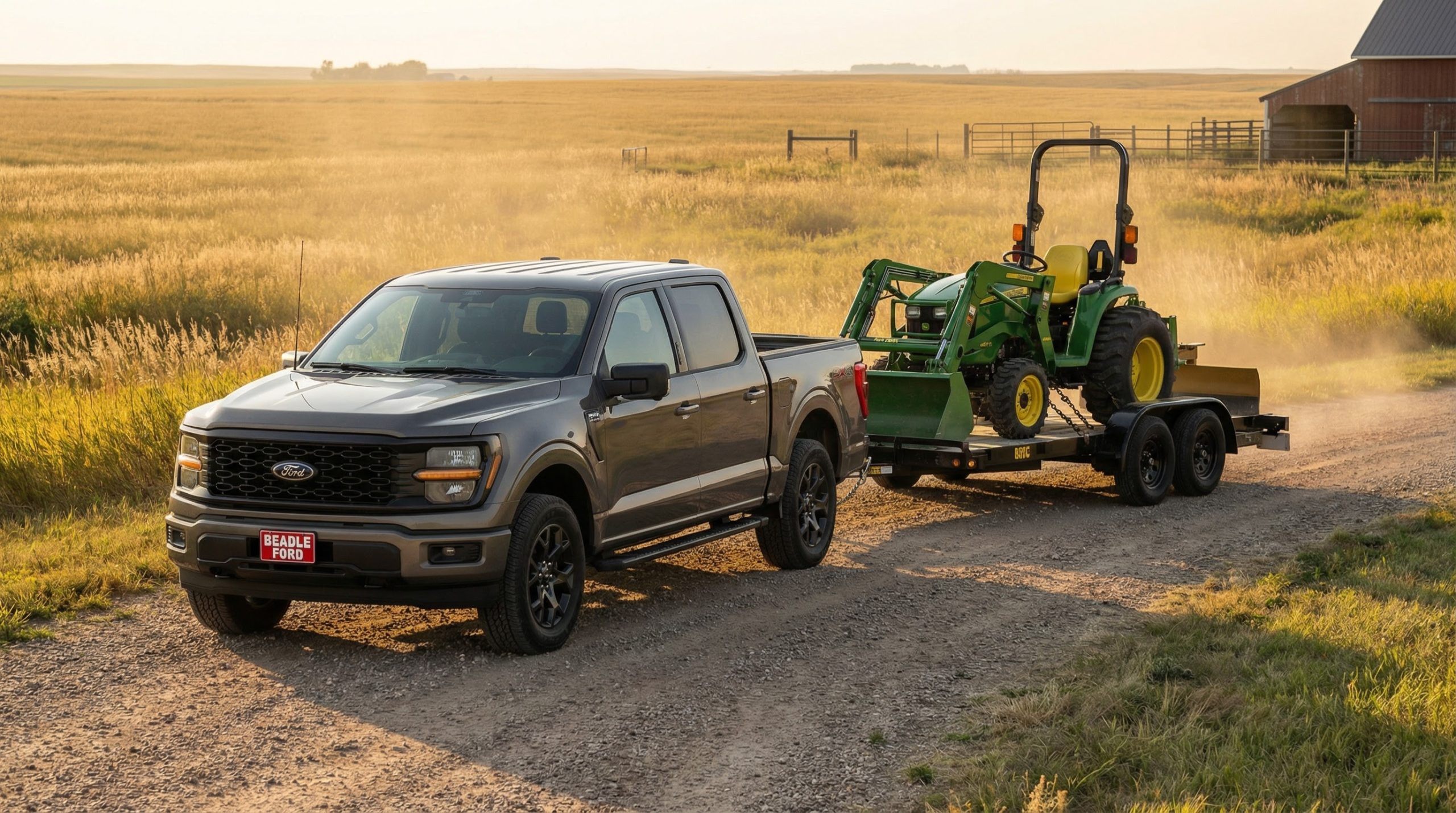
The 3.5L EcoBoost delivers the highest conventional towing rating in the 2026 lineup — up to 13,500 pounds when properly equipped with the Tow/Haul Package and Max Tow Axle.
It balances heavy-duty capability with strong highway performance, making it ideal for long-distance towing.
For axle ratios, required packages, and configuration specifics, see the detailed 2026 F-150 Towing Guide.
Is the 3.5L PowerBoost Hybrid Worth It?
The PowerBoost hybrid combines twin-turbo power with electric motor assistance. When properly equipped, it can tow up to 11,600 pounds.
It also enables available Pro Power Onboard functionality, supplying electricity for job sites or camping setups.
Long-term cost considerations between hybrid and gas configurations are explored further in our F-150 Ownership & Long-Term Costs Guide.
What About Raptor and Raptor R Engines?
The Raptor’s 3.5L High Output EcoBoost focuses on high-speed off-road performance, offering up to 8,200 pounds of towing capability.
The Raptor R’s supercharged 5.2L V8 emphasizes extreme performance and can tow up to 8,700 pounds.
Which Engine Is Best for South Dakota Driving?
The right engine depends on how the truck will actually be used.
- Daily driving + moderate towing: 2.7L EcoBoost
- Traditional V8 preference: 5.0L V8
- Maximum conventional towing: 3.5L EcoBoost
- Efficiency + onboard power: PowerBoost Hybrid
- Off-road performance focus: Raptor or Raptor R
Engine choice becomes clearer when considered within the full 2026 F-150 lineup, including trim and drivetrain pairings.
How to Choose the Right F-150 Engine
- Determine the heaviest trailer you realistically plan to tow.
- Confirm required equipment for maximum ratings.
- Consider how often you drive long highway distances.
- Evaluate winter traction needs.
- Balance capability with daily comfort.
Conclusion
In my experience, the right engine choice becomes much clearer once buyers focus on how often they truly need maximum towing versus how often they’ll use the truck for everyday driving. The strongest number on paper isn’t always the best fit — the best configuration is the one that matches how the truck will actually be used.
Review current 2026 Ford F-150 availability at Beadle Ford or contact us to compare engine configurations in person.
About the Author
Lexy Tabbert provides research-driven vehicle guides and in-depth truck insights for drivers across South Dakota and the surrounding region.

